Some nostalgic memories
I was not in the original AppStream meeting, since in 2011 I was extremely busy with finals preparations and ball organization in high school, but I still vividly remember sitting at school in the students lounge during a break and trying to catch the really choppy live stream from the meeting on my borrowed laptop (a futile exercise, I watched parts of the blurry recording later).
I was extremely passionate about getting software deployment to work better on Linux and to improve the overall user experience, and spent many hours on the PackageKit IRC channel discussing things with many amazing people like Richard Hughes, Daniel Nicoletti, Sebastian Heinlein and others.
At the time I was writing a software deployment tool called Listaller this was before Linux containers were a thing, and building it was very tough due to technical and personal limitations (I had just learned C!). Then in university, when I intended to recreate this tool, but for real and better this time as a new project called Limba, I needed a way to provide metadata for it, and AppStream fit right in! Meanwhile, Richard Hughes was tackling the UI side of things while creating GNOME Software and needed a solution as well. So I implemented a prototype and together we pretty much reshaped the early specification from the original meeting into what would become modern AppStream.
Back then I saw AppStream as a necessary side-project for my actual project, and didn t even consider me as the maintainer of it for quite a while (I hadn t been at the meeting afterall). All those years ago I had no idea that ultimately I was developing AppStream not for Limba, but for a new thing that would show up later, with an even more modern design called Flatpak. I also had no idea how incredibly complex AppStream would become and how many features it would have and how much more maintenance work it would be and also not how ubiquitous it would become.
The modern Linux desktop uses AppStream everywhere now, it is supported by all major distributions, used by Flatpak for metadata, used for firmware metadata via Richard s fwupd/LVFS, runs on every Steam Deck, can be found in cars and possibly many places I do not know yet.
What is new in 1.0?
API breaks
The most important thing that s new with the 1.0 release is a bunch of incompatible changes. For the shared libraries, all deprecated API elements have been removed and a bunch of other changes have been made to improve the overall API and especially make it more binding-friendly. That doesn t mean that the API is completely new and nothing looks like before though, when possible the previous API design was kept and some changes that would have been too disruptive have not been made. Regardless of that, you will have to port your AppStream-using applications. For some larger ones I already submitted patches to build with both AppStream versions, the 0.16.x stable series as well as 1.0+.
For the XML specification, some older compatibility for XML that had no or very few users has been removed as well. This affects for example release elements that reference downloadable data without an artifact block, which has not been supported for a while. For all of these, I checked to remove only things that had close to no users and that were a significant maintenance burden. So as a rule of thumb: If your XML validated with no warnings with the 0.16.x branch of AppStream, it will still be 100% valid with the 1.0 release.
Another notable change is that the generated output of AppStream 1.0 will always be 1.0 compliant, you can not make it generate data for versions below that (this greatly reduced the maintenance cost of the project).
Developer element
For a long time, you could set the developer name using the top-level developer_name tag. With AppStream 1.0, this is changed a bit. There is now a developer tag with a name child (that can be translated unless the translate="no" attribute is set on it). This allows future extensibility, and also allows to set a machine-readable id attribute in the developer element. This permits software centers to group software by developer easier, without having to use heuristics. If we decide to extend the developer information per-app in future, this is also now possible. Do not worry though the developer_name tag is also still read, so there is no high pressure to update. The old 0.16.x stable series also has this feature backported, so it can be available everywhere. Check out the developer tag specification for more details.
Scale factor for screenshots
Screenshot images can now have a scale attribute, to indicate an (integer) scaling factor to apply. This feature was a breaking change and therefore we could not have it for the longest time, but it is now available. Please wait a bit for AppStream 1.0 to become deployed more widespread though, as using it with older AppStream versions may lead to issues in some cases. Check out the screenshots tag specification for more details.
Screenshot environments
It is now possible to indicate the environment a screenshot was recorded in (GNOME, GNOME Dark, KDE Plasma, Windows, etc.) via an environment attribute on the respective screenshot tag. This was also a breaking change, so use it carefully for now! If projects want to, they can use this feature to supply dedicated screenshots depending on the environment the application page is displayed in. Check out the screenshots tag specification for more details.
References tag
This is a feature more important for the scientific community and scientific applications. Using the references tag, you can associate the AppStream component with a DOI (Digital object identifier) or provide a link to a CFF file to provide citation information. It also allows to link to other scientific registries. Check out the references tag specification for more details.
Release tags
Releases can have tags now, just like components. This is generally not a feature that I expect to be used much, but in certain instances it can become useful with a cooperating software center, for example to tag certain releases as long-term supported versions.
Multi-platform support
Thanks to the interest and work of many volunteers, AppStream (mostly) runs on FreeBSD now, a NetBSD port exists, support for macOS was written and a Windows port is on its way! Thank you to everyone working on this
Better compatibility checks
For a long time I thought that the AppStream library should just be a thin layer above the XML and that software centers should just implement a lot of the actual logic. This has not been the case for a while, but there was still a lot of complex AppStream features that were hard for software centers to implement and where it makes sense to have one implementation that projects can just use.
The validation of component relations is one such thing. This was implemented in 0.16.x as well, but 1.0 vastly improves upon the compatibility checks, so you can now just run as_component_check_relations and retrieve a detailed list of whether the current component will run well on the system. Besides better API for software developers, the appstreamcli utility also has much improved support for relation checks, and I wrote about these changes in a previous post. Check it out!
With these changes, I hope this feature will be used much more, and beyond just drivers and firmware.
So much more!
The changelog for the 1.0 release is huge, and there are many papercuts resolved and changes made that I did not talk about here, like us using gi-docgen (instead of gtkdoc) now for nice API documentation, or the many improvements that went into better binding support, or better search, or just plain bugfixes.
Outlook
I expect the transition to 1.0 to take a bit of time. AppStream has not broken its API for many, many years (since 2016), so a bunch of places need to be touched even if the changes themselves are minor in many cases. In hindsight, I should have also released 1.0 much sooner and it should not have become such a mega-release, but that was mainly due to time constraints.
So, what s in it for the future? Contrary to what I thought, AppStream does not really seem to be done and fetature complete at a point, there is always something to improve, and people come up with new usecases all the time. So, expect more of the same in future: Bugfixes, validator improvements, documentation improvements, better tools and the occasional new feature.
Onwards to 1.0.1!
My first reaction when I heard that Michael Lewis had been embedded with
Sam Bankman-Fried working on a book when Bankman-Fried's cryptocurrency
exchange FTX collapsed into bankruptcy after losing billions of dollars of
customer deposits was "holy shit, why would you talk to Michael
Lewis about your dodgy cryptocurrency company?" Followed immediately by
"I have to read this book."
This is that book.
I wasn't sure how Lewis would approach this topic. His normal (although
not exclusive) area of interest is financial systems and crises, and there
is lots of room for multiple books about cryptocurrency fiascoes using
someone like Bankman-Fried as a pivot. But Going Infinite is not
like The Big Short or Lewis's other
financial industry books. It's a nearly straight biography of Sam
Bankman-Fried, with just enough context for the reader to follow his life.
To understand what you're getting in Going Infinite, I think it's
important to understand what sort of book Lewis likes to write. Lewis is
not exactly a reporter, although he does explain complicated things for a
mass audience. He's primarily a storyteller who collects people he finds
fascinating. This book was therefore never going to be like, say,
Carreyrou's Bad Blood or Isaac's
Super Pumped. Lewis's interest is not
in a forensic account of how FTX or Alameda Research were structured. His
interest is in what makes Sam Bankman-Fried tick, what's going on inside
his head.
That's not a question Lewis directly answers, though. Instead, he shows
you Bankman-Fried as Lewis saw him and was able to reconstruct from
interviews and sources and lets you draw your own conclusions. Boy did I
ever draw a lot of conclusions, most of which were highly unflattering.
However, one conclusion I didn't draw, and had been dubious about even
before reading this book, was that Sam Bankman-Fried was some sort of
criminal mastermind who intentionally plotted to steal customer money.
Lewis clearly doesn't believe this is the case, and with the caveat that
my study of the evidence outside of this book has been spotty and
intermittent, I think Lewis has the better of the argument.
I am utterly fascinated by this, and I'm afraid this review is going to
turn into a long summary of my take on the argument, so here's the capsule
review before you get bored and wander off: This is a highly entertaining
book written by an excellent storyteller. I am also inclined to believe
most of it is true, but given that I'm not on the jury, I'm not that
invested in whether Lewis is too credulous towards the explanations of the
people involved. What I do know is that it's a fantastic yarn with
characters who are too wild to put in fiction, and I thoroughly enjoyed
it.
There are a few things that everyone involved appears to agree on, and
therefore I think we can take as settled. One is that Bankman-Fried, and
most of the rest of FTX and Alameda Research, never clearly distinguished
between customer money and all of the other money. It's not obvious that
their home-grown accounting software (written entirely by one person! who
never spoke to other people! in code that no one else could understand!)
was even capable of clearly delineating between their piles of money.
Another is that FTX and Alameda Research were thoroughly intermingled.
There was no official reporting structure and possibly not even a coherent
list of employees. The environment was so chaotic that lots of people,
including Bankman-Fried, could have stolen millions of dollars without
anyone noticing. But it was also so chaotic that they could, and did,
literally misplace millions of dollars by accident, or because
Bankman-Fried had problems with object permanence.
Something that was previously less obvious from news coverage but that
comes through very clearly in this book is that Bankman-Fried seriously
struggled with normal interpersonal and societal interactions. We know
from multiple sources that he was diagnosed with ADHD and depression
(Lewis describes it specifically as anhedonia, the inability to feel
pleasure). The ADHD in Lewis's account is quite severe and does not sound
controlled, despite medication; for example, Bankman-Fried routinely
played timed video games while he was having important meetings, forgot
things the moment he stopped dealing with them, was constantly on his
phone or seeking out some other distraction, and often stimmed (by
bouncing his leg) to a degree that other people found it distracting.
Perhaps more tellingly, Bankman-Fried repeatedly describes himself in
diary entries and correspondence to other people (particularly Caroline
Ellison, his employee and on-and-off secret girlfriend) as being devoid of
empathy and unable to access his own emotions, which Lewis supports with
stories from former co-workers. I'm very hesitant to diagnose someone via
a book, but, at least in Lewis's account, Bankman-Fried nearly walks down
the symptom list of antisocial personality disorder in his own description
of himself to other people. (The one exception is around physical
violence; there is nothing in this book or in any of the other reporting
that I've seen to indicate that Bankman-Fried was violent or physically
abusive.) One of the recurrent themes of this book is that Bankman-Fried
never saw the point in following rules that didn't make sense to him or
worrying about things he thought weren't important, and therefore simply
didn't.
By about a third of the way into this book, before FTX is even properly
started, very little about its eventual downfall will seem that
surprising. There was no way that Sam Bankman-Fried was going to be able
to run a successful business over time. He was extremely good at
probabilistic trading and spotting exploitable market inefficiencies, and
extremely bad at essentially every other aspect of living in a society
with other people, other than a hit-or-miss ability to charm that worked
much better with large audiences than one-on-one. The real question was
why anyone would ever entrust this man with millions of dollars or decide
to work for him for longer than two weeks.
The answer to those questions changes over the course of this story.
Later on, it was timing. Sam Bankman-Fried took the techniques of high
frequency trading he learned at Jane Street Capital and applied them to
exploiting cryptocurrency markets at precisely the right time in the
cryptocurrency bubble. There was far more money than sense, the most
ruthless financial players were still too leery to get involved, and a
rising tide was lifting all boats, even the ones that were piles of
driftwood. When cryptocurrency inevitably collapsed, so did his
businesses. In retrospect, that seems inevitable.
The early answer, though, was effective altruism.
A full discussion of effective altruism is beyond the scope of this
review, although Lewis offers a decent introduction in the book. The
short version is that a sensible and defensible desire to use stronger
standards of evidence in evaluating charitable giving turned into a
bizarre navel-gazing exercise in making up statistical risks to
hypothetical future people and treating those made-up numbers as if they
should be the bedrock of one's personal ethics. One of the people most
responsible for this turn is an Oxford philosopher named
Will MacAskill.
Sam Bankman-Fried was already obsessed with utilitarianism, in part due to
his parents' philosophical beliefs, and it was a presentation by Will
MacAskill that converted him to the effective altruism variant of extreme
utilitarianism.
In Lewis's presentation, this was like joining a cult. The impression I
came away with feels like something out of a science fiction novel: Bankman-Fried knew there was some serious gap in
his thought processes where most people had empathy, was deeply troubled
by this, and latched on to effective altruism as the ethical framework to
plug into that hole. So much of effective altruism sounds like a con game
that it's easy to think the participants are lying, but Lewis clearly
believes Bankman-Fried is a true believer. He appeared to be sincerely
trying to make money in order to use it to solve existential threats to
society, he does not appear to be motivated by money apart from that goal,
and he was following through (in bizarre and mostly ineffective ways).
I find this particularly believable because effective altruism as a belief
system seems designed to fit Bankman-Fried's personality and justify the
things he wanted to do anyway. Effective altruism says that empathy is
meaningless, emotion is meaningless, and ethical decisions should be made
solely on the basis of expected value: how much return (usually in safety)
does society get for your investment. Effective altruism says that all
the things that Sam Bankman-Fried was bad at were useless and unimportant,
so he could stop feeling bad about his apparent lack of normal human
morality. The only thing that mattered was the thing that he was
exceptionally good at: probabilistic reasoning under uncertainty. And,
critically to the foundation of his business career, effective altruism
gave him access to investors and a recruiting pool of employees, things he
was entirely unsuited to acquiring the normal way.
There's a ton more of this book that I haven't touched on, but this review
is already quite long, so I'll leave you with one more point.
I don't know how true Lewis's portrayal is in all the details. He took
the approach of getting very close to most of the major players in this
drama and largely believing what they said happened, supplemented by
startling access to sources like Bankman-Fried's personal diary and
Caroline Ellis's personal diary. (He also seems to have gotten extensive
information from the personal psychiatrist of most of the people involved;
I'm not sure if there's some reasonable explanation for this, but based
solely on the material in this book, it seems to be a shocking breach of
medical ethics.) But Lewis is a storyteller more than he's a reporter,
and his bias is for telling a great story. It's entirely possible that
the events related here are not entirely true, or are skewed in favor of
making a better story. It's certainly true that they're not the complete
story.
But, that said, I think a book like this is a useful counterweight to the
human tendency to believe in moral villains. This is, frustratingly, a
counterweight extended almost exclusively to higher-class white people
like Bankman-Fried. This is infuriating, but that doesn't make it wrong.
It means we should extend that analysis to more people.
Once FTX collapsed, a lot of people became very invested in the idea that
Bankman-Fried was a straightforward embezzler. Either he intended from
the start to steal everyone's money or, more likely, he started losing
money, panicked, and stole customer money to cover the hole. Lots of
people in history have done exactly that, and lots of people involved in
cryptocurrency have tenuous attachments to ethics, so this is a believable
story. But people are complicated, and there's also truth in the maxim
that every villain is the hero of their own story. Lewis is after a less
boring story than "the crook stole everyone's money," and that leads to
some bias. But sometimes the less boring story is also true.
Here's the thing: even if Sam Bankman-Fried never intended to take any
money, he clearly did intend to mix customer money with Alameda Research
funds. In Lewis's account, he never truly believed in them as separate
things. He didn't care about following accounting or reporting rules; he
thought they were boring nonsense that got in his way. There is obvious
criminal intent here in any reading of the story, so I don't think Lewis's
more complex story would let him escape prosecution. He refused to follow
the rules, and as a result a lot of people lost a lot of money. I think
it's a useful exercise to leave mental space for the possibility that he
had far less obvious reasons for those actions than that he was a simple
thief, while still enforcing the laws that he quite obviously violated.
This book was great. If you like Lewis's style, this was some of the best
entertainment I've read in a while. Highly recommended; if you are at all
interested in this saga, I think this is a must-read.
Rating: 9 out of 10
I ve done some tests with the PineTime [1] on different Android phones. On a Huawei Mate 10 Pro (from 2017 with Bluetooth 4.2) it has very slow transfer speeds for updating the firmware (less than 1KB/s) and unreliable connection to the phone. On a Huawei Nova 7i (from 2020 with Bluetooth 4.2) it has slow transfer speeds (about 2KB/s) and a more reliable connection to the phone. On a Pixel 4 XL (from 2019 with Bluetooth 5.0) it has very fast speeds for updating the firmware and also a reliable link.
Version 5 of the Bluetooth standard [2] was released in 2016 so it s a little disappointing that the Mate 10 Pro doesn t support it and very disappointing that the Nova 7i doesn t support it either. Bluetooth 5 adds higher speeds and longer range for LE (Low Energy) modes which are used for things like smart watches.
It s extremely disappointing that the PinePhonePro [3] only supports Bluetooth 4.1. It s a phone released in 2021 that doesn t even have Bluetooth 4.2 which was released in 2014.
For laptops the Thinkpad X1 Carbon 7th Gen release in 2019 [4] was the first in the X1 Carbon series to have Bluetooth 5. So I will probably be limited in my ability to use my personal laptop or PinePhone for testing Linux software that talks to the PineTime and I ll have to use a laptop borrowed from work.
I have just got a PineTime smart watch [1] from Pine64. They cost $US27 each which ended up as $144.63 Australian for three including postage when I ordered on the 16th of September, it s annoying that you can t order more than 3 at a time to reduce postage costs.
The Australian online store Kogan has smart watches starting at about $15 [2] with Bluetooth and support for phone notifications so the $48.21 for a PineTime doesn t compare well on just price and features. The watches Kogan sells start getting into high resolution at around the $25 price and many of them have features like 24*7 heart monitoring that the PineTime lacks (it just measures when you request it). No-one would order a PineTime for being cheap or having lots of features, you order it because you want open hardware that allows you to do things your way. Also the PineTime isn t going to be orphaned while it s likely that in a few years most of the cheap watches sold by Kogan etc won t support the new phones running the latest version of Android.
The screen of the PineTime is 240*240 resolution (about 260dpi) with 64k colors. The screen resolution is lower than some high-end smart watches but higher than most phones and almost all monitors. I doubt that much benefit could be gained from higher resolution. Even on minimum brightness the screen is easy to read on all but the brightest sunny days. The compute capabilities are 4.5MB of flash storage, 64k of RAM, and a 64MHz CPU this can t run Linux and nothing like it will run Linux for a long time.
I ve had the PineTime for 6 days now, I charged it once and it s now at 55% battery. It looks like it will last close to 2 weeks on a single charge and it s claimed that a newer firmware will make the battery last longer.
Software
The main Android app for using with the PineTime is GadgetBridge which I installed from the f-droid repository. It had lots of click-through menus for allowing access to various Android features (contacts, bluetooth, draw over foreground, location, and more) but after that it was easy to setup. It was the first bluetooth device I ve used which had a 6 digit PIN for connecting to a phone.
Initially I used the PineTime with my Huawei Nova 7i [3]. The aim is to eventually have it run from my PinePhonePro but my test of the PinePhonePro didn t go as well as hoped [4]. Now I m using it on my Huawei Mate 10 Pro.
It comes with InfiniTime [5] installed as the default firmware, mine had 1.11.0 which is a fairly recent version. I will probably upgrade it soon to get the better power optimisation and weather alerts in the watch face. I don t have any plans to use different watch firmware and I don t have any plans to contribute to firmware development I just can t hack on every FOSS project around it s better to do big contributions to a small number of projects.
For people who don t want the default firmware the Wasp-OS project seems interesting as it s written in Python [6], I don t like Python but it s very popular. Python is particularly popular in ML development, it will be interesting to see if Wasp-OS becomes a preferred platform for smart watches that talk to GPT servers.
Generally the software works well, one annoyance is that when a notification goes away on the phone it remains on the PineTime and has to be manually dismissed. It would be nice if clearing notifications on the phone would clear them on the PineTime too.
The music control works with RocketPlayer on Android, it displays the track name and has options for pause/play and skipping forward and backward one track. Annoyingly the current firmware doesn t allow configuring the main screens, from the primary screen you swipe down for notifications, right for settings, up for menus, and there s nothing defined for swipe left. I d like to make swipe left the command to get to music control.
Hardware
It has a detachable band that appears to be within the common range of watch bands. According to the PineTime Wiki page [7] there are a selection of alternate bands that will fit it, but some don t because the band is recessed into the watch.
It is IP67 rated which means you can probably wear it while swimming. The charging contacts are exposed on the bottom of the case which means that any chemicals left by pool water can be cleaned off and also as they are apparently not expected to be harmed by sweat and skin oil there shouldn t be a problem charging it. I have significant experience using a Samsung Galaxy S5 Mini which is rated at IP67 in swimming pools. I had two problems with the S5 Mini when getting out of the pool, firstly water in the headphone socket made the phone consider that it was in headphone mode and turn off the speakers and secondly it took hours to become dry enough to charge and after many swims the charge rate dropped presumably due to oxide on the contacts. There are reports of success when swimming with a PineTime.
Generally it feels well made and appears more solid than the cheapest Kogan devices appear to be.
Conclusion
If I wanted monitoring for medical reasons then I would choose a different smart watch. I ve read about people doing things like tracking their body stats 24*7 and trying to discover useful things, the PineTime is not a good option for BioHacking type use. However if I did have a need for such things I d probably just buy a second smart watch and have one on each wrist.
The PineTime generally works well. It s a pity it has fewer hardware features than closed devices that are cheaper. But having a firmware that can be continually improved by the community is good.
The continually expanding use of mobile phone technology devices for custom use in corporations (such as mobile phone in custom case for scanning prices etc in a supermarket) has some potential for use with this. I can imagine someone adding some custom features to a PineTime for such use. When a supermarket chain has 200,000 employees (as Woolworths in Australia does) then paying for a few months of software development work to make a smart watch do specific things for that company could provide significant value. There are probably some business opportunities for FOSS developers to hack on extra hardware on a PineTime and write software to support it.
I recommend that everyone who s into FOSS buy one of these. Preferably make a deal with two friends to get the minimum postage cost.
There is an article The Inappropriately Excluded by the Polymath Archives [1] that gets cited a lot. Mainly by Mensa types who think that their lack of success is due to being too smart.
The Main Claim is Wrong
The main claim is:
The probability of entering and remaining in an intellectually elite profession such as Physician, Judge, Professor, Scientist, Corporate Executive, etc. increases with IQ to about 133. It then falls by about 1/3 at 140. By 150 IQ the probability has fallen from its peak by 97%!
The first thing to consider is whether taking those professions is a smart thing to do. These are the types of jobs that a school career adviser would tell you are good choices for well paying jobs, but really there s lots of professional positions that get similar pay with less demanding work. Physicians have to deal with people who are sick and patients who die including cases where the physician needs to make a recommendation on incomplete information where the wrong choice will result in serious injury or death, there are significant benefits to being a medical researcher or doing biological engineering. Being a Judge has a high public profile and has a reasonable amount of pressure, good for status but you can probably earn more money with less work as a corporate lawyer. Being a professor is a position that is respected but which in many countries is very poorly paid. In a mid-size company executives probably get about $300k compared to $220k for middle managers and $100k-$180k for senior professional roles in the same company.
There has been research on how much happyness is increased by having more money, here is one from CBS saying that income up to $500K can increase happiness[2] which contradicts previous research suggesting that income over $75K didn t provide much benefit. I think that part of this is determined by the conditions that you live in, if you live in a country like Australia with cheap healthcare then you won t feel as great a need to hoard money. Another part is whether you feel obliged to compete with other people for financial status, if driving an old car of a non-prestige brand while my neighbours have new BMWs concerned me then I might desire an executive position.
I think that the smart thing to do is to get work that is relatively enjoyable, pays enough for all the essentials and some reasonable luxury, and doesn t require excessive effort or long hours. Unless you have a great need for attention from other people then for every job with a high profile there will be several with similar salaries but less attention.
The main point of the article is that people with high IQs all want to reach the pinnacle of their career path and don t do so because they are excluded. It doesn t consider the possibility that smart people might have chosen the option that s best for them. For example I ve seen what my manager and the CIO of my company do and it doesn t look like fun for me. I m happy to have them earn more than me as compensation for doing things I don t want to do.
Why is This Happening?
This section of the article starts with Because of the dearth of objective evidence, the cause of the exclusion cannot be determined directly which is possibly where they should have given up. Also I could have concluded this blog post with I m not excluded from this list of jobs that suck , but I will continue listing problems with the article.
One claim in the article is:
Garth Zietsman has said, referring to people with D15IQs over 152, A common experience with people in this category or higher is that they are not wanted the masses (including the professional classes) find them an affront of some sort.
The question I have is whether it s being smart or being a jerk that the masses find to be an affront, I m guessing the latter. I don t recall seeing evidence outside high school of people inherently disliking smarter people.
The article claims that We have no reason to conclude that this upper limit on IQ differences changes in adulthood . Schools don t cater well to smart kids and it isn t good for kids to have no intellectual peers. One benefit I ve found in the Free Software community is that there are a lot of smart people.
Regarding leadership it claims D.K. Simonton found that persuasiveness is at its maximum when the IQ differential between speaker and audience is about 20 points . A good counter example is Julius Sumner Miller who successfully combined science education and advertising for children s chocolate [3]. Maybe being a little smarter than other people makes it more difficult to communicate with them but being as smart as Julius Sumner Miller can outweigh that. The article goes on to claim that the intellectual elites have an average IQ of 125 because they have to convince people who have an average IQ of 105. I think that if that 20 point difference was really a thing then you would have politicians with an IQ of 125 appointing leaders of the public service with an IQ of 145 who would then hire scientific advisers with an IQ of 165. In a corporate environment a CEO with an IQ of 125 could hire a CIO with an IQ of 145 who could then hire IT staff with an IQ of 165. If people with 165 IQs wanted to be Prime Minister or CEO that might suck for them, but if they wanted to have the most senior technical roles in public service or corporations then it would work out well. For the work I do I almost never speak to a CEO and rarely speak to anyone who regularly speaks to them, if CEOs don t like me and won t hire people like me then it doesn t matter to me as I won t meet them.
Inappropriate Educational Options
The section on Inappropriate Educational Options is one where I almost agree with the author. I say almost because I don t think that schools are good for anyone. Yes schools have some particular problems for smart kids, but they also have serious problems for kids who are below average IQ, kids who have problems at home, kids who are disabled, etc. Most schools fail so many groups of kids in so many ways that the overall culture of schools can t be functional.
Social Isolation
The section on Social Isolation is another where I almost agree with the author. But as with schools I think that society overall is poorly structured to support people such that people on the entire range of IQs have more difficulty in finding friends and relationships than they should. One easy change to make would be to increase the minimum wage such that one minimum wage job can support a family without working more than 35 hours a week and to set the maximum work week to something less than 40 hours Atlassian has a good blog post about the data on working weeks [4]. Wired has an article suggesting that 5 hours a day is an ideal work time for some jobs [5].
We also need improvements in public transport and city design to have less wasted time and better options for socialising.
Conclusion
The blogspot site hosting the article in question also has a very complex plan for funding a magazine for such articles [6]. The problems with that funding model start with selling advertising that converts to shares in a Turks & Caicos company in an attempt to circumvent securities regulations (things don t work that way). Then it goes in to some complex formulas for where money will go. This isn t the smart way to start a company, the smart way is to run a kickstarter with fixed rewards for specific amounts of contributions and then possibly have an offer of profit sharing with people who donate extra or something. As a general rule when doing something that s new to you it s a good idea to look at how others have succeeded at it in the past. Devising an experimental new way of doing something is best reserved to people who have some experience withe the more common methods.
Mentioning this may seem like an ad hominem attack, but I think it s relevant to consider this in the context of people who score well in IQ tests but don t do so well in other things. Maybe someone who didn t think that they were a lot smarter than everyone else would have tried to launch a magazine in a more common way and actually had some success at it.
In a more general sense I think that people who believe that they are suffering because of being too smart are in a similar category as incels. It s more of a psychological problem than anything else and one that they could solve for themselves.
I very, very nearly didn t make it to DebConf this year, I had a bad cold/flu for a few days before I left, and after a negative covid-19 test just minutes before my flight, I decided to take the plunge and travel.
This is just everything in chronological order, more or less, it s the only way I could write it.
DebCamp
I planned to spend DebCamp working on various issues. Very few of them actually got done, I spent the first few days in bed further recovering, took a covid-19 test when I arrived and after I felt better, and both were negative, so not sure what exactly was wrong with me, but between that and catching up with other Debian duties, I couldn t make any progress on catching up on the packaging work I wanted to do. I ll still post what I intended here, I ll try to take a few days to focus on these some time next month:
Calamares / Debian Live stuff:
#980209 installation fails at the install boot loader phase
#1021156 calamares-settings-debian: Confusing/generic program names
#681025 Put old themes in a new package named desktop-base-extra
#941642 desktop-base: split theme data files and desktop integrations in separate packages
The Egg theme that I want to develop for testing/unstable is based on Juliette Taka s Homeworld theme that was used for Bullseye. Egg, as in, something that hasn t quite hatched yet. Get it? (for #1038660)
Debian Social:
Set up Lemmy instance
I started setting up a Lemmy instance before DebCamp, and meant to finish it.
Migrate PeerTube to new server
We got a new physical server for our PeerTube instance, we should have more space for growth and it would help us fix the streaming feature on our platform.
Loopy:
I intended to get the loop for DebConf in good shape before I left, so that we can spend some time during DebCamp making some really nice content, unfortunately this went very tumbly, but at least we ended up with a loopy that kind of worked and wasn t too horrible. There s always another DebConf to try again, right?
So DebCamp as a usual DebCamp was pretty much a wash (fitting with all the rain we had?) for me, at least it gave me enough time to recover a bit for DebConf proper, and I had enough time left to catch up on some critical DPL duties and put together a few slides for the Bits from the DPL talk.
DebConf
Bits From the DPL
I had very, very little available time to prepare something for Bits fro the DPL, but I managed to put some slides together (available on my wiki page).
I mostly covered:
A very quick introduction of myself (I ve done this so many times, it feels redundant giving my history every time), and some introduction on what it is that the DPL does. I declared my intent not to run for DPL again, and the reasoning behind it, and a few bits of information for people who may intend to stand for DPL next year.
The sentiment out there for the Debian 12 release (which has been very positive). How we include firmware by default now, and that we re saying goodbye to architectures both GNU/KFreeBSD and mipsel.
Debian Day and the 30th birthday party celebrations from local groups all over the world (and a reminder about the Local Groups BoF later in the week).
I looked forward to Debian 13 (trixie!), and how we re gaining riscv64 as a release architecture, as well as loongarch64, and that plans seem to be forming to fix 2k38 in Debian, and hopefully largely by the time the Trixie release comes by.
I made some comments about Enterprise Linux as people refer to the RHEL eco-system these days, how really bizarre some aspects of it is (like the kernel maintenance), and that some big vendors are choosing to support systems outside of that eco-system now (like CPanel now supporting Ubuntu too). I closed with the quote below from Ian Murdock, and assured the audience that if they want to go out and make money with Debian, they are more than welcome too.
Job Fair
I walked through the hallway where the Job Fair was hosted, and enjoyed all the buzz. It s not always easy to get this right, but this year it was very active and energetic, I hope lots of people made some connections!
Cheese & Wine
Due to state laws and alcohol licenses, we couldn t consume alcohol from outside the state of Kerala in the common areas of the hotel (only in private rooms), so this wasn t quite as big or as fun as our usual C&W parties since we couldn t share as much from our individual countries and cultures, but we always knew that this was going to be the case for this DebConf, and it still ended up being alright.
Day Trip
I opted for the forest / waterfalls daytrip. It was really, really long with lots of time in the bus. I think our trip s organiser underestimated how long it would take between the points on the route (all in all it wasn t that far, but on a bus on a winding mountain road, it takes long). We left at 8:00 and only found our way back to the hotel around 23:30. Even though we arrived tired and hungry, we saw some beautiful scenery, animals and also met indigenous river people who talked about their struggles against being driven out of their place of living multiple times as government invests in new developments like dams and hydro power.
Photos available in the DebConf23 public git repository.
Losing a beloved Debian Developer during DebConf
To our collective devastation, not everyone made it back from their day trips. Abraham Raji was out to the kayak day trip, and while swimming, got caught by a whirlpool from a drainage system.
Even though all of us were properly exhausted and shocked in disbelief at this point, we had to stay up and make some tough decisions. Some initially felt that we had to cancel the rest of DebConf. We also had to figure out how to announce what happened asap both to the larger project and at DebConf in an official manner, while ensuring that due diligence took place and that the family is informed by the police first before making anything public.
We ended up cancelling all the talks for the following day, with an address from the DPL in the morning to explain what had happened. Of all the things I ve ever had to do as DPL, this was by far the hardest. The day after that, talks were also cancelled for the morning so that we could attend his funeral. Dozens of DebConf attendees headed out by bus to go pay their final respects, many wearing the t-shirts that Abraham had designed for DebConf.
A book of condolences was set up so that everyone who wished to could write a message on how they remembered him. The book will be kept by his family.
Today marks a week since his funeral, and I still feel very raw about it. And even though there was uncertainty whether DebConf should even continue after his death, in hindsight I m glad that everyone pushed forward. While we were all heart broken, it was also heart warming to see people care for each other in all of this. If anything, I think I needed more time at DebConf just to be in that warm aura of emotional support for just a bit longer. There are many people who I wanted to talk to who I barely even had a chance to see.
Abraham, or Abru as he was called by some people (which I like because bru in Afrikaans is like bro in English, not sure if that s what it implied locally too) enjoyed artistic pursuits, but he was also passionate about knowledge transfer. He ran classes at DebConf both last year and this year (and I think at other local events too) where he taught people packaging via a quick course that he put together. His enthusiasm for Debian was contagious, a few of the people who he was mentoring came up to me and told me that they were going to see it through and become a DD in honor of him. I can t even remember how I reacted to that, my brain was already so worn out and stitching that together with the tragedy of what happened while at DebConf was just too much for me.
I first met him in person last year in Kosovo, I already knew who he was, so I think we interacted during the online events the year before. He was just one of those people who showed so much promise, and I was curious to see what he d achieve in the future. Unfortunately, we was taken away from us too soon.
Poetry Evening
Later in the week we had the poetry evening. This was the first time I had the courage to recite something. I read Ithaka by C.P. Cavafy (translated by Edmund Keely). The first time I heard about this poem was in an interview with Julian Assange s wife, where she mentioned that he really loves this poem, and it caught my attention because I really like the Weezer song Return to Ithaka and always wondered what it was about, so needless to say, that was another rabbit hole at some point.
Group Photo
Our DebConf photographer organised another group photo for this event, links to high-res versions available on Aigar s website.
BoFs
I didn t attend nearly as many talks this DebConf as I would ve liked (fortunately I can catch up on video, should be released soon), but I did make it to a few BoFs.
In the Local Groups BoF, representatives from various local teams were present who introduced themselves and explained what they were doing. From memory (sorry if I left someone out), we had people from Belgium, Brazil, Taiwan and South Africa. We talked about types of events a local group could do (BSPs, Mini DC, sprints, Debian Day, etc. How to help local groups get started, booth kits for conferences, and setting up some form of calendar that lists important Debian events in a way that makes it easier for people to plan and co-ordinate. There s a mailing list for co-ordination of local groups, and the irc channel is #debian-localgroups on oftc.
If you got one of these Cheese & Wine bags from DebConf, that s from the South African local group!
In the Debian.net BoF, we discussed the Debian.net hosting service, where Debian pays for VMs hosted for projects by individual DDs on Debian.net. The idea is that we start some form of census that monitors the services, whether they re still in use, whether the system is up to date, whether someone still cares for it, etc. We had some discussion about where the lines of responsibility are drawn, and we can probably make things a little bit more clear in the documentation. We also want to offer more in terms of backups and monitoring (currently DDs do get 500GB from rsync.net that could be used for backups of their services though). The intention is also to deploy some form of configuration management for some essentials across the hosts. We should also look at getting some sponsored hosting for this.
In the Debian Social BoF, we discussed some services that need work / expansion. In particular, Matrix keeps growing at an increased rate as more users use it and more channels are bridged, so it will likely move to its own host with big disks soon. We might replace Pleroma with a fork called Akkoma, this will need some more home work and checking whether it s even feasible. Some services haven t really been used (like Writefreely and Plume), and it might be time to retire them. We might just have to help one or two users migrate some of their posts away if we do retire them. Mjolner seems to do a fine job at spam blocking, we haven t had any notable incidents yet. WordPress now has improved fediverse support, it s unclear whether it works on a multi-site instance yet, I ll test it at some point soon and report back. For upcoming services, we are implementing Lemmy and probably also Mobilizon. A request was made that we also look into Loomio.
More Information Overload
There s so much that happens at DebConf, it s tough to take it all in, and also, to find time to write about all of it, but I ll mention a few more things that are certainly worth of note.
During DebConf, we had some people from the Kite Linux team over. KITE supplies the ICT needs for the primary and secondary schools in the province of Kerala, where they all use Linux. They decided to switch all of these to Debian. There was an ad-hoc BoF where locals were listening and fielding questions that the Kite Linux team had. It was great seeing all the energy and enthusiasm behind this effort, I hope someone will properly blog about this!
I learned about the VGLUG Foundation, who are doing a tremendous job at promoting GNU/Linux in the country. They are also training up 50 people a year to be able to provide tech support for Debian.
I came across the booth for Mostly Harmless, they liberate old hardware by installing free firmware on there. It was nice seeing all the devices out there that could be liberated, and how it can breathe new life into old harware.
Some hopefully harmless soldering.
Overall, the community and their activities in India are very impressive, and I wish I had more time to get to know everyone better.
Food
Oh yes, one more thing. The food was great. I tasted more different kinds of curry than I ever did in my whole life up to this point. The lunch on banana leaves was interesting, and also learning how to eat this food properly by hand (thanks to the locals who insisted on teaching me!), it was a fruitful experience? This might catch on at home too less dishes to take care of!
Special thanks to the DebConf23 Team
I think this may have been one of the toughest DebConfs to organise yet, and I don t think many people outside of the DebConf team knows about all the challenges and adversity this team has faced in organising it. Even just getting to the previous DebConf in Kosovo was a long and tedious and somewhat risky process. Through it all, they were absolute pro s. Not once did I see them get angry or yell at each other, whenever a problem came up, they just dealt with it. They did a really stellar job and I did make a point of telling them on the last day that everyone appreciated all the work that they did.
Back to my nest
I bought Dax a ball back from India, he seems to have forgiven me for not taking him along.
I ll probably take a few days soon to focus a bit on my bugs and catch up on my original DebCamp goals. If you made it this far, thanks for reading! And thanks to everyone for being such fantastic people.
The status quo
Back in 2015, I bought an off-the-shelf NAS, a QNAP TS-453mini, to act as my file store and Plex server. I had previously owned a Synology box, and whilst I liked the Synology OS and experience, the hardware was underwhelming. I loaded up the successor QNAP with four 5TB drives in RAID10, and moved all my files over (after some initial DoA drive issues were handled).
QNAP TS-453mini product photo
That thing has been in service for about 8 years now, and it s been a mixed bag. It was definitely more powerful than the predecessor system, but it was clear that QNAP s OS was not up to the same standard as Synology s perhaps best exemplified by HappyGet 2 , the QNAP webapp for downloading videos from streaming services like YouTube, whose icon is a straight rip-off of StarCraft 2. On its own, meaningless but a bad omen for overall software quality
The logo for QNAP HappyGet 2 and Blizzard s StarCraft 2 side by side
Additionally, the embedded Celeron processor in the NAS turned out to be an issue for some cases. It turns out, when playing back videos with subtitles, most Plex clients do not support subtitles properly instead they rely on the Plex server doing JIT transcoding to bake the subtitles directly into the video stream. I discovered this with some Blu-Ray rips of Game of Thrones some episodes would play back fine on my smart TV, but episodes with subtitled Dothraki speech would play at only 2 or 3 frames per second.
The final straw was a ransomware attack, which went through all my data and locked every file below a 60MiB threshold. Practically all my music gone. A substantial collection of downloaded files, all gone. Some of these files had been carried around since my college days digital rarities, or at least digital detritus I felt a real sense of loss at having to replace. This episode was caused by a ransomware targeting specific vulnerabilities in the QNAP OS, not an error on my part.
So, I decided to start planning a replacement with:
A non-garbage OS, whilst still being a NAS-appliance type offering (not an off-the-shelf Linux server distro)
Full remote management capabilities
A small form factor comparable to off-the-shelf NAS
A powerful modern CPU capable of transcoding high resolution video
All flash storage, no spinning rust
At the time, no consumer NAS offered everything (The Asustor FS6712X exists now, but didn t when this project started), so I opted to go for a full DIY rather than an appliance not the first time I ve jumped between appliances and DIY for home storage.
Selecting the core of the system
There aren t many companies which will sell you a small motherboard with IPMI. Supermicro is a bust, so is Tyan. But ASRock Rack, the server division of third-tier motherboard vendor ASRock, delivers. Most of their boards aren t actually compliant Mini-ITX size, they re a proprietary Deep Mini-ITX with the regular screw holes, but 40mm of extra length (and a commensurately small list of compatible cases). But, thankfully, they do have a tiny selection of boards without the extra size, and I stumbled onto the X570D4I-2T, a board with an AMD AM4 socket and the mature X570 chipset. This board can use any AMD Ryzen chip (before the latest-gen Ryzen 7000 series); has built in dual 10 gigabit ethernet; IPMI; four (laptop-sized) RAM slots with full ECC support; one M.2 slot for NVMe SSD storage; a PCIe 16x slot (generally for graphics cards, but we live in a world of possibilities); and up to 8 SATA drives OR a couple more NVMe SSDs. It s astonishingly well featured, just a shame it costs about $450 compared to a good consumer-grade Mini ITX AM4 board costing less than half that.
I was so impressed with the offering, in fact, that I crowed about it on Mastodon and ended up securing ASRock another sale, with someone else looking into a very similar project to mine around the same timespan.
The next question was the CPU. An important feature of a system expected to run 24/7 is low power, and AM4 chips can consume as much as 130W under load, out of the box. At the other end, some models can require as little as 35W under load the OEM-only GE suffix chips, which are readily found for import on eBay. In their PRO variant, they also support ECC (all non-G Ryzen chips support ECC, but only Pro G chips do). The top of the range 8 core Ryzen 7 PRO 5750GE is prohibitively expensive, but the slightly weaker 6 core Ryzen 5 PRO 5650GE was affordable, and one arrived quickly from Hong Kong. Supplemented with a couple of cheap 16 GiB SODIMM sticks of DDR4 PC-3200 direct from Micron for under $50 a piece, that left only cooling as an unsolved problem to get a bootable test system.
The official support list for the X570D4I-2T only includes two rackmount coolers, both expensive and hard to source. The reason for such a small list is the non standard cooling layout of the board instead of an AM4 hole pattern with the standard plastic AM4 retaining clips, it has an Intel 115x hole pattern with a non-standard backplate (Intel 115x boards have no backplate, the stock Intel 115x cooler attaches to the holes with push pins). As such every single cooler compatibility list excludes this motherboard. However, the backplate is only secured with a mild glue with minimal pressure and a plastic prying tool it can be removed, giving compatibility with any 115x cooler (which is basically any CPU cooler for more than a decade). I picked an oversized low profile Thermalright AXP120-X67 hoping that its 120mm fan would cool the nearby MOSFETs and X570 chipset too.
Thermalright AXP120-X67, AMD Ryzen 5 PRO 5650GE, ASRock Rack X570D4I-2T, all assembled and running on a flat surface
Testing up to this point
Using a spare ATX power supply, I had enough of a system built to explore the IPMI and UEFI instances, and run MemTest86 to validate my progress. The memory test ran without a hitch and confirmed the ECC was working, although it also showed that the memory was only running at 2933 MT/s instead of the rated 3200 MT/s (a limit imposed by the motherboard, as higher speeds are considered overclocking). The IPMI interface isn t the best I ve ever used by a long shot, but it s minimum viable and allowed me to configure the basics and boot from media entirely via a Web browser.
Memtest86 showing test progress, taken from IPMI remote control window
One sad discovery, however, which I ve never seen documented before, on PCIe bifurcation.
With PCI Express, you have a number of lanes which are allocated in groups by the motherboard and CPU manufacturer. For Ryzen prior to Ryzen 7000, that s 16 lanes in one slot for the graphics card; 4 lanes in one M.2 connector for an SSD; then 4 lanes connecting the CPU to the chipset, which can offer whatever it likes for peripherals or extra lanes (bottlenecked by that shared 4x link to the CPU, if it comes down to it).
It s possible, with motherboard and CPU support, to split PCIe groups up for example an 8x slot could be split into two 4x slots (eg allowing two NVMe drives in an adapter card NVME drives these days all use 4x). However with a Cezanne Ryzen with integrated graphics, the 16x graphics card slot cannot be split into four 4x slots (ie used for for NVMe drives) the most bifurcation it allows is 8x4x4x, which is useless in a NAS.
Screenshot of PCIe 16x slot bifurcation options in UEFI settings, taken from IPMI remote control window
As such, I had to abandon any ideas of an all-NVMe NAS I was considering: the 16x slot split into four 4x, combined with two 4x connectors fed by the X570 chipset, to a total of 6 NVMe drives. 7.6TB U.2 enterprise disks are remarkably affordable (cheaper than consumer SATA 8TB drives), but alas, I was locked out by my 5650GE. Thankfully I found out before spending hundreds on a U.2 hot swap bay. The NVMe setup would be nearly 10x as fast as SATA SSDs, but at least the SATA SSD route would still outperform any spinning rust choice on the market (including the fastest 10K RPM SAS drives)
Containing the core
The next step was to pick a case and power supply. A lot of NAS cases require an SFX (rather than ATX) size supply, so I ordered a modular SX500 unit from Silverstone. Even if I ended up with a case requiring ATX, it s easy to turn an SFX power supply into ATX, and the worst result is you have less space taken up in your case, hardly the worst problem to have.
That said, on to picking a case. There s only one brand with any cachet making ITX NAS cases, Silverstone. They have three choices in an appropriate size: CS01-HS, CS280, and DS380. The problem is, these cases are all badly designed garbage. Take the CS280 as an example, the case with the most space for a CPU cooler. Here s how close together the hotswap bay (right) and power supply (left) are:
Internal image of Silverstone CS280 NAS build. Image stolen from ServeTheHome
With actual cables connected, the cable clearance problem is even worse:
Internal image of Silverstone CS280 NAS build. Image stolen from ServeTheHome
Remember, this is the best of the three cases for internal layout, the one with the least restriction on CPU cooler height. And it s garbage! Total hot garbage! I decided therefore to completely skip the NAS case market, and instead purchase a 5.25 -to-2.5 hot swap bay adapter from Icy Dock, and put it in an ITX gamer case with a 5.25 bay. This is no longer a served market 5.25 bays are extinct since nobody uses CD/DVD drives anymore. The ones on the market are really new old stock from 2014-2017: The Fractal Design Core 500, Cooler Master Elite 130, and Silverstone SUGO 14. Of the three, the Fractal is the best rated so I opted to get that one however it seems the global supply of new old stock fully dried up in the two weeks between me making a decision and placing an order leaving only the Silverstone case.
Icy Dock have a selection of 8-bay 2.5 SATA 5.25 hot swap chassis choices in their ToughArmor MB998 series. I opted for the ToughArmor MB998IP-B, to reduce cable clutter it requires only two SFF-8611-to-SF-8643 cables from the motherboard to serve all eight bays, which should make airflow less of a mess. The X570D4I-2T doesn t have any SATA ports on board, instead it has two SFF-8611 OCuLink ports, each supporting 4 PCI Express lanes OR 4 SATA connectors via a breakout cable. I had hoped to get the ToughArmor MB118VP-B and run six U.2 drives, but as I said, the PCIe bifurcation issue with Ryzen G chips meant I wouldn t be able to run all six bays successfully.
NAS build in Silverstone SUGO 14, mid build, panels removedSilverstone SUGO 14 from the front, with hot swap bay installed
Actual storage for the storage server
My concept for the system always involved a fast boot/cache drive in the motherboard s M.2 slot, non-redundant (just backups of the config if the worst were to happen) and separate storage drives somewhere between 3.8 and 8 TB each (somewhere from $200-$350). As a boot drive, I selected the Intel Optane SSD P1600X 58G, available for under $35 and rated for 228 years between failures (or 11,000 complete drive rewrite cycles).
So, on to the big expensive choice: storage drives. I narrowed it down to two contenders: new-old-stock Intel D3-S4510 3.84TB enterprise drives, at about $200, or Samsung 870 QVO 8TB consumer drives, at about $375. I did spend a long time agonizing over the specification differences, the ZFS usage reports, the expected lifetime endurance figures, but in reality, it came down to price $1600 of expensive drives vs $3200 of even more expensive drives. That s 27TB of usable capacity in RAID-Z1, or 23TB in RAID-Z2. For comparison, I m using about 5TB of the old NAS, so that s a LOT of overhead for expansion.
Storage SSD loaded into hot swap sled
Booting up
Bringing it all together is the OS. I wanted an appliance NAS OS rather than self-administering a Linux distribution, and after looking into the surrounding ecosystems, decided on TrueNAS Scale (the beta of the 2023 release, based on Debian 12).
TrueNAS Dashboard screenshot in browser window
I set up RAID-Z1, and with zero tuning (other than enabling auto-TRIM), got the following performance numbers:
Finally, the numbers reported on the old NAS with four 7200 RPM hard disks in RAID 10:
IOPS
Bandwidth
4k random writes
430
1.7 MiB/s
4k random reads
8006
32 MiB/s
Sequential writes
311 MiB/s
Sequential reads
566 MiB/s
Performance seems pretty OK. There s always going to be an overhead to RAID. I ll settle for the 45x improvement on random writes vs. its predecessor, and 4.5x improvement on random reads. The sequential write numbers are gonna be impacted by the size of the ZFS cache (50% of RAM, so 16 GiB), but the rest should be a reasonable indication of true performance.
It took me a little while to fully understand the TrueNAS permissions model, but I finally got Plex configured to access data from the same place as my SMB shares, which have anonymous read-only access or authenticated write access for myself and my wife, working fine via both Linux and Windows.
And that s it! I built a NAS. I intend to add some fans and more RAM, but that s the build. Total spent: about $3000, which sounds like an unreasonable amount, but it s actually less than a comparable Synology DiskStation DS1823xs+ which has 4 cores instead of 6, first-generation AMD Zen instead of Zen 3, 8 GiB RAM instead of 32 GiB, no hardware-accelerated video transcoding, etc. And it would have been a whole lot less fun!
The final system, powered up
(Also posted on PCPartPicker)
DebConf23, the 24th edition of the Debian
conference is taking place in Infopark at Kochi, Kerala, India.
Thanks to the hard work of its organizers, it will be, this year as well, an
interesting and fruitful event for attendees.
We would like to warmly welcome the sponsors of DebConf23, and
introduce them to you.
We have three Platinum sponsors.
Our first Platinum sponsor is Infomaniak.
Infomaniak is a key player in the European cloud market and the leading
developer of Web technologies in Switzerland. It aims to be an independent
European alternative to the web giants and is committed to an ethical and
sustainable Web that respects privacy and creates local jobs. Infomaniak
develops cloud solutions (IaaS, PaaS, VPS), productivity tools for online
collaboration and video and radio streaming services.
Proxmox is our second Platinum sponsor.
Proxmox develops powerful, yet easy-to-use open-source server software.
The product portfolio from Proxmox, including server virtualization, backup,
and email security, helps companies of any size, sector, or industry to
simplify their IT infrastructures. The Proxmox solutions are based on the
great Debian platform, and we are happy that we can give back to the
community by sponsoring DebConf23.
Siemens is our third Platinum sponsor.
Siemens is a technology company focused on industry, infrastructure and
transport. From resource-efficient factories, resilient supply
chains, smarter buildings and grids, to cleaner and more comfortable
transportation, and advanced healthcare, the company creates
technology with purpose adding real value for customers. By combining
the real and the digital worlds, Siemens empowers its customers to
transform their industries and markets, helping them to enhance the
everyday of billions of people.
Our Gold sponsors are:
Lenovo,
Lenovo is a global technology leader manufacturing a wide portfolio of
connected products including smartphones, tablets, PCs and workstations
as well as AR/VR devices, smart home/office and data center solutions.
Freexian,
Freexian is a services company specialized in Free Software and in
particular Debian GNU/Linux, covering consulting, custom developments,
support, training. Freexian has a recognized Debian expertise thanks to the
participation of Debian developers.
Google,
Google is one of the largest technology companies in the world, providing a
wide range of Internet-related services and products such as online
advertising technologies, search, cloud computing, software, and hardware.
Ubuntu,
the Operating System delivered by Canonical.
Collabora, a global consultancy delivering
Open Source software solutions to the commercial world.
FOSS United,
a non-profit foundation that aims at promoting and strengthening the Free
and Open Source Software (FOSS) ecosystem in India.
The FSIJ, a non-profit organization
dedicated to supporting Free Software growth and development.
Civil Infrastructure Platform,
a collaborative project hosted by the Linux Foundation,
establishing an open source base layer of industrial grade software.
Roche, a major international pharmaceutical
provider and research company dedicated to personalized healthcare.
Two Sigma,
rigorous inquiry, data analysis, and invention to help solve the toughest
challenges across financial services.
Matanel Foundation, operates in Israel,
as its first concern is to preserve the cohesion of a society and a nation
plagued by divisions.
The FOSSEE (Free/Libre and Open Source Software for
Education) project promotes the use of FLOSS tools in academia and research.
The project is part of the National Mission on Education through Information
and Communication Technology (ICT), Ministry of Education (MoE), Government of
India.
Arm: with the world s Best SoC Design Portfolio,
Arm powered solutions have been supporting innovation for more than 30 years
and are deployed in over 225 billion chips to date.
Kerala Vision Broadband is a
subsidiary of Kerala State IT Infrastructure Limited (KSITIL) which provides
high-speed internet services in the state of Kerala, India.
A special thanks to the Infoparks Kerala,
our Venue Partner!
Thanks to all our sponsors for their support!
Their contributions make it possible for a large number
of Debian contributors from all over the globe to work together,
help and learn from each other in DebConf23.
Debian Celebrates 30 years!
We celebrated our birthday this year and
we had a great time with new friends, new members welcomed to the community,
and the world.
We have collected a few comments, videos, and discussions from
around the Internet, and some images from some of the
DebianDay2023 events. We hope that
you enjoyed the day(s) as much as we did!
"Debian 30 years of collective intelligence" -Maqsuel Maqson
Brazil
Pouso Alegre, Brazil
Macei , Brazil
Curitiba, Brazil
The cake is there. :) Honorary Debian Developers: Buzz, Jessie, and Woody welcome guests to this amazing party.Sao Carlos, state of Sao Paulo, BrazilStickers, and Fliers, and Laptops, oh my!Belo Horizonte, BrazilBras lia, BrazilBras lia, Brazil
Mexico
30 a os!A quick SelfieWe do not encourage beverages on computing hardware, but this one is okay by us.
Germany
30 years of love
The German Delegation is also looking for this dog who footed the bill for the party, then left mysteriously.
We took the party outside
We brought the party back inside at CCCamp
Belgium
This last weekend I completed a bike rides project I started during the first Covid lockdown in 2020:
I ve cycled to every settlement (and radio observatory) within 20km of my house, in alphabetical order.
Stir crazy
In early 2020, during the first lockdown, I was going a bit stir crazy. Clare said you re going very strange, you have to go out and get some exercise . After a bit of discussion, we came up with this plan: I d visit all the local villages, in alphabetical order.
Choosing the radius
I decided that I would pick a round number of kilometers, as the crow flies, from my house. 20km seemed about right. 25km would have included Ely, which would have been nice, but it would have added a great many places, all of them quite distant.
Software
I wrote a short Rust program to process OSM data into a list of places to visit, and their distances and bearings.
You can download a tarball of the alphabetical villages scanner. (I haven t published the git history because it has my house s GPS coordinates in it, and because I committed the output files from which that location can be derived.)
The Rides
I set off on my first ride, to Aldreth, on Sunday the 31st of May 2020. The final ride collected Yelling, on Saturday the 19th of August 2023.
I did quite a few rides in June and July 2020 - more than one a week. (I d read the lockdown rules, and although some of the government messaging said you should stay near your house, that wasn t in the legislation. Of course I didn t go into any buildings or anything.)
I m not much of a morning person, so I often set off after lunch. For the longer rides I would usually pack a picnic. Almost all of the rides I did just by myself. There were a handful where I had friends along:
Dry Drayton, which I collected with Clare, at night. I held my bike up so the light shone at the village sign, so we could take a photo of it.
Madingley, Melbourn and Meldreth, which was quite an expedition with my friend Ben. We went out as far as Royston and nearby Barley (both outside my radius and not on my list) mostly just so that my project would have visited Hertfordshire.
The Hemingfords, where I had my friend Matthew along, and we had a very nice pub lunch.
Girton and Wilburton, where I visited friends. Indeed, I stopped off in Wilburton on one or two other occasions.
And, of course, Yelling, for which there were four of us, again with a nice lunch (in Eltisley).
I had relatively little mechanical trouble. My worst ride for this was Exning: I got three punctures that day. Luckily the last one was close to home.
I often would stop to take lots of photos en-route. My mum in particular appreciated all the pretty pictures.
Rules
I decided on these rules:
I would cycle to each destination, in order, and it would count as collected if I rode both there and back. I allowed collecting multiple villages in the same outing, provided I did them in the right order. (And obviously I was allowed to pass through places out of order, without counting them.)
I tried to get a picture of the village sign, where there was one. Failing that, I got a picture of something in the village with the village s name on it. I think the only one I didn t manage this for was Westley Bottom; I had to make do with the word Westley on some railway level crossing equipment. In Barway I had to make do with a planning application, stuck to a pole.
I tried not to enter and leave a village by the same road, if possible.
Edge cases
I had to make some decisions:
I decided that I would consider the project complete if I visited everywhere whose centre was within my radius. But the centre of a settlement is rather hard to define. I needed a hard criterion for my OpenStreetMap data mining: a place counted if there was any node, way or relation, with the relevant place tag, any part of which was within my ambit. That included some places that probably oughtn t to have counted, but, fine.
I also decided that I wouldn t visit suburbs of Cambridge, separately from Cambridge itself. I don t consider them separate settlements, at least, not if they re conurbated with Cambridge. So that excluded Trumpington, for example. But I decided that Girton and Fen Ditton were (just) separable. Although the place where I consider Girton and Cambridge to nearly touch, is administratively well inside Girton, I chose to look at land use (on the ground, and in OSM data), rather than administrative boundaries.
But I did visit both Histon and Impington, and all each of the Shelfords and Stapleford, as separate entries in my list. Mostly because otherwise I d have to decide whether to skip (say) Impington, or Histon. Whereas skipping suburbs of Cambridge in favour of Cambridge itself was an easy decision, and it also got rid of a bunch of what would have been quite short, boring, urban expeditions.
I sorted all the Greats and Littles under G and L, rather than (say) Shelford, Great , which seemed like it would be cheating because then I would be able to do Shelford, Great and Shelford, Little in one go.
Northstowe turned from mostly a building site into something that was arguably a settlement, during my project. It wasn t included in the output of my original data mining. Of course it s conurbated with Oakington - but happily, Northstowe inserts right before Oakington in the alphabetical list, so I decided to add it, visiting both the old and new in the same day.
There are a bunch of other minor edge cases. Some villages have an outlying hamlet. Mostly I included these. There are some individual farms, which I generally didn t count.
Some stats
I visited 150 villages plus the Lords Bridge radio observatory. The project took 3 years and 3 months to complete.
There were 96 rides, totalling about 4900km. So my mean distance was around 51km. The median distance per ride was a little higher, at around 52 km, and the median duration (including stoppages) was about 2h40. The total duration, if you add them all up, including stoppages, was about 275h, giving a mean speed including photo stops, lunches and all, of 18kph.
The longest ride was 89.8km, collecting Scotland Farm, Shepreth, and Six Mile Bottom, so riding across the Cam valley. The shortest ride was 7.9km, collecting Cambridge (obviously); and I think that s the only one I did on my Brompton. The rest were all on my trusty Thorn Audax.
My fastest ride (ranking by distance divided by time spent in motion) was to collect Haddenham, where I covered 46.3km in 1h39, giving an average speed in motion of 28.0kph.
The most I collected in one day was 5 places: West Wickham, West Wratting, Westley Bottom, Westley Waterless, and Weston Colville. That was the day of the Wests. (There s only one East: East Hatley.)
Map
Here is a pretty picture of all of my tracklogs:
Edited 2023-08-25 01:32 BST to correct a slip.
Some Desperate Glory is a far-future space... opera? That's
probably the right genre classification given the setting, but this book
is much more intense and character-focused than most space opera. It is
Emily Tesh's first novel, although she has two previous novellas that were
published as books.
The alien majo and their nearly all-powerful Wisdom have won the war by
destroying Earth with an antimatter bomb. The remnants of humanity were
absorbed into the sprawling majo civilization. Gaea Station is the lone
exception: a marginally viable station deep in space, formed from a
lifeless rocky planetoid and the coupled hulks of the last four human
dreadnoughts. Gaea Station survives on military discipline, ruthless use
of every available resource, and constant training, raising new
generations of soldiers for the war that it refuses to let end.
While Earth's children live, the enemy shall fear us.
Kyr is a warbreed, one of a genetically engineered line of soldiers that,
following an accident, Gaea Station has lost the ability to make except
the old-fashioned way. Among the Sparrows, her mess group, she is the
best at the simulated combat exercises they use for training. She may be
the best of her age cohort except her twin Magnus. As this novel opens,
she and the rest of the Sparrows are about to get their adult assignments.
Kyr is absolutely focused on living up to her potential and the attention
of her uncle Jole, the leader of the station.
Kyr's future will look nothing like what she expects.
This book was so good, and I despair of explaining why it was so
good without unforgivable spoilers. I can tell you a few things about it,
but be warned that I'll be reduced to helpless gestures and telling you to
just go read it. It's been a very long time since I was this surprised by
a novel, possibly since I read Code Name:
Verity for the first time.
Some Desperate Glory follows Kyr in close third-person throughout
the book, which makes the start of this book daring. If you're getting a
fascist vibe from the setup, you're not wrong, and this is intentional on
Tesh's part. But Kyr is a true believer at the start of the book, so the
first quarter has a protagonist who is sometimes nasty and cruel and who
makes some frustratingly bad decisions. Stay with it, though; Tesh knows
exactly what she's doing.
This is a coming of age story, in a way. Kyr has a lot to learn and a lot
to process, and Some Desperate Glory is about that process. But by
the middle of part three, halfway through the book, I had absolutely no
idea where Tesh was going with the story. She then pulled the rug out
from under me, in the best way, at least twice more. Part five of this
book is an absolute triumph, the payoff for everything that's happened
over the course of the novel, and there is no way I could have predicted
it in advance. It was deeply satisfying in that way where I felt like I
learned some things along with the characters, and where the characters
find a better ending than I could possibly have worked out myself.
Tesh does use some world-building trickery, which is at its most
complicated in part four. That was the one place where I can point to a
few chapters where I thought the world-building got a bit too convenient
in order to enable the plot. But it also allows for some truly incredible
character work. I can't describe that in detail because it would be a
major spoiler, but it's one of my favorite tropes in fiction and Tesh
pulls it off beautifully. The character growth and interaction in this
book is just so good: deep and complicated and nuanced and thoughtful in a
way that revises reader impressions of earlier chapters.
The other great thing about this book is that for a 400+ page novel, it
moves right along. Both plot and character development is beautifully
paced with only a few lulls. Tesh also doesn't belabor conversations.
This is a book that provides just the right amount of context for the
reader to fully understand what's going on, and then trusts the reader to
be following along and moves straight to the next twist. That makes it
propulsively readable. I had so much trouble putting this book down at
any time during the second half.
I can't give any specifics, again because of spoilers, but this is not
just a character story. Some Desperate Glory has strong opinions
on how to ethically approach the world, and those ethics are at the center
of the plot. Unlike a lot of books with a moral stance, though, this
novel shows the difficulty of the work of deriving that moral stance. I
have rarely read a book that more perfectly captures the interior
experience of changing one's mind with all of its emotional difficulty and
internal resistance. Tesh provides all the payoff I was looking for as a
reader, but she never makes it easy or gratuitous (with the arguable
exception of one moment at the very end of the book that I think some
people will dislike but that I personally needed).
This is truly great stuff, probably the best science fiction novel that
I've read in several years. Since I read it (I'm late on reviews again),
I've pushed it on several other people, and I've not had a miss yet. The
subject matter is pretty heavy, and this book also uses several tropes
that I personally adore and am therefore incapable of being objective
about, but with those caveats, this gets my highest possible
recommendation.
Some Desperate Glory is a complete story in one novel with a
definite end, although I love these characters so much that I'd happily
read their further adventures, even if those are thematically unnecessary.
Content warnings: Uh, a lot. Genocide, suicide, sexual assault, racism,
sexism, homophobia, misgendering, and torture, and I'm probably forgetting
a few things. Tesh doesn't linger on these long, but most of them are
on-screen. You may have to brace yourself for this one.
Rating: 10 out of 10
This is a short announcement to say that I have changed my main
OpenPGP key. A signed statement is available with the
cryptographic details but, in short, the reason is that I stopped
using my old YubiKey NEO that I have worn on my keyring since
2015.
I now have a YubiKey 5 which supports ED25519 which features much
shorter keys and faster decryption. It allowed me to move all my
secret subkeys on the key (including encryption keys) while retaining
reasonable performance.
I have written extensive documentation on how to do that OpenPGP key
rotation and also YubiKey OpenPGP operations.
Warning on storing encryption keys on a YubiKey
People wishing to move their private encryption keys to such a
security token should be very careful as there are special
precautions to take for disaster recovery.
I am toying with the idea of writing an article specifically about
disaster recovery for secrets and backups, dealing specifically with
cases of death or disabilities.
Autocrypt changes
One nice change is the impact on Autocrypt headers, which are
considerably shorter.
Before, the header didn't even fit on a single line in an email, it
overflowed to five lines:
Note that I have implemented my own kind of ridiculous Autocrypt
support for the NotmuchEmacs email client I use, see this
elisp code. To import keys, I pipe the message into this
script which is basically just:
sq autocrypt decode gpg --import
... thanks to Sequoia best-of-class Autocrypt support.
Note on OpenPGP usage
While some have claimed OpenPGP's death, I believe those are
overstated. Maybe it's just me, but I still use OpenPGP for my
password management, to authenticate users and messages, and it's the
interface to my YubiKey for authenticating with SSH servers.
I understand people feel that OpenPGP is possibly insecure,
counter-intuitive and full of problems, but I think most of those
problems should instead be attributed to its current flagship
implementation, GnuPG. I have tried to work with GnuPG for years, and
it keeps surprising me with evilness and oddities.
I have high hopes that the Sequoia project can bring some sanity
into this space, and I also hope that RFC4880bis can eventually
get somewhere so we have a more solid specification with more robust
crypto. It's kind of a shame that this has dragged on for so
long, but Update: there's a separate draft called
openpgp-crypto-refresh that might actually be adopted as the
"OpenPGP RFC" soon! And
it doesn't keep real work from happening in Sequoia and other
implementations. Thunderbird rewrote their OpenPGP implementation with
RNP (which was, granted, a bumpy road because it lost
compatibility with GnuPG) and Sequoia now has a certificate store
with trust management (but still no secret storage), preliminary
OpenPGP card support and even a basic GnuPG compatibility
layer. I'm also curious to try out the OpenPGP CA
capabilities.
So maybe it's just because I'm becoming an old fart that doesn't want
to change tools, but so far I haven't seen a good incentive in
switching away from OpenPGP, and haven't found a good set of tools
that completely replace it. Maybe OpenSSH's keys and CA can eventually
replace it, but I suspect they will end up rebuilding most of OpenPGP
anyway, just more slowly. If they do, let's hope they avoid the
mistakes our community has done in the past at least...
Leonardo and I are happy to
announce the release of a first follow-up release 0.1.1 of our dtts package
which got to [CRAN][cran] in its initial upload last year.
dtts
builds upon our nanotime
package as well as the beloved data.table to bring
high-performance and high-resolution indexing at the
nanosecond level to data frames. dtts aims to
bring the time-series indexing versatility of xts (and zoo) to the immense
power of data.table while
supporting highest nanosecond resolution.
This release fixes a bug flagged by valgrind and brings
several internal enhancements.
Changes in version 0.1.1
(2023-08-08)
A simplifcation was applied to the C++ interface glue code (#9 fixing #8)
The package no longer enforces the C++11 compilation standard (#10)
An uninitialized memory read has been correct (#11)
Consent, Violence, Sexual Abuse
This again would be somewhat of a mature post. So children, please refrain from reading.
When I hear the above words, my first thought goes to Aamir Khan s Season 1 Episode 2 in Satyamev Jayate. This was the first time that the topic of child sexual abuse was bought in the forefront in the hall rather than a topic to be discussed in the corner. Unfortunately, that episode is still in Hindi and no English subtitles available even today shows a lack of sensitivity in Indian s part to still come to terms with Child abuse that happens in India. The numbers that they had shared at that time were shocking. More than 50 per cent children experience sexual abuse and mostly from friends or relatives. That means 1 in every 2 children. And this was in 2012. But the problem of child sexual abuse didn t start then, it started in the 1960 s, 70 s. In the 1960 s, 1970s we didn t have much of cinema and TV and whatever there was pretty limited. There were few B movie producers, but most of them came into their own in the 1980s. So what influenced Indians in those days were softcore magazines that either had a mature aunt or a teen and they would tease and sooner or later the man would sort of overpower them and fulfill his needs. Even mainstream Indian cinema used similar tropes. One of the most memorable songs of that era Wada Karo Nahi Chodoge Tum Meera Saath from Aa Gale Lag jaa. A bit of context for the song. This is where Shashi Kapoor sees, he tries to ask her to date him, she says no. He tries to put an act where he shows he can t skate or rather pretends. And kinda takes a promise from her that she will date him if he is able to skate. And viola, the next moment he is not just skating, but dancing and singing as well. And the whole he touches her and you can see that is uncomfortable and yet after a while he woos her. Now this is problematic today because we are seeing it from today s lens. It might also have problematic with the feminists of that time, but they probably would have been called overly sensitive or something like that. And this is what went in Universal cinema. But this is just tip of the surface. There were and are multiple poems and even art in those times that flirted and even sort of engaged with sexual molestation, rape both in poems as well as literature, both in Hindi and various regional literature. Similar to stuff that Keats and some other poets (problematic stuff) they wrote and where both men and women were in two minds, whether to take all the other good literature out or kinda make the difference between the art and artist.
Now, while Aamir spoke about consent it wasn t in any official capacity or even a legal capacity. The interesting thing was that there was an Act that kinda put some safeguards but had been doing rounds for almost a decade. Because the extremists on both sides, Hindus and Muslims were not in favor of that Act, it was still doing rounds. Aamir s episode on 6th May 2012 and the discussions in mainstream media following that forced the Indian legislature to make POSCO as a law on 22nd May 2012. Almost 6 months to 2 weeks, Nirbhaya happened and changes to the law happened in another 6 months. Both voyeurism and stalking were made jailable offenses and consent became part of lingua franca in the Supreme Court.
Couple of weeks back, I had shared in the Manipur case the part about fingering . In the same Act, another change that was done that insertion of any part including foreign objects in any of the openings would be classed as rape . So in that Manipur case, at least those 2-3 people who have been identified as clear perpetrators according to the law of land would be rapists and should have the highest punishment. Unfortunately, the system is rigged against women as Vrinda Grover had shared just couple of weeks back. How a 6 month fast track case (to be completed within 6 months) becomes a 10 year old case tells you the efficacy of the system.
The reality is far more worse than is shared or known. Just a few months ago, GOI shared some data on Sexual Harassment in 2018-19. And this is after constant pressurizing by Activists that GOI doesn t like. In fact, in 2021, Unicef had shared data about how India was one of the five countries where child brides are still prevalent. India denied but didn t produce any alternative data. The firing of Mr. James over NHFS data sets doesn t give it any brownie points to the present Government.
What has happened in the last few years is that the Government for reasons of its own had been scrubbing and censoring a lot of data. I won t go far, just 2 day old story which I had shared just couple of days back. Roughly a 25 year old RPF constable kills his superior and kills 3 Muslims after going to various coaches and then the Government uses the defence of temporary insanity.
Even the mental instability defence has twists and turns
Incidentally, Press Trust of India is s private organization and not the public broadcaster of the old. And incidentally, just a few days back, it came to light that they hadn t paid Income tax for last 2-3 years. Because of issues in reward money, the public came to know otherwise they wouldn t have known.
Coming back to the topic itself, there was a video where you could hear and see the accused stating after killing the three Muslims that if you want to remain in India, then you have to vote for only Modi or Yogi, otherwise this will happen. That video was scrubbed both from Twitter as well as YouTube. All centralized platforms at the very least, whether it is Google (Youtube) or Twitter or Meta uses its own media ID. Meta s being most problematic but that probably being a discussion for another day. The same censorship tools are applied rigorously and lot of incidents are buried. Cases of girls being thrown in lakes just after lakes or low numbers of conviction in case of gang rapes are more often than not disappears.
The above article shared just a few days ago that how low the conviction rates of gang rapes are in Gujarat tells you the story. You might get the story today, but wait for a few weeks and you will find that the story has disappeared. What most people do not know or understand is that the web is increasingly a public repository of idea, imaginations and trust and authoritarian regimes like Government of India is increasingly using both official as well as unofficial methods to suppress the same. To see that in the last 9 odd years, GOI has made the highest number of takedown requests and been either number one or number two tells all.
My question is where we do from here ??? If even the Minister and her Ministry can do only whataboutery rather than answer the questions, then how we are supposed to come up solutions. And even if a solution exists, without the state and Center agreeing and co-operating with civil society, any solution will be far off the desired result. I am sorry that I at least have no answers
Manipur
Lot of news from Manipur. Seems the killings haven t stopped. In fact, there was a huge public rally in support of the rapists and murderers as reported by Imphal Free Press. The Ruling Govt. both at the Center and the State being BJP continuing to remain mum. Both the Internet shutdowns have been criticized and seems no effect on the Government. Their own MLA was attacked but they have chosen to also be silent about that. The opposition demanded that the PM come in both the houses and speak but he has chosen to remain silent. In that quite a few bills were passed without any discussions. If it was not for the viral videos nobody would have come to know of anything . Internet shutdowns impact women disproportionately as more videos of assaults show Of course, as shared before that gentleman has been arrested under Section 66A as I shared in the earlier blog post. In any case, in the last few years, this Government has chosen to pass most of its bills without any discussions. Some of the bills I will share below.
The attitude of this Govt. can be seen through this cartoon
The above picture shows the disqualified M.P. Rahul Gandhi because he had asked what is the relationship between Adani and Modi. The other is the Mr. Modi, the Prime Minister who refuses to enter and address the Parliament. Prem Panicker shares how we chillingly have come to this stage when even after rapes we are silent
Data Leakage
According to most BJP followers this is not a bug but a feature of this Government. Sucheta Dalal of Moneylife shared how the data leakage has been happening at the highest levels in the Government. The leakage is happening at the ministerial level because unless the minister or his subordinate passes a certain startup others cannot come to know. As shared in the article, while the official approval may take 3-4 days, within hours other entities start congratulating. That means they know that the person/s have been approved.While reading this story, the first thought that immediately crossed my mind was data theft and how easily that would have been done. There was a time when people would be shocked by articles such as above and demand action but sadly even if people know and want to do something they feel powerless to do anything
PAN Linking and Aadhar
Last month GOI made PAN Linking to Aadhar a thing. This goes against the judgement given by the honored Supreme Court in September 2018. Around the same time, Moneylife had reported on the issue on how the info. on Aadhar cards is available and that has its consequences. But to date nothing has happened except GOI shrugging. In the last month, 13 crore+ users of PAN including me affected by it I had tried to actually delink the two but none of the banks co-operated in the same Aadhar has actually number of downsides, most people know about the AEPS fraud that has been committed time and time again. I have shared in previous blog posts the issue with biometric data as well as master biometric data that can and is being used for fraud. GOI either ignorant or doesn t give a fig as to what happens to you, citizen of India. I could go on and on but it would result in nothing constructive so will stop now
IRCv3
I had been enthused when I heard about IRCV3. While it was founded in 2016, it sorta came on in its own in around 2020. I did try matrix or rather riot-web and went through number of names while finally setting on element. While I do have the latest build 1.11.36 element just hasn t been workable for me. It is too outsized, and occupies much more real estate than other IM s (Instant Messengers and I cannot correct size it like I do say for qbittorrent or any other app. I had filed couple of bugs on it but because it apparently only affects me, nothing happened afterwards But that is not the whole story at all.
Because of Debconf happening in India, and that too Kochi, I decided to try out other tools to see how IRC is doing. While the Debian wiki page shares a lot about IRC clients and is also helpful in sharing stats by popcounter ( popularity-contest, thanks to whoever did that), it did help me in trying two of the most popular clients. Pidgin and Hexchat, both of which have shared higher numbers. This might be simply due to the fact that both get downloaded when you install the desktop version or they might be popular in themselves, have no idea one way or the other. But still I wanted to see what sort of experience I could expect from both of them in 2023. One of the other things I noticed is that Pidgin is not a participating organization in ircv3 while hexchat is. Before venturing in, I also decided to take a look at oftc.net. Came to know that for sometime now, oftc has started using web verify. I didn t see much of a difference between hcaptcha and gcaptcha other than that the fact that they looked more like oil paintings rather than anything else. While I could easily figure the odd man out or odd men out to be more accurate, I wonder how a person with low or no vision would pass that ??? Also much of our world is pretty much contextual based, figuring who the odd one is or are could be tricky. I do not have answers to the above other than to say more work needs to be done by oftc in that area. I did get a link that I verified. But am getting ahead of the story. Another thing I understood that for some reason oftc is also not particpating in ircv3, have no clue why not :(I
Account Registration in Pidgin and Hexchat
This is the biggest pain point in both. I failed to register via either Pidgin or Hexchat. I couldn t find a way in either client to register my handle. I have had on/off relationships with IRC over the years, the biggest issue being IIRC is that if you stop using your handle for a month or two others can use it. IIRC, every couple of months or so, irc/oftc releases the dormant ones. Matrix/Vector has done quite a lot in that regard but that s a different thing altogether so for the moment will keep that aside.
So, how to register for the network. This is where webchat.oftc.net comes in. You get a quaint 1970 s IRC window (probably emulated) where you call Nickserv to help you. As can be seen it one of the half a dozen bots that helps IRC. So the first thing you need to do is
/msg nickserv help
what you are doing is asking nickserv what services they have and Nickserv shares the numbers of services it offers. After looking into, you are looking for register
/msg nickerv register
Both the commands tell you what you need to do as can be seen by this
Let s say you are XYZ and your e-mail address is xyz@xyz.com This is just a throwaway id I am taking for the purpose of showing how the process is done. For this, also assume your passowrd is 1234xyz;0x something like this. I have shared about APG (Advanced Password Generator) before so you could use that to generate all sorts of passwords for yourself.
So next would be
/msg nickserv register 1234xyz;0x xyz@xyz.com
Now the thing to remember is you need to be sure that the email is valid and in your control as it would generate a link with hcaptcha. Interestingly, their accessibility signup fails or errors out. I just entered my email and it errors out. Anyway back to it. Even after completing the puzzle, even with the valid username and password neither pidgin or hexchat would let me in. Neither of the clients were helpful in figuring out what was going wrong.
At this stage, I decided to see the specs of ircv3 if they would help out in anyway and came across this. One would have thought that this is one of the more urgent things that need to be fixed, but for reasons unknown it s still in draft mode. Maybe they (the participants) are not in consensus, no idea. Unfortunately, it seems that the participants of IRCv3 have chosen a sort of closed working model as the channel is restricted. The only notes of any consequence are being shared by Ilmari Lauhakangas from Finland. Apparently, Mr/Ms/they Ilmari is also a libreoffice hacker. It is possible that their is or has been lot of drama before or something and that s why things are the way they are. In either way, doesn t tell me when this will be fixed, if ever. For people who are on mobiles and whatnot, without element, it would be 10x times harder.
Update :- Saw this discussion on github. Don t see a way out
It seems I would be unable to unable to be part of Debconf Kochi 2023. Best of luck to all the participants and please share as much as possible of what happens during the event.
Manipur Videos
Warning: The text might be mature and will have references to violence so if there are kids or you are sensitive, please excuse.
Few days back, saw the videos and I cannot share the rage, shame and many conflicting emotions that were going through me. I almost didn t want to share but couldn t stop myself. The woman in the video were being palmed, fingered, nude, later reportedly raped and murdered. And there have been more than a few cases. The next day saw another video that showed beheaded heads, and Kukis being killed just next to their houses. I couldn t imagine what those people must be feeling as the CM has been making partisan statements against them. One of the husbands of the Kuki women who had been paraded, fondled is an Army Officer in the Indian Army. The Meiteis even tried to burn his home but the Army intervened and didn t let it get burnt.
The CM s own statement as shared before tells his inability to bring the situation out of crisis. In fact, his statement was dumb stating that the Internet shutdown was because there were more than 100 such cases. And it s spreading to the nearby Northeast regions. Now Mizoram, the nearest neighbor is going through similar things where the Meitis are not dominant. The Mizos have told the Meitis to get out.
To date, the PM has chosen not to visit Manipur. He just made a small 1 minute statement about it saying how the women have shamed India, an approximation of what he said.While it s actually not the women but the men who have shamed India. The Wire has been talking to both the Meitis, the Kukis, the Nagas. A Kuki women sort of bared all. She is right on many counts. The GOI while wanting to paint the Kukis in a negative light have forgotten what has been happening in its own state, especially its own youth as well as in other states while also ignoring the larger geopolitics and business around it. Taliban has been cracking as even they couldn t see young boys, women becoming drug users. I had read somewhere that 1 in 4 or 1 in 5 young person in Afghanistan is now in its grip. So no wonder,the Taliban is trying to eradicate and shutdown drug use among it s own youth.
Circling back to Manipur, I was under the wrong impression that the Internet shutdown is now over. After those videos became viral as well as the others I mentioned, again the orders have been given and there is shutdown. It is not fully shut but now only Govt. offices have it. so nobody can share a video that goes against any State or Central Govt. narrative A real sad state of affairs
Update: There is conditional reopening whatever that means
When I saw the videos, the first thing is I felt was being powerless, powerless to do anything about it. The second was if I do not write about it, amplify it and don t let others know about it then what s the use of being able to blog
Mental Health, Binging on various Webseries
Both the videos shocked me and I couldn t sleep that night or the night after. it. Even after doing work and all, they would come in unobtrusively in my nightmares While I felt a bit foolish, I felt it would be nice to binge on some webseries. Little I was to know that both Northshore and Alaska Daily would have stories similar to what is happening here While the story in Alaska Daily is fictional it resembles very closely to a real newspaper called Anchorage Daily news. Even there the Intuit women , one of the marginalized communities in Alaska. The only difference I can see between GOI and the Alaskan Government is that the Alaskan Government was much subtle in doing the same things. There are some differences though. First, the State is and was responsive to the local press and apart from one close call to one of its reporters, most reporters do not have to think about their own life in peril. Here, the press cannot look after either their livelihood or their life. It was a juvenile kid who actually shot the video, uploaded and made it viral. One needs to just remember the case details of Siddique Kappan. Just for sharing the news and the video he was arrested. Bail was denied to him time and time again citing that the Police were investigating . Only after 2 years and 3 months he got bail and that too because none of the charges that the Police had they were able to show any prima facie evidence.
One of the better interviews though was of Vrinda Grover. For those who don t know her, her Wikipedia page does tell a bit about her although it is woefully incomplete. For example, most recently she had relentlessly pursued the unconstitutional Internet Shutdown that happened in Kashmir for 5 months. Just like in Manipur, the shutdown was there to bury crimes either committed or being facilitated by the State. For the issues of livelihood, one can take the cases of Bipin Yadav and Rashid Hussain. Both were fired by their employer Dainik Bhaskar because they questioned the BJP MP Smriti Irani what she has done for the state. The problems for Dainik Bhaskar or for any other mainstream media is most of them rely on Government advertisements. Private investment in India has fallen to record lows mostly due to the policies made by the Centre. If any entity or sector grows a bit then either Adani or Ambani will one way or the other take it. So, for most first and second generation entrepreneurs it doesn t make sense to grow and then finally sell it to one of these corporates at a loss GOI on Adani, Ambani side of any deal. The MSME sector that is and used to be the second highest employer hasn t been able to recover from the shocks of demonetization, GST and then the pandemic. Each resulting in more and more closures and shutdowns. Most of the joblessness has gone up tremendously in North India which the Government tries to deny.
The most interesting points in all those above examples is within a month or less, whatever the media reports gets scrubbed. Even the firing of the journos that was covered by some of the mainstream media isn t there anymore. I have to use secondary sources instead of primary sources. One can think of the chilling effects on reportage due to the above. The sad fact is even with all the money in the world the PM is unable to come to the Parliament to face questions.
The above poster/question is by Surya Pratap Singh, a retired IAS officer. He asks why the PM is unable to answer in either of the houses. As shared before, the Govt. wants very limited discussion. Even yesterday, the Lok Sabha TV just showed the BJP MP s making statements but silent or mic was off during whatever questions or statements made by the opposition. If this isn t mockery of Indian democracy then I don t know what is
Even the media landscape has been altered substantially within the last few years. Both Adani and Ambani have distributed the media pie between themselves. One of the last bastions of the free press, NDTV was bought by Adani in a hostile takeover. Both Ambani and Adani are close to this Goverment. In fact, there is no sector in which one or the other is not present. Media houses like Newsclick, The Wire etc. that are a fraction of mainstream press are where most of the youth have been going to get their news as they are not partisan. Although even there, GOI has time and again interfered. The Wire has had too many 504 Gateway timeouts in the recent months and they had been forced to move most of their journalism from online to video, rather Youtube in order to escape both the censoring and the timeouts as shared above. In such a hostile environment, how both the organizations are somehow able to survive is a miracle. Most local reportage is also going to YouTube as that s the best way for them to not get into Govt. censors. Not an ideal situation, but that s the way it is.
The difference between Indian and Israeli media can be seen through this
The above is a Screenshot shared by how the Israeli media has reacted to the Israeli Government s Knesset over the judicial overhaul . Here, the press itself erodes its own by giving into the Government day and night
Binging on Webseries
Saw Northshore, Three Pines, Alaska Daily and Doogie Kamealoha M.D. which is based on Doogie Howser M.D. Of the four, enjoyed Doogie Kamealoha M.D. the most but then it might be because it s a copy of Doogie Howser, just updated to the new millenia and there are some good childhood memories associated with that series. The others are also good. I tried to not see European stuff as most of them are twisted and didn t want that space.
EU Digital Operational Resilience Act and impact on FOSS
Few days ago, apparently the EU shared the above Act. One can read about it more here. This would have more impact on FOSS as most development of various FOSS distributions happens in EU. Fair bit of Debian s own development happens in Germany and France. While there have been calls to make things more clearer, especially for FOSS given that most developers do foss development either on side or as a hobby while their day job is and would be different. The part about consumer electronics and FOSS is a tricky one as updates can screw up your systems. Microsoft has had a huge history of devices not working after an update or upgrade. And this is not limited to Windows as they would like to believe. Even apple seems to be having its share of issues time and time again. One would have hoped that these companies that make billions of dollars from their hardware and software sales would be doing more testing and Q&A and be more aware about security issues. FOSS, on the other hand while being more responsive doesn t make as much money vis-a-vis the competitors. Let s take the most concrete example. The most successful mobile phone having FOSS is Purism. But it s phone, it has priced itself out of the market. A huge part of that is to do with both economies of scale and trying to get an infrastructure and skills in the States where none or minimally exists. Compared that to say Pinepro that is manufactured in Hong Kong and is priced 1/3rd of the same.
For most people it is simply not affordable in these times. Add to that the complexity of these modern cellphones make it harder, not easier for most people to be vigilant and update the phone at all times. Maybe we need more dumphones such as Light and Punkt but then can those be remotely hacked or not, there doesn t seem to be any answers on that one. I haven t even seen anybody even ask those questions. They may have their own chicken and egg issues.
For people like me who have lost hearing, while I can navigate smartphones for now but as I become old I don t see anything that would help me. For many an elderly population, both hearing and seeing are the first to fade. There doesn t seem to be any solutions targeted for them even though they are 5-10% of any population at the very least. Probably more so in Europe and the U.S. as well as Japan and China. All of them are clearly under-served markets but dunno a solution for them. At least to me that s an open question.
Utkarsh Gupta
did 0.0h (out of 0h assigned and 25.5h from previous period), thus carrying over 25.5h to the next month.
Evolution of the situation
In June, we have released 40 DLAs.
Notable security updates in June included mariadb-10.3, openssl, and golang-go.crypto. The mariadb-10.3 package was synchronized with the latest upstream maintenance release, version 10.3.39. The openssl package was patched to correct several flaws with certificate validation and with object identifier parsing. Finally, the golang-go.crypto package was updated to address several vulnerabilities, and several associated Go packages were rebuilt in order to properly incorporate the update.
LTS contributor Sylvain has been hard at work with some behind-the-scenes improvements to internal tooling and documentation. His efforts are helping to improve the efficiency of all LTS contributors and also helping to improve the quality of their work, making our LTS updates more timely and of higher quality.
LTS contributor Lee Garrett began working on a testing framework specifically for Samba. Given the critical role which Samba plays in many deployments, the tremendous impact which regressions can have in those cases, and the unique testing requirements of Samba, this work will certainly result in increased confidence around our Samba updates for LTS.
LTS contributor Emilio Pozuelo Monfort has begun preparatory work for the upcoming Firefox ESR version 115 release. Firefox ESR (and the related Thunderbird ESR) requires special work to maintain up to date in LTS. Mozilla do not release individual patches for CVEs, and our policy is to incorporate new ESR releases from Mozilla into LTS. Most updates are minor updates, but once a year Mozilla will release a major update as they move to a new major version for ESR. The update to a new major ESR version entails many related updates to toolchain and other packages. The preparations that Emilio has begun will ensure that once the 115 ESR release is made, updated packages will be available in LTS with minimal delay.
Another highlight of behind-the-scenes work is our Front Desk personnel. While we often focus on the work which results in published package updates, much work is also involved in reviewing new vulnerabilities and triaging them (i.e., determining if they affect one or more packages in LTS and then determining the severity of those which are applicable). These intrepid contributors (Emilio Pozuelo Monfort, Markus Koschany, Ola Lundqvist, Sylvain Beucler, and Thorsten Alteholz for the month of June) reviewed dozens of vulnerabilities and made decisions about how those vulnerabilities should be dealt with.
Alpaca
I ve just done some experiments running ChatGPT type programs. The first one I tried was Alpaca [1] (because I saw an alphabetical list of such systems). Here s the 4GB data file [2]. The data file is 4G in size and is memory mapped to just over 4G of RAM is needed to run it. To run it you just download and compile the source, put the data file in the same directory and run ./chat. I run it with the Bubblewrap container via the following command line:
Here are some examples of it s work. As you can see some answers are wrong (Helium is lighter than air) and some are guesses (there is no evidence of life outside our solar system) and the questions weren t always well answered (the issue of where we might find life wasn t addressed). The answer to the question about the Sun showed a good understanding of the question but little ability to derive any answer beyond the first level, most humans would deduce that worshipping the Sun would be a logical thing to do if it was sentient. Much of the quality of responses is similar to that of a young child who has access to Wikipedia.
> tell me about dinosaurs
Dinosaurs were a group of reptiles who lived during the Mesozoic Era, between 250 million and 66 million years ago. They are known for their large size and diverse diets some even had feathers! Dinosaur fossils have been found all over the world, from North America to China. Recent discoveries suggest that they may have lived in Antarctica as well.
> are hydrogen or helium balloons better?
Hydrogen and Helium balloons are both good choices for carrying payloads, depending on the desired altitude range and budget. Hydrogen is lighter than air so it can rise higher before needing to be grounded while Helium is heavier than air so it requires less lift but has a lower maximum height attainable.
> is a 486 a good cpu?
Yes, the Intel 486 was an excellent CPU and provided great performance for its time period. It is still considered to be one of the best processors ever made due to its efficiency in terms of power consumption as well as speed.
> where will we find life outside the Earth?
Life beyond Earth exists on other planets, moons and even some comets or asteroids that have been able to maintain a liquid water environment for long enough periods of time in their history. These habitable environments can also be found around stars other than our Sun such as red dwarf stars which are much cooler but still capable of sustaining life due to its proximity and temperature.
> how do I write a good blog post?
Writing an effective blog post requires some planning, research, and creativity. Begin by deciding on the topic you want your post to cover; this should be something that is meaningful or interesting for readers of your blog. Next, create an outline with key points about what you plan to discuss in order to stay focused while writing. Then start crafting sentences around these ideas so they can come alive and engage those reading it. Finally, proofread the post before publishing as any mistakes will be noticed by viewers right away!
> if the sun was a sentient being how would that change life on earth?
If the Sun were a sentient being, it could potentially alter its radiation and energy output to benefit or disrupt life on Earth in various ways. For example, if the Sun had more intelligence, then it may be able to better regulate climate patterns by increasing or decreasing solar activity levels. Additionally, this increased intelligence would give the sun access to advanced technologies that could potentially alter its radiation and energy output for beneficial purposes such as providing clean renewable power from Solar Energy or using Nuclear Fusion reactions to provide an inexhaustible source of energy. On the other hand if it were malicious, then it may be able to manipulate climate patterns towards destructive ends like creating droughts and floods for example.
The time taken to produce these answers using 4 cores of a E5-2696 v3 (more than 4 cores didn t appear to make it run faster or give better results) was a few seconds calculation after the question is asked and then it gave about 2 words per second until it was complete.
Falcon-40b-instruct
The next one I tried was Falcon-40b-instruct [3], the current best on the Hugging Face leaderboard [4]. It has a 90G set of data files. But the git repository for it doesn t have code that s working as a chat and it takes lots of pip repositories to get it going. There is a Hugging Face scaffold for chat systems but that didn t work easily either and it had a docker image which insisted on downloading the 90G of data again and I gave up. I guess Falcon is not for people who have little Python experience.
Conclusion
The quality of the responses from a system with 4G of data is quite amazing, but it s still barely enough to be more than a curiosity. It s a long way from the quality of ChatGPT [5] or the phind.com service described as The AI search engine for developers [6]. I have found phind.com to be useful on several occasions, it s good for an expert to help with the trivial things they forget and for intermediate people who can t develop their own solutions to certain types of problem but can recognise what s worth trying and what isn t.
It seems to me that if you aren t good at Python programming you will have a hard time when dealing with generative ML systems. Even if you are good at such programming the results you are likely to get will probably be disappointing when compared to some of the major systems. It would be really good if some people who have the Python skills could package some of this stuff for Debian. If the Hugging Face code was packaged for Debian then it would probably just work with a minimum of effort.

 Check it out on GitHub, or get the release tarball or read the documentation or release notes!


 I very, very nearly didn t make it to DebConf this year, I had a bad cold/flu for a few days before I left, and after a negative covid-19 test just minutes before my flight, I decided to take the plunge and travel.
This is just everything in chronological order, more or less, it s the only way I could write it.
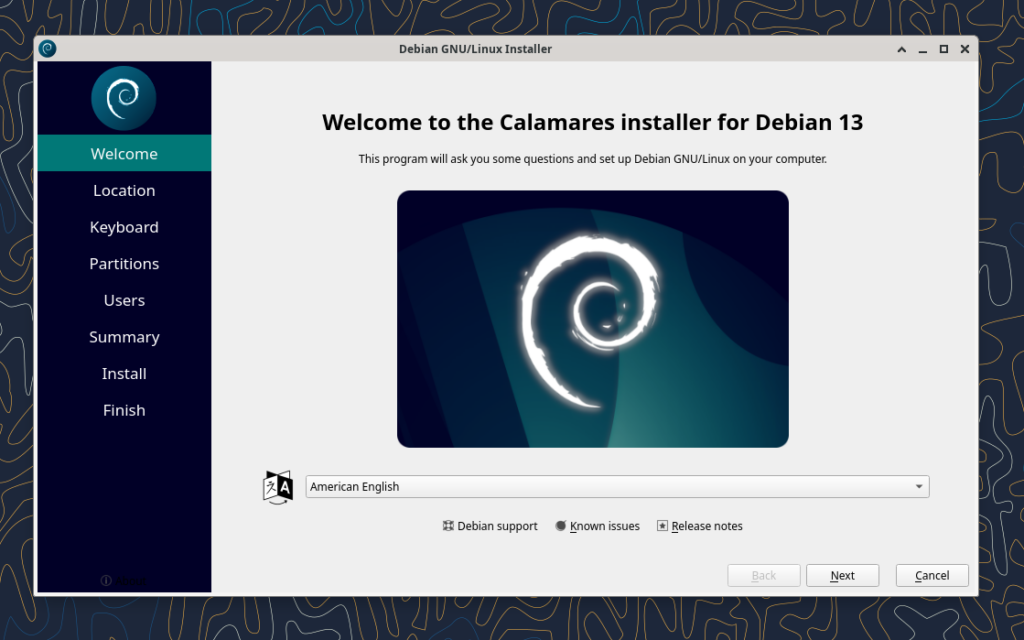

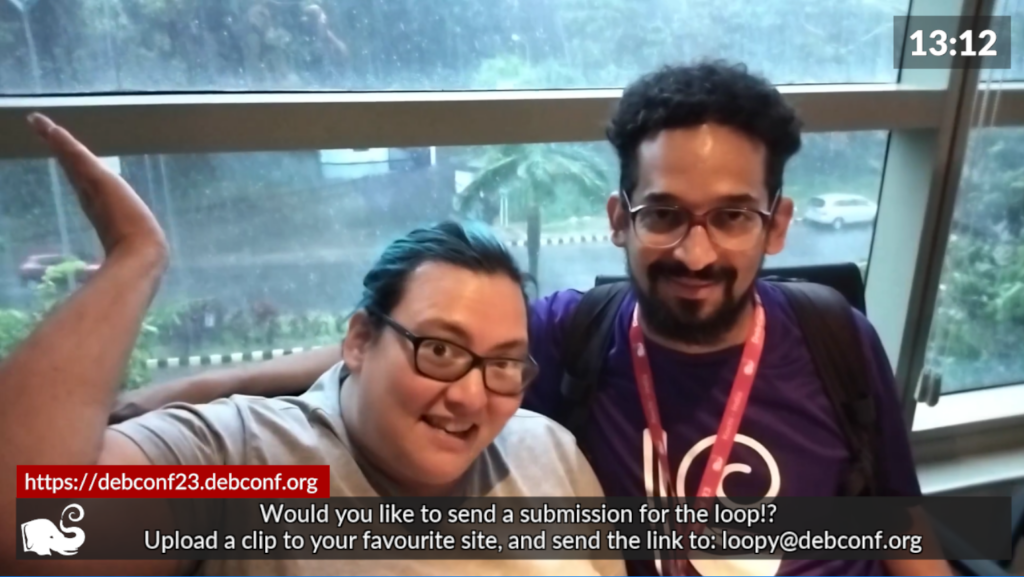
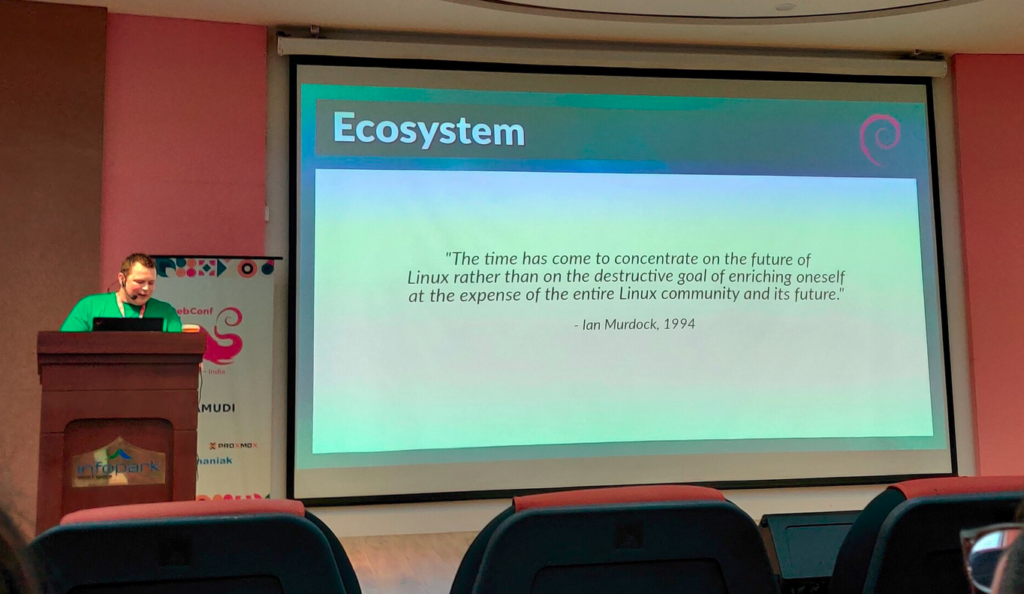
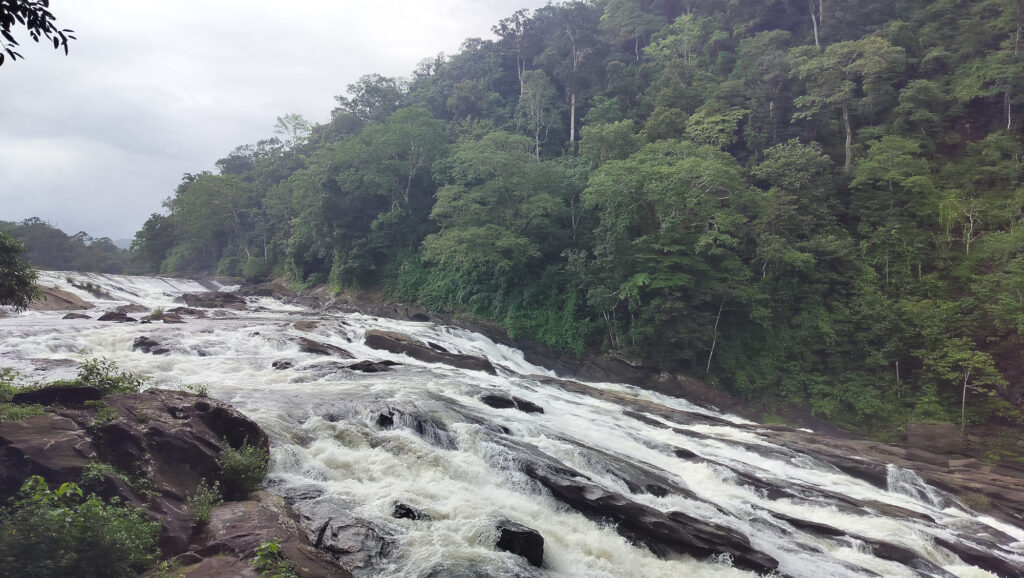
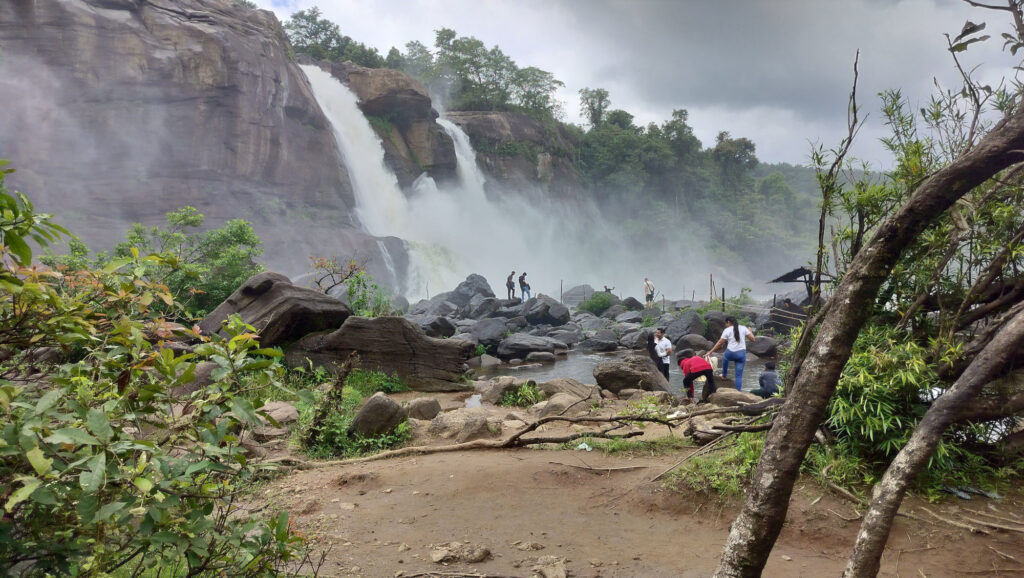
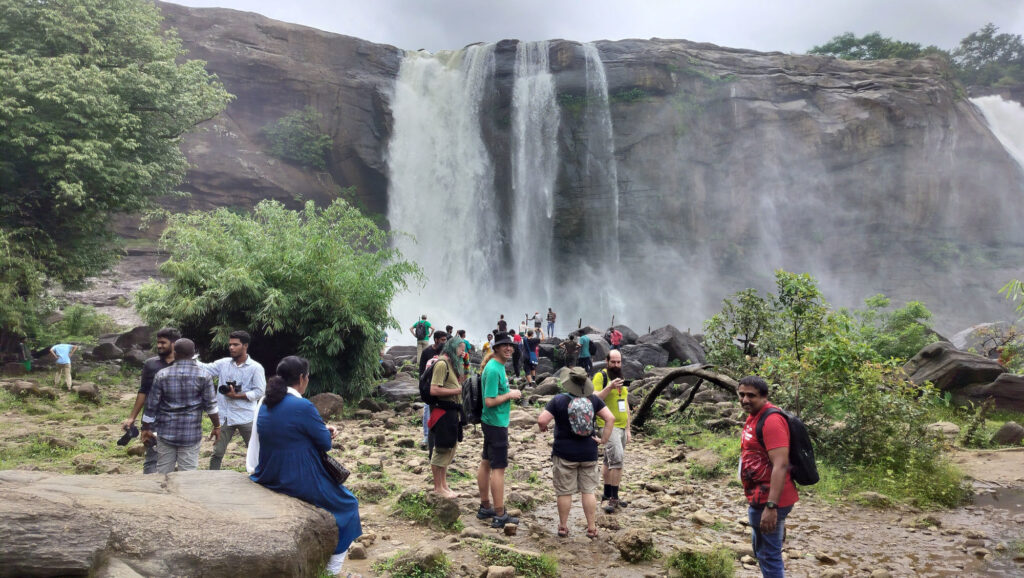
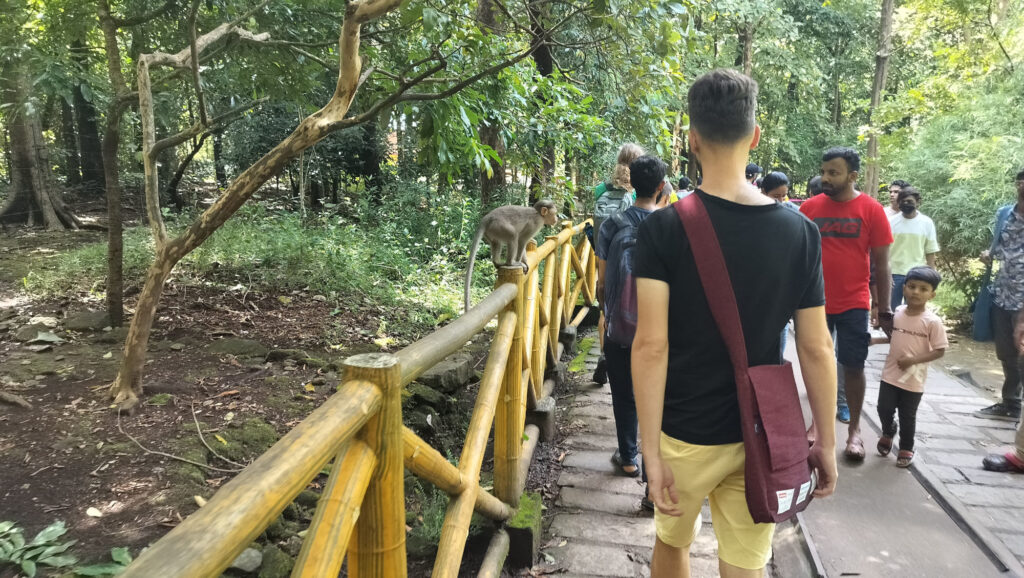


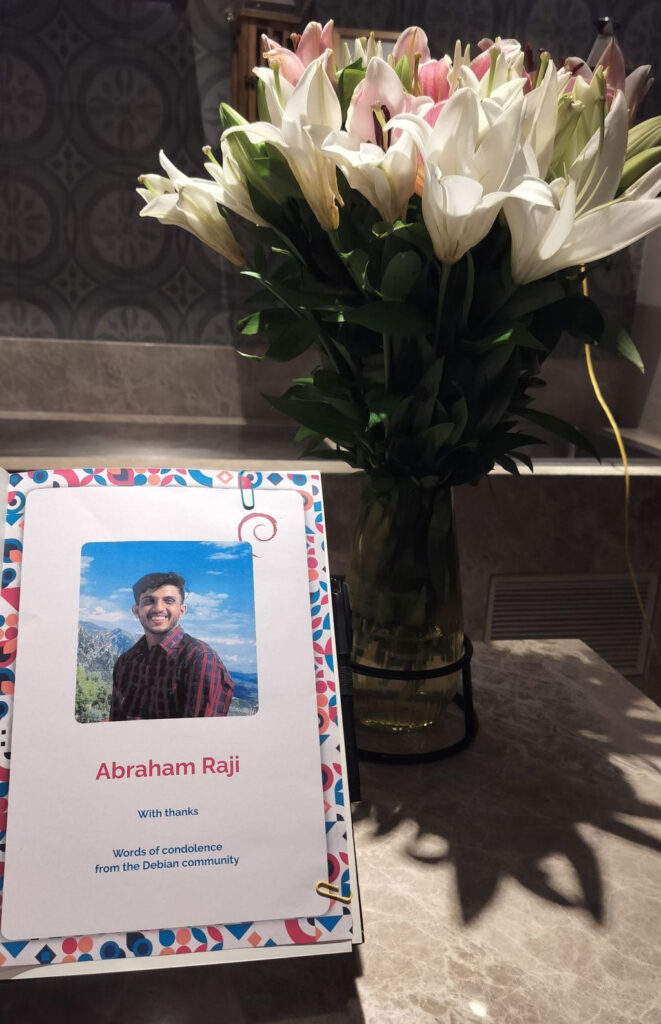
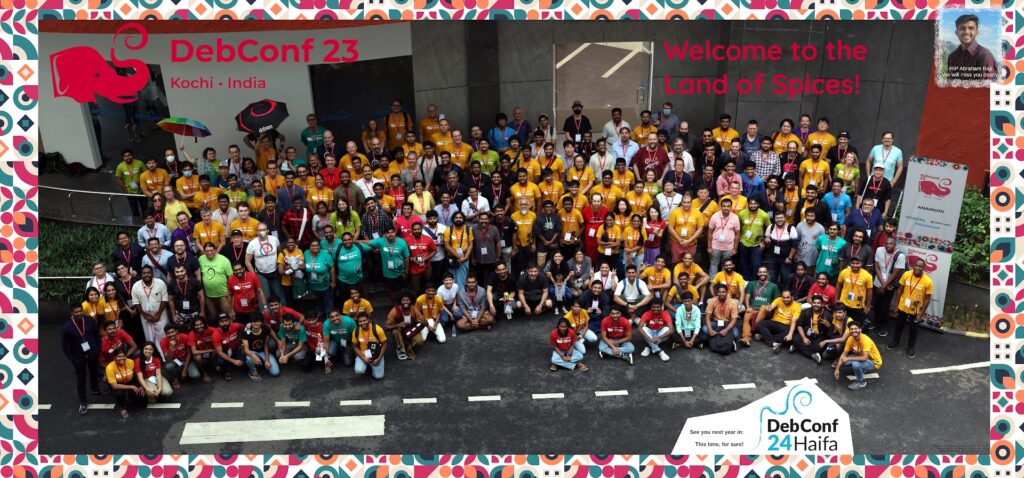
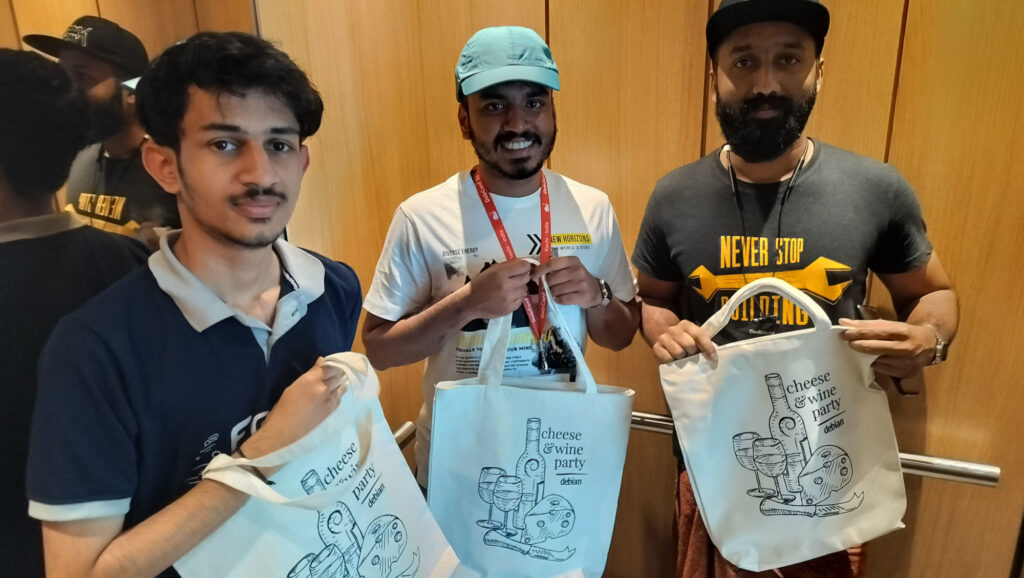 If you got one of these Cheese & Wine bags from DebConf, that s from the South African local group!
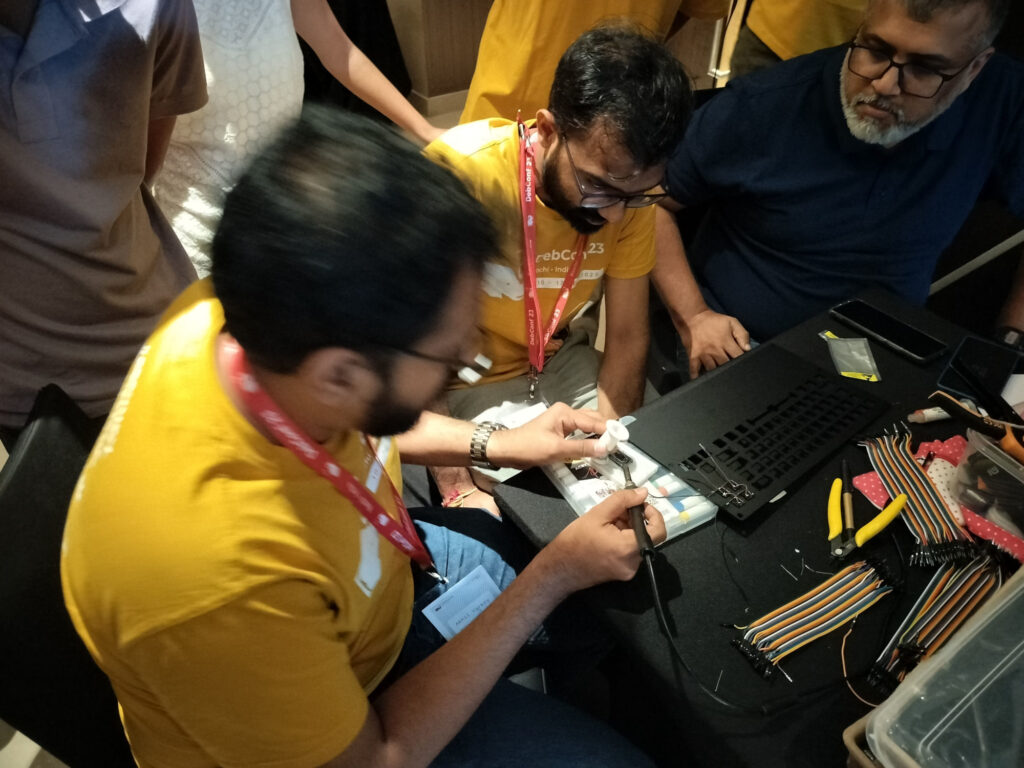 Some hopefully harmless soldering.
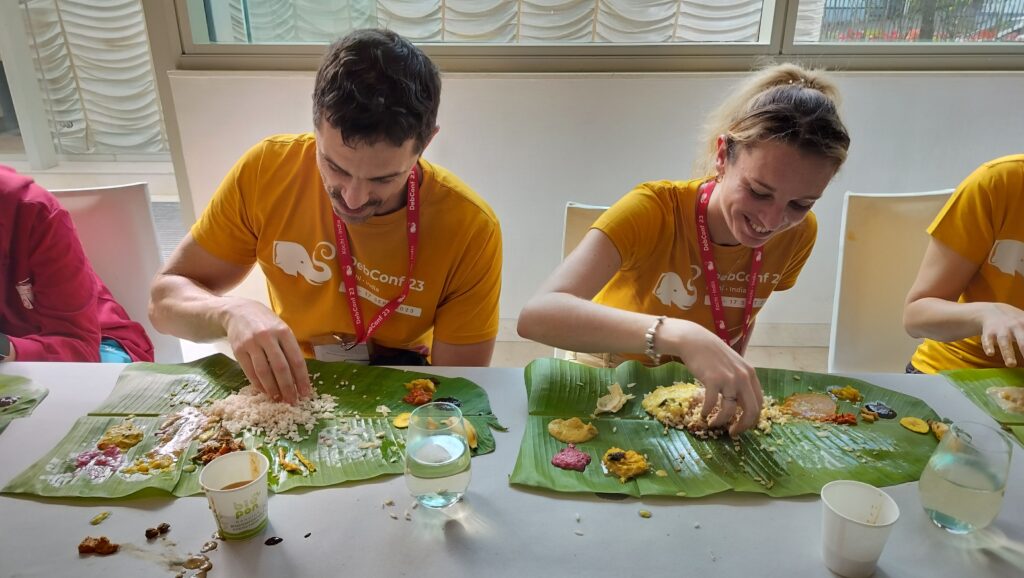

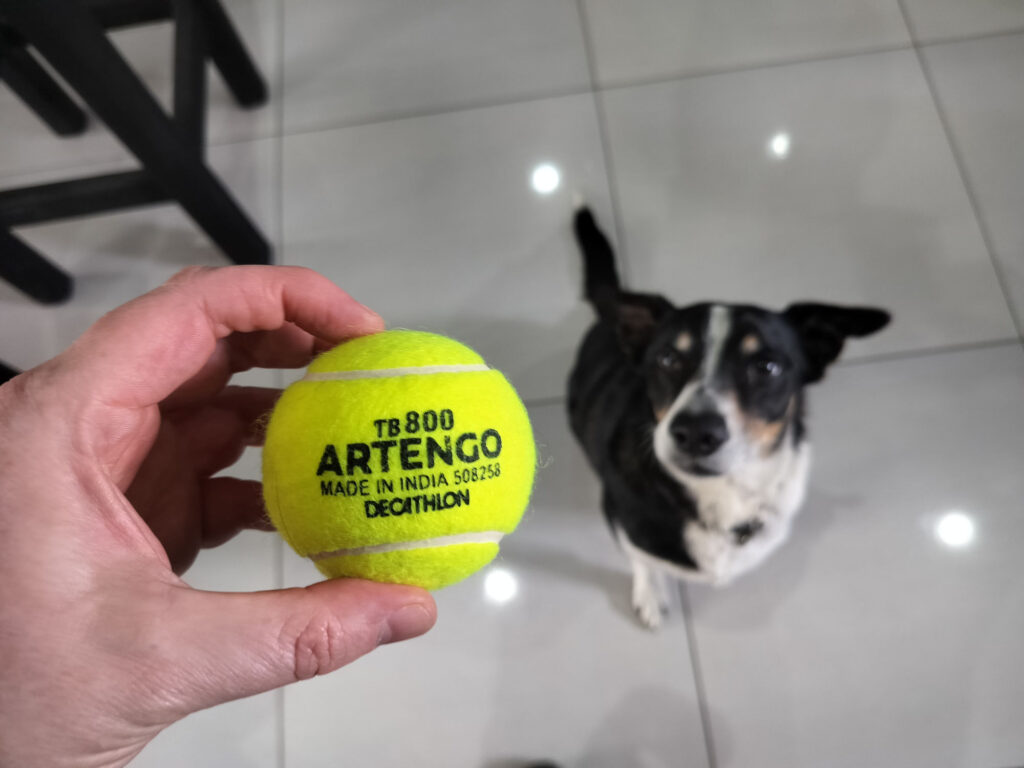

 QNAP TS-453mini product photo
 The logo for QNAP HappyGet 2 and Blizzard s StarCraft 2 side by side
 Thermalright AXP120-X67, AMD Ryzen 5 PRO 5650GE, ASRock Rack X570D4I-2T, all assembled and running on a flat surface
 Memtest86 showing test progress, taken from IPMI remote control window
 Screenshot of PCIe 16x slot bifurcation options in UEFI settings, taken from IPMI remote control window
 Internal image of Silverstone CS280 NAS build. Image stolen from
 Internal image of Silverstone CS280 NAS build. Image stolen from
 NAS build in Silverstone SUGO 14, mid build, panels removed
 Silverstone SUGO 14 from the front, with hot swap bay installed
 Storage SSD loaded into hot swap sled
 TrueNAS Dashboard screenshot in browser window
 The final system, powered up


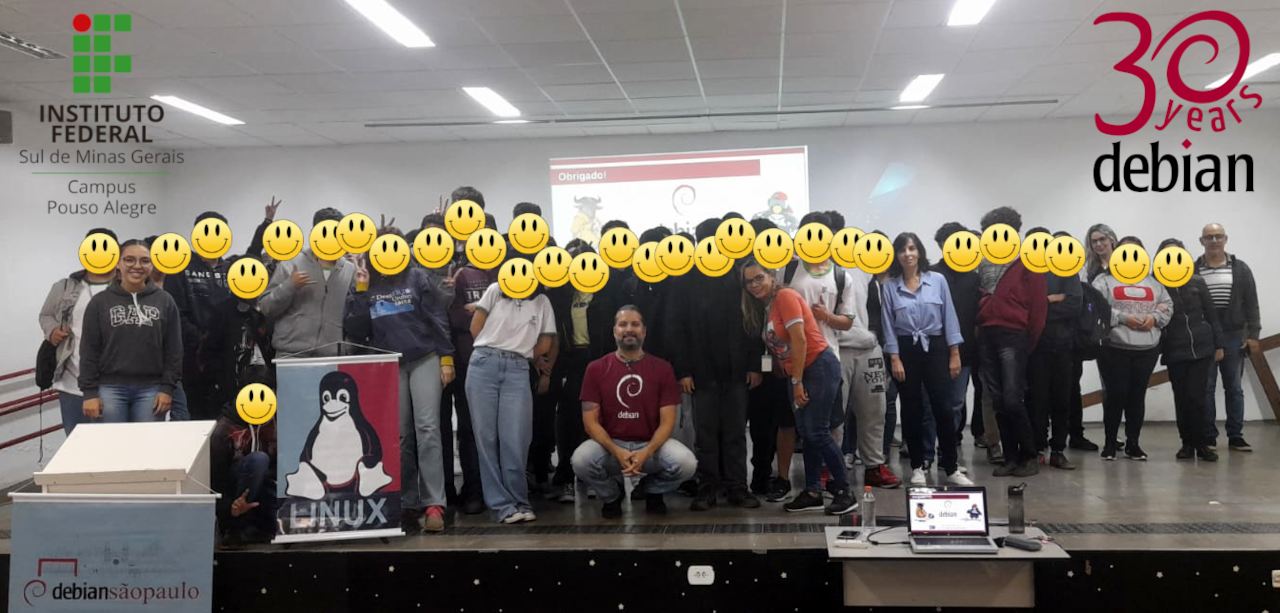
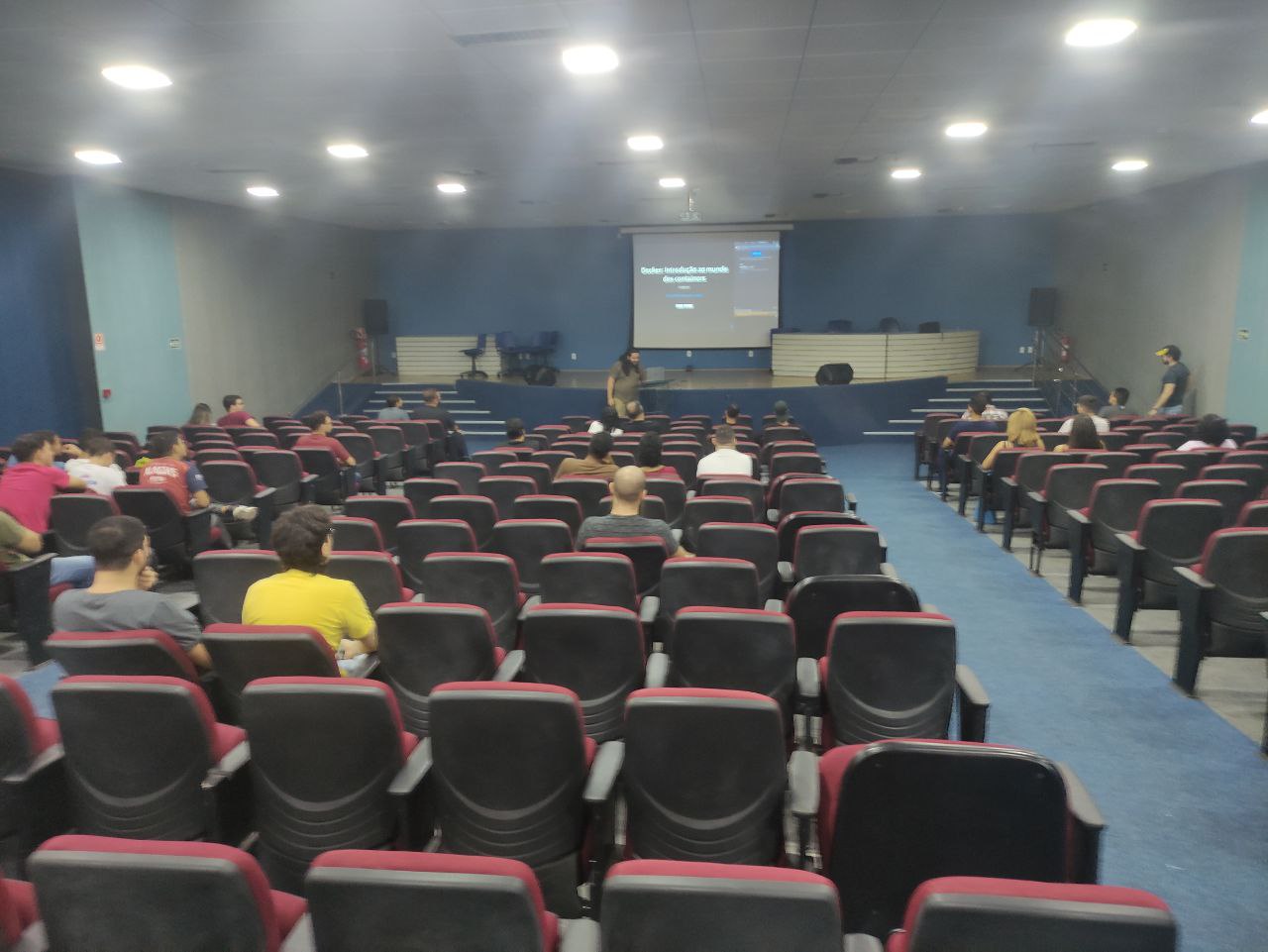
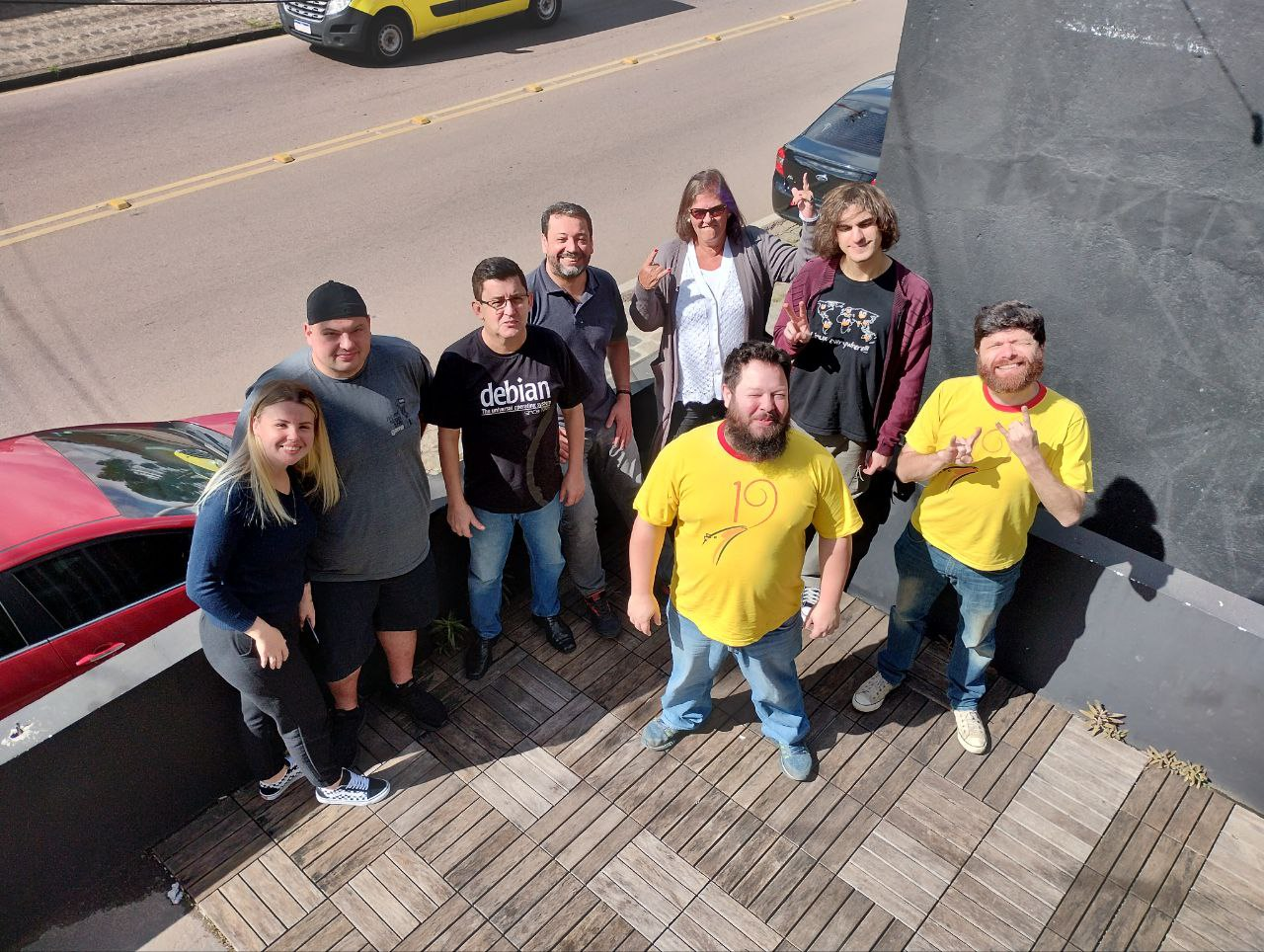
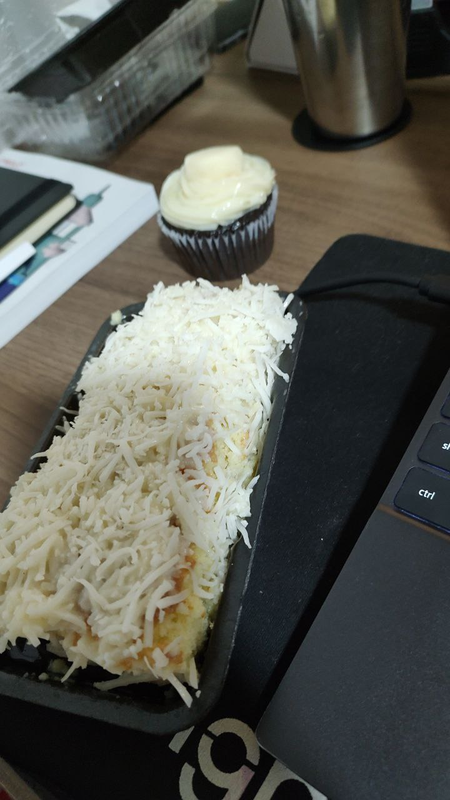
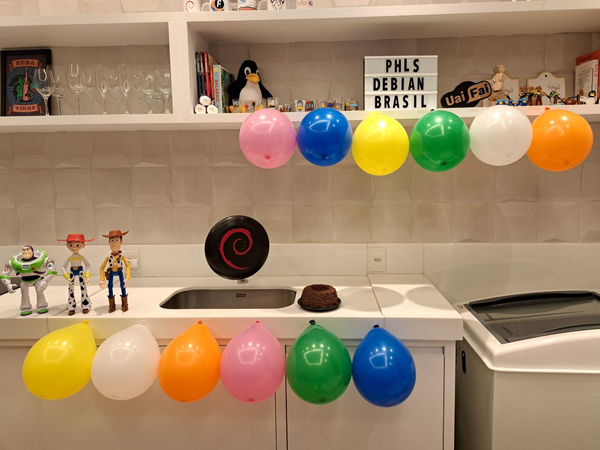
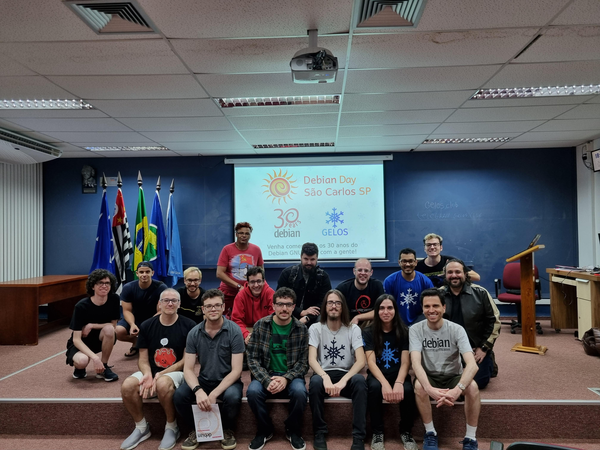
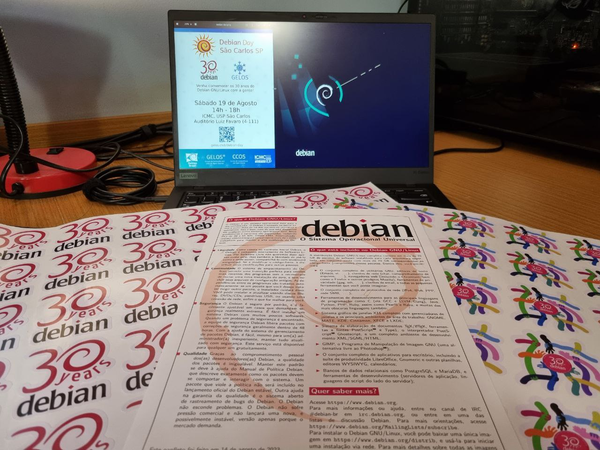
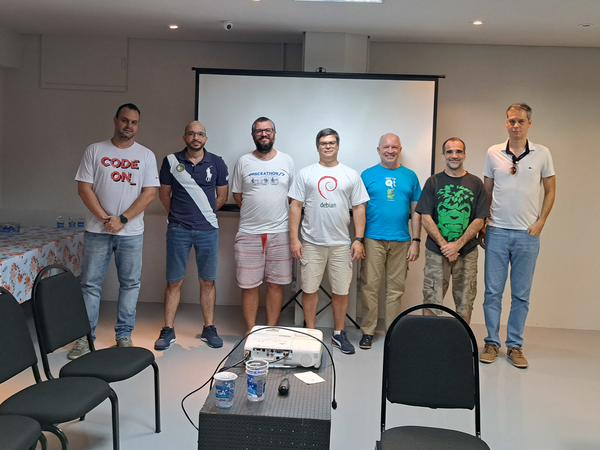
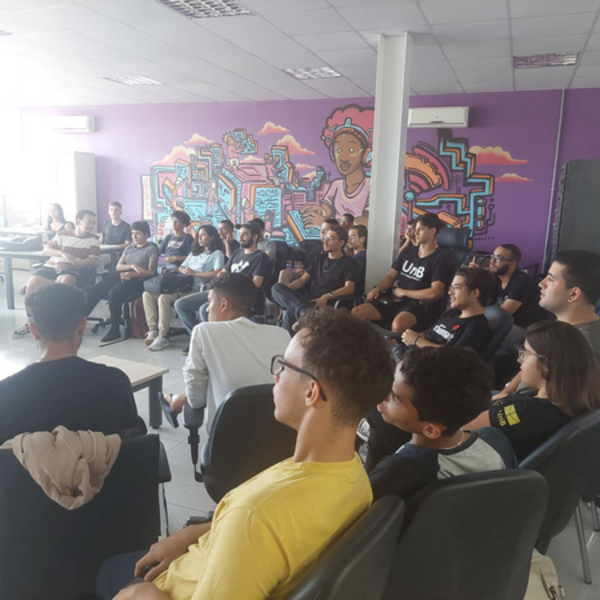
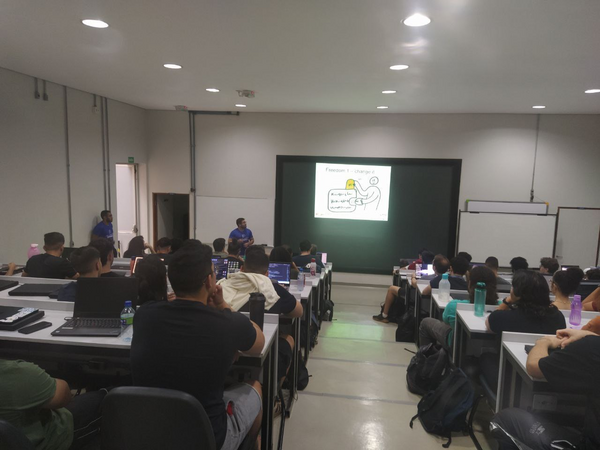
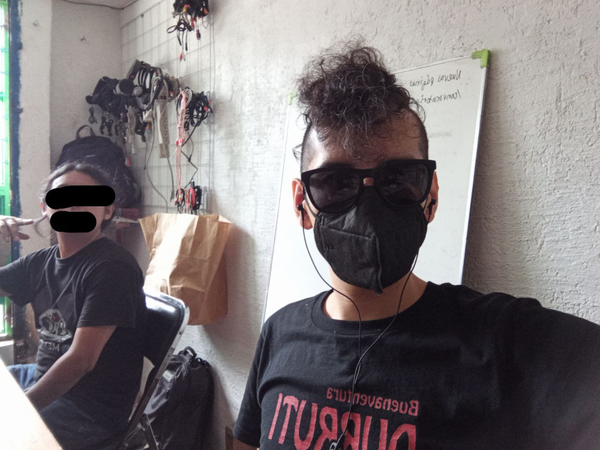
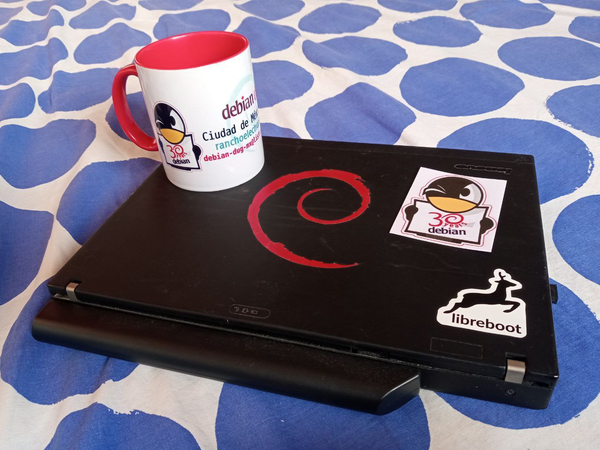
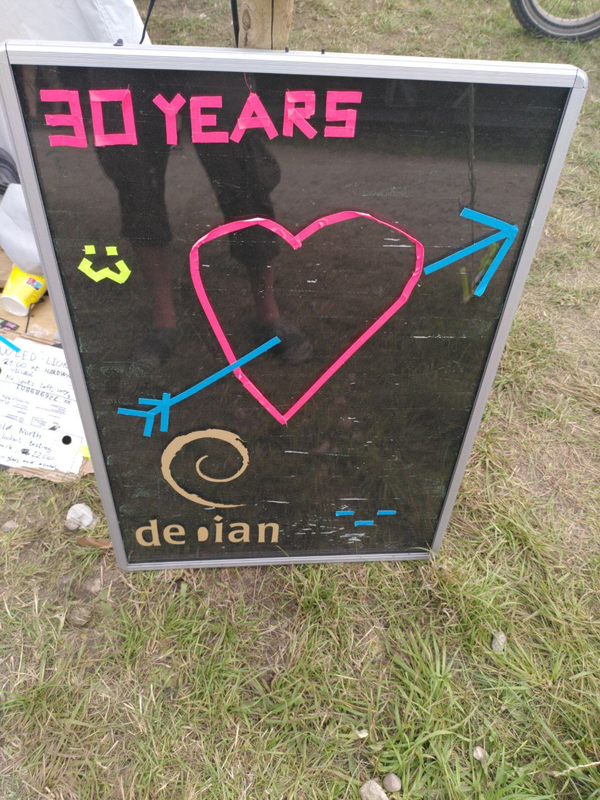
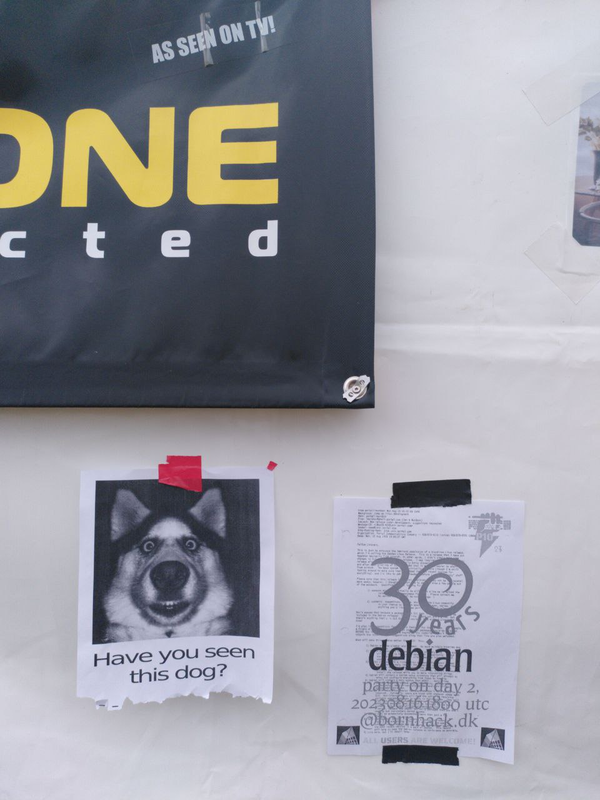
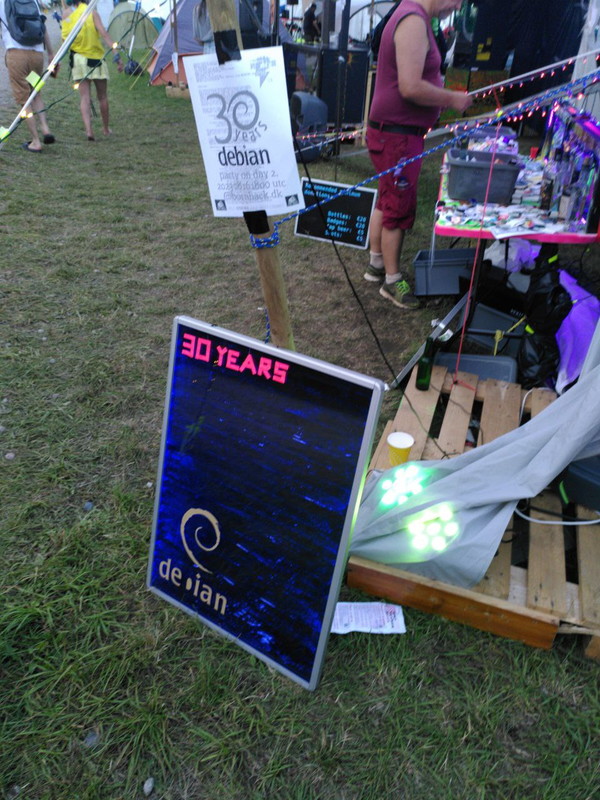
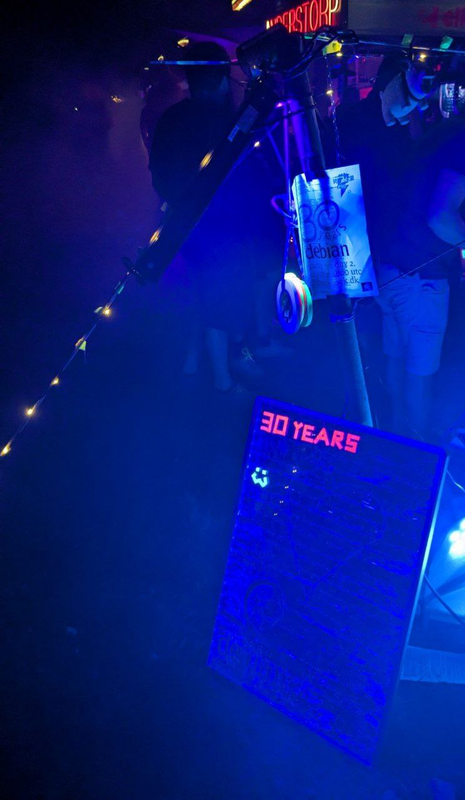
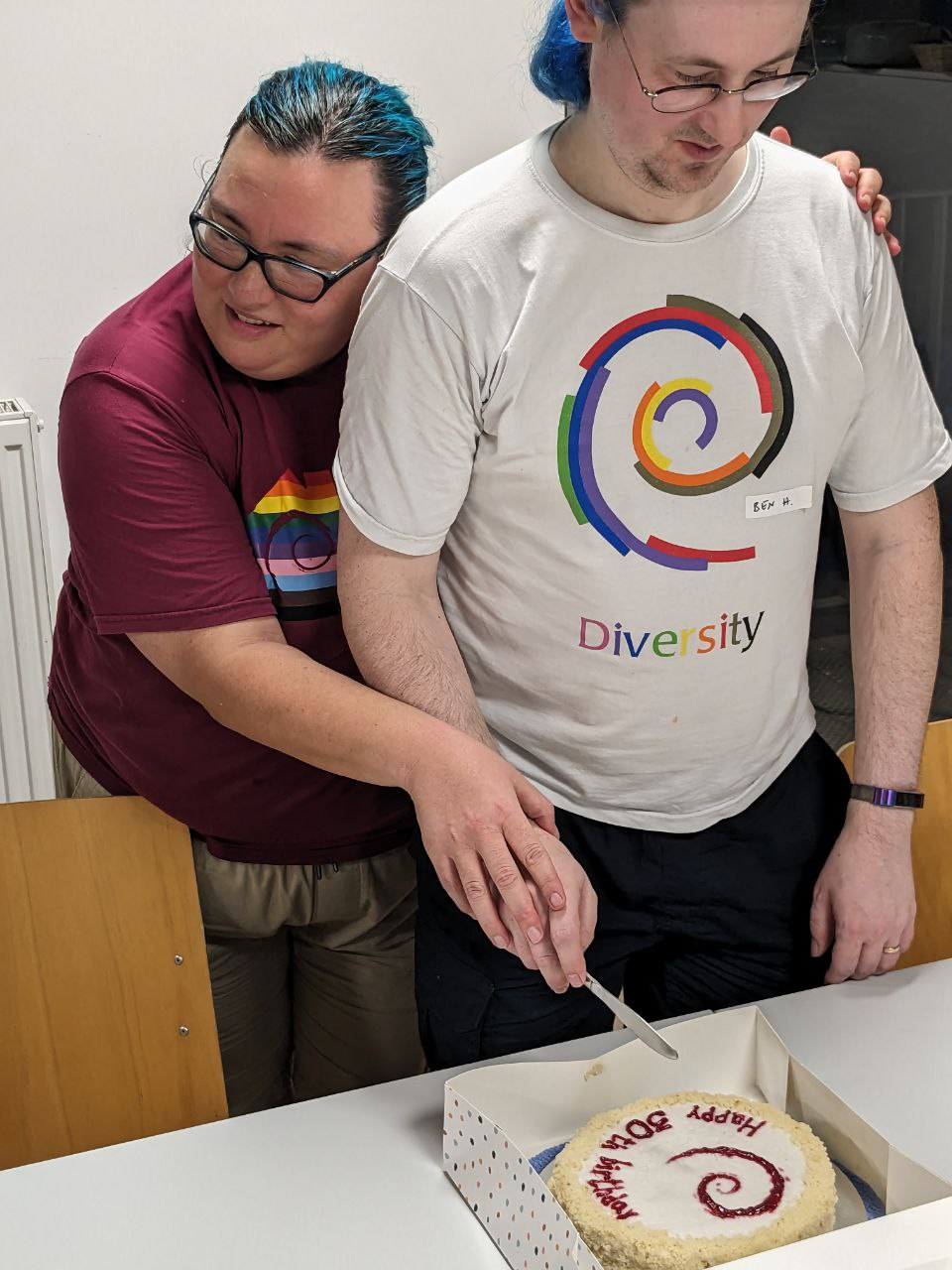
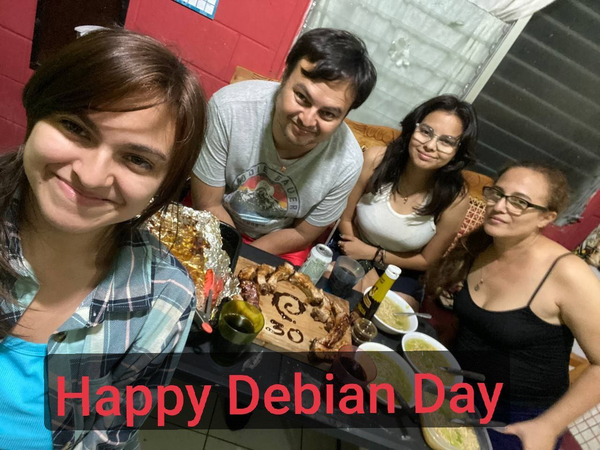
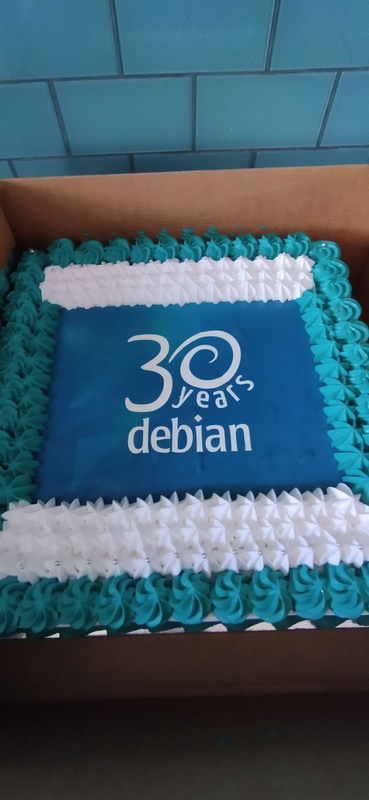
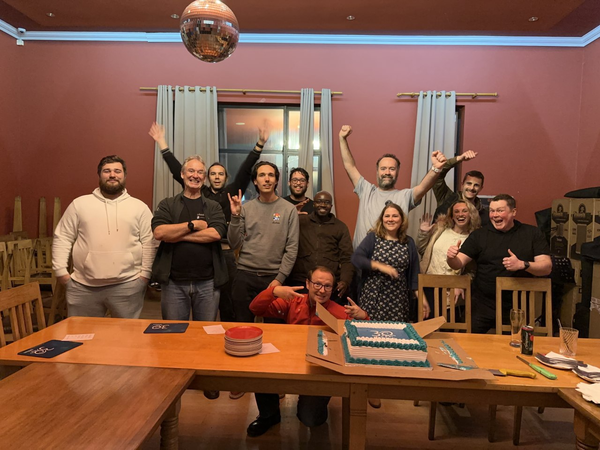
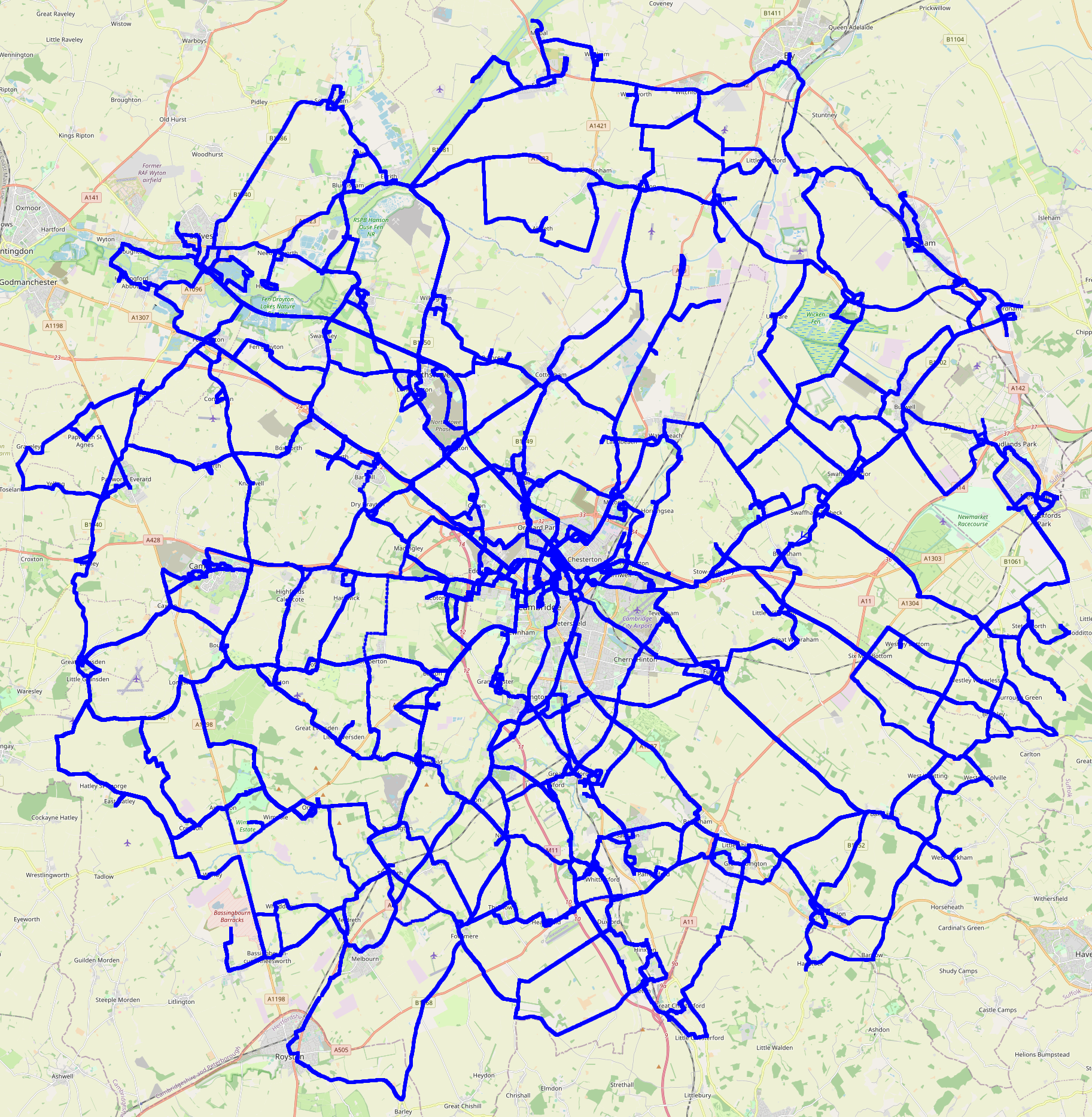 Edited 2023-08-25 01:32 BST to correct a slip.








 Like each month, have a look at the work funded by