Search Results: "georg"

2 August 2010

Debian News: New Debian Developers (June and July 2010)

The following developers got their Debian accounts in the last month: Congratulations!

22 June 2010

MJ Ray: Budget 2010: take 2 (IT, Co-ops and Community edition)

I ve been watching the June budget and pondering its effects on me, our co-op, co-ops in general and the wider community.
IT Taxes
I just want to flag this one up as a special interest: the telephone tax is killed off before it starts. Yippee! But now we get to wait and see how the government will support private investment to get universal provision of fast broadband. I ve no problem with tax relief for the video games industry being scrapped - why should any type of software get special treatment?
VAT up 2.5% to 20% from 4 January 2011
This seems bad for everyone. It s a bit less bad for our co-op because we have some international suppliers, whose sales tax rates won t change, but we buy a lot from the UK too and it hurts all our workers.
Personal Taxes
The basic income tax allowance rise of 1,000 is welcome, as is restoring the pension-earnings links. More widely, the freezes in various things, increase in Capital Gains Tax and drop in cider tax all seem broadly good ideas. The housing benefit 400 maximum is a bit mixed - how bad it is may depend how lenders react when borrowers get into difficulty.
Business Taxes
At a time when a VAT increase is called unavoidable , it stinks a bit to cut corporation tax, extend the 10% capital gains tax allowance and raise the employers National Insurance threshold. Of course, our co-op pays none of those, so it also hurts us by giving our competitors an advantage.
Business Incentives
George Osborne said he wants to tackle regional economic differences, but the big change in this budget is bad for all existing businesses outside London, the South-East and East: National Insurance exemptions for new businesses. Once again, existing co-ops take it in the neck from another government obsessed with capitalism and employment instead of businesses and work. Meanwhile, increasing the Enterprise Finance Guarantee props up debt-laden business and a new Growth Capital Fund encourages capitalist businesses, while both appear useless to good co-ops at first glance. I don t mind being ignored, but could we please elect a government which doesn t actively hinder co-ops? Where s the fabled commitment to fairness ? Promises around the Green Investment Bank and Green Deal sound good, but are in the future.
Council Tax
Council Tax will be frozen for a year. I wonder if that applies to parish councils, because our village planned a cut after a one-year project-based increase last year. The Budget Document has pretty much no detail.
So, how was it for you? Have I missed some friendly changes?

29 March 2010

John Goerzen: Trip part 6: Prague

Note: this post written on March 20-21 and posted after our return. IMG_2895
(two women looking into the crypt at St. George s Basilica) We ve had a good couple of days in Prague. The city definitely feels more, well, foreign than Germany and that is perhaps accentuated by the fact that I don t know any Czech at all, while I know some basic German. It s been slow going at times, and surprisingly easy at others. Despite my lack of knowledge of Czech, I d say communicating here has been roughly as easy as in Germany. That is perhaps partially due to the fact that, of the places where we ve needed to communicate, we are either making simple requests (buying bread at a bakery) or the people we re talking to know some basic English. (Or, in one case, a guard at a museum at the Prague Castle complex used German to ask me to check a bag at the coat check, mildly surprising me and confusing Terah when I started to comply with instructions she didn t understand, and didn t know how I did.) The very first time we had a situation where it was a bit difficult to communicate, in the bakery, I got into my difficult to communicate mode and accidentally slipped in a couple of German words. Oops. Terah was laughing at me later, and commented that the store owner might have also been laughing at me or perhaps at his employee that also accidentally slipped into basic German mode. On Friday, we visited Vy ehrad Castle, the one that nobody that visits Prague seems to know about. That is perhaps because the palace/castle part of the complex has been mostly destroyed (but we did know that before going there.) It is in a nice, quiet, and beautiful park, and has the beautiful and old Basilica of Saints Peter and Paul, as well as a large ornate cemetery. Then we visited two iconic Prague places: V clavsk n m st (Wenceslas Square) and Starom stsk n m st (Old Town Square). Both were beautiful. And, unfortunately, also packed with tourists and made-in-China plastic trinket shops. There I got my first clue that large tour groups tend to have a detrimental effect on any free site in Prague. They come in, the guides yell, they clog up things, and also generally miss the sites of true interest because buying tickets to them makes the price of the tour uncompetitive. On Saturday, we took the tram out to Pra sk hrad (Prague Castle) the one that everybody knows about. We got there at about 8:15, and although the grounds are open, most of the buildings weren t open until 9. As a result, we had 45 minutes almost to ourselves in the nearly-empty castle complex. We could walk around on the giant squares, take some photos, and generally enjoy a crisp and quiet morning. IMG_2771 At 9, it was still pretty empty and we went into the ticket offices to buy our tickets. By the time we got out a few minutes later, it was packed mostly due to the arrival of innumerable tour groups from all over Europe and, apparently, Japan. We went to the Star kr lovsk pal c (Old Royal Palace) first, since I knew from their website that it would close at noon due to a visit from Prince Charles. That was a beautiful building, and it s amazing to read about the features of it that are centuries old or even almost a thousand years old. The Vladislavsk s l (Vladislav Hall) and chapel particularly caught my eye. Underneath the palace is a museum, including some 1000-year-old jewelry and flooring, and some clothing that is several hundred years old recoverd from burial plots. IMG_2775
(Vladislav Hall) Next, we went to the iconic (and free) Katedr la svat ho V ta (St. Vitus Cathedral). Our audioguides fortunately allowed us to bypass the long line, and we could step inside at a side door. That was one of many times in Europe I stepped inside a building, and suddenly came to a stop with a wow . That building is every bit as much impressive as it is made out to be, even crowded as it was. IMG_2839 We also went to Bazilika Sv. Ji (St. George s Basilica), which one of the guides described as ancient . It was another wow moment, and it felt like the oldest church we were in yet. I think it probably was, actually; last rebuilt in 1142. IMG_2874 For lunch, we asked for a recommendation from our hotel. They suggested one place, which we walked to. It was a nice easy walk down some Prague side streets, but the restaurant and all the others along our walk were closed on Saturday. We eventually made our way back to the hotel and asked for a new recommendation, which was successful this time. Terah ordered some ribs, while I ordered a more traditional Czech goulash, which happened to be served in a bread bowl. A minute later, the waiter brought Terah a fork and knife. And he brought me a bowl of water with a slice of lemon, and announced wash for you. That was a surprise, and a bit puzzling one at that. Turns out that eating bread that had stew served in it is indeed a bit messy, and having some water to clean up with is indeed helpful. We met up with Anna from Leipzig and one of her Czech friends for dinner Saturday night. We found a nice local Czech place. I had ham with sauerkraut in a folded potato cake. It was excellent, and the total bill for Terah and me came to 235 Kc or about $12.50. We had a nice walk back to the hotel in the crisp, dark evening. Sunday morning we had breakfast at our hotel the only time we ate a meal at a hotel this whole trip then got on the tram, the metro, and the bus to the airport. Total cost for that trip for two: 52 Kc, or about $2.75. Far cheaper than a taxi. One weird thing happened to us in Prague. We were riding the tram towards downtown, and as we would be on it for several stops, Terah was sitting. I was standing as there wasn t an available seat for me. Terah and I were both looking out windows, until Terah was startled because her arm was wet. She looked around and it turned out a middle-aged woman had spit on her, and was glaring at her. We never did figure out why. About all we can think of is maybe someone else, such as a very old person, had gotten aboard but Terah hadn t noticed and therefore didn t offer to give up her seat. That was probably the only real rude gesture towards us on the entire trip. We ran the story by Anna s friend (the native Czech) and she was as surprised and baffled as we were. As I wrap this up, we re sitting at our gate in Prague waiting for our flight to Munich. In this airport, in an out of the way corner on the very lowest floor, I spotted only the second drinking fountain I ve seen in Europe this entire time and also perhaps the continent s most expensive cup of coffee. After we get to Munich, it s a flight to Chicago, another to Indianapolis, and finally a drive home Monday.

5 March 2010

Asheesh Laroia: What are you avoiding working on?

(Cross-posted from the OpenHatch blog.) I remember working on my first big group programming project back in college. The project involved some web scraping work; I enthusiastically took charge of that part. But a few weeks in, my code just wasn t working. I felt frustrated and helpless I m supposed to be the scraping expert, so why couldn t I fix the problems? I retreated into hiding and didn t want to think about the group of people or the project. A week later, I feebly ran svn update to see how the project had progressed. Oh! I exclaimed to myself. Someone made the data importer work! I felt a rush of relief. (While writing this paragraph, I sighed again remembering it.) When I talked to my teammate George, he mentioned off-handedly that he had fixed it. He didn t feel any of the anguish I felt or assign me the blame I thought I deserved. I guess if I had just asked for help earlier, I could have skipped the feelings of inadequacy entirely and George would have just fixed the bug. Half a decade later, I feel the same dread about the lack of Maildir support in Alpine. The bug is three years old! Ugh. This time, I m going to ask for help. So I listed the issue on the Alpine project page on OpenHatch. To put it there, here s what I did: For those of you who work on Free Software projects, what are the issues that drain you the same way? No bug tracker I ve seen has a field that says, I m avoiding working on this, and that sucks. To say that, list the issue on your project s OpenHatch page. So join in! What are the issues you don t want to think about? Once you share them, maybe a fellow developer or a new contributor will come by and help you out. Head to OpenHatch and let the world know. P.S. Do you have any ideas about how we can make these project pages more useful? Let us know! P.P.S. Dear Joey Hess and everyone else, sorry that Alpine still doesn t have Maildir support.

13 December 2009

Julian Andres Klode: APT2 progress report for the 1st half of December


This week was successful. I have pushed some changes from November to the repository which change the license to LGPL-2.1+ (which makes bi-directional sharing of code with other projects easier, since most Vala code is under the same license) and implement HTTP using libsoup2.4 directly, instead of using GIO and GVFS for this. I also added a parser for the sources.list format which uses regular expressions to parse the file and is relatively fast. The code needs a current checkout of Vala s git master to work correctly; as released versions had a bug which I noticed today and J rg Billeter fixed in Vala 25 minutes later; thank you J rg. While nothing else happened in the public repository, the internal branch has seen a lot of new code; including SQLite 3 caches; Acquire text progress handling; and capt; the command-line advanced package tool. Most of the code will need to be reworked before it will be published, but I hope to have this completed until Christmas. It will also depend on Vala 0.7.9 or newer, which is yet to be released. The decision to use SQLite 3 as a backend means that we won t see the size limitations APT has and that development can be simplified by using SQL queries for filtering requests. It also means that APT2 will be very fast in most actions, like searching; which currently happens in 0.140 seconds (unstable,experimental and more repositories enabled), whereas aptitude takes 1.101 seconds, cupt (which has no on-disk cache) 1.292 seconds, and apt-cache 0.475 seconds. Searching is performed by one SQL query. I also want to thank Jens Georg <mail@jensge.org>, who wrote Rygel s Database class which is also used with minor modifications (like defaulting to in-memory journals) in APT2 as well. Rygel.Database is a small wrapper around sqlite3 which makes it easier to program for Vala programmers. The command-line application capt provides a shell based on readline with history (and later on command completion) as well as direct usage like capt config dump or capt search python-apt . Just as with Eugene s cupt, capt will be the only program in the core APT2 distribution and provide the same functionality currently provided by apt-get, apt-config and friends. The name is not perfect and can be easily confused with cupt , but it was the closest option for now; considering that the name apt is already used by Java (for its Annotation Processing Tool ). That s all for now, I ll tell you once all those features have passed my QA, and there is really something usable in the repository. In the meanwhile, you can discuss external dependency solvers, database layouts and other stuff in their threads on deity@lists.debian.org. And a screenshot from capt:
jak@hp:~/Desktop/APT2:temp$ capt
apt$ help
APT2 0.0.20091213 command-line frontend
Commands:
  config dump               Dump the configuration
  config get OPTION         Get the given option
  config set OPTION VALUE   Set the given option
  search EXPRESSION         Search for the given expression
  show PACKAGE              Show all versions of the given package
  sources list              Print a list of all sources
  version                   Print the version of APT2
apt$ search python-apt
build-depends-python-apt - Dummy package to fulfill package dependencies
python-apt - Python interface to libapt-pkg
python-apt-dbg - Python interface to libapt-pkg (debug extension)
python-apt-dev - Python interface to libapt-pkg (development files)
python-aptdaemon - Python module for the server and client of aptdaemon
python-aptdaemon-gtk - Python GTK+ widgets to run an aptdaemon client
apt$
Posted in APT2

22 October 2009

Gunnar Wolf: How can we advance without a tax increase?

There has been a lot of buzz recently in Mexico after a tax increase that has been announced for next year. The two main points I have seen criticized are:
Value Added Tax (IVA) increase from 15% to 16%
There was a great improvement regarding the original proposal by our de-facto ruler (why de-facto? Because it is still unclear whether he won the popular vote. He has about the same legitimacy as George Bush during his first term: Legal but illegitimate): In Mexico, there is a category of items regarded as fundamental, which are exempt of IVA (tasa cero). This category includes food and medicines Of course, this category makes up the bulk of the poorer people's consumptions, so they pay much less IVA than people with higher living standards. For a very long time, there has been a push to remove this exemption. This has been fortunately clearly understood and fought against. So, the presidential initiative, as I was saying, contemplated a global 2% tax which would not be IVA, and which would be applied universally. This tax would be earmarked to be applied to social programs, and was euphemistically called Impuesto de Combate a la Pobreza (poverty combat tax). Many people applied the concept of duck typing (if it looks like a duck, walks like a duck and quacks like a duck... It is a Value Added Tax). As many analysts, I believe this tax was meant to be the foot in the doorstop, leading to point out in a couple of years that anyway nothing is IVA-exempt anymore and the world has not come to an end, and we should apply universal IVA... So, the reduction in the increase (2% 1%) is not the most notable thing here The notable (and good!) thing is that they didn't succeed into killing the tasa cero.
3% tax on telecommunications
Many friends have started rallying (with the IMHO least effective way of protest you can find on Earth, just by stating their adherence in their Twitter and Facebook profiles. Wow, great deal!) that the original proposal included a 4% tax on telecommunications, and it appears that 3% will be applied. They say, quite fairly, that telephone and Internet access are no longer considerable a luxury, but a need to power the society into becoming better prepared, more competitive. My friends state as a contrast the Finnish ruling broadband access as a citizen right. What they seem not to realize is that the proportion of taxes in Mexico (collected from the responsible taxpayers, which is not by far the way for the bulk of the money in this country) is close to 30%, taking into account the big taxes (IVA, ISR/IETU) and the host of smaller ones. In Finland, the percentage of taxes payed by every person and remember that tax evasion is way lower than here!) is over 50%.
So What is my opinion on this? What would my ideal tax scheme be?
  • Nobody likes taxes. But the country needs far more infrastructure, far wider inverstments. We need higher taxes But we need those taxes to be collected from people with higher income. And yes, that would mean I would most probably pay more (as I do sit relatively high on the income scale Qualified work, even if you do not seek money for the sake of it, pays much better than non-qualified work; remember the minimal wage in Mexico is around MX$50 a day - Less than US$4 or 3).
  • The increases should be applied to the income tax (ISR). It is supposed to be around 30% for income levels over MX$5000 a month, with a very slight increase after that point. Income tax is highly deductible now, and most people with high income manage to ellude most of it. Many cases have been documented of companies as small as Walmart paying less than MX$1000 a year due to several (intentional? you bet!) holes in the legislation. That is where the bulk of the extra government income should come from!
  • For a couple of years, since I registered as a taxpayer (people receiving money exclusively as salaries under a given limit don't have to declare taxes) I have decided not to hire an accountant to make the numbers look prettier, and just do the numbers myself over the platform provided by SAT/Hacienda (the tax collecting authority). Yes, that means I am paying more than what I could But it also means I am paying what I should! And it is an expensive point of view, but I strongly invite others to do the same. If we criticize Walmart for making numbers look prettier, shouldn't each of us do the same? Shouldn't we all care to pay what we are supposed to, so that the government has enough funds to carry out its tasks?
Yes, I am painfully aware that an important portion of what gets into the government disappears due to corruption and ineptitude. Still, the only position from where I can criticize is from being clearly legal. The same point as I do with software: I cannot ask people to comply with my Free Software licensing if I use ilegally propietary software, can I? So no, I don't use any. Even legal propietary software, free-as-in-beer (i.e. Flash player). So, please think this over before you join the Lemmings into complaining about the tax increase. Yes, this is a bad moment to increase taxes. Yes, Mexico is the worst faring country in all of America in its response to the crisis; the GDP will probably fall between 8% and 10% this year and 2010 will not be much better. Yes, it would be better to increase competitivity. But, yes, we pay ridiculously low amounts of taxes And those of us who can afford a little reduction in our expenditure should do it. And those who make gross money should just stop it. Oh, and last point, regarding the #internetnecesario Twitter hashtag: Don't be Lemmings. Internet should be recognized a basic need for a free society. But right now in our country, it completely is a luxury, even if you cannot live without it. If you are Internet-addicted as myself, you most probably will not notice the 3% increase. FFS, We will pay MX$360 instead of MX$350 a month for my Infinitum connection. Will we really notice? In Mexico, middle and upper class are Internet-enabled. Lower classes are not. Things should change, no doubt. But it is not at all comparable to an universal IVA. Things should change and universal connectivity should be a given. But right now, calling Internet a basic good... is just out of touch with reality.

10 October 2009

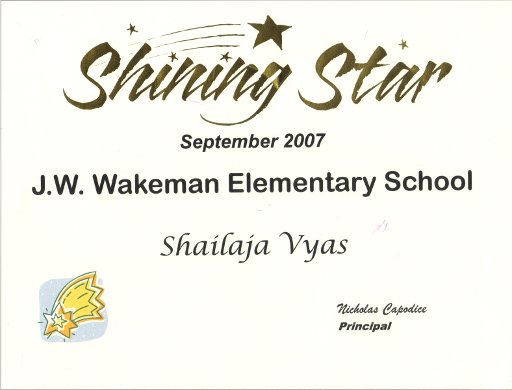
Jaldhar Vyas: Barack Obama is a Keynesian

pointless award I haven't written about politics since the election for several reasons. First and foremost, Obama won fair and square. While I might wish the other guy had won, I can't whine and pout or threaten to move to Canada like some people. The vox populi chose and that choice has to be respected. Secondly, one of the worst aspects of the current American political scene is the paranoid obsession with personalities in which the president is not just an implementor of policies good or bad, but personally responsible for the entire state of the cosmos. It started with Nixon, started getting alarming with Clinton and reached batshit levels of insanity with George W. Bush. But just because the left does it it, doesn't mean we have to follow suit. Although I figured Obamas policies would end up a trainwreck, I wanted to see what he actually did before calling him on it. The Nobel comittee isn't hoping and changing with me. In a decison that is bizarre even by the lax standards of a prize that long since jumped the shark, the President is to receive the Nobel Peace prize for...not being George Bush? It's difficult to see what substantive reasons they could have for their choice. But apparently one of these days he is going to make extraordinary efforts to strengthen international diplomacy and cooperation between peoples...democracy and human rights are to be strengthened. Well let's see now: Perhaps I am being a little unfair in not taking into consideration all the great things the president is going to do real soon now. It's just that I'm worried that this might be an attempt to sway him in the task of winning the war in Afghanistan (and more likely than not carrying it into Iran and Pakistan.) I take solace in the knowledge that heretofore Obama has shown a refreshing inclination to throw people under the bus when they are no longer convenient. If he can do that to the guy who says he wrote his book than some silly Norwegians won't be a problem.

4 October 2009

Romain Beauxis: What they could (not) have said..

So apparently the debate on sexism is going on, and there are interesting contributions, in particular that blog post from Josselin Mouette. I mostly agree with Josselin. Parts of what he writes is a better expanded version of my answer on Daniel Kahn Gillmor's post. A nuance.. However, I think a nuance needs to be added. Josselin says that clich are mainly a rhetoric artifact that helps focusing the audience's mind to a specific image. Quite true. However, not all those clich may be used. For instance, I've been thinking of the following. Please, pretty please, do not get offended, this is just rhetoric arguments.. !
  • The new startup system in Ubuntu is like black people: it runs faster but it is not really clever.
  • Using a workaround for a fixing a bug is like a stinking french using perfume instead of taking a shower.
  • The bug report system is greedy as a jew.
As you may understand, only one one this clich actually makes me laugh. The two other one are strongly offending. So, not all clich are acceptable, even when used as a rhetoric form of humor. So what is the difference ? Well, I guess it is pretty clear: the black people have suffered from slavery for centuries, and are being discriminated every day based on the clich that people have about them. Similarly, the Shoah during the second World Wild War was a horrible massacre, and no one wants to use any of the clich that were very common before this happened because we have respect for this History. However, the stinky French are not really being discriminated, even though they are supposed to be arrogant socialist womanizers :-) Now, coming back to our topic, sexism, the nuance I would like to add is that of the relative overlooking of the discrimination being applied against women. I do not think I am really entitled to tell about the daily discriminations that women suffer from, but the reason why I think we accept to easily the clich about women is probably because we do not understand how bad it can be for them. And I believe this has to come with man's ego because trying to understand how it is to live the life of a woman is probably what we lack. Lagniappe An interesting related though that came to my mind in this debate about clich is about Orwell's writings. When reading Down and Out in Paris and London, I was quite offended by the use of clich about Jews and also Armenians. This was really offensive for a modern reader. But Orwell is a writer that was the perfect opposite of a dogmatic, and he constantly revised his judgment, which is why I like his writings. In particular, in his Tribune chronicle on December 10th, 1943, which is an awesome contribution in the topic so racial discrimination and social issues, we can read the following [1]:
Is there anything that one can do about this, as an individual ? One can at least remember that the colour problem exists. And there is one small precaution which is not much trouble, and which can perhaps do a little to mitigate the horrors of the colour war. That is to avoid using insulting nicknames. It is an astonishing thing that few journalists, even in the left-wing press, bother to find out which names are and which are not resented by members of the other races. The word 'native', which makes and Asiatic boil with rage, and which has been dropped even by British officials in India these ten years past, is flung about all over the place. 'Negro' is habitually printed with a small n, a thing most Negroes resent. One's information about these matters needs to be kept up to date. I have just been carefully going through the proofs of a reprinted book of mine, cutting out the word 'Chinaman' wherever it occurred and substituting 'Chinese'. The book was written less than a dozen years ago, but in the intervening time, 'Chinaman' has become a deadly insult. Even 'Mahomedan' is now beginning to be resented: one should say 'Muslim'. These things are childish, but then nationalism is childish. And after all we ourselves do not actually like being called 'Limeys' or 'Britishers'
I cannot say how much I recommend reading these chronicles, printed under the name Orwell in Tribune.

[1] I would like to reproduce the whole text, but I only have the printed copy, and I am kind of lazy :)

1 September 2009

David Pashley: Setting up gitosis on Jaunty

While git is a completely distributed revision control system, sometimes the lack of a central canonical repository can be annoying. For example, you might want to make your repository published publically, so other people can fork your code, or you might want all your developers to push into (or have code pulled into) a central "golden" tree, that you then use for automated building and continuous integration. This entry should explain how to get this all working on Ubuntu 9.04 (Jaunty). Gitosis is a very useful git repository manager, which adds support like ACLs in pre-commits and gitweb and git-daemon management. While it's possible to set all these things up by hand, gitosis does everything for you. It is nicely configured via git; to make configuration changes, you push the config file changes into gitosis repository on the server. Gitosis is available in Jaunty, but unfortunately there is a bug in the version in Jaunty, which means it doesn't work out of the box. Fortunately there is a fixed version in jaunty-proposed that fixes the main problem. This does mean that you need to add the following to your sources.list:
deb http://gb.archive.ubuntu.com/ubuntu/ jaunty-proposed universe
Run apt-get update && apt-get install gitosis. You should install 0.2+20080825-2ubuntu0.1 or later. There is another small bug in the current version too, as a result of git removing the git-$command scripts out of /usr/bin. Edit /usr/share/python-support/gitosis/gitosis/templates/admin/hooks/post-update and replace
git-update-server-info
with
git update-server-info
With these changes in place, we can now set up our gitosis repository. On the server you are going to use to host your central repositories, run:
sudo -H -u gitosis gitosis-init < id_rsa.pub
The id_rsa.pub file is a public ssh key. As I mentioned, gitosis is managed over git, so you need an initial user to clone and then push changes back into the gitosis repo, so make sure this key belongs to a keypair you have available to the remote user you're going to configure gitosis. Now, on your local computer, you can clone the gitosis-admin repo using:
git clone gitosis@gitserver.example.com:gitosis-admin.git
If you look inside the gitosis-admin directory, you should find a file called gitosis.conf and a directory called keydir. The directory is where you can add ssh public keys for your users. The file is the configuration file for gitosis.
[gitosis]
loglevel = INFO
[group gitosis-admin]
writable = gitosis-admin
members = david@david
[group developers]
members = david@david
writable = publicproject privateproject
[group contributors]
members = george@wilber
writable = publicproject
[repo publicproject]
daemon = yes
gitweb = yes
[repo privateproject]
daemon = no
gitweb = no
This sets up two repositories, called publicproject and privateproject. It enables the public project to be available via the git protocol and in gitweb if you have that installed. We also create two groups, developers and contributors. David has access to both projects, but George only has access to change the publicproject. David can also modify the gitosis configuration. The users are the names of ssh keys (the last part of the line in id_dsa.pub or id_rsa.pub). Once you've changed this file, you can run git add gitosis.conf to add it to the commit, git commit -m "update gitosis configuration to commit it to your local repository, and finally git push to push your commits back up into the central repository. Gitosis should now update the configuration on the server to match the config file. One last thing to do is to enable git-daemon, so people can anonymously clone your projects. Create /etc/event.d/git-daemon with the following contents:
start on startup
stop on shutdown
exec /usr/bin/git daemon \
   --user=gitosis --group=gitosis \
   --user-path=public-git \
   --verbose \
   --syslog \
   --reuseaddr \
   --base-path=/srv/gitosis/repositories/ 
respawn
You can now start this using start git-daemon So now, you need to start using your repository. You can either start with an existing project or an empty directory. Start by running git init and then git add $file to add each of the files you want in your project, and finally git commit to commit them to your local repository. The final task is to add a remote repository and push your code into it.
git remote add origin gitosis@gitserver.example.com:privateproject.git
git push origin master:refs/heads/master
In future, you should be able to do git push to push your changes back into the central repository. You can also clone a project using git or ssh, providing you have access, using the following commands. The first is for read-write access over ssh and the second uses the git protocol for read-only access. The git protocol uses TCP port 9418, so make sure that's available externally, if you want the world to be able to clone your repos.
git clone gitosis@gitserver.example.com:publicproject.git
git clone git://gitserver.example.com/publicproject.git
Setting up GitWeb is left as an exercise for the reader (and myself because I am yet to attempt to set that up).
Read Comments (1)

Biella Coleman: Hello Ladies (aka learning from the lady geeks)

3692689082_dc8494bf13 Whenever I attend Debconf, the first day is always a bit disorienting due to the confluence of jet lag with the sea of male programmers swarming at the venue. I am not sure I should be admitting this but one of the first things that pops to mind is the very cheesy one hit wonder whose video is filled with many bikini clad men, Its raining men. So for a few hours, maybe a day, I sometimes feel out of place but this this first wave of discomfort usually gives way to comfort. This is not only because I connect with friends but because Debconf as well as many other hacker events and this sits in marked contrast to professional academic conferences are remarkably accepting of diversity and difference, at least that has been my personal experience. Most notably, people could care less about how you look, disabilities are consistently accommodated, and some things, like gender changing, which would raise serious eyebrows for instance in most academic conferences, is accepted with next to no gossip. I raise this because this is how I personally have experienced the world of Free Software: overwhelming male but overwhelming accepting of difference as well. So even while I think it is key to confront the problems of discrimination in this world, it is not a simple story, for again, it is an environment that is also accommodates difference and quirkiness to some notable degree. The question of gender in F/OSS is complicated one and here I am not going to ruminate on sources of gender bias except to say that I am sure there are some in operation (as there are in most domains) some of which are internal to Free Software and other s external to Free Software. But what I have been struck by, especially over the course of the summer, is the explosion of sites, blogs, and debates that have confronted gender in Free Software. It has been nothing short of astounding and a really positive turn. The most notable example is this AWEEEEEEEEEEESOME pair: a wiki and a blog that confront gender head on. These are notable because the wiki, for example, catalogs all sorts of controversial events, comments on them, leaving a very visible trace of debate, one that is necessary to change the gender make-up and dynamic within Free Software project. Along with these, the FSF is finally hosting a min-summit, which is great (less great is that participation seems invite only but perhaps they have some good reasons for doing so). And today I just learned of this diversity page coming out the Python project. These are perfect examples of the recursive public in action raised in Chris Kelty s work. And I have long been impressed with the dialogue that has followed from some controversial events in the world of Free Software, including those related to gender and this summer seems to be a watershed of sorts and I look forward to their developments over time. Indeed and this may be controversial as well, but I think my academic field of media, law, and culture has something to learn from these gender politics for there are some very real, though probably unintentional forms of discrimination that are not under that much active discussion. The most glaring problem is the underwhelming presence of female scholars during conferences (and as we know, conferences are exceedingly important for one s professional development and career). What I find most striking about this trend is the number of female scholars is significant. That is, when it comes to scholars and this seems different from the world of tech, there is a sizable community of women scholars and activists so when there is a 5% female participation , as for example, with this event, one has to wonder why is it raining men at these conferences? It also seems that while the debate exists, it is not as vibrant as with what is going on right now in F/OSS. Take for example, this recent mailing list post which unapologetically highlighted the lack of female presence in the up and coming Free Culture event at the Berkman Center. While the post generated a handful of thoughtful responses, including this supremely classic, biting, and quite clever response from Georgetown professor Julie Cohen, the debate did not linger on (however short, the posts and discussion were quite fruitful). What to do? Frankly, blame and finger pointing are pretty counterproductive, mostly because the discrimination is quite unintentional and I believe change can be brought about via more constructive paths. More important is we need to make the issue visible, identify some possible sources, and then create projects that can remedy the problem. Along with Elizabeth Stark, who has also been keen to note and change the gender problems, I am currently whipping together a wiki with a list of female scholars, leaders, and technologists as a resource for folks organizing conferences. We already have a base list (with a remarkably long list of folks) and will hopefully in the course of the next month throwing it up on the wiki. I don t think it will ever be as cool as the Geek Feminism Wiki but it will hopefully do some good!

31 August 2009

David Pashley: Setting up gitosis on Jaunty

While git is a completely distributed revision control system, sometimes the lack of a central canonical repository can be annoying. For example, you might want to make your repository published publically, so other people can fork your code, or you might want all your developers to push into (or have code pulled into) a central "golden" tree, that you then use for automated building and continuous integration. This entry should explain how to get this all working on Ubuntu 9.04 (Jaunty). Gitosis is a very useful git repository manager, which adds support like ACLs in pre-commits and gitweb and git-daemon management. While it's possible to set all these things up by hand, gitosis does everything for you. It is nicely configured via git; to make configuration changes, you push the config file changes into gitosis repository on the server. Gitosis is available in Jaunty, but unfortunately there is a bug in the version in Jaunty, which means it doesn't work out of the box. Fortunately there is a fixed version in jaunty-proposed that fixes the main problem. This does mean that you need to add the following to your sources.list:
deb http://gb.archive.ubuntu.com/ubuntu/ jaunty-proposed universe
Run apt-get update && apt-get install gitosis. You should install 0.2+20080825-2ubuntu0.1 or later. There is another small bug in the current version too, as a result of git removing the git-$command scripts out of /usr/bin. Edit /usr/share/python-support/gitosis/gitosis/templates/admin/hooks/post-update and replace
git-update-server-info
with
git update-server-info
With these changes in place, we can now set up our gitosis repository. On the server you are going to use to host your central repositories, run:
sudo -H -u gitosis gitosis-init < id_rsa.pub
The id_rsa.pub file is a public ssh key. As I mentioned, gitosis is managed over git, so you need an initial user to clone and then push changes back into the gitosis repo, so make sure this key belongs to a keypair you have available to the remote user you're going to configure gitosis. Now, on your local computer, you can clone the gitosis-admin repo using:
git clone gitosis@gitserver.example.com:gitosis-admin.git
If you look inside the gitosis-admin directory, you should find a file called gitosis.conf and a directory called keydir. The directory is where you can add ssh public keys for your users. The file is the configuration file for gitosis.
[gitosis]
loglevel = INFO
[group gitosis-admin]
writable = gitosis-admin
members = david@david
[group developers]
members = david@david
writable = publicproject privateproject
[group contributors]
members = george@wilber
writable = publicproject
[repo publicproject]
daemon = yes
gitweb = yes
[repo privateproject]
daemon = no
gitweb = no
This sets up two repositories, called publicproject and privateproject. It enables the public project to be available via the git protocol and in gitweb if you have that installed. We also create two groups, developers and contributors. David has access to both projects, but George only has access to change the publicproject. David can also modify the gitosis configuration. The users are the names of ssh keys (the last part of the line in id_dsa.pub or id_rsa.pub). Once you've changed this file, you can run git add gitosis.conf to add it to the commit, git commit -m "update gitosis configuration to commit it to your local repository, and finally git push to push your commits back up into the central repository. Gitosis should now update the configuration on the server to match the config file. One last thing to do is to enable git-daemon, so people can anonymously clone your projects. Create /etc/event.d/git-daemon with the following contents:
start on startup
stop on shutdown
exec /usr/bin/git daemon \
   --user=gitosis --group=gitosis \
   --user-path=public-git \
   --verbose \
   --syslog \
   --reuseaddr \
   --base-path=/srv/gitosis/repositories/ 
respawn
You can now start this using start git-daemon So now, you need to start using your repository. You can either start with an existing project or an empty directory. Start by running git init and then git add $file to add each of the files you want in your project, and finally git commit to commit them to your local repository. The final task is to add a remote repository and push your code into it.
git remote add origin gitosis@gitserver.example.com:privateproject.git
git push origin master:refs/heads/master
In future, you should be able to do git push to push your changes back into the central repository. You can also clone a project using git or ssh, providing you have access, using the following commands. The first is for read-write access over ssh and the second uses the git protocol for read-only access. The git protocol uses TCP port 9418, so make sure that's available externally, if you want the world to be able to clone your repos.
git clone gitosis@gitserver.example.com:publicproject.git
git clone git://gitserver.example.com/publicproject.git
Setting up GitWeb is left as an exercise for the reader (and myself because I am yet to attempt to set that up).
Read Comments (0)

10 May 2009

Ingo Juergensmann: Married

Although it's been some time, I found just now the time to announce the civil marriage of my girlfriend and me on April 4th, 2009 at Villa Stahmer in Georgsmarienh tte:

Bridal couple after ceremony

29 April 2009

Biella Coleman: The Politics of Open Source

Call for papers: JITP-2010
The Politics of Open Source
May 6-7, 2010 - Amherst, Massachusetts Full Paper Submission Due Date: January 10, 2010 Approach
Free/Libre and Open Source Software (FOSS) has made significant advances, both technically and organizationally, since its emergence in the mid-1980s. Over the last decade, it has moved from a software development approach involving mostly volunteers to a more complex ecology where firms, nonprofit organizations, government agencies and volunteers may be involved. Moreover, the production paradigm continues to expand to other areas of digital content (e.g., Creative Commons, Wikipedia, Connexions, etc.). In this conference we use the phrase open source to capture this broader phenomenon. The Program Committee encourages disciplinary and interdisciplinary approaches to the study of open source, broadly defined. Politics in the conference title, can have many interpretations. Political issues closely tied to the free and open source software movement(s) include: national government policies related to the adoption of open source technologies or questions related to interoperability and open standards, software patents, vendor lock-in, and copyright. These are central themes we expect may be discussed in this forum. In this context, we welcome international submissions since differences in the political perspective appear in international contexts. However, topics related to how the concept of openness has led to various interpretations, adaptations, and applications of open source in other domains, and political issues that surround these broader innovations, are also welcome. Specific topics might include, but are not limited to: General topics related to the politics of open source:
+ How open source software or its principles are changing politics
+ Emerging transparencies in software, systems and society
+ Open source in the developing world and other international contexts
+ The political economy of open source
+ Digital divides and open source Open source and the public sector:
+ Open source software and transparency in government
+ Government policies toward open source and open standards
+ Regulation and open source Open source and democracy:
+ Open source and democratic engagement
+ Open source voting systems
+ Activism, political mobilization and open source The expansion of open source into other domains:
+ Understanding how open source collaboration works and how it can be extended into other areas of collective action
+ Policy areas, such as the effects of free textbooks on education policy or the politics of One Laptop Per Child
+ The political implications of open source in other cultural domains Keynote Speakers
We are pleased to confirm Eric von Hippel (MIT) and Clay Johnson (Sunlight Labs) as the daily keynote speakers for JITP-2010. Paper Submissions
Authors are invited to prepare and submit to JITP a manuscript following one of the six submission formats by January 10, 2010. These formats include research papers, policy viewpoints, workbench notes, review essays, book reviews, and papers on teaching innovation. The goal is to produce a special issue, or double issue, of JITP with a wide variety of approaches to the broad theme of The Politics of Open Source.

How to Submit
Everything you need to know about how to prepare and submit a strong JITP paper is documented at http://www.jitp.net/. Papers will be put through an expedited blind peer review process by the Program Committee, and authors will be notified about a decision by March 10, 2010. A small number of papers will be accepted for presentation at the conference. Other paper authors will be invited to present a poster during the Friday evening reception. All posters must include a YouTube version of their research findings. Best Paper and Poster Cash Prizes
The author (or authors) of the best research paper will receive a single $1,000 prize. The creator (or creators) of the best poster/research presentation will also receive a single prize of $1,000. Program Committee
M.V. Lee Badgett, University of Massachusetts Amherst
Paul M.A. Baker, Georgia Institute of Technology
Deborah Bryant, Oregon State University Open Source Lab
Andrea Calderaro, European University Institute
Mark Cassell, Kent State University
Edward Cherlin, Earth Treasury
Gabriella Coleman, New York University
Doug Downham, University of Massachusetts Amherst
Robert English, Daystar Computing & University of Massachusetts Amherst
Joseph Feller, University College Cork
Jelena Karanovic, Rutgers University
Dave Karpf, University of Pennsylvania/Miller Center for Public Affairs
Jeremy Hunsinger, Virginia Tech
Andrea Kavanaugh, Virginia Tech
Jose Marichal, California Lutheran University
Jens Hardings Perl, Pontificia Universidad Cat lica de Chile
Charlie Schweik, University of Massachusetts Amherst, co-chair
Stuart Shulman, University of Massachusetts Amherst, co-chair
Megan Squire, Elon University
Krishna Ravi Srinivas, Research Information System For Developing Nations
Louis Suarez-Potts, Sun Microsystems, Inc. & OpenOffice.org
Anas Tawileh, Cardiff University & Meedan.net

20 April 2009

Adeodato Sim : Five films (#5)

Ok, here we go again. I do hope somebody, somewhere is finding these posts of some use. *g* Isaac watched Love Actually recently, and I oooh ed quite a bit when he told me, because that movie has one of my favourite or should I say powerful scenes of all times for me, and recalling it brings me instant joy and often instant tears. I think these three (spoiling) minutes are so powerful because, albeit they are fully anticipated for the spectator, they come as a complete surprise to both protagonists (obviously to her, but also to him, given the dialog that takes place once she gets down the stairs; that tiny dialog is in fact the most powerful bit of it all).

19 April 2009

David Welton: BikeChatter.com: Pro Cycling @ twitter and live Amstel Gold chat

Bicycle racing, especially professional road cycling, is really the only sport I follow, but I do so with a passion. Other people are glued to the TV during soccer games, or football, or basketball, or cricket, or whatever. I'm there during the current spring classics season (my favorite races of the year), and the Giro d'Italia and Tour de France. So it was a cool discovery to find people like Lance Armstrong, Levi Leipheimer, George Hincapie, Robbie McEwen and others using Twitter. Some of them really provide a unique window into the life of a professional bike racer, especially all the things that we don't see outside race day. I figured that if it's interesting to me, it's probably interesting to other people too, so I put together this site to aggregate twitter updates related to professional cycling: http://www.bikechatter.com As an extra, I also added a chat widget from Mibbit.com, in order to make it easy to chat with others while races are going on: http://www.bikechatter.com/chat The next race is the Amstel Gold classic, in the Netherlands, today (Sunday April 19th), at about 15:30 CEST (Rome, Paris, Berlin, etc...). Feel free to join us! The site is quite new, and probably has a few bugs, and as is obvious, my UI ideas are to make things very simple and direct, so any comments or suggestions on how to improve it, or new features you'd like to see are welcome. ... and now I'm off for my Sunday bike ride - see you this afternoon!

25 February 2009

Russ Allbery: Expectation and obligation

Some necessary background: George R.R. Martin is a science fiction and fantasy author who's been writing (and editing) in the field for quite a while. In 1996, he started a new epic fantasy series entitled The Song of Ice and Fire, a hugely complex and sprawling series telling the story of an entire medieval world, with four volumes published and something on the order of 19 viewpoint characters to date. The fourth and last book to date in the series was published in 2005. It contained only half the viewpoints expected (and in my opinion and that of at least some other readers, the least interesting half). There was an afterword saying basically that the book was cut somewhat artificially in half for length reasons (it was 753 hardcover pages for what was there), the next book would have the other viewpoints, and it was basically done. Three years and some later, and after a few other optimistic updates, it's not yet done. Some of Martin's fans are increasingly getting antsy and sometimes abusive about this. This has increasingly been getting to Martin, and he's responded in various ways in his personal blog, most recently February 19th. See also John Scalzi and Charlie Stross reacting to his post. Now, I'm not one of the people who is rabid about this series. I'm a little disappointed that I haven't gotten to read the next bits with the characters I really like in the series, and I didn't much care for A Feast for Crows because of how the book was split. But I have a thousand other books I want to read (literally I've read less than half the books I own) and if I don't get to see more of the series, oh well. I am, however, very interested in the fan reaction to this delay and Martin's reaction to that, because it has started reminding me of similar things in my own life. Some of the fans are just batshit insane, which is one of the things that happens to a best-selling author; I feel for Martin there but there isn't much anyone can really do about that. But among the sane people, there are a bunch who say something like "I understand why the constant nagging doesn't help, but on the other hand, when you start a big story with unresolved plots, you have an obligation to your readers to finish it." I call bullshit on that. This same effect happens in the free software world. If you write some program, you're perceived to have an obligation to support it, fix it, release new versions, and so forth. I've also had this happen in other volunteer contexts, such as Usenet. Often that obligation is based on some comments that one makes about future plans, things that will go into the next release, e-mail messages where you say that you'll look at something, and so forth. It's not entirely groundless, and it's not groundless with Martin either. However. As any software developer knows, time estimates for tasks are horribly difficult and almost always too short. This is clearly what happened to Martin, and bitching about the time estimates doesn't help at all. Some problems turn out to be so much harder than you expect that time estimates fail entirely. With creative work (including some programming) it's particularly hard to know how much work is remaining. You may know roughly how much you have left to write, but you don't know how hard each chunk will be until you start it, and sometimes until you finish it. With some projects, the only thing you can do is say "sorry, my estimates were completely off and I don't know how to estimate this" and then stop promising dates. Which Martin has already done. He was "wrong" in some sense for setting bad expectations, but estimation is insanely hard and the world usually doesn't let you get away with just refusing to estimate anything. So much for time. What about whether Martin has an obligation to write the next book at all? The equivalent question in the free software world is whether one can just walk away from a project, or away from a volunteer position, leaving a bunch of stuff undone that some people who were using the software were counting on having finished. It's a bit easier to deal with in free software, since usually just promises are at stake, whereas with Martin he's sold a commercial product and people get weird about money. There is a reasonable expectation that a series of this type will have a conclusion (although I'll point out that the SFF world is filled with unfinished series). Maybe you wouldn't have bought any of the series if you had known that it wouldn't end, so now you're out $100 for the hardcovers that you feel like you bought on false pretenses. Let's examine that. First, I have a serious problem with people who use the economic transaction as leverage in this sort of argument. This is a really piddly amount of money for each individual person, generally less than I get paid for one hour of work. Writing a new novel is way, way more than one hour of work. Martin's fans are demanding that he do work that's worth many orders of magnitude more than they're conceivably out monetarily. (And the reactions are individual reactions of anger; the level of upsetness of each individual shouldn't change based on the total size of the fan base.) Furthermore, their economic transaction was with the publisher, and they had no control and no say over how Martin got paid. From multiple different directions, they're not his employer, have no contractual control over how he spends his time, and have no legitimate economic basis for asserting any such control. They can make a decision to not buy his future work because they're disappointed, and that's it. Second, it is absolutely mandatory to give other people room to be wrong or change their mind. Human beings cannot keep every promise that they make. We fail at things that we fully intend to do, particularly around estimates, and particularly around one's dedication to decade-long major life projects. People are wrong about marriages and children, which involve far more serious consequences than a fiction series. I think it's a good reality check here to note that his fans are placing way more restrictions on what he can do with his life than would be legal for any employer. Third, when someone doesn't meet your expectations, the response should be proportional and rational. This is the one that really gets to me. Choosing not to read the next book in the series because it's been too long is entirely reasonable. Trying to make Martin feel like crap is not. I would go further: nothing that an artist could promise to their general public could warrant intentionally making them feel like crap for failing to do it. That level of emotional consequence should be reserved for things like marriage, parenting, or life-long friendship, not disappointment that you didn't get to hear the end of a story you were enjoying. I speak from personal experience here: this type of punishment by guilt is a nasty, nasty business. It burns people out faster than any other possible reaction, it makes it much less likely that Martin will continue the series at all, and it's probably poisoning his feelings about the entire world. It's burning down the bridge you're standing on. It always hurts and never helps. People already create feelings of obligation around things they've promised, implicitly or explicitly, to do, and generate plenty of their own guilt. That guilt is one of the major obstacles that one has to overcome to be productive; if you don't believe me, read any good productivity book, such as Allen's Getting Things Done, and notice how much it talks about getting past guilt. Intentionally going out of your way to contact someone you do not know personally and pile on more guilt is vicious, cruel, and tactically counterproductive. Trust me, Martin didn't fail to notice that he missed his own deadlines. I think Martin's post and the subsequent discussion is a great opportunity for all of us who create or use creative and technical works to think about how we apply the Golden Rule. There's a natural tendency to hold people tightly to promises that we'll get something that we want. There's a natural tendency for all of us to make those promises, since people are grateful for them, and then pile guilt on ourselves for not meeting them. All of the emotion wrapped up in both sides of that tension of expectation and obligation can be exhausting and poisonous. It makes relationships brittle because we don't let people renegotiate. We don't let people say they were wrong. We don't let people change their minds. And we don't let ourselves change our minds. Here's my promise: the next time someone doesn't meet an expectation I had, I will remember this discussion, give them space to be wrong, and not pile on more guilt. Like all promises, I'll try to keep it, but I might not be able to.

22 January 2009

Matthew Garrett

I had a deeply fucked up dream last night. For some reason we'd paid huge quantities of money to obtain nothing of value and George W Bush had been president for 8 years. I clearly need to drink less.

20 January 2009

Theodore Ts'o: Israel and Palestine: A Viewpoint from a Former Zionist

Gunnar Wolf is Debian Developer, a Mexican, and is a former member of a Hashomer Kibbutz. He has written an essay on his blog entitled About the recent events and possible outcomes in Israel and Palestine . I strongly encourage people to read it, since he talks about the historical roots of the conflict (going back all the way to the roots of Zionism) in a way that while it is definitely not pro-Zionism, neither is it as unfair as some of the pro-Palestinian accounts of the period 1947-1949. It s about as balanced an account of the roots of the whole mess in the Palestinian areas and Israel that I think you can find, although he definitely has a point of view:
All in all, even if I won t live there again, [Israel] is a country I learnt to love, a society I have long studied And yes, I keep the political stand I had 12 years ago: The only solution is to dialogue, to treat the current enemies -and not only their governments- with respect, recognizing their dignity and right to life, to self-determination. Only then we will change the status quo.
On this day when we will finally see the back side of George W. Bush s presidency, I can only hope and pray that more people will be as thoughtful as Gunnar Wolf was in his blog posting. Even if we disagree (and there will be disagreement), it s only by encouraging more people to learn about all sides of such tragedies such as the Israeli-Palestinian conflict that we can help make decisions that might bring peace to this shattered world. May that day arrive soon!

15 December 2008

MJ Ray: British Residential ISP Censorship News

Last week I reported that 95% of British Residential ISPs Censor - but I think I m OK, so I d like to quickly update on what I ve seen happen since then:-

Next.

Previous.