Search Results: "benh"

14 January 2013

Ben Hutchings: What's in the Linux kernel for Debian 7.0 'wheezy', part 3

The Debian package of the Linux kernel has some additional features not present in mainline Linux 3.2. This continues from part 1 and part 2. Real-time scheduling The 'PREEMPT_RT' aka 'linux-rt' patchset provides true real-time scheduling under Linux. This can allow applications to respond to I/O with very low latency and jitter, although the results depend on application design and on the hardware and firmware used. Real-time scheduling is commonly used in industrial control, live audio/video applications, and high-frequency trading systems; it can also be useful for tightly-coupled cluster computing. However, most applications will run more slowly under these kernels, and may not be any more responsive. The Linux 3.2-rt stable series maintained by Steven Rostedt is used to build alternate kernels for amd64 and i386. You can install these using the metapackage linux-image-rt-amd64 or linux-image-rt-686-pae. Hyper-V guest drivers Like most VM hypervisors, Microsoft Hyper-V supports paravirtualised drivers which can provide much better performance than emulation of old hardware devices. Linux 3.2 had quite early versions of these drivers that were relegated to the 'staging' area, but we've updated them to the much improved versions found in Linux 3.4. I hoped we would also be able to package the userland daemon that supports management of Hyper-V guests, but this also needed many fixes and wasn't ready in time.

13 January 2013

Ben Hutchings: What's in the Linux kernel for Debian 7.0 'wheezy', part 2

The Debian package has some additional features not present in mainline Linux 3.2. Some of these were described in part 1, and this continues the list. CPU devices CPUs are exposed in the device model as normal devices, not 'sysdevs'. For x86 CPUs, model and feature information is included in the uevent for the CPU device. This results in automatic loading of appropriate device drivers with the help of udev, rather than specialised init scripts: Control groups Most control groups (cgroups) features are included, but some are disabled by default at run-time: EFI stub On x86 architectures the kernel is built as an EFI executable which can be directly loaded from an EFI shell, e.g.:
Shell> vmlinuz-3.2.0-4-amd64 root=/dev/sda2 initrd=initrd.img-3.2.0-4-amd64
Debian will usually boot on an EFI system via grub-efi, but this can be useful for some unusual configurations and some of the simple EFI boot loaders that are currently being developed. Linux Security Modules The kernel side of AppArmor has some extensions for backward compatibility with AppArmor userland versions 2.4-2.7, matching wheezy userland. Debian appears to be the only major distribution to provide a choice of LSMs: AppArmor, SELinux or TOMOYO. Use the security= boot parameter to enable any of them. CPU microcode updates for Xen Like all hardware, CPUs have bugs, which can sometimes be fixed in microcode. x86 microcode updates may be applied by either the BIOS or operating system, but it's easier to upgrade packages than to upgrade the BIOS. Xen 4.1 can apply microcode updates but relies on the dom0 kernel to load them, and the mainline Linux kernel does not do this. We include an extension of the microcode loader that does so.

23 December 2012

Ben Hutchings: What's in the Linux kernel for Debian 7.0 'wheezy', part 1

As you may know, Debian 7.0 (codename 'wheezy') includes Linux 3.2. I'm maintaining the 3.2.y stable series at kernel.org which will collect bug fixes and some new hardware support as nominated by kernel developers and distributors, following the usual stable kernel rules. The Debian package has some additional features not present in mainline Linux 3.2. Union filesystem Debian Live needs a union filesystem to allow writing files on top of the read-only live system image. To support this, we include Aufs developed by Junjiro R. Okajima. I hope that Linux will gain union mount or union filesystem support in time for the next release, but currently it doesn't take much work on our part to integrate. Security hardening Bufferbloat I backported two big pieces of the solution to bufferbloat:

18 October 2012

Jonas Smedegaard: SOME DESCRIPTIVE TITLE

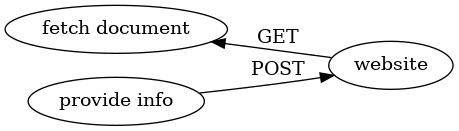
# Copyright (C) YEAR Free Software Foundation, Inc. # This file is distributed under the same license as the PACKAGE package. # FIRST AUTHOR <email>, YEAR. # #, fuzzy msgid "" msgstr "" "Project-Id-Version: PACKAGE VERSION\n" "POT-Creation-Date: 2012-10-12 11:14+0300\n" "PO-Revision-Date: YEAR-MO-DA HO:MI+ZONE\n" "Last-Translator: FULL NAME <email>\n" "Language-Team: LANGUAGE <ll>\n" "Language: \n" "MIME-Version: 1.0\n" "Content-Type: text/plain; charset=UTF-8\n" "Content-Transfer-Encoding: 8bit\n" #. type: Title # #, no-wrap msgid "Retro-style live webcam of our couch" msgstr "" #. type: Plain text #, no-wrap msgid "\n" msgstr "" #. type: Plain text #, no-wrap msgid "\n" msgstr "" #. type: Title ## #, no-wrap msgid "Here's my office - Live!" msgstr "" #. type: Plain text msgid "I generally work from home, sitting in our big red couch." msgstr "" #. type: Plain text msgid "Last fall, when I told this to" msgstr "" #. type: Title ## #, no-wrap msgid "Technical setup" msgstr "" #. type: Plain text #: #, no-wrap msgid "[[!graph src="""\n" msgstr "" #. type: Plain text #, no-wrap msgid "" "rankdir=LR\n" "webcam -> motion -> stream;\n" msgstr "" #. type: Plain text msgid "" "Most of my work is in trying to avoid ways things might go wrong which so " "often happens when computers are involved." msgstr "" #. type: Plain text #, no-wrap msgid "" "What if \n" " * messages are delayed or lost?\n" " * a chain of messages arrive out of order?\n" " * messages are sent faster than they can be delivered?\n" msgstr "" #. type: Plain text #, no-wrap msgid "" "[Copenhagen Carpool]: http://www.kobenhavnsdelebiler.dk/\n" " "K benhavns Delebiler"\n" msgstr "" #. type: Title ## #, no-wrap msgid "Reliable conversation" msgstr "" #. type: Plain text msgid "" "Human conversation is most reliable when using plain speak. Slang, sarcasm " "or jokes raise the risk of misunderstandings. This is quite similar in " "computer conversation." msgstr "" #. type: Plain text msgid "" "When surfing the Web, you normally "GET" a web page or "POST" new data " "like a search query. The words "GET" and "POST" are "plain speak" of " "the World Wide Web defined as a principle called "[REST][]" or " ""RESTful design"." msgstr "" #. type: Plain text #, no-wrap msgid "" "rankdir=LR\n" ""fetch document" -> website [label="GET", dir="back"];\n" ""provide info" -> website [label="POST"];\n" msgstr "" #. type: Plain text msgid "" "I use the [Kannel][] tool to talk directly to the phones. When an sms " "arrives on the phone, Kannel "GET"s it to the calendar. That's weakly " "expressed better if it had "POST"ed the message instead." msgstr "" #. type: Plain text #, no-wrap msgid "" "rankdir=LR\n" ""provide sms info" -> "calendar" [label="GET" style="dotted"];\n" msgstr "" #. type: Plain text msgid "" "Kannel is a quite reliable tool, but not RESTful in conversations. That " "requires extra attention at other parts of the setup to avoid breakage in " "special situations." msgstr "" #. type: Plain text msgid "That worries me." msgstr "" #. type: Plain text #, no-wrap msgid "" "[Kannel]: http://www.kannel.org/\n" " "Kannel: Open Source WAP and SMS Gateway"\n" msgstr "" #. type: Plain text #, no-wrap msgid "" "[REST]: http://en.wikipedia.org/wiki/REST\n" " "Representational State Transfer"\n" msgstr "" #. type: Title ## #, no-wrap msgid "Each car has a blog" msgstr "" #. type: Plain text msgid "" "So I setup a gateway from Kannel to RESTful conversation. And choose " "classic blogging as style of conversation:" msgstr "" #. type: Bullet: ' * ' msgid "The carpool fleet is a blogroll" msgstr "" #. type: Bullet: ' * ' msgid "each car has a blog" msgstr "" #. type: Bullet: ' * ' msgid "each sms emitted from a car is a blog entry" msgstr "" #. type: Plain text msgid "" "Blogging comes in two flavors, [RSS][] and [Atom][]. Both cover " "distribution of messages. I use Atom because it is newest and coolest, and " "because it also covers creating and editing meesages with the [AtomPub][] " "extension." msgstr "" #. type: Plain text msgid "" "AtomPub allows the calendar to create an empty message which then " "triggers an sms from the car which "fills it in."" msgstr "" #. type: Plain text msgid "" "AtomPub also let the calendar "PUT" tags onto existing messages, to mark " "them as processed, read etc., and let an admin or a cleanup script " ""DELETE" outdated entries or blogs. The words "PUT" and "DELETE" are " "RESTful conversation as well." msgstr "" #. type: Plain text #, no-wrap msgid "" "[Atom]: http://en.wikipedia.org/wiki/Atom\n" " "Atom"\n" msgstr "" #. type: Plain text #, no-wrap msgid "" "[RSS]: http://en.wikipedia.org/wiki/RSS\n" " "RSS"\n" msgstr "" #. type: Plain text #, no-wrap msgid "" "[AtomPub]: http://en.wikipedia.org/wiki/AtomPub\n" " "AtomPub"\n" msgstr "" #. type: Title ## #, no-wrap msgid "The system is dancing!" msgstr "" #. type: Plain text msgid "My sms-to-blog gateway is written in [Perl][], using the [Dancer][] toolkit." msgstr "" #. type: Plain text msgid "" "Dancer makes it simple to setup a RESTful web conversation, and when I " "contacted the authors on [IRC][], they swiftly added support for the " "non-RESTful quirk that I needed." msgstr "" #. type: Plain text #, no-wrap msgid "" "rankdir=LR\n" "phone -> "sms gateway" [dir="both"];\n" ""sms gateway" -> "blog gateway" [dir="both", style="dotted"];\n" ""blog gateway" -> calendar [dir="both"];\n" msgstr "" #. type: Plain text msgid "" "My sms-to-blog gateway is not yet ready, but basic routines work. The " "[project is public][], and code is [Free Software][]." msgstr "" #. type: Plain text #, no-wrap msgid "" "[Perl]: http://en.wikipedia.org/wiki/Perl\n" " "Perl"\n" msgstr "" #. type: Plain text #, no-wrap msgid "" "[Dancer]: http://www.perldancer.org/\n" " "Dancer: Perl web development framework"\n" msgstr "" #. type: Plain text #, no-wrap msgid "" "[IRC]: http://www.perldancer.org/irc\n" " "IRC Chat system (Internet Relay Chat)"\n" msgstr "" #. type: Plain text #, no-wrap msgid "" "[project is public]: git://source.delebilfonden.dk/msg/\n" " "Kannel-to-AtomPub Gateway"\n" msgstr "" #. type: Plain text #, no-wrap msgid "" "[Free Software]: http://www.debian.org/social_contract#guidelines\n" " "The Debian Free Software Guidelines (DFSG)"\n" msgstr ""

1 October 2012

Jonas Smedegaard: Building a remote-control for real cars

SMS is used to lock car doors Copenhagen Carpool soon receive a new batch of electric cars. The new cars will contain a cellphone tied to the door locks, to only let into the car the member who booked its current timeslot. I am setting up the system to connect the cars with their booking calendar. The general idea is to
  1. Connect a standard cellphone to a computer.
  2. Forward sms messages received on the phone to the calendar.
  3. Send messages from the calendar through the phone.
  4. Leave the system in a corner, turned on 24/7.
Most of my work is in trying to avoid ways things might go wrong which so often happens when computers are involved. What if
  • messages are delayed or lost?
  • a chain of messages arrive out of order?
  • messages are sent faster than they can be delivered?

Reliable conversation Human conversation is most reliable when using plain speak. Slang, sarcasm or jokes raise the risk of misunderstandings. This is quite similar in computer conversation. When surfing the Web, you normally "GET" a web page or "POST" new data like a search query. The words "GET" and "POST" are "plain speak" of the World Wide Web defined as a principle called "REST" or "RESTful design". I use the Kannel tool to talk directly to the phones. When an sms arrives on the phone, Kannel "GET"s it to the calendar. That's weakly expressed better if it had "POST"ed the message instead. Kannel is a quite reliable tool, but not RESTful in conversations. That requires extra attention at other parts of the setup to avoid breakage in special situations. That worries me.

Each car has a blog So I setup a gateway from Kannel to RESTful conversation. And choose classic blogging as style of conversation:
  • The carpool fleet is a blogroll
  • each car has a blog
  • each sms emitted from a car is a blog entry
Blogging comes in two flavors, RSS and Atom. Both cover distribution of messages. I use Atom because it is newest and coolest, and because it also covers creating and editing meesages with the AtomPub extension. AtomPub allows the calendar to create an empty message which then triggers an sms from the car which "fills it in." AtomPub also let the calendar "PUT" tags onto existing messages, to mark them as processed, read etc., and let an admin or a cleanup script "DELETE" outdated entries or blogs. The words "PUT" and "DELETE" are RESTful conversation as well.

The system is dancing! My sms-to-blog gateway is written in Perl, using the Dancer toolkit. Dancer makes it simple to setup a RESTful web conversation, and when I contacted the authors on IRC, they swiftly added support for the non-RESTful quirk that I needed. My sms-to-blog gateway is not yet ready, but basic routines work. The project is public, and code is Free Software.

17 July 2012

Ben Hutchings: Wireless regulation in squeeze

Alternate title: 'for those who care about channels 12-13'. For background, see the earlier entry on wireless regulation. If your wifi interface no longer supports channel 12 or 13, this may be because the kernel does not know the regulations for the domain code detected by the driver. Prior to Linux 2.6.34, regulations for 'US', 'JP' (Japan) and 'EU' (ETSI members) were built-in, but now there is only '00' (world, conservative regulations) which allows only channels 1-11 in the 2.4 GHz band. For any driver that detects specific European country codes, the 'EU' regulatory information was useless even in 2.6.32 (squeeze) and the unknown code would be mapped to the '00' (world) domain. Since wireless regulations are subject to change from time to time, they are now provided by the wireless-regdb package and supposed to be loaded into the kernel by crda. These packages should have been included in squeeze, but for various reasons they missed it. But they are now available in squeeze-backports.

20 February 2012

Ben Hutchings: Feed reading

I switched from Google Reader to Liferea a while back. I was mostly happy with the functionality of Reader but I don't really want my reading history to be recorded or my feed list to be vulnerable to the whim of Google's inscrutable abuse department. I'm still using Liferea but unfortunately it has a lot of problems. Yes I do have bug numbers: So, I'm looking for an alternative again. My requirements are:
  1. MAY be a desktop or web application.
  2. If it's a web application, it MUST be reasonably secure, e.g. it must not be written in PHP.
  3. If it's a web application, it MUST allow for multiple independent users on the same server.
  4. If it's a desktop application, it MUST embed a browser engine (presumably Gecko or WebKit) so I can follow links without having to switch windows.
  5. MUST support organisation of feeds by folders or tags, including combined item lists.
  6. MUST keep track of which items have been read.
  7. MUST support a global 'unread items' list. SHOULD only remove items from this list when I refresh it, not as soon as I move away from an item.
  8. SHOULD support a three-pane (folder/list/item) view or something similar. Google Reader's list view with expanding items is perhaps even better, though it means links must be opened in a separate tab.
  9. SHOULD support folder and item navigation by keyboard.
  10. SHOULD have some way to flag/bookmark items for later attention.
  11. If it's a desktop application, it SHOULD have some sort of download manager to support podcasts.

17 February 2012

Ben Hutchings: Another step forward for multi-arch

~$ dpkg --print-architecture
i386
~$ dpkg -s linux-image-$(uname -r)
Package  linux-image-3.2.0-1-amd64' is not installed and no info is available.
Use dpkg --info (= dpkg-deb --info) to examine archive files,
and dpkg --contents (= dpkg-deb --contents) to list their contents.
~$ dpkg -s linux-image-$(uname -r):amd64
Package: linux-image-3.2.0-1-amd64
Status: install ok installed
Priority: optional
Section: kernel
Installed-Size: 104822
Maintainer: Debian Kernel Team <debian-kernel@lists.debian.org>
Architecture: amd64
Source: linux-2.6
Version: 3.2.6-1
...

26 January 2012

Ben Hutchings: Testing backport of the isci driver for Intel C600 SAS/SATA controllers

Phil Kern made a general call for testing of Debian 6.0.4. I would like to more specifically point out that I backported the isci driver for Intel C600 SAS/SATA controllers. Unfortunately I have not yet had any testing results for this. If you have any machines with this hardware not yet in production, please do consider testing the new Linux kernel package, version 2.6.32-41. Updated: I now have a positive test result from the user who requested this driver in the installer.

14 January 2012

Ben Hutchings: Installing Debian GNU/Linux and Windows dual-boot under UEFI

I thought it was about time to get a faster machine for... well, mostly for compiling kernels faster, but I'm sure I will find other applications for it. I was originally intending to upgrade my laptop (Thinkpad T61, 1.8 GHz Core 2 Duo) but it seems that in the 3 years since I bought it second-hand laptop prices have not dropped in line with Moore's law. So instead I decided to upgrade (well, replace most of) a desktop PC. The last time I got a new desktop at home was in 2002. It has an Athlon XP, PATA drives and a huge CRT monitor. It has had some upgrades since then (DVD writer, more RAM, slightly faster CPU, replacement fan and PSU). Obviously it was time to replace motherboard, CPU and RAM. Not so obviously, the PSU needed changing again as modern CPUs apparently need more 12V electrons (?!). The DVD writer was salvageable via a USB adapter and its local HD is currently a laptop drive (the only spare SATA HD I had). The monitor is of course reusable, though the firmware setup program doesn't entirely agree with it. Windows Yes, I do sometimes run Windows. It's for games, and also seems to be needed for streaming video with stupid DRM. On the assumption that Windows is less likely to play nice with an existing installation, I tried installing it first. The firmware appear to allow me to boot the DVD in either BIOS or UEFI mode, so I selected the UEFI option. This worked so far as loading the initramfs (or whatever the Windows equivalent is) but then Windows was lacking a driver to access the DVD. This stumped me for a day or so until I realised I had plugged the drive into a USB 3 (XHCI) port. Apparently Windows 7 SP1 still doesn't include an XHCI driver in the installer (but neither does Debian 6.0.3 - we should fix that). The installation was mostly uneventful after this. The Windows installer includes a reasonably capable partition editor. Debian Installation of files was entirely uneventful. The installer correctly detected the GPT (GUID partition table) created by Windows. However, it was not able to install a boot loader. Currently it only includes support for the LILO and GRUB-PC boot loaders that run under BIOS. After much experimentation and cursing, I found instructions for installing Debian Squeeze on XServe 3.1 by Jan Peter Alexander Rajagukguk, which put me on the right track. It seems that the grub-install script for GRUB-EFI in squeeze (and maybe other parts of the package) doesn't actually work. However. JP's direction to build GRUB from source is no longer necessary. Here's what I did (minus the mis-steps):
  1. Boot the installer in rescue mode and open a shell on the installed system:
    # # We start in dash, so switch to bash.
    # exec bash
    # mkdir -p /boot/efi
    # # Mount the EFI boot partition by UUID.
    # # It's probably called sda1 now, but is subject to change.
    # ls -l /dev/disk/by-uuid
    ...
    # echo >>/etc/fstab 'UUID=efi-boot-uuid /boot/efi vfat defaults 0 0'
    # mount /boot/efi
    # # Enable unstable sources, but use stable by default
    # echo >>/etc/apt/apt.conf 'APT::Default-Release "squeeze";'
    # echo >>/etc/apt/sources.list 'deb http://cdn.debian.net/debian/ sid main'
    # apt-get update
    ...
    # # Install unstable grub-efi-amd64
    # apt-get install -t unstable grub-efi-amd64
    ...
    # # Install GRUB to the EFI partition.  The '--removable' options
    # # inhibits setting EFI variables, which won't work because we booted
    # # through BIOS emulation.  Instead, it installs as the default boot
    # # loader.
    # grub-install --bootloader-id=GRUB --removable
    # # On the AMI/ASUS firmware, you cannot select a new bootloader
    # # directly but can invoke a 'shell'.  So I made GRUB the shell:
    # cp /boot/efi/boot/grub/grub.efi /boot/efi/shellx64.efi
    # exit
    
  2. Reboot and select GRUB as the boot loader if necessary. In my case I had to enter the setup program and select 'EFI shell'. Debian should now boot from the hard drive.
  3. Add a non-volatile boot option for GRUB (and make it the default):
    # apt-get install efibootmgr
    ...
    # modprobe efivars
    # efibootmgr -c -l '\efi\grub\grubx64.efi' -L GRUB
    

Ben Hutchings: IGMP denial of service in Linux (CVE-2012-0207)

The bug report Simon McVittie reported in Debian bug #654876 that his laptop running Linux 3.0 or 3.1 would sometimes crash (panic) while idle. He initially suspected a driver bug, but the screen did not show any information about where the original fault occurred. However, using netconsole, he was able to capture a full log of the crash. This showed that a packet received through the wireless interface was being processed by IGMP, which then divided by zero. IGMP IGMP is part of the IPv4 protocol suite, supporting multicast routing. Every multicast address corresponds to a dynamic set of hosts, called a multicast group. Multicast routers can send query messages asking which hosts belong to which groups, and hosts using multicast report back at intervals. Routers can then limit forwarding of multicast packets to the interfaces where the group has members. More sophisticated switches can also snoop IGMP and use it to limit their multicast forwarding. There are unfortunately three different versions with semi-compatible message formats. In version 1, the maximum reporting interval (Max Response Time) is fixed as 10 seconds, but from version 2 it is specified in query messages. The Linux IGMP implementation supports all three versions. It distinguishes query messages as specified in RFC 3376 section 7.1: v3 messages are longer than v1 or v2; v2 messages have a non-zero Max Response Time whereas v1 messages always have zero. It is possible to force use of a specific protocol version, but normally if there are multiple multicast routers using different protocol versions it will respond according to the earliest protocol version in use so that all routers can understand its responses. Source and fix for the bug Linux 2.6.36 included two fixes to the version selection logic. Unfortunately, the second of these introduced the bug in question. While v2 query messages cannot possibly have zero Max Response Time (as that would make them v1), v3 query messages can. What this means is unspecified, but the Linux IGMP code previously treated it as the minimum valid value of 1/10 second. But in the case where a v3 query is received and a v2 query has also recently been received, this is no longer done. This results in a reporting interval of 0 seconds and a division by zero when deciding the initial random delay. The fix for this is pretty obvious. It is included in Linux 3.0.17, 3.1.9, 3.2.1, and the Debian package version 3.1.8-2. Security impact This is easily exploitable for denial of service within a local network. Linux does not check the destination address of IGMP queries, so it may also be possible to attack a target through its unicast address from several hops away. The attacker only needs to send a single IGMPv2 query followed by a single IGMPv3 query with zero Max Response Time. All systems running Linux 2.6.36 or later (up to the above fixed versions) with any active IPv4 multicast listeners (other than for the 'all hosts' address) are vulnerable.

13 December 2011

Rapha&#235;l Hertzog: People behind Debian: Ben Hutchings, member of the kernel team

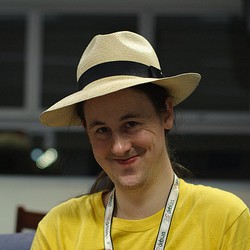
Ben Hutchings, photo by Andrew Mc Millan, license CC-BY-2.0

Ben Hutchings is a rather unassuming guy but hiding behind his hat, there s a real kernel hacker who backports new drivers for the kernel in Debian stable so that our flagship release supports very recent hardware. Read on to learn more about Ben and the kernel team s projects for Debian Wheezy! Raphael: Who are you? Ben: I m a professional programmer, living in Cambridge, England with my long-suffering wife Nattie. In Debian, I mostly work on the Linux kernel and related packages. Raphael: How did you start contributing to Debian? Ben: I started using Debian in 1998 and at some point I subscribed to Debian Weekly News. So in 2003 I heard about the planned Debian 10th birthday party in Cambridge, and thought I would like to go to that. Somehow I persuaded Nattie that we should go, even though it was on the day of our wedding anniversary! We both enjoyed it; we made new friends and met some old ones (small world). From then on we have
both been socially involved in Debian UK. In 2004 there was a bug-squashing party in Cambridge, and we attended that as well. That s where I really started contributing fixing bugs and learning about Debian packaging. Then in 2005 I made my first package (sgt-puzzles), attended DebConf, and was persuaded to enter the New Maintainer process. NM involved a lot of waiting, but by the time I was given questions and tasks to do I had learned enough to get through quite quickly. In April 2006 I was approved as a Debian Developer. Meanwhile, I looked at the videos from DebConf 5 and thought that it would be useful to distribute them on a DVD. That led me to start writing video software and to get involved in the video team for the next year s DebConf. Raphael: You have been one the main driver behind the removal of non-free firmwares from the kernel. Explain us what you did and what s the status nowadays? Ben: That s giving me a bit more credit than I deserve. For a long time the easy way for drivers to load firmware programs was to include them as a blob in their static data, but more recently the kernel has included a simple method for drivers to request a named blob at run-time. These requests are normally handled by udev by reading from files on disk, although there is a build-time option to include blobs in the kernel. Several upstream and distribution developers worked to convert the older drivers to use this method. I converted the last few of these drivers that Debian included in its binary packages. In the upstream Linux source, those blobs have not actually been removed; they have been moved to a firmware subdirectory. The long-term plan is to remove this while still allowing the inclusion of blobs at build-time from the separate linux-firmware repository. For now, the Debian source package excludes this subdirectory from the upstream tarball, so it is all free software. There are still a few drivers that have not been converted, and in Debian we just exclude the firmware from them (so they cannot be built). And from time to time a driver will be added to the staging section of Linux that includes firmware in the old way. But it s understood in the kernel community that it s one of the bugs that will have to be fixed before the driver can move out of staging . Raphael: Do you believe that Debian has done enough to make it easy for users to install the non-free firmwares that they need? Ben: The installer, the Linux binary packages and initramfs-tools will warn about specific files that may be needed but are missing. Users who have enabled the non-free section should then be able to find the necessary package with apt-cache search, because each of the
binaries built from the firmware-nonfree source package includes driver and file names within its description. For the installer, there is a single tarball that provides everything. We could make this easier, but I think we have gone about as far as we can while following the Debian Social Contract and Debian policy. Raphael: At some point in the past, the Debian kernel team was not working very well. Did the situation improve? Ben: Back in 2008 when I started working on the Linux kernel package to sort out the firmware issues, I think there were some problems of communication and coordination, and quite possibly some members were burned-out. Since then, many of the most active kernel team members have been able to meet face-to-face to discuss future plans at LPC 2009 in Portland and the 2010 mini-DebConf in Paris. We generally seem to have productive discussions on the debian-kernel mailing list and elsewhere, and I think the team is working quite well. Several new contributors have joined after me. I would say our biggest problem today is that we just don t have enough time to do all we want to. Certainly, almost all my Debian time is now taken up with integrating upstream kernel releases and handling some fraction of the incoming bug reports. Occasionally I can take the time to work on actual features or the other packages I m neglecting!
Our biggest problem today is that we just don t have enough time to do all we want to.
Raphael: It is widely known that Linux is maintained in a git repository. But the Debian kernel team is using Subversion. I believe a switch is planned. Why was not git used from the start? Ben: The linux-2.6 source package dates from the time when Linus made his first release using git. I wasn t part of the team back then so I don t know for sure why it was imported to Subversion. However, at that time hardly anyone knew how to use git, no-one had experience hosting public git repositories, and Alioth certainly didn t offer that option. Today there are no real blockers: everyone on the kernel team is familiar with using git; Alioth is ready to host it; we don t have per-architecture patches that would require large numbers of branches. But it still takes time to plan such a conversion for what is a relatively complex source package (actually a small set of related source packages). Raphael: What are your plans for Debian Wheezy? Ben: Something I ve already done, in conjunction with the installer team, is to start generating udebs from the linux-2.6 source package. The kernel and modules have to be repacked into lots of little udebs to avoid using too much memory during installation. The configuration for this used to be in a bunch of separate source packages; these could get out of step with the kernel build configuration and this would only be noticed some time later. Now we can update them both at the same time, they are effectively cross-checked on every upload, and the installer can always be built from the latest kernel version in testing or unstable. I think that we should be encouraging PC users to install the 64-bit build (amd64), but many users will still use 32-bit (i386) for backward compatibility or out of habit. On i386, we ve slightly reduced the variety of kernel flavours by getting rid of 686 and making 686-pae the default (previously this was called 686-bigmem ). This means that the NX security feature will be used on all systems that support it. It should also mean that the first i386 CD can have suitable kernel packages for all systems. I have been trying to work on providing a full choice of Linux Security Modules (LSMs). Despite their name, they cannot be built as kernel modules, so every enabled LSM is a waste of memory on the systems that don t use it. This is a significant concern for smaller Debian systems. My intent is to allow all unused LSMs to be freed at boot time so that we can happily enable all of them. I recently proposed to drop support for older x86 systems, starting with 486-class processors in wheezy. In general, this would allow the use of more compiler optimisations throughout userland and the kernel. However it seems that there isn t that much to be gained unless we also drop 586-class processors, and there are still quite a few of those in use. So I think this will have to wait. Uwe Kleine-K nig has been working to include real-time support (also known as PREEMPT_RT). This can provide low and very predictable I/O latency, which is useful for live audio synthesis, for example. It still requires a number of patches and a build configuration change, resulting in a separate binary package. We re currently only building that for 64-bit PCs. (You may notice this is missing for Linux 3.1, because the real-time developers skipped this release.) Raphael: What s the biggest problem of Debian? Ben: I think we try too hard to accommodate every possible option, without regard for the cost to developers and users in general. As an example, we now have sysvinit, file-rc, upstart and systemd all in testing. Daemon maintainers can t rely on any advanced features of upstart or systemd because we refuse to choose between them. And the decision to support the FreeBSD kernel means that we cannot choose upstart or systemd as the only option. So all daemon maintainers will have to maintain those baroque init scripts for the indefinite future. We really should be able to decide as a distribution that when one option is technically good and popular then it can be made the only option. But no-one really has the authority to do that, so we muddle along with the pretence that all the options are equally valid and functional, while none of them is supported as well as they should be.
We try too hard to accommodate every possible option, without regard for the cost to developers and users in general.
We also try to build every package on every architecture, in general. I m quite sure there are many (package, architecture) combinations that have no users, ever. But if at some point that combination FTBFS, developers will waste time investigating and fixing that time that could have been spent working on bugs and features that users actually care about. Yes, sure, portability is good but you can t prove portability just by making a package compile on every architecture. This also applies to the selection of drivers for the kernel, by the way. Raphael: Is there someone in Debian that you admire for their contributions? Well, there are many people, but I will pick out just a few: Steve McIntyre, for his work as DPL to improve communication with the various Debian derivatives and to bring fresh blood into various core teams. Also for being a generous host for countless Debian social and bug-squashing events. Stefano Zacchiroli, for improving further on communications with both downstream and upstream projects, and for regularly exercising his power to lead discussions to the benefit of the project. Julien Cristau, for maintaining good humour while not only fighting against the tide of graphics driver regressions in X and the Linux kernel but also working on release management. Jonathan Nieder, for taking on the unglamorous and frustrating task of kernel bug triage as a non-maintainer and developing it to a fine art.
Thank you to Ben for the time spent answering my questions. I hope you enjoyed reading his answers as I did.

Subscribe to my newsletter to get my monthly summary of the Debian/Ubuntu news and to not miss further interviews. You can also follow along on Identi.ca, Google+, Twitter and Facebook .

4 comments Liked this article? Click here. My blog is Flattr-enabled.

20 November 2011

Ben Hutchings: GNOME won't let you watch your videos in peace

Screensaver control on the Linux desktop is a total mess, but the xdg-screensaver command provided an interim cross-desktop solution by detecting and using the appropriate underlying interfaces. For GNOME, it depends on the gnome-screensaver-command --poke option, but that has been broken and then removed in favour of the cross-desktop D-Bus API org.freedesktop.ScreenSaver another GNOME-specific API which can't practically be used by xdg-screensaver. What's more, switching to the new API seems to have introduced various bugs in GNOME's own video player, Totem, such that it often failed to inhibit the screensaver in GNOME 2.32 and 3.0. Apparently everything is wonderful again in 3.2; here's hoping. (In case anyone asks where my bug report on the totem package is, I already looked at the bug list and it's clear that there's no point.) Updated: Well I said the GNOME Session D-Bus API couldn't practically be used in xdg-screensaver, but then set out to prove myself wrong. And with the aid of Perl, I may have succeeded.

5 June 2011

Ben Hutchings: I am going to DebConf11

I am going to DebConf11. I have a talk to give, hacking to do, and I should be helping with video as well. Hope to see you in Banja Luka!

23 May 2011

Ben Hutchings: Testing new hardware support for Debian 6.0.2

The Debian kernel team regularly backports driver updates to the Linux kernel in stable releases to add support for new hardware, and I've prepared several updates intended for point release 6.0.2. Since the kernel team does not have a large collection of hardware on which to test driver changes, we would appreciate test reports from users. It is important to test not just that new devices are supported properly, but that there are no regressions in support for older devices. Changes I have updated these drivers to the versions found in Linux 2.6.38, modulo driver API changes: I have also cherry-picked some small changes: There are more drivers that I think should be added or updated (see #624794) but they will probably have to wait for release 6.0.3. Packages The source package and binary packages for i386 and amd64 are available on people.debian.org. They can be verified by the checksums in the signed changes file. The current packages are version 2.6.32-35~test1, but there may be further test versions before an official stable update. How to test For network drivers, I suggest the following regression tests:
  1. If the driver tries to load firmware (only required for some chips), does this work once the firmware file(s) are installed?
  2. Can you receive and transmit VLAN-tagged frames after creating a VLAN interface?
  3. Does the interface work after suspend and resume?
  4. Does the interface work after removing the cable for 10 seconds and reinserting it?
  5. Does multicast configuration work? (IPv6 autoconfiguration or mDNS will cover this.)
  6. Can the interface send and receive TCP/IP across a LAN at the same speed, before and after these changes? (Use e.g. netperf to test this, but don't forget to remove the netperf package after use.)
  7. Are any warnings or errors logged by the kernel during the preceding tests?
For storage drivers, unfortunately I don't have a good idea of what tests would be suitable. In any case, please don't test on disks storing valuable data! Please send test reports to the bug reports linked above, stating the driver name, the PCI ID for the device you tested (from lspci -n) and any other device identification that the kernel log (for example, r8169 logs the 'XID' of the device).

24 April 2011

Ben Hutchings: Upcoming changes in Debian Linux packages for i386

The major upcoming configuration change in Linux 2.6.39 is to get rid of the '686' flavour. This may be surprising, because it's the most widely used flavour of the 4 we have a present:
Name Minimum CPU features Maximum total CPU threads Physical address space
486 486-class 1 4 GiB
686 686-class; CMOV instruction 32 4 GiB
686-bigmem 686-class; PAE 32 64 GiB
amd64 x86-64 512 64 TiB
However, the physical address limitation means that an increasing proportion of new PCs and the majority of PC servers need the '686-bigmem' flavour. Even those that have less than 4 GiB RAM do support PAE and can run the '686-bigmem' flavour. There is a small cost (up to about 0.1% of RAM) in the use of larger hardware page tables. There is also an important benefit on recent processors: the larger page table entries include an NX bit (also known as XD) which provides protection against some buffer overflow attacks, both in the kernel and in user-space.. Q: What about 686 processors without PAE? There are only a few 686-class processors that support CMOV but not PAE: most Intel Pentium M models, the VIA C3 'Nehemiah' and the AMD Geode LX. These also all lack SMP support, which means the '486' flavour is suitable for them. Some benchmarking on two of those - a Pentium M model 745 and a C3 'Nehemiah' - indicated that they run the '486' flavour slightly faster than the '686' flavour. It appears that the performance gain from using plain uniprocessor code (rather than SMP-alternatives, which are patched with NOPs on uniprocessor systems) outweighs the performance loss from avoiding use of some newer instructions. Q: Why get rid of '686' but keep the 'amd64' flavour? We intend to get rid of 'amd64' too, but we need to ensure that upgrades from linux-image-2.6-amd64:i386 to linux-image-2.6-amd64:amd64 work properly. Q: If '686-bigmem' will be the default, isn't 'bigmem' redundant? Yes, it is. Therefore '686-bigmem' will be renamed to '686-pae'.

23 April 2011

Ben Hutchings: Recent changes in Debian Linux packages

Linux 2.6.38 and 2.6.39 As you've probably seen, the testing suite finally got a new upstream kernel version (Linux 2.6.38) and is currently synchronised with unstable. I'm just about to upload a new version of linux-2.6 based on upstream stable update 2.6.38.4. Linux 2.6.39 is well on its way to release, so 2.6.39-rc4 should soon be in experimental. The Debian source package will add support for the new armhf (ARM with hardware floating-point) architecture. Splitting linux-2.6 The linux-base package, introduced to handle transitions and other support functions for 'image' packages, is now built from a separate source package. It won't be changed very often, so you will no longer need to upgrade linux-base every time you upgrade an 'image' package. (This doesn't apply within 'squeeze', but I may have a way to work around that.) The firmware-linux-free package, containing a few firmware and configuration blobs from Linux that are DFSG-compliant, is also now built from a separate source package. These blobs have not changed for a very long time, so again you will no longer be recommended to upgrade this package every time you upgrade an 'image' package. Secondly, this allows us to remove the entire 'firmware' directory from the upstream source rather than carefully removing and patching to leave just the DFSG-compliant bits. Wireless regulations The '2.4 GHz' and '5 GHz' ISM bands used for wifi are not defined identically around the world. The exact frequency ranges and maximum permitted power levels vary between countries. Radio equipment manufacturers have a legal responsibility to ensure their equipment operates within these regulations. Since it is expensive to implement such regulations in hardware (including many different variants for different regions), these restrictions are usually implemented in the driver using a country code retrieved from the hardware's EEPROM or flash. So this is now our responsibility. We need to be able to look up regulations by country codes, and we also need to support the case where a device sold in one country is used in another country with tighter regulations. For some time, the wifi configuration library (cfg80211) included regulatory information for a small number of countries and regions. However, the default since Linux 2.6.34 has been to build-in only the 'world' domain (intersection of all the restrictions) and to request information from user-space. In Debian, we didn't have anything to provide this information, so for example channels 12-13 became unavailable for users in Europe. The regulatory information should be provided by the Central Regulatory Domain Agent (CRDA) from a current database. These are now packaged as crda and wireless-regdb respectively. Drivers that do not use cfg80211 (mostly those from the 'staging' area) will not be affected, and may or may not implement correct regulations. When you travel to another country or use an imported wifi device with an incorrect country code (I hear 'CN' is common), you can use iw reg set to ensure that your wifi devices operate within the regulations of the country you are in. Set the REGDOMAIN variable in /etc/default/crda to make this persistent. These will be intersected with the regulations specified by the hardware.

18 February 2011

Ben Hutchings: Distinguishing Ethernet-like net device types

David Paleino asks:
I'm still missing how to reliably detect if a device is a "wired" or a "wireless" one. I suspect that checking the existence of /phy80211 would be enough, but I can't really tell, and seems like I'm not able to find an exhaustive sysfs reference manual.
Sadly there is no exhaustive manual, but many attributes found in sysfs are documented under Documentation/ABI/. In this case you need the DEVTYPE name from the net device's uevent, which may be e.g. 'wlan' or 'wwan' (and is absent for wired Ethernet devices). I don't know why this isn't also exposed as an attribute in its own right.

5 December 2010

Ben Hutchings: USB serial console

Andrew Pollock writes:
If you're trying to use a USB serial adapter as your Linux kernel console... The kernel needs to be compiled with CONFIG_USB_SERIAL_SERIAL=y
That's CONFIG_USB_SERIAL_CONSOLE.
Debian kernels do not appear to be. Somewhat strangely, the config option doesn't even wind up in the config file in the typical commented-out manner, so you don't even know the option exists until you discover it from random Web searching, and then looking at drivers/usb/serial/Kconfig in the kernel source.
Console drivers need to be built-in, so CONFIG_USB_SERIAL_CONSOLE depends on CONFIG_USB_SERIAL=y. We build the USB serial code as a module so CONFIG_USB_SERIAL_CONSOLE is not an available option. This is unlikely to change, as a built-in feature takes memory from every Debian GNU/Linux installation.

1 November 2010

Ben Hutchings: RCBW(eekend) 2010-11-01

Next.

Previous.