Search Results: "ardo"

30 April 2013

Gunnar Wolf: Activities facing the next round of Trans-Pacific Partnership negotiations ( #yaratpp )

Excuse me for the rush and lack of organization... But this kind of things don't always allow for proper planning. So, please bear with my chaos ;-) What is the Trans-Pacific Partnership? Yet another secretely negotiated international agreement that, among many chapters, aims at pushing a free-market based economy, as defined by a very select few Most important to me, and to many of my readers: It includes important chapters on intellectual property and online rights. Hundreds of thousands of us along the world took part in different ways on the (online and "meat-space") demonstrations against the SOPA/PIPA laws back in February 2012. We knew back then that a similar project would attempt to bite us back: Well, here it is. Only this time, it's not only covering copyright, patents, trademark, reverse engineering, etc. TPP is basically a large-scale free trade agreement on steroids. The issue that we care about now is just one of its aspects. Thus, it's way less probable we can get a full stop for TPP as we got for SOPA. But we have to get it on the minds of as many people as possible! Learn more with this infography distributed by the EFF. Which countries? The countries currently part of TPP are Chile, Peru, New Zealand, Australia, Malaysia, Brunei, Singapore, Vietnam And, of course, the USA. Mexico, Canada and Japan are in the process of joining the partnership. A group of Mexican senators are travelling to Lima to take part of this round. Image by Colin Beardon (It's Our Future, NZ) What are we doing about it? As much as possible! I tried to tune in with Peru's much more organized call The next round of negotiations will be in Lima, Peru, between May 14 and 24. Their activities are wildly more organized than ours: They are planning a weekend-long Camping for Internet freedom, with 28 hours worth of activities. As for us, our activities will be far more limited, but I still hope to have an interesting session: Poster design by Gacela. Thanks! This Friday, we will have Aula Magna, Facultad de Ingenier a, UNAM, M xico DF, from 10AM and until 3PM. We do not have a clear speakers program, as the organization was quite rushed. I have invited several people who I know will be interesting to hear, and I expect a good part of the discussion to be a round table. I expect we will:
  1. Introduce people working on different corners of this topic
  2. Explain in some more detail what TPP is about
  3. Come up with actions we can take to influence Mexico's joining of TPP
  4. And this will be at Facultad de Ingenier a. Another explicit goal of this session will be, of course, to bring the topic closer to the students!
We want you! So... I am posting this message also as a plead for help. Do you think you can participate here? Were you among the local organizers for the anti-SOPA movement? Do you have some insight on TPP you can share? Do you have some gear to film+encode the talks? (as they will surely be interesting!) Or, is the topic just interesting for you? Well, please come and join us! So, again: Friday, 2012-05-03, 10:00-15:00
AttachmentSize
Poster. Desgin by Gacela Thanks!457.49 KB
Infography about TPP distributed by the EFF392.45 KB
"Here, let me sign this for you". Image by Colin Beardon.27.08 KB

Gunnar Wolf: Activities facing the next round of Trans-Pacific Partnership negotiations ( #yaratpp #tpp #internetesnuestra )

Excuse me for the rush and lack of organization... But this kind of things don't always allow for proper planning. So, please bear with my chaos ;-) What is the Trans-Pacific Partnership? Yet another secretely negotiated international agreement that, among many chapters, aims at pushing a free-market based economy, as defined by a very select few Most important to me, and to many of my readers: It includes important chapters on intellectual property and online rights. Hundreds of thousands of us along the world took part in different ways on the (online and "meat-space") demonstrations against the SOPA/PIPA laws back in February 2012. We knew back then that a similar project would attempt to bite us back: Well, here it is. Only this time, it's not only covering copyright, patents, trademark, reverse engineering, etc. TPP is basically a large-scale free trade agreement on steroids. The issue that we care about now is just one of its aspects. Thus, it's way less probable we can get a full stop for TPP as we got for SOPA. But we have to get it on the minds of as many people as possible! Learn more with this infography distributed by the EFF. Which countries? The countries currently part of TPP are Chile, Peru, New Zealand, Australia, Malaysia, Brunei, Singapore, Vietnam And, of course, the USA. Mexico, Canada and Japan are in the process of joining the partnership. A group of Mexican senators are travelling to Lima to take part of this round. Image by Colin Beardon (It's Our Future, NZ) What are we doing about it? As much as possible! I tried to tune in with Peru's much more organized call The next round of negotiations will be in Lima, Peru, between May 14 and 24. Their activities are wildly more organized than ours: They are planning a weekend-long Camping for Internet freedom, with 28 hours worth of activities. As for us, our activities will be far more limited, but I still hope to have an interesting session: Poster design by Gacela. Thanks! This Friday, we will have Aula Magna, Facultad de Ingenier a, UNAM, M xico DF, from 10AM and until 3PM. We do not have a clear speakers program, as the organization was quite rushed. I have invited several people who I know will be interesting to hear, and I expect a good part of the discussion to be a round table. I expect we will:
  1. Introduce people working on different corners of this topic
  2. Explain in some more detail what TPP is about
  3. Come up with actions we can take to influence Mexico's joining of TPP
  4. And this will be at Facultad de Ingenier a. Another explicit goal of this session will be, of course, to bring the topic closer to the students!
We want you! So... I am posting this message also as a plead for help. Do you think you can participate here? Were you among the local organizers for the anti-SOPA movement? Do you have some insight on TPP you can share? Do you have some gear to film+encode the talks? (as they will surely be interesting!) Or, is the topic just interesting for you? Well, please come and join us! Some more informative links BE THERE! So, again: Friday, 2012-05-03, 10:00-15:00 [Update] So, 2012-05-03 came and went. And thankfully, Alfredo was there to record most of the talk! So, you can download the video: Gunnar Wolf, Salvador Alc ntar: Qu es TPP? Por qu me debe preoucpar? Qu podemos hacer?
AttachmentSize
Poster. Design by Gacela Thanks!457.49 KB
Infography about TPP distributed by the EFF392.45 KB
"Here, let me sign this for you". Image by Colin Beardon.27.08 KB

15 February 2013

Robert Collins: More subunit needs

Of course, as happens sadly often, the scope creeps.. Additional pain points Zope s test runner runs things that are not tests, but which users want to know about layers . At the moment these are reported as individual tests, but this is problematic in a couple of ways. Firstly, the same test runs on multiple backend runners, so timing and stats get more complex. Secondly, if a layer fails to setup or teardown, tools like testrepository that have watched the stream will think a test failed, and on the next run try to explicitly run that test but that test doesn t really exist, so it won t run [unless an actual test that needs the layer is being run]. Openstack uses python coverage to gather coverage statistics during test runs. Each worker running tests needs to gather and return such statistics. The current subunit protocol has no space to hand this around, without it pretending to be a test [see a pattern here?]. And that has the same negative side effect test runners like testrepository will try to run that test . While testrepository doesn t want to know about coverage itself, it would be nice to be able to pass everything around and have a local hook handle the aggregation of that data. The way TAP is reflected into subunit today is to mangle each tap test into a subunit test , but for full benefits subunit tests have a higher bar they are individually addressable and runnable. So a TAP test script is much more equivalent to a subunit test. A similar concept is landing in Python s unittest soon subtests which will give very lightweight additional assertions within a larger test concept. Many C test runners that emit individual tests as simple assertions have this property as well there may be 5 or 10 executables each with dozens of assertions, but only the executables are individually addressable there is no way to run just one assertion from an executable as a test . It would be nice to avoid the friction that currently exists when dealing with that situation. Minimum requirements to support these Layers can be supported via timestamped stdout output, or fake tests. Neither is compelling, as the former requires special casing in subunit processors to data mine it, and the latter confuses test runners. A way to record something that is structured like a test (has an id the layer, an outcome in progress / ok / failed, and attachment data for showing failure details) but isn t a test would allow the data to flow around without causing confusion in the system. TAP support could change to just show the entire output as progress on one test and then fail or not at the end. This would result in a cognitive mismatch for folk from the TAP world, as TAP runners report each assertion as a test , and this would be hidden from subunit. Having a way to record something that is associated with an actual test, and has a name, status, attachment content for the TAP comments field that would let subunit processors report both the addressable tests (each TAP script) and the individual items, but know that only the overall scripts are runnable. Python subtests could use a unique test for each subtest, but that has the same issue has layers. Python will ensure a top level test errors if a subtest errors, so strictly speaking we probably don t need an associated-with concept, but we do need to be able to say that a test-like thing happened that isn t actually addressable. Coverage information could be about a single test, or even a subtest, or it could be about the entire work undertaken by the test process. I don t think we need a single standardised format for Coverage data (though that might be an excellent project for someone to undertake). It is also possible to overthink things :) . We have the idea of arbitrary attachments for tests. Perhaps arbitrary attachments outside of test scope would be better than specifying stdout/stderr as specific things. On the other hand stdout and stderr are well known things. Proposal version 2 A packetised length prefixed binary protocol, with each packet containing a small signature, length, routing code, a binary timestamp in UTC, a set of UTF8 tags (active only, no negative tags), a content tag one of (estimate + number, stdin, stdout, stderr, file, test), test-id, runnable, test-status (one of exists/inprogress/xfail/xsuccess/success/fail/skip), an attachment name, mime type, a last-block marker and a block of bytes. The std/stdout/stderr content tags are gone, replaced with file. The names stdin,stdout,stderr can be placed in the attachment name field to signal those well known files, and any other files that the test process wants to hand over can be simply embedded. Processors that don t expect them can just pass them on. Runnable is a boolean, indicating whether this packet is describing a test that can be executed deliberately (vs an individual TAP assertion, Python sub-test etc). This permits describing things like zope layers which are top level test-like things (they start, stop and can error) though they cannot be run.. and it doesn t explicitly model the setup/teardown aspect that they have. Should we do that? Testid is for identifying tests. With the runnable flag to indicate whether a test really is a test, subtests can just be namespaced by the generator reporters can choose whether to be naive and report every test , or whether to use simple string prefix-with-non-character-seperator to infer child elements. Impact on Python API If we change the API to:
class TestInfo(object):
    id = unicode
    status = ('exists', 'inprogress', 'xfail', 'xsuccess', 'success', 'fail', 'error', 'skip')
    runnable = boolean
class StreamingResult(object):
    def startTestRun(self):
        pass
    def stopTestRun(self):
        passs
    def estimate(self, count, route_code=None, timestamp=None):
        pass
    def file(self, name, bytes, eof=False, mime=None, test_info=None, route_code=None, timestamp=None):
        """Inform the result about the contents of an attachment."""
    def status(self, test_info, route_code=None, timestamp=None):
        """Inform the result about a test status with no attached data."""
This would permit the full semantics of a subunit stream to be represented I think, while being a narrow interface that should be easy to implement. Please provide feedback! I ll probably start implementing this soon.

16 December 2012

Joey Hess: </yurt>

I haven't used my yurt much at all lately. It was an excellent getaway when I needed to get away; these days I don't. Or, perhaps, some would say, I've gotten away... blue circle of sky seen through the center of the yurt So yesterday, since I happened to be over there, and after we'd played board games to our hearts content, we decided to take it down. This had been on the todo list since last fall, so it was not entirely spur of the moment. Still, the days are short this near to solstice and this one only had a few hours of light left. skinning the yurt It'd been up for well over 4 years, in a wet environment. The roof is pretty well shot and will need to be replaced, but the canvas walls are still in good shape. There was a surprise; it seems a mouse or something started nibbling on all the wood of the walls recently, and even the center ring is pitted and worn by rodent teeth. It all seems still structurally sound. And looking back at my setup pictures, I'm not bothered by the yurt having aged, it just makes it seem more real. We left the bones of the yurt standing on its hill, seeming very appropriate under the bare winter trees. Will return soon and finish taking it down. And perhaps in some years I'll find a need for it again. (Pictures by my sister, who will be annoyed at me linking to this not-yet-formally published post about the yurt from her POV: Decline and fall of the yurt)

15 December 2012

Martin Pitt: Running a script with unshared mount namespace

When writing system integration tests it often happens that I want to mount some tmpfses over directories like /etc/postgresql/ or /home, and run the whole script with an unshared mount namespace so that (1) it does not interfere with the real system, and (2) is guaranteed to clean up after itself (unmounting etc.) after it ends in any possible way (including SIGKILL, which breaks usual cleanup methods like trap , finally , def tearDown() , atexit() and so on). In gvfs and postgresql-common s tests, which both have been around for a while, I prepare a set of shell commands in a variable and pipe that into unshare -m sh, but that has some major problems: It doesn t scale well to large programs, looks rather ugly, breaks syntax highlighting in editors, and it destroys the real stdin, so you cannot e. g. call a bash -i in your test for interactively debugging a failed test. I just changed postgresql-common s test runner to use unshare/tmpfses as well, and needed a better approach. What I eventually figured out preserves stdin, $0, and $@, and still looks like a normal script (i. e. not just a single big string). It still looks a bit hackish, but I can live with that:
#!/bin/sh
set -e
# call ourselves through unshare in a way that keeps normal stdin, $0, and CLI args
unshare -uim sh -- -c " tail -n +7 $0 " "$0" "$@"
exit $?
# unshared program starts here
set -e
echo "args: $@"
echo "mounting tmpfs"
mount -n -t tmpfs tmpfs /etc
grep /etc /proc/mounts
echo "done"
As Unix/Linux shebang parsing is rather limited, I didn t find a way to do something like
#!/usr/bin/env unshare -m sh
If anyone knows a trick which avoids the tail -n +7 hack and having to pay attention to passing around $@ , I d appreciate a comment how to simplify this.

3 December 2012

Pablo Lorenzzoni: Nostalgia time

My parents will soon be moving to a smaller home, so they are digging up a lot of stuff of my sister and mine past. Among my stuff, they just sent me my first computer (which was, of course, the first computer of my father s company I was using in the spare time). I couldn t believe they kept that. It was an Unitron Apple ][ 64K!! I just had it cleaned and took this picture: Due to the closed informatics market Brazilians were subject to at the time, it came with a full set of manuals in Portuguese which taught me how to code in Basic (I was too young to learn English at the time) Interesting how a bad policy like that can result in a Good Thing sometimes. :-) Is it just me or does this picture made you nostalgic also?

20 November 2012

Pablo Lorenzzoni: Decision-making by flipping a coin

Yesterday I was discussing in an online board how to break a decision deadlock in life. There are real deadlocks, but I don t think they are very frequent most of the time, doing a pros and cons analysis is enough to decide what to do. Sometimes our judgement is impaired by lack of objectivity or by our inability to see things from a different point of view (it s hard to think straight when everything seems to be falling apart around you); talking to a friend or relative can help in these situations. But there are times when nothing helps. When you are really stuck and nothing seems to break the deadlock. At these times I give it one or two days, sleep on the issue and if I cannot come up with a decision I assume the alternatives are equivalent to me and just flip a coin. Of course, this will do if you can postpone the decision, giving yourself (and your inner self) time to decide on a course-of-action. But is there some way to speed up the process? During the discussion, someone came up with a rather smart quote by Rothstein character in Boardwalk Empire TV series:
Flip a coin. When it s in the air, you ll know what side you re hoping for.
I found it an interesting way to give your inner self an ultimatum: decide or luck will decide instead. I ve never did it like that, for I would not flip a coin unless it s my last resort. Being such a clever psychological idea, I doubted it originated in the TV series itself, so I went on pursue of the original idea. I found a Danish poet and mathematician called Piet Hein, who wrote a poem about it circa 1969:
A PSYCHOLOGICAL TIP Whenever you re called on to make up your mind,
and you re hampered by not having any,
the best way to solve the dilemma, you ll find,
is simply by spinning a penny.
No not so that chance shall decide the affair
while you re passively standing there moping;
but the moment the penny is up in the air,
you suddenly know what you re hoping.
And also, there are a Donald Duck comic called Flip Decision circa 1953 that introduces Flipism philosophy, which supports a rather radical anecdotal variant: make all decisions by flipping a coin. Piet Hein or Rothstein character idea is much better than Flipism, of course. Does anyone knows any older sources of the same idea?

7 November 2012

Pablo Lorenzzoni: That s a lot to do!

Reading about Michael Stapelberg s codesearch I bet a lot of people had the same idea. I just had to post a screenshot of it: It seems we have a lot to fix :-)

11 October 2012

Martin Pitt: Python unittest: Show log on test failure

I found it surprisingly hard to determine in tearDown() whether or not the test that currently ran succeeded or not. I am writing some tests for gnome-settings-daemon and want to show the log output of the daemon if a test failed. I now cobbled together the following hack, but I wonder if there s a more elegant way? The interwebs don t seem to have a good solution for this either.
    def tearDown(self):
        [...]
        # collect log, run() shows it on failures
        with open(self.daemon_log.name) as f:
            self.log_output = f.read()
    def run(self, result=None):
        '''Show log output on failed tests'''
        if result:
            orig_err_fail = result.errors + result.failures
        super().run(result)
        if result and result.errors + result.failures > orig_err_fail:
            print('\n----- daemon log -----\n%s\n------\n' % self.log_output)

1 October 2012

Jonas Smedegaard: Building a remote-control for real cars

SMS is used to lock car doors Copenhagen Carpool soon receive a new batch of electric cars. The new cars will contain a cellphone tied to the door locks, to only let into the car the member who booked its current timeslot. I am setting up the system to connect the cars with their booking calendar. The general idea is to
  1. Connect a standard cellphone to a computer.
  2. Forward sms messages received on the phone to the calendar.
  3. Send messages from the calendar through the phone.
  4. Leave the system in a corner, turned on 24/7.
Most of my work is in trying to avoid ways things might go wrong which so often happens when computers are involved. What if
  • messages are delayed or lost?
  • a chain of messages arrive out of order?
  • messages are sent faster than they can be delivered?

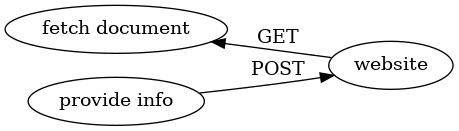
Reliable conversation Human conversation is most reliable when using plain speak. Slang, sarcasm or jokes raise the risk of misunderstandings. This is quite similar in computer conversation. When surfing the Web, you normally "GET" a web page or "POST" new data like a search query. The words "GET" and "POST" are "plain speak" of the World Wide Web defined as a principle called "REST" or "RESTful design". I use the Kannel tool to talk directly to the phones. When an sms arrives on the phone, Kannel "GET"s it to the calendar. That's weakly expressed better if it had "POST"ed the message instead. Kannel is a quite reliable tool, but not RESTful in conversations. That requires extra attention at other parts of the setup to avoid breakage in special situations. That worries me.

Each car has a blog So I setup a gateway from Kannel to RESTful conversation. And choose classic blogging as style of conversation:
  • The carpool fleet is a blogroll
  • each car has a blog
  • each sms emitted from a car is a blog entry
Blogging comes in two flavors, RSS and Atom. Both cover distribution of messages. I use Atom because it is newest and coolest, and because it also covers creating and editing meesages with the AtomPub extension. AtomPub allows the calendar to create an empty message which then triggers an sms from the car which "fills it in." AtomPub also let the calendar "PUT" tags onto existing messages, to mark them as processed, read etc., and let an admin or a cleanup script "DELETE" outdated entries or blogs. The words "PUT" and "DELETE" are RESTful conversation as well.

The system is dancing! My sms-to-blog gateway is written in Perl, using the Dancer toolkit. Dancer makes it simple to setup a RESTful web conversation, and when I contacted the authors on IRC, they swiftly added support for the non-RESTful quirk that I needed. My sms-to-blog gateway is not yet ready, but basic routines work. The project is public, and code is Free Software.

8 July 2012

Petter Reinholdtsen: Debian Edu interview: George Bredberg

The Debian Edu / Skolelinux project have users all over the globe, but until recently we have not known about any users in Norway's neighbour country Sweden. This changed when George Bredberg showed up in March this year on the mailing list, asking interesting questions about how to adjust and scale the just released Debian Edu Wheezy setup to his liking. He granted me an interview, and I am happy to share his answers with you here. Who are you, and how do you spend your days? I'm a 44 year old country guy that have been working 12 years at the same school as 50% IT-manager and 50% Teacher. My educational background is fil.kand in history and religious beliefs, an exam as a "folkhighschool" teacher, that is, for teaching grownups. In Norwegian I believe it's called "Vuxenupplaring". I also have a master in "Technology and social change". So I'm not really a tech guy, I just like to study how humans and technology interact and that is my perspective when working with IT. How did you get in contact with the Skolelinux/Debian Edu project? I have followed the Skolelinux project for quite some time by now. Earlier I tested out the K12-LTSP project, which we used for some time, but I really like the idea of having a distribution aimed to be a complete solution for schools with necessary tools integrated. When K12-LTSP abandoned that idea some years ago, I started to look more seriously into Skolelinux instead. What do you see as the advantages of Skolelinux/Debian Edu? The big point of Skolelinux to me is that it is a complete distribution, ready to install. It has LDAP-support, MS Windows integration tools and so forth already configured, saving an administrator a lot of time and headache. We were using another Linux based thin-client system called Thinlinc, that has served us very well. But that Skolelinux is based on VNC and LTSP, to me, is better when it comes to the kind of multimedia used in schools. That is showing videos from Youtube or educational TV. It is also easier to mix thin clients with workstations, since the user settings will be the same. In our VNC-based solution you had to "beat around the bush" by setting up a second, hidden, home-directory for user settings for the workstations, because they will be different from the ones used on the thin clients. Skolelinux support for diskless workstations are very convenient since a school today often need to use a class room projector showing videos in full screen. That is easily done with a small integrated media computer running as a diskless workstation. You have only two installs to update and configure. One for the thin clients and one for the workstations. Also saving a lot of time. Our old system was also based on Redhat and CentOS. They are both very nice distributions, but they are sometimes painfully slow when it comes to updating multimedia support and multimedia programs (even such as Gimp), leaving us with a bit "oldish" applications. Debian is quicker to update. What do you see as the disadvantages of Skolelinux/Debian Edu? Debian is a bit too quick when it comes to updating. As an example we use old HP terminals as thinclients, and two times already this year (2012) the updates you get from the repositories has stopped sound from working with them. It's a kernel/ALSA issue. So you have to be more careful properly testing the updates before you run them in a production environment. This has never happened with CentOS. I also would like to be able to set my own domain-settings at install time. In Skolelinux they are kind of hard coded into the distribution, when it comes to LDAP and at least samba integration. That is more a cosmetic/translation issue, and not a real problem. Running MS Windows applications within the Skolelinux environment needs to be better supported. That is, running them seamlessly via RDP, and support for single-sign on. That will make the transition to free software easier, because you can keep the applications you really need. No support will make it impossible if you work in a school where some applications can't be open source. As for us we really need to run Adobe InDesign in our journalist classes. We run a journalist education, and is one of the very few non university ones that is ok:d by Svenska journalistf rbundet (Swedish journalist association). Our education gives the pupils the right of membership there, once they are done. This is important if you want to get a job. Adobe InDesign is the program most commonly used in newspapers and magazines. We used Quark Express before, but they seem to loose there market to Adobe. The only "equivalent" to InDesign in the opensource world is Scribus, and its not advanced enough. At least not according to the teacher. I think it would be possible to use it, because they are not supposed to learn a program, they are supposed to learn how to edit and compile a newspaper. But politically at our school we are not there yet. And Scribus lacks a lot of things you find i InDesign. We used even a windows program for sound editing when it comes to the radio-journalist part. The year to come we are going to try Audacity. That software has the same kind of limitations compared to Adobe Audition, but that teacher is a bit more open minded. We have tried Ardour also, but that instead is more like a music studio program, not intended for the kind of editing taking place in a radio studio. Its way to complex and the GUI is to scattered when you only want to cut, make pass-overs, add extra channels and normalise. Those things you can do in Audacity, but its not as easy as in Audition. You have to do more things manually with envelopes, and that is a bit old fashion and timewasting. Its also harder to cut and move sound from one channel to another, which is a thing that you do frequently because you often find yourself needing to rearrange parts of the sound file. So, I am not sure we will succeed in replacing even Audition, but we will try. The problem is the students have certain expectations when they start an education towards a profession. So the programs has to look and feel professional. Good thing with radio, there are many programs out there, that radio studios use, so its not as standardised as Newspaper editing. That means, it does not really matter what program they learn, because once they start working they still have to learn the program the studio uses, so instead focus has to be to learn the editing part without to much focus on a specific software. Which free software do you use daily? Myself I'm running Linux Mint, or Ubuntu these days. I use almost only open source software, and preferably Linux based. When it comes to most used applications its OpenOffice, and Firefox (of course ;) ) Which strategy do you believe is the right one to use to get schools to use free software? To get schools to use free software there has to be good open source software that are windows based, to ease the transition. But it's also very important that the multimedia support is working flawlessly. The problems with Youtube, Twitter, Facebook and whatever will create problems when it comes to both teachers and students. Economy are also important for schools, so using thin clients, as long as they have good multimedia support, is a very good idea. It's also important that the open source software works even for the administration. It's hard to convince the teachers to stick with open source, if the principal has to run Windows. It also creates a problem if some classes has to use Windows for there tasks, since that will create a difference in "status" between classes, so a good support for running windows applications via the thin client (Linux) desktop is essential. At least at our school, where we have mixed level of educations, from high-school to journalist-school. Update 2012-07-09 08:30: Paul Wise tipped me on IRC about three useful sources related to Free Software for radio stations: the LWN article Radio station management with Airtime, Airtime which claim to be a Free open source radio automation software and Rivendell which claim to be complete radio broadcast automation solution. All of them seem useful to the aspiring radio producer.

1 July 2012

Ingo Juergensmann: 100% CPU load due to Leap Second

This morning Gregor Samsa woke up... oh, pardon! This morning I woke up and found myself puzzled, because my home server was eating up all of my 4 cores CPU cycles. Especially mysqld was high on CPU load. 100% CPU load for the mysql-server instance and 100% CPU load for akonadiservers own mysqld instance. Restarting KDE and mysql-server didn't help on my Debian unstable machine. Next step was upgrading the system. Sometimes this helps indeed, but not today. Looking at bugs.debian.org for mysql-server didn't reveal any help as well. So my next logical step was to ask on #debian-devel in IRC. And my question was very quick answered:
11:28 < ij> since tonight I've got two mysqld processes running at 100% CPU, one spawned by akonadi and
the other is the mysqld from mysql-server (unstable that is). is this an already known issue?
haven't found anything on b.d.o for mysql-server, though
11:29 < mrvn> ij: topic
11:29 < mrvn> you need to set the time
11:30 < ij> waaaaah!
11:30 < mrvn> ij: indeed.
The topic was at that time:
100% CPU? Reset leap second http://xrl.us/bnde4w
So, it was caused by the leap second. Although you might suspect mysql doing some nasty things (which, IMHO, is always a good guess ;)), the issue is this time within the Linux kernel itself, as a commit on git.kernel.org clearifies. To fix this issue you need to set the time manually using the following command or just reboot:
date -s " date "
So far I found these applications being hit by this kernel bug:
  • mysql-server
  • akonadi (as it uses own mysql instances)
  • Firefox
  • Openfire Jabber server (because it's using Java, which seems to trigger the problem as mysql does)
  • Virtualbox' VBoxSVC process
  • puppetmaster from package puppet, reported by Michael
  • mythfrontend, reported by pos on #debian-devel
  • Jetty, Hudson, Puppet agent and master, reported by Christian
  • milter-greylist, reported by E. Recio
  • dovecot, reported by Diogo Resende
  • Google Chrome, reported by Erik B. Andersen
  • if you find more apps, please comment and I'll include them here...
So, hope this helps and many thanks to mrvn and infinity on #debian-devel for the help!
Kategorie:

25 June 2012

Rapha&#235;l Hertzog: Test Driven Development with CppUTest, now in Debian

I have recently read Test Driven Development with Embedded C by James W. Grenning and published by Pragmatic Programmers. I really enjoyed the book: while I was aware of the huge benefits of having a comprehensive test suite, I never studied seriously the principles behind Test Driven Development (TDD) and this book makes a good introduction to the topic. At the same time it focuses on the C language and contains lots of examples on how you can create tests even for projects which have to interact with hardware or other unpredictable components (the key is to create many abstractions) using all the possibilities that C offers. The author convincingly argues that developing code with TDD forces you to create a modular design that is easier to evolve when the underlying requirements change. He also highlights how the tests serve as reference documentation of the API. James W. Grenning recommends CppUTest as his xUnit test framework of choice. When I wanted to try this test framework, I discovered that it was not available in Debian. I decided to package it because it has some interesting features not offered by the contenders (at least not to my knowledge). It s now available in Debian and in Ubuntu. First, it doesn t require any explicit registration of tests and has a very lightweight syntax. The small downside is that CppUTest requires the usage of C++ for the tests. But C++ is compatible with C so it doesn t matter much if you have a C++ compiler for your target. On the contrary, usage of variables and methods scoped to the test group makes it easy to write clear tests. Here s a short sample of test code:
extern "C"  
#include "timer.h"
#include "timefn.h"
 
 
#include "CppUTest/TestHarness.h"
 
static Time the_time;
static const int start_sec = 123;
static const int start_nsec = 456789000;
static const int delay_sec = 8;
static const int delay_nsec = 111111000; // start_nsec + delay_nsec < 10^9
 
TEST_GROUP(Timer)
 
    /* Class variables available to all tests in the group */
    Timer timer;
    Delay remaining;
 
    /* Standard setup/teardown methods of xUnit tests */
    void setup()  
        timer = timer_new();
        time_set(&the_time, start_sec, start_nsec);
        /* [...] */
     
 
    void teardown()  
        timer_free(timer);
        /* [...] */
     
 
    /* Helper functions specific to the test group */
    void start_timer_with_delay(long sec, long nsec)
     
        timer_set_real_delay(timer, sec, nsec);
        timer_start(timer);
     
 
    void ensure_remaining_is(long sec, long nsec)
     
        CHECK_EQUAL(sec, delay_get_seconds(remaining));
        CHECK_EQUAL(nsec, delay_get_nanoseconds(remaining));
     
 ;
 
TEST(Timer, NewIsNotStarted)
 
    CHECK(!timer->started);
 
/* [...] */
TEST(Timer, GetRemainingTimeWithNanosecondPrecision_ShiftOfSeconds)
 
    start_timer_with_delay(delay_sec, delay_nsec);
    time_set(&the_time, start_sec + delay_sec - 5, start_nsec + delay_nsec + 1000);
 
    remaining = timer_get_remaining_time(timer);
 
    ensure_remaining_is(4, 999999000);
 
To run those tests, you just need this boilerplate code in a main.cpp:
#include "CppUTest/CommandLineTestRunner.h"
 
int main(int argc, char** argv)
 
   return CommandLineTestRunner::RunAllTests(argc, argv);
 
Another interesting feature is its integrated memory leak detection system. Any test that hasn t released allocated memory at the end of the teardown process will be marked as failed. The upstream developers have made some unusual choices (static library only, installation in a private directory) but this will likely change with the switch to an automake and autoconf-based build system. I have reported the oddities that I found and I requested them to provide a pkg-config file to make it easier to compile and link unit tests exploiting CppUTest. I already used CppUTest to develop a small application running on an embedded Linux. At some point, I might try to use CppUTest for dpkg development. I believe that it makes for a good fit. dpkg is already C++ ready since dselect is written in C++ and reuses a good part of dpkg s code. In any case, if you like Test Driven Development and are writing C or C++ based applications, I invite you to try CppUTest.

No comment Liked this article? Click here. My blog is Flattr-enabled.

24 June 2012

Pablo Lorenzzoni: Zotero and note-taking

I was looking for an excuse to try Zotero and the perfect opportunity appeared when I got a whole lot of references to group for a month of Magnetic Ressonance studies I am currently taking. I was also pleased to notice it is packaged to Debian. I am used to note-taking software. Back when I used a Palm m130 (and a Treo 650), I managed a lot of Memos I eventually migrated to Note-Everything in my current Android phone. Zotero, unfortunatelly, is not interfaceable with my phone (or I was still unable to figure out how to do so), but it s powerful in managing references beyond simple note-taking. Is anyone using Zotero in a more ambitious way? I ve read about people using it to keep large researchs to support fiction and non-fiction book-writing I also watched some YouTube videos on it. As far as I went with it, Zotero might become an important piece in my toolbox wrt reference keeping, so I was just trying to figure out how many other niches it can fill

15 June 2012

Thorsten Glaser: Tricks for dealing with modern-day X.org

KiBi is my hero of the day. I ve long wondered why I couldn t select fixed-misc as font on my workstation at the dayjob, which is running Kubuntu Hardon Heroin. (Luckily, I managed to avoid upgrading to Prolonged Pain.) Now I guess that ll work again. My work laptop (running testing) also has got this X.org thingy. My keyboard layout now has got a grml branch (named after the person who first cursed about the insane idea of those toy-breaking boys to rearrange the keycodes) that works with it. Since Debian is marginally more sane than Kubuntu, in contrast to the gnu branch I use on my orkstation, the grml branch still has Meta on the left Alt key, not Mode_switch, as it still works in uxterm, which reduces the diff between the MAIN branch (HEAD) on XFree86 and this beast.

And finally: X.org defaults to a black screen and disabled mouse pointer until an application first requests it. Totally unacceptable for evilwm(1) users, and letting people think it crashed, to boot. The Arch Linux guys found this, among others; the fix is: startx(1) users edit /etc/X11/xinit/xserverrc to add -retro behind the X, or copy the file to ~/.xserverrc and change it there:

	#!/bin/sh
	exec /usr/bin/X -retro -nolisten tcp "$@"
 

For display managers,similar files exist in /etc/kde4/kdm and related places.

19 April 2012

Pablo Lorenzzoni: Timeout a process in Bash > v4

Just for reference, this is really useful:
( cmdpid=$BASHPID; (sleep 10; kill $cmdpid) & exec some_command )
Update Apr 20, 2012 @ 16:54: As pointed in a comment by Timo Juhani Lindfors, if some_command exits early and the interval is long, another process can reuse its process number and get killed once the sleep runs out. Does anybody know a better way of doing that without using timeout from coreutils (better yet: using just bash)?

16 April 2012

Pablo Lorenzzoni: Key Signing Party at FISL13

You know the drill. Official announcement is here (or here in portuguese). Anybody planning to drop by FISL13 should submit a key.

5 April 2012

Dominique Dumont: My activities during Perl/QA hackathon in Paris

Hello Last week-end, I ve participated Perl/QA hackathon in Paris. Here s a short summary of the main activities during this week-end. I was not in the best of shape due to a nasty (biological) bug that wore me down before the hackathon. First of all, I discussed with rjbs about the bunch of debian patches I ve written for Software::License. These patches (and hacks) are used in Debian to provide licenses summaries in Debian::Dpkg::Copyright model to help write Debian copyright files. License management is boring but necessary. cme and Software::License help in making this task slightly less boring. Ricardo kindly suggested some modifications and agreed to include my patches. I implemented these modifications directly during the hackathon. The other tasks during this week-end were (not necessarily in that order): Many thanks to FreeSide who sponsored my travel, to the hackathons organisers and to all the participants for their welcome. All the best

29 March 2012

Pablo Lorenzzoni: Using Gmail anti-spam with mutt

OK, this is not another post on how to use Mutt and Gmail. This is just to comment on a feature I found in Mutt that was not obvious, and that helped me to stop running my own anti-spam tool. So, for a number of reasons, my company stop filtering spams. I was setting up dspam to take over that job when I decided that it was just too much pain for a single account. Besides, although I am spammed a lot, I would never possibly be more efficient than Gmail anti-spam, given the load of emails their users classify everyday. I am not migrating my old emails over to Gmail, though. And I am pretty comfortable with my current email work-flow I am simply not going to use a webmail (even one as powerful as Gmail). OK, I am using GNOME 3 after being a Fluxbox and Bluetile user, but everything has a limit But how to keep the best of both worlds? And, more important, how to do that with minimum disruption of what I already have (my own IMAP server and Mutt managing my account there as spoolfile)? The answer is a little known trick using the mailboxes directive in .muttrc. This directive accepts a fully-qualified imap mailbox address. So I just added something like:
mailboxes 'imaps://gmail-user:gmail-password@imap.gmail.com:993/[Gmail]/Spam'
and added some shortcuts to save email from my inbox to that mailbox (the same as train-as-spam) and to rescue email from it (the same as train-as-ham):
macro index <F3> ";Wo;Wn;simaps://gmail-user:gmail-password@imap.gmail.com:993/[Gmail]/Spam\n" "Train as SPAM"
macro index <F4> ";Wo;Wn;simaps://gmail-user:gmail-password@imap.gmail.com:993/INBOX\n" "Train as HAM"
and that was it. In my IMAP machine I got a fetchmail downloading emails from Gmail s INBOX so I can get trained-as-ham and new emails (all emails arrive first in my Gmail account) into my IMAP server. All my sieve rules are in place and nothing changed in my email work-flow. It s been working flawlessly for a week now. The only drawbacks are (1) Gmail knowing everything that arrives to me (not a big deal, since unencrypted emails aren t private anyway), and (2) not getting the spam-count once Mutt is run: I have to change into that mailbox to log-in to Gmail. Update: Mar 30, 2012 @ 18:15: I just found out that drawback number (2) above can be fixed by adding the following to .muttrc:
unset imap_passive

24 March 2012

Pablo Lorenzzoni: Annoyed by F10 key in gnome-terminal?

I am one of those people that like to map Fx keys to special functions. After all, that s what F-unction keys are for, right? So, one of the first things I do once I have to configure a new Desktop is disable F10-capture by gnome-terminal. It has been working flawlessly, until I begin using GNOME3. No matter what, F10 was still being captured. I found that this is a bug and that adding the following:
@binding-set NoKeyboardNavigation  
	unbind "<shift>F10"
 
 
*  
	gtk-key-bindings: NoKeyboardNavigation
 
to ~/.config/gtk-3.0/gtk.css serves as a workaround. Hope this helps people with the same problem.

Next.

Previous.