Simon D saulniers: [GSOC] Final report


Debian
I ve had the great opportunity to go to the Debian Conference 2016. I ve been
introduced to the debian community and debian developpers ( dd in short :p). I
was lucky to meet with great people like the president of the FSF, John
Sullivan. You can have a look at my Debian conference report here.
If you want to read my debian reports, you can do so by browsing the Google
Summer Of Code category on this blog.
What I have done
Ring is now in official debian
repositories since June 30th. This
is a good news for the GNU/Linux community. I m proud to say that I ve been able
to contribute to debian by working on OpenDHT and developing new
functionalities to reduce network traffic. The goal behind this was to finally
optimize the data persistence traffic consumption on the DHT.
Github repository: https://github.com/savoirfairelinux/opendht
Queries
Issues:
- #43: DHT queries
Pull requests:
- #79: [DHT] Queries: remote values filtering
- 93: dht: return consistent query from local storage
- #106: [dht] rework get timings after queries in master
Value pagination
Issues:
- #71: [DHT] value pagination
Pull requests:
Indexation (feat. Nicolas Reynaud)
Pull requests:
General maintenance of OpenDHT
Issues:
- #72: Packaging issue for Python bindings with CMake: $DESTDIR not honored
- #75: Different libraries built with Autotools and CMake
- #87: OpenDHT does not build on armel
- #92: [DhtScanner] doesn t compile on LLVM 7.0.2
- #99: 0.6.2 filenames in 0.6.3
Pull requests:
- #73: dht: consider IPv4 or IPv6 disconnected on operation done
- #74: [packaging] support python installation with make DESTDIR=$DIR
- #84: [dhtnode] user experience
- #94: dht: make main store a vector>
- #94: autotools: versionning consistent with CMake
- #103: dht: fix sendListen loop bug
- #106: dht: more accurate name for requested nodes count
- #108: dht: unify bootstrapSearch and refill method using node cache
View by commits
You can have a look at my work by commits just by clicking this link:
https://github.com/savoirfairelinux/opendht/commits/master?author=sim590
What s left to be done
Data persistence
The only thing left before achieving the totality of my work is to rigorously
test the data persistence behavior to demonstrate the network traffic reduction.
To do so we use our benchmark python module. We are able to analyse traffic
and produce plots like this one:
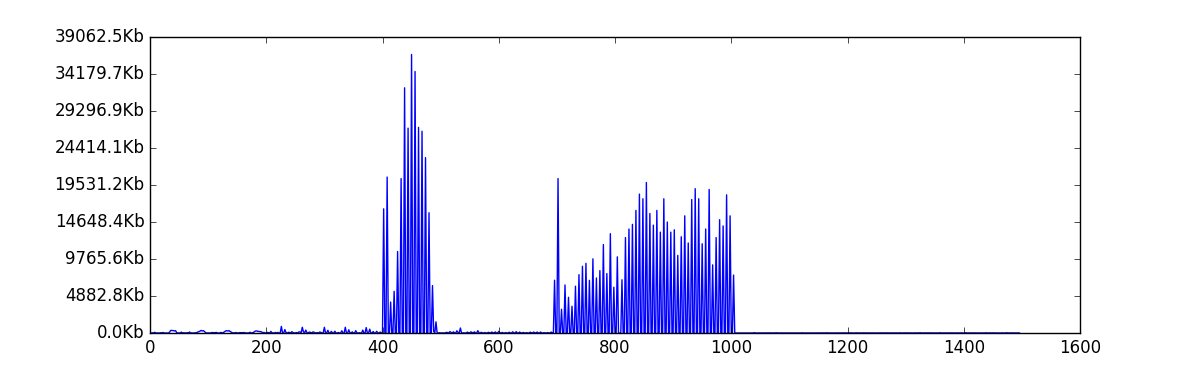
Plot: 32 nodes, 1600 values with normal condition test.
This particular plot was drawn before the enhancements. We are confident to
improve the results using my work produced during the GSOC.
TCP
In the middle of the GSOC, we soon realized that passing from UDP to TCP would
ask too much efforts in too short lapse of time. Also, it is not yet clear if we
should really do that.
Queries
Issues:
- #43: DHT queries
Pull requests:
- #79: [DHT] Queries: remote values filtering
- 93: dht: return consistent query from local storage
- #106: [dht] rework get timings after queries in master
Value pagination
Issues:
- #71: [DHT] value pagination
Pull requests:
Indexation (feat. Nicolas Reynaud)
Pull requests:
General maintenance of OpenDHT
Issues:
- #72: Packaging issue for Python bindings with CMake: $DESTDIR not honored
- #75: Different libraries built with Autotools and CMake
- #87: OpenDHT does not build on armel
- #92: [DhtScanner] doesn t compile on LLVM 7.0.2
- #99: 0.6.2 filenames in 0.6.3
Pull requests:
- #73: dht: consider IPv4 or IPv6 disconnected on operation done
- #74: [packaging] support python installation with make DESTDIR=$DIR
- #84: [dhtnode] user experience
- #94: dht: make main store a vector>
- #94: autotools: versionning consistent with CMake
- #103: dht: fix sendListen loop bug
- #106: dht: more accurate name for requested nodes count
- #108: dht: unify bootstrapSearch and refill method using node cache
View by commits
You can have a look at my work by commits just by clicking this link:
https://github.com/savoirfairelinux/opendht/commits/master?author=sim590
What s left to be done
Data persistence
The only thing left before achieving the totality of my work is to rigorously
test the data persistence behavior to demonstrate the network traffic reduction.
To do so we use our benchmark python module. We are able to analyse traffic
and produce plots like this one:
Plot: 32 nodes, 1600 values with normal condition test.
This particular plot was drawn before the enhancements. We are confident to
improve the results using my work produced during the GSOC.
TCP
In the middle of the GSOC, we soon realized that passing from UDP to TCP would
ask too much efforts in too short lapse of time. Also, it is not yet clear if we
should really do that.
- #71: [DHT] value pagination
Indexation (feat. Nicolas Reynaud)
Pull requests:
General maintenance of OpenDHT
Issues:
- #72: Packaging issue for Python bindings with CMake: $DESTDIR not honored
- #75: Different libraries built with Autotools and CMake
- #87: OpenDHT does not build on armel
- #92: [DhtScanner] doesn t compile on LLVM 7.0.2
- #99: 0.6.2 filenames in 0.6.3
Pull requests:
- #73: dht: consider IPv4 or IPv6 disconnected on operation done
- #74: [packaging] support python installation with make DESTDIR=$DIR
- #84: [dhtnode] user experience
- #94: dht: make main store a vector>
- #94: autotools: versionning consistent with CMake
- #103: dht: fix sendListen loop bug
- #106: dht: more accurate name for requested nodes count
- #108: dht: unify bootstrapSearch and refill method using node cache
View by commits
You can have a look at my work by commits just by clicking this link:
https://github.com/savoirfairelinux/opendht/commits/master?author=sim590
What s left to be done
Data persistence
The only thing left before achieving the totality of my work is to rigorously
test the data persistence behavior to demonstrate the network traffic reduction.
To do so we use our benchmark python module. We are able to analyse traffic
and produce plots like this one:
Plot: 32 nodes, 1600 values with normal condition test.
This particular plot was drawn before the enhancements. We are confident to
improve the results using my work produced during the GSOC.
TCP
In the middle of the GSOC, we soon realized that passing from UDP to TCP would
ask too much efforts in too short lapse of time. Also, it is not yet clear if we
should really do that.
- #72: Packaging issue for Python bindings with CMake: $DESTDIR not honored
- #75: Different libraries built with Autotools and CMake
- #87: OpenDHT does not build on armel
- #92: [DhtScanner] doesn t compile on LLVM 7.0.2
- #99: 0.6.2 filenames in 0.6.3
- #73: dht: consider IPv4 or IPv6 disconnected on operation done
- #74: [packaging] support python installation with make DESTDIR=$DIR
- #84: [dhtnode] user experience
- #94: dht: make main store a vector>
- #94: autotools: versionning consistent with CMake
- #103: dht: fix sendListen loop bug
- #106: dht: more accurate name for requested nodes count
- #108: dht: unify bootstrapSearch and refill method using node cache
View by commits
You can have a look at my work by commits just by clicking this link:
https://github.com/savoirfairelinux/opendht/commits/master?author=sim590
What s left to be done
Data persistence
The only thing left before achieving the totality of my work is to rigorously
test the data persistence behavior to demonstrate the network traffic reduction.
To do so we use our benchmark python module. We are able to analyse traffic
and produce plots like this one:
Plot: 32 nodes, 1600 values with normal condition test.
This particular plot was drawn before the enhancements. We are confident to
improve the results using my work produced during the GSOC.
TCP
In the middle of the GSOC, we soon realized that passing from UDP to TCP would
ask too much efforts in too short lapse of time. Also, it is not yet clear if we
should really do that.
Plot: 32 nodes, 1600 values with normal condition test.
 One criminally-unknown new UNIX tool is
 There s a
 Please note that the environment it runs on is deployment . The backend server it uses is the great Starman, also by the great Miyagawa.
Now, if you add or change dependencies on Makefile.PL, next time you push, those will get updated.
Very cool, right? :)

 Hi,
I am in two minds of what to write about Doha. My job has been vastly simplified by a friend when he shared with me


 This package also sees the (third) revision of how config files for pdftex and luatex are structured, since then we have settled down. Hopefully this will close some of the issues that have appeared.
New packages


 I do have some more stories about Qatar but that would have to wait for another day now. Also, I really don t want to talk much about this part as it s part depressing but probably would explore it a bit in a further blog-post.
One of the more interesting topics that I attended was the apt talk . There are 3-4 tools in the Debian world i.e. apt, aptitude, apt-get, dpkg and dselect. More often than not people know aptitude and apt-get whereas the rest of the packages are not thought so much about. What I somewhat suspected about the history of apt was revealed to be true


 Unless you're into hardware hacking and want to hook wires up to the GPIO
pins, the best hardware feature is the complete keyboard, with even
Escape and Control and arrow keys. You can ssh around and run vi on it,
run your favorite REPL (I use ghci) to do quick programming, etc.
The keyboard is small and a little strange, but you get used
to it quickly; your QWERTY muscle memory is transferrable to it.
I had fun installing nethack on it and handing it to my sister who
had never played nethack before, to watch her learn to play.
The screen resolution is 480x272, which is pretty tiny. And, it's a cheap
resistive touchscreen, with a bezil around it. This makes it very hard to
use scroll bars and icons near the edge of the screen. The customized
interface that ships with it avoids these problems, and so I've been using
that for now. When I have time, I plan to put a fullscreen window
manager on it, and write a


 The second
 But then we also like to confirm the bugs are really gone, which (atm) requires manual
checking, and to look for the words "reproducible" and "deterministic"
(and spelling variations) in debian/changelogs of all uploads, to spot reproducible work
not tracked via the BTS.
And we still need to catch up on the backlog of weekly reports.
Bugs submitted with reproducible usertags
It seems