Stefano Zacchiroli: deferred bits from the DPL for March 2012
Posted a week ago, already deferred back then, this report is
even more deferred now! But as there are people interest in knowing
what the "DPL job" is about even among non debian-devel-announce
subscribers, here is a blog-conveyed reproduction, for the
records.
Dear project members,
here is my monthly DPL activity report, this time for last March. It is delayed by a couple of weeks because, myself being both incumbent and candidate DPL, I preferred not to use d-d-a during the voting period unless really needed. Apologies for the delay (or the unneeded paranoia, you name it). As a side effect of the delay, the results of the DPL election are now known. I'd like to thank all the people who took part in the elections: voters, people who asked questions on -vote, the secretary, and obviously Gergely and Wouter, without whom the campaign wouldn't have allowed to discuss relevant aspects of Debian "politics". Thanks for your trust. I'll do my best to match your expectations. ... and just to remind you what you've just asked for, here goes the BigMonthlyBlurb! Highlight: long-term hardware replacement planning The highlight for this month is long term planning of hardware replacement. It's something I've been discussing with DSA for quite a while and on which DSA has worked hard during the recent sprint. As a result, we now have a quite ambitious 5-year hardware replacement plan that will guarantee that all machines in production are under warranty at any given time (with the nice side effect of generally better performances, as they go hand in hand with newer hardware). The current estimated cost per year is 29'000 USD. That does not yet include buildds and porter-boxes, so it is expected to increase a bit to cover all our hardware needs. But we expect it not increase too much, as we tend to get explicit hardware donations to cover arch-specific needs. Given the current state of Debian finances and donation trends, the plan looks sustainable for at least 2-3 years. But this assessment still needs to be refined as soon as, together with the auditors, we'll manage to obtain the history of past Debian transactions, in particular from SPI. We've been waiting for this for about 5 months now, but I'm positive it could become a reality in the next weeks. In the meantime, it is surely safe to start with the plan for the next 1-1.5 years, so I'll give green light to DSA for the first acquisitions as soon as they're ready for it. When implemented, this plan will increase our ability to rely on hardware. But it also means we will need to become a bit more organized about fund-raising. The discussion started with the sprint report has some insights about how to do that. As part of this, we'll also need to share resources (e.g. contact databases, people, etc.) among the yearly DebConf fund-raising initiatives and the initiatives mentioned in the aforementioned discussion. Ongoing discussions
PS the boring day-to-day activity log for March is available at
Dear project members,
here is my monthly DPL activity report, this time for last March. It is delayed by a couple of weeks because, myself being both incumbent and candidate DPL, I preferred not to use d-d-a during the voting period unless really needed. Apologies for the delay (or the unneeded paranoia, you name it). As a side effect of the delay, the results of the DPL election are now known. I'd like to thank all the people who took part in the elections: voters, people who asked questions on -vote, the secretary, and obviously Gergely and Wouter, without whom the campaign wouldn't have allowed to discuss relevant aspects of Debian "politics". Thanks for your trust. I'll do my best to match your expectations. ... and just to remind you what you've just asked for, here goes the BigMonthlyBlurb! Highlight: long-term hardware replacement planning The highlight for this month is long term planning of hardware replacement. It's something I've been discussing with DSA for quite a while and on which DSA has worked hard during the recent sprint. As a result, we now have a quite ambitious 5-year hardware replacement plan that will guarantee that all machines in production are under warranty at any given time (with the nice side effect of generally better performances, as they go hand in hand with newer hardware). The current estimated cost per year is 29'000 USD. That does not yet include buildds and porter-boxes, so it is expected to increase a bit to cover all our hardware needs. But we expect it not increase too much, as we tend to get explicit hardware donations to cover arch-specific needs. Given the current state of Debian finances and donation trends, the plan looks sustainable for at least 2-3 years. But this assessment still needs to be refined as soon as, together with the auditors, we'll manage to obtain the history of past Debian transactions, in particular from SPI. We've been waiting for this for about 5 months now, but I'm positive it could become a reality in the next weeks. In the meantime, it is surely safe to start with the plan for the next 1-1.5 years, so I'll give green light to DSA for the first acquisitions as soon as they're ready for it. When implemented, this plan will increase our ability to rely on hardware. But it also means we will need to become a bit more organized about fund-raising. The discussion started with the sprint report has some insights about how to do that. As part of this, we'll also need to share resources (e.g. contact databases, people, etc.) among the yearly DebConf fund-raising initiatives and the initiatives mentioned in the aforementioned discussion. Ongoing discussions
- A couple of important clarifications on how to deal with trademark-encumbered software in the Debian archive have been posted to -project. It seems to me there might be consensus on the overall topic, but we need to write down guidelines for maintainers (and possibly a project position statement?). I could use some help on that front, so if you've followed the discussion and/or have an interest in trademark and free software, please get in touch.
- To put an end to the long and glorious life of DEP-5, I've marked it as ACCEPTED given that it has been "implemented" in February via inclusion in the debian-policy package. You still have some time to port your debian/copyright-s to it before the Wheezy freeze.
- I've been contacted by the DuckDuckGo about a revenue sharing agreement for the inbound traffic they already get from Debian browsers. I've informed -project proposing to accept it and that has spawned a discussion that has won us an LWN article. I haven't yet summarized the thread proposing a way forward; I'll do so shortly.
- as part of a discussion on unofficial "debian" repositories, I've proposed to open up the list of *.debian.net domains. As nobody disagreed, consensus has been quickly reached and the announced change is now imminent. Thanks to Carsten Hey and Gerfried Fuchs for their help in figuring out the details of the last discussion on the matter and DSA for their feedback.
- I've signed the annual memorandum of understanding with the financial entity that will help us with local expenditures for DebConf12 in Nicaragua. This year is ISIC, with whom we have an important trust path via Norman Garcia Aguilar, member of the DebConf orga team.
- After discussion with auditors, we've resolved to set a 1 year deadline for reimbursement requests. The reason is that it's a PITA to keep track of longer-running requests (yes, they do happen!) and they add uncertainty to our available finances. There can be exceptions, but please help on this front by timely requesting reimbursements after travels or other expenses.
PS the boring day-to-day activity log for March is available at
master:/srv/leader/news/bits-from-the-DPL.txt.201203

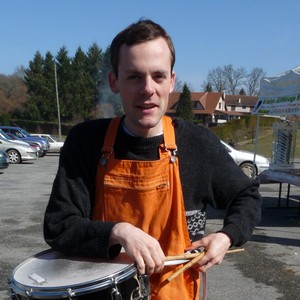 Samuel Thibault is a French guy like me, but it took years until we met. He tends to keep a low profile, even though he s doing lots of good work that deserves to be mentioned.
He focuses on improving Debian s accessibility and contributes to the Hurd. Who said he s a dreamer?
 Checkout his interview to have some news of Wheezy s status on those topics.
Raphael: Who are you?
Samuel: I am 30 years old, and live in Bordeaux, France. During the workday,
I teach Computer Science (Architecture, Networking, Operating Systems, and
Parallel Programming, roughly) at the University of Bordeaux, and conduct
researches in heterogeneous parallel computing. During the evening, I play the
drums and the trombone in various orchestra (harmonic/symphonic/banda/brass).
During the night, I hack on whatever fun things I can find, mainly accessibility
and the Hurd at the moment, but also miscellaneous bits such as the Linux
console support. I am also involved in the development of Aquilenet, an
associative ISP around Bordeaux, and getting involved in the development of the
network infrastructure in Bordeaux. I am not practicing Judo any more, but I
roller-skate to work, and I like hiking in the mountains. I also read quite a
few mangas. Saturday mornings do not exist in my schedule (Sunday mornings do,
it s Brass Band rehearsal


 In the 3.x days of KDE, there were some wonderful applications. One of them I still admire, is kscope. Recently, I stumbled upon


 In (roughly) 2008 I read "Blood Music" my first Greg Bear novel and
devoured it in a weekend, in only two or three reading sessions. That happens
very rarely, and when it does I often wonder whether it's the quality of the
writing or some combination of that and your personal moods and tastes at the
time that is responsible. My next Bear was "Darwin's Radio" in mid-2010 which,
whilst good, did not provoke the same feverish read. I might write short
reviews for both at some point in the future, but right now I can't remember
either well enough to do so.
In the last few weeks I read "Hull Zero Three" which was quite a different
beast. The novel first captured my attention due to the unusual way it was
promoted: via a video, which was created using a modified Quake 2 engine. It
wasn't a great video but the novelty made it interesting.
The story begins with a first-person narrator waking up from a sort-of hyper
sleep on a generation starship that has clearly had some serious problems. He
has to run to escape danger before he has an opportunity to figure out exactly
what has happened and what he is running from, or to.
Something has gone horribly wrong on the ship: it's nowhere near where it
should be going and nobody should be awake. The narrator's memory is fractured,
fabricated and unreliable; the ship is hostile, and whilst it's mechanical, it
cyclically changes and re-arranges it's hulls in an almost organic way. He is
joined by a rotating cast of similarly confused refugees of varying shapes and
sizes. Language and cultural barriers serve to further magnify the sense of
alienation that you experience on behalf of the story teller. The troupe are
persued through the corridors by a collection of lethally efficient killer
"things", contrasting with the background by being organic in nature but
mechanical in behaviour and appearance.
The scale of the ship is necessarily massive, and Bear does an impressive job
of capturing the awe you might feel when considering it. Three huge,
cigar-shaped hulls, joined by "spars" to an enormous chunk of ice captured from
the Oort cloud on exodus from the solar system. The ice serves as a mixture of
"fuel" for the biological ship systems and as part of a shield system for the
hulls from cosmic rays. However, in part due to the narrator's confusion, it
was hard to follow the very abstract descriptions of the environment in the
earlier stages of the story. I found myself re-reading passages to try and
understand the comparisons being offered and scales presented.
In common with the two earlier Bears I've read, 'body horror' features
prominently in this story. It feels like a "Dead Space" or "Resident Evil" in
space in a hard SF novel which seriously attempt to capture real speculative
science.
Like "Blood Music", I found myself compelled to read "Hull Zero Three" at every
available opportunity. I finished it off in a very enjoyable reading session
outdoors in the spring sunshine. It was an enjoyable read, well written but not
beyond criticism, with some interesting takes on well-worn themes. Very
reminiscent of the movie "Pandorum" (which was a surprisingly good movie).


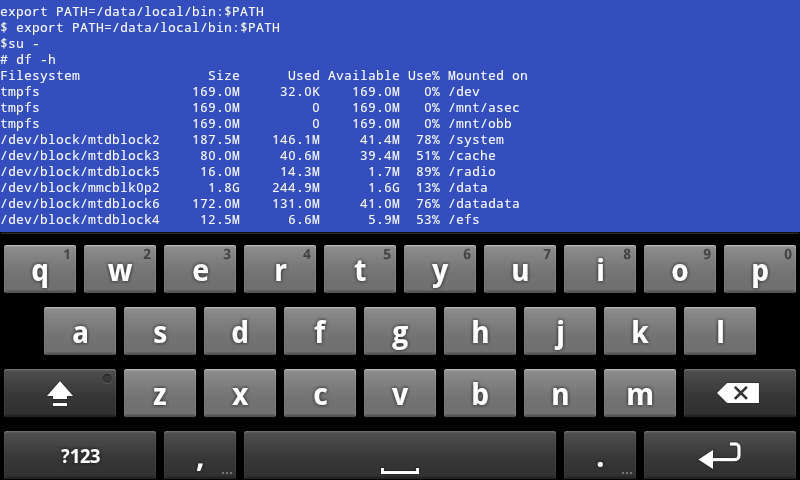 I started by explaining why having root access to your system is really important, including

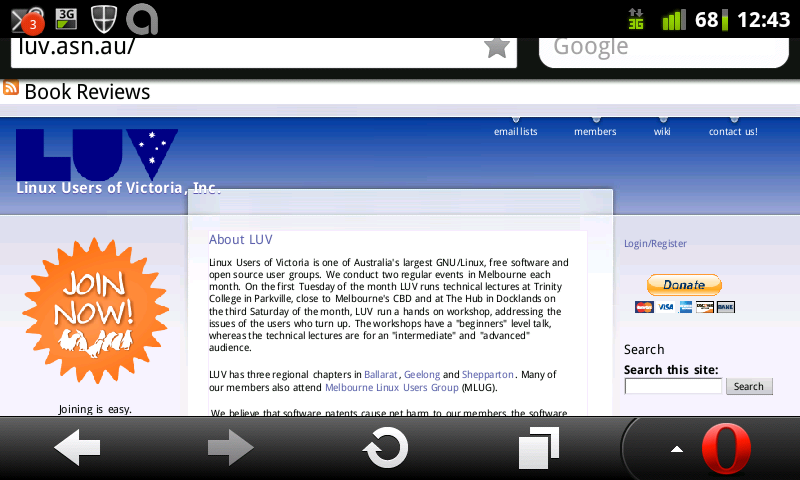
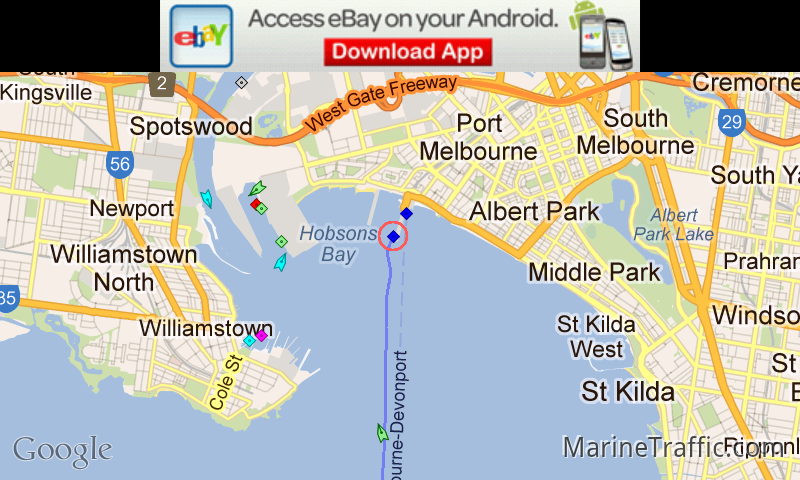
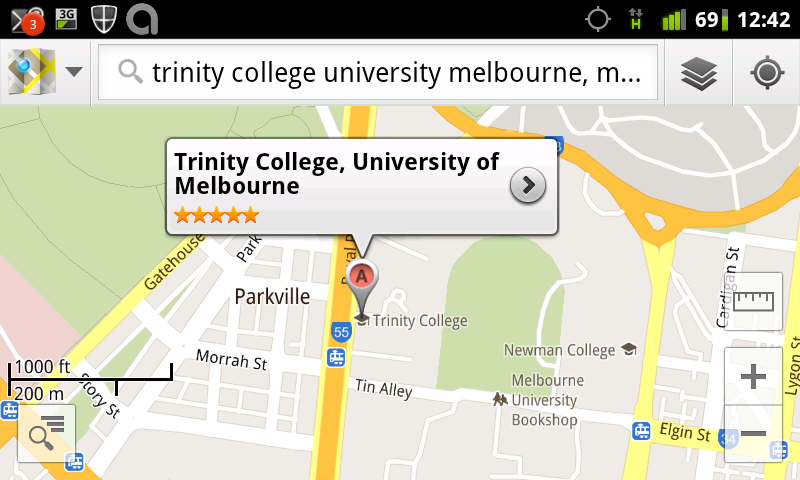 The Google Maps client comes with every Android system, the above shows the location of the LUV meeting.
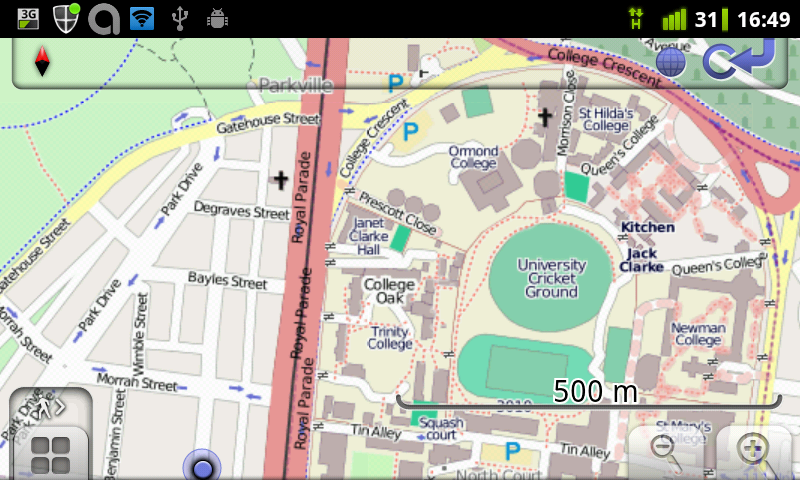
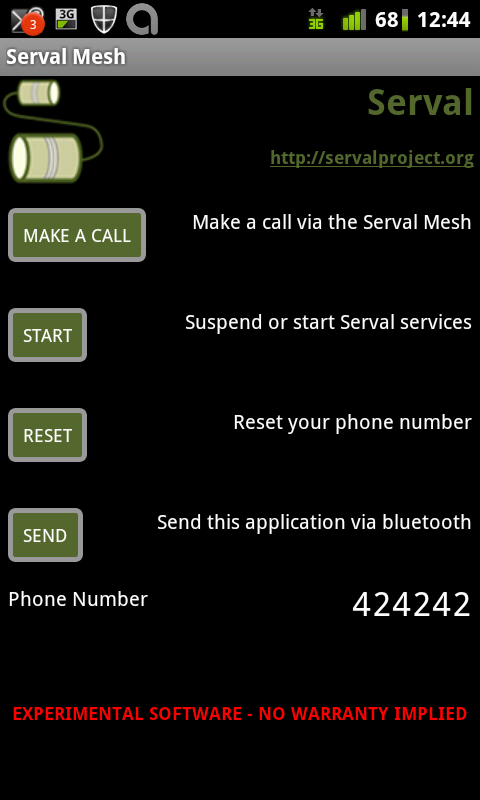





 A new version of the
 During the last week, I created
