Search Results: "reg"

29 June 2021

Louis-Philippe V ronneau: New Winter Bicycle

Although I'm about 5 months early and we're in the middle of a terrible heat wave where I live, I've just finished building my new winter bicycle! I've been riding all year round for about 8 years now and the winters in Montreal are harsh enough that a second winter-ready bicycle is required to have a fun and safe cold season. I'm saying "new bicycle" because a few months ago I totaled the frame of my previous winter bike. As you can see in the picture below (please disregard the salt crust), I broke the seat tube at the lug. I didn't notice it at first and while riding I kept hearing a "bang bang" sound coming from the frame when going over bumps. To my horror, I eventually realised the sound was coming from the seat tube hitting the bottom bracket shell! A large crack in my old bike frame I'm sad to see this Lejeune French frame go, but it was probably built in the 70's or the early 80's: it had a good life. Another great example of how a high quality steel frame can last a lifetime. Sparing no expense, I decided to replace it by a brand new Surly Cross-Check frameset. Surly is known for making great bike frames and the Cross-Check is a very versatile model. I'll finally be able to fit my Schwalbe Marathon Winter Plus tires at the front and the back with full length mud guards!!! Hard to ask for more. A picture of my new winter bike with CX Pro tires Summer has just started and I'm already looking forward to winter :)



Ritesh Raj Sarraf: Plant Territorial Behavior

This blog post is about my observations of some of the plants in my home garden. While still a n00b on the subject, these notes are my observations and experiences over days, weeks and months. Thankfully, with the capability to take frequent pictures, it has been easy to do an assessment and generate a report of some of these amazing behaviors of plants, in an easy timeline order; all thanks to the EXIF data embedded. This has very helpfully allowed me to record my, otherwise minor observations, into great detail; and make some sense out of it by correlating the data over time. It is an emotional experience. You see, plants are amazing. When I sow a sapling, water it, feed it, watch it grow, prune it, medicate it, and what not; I build up affection towards it. Though, at the same time, to me it is a strict relationship, not too attached; as in it doesn t hurt to uproot a plant if there is a good reason. But still, I find some sort of association to it. With plants around, it feels I have a lot of lives around me. All prospering, communicating, sharing. And communicate they do. What is needed is just the right language to observe and absorb their signals and decipher what they are trying to say.
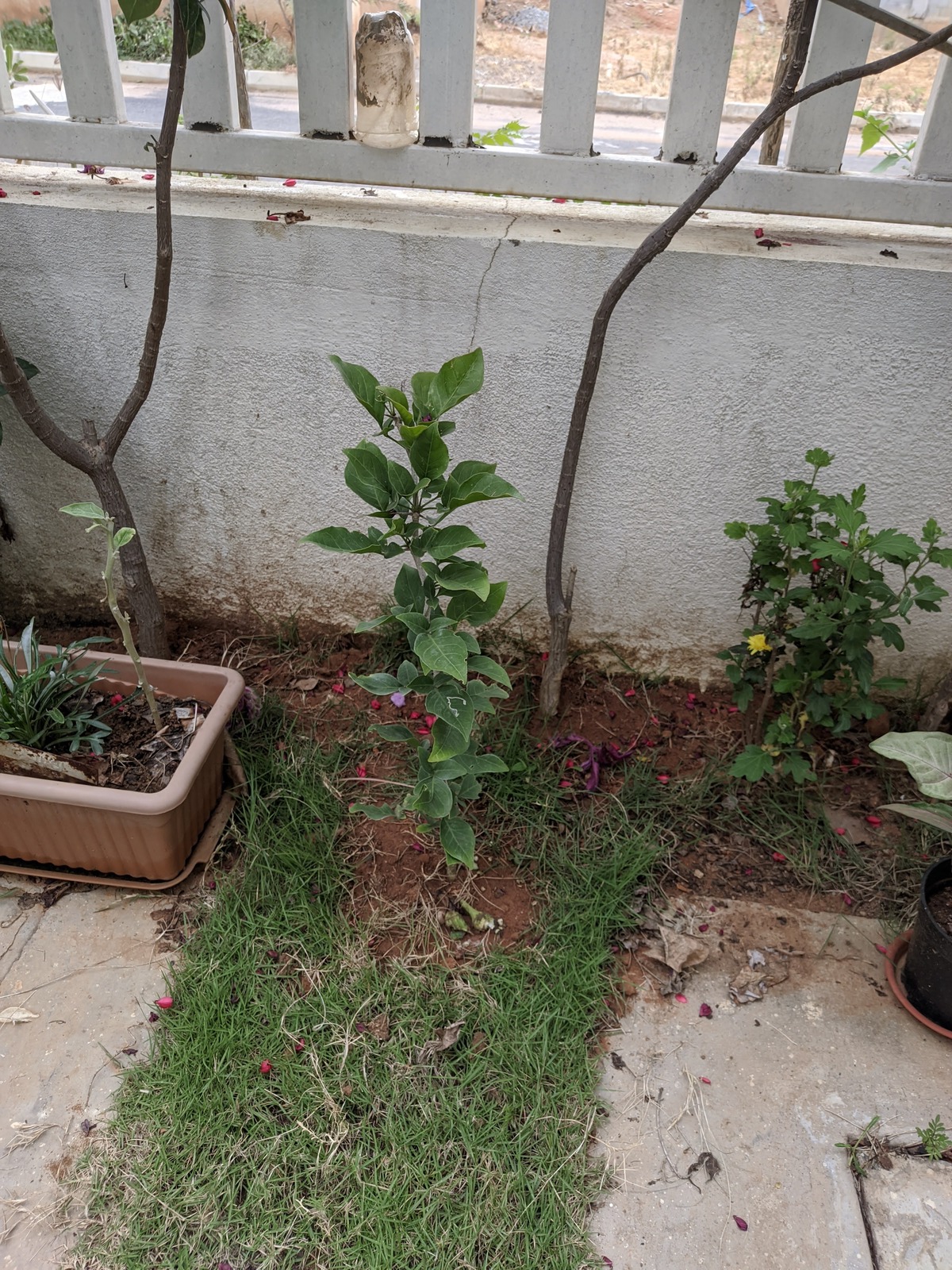
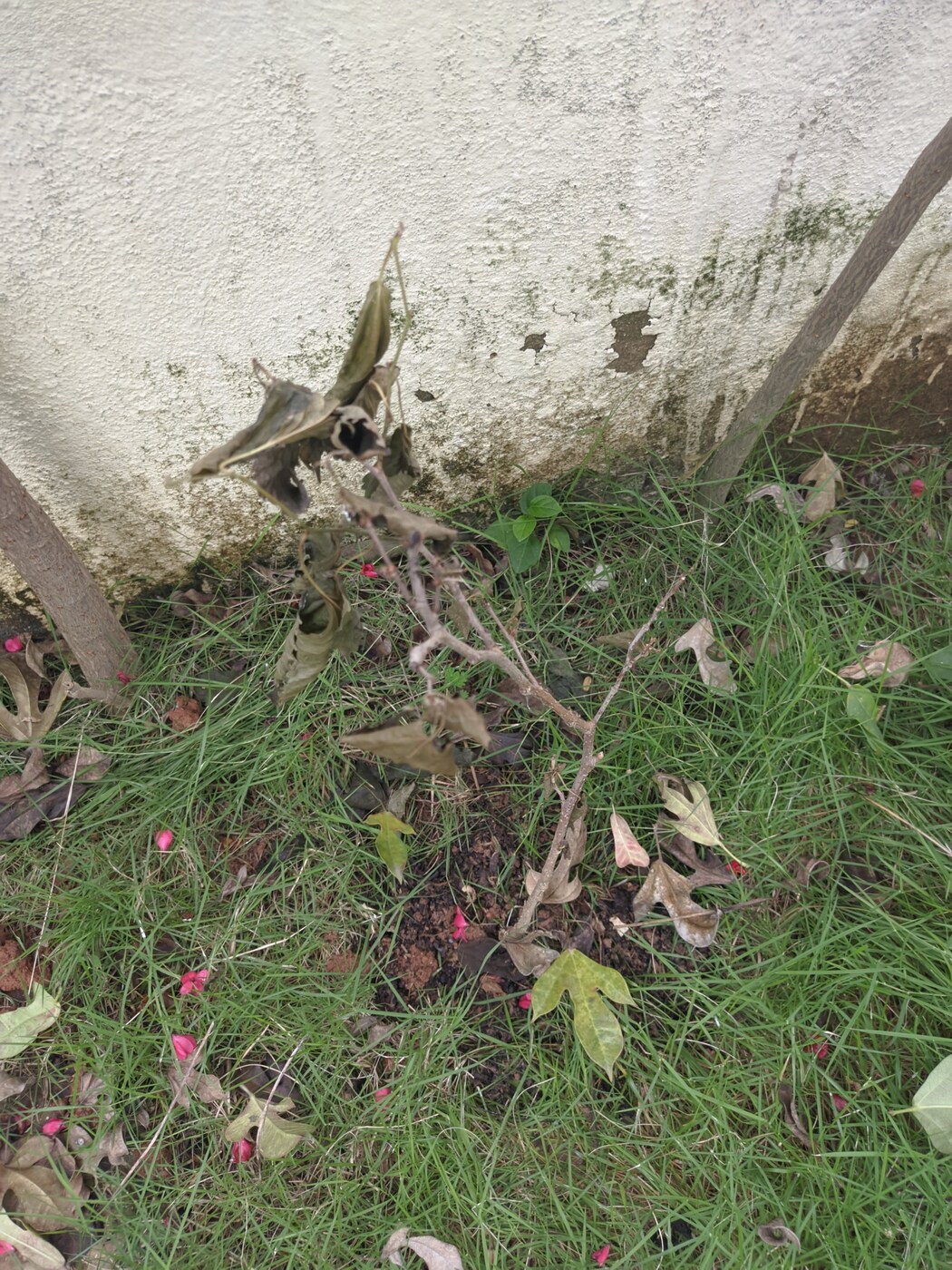
Devastation How in this world, when you are caring for your plants, can it transform:

From This
Healthy Mulberry Plant
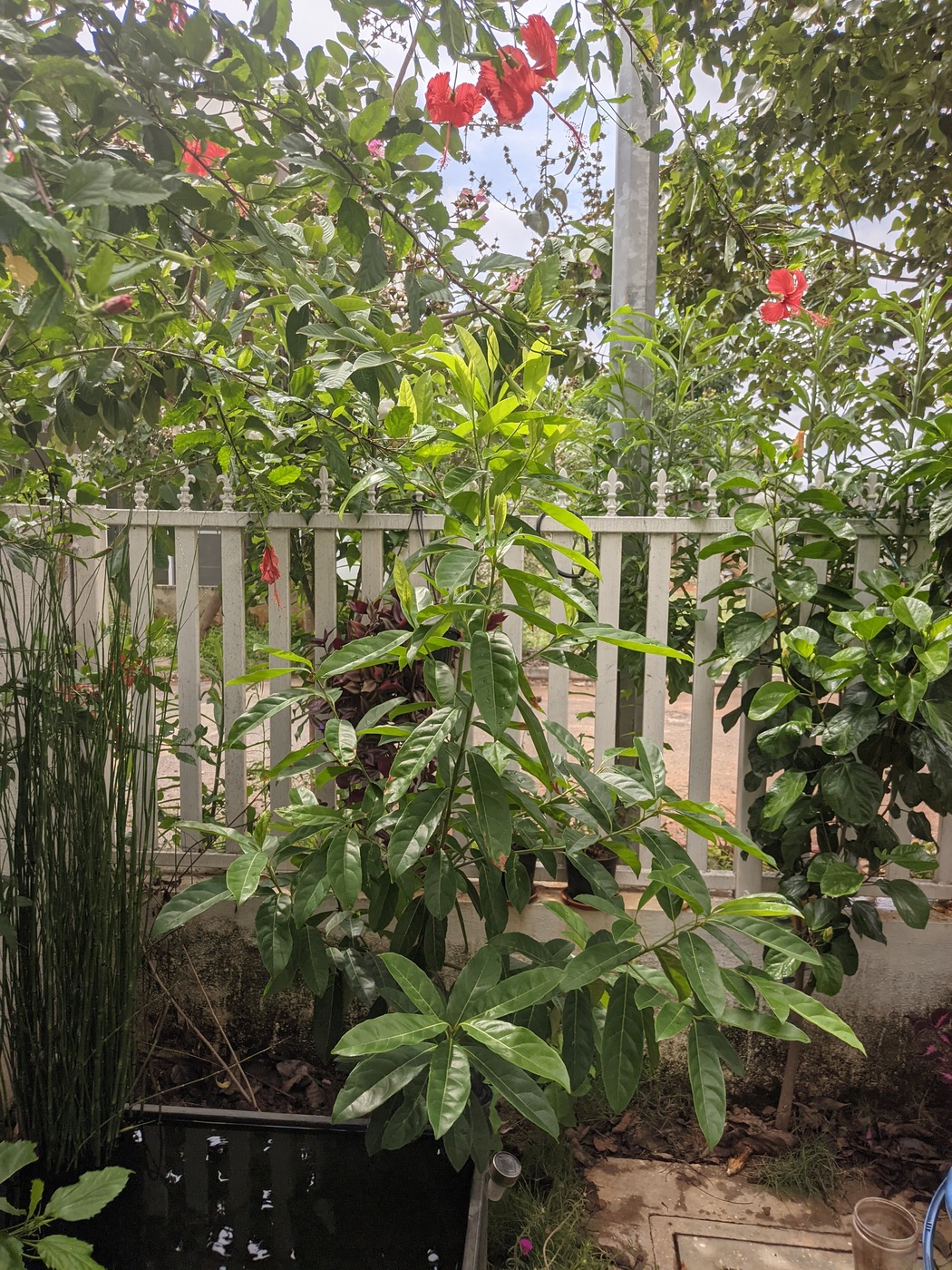
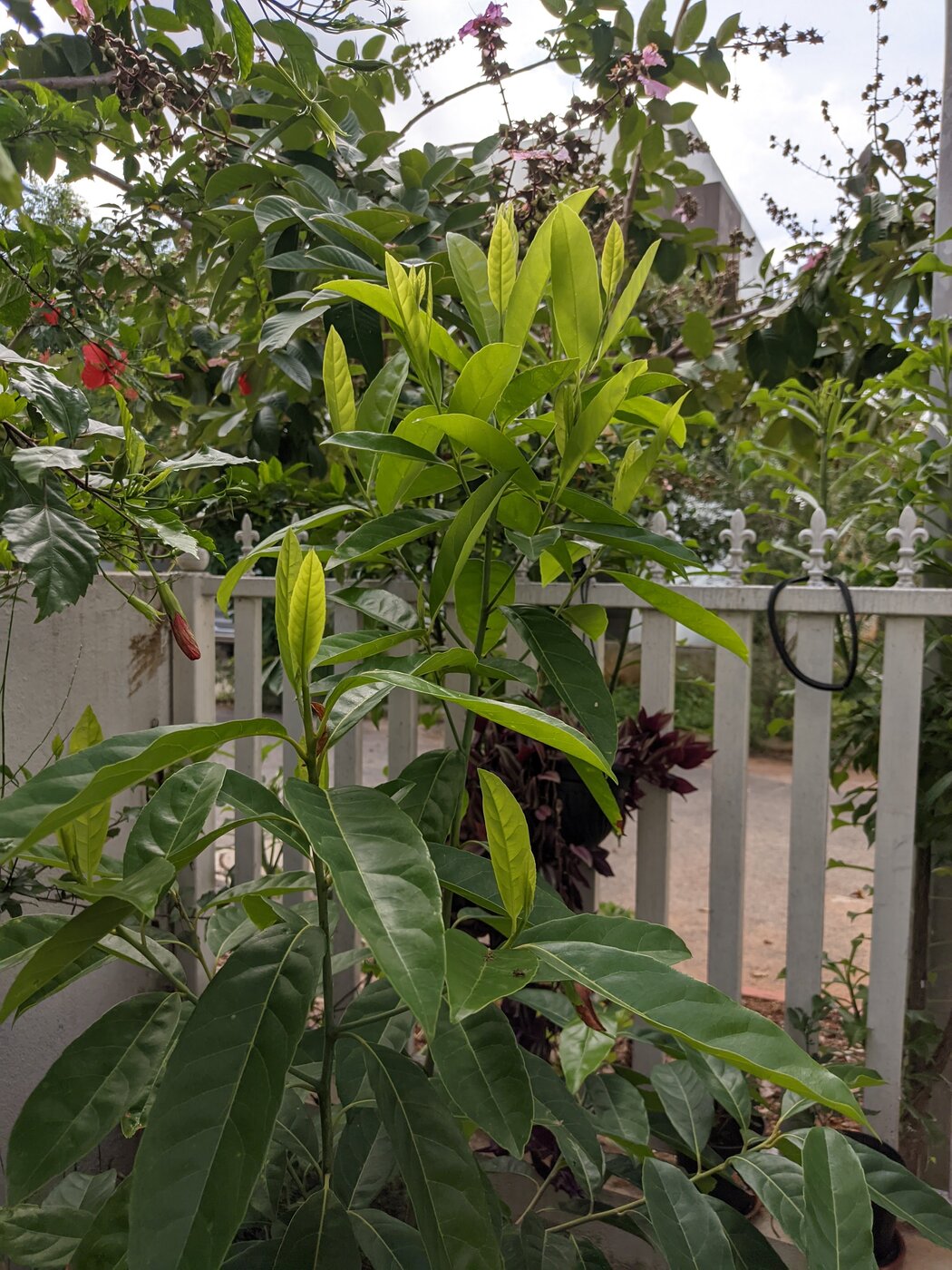
Healthy Bael Plant
Healthy Bael Plant

To This
Dead Mulberry Plant
Dead Mulberry Plant
Very Sick Bael Plant
With emotions involved, this can be an unpleasant experience. Bael is a dear plant to me. The plant as a whole has religious values (Shiva). As well, its fruits have lots of health benefits, especially for the intestines. Its leaves have a lot of medicinal properties. When I planted the Bael, there were a lot of emotions that went along. On the other hand, the Mulberry is something I put in with a lot of enthusiasm. Mulberries are now rare to find, especially in urban locations. For one, they have a very short shelf life; But more than that, the way lifestyles are heading towards, I was always worried if my children would ever have a day to see and taste these fruits. The mulberry that I planted, yielded twice; once very soon when I had planted and second, before it died. Infact, it died while during its second yield phase. It was quite saddening to see that happen. It made me wonder why it happened. I had been caring for the plants fairly well. Watering them timely, feeding them the right amount of nutrients. They were getting a good amount of sun. But still their health was deteriorating. And then the demise of the Mulberry. Many thoughts hit my mind. I consulted the claimed experts in the domain, the maali, the gardener. I got a very vague answer; there must be termites in the soil. It didn t make much sense to me. I mean if there are termites they d hit day one. They won t sleep for months and just wake up one fine day and start attacking the roots of particular plants; not all. I wasn t convinced with the termite theory; But still, give the expert the blind hand, I went with his word. When my mulberry was dead, I dug its roots. Looking for proof, to see if there were any termites, I uprooted it. But I couldn t find any trace of termites. And the plant next to it was perfectly healthy and blossoming. So I was convinced that it wasn t the termite but something else. But else what ? I still didn t have an answer to that.

Thinking The Corona pandemic had embraced and there was a lot to worry, and worry not any, if you change the perspective. With plants around in my home, and our close engagement with them, and the helplessness that I felt after seeking help from the experts, it was time again; to build up some knowledge on the subject. But how ? How do you go about a subject you have not much clue about ? A subject which has always been around in the surrounding but very seldom have I dedicated focused thought to it. To be honest, the initial thought of diving on the subject made me clueless. I had no idea where to begin with. But, so, as has been my past history, I chose to take it as a curiosity. I gathered some books, skimmed through a couple of pages. Majority of the books I got hold of were about DIYs and How to do Home Gardening types. It was a decent introduction to a novice but my topic of curiosity was different. Thankfully, with the Internet, and YouTube in particular, a lot of good stuff is available as documentary videos. While going through some, I came across a video which mentioned about carnivore plants. Like, for example, this one.
Carnivore Plant
Carnivore Plant
This got me thinking that there could be a possibility of something similar, that did the fate to my Mulberry plant. But who did it ? And how to dive further on this suspicion ? And most of all, if that thought of possibility was actually the reality. Or was I just hitting in the dark ?

Beginning To put some perspective, here s how it started. When we moved into our home, the gardener put in a couple of plants stock, as part of the property handover. Now, I don t exactly recollect the name of the plants that came in stock, neither English nor Hindi; But at my neighbor s place, the plant is still there. Here are some of the pictures of this beauty. But don t just go by the looks as looks can be deceiving
Dominating Plant
Dominating Plant
Dominating Plant
Dominating Plant
Dominating Plant
Dominating Plant
We hadn t put any serious thought about the plants we were offered by the gardener. After all, we never had ever thought of any mishap either.

Plants we planted Apart from what was offered by the builder/gardener as part of the property handover, in over the next 6 months of we moving in, I planted 3 tree type plants.
  1. Mulberry
  2. Bael
  3. Rudraksha
The Mulberry, as I have described so far, died a tragic death. Bael, on the other hand, fought hard. But very little did we know that the plant was struggling the fight. Our impression was that we must have been given a bad breed of the plant. Or maybe the termite theory had some truth. For the Rudraksha plant, the growth was slow. This was the very first time I had seen a Rudraksha plant, so I had no clue of what its growth rate could be, and what to expect out of it. I wasn t sure if the local climate suited the plant. A quick search showed no objections to the plant in the local climate, but that was it. So my theory has been to put in the plant, and observe. Here s what my Rudraksha plant looked like during the initial days/weeks of its settlement
Rudraksha Plant
Rudraksha Plant

The Hint Days passed and so on. Not much had progressed in gathering information. The plant s health was usual; deteriorating at a slow pace. On day, thinking of the documentaries I had been watching, it hit my mind about the plant behavior.
  • Plants can be Carnivores.
  • Plants can be Aggressive.
  • Plants can be Invaders.
  • Plants can be Territorial.
There are many plants where their aggression can be witnessed with bare human eyes. Like creepers. Some of them are good at spreading tentacles, grabbing onto other plants' stems and branches and spread above it. This was my hint from the documentaries. That s one of the many ways plants set their dominance. That is what hit my mind that if plants are aggressive on the out, underneath the soil, they should be having similar behavior. I mean, what we see as humans is just a part of the actual plant. More than half of the actual plant is usually underneath the soil, in most plants. So there s a high chance to get more information out, if you dig the soil and look the roots.

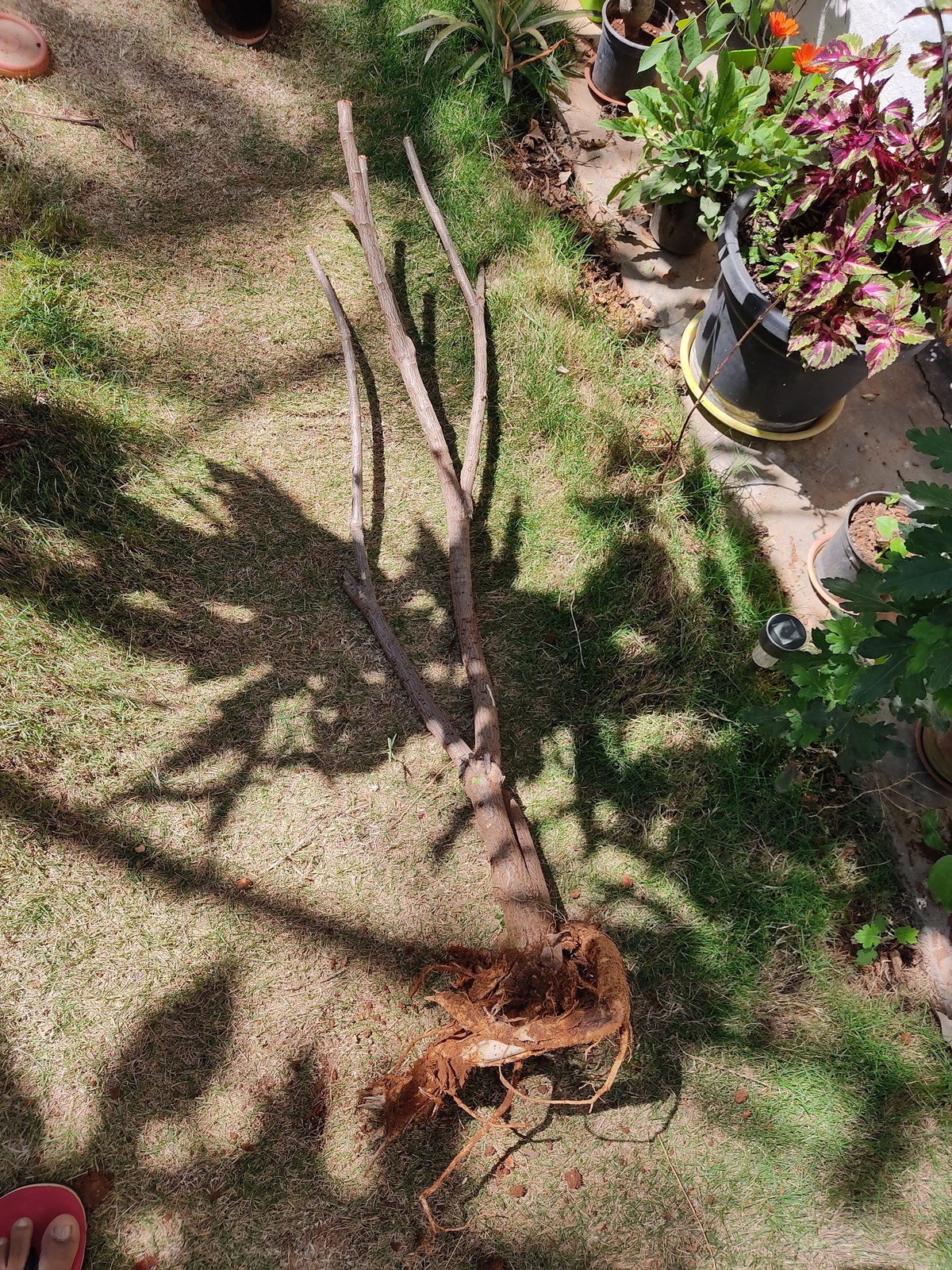
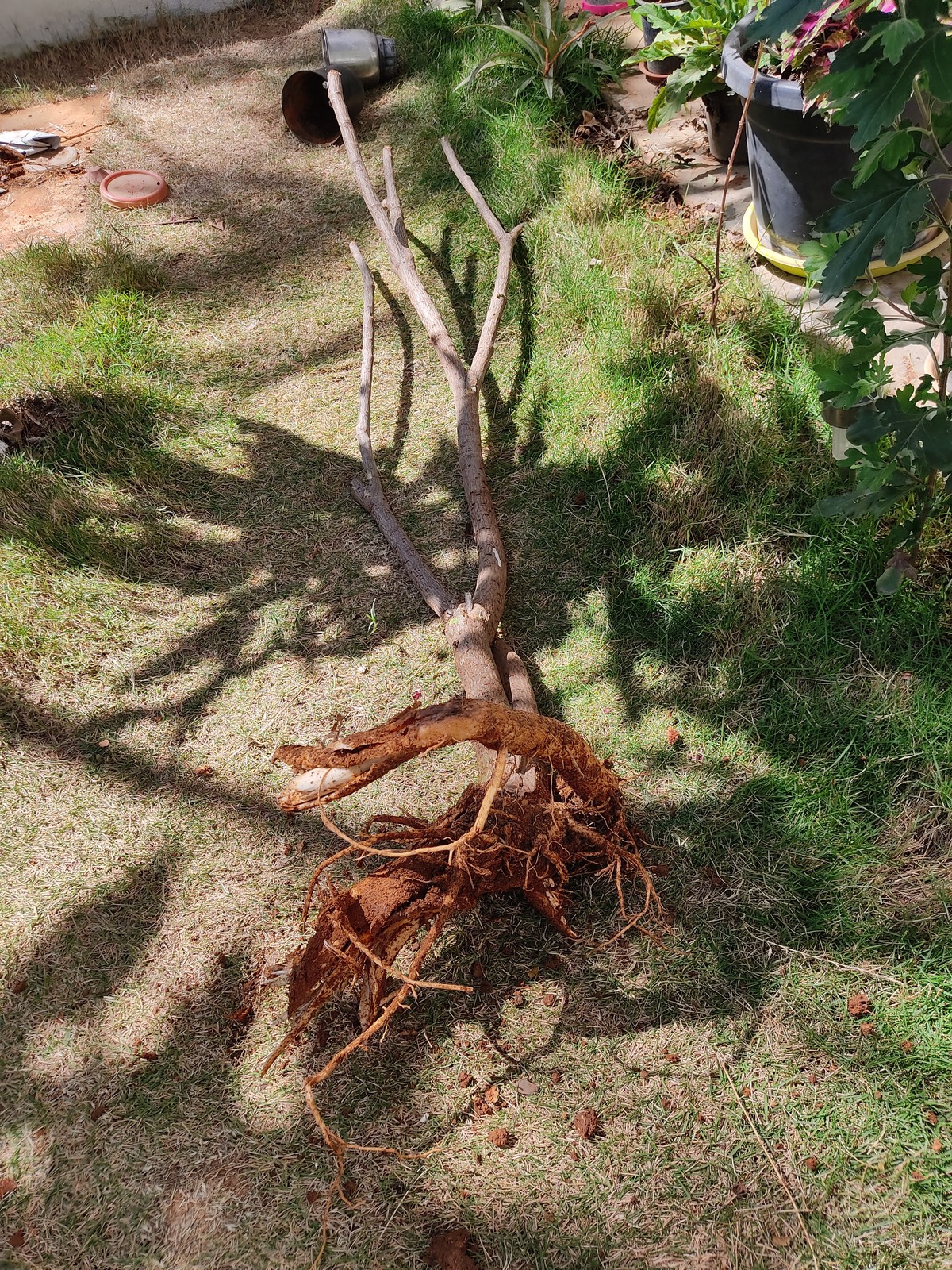
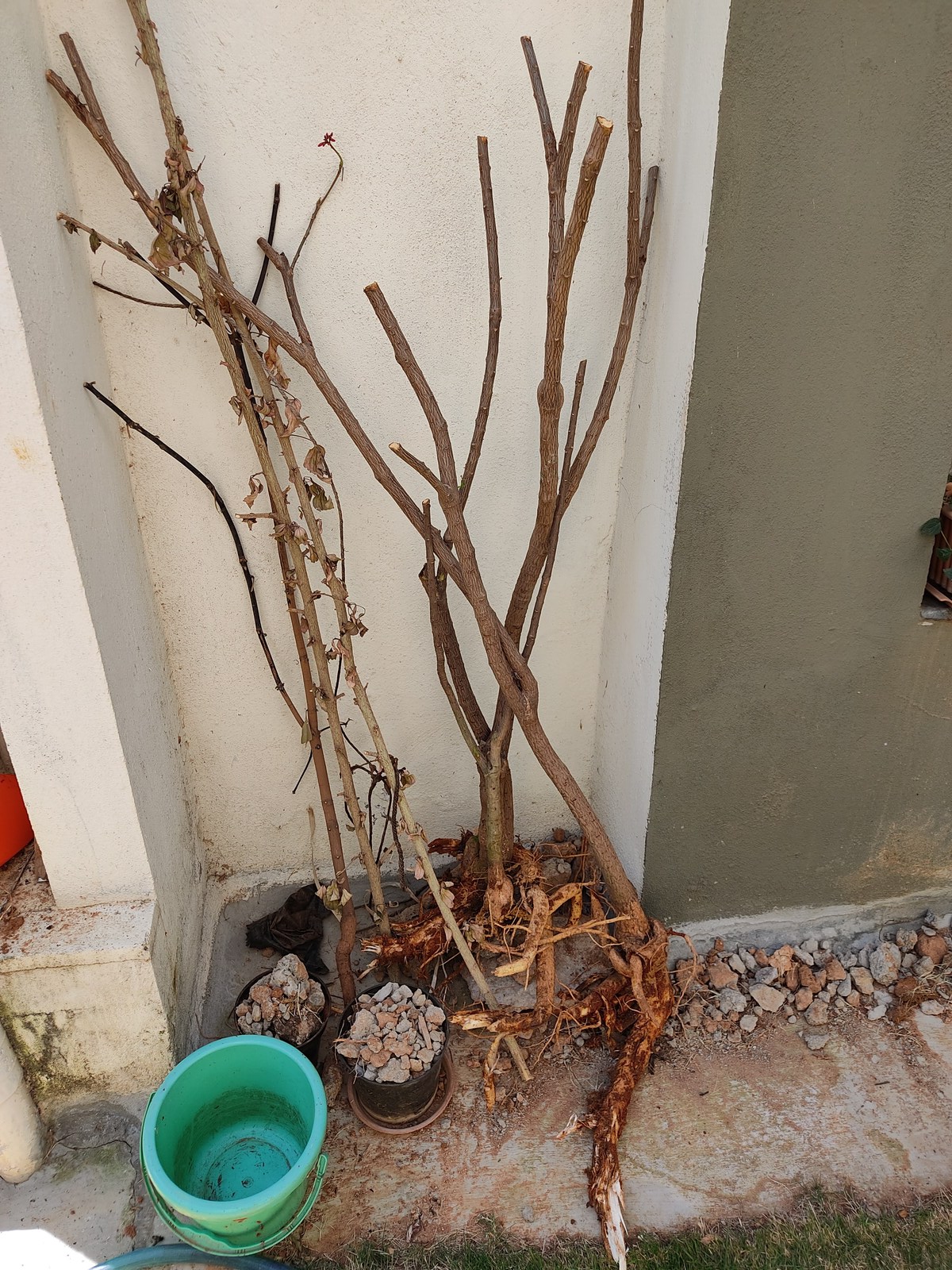
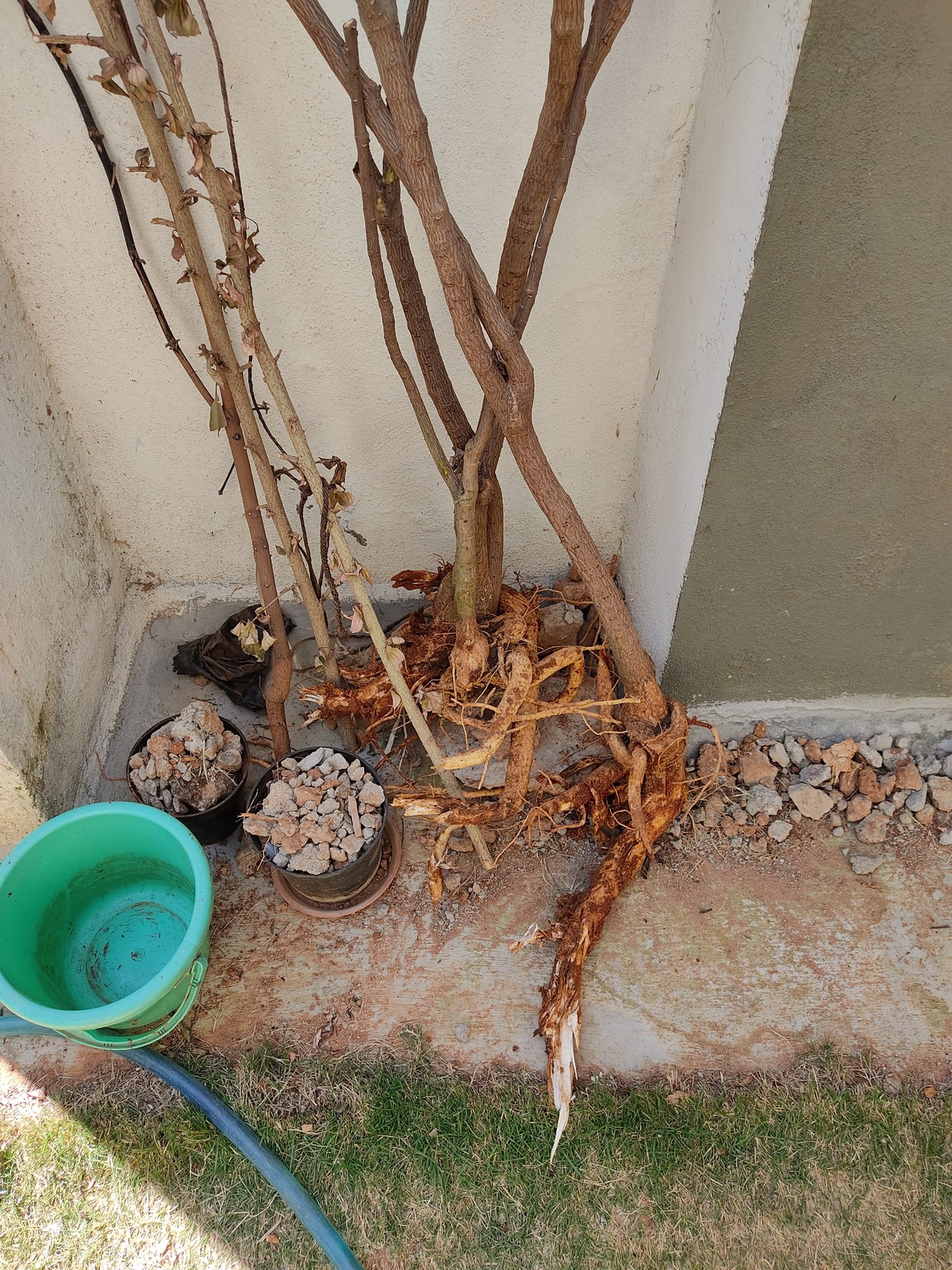
The Digging As I mentioned earlier, I do establish bindings, emotions and attachments. But not much usually comes in the way to curiosity. To dig further on the theory that the problem was elsewhere, with within the plants ecosystem, we needed to pick on another subject - the plant. And the plant we chose was the plant which was planted in the initial offering to us, when we moved into our home. It was the same plant breed which was neighboring all our newly planted trees: Rudraksha, Mulberry and Bael. If you look closely into the pictures above of these plants, you ll notice the stem of another plant, the Territorial Dominator, is close-by to these 3 plants. That s because the gardener put in a good number of them to get his action item complete. So we chose to dig and uproot one of those plant to start with. Now, while they may look gentle on the outside, with nice red colored tiny flowers, these plants were giants underneath. Their roots were huge. It took some sweat shredding to single-handedly remove them.
Dominating Plant Uprooted

Today is brighter

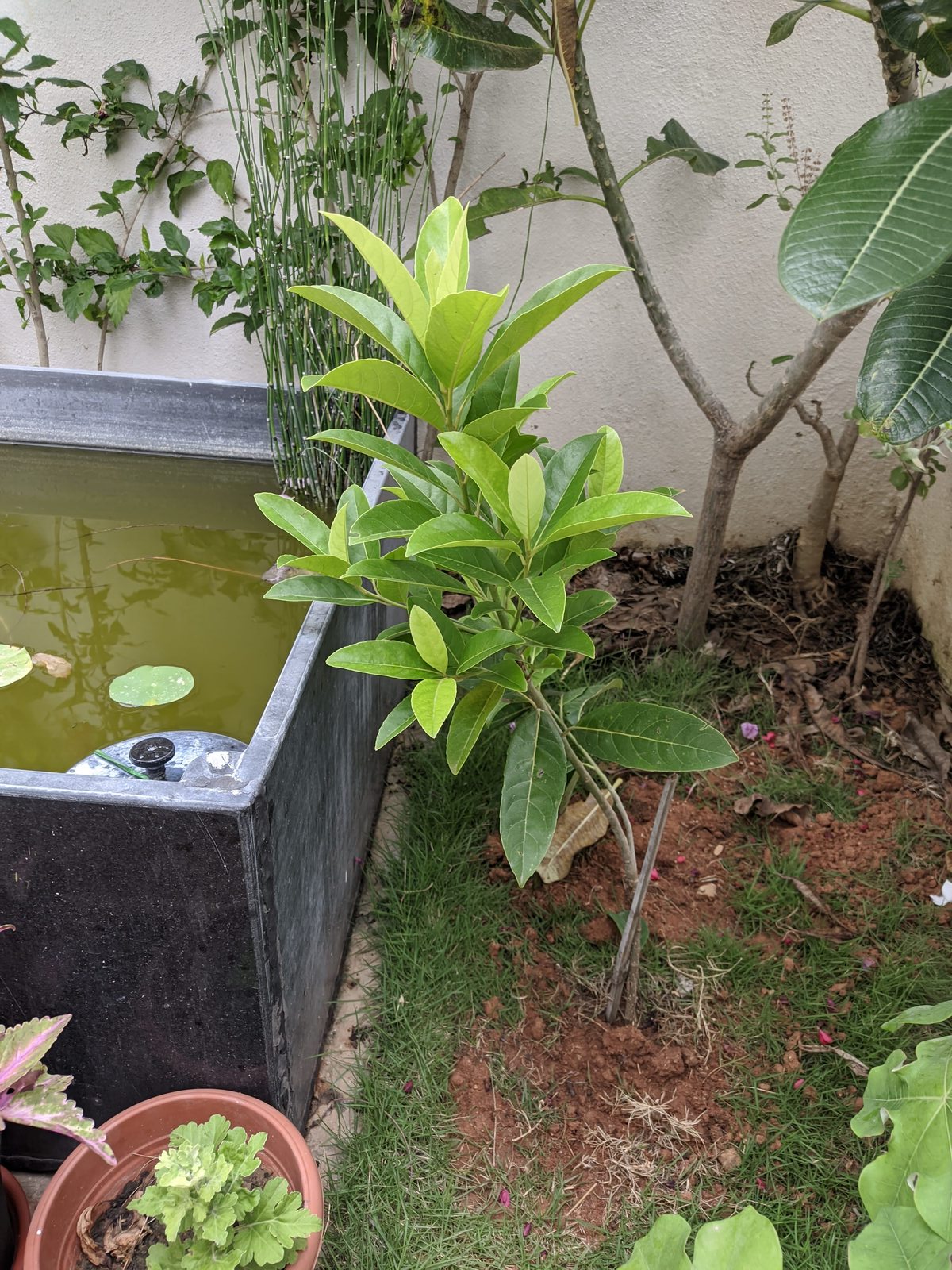
Bael I ll let the pictures do the initial talking today.
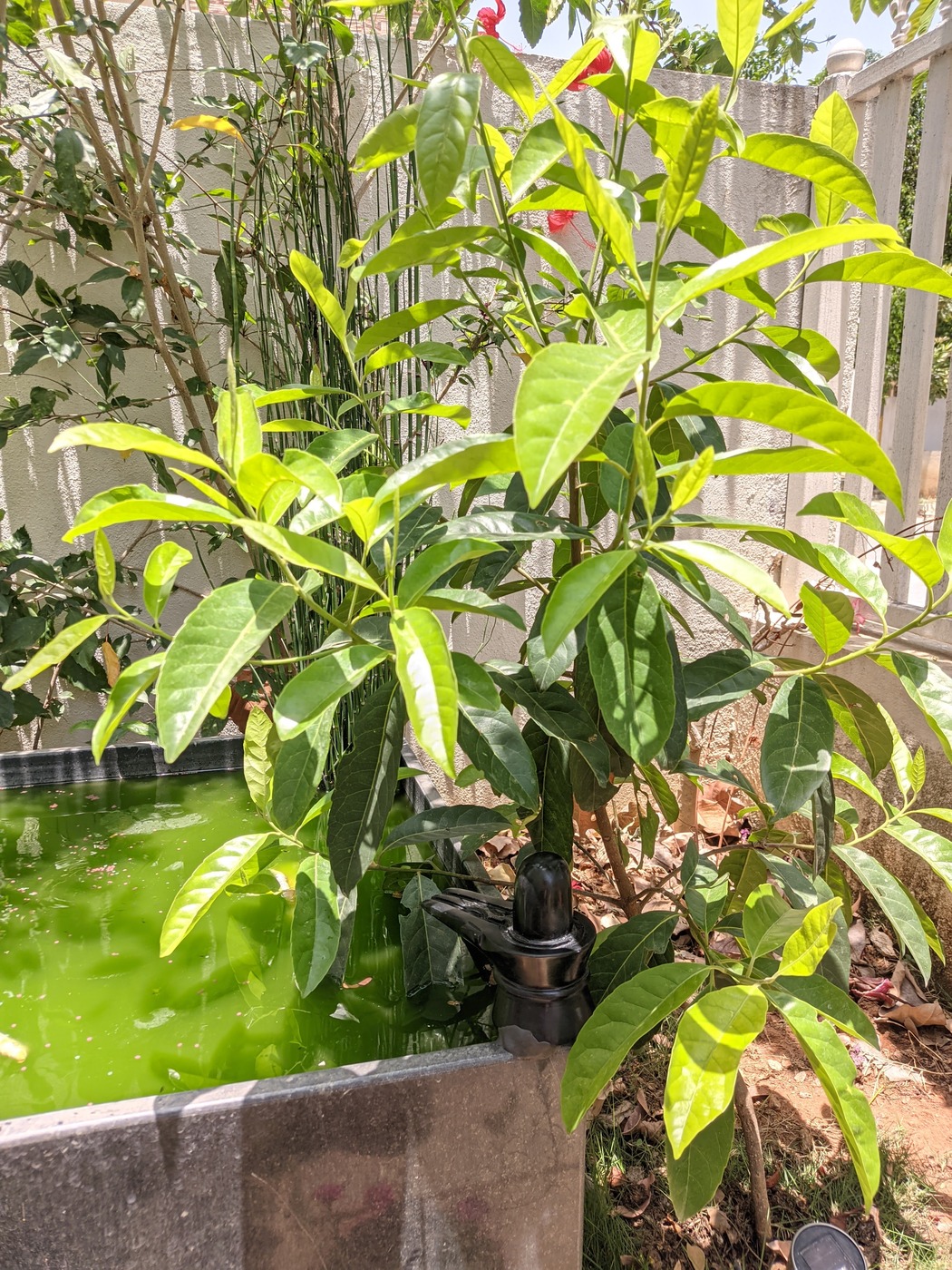
Healthy Bael
Healthy Bael
Healthy Bael
Healthy Bael
Healthy Bael
Healthy Bael
Healthy Bael
Healthy Bael
Healthy Bael
Healthy Bael
The above ones are pictures of the same Bael plant, which had struggled to live, for almost 14 months. Back then, this plant was starved of its resources. It was dying a slow death out of starvation. After we uprooted the other dominant species, the Bael has recovered and has regained its charm. In the pictures above of the Bael plant, you can clearly mark out the difference in its stem. The dark colored one is from its months of struggle, while the bright green is from now where it is well nourished and regained its health.

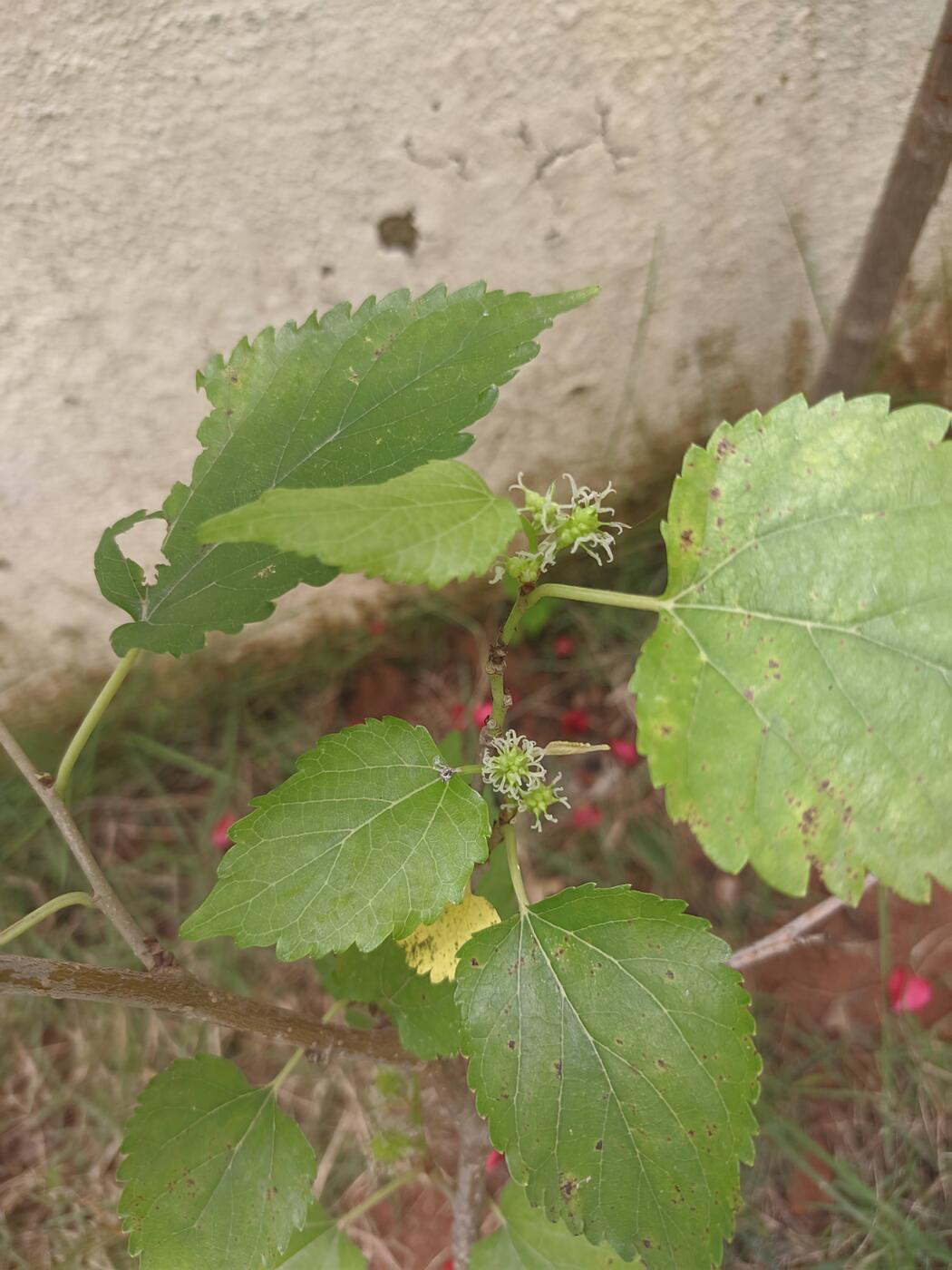
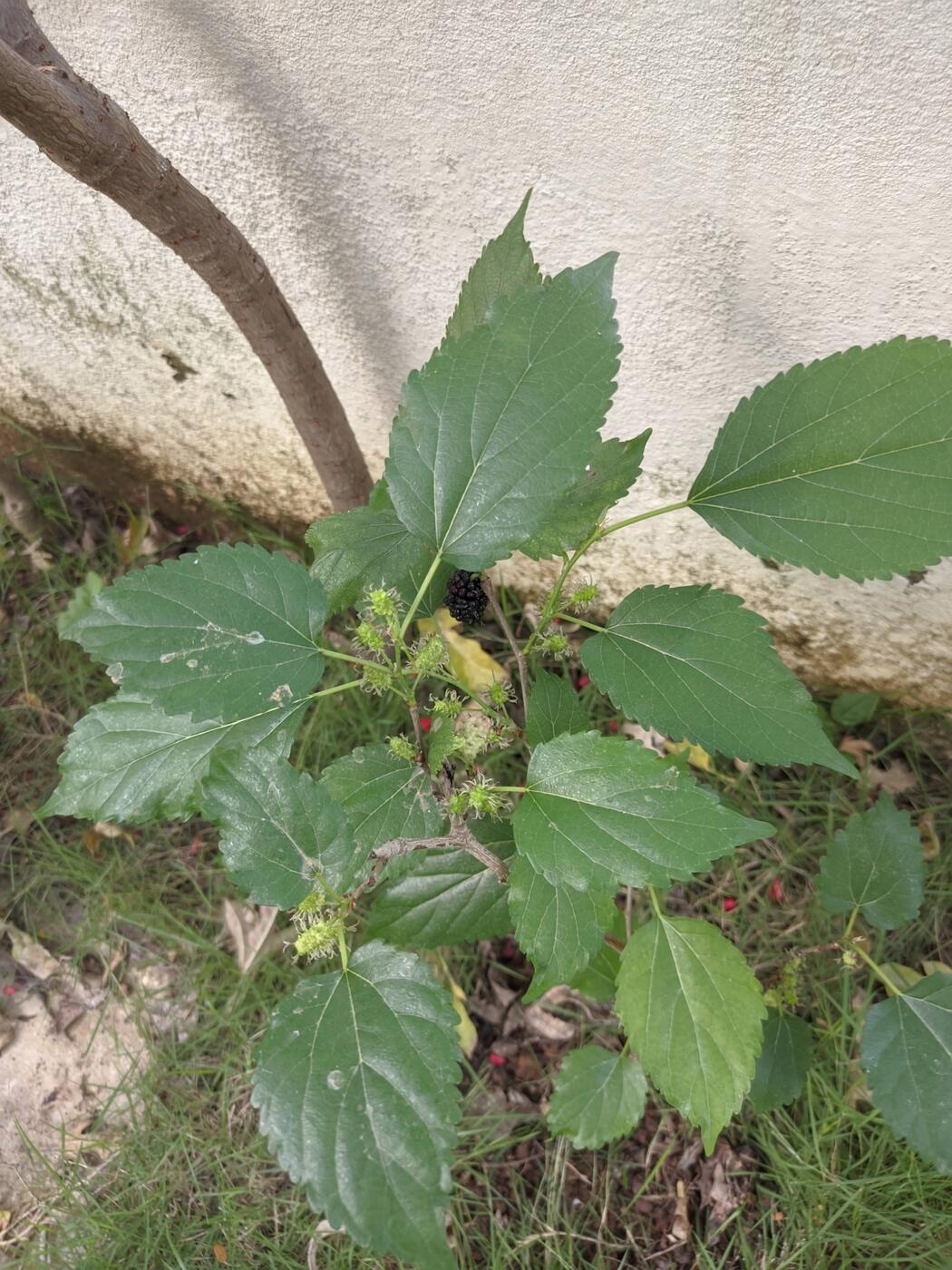
Mulberry As for the Mulberry, I couldn t save it. But I later managed to get another one. But it turns out I didn t take good, full length pictures of the new mulberry when I planted. The only picture I have is this:
Second Mulberry Plant
I recollect when I brought it home, it was around 1 - 1.5 feet in length. This is where I have it today: Majestically standing, 12 feet and counting
Second Mulberry Plant 7 feet tall

Rudraksha Then:
Rudraksha Plant
Rudraksha Plant
And now: I feel quite happy about
Rudraksha Plant
Rudraksha Plant
Rudraksha Plant
Rudraksha Plant
Rudraksha Plant
Rudraksha Plant
All these plants are on the very same soil with the very same care taker. What has changed is my experience and learning.

Plant Co-Existence Plant co-existence is a difficult topic. My knowledge on plants is very limited in general, and co-existence is something tricky, unexplored, at times invisible (when underneath the soil). So it is a difficult topic. So far, what I ve learnt is purely observations, experiences and hints from the documentaries. There surely are many many plants that co-exist very well. A good example is my Bael plant itself, which is healthily co-sharing its space with 2 other Croton plants. Same goes for the Rudraksha, which has a close-by neighbor in an Adenium and an Allamanda. The plant world is mesmerizing. How they behave, communicate and many many more signs. There s so much to observe, learn, explore and document. I hope to have more such observations and experiences to share

28 June 2021

Shirish Agarwal: Indian Capital Markets, BSE, NSE

I had been meaning to write on the above topic for almost a couple of months now but just kept procrastinating about it. That push came to a shove when Sucheta Dalal and Debasis Basu shared their understanding, wisdom, and all in the new book called Absolute Power Inside story of the National Stock Exchange s amazing success, leading to hubris, regulatory capture and algo scam . Now while I will go into the details of the new book as currently, I have not bought it but even if I had bought it and shared some of the revelations from it, it wouldn t have done justice to either the book or what is sharing before knowing some of the background before it.

Before I jump ahead, I would suggest people to read my sort of introductory blog post on banking history so they know where I m coming from. I m going to deviate a bit from Banking as this is about trade and capital markets, although Banking would come in later on. And I will also be sharing some cultural insights along with history so people are aware of why things happened the way they did. Calicut, Calcutta, Kolkata, one-time major depot around the world Now, one cannot start any topic about trade without talking about Kolkata. While today, it seems like a bastion of communism, at one time it was one of the major trade depots around the world. Both William Dalrymple and the Chinese have many times mentioned Kolkata as being one of the major centers of trade. This was between the 13th and the late 19th century. A cursory look throws up this article which talks about Kolkata or Calicut as it was known as a major trade depot. There are of course many, many articles and even books which do tell about how Kolkata was a major trade depot. Now between the 13th and 19th century, a lot of changes happened which made Kolkata poorer and shifted trade to Mumbai/Bombay which in those times was nothing but just a port city like many others.

The Rise of the Zamindar Around the 15th century when Babur Invaded Hindustan, he realized that Hindustan is too big a country to be governed alone. And Hindustan was much broader than independent India today. So he created the title of Zamindars. Interestingly, if you look at the Mughal period, they were much more in tune with Hindustani practices than the British who came later. They used the caste divisions and hierarchy wisely making sure that the status quo was maintained as far as castes/creed were concerned. While in-fighting with various rulers continued, it was more or less about land and power other than anything else. When the Britishers came they co-opted the same arrangement with a minor adjustment. While in the before system, the zamindars didn t have powers to be landowners. The Britishers gave them land ownerships. A huge percentage of thess zamindars especially in Bengal were from my own caste Banias or Baniyas. The problem and the solution for the Britishers had been this was a large land to control and exploit and the number of British officers and nobles were very less. So they gave virtually a lot of powers to the Banias. The only thing the British insisted on were very high rents from the newly minted Zamindars. The Zamindar in turn used the powers of personal fiefdom to give loans at very high interest rates when the poor were unable to pay the interest rate, they would take the land while at the same time slavery was forced on both men and women, many a time rapes and affairs. While there have been many records shedding light on it, don t think it could be any more powerful as enacted and shared by Shabana Azmi in Ankur:the Seedling. Another prominent grouping was formed around the same time was the Bhadralok. Now as shared Bhadralok while having all the amenities of belonging to the community, turned a blind eye to the excesses being done by the Zamindars. How much they played a hand in the decimation of Bengal has been a matter of debate, but they did have a hand, that much is not contested.

The Rise of Stock Exchanges Sadly and interestingly, many people believe and continue to believe that stock exchanges is recent phenomena. The first stock exchange though was the Calcutta Stock Exchange rather than the Bombay Stock Exchange. How valuable was Calcutta to the Britishers in its early years can be gauged from the fact that at one time it was made the capital of India in 1772 . In fact, after the Grand Trunk Road (on which there had been even Train names in both countries) x number of books have been written of the trade between Calcutta and Peshawar (Now in Pakistan). And it was not just limited to trade but also cultural give-and-take between the two centers. Even today, if you look at YT (Youtube) and look up some interviews of old people, you find many interesting anecdotes of people sharing both culture and trade.

The problem of the 60 s and rise of BSE
After India became independent and the Constitutional debates happened, the new elites understood that there cannot be two power centers that could govern India. On one hand, were the politicians who had come to power on the back of the popular vote, the other was the Zamindars, who more often than not had abused their powers which resulted in widespread poverty. The Britishers are to blame, but so do the middlemen as they became willing enablers to the same system of oppression. Hence, you had the 1951 amendment to the Constitution and the 1956 Zamindari Abolition Act. In fact, you can find much more of an in-depth article both about Zamindars and their final abolition here. Now once Zamindari was gone, there was nothing to replace it with. The Zamindars ousted of their old roles turned and tried to become Industrialists. The problem was that the poor and the downtrodden had already had experiences with the Zamindars. Also, some Industrialists from North and West also came to Bengal but they had no understanding of either the language or the cultural understanding of what had happened in Bengal. And notice that I have not talked about both the famines and the floods that wrecked Bengal since time immemorial and some of the ones which got etched on soul of Bengal and has marks even today  The psyche of the Bengali and the Bhadralok has gone through enormous shifts. I have met quite a few and do see the guilt they feel. If one wonders as to how socialist parties are able to hold power in Bengal, look no further than Tarikh which tells and shares with you that even today how many Bengalis still feel somewhat lost.

The Rise of BSE Now, while Kolkata Stock Exchange had been going down, for multiple reasons other than listed above. From the 1950s onwards Jawaharlal Nehru had this idea of 5-year plans, borrowed from socialist countries such as Russia, China etc. His vision and ambition for the newly minted Indian state were huge, while at the same time he understood we were poor. The loot by East India Company and the Britishers and on top of that the division of wealth with Pakistan even though the majority of Muslims chose and remained with India. Travel on Indian Railways was a risky affair. My grandfather had shared numerous tales where he used to fill money in socks and put the socks on in boots when going between either Delhi Kolkata or Pune Kolkata. Also, as the Capital became Delhi, it unofficially was for many years, the transparency from Kolkata-based firms became less. So many Kolkata firms either mismanaged and shut down while Maharashtra, my own state, saw a huge boon in Industrialization as well as farming. From the 1960s to the 1990s there were many booms and busts in the stock exchanges but most were manageable.

While the 60s began on a good note as Goa was finally freed from the Portuguese army and influence, the 1962 war with the Chinese made many a soul question where we went wrong. Jawaharlal Nehru went all over the world to ask for help but had to return home empty-handed. Bollywood showed a world of bell-bottoms and cars and whatnot, while the majority were still trying to figure out how to put two square meals on the table. India suffered one of the worst famines in those times. People had to ration food. Families made do with either one meal or just roti (flatbread) rather than rice. In Bengal, things were much more severe. There were huge milk shortages, so Bengalis were told to cut down on sweets. This enraged the Bangalis as nothing else could. Note If one wants to read how bad Indians felt at that time, all one has to read is V.S. Naipaul s An Area of darkness . This was also the time when quite a few Indians took their first step out of India. While Air India had just started, the fares were prohibitive. Those who were not well off, either worked on ships or went via passenger or cargo ships to Dubai/Qatar middle-east. Some went to Russia and some even to States. While today s migr s want to settle in the west forever and have their children and grandchildren grow up in the West, in the 1960s and 70s the idea was far different. The main purpose for a vast majority was to get jobs and whatnot, save maximum money and send it back to India as a remittance. The idea was to make enough money in 3-5-10 years, come back to India, and then lead a comfortable life. Sadly, there has hardly been any academic work done in India, at least to my knowledge to document the sacrifices done by Indians in search of jobs, life, purpose, etc. in the 1960s and 1970s. The 1970s was also when alternative cinema started its journey with people like Smita Patil, Naseeruddin Shah who portrayed people s struggles on-screen. Most of them didn t have commercial success because the movies and the stories were bleak. While the acting was superb, most Indians loved to be captured by fights, car-chases, and whatnot rather than the deary existence which they had. And the alt cinema forced them to look into the mirror, which was frowned upon both by the masses and the classes. So cinema which could have been a wake-up call for a lot of Indians failed. One of the most notable works of that decade, at least to me, was Manthan. 1961 was also marked by the launch of Economic Times and Financial Express which tells that there was some appetite for financial news and understanding. The 1970s was also a very turbulent time in the corporate sector and stock exchanges. Again, the companies which were listed were run by the very well-off and many of them had been abroad. At the same time, you had fly-by-night operators. One of the happenings which started in this decade is you had corporate wars and hostile takeovers, quite a few of them of which could well have a Web series or two of their own. This was also a decade marked by huge labor unrest, which again changed the face of Bombay/Mumbai. From the 1950s till the 1970s, Bombay was known for its mills. So large migrant communities from all over India came to Bombay to become the next Bollywood star and if that didn t happen, they would get jobs in the mills. Bombay/Mumbai has/had this unique feature that somehow you will make money to make ends meet. Of course, with the pandemic, even that has gone for a toss. Labor unrest was a defining character of that decade. Three movies, Kaala Patthar, Kalyug, and Ankush give a broad outlook of what happened in that decade. One thing which is present and omnipresent then and now is how time and time again we lost our demographic dividend. Again there was an exodus of young people who ventured out to seek fortunes elsewhere. The 1970s and 80s were also famous for the license Raj which they bought in. Just like the Soviets, there were waiting periods for everything. A telephone line meant waiting for things anywhere from 4 to 8 years. In 1987, when we applied and got a phone within 2-3 months, most of my relatives both from my mother and father s side could not believe we paid 0 to get a telephone line. We did pay the telephone guy INR 10/- which was a somewhat princely sum when he was installing it, even then they could not believe it as in Northern India, you couldn t get a phone line even if your number had come. You had to pay anywhere from INR 500/1000 or more to get a line. This was BSNL and to reiterate there were no alternatives at that time.

The 1990s and the Harshad Mehta Scam The 90s was when I was a teenager. You do all the stupid things for love, lust, whatever. That is also the time you are introduced really to the world of money. During my time, there were only three choices, Sciences, Commerce, and Arts. If History were your favorite subject then you would take Arts and if it was not, and you were not studious, then you would up commerce. This is how careers were chosen. So I enrolled in Commerce. Due to my grandfather and family on my mother s side interested in stocks both as a saving and compounding tool, I was able to see Pune Stock Exchange in action one day. The only thing I remember that day is people shouting loudly with various chits. I had no idea that deals of maybe thousands or even lakhs. The Pune Stock Exchange had been newly minted. I also participated in a couple of mock stock exchanges and came to understand that one has to be aggressive in order to win. You had to be really loud to be heard over others, you could not afford to be shy. Also, spread your risks. Sadly, nothing about the stock markets was there in the syllabus. 1991 was also when we saw the Iraq war, the balance of payments crisis in India, and didn t know that the Harshad Mehta scam was around the corner. Most of the scams in India have been caught because the person who was doing it was flashy. And this was the reason that even he was caught as Ms. Sucheta Dalal, a young beat reporter from Indian Express who had been covering Indian stock market. Many of her articles were thought-provoking. Now, a brief understanding is required to know before we actually get to the scam. Because of the 1991 balance of payments crisis, IMF rescued India on the condition that India throws its market open. In the 1980s itself, Rajeev Gandhi had wanted to partially make India open but both politicians and Industrialists advised him not to do the same, we are/were not ready. On 21st May 1991, Rajeev Gandhi was assassinated by the LTTE. A month later, due to the sympathy vote, the Narsimha Rao Govt. took power. While for most new Governments there is usually a honeymoon period lasting 6 months or so till they get settled in their roles before people start asking tough questions. It was not to be for this Govt. Immediately, The problem had been building for a few years. Although, in many ways, our economy was better than it is today. The only thing India didn t do well at that time was managing foreign exchange. As only a few Indians had both the money and the opportunity to go abroad and need for electronics was limited. One of the biggest imports of the time then and still today is Energy, Oil. While today it is Oil/Gas and electronics, at that time it was only OIl. The Oil import bill was ballooning while exports were more or less stagnant and mostly comprised of raw materials rather than finished products. Even today, it is largely this, one of the biggest Industrialists in India Ambani exports gas/oil while Adani exports coal. Anyways, the deficit was large enough to trigger a payment crisis. And Narsimha Rao had to throw open the Indian market almost overnight. Some changes became quickly apparent, while others took a long time to come.

Satellite Television and Entry of Foreign Banks Almost overnight, from 1 channel we became multi-channel. Star TV (Rupert Murdoch) bought us Bold and Beautiful, while CNN broadcasted the Iraq War. It was unbelievable for us that we were getting reports of what had happened 24-48 hours earlier. Fortunately or unfortunately, I was still very much a teenager to understand the import of what was happening. Even in my college, except for one or two-person, it wasn t a topic for debate or talk or even the economy. We were basically somehow cocooned in our own little world. But this was not the case for the rest of India and especially banks. The entry of foreign banks was a rude shock to Indian banks. The foreign banks were bringing both technology and sophistication in their offerings, and Indian Banks needed and wanted fast money to show hefty profits. Demand for credit wasn t much, at least nowhere the level it today is. At the same time, default on credit was nowhere high as today is. But that will require its own space and article. To quench the thirst for hefty profits by banks, Enter Harshad Mehta. At that point in time, banks were not permitted at all to invest in the securities/share market. They could only buy Government securities or bonds which had a coupon rate of say 8-10% which was nowhere enough to satisfy the need for hefty profits as desired by Indian banks. On top of it, that cash was blocked for a long time. Most of these Government bonds had anywhere between 10-20 year maturity date and some even longer. Now, one loophole in that was that the banks themselves could not buy these securities. They had to approach a registered broker of the share market who will do these transactions on their behalf. Here is where Mr. Mehta played his game. He shared both legal and illegal ways in which both the bank and he would prosper. While banking at one time was thought to be conservative and somewhat cautious, either because they were too afraid that Western private banks will take that pie or whatever their reasons might be, they agreed to his antics. To play the game, Harshad Mehta needed lots of cash, which the banks provided him in the guise of buying securities that were never bought, but the amounts were transferred to his account. He actively traded stocks, at the same time made a group, and also made the rumor mill work to his benefit. The share market is largely a reactionary market. It operates on patience, news, and rumor-mill. The effect of his shenanigans was that the price of a stock that was trending at say INR 200 reached the stratospheric height of INR 9000/- without any change in the fundamentals or outlook of the stock. His thirst didn t remain restricted to stocks but also ventured into the unglamorous world of Govt. securities where he started trading even in them in large quantities. In order to attract new clients, he coveted a fancy lifestyle. The fancy lifestyle was what caught the eye of Sucheta Dalal, and she started investigating the deals he was doing. Being a reporter, she had the advantage of getting many doors to open and get information that otherwise would be under lock and key. On 23rd April 1992, Sucheta Dalal broke the scam.

The Impact The impact was almost like a shock to the markets. Even today, it can be counted as one of the biggest scams in the Indian market if you adjust it for inflation. I haven t revealed much of the scam and what happened, simply because Sucheta Dalal and Debasis Basu wrote The Scam for that purpose. How do I shorten a story and experience which has been roughly written in 300 odd pages in one or two paragraphs, it is simply impossible. The impact though was severe. The Indian stock market became a bear market for two years. Sucheta Dalal was kicked out/made to resign out of Indian Express. The thing is simple, all newspapers survive on readership and advertisements with advertisements. Companies who were having a golden run, whether justified or not, on the bourses/Stock Exchange. For many companies, having a good number on the stock exchange was better than the company fundamentals. There was supposed to be a speedy fast-track court setup for Financial crimes, but it worked only for the Harshad Mehta case and still took over 5 years. It led to the creation of NSE (National Stock Exchange). It also led to the creation of SEBI, perhaps one of the most powerful regulators, giving it a wide range of powers and remit but on the ground more often that proved to be no more than a glorified postman. And the few times it used, it used on the wrong people and people had to go to courts to get justice. But then this is not about SEBI nor is this blog post about NSE. I have anyways shared about Absolute power above, so will not repeat the link here. The Anecdotal impact was widespread. Our own family broker took the extreme step. For my grandfather on the mother s side, he was like the second son. The news of his suicide devastated my grandfather quite a bit, which we realized much later when he was diagnosed with Alzheimer s. Our family stockbroker had been punting, taking lots of cash from the market at very high rates, betting on stocks wildly as the stock market was reaching for the stars when the market crashed, he was insolvent. How the family survived is a tale in itself. They had just got married just a few years ago and had a cute boy and girl soon after. While today, both are grown-up, at that time what the wife faced only she knows. There were also quite a few shareholders who also took the extreme step. The stock markets in those days were largely based on trust and even today is unless you are into day-trading. So there was always some money left on the table for the share/stockbroker which would be squared off in the next deal/transaction where again you will leave something. My grandfather once thought of going over and meeting them, and we went to the lane where their house is, seeing the line of people who had come for recovery of loans, we turned back with a heavy heart. There was another taboo that kinda got broken that day. The taboo was that the stock market is open to scams. From 1992 to 2021 has been a cycle of scams. Even now, today, the stock market is at unnatural highs. We know for sure that a lot of hot money is rolling around, a lot of American pension funds etc. Till it will work, it will work, some news something and that money will be moved out. Who will be left handing the can, the Indian investors? A Few days back, Ambani writes about Adani. Now while the facts shared are correct, is Adani the only one, the only company to have a small free float in the market. There probably are more than 1/4th or 1/3rd of well-respected companies who may have a similar configuration, the only problem is it is difficult to know who the proxies are. Now if I were to reflect and compare this either with the 1960s or even the 1990s I don t find much difference apart from the fact that the proxy is sitting in Mauritius. At the same time, today you can speculate on almost anything. Whether it is stocks, commodities, derivatives, foreign exchange, cricket matches etc. the list is endless. Since 2014, the rise in speculation rather than investment has been dramatic, almost stratospheric. Sadly, there are no studies or even attempts made to document this. How much official and unofficial speculation is there in the market nobody knows. Money markets have become both fluid and non-transparent. In theory, you have all sorts of regulators, but it is still very much like the Wild West. One thing to note that even Income tax had to change and bring it provisions to account for speculative income.So, starting from being totally illegitimate, it has become kind of legal and is part of Income Tax. And if speculation is not wrong, why not make Indian cricket officially a speculative event, that will be honest and GOI will get part of the proceeds.

Conclusion I wish there was some positive conclusion I could drive, but sadly there is not. Just today read two articles about the ongoing environmental issues in Himachal Pradesh. As I had shared even earlier, the last time I visited those places in 2011, and even at that time I was devastated to see the kind of construction going on. Jogiwara Road which they showed used to be flat single ground/first floor dwellings, most of which were restaurants and whatnot. I had seen the water issues both in Himachal and UT (Uttarakhand) back then and this is when they made huge dams. In U.S. they are removing dams and here we want more dams

26 June 2021

Dirk Eddelbuettel: RcppRedis 0.1.11: Minor Update

A new minor release of RcppRedis arrived on CRAN, the first update since the last release in January of last year. RcppRedis is one of several packages connecting R to the fabulous Redis in-memory datastructure store (and much more). RcppRedis does not pretend to be feature complete, but it may do some things faster than the other interfaces, and also offers an optional coupling with MessagePack binary (de)serialization via RcppMsgPack. The package has carried production loads for several years now. This release updates CI to using r-ci, adds a quit() methods, and updates the windows library in builds thanks to a PR by Jeroen which also enables builds under the experimemtal UCRT windows flavor.

Changes in version 0.1.11 (2021-06-26)
  • The CI setup was updated to use run.sh from r-ci (Dirk).
  • A new function quit can be used to close a connection (Dirk).
  • The windows build was updated to libhiredis 1.0.0, and UCRT support was added (Jeroen in #42).

Courtesy of CRANberries, there is also a diffstat report for this release. More information is on the RcppRedis page. If you like this or other open-source work I do, you can now sponsor me at GitHub.

This post by Dirk Eddelbuettel originated on his Thinking inside the box blog. Please report excessive re-aggregation in third-party for-profit settings.

Bastian Venthur: The State of Python Packaging in 2021

Every year or so, I revisit the current best practices for Python packaging. I.e. the way you re supposed to distribute your Python packages. The main source is packaging.python.org where the official packaging guidelines are. It is worth noting that the way you re supposed to package your Python applications is not defined by Python or its maintainers, but rather delegated to a separate entity, the Python Packaging Authority (PyPA). PyPA PyPA does an excellent job providing us with information, best practices and tutorials regarding Python packaging. However, there s one thing that irritates me every single time I revisit the page and that is the misleading recommendation of their own tool pipenv. Quoting from the tool recommendations section of the packaging guidelines:
Use Pipenv to manage library dependencies when developing Python applications. See Managing Application Dependencies for more details on using pipenv.
PyPA recommends pipenv as the standard tool for dependency management, at least since 2018. A bold statement, given that pipenv only started in 2017, so the Python community cannot have had not enough time to standardize on the workflow around that tool. There have been no releases of pipenv between 2018-11 and 2020-04, that s 1.5 years for the standard tool. In the past, pipenv also hasn t been shy in pushing breaking changes in a fast-paced manner. PyPA still advertises pipenv all over the place and only mentions poetry a couple of times, although poetry seems to be the more mature product. I understand that pipenv lives under the umbrella of PyPA, but I still expect objectiveness when it comes to tool recommendation. Instead of making such claims, they should provide a list of competing tools and provide a fair feature comparison. Distributions You would expect exactly one distribution for Python packages, but here in Python land, we have several ones. The most popular ones being PyPI the official one and Anaconda. Anaconda is more geared towards data-scientists. The main selling point for Anaconda back then was that it provided pre-compiled binaries. This was especially useful for data-science related packages which depend on libatlas, -lapack, -openblas, etc. and need to be compiled for the target system. This problem has mostly been solved with the wide adoption of wheels, but you still encounter some source-only uploads to PyPI that require you to build stuff locally on pip install. Of course there s also the Python packages distributed by the Operating System, Debian in my case. While I was a firm believer in only using those packages provided by the OS in the very past, I moved to the opposite end of the spectrum throughout the years, and am only using the minimal packages provided by Debian to bootstrap my virtual environments (i.e. pip, setuptools and wheel). The main reason is outdated or missing libraries, which is expected Debian cannot hope to keep up with all the upstream changes in the ecosystem, and that is by design and fine. However, with the recent upgrade of manylinux, even the pip provided by Debian/unstable was too outdated, so you basically had to pip install --upgrade pip for a while otherwise you d end up compiling every package you d try to install via pip. So I m sticking to the official PyPI distribution wherever possible. However, compared to the Debian distribution it feels immature. In my opinion, there should be compiled wheels for all packages available that need it, built and provided by PyPI. Currently, the wheels provided are the ones uploaded by the upstream maintainers. This is not enough, as they usually build wheels only for one platform. Sometimes they don t upload wheels in the first place, relying on the users to compile during install. Then you have manylinux, an excellent idea to create some common ground for a portable Linux build distribution. However, sometimes when a new version of manylinux is released some upstream maintainers immediately start supporting only that version, breaking a lot of systems. A setup similar to Debian s where the authors only do a source-upload and the wheels are compiled on PyPI infrastructure for all available platforms, is probably the way to go. setup.py, setup.cfg, requirements.txt. Pipfile, pyproject.toml oh my! This is the part I m revisiting the documentation every year, to see what s the current way to go. The main point of packaging your Python application is to define the package s meta data and (build-) dependencies. setup.py + requirements.txt For the longest time, the setup.py and requirements.txt were (and, spoiler alert: still is) the backbone of your packaging efforts. In setup.py you define the meta data of your package, including its dependencies. If your project is a deployable application (vs. a library) you ll very often provide an additional requirements.txt with pinned dependencies. Usually the list of requirements is the same as defined in setup.py but with pinned versions. The reason why you avoid version pinning in setup.py is that it would interfere with other pinned dependencies from other dependencies you try to install. setup.cfg setup.cfg is a configuration file that is used by many standard tools in the Python ecosystem. Its format is ini-style and each tools configuration lives in its own stanza. Since 2016 setuptools supports configuring setup() using setup.cfg files. This was exciting news back then, however, it does not completely replace the setup.py file. While you can move most of the setup.py configuration into setup.cfg, you ll still have to provide that file with an empty setup() in order to allow for editable pip installs. In my opinion, that makes this feature useless and I rather stick to setup.py with a properly populated setup() until that file can be completely replaced with something else. Pipfile + Pipflie.lock Pipfile and Pipfile.lock are supposed to replace requirements.txt some day. So far they are not supported by pip or mentioned in any PEP. I think only pipenv supports them, so I d ignore them for now. pyproject.toml PEP 518 introduces the pyproject.toml file as a way to specify build requirements for your project. PEP 621 defines how to store project meta data in it. pip and setuptools support pyproject.toml to some extent, but not to a point where it completely replaces setup.py yet. Many of Python s standard tools allow already for configuration in pyproject.toml so it seems this file will slowly replace the setup.cfg and probably setup.py and requirements.txt as well. But we re not there yet. poetry has an interesting approach: it will allow you to write everything into pyproject.toml and generate a setup.py for you at build-time, so it can be uploaded to PyPI. Ironically, Python settled for the TOML file format here, although there is currently no support for reading TOML files in Python s standard library. Summary While some alternatives exist, in 2021 I still stick to setup.py and requirements.txt to define the meta data and dependencies of my projects. Regarding the tooling, pip and twine are sufficient and do their job just fine. Alternatives like pipenv and poetry exist. The scope of poetry seems to be better aligned with my expectations, and it seems the more mature project compared to pipenv but in any case I ll ignore both of them until I revisit this issue in 2022. Closing Thoughts While the packaging in Python has improved a lot in the last years, I m still somewhat put off how such a core aspect of a programming language is treated within Python. With some jealousy, I look over to the folks at Rust and how they seemed to get this aspect right from the start. What would in my opinion improve the situation?

23 June 2021

Dirk Eddelbuettel: RcppGSL 0.3.9: Polish and More Builds

Release 0.3.9 of the RcppGSL package arrived at CRAN today, pretty much exactly one year since the last upload. The RcppGSL package provides an interface from R to the GNU GSL by relying on the Rcpp package. This release brings some small documentation and CI polish, and enables builds on the newer (and still experimental) windows UCRT flavor (which will bring native utf-8 chars to Windows, see this and this write-up) thanks to a PR by Jeroen.

Changes in version 0.3.9 (2021-06-23)
  • The pdf vignette was extended by a small subsection (Dirk).
  • The CI setup was updated to use run.sh from r-ci (Dirk).
  • The windows was updated to GSL 2.7, and UCRT support was added (Jeroen in #28).

Courtesy of CRANberries, a summary of changes to the most recent release is also available. More information is on the RcppGSL page. Questions, comments etc should go to the issue tickets at the GitHub repo. If you like this or other open-source work I do, you can now sponsor me at GitHub.

This post by Dirk Eddelbuettel originated on his Thinking inside the box blog. Please report excessive re-aggregation in third-party for-profit settings.

22 June 2021

Lisandro Dami n Nicanor P rez Meyer: Creating an app with QML: a heater control

Last week I took the ICS course "Building an Embedded Application with Qt" and now it's time to put the gained knowledge into action. I decided to create an application to (simulate?) a heater control. Why? Because I have a very basic one at home, and I always dreamed of getting something better. So time to implement it.
Requirements General Try to do the business logic in C++ as much as possible. Thermostat Temperature profiles Profile selection The system should be able to configure the desired profile in slots of 15' for each day (Monday to Sunday). So 96 slots per day. Manual button Sometimes I want to override the predefined configuration for a special situation. This button should allow me to set a new target temperature in a time slot from 15 minutes to 3 hours. Heater on indicator We want to know when the heater is being commanded to turn on. Temperature sensor This is not strictly decided, so the ability to use different kinds of sensors, one at a time, would be just nice.
User interface I did some sketches on what I would want as a UI. But I'm not a graphic designer, so I will first do a very simple but yet functional UI and then try to switch to a better designed UI. I dream on emulating an horizontal disc gauge, those where the user sees the border of the disc and the center of it shows the current temperature, perhaps even with a magnifier in the middle. Something like this, but with the needle fixed in the center.
Implementing the idea The backend Code repository at GitLab. My first steps where to implement the C++ backend: a Settings class and a TemperatureEngine class. For the temperature sensor I decided to make a very simple AbstractTemperatureSensor class and also implement a FakeTemperatureSensor. The later will come handy in order to be able to run tests. Later on I can implement other temperature sources like reading an analog voltage from some GPIO, getting the data trough MQTT, etc. The GUI That's definitely Work In Progress :-)

21 June 2021

Shirish Agarwal: Accessibility, Freenode and American imperialism.

Accessibility This is perhaps one of the strangest ways and yet also perhaps the straightest way to start the blog post. For the past weeks/months, a strange experience has been there. I am using a Logitech wireless keyboard and mouse for almost a decade. Now, for the past few months and weeks we observed a somewhat rare phenomena . While in-between us we have a single desktop computer. So me and mum take turns to be on the Desktop. At times, however, the system would sit idle and after some time it goes to low-power mode/sleep mode after 30 minutes. Then, when you want to come back, you obviously have to give your login credentials. At times, the keyboard refuses to input any data in the login screen. Interestingly, the mouse still functions. Much more interesting is the fact that both the mouse and the keyboard use the same transceiver sensor to send data. And I had changed batteries to ensure it was not a power issue but still no input :(. While my mother uses and used the power switch (I did teach her how to hold it for few minutes and then let it go) but for self, tried another thing. Using the mouse I logged of the session thinking perhaps some race condition or something might be in the session which was not letting the keystrokes be inputted into the system and having a new session might resolve it. But this was not to be  Luckily, on the screen you do have the option to reboot or power off. I did a reboot and lo, behold the system was able to input characters again. And this has happened time and again. I tried to find GOK and failed to remember that GOK had been retired. I looked up the accessibility page on Debian wiki. Very interesting, very detailed but sadly it did not and does not provide the backup I needed. I tried out florence but found that the app. is buggy. Moreover, the instructions provided on the lightdm screen does not work. I do not get the on-screen keyboard while I followed the instructions. Just to be clear this is all on Debian testing which is gonna be Debian stable soonish  I even tried the same with xvkbd but no avail. I do use mate as my desktop-manager so maybe the instructions need some refinement ???? $ cat /etc/lightdm/lightdm-gtk-greeter.conf grep keyboard
# a11y-states = states of accessibility features: name save state on exit, -name
disabled at start (default value for unlisted), +name enabled at start. Allowed names: contrast, font, keyboard, reader.
keyboard=xvkbd no-gnome focus &
# keyboard-position = x y[;width height] ( 50%,center -0;50% 25% by default) Works only for onboard
#keyboard= Interestingly, Debian does provide two more on-screen keyboards, matchbox as well as onboard which comes from Ubuntu. While I have both of them installed. I find xvkbd to be enough for my work, the only issue seems to be I cannot get it from the drop-down box of accessibility at the login screen. Just to make sure that I have not gone to Gnome-display manager, I did run

$ sudo dpkg-reconfigure gdm3 Only to find out that I am indeed running lightdm. So I am a bit confused why it doesn t come up as an option when I have the login window/login manager running. FWIW I do run metacity as the window manager as it plays nice with all the various desktop environments I have, almost all of them. So this is where I m stuck. If I do get any help, I probably would also add those instructions to the wiki page, so it would be convenient to the next person who comes with the same issue. I also need to figure out some way to know whether there is some race-condition or something which is happening, have no clue how would I go about it without having whole lot of noise. I am sure there are others who may have more of an idea. FWIW, I did search unix.stackexchange as well as reddit/debian to see if I could see any meaningful posts but came up empty.

Freenode I had not been using IRC for quite some time now. The reasons have been multiple issues with Riot (now element) taking the whole space on my desktop. I did get alerted to the whole thing about a week after the whole thing went down. Somebody messaged me DM. I *think* I put up a thread or a mini-thread about IRC or something in response to somebody praising telegram/WhatsApp or one of those apps. That probably triggered the DM. It took me a couple of minutes to hit upon this. I was angry and depressed, seeing the behavior of the new overlords of freenode. I did see that lot of channels moved over to Libera. It was also interesting to see that some communities were thinking of moving to some other obscure platform, which again could be held hostage to the same thing. One could argue one way or the other, but that would be tiresome and fact is any network needs lot of help to be grown and nurtured, whether it is online or offline. I also saw that Libera was also using a software Solanum which is ircv3 compliant. Now having done this initial investigation, it was time to move to an IRC client. The Libera documentation is and was pretty helpful in telling which IRC clients would be good with their network. So I first tried hexchat. I installed it and tried to add Libera server credentials, it didn t work. Did see that they had fixed the bug in sid/unstable and now it s in testing. But at the time it was in sid, the bug-fixed and I wanted to have something which just ran the damn thing. I chanced upon quassel. I had played around with quassel quite a number of times before, so I knew I could play/use it. Hence, I installed it and was able to use it on the first try. I did use the encrypted server and just had to tweak some settings before I could use it with some help with their documentation. Although, have to say that even quassel upstream needs to get its documentation in order. It is just all over the place, and they haven t put any effort into streamlining the documentation, so that finding things becomes easier. But that can be said of many projects upstream. There is one thing though that all of these IRC clients lack. The lack of a password manager. Now till that isn t fixed it will suck because you need another secure place to put your password/s. You either put it on your desktop somewhere (insecure) or store it in the cloud somewhere (somewhat secure but again need to remember that password), whatever you do is extra work. I am sure there will be a day when authenticating with Nickserv will be an automated task and people can just get on talking on channels and figuring out how to be part of the various communities. As can be seen, even now there is a bit of a learning curve for both newbies and people who know a bit about systems to get it working. Now, I know there are a lot of things that need to be fixed in the anonymity, security place if I put that sort of hat. For e.g. wouldn t it be cool if either the IRC client or one of its add-on gave throwaway usernames and passwords. The passwords would be complex. This would make it easier who are paranoid about security and many do and would have. As an example we can see of Fuchs. Now if the gentleman or lady is working in a professional capacity and would come to know of their real identity and perceive rightly or wrongly the role of that person, it will affect their career. Now, should it? I am sure a lot of people would be divided on the issue. Personally, as far as I am concerned, I would say no because whether right or wrong, whatever they were doing they were doing on their own time. Not on company time. So it doesn t concern the company at all. If we were to let companies police the behavior outside the time, individuals would be in a lot of trouble. Although, have to say that is a trend that has been seen in companies that are firing people either on the left or right. A recent example that comes to mind is Emily Wilder who was fired by Associated Press. Interestingly, she was interviewed by Democracy now, and it did come out that she is a Jew. As can be seen and understood there is a lot of nuance to her story and not the way she was fired. It doesn t give a good taste in the mouth, but then getting fired nobody does. On few forums, people did share of people getting fired of their job because they were dancing (cops). Again, it all depends, for me again, hats off to anybody who feels like dancing or whatever because there are just so many depressing stories all around.

Banned and FOE On few forums I was banned because I was talking about Brexit and American imperialism, both of which are seem to ruffle a few feathers in quite a few places. For instance, many people for obvious reasons do not like this video

Now I m sorry I am not able to and have not been able to give invidious links for the past few months. The reason being invidious itself went through some changes and the changes are good and bad. For e.g. now you need to share your google id with a third-party which at least to my mind is not a good idea. But that probably is another story altogether and it probably will need its own place. Coming back to the video itself, this was shared by Anthony hazard and the Title is The Atlantic slave trade: What too few textbooks told you . I did see this video quite a few years ago and still find it hard to swallow that tens of millions of Africans were bought as slaves to the Americas, although to be fair it does start with the Spanish settlement in the land which would be called the U.S. but they bought slaves with themselves. They even got the American natives, i.e. people from different tribes which made up America at that point. One point to note is that U.S. got its independence on July 4, 1776 so all the people before that were called as European settlers for want of a better word. Some or many of these European settlers would be convicts who were sent from UK. But as shared in the article, that would only happen with U.S. itself is mature and open enough for that discussion. Going back to the original point though, these European or American settlers bought lot of slaves from Africa. The video does also shed some of the cruelty the Europeans or Americans did on the slaves, men and women in different ways. The most revelatory part though which I also forget many a times that because lot of people were taken from Africa and many of them men, it did lead to imbalances in the African societies not just in weddings but economics in general. It also developed a theory called Critical Race theory in which it tries to paint the Africans as an inferior race otherwise how would Christianity work where their own good book says All men are born equal . That does in part explain why the African countries are still so far behind their European or American counterparts. But Africa can still be proud as they are richer than us, yup India. Sadly, I don t think America is ready to have that conversation anytime soon or if ever. And if it were to do, it would have to out-do any truth and reconciliation Committee which the world has seen. A mere apology or two would not just cut it. The problems of America sadly are not limited to just Africans but the natives of the land, for e.g. the Lakota people. In 1868, they put a letter stating we will give the land back to the Lakota people forever, but then the gold rush happened. In 2007, when the Lakota stated their proposal for independence, the U.S. through its force denied. So much for the paper, it was written on. Now from what I came to know over the years, the American natives are called First nations . Time and time again the American Govt. has tried or been foul towards them. Some of the examples include The Yucca Mountain nuclear waste repository . The same is and was the case with The Keystone pipeline which is now dead. Now one could say that it is America s internal matter and I would fully agree but when they speak of internal matters of other countries, then we should have the same freedom. But this is not restricted to just internal matters, sadly. Since the 1950 s i.e. the advent of the cold war, America s foreign policy made Regime changes all around the world. Sharing some of the examples from the Cold War

Iran 1953
Guatemala 1954
Democratic Republic of the Congo 1960
Republic of Ghana 1966
Iraq 1968
Chile 1973
Argentina 1976
Afghanistan 1978-1980s
Grenada
Nicaragua 1981-1990
1. Destabilization through CIA assets
2. Arming the Contras
El Salvador 1980-92
Philippines 1986 Even after the Cold War ended the situation was anonymolus, meaning they still continued with their old behavior. After the end of Cold War

Guatemala 1993
Serbia 2000
Iraq 2003-
Afghanistan 2001 ongoing There is a helpful Wikipedia article titled History of CIA which basically lists most of the covert regime changes done by U.S. The abvoe is merely a sub-set of the actions done by U.S. Now are all the behaviors above of a civilized nation ? And if one cares to notice, one would notice that all the above countries in the list which had the regime change had either Oil or precious metals. So U.S. is and was being what it accuses China, a profiteer. But this isn t just the U.S. China story but more about the American abuse of its power. My own country, India paid IMF loans till 1991 and we paid through the nose. There were economic sanctions against India. But then, this is again not just about U.S. India. Even with Europe or more precisely Norway which didn t want to side with America because their intelligence showed that no WMD were present in Iraq, the relationship still has issues.

Pandemic and the World So I do find that this whole blaming of China by U.S. quite theatrical and full of double-triple standards. Very early during the debates, it came to light that the Spanish Flu actually originated in Kensas, U.S.

What was also interesting as I found in the Pentagon Papers much before The Watergate scandal came out that U.S. had realized that China would be more of a competitor than Russia. And this itself was in 1960 s itself. This shows the level of intelligence that the Americans had. From what I can recollect from whatever I have read of that era, China was still mostly an agri-based economy. So, how the U.S. was able to deduce that China will surpass other economies is beyond me even now. They surely must have known something that even we today do not. One of the other interesting observations and understanding that I got while researching that every year we transfer an average of 7500 diseases from animal to humans and that should be a scary figure. I think more than anything else, loss of habitat and use of animals from food to clothing to medicine is probably the reason we are getting such diseases. I am also sure that there probably are and have been similar number of transfer of diseases from humans to animals as well but for well-known biases and whatnot those studies are neither done or are under-funded. There are and have been reports of something like 850,000 undiscovered viruses which various mammals and birds have. Also I did find that most of such pandemics are hard to identify, for e.g. SARS 1 took about 15 years, Ebola we don t know till date from where it came. Even HIV has questions for us. Hell, even why does hearing go away is a mystery to us. In all of this, we want to say China is culpable. And while China may or may not be culpable, only time will tell, this is surely the opportunity for all countries to spend and make capacities in public health. Countries which will take lessons from it and improve their public healthcare models will hopefully will not suffer as those who will suffer and are continuing to suffer now  To those who feel that habitat loss of animals is untrue, I would suggest them to see Sherni which depicts the human/animal conflict in all its brutality. I am gonna warn in advance that the ending is not nice but what can you expect from a country in which forest area cover has constantly declined and the Govt. itself is only interested in headline management

The only positive story I can share from India is that finally the Modi Govt. has said we will do free vaccine immunization for everybody. Although the pace is nothing to write home about. One additional thing they relaxed was instead of going to Cowin or any other portal, people could simply walk in using their identity papers. Although, given the pace of vaccinations, it is going to take anywhere between 13-18 months or more depending on availability of vaccines.

Looking forward to all and any replies have a virtual keyboard, preferably xvkbd as that is good enough for my use-case.

Lisandro Dami n Nicanor P rez Meyer: Firsts steps into QML

After years of using and maintaining Qt there was a piece of the SDK that I never got to use as a developer: QML. Thanks to ICS I've took the free (in the sense of cost) QML Programming Fundamentals and Beyond. It consists of seven sessions, which can be easily done in a few days. I did them all in 4 days, but with enough time available you can do them even faster. Of course some previous knowledge of Qt comes handy. The only drawback was the need of a corporate e-mail in order to register (or at least the webpage says so). Apart from that it is really worth the effort. So, if you are planning into getting into QML this is definitely a nice way to start.

20 June 2021

Mike Gabriel: BBB Packaging for Debian, a short Heads-Up

Over the past days, I have received tons of positive feedback on my previous blog post about forming the Debian BBB Packaging Team [1]. Feedback arrived via mail, IRC, [matrix] and Mastodon. Awesome. Thanks for sharing your thoughts, folks... Therefore, here comes a short ... Heads-Up on the current Ongoings ... around packaging BigBlueButton for Debian: Credits light+love
Mike Gabriel

[1] https://sunweavers.net/blog/node/133
[2] https://bigbluebutton.org/event-page/
[3] https://docs.google.com/document/d/1kpYJxYFVuWhB84bB73kmAQoGIS59ari1_hn2...

19 June 2021

Chris Lamb: *Raiders of the Lost Ark*: 40 Years On

"Again, we see there is nothing you can possess which I cannot take away."
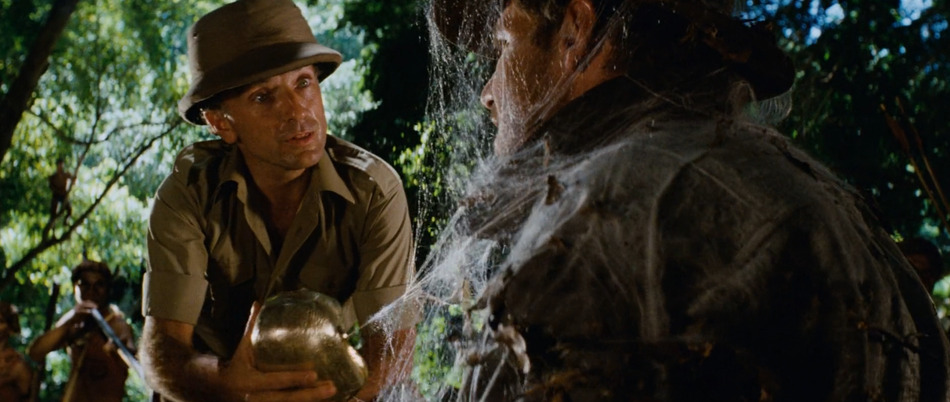
The cinema was a rare and expensive treat in my youth, so I first came across Raiders of the Lost Ark by recording it from television onto a poor quality VHS. I only mention this as it meant I watched a slightly different film to the one intended, as my copy somehow missed off the first 10 minutes. For those not as intimately familiar with the film as me, this is just in time to see a Belloq demand Dr. Jones hand over the Peruvian head (see above), just in time to learn that Indy loathes snakes, and just in time to see the inadvertent reproduction of two Europeans squabbling over the spoils of a foreign land. What this truncation did to my interpretation of the film (released thirty years ago today on June 19th 1981) is interesting to explore. Without Jones' physical and moral traits being demonstrated on-screen (as well as missing the weighing the gold head and the rollercoaster boulder scene), it actually made the idea of 'Indiana Jones' even more of a mythical archetype. The film wisely withholds Jones' backstory, but my directors cut deprived him of even more, and counterintuitively imbued him with even more of a legendary hue as the elision made his qualities an assumption beyond question. Indiana Jones, if you can excuse the clich , needed no introduction at all. Good artists copy, great artists steal. And oh boy, does Raiders steal. I've watched this film about twenty times over the past two decades and it's now firmly entered into my personal canon. But watching it on its thirtieth anniversary was different not least because I could situate it in a broader cinematic context. For example, I now see the Gestapo officer in Major Strasser from Casablanca (1942), in fact just as I can with many of Raiders' other orientalist tendencies: not only in its breezy depictions of backwards sand people, but also of North Africa as an entrep t and playground for a certain kind of Western gangster. The opening as well, set in an equally reductionist pseudo-Peru, now feels like Werner Herzog's Aguirre, the Wrath of God (1972) but without, of course, any self-conscious colonial critique.
The imagery of the ark appears to be borrowed from James Tissot's The Ark Passes Over the Jordan, part of the fin de siecle fascination with the occult and (ironically enough given the background of Raiders' director), a French Catholic revival.
I can now also appreciate some of the finer edges that make this film just so much damn fun to watch. For instance, the comic book conceit that Jones and Belloq are a 'shadowy reflection' of one other and that they need 'only a nudge' to make one like the other. As is the idea that Belloq seems to be actually enjoying being evil. I also spotted Jones rejecting the martini on the plane. This feels less like a comment on corrupting effect of alcohol (he drinks rather heavily elsewhere in the film), but rather a subtle distancing from James Bond. This feels especially important given that the action-packed cold open is, let us be honest for a second, ripped straight from the 007 franchise. John William's soundtracks are always worth mentioning. The corny Raiders March does almost nothing for me, but the highly-underrated 'Ark theme' certainly does. I delight in its allusions to Gregorian chant, the diabolus in musica and the Hungarian minor scale, fusing the Christian doctrine of the Holy Trinity (the stacked thirds, get it?), the ars antiqua of the Middle Ages with an 'exotic' twist that the Russian Five associated with central European Judaism.
The best use of the ark leitmotif is, of course, when it is opened. Here, Indy and Marion are saved by not opening their eyes whilst the 'High Priest' Belloq and the rest of the Nazis are all melted away. I'm no Biblical scholar, but I'm almost certain they were alluding to Leviticus 16:2 here:
The Lord said to Moses: Tell your brother Aaron that he is not to come whenever he chooses into the Most Holy Place behind the curtain in front of the atonement cover on the ark, or else he will die, for I will appear in the cloud above the mercy seat.
But would it be too much of a stretch to also see the myth of Orpheus and Eurydices too? Orpheus's wife would only be saved from the underworld if he did not turn around until he came to his own house. But he turned round to look at his wife, and she instantly slipped back into the depths:
For he who overcome should turn back his gaze
Towards the Tartarean cave,
Whatever excellence he takes with him
He loses when he looks on those below.
Perhaps not, given that Marion and the ark are not lost in quite the same way. But whilst touching on gender, it was interesting to update my view of archaeologist Ren Belloq. To countermand his slight queer coding (a trope of Disney villains such as Scar, Jafar, Cruella, etc.), there is a rather clumsy subplot involving Belloq repeatedly (and half-heartedly) failing to seduce Marion. This disavows any idea that Belloq isn't firmly heterosexual, essential for the film's mainstream audience, but it is especially important in Raiders because, if we recall the relationship between Belloq and Jones: 'it would take only a nudge to make you like me'. (This would definitely put a new slant on 'Top men'.)
However, my favourite moment is where the Nazis place the ark in a crate in order to transport it to the deserted island. On route, the swastikas on the side of the crate spontaneously burn away, and a disturbing noise is heard in the background. This short scene has always fascinated me, partly because it's the first time in the film that the power of the ark is demonstrated first-hand but also because gives the object an other-worldly nature that, to the best of my knowledge, has no parallel in the rest of cinema. Still, I had always assumed that the Aak disfigured the swastikas because of their association with the Nazis, interpreting the act as God's condemnation of the Third Reich. But now I catch myself wondering whether the ark would have disfigured any iconography as a matter of principle or whether their treatment was specific to the swastika. We later get a partial answer to this question, as the 'US Army' inscriptions in the Citizen Kane warehouse remain untouched. Far from being an insignificant concern, the filmmakers appear to have wandered into a highly-contested theological debate. As in, if the burning of the swastika is God's moral judgement of the Nazi regime, then God is clearly both willing and able to intervene in human affairs. So why did he not, to put it mildly, prevent Auschwitz? From this perspective, Spielberg appears to be limbering up for some of the academic critiques surrounding Holocaust representations that will follow Schindler's List (1993). Given my nostalgic and somewhat ironic attachment to Raiders, it will always be difficult for me to objectively appraise the film. Even so, it feels like it is underpinned by an earnest attempt to entertain the viewer, largely absent in the affected cynicism of contemporary cinema. And when considered in the totality of Hollywood's output, its tonal and technical flaws are not actually that bad or at least Marion's muddled characterisation and its breezy chauvinism (for example) clearly have far worse examples. Perhaps the most remarkable thing about the film in 2021 is that it hasn't changed that much at all. It spawned one good sequel (The Last Crusade), one bad one (The Temple of Doom), and one hardly worth mentioning at all, yet these adventures haven't affected the original Raiders in any meaningful way. In fact, if anything has affected the original text it is, once again, George Lucas himself, as knowing the impending backlash around the Star Wars prequels adds an inadvertent paratext to all his earlier works. Yet in a 1978 discussion prior to the creation of Raiders, you can get a keen sense of how Lucas' childlike enthusiasm will always result in something either extremely good or something extremely bad somehow no middle ground is quite possible. Yes, it's easy to rubbish his initial ideas 'We'll call him Indiana Smith! but hasn't Lucas actually captured the essence of a heroic 'Americana' here, and that the final result is simply a difference of degree, not kind?

Chris Lamb: Raiders of the Lost Ark: 40 Years On

"Again, we see there is nothing you can possess which I cannot take away."
The cinema was a rare and expensive treat in my youth, so I first came across Raiders of the Lost Ark by recording it from television onto a poor quality VHS. I only mention this as it meant I watched a slightly different film to the one intended, as my copy somehow missed off the first 10 minutes. For those not as intimately familiar with the film as me, this is just in time to see a Belloq demand Dr. Jones hand over the Peruvian head (see above), just in time to learn that Indy loathes snakes, and just in time to see the inadvertent reproduction of two Europeans squabbling over the spoils of a foreign land. What this truncation did to my interpretation of the film (released thirty years ago today on June 19th 1981) is interesting to explore. Without Jones' physical and moral traits being demonstrated on-screen (as well as missing the weighing the gold head and the rollercoaster boulder scene), it actually made the idea of 'Indiana Jones' even more of a mythical archetype. The film wisely withholds Jones' backstory, but my directors cut deprived him of even more, and counterintuitively imbued him with even more of a legendary hue as the elision made his qualities an assumption beyond question. Indiana Jones, if you can excuse the clich , needed no introduction at all. Good artists copy, great artists steal. And oh boy, does Raiders steal. I've watched this film about twenty times over the past two decades and it's now firmly entered into my personal canon. But watching it on its thirtieth anniversary was different not least because I could situate it in a broader cinematic context. For example, I now see the Gestapo officer in Major Strasser from Casablanca (1942), in fact just as I can with many of Raiders' other orientalist tendencies: not only in its breezy depictions of backwards sand people, but also of North Africa as an entrep t and playground for a certain kind of Western gangster. The opening as well, set in an equally reductionist pseudo-Peru, now feels like Werner Herzog's Aguirre, the Wrath of God (1972) but without, of course, any self-conscious colonial critique.
The imagery of the ark appears to be borrowed from James Tissot's The Ark Passes Over the Jordan, part of the fin de siecle fascination with the occult and (ironically enough given the background of Raiders' director), a French Catholic revival.
I can now also appreciate some of the finer edges that make this film just so much damn fun to watch. For instance, the comic book conceit that Jones and Belloq are a 'shadowy reflection' of one other and that they need 'only a nudge' to make one like the other. As is the idea that Belloq seems to be actually enjoying being evil. I also spotted Jones rejecting the martini on the plane. This feels less like a comment on corrupting effect of alcohol (he drinks rather heavily elsewhere in the film), but rather a subtle distancing from James Bond. This feels especially important given that the action-packed cold open is, let us be honest for a second, ripped straight from the 007 franchise. John William's soundtracks are always worth mentioning. The corny Raiders March does almost nothing for me, but the highly-underrated 'Ark theme' certainly does. I delight in its allusions to Gregorian chant, the diabolus in musica and the Hungarian minor scale, fusing the Christian doctrine of the Holy Trinity (the stacked thirds, get it?), the ars antiqua of the Middle Ages with an 'exotic' twist that the Russian Five associated with central European Judaism.
The best use of the ark leitmotif is, of course, when it is opened. Here, Indy and Marion are saved by not opening their eyes whilst the 'High Priest' Belloq and the rest of the Nazis are all melted away. I'm no Biblical scholar, but I'm almost certain they were alluding to Leviticus 16:2 here:
The Lord said to Moses: Tell your brother Aaron that he is not to come whenever he chooses into the Most Holy Place behind the curtain in front of the atonement cover on the ark, or else he will die, for I will appear in the cloud above the mercy seat.
But would it be too much of a stretch to also see the myth of Orpheus and Eurydices too? Orpheus's wife would only be saved from the underworld if he did not turn around until he came to his own house. But he turned round to look at his wife, and she instantly slipped back into the depths:
For he who overcome should turn back his gaze
Towards the Tartarean cave,
Whatever excellence he takes with him
He loses when he looks on those below.
Perhaps not, given that Marion and the ark are not lost in quite the same way. But whilst touching on gender, it was interesting to update my view of archaeologist Ren Belloq. To countermand his slight queer coding (a trope of Disney villains such as Scar, Jafar, Cruella, etc.), there is a rather clumsy subplot involving Belloq repeatedly (and half-heartedly) failing to seduce Marion. This disavows any idea that Belloq isn't firmly heterosexual, essential for the film's mainstream audience, but it is especially important in Raiders because, if we recall the relationship between Belloq and Jones: 'it would take only a nudge to make you like me'. (This would definitely put a new slant on 'Top men'.)
However, my favourite moment is where the Nazis place the ark in a crate in order to transport it to the deserted island. On route, the swastikas on the side of the crate spontaneously burn away, and a disturbing noise is heard in the background. This short scene has always fascinated me, partly because it's the first time in the film that the power of the ark is demonstrated first-hand but also because gives the object an other-worldly nature that, to the best of my knowledge, has no parallel in the rest of cinema. Still, I had always assumed that the Aak disfigured the swastikas because of their association with the Nazis, interpreting the act as God's condemnation of the Third Reich. But now I catch myself wondering whether the ark would have disfigured any iconography as a matter of principle or whether their treatment was specific to the swastika. We later get a partial answer to this question, as the 'US Army' inscriptions in the Citizen Kane warehouse remain untouched. Far from being an insignificant concern, the filmmakers appear to have wandered into a highly-contested theological debate. As in, if the burning of the swastika is God's moral judgement of the Nazi regime, then God is clearly both willing and able to intervene in human affairs. So why did he not, to put it mildly, prevent Auschwitz? From this perspective, Spielberg appears to be limbering up for some of the academic critiques surrounding Holocaust representations that will follow Schindler's List (1993). Given my nostalgic and somewhat ironic attachment to Raiders, it will always be difficult for me to objectively appraise the film. Even so, it feels like it is underpinned by an earnest attempt to entertain the viewer, largely absent in the affected cynicism of contemporary cinema. And when considered in the totality of Hollywood's output, its tonal and technical flaws are not actually that bad or at least Marion's muddled characterisation and its breezy chauvinism (for example) clearly have far worse examples. Perhaps the most remarkable thing about the film in 2021 is that it hasn't changed that much at all. It spawned one good sequel (The Last Crusade), one bad one (The Temple of Doom), and one hardly worth mentioning at all, yet these adventures haven't affected the original Raiders in any meaningful way. In fact, if anything has affected the original text it is, once again, George Lucas himself, as knowing the impending backlash around the Star Wars prequels adds an inadvertent paratext to all his earlier works. Yet in a 1978 discussion prior to the creation of Raiders, you can get a keen sense of how Lucas' childlike enthusiasm will always result in something either extremely good or something extremely bad somehow no middle ground is quite possible. Yes, it's easy to rubbish his initial ideas 'We'll call him Indiana Smith! but hasn't Lucas actually captured the essence of a heroic 'Americana' here, and that the final result is simply a difference of degree, not kind?

Joachim Breitner: Leaving DFINITY

Last Thursday was my last working day at DFINITY. There are various reasons why I felt that after almost three years the DFINITY Foundation isn t quite the right place for me anymore, and this plan has been in the making for a while. Primarily, there are personal pull factors that strongly suggest that I ll take a break from full time employment, so I decided to see the launch of the Internet Computer through and then leave. DFINITY has hired some amazing people, and it was a great pleasure to work with them. I learned a lot (some Rust, a lot of Nix, and just how merciless Conway s law is), and I dare say I had the opportunity to do some good work, contributing my part to make the Internet Computer a reality. I am especially proud of the Interface Specification and the specification-driven design principles behind it. It even comes with a model reference implementation and acceptance test suite, and although we didn t quite get to do formalization, those familiar with the DeepSpec project will recognize some influence of their concept of deep specifications . Besides that, there is of course my work on the Motoko programming language, where I build the backend,a the Candid interoperability layer, where I helped with the formalism, formulated the a generic soundness criterion for Interface Description Languages in a higher order settings and formally verified that in Coq. Fortunately, all of this work is now Free Software or at least Open Source. With so much work poured into this project, I continue to care about it, and you ll see me post on the the developer forum and hack on Motoko. As the Internet Computer becomes gradually more open, I hope I can be gradually more involved again. But even without me contributing full-time I am sure that DFINITY and the Internet Computer will do well; when I left there were still plenty of smart, capable and enthusiastic people forging ahead. So what s next? So far, I have rushed every professional transition in my life: When starting my PhD, when starting my postdoc, when starting my job at DFINITY, and every time I regretted it. So this time, I will take a proper break and will explore the world a bit (as far as that is possible given the pandemic). I will stresslessly contribute to various open source projects. I also hope to do more public outreach and teaching, writing more blog posts again, recording screencasts and giving talks and lectures. If you want to invite me to your user group/seminar/company/workshop, please let me know! Also, I might be up for small interesting projects in a while. Beyond these, I have no concrete plans and am looking forward to the inspiration I might get from hiking through the Scandinavian wilderness. If you happen to stumble across my tent, please stop for a tea.
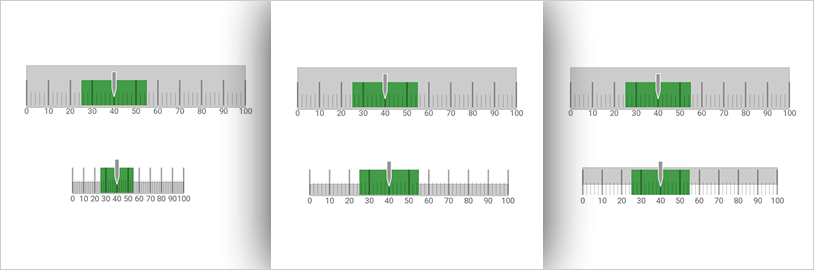
17 June 2021

Elana Hashman: I'm hosting a Bug Scrub for Kubernetes SIG Node

It's been a long while since I last hosted a BSP, but 'tis the season. Kubernetes SIG Node will be holding a bug scrub on June 24-25, and this is a great opportunity for you to get involved if you're interested in contributing to Kubernetes or SIG Node! We will be hosting a global event with region captains for all timezones. I am one of the NASA captains (~17:00-01:00 UTC) and I'll be leading the kickoff. We will be working on Slack and Zoom. I hope you'll be able to drop in! Details I'm an existing contributor, what should I work on? Work on triaging and closing SIG Node bugs. We have a lot of bugs!! The goal of our event is to categorize, clean up, and resolve some of the 450+ issues in k/k for SIG Node. Check out the event docs for more instructions. I'm a new contributor and want to join but I have no idea what I'm doing! At some point, that was all of us! This is a great opportunity to get involved if you've never contributed to Kubernetes. We'll have dedicated mentors available to coordinate and help out new contributors. If you've never contributed to Kubernetes before, I recommend you check out the Getting Started and Contributor Guide resources in advance of the event. You will want to ensure you've signed the contributor license agreement (CLA). Remember, you don't have to code to make valuable contributions! Triaging the bug tracker is a great example of this. See you there! Happy hacking.

14 June 2021

Fran ois Marier: Self-hosting an Ikiwiki blog

8.5 years ago, I moved my blog to Ikiwiki and Branchable. It's now time for me to take the next step and host my blog on my own server. This is how I migrated from Branchable to my own Apache server.

Installing Ikiwiki dependencies Here are all of the extra Debian packages I had to install on my server:
apt install ikiwiki ikiwiki-hosting-common gcc libauthen-passphrase-perl libcgi-formbuilder-perl libcrypt-sslauthen-passphrase-perl libcgi-formbuilder-perl libcrypt-ssleay-perl libjson-xs-perl librpc-xml-perl python-docutils libxml-feed-perl libsearch-xapian-perl libmailtools-perl highlight-common libsearch-xapian-perl xapian-omega
apt install --no-install-recommends ikiwiki-hosting-web libgravatar-url-perl libmail-sendmail-perl libcgi-session-perl
apt purge libnet-openid-consumer-perl
Then I enabled the CGI module in Apache:
a2enmod cgi
and un-commented the following in /etc/apache2/mods-available/mime.conf:
AddHandler cgi-script .cgi

Creating a separate user account Since Ikiwiki needs to regenerate my blog whenever a new article is pushed to the git repo or a comment is accepted, I created a restricted user account for it:
adduser blog
adduser blog sshuser
chsh -s /usr/bin/git-shell blog

git setup Thanks to Branchable storing blogs in git repositories, I was able to import my blog using a simple git clone in /home/blog (the srcdir):
git clone --bare git://feedingthecloud.branchable.com/ source.git
Note that the name of the directory (source.git) is important for the ikiwikihosting plugin to work. Then I pulled the .setup file out of the setup branch in that repo and put it in /home/blog/.ikiwiki/FeedingTheCloud.setup. After that, I deleted the setup branch and the origin remote from that clone:
git branch -d setup
git remote rm origin
Following the recommended git configuration, I created a working directory (the repository) for the blog user to modify the blog as needed:
cd /home/blog/
git clone /home/blog/source.git FeedingTheCloud
I added my own ssh public key to /home/blog/.ssh/authorized_keys so that I could push to the srcdir from my laptop. Finaly, I generated a new ssh key without a passphrase:
ssh-keygen -t ed25519
and added it as deploy key to the GitHub repo which acts as a read-only mirror of my blog.

Ikiwiki config While I started with the Branchable setup file, I changed the following things in it:
adminemail: webmaster@fmarier.org
srcdir: /home/blog/FeedingTheCloud
destdir: /var/www/blog
url: https://feeding.cloud.geek.nz
cgiurl: https://feeding.cloud.geek.nz/blog.cgi
cgi_wrapper: /var/www/blog/blog.cgi
cgi_wrappermode: 675
add_plugins:
- goodstuff
- lockedit
- comments
- blogspam
- sidebar
- attachment
- favicon
- format
- highlight
- search
- theme
- moderatedcomments
- flattr
- calendar
- headinganchors
- notifyemail
- anonok
- autoindex
- date
- relativedate
- htmlbalance
- pagestats
- sortnaturally
- ikiwikihosting
- gitpush
- emailauth
disable_plugins:
- brokenlinks
- fortune
- more
- openid
- orphans
- passwordauth
- progress
- recentchanges
- repolist
- toggle
- txt
sslcookie: 1
cookiejar:
  file: /home/blog/.ikiwiki/cookies
useragent: ikiwiki
git_wrapper: /home/blog/source.git/hooks/post-update
urlalias:
- http://feeds.cloud.geek.nz/
- http://www.feeding.cloud.geek.nz/
owner: francois@fmarier.org
hostname: feeding.cloud.geek.nz
emailauth_sender: login@fmarier.org
allowed_attachments: admin()
Then I created the destdir:
mkdir /var/www/blog
chown blog:blog /var/www/blog
and generated the initial copy of the blog as the blog user:
ikiwiki --setup .ikiwiki/FeedingTheCloud.setup --wrappers --rebuild
One thing that failed to generate properly was the tag cloug (from the pagestats plugin). I have not been able to figure out why it fails to generate any output when run this way, but if I push to the repo and let the git hook handle the rebuilding of the wiki, the tag cloud is generated correctly. Consequently, fixing this is not high on my list of priorities, but if you happen to know what the problem is, please reach out.

Apache config Here's the Apache config I put in /etc/apache2/sites-available/blog.conf:
<VirtualHost *:443>
    ServerName feeding.cloud.geek.nz
    SSLEngine On
    SSLCertificateFile /etc/letsencrypt/live/feeding.cloud.geek.nz/fullchain.pem
    SSLCertificateKeyFile /etc/letsencrypt/live/feeding.cloud.geek.nz/privkey.pem
    Header set Strict-Transport-Security: "max-age=63072000; includeSubDomains; preload"
    Include /etc/fmarier-org/blog-common
</VirtualHost>
<VirtualHost *:443>
    ServerName www.feeding.cloud.geek.nz
    ServerAlias feeds.cloud.geek.nz
    SSLEngine On
    SSLCertificateFile /etc/letsencrypt/live/feeding.cloud.geek.nz/fullchain.pem
    SSLCertificateKeyFile /etc/letsencrypt/live/feeding.cloud.geek.nz/privkey.pem
    Redirect permanent / https://feeding.cloud.geek.nz/
</VirtualHost>
<VirtualHost *:80>
    ServerName feeding.cloud.geek.nz
    ServerAlias www.feeding.cloud.geek.nz
    ServerAlias feeds.cloud.geek.nz
    Redirect permanent / https://feeding.cloud.geek.nz/
</VirtualHost>
and the common config I put in /etc/fmarier-org/blog-common:
ServerAdmin webmaster@fmarier.org
DocumentRoot /var/www/blog
LogLevel core:info
CustomLog $ APACHE_LOG_DIR /blog-access.log combined
ErrorLog $ APACHE_LOG_DIR /blog-error.log
AddType application/rss+xml .rss
<Location /blog.cgi>
        Options +ExecCGI
</Location>
before enabling all of this using:
a2ensite blog
apache2ctl configtest
systemctl restart apache2.service
The feeds.cloud.geek.nz domain used to be pointing to Feedburner and so I need to maintain it in order to avoid breaking RSS feeds from folks who added my blog to their reader a long time ago.

Server-side improvements Since I'm now in control of the server configuration, I was able to make several improvements to how my blog is served. First of all, I enabled the HTTP/2 and Brotli modules:
a2enmod http2
a2enmod brotli
and enabled Brotli compression by putting the following in /etc/apache2/conf-available/compression.conf:
<IfModule mod_brotli.c>
  <IfDefine !TRANSFER_COMPRESSION>
    Define TRANSFER_COMPRESSION BROTLI_COMPRESS
  </IfDefine>
</IfModule>
<IfModule mod_deflate.c>
  <IfDefine !TRANSFER_COMPRESSION>
    Define TRANSFER_COMPRESSION DEFLATE
  </IfDefine>
</IfModule>
<IfDefine TRANSFER_COMPRESSION>
  <IfModule mod_filter.c>
    AddOutputFilterByType $ TRANSFER_COMPRESSION  text/html text/plain text/xml text/css text/javascript
    AddOutputFilterByType $ TRANSFER_COMPRESSION  application/x-javascript application/javascript application/ecmascript
    AddOutputFilterByType $ TRANSFER_COMPRESSION  application/rss+xml
    AddOutputFilterByType $ TRANSFER_COMPRESSION  application/xml
  </IfModule>
</IfDefine>
and replacing /etc/apache2/mods-available/deflate.conf with the following:
# Moved to /etc/apache2/conf-available/compression.conf as per https://bugs.debian.org/972632
before enabling this new config:
a2enconf compression
Next, I made my blog available as a Tor onion service by putting the following in /etc/apache2/sites-available/blog.conf:
<VirtualHost *:443>
    ServerName feeding.cloud.geek.nz
    ServerAlias xfdug5vmfi6oh42fp6ahhrqdjcf7ysqat6fkp5dhvde4d7vlkqixrsad.onion
    Header set Onion-Location "http://xfdug5vmfi6oh42fp6ahhrqdjcf7ysqat6fkp5dhvde4d7vlkqixrsad.onion% REQUEST_URI s"
    Header set alt-svc 'h2="xfdug5vmfi6oh42fp6ahhrqdjcf7ysqat6fkp5dhvde4d7vlkqixrsad.onion:443"; ma=315360000; persist=1'
    ... 
<VirtualHost *:80>
    ServerName xfdug5vmfi6oh42fp6ahhrqdjcf7ysqat6fkp5dhvde4d7vlkqixrsad.onion
    Include /etc/fmarier-org/blog-common
</VirtualHost>
Then I followed the Mozilla Observatory recommendations and enabled the following security headers:
Header set Content-Security-Policy: "default-src 'none'; report-uri https://fmarier.report-uri.com/r/d/csp/enforce ; style-src 'self' 'unsafe-inline' ; img-src 'self' https://seccdn.libravatar.org/ ; script-src https://feeding.cloud.geek.nz/ikiwiki/ https://xfdug5vmfi6oh42fp6ahhrqdjcf7ysqat6fkp5dhvde4d7vlkqixrsad.onion/ikiwiki/ http://xfdug5vmfi6oh42fp6ahhrqdjcf7ysqat6fkp5dhvde4d7vlkqixrsad.onion/ikiwiki/ 'unsafe-inline' 'sha256-pA8FbKo4pYLWPDH2YMPqcPMBzbjH/RYj0HlNAHYoYT0=' 'sha256-Kn5E/7OLXYSq+EKMhEBGJMyU6bREA9E8Av9FjqbpGKk=' 'sha256-/BTNlczeBxXOoPvhwvE1ftmxwg9z+WIBJtpk3qe7Pqo=' ; base-uri 'self'; form-action 'self' ; frame-ancestors 'self'"
Header set X-Frame-Options: "SAMEORIGIN"
Header set Referrer-Policy: "same-origin"
Header set X-Content-Type-Options: "nosniff"
Note that the Mozilla Observatory is mistakenly identifying HTTP onion services as insecure, so you can ignore that failure. I also used the Mozilla TLS config generator to improve the TLS config for my server. Then I added security.txt and gpc.json to the root of my git repo and then added the following aliases to put these files in the right place:
Alias /.well-known/gpc.json /var/www/blog/gpc.json
Alias /.well-known/security.txt /var/www/blog/security.txt
I also followed these instructions to create a sitemap for my blog with the following alias:
Alias /sitemap.xml /var/www/blog/sitemap/index.rss
Finally, I simplified a few error pages to save bandwidth:
ErrorDocument 301 " "
ErrorDocument 302 " "
ErrorDocument 404 "Not Found"

Monitoring 404s Another advantage of running my own web server is that I can monitor the 404s easily using logcheck by putting the following in /etc/logcheck/logcheck.logfiles:
/var/log/apache2/blog-error.log 
Based on that, I added a few redirects to point bots and users to the location of my RSS feed:
Redirect permanent /atom /index.atom
Redirect permanent /comments.rss /comments/index.rss
Redirect permanent /comments.atom /comments/index.atom
Redirect permanent /FeedingTheCloud /index.rss
Redirect permanent /feed /index.rss
Redirect permanent /feed/ /index.rss
Redirect permanent /feeds/posts/default /index.rss
Redirect permanent /rss /index.rss
Redirect permanent /rss/ /index.rss
and to tell them to stop trying to fetch obsolete resources:
Redirect gone /~ff/FeedingTheCloud
Redirect gone /gittip_button.png
Redirect gone /ikiwiki.cgi
I also used these 404s to discover a few old Feedburner URLs that I could redirect to the right place using archive.org:
Redirect permanent /feeds/1572545745827565861/comments/default /posts/watch-all-of-your-logs-using-monkeytail/comments.atom
Redirect permanent /feeds/1582328597404141220/comments/default /posts/news-feeds-rssatom-for-mythtvorg-and/comments.atom
...
Redirect permanent /feeds/8490436852808833136/comments/default /posts/recovering-lost-git-commits/comments.atom
Redirect permanent /feeds/963415010433858516/comments/default /posts/debugging-openwrt-routers-by-shipping/comments.atom
I also put the following robots.txt in the git repo in order to stop a bunch of authentication errors coming from crawlers:
User-agent: *
Disallow: /blog.cgi
Disallow: /ikiwiki.cgi

Future improvements There are a few things I'd like to improve on my current setup. The first one is to remove the iwikihosting and gitpush plugins and replace them with a small script which would simply git push to the read-only GitHub mirror. Then I could uninstall the ikiwiki-hosting-common and ikiwiki-hosting-web since that's all I use them for. Next, I would like to have proper support for signed git pushes. At the moment, I have the following in /home/blog/source.git/config:
[receive]
    advertisePushOptions = true
    certNonceSeed = "(random string)"
but I'd like to also reject unsigned pushes. While my blog now has a CSP policy which doesn't rely on unsafe-inline for scripts, it does rely on unsafe-inline for stylesheets. I tried to remove this but the actual calls to allow seemed to be located deep within jQuery and so I gave up. Update: now fixed. Finally, I'd like to figure out a good way to deal with articles which don't currently have comments. At the moment, if you try to subscribe to their comment feed, it returns a 404. For example:
[Sun Jun 06 17:43:12.336350 2021] [core:info] [pid 30591:tid 140253834704640] [client 66.249.66.70:57381] AH00128: File does not exist: /var/www/blog/posts/using-iptables-with-network-manager/comments.atom
This is obviously not ideal since many feed readers will refuse to add a feed which is currently not found even though it could become real in the future. If you know of a way to fix this, please let me know.

Sergio Durigan Junior: I am not on Freenode anymore

This is a quick public announcement to say that I am not on the Freenode IRC network anymore. My nickname (sergiodj), which was more than a decade old, has just been deleted (along with every other nickname and channel in that network) from their database today, 2021-06-14. For your safety, you should assume that everybody you knew at Freenode is not there either, even if you see their nicknames online. Do not trust without verifying. In fact, I would strongly encourage that you do not join Freenode anymore: their new policies are absolutely questionable and their disregard for their users is blatant. If you would like to chat with me, you can find me at OFTC (preferred) and Libera.

11 June 2021

Mike Gabriel: New: The Debian BBB Packaging Team (and: Kurento Media Server goes Debian)

Today, Fre(i)e Software GmbH has been contracted for packaging Kurento Media Server for Debian. This packaging project will be funded by GUUG e.V. (the German Unix User Group e.V.). A big thanks to the people from GUUG e.V. for making this packaging project possible. About Kurento Media Server Kurento is an open source software project providing a platform suitable for creating modular applications with advanced real-time communication capabilities. For knowing more about Kurento, please visit the Kurento project website: https://www.kurento.org. Kurento is part of FIWARE. For further information on the relationship of FIWARE and Kurento check the Kurento FIWARE Catalog Entry. Kurento is also part of the NUBOMEDIA research initiative. Kurento Media Server is a WebRTC-compatible server that processes audio and video streams, doing composable pipeline-based processing of media. About BigBlueButton As some of you may know, Kurento Media Server is one of the core components of the BigBlueButton software, an ,,Open Source Virtual Classroom Software''. The context of the KMS funding is - after several other steps - getting the complete software component stack of BigBlueButton (aka BBB) into Debian some day, so that we can provide BBB as native Debian packages. On Debian. (Currently, one needs to use an always already a bit outdated version of Ubuntu). Due to this greater context, I just created the Debian BBB Packaging Team on salsa.debian.org. Outlook and Appreciation The current project (uploading Kurento Media Server to Debian) will very likely be extended to one year of package maintenance for all Kurento Media Server components in Debian. Extending this maintenance funding to a second year, has also been discussed, and seems a possible option. Probably most Debian Developer colleagues will agree with me when I say that Debian packaging is not a one-time shot until the first uploads of software packages have landed and settled. Debian package maintenance is a long term responsibility and requires long term commitment. I am very glad, that the people at GUUG e.V are on the same page with me (with us) regarding this. This is much and dearly appreciated. Thank you!!! What else? Well, we have also talked about another BigBlueButton component that is not yet in Debian: FreeSwitch. But more of that, when time has come. How to Join the Debian BBB Packaging Team? Please ping me via IRC (sunweaver on OFTC IRC) or [matrix] (@sunweaver:matrix.org). How to Support the Debian BBB Packaging Team? If you, your organization, your company, your municipality, your university, etc. feels like supporting the effort of packaging BigBlueButton for Debian, please get in touch with: mike.gabriel@freiesoftware.gmbh And yes, the company homepage is not online, yet, but it is in the makings... light+love
Mike (aka sunweaver)

Mike Gabriel: Linux on Acer Spin 3

Recently, I bought an Acer Spin 3 Convertible Notebook for the company and provided it to Robert Tari for his daily work on Ayatana Indicators (which currently is funded by the UBports Foundation via my company Fre(i)e Software GmbH). Some days ago Robert reported back about a sleepless night he spent with that machine... He got stuck with a tricky issue regarding the installation of Manjaro GNU/Linux on that machine, that could be -- at the end -- resolved by a not so well documented trick. Before anyone else spends another sleepless night on this, we thought we'd better share Robert's solution. So, the below applies to the Acer Spin 3 series (and probably to other Spin models, perhaps even some other Acer laptops): Acer Spin 3 Pre-Inst Cheat Codes Before you even plug in the USB install media:
  1. Go to UEFI settings (i.e. BIOS for us elderly people) [F2]
  2. Security -> Set Supervisor Password [Enabled]
  3. Enter the password you'll use
  4. Boot -> Secure Boot -> [Disabled] (you can't disable it without a set supervisor password)
  5. Exit -> Exit Saving Changes
  6. Restart and go to UEFI settings again [F2]
  7. Main -> [Now press CTRL + S] -> VMD Controller -> [Disabled]
  8. Exit -> Exit Saving Changes
  9. Now plug in the install USB and restart
Esp. the disabling of the VMD Controller is essential. Otherwise, GRUB won't find any partition nor EFI registered boot items after the installation and drops into the EFI recovery shell. Robert hasn't tested the Wacom pen that comes with the device, nor the fingerprint reader, yet. Everything else works out-of-the-box. light+love
Mike Gabriel (aka sunweaver)

10 June 2021

Petter Reinholdtsen: Nikita version 0.6 released - free software archive API server

I am very pleased to be able to share with you the announcement of a new version of the archiving system Nikita published by its lead developer Thomas S dring:
It is with great pleasure that we can announce a new release of nikita. Version 0.6 (https://gitlab.com/OsloMet-ABI/nikita-noark5-core). This release makes new record keeping functionality available. This really is a maturity release. Both in terms of functionality but also code. Considerable effort has gone into refactoring the codebase and simplifying the code. Notable changes for this release include:
  • Significantly improved OData parsing
  • Support for business specific metadata and national identifiers
  • Continued implementation of domain model and endpoints
  • Improved testing
  • Ability to export and import from arkivstruktur.xml
We are currently in the process of reaching an agreement with an archive institution to publish their picture archive using nikita with business specific metadata and we hope that we can share this with you soon. This is an interesting project as it allows the organisation to bring an older picture archive back to life while using the original metadata values stored as business specific metadata. Combined with OData means the scope and use of the archive is significantly increased and will showcase both the flexibility and power of Noark. I really think we are approaching a version 1.0 of nikita, even though there is still a lot of work to be done. The notable work at the moment is to implement access-control and full text indexing of documents. My sincere thanks to everyone who has contributed to this release! - Thomas Release 0.6 2021-06-10 (d1ba5fc7e8bad0cfdce45ac20354b19d10ebbc7b)
  • Refactor metadata entity search
  • Remove redundant security configuration
  • Make OpenAPI documentation work
  • Change database structure / inheritance model to a more sensible approach
  • Make it possible to move entities around the fonds structure
  • Implemented a number of missing endpoints
  • Make sure yml files are in sync
  • Implemented/finalised storing and use of
    • Business Specific Metadata
    • Norwegian National Identifiers
    • Cross Reference
    • Keyword
    • StorageLocation
    • Author
    • Screening for relevant objects
    • ChangeLog
    • EventLog
  • Make generation of updated docker image part of successful CI pipeline
  • Implement pagination for all list requests
    • Refactor code to support lists
    • Refactor code for readability
    • Standardise the controller/service code
  • Finalise File->CaseFile expansion and Record->registryEntry/recordNote expansion
  • Improved Continuous Integration (CI) approach via gitlab
  • Changed conversion approach to generate tagged PDF documents
  • Updated dependencies
    • For security reasons
    • Brought codebase to spring-boot version 2.5.0
    • Remove import of necessary dependencies
    • Remove non-used metrics classes
  • Added new analysis to CI including
  • Implemented storing of Keyword
  • Implemented storing of Screening and ScreeningMetadata
  • Improved OData support
    • Better support for inheritance in queries where applicable
    • Brought in more OData tests
    • Improved OData/hibernate understanding of queries
    • Implement $count, $orderby
    • Finalise $top and $skip
    • Make sure & is used between query parameters
  • Improved Testing in codebase
    • A new approach for integration tests to make test more readable
    • Introduce tests in parallel with code development for TDD approach
    • Remove test that required particular access to storage
  • Implement case-handling process from received email to case-handler
    • Develop required GUI elements (digital postroom from email)
    • Introduced leader, quality control and postroom roles
  • Make PUT requests return 200 OK not 201 CREATED
  • Make DELETE requests return 204 NO CONTENT not 200 OK
  • Replaced 'oppdatert*' with 'endret*' everywhere to match latest spec
  • Upgrade Gitlab CI to use python > 3 for CI scripts
  • Bug fixes
    • Fix missing ALLOW
    • Fix reading of objects from jar file during start-up
    • Reduce the number of warnings in the codebase
    • Fix delete problems
    • Make better use of cascade for "leaf" objects
    • Add missing annotations where relevant
    • Remove the use of ETAG for delete
    • Fix missing/wrong/broken rels discovered by runtest
    • Drop unofficial convertFil (konverterFil) end point
    • Fix regex problem for dateTime
    • Fix multiple static analysis issues discovered by coverity
    • Fix proxy problem when looking for object class names
    • Add many missing translated Norwegian to English (internal) attribute/entity names
    • Change UUID generation approach to allow code also set a value
    • Fix problem with Part/PartParson
    • Fix problem with empty OData search results
    • Fix metadata entity domain problem
  • General Improvements
    • Makes future refactoring easier as coupling is reduced
    • Allow some constant variables to be set from property file
    • Refactor code to make reflection work better across codebase
    • Reduce the number of @Service layer classes used in @Controller classes
    • Be more consistent on naming of similar variable types
    • Start printing rels/href if they are applicable
    • Cleaner / standardised approach to deleting objects
    • Avoid concatenation when using StringBuilder
    • Consolidate code to avoid duplication
    • Tidy formatting for a more consistent reading style across similar class files
    • Make throw a log.error message not an log.info message
    • Make throw print the log value rather than printing in multiple places
    • Add some missing pronom codes
    • Fix time formatting issue in Gitlab CI
    • Remove stale / unused code
    • Use only UUID datatype rather than combination String/UUID for systemID
    • Mark variables final and @NotNull where relevant to indicate intention
  • Change Date values to DateTime to maintain compliance with Noark 5 standard
  • Domain model improvements using Hypersistence Optimizer
    • Move @Transactional from class to methods to avoid borrowing the JDBC Connection unnecessarily
    • Fix OneToOne performance issues
    • Fix ManyToMany performance issues
    • Add missing bidirectional synchronization support
    • Fix ManyToMany performance issue
  • Make List
  • and Set
  • use final-keyword to avoid potential problems during update operations
  • Changed internal URLs, replaced "hateoas-api" with "api".
  • Implemented storing of Precedence.
  • Corrected handling of screening.
  • Corrected _links collection returned for list of mixed entity types to match the specific entity.
  • Improved several internal structures.
If free and open standardized archiving API sound interesting to you, please contact us on IRC (#nikita on irc.oftc.net) or email (nikita-noark mailing list). As usual, if you use Bitcoin and want to show your support of my activities, please send Bitcoin donations to my address 15oWEoG9dUPovwmUL9KWAnYRtNJEkP1u1b.

Dirk Eddelbuettel: #33: Collaborative Editing and Execution in Shared Byoby Sessions

Welcome to the 33th post in the rigorously raconteuring R recommendations series, or R4 for short. This post is also a post in the T4 series of tips, tricks, tools, and toys as it picks up and extends earlier posts on byobu. And it fits nicely in the more recent ESS-Intro series as we show some Emacs. You can find earlier R4 posts here, and the T4 posts here; the ESS-Intro series is here. The focus of this short video (and slides) is on collaboration using files, but also entire sessions, execution and all aspects of joint exploration, development or debugging. Anything you can do in a terminal you can also do shared in a terminal. The video contains a brief lightning talk, and a shared session jointly with Grant McDermott and Vicent Arel-Bundock. My big big thanks to both of them for prodding and encouragement, as well as fearless participation in the joint section of the video:

The corresponding pdf slides are here. If you like this or other open-source work I do, you can sponsor me at GitHub.

This post by Dirk Eddelbuettel originated on his Thinking inside the box blog. Please report excessive re-aggregation in third-party for-profit settings.

Next.

Previous.