Search Results: "eric"

25 April 2010

Vincent Sanders: XCB programming is hard

I have been looking at writing a program with XCB today. I seem to pick projects that are an exercise in undocumented frustration.

All I wanted to do was have an x window open and be able to plot an arbitrary changeable image to it (no I am not writing yet another image viewer!). The XCB documentation seems to be a cross between "good luck with that" and some rather erratic doxygen output.

The utility libraries are rather skimpy on examples and its tiresome worrying that when you feed any of the xcb function names into Google (web or codesearch) there are very, very few hits beyond the freedesktop API docs.

My favourite has to be the xcb_image_create documentation, go on I challenge anyone to follow that logic without going and reading the sources! The answer (afaict) is that if you pass a pointer in base that pointer will be freed by xcb_image_destroy otherwise the data pointer will be used, unless the bytes value is too small in which case memory will be allocated with malloc and the passed pointer ignored.
Anyhow, I have succeeded and the result is below, mainly so I do not loose it :-)

/* XCB application drawing an updating bitmap in a window
*
* Inspired by the xcb black rectangle in a window example
*
* Copyright 2010 V. R. Sanders, released under the MIT licence
*/

/* compile with:
* gcc -Wall -lxcb-icccm -lxcb -lxcb-image -o disp disp.c
*/

#include <string.h>

#include <xcb/xcb.h>
#include <xcb/xcb_image.h>
#include <xcb/xcb_atom.h>
#include <xcb/xcb_icccm.h>
#include <stdio.h>
#include <stdlib.h>
#include <sys/types.h>

static xcb_format_t *
find_format (xcb_connection_t * c, uint8_t depth, uint8_t bpp)

const xcb_setup_t *setup = xcb_get_setup(c);
xcb_format_t *fmt = xcb_setup_pixmap_formats(setup);
xcb_format_t *fmtend = fmt + xcb_setup_pixmap_formats_length(setup);
for(; fmt != fmtend; ++fmt)
if((fmt->depth == depth) && (fmt->bits_per_pixel == bpp))
/* printf("fmt %p has pad %d depth %d, bpp %d\n",
fmt,fmt->scanline_pad, depth,bpp); */
return fmt;

return 0;


void
fillimage(unsigned char *p, int width, int height)

int i, j;
for(i=0; i < width; i++)

for(j=0; j < height; j++)

if((i < 256)&&(j < 256))

*p++=rand()%256; // blue
*p++=rand()%256; // green
*p++=rand()%256; // red
else
*p++=i%256; // blue
*p++=j%256; // green
if(i < 256)
*p++=i%256; // red
else if(j < 256)
*p++=j%256; // red
else
*p++=(256-j)%256; // red

p++; /* unused byte */


xcb_image_t *
CreateTrueColorImage(xcb_connection_t *c,
int width,
int height)

const xcb_setup_t *setup = xcb_get_setup(c);
unsigned char *image32=(unsigned char *)malloc(width*height*4);
xcb_format_t *fmt = find_format(c, 24, 32);
if (fmt == NULL)
return NULL;

fillimage(image32, width, height);

return xcb_image_create(width,
height,
XCB_IMAGE_FORMAT_Z_PIXMAP,
fmt->scanline_pad,
fmt->depth,
fmt->bits_per_pixel,
0,
setup->image_byte_order,
XCB_IMAGE_ORDER_LSB_FIRST,
image32,
width*height*4,
image32);


int
main (int argc, char **argv)

xcb_connection_t *c;
xcb_screen_t *s;
xcb_window_t w;
xcb_pixmap_t pmap;
xcb_gcontext_t gc;
xcb_generic_event_t *e;
uint32_t mask;
uint32_t values[2];
int done=0;
xcb_image_t *image;
uint8_t *image32;
xcb_expose_event_t *ee;
char *title="Hello World!";
xcb_size_hints_t *hints;

/* open connection with the server */
c = xcb_connect (NULL, NULL);

if (!c)
printf ("Cannot open display\n");
exit (1);


s = xcb_setup_roots_iterator (xcb_get_setup (c)).data;

/* printf("root depth %d\n",s->root_depth); */

/* create image */
image = CreateTrueColorImage(c, 640, 480);
if (image == NULL)
printf ("Cannot create iamge\n");
xcb_disconnect(c);
return 1;

image32 = image->data;

/* create window */
mask = XCB_CW_BACK_PIXEL XCB_CW_EVENT_MASK;
values[0] = s->white_pixel;
values[1] = XCB_EVENT_MASK_EXPOSURE
XCB_EVENT_MASK_KEY_PRESS
XCB_EVENT_MASK_BUTTON_PRESS;

w = xcb_generate_id (c);
xcb_create_window (c, XCB_COPY_FROM_PARENT, w, s->root,
10, 10, image->width, image->height, 1,
XCB_WINDOW_CLASS_INPUT_OUTPUT,
s->root_visual,
mask, values);

/* set title on window */
xcb_set_wm_name(c, w, STRING, strlen(title), title);

/* set size hits on window */
hints = xcb_alloc_size_hints();
xcb_size_hints_set_max_size(hints, image->width,image->height);
xcb_size_hints_set_min_size(hints, image->width,image->height);
xcb_set_wm_size_hints(c, w, WM_NORMAL_HINTS, hints);

/* create backing pixmap */
pmap = xcb_generate_id(c);
xcb_create_pixmap(c, 24, pmap, w, image->width, image->height);

/* create pixmap plot gc */
mask = XCB_GC_FOREGROUND XCB_GC_BACKGROUND;
values[0] = s->black_pixel;
values[1] = 0xffffff;

gc = xcb_generate_id (c);
xcb_create_gc (c, gc, pmap, mask, values);

/* put the image into the pixmap */
xcb_image_put(c, pmap, gc, image, 0, 0, 0);

/* show the window */
xcb_map_window (c, w);
xcb_flush (c);

/* event loop */
while (!done && (e = xcb_wait_for_event (c)))
switch (e->response_type)
case XCB_EXPOSE:
ee=(xcb_expose_event_t *)e;
/* printf ("expose %d,%d - %d,%d\n",
ee->x,ee->y,ee->width,ee->height); */
xcb_copy_area(c, pmap, w, gc,
ee->x,
ee->y,
ee->x,
ee->y,
ee->width,
ee->height);
xcb_flush (c);
image32+=16;
break;

case XCB_KEY_PRESS:
/* exit on keypress */
done = 1;
break;

case XCB_BUTTON_PRESS:
fillimage(image->data, image->width, image->height);
memset(image->data, 0, image32 - image->data);
xcb_image_put(c, pmap, gc, image, 0, 0, 0);
xcb_copy_area(c, pmap, w, gc, 0,0,0,0,image->width,image->height);
xcb_flush (c);
break;

free (e);


/* free pixmap */
xcb_free_pixmap(c, pmap);

/* close connection to server */
xcb_disconnect (c);

return 0;


Matt Zimmerman: Ten TED talks I took in today

Starting about a year ago, I started following the release of videos from TED events. If one looked interesting, I would download the video to watch later. In this way, I accumulated a substantial collection of talks which I never managed to watch. I spent a Saturday evening working my way through the list. These are my favorites out of this batch.

23 April 2010

Jonathan McDowell: Out, damn'd PGP v3

Nearly a year ago people starting worrying about the complexity of SHA-1 being reduced and the potential availability of viable attacks against things such as PGP keys that used SHA-1. Many people (myself included) generated a new key, or updated preferences on keys that were otherwise strong enough. There were worries about what this might mean for Debian. We were getting ahead of ourselves a bit though. Firstly there haven't been any public viable attacks that I'm aware of (though of course this doesn't mean we shouldn't continue to migrate away), but secondly there's a much easier method of attack. PGP v3 keys. To quote RFC4880:

V3 keys are deprecated. They contain three weaknesses. First, it is relatively easy to construct a V3 key that has the same Key ID as any other key because the Key ID is simply the low 64 bits of the public modulus. Secondly, because the fingerprint of a V3 key hashes the key material, but not its length, there is an increased opportunity for fingerprint collisions. Third, there are weaknesses in the MD5 hash algorithm that make developers prefer other algorithms. See below for a fuller discussion of Key IDs and fingerprints.
At the time of writing Debian has 21 remaining v3 keys. This is a significant improvement over a year ago, when we had 200, but it's still 21 more than I'd like. I've been chasing people since last May (starting with those who had v3 + v4 keys, all of whom now only have a v4 key) and we're down to the stragglers. So it's time to name and shame, in the hope of kicking them into action. The following keys are what's left (doesn't match the currently active keyring because we've had a few replacements since the last promote):

0x0D2156BD3D97C149 Michael Stone <mstone>
0x225FD911CD269B31 Carlos Barros <cbf>
0x31E73F14E298966D James R. Van Zandt <jrv>
0x366CD3FEEBC11B01 Chris Waters <xtifr>
0x37A73FE355E8BC4D Frederic Lepied <lepied>
0x3E973117DCC528E9 Ardo van Rangelrooij <ardo>
0x5C7A46637953F711 Rich Sahlender <rsahlen>
0x5D6560F85F30F005 Craig Brozefsky <craig>
0x6B0E322836129171 Jim Westveer <jwest>
0x723724B4A5B6DD31 Christian Meder <meder>
0x7629B22ED71DAABD Adrian Bridgett <bridgett>
0x8FFC405EFD5A67CD Adam Di Carlo <aph>
0xB0D269DE17F3D4D1 Matthew Vernon <matthew>
0xBC151FC8D2A913A1 Peter S Galbraith <psg>
0xC1A0A171C2DCD3B1 Jim Mintha <jmintha>
0xC3168EBA23F5ADDB Ian Jackson <iwj>
0xCE951B1160D74C7D Patrick Cole <ltd>
0xE82A8B0D57137FE5 Paul Seelig <pseelig>
0xF20E242CE77AC835 Brian White <bcwhite>
0xFBAA570C3087194D Alan Bain <afrb2>
0xFFD1B4AC7C19FD19 David Engel <david>

Of these keys only 2 voted in the recent DPL election. 8 have failed to make any response to my mails (3 since last August). Only 9 have uploaded a package since August 2008. And 10 were already known to the MIA database. Some of them have stated they'll sort out a new key, but not yet done so.

If you are one of these people, please either get a new key sorted and signed and reply to the mails I've sent you, or reply and say you no longer wish to be involved in Debian. And if you know any of these people, encourage them to get a new key sorted and offer to sign it for them.

22 April 2010

Gunnar Wolf: A FLISOL critic

Once again, I was invited by several different groups to be present at FLISOL, a quite interesting phenomenon: FLISOL (Latin-american Free Software Installation Festival) is s very large-scale, very loosely coordinated thing put together for five years already in over 200 cities in basically every Latin American country. Go to the FLISOL page, it is quite interesting to try to understand it! Now, I don't like FLISOL. I managed to avoid it in 2005 and 2006; in 2007, I was present at a FLISOL, although I didn't know beforehand it was the reason for the conference I was invited to. In 2008 and 2009 I took part for reasons I should not go into right now. This year, again, I will not be part of any of its activities (regardless of rumors to the contrary I was invited to be present at a panel on ACTA, but I have not followed the topic enough to be aware of anything besides the very basic aspects, I have no authority to speak about it; I told the organizers I would like to be there as part of the audience, but not present the topic. And I am quite work-stressed, so I doubt I'll make it). Why am I against FLISOL? FLISOL itself, as I said, is a positive and interesting phenomenon, and I have enjoyed the conference cycles which often happen together with it. What I am against is installfests In my opinion, in the stage we are at today, instead of promoting Free Software, an install-fest just works against it. Free Software Linux-based distributions at least is widely known already, as a concept, even though most people dare not come anywhere close to it. Few people outside our already consolidated groups recognize programs such as the Mozilla and OpenOffice suites as being also Free Software, and valuable, quality alternatives for their everyday needs in the environments they currently use. If we need to show how to install and understand the GNU/Linux ecosystem to people who have not got close, it is not IMHO to end users. Installing a GNU/Linux system is easy enough for anybody interested in doing it, or at least, for him to request a one-on-one help session, handholding and understanding the basic ideas. We need, in any case, for the computer corner shop technicians to be somewhat acquinted, at least with the basics, at least with one popular distribution (and with the fact that there are many, and that they are different). People who have not had the curiosity and courage to try to install Linux by themselves do not need to be evangelized (a verb that should be out of our vocabularies by now, as that phase in our movement should be over by now) End users have simple needs: Things should work, and be as surprise-free as possible. They don't want to depend on a specific time-starved person (or even on a small group of people, all of which have a sanctity delirium/aura). When they go to technical support, they expect the problem to be solved Not even understanding what was wrong. End users are willing to pay a small fee to anybody to help them solve their problems. The key word is anybody. If we (myself, or me and my 10 friends who were there at the gathering, or any sufficiently defined small group) are the only support point for the OS, it is no good. Online support forums are not good either, in my experience, as the end user will prefer just lugging the computer to the nearest technician and get it fixed. Even if fixed means just installing one more readily-available package (not to mention, of course, when an update breaks something). I have witnessed, after an install fest, people walk very happy with their new system as a new toy. After a week or two, they cannot install the latest virus^Wscreen saver, or a legitimate program they need for their work. As it does not work, they take the computer to the technician... Who will end up formatting his system and installing something more usual. On the other hand, some people prefer installing a dual-boot system That guarantees the user will feel he is carrying some kind of moral superiority on his computer, and will often remember he has something Not Evil. This will often happen, of course, at boot time When they see GRUB at boot time, and rush to select Windows before That Strange Thing starts up. Anyway... Go ahead, install Free Software, enjoy the day. The conference cycles are usually interesting, and are the best part of it all I'm not saying you should stop doing it. But I'd urge you to take the focus away from the mass-installs, which become often just lost work (even detrimental to furthering Free Software). Try to see things as a non-technically-interested user would. Try to design ways to get corner shop technicians interested. Maybe that can be useful in the long run.

20 April 2010

Matt Zimmerman: Lucid ruminations

A few months ago, I wrote about changes in our development process for Ubuntu 10.04 LTS in order to meet our goals for this long-term release. So, how has it turned out? Well, the development teams are still very busy preparing for the upcoming release, so there hasn t been too much time for retrospection yet. Here are some of my initial thoughts, though. A more complete set of retrospectives on Lucid should give us some good ideas for how to improve further in Maverick and beyond. Update: Fixed broken link.

19 April 2010

MJ Ray: Samsung N150 Netbook and Ubuntu Netbook Remix

That was a pretty good weekend. I set up someone s new Samsung N150 netbook with Ubuntu Netbook Remix. If you like Windows, you might want to skip this long paragraph: the N150 came with Microsoft Windows 7 Starter. When I realised what that was, I thought it was some sort of joke. It s more like an advert for Windows than a proper operating system. They even removed the option to replace the branded backdrop image, which gives you an idea of the pettiness of that distribution. I read that Win7 Starter used to have a 3 simultaneous application limit but an update removed it because of the sheer volume of complaints and rumblings about court cases to get money back. Microsoft justify all the limits with the argument that it s optimised for low-power netbooks, but the N150 goes like stink compared to my own (7-year-old) work laptop and how much power is saved by loading the Windows logo backdrop instead of a nice picture anyway? What did that make me want to do? Well this:
Windows 7 Sins But I d read that Samsung view nuking Win7 Starter from orbit as voiding the warranty and I couldn t see anything to confirm or reject that in the paperwork, so I made it dual-boot with Ubuntu netbook remix. If it ever has to go back to the shop, I ll hide the boot menu. I had enough trouble installing it that I did contemplate get.debian.net with some of the Debian Eee PC things, but I wasn t sure what I needed and I didn t have that much time. There were two big gotchas when installing:
  1. When you switch between Ubuntu and Windows, it won t boot the first time. Second and subsequent boots are fine, but the first one just reboots immediately. I suspect this would be the same for all GNU/Linux distributions.
  2. I didn t realise that the current ndisgtk (or the underlying ndiswrapper?) couldn t use Win7 drivers. Once I downloaded some XP drivers, it worked. There are some native drivers for the rtl8192 but I didn t have time to go compiling on it yet.
After figuring those out, Ubuntu seems to work fine. Better than the Windows. I got particularly appreciative comments about the large clickable spaces on the launcher that netbook remix uses (which is what I d expect from Fitts s Law). Debian probably has a similar launcher, but I don t know what it s called yet. It looks like some Gnome window or file manager and I m a GNUstep throwback. Setting up the mobile phone for internet access was also a breeze. It s a later model than my old k608i, so it supports PANU, so after the Bluetooth pairing, it appeared in the networking menu on the top panel bar and it just worked. On Sunday, I cycled to Clevedon (7 miles away as the crow flies, but 12 by bike because of a missing river crossing). Pretty good weekend.

Matt Brubeck: Read Later: a Mobile Firefox extension

Hello, Planet Mozilla! I'm Matt Brubeck, the newest member of the Mobile Firefox (Fennec) front-end team. I'm working remotely in Seattle, but you can find me in #mobile during the North American day, or follow me on Buzz/Twitter/etc. To help myself learn Fennec and XUL, I wrote a simple extension called Read Later. Like Marco Arment's Instapaper service it stores a list of web pages so you can return to them later. Unlike Instapaper, my extension does not save pages to a remote server. Instead, it uses your mobile device's storage, so you can view saved pages offline. I use code from Arc90's Readability bookmarklet to extract the main content from the page, save it, and present it in a simple mobile-friendly layout. One thing the extension can't do (which Instapaper and other services can) is synchronize saved pages between computers. This would be a great feature for a Mobile Firefox add-on, but writing my own sync service is a bit more work than I want to put into this little side project. A future version may use Weave to sync saved pages, as long as the size of the data is not a problem. If you are using a recent Fennec 1.1 build, try out Read Later and let me know what you think. And if you're a developer, you can look at the source code to see how a simple Fennec extension works.

17 April 2010

Enrico Zini: Tweaking locale settings

Tweaking locale settings I sometimes meet some Italian programmer who prefers his system to be in English, so they get untranslated manpages and error messages. I sometimes notice that their solution often leaves them something to complain about. Some set LANG=C and complain they can't see accented characters. Some set LANG=en_US.UTF-8 and complain that OpenOffice Calc wants dates in the format MM/DD/YYYY which is an Abomination unto Nuggan, as well as unto Me. But the locales system can do much better than that. In fact, most times people would be extremely happy with LC_MESSAGES in English, and everything else in Italian:
$ locale
LANG=it_IT.UTF-8
LC_CTYPE="it_IT.UTF-8"
LC_NUMERIC="it_IT.UTF-8"
LC_TIME="it_IT.UTF-8"
LC_COLLATE="it_IT.UTF-8"
LC_MONETARY="it_IT.UTF-8"
LC_MESSAGES=en_US.UTF-8
LC_PAPER="it_IT.UTF-8"
LC_NAME="it_IT.UTF-8"
LC_ADDRESS="it_IT.UTF-8"
LC_TELEPHONE="it_IT.UTF-8"
LC_MEASUREMENT="it_IT.UTF-8"
LC_IDENTIFICATION="it_IT.UTF-8"
LC_ALL=
A way to do this (is there a better one?) is to tell the display manager (GDM, KDM...) to use the Italian locale, and then override the right LC_* bits in ~/.xsessionrc:
$ cat ~/.xsessionrc
export LC_MESSAGES=en_US.UTF-8
That does the trick: English messages, with Proper currency, Proper dates, accented letters sort Properly, Proper A4 printer paper, Proper SI units. Even Nuggan would be happy.

15 April 2010

Biella Coleman: Cultural Cornucopia

Today all across America, many are experiencing a soft form of hell, anxiety, and constant cursing for it is tax day. Thankfully last night I squared those away (more or less). Today is also the last day to register forDebconf sponsored registration. Even if there is a chance you can t make it, it is worth filling out the form just in case. For those spending a little extra time in NYC or planning on sneaking out to take a whirl in the city, here are some more fun options. NYC is known to be a cultural cornucopia of sorts and one reason are the many museums. I just found a twitter list listing those museums with a feed. Probably one of my favorite museums is located in the far north of Manhattan, the Cloisters. It is a haven, an oasis with small beautiful gardens, as well large stone rooms and buildings filled with medieval art, tapestry, and manuscripts. If you need to get away from people, chatter, and computers, this might be a good place to visit. Museums are easy enough to find but there are other spots in NYC that may be a little harder to spot. If you want to hit Chinatown for dim sum, I would recommend Jing Fong, which is mind blowing largely because of its LARGE (like there are escalators that take you up) room, which gets pretty darn packed on the weekend. If you want something that involves not just food but involves sweat, water, food, sun, hot rocks, body scrubs, funny looking pink, orange and blue uniforms and all in a cross-cultural context, then Spa Castle is the place to go to. Just check out the website and you will see what I am talking about. It s family friendly, has a cornucopia of saunas (filled with jade, gold, ice, Tibetan bricks), some decent Korean food, among many other attractions. In general is one of the best deals in NY.

14 April 2010

Matt Zimmerman: Pop visualization

It s no surprise that information visualization and related fields have been active research topics in the past decade. The widespread availability of large, valuable data sets has created a need for improved tools and techniques for making sense of it. This is highly technical work, requiring expertise in design, mathematics, software and other fields, and there is a vibrant community of professionals and amateurs who experiment and critique the latest methods. In the geeky blogs that I follow, I see more and more amateur interest in visualization. Visualization is starting to take on political significance as well, as evidenced by the appointment of information design pioneer Edward Tufte to a US government advisory panel to help explain economic policy to the American public. A technology is confirmed to be truly and vitally relevant, though, when it enters the mainstream consciousness in the form of humor. In the case of visualization, geeks have been trading funny charts and graphs for many years, but this phenomenon seems to have finally crossed the chasm into popular Internet culture with the advent of the Venn diagram meme. Now, anyone with an elementary education and a drawing program can create their own chuckle-inducing infographics and enjoy their 15 minutes of Twitter fame. Likewise for the X as seen by Y two-dimensional grids, revealing how various (stereotyped) groups perceive each other. This is the future, becoming more evenly distributed by the minute.

12 April 2010

Erich Schubert: Removing modlogan

Unless someone drops in as new maintainer, I'll file for removal of ModLogAn from Debian soon.The software has been abandoned upstream for, well, a couple of years. It still works okayish (just the patterns need refreshing), and in fact I'm still running it. But there is plenty of software to replace it, and it seems as if many people go the Google Analytics way today.Please speak up quickly if you care about ModLogAn, otherwise it's gone from Debian soon.

11 April 2010

John Goerzen: Final comments on our trip to Europe

I wrote a lot about our trip to Europe here, and I had a few more comments to share. I had a great time there. It was fun to stay with people, and it was also fun to explore cities on our own. I am eager to be able to go back. Communication
I ll admit I wasn t sure how I d do there. I speak only a little German, and no Czech at all. I have never been in a situation in which I don t speak the dominant language, and this is probably typical for Americans. (I m not going to count the few exceptions of eating at small Mexican restaurants in the USA where the staff speaks little English, as it s not really the same experience to be in that situation for an hour or two.) I was most apprehensive about our time in Berlin and Prague. In those cities, we didn t know anyone. And, although I speak a little German, I speak no Czech at all. In the end, though, it all worked out fine. I never saw anyone get frustrated with us for our lack of language knowledge, and we also never got rattled. With patience and a bit of ingenuity, we figured things out in every different situation. I feel a sense of accomplishment from that, and I think it s left me more ready to travel in the future. And, I d also have to say, that was one of the most interesting lessons of the trip: how two people that don t share a common language can still communicate. It might be slow, but it s also rewarding and easier than I might ever have thought. I remember particularly buying a couple of fragile carved wood souvenirs at the Zeidler Holzkunst (wood art) shop in the Altes Rathaus in Leipzig (Seiffener Volkskunsterzeugnisse was on the window). The shopkeeper spoke no English. We were interested in some rather fragile items, and I wanted to ask her if she could pack it in a box. I didn t know the German words for pack or box . So after a couple seconds thought, I realized I knew how to tell her, in German, that we re from America. And then I asked, Can you? (in German) and gestured for a square box, figuring maybe she d put it together that we d need to pack it well to take it home with us. Success. She quickly produced a box, and asked if that s what we wanted. A few minutes later, a bit of pointing towards the glass case communicated what we wanted to buy. It took a little longer than it would have from someone that spoke English, but this was more rewarding in the end. The train station in Prague was another challenge. It didn t have nearly as much English signage as other train stations we d been in. We did a little wondering around, and some educated guesses, and a brief English conversation in a bank, we eventually found an ATM, a place to change the big bills for smaller ones, and a Metro ticket shop that was open. Clothes Many Americans, and American travel books, suggest not wearing jeans and tennis shoes in Europe. Many commented that people dressed more formally in Europe. That advice appeared to be rather wrong, especially in L beck, where it appeared that many people dressed less formally than in the USA. As we went south and east, we saw fewer jeans, but still they were rather common. Our biggest blunder here was probably the shoes that we brought for Terah. She brought some shoes that looked nice, but weren t very good for walking. She wound up with some painful blisters on her feet, and wished she had just brought her regular tennis shoes. Luggage and Packing We try to travel light when we can. All of our luggage for the entire trip fit into two carryon-size suitcases, though we sometimes separated some items out into a backpack for ease of use in airports/airplanes. This worked out about right. We did laundry once in Germany so we didn t have to pack enough clothes for the entire trip. As far as electronics go, we brought along an international GSM phone from onesimcard.com, my Droid (which could use Wifi but not GSM), Terah s iPod Touch, a GPS, my digital camera, and a laptop. That also was about right. We used the Droid to call back to Indiana to check on the boys, using SIP over WiFi for free calling via Google Voice. The laptop is a small one, so didn t add a lot of weight or bulk. It was nice to have to check out maps and Facebook. The GPS was somewhat less useful than I had anticipated. I had pre-loaded it with street-level maps of most of Europe, and also put on it points in Berlin that had been suggested to us. The transit maps were really more useful most places, especially when combined with a detailed street-level map. In Berlin, though, the detail on the street-level map from our hotel was somewhat lacking, so the GPS came in handy. It was also nice to quickly be able to see where the nearest S-Bahn and U-Bahn stops were, then cross-referencing with our transit map to figure out how to get where we wanted to go. One night in Leipzig, after a concert at the Gewandhaus, we made a couple of wrong turns on our way to a tram stop. The GPS would have saved us 15 minutes of walking had we brought it along, but we figured it out with our street map and it wasn t really a problem. Rick Steves is a big advocate of money belts when traveling. These are a belt with a zippered pouch, and are worn under your pants (though over your shirt, if it s tucked in). The idea is that it s hard to pickpocket. He suggests having a days worth of cash in a front pocket, and passports and larger bills in the money belt. We brought one but never used it. I kept small cash in my pocket, and we kept passports and my wallet (with larger bills) in Terah s purse, which was on a strap around her neck, zippered shut, and held under her arm. We had no problems. I tend not to keep my wallet in my back pocket even when traveling in the USA. Also, the hotels we stayed in had safes, and the residences were of course plenty safe, so we had no problem leaving valuables there. I brought only a single lens for my Digital Rebel XTi, a 28mm fixed lens that is small and light. That was just fine, and I was happy to have a fixed lens for photography in dark churches. Also, I wouldn t have wanted to carry around a bulky zoom lens all over. We sometimes took the camera with us, and sometimes not. In Berlin in particular, we just left it in the hotel room. I figured (correctly) that there would be plenty of photos on Flickr of the sites we were visiting, and we could just enjoy the time a little better if we weren t worrying about a camera too. But I was glad to have it along. Transportation The transportation systems in the cities we visited felt more, well, balanced than they often are in the USA. It s not that there weren t busy car-filled avenues, but more that there were also quiet shopping streets where cars were banned. Cars often seemed to be more of an option than a necessity, and not always the best option at that. Public transportation was common, as were pedestrian routes and bicycle lanes. The only American city I ve visited that felt even close to this approach was Portland, OR. I wish we adopted it more often here. I also admire the German intercity rail service, operated by Deutsche Bahn. You can get all over the country pretty quickly. The trains we rode on were quiet, smooth, and timely. I wish we had that kind of service in more parts of the USA.

9 April 2010

David Welton: US Exports: "The Cloud"?

An Economist special report in last week's print edition talks about how the US will need focus more on savings and exports:

A special report on America's economy: Time to rebalance I've been thinking about that for a while too, especially after the dollar's recent weakness, although it has been strengthening some, lately, apparently due to the state of Greece's finances... I think that the computing industry is, in general, well poised to take advantage of that. For instance, what could be easier to export than computing power or "Software as a Service"? All it takes is a few minutes for someone in Europe to sign up to a US-based service with a credit card. For instance, compare Linode's prices and good service with most of their European competitors (gandi.net for instance, who are good people, and you have to love that they put "no bullshit" right on their front page). Not that they don't have good service in Europe, but it's very difficult to compete on price with the dollar being significantly cheaper. With the dollar where it is right now, gandi is almost, but not quite, competitive with Linode. If you don't include taxes. If the dollar weakens again, though, things could easily tilt far in Linode's favor. Besides a weak dollar, I think it will be important for companies in a position to do so in the US to focus on "the rest of the world". The US is a big, populous country where it's very easy to forget about far-off lands. Compare my home town of Eugene, Oregon to where I live in Padova. Google Maps says that it takes 7+ hours to drive to Vancouver, Canada (which, to tell the truth, isn't all that foreign in that they speak English with an accent much closer to mine than say, Alabama or Maine). Going south, Google says it's 15+ hours just to San Diego, although I think that's optimistic myself, given traffic in California. From Padova, I can be in France in 5 hours, according to Google, 3 hours to Switzerland, 4 to Innsbruck, in Austria, less than 3 hours to the capital of Slovenia, Ljubljana, and around 3 hours to Croatia, too. And if you wanted to throw in another country, the Republic of San Marino is also less than 3 hours away, according to Google's driving time estimates. You could probably live your entire life in a place like Eugene and never really deal much with foreigners, whereas here, nearby borders are both a historic and an ever-present fact. The outcome of this is that, to some degree, people in the US have traditionally focused their businesses "inwards" until they got to a certain size. Which is, of course, a natural thing to do when you have such a big, homogenous market to deal with before you even start thinking about foreign languages, different laws, exchange rates and all the hassle those things entail. However, if exchange rates hold steady or favor the US further, and internal spending remains weaker, it appears as if it may be sensible for companies to invest some time and energy to attract clients in "the rest of the world". "Cloud" (anyone got a better term? this one's awfully vague, but I want to encompass both "computing power" like Linode or Amazon's EC2, as well as "software as a service") companies likely will have a much easier time of things: for many services, it's easy to just keep running things in the US for a while, and worry about having physical or legal infrastructure abroad later. Your service might not be quite as snappy as it may be with a local server, but it'll do, if it performs a useful function. Compare that with a more traditional business where you might have to do something like open a factory abroad, or at the very least figure out the details of how to ship physical products abroad and sell them, and do so in a way that you're somewhat insured against the large array of things that could go wrong between sending your products on their merry way, and someone buying them in Oslo, Lisbon or Prague. Since this barrier to entry is lower, it makes more sense to climb over it earlier on. As an example, Linode recently did a deal to provide VPS services from a London data center, to make their service more attractive to European customers. However, they still don't appear have marketing materials translated into various languages, and presumably they don't have support staff capable of speaking languages like Chinese, German or Russian either (well, at least not in an official capacity). This isn't to pick on them; they may have considered those things and found them too much of an expense/distraction/hassle for the time being - they certainly know their business better than I do - and that they simply are content to make do with English. Other businesses, however, may decide that a local touch is important to attracting clients. What do you need to look at to make your service more attractive to people in other countries? In no particular order:

There's certainly no lack of work there, but on the other hand, it's possible to do almost all of it from wherever you happen to be located, rather than spending lots of money and time flying around to remote corners of the globe, as is still common practice in many industries.

Uwe Hermann: coreboot / flashrom in GSOC 2010 -- student application deadline today!

GSoC 2010 logo As you may know there's a Google Summer of Code program again this year. The deadline for student applications is April 9th at 19:00 UTC, so if you're a student and you want to work on a coreboot (open-source BIOS / PC firmware) or flashrom (open-source BIOS chip flasher) project, please apply in time. The following coreboot/flashrom GSOC project ideas have been proposed so far (but you can also suggest your own ideas, of course): See this wiki page for why and how to apply for a coreboot/flashrom project.

8 April 2010

John Goerzen: Face to Face With Destruction

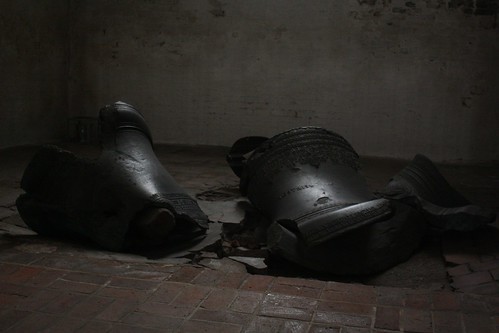
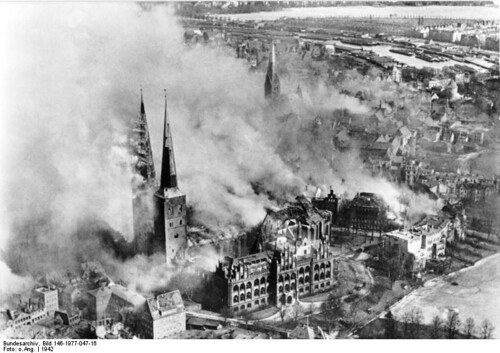
IMG_2641 Seeing these church bells in L beck wasn t easy for me. They melted and fell to the ground after an air raid in 1942, and have been left exactly as they fell. I wasn t alive in 1942, and even my parents hadn t yet been born. My grandfather was relocated by the American government because he refused to fight in the military for religious reasons. And yet, I still felt a sense of embarrassment, being an American standing there in Germany next to those bells. My country* did things like this. Why? Even if there s a war on, and whatever the other side may be doing, do we really have to bomb all their churches? Then, we went to the Dom (cathedral). It has a small gallery of photos of the destruction in 1942, and how it took 40 years to restore (though some original works are simply irreplaceable.) Burning L beck Cathedral after an air raid in 1942 I had just been walking through the beautiful Dom, and then saw pictures like that. It was very sad. I imagined the people in 1942, seeing the smoking remains of so many buildings that had been important to the town for centuries. Places where, no doubt, some of them worshiped, and their parents and grandparents had too. I imagined my sadness if a country bombed one of the churches that my ancestors helped start or build. I felt ashamed of what the democracy in which I live (and its allies) did to the Dom, to Marienkirche, and to the other churches and civilians there. Then, a few days ago, Wikileaks posted a video from an American helicopter in which our soldiers begged Come on, let us shoot! at people, most or all of which were completely unarmed. They killed a bunch of people. Then a van came to try to get the wounded to the hospital. Then the soldiers in helicopter killed those people, and wounded some children. Even if they thought their lives were in danger, I d expect to hear some quiet sadness at what they thought was a regrettable need to use force. Instead, you d hear them cheering whenever they killed someone, as if they had just won a round on some video game. They killed civilians, and considered it a fun experience and a mission accomplished. There was no sadness for knocking a man to the ground, leaving him writhing. Just jokes. There was no more care for human life here than there was 60 years ago. It saddens me that every year we celebrate our military on independence day celebrating its ability to kill, not its ability to feed. I wish that we could rather celebrate the times Americans have saved lives, whether in Berlin or in Port-au-Prince, or helped to topple dictatorships. Military power shouldn t be our first choice so often. L beck wasn t attacked for any strategic purpose; the British did it to destroy the morale of the enemy civil population , as the Americans did in Dresden or the Germans in London. In other words, those bells fell to the ground for no reason other than that they were German. People lost their lives for the same reason in Germany and in London. The British had no reason to believe that those civilians meant them any harm, that they were anything but caught between two strong powers. And the same held true in Iraq. When we went to Berlin, we walked through the replica of Checkpoint Charlie, with the big sign announcing that you are leaving the American sector. There is little positive to be said about the Cold War, but there is something the British and American military did of which I am not the least ashamed: the Berlin Airlift. Although I didn t see it, I feel a sense of the USA having been a force for good when I read about the Berlin Airlift Monument at Tempelhof, which has the names of the 70 British and American men that lost their lives in the airlift (due to accidents), above the inscription They gave their lives for the freedom of Berlin. That s the spirit I wish we d see more often in the world today: people giving their lives not just for their own security, but for strangers in need on a different continent. We Americans have been, compared to many countries in Europe, relatively sheltered from the ravages of war in our own midst. I wish that more of us would have the opportunity to gaze at fallen church bells, to wonder through a magnificent old church and then to see photos of it on fire, or to see a monument to our soldiers in a far away land. Perhaps then we could better learn from history, and see firsthand that some of our most positive contributions to the world have come in the form of coal and candy bars instead of incendiary devices. A small post script Many historic buildings or locations we saw in Germany had plaques on their exterior with a brief history, often in German and in English. I was interested to note that some (though not all) of these plaques had language such as destroyed by fire in 1942 , with no mention that the cause of the fire was a bombing. I was even more interested to note that same sort of description at several sites in Prague Castle, mentioning that the original building was lost in the fire of 1142. It was only on the third or fourth building in the Castle that we learned that the fire of 1142 was caused by a military siege of Prague Castle. * I know it was the British at L beck, but the Americans did similar things elsewhere. I also acknowledge that, at a macro level at least, the Berlin Airlift wasn t purely an altruistic act, as there were geopolitical factors in play. But I am speaking of the actions of the airmen here, who took on considerable risk to help others.

6 April 2010

Sylvestre Ledru: Update of the linear algebra libraries in Debian

In the numerical computing world, the cornerstones libraries are BLAS and LAPACK. They have been used in most of the numerical software for decades (like Scilab, R, numpy, OpenOffice with calc, etc). During that time, many implementations appeared to improve the performances taking advantages of clusters, multicore, SEE 1,2,3,4 , various levels of cache...
Between the reference BLAS (refblas) to an optimized one like ATLAS or MKL (Math Kernel Library by Intel - non-free), it is not rare to have a 15 factor. In Debian, we use by default the reference implementation of BLAS (168 reverse dependencies) and LAPACK (178 reverse dependencies). If the results are usually bad, they are pretty easy to use. What is hard to use, is switch between highly optimized libraries.
For now, the main one in the archive is ATLAS. ATLAS build process will launch many computations to know what will work best on the architecture. Results are usually excellent. 1) Upload of a refactoring of the ATLAS package.
I have been working on this for a while and after 19 uploads into Debian Experimental and I am happy (and kind of relief) to upload into debian unstable the release 3.8.3 of ATLAS. The new key elements in this release are: Note that, as before, all prebuilt binaries of ATLAS will be always slower than if you built them on the target architecture (but using Debian binary packages will save a few kilograms of Uranium). And one of most important feature is the capability to switch to any ATLAS implementation. 2) Switch between the different implementation
The problem in Debian (and Ubuntu) was that it was hard to switch between the ref BLAS/LAPACK and the optimized libraries. The user has to play with the LD_LIBRARY_PATH to use the various optimized packages and since there is no convention between the various distribution, the upstream developer has to develop crappy tricks to handle such things. It is why I implemented the following proposal: Handle different versions of BLAS and LAPACK. The main idea is to use the update-alternatives system to allow a quick and easy switch. For example:
# update-alternatives --config libblas.so.3gf 
There are 3 choices for the alternative libblas.so.3gf (providing /usr/lib/libblas.so.3gf).
  Selection    Path                                           Priority   Status
------------------------------------------------------------
* 0            /usr/lib/atlas-core2sse3/atlas/libblas.so.3gf   55        auto mode
  1            /usr/lib/atlas-base/atlas/libblas.so.3gf        35        manual mode
  2            /usr/lib/atlas-core2sse3/atlas/libblas.so.3gf   55        manual mode
  3            /usr/lib/libblas/libblas.so.3gf                 10        manual mode
# update-alternatives --config liblapack.so.3gf
There are 3 choices for the alternative liblapack.so.3gf (providing /usr/lib/liblapack.so.3gf).
  Selection    Path                                             Priority   Status
------------------------------------------------------------
* 0            /usr/lib/atlas-core2sse3/atlas/liblapack.so.3gf   55        auto mode
  1            /usr/lib/atlas-base/atlas/liblapack.so.3gf        35        manual mode
  2            /usr/lib/atlas-core2sse3/atlas/liblapack.so.3gf   55        manual mode
  3            /usr/lib/lapack/liblapack.so.3gf                  10        manual mode
Thanks to this, it is just trivial to switch from one to the other... Conclusion:
I just pushed the changes into Debian unstable for blas, lapack and atlas.
I have been testing a lot these deep modifications and I fixed all the problems that I found. However, in case I missed something, please report a bug...

5 April 2010

Maximilian Attems: "Little Bang" 0.94 initramfs-tools release

Heavy Ion collisions try to recreate conditions very shortly after the Big Bang. Thus the created quark gluon plasma is often the Little Bang, due to recreating this very hot conditions.
The kernel Team already uploaded the linux-2.6 Big Bang release now follows initramfs-tools with the Little Bang. ;-) Newer initramfs comes with lots of fixes and new features: Thanks for all the patches and useful input! Sorry for late release, will try to do it earlier more often and there is hope of an Ubuntu sync: view of initramfs-tools repo.
P.S.: cryptsetup needs fixup of #576488, udev can now start at a earlier stage of initramfs.

John Goerzen: Thougts about the Europe visit: Water

This is probably the only real surprising to an American post I ll be making, because it was the little thing that was most surprising. And that despite the fact that I had been warned:
Don t expect to get a glass of tap water at a restaurant or caf ; it s an unusual request that probably won t be understood or honoured. Lonely Planet Germany
Now, before I go on, I want to clarify that this post is NOT a complaint of what I saw in Germany and Prague; it s just a description of how it was surprising to these American eyes, and perhaps also a description of how the American approach such a mundane topic might be surprising to people from elsewhere. (Update: I want to clarify that I only visited 3 cities in Germany plus Prague. I don t want anybody to assume that I m making generalizations about the entire continent here, despite my title; I think the comments reflected that I didn t make this point clear enough. I lack data to draw much of any generalization at all; this is more of reporting on my experiences than anything else.) Utilitarian Water I noticed that the vast majority of toilets I saw in Germany and Prague are of the extremely water-saving variety, with an option for a small or a large flush. These toilets exist in the USA, but are still rather uncommon here. I was glad to see this attitude of conserving water. I was a bit surprised when I took a shower at our hotel in Berlin. Although that hotel was extremely environmentally-conscious in every other way including the toilets, light switches with RFID sensors and timers, etc the shower head was the most wasteful of water I had seen in quite a few years. I felt rather guilty of using so much water for a shower. But our hotel in Prague took shower heads to the next level. The shower head there was this huge square monstrosity, about a foot long on each side. I have never seen a shower head that big. It had a voracious appetite for water, too. Although it could be pointed in any direction, doing so was useless because, even at full blast, it was clearly getting not nearly enough water to propel the spray forward. It seems that this shower head needed special water-guzzling plumbing. But even without it, I felt even more guilty for showering in Prague. I suspect that I used more water for the two showers I took there than I would have over an entire week at home. I also very much suspect that this shower head would be illegal in the USA due to its water consumption. (I should note as an aside that the shower heads I saw in private homes were no different than American ones.) One thing I didn t see was lawn sprinklers. This may have been because there is less open grass in the places we visited, or perhaps because spring hadn t yet really hit. In any case, I wonder if our American habit of pumping water from deep beneath the ground, only to shoot it up in the air and spray it back on the ground again might appear a bit odd to others. Drinking Water In Restaurants We did a lot of walking in Europe, and sometimes we d have walked awhile to get to a restaurant. I really prefer water when I m thirsty, and ordered water with my meal at restaurants a few times. I stopped doing that, though. The presentation varied, but usually it went along these lines: they brought a glass bottle to the table, it cost EUR2 EUR5, and generally contained almost as much glass as water. The most impressive display of water was at a Berlin restaurant. I wanted some water, and so did Terah. So the waitress suggested we could share an EUR 4.90 bottle (0.75L). Sounds good, I guess although it s less water than you d get in a typical American bottle for one person, it seemed a lot by typical German restaurant standards. A few minutes later, our water arrived. It required the waitress to use a full tray to deliver our water and its, well, water accessories. First she carefully placed a frosted plastic water holder, precisely centered on the table between the two of us. Into this, she carefully placed the water bottle. It was, of course, made of glass, and also tall taller than most wine bottles, though containing less actual liquid. I am not yet sure of the purpose of the holder; it certainly wasn t to keep the water cold, as it was served warm. Perhaps they feared the bottle s impressive height acting as a sail and getting knocked over by a gentle breeze. In any case, next came our water glasses, which appeared to be exactly like wine glasses, but bore the logo of the company that bottled the water etched in the glass. After that, she picked the water bottle back up out of the holder, carefully opened it (it was just a regular twist-off lid), and then poured water into each of our glasses. She was careful not to have even a drop run down the side of the bottle, and filled each glass precisely 2/3 full. The glasses were, of course, positioned carefully on the table, and the bottle of water returned to its place of honor within the water bottle holder. This process consumed most of the small quantity of actual water in the bottle. I do believe that is the most elaborate presentation of a small amount of good ole H2O I have ever witnessed. It was made with the kind of care I would expect to be shown to someone that had just bought a $100 bottle of wine, not a EUR5 bottle of water. We had walked a mile (1.6 km) to get to that restaurant, and I was indeed a bit thirsty. I wasn t sure I wanted to drink all of my tiny quantity of water presented so elaborately all at once, so I had a sip of the beer I had the good sense to order along with the water. The beer, incidentally, cost roughly the same per liter as the water and was simply plonked down on the table with a complete lack of fanfare. Sadly, beer is not really very good for quenching thirst, due to its diuretic effects over time. Another surprise came at a restaurant in Prague. It appeared to have the typical prices for water, so I ordered a local Czech orange soda to drink. It, like the water, was served in a smallish glass bottle. In any case, I ordered a traditional Czech goulash to be served in a bread bowl, while Terah ordered some ribs. The waiter took our orders and menus, and returned a minute later bearing a bowl full of water and a lemon slice. This he put next to me, and announced, wash for you. My reaction was: Hmmm. This is different. (Which is why we went to Europe, after all!) What is this for? Did he think my hands looked dirty and needed to be washed before eating? Or did he think I would get them dirty while eating, and somehow fail to use my napkin? It turned out that the use of it became clear. I ate the goulash using the supplied spoon, but the bread bowl it was served in was of course edible too. It turns out it is pretty much impossible to eat a bread bowl that had contained a stew without getting your hands dirty, and the wash turned out to be quite practical and useful. It was free to wash my hands in, but I m sure would have cost EUR5 had I wanted to drink it. Drinking Water American Restaurants Some of you reading this may never have experienced water in an American restaurant, so allow me to explain. In a typical American restaurant, water is free and comes with unlimited refills. Americans generally think of water as healthy (and our doctors and government medical experts urge us to drink plenty of it), and water in a restaurant is a good way to save money while dining. It would generally be considered questionable service if your glass of water at a restaurant got less than half full, and really quite bad service if it sat empty for more than a minute or two. A waiter at an American restaurant will typically go around with a pitcher of ice water. If your large water glass isn t completely full, the waiter will pick it up and step a few steps back from the table before filling it from the pitcher. The waiter will then dump water and ice from the pitcher into it, usually overflowing the top such that some water and ice spills on the floor (so now you see the point of stepping back from the table). The glass will then be returned to your table, wet sides and all. It will be completely full, so you have to be careful not to spill when you take your first sip. The fancier or more expensive American restaurants will offer a version of this, though without the spilling on the floor part. Usually at one of these restaurants, you ll automatically get water set out for you when you arrive. This is free, and if you order another beverage, you ll still keep your water. (Though at any restaurant, it would be quite acceptable to order water along with your other beverage.) Needless to say, this water is coming from a faucet, not some glass bottle, but I m fine with that. A few American restaurants have bottled water on the menu, but I can t recall ever seeing somebody with one in a restaurant. Drinking Fountains Drinking fountains are common in the United States. They provide free tap water to anyone. You can find them near almost any public restroom, whether indoors or outdoors. You can also find them in virtually every park, along some walkways or bicycle routes, in airports and train stations, and even in museums. They re so common that I rarely even think about being able to find water in a city if I m thirsty. Often you ll find them installed in groups of two or three, with one at a lower height so as to be usable by children or adults in wheelchairs, and another at a regular height. Many indoor ones even contain integrated chillers to make the water cold (which, sadly, probably more than negate the environmental benefits of water fountains.) I saw exactly two drinking fountains in Europe, and I can say I got a drink at 100% of the drinking fountains I saw there. One was in the Hamburg airport, but notably it was at the place where you wait to have them check your passport. So you can use a drinking fountain in Hamburg, but apparently you must do so before you have officially entered Germany. The other one was in the Prague airport. It was in an out-of-the-way corner, on the lowest level, by the gates for the people that are flying out on the small planes. Which we were. Above it was a placard bearing a icon indicating that this was, in fact, a drinking fountain and how to use it. I was surprised at the need for the icon at first, but less so after I observed a man walk by, glance at the fountain, and wash his hands in it (rather than do so at a sink in the restroom 5 feet away). As a result, we were sometimes a bit thirsty in Germany. By the time we got to Leipzig, we realized what was going on and bought a Coke bottle which we could refill from the tap water in restrooms as we went along. (This we kept until it was confiscated at a museum in Prague). I didn t see many Germans carrying around bottles of water, but it was still cold, so it s possible they were but were in a coat or bag. I was left with the somewhat unwarranted conclusion that some Germans must be either always slightly dehydrated, carrying around hidden bottles of water, or paying EUR2 for a small plastic bottle of water all the time. In the USA, we do have bottled water. Among people that care about such things, there are certain people that drink only from bottled water as much as possible, and then there are other people that view bottled water as exceptionally expensive and an environmental catastrophe and avoid it as much as possible. I m part of that latter group. I ve noticed that statistics show that Germans consume more bottled water per capita than Americans do, which is not really a surprise given what I observed. Conclusions Part of the reason I wanted to go to Europe was to experience different approaches to things, and we surely did. I didn t expect it to lead to a blog post about something as mundane as water, but here it has. I ve got to say I like the overall attitude of water conservation in Germany, which seems to have gone further than it has in the USA. I also like the system of water fountains we have in the USA, which also helps the environment by reducing demand for plastic water bottles. The wash for me in Prague was just great. One of those moments where I was completely surprised (and in a good way) by something. (I m just glad the waiter spoke a bit of English, because I wouldn t have figured it out at all otherwise.) In the end, part of the fun of traveling is learning about these differences. So next time, we ll just plan on finding a bottle to carry around at the start of our trip, and then thirst won t be a problem. Perhaps I ll even try washing my hands in a drinking fountain.

4 April 2010

Russell Coker: Health and Status Monitoring via Smart Phone

Health Monitoring Eric Topol gave an interesting TED talk about wireless medical monitoring devices [1]. The potential for helping diabetics and other people who need ongoing treatment is obvious as is the potential for helping pregnant women and other people who might suddenly need medical treatment at short notice. One significant positive potential for this is integration with multiple services. For example Eric s talk showed a graph of sleep levels on a mobile phone, the deep sleep (which is apparently the most restorative) was shown in sections that were significantly less than one hour in duration. I often receive SMS messages about network problems during the night, the vast majority of them aren t that important and can be delayed without any problem. If my phone could determine that I was in deep sleep and delay sending me a NAGIOS report for up to 30 minutes then it would help me sleep while not making any significant impact on my work in repairing server problems it s not as if I would be immediately productive if woken from deep sleep anyway. Status and Attention Monitoring Eric Horvitz, Carl Kadie, Tim Paek, and David Hovel of Microsoft Research wrote an interesting paper titled Models of Attention in Computing and Communication: From Principles to Applications [2]. In that paper they describe various methods for tracking user attention and filtering messages so that the user won t be needlessly distracted by unimportant messages when they are busy. The next logical step is to integrate that with a smart phone (maybe Android would be good for this) to screen calls, unknown callers could be automatically directed to voice-mail and known good callers could be given an automated prompt as to whether they think that their call is important enough to be worth the distraction. It seems to me that combining health and status monitoring would be the sensible thing to do. If a bio-sensor array indicates that someone is more stressed than usual then decreasing their availability for phone calls would make sense. It would also be trivial to analyse calls and determine which callers are likely to cause stress and block their calls at inconvenient times. What we Need Of course there are lots of security implications in this. Having multiple networked devices tracking and collating information on health and all activity (including video-monitoring in the Microsoft model) has a lot of potential for malicious use. This is one of many reasons that we need to generally improve computer security. We also need to have free software implementations of such things. We don t want Microsoft to get a monopoly on status monitoring. Also it seems that smart Nike shoes that can work with the iPhone [3] are the leading mass-market implementation of health monitoring, everything related to health-care should be as open as possible. I m happy for Nike to make their own special products, but we need to have them work with open systems and make the data available as widely as possible. There is the real potential for people to needlessly die if health data is not available in open formats! According to the Wikipedia page Nike has been shipping products using a proprietary 2.4GHz wireless network since 2006 [4], it would be a really good hardware project to devise a way of making compatible sensors and readers. We also need some free software for monitoring the user status to avoid interrupting them. Finally we need some software to integrate all the data. Canonical s Desktop Experience team are doing some interesting work on managing desktop notifications that will be in Ubuntu Lucid [5], they appear to have some basic support for masking notifications based on priority. Please keep up the great work Canonical people, and please consider working on advanced status monitoring next!

Next.

Previous.