Search Results: "ema"

2 January 2021

Paul Wise: FLOSS Activities December 2020

Focus This month I didn't have any particular focus. I just worked on issues in my info bubble.

Changes

Issues

Review

Administration
  • Debian: restart bacula director, ping some people about disk usage
  • Debian wiki: unblock IP addresses, approve accounts, update email for accounts with bouncing email

Communication
  • Respond to queries from Debian users and contributors on the mailing lists and IRC

Sponsors All work was done on a volunteer basis.

1 January 2021

Andrej Shadura: Transitioning to a new OpenPGP key

Following dkg s example, I decided to finally transition to my new ed25519/cv25519 key. Unlike Daniel, I m not yet trying to split identities, but I m using this chance to drop old identities I no longer use. My new key only has my main email address and the Debian one, and only those versions of my name I still want around. My old PGP key (at the moment in the Debian keyring) is:
pub   rsa4096/0x6EA4D2311A2D268D 2010-10-13 [SC] [expires: 2021-11-11]
      782130B4C9944247977B82FD6EA4D2311A2D268D
uid                   [ultimate] Andrej Shadura <andrew@shadura.me>
uid                   [ultimate] Andrew Shadura <andrew@shadura.me>
uid                   [ultimate] Andrew Shadura <andrewsh@debian.org>
uid                   [ultimate] Andrew O. Shadoura <Andrew.Shadoura@gmail.com>
uid                   [ultimate] Andrej Shadura <andrewsh@debian.org>
sub   rsa4096/0xB2C0FE967C940749 2010-10-13 [E]
sub   rsa3072/0xC8C5F253DD61FECD 2018-03-02 [S] [expires: 2021-11-11]
sub   rsa2048/0x5E408CD91CD839D2 2018-03-10 [S] [expires: 2021-11-11]
The is the key I ve been using in Debian from the very beginning, and its copies at the SKS keyserver network still have my first DD signature from angdraug:
sig  sig   85EE3E0E 2010-12-03 __________ __________ Dmitry Borodaenko <angdraug@mail.ru>
sig  sig   CB4D38A9 2010-12-03 __________ __________ Dmitry Borodaenko <angdraug@debian.org>
My new PGP key is:
pub   ed25519/0xE8446B4AC8C77261 2016-06-13 [SC] [expires: 2022-06-25]
      83DCD17F44B22CC83656EDA1E8446B4AC8C77261
uid                   [ultimate] Andrej Shadura <andrew@shadura.me>
uid                   [ultimate] Andrew Shadura <andrew@shadura.me>
uid                   [ultimate] Andrej Shadura <andrewsh@debian.org>
uid                   [ultimate] Andrew Shadura <andrewsh@debian.org>
uid                   [ultimate] Andrei Shadura <andrew@shadura.me>
sub   cv25519/0xD5A55606B6539A87 2016-06-13 [E] [expires: 2022-06-25]
sub   ed25519/0x52E0EA6F91F1DB8A 2016-06-13 [A] [expires: 2022-06-25]
If you signed my old key and are reading this, please consider signing my new key; if you feel you need to re-confirm this, feel free to contact me; otherwise, a copy of this statement signed by both the old and new keys is available here. I have uploaded this new key to keys.openpgp.org, and also published it through WKD and the SKS network. Both keys can also be downloaded from my website.

Utkarsh Gupta: FOSS Activites in December 2020

Here s my (fifteenth) monthly update about the activities I ve done in the F/L/OSS world.

Debian
This was my 24th month of contributing to Debian. I became a DM in late March last year and a DD last Christmas! \o/ Amongs a lot of things, this was month was crazy, hectic, adventerous, and the last of 2020 more on some parts later this month.
I finally finished my 7th semester (FTW!) and moved onto my last one! That said, I had been busy with other things but still did a bunch of Debian stuff Here are the following things I did this month:

Uploads and bug fixes:

Other $things:
  • Attended the Debian Ruby team meeting.
  • Mentoring for newcomers.
  • FTP Trainee reviewing.
  • Moderation of -project mailing list.
  • Sponsored golang-github-gorilla-css for Fedrico.

Debian (E)LTS
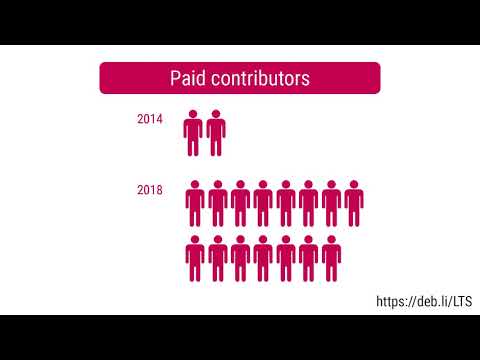
Debian Long Term Support (LTS) is a project to extend the lifetime of all Debian stable releases to (at least) 5 years. Debian LTS is not handled by the Debian security team, but by a separate group of volunteers and companies interested in making it a success. And Debian Extended LTS (ELTS) is its sister project, extending support to the Jessie release (+2 years after LTS support). This was my fifteenth month as a Debian LTS and sixth month as a Debian ELTS paid contributor.
I was assigned 26.00 hours for LTS and 38.25 hours for ELTS and worked on the following things:

LTS CVE Fixes and Announcements:
  • Issued DLA 2474-1, fixing CVE-2020-28928, for musl.
    For Debian 9 Stretch, these problems have been fixed in version 1.1.16-3+deb9u1.
  • Issued DLA 2481-1, fixing CVE-2020-25709 and CVE-2020-25710, for openldap.
    For Debian 9 Stretch, these problems have been fixed in version 2.4.44+dfsg-5+deb9u6.
  • Issued DLA 2484-1, fixing #969126, for python-certbot.
    For Debian 9 Stretch, these problems have been fixed in version 0.28.0-1~deb9u3.
  • Issued DLA 2487-1, fixing CVE-2020-27350, for apt.
    For Debian 9 Stretch, these problems have been fixed in version 1.4.11. The update was prepared by the maintainer, Julian.
  • Issued DLA 2488-1, fixing CVE-2020-27351, for python-apt.
    For Debian 9 Stretch, these problems have been fixed in version 1.4.2. The update was prepared by the maintainer, Julian.
  • Issued DLA 2495-1, fixing CVE-2020-17527, for tomcat8.
    For Debian 9 Stretch, these problems have been fixed in version 8.5.54-0+deb9u5.
  • Issued DLA 2488-2, for python-apt.
    For Debian 9 Stretch, these problems have been fixed in version 1.4.3. The update was prepared by the maintainer, Julian.
  • Issued DLA 2508-1, fixing CVE-2020-35730, for roundcube.
    For Debian 9 Stretch, these problems have been fixed in version 1.2.3+dfsg.1-4+deb9u8. The update was prepared by the maintainer, Guilhem.

ELTS CVE Fixes and Announcements:

Other (E)LTS Work:
  • Front-desk duty from 21-12 until 27-12 and from 28-12 until 03-01 for both LTS and ELTS.
  • Triaged openldap, python-certbot, lemonldap-ng, qemu, gdm3, open-iscsi, gobby, jackson-databind, wavpack, cairo, nsd, tomcat8, and bountycastle.
  • Marked CVE-2020-17527/tomcat8 as not-affected for jessie.
  • Marked CVE-2020-28052/bountycastle as not-affected for jessie.
  • Marked CVE-2020-14394/qemu as postponed for jessie.
  • Marked CVE-2020-35738/wavpack as not-affected for jessie.
  • Marked CVE-2020-3550 3-6 /qemu as postponed for jessie.
  • Marked CVE-2020-3550 3-6 /qemu as postponed for stretch.
  • Marked CVE-2020-16093/lemonldap-ng as no-dsa for stretch.
  • Marked CVE-2020-27837/gdm3 as no-dsa for stretch.
  • Marked CVE-2020- 13987, 13988, 17437 /open-iscsi as no-dsa for stretch.
  • Marked CVE-2020-35450/gobby as no-dsa for stretch.
  • Marked CVE-2020-35728/jackson-databind as no-dsa for stretch.
  • Marked CVE-2020-28935/nsd as no-dsa for stretch.
  • Auto EOL ed libpam-tacplus, open-iscsi, wireshark, gdm3, golang-go.crypto, jackson-databind, spotweb, python-autobahn, asterisk, nsd, ruby-nokogiri, linux, and motion for jessie.
  • General discussion on LTS private and public mailing list.

Other $things! \o/

Bugs and Patches Well, I did report some bugs and issues and also sent some patches:
  • Issue #44 for github-activity-readme, asking for a feature request to set custom committer s email address.
  • Issue #711 for git2go, reporting build failure for the library.
  • PR #89 for rubocop-rails_config, bumping RuboCop::Packaging to v0.5.
  • Issue #36 for rubocop-packaging, asking to try out mutant :)
  • PR #212 for cucumber-ruby-core, bumping RuboCop::Packaging to v0.5.
  • PR #213 for cucumber-ruby-core, enabling RuboCop::Packaging.
  • Issue #19 for behance, asking to relax constraints on faraday and faraday_middleware.
  • PR #37 for rubocop-packaging, enabling tests against ruby3.0! \o/
  • PR #489 for cucumber-rails, bumping RuboCop::Packaging to v0.5.
  • Issue #362 for nheko, reporting a crash when opening the application.
  • PR #1282 for paper_trail, adding RuboCop::Packaging amongst other used extensions.
  • Bug #978640 for nheko Debian package, reporting a crash, as a result of libfmt7 regression.

Misc and Fun Besides squashing bugs and submitting patches, I did some other things as well!
  • Participated in my first Advent of Code event! :)
    Whilst it was indeed fun, I didn t really complete it. No reason, really. But I ll definitely come back stronger next year, heh! :)
    All the solutions thus far could be found here.
  • Did a couple of reviews for some PRs and triaged some bugs here and there, meh.
  • Also did some cloud debugging, not so fun if you ask me, but cool enough to make me want to do it again! ^_^
  • Worked along with pollo, zigo, ehashman, rlb, et al for puppet and puppetserver in Debian. OMG, they re so lovely! <3
  • Ordered some interesting books to read January onward. New year resolution? Meh, not really. Or maybe. But nah.
  • Also did some interesting stuff this month but can t really talk about it now. Hopefully sooooon.

Until next time.
:wq for today.

Dmitry Shachnev: A review of endianness bugs in Qt, and how they were fixed

As you may know, I am Qt 5 maintainer in Debian. Maintaning Qt means not only bumping the version each time a new version is released, but also making sure Qt builds successfully on all architectures that are supported in Debian (and for some submodules, the automatic tests pass). An important sort of build failures are endianness specific failures. Most widely used architectures (x86_64, aarch64) are little endian. However, Debian officially supports one big endian architecture (s390x), and unofficially a few more ports are provided, such as ppc64 and sparc64. Unfortunately, Qt upstream does not have any big endian machine in their CI system, so endianness issues get noticed only when the packages fail to build on our build daemons. In the last years I have discovered and fixed some such issues in various parts of Qt, so I decided to write a post to illustrate how to write really cross-platform C/C++ code. Issue 1: the WebP image format handler (code review) The relevant code snippet is:
if (srcImage.format() != QImage::Format_ARGB32)
    srcImage = srcImage.convertToFormat(QImage::Format_ARGB32);
// ...
if (!WebPPictureImportBGRA(&picture, srcImage.bits(), srcImage.bytesPerLine()))  
    // ...
 
The code here is serializing the images into QImage::Format_ARGB32 format, and then passing the bytes into WebP s import function. With this format, the image is stored using a 32-bit ARGB format (0xAARRGGBB). This means that the bytes will be 0xBB, 0xGG, 0xRR, 0xAA or little endian and 0xAA, 0xRR, 0xGG, 0xBB on big endian. However, WebPPictureImportBGRA expects the first format on all architectures. The fix was to use QImage::Format_RGBA8888. As the QImage documentation says, with this format the order of the colors is the same on any architecture if read as bytes 0xRR, 0xGG, 0xBB, 0xAA. Issue 2: qimage_converter_map structure (code review) The code seems to already support big endian. But maybe you can spot the error?
#if Q_BYTE_ORDER == Q_LITTLE_ENDIAN
        0,
        convert_ARGB_to_ARGB_PM,
#else
        0,
        0
#endif
It is the missing comma! It is present in the little endian block, but not in the big endian one. This was fixed trivially. Issue 3: QHandle, part of Qt 3D module (code review) QHandle class uses a union that is declared as follows:
struct Data  
    quint32 m_index : IndexBits;
    quint32 m_counter : CounterBits;
    quint32 m_unused : 2;
 ;
union  
    Data d;
    quint32 m_handle;
 ;
The sizes are declared such as IndexBits + CounterBits + 2 is always equal to 32 (four bytes). Then we have a constructor that sets the values of Data struct:
QHandle(quint32 i, quint32 count)
 
    d.m_index = i;
    d.m_counter = count;
    d.m_unused = 0;
 
The value of m_handle will be different depending on endianness! So the test that was expecting a particular value with given constructor arguments was failing. I fixed it by using the following macro:
#if Q_BYTE_ORDER == Q_BIG_ENDIAN
#define GET_EXPECTED_HANDLE(qHandle) ((qHandle.index() << (qHandle.CounterBits + 2)) + (qHandle.counter() << 2))
#else /* Q_LITTLE_ENDIAN */
#define GET_EXPECTED_HANDLE(qHandle) (qHandle.index() + (qHandle.counter() << qHandle.IndexBits))
#endif
Issue 4: QML compiler (code review) The QML compiler used a helper class named LEUInt32 (based on QLEInteger) that always stored the numbers in little endian internally. This class can be safely mixed with native quint32 on little endian systems, but not on big endian. Usually the compiler would warn about type mismatch, but here the code used reinterpret_cast, such as:
quint32 *objectTable = reinterpret_cast<quint32*>(data + qmlUnit->offsetToObjects);
So this was not noticed on build time, but the compiler was crashing. The fix was trivial again, replacing quint32 with QLEUInt32. Issue 5: QModbusPdu, part of Qt Serial Bus module (code review) The code snippet is simple:
QModbusPdu::FunctionCode code = QModbusPdu::Invalid;
if (stream.readRawData((char *) (&code), sizeof(quint8)) != sizeof(quint8))
    return stream;
QModbusPdu::FunctionCode is an enum, so code is a multi-byte value (even if only one byte is significant). However, (char *) (&code) returns a pointer to the first byte of it. It is the needed byte on little endian systems, but it is the wrong byte on big endian ones! The correct fix was using a temporary one-byte variable:
quint8 codeByte = 0;
if (stream.readRawData((char *) (&codeByte), sizeof(quint8)) != sizeof(quint8))
    return stream;
QModbusPdu::FunctionCode code = (QModbusPdu::FunctionCode) codeByte;
Issue 6: qt_is_ascii (code review) This function, as the name says, checks whether a string is ASCII. It does that by splitting the string into 4-byte chunks:
while (ptr + 4 <= end)  
    quint32 data = qFromUnaligned<quint32>(ptr);
    if (data &= 0x80808080U)  
        uint idx = qCountTrailingZeroBits(data);
        ptr += idx / 8;
        return false;
     
    ptr += 4;
 
idx / 8 is the number of trailing zero bytes. However, the bytes which are trailing on little endian are actually leading on big endian! So we can use qCountLeadingZeroBits there. Issue 7: the bundled copy of tinycbor (upstream pull request) Similar to issue 5, the code was reading into the wrong byte:
if (bytesNeeded <= 2)  
    read_bytes_unchecked(it, &it->extra, 1, bytesNeeded);
    if (bytesNeeded == 2)
        it->extra = cbor_ntohs(it->extra);
 
extra has type uint16_t, so it has two bytes. When we need only one byte, we read into the wrong byte, so the resulting number is 256 times higher on big endian than it should be. Adding a temporary one-byte variable fixed it. Issue 8: perfparser, part of Qt Creator (code review) Here it is not trivial to find the issue just looking at the code:
qint32 dataStreamVersion = qToLittleEndian(QDataStream::Qt_DefaultCompiledVersion);
However the linker was producing an error:
undefined reference to QDataStream::Version qbswap(QDataStream::Version)'
On little endian systems, qToLittleEndian is a no-op, but on big endian systems, it is a template function defined for some known types. But it turns out we need to explicitly convert enum values to a simple type, so the fix was passing qint32(QDataStream::Qt_DefaultCompiledVersion) to that function. Issue 9: Qt Personal Information Management (code review) The code in test was trying to represent a number as a sequence of bytes, using reinterpret_cast:
static inline QContactId makeId(const QString &managerName, uint id)
 
    return QContactId(QStringLiteral("qtcontacts:basic%1:").arg(managerName), QByteArray(reinterpret_cast<const char *>(&id), sizeof(uint)));
 
The order of bytes will be different on little endian and big endian systems! The fix was adding this line to the beginning of the function:
id = qToLittleEndian(id);
This will cause the bytes to be reversed on big endian systems. What remains unfixed There are still some bugs, which require deeper investigation, for example: P.S. We are looking for new people to help with maintaining Qt 6. Join our team if you want to do some fun work like described above!

Russ Allbery: Review: A Wizard's Guide to Defensive Baking

Review: A Wizard's Guide to Defensive Baking, by T. Kingfisher
Publisher: Red Wombat Studio
Copyright: July 2020
ASIN: B08CJ86Y1W
Format: Kindle
Pages: 287
Mona is fourteen, an orphan, and works in the bakery owned by her Aunt Tabitha. She's also a magicker, although a very minor one. She can tell bread to do things, like bake properly or slice itself, and can make gingerbread men dance. Also, there's Bob, her sourdough starter, into whom she put a bit too much panicked magic when she was ten. Her magic is a useful small talent for a baker, but nothing all that exceptional. The dead body she finds in the kitchen when opening the bakery is certainly exceptional. A Wizard's Guide to Defensive Baking starts as a minor murder mystery. There are constables and sweet buns and Mona is accused of murder by an officious inquisitor, which was rather terrifying, but everything seems like it will work out and get back to normal. Except it won't, because someone is murdering magickers and the authorities who are supposed to be helping Mona don't appear to be on her side. This is a very Ursula Vernon sort of book. (T. Kingfisher is the pseudonym that Vernon uses when not writing children's books.) The protagonist is brave, scared, and stubborn, the first-person narration has a stream-of-consciousness feel and an undercurrent of constant curiosity, and the story has a strong "this is awful but moping about it won't help so we may as well get on with it" energy. It is (as you might guess from the age of the protagonist) pitched a bit younger than Vernon's other recent Kingfisher work. If I had to classify it, I'd call it young adult possibly edging into middle grade. It's also a book about creative use of magic powers. If you're the sort of person who liked analyzing an apparently unimpressive superpower and thinking up all the creative ways in which it could be quite powerful, well, that's a lot of the plot here. Vernon sticks to the rules of the game: Mona can only affect bread and dough and maybe icing in tiny ways if she tries very hard (but it gives her a headache). But there are a lot of creative ways that one can use dough and cookies, particularly once you get some help. The other interesting and unusual thing about this book is its attitude towards authorities and heroism. Authorities who try to do good and authorities who are evil and corrupt are both common in fantasy. Authorities who let themselves get caught up in a tangle of small decisions and minor fears until they become ineffective are not quite as common, and usually fantasy dispenses with that sort of power by calling it weak and inviting the heroes to take over. This book does not go in that direction at all. It's startling and thought-provoking to see a fantasy novel treat Mona's elevation into unwanted heroism as an indefensible societal failure that is not excused by gratitude. This more than any other story element made this feel like a 2020 book. I won't spoil the ending, but it caught me by surprise, was extremely moving, and further broadens that questioning of what heroism is and why we celebrate it. This is not a book full of complex plotting or moral ambiguity. The villain is awful, the threat he provokes is rather thoroughly dehumanized, and the plot is a reasonably straightforward sequence of events. One reads this book for Mona's flustered first-person voice, Vernon's humor and no-nonsense morality, and the creative exploration of the limits of what one can do with bread magic and a seriously irritated sourdough starter. And the thoughtfulness about heroism, and the recognition that heroism comes with an impact that the rest of society doesn't want to think about. To be clear, that thoughtfulness doesn't go beyond questioning here. This is still a heroism book. But it made me want to read the fantasy novel in which people work collectively to remake a society so that it won't need to have heroes again. I think whether you like Vernon's previous Kingfisher books, particularly the more young adult ones, will strongly predict whether you like A Wizard's Guide to Defensive Baking. If you like her protagonists, recommended. Rating: 7 out of 10

31 December 2020

Chris Lamb: Free software activities in December 2020

Here is my monthly update covering what I have been doing in the free software world during December 2020 (previous month):

Reproducible Builds One of the original promises of open source software is that distributed peer review and transparency of process results in enhanced end-user security. However, whilst anyone may inspect the source code of free and open source software for malicious flaws, almost all software today is distributed as pre-compiled binaries. This allows nefarious third-parties to compromise systems by injecting malicious code into ostensibly secure software during the various compilation and distribution processes. The motivation behind the Reproducible Builds effort is to ensure no flaws have been introduced during this compilation process by promising identical results are always generated from a given source, thus allowing multiple third-parties to come to a consensus on whether a build was compromised. This month, I: I also made the following changes to diffoscope, our in-depth and content-aware diff utility that can locate and diagnose reproducibility issues, including releasing version 163:

Debian Uploads I also sponsored an upload of adminer (4.7.8-2) on behalf of Alexandre Rossi and performed two QA uploads of sendfile (2.1b.20080616-7 and 2.1b.20080616-8) to make the build the build reproducible (#776938) and to fix a number of other unrelated issues. Debian LTS This month I have worked 18 hours on Debian Long Term Support (LTS) and 12 hours on its sister Extended LTS project. You can find out more about the Debian LTS project via the following video:

Shirish Agarwal: Pandemic, Informal economy and Khau Galli.

Formal sector issues Just today it was published that output from eight formal sectors of the economy who make the bulk of the Indian economy were down on a month to month basis . This means all those apologists for the Government who said that it was ok that the Govt. didn t give the 20 lakh crore package which was announced. In fact, a businessman from my own city, a certain Prafull Sarda had asked via RTI what happened to the 20 lakh crore package which was announced? The answers were in all media as well as newspapers but on the inside pages. You can see one of the article sharing the details here. No wonder Vivek Kaul also shared his take on the way things will hopefully go for the next quarter which seems to be a tad optimistic from where we are atm.
Eight Sectors declining in Indian Economy month-on-month CNBC TV 18
The Informal economy The informal economy has been strangulated by the current party in power since it came into power. And this has resulted many small businesses which informal are and were part of culture of cities and towns. I share an article from 2018 which only shows how good and on the mark it has aged in the last two years. The damage is all to real to ignore as I would share more of an anecdotes and experiences because sadly there never has been any interest shown especially by GOI to seek any stats. about informal economy. Although CMIE has done some good work in that even though they majorly look at formal, usually blue-collar work where again there is not good data. Sharing an anecdote and a learning from these small businesses which probably an MBA guy wouldn t know and in all honesty wouldn t even care. Khau galli Few years back, circa 2014 and on wards, when the present Govt. came into power, it did come with lot of promises. One of which was that lot of informal businesses would be encouraged to grow their businesses and in time hopefully, they become part of the formal economy. Or at least that was the story that all of us were told. Due to that they did lot of promises and also named quite a few places where street food was in abundance. Such lanes were named Khau galli for those who are from North India, it was be easily known and understood. This was just saying that here are some places where you could get a variety of food without paying obscene prices as you would have to vis-a-vis a restaurant. Slowly, they raised the rates of inputs (food grains), gas cylinder etc. which we know of as food inflation and via GST made sure that the restaurants were able to absorb some of the increased inputs (input credit) while still being more than competitive to the street food person/s. The restaurant F&B model is pretty well known so not going there at all. It is however, important to point out that they didn t make any new khau gallis or such, most or all the places existed for years and even decades before that. They also didn t take any extra effort either in marketing the khau gallis or get them with chefs or marketing folks so that the traditional can marry to the anew. They just named them, that was the only gain to be seen on the ground. In its heyday, the khau galli near my home used to have anywhere between 20-30 Thelas or food carts. Most of the food carts would be of wood and having very limited steel. Such food carts would cost anywhere around INR 15-20k instead of the food cart you see here. The only reason I shared that link is to show how a somewhat typical thela or food cart looks in India. Of course YouTube or any other media platform would show many. On top of it, you need and needed permission from the municipality a license for the same which would be auctioned. Now that license could well run from thousands into lakhs depending on various factors or you gave something to the Municipal worker when he did his rounds/beat much like a constable every day or week. Apart from those, you also have raw material expenditure which could easily run into few thousands depending upon what sort of food you are vending. You also would typically have 2-3 workers so a typical Thela would feed not only its customers but also 2-3 families who are the laborer families as well as surrounding businesses. As I used to be loyal and usually go to few whom I found to be either tasty or somehow they were good for me. In either case, a relationship was formed. As I have been never fond of crowds, I usually used to in their off-beat hours either when they are close to packing up of when I know they usually have a lull. That way I knew I would get complete attention of the vendor/s. Many a times I used to see money change hands between the vendors themselves and used to see both camaraderie as well as competition between them. This is years ago, once while sharing a chai (tea) with one of the street vendors I casually asked I have often seen you guys exchanging money with each other and most of the time quite a bit of the money is also given to the guy who didn t make that much sales or any sales at all. The vendor replied sharing practical symbiotic knowledge. All of us are bound by a single thing called poverty. All of us are struggle. Do you know why so many people come here, because they know that there would be a variety of food to be had. Now if we stopped helping each other, the number of people who would make the effort would be also less, we know we are not the only game in town. Also whatever we give, sooner or later it gets adjusted. Also if one of us has good days, he knows hardship days are not far. Why, simply because people change tastes or want variety. So irrespective of good or bad the skills of the vendor is, she or he is bound to make some sales. The vendor either shares the food with us or whatever. Somehow these things just work out. And that doesn t mean we don t have our fights, we do have our fights, but we also understand this. Now you see this and you understand that these guys have and had a community. Even if they changed places due to one reason or the other, they kept themselves connected. Unlike many of us, who even find a hard time keeping up with friends let alone relatives. Now cut to 2020, and where there used to be 20-30 thelas near my home, there are only 4-5. Of course, multiple reasons, but one of the biggest was of course demonetization. That was a huge shock to which many of thela walas succumbed. Their entire savings and capital were turned to dust. Many of their customers will turn up with either a INR 500 or INR 2000/- Re note where at the most a dish costed INR 100/- most times half or even 1/3rd of that amount. How and from where the thela walas could get that kind of cash. These are people who only if they earn, they and their family will have bread at night. Most of the loose change was tied up at middle to higher tier restaurants where they were giving between INR 20/- 30/- for every INR 100/- change of rupees and coins. Quite a few bankers made money by that as well as other means where the thela walas just could not compete. These guys also didn t have any black money even though they were and are part of the black/informal economy. Sadly, till date no economist or even sociologist as far as I know has attempted or done any work from what I know on this industry. If you want to formalize such businesses then at the very least understand their problems and devise solutions. And I suspect, what is and has happened near my house has also happened everywhere else, at least within the geographical confines of the Indian state. Whether it was the 2016 demonetization or the pandemic, the results and effects have been similar the same all over. Some states did do well and still do, the suffering still continues. With the hope that the new year brings cheer to you as well some more ideas to remain in business by the thela walas, I bid you adieu and see you in new year

Holger Levsen: 20201231-no-source-change-source-uploads

On doing 540 no-source-change source-only uploads in two weeks So I've been doing 540 no-source-change source-only uploads in the last two weeks and am planning to do 3000 more in January 2021. We'll see how that goes ;) Let me explain what I have been doing and why. So, starting with the Bullseye release cycle the Release Team changed policy: only packages which were build on buildds are allowed to migrate to testing. Which is pretty nice for reproducible builds as this also ensures that a .buildinfo file is available for anyone wanting to reproduce the binaries of that package. However, there are many binary (and source) packages in Debian which were uploaded before 2016 (which is when .buildinfo files were introduced) or were uploaded with binaries until that change in release policy July 2019. Then Ivo De Decker scheduled binNMUs for all the affected packages but due to the way binNMUs work, he couldn't do anything about arch:all packages as they currently cannot be rebuilt with binNMUs. Ivo and myself discussed what could be done about the remaining packages and (besides long complicated changes to Debian's workflows) the only thing deemed possible was doing many many source uploads with just a new changelog entry:
  * Non maintainer upload by the Reproducible Builds team.
  * No source change upload to rebuild on buildd with .buildinfo files.
These packages are all inherently buggy, because Debian policy mandates that packages should be reproducible and without .buildinfo files one cannot reproducibly rebuild packages. So instead of filing many many bugs we've decided to just fix these bugs by doing a no-source-change source uploads. One nice aspect of these uploads is that there's no follow-up work imposed on the maintainer: whether they keep that changelog entry or whether they discard it, it does not matter. So Ivo had developed an SQL query which showed 570 packages needing an update roughly two weeks ago, on December 18 and so I started slowly. This is the amount of NMUs I did in the last days:
for i in $(seq 18 30) ; do echo -n "Dec $i: " ; ls -lart1 done/*upload grep -c "Dec $i" ; done
Dec 18: 12
Dec 19: 0
Dec 20: 3
Dec 21: 13
Dec 22: 13
Dec 23: 16
Dec 24: 4
Dec 25: 28
Dec 26: 0
Dec 27: 38
Dec 28: 198
Dec 29: 206
Dec 30: 9
About ten packages had FTBFS bugs preventing an upload and seven packages were uploaded by the maintainer before me. I've seen two cases of sudden maintainer uploads after 8 and 10 years of no activity! So what did I do for each upload? Much to my surprise I didn't get much feedback, there were like 6 people on the #debian-reproducible channel cheering and one on #debian-qa, though that person is a Release Team member so that was kind of important cheering. And I've seen some maintainer uploads to packages which haven't seen uploads since some years. And really nice: no-one complained so far. I hope this will stay this way with the plan to do 3000 more uploads of this kind: Those 570 packages were only key packages but there are 3000 more source packages which have a binary in bullseye for which no .buildinfo file exists. So I plan to upload them all in January 2021 and you can help me doing so, by uploading your packages before me - and maybe fixing some other bugs in the process! I've posted the list of packages (sorted by ddlist) to debian-devel@lists.d.o, see https://lists.debian.org/debian-devel/2020/12/msg00419.html. Many thanks to Ivo and the whole Release Team for their support of Reproducible Builds and generally speaking for the many many enhancements to the release process we've seen over the years. Debian in 2021 will rock'n'roll more than ever! So thank you all, once again, for making Debian what it is and what it will be!

Daniel Kahn Gillmor: New OpenPGP certificate for dkg, 2021

dkg's 2021 OpenPGP transition As 2021 begins, I'm changing to a new OpenPGP certificate. I did a similar transition two years ago, and a fair amount has changed since then. You might know my old OpenPGP certificate as:
pub   ed25519 2019-01-19 [C] [expires: 2021-01-18]
      C4BC2DDB38CCE96485EBE9C2F20691179038E5C6
uid          Daniel Kahn Gillmor <dkg@fifthhorseman.net>
uid          Daniel Kahn Gillmor <dkg@debian.org>
My new OpenPGP certificate is:
pub   ed25519 2020-12-27 [C] [expires: 2023-12-24]
      C29F8A0C01F35E34D816AA5CE092EB3A5CA10DBA
uid           [ unknown] Daniel Kahn Gillmor
uid           [ unknown] <dkg@debian.org>
uid           [ unknown] <dkg@fifthhorseman.net>
You can find a signed transition statement if you're into that sort of thing. If you're interested in the rationale for why I'm making this transition, read on.

Dangers of Offline Primary Secret Keys There are several reasons for transitioning, but one i simply couldn't argue with was my own technical failure. I put the primary secret key into offline storage some time ago for "safety", and used ext4's filesystem-level encryption layered on top of dm-crypt for additional security. But either the tools changed out from under me, or there were failures on the storage medium, or I've failed to remember my passphrase correctly, because I am unable to regain access to the cleartext of the secret key. In particular, I find myself unable to use e4crypt add_key with the passphrase I know to get a usable working directory. I confess I still find e4crypt pretty difficult to use and I don't use it often, so the problem may entirely be user error (either now, or two years ago when I did the initial setup). Anyway, lesson learned: don't use cryptosystems that you're not comfortable with to encrypt data that you care about recovering. This is a lesson I'm pretty sure I've learned before, sigh, but it's a good reminder.

Split User IDs I'm trying to split out my User IDs again -- this way if you know me by e-mail address, you don't have to think/worry about certifying my name, and if you know me by name, you don't have to think/worry about certifying my e-mail address. I think that's simpler and more sensible. It's also nice because e-mail address-only User IDs can be used effectively in contexts like Autocrypt, which I think are increasingly important if we want to have usable encrypted e-mail. Last time around I initially tried split User IDs but rolled them back and I think most of the bugs I discovered then have been fixed.

Certificate Flooding Another reason for making a transition to a new certificate is that my older certificate is one of the ones that was "flooded" on the SKS keyserver network last year, which was one of the final straws for that teetering project. Transitioning to a new certificate lets that old flooded cert expire and people can just simply move on from it, ideally deleting it from their local keyrings. Hopefully as a community we can move on from SKS to key distribution mechanisms like WKD, Autocrypt, DANE, and keys.openpgp.org, all of which address some of the known problems with keyserver abuse.

Trying New Tools Finally, I'm also interested in thinking about how key and certificate management might be handled in different ways. While I'm reasonably competent in handling GnuPG, the larger OpenPGP community (which I'm a part of) has done a lot of thinking and a lot of work about how people can use OpenPGP. I'm particularly happy with the collaborative work that has gone into the Stateless OpenPGP CLI (aka sop), which helps to generate a powerful interoperability test suite. While sop doesn't offer the level of certificate management I'd need to use it to manage this new certificate in full, I wish something like it would! Starting from a fresh certificate and actually using it helps me to think through what I might actually need from a tool that is roughly as straightforward and opinionated as sop is. If you're a software developer who might use or implement OpenPGP, or a protocol designer, and you haven't played around with any of the various implementations of sop yet, I recommend taking a look. And feedback on the specification is always welcome, too, including ideas for new functionality (maybe even like certificate management).

Next Steps If you're the kind of person who's into making OpenPGP certifications, feel free to check in with me via whatever channels you're used to using to verify that this transition is legit. If you think it is, and you're comfortable, please send me (e-mail is probably best) your certifications over the new certficate. I'll keep on working to make OpenPGP more usable and acceptable. Hopefully, 2021 will be a better year ahead for all of us.

Russ Allbery: Review: Billion Dollar Loser

Review: Billion Dollar Loser, by Reeves Wiedeman
Publisher: Little, Brown and Company
Copyright: October 2020
ISBN: 0-316-46134-2
Format: Kindle
Pages: 315
WeWork was founded in 2010 by Adam Neumann and Miguel McKelvey as a successor company to their similar 2008 GreenDesk business. (Adam's wife Rebekah is now presented as a co-founder. This seems dubious in Wiedeman's account, although Rebekah's role in the company is murky, ever-changing, and hard to pin down.) Its business model in reality was to provide turn-key, pre-furnished and stocked co-working and small office space to individuals and businesses on flexible, short-term leases. Its business model in Neumann's speeches and dreams, and represented by the later renaming of the company to the We Corporation, was nothing less than to transform the way people worked, learned, and lived. Through aggressive, money-losing expansion, WeWork grew rapidly to over 500 locations in 29 countries and became the largest office tenant in New York City. Based primarily on massive financial support from Masayoshi Son, CEO of Japanese holding company SoftBank, WeWork's private valuation rose to $47 billion. In 2019, the company attempted to go public, but its IPO collapsed, in part due to deeper analysis of the company's books. Neumann was forced out of the company (with an individual payout valued at $1.7 billion), the IPO was withdrawn, SoftBank wrote down 90% of their investment in the company and took control of it, and WeWork laid off more than 20% of its workforce. This book is a detailed history of WeWork's rise and fall, joining a genre that includes The Smartest Guys in the Room (Enron), Bad Blood (Theranos), and Super Pumped (Uber). I believe it's the first full book on WeWork, although it was preceded by several long-form stories, including "The I In We" by Wiedeman for New York magazine. As the first history, it's a somewhat incomplete cut: litigation between Neumann and WeWork is still pending, WeWork staggered into 2020 and a world-wide pandemic that made cramped open-plan offices an epidemiological disaster, and there will doubtless be new revelations yet to come. The discovery process of lawsuits tends to be good for journalists. But despite being the first out of the gate, Billion Dollar Loser reaches a satisfying conclusion with the ouster of Neumann, who had defined WeWork both internally and externally. I'm fascinated by stories of failed venture capital start-ups in general, but the specific question about WeWork that interested me, and to which Wiedeman provides a partial answer, is why so many people gave Neumann money in the first place. Explaining that question requires a digression into why I thought WeWork's valuation was absurd. The basic problem WeWork had when justifying its sky-high valuation is competition. WeWork didn't own real estate; it rented properties from landlords with long-term leases and then re-rented them with short-term leases. If its business was so successful, why wouldn't the landlords cut out the middle man, do what WeWork was doing directly, and pocket all the profit? Or why wouldn't some other company simply copy WeWork and drive the profit margins down? Normally with startups the answer revolves around something proprietary: an app, a server technology, patents, a secret manufacturing technique, etc. But nothing WeWork was doing was different from what innumerable tech companies and partner landlords had been doing with their office space for a decade, and none of it was secret. There are two decent answers to that question. One is simple outsourcing: landlords like being passive rent collectors, so an opportunity to pay someone else to do the market research on office layouts, arrange all the remodeling, adapt to changing desires for how office space should be equipped and stocked, advertise for short-term tenants, and deal with the tenant churn is attractive. The landlord can sit back and pocket the stable long-term rent. The second answer is related: WeWork is essentially doing rental arbitrage between long-term and short-term rents and thus is taking on most of the risk of a commercial real estate downturn. If no one is renting office space, WeWork is still on the hook for the long-term rent. The landlord is outsourcing risk, at least unless WeWork goes bankrupt. (One infuriating tidbit from this book is that Neumann's explicit and often-stated goal was to make WeWork so large that its bankruptcy would be sufficiently devastating to the real estate industry that it would get a bailout.) There's a legitimate business here. But that business looks like a quietly profitable real estate company that builds very efficient systems for managing short-term leases, remodeling buildings, and handling the supply chain of stocking an office. That looks nothing like WeWork's business, has nothing to do with transforming the world of work, and certainly doesn't warrant sky-high valuations. WeWork didn't build an efficient anything. It relied on weekend labor from underpaid employees and an IT person who was still in high school. And WeWork actively resisted being called a real estate company and claimed it was a tech company or a lifestyle company on the basis of essentially nothing. Wiedeman seems almost as baffled by this as I am, but it's clear from the history he tells that part of the funding answer is the Ponzi scheme of start-up investing. People gave Neumann money because other people had previously given Neumann money, and the earlier investors cashed out at the expense of the later ones. Like any Ponzi scheme, it looks like a great investment until it doesn't, and then the last sucker is left holding the bag. That sucker was Masayoshi Son, who in Wiedeman's telling is an astonishingly casual and undisciplined investor who trusted knee-jerk personal reactions to founders over business model analysis and historically (mostly) got away with it by getting extremely lucky. (I now want to read one of these books about SoftBank, since both this book and Super Pumped make it look like a company that makes numerous wild gambles for the flimsiest of reasons, pushes for completely unsustainable growth, and relies on the sheer volume of investments catching some lucky jackpots and cashing out in IPOs. Unfortunately, the only book currently available seems to be a fawning hagiography of Son.) On one hand, the IPO process worked properly this time. The sheer madness of WeWork's valuation scared off enough institutional investors that it collapsed. On the other hand, it's startling how close it came to success. If WeWork had kept the Ponzi scheme going a bit longer, the last sucker could have been the general investing public. Another interesting question that Billion Dollar Loser answers is how Neumann got enough money to start his rapid growth strategy. The answer appears to be the oldest and most obvious explanation: He made friends with rich people. The initial connections appear to have been through his sister, Adi Neumann, who is a model and hosted parties in her New York apartment (and also started dating a Rothschild heir). Adam met his wealthy wife Rebekah, cousin to actress and "wellness" scam marketer Gwyneth Paltrow, via a connection at a party. He built social connections with other parts of the New York real estate scene and tapped them for investment money. The strong impression one gets from the book is that all of these people have way more money than sense and we should raise their taxes. It won't come as a surprise that Adam and Rebekah Neumann are good friends of Jared Kushner and Ivanka Trump. Those are the questions I was the most curious about, but there's much more here. Wiedeman's style is nearly straight chronological reporting with little analysis, but the story is so wild and absurd that it doesn't need much embellishment. Neumann is obviously a megalomaniac whose delusions of grandeur got worse and worse as WeWork was apparently succeeding. Rebekah Neumann is if anything even less in touch with reality than he is, although in her case that appears to stem from having so much money that reality is an inconvenient speed bump. Miguel McKelvey, Neumann's co-founder, is an odd and interesting side note to the story; he appears to have balanced Adam out a bit in the early going but then wisely started to cash out and pocket his winnings while letting Adam dominate the stage. There are some places where I don't think Wiedeman pushed hard enough, and which cut against the view of Neumann as a true believer in his impossible growth vision. Neumann took several investment opportunities to cash out large amounts of his stock even while WeWork employees were being underpaid and told their stock options would make up for it. He clearly used WeWork as a personal piggy bank on multiple occasions. And Wiedeman documents but doesn't, at least in my opinion, make nearly enough of Neumann's self-dealing: buying real estate that WeWork then rented as a tenant, or paying himself for a license for the name We Holdings (although there at least he later returned the money). I think a good argument could be made that Neumann was embezzling from WeWork, at least morally if not legally, and I wish Wiedeman would have pressed harder on that point. But that aside, this is a great first history of the company, told in a clean, readable, and engaging style, and with a lot more detail here than I've touched on (such as Rebekah Neumann's WeGrow school). It's not as good as Bad Blood (what is), but it's a respectable entry in the corporate collapse genre. If you like this sort of thing, recommended. Rating: 7 out of 10

30 December 2020

Andrej Shadura: Making the blog part of the Fediverse and IndieWeb

I ve just made my blog available on the Fediverse, at least partially. Yesterday while browsing Hacker News, I saw Carl Schwan s post Adding comments to your static blog with Mastodon(m) about him replacing Disqus with replies posted at Mastodon. Just on Monday I was thinking, why can t blogs participate in Fediverse? I tried to use WriteFreely as a replacement for Pelican, only to find it very limited, so I thought I might write a gateway to expose the Atom feed using ActivityPub. Turns out, someone already did that: Bridgy, a service connecting websites to Twitter, Mastodon and other social media, also has a Fediverse counterpart, Fed.brid.gy just what I was looking for! I won t go deeply into the details, but just outline issues I had to deal with: The end result is not fully working yet, since posts don t appear yet, but I can be found and followed as @shadura.me@shadura.me. As a bonus I enabled IndieAuth at my website, so I can log into compatible services with just the URL of my website.

John Goerzen: Airgapped / Asynchronous Backups with ZFS over NNCP

In my previous articles in the series on asynchronous communication with the modern NNCP tool, I talked about its use for asynchronous, potentially airgapped, backups. The first article, How & Why To Use Airgapped Backups laid out the foundations for this. Now let s dig into the details. Today s post will cover ZFS, because it has a lot of features that make it very easy to support in this setup. Non-ZFS backups will be covered later. The setup is actually about as simple as it is for SSH, but since people are less familiar with this kind of communication, I m going to try to go into more detail here. Assumptions I am assuming a setup where: Hardware Let s start with hardware for the machine to hold the backups. I initially considered a Raspberry Pi 4 with 8GB of RAM. That would probably have been a suitable machine, at least for smaller backup sets. However, none of the Raspberry Pi machines support hardware AES encryption acceleration, and my Pi4 benchmarks as about 60MB/s for AES encryption. I want my backups to be encrypted, and decided this would just be too slow for my purposes. Again, if you don t need encrypted backups or don t care that much about performance may people probably fall into this category you can have a fully-functional Raspberry Pi 4 system for under $100 that would make a fantastic backup server. I wound up purchasing a Qotom-Q355G4 micro PC with a Core i5 for about $315. It has USB 3 ports and is designed as a rugged, long-lasting system. I have been using one of their older Celeron-based models as my router/firewall for a number of years now and it s been quite reliable. For backup storage, you can get a USB 3 external drive. My own preference is to get a USB 3 toaster (device that lets me plug in SATA drives) so that I have more control over the underlying medium and can save the expense and hassle of a bunch of power supplies. In a future post, I will discuss drive rotation so you always have an offline drive. Then, there is the question of transport to the backup machine. A simple solution would be to have a heavily-firewalled backup system that has no incoming ports open but makes occasional outgoing connections to one specific NNCP daemon on the spooling machine. However, for airgapped operation, it would also be very simple to use nncp-xfer to transport the data across on a USB stick or some such. You could set up automounting for a specific USB stick plug it in, all the spooled data is moved over, then plug it in to the backup system and it s processed, and any outbound email traffic or whatever is copied to the USB stick at that point too. The NNCP page has some more commentary about this kind of setup. Both are fairly easy to set up, and NNCP is designed to be transport-agnostic, so in this article I m going to focus on how to integrate ZFS with NNCP. Operating System Of course, it should be no surprise that I set this up on Debian. As an added step, I did all the configuration in Ansible stored in a local git repo. This adds a lot of work, but it means that it is trivial to periodically wipe and reinstall if any security issue is suspected. The git repo can be copied off to another system for storage and takes the system from freshly-installed to ready-to-use state. Security There is, of course, nothing preventing you from running NNCP as root. The zfs commands, obviously, need to be run as root. However, from a privilege separation standpoint, I have chosen to run everything relating to NNCP as a nncp user. NNCP already does encryption, but if you prefer to have zero knowledge of the data even to NNCP, it s trivial to add gpg to the pipeline as well, and in fact I ll be demonstrating that in a future post for other reasons. Software Besides NNCP, there needs to be a system that generates the zfs send streams. For this project, I looked at quite a few. Most were designed to inspect the list of snapshots on a remote end, compare it to a list on the local end, and calculate a difference from there. This, of course, won t work for this situation. I realized my own simplesnap project was very close to being able to do this. It already used an algorithm of using specially-named snapshots on the machine being backed up, so never needed any communication about what snapshots were present where. All it needed was a few more options to permit sending to a stream instead of zfs receive. I made those changes and they are available in simplesnap 2.0.0 or above. That version has also been uploaded to sid, and will work fine as-is on buster as well. Preparing NNCP I m going to assume three hosts in this setup: The basic NNCP workflow documentation covers the basic steps. You ll need to run nncp-cfgnew on each machine. This generates a basic configuration, along with public and private keys for that machine. You ll copy the public key sets to the configurations of the other machines as usual. On the laptop, you ll add a via line like this:
backupsvr:  
  id: ....
  exchpub: ...
  signpub: ...
  noisepub: ...
  via: ["spooler"]
This tells NNCP that data destined for backupsvr should always be sent via spooler first. You can then arrange for the nncp-daemon to run on the spooler, and nncp-caller or nncp-call on the backupsvr. Or, alternatively, airgapped between the two with nncp-xfer. Generating Backup Data Now, on the laptop, install simplesnap (2.0.0 or above). Although you won t be backing up to the local system, simplesnap still maintains a hostlock in ZFS. Prepate a dataset for it:
zfs create tank/simplesnap
zfs set org.complete.simplesnap:exclude=on tank/simplesnap
Then, create a script /usr/local/bin/runsimplesnap like this:
#!/bin/bash
set -e
simplesnap --store tank/simplesnap --setname backups --local --host  hostname  \
   --receivecmd /usr/local/bin/simplesnap-queue \
   --noreap
su nncp -c '/usr/local/nncp/bin/nncp-toss -noprogress -quiet'
if ip addr   grep -q 192.168.65.64; then
  su nncp -c '/usr/local/nncp/bin/nncp-call -noprogress -quiet -onlinedeadline 1 spooler'
fi
The call to simplesnap sets it up to send the data to simplesnap-queue, which we ll create in a moment. The receivmd, plus noreap, sets it up to run without ZFS on the local system. The call to nncp-toss will process any previously-received inbound NNCP packets, if there are any. Then, in this example, we do a very basic check to see if we re on the LAN (checking 192.168.65.64), and if so, will establish a connection to the spooler to transmit the data. If course, you could also do this over the Internet, with tor, or whatever, but in my case, I don t want to automatically do this in case I m tethered to mobile. I figure if I want to send backups in that case, I can fire up nncp-call myself. You can also use nncp-caller to set up automated connections on other schedules; there are a lot of options. Now, here s what /usr/local/bin/simplesnap-queue looks like:
#!/bin/bash
set -e
set -o pipefail
DEST=" echo $1   sed 's,^tank/simplesnap/,,' "
echo "Processing $DEST" >&2
# stdin piped to this
su nncp -c "/usr/local/nncp/bin/nncp-exec -nice B -noprogress backupsvr zfsreceive '$DEST'" >&2
echo "Queued for $DEST" >&2
This is a pretty simple script. simplesnap will call it with a path based on the store, with the hostname after; so, for instance, tank/simplesnap/laptop/root or some such. This script strips off the leading tank/simplesnap (which is a local fragment), leaving the host and dataset paths. Then it just pipes it to nncp-exec. -nice B classifies it as low-priority bulk data (so if you have some more important interactive data, it would be sent first), then passes it to whatever the backupsvr defines as zfsreceive. Receiving ZFS backups In the NNCP configuration on the recipient s side, in the laptop section, we define what command it s allowed to run as zfsreceive:
      exec:  
        zfsreceive: ["/usr/bin/sudo", "-H", "/usr/local/bin/nncp-zfs-receive"]
       
We authorize the nncp user to run this under sudo in /etc/sudoers.d/local nncp:
Defaults env_keep += "NNCP_SENDER"
nncp ALL=(root) NOPASSWD: /usr/local/bin/nncp-zfs-receive
The NNCP_SENDER is the public key ID of the sending node when nncp-toss processes the incoming data. We can use that for sanity checking later. Now, here s a basic nncp-zfs-receive script:
#!/bin/bash
set -e
set -o pipefail
STORE=backups/simplesnap
DEST="$1"
# now process stdin
runcommand zfs receive -o readonly=on -x mountpoint "$STORE/$DEST"
And there you have it all the basics are in place. Update 2020-12-30: An earlier version of this article had zfs receive -F instead of zfs receive -o readonly=on -x mountpoint . These changed arguments are more robust.
Update 2021-01-04: I am now recommending zfs receive -u -o readonly=on ; see my successor article for more. Enhancements You could enhance the nncp-zfs-receive script to improve logging and error handling. For instance:
#!/bin/bash
set -e
set -o pipefail
STORE=backups/simplesnap
# $1 will be the host/dataset
DEST="$1"
HOST=" echo "$1"   sed 's,/.*,,g' "
if [ -z "$HOST" ]; then
   echo "Malformed command line"
   exit 5
fi
# Log a message
logit ()  
   logger -p info -t " basename "$0" [$$]" "$1"
 
# Log an error message
logerror ()  
   logger -p err -t " basename "$0" [$$]" "$1"
 
# Log stdin with the given code.  Used normally to log stderr.
logstdin ()  
   logger -p info -t " basename "$0" [$$/$1]"
 
# Run command, logging stderr and exit code
runcommand ()  
   logit "Running $*"
   if "$@" 2> >(logstdin "$1") ; then
      logit "$1 exited successfully"
      return 0
   else
       RETVAL="$?"
       logerror "$1 exited with error $RETVAL"
       return "$RETVAL"
   fi
 
exiterror ()  
   logerror "$1"
   echo "$1" 1>&2
   exit 10
 
# Sanity check
if [ "$HOST" = "laptop" ]; then
  if [ "$NNCP_SENDER" != "12345678" ]; then
    exiterror "Host $HOST doesn't match sender $NNCP_SENDER"
  fi
else
  exiterror "Unknown host $HOST"
fi
runcommand zfs receive -F "$STORE/$DEST"
Now you ll capture the ZFS receive output in syslog in a friendly way, so you can look back later why things failed if they did. Further notes on NNCP nncp-toss will examine the exit code from an invocation. If it is nonzero, it will keep the command (and associated stdin) in the queue and retry it on the next invocation. NNCP does not guarantee order of execution, so it is possible in some cases that ZFS streams may be received in the wrong order. That is fine here; zfs receive will exit with an error, and nncp-toss will just run it again after the dependent snapshots have been received. For non-ZFS backups, a simple sequence number can handle this issue.

29 December 2020

Shirish Agarwal: Inequality in Indian Education

Farmer on-going protests Before I start with the education system in India which I have talked about many times in the past, first let me share couple of pieces about the farmer movement which is still at Sanghu Delhi border.
<Manjeet Kaur,62 at farmer protest with her friends.
The above picture became somewhat viral as it showed Manjeet Kaur, who drove down from Patiala, Punjab to Sanghu border along with her friends to take part in the on-going protests. The picture not only shares how the women are part and parcel of this protest but also they are independently taking part in the protest. The other were two articles I read today, first was an article in tribune which questions that if the policy worked, why it didn t work in the state of Bihar. The other by a young law student who had to go from Chandigarh to Delhi with family for some work and her experience with the ongoing protest. In fact, an interesting observation was made by the CJI in the many suits against farmer protests in the SC. This makes for much more interesting read when you see an RTI query filed by Saket Gokhale to NHAI , a Central Govt. agency which is supposed to be independent and asks if they had filed an FIR and asked compensation from Haryana State and Haryana State Police which had dug up National Highway 44 and if any permission was asked for the same from NHAI. And NHAI unable to take any action for the same. If this isn t shameful, I dunno what is
Saket Gokhale s RTI query on digging up NH44
NHAI response to Saket Gokhale s query.
Sadly, the way the response has been worded makes it impossible for NHAI to discharge its own responsibilities and this becomes a precedent for other states now that know that NHAI is vulnerable. A pretty sad turn on events. Indian Education can t go online There was a recent article on scroll which shared how Indian education can t go online as only a few have computers with decent netlink speeds as well as other factors which are needed for online education. But there are also many things that the article doesn t take into account which actually make the task more difficult and raise the boundary more. Now in most schools and colleges, the number of students to teacher ratio could be anywhere between 70-150 or even more. In the last few years, a lot of schools have been closed down by various Governments, including and not limited to the ruling Govt. They have in fact intensified closures of public schools wherever their Govt. has been in power. Closing to 5000+ schools in one state in a year is a dramatic shift and such has been happening time and again. In fact, the rising costs of Indian education has made many to leave Indian shores and do studies abroad. And once they do their masters or whatever, the chances of them coming back to India become more and more remote. In India the costs have been becoming so bad that NBFC s have started products targeting the same. How NBFC and Banks have (both public and private) have fared with respect to Indian consumers needs its own blog post but one word to describe it is bad . But as shared above, needs its own blog post. Coming to the Indian context though, what has not been captured in that article is that the responsibility of making new content also raises huge barriers for teachers. My own experience in teacher s trainings for ICT usage has shown that most teachers do not know and use internet effectively both to sustain their own curiosity as well as their students. Part of which is whether you are private employee or a public school teacher, the teacher is not paid enough. I have had multiple conversations with friends over the years who are teachers who shared that they get 50% salary in-hand while they sign for 100%. This is more in the case or private schools though. In Govt. schools, the teachers apart from their regular administrative duties apart from teaching duties are also unpaid labor for Govt. policy. Take the recent covid crisis, it was the teachers who for months together went from door-to-door asking if they had a covid patient. This was all over India. Even for voter registration, census, polio and various other immunization efforts, the teachers are roped in. So apart from that, they somehow have to figure out how to make ends meet and also boost student morale. Hence the attention is only limited to the first couple of benches rather than the whole as a 45-minute to an hr. session is just not enough to go through a class of 70-150 school students giving individual attention. And this is when for most teachers, teaching is a means to an end and not the end itself. I am going to take one example of science and sort of break-it-down in multiple steps and how I would have approached that topic for say the 5th-6th standard students in say a public school in Pune and especially if Covid would not have been an issue so you have face-to-face meetup. There was recent news about a mysterious radio signal which came from one of our closest galactic neighbors Proxima Centauri. Now let s say there was a class I was teaching/sharing which I had shared before and there already is trust formed. So before coming to the news, I would tell the students about frequency and more generally the notation of why we like to measure things and how we measure things. There is so much beautiful history which could be acted and enacted which can show and remains in mind why measurement is needed. Once that is understood, discussed and an underpinning is established, we could move to human perception or the lack of it. We know that humans have lots of limits in almost everything, whether it is talking, touching, hearing, all of our five senses are pretty limited with what we know of spectrum available in the immediate family kingdom as well as in the Universe. I would start with how far can a person throw his voice and be heard without using any other means. There does come a point where they need to use anything from a megaphone to a loudspeaker and what it actually does. The other thing I would then talk is about the radio and ask the students to find more about the internals of a radio. If possible to bring an old radio to school where it could be disassembled. After they are familiar with some names of the electronic components and what they do, take them to the electronics market where they try to source all the things needed to make a radio and whatever they encounter. This would allow the students to try and do bargain shopping as well as learn from where to source things. Some might even get a copy or two of electronic projects where the shop themselves sell blueprints to hobbyists so that they can tinker. If there is a place in the school where soldering can be done, then all can try and sooner or later we come to know if something works or not. There is also possibility of talking about noise cancellation and then the topic of ITU can also be bought up and how they do frequency allocation. Last but not the least then the topic can be approached about an alien civilization and an unknown radio signal and what it means and what it can mean. Now if just one topic can give such a wide range of things to do and develop an understanding about not the subject itself but surrounding subjects as well I see no reason why teachers can t do this except they are handcuffed to lot of policy as well as real-life constraints. For e.g. I remember in my school days, we used to go out once or twice a year and that used to be either a school picnic or something similar. The only other I know is going to Mumbai for Nehru planetarium and Nehru science Centre. Unfortunately, I didn t go at that time because the school was taking students via air and the tickets were super costly at the time and that too for a 10 minute journey between the two cities. Those were different days, today you can t have a direct flight between the two cities as it doesn t make an economic sense. It makes more sense to go to Mumbai via train or bus as you will reach Mumbai in about couple of hrs. Of course, Pune does have its own planetarium at New English school and there are a few amateur astronomy clubs in Pune but nothing on the scale that what Mumbai has, but then this is getting off-topic. Now, again in an online world could this be done? Not without both the teacher and the student both spending lot of resources online and even then will be a lower understanding as both the hands-on experience as well as interacting with other students and learning from other students (aping) would be hugely limited. Even the social skills that students develop in a school setting will be rusted. My own social skills probably have weakened and rusted as I have very limited interaction with people over the past few months due to Covid fears and would be at least for the next few years till a large enough population is not vaccinated.

28 December 2020

Guido G nther: phosh overview

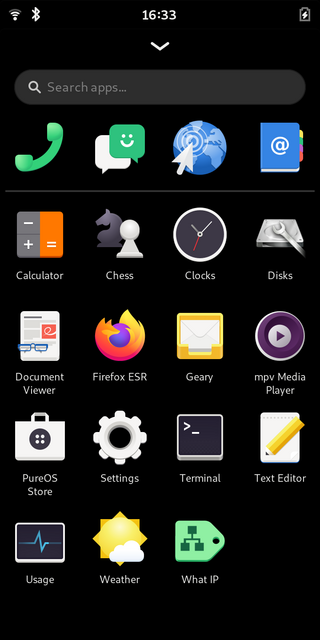
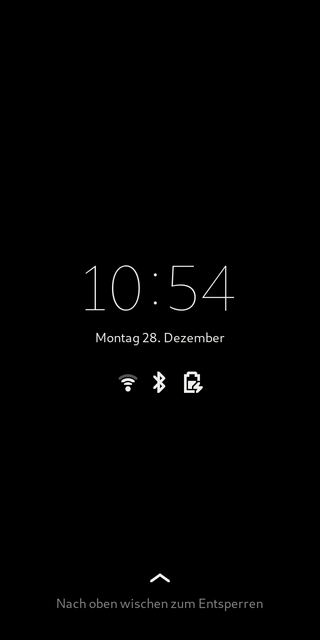
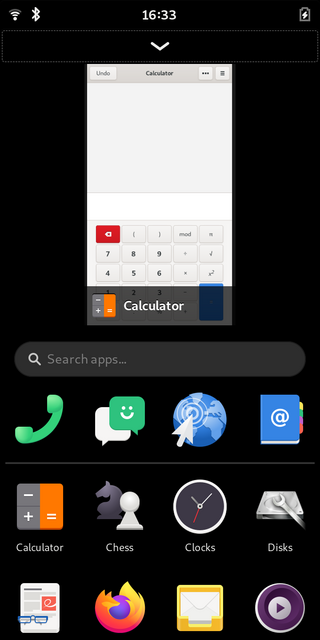
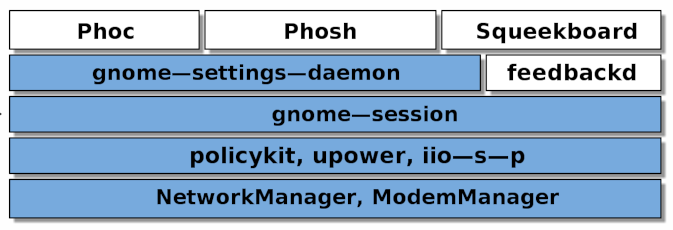
phosh is graphical shell for mobile, touch based devices like smart phones. It's the default graphical shell on Purism's Librem 5 (and that's where it came to life) but projects like postmarketOS, Mobian and Debian have picked it up putting it into use on other devices as well and contributing patches. This post is meant as a short overview how things are tied together so further posts can provide more details. A PHone SHell As mobile shell phosh provides the interface components commonly found on mobile devices to phosh's overview 2 phosh's lockscreen phosh's overview 1 It uses GObject object system and GTK to build up the user interface components. Mobile specific patterns are brought in via libhandy. Since phosh is meant to blend into GNOME as seamlessly as possible it uses the common interfaces present there via D-Bus like org.gnome.Screensaver or org.gnome.keyring.SystemPrompter and retrieves user configuration like keybindings via GSettings from preexisting schema. The components of a running graphical session roughly look like this: phosh session The blue boxes are the very same found on GNOME desktop sessions while the white ones are currently only found on phones. feedbackd is explained quickly: It's used for providing haptic or visual user feedback and makes your phone rumble and blink when applications (or the shell) want to notify the user about certain events like incoming phone calls or new messages. What about phoc and squeekboard? phoc and squeekboard Although some stacks combine the graphical shell with the display server (the component responsible for drawing applications and handling user input) this isn't the case for phosh. phosh relies on a Wayland compositor to be present for that. Keeping shell and compositor apart has some advantages like being able to restart the shell without affecting other applications but also adds the need for some additional communication between compositor and shell. This additional communication is implemented via Wayland protocols. The Wayland compositor used with phosh is called phoc for PHone Compositor. One of these additional protocols is wlr-layer-shell. It allows the shell to reserve space on the screen that is not used by other applications and allows it to draw things like the top and bottom bar or lock screen. Other protocols used by phosh (and hence implemented by phoc) are wlr-output-management to get information on and control properties of monitors or wlr-foreign-toplevel-management to get information about other windows on the display. The later is used to allow to switch between running applications. However these (and other) Wayland protocols are not implemented in phoc from scratch. phoc leverages the wlroots library for that. The library also handles many other compositor parts like interacting with the video and input hardware. The details on how phoc actually puts things up on the screen deserves a separate post. For the moment it's sufficient to note that phosh requires a Wayland compositor like phoc. We've not talked about entering text without a physical keyboard yet - phosh itself does not handle that either. squeekboard is the on screen keyboard for text (and emoji) input. It again uses Wayland protocols to talk to the Wayland compositor and it's (like phosh) a component that wants exclusive access to some areas of the screen (where the keyboard is drawn) and hence leverages the layer-shell protocol. Very roughly speaking it turns touch input in that area into text and sends that back to the compositor that then passes it back to the application that currently gets the text input. squeekboard's main author dcz has some more details here. The session So how does the graphical session in the picture above come into existence? As this is meant to be close to a regular GNOME session it's done via gnome-session that is invoked somewhat like:
phoc -E 'gnome-session --session=phosh'
So the compositor phoc is started up, launches gnome-session which then looks at phosh.session for the session's components. These are phosh, squeekboard and gnome-settings-daemon. These then either connect to already running services via D-Bus (e.g. NetworkManager, ModemManager, ...) or spawn them via D-Bus activation when required (e.g. feedbackd). Calling conventions So when talking about phosh it's good to keep several things apart: On top of that people sometimes refer to 'Phosh' as the software collection consisting of the above plus more components from GNOME (Settings, Contacs, Clocks, Weather, Evince, ...) and components that currently aren't part of GNOME but adapt to small screen sizes, use the same technologies and are needed to make a phone fun to use e.g. Geary for email, Calls for making phone calls and Chats for SMS handling. Since just overloading the term Phosh is confusing GNOME/Phosh Mobile Environment or Phosh Mobile Environment have been used to describe the above collection of software and I've contacted GNOME on how to name this properly, to not infringe on the GNOME trademark but also give proper credit and hopefully being able to move things upstream that can live upstream. That's it for a start. phosh's development documentation can be browsed here but is also available in the source code. Besides the projects mentioned above credits go to Purism for allowing me and others to work on the above and other parts related to moving Free Software on mobile Linux forward.

27 December 2020

John Goerzen: Asynchronous Email: Exim over NNCP (or UUCP)

Following up to yesterday s article about how NNCP rehabilitates asynchronous communication with modern encryption and onion routing, here is the first of my posts showing how to put it into action. Email is a natural fit for async; in fact, much of early email was carried by UUCP. It is useful for an airgapped machine to be able to send back messages; errors from cron, results of handling incoming data, disk space alerts, etc. (Of course, this would apply to a non-airgapped machine also). The NNCP documentation already describes how to do this for Postfix. Here I will show how to do it for Exim. A quick detour to UUCP land When you encounter a system such as email that has instructions for doing something via UUCP, that should be an alert to you that here is some very relevant information for doing this same thing via NNCP. The syntax is different, but broadly, here s a table of similar NNCP commands:
Purpose UUCP NNCP
Connect to remote system uucico -s, uupoll nncp-call, nncp-caller
Receive connection (pipe, daemon, etc) uucico (-l or similar) nncp-daemon
Request remote execution, stdin piped in uux nncp-exec
Copy file to remote machine uucp nncp-file
Copy file from remote machine uucp nncp-freq
Process received requests uuxqt nncp-toss
Move outbound requests to dir (for USB stick, airgap, etc) N/A nncp-xfer
Create streaming package of outbound requests N/A nncp-bundle
If you used UUCP back in the day, you surely remember bang paths. I will not be using those here. NNCP handles routing itself, rather than making the MTA be aware of the network topology, so this simplifies things considerably. Sending from Exim to a smarthost One common use for async email is from a satellite system: one that doesn t receive mail, or have local mailboxes, but just needs to get email out to the Internet. This is a common situation even for conventionally-connected systems; in Exim speak, this is a satellite system that routes mail via a smarthost. That is, every outbound message goes to a specific target, which then is responsible for eventual delivery (over the Internet, LAN, whatever). This is fairly simple in Exim. We actually have two choices for how to do this: bsmtp or rmail mode. bsmtp (batch SMTP) is the more modern way, and is essentially a derivative of SMTP that explicitly can be queued asynchronously. Basically it s a set of SMTP commands that can be saved in a file. The alternative is rmail (which is just an alias for sendmail these days), where the data is piped to rmail/sendmail with the recipients given on the command line. Both can work with Exim and NNCP, but because we re doing shiny new things, we ll use bsmtp. These instructions are loosely based on the Using outgoing BSMTP with Exim HOWTO. Some of these may assume Debianness in the configuration, but should be easily enough extrapolated to other configs as well. First, configure Exim to use satellite mode with minimal DNS lookups (assuming that you may not have working DNS anyhow). Then, in the Exim primary router section for smarthost (router/200_exim4-config_primary in Debian split configurations), just change transport = remote_smtp_smarthost to transport = nncp. Now, define the NNCP transport. If you are on Debian, you might name this transports/40_exim4-config_local_nncp:
nncp:
  debug_print = "T: nncp transport for $local_part@$domain"
  driver = pipe
  user = nncp
  batch_max = 100
  use_bsmtp
  command = /usr/local/nncp/bin/nncp-exec -noprogress -quiet hostname_goes_here rsmtp
.ifdef REMOTE_SMTP_HEADERS_REWRITE
  headers_rewrite = REMOTE_SMTP_HEADERS_REWRITE
.endif
.ifdef REMOTE_SMTP_RETURN_PATH
  return_path = REMOTE_SMTP_RETURN_PATH
.endif
This is pretty straightforward. We pipe to nncp-exec, run it as the nncp user. nncp-exec sends it to a target node and runs whatever that node has called rsmtp (the command to receive bsmtp data). When the target node processes the request, it will run the configured command and pipe the data in to it. More complicated: Routing to various NNCP nodes Perhaps you would like to be able to send mail directly to various NNCP nodes. There are a lot of ways to do that. Fundamentally, you will need a setup similar to the UUCP example in Exim s manualroute manual, which lets you define how to reach various hosts via UUCP/NNCP. Perhaps you have a star topology (every NNCP node exchanges email with a central hub). In the NNCP world, you have two choices of how you do this. You could, at the Exim level, make the central hub the smarthost for all the side nodes, and let it redistribute mail. That would work, but requires decrypting messages at the hub to let Exim process. The other alternative is to configure NNCP to just send to the destinations via the central hub; that takes advantage of onion routing and doesn t require any Exim processing at the central hub at all. Receiving mail from NNCP On the receiving side, first you need to configure NNCP to authorize the execution of a mail program. In the section of your receiving host where you set the permissions for the client, include something like this:
      exec:  
        rsmtp: ["/usr/sbin/sendmail", "-bS"]
       
The -bS option is what tells Exim to receive BSMTP on stdin. Now, you need to tell Exim that nncp is a trusted user (able to set From headers arbitrarily). Assuming you are running NNCP as the nncp user, then add MAIN_TRUSTED_USERS = nncp to a file such as /etc/exim4/conf.d/main/01_exim4-config_local-nncp. That s it! Some hosts, of course, both send and receive mail via NNCP and will need configurations for both.

26 December 2020

Sandro Tosi: Gmail and tracker.debian.org: add a label to team emails

Recently the Python Team started the migration from Alioth mailing list to a tracker.debian.org team.Alioth mailing list, being a real ml, included a List-Id header, which is handled by Gmail natively and which you can use to create a filter based on it.Tracker.d.o instead uses a custom header, X-Distro-Tracker-Team, and Gmail doesn't allow to create filters on custom headers. But there's a solution: Google Apps Scripts.

1. Apps script and its configuration

To create a new apps script, click "New project" from the scripts dashboard: this will open a code editor, so now cut and paste this code (change the label name to match the one you want to use, and the header too if you're going to use this for another team):

function tagPythonTeamEmails()  

// search for all recent threads (hours is the smallest interval searchable)
var threads = GmailApp.search("newer_than:1h");
// this is the label i want to apply to the messages
var label = GmailApp.getUserLabelByName("Debian_Python_Pkgs"); // <-- EDIT THIS

for (var i = 0; i < threads.length; i++)

// get all messages in a given thread
var messages = threads[i].getMessages();

// for each message in the thread
for (var j = 0; j < messages.length; j++)
var message = messages[j];
// needed to have access to the full email: headers + body
var email = message.getRawContent();
// this is the header i want to check for: if present, add label and archive
if (email.indexOf("X-Distro-Tracker-Team: python") > -1) // <-- EDIT THIS
threads[i].addLabel(label);
threads[i].moveToArchive();


(This code is largely inspired by this StackOverflow answer.)

Given we're going to perform changes to the emails, we need to add extra permissions to the script; first we need to toggle the option "View > Show manifest file" which will show the appsscript.json file. Once done, edit it and update the scope of the script to include:

  "oauthScopes": [
...
"https://www.googleapis.com/auth/gmail.readonly",
"https://www.googleapis.com/auth/gmail.modify"
],

These new permission will be granted when we deploy the script, which we can actually do right now: from the editor window click on "Publish > Deploy from manifest..." and then "Install add-on"; it will make the app script available to operate on Gmail by opening the usual Google grants authorization popup.

2. Schedule the app script execution

Unlike filters defined on the web UI, apps scripts are not triggered every time a mail is received (there's a pub-sub mechanism, but it doesn't look like it would work for this), so if we want to execute periodically the new script, we need to create a time-driven trigger.

The simplest way is probably from the script editor (but you can also follow this doc): "View > Current project's triggers" and then "Add trigger" from there. For my specific use-case i set:

  • event source = time-driven
  • type of time based trigger = minutes timer
  • minute interval = 5 minutes
  • Failure notification settings = notify me immediately
it's not great that you have to wait 5 minutes for getting proper labels, and while it's true you can schedule the trigger for every minute, there are further considerations for that, discussed below.

3. Additional information

Be aware of quotas and limitations for Apps scripts; in particular the "Triggers total runtime" set to "90 min / day" is what led me to set the trigger every 510 mins.

Use the scripts dashboard (doc) to monitor the script execution logs, in the "My Executions" section, and specifically the "Duration" column: the script execution time depends exclusively on the number of emails to process at every execution, so fine-tune the trigger time to stay within your quota.

The newer_than search operator doesn't allow a granularity smaller than hours (although that's not even documented), so that means we're going to scan multiple times the same emails.

UPDATE (2020-12-26): I've already had to bump from every 5 to every 10 minutes, as otherwise i'd get Exception: Service invoked too many times for one day: gmail. (remember the quota!)

Paul Tagliamonte: Reverse Engineering my Christmas Tree

Over the course of the last year and a half, I ve been doing some self-directed learning on how radios work. I ve gone from a very basic understanding of wireless communications (there s usually some sort of antenna, I guess?) all the way through the process of learning about and implementing a set of libraries to modulate and demodulate data using my now formidable stash of SDRs. I ve been implementing all of the RF processing code from first principals and purely based on other primitives I ve written myself to prove to myself that I understand each concept before moving on. I figured that there was a fun capstone to be done here - the blind reverse engineering and implementation of the protocol my cheep Amazon power switch uses to turn on and off my Christmas Tree. All the work described in this post was done over the course of a few hours thanks to help during the demodulation from Tom Bereknyei and hlieberman.

Going in blind When I first got my switch, I checked it for any FCC markings in order to look up the FCC filings to determine the operational frequency of the device, and maybe some other information such as declared modulation or maybe even part numbers and/or diagrams. However, beyond a few regulatory stickers, there were no FCC ids or other distinguishing IDs on the device. Worse yet, it appeared to be a whitelabeled version of another product, so searching Google for the product name was very unhelpful. Since operation of this device is unlicensed, I figured I d start looking in the ISM band. The most common band used that I ve seen is the band starting at 433.05MHz up to 434.79MHz. I fired up my trusty waterfall tuned to a center frequency of 433.92MHz (since it s right in the middle of the band, and it let me see far enough up and down the band to spot the remote) and pressed a few buttons. Imagine my surprise when I realize the operational frequency of this device is 433.920MHz, exactly dead center. Weird, but lucky! After taking a capture, I started to look at understanding what the modulation type of the signal was, and how I may go about demodulating it. Using inspectrum, I was able to clearly see the signal in the capture, and it immediately stuck out to my eye to be encoded using OOK / ASK. Next, I started to measure the smallest pulse, and see if I could infer the symbols per second, and try to decode it by hand. These types of signals are generally pretty easy to decode by eye. This wound up giving me symbol rate of 2.2 Ksym/s, which is a lot faster than I expected. While I was working by hand, Tom demodulated a few messages in Python, and noticed that if you grouped the bits into groups of 4, you either had a 1000 or a 1110 which caused me to realize this was encoded using something I saw documented elsewhere, where the 0 is a short pulse, and a 1 is a long pulse, not unlike morse code, but where each symbol takes up a fixed length of time (monospace morse code?). Working on that assumption, I changed my inspectrum symbol width, and demodulated a few more by hand. This wound up demodulating nicely (and the preamble / clock sync could be represented as repeating 0s, which is handy!) and gave us a symbol rate of 612(ish) symbols per second a lot closer to what I was expecting. If we take the code for on in the inspectrum capture above and demodulate it by hand, we get 0000000000110101100100010 (treat a short pulse as a 0, and a long pulse as a 1). If you re interested in following along at home, click on the inspectrum image, and write down the bits you see, and compare it to what I have! Right, so it looks like from what we can tell so far that the packet looks something like this:

preamble / sync
stuff
Next, I took a capture of all the button presses and demodulated them by hand, and put them into a table to try and understand the format of the messages:
Button Demod'd Bits
On 0000000000110101100100010
Off 00000000001101011001010000
Dim Up 0000000000110101100110100
Dim Down 0000000000110101100100100
Timer 1h 0000000000110101100110010
Timer 2h 0000000000110101100100110
Timer 4h 0000000000110101100100000
Dim 100% 0000000000110101000101010
Dim 75% 00000000001101010001001100
Dim 50% 00000000001101010001001000
Dim 25% 0000000000110101000100000
Great! So, this is enough to attempt to control the tree with, I think so I wrote a simple modulator. My approach was to use the fact that I can break down a single symbol into 4 sub-symbol components which is to say, go back to representing a 1 as 1110, and a 0 as 1000. This let me allocate IQ space for the symbol, break the bit into 4 symbols, and if that symbol is 1, write out values from a carrier wave (cos in the real values, and sin in the imaginary values) to the buffer. Now that I can go from bits to IQ data, I can transmit that IQ data using my PlutoSDR or HackRF and try and control my tree. I gave it a try, and the tree blinked off! Success! But wait that s not enough for me I know I can t just demodulate bits and try and replay the bits forever there s stuff like addresses and keys and stuff, and I want to get a second one of these working. Let s take a look at the bits to see if we spot anything fun & interesting. At first glance, a few things jumped out at me as being weird? First is that the preamble is 10 bits long (fine, let s move along - maybe it just needs 8 in a row and there s two to ensure clocks sync?). Next is that the messages are not all the same length. I double (and triple!) checked the messages, and it s true, the messages are not all the same length. Adding an extra bit at the end didn t break anything, but I wonder if that s just due to the implementation rather than the protocol. But, good news, it looks like we have a stable prefix to the messages from the remote must be my device s address! The stable 6 bits that jump out right away are 110101. Something seems weird, though, 6 bits is a bit awkward, even for a bit limited embedded device. Why 6? But hey, wait, we had 10 bits in the preamble, what if we have an 8 bit address meaning my device is 00110101, and the preamble is 8 0 symbols! Those are numbers that someone working on an 8 bit aligned platform would pick! To test this, I added a 0 to the preamble to see if the message starts at the first 1, or if it requires all the bits to be fully decoded, and lo and behold, the tree did not turn on or off. This would seem to me to confirm that the 0s are part of the address, and I can assume we have two 8 bit aligned bytes in the prefix of the message.
preamble / sync
address
stuff
Now, when we go through the 9-10 bits of stuff , we see all sorts of weird bits floating all over the place. The first 4 bits look like it s either 1001 or 0001, but other than that, there s a lot of chaos. This is where things get really squishy. I needed more information to try and figure this out, but no matter how many times I sent a command it was always the same bits (so, no counters), and things feel very opaque still. The only way I was going to make any progress is to get another switch and see how the messages from the remote change. Off to Amazon I went, and ordered another switch from the same page, and eagerly waited its arrival.

Switch #2 The second switch showed up, and I hurriedly unboxed the kit, put batteries into the remote, and fired up my SDR to take a capture. After I captured the first button ( Off ), my heart sunk as I saw my lights connected to Switch #1 flicker off. Apparently the new switch and the old switch have the same exact address. To be sure, I demodulated the messages as before, and came out with the exact same bit pattern. This is a setback and letdown I was hoping to independently control my switches, but it also means I got no additional information about the address or button format. The upside to all of this, though, is that because the switches are controlled by either remote, I only needed one remote, so why not pull it apart and see if I can figure out what components it s using to transmit, and find any datasheets I can. The PCB was super simple, and I wound up finding a WL116SC IC on the PCB. After some googling, I found a single lone datasheet, entirely in Chinese. Thankfully, Google Translate seems to have worked well enough on technical words, and I was able to put together at least a little bit of understanding based on the documentation that was made available. I took a few screenshots below - I put the google translated text above the hanzi. From that sheet, we can see we got the basics of the 1 and 0 symbol encoding right (I was halfway expecting the bits to be flipped), and a huge find by way of a description of the bits in the message! It s a bummer that we missed the clock sync / preamble pulse before the data message, but that s OK somehow. It also turns out that 8 or 10 bit series of of 0"s wasn t clock sync at all - it was part of the address! Since it also turns out that all devices made by this manufacturer have the hardcoded address of []byte 0x00, 0x35 , that means that the vast majority of bits sent are always going to be the same for any button press on any remote made by this vendor. Seems like a waste of bits to me, but hey, what do I know. Additionally, this also tells us the trailing zeros are not part of the data encoding scheme, which is progress!
address
keycode
Now, working on the assumptions validated by the datasheet, here s the updated list of scancodes we ve found:
Button Scancode Bits Integer
On 10010001 145 / 0x91
Off 10010100 148 / 0x94
Dim Up 10011010 154 / 0x9A
Dim Down 10010010 146 / 0x92
Timer 1h 10011001 154 / 0x99
Timer 2h 10010011 147 / 0x93
Timer 4h 10010000 144 / 0x90
Dim 100% 00010101 21 / 0x15
Dim 75% 00010011 19 / 0x13
Dim 50% 00010010 18 / 0x12
Dim 25% 00010000 16 / 0x10
Interestingly, I think the Dim keys may have a confirmation that we have a good demod the codes on the bottom are missing the most significant bit, and when I look back at the scancode table in the datasheet, they make an interesting pattern the bottom two rows, right and left side values match up! If you take a look, Dim 100% is S1 , Dim 75% is S19 , Dim 50% is S8 , and Dim 25% is S20 . Cool! Since none of the other codes line up, I am willing to bet the most significant bit is a Combo indicator, and not part of the button (leaving 7 bits for the keycode). And even more interestingly, one of our scancodes ( Off , which is 0x94) shows up just below this table, in the examples. Over all, I think this tells us we have the right bits to look at for determining the scan code! Great news there!
Back to the modulation! So, armed with this knowledge, I was able to refactor my code to match the timings and understanding outlined by the datasheet and ensure things still work. The switch itself has a high degree of tolerance, so being wildly off frequency or a wildly wrong symbol rate may actually still work. It s hard to know if this is more or less correct, but matching documentation seems like a more stable foundation if nothing else. This code has been really reliable, and tends to work just as well as the remote from what I ve been able to determine. I ve been using incredibly low power to avoid any interference, and it s been very robust - a testament to the engineering that went into the outlet hardware, even though it cost less than of a lot of other switches! I have a lot of respect for the folks who built this device - it s incredibly simple, reliable and my guess is this thing will keep working even in some fairly harsh RF environments. The only downside is the fact the manufacturer used the same address for all their devices, rather than programming a unique address for each outlet and remote when the underlying WL116SC chip supports it. I m sure this was done to avoid complexity in assembly (e.g. pairing the remote and outlet, and having to keep those two items together during assembly), but it s still a bummer. I took apart the switch to see if I could dump an EEPROM and change the address in ROM, but the entire thing was potted in waterproof epoxy, which is a very nice feature if this was ever used outdoors. Not good news for tinkering, though!

Unsolved Mysteries At this point, even though I understand the protocol enough to control the device, it still feels like I hit a dead end in my understanding. I m not able to figure out how exactly the scancodes are implemented, and break them down into more specific parts. They are stable and based on the physical wiring of the remote, so I think I m going to leave it a magic number. I have what I was looking for, and these magic constants appear to be the right one to use, even if I did understand how to create the codes itself. This does leave us with a few bits we never resolved, which I ll memorialize below just to be sure I don t forget about them. Question #1: According to the datasheet there should be a preamble. Why do I not see one leading the first message? My hunch is that the trailing 0 at the end of the payload is actually just the preamble for the next message (always rendering the first message invalid?). This would let us claim there s an engineering reason why we are ignoring the weird bit, and also explain away something from the documentation. It s just weird that it wouldn t be present on the first message. This theory is mostly confirmed by measuring the timing and comparing it to the datasheet, but it s not exactly in line with the datasheet timings either (specifically, it s off by 200 s, which is kinda a lot for a system using 400 s timings). I think I could go either way on the last 0 being the preamble for the next message. It could be that the first message is technically invalid, or it could also be that this was not implemented or actively disabled by the vendor for this specific application / device. It s really hard to know without getting the source code for the WL116SC chip in this specific remote or the source in the outlet itself. Question #2: Why are some keycodes 8 bits and others 9 bits? I still have no idea why there sometimes 8 bits (for instance, On ) and other times there are 9 bits (for instance, Off ) in the 8 bit keycode field. I spent some time playing with the trailing zeros, when I try and send an Off with the most significant 8 bits (without the least significant / last 9th bit, which is a 0 ), it does not turn the tree off. If I send an On with 9 bits (an additional 0 after the least significant bit), it does work, but both On and Off work when I send 10, 11 or 12 bits padded with trailing zeros. I suspect my outlet will ignore data after the switch is done reading bits regardless of trailing zeros. The docs tell me there should only be 8 bits, but it won t work unless I send 9 bits for some commands. There s something fishy going on here, and the datasheet isn t exactly right either way. Question #3: How in the heck do those scancodes work? This one drove me nuts. I ve spent countless hours on trying to figure this out, including emailing the company that makes the WL116SC (they re really nice!), and even though they were super kind and generous with documentation and example source, I m still having a hard time lining up their documentation and examples with what I see from my remote. I think the manufacturer of my remote and switch has modified the protocol enough to where there s actually something different going on here. Bummer. I wound up in my place of last resort asking friends over Signal to try and see if they could find a pattern, as well as making multiple pleas to the twittersphere, to no avail (but thank you to Ben Hilburn, devnulling, Andreas Bombe and Larme for your repiles, help and advice!) I still don t understand how they assemble the scan code for instance, if you merely add, you won t know if a key press of 0x05 is 0x03 + 0x02 or if it s 0x01 + 0x04. On the other hand, treating it as two 4-bit integers won t work for 0x10 to 0x15 (since they need 5 bits to represent). It s also likely the most significant bit is a combo indicator, which only leaves 7 bits for the actual keypress data. Stuffing 10 bits of data into 7 bits is likely resulting in some really intricate bit work. On a last ditch whim, I tried to XOR the math into working, but some initial brute forcing to make the math work given the provided examples did not result in anything. It could be a bitpacked field that I don t understand, but I don t think I can make progress on that without inside knowledge and much more work. Here s the table containing the numbers I was working off of:
Keys Key Codes Scancode
S3 + S9 0x01 + 0x03 0x96
S6 + S12 0x07 + 0x09 0x94
S22 + S10 0x0D + 0x0F 0x3F
If anyone has thoughts on how these codes work, I d love to hear about it! Send me an email or a tweet or something - I m a bit stumped. There s some trick here that is being used to encode the combo key in a way that is decodeable. If it s actually not decodeable (which is a real possibility!), this may act as a unique button combo hash which allows the receiver to not actually determine which keys are pressed, but have a unique button that gets sent when a combo is used. I m not sure I know enough to have a theory as to which it may be.

Russ Allbery: Review: The Biggest Bluff

Review: The Biggest Bluff, by Maria Konnikova
Publisher: Penguin Press
Copyright: 2020
ISBN: 0-525-52263-8
Format: Kindle
Pages: 335
After a particularly unlucky year for her family, Maria Konnikova was reading about the balance between luck and control in life and discovered, to her surprise, that John von Neumann, one of the foundational thinkers of computer science, was fascinated by poker. He found most card games boring because they relied on luck. Poker, however, he thought was the perfect balance between luck and skill: enough skill to make its effect undeniable, but enough luck that one could not control the game fully regardless of skill. Konnikova decided on a research project: spend one year learning No Limit Texas Hold'em from one of the best poker players in the world, with a goal of competing in the World Series of Poker. She had studied the description-experience gap during her doctoral research in psychology and wanted to see if the experience of randomness in poker would teach her something the description of the randomness of life could not. Before starting this project, she didn't know the basic rules and had never watched a game. Erik Seidel agreed to mentor her, and The Biggest Bluff is her account of that experience. This book is simultaneously frustrating and fascinating in ways that I don't think can be untangled without making it a far different book. Fitting, I suppose, for a book about how our brains entangle luck and skill. First, if you're looking for a book about poker play, this is not one. Konnikova rarely talks about specific hands or tournaments in more detail than her overall trajectory. That was a disappointment. In the few places she does describe some of her betting decisions, analysis of the other players, and tournament strategy, her accounts are engrossing and suspenseful. I would have happily read a book chronicling her poker tournaments and the decisions she made, but this is not that book. What The Biggest Bluff is instead is a psychological and philosophical examination of the process of learning poker. Konnikova uses her experiences as launching points into philosophical digressions. Even the lessons that have limited surface utility outside of poker, such as learning to suppress body language to avoid giving away information, turn into digressions about interpersonal dynamics and personality types. There are interesting tidbits here, but I've read a lot of popular psychology and was more interested in the poker. My frequent reading experience was impatiently waiting for Konnikova to finish lecturing and get back to her narrative. What Konnikova does do though, at a level that I haven't seen before before in a book of this type, is be brutally honest about her mistakes and her learning process. And I do mean brutally: The book opens with her throwing up in a casino bathroom. (This is not a fun book to read if you don't like reading about stress reactions and medical problems. There aren't many of them, but they're... memorable.) Konnikova knows and can explain the psychological state she's trying to reach, but still finds it hard to do in the moment. Correctly reacting to probabilities, cutting losses, and neither being too over-confident or too scared is very hard. Most books of this type elide over the repeated failures in a sort of training montage, which makes the process look easier than it feels. Konnikova tries to realistically show the setbacks and failures, and I think succeeds. That relentless introspection and critical honesty is the best part of this book, but I think it's also behind the stream of consciousness digressions about psychology and philosophy. It's a true portrayal of how Konnikova makes sense of the world. A more polished and streamlined book about the poker would have been more dramatically engrossing, but it might have lost the deep examination of how she combines poker with her knowledge of psychology to change her thinking. The one place where I think that self-reflection may fall a bit short, which I want to mention because I thought it was a missed opportunity, is around knowledge of hand probabilities. Konnikova makes a point, early in the book, of not approaching poker through the memorization and mathematics route and instead trying to find a play style that focuses on analyzing the other players and controlling her own emotions. This is a good hook, but by the end of the book it's not entirely true. The point that I think she was trying to make is that her edge against other poker players at her same level comes more from psychology than from calculation of precise odds in rare situations. This is true. But by the time she reaches high levels of play, she is using statistical simulators, practice tools, and intensive study just like any professional poker player. There is a minimum level of pure knowledge and memorization required that cannot be avoided. It's clear from the few things she says about this that those tools became more interesting to her as she became better at poker, and I wish she would have dug more into why and how that happened. How much of her newfound ability to make decisions and stick to a plan comes from emotional changes, and how much from that background store of confident knowledge? Or maybe those are different ways of looking at the same change? I did appreciate Konnikova's explicit acknowledgment at the end of the book that poker did not, in the end, provide some deep insight into the balance of luck and skill in real life. Learning poker instead gave Konnikova more personal ability to make a plan for the things that she can control and let go of the things she can't. I'm glad that worked for her, but since reading this book I have noticed former poker players who think life is more knowable than it is. Poker combines random chance with psychological play against other people, but it does so in a way and to an extent that is quantifiable. You can make the correct play and still lose a hand, but you can also know when this has happened. When you're used to analyzing the world through that frame and real life fails to provide that certainty, it's tempting to impose it anyway and insist your simplified models are more accurate because they're more comprehensible. But poker is a game, not a model; being more predictable and more constrained than real life is part of what makes it fun. The skill that Konnikova learned from it has a potential downside that she doesn't talk about. I'm not sure how to sum up this book. Konnikova's internal analysis and honesty is truly admirable and illuminating, but it left me wanting to read a different book that was more focused on poker narration. I know there are lots of those books out there, but I doubt they would be written with Konnikova's self-awareness and lack of ego. However, they would probably also lack the moments that made me cringe or that were deeply uncomfortable to read. My feelings are mixed. But if you want popular psychology wrapped around a deeply honest account of the process of learning poker, I suspect this book is one of a kind. Rating: 7 out of 10

John Goerzen: Rehabilitating Asynchronous Communication with NNCP: A Cross Between Tor, ssh, and UUCP

Have you ever been traveling, shot a ton of photos and videos, but were annoyed to find it was saturating the terrible wifi you had access to? Maybe you d wish the upload to pause until you get somewhere else, but then pausing syncing on your Nextcloud/Syncthing/Dropbox would also pause other syncing you didn t want to pause. Or you have trouble backing up your laptop when not at home, in a way that won t accidentaly eat up your cell phone data. There are ways to help with this: asynchronous transfer. Here s a lot of background. If you want to see how encrypted, onion-routed UUCP looks, skip ahead to the NNCP section! There is an old saying: When all you have is a hammer, every problem looks like a nail. We have this wonderful tool called ssh available, and it is pervasive and well-understood, so we tend to use it. But we ve missed out on some benefits of asynchronous processing that we actually used to have more frequently. Of course, we are all used to some asynchronous services in our lives. Email is a popular example: most mail clients work offline and will transmit stored messages when the mail server becomes reachable. Mail servers themselves work that way, too. Many instant messaging platforms do as well. Even some backup systems do. Bacula/Bareos, for instance, spools all backup data to disk on the system connected to the tape drive, and from there to the tape itself. They do this for several reasons, but primarily the fact that if tape drives are not fed with data at their design speed, it can cause physical damage to the tape or even the drive. It causes the drive to have to pause, and seek backwards to reposition for the next write. This creates excessive travel of the tape over the write heads, causing a condition known as tape shine where the tape is damaged prematurely. Here are some problems people often run into when sending data across a network (or the Internet) synchronously: Of course, there are plenty of situations where synchronous communication is a must. For instance: I suspect that the reason we don t do more asynchronous processing these days, despite it being strong in the Unix heritage, is the lack of modern tools to do it. Let s explore some more. Some of my use cases I run ZFS on all my systems that support it: file server, laptops, workstations, etc. It is only natural to use ZFS send/receive to do backups, and I do. However, when I am traveling, my laptop never gets backed up, because the backups are pulled from the backup system. Sure, there are ways around that; a VPN, for instance. But then we have the situation where sometimes I do not want to send the backup even if I have a working Internet connection: perhaps I m tethered to a mobile connection and it would be expensive to do so, or I m on hotel Wifi that is flaky and slow and I don t want to give up any of its meager bandwidth. I have another backup-related problem. I have a remote server, which until recently was using extremely slow disks. If I made significant changes, the backup would take the better part of a day. That s annoying when I try to back up hourly. So of course I had to implement locking, but then that means none of my other machines would back up that day either. Once I needed to transmit about 2TB of data. My home Internet connection was terribly slow, and I calculated it would take multiple months to do this. So I took to manually copying parts of the data to my laptop, and whenever I d find an airport or coffee shop with faster Internet than at home, I d send off those bits from it. But it took a ton of work. The bespoke asynchronous problem And that ton of work is perhaps why we aren t doing more of this. There s been no great standard solution, so it s all roll your own when you need to. So we just use ssh, because it s easier and usually good enough . But as I wrote in my recent article on airgapped backups, there are reasons to go async. Solutions Wouldn t it be great to be able to queue up data for a machine, and let it get there in whatever way it can? Maybe a fast Internet connection is found, or via Tor, or via copying to a USB stick, or via radio broadcast? It would make many of these scenarios a lot easier. And there are ways for this now, with modern security! We have some tools on Linux for this: git-annex for storage and migration, syrep for synchronization, and NNCP for file transfer and remote execution (could be combined with some of these other tools). Let s dive in to NNCP. NNCP If you already know UUCP, think of NNCP as UUCP brought into the modern era, with modern security and tools. Basically, NNCP permits you to send files to a remote system, request files from a remote system, and pipe data to an NNCP command that requests execution remotely. So you could, say, pipe a zfs send to NNCP which sends it to the remote and pipes it to zfs receive when it gets there. NNCP has a delay-tolerant, resumable protocol that can run over just about any reliable connection: TCP, serial, Tor, radios of various kinds, you name it. But that s not all; it also can dump its queue onto something like a USB stick for transport, or even make a tar-style stream that could be munged however you like. If you want to get fancy, you can assign priorities to data packets, so that, for instance, outbound email will always get sent before that 1TB file you ve got to send also. You can also configure it so that certain carriers handle certain priorities of data; your cell phone would only handle the most urgent, but a USB stick would take anything. NNCP is source-routed; you can tell it that the way that Bob reaches Alice is via Carl, then Betty. Bob can generate a message that will be sent along that route, fully encrypted and authenticated at each step of the way; Carl can t see the content of the message or even anything about it other than its next hop. How this helps Let s revisit some of my scnearios with NNCP. For the laptop being backed up, while traveling it can queue up its backups, or photos, or videos, or whatever. They could be triggered by a command when on a good connection, or automatically. The data could be copied to USB and given to a friend to transmit; perfectly safe due to encryption. Or it could all wait until arriving at home, safely out of your other syncing directories. The NNCP documentation has an example of this. For the server being backed up slowly, that s easily solved; the slow backup would simply be queued up, and transmitted and processed when it s ready. This wouldn t interrupt other backups. How about the 2TB transmission problem? That s also made a lot easier. A command could be run to fill up a USB stick with parts of the queue, then that USB stick plugged in and transmitted whenever at a fast location. Repeat as needed while the slow system continues its upload of the remaining bits. NNCP has a lot of interesting use cases documented as well. If you are already familiar with how public keys work in SSH, then NNCP should be immediately familiar as well. It is a similar concept (though arguably somewhat easier to set up). I am working on setting up a NNCP network, and will have more posts on how to do so once I ve got it going. In the meantime, the documentation for the project is also pretty good.

23 December 2020

John Goerzen: How & Why To Use Airgapped Backups

A good backup strategy needs to consider various threats to the integrity of data. For instance: It s that last one that is of particular interest today. A lot of backup strategies are such that if a user (or administrator) has their local account or network compromised, their backups could very well be destroyed as well. For instance, do you ssh from the account being backed up to the system holding the backups? Or rsync using a keypair stored on it? Or access S3 buckets, etc? It is trivially easy in many of these schemes to totally ruin cloud-based backups, or even some other schemes. rsync can be run with delete (and often is, to prune remotes), S3 buckets can be deleted, etc. And even if you try to lock down an over-network backup to be append-only, still there are vectors for attack (ssh credentials, OpenSSL bugs, etc). In this post, I try to explore how we can protect against them and still retain some modern conveniences. A backup scheme also needs to make a balance between: My story so far About 20 years ago, I had an Exabyte tape drive, with the amazing capacity of 7GB per tape! Eventually as disk prices fell, I had external disks plugged in to a server, and would periodically rotate them offsite. I ve also had various combinations of partial or complete offsite copies over the Internet as well. I have around 6TB of data to back up (after compression), a figure that is growing somewhat rapidly as I digitize some old family recordings and videos. Since I last wrote about backups 5 years ago, my scheme has been largely unchanged; at present I use ZFS for local and to-disk backups and borg for the copies over the Internet. Let s take a look at some options that could make this better. Tape The original airgapped backup. You back up to a tape, then you take the (fairly cheap) tape out of the drive and put in another one. In cost per GB, tape is probably the cheapest medium out there. But of course it has its drawbacks. Let s start with cost. To get a drive that can handle capacities of what I d be needing, at least LTO-6 (2.5TB per tape) would be needed, if not LTO-7 (6TB). New, these drives cost several thousand dollars, plus they need LVD SCSI or Fibre Channel cards. You re not going to be hanging one off a Raspberry Pi; these things need a real server with enterprise-style connectivity. If you re particularly lucky, you might find an LTO-6 drive for as low as $500 on eBay. Then there are tapes. A 10-pack of LTO-6 tapes runs more than $200, and provides a total capacity of 25TB sufficient for these needs (note that, of course, you need to have at least double the actual space of the data, to account for multiple full backups in a set). A 5-pack of LTO-7 tapes is a little more expensive, while providing more storage. So all-in, this is going to be in the best possible scenario nearly $1000, and possibly a lot more. For a large company with many TB of storage, the initial costs can be defrayed due to the cheaper media, but for a home user, not so much. Consider that 8TB hard drives can be found for $150 $200. A pair of them (for redundancy) would run $300-400, and then you have all the other benefits of disk (quicker access, etc.) Plus they can be driven by something as cheap as a Raspberry Pi. Fancier tape setups involve auto-changers, but then you re not really airgapped, are you? (If you leave all your tapes in the changer, they can generally be selected and overwritten, barring things like hardware WORM). As useful as tape is, for this project, it would simply be way more expensive than disk-based options. Fundamentals of disk-based airgapping The fundamental thing we need to address with disk-based airgapping is that the machines being backed up have no real-time contact with the backup storage system. This rules out most solutions out there, that want to sync by comparing local state with remote state. If one is willing to throw storage efficiency out the window maybe practical for very small data sets one could just send a full backup daily. But in reality, what is more likely needed is a way to store a local proxy for the remote state. Then a runner device (a USB stick, disk, etc) could be plugged into the network, filled with queued data, then plugged into the backup system to have the data dequeued and processed. Some may be tempted to short-circuit this and just plug external disks into a backup system. I ve done that for a long time. This is, however, a risk, because it makes those disks vulnerable to whatever may be attacking the local system (anything from lightning to ransomware). ZFS ZFS is, it should be no surprise, particularly well suited for this. zfs send/receive can send an incremental stream that represents a delta between two checkpoints (snapshots or bookmarks) on a filesystem. It can do this very efficiently, much more so than walking an entire filesystem tree. Additionally, with the recent addition of ZFS crypto to ZFS on Linux, the replication stream can optionally reflect the encrypted data. Yes, as long as you don t need to mount them, you can mostly work with ZFS datasets on an encrypted basis, and can directly tell zfs send to just send the encrypted data instead of the decrypted data. The downside of ZFS is the resource requirements at the destination, which in terms of RAM are higher than most of the older Raspberry Pi-style devices. Still, one could perhaps just save off zfs send streams and restore them later if need be, but that implies a periodic resend of a full stream, an inefficient operation. dedpulicating software such as borg could be used on those streams (though with less effectiveness if they re encrypted). Tar Perhaps surprisingly, tar in listed incremental mode can solve this problem for non-ZFS users. It will keep a local cache of the state of the filesystem as of the time of the last run of tar, and can generate new tarballs that reflect the changes since the previous run (even deletions). This can achieve a similar result to the ZFS send/receive, though in a much less elegant way. Bacula / Bareos Bacula (and its fork Bareos) both have support for a FIFO destination. Theoretically this could be used to queue of data for transfer to the airgapped machine. This support is very poorly documented in both and is rumored to have bitrotted, however. rdiff and xdelta rdiff and xdelta can be used as sort of a non-real-time rsync, at least on a per-file basis. Theoretically, one could generate a full backup (with tar, ZFS send, or whatever), take an rdiff signature, and send over the file while keeping the signature. On the next run, another full backup is piped into rdiff, and on the basis of the signature file of the old and the new data, it produces a binary patch that can be queued for the backup target to update its stored copy of the file. This leaves history preservation as an exercise to be undertaken on the backup target. It may not necessarily be easy and may not be efficient. rsync batches rsync can be used to compute a delta between two directory trees and express this as a single-file batch that can be processed by a remote rsync. Unfortunately this implies the sender must always keep an old tree around (barring a solution such as ZFS snapshots) in order to compute the delta, and of course it still implies the need for history processing on the remote. Getting the Data There OK, so you ve got an airgapped system, some sort of runner device for your sneakernet (USB stick, hard drive, etc). Now what? Obviously you could just copy data on the runner and move it back off at the backup target. But a tool like NNCP (sort of a modernized UUCP) offer a lot of help in automating the process, returning error reports, etc. NNCP can be used online over TCP, over reliable serial links, over ssh, with offline onion routing via intermediaries or directly, etc. Imagine having an airgapped machine at a different location you go to frequently (workplace, friend, etc). Before leaving, you put a USB stick in your pocket. When you get there, you pop it in. It s despooled and processed while you want, and return emails or whatever are queued up to be sent when you get back home. Not bad, eh? Future installment I m going to try some of these approaches and report back on my experiences in the next few weeks.

Next.

Previous.