Search Results: "jan"

9 February 2009

MJ Ray: Setting up and sustaining a global FOSS-based business (Ian Lynch)

Another Monday, start of the working week and I m thinking about business again. Ian Lynch of The Learning Machine is a smart cookie who I ve collaborated with before. He leads a free-software-based business which is very different from TTLLP s cooperative model and he gave a talk about it to Manchester Free Software. Here are the headlines:-
Building a FOSS Business
  • No fees from licenses
  • Services allied to FOSS
  • Something everyone needs
  • Low cost to produce
  • Low cost to distribute
  • Encourage FOSS take up
  • Increase the number of FOSS contributors
  • Make money to support FOSS development
Background theory and research
  • Clay Christensen and the theory of disruptive innovation
  • The innovators dilemma
  • Seeing What is Next
Business Growth
  • 3 horizons of business growth
  • Horizon 1 current profitable business
  • Horizon 2 business with clear potential
  • Horizon 3 possibilities currently being explored
  • Pipeline for growth
Tipping points
  • Critical mass
  • Viral effects
The ideal product
  • Something everyone needs
  • Something that costs nothing to make
  • Something that costs nothing to distribute
  • Something that has increasing value the more that is bought.
The INGOTs
  • International Grades Open Technologies
  • Market disruption
  • Lower barriers to entry
  • Target those currently not in the market
  • Provide products that are good enough
  • Improve and add features over time
Primary Schools - KS3
  • No-one targets primary schools
  • Very little certification in KS3
  • Use specialist schools community plans
  • Upsell from primary to secondary
  • KS3 add value at with less work for teachers
Developing world
  • Enable developing countries into the qualifications market
  • Target those making the transition to FOSS
  • Ally to netbook/smartphone internet access to lower costs
  • Use UK Awarding Body status for credibility.
The above points are under a Creative Commons cc-by-sa license and the original report was at Manchester Free Software. Sometimes FSUK-Manchester produce videos of talks, but I ve not seen this one yet. Watch their page for details. What can Ian s business analysis teach us about free software businesses? What interesting questions does it leave open? Have you had anything to do with the INGOTs? I ve not worked in education for a while, so I d love to hear tales from the chalkface about them.

7 February 2009

Christian Perrier: New language in Debian Installer (for Squeeze): Kazakh

It has been a quite long time since I blogged about D-I. As everybody now probably knows, D-I RC2 for lenny was released on January 31st, which now allows releasing Lenny. While the last work for Lenny is going on, I noticed that, during this week, one of our "new" translators completed the first two parts of Debian Installer translations...which is the key for a language to be "activated" (with translations flowing to packages). So, this morning I activated Kazakh in Debian Installer, which means that we will be painting a significant part of the world in red (dear readers, were'nt you missing "my" neat maps?). Of course, this is way too late for lenny, but given the high activity of that team now, I don't doubt that Kazakh will be part of Squeeze D-I. So, the count is now 64 and I really have to move my a** to shake those 16 translators and teams that are listed in "work in progress". Most of them are indeed silent, unresponsive, or just sleeping..:-)

5 February 2009

Ingo Juergensmann: Asrock P4V88 and 4 GB barrier - Part 3

New day, new luck... and next try... ;-)

Today I received two emails with even newer BIOS updates for my problem. The second, latest version 1.80p did actually fix the problem of not booting with 4 GB of RAM. I haven't tried the first, previous version 1.80k yet, so I can't tell if that worked as well.

Anyway, despite the fact that the machine now recognizes 4 GB dual-ranked memory, Linux uses 3.1 GB of it - at least when not using Xen... But first without Xen, standard Debian 2.6.26-1-686 kernel:

[ 0.000000] Initializing cgroup subsys cpuset
[ 0.000000] Initializing cgroup subsys cpu
[ 0.000000] Linux version 2.6.26-1-686 (Debian 2.6.26-13) (waldi@debian.org) (gcc version 4.1.3 20080704 (prerelease) (Debian 4.1.2-24)) #1 SMP Sat Jan 10 18:29:31 UTC 2009
[ 0.000000] BIOS-provided physical RAM map:
[ 0.000000] BIOS-e820: 0000000000000000 - 000000000009fc00 (usable)
[ 0.000000] BIOS-e820: 000000000009fc00 - 00000000000a0000 (reserved)
[ 0.000000] BIOS-e820: 00000000000e4000 - 0000000000100000 (reserved)
[ 0.000000] BIOS-e820: 0000000000100000 - 00000000bff30000 (usable)
[ 0.000000] BIOS-e820: 00000000bff30000 - 00000000bff40000 (ACPI data)
[ 0.000000] BIOS-e820: 00000000bff40000 - 00000000bfff0000 (ACPI NVS)
[ 0.000000] BIOS-e820: 00000000bfff0000 - 00000000c0000000 (reserved)
[ 0.000000] BIOS-e820: 00000000fffc0000 - 0000000100000000 (reserved)
[ 0.000000] BIOS-e820: 0000000100000000 - 0000000140000000 (usable)
[ 0.000000] WARNING: BIOS bug: CPU MTRRs don't cover all of memory, losing 2048MB of RAM.
[ 0.000000] ------------[ cut here ]------------
[ 0.000000] WARNING: at arch/x86/kernel/cpu/mtrr/main.c:706 mtrr_trim_uncached_memory+0x123/0x183()
[ 0.000000] Modules linked in:
[ 0.000000] Pid: 0, comm: swapper Not tainted 2.6.26-1-686 #1
[ 0.000000] [] warn_on_slowpath+0x40/0x66
[ 0.000000] [] _spin_lock_irqsave+0x16/0x2f
[ 0.000000] [] _spin_unlock_irqrestore+0xd/0x10
[ 0.000000] [] release_console_sem+0x173/0x18c
[ 0.000000] [] vprintk+0x2d2/0x2de
[ 0.000000] [] generic_get_mtrr+0x2e/0x11e
[ 0.000000] [] printk+0x14/0x18
[ 0.000000] [] mtrr_trim_uncached_memory+0x123/0x183
[ 0.000000] [] mtrr_bp_init+0x20c/0x214
[ 0.000000] [] setup_arch+0x254/0x6bb
[ 0.000000] [] printk+0x14/0x18
[ 0.000000] [] start_kernel+0x62/0x2d7
[ 0.000000] =======================
[ 0.000000] ---[ end trace 4eaa2a86a8e2da22 ]---
[ 0.000000] update e820 for mtrr
[ 0.000000] modified physical RAM map:
[ 0.000000] modified: 0000000000000000 - 000000000009fc00 (usable)
[ 0.000000] modified: 000000000009fc00 - 00000000000a0000 (reserved)
[ 0.000000] modified: 00000000000e4000 - 0000000000100000 (reserved)
[ 0.000000] modified: 0000000000100000 - 00000000bff30000 (usable)
[ 0.000000] modified: 00000000bff30000 - 00000000bff40000 (ACPI data)
[ 0.000000] modified: 00000000bff40000 - 00000000bfff0000 (ACPI NVS)
[ 0.000000] modified: 00000000bfff0000 - 00000000c0000000 (reserved)
[ 0.000000] modified: 00000000fffc0000 - 0000000140000000 (reserved)
[ 0.000000] 2175MB HIGHMEM available.
[ 0.000000] 896MB LOWMEM available.
[ 0.000000] Entering add_active_range(0, 0, 786224) 0 entries of 256 used


Now, when I try to boot Xen hypervisor & kernel, Linux recognizes 4 GB of memory:

[ 0.000000] Initializing cgroup subsys cpuset
[ 0.000000] Initializing cgroup subsys cpu
[ 0.000000] Linux version 2.6.26-1-xen-686 (Debian 2.6.26-13) (waldi@debian.org) (gcc version 4.1.3 20080704 (prerelease) (Debian 4.1.2-24)) #1 SMP Sat Jan 10 22:52:47 UTC 2009
[ 0.000000] Reserving virtual address space above 0xf5800000
[ 0.000000] BIOS-provided physical RAM map:
[ 0.000000] Xen: 0000000000000000 - 00000000f5730000 (usable)
[ 0.000000] 3199MB HIGHMEM available.
[ 0.000000] 728MB LOWMEM available.
[ 0.000000] Entering add_active_range(0, 0, 1005360) 0 entries of 256 used
[ 0.000000] Zone PFN ranges:
[ 0.000000] DMA 0 -> 4096
[ 0.000000] Normal 4096 -> 186368
[ 0.000000] HighMem 186368 -> 1005360
[ 0.000000] Movable zone start PFN for each node
[ 0.000000] early_node_map[1] active PFN ranges
[ 0.000000] 0: 0 -> 1005360
[ 0.000000] On node 0 totalpages: 1005360
[ 0.000000] DMA zone: 32 pages used for memmap
[ 0.000000] DMA zone: 0 pages reserved
[ 0.000000] DMA zone: 4064 pages, LIFO batch:0
[ 0.000000] Normal zone: 1424 pages used for memmap
[ 0.000000] Normal zone: 180848 pages, LIFO batch:31
[ 0.000000] HighMem zone: 6399 pages used for memmap
[ 0.000000] HighMem zone: 812593 pages, LIFO batch:31
[ 0.000000] Movable zone: 0 pages used for memmap
[ 0.000000] DMI 2.3 present.
[ 0.000000] ACPI: RSDP 000F9BC0, 0014 (r0 ACPIAM)
[ 0.000000] ACPI: RSDT BFF30000, 0030 (r1 A M I OEMRSDT 6000816 MSFT 97)
[ 0.000000] ACPI: FACP BFF30200, 0081 (r2 A M I OEMFACP 6000816 MSFT 97)
[ 0.000000] ACPI: DSDT BFF30360, 3417 (r1 P4V88 P4V88001 1 INTL 2002026)
[ 0.000000] ACPI: FACS BFF40000, 0040
[ 0.000000] ACPI: APIC BFF30300, 0052 (r1 A M I OEMAPIC 6000816 MSFT 97)
[ 0.000000] ACPI: OEMB BFF40040, 003F (r1 A M I OEMBIOS 6000816 MSFT 97)
[ 0.000000] ACPI: LAPIC (acpi_id[0x01] lapic_id[0x00] enabled)
[ 0.000000] ACPI: LAPIC (acpi_id[0x02] lapic_id[0x01] enabled)
[ 0.000000] ACPI: IOAPIC (id[0x02] address[0xfec00000] gsi_base[0])
[ 0.000000] IOAPIC[0]: apic_id 2, version 3, address 0xfec00000, GSI 0-23
[ 0.000000] ACPI: INT_SRC_OVR (bus 0 bus_irq 0 global_irq 2 dfl dfl)
[ 0.000000] ACPI: IRQ0 used by override.
[ 0.000000] ACPI: IRQ2 used by override.
[ 0.000000] ACPI: IRQ9 used by override.
[ 0.000000] Using ACPI (MADT) for SMP configuration information
[ 0.000000] Allocating PCI resources starting at c4000000 (gap: c0000000:3ffc0000)
[ 0.000000] PERCPU: Allocating 28552 bytes of per cpu data
[ 0.000000] NR_CPUS: 32, nr_cpu_ids: 2
[ 0.000000] Built 1 zonelists in Zone order, mobility grouping on. Total pages: 997505
[ 0.000000] Kernel command line: root=/dev/md2 console=tty0
[ 0.000000] Enabling fast FPU save and restore... done.
[ 0.000000] Enabling unmasked SIMD FPU exception support... done.
[ 0.000000] Initializing CPU#0
[ 0.000000] PID hash table entries: 4096 (order: 12, 16384 bytes)
[ 0.000000] Xen reported: 2792.268 MHz processor.
[ 0.004000] Console: colour VGA+ 80x25
[ 0.004000] console [tty0] enabled
[ 0.004000] console [hvc-1] enabled
[ 0.004000] Dentry cache hash table entries: 131072 (order: 7, 524288 bytes)
[ 0.004000] Inode-cache hash table entries: 65536 (order: 6, 262144 bytes)
[ 0.004000] Software IO TLB enabled:
[ 0.004000] Aperture: 64 megabytes
[ 0.004000] Kernel range: c3bce000 - c7bce000
[ 0.004000] Address size: 27 bits
[ 0.004000] PCI-DMA: Using software bounce buffering for IO (SWIOTLB)
[ 0.004000] Memory: 3888208k/4021440k available (1843k kernel code, 124136k reserved, 742k data, 196k init, 3275968k highmem)


Sadly, the machine gets so slow that it needs >20 mins (1100 secs) to boot. Most likely something is broken with PAE on this machine so it get's awfully slow.
I'm curious what the Asrock support will say about this!? ;)

Side note: I'm really satisfied with the good response from Asrock Support. Asrock might not be the company with the best mainboards available, but its support seems very good to me: very responsive and care taking!

4 February 2009

Dirk Eddelbuettel: Correct Datetime / POSIXct behaviour for R and kdb+

We have started to look into kdb+ as a possible high-performance column-store backend. Kx offers free trials -- and so I have played with this for a day or two, both the general system, data loads and dumps and in particular with the interface to R, Based on the few files (one C source with interface code, one R file to access the C code, one object file to link against, one header file and a simple Makefile), it took just a couple of minutes to turn this into a proper CRAN-style R package. Anyway, the reason for this post was that the R / kdb+ glue code works well ... but not for datetimes. I really like to be able to pass date/time objects natively between systems as easily as, say, numbers or strings (and see e.g. my Rcpp package for doing this with R and C++) and I was a bit annoyed when the millisecond timestamps didn't move smoothly. Turns out that the basic converter function in the code had a number of problems: it converted to integer, only covered a single scalar rather than vectorised mode, and erroneously reduced a reference count. A better version, in my view, is as follows:
static SEXP from_datetime_kobject(K x) 
 
	SEXP result;
	int i, length = x->n;
	if (scalar(x))  
		result = PROTECT(allocVector(REALSXP, 1));
		REAL(result)[0] = (kF(x)[0] + 10957) * 86400;
	  else  
		result = PROTECT(allocVector(REALSXP, length));
		for(i = 0; i < length; i++)  
		    	REAL(result)[i] = (kF(x)[i] + 10957) * 86400;
		 
	 
	SEXP datetimeclass = PROTECT(allocVector(STRSXP,2));
	SET_STRING_ELT(datetimeclass, 0, mkChar("POSIXt"));
	SET_STRING_ELT(datetimeclass, 1, mkChar("POSIXct"));
	setAttrib(result, R_ClassSymbol, datetimeclass);
	UNPROTECT(2); 
        return result; 
 
This deals with vectors as well as scalars, converts Kdb's 'fractional days since Jan 1, 2000' to the Unix standard of seconds since the epoch -- including the R extension of fractional seconds -- and as importantly, sets the class attributes to POSIXt POSIXct as needed by R. With that, a simple select max datetime from table does just that, and vectors of timestamped records of trades or quotes or whatever also come with proper POSIXct behaviour into R. Note that it needs TZ to be set to UTC, though, or you get a timezone offset you may not want.

2 February 2009

MJ Ray: Annual Reports Finished for Now

So now our annual reports have been submitted. Despite the problems with the tax office mentioned in that article, it all seems to have come together just in time. In general, we re in pretty good shape at the moment. I saw this in A Cambridge Co-operator: December and January s Area Committee Meetings and I think it applies to us too:-
It s become slightly surreal how, when the rest of the economy seems to be in dire straights, the monthly figures that the area committee receives for each of the locally-accountable businesses seem to be largely unaffected. As worrying as the wider situation is, it appears that it has yet to really impact on our businesses. Let s hope that the national enconomy improves before it does so .
Whether it s because we re cooperative or because small free software businesses are in good shape (Webconverger - well done!), I m not too gloomy. Most of the time. Thanks to all the members and associates who helped TTLLP in our year ending mid-2008! If you ve not already had a copy, an annual report should be with you shortly. We ll start work on the next one in a few months, aiming for publication in autumn 2009.

1 February 2009

Obey Arthur Liu: Debian Summer of Code 08 : Where are they now (part 2.5/3)

I ve so far been going through the list of projects that were done last year (part 1, part 2) in a somewhat dry fashion so I m going to make a little pause here and tell where I m going from with these posts. As I went through the 2008 Summer of Code at Debian, I moved from being a nearly total outsider student to something more of a developer. I ve been contributing to Aptitude since the end of the Summer of Code (well, trying to find time to contribute more, as with many people..) and will be going to FOSDEM. I can t say I m an insider yet: I haven t met a lot of people, most people have no idea who I am, I ve been active here for, like 9 months and I m not even in new-maintainer yet (though I plan to apply when I feel I ll have contributed significantly to Debian). The Student point of view See, I m a student in Computer Science. I use free software, I d like to participate but it s intimidating and you never know where to start. You know the drill. Then comes the Google Summer of Code. Let s review its stated goals, as per its FAQ:
Google Summer of Code has several goals:
  • Get more open source code created and released for the benefit of all;
  • Inspire young developers to begin participating in open source development;
  • Help open source projects identify and bring in new developers and committers;
  • Provide students in Computer Science and related fields the opportunity to do work related to their academic pursuits (think flip bits, not burgers );
  • Give students more exposure to real-world software development scenarios (e.g., distributed development, software licensing questions, mailing-list etiquette).
I m going to start with these goals and provide some of my opinions in something of a candid way. Inspire young developers to begin participating in open source development I have been playing with the idea of making a GUI for Aptitude ever since I dropped Synaptic, about 2 months into its use. It felt like when I bought a high-school required Texas Instruments TI-83+, that I dropped for a TI-89 within a month. Since back in 2005, every time I would see someone using Synaptic, I would pitch Aptitude as a better tool. The main reason for not doing so was that Aptitude was scary-looking. See, it s a lot of blocky text and wacky colors. With life and cool stuff like CPGE, I never had time to really code so I left it at that. In 2008, for the first time I was free the whole summer and so, I tried to get into the Summer of Code program and into Debian. Actually, it wasn t the first try. One popular way to get acquainted with Debian is to go to wnpp, adopt a package (new or orphaned) and find a mentor to upload it. In January 2008, I did try to package a set of geocaching tools I used at that time. But I didn t find a mentor to upload it. I didn t try very hard though and the package had some minor issues anyway. I reckon that Debian-mentor is a good idea to bring in new Debian Maintainers but the whole process is still quite technical. It is true that the minimal technical level for good packaging is not trivial in itself and the process should filter out unserious people, but the technicality curve could be adjusted to be more welcoming. I think the Debian website could be improved in this area (ok, it s a quite long-standing bug). Holger Levsen mentioned the way Fedora and Sugar presented avenues of collaboration to prospective developers. The crux here is that it should feel much easier to identify areas to get involved into and who to contact if needed. Help open source projects identify and bring in new developers and committers Actually, it would rather be the other way around: help students identify and integrate into open source projects. For the Summer of Code, I only postulated at two organizations, Debian and Freenet (the ones working on an anonymous darknet, remember ?). I got accepted at both and ultimately chose Debian (was my first choice from the beginning). The Debian developers community is quite unique in the way it is very decentralized, independent and fluid. There are teams in some areas (Kernel, KDE, Translation, Edu, Publicity, whatever) but much of what makes up Debian is done by individual developers working on their own. The downside of this is that for a newcomer, it s a little off-putting. Organized teams are not the way all things are done within Debian so there are often no smaller circle of people one gets to know. Going to Debian meetings and not knowing most of the people is a little intimidating. Keeping up with all the faces is a little hard too :). Many other organizations participated into the Summer of Code and many would feel arguably different. Many may be more corporate-like, more hierarchical, more centralized. I preferred Debian because it was less formal in its structure. I felt that I didn t want to get into something that looked too much like work with supervisors and the like. It is indeed how it felt, there were no one up there to decide what we had to do. We were quite independent. I can say that the Summer of Code is quite a good way to get a feeling of how a particular organization works in the inside. Give students more exposure to real-world software development scenarios As said earlier, many parts of Debian are independent, which is a result of the work separation through packages. In my work on Aptitude, it is a pity that I didn t have to interact a lot with other members of the Debian community. Aptitude talks with the rest of the Debian packaging ecosystem through mature library interfaces so there s not much need to ask questions beyond them, and even more so because my Daniel Burrows, my mentor and developer of Aptitude participated in their development. Also, I was working on bringing a graphical interface to it, so I didn t have to modify a lot of core code that interacted with the outside world. Despite this, I still met a few people interested with future developments in the area of package managers. One example is Enrico Zini who pushed his work with Xapian APT Index. Over the summer, my mentor integrated packages search through Xapian which was interesting with the expanded possibilities of a graphical interface such as search as you type, drop down suggestions and so on. Because of the short duration of the Summer of Code, most projects can t complete a full development cycle. The proposed work in my proposal was quite imposing. In the end, I managed to produce an (probably not even) alpha quality version of a graphical interface. My branch (if I remember correctly) was merged into the main trunk at the end of the summer and a version landed in Experimental at the end of the year. One aspect that I missed was beta-testing feedback. During summer, only a handful people popped up on the mailing-list giving feedback on the GUI I was writing, although I knew through stats on my mercurial repository that dozens of people cloned it and followed it. Debian has no testing team , or any kind of semi-organized group of people who try stuff, which would be very useful to have an idea of how well I was doing. So, did the Summer of Code at Debian give me real-world software development scenarios ? Not really in my case but by staying longer into Debian, I think caught up a little with that. Here is some advice for the future Summer of Code student at Debian: To conclude, despite all the difficulties, I would say that the Summer of Code at Debian was awesome. Although Debian is quite different from many other organizations, it was a very fruitful experience. And that s why I m still here. Coming next is the rest of the projects reviews and a more concise and substantive list of recommendations for the handling of the next Summer of Code at Debian. And of course, see you at FOSDEM.

28 January 2009

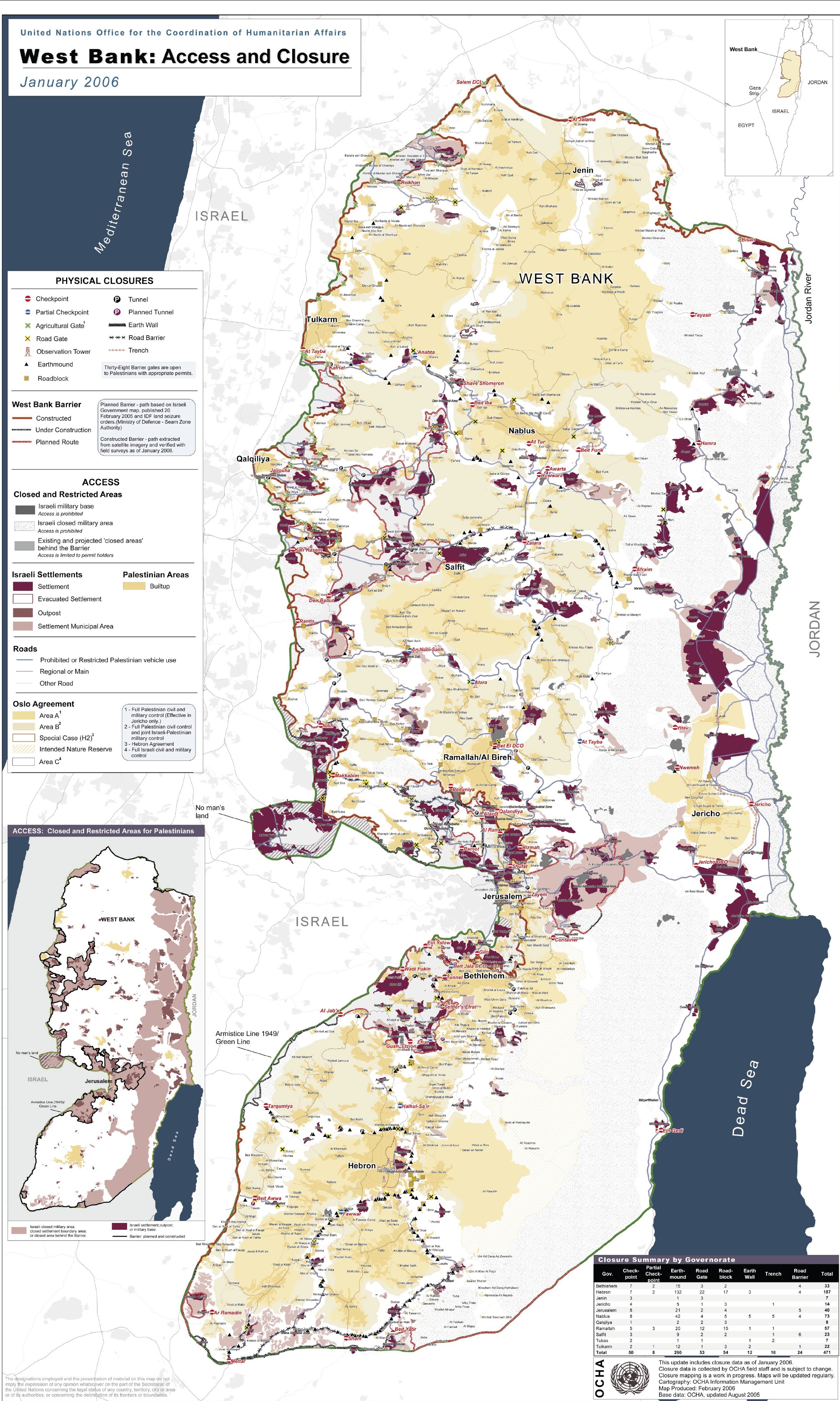
Russell Coker: Links January 2009

Jennifer 8 Lee gave an interesting TED talk about the spread and evolution of what is called Chinese food [1]. In that talk she compares McDonalds to Microsoft and Chinese restaurants to Linux. Her points comparing the different local variations of Chinese food to the variations of Linux make sense. The CentOS Plus repository has a kernel with support for the XFS filesystem, Postfix with MySQL support, and some other useful things [2]. Mary Gardiner comments about the recent loss of a blog server with all content [3]. One interesting point is that when you start using a service that maintains your data you should consider how to make personal backups in case the server goes away or you decide to stop being a customer. Val Henson makes some interesting points about the reliability of Solid State Disks (SSD) [4]. Some people are planning to replace RAID arrays of disks with a single SSD with the idea that a SSD will be more reliable, this seems like a bad idea. Also with the risk of corruption it seems that we have a greater need for filesystems that store block checksums. Lior Kaplan describes how to have multiple Linux bonding devices [5], the comment provides some interesting detail too. programmableweb.com has a set of links to sites that have APIs which can be used to create mashups [6]. One of the many things I would do if I had a lot more spare time is to play with some of the web APIs that are out there. Gunnar Wolf has written some insightful comments about the situation in Israel and Palestine [7]. He used to be a Zionist and spent some time living in Israel so he knows more about the topic than most commentators. Charles Stross has written an informative post about Ubuntu on the EeePC [8]. What is noteworthy about this is not that he s summarised the issues well, but that he is a well known science-fiction writer and he was responding to a SFWA member. One of his short stories is on my free short stories page [9]. He also wrote Accelerando which is one of the best sci-fi novels I ve read (and it s also free) [10]. Don Marti has written about Rent Seeking and proprietary software [11]. It s an interesting article, nothing really new for anyone who has followed the news about the coal and nuclear industries. Erik writes about The Setting Sun and points out that Scott McNealy had tried to capitalise on the SCO lawsuit but Red Hat has ended up beating them in the market [12].

MJ Ray: World Economic Forum 2009 in Davos

The World Economic Forum opens today (28 Jan) and runs until the weekend. This year most of the high-power planning sessions and feel-good corporate social responsibility whitewash has been replaced by sessions such as What Happened to the Global Economy? (Er, it broke because you bet more money than existed in the world?) There s a report from France24 and a programme of sessions. Like WEF in previous years, selected sessions are broadcast on SFinfo in German and Original Languages (often English) on Hotbird at 13east. Additionally, this year, there are webcasts (maybe the podcast version will play on free software) but it seems that none of the computing sessions are up for broadcast. Economics rules the airwaves for 2009. My main reason for posting here is to boggle at the WEF myspace competition. Isn t Myspace about the least appropriate of the big social networks for an economics forum? I suspect some payment or benefits from the network that Rupert Murdoch s company bought. There s also @davos which seems to be talking much more than listening seems appropriate for WEF, no?

27 January 2009

Joey Hess: ephemera vs the law

The changes to whitehouse.gov are being used as an example of ephemeral digital content.
At the exact moment Barack Obama was inaugurated, all traces of President Bush vanished from the White House website, replaced by images of and speeches by his successor. Attached to the website had been a booklet entitled 100 Things Americans May Not Know About the Bush Administration - they may never know them now. When the website changed, the link was broken and the booklet became unavailable.
At the same time, the Obama administration is chafing under rules that don't allow them to use Facebook, gmail, Blackberries, and Twitter. Because of this pesky Presidential Records Act.
Suddenly, they have to relearn how to communicate, because the law has not caught up with the way people live. They are being forced to return to older technologies (or they will once those technologies start working properly), and abandon or become more guarded in their use of newer technologies.
Anyone else find the dissonance am(az us)ing? Seems that anyone who really wants a copy of that missing booklet will be able to access it via FOIA in a few years (unless it got wiped with all of Cheney's files). Meanwhile, if the new guys find a way to stop being hobbled by the law, their digital content will likely be truely ephemeral, since they have become addicted to "newer technologies" that eliminate all expectations about data's preservation and privacy. I think this is one case of the law not keeping up with technology that I can support. It might be more fair to describe it though, as technology not keeping up with the law.

25 January 2009

John Goerzen: Review: The Economist

A few months ago, I asked for suggestions for magazines to subscribe to. I got a lot of helpful suggestions, and subscribed to three: The New Yorker, The Atlantic, and The Economist. Today, I m reviewing the only one of the three that I m disappointed in, and it s The Economist. This comes as something of a surprise, because so many people (with the exception of Bryan O Sullivan) recommended it. Let s start with a quote from the issue that found its way to my mailbox this week:
A crowd of 2m or more is making its way to Washington, DC, to witness the inauguration of Mr Obama. Billions more will watch it on television. [link]
Every issue, I see this sort of thing all over. An estimate, or an opinion, presented as unquestioned fact, sometimes pretty clearly wrong or misleading. For weeks before Jan. 20, and even the day before, the widely-reported word from officials was that they had no idea what to expect, but if they had to guess, they d say that attendance would be between 1-2 million. In the end, the best estimates have placed attendance at 1.8 million. Would it have killed them to state that most estimates were more conservative, and to cite the source of their particular estimate? That s all I want, really, when they do things like this. I knew going into it that the magazine (to American eyes) essentially editorializes throughout, and I don t have a problem with that. But it engages in over-generalization far too often and that s just when I catch it. This was just a quick example from the first article I read in this issue; it s more blatant other places, but quite honestly I m too lazy to go look some more examples up at this hour. I do remember, though, them referring to members of Obama s cabinet as if they were certain to be, back before Obama had even announced their pick, let alone their confirmation hearings happening. One of my first issues of The Economist had a lengthy section on the global automobile market. I learned a lot about how western companies broke into markets in Asia and South America. Or at least I think I did. I don t know enough about that subject to catch them if they are over-generalizing again. The end result is that I read each issue with a mix of fascination and distrust; the topics are interesting, but I can never really tell if I m being given an accurate story. It often feels like the inside scoop, but then when I have some bit of knowledge of what the scoop is, it s often a much murkier shade of gray than The Economist s ever-confident prose lets on. Don t get me wrong; there are things about the Economist I like. But not as much as with the New Yorker or the Atlantic, so I ll let my subscription lapse after 6 months but keep reading it until then.

Junichi Uekawa: Theo's post on hardlink backup tools made me think.

Theo's post on hardlink backup tools made me think. In his post, Wanted: Incremental Backup Solutions that Use a Database , he proposed making a incremental backup solution on Database (RDBMS). He's right that hardlinking files so much is putting load on filesystem, especially when fscking. One thing is that although conceptually RDBMS is handling relations, physically (and practically) they are doing similar stuff with hardlinked filesystems. They are just optimized differently, tuned for their 'fsck' behavior with many hardlinks. So, there could be a filesystem which can be tuned for hardlinking. Of course, just because I thought about it it doesn't mean I have come up with a good solution to the problem.

23 January 2009

Sylvain Le Gall: OCaml meeting 2009, subscription about to end

The subscription will end on January the 25th, for people willing to come to this unique OCaml event, this is your last chance !!!! We have 40 participants for now. I am quite happy with this number because it is almost the same as last year -- except that we do it in Grenoble rather than Paris. Anyway, I see that a lot of people who were there last year, will come back to this year events. There is also a few more people, in particular more from CAML consortium members. I have stepped down from the first talk about OCamlCore.org in favor of Stefano Zacchiroli. Zack has really helped me on this project since the begin (with Pietro Abate and Romain Beauxis). I am very happy that he can do the talk. I will do myself, a talk about my last project for Talend. This was a great project targeting to be as fast as a standard C application but in OCaml. The point is that OCaml helped me to do quickly a working prototype and then optimize it for speed. All in all, after 6 months I was able to deliver Talend with a working and fast application. This kind of release cycle is harder to achieve in other programming language. OCaml compile time verification helped me a lot. I hope that in the last remaining 2 days, some more people will subscribe. Wiki Subscription

22 January 2009

Pablo Lorenzzoni: I feel so old

I don t know maybe it s because my birthday is coming (Feb 10th)... or maybe because my wife s birthday is around the corner (Jan 26th), but I am feeling too old these days. I know, though, that at least part of it is due to Web 2.0! I feel like being the last geek still using my own mail server (everybody else is using Google Apps) and a console-based MUA (I am using Mutt for as long as I remember everybody else seems to be on Google s Gmail). I still don t have a Twitter or an Identi.ca account. I still use my ICQ account! I never got an OpenID. Just yesterday I was lost in a conversation about Google Reader! I am a lost case Is this how it is to become an old days geek? Now I know what those bearded geeks from the 70s felt

John Goerzen: Hope

Our power alone cannot protect us, nor does it entitle us to do as we please. . . Our security emanates from the justness of our cause; the force of our example; the tempering qualities of humility and restraint. - Barack Obama, inaugural speech, Jan. 20, 2009
This, right here, is why, for the first time in my life, I actually feel good about an American president. Why I have hope about our government for the first time in years. Why I m glad I used a vacation day to sit on the couch and watch TV yesterday. On the occasion, once every 4 or 8 years, that is a celebration of American strength, power, and pride, we see our new president speaking of humility, of peace, of moral leadership, this is something remarkable. Past presidents have used occasions such as these to speak of crushing our enemies, of wanting people dead or alive, of grand government promises that turned out to triple the national debt. Obama spoke of extending the hand of friendship to anyone that would unclench their fist. He spoke that we had kicked the can down the road too far, and now we ve reached the end of the road. We have to stop thinking that we can have everything: low taxes, expensive programs, and a large military, simply by mortgaging our future. And he leveled with us: we all are in this together, and all have to work to make it better. Conventional politicians assumed it would be political suicide to say even half of what Obama has said. Yet he went out there and did it. He was blasted during the campaign by people on both sides of the political spectrum for being just words . He s the first presidential candidate that meant what he said about bringing Americans, and their representatives, together. The shock in Washington has he invited gasp! both an openly gay bishop and an anti-gay evangelical minister to give prayers was telling. It s as if people were saying, Wait, he really MEANT that? Yes, he did. Let s hope he can pull it off. And as Rev. Lowry concluded with his benediction:
With your hands of power and your heart of love, help us then, now, Lord, to work for that day when nations shall not lift up sword against nation, when tanks will be beaten into tractors, when every man and every woman shall sit under his or her own vine and fig tree and none shall be afraid, when justice will roll down like waters and righteousness as a mighty stream. . . Let all those who do justice and love mercy say Amen. (amen) Say Amen! (Amen!) Say Amen! (AMEN!)

21 January 2009

MJ Ray: SPI January 2009

The monthly board meeting of SPI will take place on irc.oftc.net #spi tonight (Wed 21 Jan) at 20:00 UTC. Members may have seen that the meeting announcement is delayed because the secretary has been ill and it seems that none of the other board members has stepped in to take over. I think the only new associated project currently under discussion is waiting for a legal opinion, so your guess about the meeting contents is probably as good as mine. My guesses: there will probably be a treasurer s report; Martin Zobel-Helas has been filling in the gaps in the 2007-8 minutes, so there ll be two or three sets for approval; the secretary may report on website redevelopment progress; Privoxy might have taken up the offer of associated project status from the SPI December 2008 meeting; and there might be a report on Tux4Kids trademarks. Watch the comments below this article for a link to the summary when posted.

19 January 2009

Gunnar Wolf: About the recent events and possible outcomes in Israel and Palestine

Several friends, from different groups and backgrounds and with different points of view regarding the current war in Israel (and regarding the Arab-Israeli conflict in general) have asked me for an explanation on what is happening there, what is (my view of) the real conflict, its causes... and any possible answers. And yet I am quite far from being an authority, I do want to write something about it. Be prepared, as this post is quite long.
And yet, after writing frankly a lot more than what I expected... It is by far not enough. I have still much more to add, but I have to say "stop" at some point. So, here you have it: My points of view, as well as some explanation on why are we standing where we currently are.
I am writing this based just on my personal experiencie and, of course, my personal point of view. Furthermore, I wrote a good part of this text while riding a bus, with no network access, so I am offering very few references - In any case, it will allow me to make much more progress. References always take as much time as the text itself! About me Why am I writing this? Why do people ask for my opinion? I must start by explaining who I am, so the rest of this makes sense. I am a Mexican Jew. That means, I was born in a Jewish (albeit secular) family, and grew up in an environment with general Jewish culture. My direct family (say, my parents and brother, and to a lesser degree my closest cousins) are not at all religious, I'd even venture to say most of us are complete atheists. Yet, besides the cultural belonging (which is a mixture of a Eastern European culture with lots of Idish words and dishes and general humor), my family has a strong national identification - In other words, I grew up in a fully Zionist environment, which traces back to Poland.
My grandmother was member of Hashomer Hatzair in Poland, since the early years of its existence, late 1910s and early 1920s. What is it? To make it short, a Zionist Socialist, Kibbutzian youth movement. It has many similarities (and somewhat stems indirectly from) the Scouts many of you will be familiar with, but -obviously- has a way lengthier agenda. And, yes, nowadays I feel it is somewhat out of reach with the current state of the world - It was founded in 1913, and only slightly adjusted its principles since then.
I will talk more about Hashomer later on.
My grandmother arrived in the late 1920s to Mexico, for familiar and economic reasons, but still dreamt about living in Israel for a long time. As they grew up, first my uncle joined Hashomer in Mexico in the late 1940s, when it still pursued a very much Soviet-style ideals for Israel (one of the core points that changed during the 1950s); both my father and my mother joined in the late 1950s (in fact, that's where they met). My cousins and myself were very active in the 1980s and 1990s.
The Iszaevich family has something very unusual, I'd say, engraved in our genes. We live very deeply our ideologies. That's the only explanation I can find to the way we all have led our lives. I won't go into the other family members' details, but just into mine: I was fully convinced of all we taught to our younger members and what we discussed among ourselves. I am among the very few people who really learnt Hebrew at my school, and that was only because I really cared - I know some people that just after 12 years of pseudo-learning could maybe utter a few phrases.
After finishing high school I went with my Hashomer group, together with people my age from other similar-minded Mexican Zionist youth groups, to live and learn for a year in Israel, on what is usually known as shnat hajshar - A year to get ready. To get ready to what? But of course, to come and give back go the younger groups of the movement, and finally go back to Israel and settle there definitively. I came back to Mexico, and after one year I did the only thing that was logical: I became an Israeli and went to live to a kibutz - Zikim, a beautiful place just between Ashkelon and Gaza, very near the sea shore. It was a beautiful period in my life, and I really enjoyed it - But it didn't last for very long - I quickly grew to hate the Israeli society at large. A society full of rage, of hatred. Not just between Arabs and Israelis, as many would think from the outside, but between religious and seculars. And between immigrants and locals. And between leftists and rightists (in several dimensions, as it is one of the countries where you can most easily be a economic leftist while being a political rightist - a complex society it is). A society full of disrespect and intolerance. A very hypocritical society. And one of the things that most shocked me: I wanted to live in a society of proud of its existence, that's what I had learnt Israel was - But Israelis aspire and dream of being anything else (and mostly US-Americans) in a way that made me sick, more than anything I had previously seen in Mexico.
I loved the life at the Kibutz, and I loved being an agricultor, doing hard work every day and literally getting the fruit of it. However, I cannot live isolated to a 300-people universe - At least once a week you have to go to the city if you don't want to become insane. And I could not stand the sick Israeli society.
Anyway, to make things short: After six months as an Israeli, I came back to Mexico. I went through a long period of finding myself, as I could not uphold anymore my Hashomer ideology (if I am not going to live by it, how can I continue teaching it?). Many people do anyway, but for the first months, where my Hashomer work was basically all of my life, I felt really uncomfortable. So, in short, I severed all of my relations to the Jewish community, and even denied for a long time my Jewishness until I found a (I think) better balance.
Today I am at peace. But anyway, I wanted to talk about myself in the critical period that marked me in this regard: The 1990s. Enough, lets get down to business. Zionism 1870-1920 Many people argue that the Jews invaded the Palestinians homeland - And yes, nowadays I cannot counter this. But we cannot judge what happened then based on what we see now.
Modern Zionism started around the 1870s. The Jewish history is full of pogroms and persecution, in different countries all over Europe - And a group of young people decided the only solution was to build a place to call their own. And yes, this was full of idealism and in no small part the foolishness of youth. For several centuries and up to 1920, all of current Middle East were provinces of the Ottoman Empire. Before Zionism began, the population of today-Israel was very sparse, not more than 400,000 people - up to 5% of them Jewish, around 10% Christian Arabs, and the remainder, Muslim Arabs. Of course, the low population was mostly because the country was mostly hostile - A desert in the South, mostly swamps in the North, and some minor towns mostly in the hills. It was a mostly forgotten province, away from the central Turkish rule, and there had been no frictions with the local population. It was a nice place to go, thinking -again- as a fool youngster, or as an idealist. They said, lets take a folk without a land to a land without a folk.
The number of accomplishing Zionists (this is, people who actually went to Israel instead of just talking about doing so) was not high during the first decades. But towards the 1890s, it gained critical mass. The political Zionist movement was born, with Theodor Herzl as a leader, and they started pushing -politically- for different governments to concede a territory to Jews. They went to the Turks, and didn't really get much echo. Went to other colonial powers of the time, and got unfeasible promises with no real backing (i.e. Birobidjan in Eastern Russia, Uganda in Africa)... And, as it happens in strongly ideologized movements, the movement started splitting into different groups with slightly different positions.
And no, I am not talking about the People Front for the Liberation of Judea and the People Judean Liberation Front, but I very well could. Sometimes the differences are as ridiculous as that. But hey, I take that most of my readers are acquinted with the Free Software issues, right? Think BSD vs. GPL vs. OpenSource. To give a broad idea - Only in Mexico City, with a very small Jewish community (~30,000 people), in the mid-1990s we had over 10 such movements, with 50-150 youngsters attending each. And even though some were local, and even though some very important ideologies are not represented in this country, they are all different enough to exist as separate entities. British Mandate The Ottoman empire was divided after the first World War. Its possesions in Europe became independent states, while in Asia (and Africa, if you take the semi-independent Egypt and part of Sudan into account) they were taken over as colonies or protectorates by France and the UK - Evidently, attempting to secure a long-term dominion over the area. In some aspects, they failed. In some aspects, they were (and still are) tremendously successful. The division of people by setting arbitrary boundaries has led to countries sustainable only by force and a harsh rule (such as Iraq, Lebanon and Syria), or doomed to poverty (and thus submission) due to lack of natural resources (as Jordan). Focusing on Israel/Palestine, the UK entered the area by making mutually incompatible promises to arabs and Jews - i.e. the Hussein-McMahon letters and the Balfour declaration, both ambiguous enough to lead to... Well, today. The UK rule was disastrous to the region, both in giving (and taking away) power from all sorts of puppet regimes, and swiftly going away as soon as things started looking too complicated. Yes, typical colonialism.
So, while up to the 1920s there was no real animosity between Arabs and Jews (as i.e. the Faisal-Weizmann agreement shows), during the next decades the seeds of hatred started growing, from both sides.
Many people still quote the 1947 partition plan as the direct antecedent towards Israel's real existence - That was not the first partition plan that existed. Ten years earlier, the Peel commision suggested a similar partition involving forceful population transfer. And many people see the separation of Transjordan (now Jordan) from Palestine in 1922 as a first partition. It is understandable that both partition plans (much more the 1947 than the 1937 one) were accepted by Zionists: Going from having nothing to having something (and against all odds in the environment they lived) is acceptable.
From the Zionist side, two main groups rejected the partitions: The right-wing and religious groups, insisting that the whole of the Mandate should become Israel, and the left-wing groups, which advocated for a single, bi-national state, with equal rights for all of its population. Go over and read this last link, as it was quite interesting (to me at least) to see how this solution has kept existing and regarded by (relatively) many people, and has many interesting links. 1948 onwards: Where did the refugees come from? The November 1947 partition didn't exactly translate to a planned, smooth Israeli independence - It led to six months of revolts (basically, a civil war). By mid May, the UK government and troops abandoned the territory, and one day later, Israel declared its independence. And, of course, all neighbouring countries (and Iraq) sent their troops to invade Israel. The war lasted for over six months (cease-fire was signed in January 1949). There was an intense Arab campaign indicating the armies would enter Israel and devastate it, leaving no stone in place, indicating Arab population to temporarily leave the Jewish-destined areas. The war, they said, would not take more than a couple of months, and they would be able to go back home.
Only that... When the war ended, the results were far from what the Arab governments expected. Not only Israel continued to exist, but it conquered important territories.
Of course, the Israelis were not innocent from said exodus: During the 1947-1948 civil war, and the independence war, some of the existing so-called self-defense forces (some of them were really defensive, while some were quite aggressive, even terrorist) attacked Arab villages in strategic or predominantly Jewish areas to prompt them to leave - yes, what we today call ethnic cleansing.
I had (in my head) the number of 650,000 Arabs (from a total of slightly over a million) fleeing to neighbouring countries. Wikipedia states that it is somewhere between 367,000 and 950,000. A similar number of Jews were expelled from Arab countries, many of which arrived to settle at Israel (and many others went elsewhere - For instance, a good part of the Mexican Jewish community is from Syrian origins - Many of them fleed in those years). Israel didn't accept back the (relatively few) Arabs that requested to resettle, as they were seen as hostile population - but neither did the countries that "temporarily" accepted the Palestinians accepted them as citizens. The Palestinian refugee camps today, mainly in in Lebanon, Syria, and the occupied territories held by Israel have terrible living conditions, and its population -despite living there for over 60 years- have no civil rights at all. Note that I'm omitting Jordan here, although it has several camps as well, as their situation is way better.
The Arab population that didn't leave did receive full Israeli citizenship. No, their living standards are not up to level with the average Israeli. The country and the society do have a sensible degree of racism and segregation. But the situation is nowhere as terrible as it is in the camps.
The areas which were originally to become Palestinian and were not conquered by Israel -this is, current-day West Bank and Gaza- bacame respectively Jordan and Egyptian territory. While Jordan did fully extend its soverignty covering the West Bank, Egypt didn't - Gaza is, since 1949, occupied military territory. Gaza, among the most densely populated areas in the world, has had their inhabitants under military rule ever since. When Israel returned the Sinai after signing the peace treaty with President Sadat, Egypt didn't accept Gaza back - And that's where today's greatest problem is born.
Now, Israel conquered those territories in 1967, along with the very sparsely populated Sinai and Golan. For the first ten years, the territories were basically only administered (yes, under a military rule). In 1977, with the first right-wing Israeli government, an extensive settlement policy began (and led partly to today's seemingly unsolvable situation). In 1980-1982, Israel withdrew from the Sinai. In 1981, Israel claimed full soverignty over the whole of Jerusalem and the Golan. In 1993, the "Oslo Agreement" was signed between Israel and the PLO, and it seemed we were heading towards a bright future. I lived in Israel between 1994 and 1996 - Yes, the most hope-filled period in the country's life.
Since 1996, I have tried to keep up to date with the country's evolution. All in all, even if I won't live there again, it is a country I learnt to love, a society I have long studied (even if in the end I did include many references, I wrote most of this text just off the top of my head, with the data I remember - so it might have several big errata). And yes, I keep the political stand I had 12 years ago: The only solution is to dialogue, to treat the current enemies -and not only their governments- with respect, recognizing their dignity and right to life, to self-determination. Only then we will change the status quo. How not to fight hatred Since 1993, the dream of peaceful coexistence seems to have faded. What we saw during the past three weeks, along to what we saw in Lebanon in 2006, is plainly a gross mistake if the goal is to achieve good, lasting peace.
Try to imagine how could life in Gaza be, even in the total absence of Israeli attacks. Just to set some numbers first: The Gaza strip hosts almost 1.5 million people on 360 km . When I lived in Israel, I was constantly surprised at how small a country it is - Israel tops at 550Km North to South, 150Km east to West (it is amazing, almost wherever you stand, except in the middle of the Negev, you can see the country's borders. Yes, I recognize as the border the so-called Green Line); over half of the territory is a desert, and it hosts seven million inhabitants. And it is hard to imagine how that country can be economically viable.
I do not find it feasible to imagine Gaza and the West Bank integrating a single country, and not only because they are separated by ~40Km, but because they are so sociologically different. People in the West Bank, yes, live opressed under military rule and subject to a much more constant, more visible apartheid-like state (as the territory is truly sprinkled with Jewish outposts which many Israelis refuse to recognize as their own, but still, which have incredibly higher living standards). The best land has been taken away from them, yes, but they have some space between cities to have some farming, to communicate, to... Breathe. Besides, West Bank inhabitants -even those in refugee camps- have much better living standards than anybody in Gaza. It is still an overpopulated area, but not nearly as much as Gaza.
Gazan population have been driven towards extremism. And yes, there was a civil war between Palestinian factions, as the world views between both populations are completely different - However hostile a Jenin inhabitant can be towards Israel, he does not lead the life -if it can so be called- you see at Khan Yunis.
But back to Gaza... What Israel is doing (and not only during this military operation terror campaign is wrong, from any rational point of view. Israel wants Hamas to become weaker? Then don't drive the population into supporting them!
Palestinians started giving over 50% of their support to Fatah (ex-PLO), and under 20% to Hamas. That was less than 15 years ago. However, Fatah has shown to be corrupt and inefficient at building infrastructure and improving life conditions, ineffective at negotiating a permanent agreement which secures dignity and sustainability to their people. Hamas stands as a religious, righteous organization. There are no serious corruption charges against any Hamas leaders. Hamas is clearly still at war - They didn't subscribe any peace agreement so far, and their stated #1 goal is to build a Muslim State in the whole of Israel. And the Hamas movement -like Hizbollah in Lebanon- has built quite a bit of infrastructure in the areas they control - Mainly housing. Yes, housing where they mix their own offices, many will accuse, getting human shields for free. But still, they are benefactors to a dehumanized, pauperized population.
I find it obvious that, if living conditions were at a basic level in the region, support of Hamas would decrease. Even more, of course, if they improved due to Israeli support. Israel controls this territory, so it is responsible for the well-being of its population, like it or not. And Gaza is simply too small and low on resources to survive by itself.
I was a bit surprised to find mention -although very brief- of a three state solution - And yes, this is close to what I would expect as a viable outcome. It is clear that Israel will not ever grant full citizenship to the Palestinians, as they would -euphemistically speaking- challenge the Jewish character of the State. Dropping the euphemism, Israel relies on apartheid in order not to become an Arab majority country. I might have some numbers wrong, but AFAIK, there are ~7 million Israelis, 20% of which are Arab citizens (which means, 1.4 million Arabs and probably 5 million Jews, with many other minor denominations for the difference), and ~4 million Palestinians live in the territories. Today, the country is already predominantly Arab, or at least is close to being so. So, Israel should permanently, formally disengage from all of the occupied territories. And in order to ensure violence stops, start a comprehensive, unconditional, long-term aid program. Start with giving them autonomy to regain their sea, as the Gaza port has long been closed. Allow the airport to operate again. Instead of bombing tunnels in the Egypt-Gaza borders, allow Gaza to trade with Egypt - Perhaps even to integrate territorialy, if the conditions are met. Treat their people with respect, and help them ease the terrible situation they have lived for so many decades - and then, undoubtely, terror will stop.
The West Bank? Possibly it could become a Palestinian state by itself. Possibly, it could integrate back to Jordan. That would be up to Jordans and Palestinians to decide. Of course, Jordan has already a large segment of its population defining itself as Palestinians, which counts both for and against. So, I won't venture into this supposition.
But anyway - Back to what prompted me to write this text -yes, a very or maybe even too long text - I hope somebody even takes the time to read it!- is to explain what is my point of view on the current situation, and why.
Today, a cease-fire was announced, after 23 days of murder and destruction. I sadly do not hold very high hopes for it to be lasting, much the less to be enough, to lead to what they call a de-escalation of the conflict. The most I can currently do is to voice my opinion, and hope that mine is just one more voice pointing to a sane solution, to a permanent, dignifying way out, for all people involved. Every people has the right for survival and for safety. We cannot deny this to any others. And certainly, we cannot expect anybody not to fight for their right to live.

Axel Beckert: Traveling plans for the first half of 2009

Since the time between the years is traditionally family time for me, I never were at the Chaos Communication Congress. So I wasn t at 25C3 either. All the more I look forward to HAR2009 this summer (13th to 16th of August near Vierhouten in the Netherlands), but also because, for the last three years I always have been in the Netherlands for one week in summer, sailing with friends on the sselmeer. But before HAR2009, there will be a bunch of other events to visit and people to meet in real life: Then there will be the big summer holidays driving around in the middle of Europe with the 2CV and taking part in most likely: This also means that I ll probably miss: at least unless one of the other events I plan to visit doesn t take place as expected or my plans change heavily. P.S.: Anyone thinks this amount of events justifies a Dopplr account? ;-) Or is there somewhere a free online service similar to Dopplr, but runs software under the GNU Affero General Public License like e.g. identi.ca and many other Laconica instances do for microblogging?

18 January 2009

Junichi Uekawa: Tokyo Debian Meeting.

Tokyo Debian Meeting. Tokyo, 17 Jan 2009. Main topics discussed were, installing on Aspire One, installing on Sony Vaio P, configuring kernel (generating .config) from lsmod information, and other interesting stuff.

15 January 2009

Alastair McKinstry: More exoplanets: super-Earths or Neptunes ?

From Today's Astronomy & Astrophysics there were two papers from the Geneva Observatory / Grenoble team on The HARPS search for southern extra-solar planets: These are probably part of the 45 super-Earths tentively announced by M. Mayor last June at the Nantes conference on super-Earths. He showed radial-velocity diagrams for 45 or so planets in an impressive display, but only gave details of three at the time, while the rest were being peer-reviewed, etc. Now they're drip-feeding out. Interestingly, this now makes 3 out of 7 super-Earths do far discovered as being around M dwarf stars, and another multiple planetary system. It looks more like the "metallicity" relation (larger and more frequent planets around more metallic stars) seems to be more true for gas giants than terrestrial planets. Super-Earths (potentially rocky planets, though heavier than Earth) look more abundant around low mass and less-metal stars. Now, down to work examining the characteristics of these planets. Rory Barnes and colleagues at LLPL, U. of Arizona have also been looking at these three planets around HD 40307, to determine if they are super-Earths or mini-Neptunes. They have an interesting technique of modelling the tidal circularisation of the planet backwards in time, based on its current measured or estimated eccentiricity. Tidal circularisation makes the orbit of close-in planets more circular (decreasing the eccentricity, e, to zero), dumping the energy into tidal heating of the planet (and the star). Doing this for Gl 437, for example, they showed that it would be hotter than Io, with a volcanic surface and couldn't be habitable. For HD 403007b, Hence they believe the planets are not terrestrial-like, but may be more Neptune-like. So, could these planets have oceans ? Tags , , ,

MJ Ray: FS-4400 Satellite PVR

You may remember that I m quite a satellite TV fan, having installed it in 2004 and compiled a FAQ. Over the holidays, I replaced my 4-year-old Digiquest receiver (terrible website) with a FortecStar FS-4400 PVR from Maplin. I d love to build a MythTV but how am I ever going to build such a small, quiet receiver for anything like that price? The FS-4400 s decoder gives a dribblingly clear picture and (one firmware upgrade later) the recorder works flawlessly. I can even watch other channels on the same transponder while recording. It has a couple of small niggles (the file manager that appears every damn power-on, the pidgin English on-screen displays and it s too easy to activate the motor), but it seems pretty good value on the whole. Now I ve a dilemma. I put a 4Gb USB stick into it, just to see how I got on with the recording. I like it, but 4Gb is enough for only 2 or 3 hours and I don t want to get into swapping sticks around like video casettes. I still don t know what s where on half my tapes. I ve seen a few places report things like Solid State Drives Getting Ready to Take Over (by Jaymi Heimbuch) with much larger capacity just around the corner, but the best rate I found today is around 1 Gb/pound for SSDs up to about 32Gb, compared to nearly 10 Gb/pound for USB-powered hard disks from around 300Gb. On the flip side, SSDs are silent and I don t know how noisy or power-hungry the HDDs are. How would you play this? By the way, if you care about UK TV, BERR.gov.uk is consulting about reducing Sky s control of itv - what s to consult about? Sky s doing all they can through the courts to drag their feet, but we need to put the independent back into independent television! Tell them by Friday 23 January 2009, please.

Next.

Previous.