Search Results: "ag"

23 November 2011

Philipp Kern: Useful Firefox extensions (followup)

Since my last post about Firefox extensions I've enabled two other addons:

Through the comments I got pointed to Fox to Phone which enables you to send links from your browser directly to your Android phone with Chrome to Phone installed. Thanks for that.

Another useful extension that was recommended to me is LeechBlock. You give it a list of news sites you regularly frequent and it will make sure that you only spend a given time budget on them per day or that you only browse them in the evenings (or even a combination of both).

As I expected I did deactivate RequestPolicy again. That said, Facebook recently switched its certificates, so Certificate Patrol was unhappy. It's impressive and sad how many pages actually do cross-site requests to embed Facebook's buttons. If somebody would invent something less annoying to stop this mess, that would be great.

Jon Dowland: In response to Andrew Cowie

Andrew Cowie blogs about 'A good GNOME 3 Experience'. He writes
I think it s a bit odd not to expect that something that was widely advertised as being such a different user experience is different.
and
if they had gone and bought an Apple laptop with Mac OS X on it they would be perfectly reasonably working through learning how to use a new Desktop and not complaining about it at all. But here we are admonishing the GNOME hackers had the temerity to do something new and different.
I think Andrew's phrasing here is a bit disingeneous. Or perhaps he genuinely mistakes the frustration that has been felt by GNOME 3. I don't want to whine on too much, so I'll try to get this out of the way in one paragraph. F/OSS users are members of a community. There is inevitably a wall between the majority of community members and the blessed: the decision makers, the developers. The art of maintaining a good community is partly to do with making this wall as invisible as possible: encouraging participation, lowering the barrier for contributions; welcoming feedback; etc.1. The GNOME community have invested a lot into the GNOME 2 way of doing things, and GNOME 3, by breaking away from that so fundamentally, has devalued the community's investment. It screams: we don't want your panel widgets! We don't want your themes! Your working practices are wrong: this is the right way! GNOME 3 is opinionated software, and it's opinion differs from a large body of the GNOME community. The result? resentment. Remember: GNOME 3 is not just something new: it's the abrupt termination of something old, tried and tested. and hopefully that's the last time I need to vent about my GNOME 3 frustration. It's hear to stay, the question for the frustrated is: are you? Moving on Andrew goes on to recommend:
One thing I do recommend is mapping (say) CapsLock as an additional Hyper You do the mapping in: System Settings Keyboard Layout Layout tab Options..
I used to do this with GNOME 2, but I couldn't find how to do it on GNOME 3. Andrew's post gave me the important hint that it was still possible, but the precise location doesn't match: On my Fedora 16 / GNOME 3.2 system, it's System Settings Region and Language Layouts Options ". This is especially useful on my beloved UltraNav keyboard which lacks the Windows 95 keys. Sadly it does not work very well through various remote desktop tools: I get an inconsistent capslock state within VMs connected to via VNC. rdesktop seems ok.

  1. I have more to write about GNOME in this context in a future post.

22 November 2011

Joachim Breitner: First contribution to a basic Haskell library

While working on SAT-Britney, I made heavy use of the IntSet data type provided by the basic Haskell library containers . Since memory consumption was a problem, I looked at its implementation, which is a binary tree, and wondered whether this could be improved for dense sets by using a machine sized word as a bit map to represent a continuous part of the integers, so I started to implement it. The effect on my program was not as strong as I had hoped for, but nevertheless, the code made its way back into containers after a thorough review and a considerable amount of further improvements by Milan Straka. I m getting sucked deeper and deeper into the Haskell community... (which means that the Haskell community does not suck, of course.)
Flattr this post

Steve Kemp: Goodbye mysql ..

Yesterday evening I updated my server to remove MySQL:
steve:~# dpkg --purge mysql-client-5.1 \
                      mysql-common     \
                      mysql-server-5.1 \
                      mysql-server-core-5.1 \
                      python-mysqldb        \
                      libdbd-mysql-perl     \
                      libdatetime-format-mysql-perl
Until last month I had two database in use, one each for a pair of web-applications. As of now one is using redis - which I'm already using for my image hosting - and the other application is using SQLite. Until recently I had a high opinion of SQLite, although that has now been downgraded a little, it is still a thoroughly excellent piece of software. I was just surprised at little things it was missing, to the extent I had to rewrite my applications SQL. Still one less service is a good thing, and the migration wasn't so painful.. In more productive news I recently acquired a nice external flash - the Yongnuo YN-460 II is (very) cheap and cheerful, it can be fired remotely with my triggers so I've had a lot of fun with opportunistically taking pictures and experimenting with lighting. Most of the results are NSFW, but there are some other examples lurking around including the first time I managed to successfully capture a falling water-drop. (Not the best picture, not the most explicit effect, but fun regardless. I both can and will do better next time!)
Somebody recently asked me to write about "camera stuff under linux" and happily I declined. Why decline? Because there are so many good tools, applications, and utilities. (I use local tools for organisation and duplicate detection, rawtherapee for RAW conversion and GIMP for touchups). Having many available options is fantastic though, and something hard to appreciate for "newcomers" to Linux. (Yeah I waited 90 seconds - if I remembered to add -nojava - for Netscape Navigator to start, under X10, with 8Mb of RAM. Happier days are here. Sure DRM is bad, secure boot .. an open question, but damn we have it good compared to almost any previous point in time!)
ObQuote: "Yeah, obviously it is only a tactical party. I'm only having a party to eventually get sex." - Peep Show

Thorsten Glaser: Those small nice tools we all write

This is both a release announcement for the next installment of The MirBSD Korn Shell, mksh R40b, and a follow-up to Sune s article about small tools of various degrees of usefulness. I hope I don t need to say too much about the first part; mksh(1) is packaged in a gazillion of operating environments (dear Planet readers, that of course includes Debian, which occasionally gets a development snapshot; I ll wait uploading R40c until that two month fixed gcc bug will finally find its way into the packages for armel and armhf. Ah, we re getting Arch Linux (after years) to include mksh now. (Probably because they couldn t stand the teasing that Arch Hurd included it one day after having been told about its existence, wondering why it built without needing patches on Hurd ) MSYS is a supposedly supported target now, people are working on WinAPI and DJGPP in their spare time, and Cygwin and Debian packagers have deprecated pdksh in favour of mksh (thanks!). So, everything looking well on that front. I ve started a collection of shell snippets some time ago, where most of those small things of mine ends up. Even stuff I write at work we re an Open Source company and can generally publish under (currently) AGPLv3 or (if extending existing code) that code s licence. I chose git as SCM in that FusionForge instance so that people would hopefully use it and contribute to it without fear, as it s hosted on my current money source s servers. (Can just clone it.) Feel free to register and ask for membership, to extend it (only if your shell-fu is up to the task, KNOPPIX-style scripts would be a bad style(9) example as the primary goal of the project is to give good examples to people who learn shell coding by looking at other peoples code). Maybe you like my editor, too? At OpenRheinRuhr, the Atari people sure liked it as it uses WordStar like key combinations, standardised across a lot of platforms and vendors (DR DOS Editor, Turbo Pascal, Borland C++ for Windows, ) ObPromise: a posting to raise the level of ferrophility on the Planet aggregators this wlog reaches (got pix)

Raphaël Hertzog: People behind Debian: Stefano Zacchiroli, Debian Project Leader

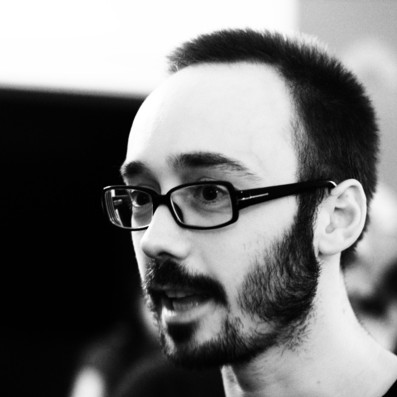
picture by Tiago Bortoletto Vaz, CC BY-NC-SA 2.0


It s been one year since the first People behind Debian interview. For this special occasion, I wanted a special guest and I m happy that our Debian Project Leader (DPL) Stefano Zacchiroli accepted my invitation. He has a difficult role in the community, but he s doing a really great job of it. He s a great mediator in difficult situations, but he s also opinionated and can push a discussion towards a conclusion. Read on to learn how he became a Debian developer and later DPL, what he s excited about in the next Debian release, and much more. Raphael: Who are you? Stefano: I m Stefano Zacchiroli, but I prefer to be called Zack, both on the Internet and in real life. I m 32, Italian, emigrated to France about 4 years ago. I live in Paris, and I find it to be one of the most gorgeous and exciting cities in the world. As my day job I m a Computer Science researcher and teacher at University Paris Diderot and IRILL. In my copious free time I contribute to Debian, and I m firmly convinced that doing so is an effective way to help the cause of Free Software. Besides, I find it to be a lot of fun! Raphael: How did you start contributing to Debian? Stefano: Flash back to 1999, when I was a 2nd year student in Computer Science at the University of Bologna. Back then in Italy it was uncommon for young geeks to get exposed to Free Software: Internet was way less pervasive than today and most computer magazines didn t pay much attention to GNU/Linux. Luckily for me, the professor in charge of the student lab was a Free Software enthusiast and all students machines there were running Debian. Not only that, but there was also a student program that allowed volunteers to become sysadmins after having shown their skills and convinced the director they were trustworthy. Becoming one of those volunteer Debian admins quickly became one of my top objectives for the year, and that is were I ve learned using Debian. The year after that, I got in touch with a research group that was to become the happy bunch of hackers with whom I would have done both my master and PhD theses. They were designing a new proof assistant. Most of the development was in OCaml and happened on Debian. OCaml was available in Debian, but many of the libraries we needed were not. So I approached the Debian OCaml Team offering to help. Before I realize what was going on I was (co-)maintainer of tens of OCaml-related packages. At some point I got told I think you should apply as a Debian Developer . So I did and in a couple of months I went through the New Member (NM) process, that was back then in its infancy. I still remember my happiness while reading the account created mail, the day after my 22nd birthday. I know the NM process went through some bad publicity in the past, but I m happy to see that nowadays the process can be as swift as it has been for me 10 years ago. Raphael: It s your second year as Debian Project Leader (DPL). Are you feeling more productive in the role? Do you fear to burn out? Stefano: I m feeling way more productive, no doubts. The task of the Debian Project Leader is not necessarily difficult, but it is a complex and scarcely documented one. It is also profoundly different from any other task that Debian people usually work on, so that experience doesn t help much in getting started. Before becoming effective as DPL one needs to get to know many people and mechanisms he is not familiar with. More importantly, one needs to set up a personal work-flow that allows to keep up with day-to-day DPL tasks (which are aplenty) as well as with urgencies (that tend to pop-up in the leader@debian.org INBOX at the least convenient time). Finally, one also needs to do proper traffic shaping and always retain enough motivation bandwidth to keep the Project informed about what is going on in DPL-land. Finding the right balance among all these ingredients can take some time. Once one is past it, everything goes way more smoothly. The above is why I m constantly encouraging people interested in running for DPL in the future to reach out to me and work on some tasks of the current DPL s TODO list. I swear it is not just a cheap attempt at slavery!. It is rather an attempt at DPL mentoring that could be beneficial: both to give future candidates more awareness of the task, and to reduce the potential downtime when handing over from one DPL to the next. Regarding burn out, I don t feel prone to its risk these days. If I look back, I can say that my contributions as DPL have been pretty constant in volume over time; my enthusiasm for the task, if anything, is on the rise. The effectiveness of my contributions as DPL are, on the other hand, not mine to judge. Raphael: If you had to single out two achievements where you were involved as DPL, what would they be? Stefano: I d go for the following two, in no particular order: OK, let me cheat and add a third one I m also proud of having been able to report to the Project my whereabouts as DPL, thoroughly and periodically, since the very beginning is first term. People annoyed by my reporting logorrhea now have all my sympathies. Raphael: Among the possible new features of Debian Wheezy, which one gets you excited most? Stefano: It s multi-arch, no doubt. Even though it is not a directly user visible change, it s a very far reaching one. It is also one of those changes that make me feel that moment of truth of coders, when you realize you are finally doing the right thing and ditching piles of ugly hacks.
It s multi-arch [ ] you realize you are finally doing the right thing and ditching piles of ugly hacks.
Raphael: If you were not DPL and could spend all your time on Debian, what project would you do? Stefano: I would sit down and do software development for Debian. It s impressive how many important and beneficial changes for Debian could be delivered by specific software improvements in various parts of our infrastructure. We tend to attract many packagers, but not so many people willing to maintain Debian infrastructure softwares like dak, britney, debbugs, the PTS, etc. Their maintenance burden then falls on the shoulders of the respective teams which are generally very busy with other important tasks. As a project, we seem to be more appealing to packagers than to software developers. That is a pity given the amount of exciting coding tasks that are everywhere in Debian. Part of the reason we are not appealing to developers is that we are not particularly good at collecting coding tasks in a place where interested developers could easily pick them up. It also takes quite a bit of inside knowledge to spot infrastructure bugs and understand how to fix them. I long for some spare hacking time to check if I m still good enough of a coder to hunt down longstanding bugs in our infrastructure, which have ended up being my pet peeves. I d also love to dive again into RCBW. It s less committing than package maintenance, more diverse and challenging, and also an immensely useful activity to get Debian releases done. Raphael: Martin Michlmayr is worried that there is so few paid opportunities around Debian. Do you agree with his sentiment, and if yes do you have ideas on how to improve this situation? Stefano: The idealistic me wishes Debian to be a community made only of volunteers that devote their free time to the Project. Oh, and that me also wishes Debian to be competitive with similar projects, no matter how many full-time employees others have! That is coherent with a view of society where everyone has a day job, but also engages in volunteering activities ensuring that public interest is pursued by people motivated by interests other than profit. But I do realize that for Free Software to succeed companies, employees, and salaries should all have a role. I admire projects that strike a good balance between volunteer and paid work. The Linux kernel is emblematic in that respect: many developers are paid by companies that have a commercial or strategic interest in Linux. Nevertheless volunteers contributions are aplenty and the Linux community gives a convincing impression that choices are driven by the community itself (or by its benevolent dictator) without money-driven impositions.
I do realize that for Free Software to succeed companies, employees, and salaries should all have a role.
Such an ecosystem does not exist around Debian. We do have a partner program that allows for it to happen, but we have very few partners with an interest in doing distribution development work. Like Martin, I m worried by this state of affairs, because it de facto means we lag behind in terms of available people power. In a community of volunteers, that might frustrate people and that is not good. To improve over the status quo the first step is to federate together small and medium companies that have a strategic interest in Debian and listen to their needs. I m already in touch with representatives of such companies that, in many cases, already employ Debian Developers to do some distribution work in Debian. We will be soon sending out a call to reach out to more such companies, but since we are discussing this, why waiting? If some of our readers here are representative of such companies, I encourage them to get in touch with me about this. Raphael: You know that the fundraising campaign for the Debian Administrator s Handbook is on good track but the liberation of the book is not yet assured. What do you think of this project? Stefano: I m happy about the project, to the point that I ve accepted writing a testimonial for it :-) . I m sad about the scarce availability of up to date and high quality (DFSG-)Free books about Debian and I welcome any initiative that might help closing that gap.
I m sad about the scarce availability of up to date and high quality (DFSG-)Free books about Debian.
Free Culture is a great offspring of Free Software and I m convinced we need to stand up against double standards in the two camps. Letting aside software-specific licensing details, the basic freedoms to be defended are the same. They are those freedoms that ensure that a reader is in full control of his book, pretty much as they ensure that a computer user is in full control of the software that runs on it. I m therefore proud that Debian has long resolved that the Debian Free Software Guidelines (DFSG) apply not only to software but also to books and other pieces of documentation. But the status quo implies that not only we have very few up to date, high quality books about Debian. It also implies that, at present, we have no such book that we can distribute in the Debian archive, showing off the Free Software (and Free Culture!) values we stand for.
Crowdfunding is considered to be a good mate for Free Culture, where the services model that applies to Free Software is more difficult to exploit. I so wish any luck to yours and Roland s initiative. A different matter is whether Debian, as a project, should endorse the initiative and actively campaign for it. As you know, I think it should not. While we do advertise general project donations, we don t do mission-specific fundraising campaign for Debian itself. Coherently with that, I don t think we should relay crowdfunding campaigns for 3rd parties, even when the result would be beneficial to Debian. Raphael: Is there someone in Debian that you admire for their contributions? Stefano: There are two classes of people that I particularly admire in Debian:
Thank you to Zack for the time spent answering my questions. I hope you enjoyed reading his answers as I did.

Subscribe to my newsletter to get my monthly summary of the Debian/Ubuntu news and to not miss further interviews. You can also follow along on Identi.ca, Google+, Twitter and Facebook .

7 comments Liked this article? Click here. My blog is Flattr-enabled.

Michal Čihař: phpMyAdmin translations

Today, while merging changes to phpMyAdmin from our translation server I was very surprised that we have two languages which already reached 100% - Slovenian and Turkish (and four more just few strings from 100%). The huge amount of new strings introduced during 3.5 development (mostly being MySQL advisor hints) made me thing it will take very long time till they all get translated, but I was proven wrong. Anyway there is still lot of work to do, so feel free to join our translators team.

Filed under: English Phpmyadmin 0 comments Flattr this!

Jonas Smedegaard: Asia 2011

In september I visited Brussels, Belgium. EPFSUG had kindly invited me to give a talk about FreedomBox in the European Parliament, and together we extended to also visit other organizations - both grassroots and more formal. I returned home exhausted but also fuelled with renewed energy and passion, and decided to engage in more such activities. Also, an old promise of mine to visit friends in the Aceh region of Indonesia (whom I met in Taiwan a few years back) rumbled in the back of my head. After a bit of juggling with travel routes and sponsoring options, my course was set for a 2 month journey with Debian Pure Blends as main theme:
  1. England: London
  2. India: Khammam, Hyderabad, Mangaluru, Bengaluru
  3. Vietnam: Ho Chi Minh City, Can Tho
  4. Thailand: Bangkok
  5. Malaysia: Putrajaya
  6. Indonesia: Surabaya, Yogyakarta, Bogor, Banda Aceh, Takengon
  7. England: Cambridge
Debian will be sponsoring East Asia part, and Debian enthusiasts in India seek sponsorship for India part.

Dirk Eddelbuettel: RPostgreSQL 0.2-0, 0.2-1 and an unsung Open Source hero

RPostgreSQL goes back to a topic suggestion I had made for the Google Summer of Code 2008, and specifically for the R Project participation that year. And Sameer Kumar Prayaga (whom I then mentored for the project) did a fine job that summer putting together a working framework of package connecting R and the excellent PostgreSQL database system. Unfortunately, Sameer vanished once the summer was up; I heard he got himself a job a another db company. Fast-forward a few years. A caretaker group had maintained the package in the meantime, but without really writing any new code. But thanks to the tireless efforts of Tomoaki Nishiyama, who not only wrote a lot of new code addressing some of issues logged at the Google Code project page, but also stepped forward and became the new lead maintainer, things are much, much better now. The first 0.2-0 release a few weeks ago already addressed a rather large number of issues, bringing the feature set much closer to what one would expect from a feature-complete package. But one big thorn remained: builds on Windows still required a local PostgreSQL library installation as well as local compilation. And as we can tell from the mailing list(s), this is a little daunting for many potential users. But what did release 0.2-1 bring: a complete set of libpq sources so that builds on Windows no longer require presence of local PostgreSQL sources! We tested this using Uwe Ligges' excellent win-builder service for R, and after I reminded Uwe on the weekend to no longer blacklist build attempts of RPostgreSQL, we now have Windows binaries for direct installation. Just call install.packages(), and you're good to go -- much nicer! Tomoaki achieved this pretty much single-handedly, and for that reason he greatly deserves some extra praise as an unsung Open Source hero!

21 November 2011

Alastair McKinstry: From a comment by Brad K at Causon's Book:

From a comment by Brad K at Causon's Book: It is a couple of days old now, so I imagine you have seen this. One hedge broker for grain and cattle, Barnhardt Capital Management (http://barnhardt.biz/) has called it quits. Most agribusiness deals with futures and options on their crops to make a good part of their annual income. According to Ann: "The reason for my decision to pull the plug was excruciatingly simple: I could no longer tell my clients that their monies and positions were safe in the futures and options markets because they are not. And this goes not just for my clients, but for every futures and options account in the United States. The entire system has been utterly destroyed by the MF Global collapse. " Interesting times. As the global financial system (not just banks) is wobbling, we need to ensure the food supplies. Time to plant veg and stock up on tins?

Daniel Kahn Gillmor: Adobe leaves Linux AIR users vulnerable

A few months ago, Adobe announced a slew of vulnerabilities in its Flash Player, which is a critical component of Adobe AIR:
Adobe recommends users of Adobe AIR 2.6.19140 and earlier versions for Windows, Macintosh and Linux update to Adobe AIR 2.7.0.1948. [...] June 14, 2011 - Bulletin updated with information on Adobe AIR
However, looking at Adobe's instructions for installing AIR on "Linux" systems, we see that it is impossible for people running a free desktop OS to follow Adobe's own recommendations:
Beginning June 14 2011, Adobe AIR is no longer supported for desktop Linux distributions. Users can install and run AIR 2.6 and earlier applications but can't install or update to AIR 2.7. The last version to support desktop Linux distributions is AIR 2.6.
So on the exact same day, Adobe said "we recommend you upgrade, as the version you are using is vulnerable" and "we offer you no way to upgrade". I'm left with the conclusion that Adobe's aggregate corporate message is "users of desktops based on free software should immediately uninstall AIR and stop using it". If Adobe's software was free, and they had a community around it, they could turn over support to the community if they found it too burdensome. Instead, once again, users of proprietary tools on free systems get screwed by the proprietary vendor. And they wonder why we tend to be less likely to install their tools? Application developers should avoid targeting AIR as a platform if they want to reach everyone.Tags: adobe, proprietary software, security

Siegfried Gevatter: Debian Games Team Meeting

This announcement was provided by Martin Erik Werner. I m reproducing it for Planet Ubuntu. The Debian/Ubuntu Games Team is organizing another meeting. If you re into developing and/or packaging of games, or just generally curious about games in Debian/Ubuntu, you should join! It will be held next Saturday, the 26th of November, in the #debian-games channel on irc.debian.org (also know as irc.oftc.net) at 10:00 UTC. More information is available on the wiki page Games/Meetings/2011-11-26. The agenda starts off with the usual round of introductions, so if you re new to the Team, say hi! Then we ll be going through the action items from the last meeting, including work on the Debian Games LiveCD, and what s up with the /usr/games/ path anyways? Next we ll be moving onto how the Games Team is faring in terms of members: are new recruits finding it comfortable, should we advertise more? Next up it s the squeeky penguin: Wheezy is somewhere in the not-completely-distant future, how does that affect the Games Team, should we be scuffling to get specific tasks done? Then onto the recurring question of Sponsoring, and how to improve it, should we be utilising DebExpo more? What about our favourite PET? Lastly, PlayDeb is doing some really neat stuff, would it make sense for our team to push some changes to PlayDeb? Would it make sense for PlayDeb to push changes to Debian Games? Hopes are for a good discussion, and a merry time, hope to see you all there! Related posts:
  1. Debious A dubious Debian packaging GUI
  2. One week with Debian
  3. A list of some commercial GNU/Linux games

No comments
Siegfried-Angel Gevatter Pujals, 2011. Permalink License Post tags: , ,

flattr this!

Sune Vuorela: Those small nice tools we all write

Many of us out there writes small tools to just solve a simple task that you need. Here, I will present a tool I needed last night. I have a small job doing a wordpress site for some people, and I needed a image with the site title in a font matching some specific criteria (like a double story lowercase A and a small serif on lowercase L, while in general being a Sans Serif type). So what I needed was a application that let me write a word or a phrase, and see it written with all available fonts on the system. So, it took a little more than a effective hour and 120 lines of code to come up with this: Click to see image And if anyone cares, I have pushed the sources to git.kde.org. I m sure many of you also have various such small apps. Let s see them. That s also you Eike and your svgtoy app :) Another thing I learned from this app is that the ukij fonts targetted the Uyghyr language actually is very interesting also for western europeans.

Craig Small: New procps 3.3.0 for Debian

Coming soon after the upstream procps 3.3.0 being released, the debian packages have been uploaded tonight. The Debian packages have had the added benefit of being a day late by having a tiny 2 line patch to stop pgrep from crashing. One regression that is on purpose, watch is currently not 8-bit clean again until I can sort out how to get the linking right with the new build process. Testing Systems The embarrassing problem with pgrep did start a discussion about testing, especially regression testing. I ve recently started using unit testing in my python programs and love the level of assurance those tests give me that I haven t broken anything (to a degree anyhow). I d really like to be able to type make test and have each of the programs run through a series of tests. The problem with packages like procps (psmisc too) is that you really need to test the entire program, not just a stub, and that the program needs access to a know level of /proc. The only thing I have seen that is even remotely what is needed is the bunch of scripts that coreutils uses which creates dummy files and directories to operate the commands on. I expect we could do something similar with some scripts that create a known process but if anyone has a better idea about how to test a command line program let me know.

Petter Reinholdtsen: Automatically upgrading server firmware on Dell PowerEdge

At work we have heaps of servers. I believe the total count is around 1000 at the moment. To be able to get help from the vendors when something go wrong, we want to keep the firmware on the servers up to date. If the firmware isn't the latest and greatest, the vendors typically refuse to start debugging any problems until the firmware is upgraded. So before every reboot, we want to upgrade the firmware, and we would really like everyone handling servers at the university to do this themselves when they plan to reboot a machine. For that to happen we at the unix server admin group need to provide the tools to do so. To make firmware upgrading easier, I am working on a script to fetch and install the latest firmware for the servers we got. Most of our hardware are from Dell and HP, so I have focused on these servers so far. This blog post is about the Dell part. On the Dell FTP site I was lucky enough to find an XML file with firmware information for all 11th generation servers, listing which firmware should be used on a given model and where on the FTP site I can find it. Using a simple perl XML parser I can then download the shell scripts Dell provides to do firmware upgrades from within Linux and reboot when all the firmware is primed and ready to be activated on the first reboot. This is the Dell related fragment of the perl code I am working on. Are there anyone working on similar tools for firmware upgrading all servers at a site? Please get in touch and lets share resources.
#!/usr/bin/perl
use strict;
use warnings;
use File::Temp qw(tempdir);
BEGIN  
    # Install needed RHEL packages if missing
    my %rhelmodules = (
        'XML::Simple' => 'perl-XML-Simple',
        );
    for my $module (keys %rhelmodules)  
        eval "use $module;";
        if ($@)  
            my $pkg = $rhelmodules $module ;
            system("yum install -y $pkg");
            eval "use $module;";


my $errorsto = 'pere@hungry.com';
upgrade_dell();
exit 0;
sub run_firmware_script  
    my ($opts, $script) = @_;
    unless ($script)  
        print STDERR "fail: missing script name\n";
        exit 1
     
    print STDERR "Running $script\n\n";
    if (0 == system("sh $script $opts"))   # FIXME correct exit code handling
        print STDERR "success: firmware script ran succcessfully\n";
      else  
        print STDERR "fail: firmware script returned error\n";
     
 
sub run_firmware_scripts  
    my ($opts, @dirs) = @_;
    # Run firmware packages
    for my $dir (@dirs)  
        print STDERR "info: Running scripts in $dir\n";
        opendir(my $dh, $dir) or die "Unable to open directory $dir: $!";
        while (my $s = readdir $dh)  
            next if $s =~ m/^\.\.?/;
            run_firmware_script($opts, "$dir/$s");
         
        closedir $dh;
     
 
sub download  
    my $url = shift;
    print STDERR "info: Downloading $url\n";
    system("wget --quiet \"$url\"");
 
sub upgrade_dell  
    my @dirs;
    my $product =  dmidecode -s system-product-name ;
    chomp $product;
    if ($product =~ m/PowerEdge/)  
        # on RHEL, these pacakges are needed by the firwmare upgrade scripts
        system('yum install -y compat-libstdc++-33.i686 libstdc++.i686 libxml2.i686 procmail');
        my $tmpdir = tempdir(
            CLEANUP => 1
            );
        chdir($tmpdir);
        fetch_dell_fw('catalog/Catalog.xml.gz');
        system('gunzip Catalog.xml.gz');
        my @paths = fetch_dell_fw_list('Catalog.xml');
        # -q is quiet, disabling interactivity and reducing console output
        my $fwopts = "-q";
        if (@paths)  
            for my $url (@paths)  
                fetch_dell_fw($url);
             
            run_firmware_scripts($fwopts, $tmpdir);
          else  
            print STDERR "error: Unsupported Dell model '$product'.\n";
            print STDERR "error: Please report to $errorsto.\n";
         
        chdir('/');
      else  
        print STDERR "error: Unsupported Dell model '$product'.\n";
        print STDERR "error: Please report to $errorsto.\n";
     
 
sub fetch_dell_fw  
    my $path = shift;
    my $url = "ftp://ftp.us.dell.com/$path";
    download($url);
 
# Using ftp://ftp.us.dell.com/catalog/Catalog.xml.gz, figure out which
# firmware packages to download from Dell.  Only work for Linux
# machines and 11th generation Dell servers.
sub fetch_dell_fw_list  
    my $filename = shift;
    my $product =  dmidecode -s system-product-name ;
    chomp $product;
    my ($mybrand, $mymodel) = split(/\s+/, $product);
    print STDERR "Finding firmware bundles for $mybrand $mymodel\n";
    my $xml = XMLin($filename);
    my @paths;
    for my $bundle (@ $xml-> SoftwareBundle )  
        my $brand = $bundle-> TargetSystems -> Brand -> Display -> content ;
        my $model = $bundle-> TargetSystems -> Brand -> Model -> Display -> content ;
        my $oscode;
        if ("ARRAY" eq ref $bundle-> TargetOSes -> OperatingSystem )  
            $oscode = $bundle-> TargetOSes -> OperatingSystem [0]-> osCode ;
          else  
            $oscode = $bundle-> TargetOSes -> OperatingSystem -> osCode ;
         
        if ($mybrand eq $brand && $mymodel eq $model && "LIN" eq $oscode)
         
            @paths = map   $_-> path    @ $bundle-> Contents -> Package ;
         
     
    for my $component (@ $xml-> SoftwareComponent )  
        my $componenttype = $component-> ComponentType -> value ;
        # Drop application packages, only firmware and BIOS
        next if 'APAC' eq $componenttype;
        my $cpath = $component-> path ;
        for my $path (@paths)  
            if ($cpath =~ m%/$path$%)  
                push(@paths, $cpath);


    return @paths;
 
The code is only tested on RedHat Enterprise Linux, but I suspect it could work on other platforms with some tweaking. Anyone know a index like Catalog.xml is available from HP for HP servers? At the moment I maintain a similar list manually and it is quickly getting outdated.

Russell Coker: Galaxy S vs Xperia X10 and Android Network Access

Galaxy S Review I ve just been given an indefinite loan of a Samsung Galaxy S which is more useful than the Sony Ericsson Xperia X10 that I own. I think that the main benefit is that it runs Android 2.2 instead of Android 2.1 on the Xperia. 2.2 is what gives it USB tethering support without extra software (something I haven t tested yet but will use a lot if it works correctly) and Wifi AP support. Both phones are about the same size, the Galaxy S has slightly more RAM (reported as 304M vs 280M which doesn t really matter) and a lot more main storage (1.87G vs 465M usable after the OS is loaded). The main down-sides of the Galaxy S is that it lacks a flash . I m not aware of any phone camera having a proper flash, but the limited LED flash is useful for taking pictures at times and there are a variety of programs that can turn it on for use as a torch. Also I wonder whether the Samsung people actually test their phones in real use or whether they just build them to spec. When you read the specs it sounds nice to have a phone that s only 9.9mm thick (apart from the bulge at the bottom), but that makes it really difficult to hold. The Xperia X10 is 13mm thick and isn t as slick so you are much less likely to drop it. I sometimes wonder whether phone companies are designing their products to be broken so that they can sell replacements. Three Networking Sucks My parents use 3G broadband from Three as their only connection to the Internet, this is fast enough for viewing Youtube on occasion and generally works well for them. However whenever I try to transfer any data to their system which has integrity checks it turns out to be corrupted. About every megabyte of data transferred has a corrupt packet that has a matching checksum presumably it s a bug in Three s network. Because Three are desperate for customers they have given me a free 6 month subscription to a data SIM [1]. I ve been using that SIM with my Galaxy S and found the same data corruption problem and I ve reproduced it in many places around Melbourne so this isn t just one unreliable cell tower, it s something broken in the core of the Three network. The obvious solution to this is to use a VPN so the corrupt packets will be dropped. So I set up a PPTP VPN only to discover that it seems impossible to make the default route be via the VPN, there has been a bug report about this since 2009 the iPhone allows configuring whether Internet traffic should go via the VPN, it can t be that hard [2]. There is an option to use a proxy for web access, but when I tried that on Android 2.1 it only worked for the system web browser not for things like the Android Market. But there is no option for configuring a proxy for use when the VPN is active, so it doesn t seem likely that I could run a proxy on the VPN network and direct all traffic to it. Due to corruption on the Three network and the inability to get a VPN working correctly it seems that I can t use the Three SIM. Android isn t Really Free Software While Android implementations generally stick to the GPL and other free software licenses that are involved they seem to be a poor example of providing freedom to users. My Xperia X10 is running Android 2.1 because Sony-Ericsson has locked the boot loader so I can t install a newer kernel. They don t care enough to release a new version this is stupid of them because it means that I am much less likely to recommend their products. If Sony-Ericsson releases a newer Android release then it will be a total OS reinstall, unlike the way I can upgrade a Debian system an application at a time. I can t install new packages that replace system packages, so the Email and SMS programs that I ve installed sit along side the ones that came with the system. Periodically the unwanted SMS and Email programs show up. I can t make my Android phones perform basic networking tasks that I ve done on Linux systems since the early 90 s. Hiding the complexity from the newbies is OK, but they need to make the full capabilities of the system available to experts. It seems to me that Android effectively gives the majority of users no more freedom than the iPhone does. Even for the small minority of us who are technically capable of rooting phones and installing CyanogenMod etc it s often limited by technical measures and the amount of time required. Update: Philipp Kern pointed out that his Galaxy S has a front facing camera. I have checked my phone and discovered that it has one too. When I published this post I criticised the Galaxy S for not having a front facing camera for video-calls based on a misunderstanding of the Wikipedia page (which says that SOME models lack it) and not testing it. Thanks for the correction Philipp and sorry for publishing wrong data.

Benjamin Mako Hill: Iron Blogger

I want to blog frequently but usually don't seem to find the time for it. I'm not above tying myself to the mast if it means blogging more. Iron Blogger is a blogging and drinking club based on this premise. The rules are pretty simple: Nelson Elhage ran the original Iron Blogger for about a year before the effort ran out of steam. I've started a new instance with a couple people from the previous group and a bunch of folks from Berkman, MIT, and beyond. If you live in Boston and want to join, there are still a couple of spots available. I'm going to cap the current group, at least temporarily, at about 30 people because I think that's the maximum we'll fit into a local pub. Look over the site and send me an email if you're interested. If you don't live in Boston but want to organize your own Iron Blogger, you can use the software in Nelson's git repository (or my branch) to automate nearly the whole process of tracking posts, generating reports, and updating the ledger of debts.

Paul Wise: Debian/Ubuntu games team meeting #6

The Debian/Ubuntu games team is organizing another meeting, if you're into developing and/or packaging of games, or just generally curious about games in Debian/Ubuntu, you should join! It will be held next Saturday, on the 26th of November, in the #debian-games channel on irc.debian.org (also know as irc.oftc.net). More information is available on the meeting wiki page. The agenda starts off with the usual round of introductions, so if you're new to the team, say hi! Then we'll be going through the action items from the last meeting, including work on the Debian Games LiveCD, and what's up with the /usr/games/ path anyways? Next we'll be moving onto how the games team is faring in terms of members: are new recruits finding it comfortable, should we advertise more? Next up it's the squeeky penguin: Wheezy is somewhere in the not-completely-distant future, how does that affect the games team, should we be scuffling to get specific tasks done? Then onto the recurring question of sponsoring, and how to improve it, should we be utilising DebExpo more? What about our favourite PET? Lastly, PlayDeb is doing some really neat stuff, would it make sense for our team to push some changes to PlayDeb? Would it make sense for PlayDeb to push changes to Debian Games? Hopes are for a good discussion, and a merry time, hope to see you all there! (This text provided by Martin Erik Werner)

20 November 2011

Gregor Herrmann: RC bugs 2011/46

as expected this week was characterised by fixing bugs around the perl 5.14 transition. besides that I've also uploaded a couple of NMUs with patches kindly provided in the BTS by some tireless bug fixers.

Clint Adams: And other root vegetables

Someone should package Beets.

Next.

Previous.

