Search Results: "ed"

5 August 2012

Vasudev Kamath: Rewriting SILPA with Flask microframework

As a introduction on what is SILPA you can read my previous post This application was written by Santhosh about 6-7 years ago in May 2010 2009 ( Correct me if I'm wrong Santhosh ;-) Thanks to Santhosh for correcting me ) in Python without using any web framework. He crafted whole system single handed and with very nice ideas. He wrote all the modules available in it for all possible Indian languages even though he is native Malayalam speaker. I joined him 3 years back and I was providing some or other improvements and he ultimately made me as the Co-Developer of SILPA. Recently I came across the Flask microframework and thought of rewriting SILPA to use Flask. You might ask me why Flask? So here are my reasonings
 1. Why reinvent Python webframework when we can use existing? Besides maintaining a not so well known framework code which is not written by you will be difficult    and time consuming.
 2. All Python modules are useful even outside SILPA project why make them dependent on SILPA code?
 3. Templating system used is very old and can't be ported to new Python version lets use something which is new and portable
 4. If new contributor wanted to add a module he need to understand SILPA framework to write and integrate it. This might be discouraging new
    contributions so lets use pure python module and make integration with SILPA straight forward.
 5. I was overwhelmed by Flask :P
I had previously tried bottle microframework but for some reason I couldn't crack it so choosing of Flask is not because it was better among other available microframework or something like that. I choose it because I could easily understand it and it suited my needs better. So I proposed about this to Santhosh and he asked me for a POC code. I started working on April 8 2012 and today by August 5 I can say I've first stable version of SILPA rewritten using Flask deployable over WSGI on Apache2. It can also be deployed on other servers supporting WSGI interface. It took me quite a bit of time but to be frank in the middle I completely had stopped coding because of some other works. Here is the commit graph and code frequency graphs from Github.

Changes in New Version Here is some major changes in current version.
1. Newly developed framework provides plug and play features for new modules.
2. You need to install the modules which you want to run on it separately using PIP and only minimal code change is required. Only configuration and webbridge.py 
   will be changed. Ofcourse you need to add html file to *templates* folder.
3. This version uses decent routing logic from Flask for page serving.
4. It also provides JSONRPC interface which is compatible with previous version but only with method name changed.
5. This version separates out run time module loading and routing the request to modules.
6. Dynamic module loading now happens only at the beginning of application, so if I want to implement caching for particular services it will be straight forward
   now.
7. Routing requests to proper module is adapted from old version with few modifications
8. All previous pages are now converted to use *Jinja2* template system.
Things Remaining TODO Below is some stuffs still pending before this version can completely replace http://silpa.org.in
1. Separate all modules from original SILPA and get it uploaded to pypi
2. Provide RESTful interface
3. Provide proper LICENSE, AUTHORS file for all modules 
4. Prepare a Nice UI
5. Find a better name than *SILPA*
...
Update
Forgot to provide the github link and demo link for the new version of SILPA. Thanks to Aravinda for pointing
it out. Here it goes
Github: http://github.com/copyninja/Silpa-Flask
Demo: http://flasksilpa-indic.rhcloud.com

4 August 2012

Gerfried Fuchs: Mermaids Reloaded, Addendum

First things first: The issue with the feedback form is fixed. Sorry for the inconvenience. I'm not sure if you followed the schedule of this year's debconf closely, but there was an International Poetry Night happening. Given that Mermaids still is quite important for me, but also, that I like to write poetry every now and then, I had the idea spinning around in my head to present Mermaids there. The simple thought of that made me extremely nervous. Things happened as they liked to happen: the video streaming setup for debconf still was giving me a bit of headaches, and suddenly it was too late to print out the poem because I didn't even had CUPS installed on my new laptop. Also, having reread it recently I noticed that it wasn't flowing too well, so I was uncertain whether it would be possible to properly perform it. I attended nevertheless. It was rather cosy in El Panal, but still a fair amount of people there. And to my surprise, quite a lot of Debian people were presenting poetry. Some in Spanish, some in English, but also one in Japanese, one in German and even one Esperanto. I had the feeling that I really should present something too. I still was extremely nervous, but during the day I had opened some of my poems in the browser, so I started to write down The Girl and the Boy, and when Fito called me to the microphone, I think most people were able to tell how nervous I was about it. But it went well. It even went so well that I felt the need to perform another poem. I chose that's what friends are for, quickly scribbling it down in bad light. The choice was easy, given that it is one that means a lot to me and that an haiku already got presented. It was really a nice experience to not only write these poems and publishing them on deviantART and in my blog, but also to present them to a live audience. Then there was a break. Actually I thought it was over already, but they started a second round. And I somehow liked the way it worked out, so I started to dig for something else to present. I settled for Strange and Jonathan insisted on translating it into Spanish and present that version, too. His version wasn't in Haiku style, but I think it still was a very nice idea. It seem to have been received well, but given that I don't speak Spanish I can only hope he was able to catch the feelings that I did put into this short piece. I am confident he did well. :) As final piece I settled for another short piece, this time it was in German, Wahre Liebe. I think I was able to transport the feelings of it with adding pauses in certain spots, although I fear most people didn't get it because it was ... well, in German. Again, a fair amount of the people who presented poetry were from Debian, actually more than half of it I think. And I am wondering: When will the CfP for next year's debconf open so we can try to establish this event as regular debconf event? And who knows, maybe I'll find the courage then to perform Mermaids.

/personal permanent link Comments: 0 Flattr this

Russell Coker: Love of Technology at First Sight

After seeing the Retina display I ve been thinking about the computer products that I ve immediately desired. Here is the list of the ones I can still remember:
  1. My first computer which was the TEC-1 [1], in 1982 or 1983.
  2. A computer with a full keyboard and a monitor (Microbee), in about 1984. A hex-only keypad is very limiting.
  3. Unix, initially SunOS 4.0 in 1991. Primarily the benefits of this were TCP/IP networking, fast email (no multi-day delay for Fidonet mail), IRC, and file transfer from anywhere in the world. Not inherent benefits to Unix, but at the time only Unix systems did TCP/IP at all well.
  4. OS/2 2.0 in 1992. At the time OS/2 had the best GUI of any system available (IMHO) and clearly the best multitasking of DOS and Windows programs.
  5. Linux in 1992. I started with the TAMU and MCC Interim distributions and then moved to SLS when it was released. The first kernel I compiled was about 0.52. At the time the main use of Linux for almost everyone was to learn about Unix and compile kernels. In 1993 I started running a public access Linux server.
  6. Trinitron monitors in 1996. I first saw an IBM Trinitron monitor when working on an IBM project and had to buy one for home use, at the time a 17 Trinitron monitor beat the hell out of any other display device that one could reasonably afford. A bigger screen allowed me to display more code at once which allowed easier debugging.
  7. Thinkpad laptops from 1998 until now. They just keep working well and seem to be better than other products every time I compare them. I also like the TrackPoint. 1998 was when a Thinkpad dropped to a mere $3,800 for a system that could run with 96M of RAM, enough compute power for the biggest compiles and it cost less than most cars!
  8. The KDE desktop environment in 1998. In 1998 I switched my primary workstation from a PC running OS/2 to a Thinkpad running Linux because of KDE. Prior to KDE nothing on Linux was user-friendly enough.
  9. The iPaQ hand-held PC. I got one in 2002 and ran the Familiar distribution of Linux on it. I had it running SE Linux and used it for writing an article for Linux Journal. Being able to get a computer out on public transport to do some work really saved some time. In some ways the iPaQ hardware and the Familiar OS beat modern Android systems.
  10. The EeePC 701 which I bought in 2008 [2]. In the last 4 years someone has probably released a system that s no larger or heavier and has the same amount of compute power (enough for web browsing, email, and ssh). But most Netbooks that I ve seen don t compete. The EeePC allowed me to take laptops to places where it previously wasn t convenient.
  11. Android, before using Android I never had a smart phone that I used for anything other than taking photos. The other smart phone OSs are either locked down or don t have the app support that Android has. I listed lots of problems with my first phone the Sony Ericsson Xperia X10, but I still really enjoyed using it a lot [3]. Since getting an Android phone I ve read a lot of email while on the go, this means I can respond faster when necessary and use time that might otherwise be wasted. The ssh client means that I don t need to carry a laptop with me when there s a risk that emergency sysadmin work may be required.
  12. Cheap rented servers, Amazon defined cloud computing with EC2, Linode offers great deals for small virtual servers, and Hetzner offers amazing deals on renting entire servers. Getting your own Internet connection or running your own physical server in someone s data-center is a lot of effort and expense. Being able to just rent servers is so much easier and allows so many new projects. I can t remember when I first started using such services, maybe 5 years ago.
  13. The Apple Retina Display [4] a few days ago.
For the period between 1998 and 2008 I can t think of anything that really excited me apart from the iPaQ. Computers became a lot smaller, faster, cheaper, etc. But it was never a big exciting change. The AMD64 architecture wasn t particularly exciting as most systems didn t need more than 4G of RAM and the ones that did could use PAE. What are the most exciting computer products you have seen? Related posts:
  1. Old PDA vs New Mobile Phone for PDA use Since about 2002 I have been using a iPaQ [1]...
  2. CyanogenMod and the Galaxy S Thanks to some advice from Philipp Kern I have now...
  3. Moving from a Laptop to a Cloud Lifestyle My Laptop History In 1998 I bought my first laptop,...

Andreas Metzler: proofreading would have helped.

I have recently read ECB/2011/14 (GUIDELINE OF THE EUROPEAN CENTRAL BANK of 20 September 2011 on monetary policy instruments and procedures of the Eurosystem) and have stumbled upon the following gem.
An institution may access the Eurosystem's standing facilities and open market operations based on standard tenders only through the NCB of the Member State in which it is incorporated. If an institution has establishments (its head office or branches) in more than one Member State, each establishment has access to these operations through the NCB of the Member State in which it is established, notwithstanding the fact that the bids of an institution may only be submitted by one establishment (either the head office or a designated branch) in each Member State.
At first glance this fine, it is easily readable. (All abbreviations are explained at the start of document.) However a more attentive examination corrects this impression. Compare the two highlighted versions below:
An institution may access the Eurosystem's standing facilities and open market operations based on standard tenders only through the NCB of the Member State in which it is incorporated. If an institution has establishments (its head office or branches) in more than one Member State, each establishment has access to these operations through the NCB of the Member State in which it is established [...].
An institution may access the Eurosystem's standing facilities and open market operations based on standard tenders only through the NCB of the Member State in which it is incorporated. If an institution has establishments (its head office or branches) in more than one Member State, each establishment has access to these operations through the NCB of the Member State in which it is established [ ].
Perfect contradiction. Either only the "own" NCB works or any NCB where we have a establishments. Ex falsum quodlibet and Bob's your uncle. ;-)

3 August 2012

Christian Perrier: Why the name?

Justin B. Rye, the by far most efficient and clever reviewer of the "Debian English Localization Team" (working in the debian-l10n-english mailing list) just created a great page : Why The Name. This page tries to give a clue about some cryptic packages and software names and is a great moment to read, both because you'll definitely learn something...and also benefit from tJustin's so british humor. Justin, when do you apply as non-uploading DD?

Bastian Venthur: Usability of git-http-backend with self signed SSL certificates

Why makes it git so hard to use a self signed SSL certificate in conjunction with the https protocol? At work we have a server for shared git repositories. For some reasons we can t use the ssh protocoll to acces the repositories so we looked into the git-http-backend. So far so good but we want it encrypted, of course. So we used SSL with our self signed certificate:
git clone https://git.example.com/public
Cloning into 'public'...
error: server certificate verification failed. CAfile: /etc/ssl/certs/ca-certificates.crt CRLfile: none while accessing https://git.example.com/public/info/refs
fatal: HTTP request failed
Huh? Looking deeper into the problem it turns out that git uses curl for the http(s) transport and curl refuses to work with SSL certificates it cannot verify. Ok, that s not a bad thing. To circumvent that you can either set an environment variable (GIT_SSL_NO_VERIFY=1) to make curl ignore the verification or install the certificate on your machine. The first option is not very attractive on the long term as you d have to do it on every operation with the remote server, the second one is not very attractive when dealing with multiple developers working on different operating systems. You ll have to explain to them how to install the certificate on their machine, and that has to be done every time a new developer joins the team, yada, yada. There is also an option in git (http.sslverify) you can set where you can tell git to ignore the verification of the SSL certificate for that repository. The thing is you still have to set the environment variable on the first clone and then you have to tell git to permanently ignore this issue for that repository with the configuration option a lot of stuff to remember. Heck, looking on the interwebs I see may of the people with that problem suggesting to shut of SSL cert verification permanently by setting it globally. I really wonder why git cannot simply tell the user that the SSL certificate cannot be verified and if you want to accept it permanently, temporarily or not. Every browser does that. Right now it just quits with an error and leaves the user with a cryptic error. On the other side, when using git with a server providing the repositories via ssh. Git simply asks if you want to accept the key when you access the server for the first time and never bothers you again.

Michal Čihař: Nuremberg month ago

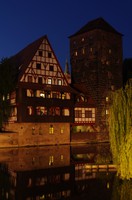
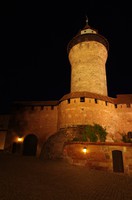
About a month ago, I've spent some time in Nuremberg and took few night pictures there. As usual, downloading them from my camera took quite long, but nevertheless now there are online: Kettensteg, Nuremberg Maxbr cke, St. Lorenz, Nuremberg Weinstadel, Nuremberg Weinstadel, Nuremberg Heilig-Geist Spital, Nuremberg Kaiserburg, Nuremberg Kaiserburg, Nuremberg

Filed under: English Photography Travelling 0 comments Flattr this!

Paul Tagliamonte: monomoy (the next generation of qlight)

I ve been working on a replacement to qlight since I ve blogged about it something a bit more self-contained and clean. I ve settled on the name monomoy, since I had a lot of the ideas i ve been using come to me on the real monomoy. In particular, I d like for it to support having remote build-nodes, and non-archive upload patterns I d like to be able to upload pkg-foo/1.1.2-1 (UNRELEASED) 20 times without bumping the changelog. Now, my approach and local test-code has been unorthodox. I ve decided to throw caution to the wind, and store as much as I can in mongodb, including parsed debian control files. I ve recently (this afternoon) added support for build queues, which I hope to build out. More to come once it s sane, but it s working-ish!

2 August 2012

Neil McGovern: Unicode hearts!

I was impressed by http://unicodesnowman.com/, and I'm always forgetting sequences for hearts, so I present:

http://unicodeheart.com

Hearts for all!

Russell Coker: Sam Harris on Lying

The Neuroscientist and atheism advocate Sam Harris has written a short blog post about a journalist named Jonah Lehrer who destroyed his career through false quotes and lies about them [1]. The main point of the article seems to be to promote his new eBook about Lying. The book is available for free until the end of the week (not sure if that is Friday, Saturday, or Sunday and in what time zone get it quick if you want it). The book is very short, 58 pages with a single column of large font text. If written a densely as a typical research paper it would probably be about 12 pages. But it has some good points to make. He makes a good moral case against most forms of lying, even answering questions such as do I look fat . It seems that anyone who was to follow his advice would be unusually honest even by Aspie standards. Related posts:
  1. Lies and Online Dating Separating Fact From Fiction: An Examination of Deceptive Self-Presentation in...
  2. Links January 2012 Cops in Tennessee routinely steal cash from citizens [1]. They...
  3. Desks Lindsay Holmwood has written about the benefits of a standing...

Sorina Sandu: Status update - D-I improve network config

Hello!

Here's a short status update:

[1] http://bugs.debian.org/cgi-bin/bugreport.cgi?bug=682737
[2] http://anonscm.debian.org/gitweb/?p=d-i/netcfg.git;a=shortlog;h=refs/heads/people/sorina/write_config
[3] http://anonscm.debian.org/gitweb/?p=d-i/netcfg.git;a=shortlog;h=refs/heads/people/sorina/coding_style
[4] https://github.com/sorinasandu/Debian_Netcfg/tree/local_testing

Sorina

Michal Čihař: Weblate in numbers

About month ago, I wrote that there were over 20000 translations done using Weblate in three months. It looks like I was too pessimistic with future as in slightly more than month l10n.cihar.com has reached 30000 translations. This is quite great achievement and shows big user base. Especially together with rising number of third-party installations of Weblate (still some of the big ones do not want to be mentioned). On the other side, there have already been around 100 issues open, out of which most were fixed (1.2 release already includes 30 fixed issues). Still I'm sure there is lot of place for improvements :-). Anyway if you are looking for more numbers, you can find them on Ohloh :-).

Filed under: English Weblate 0 comments Flattr this!

1 August 2012

Bdale Garbee: Early Retirement

I am pleased to announce that HP accepted my application for participation in this year's Enhanced Early Retirement program. After 26.5 years, my last day at HP will be 31 August 2012. This isn't because I have a problem with HP, quite the contrary! I feel immensely privileged to have worked on so many interesting things with so many smart people for so long. And there are many exciting things happening right now, including high profile projects like Odyssey and Moonshot expanding both ends of the server scaling continuum with Linux, and the immense commitment to and investment in Open Source represented by the use of Open Stack and Ubuntu LTS in building HP Cloud. The temptation to stay and continue to help guide HP's Open Source engagement was strong. I'm certainly under no pressure to leave... in fact, I think I managed to shock my management with my decision to retire! But I'm very excited about "taking a break" from full-time employment for a while to focus more time on things that matter a lot to me. My son and I have a number of projects we'd like to work on together as he enters high school. The side business I started two years ago with Keith Packard to design, build, and sell avionics solutions for high power model rockets is growing and could use more attention. I'm in the midst of designing the processor board for another amateur radio satellite. And of course, I'm looking forward to putting more "quality time" towards Free Software projects like FreedomBox and Debian! Since they do not depend on my employment status, I do not expect any immediate changes in the various roles I play outside of HP. I will continue to serve on the board of the Linux Foundation representing individual affiliates, on the board of the FreedomBox Foundation, as Chairman of the Debian Technical Committee, and as President of Software in the Public Interest. And while I hope to travel less than I have in recent years, I look forward to continuing to speak and otherwise participate in key Free Software conferences around the world from time to time. After I retire, the primary point of contact with HP on Open Source matters will be the Director of HP's Open Source Program Office, Phil Robb. But if there are open issues regarding HP and Open Source that I can help with over the next month, feel free to contact me and I'll see what I can do to help.

Christian Perrier: Adios Nicaragua!

So, it's now over. After two weeks of DebCamp+DebConf, followed by two weeks touring over to the best places in Nicaragua with my beloved Elisabeth (our first long holidays as a couple without children since....1987!), my best holidays EVER are over. I visited a wonderful country. I met wonderful people. And I have to come back as I left un unachieved volcano climb (some could think I did that on purpose just to have an excuse for coming back)...:-) I'll probably try to blog about all this in a soon-to-come very long bubullish post (IOW: full of typos and Frenglish) for those of you who aren't tired of these. Now, doh, I have two gardens to clean out before resuming work in less than two weeks.

Russell Coker: Hetzner now Offers SSD

Hetzner is offering new servers with SSD, good news for people who want to run ZFS (for ZIL and/or L2ARC). See the EX server configuration list for more information [1]. Unfortunately they don t specify what brand of SSD, this is a concern for me as some of the reports about SSD haven t been that positive, getting whichever SSD is cheapest isn t appealing. A cheap SSD might be OK for L2ARC (read cache), but for ZIL (write cache) reliability is fairly important. If anyone has access to a Hetzner server with SSD then please paste the relevant output of lsscsi into a comment. The next issue is that they only officially offer it on the new EX 8S server. SSD will be of most interest to people who also want lots of RAM (the zfsonlinux.org code has given me kernel panics when running with a mere 4G of RAM even when I did the recommended tuning to reduce ARC size). Also people who want more capable storage options will tend to want more RAM if only for disk caching. But I m sure that there are plenty of people who would be happy to have SSD on a smaller and cheaper server. The biggest SSD offering of 240G is bigger than a lot of servers. I run a Hetzner server that has only 183G of disk space in use (and another 200G of backups). If the backups were on another site then the server in question could have just a RAID-1 of SSD for all it s storage. In this case it wouldn t be worth doing as the server doesn t have much disk IO load, but it would be nice to have the option the exact same server plus some more IO load would make SSD the ideal choice. The biggest problem is that the EX 8S server is really expensive. Hard drives which are included in the base price for cheaper options are now expensive additions. A server with 2*3TB disks and 2*240G SSD is E167 per month! That s more expensive than three smaller servers that have 2*3TB disks! The good news for someone who wants SSD is that the Hetzner server auction has some better deals [2]. As is always the case with auction sites the exact offers will change by the moment, but currently they offer a server with 2*120G SSD and 24G of RAM for E88 per month and a server with 2*120G SSD, 2*1.5T HDD, and 24G of RAM for E118. E88 is a great deal if your storage fits in 240G and E118 could be pretty good if you only have 1.5T of data that needs ZFS features. The main SSD offering is still a good option for some cases. A project that I did a couple of years ago would probably have worked really well on a E167/month server with 2*3TB and 2*240G SSD. It was designed around multiple database servers sharding the load which was largely writes, so SSD would have allowed a significant reduction in the number of servers. They also don t offer SSD on their storage servers which is a significant omission. I presume that they will fix that soon enough. 13 disks and 2 SSD will often be more useful than 15 disks. That s assuming the SSD doesn t suck of course. The reason this is newsworthy is that most hosted server offerings have very poor disk IO and no good options for expanding it. For servers that you host yourself it s not too difficult to buy extra trays of disks or even a single rack-mount server that has any number of internal disks in the range 2 to 24 and any choice as to how you populate them. But with rented servers it s typically 2 disks with no options to add SSD or other performance enhancements and no possibility of connecting a SAN. As an aside it would still be nice if someone ran a data center that supported NetApp devices and gave the option of connecting an arbitrary number of servers to a NetApp Filer (or a redundant pair of Filers). If anyone knows of a hosting company that provides options for good disk IO which are better than just providing SSD or cheaper than E167 per month then please provide the URL in a comment. Update: It seems that I can get SSD added to one of the cheaper servers. This is a good option as I have some servers that already have the flexi-pack due to a need for more IP addresses. Related posts:
  1. Servers vs Phones Hetzner have recently updated their offerings to include servers with...
  2. Hetzner Failover Konfiguration The Wiki documenting how to configure IP failover for Hetzner...
  3. Dedicated vs Virtual Servers A common question about hosting is whether to use a...

Steve Kemp: So I joined the bandwagon and bought a tablet

So this week I bought a cheap Android tablet, specifically to allow me to read books upon the move and listen to music at home. Currently my desktop PC has a bunch of music on it, and I listen to it locally only. In my living room I have an iPOD in a dock which has identical contents. In my bedroom? No music. This was something I wished to change. The music on my desktop is played via mpd, and I use the sonata client to play it. I figured I could use this for my tablet, as MPD is all about remote control and similar stuff. Unfortunately things didn't prove so easy. I found several android applications that would let me connect to my MPD server and control it, but despite several of them claiming to support streaming I couldn't make music appear upon my local tablet. (I rebuilt MPD with the lame encoder available, and used that too, to no avail). Still if you have music in a central location and you wish to control it then the setup is trivial. (Though there is one caveat with MPD and streaming, my understanding is that you can only stream what you're playing. You cannot configure MPD to stream music and not also play it locally..) So although it was neat to be able to control the music on my desktop host it wasn't what I wanted. Instead I had to install mediatomb to my desktop to serve the media, and use the 2player application to browse and play it. Once I'd configured mediatomb all my music was available to my tablet. Result. Unfortunately 2player didn't play my movies, for that purposes I needed to use bubbleupnp. But that was a trivial install too. So? End result. I have a toy tablet for < 100 which will stream my music to the bedroom. ObQuote: "How about this: I work for you; in exchange, you teach me how to clean. " - L on

Rapha&#235;l Hertzog: My Debian Activities in July 2012

This is my monthly summary of my Debian related activities. If you re among the people who made a donation to support my work (72.65 , thanks everybody!), then you can learn how I spent your money. Otherwise it s just an interesting status update on my various projects. This month has been a short one since I have been away for 2 weeks of vacation. Dpkg My dpkg work encompasses a bunch of small tasks: Packaging I updated nautilus-dropbox to version 1.4.0 and python-django-registration to version 0.8. Both have been uploaded to unstable and I initially wanted to request an unblock for the latter, but it turns out it has gained reverse dependencies and version 0.8 introduces API changes so it s not an option at this point of the freeze. QA work I investigated and fixed #678356 where it had been reported that the PTS static news were no longer working as expected. At the start of the month, I also unblocked the mostly-unknown but important mole service it was out of date of several weeks and several people were annoyed that the information about new upstream versions was no longer up-to-date. Vacation Almost no Debian work during my vacation but the lack of Wifi nearby made me look for solutions to connect my computer through my Nokia N900 3G/GPRS connection. I discovered the Mobile Hotspot application (homepage) and it worked like a charm (although it required Maemo s non-default devel repository to be able to install the alternative kernel for power users ). The Debian Handbook Michal iha proposed us to host a Weblate instance to help translate the book with a web interface. He kindly agreed to implement some improvements to better suit my requirements. Those have been completed and the weblate instance is now live at debian.weblate.org. There s no requirement to use Weblate for translations teams but for those that do, it sure makes it easier to recruit volunteers who have no prior knowledge of Git and PO files. If you want to help, please checkout this page first though, you should not start using Weblate without getting in touch with the respective translations teams. Apart from translations, I also had the pleasure to merge some patches from Philipp Kern who improved the section covering IPv6 and a few other parts. We can make the book even better if more people share their expertise in the part of the book where they know better than me and Roland. :-) Thanks See you next month for a new summary of my activities.

No comment Liked this article? Click here. My blog is Flattr-enabled.

Michal &#268;iha&#345;: Mailing list for Weblate

More and more people seem to be interested in Weblate and it is becoming less and less comfortable to handle all this communication privately in my mailbox. That's why I've decided to open up mailing list for Weblate. It is now available at weblate@lists.cihar.com, you can subscribe at https://lists.cihar.com/cgi-bin/mailman/listinfo/weblate (request to add this list to Gmane is pending). I hope this will attract more interested people and open up wider discussion about some features. PS: Now there is also #weblate on freenode if you are interested in chatting about Weblate.

Filed under: English Weblate 0 comments Flattr this!

Dirk Eddelbuettel: RcppCNPy 0.2.0

Version 0.2.0 of the recently introduced RcppCNPy package for reading/writing NumPy data in R arrived on CRAN earlier today. The main change are the added ability to also write gzip-ed npy files, to suppress an automatic transposition as well as the correction of one memory leak on data read. The NEWS file entry is below:
Changes in version 0.2.0 (2012-07-30)
  • Support for writing of gzip-ed npy files has been added.
  • A new option dotranspose has been added to npyLoad() to support data sets that do not need to be transposed to be used in R.
  • A memory leak in reading files has been corrected.
CRANberries also provides a diffstat report for 0.2.0 relative to 0.1.0. As always, feedback is welcome and the rcpp-devel mailing list off the R-Forge page for Rcpp is the best place to start a discussion.

31 July 2012

Russell Coker: Cheap SATA Disks in a Dell PowerEdge T410

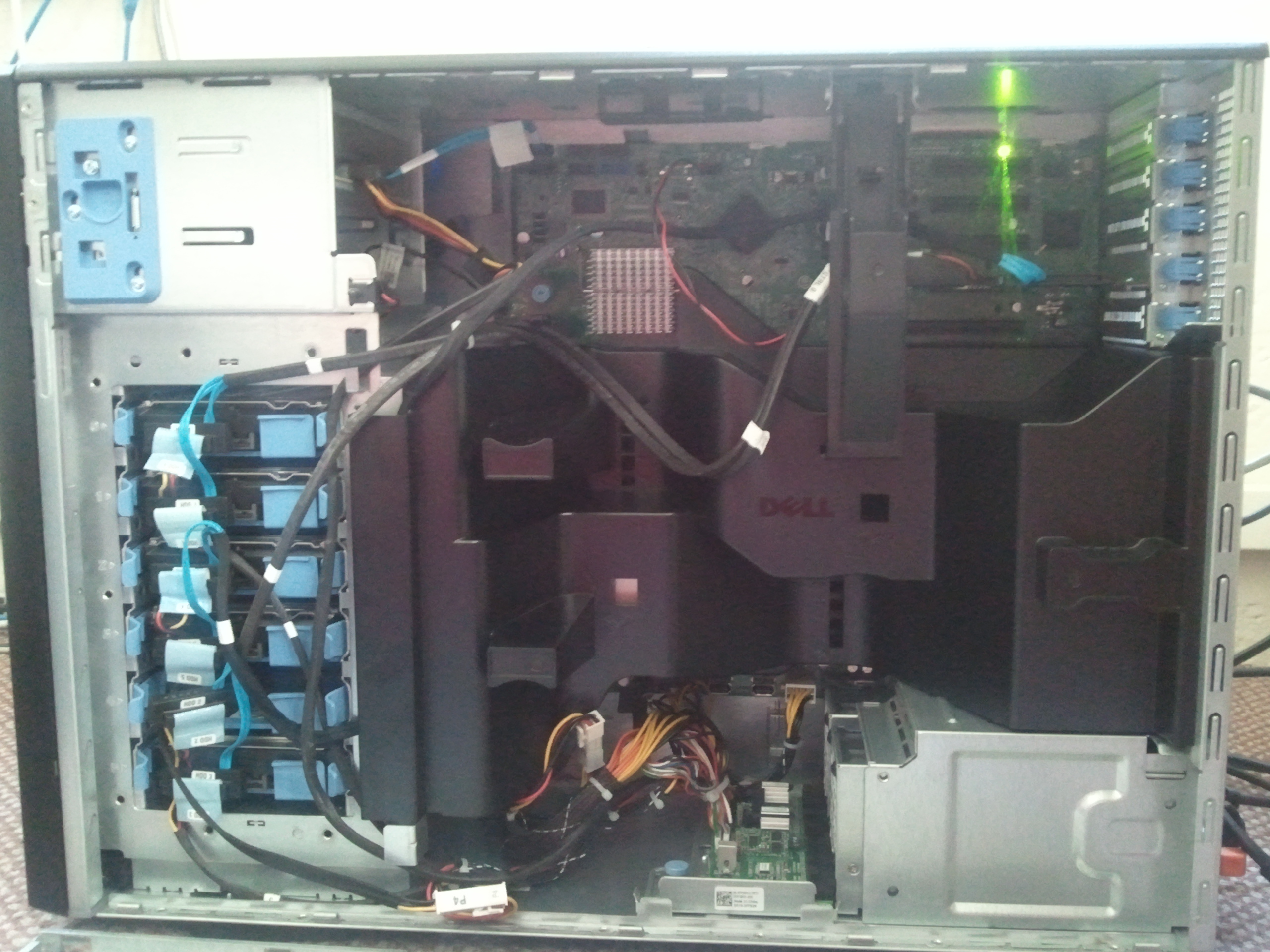
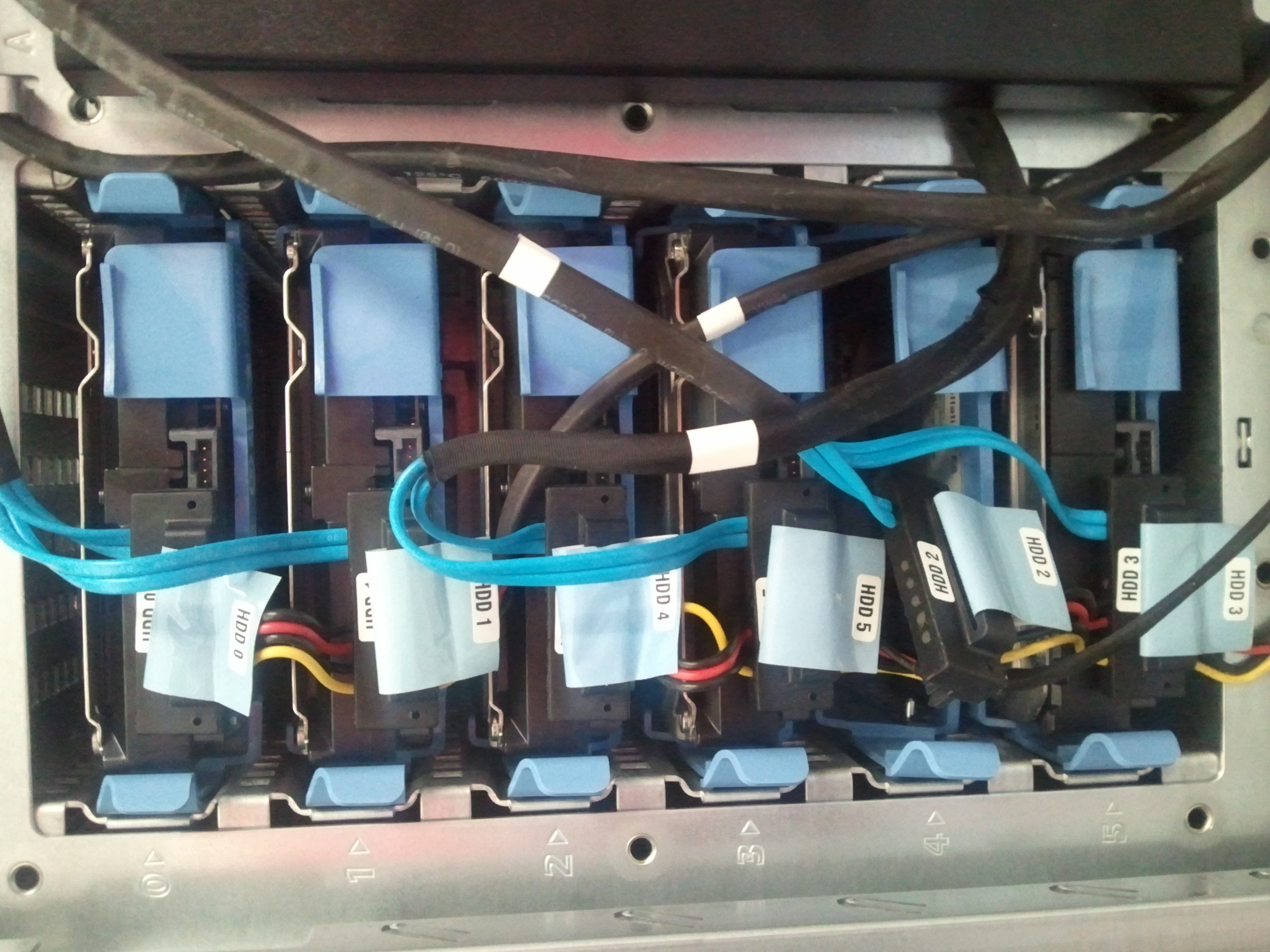
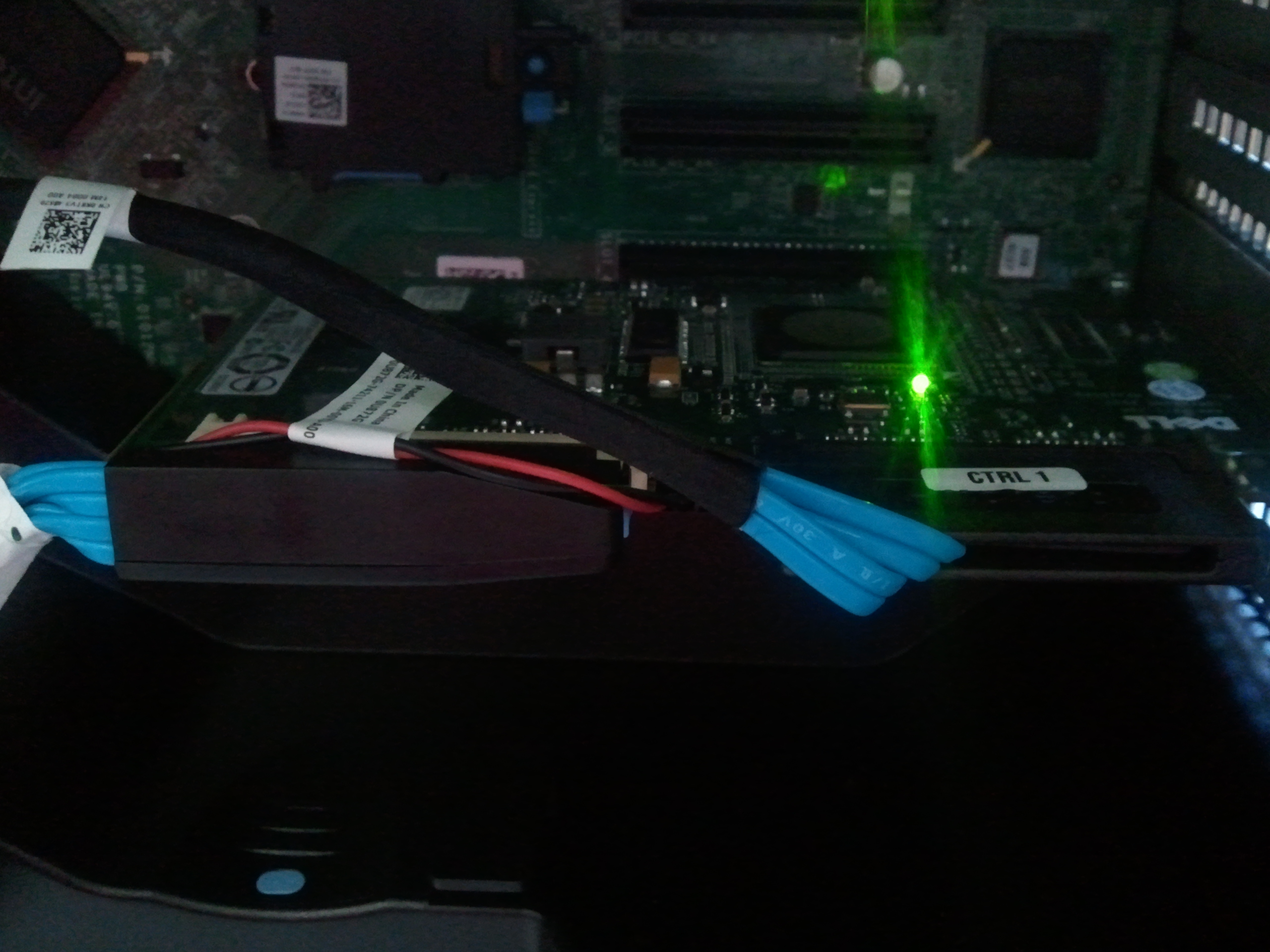
A non-profit organisation I support has just bought a Dell PowerEdge T410 server to be mainly used as a file server. We need a reasonable amount of space and really good reliability features because the system may have periods without being actively monitored, it also has to be relatively cheap. Dell servers are quite cheap, but disks are not cheap at all when Dell sells them. I get the impression that disks and RAM are major profit centers for Dell and that the profit margins on the basic servers are quite small. So naturally we decided to buy some SATA disks from a local store, one advantage of this is that Dell sells nothing bigger than 2TB while 3TB disks are available cheaply everywhere else. So we bought 4 cheap 3TB (2.7TiB) SATA disks, connected them to the server, and found that only 2TiB was accessible. The Dell Tech Center says that some of the RAID controllers don t support anything larger than 2TiB [1]. Obviously we have one of the older models. There s lots of SATA sockets on the motherboard that could be used, however there is one problem. View of the open side of a PowerEdge T410 The above picture is the side view of the T410, it was taken with a Samsung Galaxy S so the quality is a little poor (click for the original picture). The server is quite neat, not many cables for a system with 6 disks, not the 12 separate cables you would get in a typical white-box system. Disks in a PowerEdge T410 The above picture shows the disk enclosure. You can see that each disk has a single connector for power and data, also the disks aren t separate, multiple disks have the same power wires and the data cables are paired. SAS controller in a PowerEdge T410 Above you can see the SAS controller, it has two large connectors that can each handle the data cables for 4 disks, nothing like the standard cables. It s easy to buy SATA data cables and connect them, but there are no spare power cables in the box. The connector that supplies power to all the disks appears to be something proprietary to Dell which goes straight to the double-connectors on each disk that supply power and data. This setup makes cabling very neat but also provides no good option for cabling regular disks. I m sure I could make my own cables and if I hunted around the net enough I could probably buy some matching power cables, but it would be a hassle and the result wouldn t be neat. So the question was then whether to go to more effort, expense, and possibly risk the warranty to get the full 3TB or to just use the SAS controller and get 2TiB (2.2TB) per disk. One factor we considered is the fact that the higher sector numbers typically give much slower access times due to being on shorter tracks (see my ZCAV results page for test results from past disks [2]). We decided that 2.2TB (2TiB) out of 3TB (2.7TiB) was adequate capacity and that losing some of the slow parts of the disk wasn t a big deal. I ve now setup a RAID-Z2 array on the disks, and ZFS reports 3.78TiB available capacity, which isn t a lot considering that we have 4*3TB disks in the array. But the old server had only 200G of storage, so it s a good improvement in capacity, performance, and RAID-Z2 should beat the hell out of RAID-6 for reliability. Related posts:
  1. Dell PowerEdge T105 Today I received a Dell PowerEDGE T105 for use by...
  2. ZFS vs BTRFS on Cheap Dell Servers I previously wrote about my first experiences with BTRFS [1]....
  3. How I Partition Disks Having had a number of hard drives fail over the...

Next.

Previous.