Matthew Johnson: Packaging Java with Javatools
I have just uploaded
javatools
0.5 to unstable and it is currently waiting in NEW.
Anyone wishing to try it out earlier can find source and packages (it's arch: all)
at
http://www.srcf.ucam.org/~mjj29/javatools/
.
Javatools replaces the existing
jarwrapper
package and also contains programs
to help packagers in creating packages for Java programs and libraries.
Packaging tools
The
javahelper
package consists of several small programs which make
packaging Java programs and libraries easier. They are generally designed to work
in the same fashion as the debhelper programs, but start with the
jh_
prefix.
All of the programs have their command line arguments documented in manpages.
jh_build
Many Java programs and libraries are distributed without sane build systems.
jh_build
provides a simple interface for building Java source code
into Jars, including setting the appropriate entries in the manifest.
In almost all cases all that needs to be done to call
jh_build
is to set
JAVA_HOME
and
CLASSPATH
and then call
jh_build
with the
name of the jar and the directory containing the source.
JAVA_HOME=/usr/lib/jvm/java-gcj
CLASSPATH=/usr/share/java/esd.jar:/usr/share/java/jsch.jar
jh_build weirdx.jar src
This command will compile all the Java files under src , set the classpath in the manifest and build it all into weirdx.jar. A couple of other options are worth mentioning. If this jar contains an application rather than a library then the -m or --main option can be used to set the Main-Class attribute in the manifest which will allow the resulting jar file to be be executed jh_build also provides a --clean parameter which should be called in the clean target of debian/rules . jh_libs For library packages Debian Java policy currently requires that the libraries be installed to /usr/share/java in a versioned format and with an unversioned symlink. jh_libs will take a jar and correctly install it. As with debhelper programs, this can either take a jar as a parameter, or read a list of jars from a file in the Debian directory. It also follows the -p , -i and -s semantics of debhelper for selecting which packages to install the jar to. When operating on a package, jh_libs will read the list of library jars from debian/package.jlibs or debian/jlibs . The jlibs file is a list of jars to install, one per line, and works exactly the same as listing them on the command line. Each jar is installed to debian/package/usr/share/java/ in the appropriate versioned and unversioned forms. jh_depends jh_depends works like dpkg-shlibdeps, but for jar files. For each jar in the package it takes the jars on which it depends and finds the packages to which they belong. These are included in the debhelper substvars as $ java:Depends . The control file can then just list that variable which is filled in automatically. This is done by reading the Class-Path attribute from the manifest of each jar. Jar files should include this attribute to prevent applications which use them from needing a full recursive classpath in their startup scripts and to prevent unneccessary transitions when the library changes its dependencies. If the package is not built with jh_build and the upstream build system doesn't set it correctly then jh_manifest can be used to fix this. If the application uses executable jars (see Runtime support below) then jh_depends will also add the appropriate depends on jarwrapper and the correct Java runtime. jh_manifest Many upstream build systems do not set the Class-Path attribute in the jars they create. This leads to several unwanted problems, such as expanding the classpath which applications have to use and introducing unneccessary transitions. They also may not set the Main-Class attribute. Both of these are required for running jars with the -jar parameter. jh_manifest can fix the manifest files of jars. It can either read from a manifest file in the Debian directory or run in a mode which updates all the jars with the CLASSPATH environment variable. The manifest files can either be debian/package.manifest or debian/manifest . The format of this file is a list of jars and indented below each one a list of manifest elements to set:
usr/share/weirdx/weirdx.jar:
 Main-Class: com.jcraft.weirdx.WeirdX
 Debian-Java-Home: /usr/lib/jvm/java-gcj
jh_exec The Runtime support section below describes running executable jars directly. jh_exec will scan package directories for jars in the paths, or symlinks to jar from the paths, and ensure that they have been set executable if necessary. jh_makepkg jh_makepkg will create template Debian packages for Java programs and libraries similar to dh-make . It should be run in the source directory and it will create the orig.tar.gz and most of the files in the Debian directory, which need only small changes neccessary to build the package. java-propose-classpath Some upstreams have complicated classpaths which may not be obvious to the packager when using jh_manifest to set the Class-Path attribute. java-propose-classpath will unpack a jar and look at the symbols imported to the class files, then scan all the jars in /usr/share/java . This shouldn't be run in the build since it is slow, and there may be ambiguities that the packager must resolve. It is still very useful for the packager as most of the time it will get it right automatically. Runtime support Javatools also provides some runtime support. Unlike compiled programs, or purely interpreted programs with hash-bang lines, Java programs cannot be directly executed. Many upstreams expect them to be run using java -jar jarname or java classname . This is not generally acceptible in systems which expect to just be able to run the command or launch it from a menu. As a result, many packagers are writing wrapper scripts which just call java with the correct classpath, jar and main class. jarwrapper There is an alternative to wrapper scripts, however. The binfmt_misc kernel module allows the kernel to call out to a program in userspace to execute specific types of file. jarwrapper registers itself as a handler for executable jars. This is done by reading values from the manifest file. In order for executable jars to work the following attributes must or may be defined in the manifest. These attributes can be set using jh_build and jh_manifest .
- Main-Class: The name of the class to be run when the application starts. (REQUIRED)
- Class-Path: The path to all the jar files on which this jar depends. (REQUIRED unless empty)
- Debian-Java-Home: A Debian-specific property if this application depends on a specific runtime. Specify the path to the runtime which should be used. (OPTIONAL)
- Debian-Java-Parameters: A Debian-specific property if this application needs extra options to the JVM. (OPTIONAL)
Source: jsch
Section: libs
Priority: optional
Maintainer: Matthew Johnson
Build-Depends: debhelper (>= 5), javahelper, java-gcj-compat-dev, libzlib-java
Standards-Version: 3.7.3
Homepage: http://www.jcraft.com/jsch/
Package: libjsch-java
Architecture: all
Depends: $ java:Depends , $ misc:Depends
Description: Java secure channel
 JSch is a pure Java implementation of SSH2. JSch allows you to
 connect to an sshd server and use port forwarding, X11 forwarding,
 file transfer, etc., and you can integrate its functionality
 into your own Java programs. JSch is licensed under a BSD style
 license.
debian/rules
#!/usr/bin/make -f
export JAVA_HOME=/usr/lib/jvm/java-gcj
export CLASSPATH=/usr/share/java/zlib.jar
build: build-stamp
build-stamp:
	dh_testdir
	jh_build jsch.jar src
	touch $@
clean:
	dh_testdir
	dh_testroot
	jh_build --clean
	dh_clean
	rm -f build-stamp jsch.jar
install: build
	dh_testdir
	dh_testroot
	dh_clean -k
	dh_installdirs
binary-arch: build install
	# Java packages are arch: all, nothing to do here
binary-indep: build install
	# Create the package here
	dh_testdir
	dh_testroot
	dh_clean -k
	dh_install -i
	dh_installdocs -i
	dh_installchangelogs -i
	dh_javadoc -i --sourcedir=src
	jh_libs -i
	jh_depends -i
	dh_compress -i
	dh_fixperms -i
	dh_installdeb -i
	dh_gencontrol -i
	dh_md5sums -i
	dh_builddeb -i
binary: binary-indep binary-arch
.PHONY: build clean binary-indep binary-arch binary install
debian/libjsch-java.jlibs
jsch.jarSample Application Packaging debian/control
Source: salliere
Section: misc
Priority: optional
Maintainer: Matthew Johnson
Build-Depends: debhelper (>= 5), java-gcj-compat-dev, fastjar,
               libmatthew-debug-java, libcsv-java,
               libitext-java, javahelper
Standards-Version: 3.7.3
Package: salliere
Architecture: all
Depends: $ java:Depends , $ misc:Depends
Description: Short Description
 Long Description
debian/rules
#!/usr/bin/make -f
export JAVA_HOME=/usr/lib/jvm/java-gcj
export CLASSPATH=/usr/share/java/csv.jar:/usr/share/java/debug-disable.jar:/usr/share/java/itext.jar
build: build-stamp
build-stamp:
   dh_testdir
   # Build the package
   jh_build salliere.jar src
   touch $@
clean:
   dh_testdir
   dh_testroot
   jh_build --clean
   dh_clean
   rm -f build-stamp salliere.jar
install: build
   dh_testdir
   dh_testroot
   dh_clean -k
   dh_installdirs
binary-arch: build install
   # Java packages are arch: all, nothing to do here
binary-indep: build install
   # Create the package here
   dh_testdir
   dh_testroot
   dh_clean -k
   dh_install -i
   dh_installdocs -i
   dh_installchangelogs -i
   jh_manifest -i
   dh_link -i
   jh_exec -i
   jh_depends -i
   dh_compress -i
   dh_fixperms -i
   dh_installdeb -i
   dh_gencontrol -i
   dh_md5sums -i
   dh_builddeb -i
binary: binary-indep binary-arch
.PHONY: build clean binary-indep binary-arch binary install
debian/salliere.install
salliere.jar usr/share/sallieredebian/salliere.links
usr/share/salliere/salliere.jar usr/bin
 While stuff is upgrading I can update on a

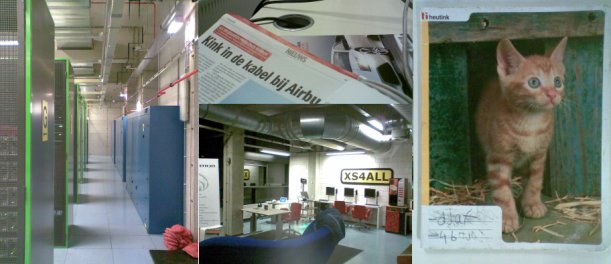 There's completely no one here. As it should be. Except for myself of course. klecker should be hosted here aswell. But which machine could it be? I'm not sure who left the [what's the English word for schrift/Heft/cahier] with the cat here? Seems to be an AFC Ajax fan. Hope he types better than he writes. This phone makes acceptable pictures for small resolutions. Back to work.
 Anthony Towns wrote about
 Some may remember that French translations of po-debconf templates happened to be 100% complete back in March. This happened only after a very long process of NMU'ing packages that are loosely maintained.
Many other translations did benefit from that effort and
 I've recently considered using a Google calendar for a project, and tried to
embed it in a web site.However, there are a few issues I'm having with it:

 Is there an existing system which will allow me to query Apache logfiles via an SQL string? (Without importing into a database first).
I've found the perl library SQL::YASL - but that has a couple of omissions which mean it isn't ideal for my task:
 I'm glad to note that there's been a lot of movement over the last few weeks for the
 For a while I’ve been trying to find some easy way to keep a few
machines I admin behaving the way I want them too with minimal effort.
They don’t really need much maintenance – but I would like something
to help keep them all in sync. Basically, something like FAI, but much,
much simpler – ideally something that takes five minutes to understand,
and another five minutes to deploy; and leave the more complicated and
powerful tools for when they’re actually needed.
I figured what I really want was just a simple way to make a
meta-package – one that doesn’t really provide any functionality,
just tells apt/dpkg what I want installed (via Depends), and what I
don’t want installed (via Conflicts) and adds any extra configuration
stuff or local scripts that I decide I want.
But doing that with a real Debian package is harder than I’m really
comfortable with – I don’t want to have to worry about potential lintian
errors, or rules files and debhelper commands, or writing a Makefile
to get my files installed or whatever, I want something more trivial
than that. Looking for meta-package creators, the only one I spotted
that I thought looked likely was cdd-dev, described as “Custom Debian
Distributions common files for developing meta packages”. Unfortunately
it seems to just provide templates, which makes things quicker, but no
less complex.
Fortunately equivs (“Circumvent Debian package dependencies”) is
actually used for metapackages these days, according to its maintainer
on IRC and its long description:
 Recently, GozRita unveiled the names of our two Falleretes majors
for 2008's Falles festivities. All the free newspapers did some extensive
coverage, with reports on who they are and what they do.

