Search Results: "hug"

9 May 2009

Andrew Pollock: [life] A few days in British Columbia

We got back from our brief visit to Canada last night. We had a great time, Vancouver and Victoria were both very nice. YVR (Vancouver Airport) This airport has to win the award for nicest airport I've seen. Clearly they pulled out all the stops in preparation for the Winter Olympics next year. The airport is very bright, airy and open. Before you even hit the immigration line, you pass through a couple of water features, some indigenous art, all of that jazz. Immigration is done in the open in a huge hall, instead of in the dark bowels of the airport, which was a pleasant change from the usual US airport immigration experience. (That said, Houston airport had a pretty nice immigration experience). Oh, and it was blanketed with free WiFi, which was a nice touch. Ferry to Victoria The brief geography lesson I got was that Victoria is on Vancouver Island, and Vancouver (the city) is not on Vancouver (the island). Go figure. Getting to Victoria from the airport via BC Ferries was a very seamless experience. You board a bus from the side of the airport terminal, and it drives to Tsawwassen, drives onto the ferry, and then you get off the bus and go sit on one of the passenger levels of the ferry. BC Ferries BC Ferries deserves special mention. The ferry itself is huge - 7 decks (three of them for vehicles). It's a veritable shopping mall on water. It's got some stores, buffets, exclusive $10 entry lounges, video arcades, cellular payphones, the works. The trip to Victoria The ferry ride took about 1.5 hours, and was very scenic. We passed by a few smaller islands, and I had an instant flashback to the TV show The Beachcombers that I used to watch as a kid, particularly the opening sequence. Victoria Victoria is a beautiful city. It's the capital of the province of British Columbia, and I likened it to Canberra in a lot of ways. It had more modern conveniences than a town with a population of its size would otherwise normally have. It was a government and university town. Nice houses, very green in general, and being an island, there was water everywhere. It seemed to have lots of bays, and harbours and rivers. It was very nice. Flight back to Vancouver We took a Harbour Air seaplane back to Vancouver on Sunday afternoon. That was fun. I've never been on a seaplane before. It took about 35 minutes. Vancouver First order of business in Vancouver was the purpose of the whole trip: renewing our visas. That went fine, I'll write a separate post about the process. Afterwards, we bought tickets for the Big Bus, and toured the city for the remainder of Monday and Tuesday. Drive to Whistler For Wednesday and Thursday, we hired a car, and went a bit further afield. On Wednesday, we drove up to Whistler to check it out. The drive up took about 5 hours, because we stopped at every scenic spot we came by. Waterfalls abounded. There was a lot of work being done on the roads between Vancouver and Whistler, upgrading them for the Olympics. Whistler itself was pretty spectacular. Some crazy looking ski runs. The village looked like Squaw Village on steroids. The drive back only took about 2 hours. Cleveland Dam, Lynn Canyon suspension bridge For the last day, we drove to Cleveland Dam, where there was a salmon hatchery, and checked out the dam, hatchery and surrounding area. It was lovely and green. After that, we drove to Lynn Canyon to check out the suspension bridge there (unlike the Capilano Suspension Bridge, which costs $26 a pop, the Lynn Canyon one is free). That was all we had time for really. The weather wasn't fantastic during our stay, but it didn't really prevent us from doing anything either. I'd have liked to have checked out Stanley Park if we had more time, and Sarah wanted to go to Grouse Mountain. We had a near-100% success rate at being picked as Australians, unlike when we're in the US, where more often than not, people ask us if we're British. Apparently this is mainly attributed to the fact that Australians run all of the ski lifts at Whistler. We certainly heard a lot of Australian accents while we were getting around. I'd also never seen such a saturation of Starbucks before. In Vancouver, there were literally Starbucks across the road from Starbucks, and around the corner from another one. Whistler village had two. The Canadian accent is cute. They really do tack "eh?" on the end of everything, although it's phonetically more like "ay?". "House" and "about" are also pronounced distinctively differently. Overall, Vancouver wasn't what I'd call bursting at the seams with tourist attractions, but seemed like a nice city. It was fairly flat. The beggars were well dressed. Everyone was very friendly. A lot of the taxis were Priuses. It seemed pretty clean. I could handle living there. Not sure how bad it gets in winter.

8 May 2009

Alastair McKinstry: Funding Public Health care : the bigger picture

Adrian von Bidder raises an interesting discussion on why public health care is difficult. Basically, it comes back to the challenge:
How much money should be spent on this person's illness? which is a very, very bad question. We try to sidestep it by only taking about statistics etc., but no matter how you look at it, you either do 20'000  per week medications for 80 year old patients who will die soon anyway and get a system society can't pay, or you don't and you get a system where the rich are better off than the poor.
The problem is, the majority of health costs are in the last few years of a persons life: when the body is breaking down. If viewed from the problem of health-care funding vs. eg. education, you have an ethical dilemma: is it worth it ? Here there are no easy answers. Nick Bostrom wrote a very interesting and persuasive essay a while back, The fable of the Dragon Tyrant. In short, we are getting somewhere with regenerative medicine While cures are hard to come by at this stage, there is a growing realization in medicine that senesence, what we used to call "old age", is curable. But we have a lot of psychological defensive mechanisms to help us cope with the carnage of old age that make us deny the problem: if we look afresh at "old age" knowing it to be curable, any delay in doing so is abhorrent. From a public, societal perspective, we spend a fortune every year on health. But we do so in a very disjointed way: we pay colossal amounts for health care, but also for basic health science: in the US, for example, the budget for the National Institutes of Health is about 30 billion dollars. Nearly twice that of NASA. Similar figures are spent in Europe, but there is this strange gap in the middle: the drug companies and medical industry. We start the development of new drugs with public money, and we buy the drugs with public money, but the choice of what drugs and treatments are developed are left to private industry, that is, a profit motive. This results in many cases in expensive treatments to treat symptoms rather than necessarily cure the problem. Faced with the huge costs of geriatric medicine and senesence, the response should be co-ordinated: funding a cure will be expensive, but save a fortune (Think, instead of a pensioner slowly dying and 'being a drain on resources', of 'experienced citizen in the prime of their productive, tax-paying years'). Instead of funding the basic science alone, we should be funding the complete drug and treatment development publically, only farming out the actual manufacture to private industry. It is silly to spend a fortune to keep merely keep someone alive at the age of eighty or so, when we know for a larger investment (bigger than a private company can do), we can cure them properly. The solution to the dilemma, then, is to stop thinking of the elderly being a drain, but actually applying our public efforts in a co-ordinated manner to solving the carnage of old age. Tags ,

7 May 2009

Jan Hauke Rahm: Drawing in LaTeX

Just recently I convinced a friend of mine to use LaTeX for her papers. A huge step for her and a small one for me as I just had to copy my templates and show her a few hints about LaTeX. Well, that s what I thought. It was actually even the very same day when she asked me for help: she needed an image in there. That was of course easy but when I saw it I felt like I needed to replace it (it was seriously awfull). So, drawing She needed three rectangles connected with arrows. Easy thing with pstricks one might think but then pstricks is a PITA when you need a pdf document. So I tried tikz (of course, Debian delivers it right away). And see how easy that looks like:
\begin figure [htbp]
    \centering
    \begin tikzpicture 
    [<->, auto,
    block/.style =  rectangle, draw=blue, thick, fill=blue!20,
                    text width=3.5cm, text centered, rounded corners,
                    minimum height=2cm, font=\sffamily ,
    line/.style  =  draw, thick ]
    \matrix [column sep=5mm, row sep=2cm]
     
        % row 1
        & \node [block] (top)  Rectangle A ; \\
        % row 2
        \node [block] (left)  Rectangle B ; &
        & \node [block] (right)  Rectangle C ; & \\
     ;
    \begin scope [every path/.style=line]
        \path   (left) -- node [midway,font=\sffamily\footnotesize]  Arrow desc 1  (top);
        \path   (left) -- node [midway,font=\sffamily\footnotesize]  Arrow desc 2  (right);
        \path   (top)  -- node [midway,font=\sffamily\footnotesize]  Arrow desc 3  (right);
    \end scope 
    \end tikzpicture 
 
    \caption My fancy image 
    \label fancyimage 
\end figure 
Don t you like it that way?

3 May 2009

Daniel Burrows: aptitude-gtk status, a visual tour

As some of you may know, Arthur Liu did the initial work on a GTK+ interface for aptitude last summer as part of the Google Summer of Code program. Since that program ended, I've been working to complete the GTK+ interface, along with some unrelated but similarly large changes to other parts of aptitude. It's been a while since I've written anything about aptitude-gtk, though, mostly because I set it aside for a few months to improve the dependency solver. While I'll probably be doing more work on the backend over the summer, I also hope to get the GTK+ interface to a point where I can feel comfortable including it in a stable release of aptitude. There are two things that I want to be in place for the GTK+ interface before I release it:
  1. The interface should be functionally complete, meaning that you should be able to do anything you can do in the other interfaces.
  2. The interface should be reasonably straightforward to use and nice to look at. This is a never-ending task, but there are some pieces of the current interface that are particularly ugly or awkward that I'd like to fix before release.
I've gone through the major areas of the current UI and marked them up with notes about things that I think need to be done. This isn't a definitive or exhaustive list, but it should give some idea of where aptitude is and where it's going.
Dashboard Tab annotated dashboard tab The first thing you see when you start aptitude is the dashboard. This is a display that gives you immediate access to some of the most common things you'll want to do: searching for a package, viewing the available upgrades, and upgrading as many packages as aptitude can figure out how to upgrade without removing anything. This is one of the most complete parts of the interface, but there are a few minor aesthetic things that I'd like to take care of. [UPDATE] Michael Johnson writes:
I agree with most of the notes on this screen. However, I'd like to see the Selected Package changelog stay. I often look more than one upgrade back. The summary doesn't show more than what's being upgraded. However, I do like the idea of package description tab. The search box should definately always be available. I found it annoying when I had to click back to a different tab to get it. One thing I definately miss from the console version of aptitude is the list of recommended and suggested packages. I don't let aptitude auto-install recommended packages, but I like to know what they are.

Packages tab annotated packages tab This is the view that's shown after you search for a package by name, keyword, or by other criteria. It's also fairly complete, but there are more things that could be added (mostly enhancements). Related to this is the dialog box for editing which columns are visible: annotated visible columns editor
Dependency solver tab annotated dependency solver tab The dependency solver got a lot of love in the 0.5.2.1 release, and it's now basically functional. There are some minor layout issues to be fixed, and if I have time I'd like to add more ways of controlling the resolver's behavior.
Package information tab annotated package information tab The package information page is probably the weakest part of the GTK+ aptitude interface; it wouldn't be too much of a stretch to say that this tab is holding back a stable release of aptitude-gtk. The big problem I have with it is that I feel that the information tab should open up with an overview of the status of the package. What version is installed, what's available, what archive is it in, who's the maintainer, how big is it, etc. Instead, aptitude-gtk currently shows you a big tree of all the package's dependencies. While that's useful, it should be something the user chooses from. I also find this tab to be visually unappealing, but I'm not entirely sure how to fix that. [UPDATE] Gunnar Wolf writes:
As you have mentioned in your blog post (quote this mail if you so wish) that you want to make the package information screen "sexier": I think it would be natural to integrate screenshots (from http://screenshots.debian.net/) into it. Of course, it would be worth measuring whether it imposes too high a load into that system (maybe it should only get a screenshot if the user explicitly asks for it) - but surely would be a net win.
I think this is a great idea and I'm definitely planning to incorporate this feature. [UPDATE] Michael Johnson writes:
One of the things I really like about aptitude-gtk over console-aptitude is how obvious it makes some things. The version display on this tab is one of those things. Maybe it could be more obvious, I don't know. I agree, the dependency list is not the most important thing. And it's missing the reverse dependencies. I use that more than the dependencies. As far as the actual display of the list, I can't think of anything besides a tree. Although the current implementation does feel quite clunky. What I'd more like to see first is the list of files in the package. But I can see how other people would have different priorties. So it should be really easy to change the default view.

Preferences tab vast gaping hole where the preferences tab should be One of the reasons that it is a stretch to say that the information tab is holding aptitude-gtk back is the preferences tab, which is a huge pile of not-yet-implemented-ness. In fact, it's not even designed, let alone implemented. Releasing a GUI program with no way to alter the settings strikes me as ... silly.
Preview tab annotated The preview tab is a bit weaker than the packages tab, in my opinion, but much stronger than the information tab. Like the information tab, I find it visually unappealing, but I'm not entirely sure how to improve it. I'm currently leaning towards the paned browser idea. [UPDATE] Michael Johnson writes:
I've never been comfortable using this tab. It never made much sense to me. I think the last one or two times I used aptitude-gtk it started making sense, but that seems to be too long a time. I think it's the mass of text at each top level entry. The console version has brief descriptions with more info in the details pane when the entry is selected. Perhaps healthy use of tool tips or an info pane would help with this. The paned browser idea sounds promising. I think it will be easier for new users to follow. And it provides a natural way to provide more information on what each section is about.

That's all folks!

24 April 2009

Gunnar Wolf: Some prefer marathoning... I prefer going to my old workplace

I was invited to talk about Free Software at yesterday's FLISOL. Yesterday? Aren't FLISOLs organized on Saturday? Well, not this one, for various reasons which I won't quote here. And no, I am not a supporter of the installfests idea, but I went gladly to talk about what is Free Software all about - The philosophy behind Free Software. Besides, the talk was at FES Iztacala, where I worked for four happy years, 1999-2003. I have not been often to Iztacala since 2003 (probably I have visited only three or four times), partly because of the distance (~25Km from home in a straight line, but the city's Northern part is quite poorly communicated). The last time I was there, last October, I went by bike, just to test my endurance and... because I could. Yesterday, I also did, not to be outdone by my fellow Debianers Christian and Dirk. Think they are so cool because they can run for 43Km? Well, I had my 55Km yesterday, and I was not even in a competition! (yes, yes, running and biking is not the same. So sue me. I just didn't want to stand still and let them walk away with all of the fun!) I took slightly different routes (my route to get there on Nokia Sportstracker and OpenStreetMap trace, my route back on Nokia Sportstracker and OpenStreetMap trace), crossing diagonally Azcapotzalco, a region of the city (delegaci n) I hardly know... The Sourthern of it seems like a continuation of Tacuba to the North, small and not-very-well-communicated prior villages engulfed by our hungry, huge city. The Northern half is a mostly industrial area, with very sparse population, lots of trucks, and streets that are not in the best shape. You can end up feeling lonely in those regions, and I am glad not to have crossed back by night. And the trip back was interesting as well... Mexico City is home to many more bikers you would expect given its size, and it is very common to find other people doing nice long stretches. In this case, I started cycling quite close to another guy in a white bike more or less when I got to Calzada Camarones. Possibly we had passed each other over and over until after Tlatelolco, arriving to Guerrero, where I approached him at a stoplight:
Hi! Where to?
Near Vocacional 7, Iztapalapa!
Nice! I'm just going to Copilco Every now and then we crossed each other... Turns out he does this ~30Km commute daily between Iztapalapa and Azcapotzalco. Quite admirable, to be honest. I also crossed my road with Sergio Mendoza, fellow Debianer (and co-administrator of our Mexican mirror) around Centro M dico (about 7Km north from my destination), whom I had only seen before around the University. Nice surprise. And yes, getting to know the city by bike is the best way to go! Back to the conference... my first thought when I was invited was to present Qu es el Software Libre?, a talk I have given over and over since... 2002 (although, yes, with updates). I must say it's one of the best structured talks I have prepared and has almost always been very successful - But give the same talk based on the same script over and over (AFAICT, around 20 times), and you will be fed up with it. And yes, yesterday I didn't take my laptop along, and didn't put my presentation on a USB stick - I took a pen and some paper, and during the presentation prior to mine, wrote some points to go over. And yes, it was a refreshing change. The talk was as successful as expected, and it's much more refreshing to talk about the same topics bot on a different way, and without being constrained to a predefined script. I know that organizing formally your ideas makes sure you don't miss out important points and that the audience is sometimes encouraged to pay attention by having some bullet points to look at - But on the other hand, it is much easier to follow your audience's interest if you are not bound by the script. And the few times I've spoken that way, it has felt refreshing and nice.

22 April 2009

Biella Coleman: They keep on coming

There are two topics that seem to receive a steady stream of comments on this blog. My entry on Edmonton garners a smattering of comments every few months, usually giving E-town a huge thumbs down. The other entry concerns my tribulations with BCBS and here I receive a steady stream of sad stories all of which point to the horrors caused by some branch of BCBS such as my least favorite one Horizon Blue Cross Blue Shield of NJ. Along with the comment posted above, I got this one asking me to reveal the email address of the PR director of BCBS NJ. In the past I advised folks to google it to find it. But I just tried and it is actually a bit harder to find and I wonder if I should post to one of the many press releases that exist on the web with this information? I hope thats some with some sort of time and lots of anger (toward BCBS) to start a website specifically geared toward and against BCBS. Call it Blue Cross No Shield (I think I actually own that and am pretty proud of the name) or something of that nature and throw up some blog and post horror stories in the style of the consumerist. There will be no shortage of them, especially if the blog is national in scope. Get a mailing list going and start a fax campaign among many others. Share contact information about public relations directors and Other People in Power, tips and advice on fighting them, and perhaps even move to the next level of organizing. I am not sure writing this here will do anything to inspire other and I would love to do this sort of rabble rousing as I get immense pleasure from doing so. But I simply am in the red when it comes to time. But I hope that some of the folks that have posted comments on this blog take the initiative to start a larger campaign (or someone can point me to an exisitng one). update: Now that I think of it, The Consumerist should really take up this cause and devote a section JUST to health insurance. They are already a brand name of sorts with lots of eyeballs on the site, everyday.

21 April 2009

Romain Beauxis: Liquidsoap now supports AAC+ encoding.

The plot Following many user requests , we were considering adding this format to the list of supported encoders. As for mp3 encoding, this support was subject to some legal issues. These issues were indeed the initial motivation for implementing icecast2 using the patent-free ogg codecs and container for streaming data. However, it seems that many users and net-radios are still asking for these formats. There can be several motivations for that, among which I can list the following major ones:
  • These formats are supported by more players and, in particular, embedded devices, which are the main target for net-radios
  • For the case of AAC+, the codec supports a very good audio quality for low bandwidths, such as 64 and 32kb/s.

The philosophy There is a constant complain from the open source communities about the use of patent-encumbered formats. In particular, those formats are not allowed in the Wikimedia commons and the corresponding encoders, in particular mp3 encoders, are not supported by for instance the Debian distribution. In a similar intent to push for a wider usage of patent-free codecs, the icecast project reimplemented its streaming server in order to use the ogg container and codecs. All these actions are very important. In particular, the support for ogg/theora video files in firefox, and hopefully the major HTML 5 browser is mainly the result of wikipedia refusing other video formats. Indeed, wikipedia is now a major website, and it would be insane to not support the videos there. However, I for myself do not like when these actions become too restrictive to the user. For this matter, I personally prefer freedom of choice among other considerations. Also, as a matter of fact, when trying to change the situation about these issues, one has to take into account the relative importance of each actor. It is because wikipedia is already huge that it has managed to change the things. Hence, in the case of net-radios, a majority of potential users are asking for AAC+ and other patent-encumbered formats. Although this is not the ideal situation we would like to see, there comes a point were either the free-software projects have something to propose, or the users will just go for a proprietary software, which is even worse to the situation. For this purpose, I believed it was important to add such support into our software. However, as you will see later, we do not implement ourself the encoding algorithm, but only added support for external encoders. That way, we simply let the user choose what he wants to use, but remain a patent-free and open-source software.

The implementation Since mp3 was, and still is, the major target for net-radios, icecast2 still has the possibility to stream this format. In fact, this format, as well as AAC+, does not have headers, such that it is possible to decode a stream at any point in it. Hence, in this case, icecast only acts as a proxy, and the only constraint is to send it the encoded data at real rate. Hence, the main library for streaming to icecast, libshout, parses the audio data that it receives, and schedules the streaming according to real rate. Additionally, it also supports a raw mechanism, for which there would be not such mangling. In the case of liquidsoap, we did not need this feature of the libshout since the software is already working in real time. Furthermore, the source connection protocol provides a content-type header field, which allows icecast to display the correct mime for the data format that is streamed. All in all, in order to send AAC+ data to icecast, one needs to send the correct mime-type in the source connection headers, and then send audio data at the correct rate. However, the libshout did not allow to set an arbitrary content-type header. Hence, I proposed a patch. It was proposed for an inclusion into main code, since I believe it is interesting not only for our specific need, but also for any other generic data format support. Although the patch was accepted, it was never committed. So, we decided to go on: since liquidsoap need not the real rate mangling feature of the libhsout, and since the source protocol is mainly a basic HTTP, we decided it was worth a custom implementation. This implementation was quite easy, thanks to the powerful capabilities of the OCaml language, and resulted in a custom implementation, ocaml-cry, that does the same as libshout, except that it does not control the rate of the data flow sent to the icecast server. Then, we also needed to support encoding data to the AAC format. After looking at the only available open-source encoder, aacplusenc, I tried to propose some changes in order to export a library and be able to use it in liquidsoap. However, these propositions did not make it into upstream's code, so I decided to also move on and use directly the encoder binary. Hence, using only the good old unix standard input/output mechanism, it is possible to start an encoder as a child process, send it the raw PCM data to its standard input and read the encoded data from its standard output. This lead to the development of the external output operators, which include output.icecast.external. Although this implementation was not easy, it now appears to work quite well in the current SVN version. In particular, the encoder process exits correctly for the FLAC encoder, which is needed in order to stream correctly, since the ogg container needs a restart for every track. Hence, we also gained support for encoding to the FLAC audio format, which was not binded for OCaml (yet ?) because its callback-driven API makes it tricky to do. Additionally, the support for external processes as encoders allows to use the lame binary for encoding mp3 data. Hence, liquidsoap can now encode mp3 data without the need of a built-in support for it. And, as always, the idea of using external processes spread over several other operators, including the support for external file and stream decoders, enabling support for many audio format (in fact almost all supported in linux, using mplayer). In conclusion, liquidsoap now has a fairly good support for AAC+ audio streaming, as well as a many new formats for decoding files and streams. It also support arbitrary formats and encoders using a custom variant of the output.icecast.external. Hence, provided your format can be decoded from any point in the stream, you should be able to use liquidsoap to stream data to icecast as soon as you have a binary which is able to receive RAW or WAV PCM data to its standard input and send encoded data to its standard output. As an illustration, here is an implementation of the output.icecast.aacplusenc:
def output.icecast.aacplusenc(
~id="output.icecast.aacplusenc",
~start=true,
~restart=true,
~restart_delay=3,
~host="localhost",
~port=8000,
~user="source",
~password="hackme",
~genre="Misc",
~url="http://savonet.sf.net/",
~description="OCaml Radio!",
~public=true,
~dumpfile="",
~mount="Use [name]",
~name="Use [mount]",
~protocol="http",
~aacplusenc="aacplusenc",
~bitrate=64,
~restart_on_crash=false,
~restart_on_new_track=false,
~restart_encoder_delay=3600,
~headers=[],
s)
# Metadata update is set by ICY with icecast
def aacplusenc_p(m)
"# aacplusenc - - # bitrate "
end
output.icecast.external(id=id,
process=aacplusenc_p,
bitrate=bitrate,
start=start,
restart=restart,
restart_delay=restart_delay,
host=host,
port=port,
user=user,
password=password,
genre=genre,
url=url,
description=description,
public=public,
dumpfile=dumpfile,
name=name,
mount=mount,
protocol=protocol,
header=true,
restart_on_crash=restart_on_crash,
restart_on_new_track=restart_on_new_track,
headers=headers,
restart_encoder_delay=restart_encoder_delay,
format="audio/aacp",
s)
end

20 April 2009

Bdale Garbee: TeleMetrum First Flight

Today was the season opener for Tripoli Colorado at their launch site on the buffalo ranch near Hartsel, Colorado. After huge snowfalls along the front range of the mountains in the last few days, we were a little tentative about going, but it turned out to be nearly perfect flying conditions! There was apparently much less snow this week on the high plains west of the front range, and by this morning the snow had almost entirely disappeared, the skies were clear and blue, and the winds were calm except for a few gusty bursts in the afternoon. This launch site is really something special, at 8800 feet above mean sea level, in the middle of a huge area of wide-open short grass prairie. We love flying there, and today the drive to and from the launch site through the snow-covered Colorado Rockies was just beautiful! Son Robert and I flew three rockets today, including his LOC/Precision Lil Nuke with added payload section on an Aerotech G54W-M reload, and our Polecat Aerospace 5.5 inch Goblin kit on one of the relatively new Aerotech I245G-M "Mojave Green" green-flame reloads. But by far the highlight of the day was flying my Giant Leap Vertical Assault on a Cesaroni J335 red-flame reload... with serial number 1 of TeleMetrum on board collecting our first-ever flight data! From the ground, it looked like a textbook perfect dual-deploy flight, with a small drogue chute out at apogee around 4000 feet above ground, and the main chute deploying at 700 feet above ground for a beautiful, soft landing only a couple minutes walk from the launch rail. The ejection events were controlled by a PerfectFlite MiniAlt/WD. The data recovered from it shows a big negative spike in the altitude right at apogee, coincident with firing of the apogee deployment charge. I have to assume this means the aft bulkhead on the avionics bay in the reconstructed coupler section isn't sealing well, and some pressure from the apogee deployment charge leaked in to the avionics bay "fooling" the altimeter into thinking the altitude was lower for a sample or two. Clearly, that needs to get fixed before that airframe flies again. Further evidence that we had a mighty kick from the apogee ejection charge was discovered when we went to clean the motor casing. The Cesaroni reloads are packaged in a plastic liner tube that slides into the reusable aluminum case. When we pulled the spent reload out of the case, it was significantly shorter than when it was loaded, suggesting that the ejection charge forced the forward closure on the reload backwards compressing the heat-softened plastic. This could be evidence that the reconstructed coupler was slow to separate from the booster airframe due to excessive friction? The flight data recovered from the TeleMetrum board looks great until apogee, when the data collection stopped. Since I flew firmware that was compiled and flashed on the flight line from Keith's latest git commit as of this morning, it's entirely possible that there was a software bug that caused data collection to terminate at apogee. We'll investigate that. But I personally think what actually happened is that we experienced a temporary short in the power supply at the time the apogee ejection charge fired. On extraction of the electronics sled from the avionics bay this evening, I noticed that one of the mounting screws has gone missing. If it wasn't snug enough, and vibrated loose during flight, it could have been torn loose at the time of the ejection event and shorted something as it rattled around in the avionics bay. The screw is now just missing, but may have fallen out when we were extracting data on the flight line just after the flight without being noticed at the time. So I'm not inclined to worry much about this, at least until we can get some more flight data! Keith post-processed the raw flight data and presented me with a plot showing two traces, acceleration and barometric altitude. The data from the accelerometer closely matches the published data for the motor we flew, which is a really cool result, and my 10-year-old son enjoyed figuring out why the rocket showed negative acceleration after the motor burn out but was still climbing. (See, there really is some science education hidden in the fun!) All in all, we had a great time, and it's totally cool to have data from a first flight of TeleMetrum! Can't wait to fly it again!

19 April 2009

Biella Coleman: Paris in June (and better with hackers)

/tmp/lab announces the second Hacker Space Festival
(Paris, 26-30 June 2009) Hacker Space Festival 2009 Call For Proposals HSF2009 In 2008, we organized HSF[1] on the spot, as an ad-hoc meeting for
hackerspaces-related networks, technical and artistic research emerging
from them and social questionning arising from them. This sudden
experiment proved to be a huge success, as much as on the
self-organizing level as on the participants and meetings quality, as
well as the emotionally-charged ambient, the kind of which you make
fond memories. The 2008 edition generated a strong emulation in France, from its
historical role as the first official hack meeting there, and in Europe
with the subsequent creation of the Hacker Space Brussels[2], the
rapprochement with The Fiber in Amsterdam and the hackerspaces.org[3]
network. Initiatives of hackerspace openings in Grenoble or Lille, or
the upcoming FrHack[4] conference show an actual enthusiasm in the
French hackers community that was doomed to the underground not so
long ago. We salute these initiatives and their diversity! Soon enough, we wanted to reiterate the HSF experience : however, it
was out of the question to institutionalize this temporary autonomous
zone, nor make it an ersatz of the previous edition, nor even to wrap
it into an elite or underground aura. On the opposite, we ardently
desire; and especially to explore further, in all directions some
lesser known domains (see below) et foster meeting and sharing around
experiences at the confluence of art, technology and politics. The world financial crisis, the decay of democracy in Europe, the
obscurantism, paranoia and lack of culture presiding over legislation
(Internet and Reaction Err Creation Law[5][6]) seem a fertile
environment for the sensible development of new (social ) life forms.
Quick! Let s rest for a few days in jubilation and ecstasy to take a
deep breathe of freedom under the indelicate smells of the medicine
factory nearby! For if the public space is shrinking to oblivion, where any side-step
becomes suspect, and that, from an early age (deviant behavior
detection in nursery school), where moving without a mobile phone
becomes suspect (hello you Julien Coupat[7], a French political
prisoner in France!), there s a domain that the Leviathan would have a
lot of trouble to contain, and for a reason: that of sensitivity. Even
the desperate attempts of the State to block the free and premonitory
expression of sense (hello you Demeure du Chaos![8]) cannot do anything
against a loud laughter or a knowing glance, a sensual kiss or an
explosion of colors. Sensitivity, we could say, is what is left to a human being when she
has nothing anymore, and differenciates her from the body corporate or
the institution, that are, in essence, devoid of it. Therefore, Art
definitely remains the public space to share between humans, and only
between us. And if it the last one to share, we propose to explore it
and take it over during the upcoming edition of the Hacker Space
Festival, from the 26th to 30th of June, 2009 at Vitry sur Seine[9]. ========================================================================
Keynote Speakers: Sergey Grim and Larry Fake with Eric Schmoudt
Groogle Summer of Crode, Survivor style
VLC, I vote against you because you really fucked up when ========================================================================
== W A N T E D ========================================================= Focus on solutions rather than problems. * The Final (Hardware) Frontier: Open FPGA Cores, Reverse Engineering
* Designer Religions and Creative Beliefs Systems
* WiFiDoors & WiFi System-on-Chip controllers firmware hacking,
infection & backdooring
* Telecom Core Network Equipment Reverse Engineering: MSC, STP,
Switches,
* Algebraic Attacks and Modern Cryptography Attacks
* Autonomous, Parasitic and Viral Drones
* Enhanced or Infected Reality Swarms
* Auto-Builders / Self-Fabrication
* Embedded OS breakins stories & recipes
* Actualization rather than mere concepts
* FPGA & ASIC hacking / backdooring
* Cloud+Privacy+Open Source: O Brave New World?
* Explosion-Proof clothing
* Radio Appz & Hackz: Mesh @ RF Layer 1-3
* Database & Privacy
* Problematic & Ethical Open Source/Content Licenses
* Institutional Relationships: Lobbying or Licking?
* Non Lethal Protection (anti-taser vests?)
* Survival in the Age of the Ministry of Immigration and National
Identity
* Mental asylum improvised visit
* Open Source Legacy Media(TM) Production Solutions (TV, Radio, Press,
DRM)
* Gas Sensors & Environmental Benchmarking
* Building Hackerspaces Without Money
* Milsatcomm hacking: Military satellites shots, broken birds in the
sky
* Other research topics on security and insecurity
* Academics and Hackers
* Organics and Fermentation
* Clean Food in Tainted Environment
* Low Impact Energy & Recycling
* Media Sandwich: layers of crap makes good food?
* Deconstructing Carla Sarkozy
* Knitting DIY Factory (jazzy, eh?)
* Signs of life among industrial wasteland
* Hallucinogenic & Computing: Can you Code on Acid?
* Mesh Networking (Wireless BattleMesh Royal!)
* Legal Sabotage: When Democracy Needs You And anything that does not fit. ========================================================================
== P R O P O S E ======================================================= Send you contributions to HSF2009-CFP@lists.tmplab.org + Type of the proposal: 1. conference (45min. presentation + 10min. for questions)
2. workshop / demo (30min. 2 heures)
3. installation / performance (music, plastic, sound, video) Lightning talks can be proposed and organized until the last moment,
according to available space and schedule, in the form of BarCamps or
Blitz Conferences. + Required Information: * Title of the presentation
* Type (see above)
* Language : French or English
* Name of speaker(s)
* Affiliation (organization / company)
* Short biography
* Abstract (5 to 10 lines)
* Topics / Keywords
* Includes a demo? YES NO
* Release during the festival? YES NO
* Internet connection required? YES NO + Acceptable Formats * Open Document
* PDF
* Plain Text
* RTF + Agenda * beginning of proposals : now
* end of proposals : 01 May 2009
* selection notification : 07 May 2009
* publication of program : 15 May 2009 + Evaluation criteria for proposals: 1. Innovating Topic
2. Open Technology
3. Demonstration / Live Act
4. DIY Reproducibility
5. Fun Potential The Programming Committee resembles that of last year
See : http://hackerspace.net/committee ========================================================================
== V E N U E =========================================================== /tmp/lab
6 Bis rue Leon Geffroy
94400 Vitry sur Seine
France http://hackerspace.net/directions ========================================================================
== P A R T I C I P A T E =============================================== Email : http://lists.tmplab.org/listinfo.cgi/hsf2009-talk-tmplab.org
CFPmail: HSF2009-CFP@lists.tmplab.org
IRC : irc://irc.freenode.net/frlab
Jabber : xmpp:hsf2009@space.cepheide.org?join
Wiki : http://hackerspace.net/hsf2009 ========================================================================
== L I N K S =========================================================== The CFP is available online at http://hackerspace.net/cfp [1] http://hackerspace.net/hsf2008
[2] http://hsb.wikidot.com/
[3] http://hackerspaces.org/
[4] http://www.frhack.org/
[5] http://jaimelesautistes.fr/
[6] http://laquadrature.net/
[7] http://fr.wikipedia.org/wiki/Julien_Coupat
[8] http://www.demeureduchaos.org/
[9] http://hackerspace.net/
Philippe Langlois
Email: philippelanglois@free.fr
PGP Key: 8DAEE244


14 April 2009

Biella Coleman: Paris in June (and better with hackers)

========================================================================
/tmp/lab announces the second Hacker Space Festival
(Paris, 26-30 June 2009)
======================================================================== Hacker Space Festival 2009 Call For Proposals HSF2009 In 2008, we organized HSF[1] on the spot, as an ad-hoc meeting for
hackerspaces-related networks, technical and artistic research emerging
from them and social questionning arising from them. This sudden
experiment proved to be a huge success, as much as on the
self-organizing level as on the participants and meetings quality, as
well as the emotionally-charged ambient, the kind of which you make
fond memories. The 2008 edition generated a strong emulation in France, from its
historical role as the first official hack meeting there, and in Europe
with the subsequent creation of the Hacker Space Brussels[2], the
rapprochement with The Fiber in Amsterdam and the hackerspaces.org[3]
network. Initiatives of hackerspace openings in Grenoble or Lille, or
the upcoming FrHack[4] conference show an actual enthusiasm in the
French hackers community that was doomed to the underground not so
long ago. We salute these initiatives and their diversity! Soon enough, we wanted to reiterate the HSF experience : however, it
was out of the question to institutionalize this temporary autonomous
zone, nor make it an ersatz of the previous edition, nor even to wrap
it into an elite or underground aura. On the opposite, we ardently
desire; and especially to explore further, in all directions some
lesser known domains (see below) et foster meeting and sharing around
experiences at the confluence of art, technology and politics. The world financial crisis, the decay of democracy in Europe, the
obscurantism, paranoia and lack of culture presiding over legislation
(Internet and Reaction Err Creation Law[5][6]) seem a fertile
environment for the sensible development of new (social ) life forms.
Quick! Let s rest for a few days in jubilation and ecstasy to take a
deep breathe of freedom under the indelicate smells of the medicine
factory nearby! For if the public space is shrinking to oblivion, where any side-step
becomes suspect, and that, from an early age (deviant behavior
detection in nursery school), where moving without a mobile phone
becomes suspect (hello you Julien Coupat[7], a French political
prisoner in France!), there s a domain that the Leviathan would have a
lot of trouble to contain, and for a reason: that of sensitivity. Even
the desperate attempts of the State to block the free and premonitory
expression of sense (hello you Demeure du Chaos![8]) cannot do anything
against a loud laughter or a knowing glance, a sensual kiss or an
explosion of colors. Sensitivity, we could say, is what is left to a human being when she
has nothing anymore, and differenciates her from the body corporate or
the institution, that are, in essence, devoid of it. Therefore, Art
definitely remains the public space to share between humans, and only
between us. And if it the last one to share, we propose to explore it
and take it over during the upcoming edition of the Hacker Space
Festival, from the 26th to 30th of June, 2009 at Vitry sur Seine[9]. ========================================================================
Keynote Speakers: Sergey Grim and Larry Fake with Eric Schmoudt
Groogle Summer of Crode, Survivor style
VLC, I vote against you because you really fucked up when ========================================================================
== W A N T E D ========================================================= Focus on solutions rather than problems. * The Final (Hardware) Frontier: Open FPGA Cores, Reverse Engineering
* Designer Religions and Creative Beliefs Systems
* WiFiDoors & WiFi System-on-Chip controllers firmware hacking,
infection & backdooring
* Telecom Core Network Equipment Reverse Engineering: MSC, STP,
Switches,
* Algebraic Attacks and Modern Cryptography Attacks
* Autonomous, Parasitic and Viral Drones
* Enhanced or Infected Reality Swarms
* Auto-Builders / Self-Fabrication
* Embedded OS breakins stories & recipes
* Actualization rather than mere concepts
* FPGA & ASIC hacking / backdooring
* Cloud+Privacy+Open Source: O Brave New World?
* Explosion-Proof clothing
* Radio Appz & Hackz: Mesh @ RF Layer 1-3
* Database & Privacy
* Problematic & Ethical Open Source/Content Licenses
* Institutional Relationships: Lobbying or Licking?
* Non Lethal Protection (anti-taser vests?)
* Survival in the Age of the Ministry of Immigration and National
Identity
* Mental asylum improvised visit
* Open Source Legacy Media(TM) Production Solutions (TV, Radio, Press,
DRM)
* Gas Sensors & Environmental Benchmarking
* Building Hackerspaces Without Money
* Milsatcomm hacking: Military satellites shots, broken birds in the
sky
* Other research topics on security and insecurity
* Academics and Hackers
* Organics and Fermentation
* Clean Food in Tainted Environment
* Low Impact Energy & Recycling
* Media Sandwich: layers of crap makes good food?
* Deconstructing Carla Sarkozy
* Knitting DIY Factory (jazzy, eh?)
* Signs of life among industrial wasteland
* Hallucinogenic & Computing: Can you Code on Acid?
* Mesh Networking (Wireless BattleMesh Royal!)
* Legal Sabotage: When Democracy Needs You And anything that does not fit. ========================================================================
== P R O P O S E ======================================================= Send you contributions to HSF2009-CFP@lists.tmplab.org + Type of the proposal: 1. conference (45min. presentation + 10min. for questions)
2. workshop / demo (30min. 2 heures)
3. installation / performance (music, plastic, sound, video) Lightning talks can be proposed and organized until the last moment,
according to available space and schedule, in the form of BarCamps or
Blitz Conferences. + Required Information: * Title of the presentation
* Type (see above)
* Language : French or English
* Name of speaker(s)
* Affiliation (organization / company)
* Short biography
* Abstract (5 to 10 lines)
* Topics / Keywords
* Includes a demo? YES NO
* Release during the festival? YES NO
* Internet connection required? YES NO + Acceptable Formats * Open Document
* PDF
* Plain Text
* RTF + Agenda * beginning of proposals : now
* end of proposals : 01 May 2009
* selection notification : 07 May 2009
* publication of program : 15 May 2009 + Evaluation criteria for proposals: 1. Innovating Topic
2. Open Technology
3. Demonstration / Live Act
4. DIY Reproducibility
5. Fun Potential The Programming Committee resembles that of last year
See : http://hackerspace.net/committee ========================================================================
== V E N U E =========================================================== /tmp/lab
6 Bis rue Leon Geffroy
94400 Vitry sur Seine
France http://hackerspace.net/directions ========================================================================
== P A R T I C I P A T E =============================================== Email : http://lists.tmplab.org/listinfo.cgi/hsf2009-talk-tmplab.org
CFPmail: HSF2009-CFP@lists.tmplab.org
IRC : irc://irc.freenode.net/frlab
Jabber : xmpp:hsf2009@space.cepheide.org?join
Wiki : http://hackerspace.net/hsf2009 ========================================================================
== L I N K S =========================================================== The CFP is available online at http://hackerspace.net/cfp [1] http://hackerspace.net/hsf2008
[2] http://hsb.wikidot.com/
[3] http://hackerspaces.org/
[4] http://www.frhack.org/
[5] http://jaimelesautistes.fr/
[6] http://laquadrature.net/
[7] http://fr.wikipedia.org/wiki/Julien_Coupat
[8] http://www.demeureduchaos.org/
[9] http://hackerspace.net/
Philippe Langlois
Email: philippelanglois@free.fr
PGP Key: 8DAEE244

10 April 2009

Eddy Petri&#537;or: Is Romania part of the European Union?

This is a really slim and really incomplete description of the events turning really bad for Romania and severely bad for Moldavian civilians.
Are we living in a parallel world? What interests would Romania have to ever consider that it would be involved in this? Moldavia is the poorest country in Europe, has huge problems with justice, corruption, criminal activity, social security, border security (Transdnistria) and other issues which Romania does NOT want to import since we're already in a bad position by ourselves!


WHAT THE HELL IS EU DOING? Romania is a member of the EU and it seems all the attacks against Romania are not addressed in any way by the EU, on the contrary, EU members either assist passively, look the other way or even allow us to understand that indeed they think Romania is involved.

8 April 2009

John Goerzen: Goodbye

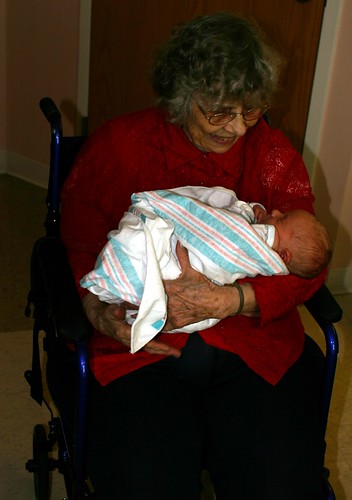
Jacob has lately been telling us gate gamma kassen so sick (Great Grandma Klassen is so sick), after his visit to the hospital, and it s true. Today started normal enough, but by 2:45 I got an email from my mom, saying that grandma had taken yet another turn for the worse; her pulse was racing, her temperature feverish, and her breathing shallow and difficult. The last grandchild that was going to be there made it, and got the last flicker of recognition from grandma. I wrapped some things up at work. Then I made the short drive from work to the nursing home, and got there just after 4. I went in to her room there, and it was full of family. Two of her children were singing her favorite hymns. I can never forget my uncle s deep bass voice as he stood at her bedside, holding her arm, while my aunt patted her head, both of them singing. Grandma s only remaining sibling, her younger brother Melvin, sat on the other side of the bed, looking on. Grandma s white table and chairs, which were in grandma and grandpa s house as long as I can remember, and followed grandma through all of the four other places she lived in the last years of her life, were in her room at the nursing home too. It always felt like home to be with grandma and those familiar things that she always took with her. Despite what was happening, I was glad she was back at home. My uncle motioned me over to her bedside, and I took her hand for a few minutes. It felt cold and weak; for the first time, she didn t grab my hand at all. A nurse came in to check oxygen saturation, but the machine wasn t able to get a reading due to poor circulation to her hand. She wasn t able to get a heart rate either because the heart was racing so fast. She discussed briefly whether the family wanted them to continue giving her oxygen, and they decided that they would, for her comfort. My uncle and aunt kept singing. I blew my nose and dabbed at my eyes, and there were hugs all around. And just a few minutes later, grandma peacefully stopped breathing, maybe 20 minutes after I had arrived. They went to get the nurse, who came back to listen to grandma s heart again, though we knew what she would find. She took the stethoscope off, and she almost lost her composure, but managed to say you can turn the oxygen off now. Several people gave grandma a last hug. After a few minutes with just the family, they told the nurses to go ahead and call the funeral home. That set off a lot of activity making arrangements for the next few days, funeral plans, and the like. I stepped back into grandma s room a few times, while the family was in the sitting area right outside it discussing. I looked around at the family photos on the wall, the old table and chairs, the recliner. Now, these are the things that were grandma s. It didn t feel like home anymore. Terah and Jacob were stuck at home Terah s car was at the mechanic for repair today. I called to give her the news. She wanted to come to be with the family, but I didn t really want to leave. She tried calling some friends to see if they could give her a lift to the mechanic, but not one of them was available. I talked to her again and suggested she just call the mechanic. She wasn t even halfway through describing the situation when he interrupted with, We ll have it at your place right away! Well, I don t expect you to have to do that, or you could certainly wait until you close. Nope, this isn t your average community, we ll bring it right over. You should be there. Grandma has enjoyed a simple life and had requested a simple death: no extraordinary measures at the end of life, no embalming either. So, by law, the burial must happen within 24 hours of death, and will be tomorrow. After all the arrangements, people realized nobody had supper yet. We went to the quickest available option pizza and ate there. It was paid for out of grandma s remaining money the last meal of so many that she provided for her family over the years. It was a happy meal. As I drove home, NPR news was on the radio. There were the same stories we hear all the time: the economy, the mideast, the president. Normally I m interested, but today I shut it off. Today is different. Tomorrow, for the second time in four years, I will help carry a grandparent s casket a few days before Easter. I ll end tonight with this photo. It was taken soon after Jacob was born. Grandma came to the hospital and held him. That smile sums her up perfectly. img_4965r.jpg

5 April 2009

Christian Perrier: 42,195

Done. I'm right here now sitting on my couch and trying to recover my legs after that first marathon ever. As planned, I met Ralf Treinen and No l K the at the start of the Paris Marathon. As No l was targetting 3h30m while Ralf and I were targetting 4h, we left him go with the faster runners. As No l doesn't blog that much, I think I can say it now: he managed to run in 3h28m, which is awesome. He is incredibly happy with that (we unfortunately didn't manage to meet again after the race as the crowd was too huge and the cellphones were of course miserably failing). Ralf and I ran together the first 12 kilometers. Then we split because he had to stop for a few seconds. Up to the 21st kilometer, I kept the pace for 4h and I was even running a little bit faster. However, this advance vanished slowly from km 25, up to km 35 where the virtual runner that was running 4h passed me..:-). Ralf also passed me around km 38 which is indeed the moment where I was blowing up, running slower and slower. The last 3 kilometers were a nightmare but, still, I managed to finish and my GPS watch tells me I ran for 4h10m. The official time is 4h12m56s, because of a huge "runner jam" at Bastille where we had to wait for 3 minutes before being able to enter the Faubourg Saint-Antoine street. Running through Paris is really magic, particularly with the nice sun we had ( not *too* hot, though) and I am really proud and happy to have my first marathon finished *without walking*. Yay.

4 April 2009

Russ Allbery: Lintian 2.2.9

I finally got this released. I'm very sorry for the long delay; life has been ridiculously busy lately. This release updates the list of valid sections, fixes a few annoying bugs (particularly in diversion handling and some problems with file 5.00 and analysis of source packages), and has some additional checks for correct package sections. Many thanks to Frank Lichtenheld and Raphael Geissert for their work on this release. I've also started the full archive run for lintian.debian.org, so it will finally be up-to-date again. Apologies to everyone for the out-of-date results there; I kept meaning to update it after the next release, and then kept finding another bug or not having a moment to do it. Lintian development will probably be slow for the next couple of months (unless my co-maintainers end up with more time to drive it forward), since I have a huge pile of work that I need to do, including deploying a virtualization environment and lots of upgrades to lenny. Things should start settling down again sometime around mid-June.

2 April 2009

Ana Beatriz Guerrero Lopez: KDE 4.2 in unstable is coming

It was 2 years ago when we started working in KDE 4 packages, and exactly 20 months ago when we started uploading KDE 4.0.0 beta 1 to experimental. Finally, we are working in packages that are targeted to unstable \o/. As announced in the users mailing list, we will be uploading KDE 4.2.2 to unstable in the next days, so look carefully at what you update :) We have worked very hard in providing a smooth upgrade, but given the change is so big, some new (little!) problems will be discovered. One of the most problematic points is we were using .kde4 to store user data and settings of KDE 4 and now it is time to switch back to the default .kde. There are several possible migration cases here and for allow users select the case they prefer, a migration wizard tool named Kaboom has been created inside the Debian KDE team. Be aware that there will be some inconsistencies in unstable the following days after KDE 4.2.2 reaches the archive. So please, be patient. We are still testing and we are not uploading until we think it is good to go, so next days could become 2 weeks. Again, be patient :) If you want to keep using KDE 3.5.10 for a few weeks more, just do not upgrade yet. But if you want to keep using KDE 3.5.10 for months, maybe you should consider become a Lenny user. If you have questions, doubts and/or suggestions, you can check our Debian KDE Team website where we try to add information and the archive of the Debian KDE users mailing list. Time for a personal note. KDE 4.2 is a huge change from KDE 3.5, and it is normal if you do not fully like it in the beginning. But I do think most of users of KDE 3 will feel very comfortable in KDE 4 after some days using it. You just need to discover the new ways of doing some tasks. Also, once KDE 4.2 is sitting in unstable, a lot of third party applications (specially plasma widgets) for KDE 4 will be finally uploaded to the Debian archive, making KDE 4 even better.

31 March 2009

Jose Luis Rivas Contreras: Help XScreenSaver on Debian!

XScreenSaver is of the most widely used screensavers app in Linux systems and works as well as a huge collection of screensavers for another apps like kscreensavers. In Debian is maintained by only 2 persons which has in this moment lack of time. Because of this we re looking for co-maintainers that should accomplish the following main [...]

30 March 2009

John Goerzen: Kindle 2: How s It Going?

It s now been almost a month since I got my Kindle 2 and wrote about my first impressions of it. In that amount of time, I figure I have read, on the Kindle, the equivalent of 1500 to 2000 printed pages. I ll start with my personal reactions to the device, and then move on into some less subjective observations about it. What I ve Used It For To give you a quick idea of what I m reading: The Gut Reaction I want everything to be available on the Kindle, and I want to read everything on it. Whether that s just some excitement at a new device (still possible after a month, I guess), or something more lasting, I m still a little unclear about but I suspect it s something more lasting. I have read far, far more since I have had the Kindle than I had for quite some time prior, excepting a certain Hitchhiker s Guide to the Galaxy marathon one Christmas vacation. This leads me to think that the Kindle s main competitor isn t the Sony PRS-505, but rather the XBox, Wii, Netflix, and Hulu. Not that I watched that much TV to start with, but I haven t even been keeping up with the Daily Show since I got the Kindle. Not only that, but it prompted me to go to the local used bookstore (all proceeds go to charity) and buy a paper copy of David Copperfield for $10, so Terah could read it with me while I reread it on the Kindle. So it seems that Amazon s stats which show that people tend to read more once they get the Kindle, and don t cut down on paper book buying are about right in my case. Plus there s the fact that I ve loaded up the Kindle with over a hundred free books of all sorts of descriptions, some from Amazon s own free book catalog (extensive in itself), and others from Feedbooks, Gutenberg, or other places. That s taken up some time itself, and I now have achieved what I tend to achieve with all devices like this (iPod, MythTV, etc): more material than I can ever possibly get through. Why I Like It So, what exactly IS it about this thing that I like? Part of it has to be the size of the device. Granted, I wish the screen were larger, but even with the leather case, the device is a pretty nice size. I find that I keep two or three books that I m reading at the top of my list, and it s great to be able to carry around a single device and be able to select from a book as the mood strikes. Part of it is the built-in dictionary and search tools, which I ve already discussed. In the end, Amazon s execution of the concept is just done really, really well. It doesn t require some sort of proprietary Windows app like Sony s reader does. It doesn t even require a PC at all. It acts as reliable as a book, and that s something. The highlight/clippings feature is also pretty nice. You can highlight a section of text, which then causes it to be rendered with an underline on-screen just like you can underline something in a book. Better yet, when you re reading the book, you can call up a list of all such passages (as well as your bookmarks, etc), see them with an excerpt of text, and jump directly to them. No more need for millions of tiny pieces of paper marking a page that contains a marking. Even better than that, the Kindle creates a .txt (yes, plain text) file in the documents/ directory for you. Each time you bookmark or highlight a passage, it adds a little summary of the passage to that file, as well as information about the location of it. For highlights, the summary is the content of the highlight itself. So if you re going to go blog about the book later, there are a bunch of ready-made quotes you can cut-and-paste later. You can read that file both on the Kindle and on a PC. Sweet. So, I guess I would say that the Kindle makes it easier to read complex texts, and fun to read lighter ones. Availability of Content There are several ways you can get content onto the Kindle. The first, of course, is Amazon s own Kindle Store. Quite the clever bit of engineering there. You hit buy , and generally by the time you can walk over to the Kindle and pick it up, the book s on it, thanks to the integrated cell-network wireless modem. Subscriptions to newspapers and magazines work similarly each issue is automatically delivered in the middle of the night. However, it seems that the magazines such as New Yorker and Atlantic aren t exactly complete replicas of the print editions for some reason. The pricing of Kindle content is generally cheaper than paperback editions of books, but not by much. I think it should be more heavily discounted than it is, and part of that may be due to the large commission Amazon takes on things. Ironically, Amazon also has a tremendous array of free public domain and copyrighted books, and an equally staggering number of books available for under $1. For the classics, and other things out of copyright, my favorite place to turn is Feedbooks. They ve got ebooks available for download for just about any format, including Kindle, and generally do a good job of providing a real linked Table of Contents and the like. Kindle can read DRM-free content in .txt or .mobi format. I ve also built my own ebooks for the Kindle using Mobiperl. It takes an ePub source directory and makes a MobiPocket file out of it, which can be installed on the Kindle directly. For things I find on Project Gutenberg, GutenMark is a nice tool to create a good-looking HTML representation. I also use quote-fixer to help with my other pet peeve: straight quotes and lack of em-dashes on a device that can, and should, display both. Screen I m still of two minds about the screen. On the one hand, it doesn t give me eyestrain like reading on a PC, laptop, or cellphone screen does. Also, it looks remarkably book-like. A well-prepared Kindle etext feels so professional on the screen, so real, so lovingly-prepared, that it s fun to read. The Feedbooks David Copperfield is an excellent example of this, as is Houston Smith s Why Religion Matters. There are several things I don t like about the screen. One is that, while reading a book, it leaves a margin around the edge of the text. I can t figure out why it doesn t use all the available screen real-estate, especially since its built-in web browser does. Another is that, while not terribly reflective, it is still somewhat reflective, and glare from the sun or a light at a bad angle can make the screen unreadable unless you turn it a bit to a different angle. But my biggest gripe about the screen is that it s not as high-contrast as I d like. Still, I very much enjoy the Kindle, so I guess it s not as huge a problem as I think it could be sometimes. Pet Peeve I get really annoyed when I download content for the Kindle and discover that it doesn t have a linked Table of Contents (meaning I can click on a chapter and go directly to it). I m even more annoyed when it uses straight typewriter quotes instead of the angled typesetter s quotes or smart quotes . The Kindle is capable of beautifully rendering them, as well as things such as em dashes, and when I see what is obviously some cheap attempt at a conversion of some ancient ASCII document, rather than a proper attempt to make a good-looking book, I get annoyed. And so it was that I requested, and got, a $0.80 refund for my purchase of Sherlock Holmes: The Complete Collection and instead paid $3.60 for The Complete Sherlock Holmes. Yes, I could have spent a few hours converting all these from Gutenberg, but $3.60 is so cheap that it wasn t worth it. Customer Service Amazingly, Amazon s customer service for the Kindle is not their usual Asian form letter service. It s Americans, who seem to read, understand, and care about problems. I was pleasantly surprised. Too bad the rest of Amazon doesn t learn a thing or two from it. Conclusion I think the Kindle is worth it. It will pay for itself exceptionally quickly for people like me that don t live anywhere near a large library, and enjoy reading out-of-copyright material. Even if it doesn t pay for itself that quickly, the convenience of being able to carry several actively reading books with you on a single small device is pretty nice. No more pile of books in my suitcase for travel.

27 March 2009

David Welton: CodingHorror and Open Source Economics

Jeff Atwood writes about the economics of open source software: http://www.codinghorror.com/blog/archives/001247.html Well, he actually doesn't say as much, but that's what it's about. Someone really ought to do a book about this subject. I have some ideas - any takers? It's always tough to write about because there's so much material. It's a topic that is near and dear to my heart - almost 10 years ago, I joined the Free Software Business mailing list, as I got curious about the intersection of free software and business, and how the whole thing worked. I've learned a lot in the meantime, including a stint at Linuxcare, which was one of the Linux companies during the dot com boom, and am still fascinated by the subject. Before we get started, let's reiterate something:
  • It's clear that open source software works. There's just no doubt about it - it's been through ups and downs, the dot com boom and bust, and it will trundle happily (well, as happy as anyone is with this economy) through the recession too.
That point bears repeating. Everything else needs to take it into consideration. Could it work better? Differently? Perhaps, but it does work, so you need to understand it very well before you fiddle with it. Jeff writes:
for the average user? Heck, how realistic is this for the average programmer? Even if you're the type of macho, gung-ho programmer who can master an alien code base just to get some small pet feature or bugfix in -- do you honestly have the kind of time it would take to do that? Sometimes, when people say this:
The source code is freely available. If you feel so strongly about this bugfix/tweak/feature/plugin, why don't you code it yourself?
They're really saying this:
F**k you.
Which is of course a terrible analysis of open source, and its pros and cons. I wrote the following comment on Hacker News:
Heck, how realistic is this for the average programmer? ...
"Actually, I have submitted lots of (mostly small and inconsequential) bugs and minor features over the years, to projects such as the Linux Kernel, Tcl, Erlang, Ruby, Rails, Apache, and probably lots of others I'm forgetting right now. I actually enjoy it quite a bit, come to think of it - there's something cool about diving in and studying something new and different, and a thrill that comes with nailing the bug. Sometimes, the knowledge required to actually fix it is too much, and you have to settle for sending in a good bug report, but in other cases it's very much possible to hack up quick, useful things despite not knowing much about the system in question. And, no, I'm not really that great a programmer... I'd consider myself fairly average." And I know I'm not alone, as I see similar sorts of people in Debian and the Apache Software Foundation. Debian, infact, is all about those kinds of tweaks to improve the operating system as a whole. And this sort of exchange goes on all the time, as evidenced by the huge success of a large number of open source projects. Now, granted, most projects are really driven by one or a few really committed hackers, who do the lion's share of the work. However, that large network of people who contribute, test, document, and suggest is certainly important to any open source project. As long as we're looking at my anecdote, let's look at it in a bit more depth - most of those projects are developer tools or closely related. A cynic might note that Jeff comes from the world of Microsoft, where the core developer tools are provided by a company and 'giving back' is limited to payments and bug reports. But leaving that be, I think the enormous success of stuff like Ruby, Perl, PHP, Python, Tcl, Apache, Linux, GCC, and on and on and on indicates that, at least in terms of stuff that developers share between one another, open source works. However, there are problems, one of which is that he (or, in unfortunately rather rarer cases, she) who writes the code does not necessarily get the money. And without money, he or she who writes the code must dedicate themselves to some means to actually accumulate a bit of money in order to pay for living expenses. Most likely, this is time taken away from the open source project, which is a loss for all the people who benefit from it. Proprietary software solves this feedback loop in a neater way (generally) - companies that create good products get money for their efforts, which can then be reinvested in development. Jeff suggests that "sponsorship seems like a constructive way for people who are unable or unwilling to write code to affect the direction of a project.", which is ok as far as it goes, and more or less works here and there, but hopefully he's not thinking about trying it on a larger scale. This sort of thing has been tried before, and never really seems to take off. Part of the problem is that it can work on a person-to-person basis, but is almost impossible to standardize in a way that it makes sense to have some kind of clearinghouse that operates as a business. There are simply too many factors - what kind of open source project it is, what motivates the people behind it, how the transaction costs of defining a specification, monitoring the results, sending money and so on compare to the actual value of a fix... the list goes on. Ultimately, it's a nice idea, but it doesn't seem to work out too well in practice. Anyway, while it's a good thought on Jeff's part, at the end of the day, it is fairly evident that he doesn't have a lot of first hand knowledge of open source business and economics. That said, to some degree, open source took everyone by surprise, and, lacking the nice, simple feedback loop that proprietary software has, can be a lot more difficult to get a handle on. I find it quite pleasant that way - it attracts both hard-headed business types and social-experiment idealist visionaries; both huge corporations (IBM!) and a huge number of individuals; both people who have gotten quite wealthy from open source as well as most of the rest of us who manage to make ends meet but still love it. It's not something that's easy to pigeonhole, and as such it's hard enough to figure out the many ways in which it does work, let alone figure out how to improve on it. Stay tuned for further installments: Software Economics - Public Goods

John Goerzen: Peace

Today over lunch, I and 6 others went to visit Grandma. She was in her room, looking better physically today than yesterday. When I walked in, I said brightly, Hi Grandma! She took my hand warmly, and said to me, Now I don t think we ve met. Who are you? I knew that moment would happen someday, but still was surprised when it happened. Mom told her that we were there to tell her we love her. Grandma counted out the seven of us, and said, All these wonderful people here to tell that to ME? That s Grandma still there! It was a difficult moment. Many of us were tearful, and Grandma was sick enough that she sometimes lost the battle to stay awake. But we were all glad it was happening. Mom thought it right (me too) that she should tell Grandma about the latest word from the doctors. The conversation went, in part, something like this, with my mom addressing her mother: My Mom: Mom, the doctors say your heart is probably wearing out. My Grandma: *shrug* Yeah. My Mom: And your body is probably tiring out too. My Gramdma: Yes it is. I m 94. It s not that Grandma was depressed or anything. Just that she had long ago been at peace with the idea of death, and actually told us more than once that the was rather surprised that she has lived to be as old as she has. So it wasn t frightening or surprising to her to confront her own mortality. To her, it was a fact, and an obvious one at that. My brother brought along Grandma s old Bible. She had given it to him a few years ago. It was filled with highlights and handwritten notes from cover to cover. She had carefully analyzed it, and when she bought a new Bible, had carefully copied the notes to it. My brother read to her two passages that she had highlighted:Psalm 23: (which she has noted as a favorite of many Christians ) and Numbers 6:24-26. He then held her hand and said a prayer with her. Then he said a blessing for her, and as he was getting to the end, she interrupted, saying the last word for him: forever! She still had her sense of humor, and made us all laugh several times. She said, as she always has when any of us stop by to visit, how happy she is that we came by, and what a wonderful family she has. She said several times Danke sch n, Danke sch n, Danke sch n! (Thank you, thank you, thank you! she had made sure to teach a few German words to all of us as kids.) When it was time to go, she got lots of hugs from us, and made a point to tell each of us individually thank you for coming! As we walked down the hall, I was reminded of her old tradition going back many years. Whenever we would leave her house, she d wave to us from the porch. And, if it was dark, we d turn on the car light and wave back. Since she s been in the nursing home, she ll wave to us from her doorway as we walk down the hall. And, sure enough, today s visit ended with her waving to us from her doorway with both hands (as she always does) and a big smile. We all waved back with a smile as we walked away, too. I don t know if this will be the last goodbye with her, but if it is, I can t think of a better one.

Next.

Previous.