Divine Attah-Ohiemi: Seeking Opportunities: Building a Career in Software Engineering and Beyond
My journey in CS has always been driven by curiosity, determination, and a deep love for understanding software solutions at its tiniest, most complex levels.
Taking ALX Africa Software Engineer track after High school was where it all started for me. During the 1-year intensive bootcamp, I delved into the intricacies of Linux programming and low-level programming with C, which solidified my foundational knowledge. This experience not only enhanced my technical skills but also taught me the importance of adaptability and self-directed learning. I discovered how to approach challenges with curiosity, igniting a passion for exploring software solutions in their most intricate forms. Each module pushed me to think critically and creatively, transforming my understanding of technology and its capabilities.
Let s just say that I have always been drawn to asking, How does this happen?" And I just go on and on until I find an answer eventually and sometimes I don t but that s okay. That curiosity, combined with a deep commitment to learning, has guided my journey.
Debian Webmaster
My drive has led me to get involved in open-source contributions, where I can put my knowledge to the test while helping my community. Engaging with real-world experts and learning from my mistakes has been invaluable. One of the highlights of this journey was joining the Debian Webmasters team as an intern through Outreachy. Here, I have the honor of working on redesigning and migrating the old Debian webpages to make them more user-friendly. This experience not only allows me to apply my skills in a practical setting but also deepens my understanding of collaborative software development.
Building My Skills: The Foundation of My Experience
Throughout my academic and professional journey, I have taken on many roles that have shaped my skills and prepared me for what s ahead I believe. I am definitely not a one-trick pony, and maybe not completely a jack of all trade either but I am a bit diverse I d like to think.
Here are the key roles that have defined my journey so far:
Volunteer Developer at Yoris Africa (June 2022 - August 2023)
I began my career by volunteering at Yoris, where I collaborated with a talented team to design and build the frontend for a mobile app. My contributions extended beyond just the frontend; I also worked on backend solutions and microservices, gaining hands-on experience in full-stack development. This role was instrumental in shaping my understanding of software architecture, allowing me to contribute meaningfully to projects while learning from experienced developers in a dynamic environment.
Freelance Academics Software Developer (September 2023 - October 2024)
I freelanced as an academic software developer, where I pitched and developed software solutions for universities in my community. One of my most notable projects was creating a Computer-Based Testing (CBT) software for a medical school, which featured a unique questionnaire and scoring system tailored to their specific needs. This experience not only allowed me to apply my technical skills in a real-world setting but also deepened my understanding of educational software requirements and user experience, ultimately enhancing the learning process for students.
Open Source Intern at Debian Webmaster Team (November 2024 -)
Perhaps the most transformative experience has been my role as an intern at Debian Webmasters. This opportunity allowed me to delve into the fascinating world of open source. As an intern, I have the chance to work on a project where we are redesigning and migrating the Debian webpages to utilize a new and faster technology: Go templates with Hugo.
For a detailed look at the work and progress I made during my internship, as well as information on this project and how to get involved, you can check out the wiki.
My ultimate goal with this role is to build a vibrant community for Debian in Africa and, if given the chance, to host a
debian-cd mirror for faster installations in my region.
You can connect with me through LinkedIn, or X (formerly Twitter), or reach out via email.
 In 2020 my company bought a DYMO LabelWriter Wireless. It is an awesome little device for thermal printing a wide variety of labels. The labels are easily available both from DYMO and from third parties so the pricing is quite acceptable.
Unfortunately DYMO supplies their DYMO Connect Software only for Microsoft Windows and MacOSX. A mobile app of the same name for Android and Apple iOS devices is available in the app stores.
There is a SDK for Linux and there are drivers published for Linux but the LabelWriter Wireless was not supported on Linux when I tried to get it running for Debian in 2020.
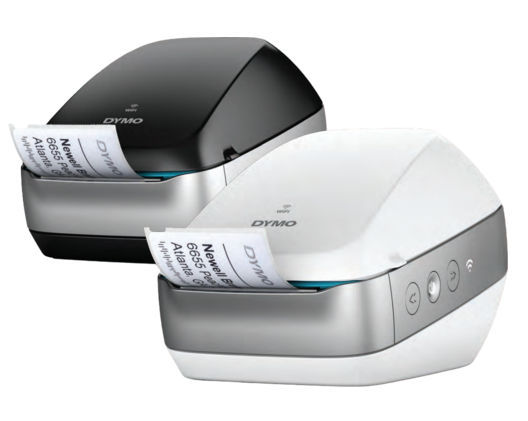 This year I have had a new look at the situation as we still use the LabelWriter Wireless printers a lot and the company runs fully on Linux. So it is always a chore to run a Windows VM just to run DYMO Connect.

 A new maintenance release of
 Internationalization support in Picolibc
There are two major internationalization APIs in the C library:
locales and iconv. Iconv is an isolated component which only performs
charset conversion in ways that don't interact with anything else in
the library. Locales affect pretty much every API that deals with
strings and covers charset conversion along with a huge range of
localized information from character classification to formatting of
time, money, people's names, addresses and even standard paper sizes.
Picolibc inherits it's implementation of both of these from
newlib. Given that embedded applications rarely need advanced
functionality from either these APIs, I hadn't spent much time
exploring this space.
Newlib locale code
When run on Cygwin, Newlib's locale support is quite complete as it
leverages the underlying Windows locale support. Without Windows
support, everything aside from charset conversion and character
classification data is stubbed out at the bottom of the stack. Because
the implementation can support full locale functionality, the
implementation is designed for that, with large data structures and
lots of code.
Charset conversion and character classification data for locales is
all built-in; none of that can be loaded at runtime. There is support
for all of the ISO-8859 charsets, three JIS variants, a bunch of
Windows code pages and a few other single-byte encodings.
One oddity in this code is that when using a JIS locale, wide
characters are stored in EUC-JP rather than Unicode. Every other
locale uses Unicode. This means APIs like wctype are implemented by
mapping the JIS-encoded character to Unicode and then using the
underlying Unicode character classification tables. One consequence of
this is that there isn't any Unicode to JIS mapping provided as it
isn't necessary.
When testing the charset conversion and Unicode character
classification data, I found numerous minor errors and a couple of
pretty significant ones. The JIS conversion code had the most serious
issue I found; most of the conversions are in a 2d array which is
manually indexed with the wrong value for the length of each row. This
led to nearly every translated value being incorrect.
The charset conversion tables and Unicode classification data are now
generated using python charset support and the standard Unicode data
files. In addition, tests have been added which compare Picolibc to
the system C library for every supported charset.
Newlib iconv code
The iconv charset support is completely separate from the locale
charset support with a much wider range of supported targets. It also
supports loading charset data from files at runtime, which reduces the
size of application images.
Because the iconv and locale implementations are completely separate,
the charset support isn't the same. Iconv supports a lot more
charsets, but it doesn't support all of those available to
locales. For example, Iconv has Big5 support which locale
lacks. Conversely, locale has Shift-JIS support which iconv does not.
There's also a difference in how charset names are mapped in the two
APIs. The locale code has a small fixed set of aliases, which doesn't
include things like US-ASCII or ANSI X3.4. In contrast, the iconv
code has an extensive database of charset aliases which are compiled
into the library.
Picolibc has a few tests for the iconv API which verify charset names
and perform some translations. Without an external reference, it's
hard to know if the results are correct.
POSIX vs C internationalization
In addition to including the iconv API, POSIX extends locale support
in a couple of ways:
 With all the recent buzz about
 The following contributors got their Debian Developer accounts in the last two
months:

 Becoming a
 I keep saying I'm "done" with my