Search Results: "bab"

1 December 2016

Daniel Pocock: Using a fully free OS for devices in the home

There are more and more devices around the home (and in many small offices) running a GNU/Linux-based firmware. Consider routers, entry-level NAS appliances, smart phones and home entertainment boxes. More and more people are coming to realize that there is a lack of security updates for these devices and a big risk that the proprietary parts of the code are either very badly engineered (if you don't plan to release your code, why code it properly?) or deliberately includes spyware that calls home to the vendor, ISP or other third parties. IoT botnet incidents, which are becoming more widely publicized, emphasize some of these risks. On top of this is the frustration of trying to become familiar with numerous different web interfaces (for your own devices and those of any friends and family members you give assistance to) and the fact that many of these devices have very limited feature sets. Many people hail OpenWRT as an example of a free alternative (for routers), but I recently discovered that OpenWRT's web interface won't let me enable both DHCP and DHCPv6 concurrently. The underlying OS and utilities fully support dual stack, but the UI designers haven't encountered that configuration before. Conclusion: move to a device running a full OS, probably Debian-based, but I would consider BSD-based solutions too. For many people, the benefit of this strategy is simple: use the same skills across all the different devices, at home and in a professional capacity. Get rapid access to security updates. Install extra packages or enable extra features if really necessary. For example, I already use Shorewall and strongSwan on various Debian boxes and I find it more convenient to configure firewall zones using Shorewall syntax rather than OpenWRT's UI. Which boxes to start with? There are various considerations when going down this path:
  • Start with existing hardware, or buy new devices that are easier to re-flash? Sometimes there are other reasons to buy new hardware, for example, when upgrading a broadband connection to Gigabit or when an older NAS gets a noisy fan or struggles with SSD performance and in these cases, the decision about what to buy can be limited to those devices that are optimal for replacing the OS.
  • How will the device be supported? Can other non-technical users do troubleshooting? If mixing and matching components, how will faults be identified? If buying a purpose-built NAS box and the CPU board fails, will the vendor provide next day replacement, or could it be gone for a month? Is it better to use generic components that you can replace yourself?
  • Is a completely silent/fanless solution necessary?
  • Is it possibly to completely avoid embedded microcode and firmware?
  • How many other free software developers are using the same box, or will you be first?
Discussing these options I recently started threads on the debian-user mailing list discussing options for routers and home NAS boxes. A range of interesting suggestions have already appeared, it would be great to see any other ideas that people have about these choices.

30 November 2016

Joey Hess: drought

Drought here since August. The small cistern ran dry a month ago, which has never happened before. The large cistern was down to some 900 gallons. I don't use anywhere near the national average of 400 gallons per day. More like 10 gallons. So could have managed for a few more months. Still, this was worrying, especially as the area moved from severe to extreme drought according to the US Drought Monitor. Two days of solid rain fixed it, yay! The small cistern has already refilled, and the large will probably be full by tomorrow. The winds preceeding that same rain storm fanned the flames that destroyed Gatlinburg. Earlier, fire got within 10 miles of here, although that may have been some kind of controlled burn. Climate change is leading to longer duration weather events in this area. What tended to be a couple of dry weeks in the fall, has become multiple months of drought and weeks of fire. What might have been a few days of winter weather and a few inches of snow before the front moved through has turned into multiple weeks of arctic air, with multiple 1 ft snowfalls. What might have been a few scorching summer days has become a week of 100-110 degree temperatures. I've seen all that over the past several years. After this, I'm adding "additional, larger cistern" to my todo list. Also "larger fire break around house".

Chris Lamb: Free software activities in November 2016

Here is my monthly update covering what I have been doing in the free software world (previous month):
Reproducible builds

Whilst anyone can inspect the source code of free software for malicious flaws, most software is distributed pre-compiled to end users. The motivation behind the Reproducible Builds effort is to permit verification that no flaws have been introduced either maliciously or accidentally during this compilation process by promising identical results are always generated from a given source, thus allowing multiple third-parties to come to a consensus on whether a build was compromised.

This month:

My work in the Reproducible Builds project was also covered in our weekly reports. (#80, #81, #82 #83.

Toolchain issues I submitted the following patches to fix reproducibility-related toolchain issues with Debian:

strip-nondeterminism

strip-nondeterminism is our tool to remove specific non-deterministic results from a completed build.


jenkins.debian.net

jenkins.debian.net runs our comprehensive testing framework.

  • buildinfo.debian.net has moved to SSL. (ac3b9e7)
  • Submit signing keys to keyservers after generation. (bdee6ff)
  • Various cosmetic changes, including
    • Prefer if X not in Y over if not X in Y. (bc23884)
    • No need for a dictionary; let's just use a set. (bf3fb6c)
    • Avoid DRY violation by using a for loop. (4125ec5)

I also submitted 9 patches to fix specific reproducibility issues in apktool, cairo-5c, lava-dispatcher, lava-server, node-rimraf, perlbrew, qsynth, tunnelx & zp.

Debian

Debian LTS This month I have been paid to work 11 hours on Debian Long Term Support (LTS). In that time I did the following:
  • "Frontdesk" duties, triaging CVEs, etc.
  • Issued DLA 697-1 for bsdiff fixing an arbitrary write vulnerability.
  • Issued DLA 705-1 for python-imaging correcting a number of memory overflow issues.
  • Issued DLA 713-1 for sniffit where a buffer overflow allowed a specially-crafted configuration file to provide a root shell.
  • Issued DLA 723-1 for libsoap-lite-perl preventing a Billion Laughs XML expansion attack.
  • Issued DLA 724-1 for mcabber fixing a roster push attack.

Uploads
  • redis:
    • 3.2.5-2 Tighten permissions of /var/ lib,log /redis. (#842987)
    • 3.2.5-3 & 3.2.5-4 Improve autopkgtest tests and install upstream's MANIFESTO and README.md documentation.
  • gunicorn (19.6.0-9) Adding autopkgtest tests.
  • libfiu:
    • 0.94-1 Add autopkgtest tests.
    • 0.95-1, 0.95-2 & 0.95-3 New upstream release and improve autopkgtest coverage.
  • python-django (1.10.3-1) New upstream release.
  • aptfs (0.8-3, 0.8-4 & 0.8-5) Adding and subsequently improving the autopkgtext tests.


I performed the following QA uploads:


Finally, I also made the following non-maintainer uploads:
  • libident (0.22-3.1) Move from obsolete Source-Version substvar to binary:Version. (#833195)
  • libpcl1 (1.6-1.1) Move from obsolete Source-Version substvar to binary:Version. (#833196)
  • pygopherd (2.0.18.4+nmu1) Move from obsolete Source-Version substvar to $ source:Version . (#833202)


RC bugs


I also filed 59 FTBFS bugs against arc-gui-clients, asyncpg, blhc, civicrm, d-feet, dpdk, fbpanel, freeciv, freeplane, gant, golang-github-googleapis-gax-go, golang-github-googleapis-proto-client-go, haskell-cabal-install, haskell-fail, haskell-monadcatchio-transformers, hg-git, htsjdk, hyperscan, jasperreports, json-simple, keystone, koji, libapache-mod-musicindex, libcoap, libdr-tarantool-perl, libmath-bigint-gmp-perl, libpng1.6, link-grammar, lua-sql, mediatomb, mitmproxy, ncrack, net-tools, node-dateformat, node-fuzzaldrin-plus, node-nopt, open-infrastructure-system-images, open-infrastructure-system-images, photofloat, ppp, ptlib, python-mpop, python-mysqldb, python-passlib, python-protobix, python-ttystatus, redland, ros-message-generation, ruby-ethon, ruby-nokogiri, salt-formula-ceilometer, spykeviewer, sssd, suil, torus-trooper, trash-cli, twisted-web2, uftp & wide-dhcpv6.

FTP Team

As a Debian FTP assistant I ACCEPTed 70 packages: bbqsql, coz-profiler, cross-toolchain-base, cross-toolchain-base-ports, dgit-test-dummy, django-anymail, django-hstore, django-html-sanitizer, django-impersonate, django-wkhtmltopdf, gcc-6-cross, gcc-defaults, gnome-shell-extension-dashtodock, golang-defaults, golang-github-btcsuite-fastsha256, golang-github-dnephin-cobra, golang-github-docker-go-events, golang-github-gogits-cron, golang-github-opencontainers-image-spec, haskell-debian, kpmcore, libdancer-logger-syslog-perl, libmoox-buildargs-perl, libmoox-role-cloneset-perl, libreoffice, linux-firmware-raspi3, linux-latest, node-babel-runtime, node-big.js, node-buffer-shims, node-charm, node-cliui, node-core-js, node-cpr, node-difflet, node-doctrine, node-duplexer2, node-emojis-list, node-eslint-plugin-flowtype, node-everything.js, node-execa, node-grunt-contrib-coffee, node-grunt-contrib-concat, node-jquery-textcomplete, node-js-tokens, node-json5, node-jsonfile, node-marked-man, node-os-locale, node-sparkles, node-tap-parser, node-time-stamp, node-wrap-ansi, ooniprobe, policycoreutils, pybind11, pygresql, pysynphot, python-axolotl, python-drizzle, python-geoip2, python-mockupdb, python-pyforge, python-sentinels, python-waiting, pythonmagick, r-cran-isocodes, ruby-unicode-display-width, suricata & voctomix-outcasts. I additionally filed 4 RC bugs against packages that had incomplete debian/copyright files against node-cliui, node-core-js, node-cpr & node-grunt-contrib-concat.

Arturo Borrero Gonz lez: Creating a team for netfilter packages in debian

Debian - Netfilter There are about 15 Netfilter packages in Debian, and they are maintained by separate people. Yersterday, I contacted the maintainers of the main packages to propose the creation of a pkg-netfilter team to maintain all the packages together. The benefits of maintaining packages in a team is already known to all, and I would expect to rise the overall quality of the packages due to this movement. By now, the involved packages and maintainers are: We should probably ping Jochen Friedrich as well who maintains arptables and ebtables. Also, there are some other non-official Netfilter packages, like iptables-persistent. I m undecided to what to do with them, as my primary impulse is to only put in the team upstream packages. Given the release of Stretch is just some months ahead, the creation of this packaging team will happen after the release, so we don t have any hurry moving things now.

29 November 2016

Shirish Agarwal: The Iziko South African Museum

This would be a bit long on my stay in Cape Town, South Africa after Debconf16. Before I start, let me share the gallery works, you can see some photos that I have been able to upload to my gallery . It seems we are using gallery 2 while upstream had made gallery 3 and then it sort of died. I actually asked in softwarerecs stackexchange site if somebody knows of a drop-in replacement for gallery and was told/shared about Pwigo . I am sure the admin knows about it. There would be costs to probably migrate from gallery to Pwigo with the only benefit that it would be something which would perhaps be more maintainable. The issues I face with the current gallery system are few things a. There is no way to know how much your progress your upload has taken.
b. After it has submit, it gives a fake error message saying some error has occurred. This has happened on every occasion/attempt. Now I don t know whether it is because I have slow upload speeds or something else altogether. I had shared the error page last time in the blog post hence not sharing again. Although, all the pictures which would be shared in this blog post would be from the same gallery Another thing I would like to share is a small beginner article I wrote about why I like Debian. Another interesting/tit-bit of news I came to know few days back that both Singapore and Qatar have given 96 hours visa free stopovers for Indians for select destinations. Now to start with the story/experience due to some unknown miracle/angel looking upon me I got the chance to go to Debconf16, South Africa. I m sure there was lot of backend discussions but in the end I was given the opportunity to be part of Debcamp and Debconf. While I hope to recount my Debcamp and Debconf experience in another or two blog posts, this would be exclusively the Post-Debconf Experiences I had. As such opportunities to visit another country are rare, I wanted to make the most of it. Before starting from Pune, I had talked with Amey about Visas, about Debconf as he had just been to Debconf15 the year before and various things related to travel. He was instrumental in me having a bit more knowledge about how to approach things. I was also lucky to have both Graham and Bernelle who also suggested, advised and made it possible to have a pleasant stay both during Debcamp and Debconf. The only quibble is I didn t know heaters were being made available to us without any cost. Moving on, a day or two before Debconf was about to conclude, I asked Bernelle s help even though she was battling a burn-out I believe as I was totally clueless about Cape Town. She accepted my request and asked me to look at hostels near Longmarket Street. I had two conditions a. It should not be very far from the airport
b. It should be near to all or most cultural experiences the city has to offer. We looked at hostelworld and from the options listed, it looked like Homebasecapetown looked to be a perfect fit. It was one of the cheaper options and they also had breakfast included in the pricing. I booked through hostelworld for a mixed dorm for 2 days as I was unsure how it would be (the first night effect I have shared about previously) . When I reached there, I found it to be as good as the pictures shared were, the dorm was clean (most important), people were friendly (also important) as well as toilets and shower were also clean while the water was hot, so all in all it was a win-win situation for me. Posters I saw at homebasecapetown While I m not much of an adrenaline-junkie it was nice to know the activities that could be done/taken. Brochures and Condoms just left of main hall. This was again interesting. While apologies for the poor shaky quality of the picture, I believe it is easy to figure out. There were Brochures of the city attractions as well as condoms that people could discreetly use if need be. I had seen such condoms in few toilets during and around Debconf and it felt good that the public were aware and prioritizing safety for their guests and students instead of having fake holier than thou attitudes that many places have. For instance, you wouldn t find something like this in toilets of most colleges in India or anywhere else for that matter. There are few vending machines in what are termed as red light areas or where prostitution is known/infamous to happen and even then most times it is empty. I have 2-3 social workers as friends and they are a source of news on such things. While I went to few places and each had an attraction to it, the one which had my literally eyes out of socket was the Iziko South African Museum . I have been lucky to been quite a few museums in India, the best rated science museum in India in my limited experience has been the Visvesvaraya Industrial & Technological Museum, Bengaluru India . A beer from me if a European can get it right. Don t worry if you mispronounce it, I mispronounce it couple of times till I get it right . Looking up the word Iziko the meaning of the word seems to be the hearth and if you look at the range of collections in the museum, you would think it fits. I was lucky to find couple of friends, one of whom was living at homebase and we decided to go to the museum together. Making friends on the road So Eduardo, my friend on the left and his friend, we went to the museum. While viewing the museum, there were no adjectives to describe it other than Wow and Endless . See fossils of fish-whale-shark ? OR Giant fish-whale-dolphin-shark some million years ago. and Reminder of JAWS ;) While I have more than a few pictures, the point is easily made. It seems almost inconceivable that creatures of such masses actually were on earth. While I played with the model of the jaws of a whale/shark in reality if something like that happened, I would have been fighting for my life. The only thing I missed or could have been better if they had some interactive installations to showcase the now universally accepted Charles Darwin s On the Origin of Species I had never seen anything like this. Sadly, there was nobody around to help us figure out things as I had read that most species of fish don t leave a skeleton behind so how were these models made? It just boggles the mind. Apart from the Science Museum I was also introduced to the bloody history that South Africa had. I saw The 1913 native land act which was not honored . I had been under the impression that India had got a raw deal when it was under British rule but looking at South African history I don t know. While we got our freedom in 1947 they got rid of apartheid about 20 years+ . I talked to lot of young African males and there was lot of naked hostility for the Europeans even today. It was a bit depressing but could relate to their point of view as similar sentiments were echoed by our forefathers. I read in the newspapers and it seemed to be a pretty mixed picture. I can t comment as only South Africans can figure out the way forward. For me, it was enough to know and see that we both had similar political histories as nations. It seemed the racial divide and anger was much more highly pronounced towards Europeans and divisive then the caste divisions here between Indians. I also shared with them my limited knowledge and understanding of the Indian history (as history is re-written all the time) and it was clear to them that we had common/similar pasts. As a result, what was surprising (actually not) is that many South Africans have no knowledge of Indian history. as well otherwise the political differences that South Africa and India has in the current scenario wouldn t have been. In the end, the trip proved to be fun, stimulating, educative, thought-provoking as questions about self-identity , national identity, our place in the Universe kinda questions which should be asked all the time. Thank you Bremmer and the team for letting me experience Cape Town, South Africa, I would have been poorer if I hadn t had the experience.
Filed under: Miscellenous Tagged: #Debconf16, #Dinosaur Fishes, #gallery, #Identity, #Iziko South African Museum, #Nation-state Identity, #pwigo

21 November 2016

Mike Gabriel: Please Welcome D0n1elT to the FLOSS World

TL;DR; If you run a FLOSS development project and you notice D0n1elT appearing on your IRC channel, please give him a warm welcome. D0n1elT is a young man highy talented in various FLOSS related topics already. He probably needs some guidance at the beginning and I hope he won't be too shy to ask for it. But you can be sure: your channel has been joined by someone you should consider as a future resource. The Long Story During the last two weeks I had the great pleasure of supervising a fine young man (very young, still, indeed) in all sorts of IT topics. This young man turned out to be so skilled and interested in various FLOSS related areas, I really want to introduce him to all of you. The young man's real name is Daniel Teichmann. On IRC he may appear under his nick: D0n1elT. His GnuPG Fingerprint is: 6C6E 7F8F F7E8 B22E FC76 E9F7 8A79 028F DA56 7C6C. Daniel goes to a local school here in Nothern Germany, near where I live. He attends the 9th grade at his school, and as common for students of his age and grade, practical training was scheduled for the last two weeks. Daniel had originally applied for practical training at some other business near his place of living (which is quite far off from the school, actually). However, that company cancelled his training position two work days before the training was supposed to start. Daniel's teacher rang me up and asked for help. He advertised Daniel as someone who is far advanced in IT topics compared to his co-students. "He even writes his own programs (in Java and C++)." Spontaneously, Andreas Buchholz (CEO of LOGO EDV-Systeme GmbH) and I decided to accept Daniel as a trainee. Without having met him, with no application interview beforehand. The deal was: Daniel comes to Andreas business location in Kiel (40-50km away from Daniel's place of living) and I (working as freelancer for LOGO on a regular basis) do the supervising part. On day one and two, as a warm-up, Daniel installed a Debian Edu Main Server, worked himself through GOsa, LDAP, SSH, GnuPG, Jabber and IRC and configured two routers. All topics were new to him and I could hardly think of new tasks to give to him. As means of communication we set up a Jabber account, then an IRC account (as backup). However, it turned out that Daniel really got a hang of IRC over the next couple of days, so we used that as primary communication channel. Daniel had already programmed various projects in Java (whereas I have never touched Java, so far :-( ). He has written plugins for Minecraft servers. He knows well how to implement object oriented coding models. His coding style looks very good and clean (esp. for someone who has never head a nitpicking code reviewer). He started coding at the age of 9. Instead of diving into Java (where I would not have been of much help, anyway) I decided to provide him with some really basic and Unix-like knowledge: Bash scripting. I wanted to see how he handles another "language" and how he applies his Java knowledge to a lower level, syntactically weaker language. Guess what, he managed that assignment very well. Working on Impressive Display At Daniel's school we run substitute teacher info screens based on a fancy Bash script, named impressive-display, and the impressive PDF viewer. The Impressive Display tool is available in Debian testing/unstable under the same name. So over the next couple of days we worked on Impressive Display. Daniel contributed so many new code passages, conceptual ideas and security concerns, that I decided to make him co-copyright holder. Every change contributed by him received intensive testing before committing to Git. While working on Impressive Display, collaborating with Daniel via Git was a mere pleasure. In his spare time Daniel likes watching Github tutorials. Quite extraordinary. The result is a new major release of Impressive Display: Version 0.3.1 (bumped up from 0.2.3). We added the feature of handling info screen farms based on PXE boot images. It is now possible to configure as many different info screens as needed within the same PXE bootable chroot. Furthermore, Impressive Display now has a PDF presentation (written in LaTeX Beamer) that documents how to setup your own info screens. The PDF presentation is the default PDF that comes up when you start Impressive Display directly after installation. Investigating other Realms We also took a deeper look at remote desktop stuff, one of my most favourite topics. By that impulse Daniel set up his first Vserver machine at some hosting provider. He figured out how to run X2Go Server on that machine with an XFCE desktop. Next step was to run the irssi instance from his notebook inside a screen session on the Vserver. Some days later, Daniel PM'ed me: "I have an IRC bouncer now...". Quintessence It was a great pleasure meeting this young, highly curious and already highly skilled young man over the past two weeks. Daniel, it was an asset to me working with you. You are such a fast learner when it comes to getting accustomed to new working environments, it is amazing. I cannot deny having observed the tendency of preferring rather geeky tools. I was highly delighted, that What's-That and Facebook are nothing that rocks you so much. Unfortunately, all of the above makes you quite unique and non-mainstream among people of your age. My wish for you (and the FLOSS world) is that you start getting in touch with other (FLOSS) developers, maybe of your age, maybe older, and that you (if this is what you want) become an asset to the world of Free Software. The Free Software world can be a world where technical, political and spiritual work become one with friendship among people. Take care and farewell! I am sure, we will meet again. light+love Mike Gabriel (aka sunweaver on IRC and debian.org)

16 November 2016

Shirish Agarwal: The long tail in a common s man journey to debconf16 2

This is an extension of part 1 which I shared few days ago. This would be a longish one so please bear. First of all somebody emailed me this link so in the future a layover at Doha Airport will be a bit expensive from before, approx INR 700/- added to the ticket costs Moving on, Let me share an experience I shared one of the last few days I had while I was in Cape Town
Singer singing some great oldies from 60's , 70's till 90's.

Singer singing some great oldies from 60 s , 70 s till 90 s.

I had booked a place near Long Street, Cape Town using Bernelle s help. What I had not known at that time that near Long Street there are free walking tours every couple of hours. I took part in all the tours and those were nice experiences. Where they start the walk, there was the gentleman pictured above. I was amazed by this gentleman s rich voice. He strummed lot of classics from the 60 s, 70 s till the 90 s . I had two coffees and thought I was at a premium rock concert. It was a bitter-sweet experience for me because I could see that he has such prodigious talent and still he had to struggle to survive to make ends meet. I did my 2 bit but wish I could have done something more. Side note Before I forget there is one trick of feh which I use to view images without it getting very high-resolution (especially on my low-end systems) [shirish@debian] - [/run/user/1000/gvfs/mtp:host=%5Busb%3A001%2C006%5D/Card/DCIM/Camera] - [4621]
[$] feh -g 1350x1000 .
This actually makes it far far easier to traverse through the 1000 odd photos of the trip that I have in my personal archive without doing any sort of conversion methodology. Btw, it took me time but finally was able to create an album at gallery.debconf.org . Haven t been able to upload photos as came across an error which I have shared at https://lists.debconf.org/lurker/message/20161113.215659.fce58823.en.html Moving on, here s the funny story/experience I wanted to share could have been arrested ;) What happened was this. This is from the Doha Airport. I had seen big buggies (ones similar to golf carts) which was ferrying people from end of the concourse to the other. I had been walking the whole day and even with the horizontal escalators and everything, it takes a toll. I was half-tired, half-sleepy and saw a buggy stationed. From behind it looked like the buggies I had seen. As there was no place to park my behind there, I entered into the buggy and sat there. Around 15-20 minutes later a Doha cop in another buggy came to me and asked me if something had happened ? I had no clue what he was talking about. He told/shared/asked me in friendly tone whether I had committed a crime or wanted to report a crime. When I replied in negative to both, he asked then why I was sitting there. I replied it was for stretching my legs and it was the buggy which was being used to transport people from A. to B. He gently told me I had entered into the wrong one and it was actually a cop buggy. I couldn t believe it. He did go his own way as he saw I was dead-tired. After 10-15 minutes, half-believingly I came out of the buggy and to my shock the gentleman was right. There was nothing to do but solder on to find a spot in this big airport. I shared this with few friends and family and managed to elicit few laughs hence sharing. The somewhat sad one was I had met a couple with a baby. Now as shared before, Most Airports including the Doha Airport is Air-Conditioned/Climate-Controlled and is probably in mid-20 s so it was more than cold for me. The couples with the baby were from Asian sub-continent. From their clothes and the way they were, they were not very well off. I do remember them sharing that they had a death in the family and hence were going. I didn t know at that point in time that there was something called bereavement fares and if they were able to take opportunity of those tickets. But this is besides the point . The issue was that their baby had been running a high-fever and the A/C was making matters worse. I had seen a pharmacy but no clinic in the airport. It was much later I came across http://dohahamadairport.com/airport-guide/facilities-services/medical-emergencies but as can be seen on the web-page it doesn t tell whether the services are chargeable or not. I assume it would be paid, although in some of the developed/industrialized countries it is rumoured not to be for simple ailments such as the baby was going through. Have no idea if that s true or not. I also don t know how it equates with travel insurance as well as most travel insurance is also supposed to help you in situations like these. I was concerned as it was a baby and babies as all know are very very fragile. If anybody has an idea or had similar experience would like to know specifically related to International Airport environment as it has transit issues unlike in domestic airports where I don t think it would be a bit more easy. Now coming to my own inadequacies/lack of foresight which I had mentioned I will share, I had asked/queried and got to lead a Debian-installation workshop on the Open Debian Day. I had done a few earlier and had installed it a few times on my system and for my friends, relatives and some clients. The only bad experiences I had were to do with UEFI but even those in the jessie releases had got resolved quite a bit, so was pretty confident. The day before the Installfest was to happen, Mensah Nyarko Yaa Dufie (one full name) of Ghana approached me to install Debian on her system. I had some older version of the Debian DVD either 8.1 or 8.3 and had known that 8.5 had been released just a few days back. Had seen pretty fast internet (as far as downloading Debian DVD) is concerned hence asked her to wait a bit while I downloaded the newest image. I sha256summed it to make sure that the image was bit-to-bit perfect. Now I hadn t bought a pen drive/disk from India as I was under the impression that in such conferences, pen drives should not be an issue. I had asked Bernelle privately before via e-mail as well and she had assured me that some pen-drives would be available. She gave me a handful of HP pen drives. The pen drives as we came know during our usage were somewhat flaky. It would pop out/lose connection even with the slightest nudge to the lappy. Somehow I was able to transfer the image to the usb disk. As people say hindsight is 50:50 maybe it was not such a smart move on my part to download the big DVD image and maybe I should have got the netinstall iso . Be careful, the link I have just shared is of the old version, if you have good web link and want to try the newest stable netinstall head to cdimage.debian.org . Apart from that goof-up I dunno (still) of anyway to know if a copy from an .iso image to usb was successful or not and did it do correctly I did the following command sudo dd if=/path_to/debian-dvd.iso of=/dev/usb-mount-point which is usually /dev/sdb on all of my systems . Her system was a brand new HP (don t remember the model details) which she had bought just a few weeks/months before debconf. We tried a few times but it failed at installing the boot-loader stage. I asked Ritesh Raj Saraff (a friend and DD) and while he had some ideas, none of them worked. Ritesh later pointed out Steve McIntyre and shared he is part of the Debian-Installer team. At that point in time, I had no clue who Steve McIntyre was otherwise I probably would not have approached him. He quickly acquiesced to my request and shared that he would be there for the workshop. With load of my mind little bit, I apologized to mensah and asked her to be at the workshop the following day. I had no clue what was wrong at this point in time, whether it was the iso image in the usb disk or a UEFI issue. This also wasn t good for my confidence but as somebody from the Debian-Installer team was there, I was somewhat relaxed. Next day, some more people came for the Installfest. While I had made 2-3 copies, clearly it was not enough as more people came. I was in a frenzy and asked Deven Bansod, Keerthana Krishnan, Prabaharan Jaminy (the whole GSOC and Outreachy attendees) to volunteer to help out in making more iso images on usb disks. I introduced mensah to Steve McIntyre and we tried 2-3 times to get debian installed on the system but it didn t move from the same place. Ritesh shared that dd had a memory leak and hence cat was a better way to do it. So we did

$ cat debian.iso > /dev/sdb
and soon other machines had debian sporting on their desktops. But mensa s lappy wouldn t get move from the boot-loader stage. Suddenly Steve had the bright idea (light bulb moment) that maybe the .iso is corrupted/usb disk is bad or something is incomplete. We started on another usb disk. Now this is where I have a query While I don t want to compare, in Ubuntu there was an image self-checking mechanism where probably behind the scenes (backend) the checksums published in a file are compared with checksums generated by apps. which are on the .iso image. While it does extend your time, the end result is you know if there is some issue on the decompressed image on the usb disk. AFAIK we don t have anything similar. The only two things I know is the wiki page and of course the various checksums of the image as shared at http://cdimage.debian.org/debian-cd/8.6.0/amd64/iso-cd/ or http://cdimage.debian.org/debian-cd/8.6.0/amd64/iso-dvd/ If anybody knows of any movement or a bug in the BTS which I can follow for the above issue please let me know. This time Steve was able to install it without any issues. I asked him whether he had to make some specific FAT/Ex-FAT/NTFS partitions as some new UEFI-based lappies need one or more but he replied in the negative. While mensa did get her debian install, the GUI didn t come while command-prompt was available. Then Steve added backports to the sources.list, got the new kernel, new Intel/Nvidia drivers (think it was one of those hybrid models IIRC) and she was able to boot into GNOME-Debian. I didn t saw any bug-reports about checksumming state of the applications before installation but did couple of reports about badblocks support and memory checking and from action on both bug-reports it is also need of the hour (although the earlier one has been marked as won t fix :(). In this whole thing, I liked/appreciated the way Steve handled things, I intuitively understood/knew that he wasn t just part of the Debian-installer team but someone better. I can t explain it but it was there. A little investigation in the evening and it turned out that he had been Debian Project Leader for two consecutive years (2008 and 2009) . In hindsight it probably was a good thing I didn t know that before otherwise I probably wouldn t have interacted with him and it would have been my loss. To have been the DPL and still being so humble while technically being so proficient, I was amazed and didn t know what to make of it. Here i.e. in India, if somebody wins even the mohalla elections (neighbourhood elections) the person carries a big chip on her/is shoulder not just till he is on the seat but even beyond, and here was an example of a previous DPL asking time from one of the developers in a video if it s possible in the next couple of days. Lastly,last week have able to report 2 bugs upstream. The first one is of youtube-dl . It s somewhat complicated hence will not go there atm. The second and more surprising one was from nano our esteemed text-editor- Hopefully the bug will be fixed once a new version comes.
Filed under: Miscellenous Tagged: #buggy, #cop, #Debconf16, #doha airport, #Installfest, #nano, #singer, #youtube-dl, travel

15 November 2016

Keith Packard: AltOS-Lisp

A Tiny Lisp for AltOS I took a bit of a diversion over the last week or so when I wondered how small a lisp interpreter I could write, and whether I could fit that into one of the processors that AltOS runs on. It turns out, you can write a tiny lisp interpreter that fits in about 25kB of ram with a 3kB heap for dynamic data. I decided to target our ChaosKey boards; they're tiny, and I've got a lot of them. That processor offers 28kB of usable flash space (after the 4kB boot loader) and 6kB of ram with the processor running at a steaming 48MHz. I'm not at all sure this is useful, but I always enjoy doing language implementations, and this one presented some 'interesting' challenges: Iterative Compacting Allocator I'm betting someone has built one of these before, but I couldn't find one, so I wrote my own. The basic strategy is to walk the heap to find a subset of the active objects which are allocated sequentially in memory with only unused storage between them. These objects are then compacted in-place, and then the heap is walked again to update all references to the moved objects. Then, the process is restarted to find another subset and move them. By looking for these subsets starting at the bottom of the heap, and working upwards towards the top, the whole heap can be compacted into a contiguous chunk at the bottom of memory. Allocation involves moving a pointer along at the top of active memory; when it gets to the top of the heap, collect and see if there's space now. As always, the hardest part was to make sure all active memory was tied down. The second hardest part was to make sure that all active pointers were updated after any allocation, in case a collect moved the underlying object. That was just bookkeeping, but did consume much of the development time. One additional trick was to terminate the recursion during heap walking by flagging active cons cell locations in a global bitmap and then walking that separately, iterating until that bitmap is empty. Nested lambdas form another recursion which should probably get the same approach, but I haven't done that yet. An unexpected "benefit" of the tiny heap is that the collector gets called a lot, so any referencing bugs will have a good chance of being uncovered in even a short program execution. ROM-able Lisp Instead of implementing all of the language in C, I wanted to be able to implement various pieces in Lisp itself. Because of the complex nature of the evaluation process, adding things like 'let' or even 'defun' turn out to be dramatically simpler in Lisp. However, I didn't want to consume bunches of precious RAM to hold these basic functions. What I did was to create two heaps, one in ROM and the other in RAM. References are be tagged as to which heap they're in. 16-bit Values Lisp programs use a pile of references. Using a full 32 bits for each one would mean having a lot less effective storage. So, instead, I use an offset from the base of the heap. The top bit of the offset is used to distinguish between the ROM heap and the RAM heap. I needed a place to store type information, so I settled on using the bottom two bits of the references. This allows for four direct type values. One of these values is used to indicate an indirect type, where the type is stored in the first byte of the object. The direct types are:
ValueType
0Cons cell
114-bit int
2String
3Other
With 2 tag bits, the allocator needs to work in 32-bit units as the references couldn't point to individual bytes. Finally, I wanted 0 to be nil, so I add four to the offsets within the heaps. The result is that the ROM and RAM heaps can each cover up to 32k - 4 bytes. Note that ints are not stored in the heap; instead they are immediate values stored in 14 bits, providing a range of -8192 to 8191. One can imagine wanting more range in ints at some point. Heap-based Evaluator A simple lisp implementation uses the fact that eval is re-entrant and do the operation on the C stack:
val eval(val exprs)  
    val vals;
    while (exprs)  
        vals = append(vals, eval(car(exprs)));
        exprs = exprs->cdr;
     
    return execute (car(vals), cdr(vals));
 
This makes things really simple and provides for a clean framework for implementing various bits of lisp, including control flow and macros. However, it rapidly consumes all of the available memory for a stack, while also requiring separate bookkeeping for the in-use memory in each frame. I replaced this design with one which keeps the lisp stack on the heap, and then performs eval with a state machine with all state stored in global variables so that the memory manager can reference them directly. Each eval operation is performed in a separate 'stack' context, which holds the entire eval state except for the current value, which lives in a separate global variable and is used to pass values out of one stack frame and into another. When the last stack context is finished, the evaluation terminates and the value is returned to the caller. There are nine states in the state machine, each of which is implemented in a separate function, making the state machine a simple matter of pulling the current state from the top of the stack and invoking the associated function:
while (ao_lisp_stack)  
    if (!(*evals[ao_lisp_stack->state])()   ao_lisp_exception)  
        ao_lisp_stack_clear();
        return AO_LISP_NIL;
     
 
return ao_lisp_v;
Because there's no C recursion involved, catching exceptions is a simple matter of one test at this level. Primitives like progn, while, cond and eval all take special magic in the state machine to handle; getting all of that working took several attempts before I found the simple loop shown above. Lexical Scoping The last time I did a lisp interpreter, I implemented dynamic scoping. Atoms were all global and had values associated directly with them. Evaluating a lambda started by saving all of the existing global values for the parameter atoms and then binding the new values. When finished, the previous values would be restored. This is almost correct, but provides surprising results for things like:
> (setq baz 1)
> (def foo (lambda (bar) (+ baz bar)))
> (def bletch (lambda (baz) (foo baz)))
> (bletch 2)
4
The value that foo gets for 'baz' is 2 instead of 1 under dynamic scoping, which most people find surprising. This time, I was determined to use lexical scoping, and it turned out to be surprisingly easy. The first trick was to separate the atoms from their 'value'; each atom can have a different value in different lexical scopes. So, each lexical scope gets a 'frame' object, those contain the value for each atom defined in that scope. There's a global scope which holds all of the globally defined values (like baz, foo and bletch above). Each frame points to its enclosing scope, so you can search upwards to find the right value. The second trick was to realize that the lexical scope of a lambda is the scope in which the lambda itself is evaluated, and that the evaluation of a lambda expression results in a 'function' object, which contains the lambda and its enclosing scope:
> (def foo (lambda (bar bletch)
       ((lambda (baz)
          (+ baz bar))
        bletch)))
> (foo 2 3)
5
In this case, the inner lambda in foo can 'see' the value of bar from the enclosing lambda. More subtly, even if the inner lambda were executed multiple times, it would see the same baz, and could even change it. This can be used to implement all kinds of craziness, including generators:
> (defun make-inc (add)
  ((lambda (base)
     (lambda ()
       (progn
     (setq base (+ base add))
     base)))
   0)
  )
> (setq plus2 (make-inc 2))
> (plus2)
2
> (plus2)
4
The current implementation of each frame is a simple array of atom/value pairs, with a reference to the parent frame to form the full scope. There are dramatically faster implementations of this same concept, but the goal here was small and simple. A Tiny Allocator Optimization With eval consuming heap space for stacks, frames and argument lists, the interpreter was spending a lot of time in the collector. As a simple optimization, I added some free lists for stack frames and cons cells. Stack frames are never referenced when they're finished, so they can always go on the free list. Cons cells used to construct argument lists for functions are usually free. Builtin functions have a bit which indicates whether they might hold on to a reference to the argument list. Interpreted lambdas can't get the list while nlambdas, lexprs and macros do. Each lambda execution creates a new frame, and while it would be possible to discover if that frame 'escapes' the lambda, I decided to not attempt to cache free ones yet. Save and Restore To make the lisp interpreter more useful in tiny computers, I added the ability to save and restore the entire heap to flash. This requires leaving enough space in the flash to preserve the heap, further constraining the amount of flash available for the application. Code All of this code is in the 'lisp' branch of my AltOS repository: AltOS The lisp interpreter is independent from the rest of AltOS and could be re-purposed for another embedded operating system. It runs fine on ChaosKey hardware, and also on the STM32F042 Nucleo-32 board There's also a test framework which runs on Linux, and is how I developed almost all of the code. That's in the src/test directory in the above repository, and is called 'ao_lisp_test'. Towers of Hanoi Here's an implementation of the classic recursive Towers of Hanoi game; it shows most of the current features of the language.
;
; Towers of Hanoi
;
; Copyright   2016 Keith Packard <keithp@keithp.com>
;
; This program is free software; you can redistribute it and/or modify
; it under the terms of the GNU General Public License as published by
; the Free Software Foundation, either version 2 of the License, or
; (at your option) any later version.
;
; This program is distributed in the hope that it will be useful, but
; WITHOUT ANY WARRANTY; without even the implied warranty of
; MERCHANTABILITY or FITNESS FOR A PARTICULAR PURPOSE.  See the GNU
; General Public License for more details.
;
; ANSI control sequences
(defun move-to (col row)
  (patom "\033[" row ";" col "H" nil)
  )
(defun clear ()
  (patom "\033[2J" nil)
  )
(defun display-string (x y str)
  (move-to x y)
  (patom str)
  )
; Here's the pieces to display
(setq stack '("*" "**" "***" "****" "*****" "******" "*******"))
(setq top (+ (length stack) 3))
;
; Here's all of the stacks of pieces
; This is generated when the program is run
;
(setq stacks nil)
; Display one stack, clearing any
; space above it
(defun display-stack (x y clear stack)
  (cond ((= 0 clear)
     (cond (stack (progn
            (display-string x y (car stack))
            (display-stack x (1+ y) 0 (cdr stack))
            )
              )
           )
     )
    (t (progn
         (display-string x y "          ")
         (display-stack x (1+ y) (1- clear) stack)
         )
       )
    )
  )
; This should probably be included in the rom image...
(defun length (list)
  (cond (list (1+ (length (cdr list))))
    (0)
    )
  )
; Position of the top of the stack on the screen
; Shorter stacks start further down the screen
(defun stack-pos (y stack)
  (- y (length stack))
  )
; Display all of the stacks, spaced 20 columns apart
(defun display-stacks (x y stacks)
  (cond (stacks (progn
          (display-stack x 0 (stack-pos y (car stacks)) (car stacks))
          (display-stacks (+ x 20) y (cdr stacks)))
        )
    )
  )
; Display all of the stacks, then move the cursor
; out of the way and flush the output
(defun display ()
  (display-stacks 0 top stacks)
  (move-to 1 21)
  (flush)
  )
; Reset stacks to the starting state, with
; all of the pieces in the first stack and the
; other two empty
(defun reset-stacks ()
  (setq stacks (list stack nil nil))
  (length stack)
  )
; more functions which could usefully
; be in the rom image
(defun min (a b)
  (cond ((< a b) a)
    (b)
    )
  )
(defun nth (list n)
  (cond ((= n 0) (car list))
    ((nth (cdr list) (1- n)))
    )
  )
; Replace a stack in the list of stacks
; with a new value
(defun replace (list pos member)
  (cond ((= pos 0) (cons member (cdr list)))
    ((cons (car list) (replace (cdr list) (1- pos) member)))
    )
  )
; Move a piece from the top of one stack
; to the top of another
(defun move-piece (from to)
  (let ((from-stack (nth stacks from))
    (to-stack (nth stacks to))
    (piece (car from-stack)))
    (setq from-stack (cdr from-stack))
    (setq to-stack (cons piece to-stack))
    (setq stacks (replace stacks from from-stack))
    (setq stacks (replace stacks to to-stack))
    (display)
    (delay 100)
    )
  )
; The implementation of the game
(defun _hanoi (n from to use)
  (cond ((= 1 n)
     (progn
      (move-piece from to)
      nil)
     )
    (t
     (progn
      (_hanoi (1- n) from use to)
      (_hanoi 1 from to use)
      (_hanoi (1- n) use to from)
      )
     )
    )
  )
; A pretty interface which
; resets the state of the game,
; clears the screen and runs
; the program
(defun hanoi ()
  (setq len (reset-stacks))
  (clear)
  (_hanoi len 0 1 2)
  )

Russ Allbery: Review: The Broken Kingdoms

Review: The Broken Kingdoms, by N.K. Jemisin
Series: Inheritance #2
Publisher: Orbit
Copyright: November 2010
Printing: September 2011
ISBN: 0-316-04395-8
Format: Mass market
Pages: 395
The Broken Kingdoms is a fairly direct sequel to The Hundred Thousand Kingdoms and depends heavily on the end of that book. It had been a long time since I'd read the previous book (about five years), and I looked up plot summaries to remind myself what happened. It turned out that I probably didn't have to do that; the explanation does come when it's critical. But this book will definitely spoil the end of The Hundred Thousand Kingdoms. Oree is an artist who sells her work to tourists in Shadow, the city beneath the World Tree. It's a good enough living, particularly for a blind immigrant from Nimaro, the area settled by the survivors of the destruction of Maro. Oree is not strictly entirely blind, since she can see magic, but that's not particularly helpful in daily life. She's content to keep that quiet, along with her private paintings that carry a strange magic not found in her public trinkets. One of the many godlings who inhabit Shadow is Oree's former lover, so she has some connection to the powerful of the city. But she prefers her quiet life until, that is, she finds a man at sunrise in a pile of muck and takes him home to clean him up. A man who she ends up taking care of, despite the fact that he never speaks to her, and despite his total lack of desire or apparent capability to take care of himself or avoid any danger. Not that it seems to matter, since he comes back to life every time he dies. If you've read The Hundred Thousand Kingdoms, you have a pretty good guess at who the man Oree calls Shiny actually is. But that discovery is not the core plot of this book. Someone is killing the godlings. They're not immortal, although they don't age, but killing them should require immense power or the intervention of the Three, the gods who run the metaphysical universe of this series. Neither of those seem to be happening, and still godlings are being murdered. Nahadoth is not amused: the humans and godlings have one month to find the killer before he does something awful to all of them. Then Shiny somehow kills a bunch of priests of Itempas, and the Order is after both him and Oree. Desperate, she turns to her former boyfriend and the godlings for help, and is pulled into the heart of a dark conspiracy. The Broken Kingdoms adds a few new elements to Jemisin's world-building, although it never quite builds up to the level of metaphysics of the previous book. But it's mostly a book about Oree: her exasperated care of Shiny, her attempts to navigate her rapidly complicating life, and her determination to do the right thing for her friends. It's the sort of book that pits cosmic power and grand schemes against the determined inner morality of a single person who is more powerful than she thinks she is. That part of the story I liked quite a lot. Shiny, and Oree's complicated relationship with Shiny, I wasn't as fond of. Oree treats him like a broken and possibly healing person, which is true, but he's also passively abusive in his dark moping. Jemisin tries very hard throughout the book to help the reader try to grasp a bit of what must be going through Shiny's head, and she does succeed at times, but I never much cared for what I found there. And neither Nahadoth nor Yeine, when they finally make their appearance, are very likable. (Yeine in particular I found deeply disappointing and not up to her level of ethics in the first book.) Oree is still quite capable of carrying the story single-handed, and I did like her godling friends. But I felt like the ending required liking Shiny a lot more than I did, or being a lot more sympathetic to Nahadoth and Yeine than I was, and it left a bad taste in my mouth. I enjoyed reading about Oree, but I felt like this story gave her a remarkably depressing ending. This book is also structured with a long middle section where everything seems to get more and more horrible and the antagonists are doing awful things. It's a common structural way to build tension that I rarely like. Even knowing that there's doubtless an upward arc and protagonist triumph coming, those sections are often unpleasant and difficult to read through, and I had that reaction here. The Broken Kingdoms is less of a weird romance than The Hundred Thousand Kingdoms (although there is some romance), so you may enjoy it more if you thought that angle was overdone. It does have some interesting world-building, particularly at the godling level, and Lil is one of my favorite characters. I think Oree got a raw deal from the story and would have preferred a different ending, but I'm not sorry I read it. Followed by The Kingdoms of Gods. Rating: 7 out of 10

14 November 2016

Rapha&#235;l Hertzog: Freexian s report about Debian Long Term Support, October 2016

A Debian LTS logoLike each month, here comes a report about the work of paid contributors to Debian LTS. Individual reports In October, about 175 work hours have been dispatched among 14 paid contributors. Their reports are available: Evolution of the situation The number of sponsored hours did not change this month. We still need a couple of supplementary sponsors to reach our objective of funding the equivalent of a full time position. The security tracker currently lists 34 packages with a known CVE and the dla-needed.txt file 29. The situation improved slightly compared to last month. Thanks to our sponsors New sponsors are in bold.

No comment Liked this article? Click here. My blog is Flattr-enabled.

11 November 2016

Jonathan Dowland: Vinyl is killing Vinyl (but that's ok)

I started buying vinyl records about 16 years ago, but recently I've become a bit uncomfortable being identified as a "vinyl lover". The market is ascendant, with vinyl album sales growing for 8 consecutive years, at least in the UK. So why am I uncomfortable about it? A quick word about audio fidelity/quality here. I don't subscribe to the school of thought that audio on vinyl is inherently better than digital audio, far from it. I'm aware of its limitations. For recordings that I love, I try to seek out the best quality version available, which is almost always digital. Some believe that vinyl is immune to the "loudness war" brickwall mastering plaguing some modern releases, but for some of the worst offenders (Depeche Mode's Playing The Angel; Red Hot Chili Pepper's Californication) I haven't found the vinyl masterings to sound any different. 16 years ago Let's go back to why I started buying vinyl. Back when I started, the world was a very different place to what it is today. You could not buy most music in a digital form: it was 3 more years before the iTunes Store was opened, and it was Mac-only at first, and the music it sold was DRM-crippled for the first 5 or so years afterwards. The iPod had not been invented yet and there was no real market for personal music players. Minidiscs were still around, but Net-MD (the only sanctioned way to get digital music onto them from a computer) was terrible.
old-ish LPs old-ish LPs
Buying vinyl 16 years ago was a way to access music that was otherwise much harder to reach. There were still plenty of albums, originally recorded and released before CDs, which either had not been re-issued digitally at all, or had been done so early, and badly. Since vinyl was not fashionable, the second hand market was pretty cheap. I bought quite a lot of stuff for pennies at markets and car boot sales. Some music such as b-sides and 12" mixes and other mixes prepared especially for the format remains unavailable and uncollected on CD. (I'm a big fan of the B-side culture that existed prior to CDs. I might write more about that one day.) 10 years ago
modern-ish 7 inches modern-ish 7 inches
Fast forward to around 10 years ago. Ephemeral digital music is now much more common, the iPod and PMPs are well established. High-street music stores start to close down, including large chains like MOS, Our Price, and Virgin. Streaming hasn't particularly taken off yet, attempts to set up digital radio stations are fought by the large copyright owners. Vinyl is still not particularly fashionable, but it is still being produced, in particular for singles for up-and-coming bands in 7" format. You can buy a 7" single for between 1 and 4, getting the b-side with it. The b-side is often exclusive to the 7" release as an incentive to collectors. I was very prepared to punt 1-2 on a single from a group I was not particularly familiar with just to see what they were like. I discovered quite a lot of artists this way. One of the songs we played at our wedding was such an exclusive: a recording of the Zutons' covering Jackie Wilson's "Higher and Higher", originally broadcast once on Colin Murray's Evening Session radio show. Now
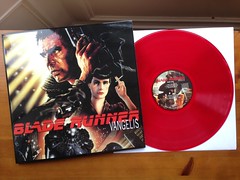
Vangelis - Blade Runner OST An indulgence
So, where are we now? Vinyl album sales are a huge growth market. They are very fashionable. Many purchasers are younger people who are new to the format; it's believed many don't have the means to play the music on the discs. Many (most?) albums are now issued as 12" vinyl in parallel with digital releases. These are usually exactly the same product (track listing, mixes, etc.) and usually priced at exactly twice that of the CD (with digital prices normally a fraction under that). The second hand market for 12" albums has inflated enormously. Gone are the bargains that could be had, a typical second hand LP is now priced quite close to the digital price for a popular/common album in most places. The popularity of vinyl has caused a huge inflation in the price of most 7" singles, which average somewhere between 8- 10 each, often without any b-side whatsoever. The good news is from my observations the 2nd hand market for 7" singles hasn't been affected quite as much. I guess they are not as desirable to buyers. The less said about Record Store Day, the better. So, that's all quite frustrating. But most of the reasons I used to buy vinyl have gone away anyway. Many of the rushed-to-market CD masterings have been reworked and reissued, correcting the earlier problems. B-side compilations are much more common so there are far fewer obscure tracks or mixes, and when the transfer has been done right, you're getting those previously-obscure tracks in a much higher quality. Several businesses exist to sell 2nd hand CDs for rock bottom prices, so it's still possible to get popular music very cheaply. The next thing to worry about is probably streaming services.

10 November 2016

Matthew Garrett: Tor, TPMs and service integrity attestation

One of the most powerful (and most scary) features of TPM-based measured boot is the ability for remote systems to request that clients attest to their boot state, allowing the remote system to determine whether the client has booted in the correct state. This involves each component in the boot process writing a hash of the next component into the TPM and logging it. When attestation is requested, the remote site gives the client a nonce and asks for an attestation, the client OS passes the nonce to the TPM and asks it to provide a signed copy of the hashes and the nonce and sends them (and the log) to the remote site. The remoteW site then replays the log to ensure it matches the signed hash values, and can examine the log to determine whether the system is trustworthy (whatever trustworthy means in this context).

When this was first proposed people were (justifiably!) scared that remote services would start refusing to work for users who weren't running (for instance) an approved version of Windows with a verifiable DRM stack. Various practical matters made this impossible. The first was that, until fairly recently, there was no way to demonstrate that the key used to sign the hashes actually came from a TPM[1], so anyone could simply generate a set of valid hashes, sign them with a random key and provide that. The second is that even if you have a signature from a TPM, you have no way of proving that it's from the TPM that the client booted with (you can MITM the request and either pass it to a client that did boot the appropriate OS or to an external TPM that you've plugged into your system after boot and then programmed appropriately). The third is that, well, systems and configurations vary so much that outside very controlled circumstances it's impossible to know what a "legitimate" set of hashes even is.

As a result, so far remote attestation has tended to be restricted to internal deployments. Some enterprises use it as part of their VPN login process, and we've been working on it at CoreOS to enable Kubernetes clusters to verify that workers are in a trustworthy state before running jobs on them. While useful, this isn't terribly exciting for most people. Can we do better?

Remote attestation has generally been thought of in terms of remote systems requiring that clients attest. But there's nothing that requires things to be done in that direction. There's nothing stopping clients from being able to request that a server attest to its state, allowing clients to make informed decisions about whether they should provide confidential data. But the problems that apply to clients apply equally well to servers. Let's work through them in reverse order.We have no idea what expected "good" values areYes, and this is a problem. CoreOS ships with an expected set of good values, and we had general agreement at the Linux Plumbers Conference that other distributions would start looking at what it would take to do the same. But how do we know that those values are themselves trustworthy? In an ideal world this would involve reproducible builds, allowing anybody to grab the source code for the OS, build it locally and verify that they have the same hashes.

Ok. So we're able to verify that the booted OS was good. But how about the services? The rkt container runtime supports measuring each container into the TPM, which means we can verify which container images were started. If container images are also built in such a way that they're reproducible, users can grab the source code, rebuild the container locally and again verify that it has the same hashes. Users can then be sure that the remote site is running the code they're looking at.

Or can they? Not really - a general purpose OS has all kinds of ways to inject code into containers, so an admin could simply replace the binaries inside the container after it's been measured, or ptrace() the server, or modify rkt so it generates correct measurements regardless of the image or, well, there's lots they could do. So a general purpose OS is probably a bad idea here. Instead, let's imagine an immutable OS that does nothing other than bring up networking and then reads a config file that tells it which container images to download and run. This reduces the amount of code that needs to support reproducible builds, making it easier for a client to verify that the source corresponds to the code the remote system is actually running.

Is this sufficient? Eh sadly no. Even if we know the valid values for the entire OS and every container, we don't know the legitimate values for the system firmware. Any modified firmware could tamper with the rest of the trust chain, making it possible for you to get valid OS values even if the OS has been subverted. This isn't a solved problem yet, and really requires hardware vendor support. Let's handwave this for now, or assert that we'll have some sidechannel for distributing valid firmware values.Avoiding TPM MITMingThis one's more interesting. If I ask the server to attest to its state, it can simply pass that through to a TPM running on another system that's running a trusted stack and happily serve me content from a compromised stack. Suboptimal. We need some way to tie the TPM identity and the service identity to each other.

Thankfully, we have one. Tor supports running services in the .onion TLD. The key used to identify the service to the Tor network is also used to create the "hostname" of the system. I wrote a pretty hacky implementation that generates that key on the TPM, tying the service identity to the TPM. You can ask the TPM to prove that it generated a key, and that allows you to tie both the key used to run the Tor service and the key used to sign the attestation hashes to the same TPM. You now know that the attestation values came from the same system that's running the service, and that means you know the TPM hasn't been MITMed.How do you know it's a TPM at all?This is much easier. See [1].


There's still various problems around this, including the fact that we don't have this immutable minimal container OS, that we don't have the infrastructure to ensure that container builds are reproducible, that we don't have any known good firmware values and that we don't have a mechanism for allowing a user to perform any of this validation. But these are all solvable, and it seems like an interesting project.

"Interesting" isn't necessarily the right metric, though. "Useful" is. And I think this is very useful. If I'm about to upload documents to a SecureDrop instance, it seems pretty important that I be able to verify that it is a SecureDrop instance rather than something pretending to be one. This gives us a mechanism.

The next few years seem likely to raise interest in ensuring that people have secure mechanisms to communicate. I'm not emotionally invested in this one, but if people have better ideas about how to solve this problem then this seems like a good time to talk about them.

[1] More modern TPMs have a certificate that chains from the TPM's root key back to the TPM manufacturer, so as long as you trust the TPM manufacturer to have kept control of that you can prove that the signature came from a real TPM

comment count unavailable comments

9 November 2016

Russ Allbery: Some thoughts on the US elections

I apparently am not going to get anything done today until I write this. Some thoughts, in no particular order. I don't have any profound conclusions. I'm honestly pretty upset. And pretty scared. But we have to talk to each other. And we have to listen to each other. And we have to persaude each other. And we have to be willing to be persuaded. And please go tell someone this morning that you have their back.

8 November 2016

Jonathan Carter: A few impressions of DebConf 16 in Cape Town

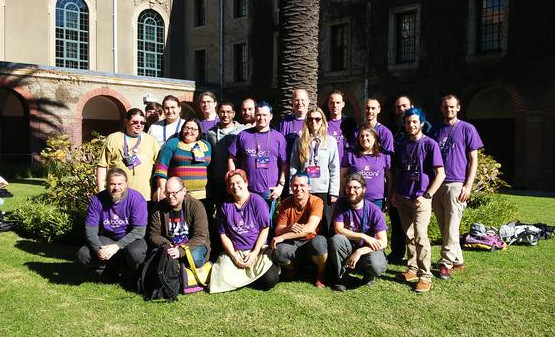
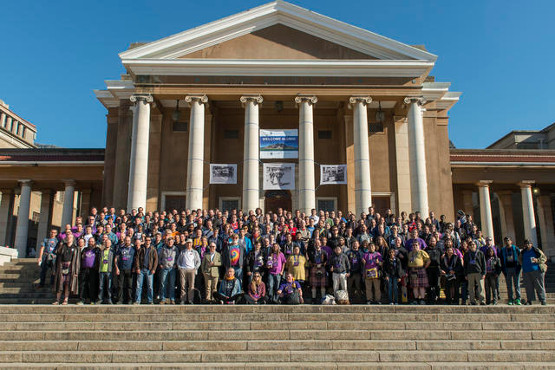
DebConf16 Group Photo

DebConf16 Group Photo by Jurie Senekal.

DebConf16 Firstly, thanks to everyone who came out and added their own uniqueness and expertise to the pool. The feedback received so far has been very positive and I feel that the few problems we did experience was dealt with very efficiently. Having a DebConf in your hometown is a great experience, consider a bid for hosting a DebConf in your city! DebConf16 Open Festival (5 August) The Open Festival (usually Debian Open Day) turned out pretty good. It was a collection of talks, a job fair, and some demos of what can be done with Debian. I particularly liked Hetzner s stand. I got to show off some 20 year old+ Super Mario skills and they had some fun brain teasers as well. It s really great to see a job stand that s so interactive and I think many companies can learn from them. The demo that probably drew the most attention was from my friend Georg who demoed some LulzBot Mini 3D Printers. They really seem to love Debian which is great! DebConf (6 August to 12 August) If I try to write up all my thoughts and feeling about DC16, I ll never get this post finished. Instead, here as some tweets from DebConf that other have written:


Day Trip We had 3 day trips: Brought to you by
orga

DebConf16 Orga Team.

See you in Montr al! DebConf17 dates: The DC17 sponsorship brochure contains a good deal of information, please share it with anyone who might be interested in sponsoring DebConf! Media

6 November 2016

Russell Coker: Is a Thinkpad Still Like a Rolls-Royce

For a long time the Thinkpad has been widely regarded as the Rolls-Royce of laptops . Since 2003 one could argue that Rolls-Royce is no longer the Rolls-Royce of cars [1]. The way that IBM sold the Think business unit to Lenovo and the way that Lenovo is producing both Thinkpads and cheaper Ideapads is somewhat similar to the way the Rolls-Royce trademark and car company were separately sold to companies that are known for making cheaper cars. Sam Varghese has written about his experience with Thinkpads and how he thinks it s no longer the Rolls-Royce of laptops [2]. Sam makes some reasonable points to support this claim (one of which only applies to touchpad users not people like me who prefer the Trackpoint), but I think that the real issue is whether it s desirable to have a laptop that could be compared to a Rolls-Royce nowadays. Support The Rolls-Royce car company is known for great reliability and support as well as features that other cars lack (mostly luxury features). The Thinkpad marque (both before and after it was sold to Lenovo) was also known for great support. You could take a Thinkpad to any service center anywhere in the world and if the serial number indicated that it was within the warranty period it would be repaired without any need for paperwork. The Thinkpad service centers never had any issue with repairing a Thinkpad that lacked a hard drive just as long as the problem could be demonstrated. It was also possible to purchase an extended support contract at any time which covered all repairs including motherboard replacement. I know that not everyone had as good an experience as I had with Thinkpad support, but I ve been using them since 1998 without problems which is more than I can say for most hardware. Do we really need great reliability from laptops nowadays? When I first got a laptop hardly anyone I knew owned one. Nowadays laptops are common. Having a copy of important documents on a USB stick is often a good substitute for a reliable laptop, when you are in an environment where most people own laptops it s usually not difficult to find someone who will let you use theirs for a while. I think that there is a place for a laptop with RAID-1 and ECC RAM, it s a little known fact that Thinkpads have a long history of supporting the replacement of a CD/DVD drive with a second hard drive (I don t know if this is still supported) but AFAIK they have never supported ECC RAM. My first Thinkpad cost $3,800. In modern money that would be something like $7,000 or more. For that price you really want something that s well supported to protect the valuable asset. Sam complains about his new Thinkpad costing more than $1000 and needing to be replaced after 2.5 years. Mobile phones start at about $600 for the more desirable models (IE anything that runs Pokemon Go) and the new Google Pixel phones range from $1079 to $1,419. Phones aren t really expected to be used for more than 2.5 years. Phones are usually impractical to service in any way so for most of the people who read my blog (who tend to buy the more expensive hardware) they are pretty much a disposable item costing $600+. I previously wrote about a failed Nexus 5 and the financial calculations for self-insuring an expensive phone [3]. I think there s no way that a company can provide extended support/warranty while making a profit and offering a deal that s good value to customers who can afford to self-insure. The same applies for the $499 Lenovo Ideapad 310 and other cheaper Lenovo products. Thinkpads (the higher end of the Lenovo laptop range) are slightly more expensive than the most expensive phones but they also offer more potential for the user to service them. Features My first Thinkpad was quite underpowered when compared to desktop PCs, it had 32M of RAM and could only be expanded to 96M at a time when desktop PCs could be expanded to 128M easily and 256M with some expense. It had a 800*600 display when my desktop display was 1280*1024 (37% of the pixels). Nowadays laptops usually start at about 8G of RAM (with a small minority that have 4G) and laptop displays start at about 1366*768 resolution (51% of the pixels in a FullHD display). That compares well to desktop systems and also is capable of running most things well. My current Thinkpad is a T420 with 8G of RAM and a 1600*900 display (69% of FullHD), it would be nice to have higher resolution but this works well and it was going cheap when I needed a new laptop. Modern Thinkpads don t have some of the significant features that older ones had. The legendary Butterfly Keyboard is long gone, killed by the wide displays that economies of scale and 16:9 movies have forced upon us. It s been a long time since Thinkpads had some of the highest resolution displays and since anyone really cared about it (you only need pixels to be small enough that you can t see them). For me one of the noteworthy features of the Thinkpads has been the great keyboard. Mechanical keys that feel like a desktop keyboard. It seems that most Thinkpads are getting the rubbery keyboard design made popular by Apple. I guess this is due to engineering factors in designing thin laptops and the fact that most users don t care. Matthew Garrett has blogged about the issue of Thinkpad storage configured as RAID mode without any option to disable it [4]. This is an annoyance (which incidentally has been worked around) and there are probably other annoyances like it. Designing hardware and an OS are both complex tasks. The interaction between Windows and the hardware is difficult to get right from both sides and the people who design the hardware often don t think much about Linux support. It has always been this way, the early Thinkpads had no Linux support for special IBM features (like fan control) and support for ISA-PnP was patchy. It is disappointing that Lenovo doesn t put a little extra effort into making sure that Linux works well on their hardware and this might be a reason for considering another brand. Service Life I bought my curent Thinkpad T420 in October 2013 [5] It s more than 3 years old and has no problems even though I bought it refurbished with a reduced warranty. This is probably the longest I ve had a Thinkpad working well, which seems to be a data point against the case that modern Thinkpads aren t as good. I bought a T61 in February 2010 [6], it started working again (after mysteriously not working for a month in late 2013) and apart from the battery lasting 5 minutes and a CPU cooling problem it still works well. If that Thinkpad had cost $3,800 then I would have got it repaired, but as it cost $796 (plus the cost of a RAM upgrade) and a better one was available for $300 it wasn t worth repairing. In the period 1998 to 2010 I bought a 385XD, a 600E, a T21, a T43, and a T61 [6]. During that time I upgraded laptops 4 times in 12 years (I don t have good records of when I bought each one). So my average Thinkpad has lasted 3 years. The first 2 were replaced to get better performance, the 3rd was replaced when an employer assigned me a Thinkpad (and sold it to be when I left), and 4 and 5 were replaced due to hardware problems that could not be fixed economically given the low cost of replacement. Conclusion Thinkpads possibly don t have the benefits over other brands that they used to have. But in terms of providing value for the users it seems that they are much better than they used to be. Until I wrote this post I didn t realise that I ve broken a personal record for owning a laptop. It just keeps working and I hadn t even bothered looking into the issue. For some devices I track how long I ve owned them while thinking can I justify replacing it yet , but the T420 just does everything I want. The battery still lasts 2+ hours which is a new record too, with every other Thinkpad I ve owned the battery life has dropped to well under an hour within a year of purchase. If I replaced this Thinkpad T420 now it will have cost me less than $100 per year (or $140 per year including the new SSD I installed this year), that s about 3 times better than any previous laptop! I wouldn t feel bad about replacing it as I ve definitely got great value for money from it. But I won t replace it as it s doing everything I want. I ve just realised that by every measure (price, reliability, and ability to run all software I want to run) I ve got the best Thinkpad I ve ever had. Maybe it s not like a Rolls-Royce, but I d much rather drive a 2016 Tesla than a 1980 Rolls-Royce anyway.

5 November 2016

Steinar H. Gunderson: Multithreaded OpenGL

Multithreading continues to be hard (although the alternatives are not really a lot better). While debugging a user issue in Nageru, I found and fixed a few races (mostly harmless in practice, though) in my own code, but also two issues that I filed patches for in Mesa. But that's not enough, it seems; there are still issues that are too subtle for me to figure out on-the-fly. But at least with those patches, I can use interlaced video sources in Nageru on Intel GPUs without segfaulting pretty much immediately. My laptop's GPU isn't fast enough to actually run the YADIF interlacer realtime in 1080p60, though, but it's nice at least not take the program down. (These things are super-sensitive to timing, of course, which is probably why I didn't see them when developing the feature a year or so ago.) As usual, NVIDIA's proprietary drivers seem to be near-flawless in this regard. I'm starting to think maybe it's about massive amounts of QA resources.

Russ Allbery: Review: The Just City

Review: The Just City, by Jo Walton
Series: Thessaly #1
Publisher: Tor
Copyright: 2014
Printing: January 2015
ISBN: 0-7653-3266-3
Format: Hardcover
Pages: 368
The premise for The Just City is easy to state: The time-traveling goddess Athene (Athena) decides to organize and aid an attempt to create the society described in Plato's Republic. She chooses Thera (modern Santorini) before the eruption, as a safe place where this experiment wouldn't alter history. The elders of the city are seeded by people throughout history who at some point prayed to Athene, wanting to live in the Republic. The children of the age of ten that Plato suggested starting with are purchased as slaves from various points in history and transported by Athene to the island. Apollo, shaken and confused by Daphne wanting to turn into a tree rather than sleep with him, finds out about this experiment as Athene tries to explain the concept of consent to him. He decides that becoming human for a while might help him learn about volition and equal significance, and that this is the perfect location. He's one of the three viewpoint characters. The others are two women: one (Maia) from Victorian times who prayed to Athene in a moment of longing for the tentative sexual equality of the Republic and was recruited as one of the elders, and another (Simmea) who is bought as a slave and becomes one of the children. I should admit up-front that I've never read Plato's Republic, or indeed much of Plato at all, just small bits for classes. The elders (and of course the gods) all have, and are attempting to stick quite closely to Plato's outline of the ideal city. The children haven't, though, so the book is quite readable for people like me who only remember a few vague aspects of Plato's vision from school. The reader learns the principles alongside Simmea. One of Walton's strengths is taking a science fiction concept, putting real people into it, and letting the quotidian mingle with the fantastic. Simmea is my favorite character here: her journey to the city is deeply traumatic, but the opportunity she gets there is incredible and unforeseen, and she comes to love the city while still understanding, and arguing about, its possible flaws. Maia is nearly as successful; Walton does a good job with committee debates and discussions, avoids coming down too heavily on the drama, and shows a believable picture of people with very different backgrounds and beliefs coming together to flesh out the outlines of something they all agree with, or at least want to try. I found Apollo less engaging as a character, partly because I never quite understood his motives or his weird failure to understand the principles of consent. Walton doesn't portray him as either hopelessly arrogant or hopelessly narcissistic, which would have been easy outs, but in avoiding those two obvious explanations for his failures of empathy, I felt like she left him with an odd and unexplained hole in his personality. He's a weirdly passive half-character for much of the book, although he does develop a bit more towards the end (which was probably the point). Half the fun of this book is working out what the Republic would be like in practice, and what breakdowns and compromises would happen as soon as you put real people in it. Athene obviously has to do a bit of cheating to make a utopia invented as an intellectual exercise work out in practice, plus a bit more for comfort (electricity and indoor plumbing, for instance). The most substantial cheat is robots to replace slaves and do quite a bit that slaves couldn't. Birth control (something Plato obviously never would have thought of) is another notable cheat; it's postulated to be an ancient method since lost, but even if that existed, there's no way it would be this reliable. But otherwise, the society mostly works, and Walton shows enough of the arguing and mechanics to make that believable, while still avoiding infodumps and boring descriptions. It's neatly done, although I'm still a bit dubious that the elders from later eras would have put up with the primitive conditions with this little complaint. The novel needs a plot, of course, and that's the other half of the fun. I can't talk about this in any detail without spoiling the book, since the plot only kicks in about halfway through once the setup and character introductions are complete. That makes it hard to explain why I found this a bit less successful, although parts of it are brilliant. What worked for me is the growth of Simmea and her friends as students and philosophers, the arguments and discussions (and their growing enthusiasm for argument and discussion), and the way Greek mythology is woven subtly and undramatically into the story. It really does feel like sitting in on ancient Greek philosophical arguments and experiments, and by that measure Walton has succeeded admirably in her goal. What didn't work for me was the driving conflict of the story, once it's introduced. I can't describe it without spoilers, but it's an old trope in science fiction and one with little scientific basis. It may seem weird to argue that point in a book with time-traveling Greek gods, a literal Lethe, and a Greek idea of souls, but those are mythological background material. The SF trope is something about which I have personal expertise and which simply doesn't work that way, and I had a harder time getting past that than alternate metaphysical properties. It threw me out of the book a bit. I see why Walton chose the conflict she did, but I felt like she could have gotten to the same place in the plot, admittedly with more difficulty, by using some of the more dubious aspects of Plato's long-term plan plus some other obstacles that were already built into the world. This more direct approach added a bit of SF-style analysis of the unknown that seemed weirdly at odds with the rest of the story (even if the delight of one of the characters is endearing). That complaint aside, I really enjoyed reading this book. Apollo didn't entirely work for me, but all of the other characters are excellent, and Walton keeps the story moving at a comfortable clip. Given the amount of description required, particularly for an audience that may not have read the Republic, a lesser writer could have easily slipped into the infodump trap. Walton never does. Fair warning, though: The Just City does end on a cliffhanger, and is in no way a standalone novel. You will probably want to have the sequel on hand. Followed by The Philosopher Kings. Rating: 7 out of 10

3 November 2016

Simon Josefsson: Why I don t Use 2048 or 4096 RSA Key Sizes

I have used non-standard RSA key size for maybe 15 years. For example, my old OpenPGP key created in 2002. With non-standard key sizes, I mean a RSA key size that is not 2048 or 4096. I do this when I generate OpenPGP/SSH keys (using GnuPG with a smartcard like this) and PKIX certificates (using GnuTLS or OpenSSL, e.g. for XMPP or for HTTPS). People sometimes ask me why. I haven t seen anyone talk about this, or provide a writeup, that is consistent with my views. So I wanted to write about my motivation, so that it is easy for me to refer to, and hopefully to inspire others to think similarily. Or to provoke discussion and disagreement that s fine, and hopefully I will learn something. Before proceeding, here is some context: When building new things, it is usually better to use the Elliptic Curve technology algorithm Ed25519 instead of RSA. There is also ECDSA which has had a comparatively slow uptake, for a number of reasons that is widely available and is a reasonable choice when Ed25519 is not available. There are also post-quantum algorithms, but they are newer and adopting them today requires a careful cost-benefit analysis. First some background. RSA is an asymmetric public-key scheme, and relies on generating private keys which are the product of distinct prime numbers (typically two). The size of the resulting product, called the modulus n, is usually expressed in bit length and forms the key size. Historically RSA key sizes used to be a couple of hundred bits, then 512 bits settled as a commonly used size. With better understanding of RSA security levels, the common key size evolved into 768, 1024, and later 2048. Today s recommendations (see keylength.com) suggest that 2048 is on the weak side for long-term keys (5+ years), so there has been a trend to jump to 4096. The performance of RSA private-key operations starts to suffer at 4096, and the bandwidth requirements is causing issues in some protocols. Today 2048 and 4096 are the most common choices. My preference for non-2048/4096 RSA key sizes is based on the simple and na ve observation that if I would build a RSA key cracker, there is some likelihood that I would need to optimize the implementation for a particular key size in order to get good performance. Since 2048 and 4096 are dominant today, and 1024 were dominent some years ago, it may be feasible to build optimized versions for these three key sizes. My observation is a conservative decision based on speculation, and speculation on several levels. First I assume that there is an attack on RSA that we don t know about. Then I assume that this attack is not as efficient for some key sizes than others, either on a theoretical level, at implementation level (optimized libraries for certain characteristics), or at an economic/human level (decision to focus on common key sizes). Then I assume that by avoiding the efficient key sizes I can increase the difficulty to a sufficient level. Before analyzing whether those assumptions even remotely may make sense, it is useful to understand what is lost by selecting uncommon key sizes. This is to understand the cost of the trade-off. A significant burden would be if implementations didn t allow selecting unusual key sizes. In my experience, enough common applications support uncommon key sizes, for example GnuPG, OpenSSL, OpenSSH, FireFox, and Chrome. Some applications limit the permitted choices; this appears to be rare, but I have encountered it once. Some environments also restrict permitted choices, for example I have experienced that LetsEncrypt has introduced a requirement for RSA key sizes to be a multiples of 8. I noticed this since I chose a RSA key size of 3925 for my blog and received a certificate from LetsEncrypt in December 2015 however during renewal in 2016 it lead to an error message about the RSA key size. Some commercial CAs that I have used before restrict the RSA key size to one of 1024, 2048 or 4096 only. Some smart-cards also restrict the key sizes, sadly the YubiKey has this limitation. So it is not always possible, but possible often enough for me to be worthwhile. Another cost is that RSA signature operations are slowed down. This is because the exponentiation function is faster than multiplication, and if the bit pattern of the RSA key is a 1 followed by several 0 s, it is quicker to compute. I have not done benchmarks, but I have not experienced that this is a practical problem for me. I don t notice RSA operations in the flurry of all of other operations (network, IO) that is usually involved in my daily life. Deploying this on a large scale may have effects, of course, so benchmarks would be interesting. Back to the speculation that leads me to this choice. The first assumption is that there is an attack on RSA that we don t know about. In my mind, until there are proofs that the currently known attacks (GNFS-based attacks) are the best that can be found, or at least some heuristic argument that we can t do better than the current attacks, the probability for an unknown RSA attack is therefor, as strange as it may sound, 100%. The second assumption is that the unknown attack(s) are not as efficient for some key sizes than others. That statement can also be expressed like this: the cost to mount the attack is higher for some key sizes compared to others. At the implementation level, it seems reasonable to assume that implementing a RSA cracker for arbitrary key sizes could be more difficult and costlier than focusing on particular key sizes. Focusing on some key sizes allows optimization and less complex code. At the mathematical level, the assumption that the attack would be costlier for certain types of RSA key sizes appears dubious. It depends on the kind of algorithm the unknown attack is. For something similar to GNFS attacks, I believe the same algorithm applies equally for a RSA key size of 2048, 2730 and 4096 and that the running time depends mostly on the key size. Other algorithms that could crack RSA, such as some approximation algorithms, does not seem likely to be thwarted by using non-standard RSA key sizes either. I am not a mathematician though. At the economical or human level, it seems reasonable to say that if you can crack 95% of all keys out there (sizes 1024, 2048, 4096) then that is good enough and cracking the last 5% is just diminishing returns of the investment. Here I am making up the 95% number. Currently, I would guess that more than 95% of all RSA key sizes on the Internet are 1024, 2048 or 4096 though. So this aspect holds as long as people behave as they have done. The final assumption is that by using non-standard key sizes I raise the bar sufficiently high to make an attack impossible. To be honest, this scenario appears unlikely. However it might increase the cost somewhat, by a factor or two or five. Which might make someone target a lower hanging fruit instead. Putting my argument together, I have 1) identified some downsides of using non-standard RSA Key sizes and discussed their costs and implications, and 2) mentioned some speculative upsides of using non-standard key sizes. I am not aware of any argument that the odds of my speculation is 0% likely to be true. It appears there is some remote chance, higher than 0%, that my speculation is true. Therefor, my personal conservative approach is to hedge against this unlikely, but still possible, attack scenario by paying the moderate cost to use non-standard RSA key sizes. Of course, the QA engineer in me also likes to break things by not doing what everyone else does, so I end this with an ObXKCD.
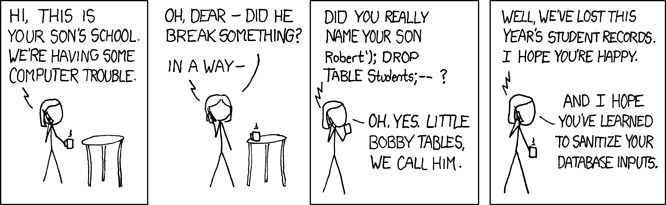
Norbert Preining: Debian/TeX Live 2016.20161103-1

This month s update falls onto a national holiday in Japan. My recent start as a normal company employee in Japan doesn t leave me enough time during normal days to work on Debian, so things have to wait for holidays. There have been a few notable changes in the current packages, and above all I wanted to fix an RC bug and on the way fixed also several other (sometimes rather old) bugs.

texlive2016-debian From the list of new packages I want to pick apxproof: I have written something myself for one of my rather long papers (with proofs about 60pp), where at times I had to factor out the proofs into an appendix. I did this my own way, but I would have preferred to have a nice package! Another interesting change is the upstream merge of collection-mathextra (which translated to the Debian package texlive-math-extra) and collection-science (Debian: texlive-science) into a new collection collection-mathscience. Since introducing new packages and phasing out old ones is generally a pain in Debian, I decided to digress from the upstream naming convention and use texlive-science for the new collection-mathscience. In the end Mathematics is the most important science of all  Finally also a word about removals: Several ConTeXt packages have been removed due to the fact that they are outdated. These removals will find their way in an update of the Debian ConTeXt package in near future. The TeX Live packages lost voss-mathmode, which was retracted by the author due to various reasons. He is working on an updated version that will hopeful reappear in both TeX Live and Debian in near future. Well, that s it for now. Here now the full list with links. Enjoy. New packages apxproof, bangorexam, biblatex-gb7714-2015, biblatex-lni, biblatex-sbl, context-cmscbf, context-cmttbf, context-inifile, context-layout, delimset, latex2nemeth, latexbangla, latex-papersize, ling-macros, notex-bst, platex-tools, testidx, uppunctlm, wtref, xcolor-material. Removed packages voss-mathmode. Updated packages apa6, autoaligne, babel-german, biblatex-abnt, biblatex-anonymous, biblatex-apa, biblatex-manuscripts-philology, biblatex-nature, biblatex-realauthor, bibtex, bidi, boondox, bxcjkjatype, chickenize, churchslavonic, cjk-gs-integrate, context-filter, cooking-units, ctex, denisbdoc, dvips, europasscv, fixme, glossaries, gzt, handout, imakeidx, ipaex-type1, jsclasses, jslectureplanner, kpathsea, l3build, l3experimental, l3kernel, l3packages, latexindent, latexmk, listofitems, luatexja, marginnote, mcf2graph, minted, multirow, nameauth, newpx, newtx, noto, nucleardata, optidef, overlays, pdflatexpicscale, pst-eucl, reledmac, repere, scanpages, semantic-markup, tableaux, tcolorbox, tetex, texlive-scripts, ticket, todonotes, tracklang, tudscr, turabian-formatting, updmap-map, uspace, visualtikz, xassoccnt, xecjk, yathesis.

Jan Wagner: Container Orchestration Thoughts

Container Orchestration ThoughtsSince some time everybody (read developer) want to run his new microservice stacks in containers. I can understand that building and testing an application is important for developers.
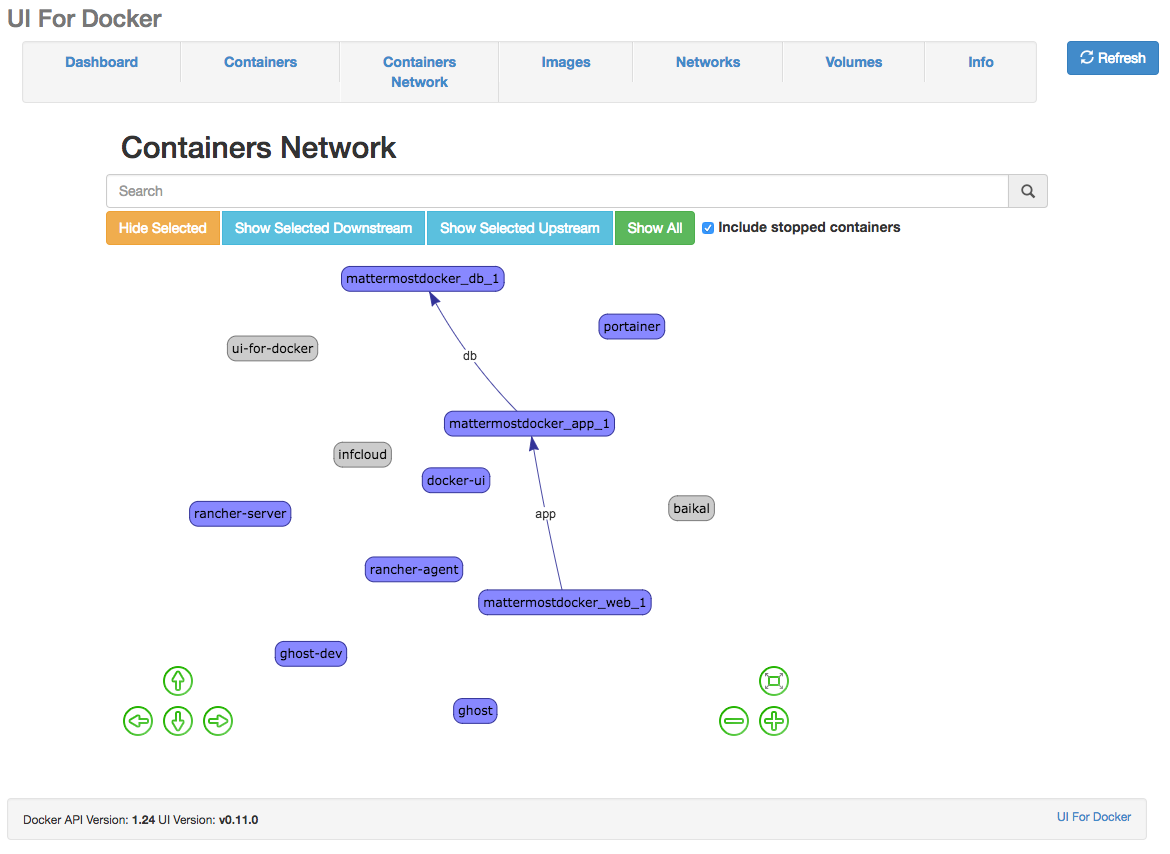
One of the benefits of containers is, that developer (in theory) can put their new version of applications into production on their own. This is the point where operations is affected and operations needs to evaluate, if that might evolve into better workflow. For yolo^WdevOps people there are some challenges that needs to be solved, or at least mitigated, when things needs to be done in large(r) scale.

Orchestration Engine Running Docker, which is actual the most preferred container solution, on a single host with docker command line client is something you can do, but there you leave the gap between dev and ops.

UI For Docker Since some time there is UI For Docker available for visualizing and managing containers on a single docker node. It's pretty awesome and the best feature so far is the Container Network view, which also shows the linked container. Container Orchestration Thoughts

Portainer Portainer is pretty new and it can be deployed as easy as UI For Docker. But the (first) great advantage: it can handle Docker Swarm. Beside that it has many other great features. Container Orchestration Thoughts

Rancher Rancher describes themselves as 'container management platform' that 'supports and manages all of your Kubernetes, Mesos, and Swarm clusters'. This is great because this are all of the relevant docker cluster orchestrations at the market actually. Container Orchestration Thoughts For the use cases, we are facing, Kubernetes and Mesos seems both like bloated beasts. Usman Ismail has written a really good comparison of Orchestration Engine options which goes into details. Container Orchestration Thoughts

Docker Swarm As there is actually no clear defacto standard/winner of the (container) orchestration wars, I would prevent to be in a vendor lock-in situation (yet). Docker swarm seems to be evolving and is getting more nice features other competitors doesn't provide.
Due the native integration into the docker framework and great community I believe Docker Swarm will be the Docker Orchestration of the choice on the long run. This should be supported by Rancher 1.2 which is not released yet.
From this point of view it looks very reasonable that Docker Swarm in combination with Rancher (1.2) might be a good strategy to maintain your container farms in the future. If you think to put Docker Swarm into production in the actual state, I recommend to read Docker swarm mode: What to know before going live on production by Panjamapong Sermsawatsri.

Persistent Storage While it is a best practice to use data volume container these days, providing persistent storage across multiple hosts for shared volumes seems to be tricky. In theory you can mount a shared-storage volume as a data volume and there are several volume plugins which supports shared storage. For example you can use the convoy plugin which gives you:
  • thin provisioned volumes
  • snapshots of volumes
  • backup of snapshots
  • restore volumes
As backend you can use:
  • Device Mapper
  • Virtual File System(VFS)/Network File System(NFS)
  • Amazon Elastic Block Store(EBS)
The good thing is, that convoy is integrated into Rancher. For more information I suggest to read Setting Up Shared Volumes with Convoy-NFS, which also mentions some limitations. If you want test Persistent Storage Service, Rancher provides some documentation. Actually I did not evaluate shared-storage volumes yet, but I don't see a solution I would love to use in production (at least on-premise) without strong downsides. But maybe things will go further and there might be a great solution for this caveats in the future.

Keeping base images up-to-date Since some time there are many projects that tries to detect security problems in your container images in several ways.
Beside general security considerations you need to deal somehow with issues in your base images that you build your applications on. Of course, even if you know you have a security issue in your application image, you need to fix it, which depends on the way how you based your application upon.

Ways to base your application image
  • You can build your application image entire from scratch, which leaves all the work to your development team and I wouldn't recommend it that way.
  • You also can create one (or more) intermediate image(s) that will be used by your development team.
  • The development team might ground their work on images in public available or private (for example the one bundled to your gitlab CI/CD solution) registries.

Whats the struggle with the base image? If you are using images being not (well) maintained by other people, you have to wait for them to fix your base image. Using external images might also lead into trust problems (can you trust those people in general?).
In an ideal world, your developers have always fresh base images with fixed security issues. This can probably be done by rebuilding every intermediate image periodically or when the base image changes.

Paradigm change Anyway, if you have a new application image available (with no known security issues), you need to deploy it to production. This is summarized by Jason McKay in his article Docker Security: How to Monitor and Patch Containers in the Cloud:
To implement a patch, update the base image and then rebuild the application image. This will require systems and development teams to work closely together.
So patching security issues in the container world changes workflow significant. In the old world operation teams mostly rolled security fixes for the base systems independent from development teams.
Now hitting containers the production area this might change things significant.

Bringing updated images to production Imagine your development team doesn't work steady on a project, cause the product owner consider it feature complete. The base image is provided (in some way) consistently without security issues. The application image is build on top of that automatically on every update of the base image.
How do you push in such a scenario the security fixes to production? From my point of view you have two choices:
  • Let the development team require to test the resulting application image and put it into production
  • Push the new application image without review by the development team into production
The first scenario might lead into a significant delay until the fixes hit production created by the probably infrequent work of the development team. The latter one brings your security fixes early to production by the notable higher risk to break your application. This risk can be reduced by implementing massive tests into CI/CD pipelines by the development team. Rolling updates provided by Docker Swarm might also reduce the risk of ending with a broken application. When you are implementing an update process of your (application) images to production, you should consider Watchtower that provides Automatic Updates for Docker Containers.

Conclusion Not being a product owner or the operations part of an application that is facing a widely adopted usage that would compensate the actual tradeoffs we are still facing I tend not to move large scale production projects into a container environment.
This means not that this might be a bad idea for others, but I'd like to sort out some of the caveats before. I'm still interested to put smaller projects into production, being not scared to reimplement or move them on a new stack.
For smaller projects with a small number of hosts Portainer looks not bad as well as Rancher with the Cattle orchestration engine if you just want to manage a couple of nodes. Things are going to be interesting if Rancher 1.2 supports Docker swarm cluster out of the box. Let's see what the future will bring us to the container world and how to make a great stack out of it.

Update I suggest to read Docker in Production: A History of Failure and the answer Docker in Production: A retort to understand the actual challenges when running Docker in larger scale production environments.

Next.

Previous.