Search Results: "ah"

9 July 2014

Mike Gabriel: Cooperation between X2Go and TheQVD

I recently got in contact with Nicolas Arenas Alonso and Nito Martinez from the Quindel group (located in Spain) [1]. Those guys bring forth a software product called TheQVD (The Quality Virtual Desktop) [2]. The project does similar things that X2Go does. In fact, they use NX 3.5 from NoMachine internally like we do in X2Go. Already a year ago, I noticed their activity on TheQVD and thought.. "Ahaaa!?!". Now, a couple of weeks back we received a patch for libxcomp3 that fixes an FTBFS (fails to build from source) for nx-libs-lite against Android [3]. read more

7 July 2014

Jan Wagner: Monitoring Plugins release ahead

It seems to be a great time for monitoring solutions. Some of you may have noticed that Icinga has released it's first stable version of the completely redeveloped Icinga 2. After several changes in the recent past, where the Team maintaining the Plugins used for several Monitoring solutions was busy moving everything to new infrastructure, they are now back on track. The recent development milestone is reached and a call for testing was also sent out. In the meanwhile I prepared the packaging for this bigger move. The packages are now moved to the source package monitoring-plugins, the whole packaging changes can be observed in the changelog. With this new release we have also some NEWS, which might be useful to check. Same counts for upstream NEWS. You can give the packages a go and grab them from my 'unstable' and 'wheezy-backports' repositories at http://ftp.cyconet.org/debian/. Right after the stable release, the packages will be uploaded into debian unstable, but might get delayed by the NEW queue due the new package names.

6 July 2014

Dominique Dumont: Status and next step on lcdproc automatic configuration upgrade with Perl and Config::Model

Back in March, I uploaded a Debian s version of lcdproc with a unique feature: user and maintainer configurations are merged during package upgrade: user customizations and developers enhancements are both preserved in the new configuration file. (See this blog for more details). This avoids tedious edition of the configuration LCDd.conf file after every upgrade of lcdproc package. At the beginning of June, a new version of lcdproc (0.5.7-1) was uploaded. This triggered another round of automatic upgrades on user s systems. According to the popcon rise of libconfig-model-lcdproc-perl, about 100 people have upgraded lcdproc on their system. Since automatic upgrade has an opt-out feature, one cannot say for sure that 100 people are actually using automatic upgrade, but I bet a fair portion are them are. So far, only one people has complained: a bug report was filed about the many dependencies brought by libconfig-model-lcdproc-perl. The next challenge for lcdproc configuration upgrade is brought by a bug reported on Ubuntu: the device file provided by imon kernel module is a moving target: The device file created by the kernel can be /dev/lcd0 or /dev/lcd1 or even /dev/lcd2. Static configuration files and moving target don t mix well. The obvious solution is to provide a udev rule so that a symbolic link is created from a fixed location (/dev/lcd-imon) to the moving target. Once the udev rule is installed, the user only has to update LCDd.conf file to use the symlink as imon device file and we re done. But, wait The whole point of automatic configuration upgrade is to spare the user this kind of trouble: the upgrade must be completely automatic. Moreover, the upgrade must work in all cases: whether udev is available (Linux) or not. If udev is not available, the value present in the configuration file must be preserved. To know whether udev is available, the upgrade tool (aka cme) will check whether the file provided by udev (/dev/lcd-imon) is present or not. This will be done by lcdproc postinst script (which is run automatically at the end of lcdproc upgrade). Which means that the new udev rule must also be
activated in the postinst script before the upgrade is done. In other words, the next version of lcdproc (0.5.7-2) will: In the lcdproc configuration model installed by libconfig-model-lcdproc-perl, the imon device parameter is enhanced so that running cme check lcdproc or cme migrate lcdproc issues a warning if /dev/lcd-imon exists and if imon driver is not configured to use it. This way, the next installation of lcdproc will deliver a fix for imon and cme will fix user s configuration file without requiring user input. The last point is admittedly bad marketing as users will not be aware of the magic performed by Config::Model Oh well In the previous section, I ve briefly mentioned that imon_device parameter is enhanced in lcdproc configuration model. If you re not already bored, let s lift the hood and see what kind of enhancements was added. Let s peek in lcdproc configuration file, LCDd.conf file which is used to generate lcdproc configuration model. You may remember that the formal description of all LCDd.conf parameters and their properties is generated from LCDd.conf to provide lcdproc configuration model. The comments in LCDd.conf follow a convention so that most properties of the parameters can be extracted from the comments. In the example below, the comments show that NewFirmware is a boolean value expressed as yes or no, the latter being the default :
# Set the firmware version (New means >= 2.0) [default: no; legal: yes, no]
NewFirmware=no
Back to the moving target. In LCDd.conf, imon device file parameter is declared this way:
# Select the output device to use
Device=/dev/lcd0
This means that device is a string where the default value is /dev/lcd0. Which is wrong once the special udev rule provided with Debian packages is activated. With this rule, the default value must be /dev/lcd-imon. To fix this problem, a special comment is added in the Debian version of LCDd.conf to tune further the properties of the device parameter:
# select the device to use
#  %
#   default~
#   compute
#     use_eval=1
#     formula="my $l = '/dev/lcd-imon'; -e $l ? $l : '/dev/lcd0';"
#     allow_override=1 -
#   warn_if:not_lcd_imon
#     code="my $l = '/dev/lcd-imon';defined $_ and -e $l and $_ ne $l ;"
#     msg="imon device does not use /dev/lcd-imon link."
#     fix="$_ = undef;"
#   warn_unless:found_device_file
#     code="defined $_ ? -e : 1"
#     msg="missing imon device file"
#     fix="$_ = undef;"
#   - % 
Device=/dev/lcd0
This special comment between % and % follows the syntax of Config::Model::Loader. A small configuration model is declared there to enhance the model generated from LCDd.conf file. Here are the main parts: In both warn_unless and warn_if parts, the fix code snippet is run when by the command cme fix lcdproc and is used to repair the warning condition. In this case, the fix consists in resetting the device configuration value so the computed value above can be used. cme fix lcdproc is triggered during package post install script installed by dh_cme_upgrade. Come to think of it, generating a configuration model from a configuration file can probably be applied to other projects: for instance, php.ini and kdmrc are also shipped with detailed comments. May be I should make a more generic model generator from the example used to generate lcdproc model Well, I will do it if people show interest. Not in the form yeah, that would be cool , but in the form, yes, I will use your work to generate a configuration model for project [...] . I ll let you fill the blank ;-)
Tagged: Config::Model, configuration, debian, lcdproc, Perl, upgrade

Eugene V. Lyubimkin: (Finland) FUUG foundation gives money for FLOSS development

You live in Finland? You work on a FLOSS project or a project helping FLOSS in a way or another? Apply for FUUG's limited sponshorship program! Rules and details (in Finnish): http://coss.fi/2014/06/27/fuugin-saatio-jakaa-apurahoja-avoimen-koodin-edistamiseksi/ .

4 July 2014

Raphaël Hertzog: Tracker.debian.org is live

Maybe do you remember, last year I mentored a Google Summer of code whose aim was to replace our well known Package Tracking System with something more modern, usable by derivatives and more easily hackable. The result of this project is a new Django-based software called Distro Tracker. Warning, some internals aheadWith the help of the Debian System Administrators, it s now setup on tracker.debian.org! This service is also managed by the Debian QA team, it s deployed in /srv/tracker.debian.org/ (on ticharich.debian.org, a VM) if you want to verify something on the live installation. It runs under the qa user (so members of the qa-core group can administer it). That said you can reproduce the setup on your workstation quite easily, just by checking out the git repository and applying this change:
--- a/distro_tracker/project/settings/local.py
+++ b/distro_tracker/project/settings/local.py
@@ -10,6 +10,7 @@ overrides on top of those type-of-installation-specific settings.
 
 from .defaults import INSTALLED_APPS
 from .selected import *
+from .debian import *
 
 ## Add your custom settings here
Speaking of contributing, the documentation includes a Contributing section to get you up and running, ready to do your first contribution! Now go use this new service and report any issue against the new tracker.debian.org pseudo-package (BTW tracker.debian.org knows about pseudo-packages, example here). There are many small things that need to be fixed/improved, if you know Python/Django and would like to start contributing to Debian, here s your chance! :-)

10 comments Liked this article? Click here. My blog is Flattr-enabled.

1 July 2014

Neil Williams: LAVA in Debian unstable

LAVA has arrived in Debian unstable. No need for third party repositories (unless you want to), a simple apt install lava-server. What happens from that point isn t so simple. I ve made the single instance installation as straightforward as I could but there is a lot more to do to get LAVA working in a useful manner. First, a little history to explain some of the hysterical raisins which may appear later. Validation So, you ve made a change to the code, good. It compiles, yay! Before you ship it, does it pass the unit tests? Right, now you have an improved patch which does what you want and keeps the unit tests running. Validation is all about asking that awkward question: does your change work? Does it introduce side effects on other systems / services in the same code? Does it break programs which use services exported by the code? LAVA is one step along the road to system testing, starting at the bottom. Automation Well you could do all that yourself. Write the image to the device yourself, apply power yourself, connect to serial, copy test scripts to the booted image and pull the results off, somehow. Much better if this is automated maybe every commit or every push or as often as the tests can be run on the number of devices available. LAVA Linaro Automated Validation Architecture. Linaro is a not-for-profit building the future of the Linux kernel on ARM devices. Lava was built for and by Linaro, so the initial focus is clearly on validating the Linux kernel on ARM devices. There are likely to be gotchas in the code for those wanting to use LAVA for other kernels Linaro can t support lots of different kernels, but if there are changes which make it easier to use other kernels without impacting on validation of Linux, those would likely be accepted. The experience with using LAVA is all with ARM but if there is interest in extending LAVA to work with devices of other architectures, again, patches would be welcome. The development of the packaging to make LAVA suitable for Debian has also meant that LAVA will run on hardware other than x86. e.g. armv7.com. I m running a mini lab at home based around an arndale board, I ve also got a mini lab at work based on a cubie2. Requirements for such setups are described in the documentation and in previous entries on this blog (principally you will need SATA, lots of RAM and as many CPU cores as you can find. If you want to run LAVA on other architectures, go ahead and let us know if there are issues. Available versions The versions uploaded to Debian will (from now on) be production releases. The same code as is running on http://validation.linaro.org/ development builds and test builds are supported using helpers in the lava-dev package. Releases to unstable will automatically migrate into Ubuntu Unicorn. I ll continue building interim versions at the former locations on http://people.linaro.org/~neil.williams/, including builds for Ubuntu Trusty 14.04LTS as well as providing packages for Jessie until the uwsgi package can migrate. LAVA is looking to work with anyone who can prepare and maintain packages for other distributions like Fedora. Bugs LAVA is migrating from Launchpad bugs to http://bugs.linaro.org which is a bugzilla interface. Now that LAVA is also in Debian, anyone is welcome to use the Debian BTS which does not require any login or account setup. The maintainers (including me) will then forward those bugs as appropriate. Documentation The immediate task is to update the documentation in the lava-server-doc package (and the Debian wiki) to reflect the availability of LAVA from Debian unstable and how to choose which release of LAVA to use in your systems. However, there is a large amount of documentation already available click the Help link in the menu bar of any current LAVA instance. As with many projects, the docs have been written by the development team. If there are things which are unclear or if sections need to be moved around to make it easier for people new to LAVA to pick it up, please file bugs. Hardware It isn t easy to run a LAVA lab, there is a lot more to it than simply installing lava-server. LAVA would not be possible without the lab team and any other LAVA instance is going to need the same level of excellence in system administration, device support and cooperation. I ve covered a little bit of that in previous entries on this blog about my home lab but that is nothing compared to the work required to provide a working lab like the one in Cambridge. Access to that lab is restricted to people within Linaro but LAVA is also reaching out to the community and if there are tests or hardware you want to see within a LAVA instance, not necessarily in the main lab, then talk to us. Contact Bug reports are preferable but you can also find LAVA people on #linaro-lava on OFTC or contact us on the linaro-validation mailing list. Future There is a lot more work to do on LAVA yet. There are assumptions about partition layout within images (hysterical raisins) and issues with unused software being required for remote worker installations. Both are now part of the next major development work within LAVA. DebConf14 There is lot more to talk about with LAVA if you are attending DebConf14 then there will be talks on LAVA and plenty of time to answer questions.

30 June 2014

Russell Coker: Links June 2014

Russ Albery wrote an insightful blog post about trust, computer security, and training programmers [1]. He makes a good case that social problems in our community decrease the availability of skilled people to write and audit security code. The Lawfare blog has an insightful article by Dan Geer about Heartbleed as a Metaphor [2]. He makes some good points about security and design, ways of potentially solving some flaws and problems with the various solutions. Eben Moglen wrote an insightful article for The Guardian about the way that the NSA spying is a direct threat to democracy [3] The TED blog has an interesting interview with Kitra Cahana about her work living with and photographing nomads in the US [4]. I was surprised to learn that there s an active nomad community in the US based on the culture that started in the Great Depression. Apparently people are using Youtube to learn about nomad culture before joining. Dave Johnson wrote an interesting Salon article about why CEOs make 300* as much money as workers [5]. Note that actually contributing to the financial success of the company is not one of the reasons. Maia Szalavitz wrote an interesting Slate article about Autism and Anorexia [6]. Apparently some people on the Autism Spectrum are mis-diagnosed with Anorexia due to food intolerance. Groups of four professors have applied for the job of president and vice-chancellor of the University of Alberta [7]. While it was a joke to apply in that way, 1/4 of the university president s salary is greater than the salary of a professor and the university would get a team of 4 people to do the job so it would really make sense to hire them. Of course the university could just pay a more reasonable salary for the president and hire an extra 3 professors. But the same argument applies for lots of highly paid jobs. Is a CEO who gets paid $10M per annim really going to do a better job than a team of 100 people who are paid $100K? Joel on Software wrote an insightful article explaining why hiring 1/200 applicants doesn t mean you hire the top 0.5% of workers [8]. He suggests that the best employees almost never apply through regular channels so an intern program is the only way to get a chance of hiring the best people. Chaotic Idealism has an interesting article on some of the bogus claims about autism and violence [9]. Salon has an interesting articleby Lindsay Abrams about the way the food industry in the US lobbies for laws to prevent employees from reporting animal cruelty or contamination of the food supply and how drones will now be used for investigative journalism [10]. Jacobin Mag has an interesting article by Geoff Shullenberger about the Voluntariat , the people who volunteer their time to help commercial organisations [11]. I don t object to people voluntarily helping companies, but when they are exploited or when the company also requires voluntary help from the government it becomes a problem. We need some legislation about this. Laura Hudson wrote an insightful article about how Riot Games solved their online abuse problem [12]. There are ideas in this that can apply to all online communities. Matt LeMay wrote an interesting article for Medium titled What (Else) Can Men Do? Grow The Fuck Up [13]. It s a general commentary on the treatment of women in geek communities (and most other places). Foz Meadows wrote an insightful analysis of the attempts of bigots to influence science-fiction [14]. If I had more spare time I d read some of the books by bigoted authors on the Sad Puppy Slate (from a library of course) and see if they lack talent in the same way that Orson Scott Card does. Racialicious has an interesting article by Phenderson Djeli Clark about the horrible racism and bigotry of H.P. Lovecraft [15]. I have only read two HP Lovecraft stories, one was mediocre and the other (The Horroe at Red Hook) was quite poor largely due to his inability to write about non-white people. Grace Wyler wrote an insightful article for Vice magazine about the right-wing terrorists in the US killing cops [16]. Paul Rosenberg wrote an interesting and amusing (for people outside the US) article about the gun crazies in the US [17]. Maybe the gun crazies should have a loaded assault rifles and tequila party to follow up on their gun appreciation day . A US TV show made a 4 minute clip of some of the stupid things that Tony Abbott has done [18]. Tony is almost as stupid as Dubya.

29 June 2014

Matthew Palmer: Adventures in DNSSEC

DNSSEC is one of those things that have been on the I should poke at that sometime list, but today I decided to actually get in and play around with it. Turns out it s pretty trivially easy to setup, but I got bitten by a few gotchas during testing, that I thought worthwhile to document. Since I like to explain things, a lot of this article isn t how to so much as how does .

Configuring The Resolver First off, you need a resolver1 that you can trust, and which implements DNSSEC validation. In theory, you could use your ISP s resolvers (if they re DNSSEC-enabled), or even Google s public resolvers (8.8.8.8 and 8.8.4.4), but it s really not recommended how much do you trust those, really? More importantly, how much do you trust the network path between them and you? Frankly, running a local on-host caching resolver is trivial, consumes next-to-no resources, and is highly recommended. It s what I did. I used unbound, finally casting free the venerable dnscache, which has served me well for many years. I chose unbound because it fits the do one small thing, and do it well philosophy that I cherish (unlike BIND), and because it s what all the cool kids appear to be using these days. Installing it was as simple as apt-get install unbound it s available in pretty much every distro, I believe. Out of the box, unbound in Debian wheezy comes configured for DNSSEC validation. Other methods of installation might not be so amenable, so just make sure your unbound.conf liiks like this, so that DNSSEC is enabled:
server:
    auto-trust-anchor-file: "/var/lib/unbound/root.key"
    val-log-level: 2
The val-log-level line isn t strictly required, but I found it useful to have unbound log info on validation failures to syslog. Season to taste. You also have to configure your system to actually use your new, shiny local resolver. Editing /etc/resolv.conf would, in an ideal world, work Just Fine, but between Magical Unhelpful Pixies (I m looking at you, NetworkManager) and DHCP, it often isn t that easy. Ultimately, though, you should configure your system so that the only resolver in /etc/resolv.conf is always 127.0.0.1. Anything else is a security hole waiting to happen. If you re using DHCP and a recent version of ISC dhclient, adding supersede domain-name-servers 127.0.0.1; to dhclient.conf should do the needful.

Weighing the (Trust) Anchor Whatever local resolver you choose, you need to tell it about trust anchors . This is a key (or keys) which are trusted to sign all the other data that the resolver will find. Like the rest of the DNS, DNSSEC is hierarchical, and you need to know who to start with before you can start. To resolve a name using DNS, you ask the root servers for the answer to a question (say, what is the address of www.example.com? ). The root server doesn t know the answer, but it knows who to ask, and it tells you where to go (typically, go ask the DNS servers for .com, which are X, Y, and Z ). Then you ask those servers, and they probably don t know, but they know who to ask, and they tell you to go ask those servers. This continues until you finally get a server which says, oh, yes, I know the answer to that! and hands over the information you re after. In DNSSEC, you get digital signatures that prove that the answers you get from each DNS server you ask are legit, and not forged. So when you ask the root servers, what is the address of www.example.com? , they answer, I don t know, but go ask DNS servers at addresses X, Y, and Z and by the way, you can trust this answer is legit because here s this signature you can check . To verify a signature is legit, you need to know that the key used to make the signature is trustworthy, and it wasn t just any ol key that made it similar to how an ink scribble on a page doesn t mean anything unless you know what the signature you re looking at should look like. DNSSEC has two ways to make sure you know who to trust. Firstly, those trust anchors I mentioned three paragraphs ago. These are the keys that the root servers use to sign the responses they send out. You tell unbound (or your local DNSSEC-enabled resolver of choice), if you see a signature provided by this trust anchor key, you can trust it to be legit . The second way to trust is key is to have someone you already trust say, oh, you can trust this key, too . This is done by providing more data in the answer that you get from the root servers. So the full answer you get from the root servers when you ask, what is the address of www.example.com? looks like this:
I don t know, but you should ask the DNS servers at addresses X, Y, and Z. You can trust their answers because they ll sign their responses with key K. Finally, you can trust that I m legit because of this signature I m providing you, generated from key T.
Assuming that T is the trust-anchor key you ve already told unbound to trust, it can then trust all of the information it got from that first question. When it then goes to DNS server X and asks, Hey, do you know the address of www.example.com? , that server can send back its own response saying:
Gee, shucks, I don t know, but DNS servers at P and Q can help you. You can trust them because they ll sign responses with key S. And just to show you I m on the level, check out this nifty signature I made, signed with key K.
Since a server we trust told us to trust key K, and then we got a response signed by key K that told us to trust key S, when we then go and ask server P and get a response signed by S, we re still demonstrably secure. Neat setup, right? Anyway, now you know all about trust anchors. How do you set it up? For unbound, it s capable of priming the trust anchor itself. It does this by retrieving a copy of the trust anchor from [a well-known HTTPS URL]((https://data.iana.org/root-anchors/root-anchors.xml), which provides a reasonable measure of security the trust anchor file should be safe as long as that HTTPS server is trustworthy. For the properly paranoid, you should determine an alternate means of verifying that you have the correct root key (a web search for DNSSEC root key attestation would probably be a good start).

Testing It s always handy to know that something s working as you expect. For something that s important for security, that goes double. So, how do you test that your DNSSEC-capable resolver is, indeed, working as designed? Well, firstly, you can test that the resolver, by itself, is working. This is simple: do a query for a zone known to have broken DNSSEC. Thankfully, some nice people (Comcast, specifically) have already set this up. You can test a resolver for DNSSEC-correctness with this command:
dig @127.0.0.1 www.dnssec-failed.org
If dig gives you back an IP address, something is broken. The correct, my DNSSEC works! response should be a status: SERVFAIL response. That s all well and good, but having a resolver that works isn t much good if nothing s actually using it. Your system configuration has probably got some other resolvers configured into it (such as those provided by a DHCP server), and you ll want to make sure those aren t getting used2. The trivial test is to visit http://www.dnssec-failed.org in your browser. If that comes back with a page, then something s still wrong. A more user-friendly test of your DNSSEC configuration is provided by http://dnssectest.sidnlabs.nl/test.php, which will display a page either way, and give you a tick or a cross depending on whether you re DNSSEC-enabled or not. One thing to be wary of when you re doing browser tests is caching. I spent far too long trying to work out why unbound wasn t working , when in actual fact it was working fine, it s just that both my browser and local caching proxy (squid) were caching DNS requests3. So, even after I d correctly setup unbound, visiting the test sites was providing me with erroneous results. Fixing up the browser was simple enough. In Chromium, visiting chrome://net-internals#dns will show you what s being cached, what resolv.conf settings are being used, and allow you to clear the browser s resolver cache. Squid was similarly simple, although it took me a while to figure out that it was causing me grief (software that just works , being so rare, tends to slip your mind, and so I often forget that squid is actually doing me good). Restarting squid has the appropriate result (clears the DNS cache), but in the end I decided that having another layer of caching wasn t going to help significantly when I ve got an on-host DNS cache already, in unbound. So, I just turned the knobs for DNS caching in squid right down:
negative_dns_ttl 1 second
positive_dns_ttl 1 second
And voila! All was well.

In summary DNSSEC is cool. It s easy to get going with, and over time it will provide more and more practical benefits (I am a DANE fanboi). Get started with it now, and you ll be ahead of the curve.
  1. A resolver is a program which takes a name, does all the DNS queries required to get the data associated with that name, and return it to whoever wanted to know. This can be a library which links to a client application, or it can be a separate program which receives DNS requests itself. There are usually both types of resolvers in use for a typical Linux system to resolve names. On every machine, in every program, there is the so-called stub resolver , which is part of libc, and does nothing except create DNS requests and send them to the addresses listed in resolv.conf. Also present, although not always running on every machine (typically your ISP or network admin has some running for everyone to share) are one or more recursive resolvers , which are separate programs which take DNS requests, do all of the queries themselves, and return the result to the stub resolver for presentation to the client program which made the request in the first place. You will see this material again.
  2. You can configure dhclient to use your local resolver instead of the DHCP-provided ones by simply setting:
    supersede domain-name-servers 127.0.0.1;
    
    in your dhclient.conf file.
  3. It also didn t help that I hadn t correctly knobbled dhclient the first time around, and so even when I thought I was only resolving against my local unbound server, it was still actually using the DHCP-provided resolvers

28 June 2014

Brett Parker: Sony Entertainment Networks Insanity

So, I have a SEN account (it's part of the PSN), I have 2 videos with SEN, I have a broken PS3 so I can no deactivate video (you can only do that from the console itself, yes, really)... and the response from SEN has been abysmal, specifically:
As we take the security of SEN accounts very seriously, we are unable to provide support on this matter by e-mail as we will need you to answer some security questions before we can investigate this further. We need you to phone us in order to verify your account details because we're not allowed to verify details via e-mail.
I mean, seriously, they're going to verify my details over the phone better than over e-mail how exactly? All the contact details are tied to my e-mail account, I have logged in to their control panel and renamed the broken PS3 to "Broken PS3", I have given them the serial number of the PS3, and yet they insist that I need to call them, because apparently they're fucking stupid. I'm damned glad that I only ever got 2 videos from SEN, both of which I own on DVD now anyways, this kind of idiotic tie in to a system is badly wrong. So, you phone the number... and now you get stuck with hold music for ever... oh, yeah, great customer service here guys. I mean, seriously, WTF. OK - 10 minutes on the phone, and still being told "One of our advisors will be with you shortly". I get the feeling that I'll just be writing off the 2 videos that I no longer have access to. I'm damned glad that I didn't decide to buy more content from that - at least you can reset the games entitlement once every six months without jumping through all these hoops (you have to reactivate each console that you still want to use, but hey).

Gunnar Wolf: Forms of communication

I stared at Noodles' Emptiness, where I found a short rant on the currently most used forms of communication. No, into the most socially-useful forms of communication. No, into what works best for him. And, as each person's experience is unique, I won't try to correct him Noodles knows himself much, much, much, much better than I do. But some people have wondered recently (i.e. at conferences I have been at) why I give such an atypical use to social networks (...a term which I still hold to be grossly misused, but that's a topic for a different rant...One that's been had too many times). So, although my blog is syndicated at Planet Debian, and I know a good deal of readers come from there, this post is targetted at the rest of the world population: Those that don't understand why many among us prefer other ways of communication. Noodles mentions seven forms of communication he uses, arguably sorted by their nowadayness, low to high: Phone call, text (SMS) message, email, IRC, Skype, Google Hangouts and Facebook messenger. Among those, I strongly dislike two: Phone call and Skype (or any voice-based service, FWIW). I do most of my communication while multitasking, usually at work. I enjoy the quasi-real-timeliness of IRC and the instant messengers, but much more, I like the ability to delay an answer for seconds or minutes without it breaking the rules of engagement. Second, if the ordering is based on what I found, the reason for my little rant should become obvious: We had kept a great job so far building interoperable technology.1 Up until now, you could say drop me a mail , and no matter if you had your mail with GMail and I insisted on self-hosting my gwolf.org, as long as our communications adhered to simple and basic standards, we would be perfectly able to communicate. Skype is a bit of a special case here: They did build a great solution, ~ten years ago, when decent-quality VoIP was nowhere to be found. They have kept their algorithm and mechanisms propietary, and deliberately don't operate with others. And, all in all, there is a case for them remaining closed. But Google Hangouts and Facebook Messenger do piss me off. More the first than the second. Both arrived to the instant messenger scene long after the experimentation and early stages, so they both took Jabber / XMPP, a well tried and tested protocol made with interoperability and federability in mind. And... They closed it, so they can control their whole walled garden. So, yes, I do use them both Because in both there are many people which I value, and which I want to be in touch with. And no, I won't try to change the ways of everybody so they can talk with me on IRC. I'm an asshole, but everything has its limits! :) Of course, I can (still?) use them from my trusty old multiprotocol chat manager, Pidgin. And it's so much better to have one small program gobbling up moderate heaps of memory than to be connected to the Facebook site, spending much more memory and CPU cycles via Javascript in a Web browser. Bah. PS- Interestingly, he left out the face-to-face communication.I am quite an anchorite in my daily life, but I still think it's worth at least a mention ;-) So, Noodles: Thanks for the excuse to let me vent a rant ;-)

23 June 2014

Francesca Ciceri: Adventures in Mozillaland #2

Time for an update from my internship at Mozilla, as part of the OPW. The last weeks have been a bit rough: I have my usual migraines to thank for that. It's not easy to work with them: you are either stoned by the meds, or cannot look at a monitor. And while you're trying to sleep your headaches away, the world keeps rolling. Silly world.
As Liz, my mentor, suggested I tried to stick with the little things and to do a bit of something everyday.
"Waiting for the miracle", you know.
So, here's what I've been up to: Triaging I probably failed my personal 5-bugs-a-day policy, in the last two weeks, but beside that I'm pretty satisfied of my progress: All in all, I realized that I really love triaging/verifying bugs: being not a developer nor a simple user, but a bit of both, gives me the right mindset - I think - to mediate between these two worlds. Community On the community front, I finally managed to meet - virtually - the Mozilla Italian community. The guys are great and beside running the forum to give user support, they do a whole lot of activities related to localization. They are also trying to encourage participation of Italian users and enthusiasts to Mozilla events: don't miss, for instance, the upcoming Marketplace Day when a couple of us will be available to help other Italian users with the day's activities. Read Daniele's post on the forum for more information in Italian. Documentation On the documentation front, I finally managed to get out the Bugdays FAQ, draft a guide on how to run different versions of Firefox and multiple profiles for triaging purposes on Linux and Windows - still have to finish this one, though -, and participate to a very interesting discussion on the current state of QMO - the entry point for QA contributors in Mozilla.
The site, in my opinion, needs some love and I'd very much like to help in that sense.
Check out the discussion, and give us some feedback about the website on the dev-quality mailing list! Lessons learned

22 June 2014

Simon Josefsson: OpenPGP Key Transition Statement

I have created a new OpenPGP key 54265e8c and will be transitioning away from my old key. If you have signed my old key, I would appreciate signatures on my new key as well. I have created a transition statement that can be downloaded from https://josefsson.org/key-transition-2014-06-22.txt. Below is the signed statement.
-----BEGIN PGP SIGNED MESSAGE-----
Hash: SHA512
OpenPGP Key Transition Statement for Simon Josefsson
I have created a new OpenPGP key and will be transitioning away from
my old key.  The old key has not been compromised and will continue to
be valid for some time, but I prefer all future correspondence to be
encrypted to the new key, and will be making signatures with the new
key going forward.
I would like this new key to be re-integrated into the web of trust.
This message is signed by both keys to certify the transition.  My new
and old keys are signed by each other.  If you have signed my old key,
I would appreciate signatures on my new key as well, provided that
your signing policy permits that without re-authenticating me.
The old key, which I am transitioning away from, is:
pub   1280R/B565716F 2002-05-05
      Key fingerprint = 0424 D4EE 81A0 E3D1 19C6  F835 EDA2 1E94 B565 716F
The new key, to which I am transitioning, is:
pub   3744R/54265E8C 2014-06-22
      Key fingerprint = 9AA9 BDB1 1BB1 B99A 2128  5A33 0664 A769 5426 5E8C
The entire key may be downloaded from: https://josefsson.org/54265e8c.txt
To fetch the full new key from a public key server using GnuPG, run:
  gpg --keyserver keys.gnupg.net --recv-key 54265e8c
If you already know my old key, you can now verify that the new key is
signed by the old one:
  gpg --check-sigs 54265e8c
If you are satisfied that you've got the right key, and the User IDs
match what you expect, I would appreciate it if you would sign my key:
  gpg --sign-key 54265e8c
You can upload your signatures to a public keyserver directly:
  gpg --keyserver keys.gnupg.net --send-key 54265e8c
Or email simon@josefsson.org (possibly encrypted) the output from:
  gpg --armor --export 54265e8c
If you'd like any further verification or have any questions about the
transition please contact me directly.
To verify the integrity of this statement:
  wget -q -O- https://josefsson.org/key-transition-2014-06-22.txt gpg --verify
/Simon
-----BEGIN PGP SIGNATURE-----
Version: GnuPG v1.4.12 (GNU/Linux)
iLwEAQEKAAYFAlOnV+AACgkQ7aIelLVlcW89XgUAljJgYfReyR9/bU+Om6UHUttt
CAOgSRqdcQSQ2hT69vzuhb/bc8CslIQcBtGqTgxDFsxEFhbm5zKn+tSzy5MHNHqt
MsqHcZjlYuYVhMXDhka+cfyhtd9zIxjVE5vk8v+GqEGoh8DGYq0vPy3VfvcSz5Z3
MSUpSj8gN00jlU1z4nad3maEq0ApvsLr8EsLZmtxF5TNFvzJ8mmwY+gHBGHjVYkB
8AQBAQoABgUCU6dX4AAKCRAGZKdpVCZejD1eDp46XGL2puMp0le2OF75WIUW8xqf
TMiZeB99ruk3P/jvuLnGPP2J5o7SIKE50FkMEss0yvxi6jBlHk+cJeKWGXVjBpxU
0QHq063NU+kjbMYwDfi5ZxXqaKeYODJm8Xmfh3d7lRaWF5rUOosR8nC/OROSrhg4
TjlAbvbxpQsls/JPbbporK2gbAtMlzJPD8zC8z/dT+t0qjlce8fADugblVW3bACC
Kl53X4XpojzNd/U19tSXkIBdNY/GVJqci+iruiJ1WGARF9ocnIXVuNXsfyt7UGq4
UiM/AeDVzI76v1QnE8WpsmSXzi2zXe3VahUPhOU2nPDoL53ggiVsTY3TwilvQLfX
Av/74PIaEtCi1g23YeojQlpdYzcWfnE+tUyTSNwPIBzyzHvFAHNg1Pg0KKUALsD9
P7EjrMuz63z2276EBKX8++9GnQQNCNfdHSuX4WGrBx2YgmOOqRdllMKz6pVMZdJO
V+gXbCMx0D5G7v50oB58Mb5NOgIoOnh3IQhJ7LkLwmcdG39yCdpU+92XbAW73elV
kmM8i0wsj5kDUU2ys32Gj2HnsVpbnh3Fvm9fjFJRbbQL/FxNAjzNcHe4cF3g8hTb
YVJJlzhmHGvd7HvXysJJaa0=
=ZaqY
-----END PGP SIGNATURE-----
flattr this!

19 June 2014

Alexander Wirt: About DMARC on lists.debian.org

DMARC (https://wordtothewise.com/2014/04/brief-dmarc-primer/) is a great thing. To protect our subscribers we (Debian listmasters) will probably have to reject mails from every domain that enforces rejects via DMARC (p=reject) in the future. If you want to follow the discussion subscribe to Bug #752084. That means that users of such providers will not be able anymore to post to our lists without using a third party service. I can only encourage users of such providers ( aol , yahoo I mean you!) to tell their providers how shitty DMARC is. By the way, rumors say that this will include all gmail users in the future. If you want to laugh, there are some solutions for handling DMARC:

Russell Coker: Phone Car Accessories

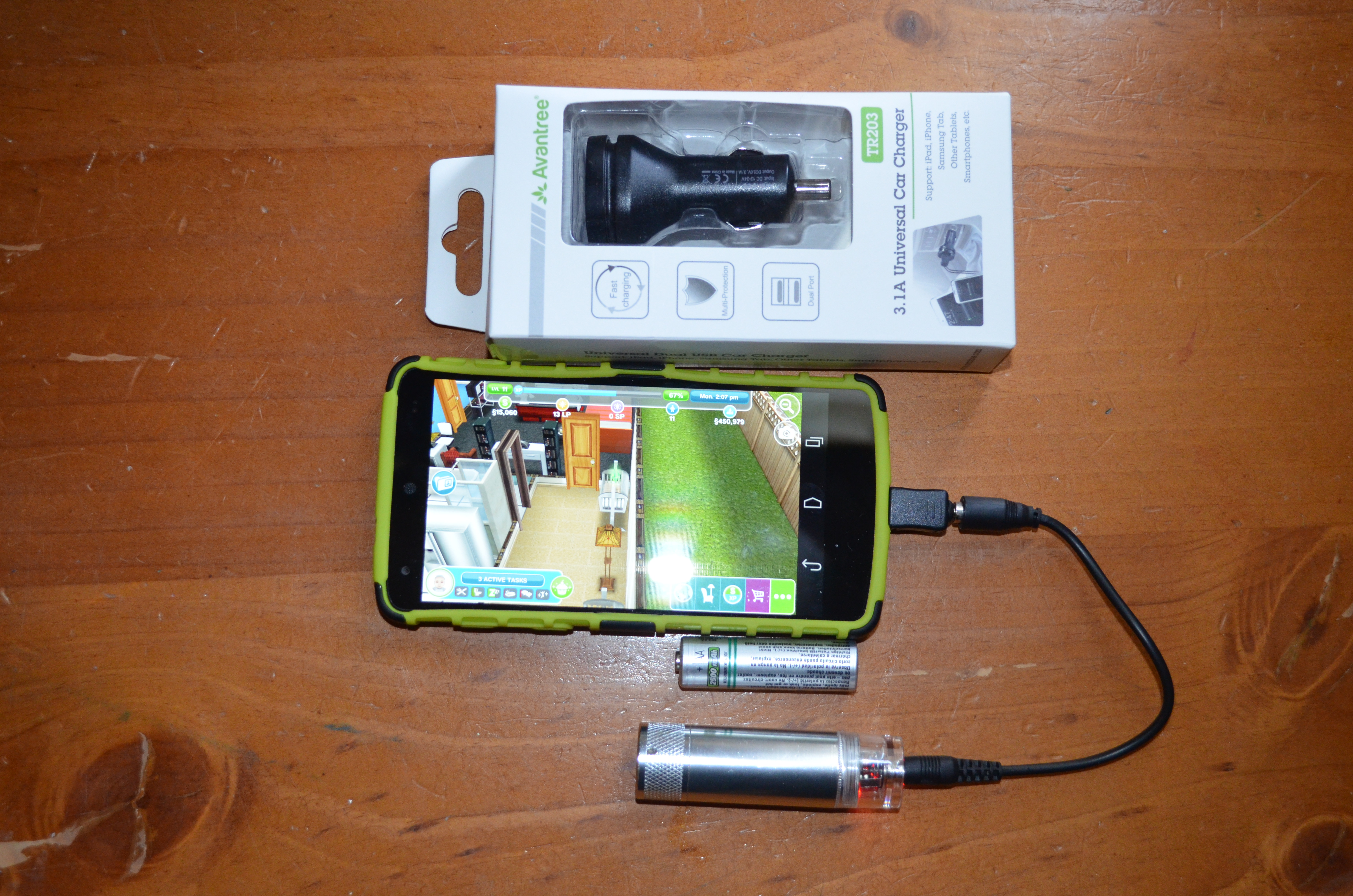
Tree Frog Dashboard Mat phone stuck to fridge I ve been given some more MobileZap products to review. The first is the Tree Frog anti-slip dashboard mat [1]. This is designed to allow a phone to stick to an angled surface of the inside of the car without slipping. The pictures on the web site show a phone stuck to a curved angular surface of a car dash. To test this I stuck my phone to my fridge, the flat metal surface of the fridge and the almost flat plastic surface of the gel case of my phone are pretty much ideal surfaces for the sticky mat to adhere to. But even so keeping my phone stuck to a vertical surface is impressive. This mat is cheap enough that it could be used for many other tasks than securing a phone in a car, for example it could be used to stick a phone to the wall of your office. It s apparently washable and can be expected to keep gripping things if washed regularly. One thing that could be improved in the mat would be to have some holes in it. When I detached my phone from the fridge some large air bubbles developed between the mat and the fridge, this would be a problem if I wanted to regularly stick my phone to a flat surface such as an office wall. When in my car it didn t work nearly as well. The pattern on the surface of the car dash which is designed to avoid glare when driving is difficult to stick to, it s a bit like trying to attach sticky-tape to unpainted wood for similar reasons. A phone will still remain in place on a 30 degree angle from the horizontal (which is significant) but the mat grips much more tightly to the phone than the dash, which is a little inconvenient as the mat stays attached to the phone when you remove it from the dash. Sorry for the boring picture, it s black and flat so there s not much scope for making it interesting. 3.1A USB Car Charger AA battery charger and 3.1A car charger Above is a picture of a 3.1A USB car charger and a AA battery charger. The car charger isn t particularly exciting, but providing 3.1A through two USB sockets is noteworthy it can charge one device at 2.1A (the maximum any device draws) or two devices for a total of up to 3.1A [2] (with protection against over-current). Previously in my car I used the 2.1A charger that shipped with my Galaxy Note 2 and an inverter to provide 240VAC as the devices I had to charge a phone from a car socket didn t provide enough current. This new device uses less space and also allows charging two phones at once. One problem with this device was finding USB cables that could handle the current, for benchmarking I used a phone that was running Ingress and acting as a Wifi access point. I discovered that the cables that Samsung ships with their recent devices (Galaxy Note 2 and Galaxy Note 10.1 tablet) seem to work best and support charging my Galaxy Note 2 or my wife s Nexus 5 while playing Ingress and running as a Wifi AP. Most of the other cables that I have in my collection won t even allow a phone to remain at the same charge level while playing Ingress. AA Emergency Phone Charger The AA phone charger is best suited for emergency use only, it takes one AA battery and has limited current capacity [3]. A NiMh rechargeable battery has a nominal Voltage of 1.2V, to provide 5V to charge a phone the Voltage has to be boosted by a factor of 4.16 which would reduce the current by a factor of 4.16 if the charger was 100% efficient. As 100% efficiency is impossible the current would be reduced even more. It seems unlikely that a AA battery would be able to sustain a current of 2A so the supply from that charger would be less than 500mA IE less than the least capable PC USB port or mains powered phone charger. A test with a Nexus 5 showed the phone charge level decreasing while being very lightly used (mostly just checking whether the charge level was increasing) when a NiMH battery was connected. A test with an alkaline battery and the same Nexus 5 showed the phone charge level increasing when lightly used but it probably wouldn t do so while playing Ingress. It seems that a single NiMH AA battery can only be used for charging a phone in a real emergency situation (IE an act of god type disaster not a need to level up in Ingress). If mains power was out then you could charge a phone while it s turned off (AFAIK all Android phones support this) and then use it once it s charged. This charger supports a wide range of phones (including LG phones from 5+ years ago and Nokia from ~10 years ago) so it could be good for charging an old phone in an emergency. Older phones need less power to charge and generally last longer between charges. With an alkaline battery the charger works a lot better, but it s still for emergency use as I generally only use rechargeable batteries. This is a device I might put in the bottom of my case when travelling, not a device that I ll use regularly. I don t think that this is a deficiency in the product, it s just a limit of what can be done with the power requirements of modern phones and the capabilities of AA batteries. If you want a battery to use while playing Ingress you definitely need something a lot larger. This charger is good for emergencies but not suitable for my main use (charging phones while playing Ingress) so I ll give it to my parents, they do a lot of hiking and camping and my father often goes fishing. Taking a few AA batteries to charge a phone would be much more convenient for such use than taking one of the larger batteries I use for Ingress. Also as the charger is relatively cheap there s less potential financial loss if you drop it in sea-water. 20800mAh Battery picture of 20800mAh USB battery Above is a picture of a 20800mAh battery pack that MobileZap sent me [4]. I haven t yet discovered what it s capacity is, during the recent Interitus anomaly it kept my Galaxy Note 2 and my wife s Nexus 5 adequately charged for 5 hours of intensive Ingress playing (we alternated between phones). Without an external battery it would be unusual for either of those phones to last for 2 hours. The battery has two ports labeled 1A and 2.1A which implies that it can supply a total of 3.1A. I am a little dubious of that implication. After the Interitus anomaly my wife and I had dinner with some friends and I let a friend charge her Samsung Galaxy S5 on the battery at the same time as my Note 2 (which claimed to be 2% charged). When I connected my friend s phone my phone instantly shut itself down due to lack of charge, so I presume that the supply on the 2.1A port is reduced when a demanding device is connected to the 1A port. The next day my wife and I went to the city again to play Ingress and attend a protest against some of the awful things that the Abbott government is doing. As an experiment I didn t charge this battery to see how it would go for two days of use charging two phones. Again there was no problem and it still claimed to be half charged when we got home. So far the only problem I ve found with this battery is that it never reports being fully charged, not even if I leave it on charge for days. That doesn t seem to be a great problem to me, if I disconnect it before it s fully charged then that won t hurt the battery life (unlike NiCd batteries that have to be fully charged every time) and even if it s not fully charged it will still charge phones for a long time. The battery is about 19cm long. I have jeans with unusually large pockets to fit large phones [5] so I can fit this battery in my pocket while a USB cable is connected to charge my phone. I also have a new winter jacket from Scottwear which has pockets that can fit the battery (and lots of other things). Anyone who doesn t have such clothing should plan to use a backpack, handbag, or some other bag this type of battery won t fit in the pockets in most clothing. MobileZap also has some other interesting Nexus 5 accessories [6].

18 June 2014

Ritesh Raj Sarraf: Laptop Mode Tools 1.65

I am very pleased to announce the release of Laptop Mode Tools, at version 1.65 This release took a toll given things have been changing for me, both personally and professionally. 1.64 was released on September 1st, 2013. So it was a full 9 month period, of which a good 2-3 months were procrastination. That said, this release has some pretty good bug fixes and I urge all distribution packagers to push it to their repositories soon. While I'd thank all contributors who have helped make this release, a special thank you to Stefan Huber. Stefan found/fixed many issues, did the messy code clean up etc.. Thank you. Worthy changes are mentioned below. For full details, please refer to the git commit logs. 1.65 - Wed Jun 18 19:22:35 IST 2014
* fix grep error on missing $device/uevent
* ethernet: replace sysfs/enabled by 'ip link down'
* wireless-iwl-power: sysfs attr enbable -> enabled
* wireless-iwl-power: Add iwlwifi support
* Use Runtime Power Managemet Framework is more robust now. Deprecates module
usb-autosuspend

* Fix multiple hibernate issue
* When resuming, run LMT in force initialization mode
* Add module for Intel PState driver
* GUI: Implement suspend/hibernate interface


AddThis:

Categories:

Keywords:

Keith Packard: TeleGPS-Battery-Life

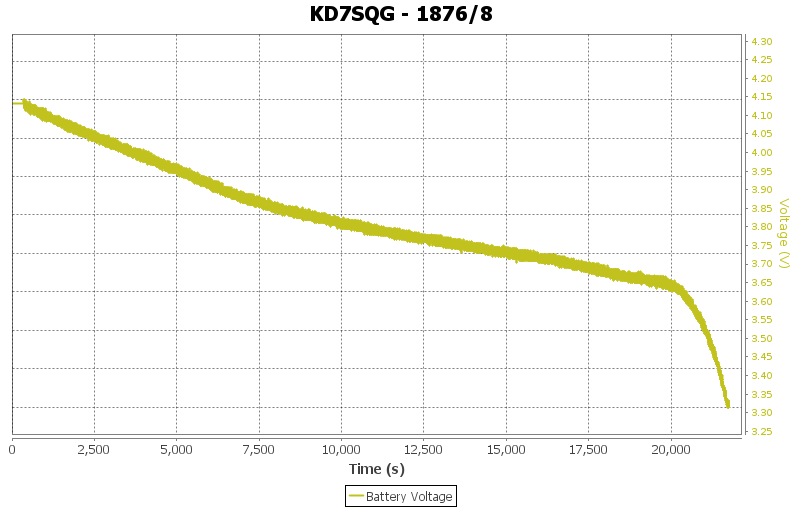
TeleGPS Battery Life I charged up one of the 160mAh batteries that we sell. (The ones we ve got now are labeled 200mAh; the 160mAh rating is something like a minimum that we expect to be able to ever get at that size.) I connected the battery to a TeleGPS board, hooked up a telemetry monitoring setup on my laptop and set the device in the window of my office. This let me watch the battery voltage through the day without interrupting my other work. Of course, because the telemetry was logged to a file, I ve now got a complete plot of the voltage data: It looks like a pretty typical lithium polymer discharge graph; slightly faster drop from the 4.1V full charge voltage down to about 3.9V, then a gradual drop to 3.65 at which point it starts to dive as the battery is nearly discharged. Because we run the electronics at 3.3V, and the LDO has a dropout of about 100mV, it s best if the battery stays above 3.4V. That occurred at around 21500 seconds of run time, or almost exactly six hours. We also have an 850mAh battery in the shop; I d expect that to last a bit more than four times as long, or about a day. Maybe I ll get bored enough at some point to hook one up and verify that guess.
15 June 2014

Iustin Pop: Edge of Tomorrow, book vs. movie

Warning: some spoilers ahead. A few months ago I saw the trailer for Edge of Tomorrow (film). Normally I don't look for trailers, probably this was shared on G+ by someone; but the basic idea behind the trailer was interesting enough I tried to look for more information about the (then upcoming) movie. To my surprise, I learned that this Hollywood movie is based on a Japanese novel - All You Need Is Kill. Since (broadly speaking) Japanese style is quite different from Hollywood style, I became even more interested. So I bought the book, and went through it quite quickly - I liked it a lot, and for the most part is has kept me reading and reading. I would say the book is quite straightforward, with a bitter-sweet ending that is what I (dreaded and) expected from it. Fast forward a few months, and yesterday I saw the movie. I had somewhat lower expectations for it compared to the book, but I was surprised at how they managed to morph the Japanese setting in the book into an European one and give a good introduction into the plot. The downside is that they had to make it somewhat melodramatic here and there, and that they added quite a bit of extra plot to fill in the time; on the other hand, it skipped a lot of background detail that the book brought and which explains the setting of the war. The biggest change however was to the overall plot line: the book is only about a single battle, and makes it clear at the end that the war is far from over. The movie, in grand Hollywood style, solves the entire war in one neat swipe, and has a quite happy ending. Which is not bad per se, but doesn't have the same emotional impact as the book. Oh, and they made the aliens scarier but in a strange way prettier (or better said less alien). Interesting that they felt the need to do it: the aliens in the book were (definitely) scary by their behaviour/abilities, yet they had to make them "look scary" in a way that connects to our visceral feelings, rather to the logical fear that a non-earth-like life form would bring. Speaking about the cast: I would still have preferred the Japanese setting of the book compared to the more western one in the movie, but at least one of the two main characters in the movie had a well-chosen person playing it. Overall, I'd give the book a 4/5 rating, and the movie (still) a 3/5. I enjoyed both, and the main plot idea is, if not new in SF, still appealing.

13 June 2014

Aigars Mahinovs: Going to Debconf14

It's that time of the year, again, when I lan to go to Debconf, reserve vacation, get visa waiver, book tickets. Let's hope nothing blocks me from attending this time. It has been too long. Now I just need to finish up photoriver before Debconf :) In fact it is quite close to being ready - I just need to finish up the GPS tagging feature, figure out why FLickr stopped working recently and optionally work on burst detection and/or FlashAir IP address autodetection in the network.

11 June 2014

Yves-Alexis Perez: Debian, Xfce, policykit and permissions

So, it seems that for a lot of people using unstable, hardware-related permissions (shutdown/reboot, suspend/hibernate, devices mount/umount etc.) have been broken since some times. That's usually the case for people using GNOME with lightdm display manager, Xfce with either gdm or lightdm. It seems that recently, policykit (which is used by GNOME and Xfce) switched from consolekit backend to logind backend (yeah, systemd-logind). So applications using policykit needs to handle that correctly, and that means beeing sure a logind session is correctly setup, which is done by installing the package libpam-systemd. For now, it's still possible to not switch to systemd as init system, by installing the systemd-shim package before libpam-systemd. Be aware that (at least with the current state of affairs), this is only true with logind before 204. When systemd maintainers start transitionning to a later version, only systemd-sysv (so, systemd as init system) will work. For people reluctant to switch to systemd, they can use systemd-shim for now. Then when systemd 205+ enters the archive, either lose those hardware permissions, or try to improve systemd-shim to handle that situation. There's not much we (Xfce/LightDM maintainers) can do about that.

7 June 2014

Tim Retout: Day of Action

Today I attended the Don't Spy On Us campaign's Day Of Action at Shoreditch Town Hall in London. I'm not sure how much actual action there was, but the talking was interesting. Retrospective Day of Action drinking game: drink every time you hear the phrase "If you have nothing to hide, you have nothing to fear." The spooks have a really good marketing department. I don't write a lot on the internet any more - something I regret, actually. It can't even be because there are alternative places I am writing, because over the last couple of years I have been closing most of my social media accounts. I just share much less of myself online. On the internet, nothing is ephemeral. Bruce Schneier says so. Choose your words carefully. The thing about blogging is that it's so public. It's often tied to the writer's real-life identity. One of the valuable things about social media services is that they supposedly let you restrict who can read your words - the trade-off being that you must also grant access to advertisers, spies, cybercriminals... Most memorable moments of the day: In general, there were lots of famous people walking around as if they were normal. I was in the same room as Cory Doctorow, Jimmy Wales and Bruce Schneier at the same time. Ahem, action (mostly for UK citizens):

Next.

Previous.