Search Results: "ed"

26 September 2012

NOKUBI Takatsugu: Debian Packaging dojo

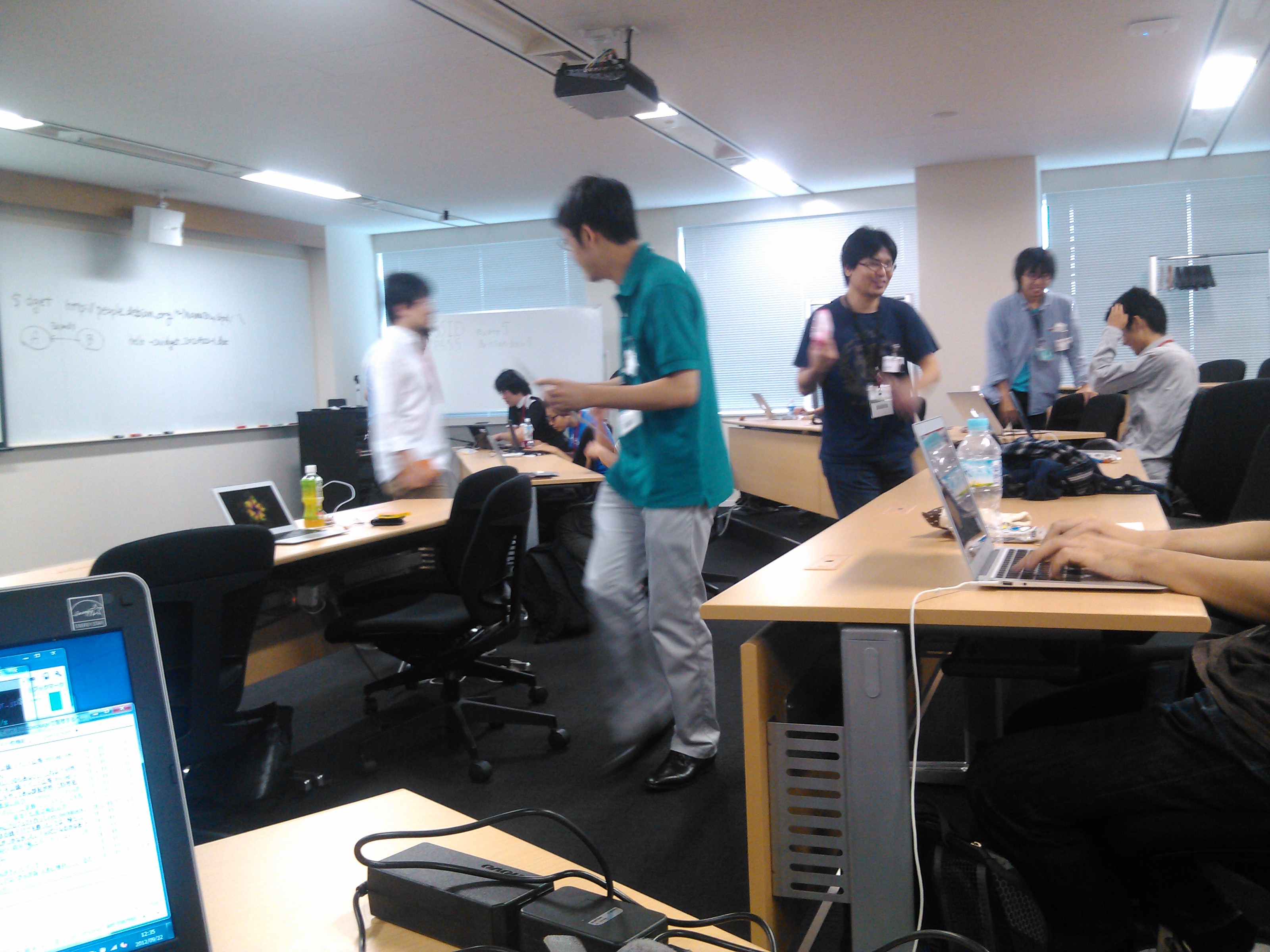
I attended Debian Packaging Dojo at 22 Aug. Dojo ( ) means a training hall for karate, judo, and/or kendo in Japanese. The event is a training for Debian packaging. Attendants were about 15 people. I could learn modern packaging methods. The place is Rakuten Tower in Shinagawa, thank you Rakuten company and Taku YASUI <tach at debian.org>.

Dirk Eddelbuettel: RcppArmadillo 0.3.4.2

The development of Armadillo 3.4.* continues with bug fixes and more sparse matrix support. Conrad release 3.4.2 this morning. I wrapped up the corresponding RcppArmadillo 0.3.4.2 before leaving for work, and this version should now have all CRAN mirrors. Once again no R level or interface changes were, the upstream changes are summarized below.
Changes in RcppArmadillo version 0.3.4.2 (2012-09-25)
  • Upgraded to Armadillo release 3.4.2
    • minor fixes for handling sparse submatrix views
    • minor speedups for sparse matrices
Courtesy of CRANberries, there is also a diffstat report for 0.3.4.2 relative to 0.3.4.1 As always, more detailed information is on the RcppArmadillo page. Questions, comments etc should go to the rcpp-devel mailing list off the R-Forge page.

25 September 2012

Arnaud Quette: Power management and NUT #1: an introduction

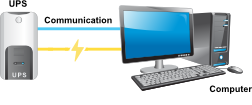
in this series of articles, I will be talking in depth about power management through the NUT project, its packaging on Debian, how to use it in general and how I see it being part of the GreenIT thing. So, let's start with an introduction: NUT is a Free Software (GPL v2+ and 3 to be precise), originally created for power protection using UPS, from home to data-centers:
To shortly describe the main features, I would say that NUT: NUT used to stand for Network UPS Tools. That is, a software for talking to your UPS and shutting down your systems when needed. This definition is a bit limited nowadays, since NUT supports 4 types of power device: Considering this, is the name Network UPS Tools still suitable? Not really! But the acronym NUT is well known! So, for the time being, I just stick using it, and focus on other more important things, until a better opportunity (ideas and comments are welcome!). That said, what can you do exactly with NUT? Currently, you can: All the above is available in a standardized way: Well, this is already a long and dense post, so I will stop there for today. In the next post, we will have a deeper dive into using NUT, for various use cases: submit yours if you can ;-) cheers,
-- Arno

Antoine Beaupr : Improvements to spam filtering after a year of tests

It seems I am still having problems with spam on this site now. Instead of getting tons of spam comments posted, I get false positive, that is legitimate content marked as spam. First off, I wish to apologize for the people that haven't seen their comments published immediately. Next, I will work on improving this and explaining the current situation. Here are the statistics that the spam module gives me: Another way to put it: In other words, the filter works very well at marking spam, so well in fact that it also marks non-spammy comments as spam... Which is a shame because it breaks the interactivity of the site. Basically, you have one chance out of 3 of not seeing your content posted online, which leads people to try to submit it three times, which actually gets them blocked even more. And this is only the spam module filters: the CAPTCHA module tells me it's blocked 26535 attempts (26 thousand) - amazing. So overall, the solutions I put in place a year ago work, somehow, but are too aggressive. I have therefore bumped the threshold from 65% to 80%, hopefully that will help with this. I have also updated the Honeypot module since they have done lots of releases since 1.5, fixed the issue I reported and it's now in use on Drupal.org after some tweaking by our venerable webmaster killes. If this fails, I will look again at other solutions, like the blogspam plugin that relies on the communnity-run blogspam.net site which powers, amongst other things, Debian Administration and Ikiwiki sites. Back then, I also was considering the Bad Behavior and Block Anonymous links modules. (Note to self: I have also removed around 150 comments sitting in the spam module moderation queue, that it didn't seem to remove as it should have done.)

24 September 2012

Felipe Augusto van de Wiel: 24 Sep 2012

A new journey ahead
Changing jobs and moving to a new country... it's just the beginning.

On September 30th, 2012 I'm moving to Menlo Park, CA, USA because back in December 2011 I accepted a job offer as a sysadmin (the name is fancier: Operations Engineer) in Silicon Valley. Since then I'm working on the required documentation, so far everything had worked out. I'm starting at the new work on October 8th, and as I'm arriving on October 1st, I'll have a week to take a look around and get to know a tiny bit of San Francisco Bay Area.


In different levels and aspects it is a big opportunity for me, and I'm confident it'll be an unique experience, not only professional, which of course involves working in a bigger company with more complex scenarios and bigger challenges, and on the personal side, I'll live abroad, be an expat.


As you may imagine, I'm working on this process for more or less 10 months, but in the last 30 days it got more intense. Quitting my jobs, organizing my stuff, cleaning part of backlog (and finding out a have a huge to-do list awaiting for me). Spending quality time with family and friends, and also saying goodbye to them. Finishing some aspects of the move (travel tickets, temporary living).


It's new, it's different! I'm super excited and I do want to change a few things to make it easier for family and friends to keep up, make it easier to follow the news, which might help with the distance.
And now for something completely different! See you all pretty soon! :-)

Michael Stapelberg: Hello Planet Debian

Hello Planet Debian. This post serves as a confirmation that my feed/blog setup is working. I am a DD since a few months and will blog occasionally about my Debian activities.

Mart&iacute;n Ferrari: Report from the Dublin BSP

I should have posted this a few days ago, better late than never they say... On Saturday, 8/9/12, a BSP was held in Dublin for the first time. Google kindly offered office space and some food and refreshments for the event, so we had a nice room with good Internet access and two big screens to project IRC activity. I consider the event to be a big success. There was a good attendance: 15 people showed up, with most of them staying a solid 8 hours. There was a good balance of experienced Debian people and newcomers, as well as a few DDs that work for Google. Even if the squashed bug count was not huge, it was great to see people helping each other, people who had never done any Debian work getting up to speed with the basics and getting excited about helping. I think the biggest outcome of this BSP is that after we packed up, we had already agreed on holding a second BSP in October, and to bootstrap a local Debian community! (Now we need to convince the listmasters to create the mailing list at #687430). A few stats:
  1. 15 people attended.
  2. 7 DDs, 2 DM, and 6 unaffiliated contributors.
  3. 6 out of 15 attendees were Googlers.
  4. 8 different nationalities.
  5. 2 people came from Germany to attend the event.
  6. And the most important stat: 25 bugs were closed, lowered severity, received patches, or got worked on.
I would like to thank everybody who participated, to Google for sponsoring the event (and sponsoring the next one too!), and to marga@ and maxy@ for coming from M nchen, and helping with the organisation and with the introductory talk. I hope to see you all again in the next BSP, tentative date: October, 20th. Tags: Planet Debian, Debian

Wouter Verhelst: Questions

Last weekend, I was a member of the off-stage choir in the Cinderella production in Wilrijk. As the off-stage choir didn't have all that much to do (out of 24 scenes, only five of them had music with the off-stage choir; and then, one of them only required women, and another only required male voices for about 8 bars out of 200+), I had a lot of spare time on my hands; and since I'm in the possession of a laptop with 8h+ of battery life, I used some of that time for hacking on dvswitch. Obviously, when you're typing away on a computer using an uncommon user interface (I use awesome as my window manager), questions will arise. I expected this; and luckily, dvswitch is not the kind of code that requires a lot of explanation for people to understand how it's useful a short demonstration is very enlightening. For most people, that simple demonstration would be enough. But one person asked me a question that I've heard other people ask me in the past (albeit in relation to different projects), and that I've always found the most baffling question people can ask someone who's writing some computer program: "Why?" Setting aside the fact that no, his example of Adobe Premiere cannot do what dvswitch can, I've never understood the thought train that leads to "it's been done already, so that's useless." Why does a poet write poems, when they'll never get something similar to Shakespeare's works on paper? Why does my father insist on painting portraits of people including their hands, when he knows he's not very good at it? Why does my mother teach a bunch of amateurs in the ways of floristry? Hasn't that been done before? Because it's fun, that's why.

Gerfried Fuchs: I hate my life

This poem was triggered by a discussion with a special person not special in the sense I address in the poem though.
My life's hating me
But it is not a one-way:
I'm hating my life Hate being special
I know I can help others
But what about me? All quite supportive
Respect for my openness
And encouraging Though, no step further
No clue how to handle me
Afraid to ask me Hooking up with me?
Suddenly embarrassing
Just scolding words left Want to be normal
Maybe I'll lie to myself
Though that won't work out I am what I am
And sometimes it just pains me:
Hate being special I'm hating my life
But it is not a one-way:
My life's hating me
Please refrain from asking whether I feel fine, I am in good mood. :) But I haven't written anything in a way too long time, I noticed how little actually during selecting poems for the International Poetry Night during debconf. So I picked up the idea and caressed it until I came up with the above piece about with which I am quite happy. Think about it, and ... try to enjoy. Potential interesting sidenote, if you wonder: the title refers to this snippet from the first Futurama episode: I hate my life I hate my life I hate my life. :)

/personal permanent link Comments: 1 Flattr this

Russell Coker: Australian Mobile Phone Costs

I previously wrote about the changes to bundling prices by Virgin (which are similar to changes by other telcos) which make it uneconomical to take a bundled phone [1]. This makes it a little easier to compare telcos as there is no need to be concerned about which telcos offer phones you like. Now it s just a matter of call costs and this is easier to assess when the cost of a phone isn t adding to the confusion. Comparing Australian Telcos I m currently with Virgin and I ve found them to be OK in every way. They use the Optus network which isn t as good as the Telstra network but which supports more phones. Virgin charge $19 per month for a SIM without a phone, that gives you $450 worth of calls at a rate of $0.99 per minute + $0.40 connection and $0.28 SMS as well as free calls to other Virgin customers [2]. If the people you call most are on Virgin it s going to be almost impossible to use the $450 at those rates. The $19 plan only includes 250MB of data per month, for an extra $5 you can get another 500MB or for $10 you can get 2GB. For my use $29 is probably the right plan, for my wife $19 would do. Vodafone doesn t offer free calls to other Vodafone customers unless you are on a $30 per month plan, but that plan only gives 500MB of data measured in 12KB increments so that s going to be expensive. Also Vodafone have had some quality problems recently so I m not going to link to them. Optus has some interesting options, they start with a $14 per month plan that includes 50MB of data and 500SMS that could be good value if you do lots of SMS [3]. Also all their plans give free 5 minute calls to other phones on the same account this would be good if your SO is on the same phone account as you. Their plans offer small amounts of data and no apparent option for adding more which is a real problem for anyone who wants to use the Internet seriously. Telstra are really expensive, their web site is poorly designed, and they tell me to use Windows or a Mac. Everyone who spends most of their time in urban areas shouldn t consider them, the only reason for using Telstra is their coverage of rural areas. Internode have a new mobile phone service based on the Optus network which offers good value for money [4]. They start with a $10 per month plan that includes $165 of calls and SMS. The call cost is $0.90 per minute plus $0.35 flagfall and the SMS cost is $0.25. It also includes 100MB of data charged at 1KB increments. The $20 per month plan from Internode includes $450 of calls $1000 of free calls to other Internode mobile phones, and 1.5G of data transfer. Internode also has a $15 charge for sale and delivery of the SIM. Internode also offer 150GB of free social networking traffic, I wonder whether it would be viable to tunnel some other protocol over Twitter or Facebook TPG also has some good offers, $18 per month gives you 1.5GB of data measured in 10KB increments and $550 of phone calls at a cost of $0.90 per minute with $0.35 flagfall and $0.253 SMS cost and unlimited calls and SMS to other TPG mobile and land-line phones [5]. The $10 plan from TPG offers $2000 of free calls to other TPG phones, so if you only need 250MB of data in 10KB increments (which is a lot less than 250MB in 1KB increments) and want lots of free calls to your SO then TPG could be really good. I d rather pay an extra $2 to Internode and get data measured in 1KB increments. Conclusion My usage pattern includes a reasonably large number of calls to my wife and more than 500MB of data use every month. For this pattern the Internode plan is the cheapest for me and for my wife. It seems that a large portion of the phone using population who use the Internet a lot would find this to be an ideal plan. TPG is another good option, particularly for people who use TPG ADSL as they get a discount on the call rates and free calls to their land-line. It seems to me that anyone who uses a mobile phone enough that a pre-paid option isn t cheaper and who doesn t need the coverage that only Telstra can provide will be best served by Internode or TPG. I plan to transition to Internode some time after my current Virgin contract ends. I will probably delay the transition until the contracts for some of my wife s relatives expire. If we all migrate at the same time then we keep getting free calls to each other my relatives don t use mobile phones much so there s no money to save on calling them for free. Related posts:
  1. Is Lebara the Cheapest Mobile Phone company in Australia? My parents have just got a mobile phone with a...
  2. Choosing an Australian Mobile Telco for use with Android Since playing with the IBM Seer augmented reality software [1]...
  3. Changing Phone Prices in Australia 18 months ago when I signed up with Virgin Mobile...

Diego Escalante Urrelo: WebKitGTK+ failing to build, argument list too long

The last few days I have been unable to build WebKitGTK+ from git. The problem is that make chokes the command line with an insanely long list of file names. You need a patched version of make.

Pictured: myself debugging WebKit build issues. Gustavo told me that WebKit has some handy jhbuild scripts that include a patched make. Being WebKit-scale I knew the scripts did a lot more than what I wanted, so I just reused its moduleset for a quick buildone command: $ cd WebKit/Tools/gtk/
$ jhbuild -m file:// pwd /jhbuild.modules buildone make
And yes, it works! Thanks Gustavo.

23 September 2012

Philipp Kern: Call for testing: Upcoming Squeeze point release 6.0.6

We just sent out a new call for testing for the next point release of Debian Squeeze. The last one was back in May, hence there are a bunch of updates. Please test the packages in squeeze-proposed-updates on some machines running squeeze if possible, so that we don't screw up your production machines with bad updates in a week. The point release is scheduled for September 29th, i.e. next Saturday. Don't forget to copy the debian-release mailing list when you encounter regressions. Thanks for your efforts.

If you want to receive these notices by mail, please subscribe to the debian-stable-announce mailing list.

Gregor Herrmann: RC bugs 2012/38

during the last week, I've worked on the following RC bugs:

Aigars Mahinovs: Cloning or pre-configuring a batch of Android phones

An interesting question popped up in my Twitter stream today is there an Android alternative to Apple configurator (for iPhone, iPad and iPod Touch) that allows to create a bunch of identical Apple devices with some added configurations and applications. The best I could come up with is not as polished, but on the other hand much more powerful option Nandroid backup and restore (also known as ClockworkMod Recovery backup). To do this, you need a source phone and a bunch of destination phones. On the source phone a ClockworkMod Recovery (CWR) must be installed (either via a root or via a bootloader unlock). On the destination phones you will either need to also install ClockworkMod Recovery or unlock the bootloader to allow the Fastboot tool to work. So the procedure then goes as follows:
1. Unlock the bootloader on the source phone (search for device specific info on how to do that)
2. Use fastboot flash recovery filename.img to write a device-specific version of CWR to the recovery partition of the device (the phone must be in fastboot mode at that point)
3. Do whatever customisations you want to the source phone at this point. You can use custorm ROMs, install whatever applications, do whatever configuration, but I would suggest keeping everything in phone memory so you don t have to flash the SD card as well.
4. Reboot the source phone into CWR mode, use the backup option to create a full backup.
5. The backup will now be in the SD card of the source device. Copy that to the computer that you will use for creating copies. For each destination phone:
6. Unlock the bootloader of the destination phone
7. Reboot the phone in the fastboot mode, connect it via USB to the copying computer
8. Flash all partitions from the backup using fastboot flash ... commands, skip flashing the recovery partition if you don t want CMR on the destination device
9. Re-lock the bootloader (with fastboot oem lock) And you are done! All the phones must be of the same model. And that model must support unlocking bootloader for this to work. I prefer this method, because this way it is possible to create an end device without root, with a locked bootloader and without CWR thus providing some security as unlocking the bootloader wipes the device, so without specific hacking an attacker can not easily get access to system data on such device. It is also possible to do this with devices that do not have an boot unlock if there is a way to root the original firmware which allows to install CWR and go on from there, but that is significantly more complicated and time-consuming, so using devices with an ability to unlock the bootloader is much preferable. However, before you go to all that trouble, it might be worth to consider if maybe for your particular use case it would be enough with the two commands from Android SDK adb install ... and adb push ... to install applications or individual files on devices or adb backup AppName and adb restore ... to backup and restore one or more individual applications with all their settings. These options have the benefit of that they will work across different device models and that they do not wipe other data or applications from the devices. As I could not immediately find a better way or even a detailed guide how to do this, I decided to write this post, so it would be easier for other people to find this information. If you know a better way, please do mention it in the comments section!

Jonas Smedegaard: Spamming?

Hi! I have collected a small list of people that I want to give lifesign once in a while.
- and you are one of them Maybe we shook hands once, and for some obscure reason I kept (or found) your email address.
Maybe we are even related by blood (then you probably know :-) - e.g. ny brothers are on the list, as is both my parents

Few of you I actually never met in person, but you made a special impression on me - either in a phone conversation or an email exchange If you dislike being "bombarded" with emails from me - or if you are not at all the one I think you are, and really I write to a stranger - then please tell me! I will immediately remove you from the list, if you ask for it - and won't take it badly Kind regards
Jonas Smedegaard
This text is part of my friends scriblings.

Evgeni Golov: 1410065408S

Do you deliver your mail with maildrop? If not, this post is only for your amusement . My mailserver runs Postfix as MTA and maildrop as MDA, a pretty common setup I d say. And it happens that maildrop supports quota. It supports it so good, that I have no idea how to disable that support, but I also actually never cared, as my user database declares each user has 10GB quota for mails (courier s authtest says Quota: 10000000000S , so does the configuration). And 10GB should be enough for everybody, right? Well, so I thought until I noticed that my Icedove indicated a 99% full mailbox and shortly afterwards maildrop stopped delivering mails with maildir over quota . Looking at the maildirsize file in my maildir, I noticed that the quota is set to 1410065408S, a mere 1.4GB. Where does this number come from? The proficient reader will quickly see that 10000000000 mod 2^32 = 1410065408, so this is actually an integer overflow happening somewhere in the code handling the maildirsize file (read: in maildrop). A short dig through the Debian BTS revealed a bug from 2003, saying exactly the same. The bug also indicated, the issue is fixed since maildrop 2.5. A short cowbuilder run later, I had a maildrop_2.5.5-2_i386.deb, installed it and after the next mail delivery, my quota was at 10GB as it should. TL;DR: If you run into strange maildir over quota errors with maildrop on Debian Squeeze, get a newer maildrop (or backport that single patch to Squeeze s maildrop).

Petter Reinholdtsen: Seventy percent done with Norwegian docbook version of Free Culture

Since this summer, I have worked in my spare time on a Norwegian docbook version of the 2004 book Free Culture by Lawrence Lessig. The reason is that this book is a great primer on what problems exist in the current copyright laws, and I want it to be available also for those that are reluctant do read an English book. When I started, I called for volunteers to help me, but too few have volunteered so far, and progress is a bit slow. Anyway, today I broken the 70 percent mark for the first rough translation. At the moment, less than 700 strings (paragraphs, index terms, titles) are left to translate. With my current progress of 10-20 strings per day, it will take a while to complete the translation. This graph show the updated progress: Progress have slowed down lately due to family and work commitments. If you want to help, please get in touch, and check out the project files currently available from github. If you are curious what the translated book currently look like, the updated PDF and EPUB are published on github. The HTML version is published as well, but github hand it out with MIME type text/plain, confusing browsers, so I saw no point in linking to that version.

22 September 2012

Vasudev Kamath: Weekly Log - 22092012

After thinking a while I thought I should record my weekly FLOSS work and I'm starting by this week. This week I'm on vacation and in home town so I could give bit more time for my FLOSS activity. So here it goes this weeks work Bug Squashing
Both these packages are uploaded to unstable first RC bug was related to Debian Installer hence was unblocked before we could file unblock-request. Kartik filed an unblock-request and adsb unblocked it happily and both the packages landed in unstable. New Packages
Both these packages will be backported once Wheezy freezes. One pending wnpp is left on Debian-IN which I've left for Kartik to finish ;-). Font Package Helper I bumped version on dh-make-font[1] to 0.3 now it accepts upstream URL with -u, --upstream switch this will be placed in Homepage: field of control file and in Source: field of copyright file. Probably I need to think of introducing xz compression to original source tarball where upstream is not giving any tarball and probably rewrite it using Perl so it can get included dh-make package. Already a bug filed to get it included in dh-make package 658154. [1] http://anonscm.debian.org/gitweb/?p=debian-in/dh-make-font.git;a=summary Misc and Learnings
Well that is it for this week. Hopefully I will have new stuffs to put up here for the next week, till then Cya.

Jonas Smedegaard: Muziik!

Hi there! I'm sittin' here listening to Rickie Lee Jones. Just bought the CD today :-) Simply wanted you to know, that's all! Best regards
Jonas Smedegaard BTW Welcome aboard this pseudo-list (actually I'm doin' it directly from my e-mail client!) If you don't know who I am, or why you got this letter, then please contact me - there might be an error somewhere (and we might get to know each other ;-) I'm just an ordinary guy with an ordinary mail program, not a spammer
This text is part of my friends scriblings.

Russell Coker: Changing Phone Prices in Australia

18 months ago when I signed up with Virgin Mobile [1] the data transfer quotas were 200MB on the $29 per month plan and 1.5G on the $39 per month plan. About 4 months ago when I checked the prices the amounts of data had gone up on the same plans (2.25G for $39 per month from memory). Now $39 per month gets only 500MB! It seems that recently Virgin has significantly reduced their value for money. Virgin does have an option to pay an exgtra $10 per month for 2GB of data which gets you 2GB per month if you sign up for 24 months. That is reasonably good value, when I first signed up with Virgin I paid $39 per month to get extra data transfer, now I could use the $29 plan for phone access and spend $10 per month on data with a Wifi gateway device. On top of this the phone plans aren t nearly as good value as they used to be. When I signed up with Virgin the Sony Ericsson Xperia X10 was free on a $29 plan, at the time that was a hell of a phone. I believe that the Samsung Galaxy S3 currently occupies a similar market position to the one that the Xperia X10 did 18 months ago so it shouldn t be much more expensive. But Virgin are offering the Galaxy S3 for $21 extra per month over 24 months on the $29 plan a total cost of ($29+$21)*24==$1200 while offering the same amount of calls and data transfer for $19 per month ($19*24==$456) when you don t get a phone this makes the price of a Galaxy S3 $1200-$456==$744 while Kogan [2] sells the same phone for $519 + postage! The cheapest phone that Virgin is offering is a Galaxy S2 for $5 per month on a $29 plan which when compared to $19 per month for the same plan without a phone makes the phone cost ($5+$10)*24==$360. Kogan sells the Galaxy S2 for $399 so there s a possibility of a Virgin plan saving some money over buying a phone from Kogan. But given the choice of $360 for a Galaxy S2 from Virgin and the Kogan prices of $839 for a Galaxy Note 2, $349 for a Galaxy Nexus, $469 for a Galaxy Note, $529 for a Galaxy S3, and $219 for a HTC One V I find it difficult to imagine that anyone would think that the $360 Galaxy S2 is the best option. I ve previously investigated dual-sim phones for cheap calls and data [3] but they didn t seem like good value at the time because the free phones offered by the telcos used to be a good deal. Now it seems that none of the telcos are offering good deals on phones so with my needs the way to go would be to buy a Samsung Galaxy S3 or Samsung Galaxy Note 2 from Kogan, and get the $19 plan from Virgin probably with a $10 per month extra fee to get an extra 2GB of data. For my wife the best option would be to keep using the Xperia X10 on a $19 per month plan as she doesn t seem to have any problem with the Xperia X10 that justifies spending hundreds of dollars. I idly considered getting a portable Wifi-3G device to use a cheap pre-paid 3G data option ($10 per month) and a cheap phone plan without data (maybe $10 per month), but decided that it s not worth the effort. The Virgin $19 plan gives me free calls to my wife and lots of calls to other numbers (more than I can use) and an extra $10 gives me all the data transfer I need. To use a Wifi-3G device would involve buying such a device and the hassle of carrying it and using it, that wouldn t save money for at least a year and would be annoying. The sudden decrease in data quotas is a real concern though. It s an indication that the telco cartel in Australia is pushing prices up, that s not a good sign. LTE is nice, but 3G with better quotas would be more generally useful to me. Related posts:
  1. Dual SIM Phones vs Amaysim vs Contract for Mobile Phones Currently Dick Smith is offering two dual-SIM mobile phones for...
  2. Virgin Refunds Me $200 Virgin Mobile Excessive Billing In my previous post about the...
  3. A Mobile Phone for Sysadmin Use My telco Three have just offered me a deal on...

Next.

Previous.