Some time ago I have embarked on a jurney to install NetBSD on one of my two NSLU2-s. I have ran into all sorts of hurdles and problems which I finally managed to overcome, except one:
Info : only one transport option; autoselect 'jtag'
adapter speed: 300 kHz
Info : ixp42x.cpu: hardware has 2 breakpoints and 2 watchpoints
0
Info : clock speed 300 kHz
Info : JTAG tap: ixp42x.cpu tap/device found: 0x29277013 (mfg: 0x009,
part: 0x9277, ver: 0x2)
[..]
$ telnet localhost 4444
Trying ::1...
Trying 127.0.0.1...
Connected to localhost.
Escape character is '^]'.
Open On-Chip Debugger
> halt
target was in unknown state when halt was requested
in procedure 'halt'
> poll
background polling: on
TAP: ixp42x.cpu (enabled)
target state: unknown
My main goal is to make sure I can flash the device via JTAG, in case I break it, but it would be ideal if I could use the JTAG to single step through the code.
So if anyone can give some insights into ixp42x / Xscale / NSLU2 specific JTAG issues or hints regarding this issue on OpenOCD or other such tool, I would be really grateful.
Note: I have made a hacked second stage Apex bootloader to laod the NetBSD image via TFTP, but the default RedBoot sequence 'boot; exec 0x01d00000' should be 'boot; go 0x01d00000' for NetBSD to work, so I am considering changing the RedBoot partition to alter that command. The gory details can be summed as my Apex is calling RedBoot functions to be network enabled (because Intel's NPE current code is not working on Apex) and I have tested this to work with go, but not with exec.
A hotfix release for the Finance-YahooQuote Perl module on CPAN is now available. Available Yahoo! Finance decided to change the base URL. My thanks to Nicola Chiapolini who not only noticed but also sent me the one-line patch fixing this:
--- YahooQuote.pm~      2010-03-27 01:44:10.000000000 +0100
+++ YahooQuote.pm       2015-04-29 11:31:20.407926674 +0200
@@ -34,7 +34,7 @@
 $VERSION = '0.24';

 ## these variables govern what type of quote the modules is retrieving
-$QURLbase = "http://download.finance.yahoo.com/d/quotes.csvr?e=.csv&f=";
+$QURLbase = "http://download.finance.yahoo.com/d/quotes.csv?e=.csv&f=";
 $QURLformat = "snl1d1t1c1p2va2bapomwerr1dyj1x";        # default up to 0.19
 $QURLextended = "s7t8e7e8e9r6r7r5b4p6p5j4m3m4";        # new in 0.20
 $QURLrealtime = "b2b3k2k1c6m2j3"; # also new in 0.20
If need be, edit your file YahooQuote.pm by hand.
This change in Finance-YahooQuote will also affect Beancounter and smtm both of which use this module.
The fix has been pushed to Debian for the corresponding package and to PAUSE for CPAN package.
Having maintained this since 2002 in RCS, I also just created a GitHub repo for it where development/maintenance will now happen.
A small project I worked on during the last few weeks has now come together in new package RcppTOML which arrived on CRAN yesterday.
It provides R with a reader for TOML files. TOML stands for Tom's Obvious Markup Language. And before you roll your eyes, glance at the TOML site. It really is different, and has a number of rather wonderful features:
free-format indentation as you please
comments anywhere, even on the same line
actual types such as string, integer, float, bool and datetime (!!) which are all native
vectors, of course, of the above
arbitrary nesting of tables
Here is a simple illustration where we parse the TOML example file derived from what is part of the main TOML README
R>p <-parseTOML(system.file("toml", "example.toml", package="RcppTOML"))
R>summary(p)
toml object with top-level slots:
clients, database, owner, servers, title
read from /usr/local/lib/R/site-library/RcppTOML/toml/example.toml
R>p
List of 5
$clients :List of 2
..$data :List of 2
.. ..$:chr [1:2] "gamma""delta"
.. ..$:int [1:2] 12
..$hosts:chr [1:2] "alpha""omega"
$database:List of 4
..$connection_max:int 5000
..$enabled :logi TRUE
..$ports :int [1:3] 800180018002
..$server :chr "192.168.1.1"
$owner :List of 4
..$bio :chr "GitHub Cofounder & CEO\\nLikes tater tots and beer."
..$dob :POSIXct[1:1], format: "1979-05-27 07:32:00"
..$name :chr "Tom Preston-Werner"
..$organization:chr "GitHub"
$servers :List of 2
..$alpha:List of 2
.. ..$dc:chr "eqdc10"
.. ..$ip:chr "10.0.0.1"
..$beta :List of 2
.. ..$dc:chr "eqdc10"
.. ..$ip:chr "10.0.0.2"
$title :chr "TOML Example"NULL
R>
See much more at the TOML site. I converted one first project at work to this and it really rocks. Point to a file, get a list back and index all components by their names.
We also added really simple S3 classes to the default print() method uses str() for a more compact presentation of what (in R) is of course nested list types.
Internally, the RcppTOML packages use the splendid cpptoml parser by Chase Geigle. This brings in modern C++11 and makes it that CRAN simply cannot build a binary for R on Windows as the g++ version (still, as of April 2015) in Rtools is too old. There is word of an update to Rtools and that point should we able to support Windows as well. Until then, no mas.
A bit more information is on the package page here as well as as the GitHub repo.
Edit to add: These patches on their own won't enable this functionality, they just give us a better set of options. Once they're merged we can look at changing the defaults so people get the benefit of this out of the box.
Haswell and Broadwell (Intel's previous and current generations of x86) both introduced a range of new power saving states that promised significant improvements in battery life. Unfortunately, the typical experience on Linux was an increase in power consumption. The reasons why are kind of complicated and distinctly unfortunate, and I'm at something of a loss as to why none of the companies who get paid to care about this kind of thing seemed to actually be caring until I got a Broadwell and looked unhappy, but here we are so let's make things better.
Recent Intel mobile parts have the Platform Controller Hub (Intel's term for the Southbridge, the chipset component responsible for most system i/o like SATA and USB) integrated onto the same package as the CPU. This makes it easier to implement aggressive power saving - the CPU package already has a bunch of hardware for turning various clock and power domains on and off, and these can be shared between the CPU, the GPU and the PCH. But that also introduces additional constraints, since if any component within a power management domain is active then the entire domain has to be enabled. We've pretty much been ignoring that.
The tldr is that Haswell and Broadwell are only able to get into deeper package power saving states if several different components are in their own power saving states. If the CPU is active, you'll stay in a higher-power state. If the GPU is active, you'll stay in a higher-power state. And if the PCH is active, you'll stay in a higher-power state. The last one is the killer here. Having a SATA link in a full-power state is sufficient to keep the PCH active, and that constrains the deepest package power savings state you can enter.
SATA power management on Linux is in a kind of odd state. We support it, but we don't enable it by default. In fact, right now we even remove any existing SATA power management configuration that the firmware has initialised. Distributions don't enable it by default because there are horror stories about some combinations of disk and controller and power management configuration resulting in corruption and data loss and apparently nobody had time to investigate the problem.
I did some digging and it turns out that our approach isn't entirely inconsistent with the industry. The default behaviour on Windows is pretty much the same as ours. But vendors don't tend to ship with the Windows AHCI driver, they replace it with the Intel Rapid Storage Technology driver - and it turns out that that has a default-on policy. But to make things even more awkwad, the policy implemented by Intel doesn't match any of the policies that Linux provides.
In an attempt to address this, I've written some patches. The aim here is to provide two new policies. The first simply inherits whichever configuration the firmware has provided, on the assumption that the system vendor probably didn't configure their system to corrupt data out of the box[1]. The second implements the policy that Intel use in IRST. With luck we'll be able to use the firmware settings by default and switch to the IRST settings on Intel mobile devices.
This change alone drops my idle power consumption from around 8.5W to about 5W. One reason we'd pretty much ignored this in the past was that SATA power management simply wasn't that big a win. Even at its most aggressive, we'd struggle to see 0.5W of saving. But on these new parts, the SATA link state is the difference between going to PC2 and going to PC7, and the difference between those states is a large part of the CPU package being powered up.
But this isn't the full story. There's still work to be done on other components, especially the GPU. Keeping the link between the GPU and an internal display panel active is both a power suck and requires additional chipset components to be powered up. Embedded Displayport 1.3 introduced a new feature called Panel Self-Refresh that permits the GPU and the screen to negotiate dropping the link, leaving it up to the screen to maintain its contents. There's patches to enable this on Intel systems, but it's still not turned on by default. Doing so increases the amount of time spent in PC7 and brings corresponding improvements to battery life.
This trend is likely to continue. As systems become more integrated we're going to have to pay more attention to the interdependencies in order to obtain the best possible power consumption, and that means that distribution vendors are going to have to spend some time figuring out what these dependencies are and what the appropriate default policy is for their users. Intel's done the work to add kernel support for most of these features, but they're not the ones shipping it to end-users. Let's figure out how to make this right out of the box.
[1] This is not necessarily a good assumption, but hey, let's see
This post is a follow-up to my earlier post on the
"sad state of sysadmin in the age of containers".
While I was drafting this post, that story got picked up by HackerNews, Reddit
and Twitter, sending a lot of comments and emails my way.
Surprisingly many of the comments are supportive of my impression - I would
have expected to see much more insults along the lines "you just don't like
my-favorite-tool, so you rant against using it". But a lot of people seem to share
my concerns. Thanks, you surprised me!
Here is the new rant post, in the slightly different context of big data:
Everybody is doing "big data" these days. Or at least, pretending to do so
to upper management. A lot of the time, there is no big data. People do more
data anylsis than before, and therefore stick the "big data" label on them to
promote themselves and get green light from management, isn't it?
"Big data" is not a technical term. It is a business term, referring to any
attempt to get more value out of your business by analyzing data
you did not use before. From this point of view, most of such projects
are indeed "big data" as in "data-driven revenue generation" projects.
It may be unsatisfactory to those interested in the challenges of volume and
the other "V's", but this is the reality how the term is used.
But even in those cases where the volume and complexity of the data would
warrant the use of all the new toys tools, people overlook
a major problem: security of their systems and of their data.
The currently offered "big data technology stack" is all but secure.
Sure, companies try to earn money with security add-ons such as Kerberos
authentication to sell multi-tenancy, and with offering their version of
Hadoop (their "Hadoop distribution").
The security problem is deep inside the "stack". It comes from the way this
world ticks: the world of people that constantly follow the latest
tool-of-the-day. In many of the projects, you no longer have mostly Linux
developers that co-function as system administrators, but you see a lot of
Apple iFanboys now. They live in a world where technology is outdated after
half a year, so you will not need to support product longer than that. They
love reinstalling their development environment frequently - because each time,
they get to change something. They also live in a world where you would simply
get a new model if your machine breaks down at some point. (Note that this will
not work well for your big data project, restarting it from scratch every half
year...)
And while Mac users have recently been surprisingly unaffected by various attacks
(and unconcerned about e.g. GoToFail, or the fail to fix the
rootpipe exploit)
the operating system is
not
considered to be very secure. Combining this with users who do not care is an
explosive mixture...
This type of developer, who is good at getting a prototype website for a startup
kicking in a short amount of time, rolling out new features every day to beta
test on the live users is what currently makes the Dotcom 2.0 bubble grow.
It's also this type of user that mainstream products aim at - he has already
forgotten what was half a year ago, but is looking for the next tech product
to announced soon, and willing to buy it as soon as it is available...
This attitude causes a problem at the very heart of the stack:
in the way packages are built, upgrades (and safety updates) are handled etc.
- nobody is interested in consistency or reproducability anymore.
Someone commented on my blog that all these tools "seem to be written
by 20 year old" kids. He probably is right. It wouldn't be so bad if we had
some experienced sysadmins with a cluebat around. People that have
experience on how to build systems that can be maintained for 10 years,
and securely deployed automatically, instead of relying on puppet hacks,
wget and unzipping of unsigned binary code.
I know that a lot of people don't want to hear this, but:
Your Hadoop system contains unsigned binary code in a number of
places, that people downloaded, uploaded and redownloaded a countless number of
times. There is no guarantee that .jar ever was what people
think it is.
Hadoop has a huge set of dependencies, and little of this has been
seriously audited for security - and in particular not in a way that would
allow you to check that your binaries are built from this audited code anyway.
There might be functionality hidden in the code that just sits there and waits
for a system with a hostname somewhat like "yourcompany.com" to start looking
for its command and control server to steal some key data from your company.
The way your systems are built they probably do not have much of a firewall
guarding against such. Much of the software may be constantly calling home,
and your DevOps would not notice (nor would they care, anyway).
The mentality of "big data stacks" these days is that of Windows Shareware
in the 90s. People downloading random binaries from the Internet, not
adequately checked for security (ever heard of anybody running an AntiVirus
on his Hadoop cluster?) and installing them everywhere.
And worse: not even keeping track of what they installed over time, or how.
Because the tools change every year. But what if that developer leaves? You may
never be able to get his stuff running properly again!
Fire-and-forget.
I predict that within the next 5 years, we will have a number of security
incidents in various major companies. This is industrial espionage
heaven. A lot of companies will cover it up, but some leaks will reach
mass media, and there will be a major backlash against this hipster way
of stringing together random components.
There is a big "Hadoop bubble" growing, that will eventually burst.
In order to get into a trustworthy state, the big data toolchain needs to:
Consolidate. There are too many tools for every job. There are even
too many tools to manage your too many tools, and frontends for your frontends.
Lose weight. Every project depends on way too many
other projects, each of which only contributes a tiny fragment for a
very specific use case. Get rid of most dependencies!
Modularize. If you can't get rid of a dependency, but it is
still only of interest to a small group of users, make it an optional
extension module that the user only has to install if he needs this
particular functionality.
Buildable. Make sure that everybody can build everything
from scratch, without having to rely on Maven or Ivy or SBT downloading
something automagically in the background. Test your builds offline,
with a clean build directory, and document them! Everything must be
rebuildable by any sysadmin in a reproducible way, so he can ensure a
bug fix is really applied.
Distribute. Do not rely on binary downloads from your CDN
as sole distribution channel. Instead, encourage and support alternate
means of distribution, such as the proper integration in existing
and trusted Linux distributions.
Maintain compatibility. successful big data projects will
not be fire-and-forget. Eventually, they will need to go into
production and then it will be necessary to run them over years.
It will be necessary to migrate them to newer, larger clusters. And you
must not lose all the data while doing so.
Sign. Code needs to be signed, end-of-story.
Authenticate. All downloads need to come with a way of checking the
downloaded files agree with what you uploaded.
Integrate. The key feature that makes Linux systems so very
good at servers is the all-round integrated software management. When you
tell the system to update - and you have different update channels available,
such as a more conservative "stable/LTS" channel, a channel that gets you
the latest version after basic QA, and a channel that gives you the latest
versions shortly after their upload to help with QA. It covers almost all
software on your system, so it does not matter whether the security fix is
in your kernel, web server, library, auxillary service, extension module,
scripting language etc. - it will pull this fix and update you in no time.
Now you may argue that Hortonworks, Cloudera, Bigtop etc. already provide
packages. Well ... they provide crap. They have something they call a "package",
but it fails by any quality standards. Technically, a
Wartburg is a car;
but not one that would pass todays safety regulations...
For example, they only support Ubuntu 12.04 - a three year old Ubuntu is the
latest version they support... Furthermore, these packages are roughly
the same. Cloudera eventually handed over their efforts to "the community" (in
other words, they gave up on doing it themselves, and hoped that someone else
would clean up their mess); and Hortonworks HDP (any maybe Pivotal HD, too)
is derived from these efforts, too.
Much of what they do is offering some extra documentation and training for
the packages they built using Bigtop with minimal effort.
The "spark" .deb packages of Bigtop, for example, are empty. They
forgot to include the .jars in the package. Do I really need to give
more examples of bad packaging decisions? All bigtop packages now depend on
their own version of groovy - for a single script. Instead of rewriting this
script in an already required language - or in a way that it would run
on the distribution-provided groovy version - they decided to make yet another
package, bigtop-groovy.
When I read about Hortonworks and IBM announcing their "Open Data Platform",
I could not care less. As far as I can tell, they are only sticking their label
on the existing tools anyway. Thus, I'm also not surprised that Cloudera and
MapR do not join this rebranding effort - given the low divergence of Hadoop, who
would need such a label anyway?
So why does this matter? Essentially, if anything does not work,
you are currently toast. Say there is a bug in Hadoop that makes it fail to
process your data. Your business is belly-up because of that, no data is processed
anymore, your are vegetable. Who is going to fix it? All these "distributions"
are built from the same, messy, branch. There is probably only a dozen of people
around the world who have figured this out well enough to be able to fully build
this toolchain. Apparently, none of the "Hadoop" companies
are able to support a newer Ubuntu than 2012.04 - are you sure
they have really understood what they are selling? I have doubts. All the
freelancers out there, they know how to download and use Hadoop. But
can they get that business-critical bug fix into the toolchain to get you up
and running again? This is much worse than with Linux distributions. They have
build daemons - servers that continuously check they can compile all the software
that is there. You need to type two well-documented lines to rebuild a typical
Linux package from scratch on your workstation - any experienced developer can
follow the manual, and get a fix into the package. There are even people who
try to recompile complete distributions with
a different compiler to discover compatibility issues early that may
arise in the future.
In other words, the "Hadoop distribution" they are selling you is not
code they compiled themselves. It is mostly .jar files they downloaded
from unsigned, unencrypted, unverified sources on the internet. They have no idea
how to rebuild these parts, who compiled that, and how it was built. At most,
they know for the very last layer. You can figure out how to recompile the
Hadoop .jar. But when doing so, your computer will download a lot of binaries.
It will not warn you of that, and they are included in the Hadoop distributions, too.
As is, I can not recommend to trust your business data into Hadoop.
It is probably okay to copy the data into HDFS and play with it - in particular
if you keep your cluster and development machines isolated with strong
firewalls - but be prepared to toss everything and restart from scratch. It's
not ready yet for prime time, and as they keep on adding more and more unneeded
cruft, it does not look like it will be ready anytime soon.
One more examples of the immaturity of the toolchain:
The scala package from scala-lang.org cannot be cleanly installed as
an upgrade to the old scala package that already exists in Ubuntu and
Debian (and the distributions seem to have given up on compiling a newer Scala
due to a stupid Catch-22 build process, making it very hacky to bootstrap
scala and sbt compilation).
And the "upstream" package also cannot be easily fixed, because it is not built
with standard packaging tools, but with an automagic sbt helper that lacks
important functionality (in particular, access to the Replaces: field,
or even cleaner: a way of splitting the package properly into components)
instead - obviously written by someone with 0 experience in packaging for
Ubuntu or Debian; and instead of using the proven tools, he decided to hack
some wrapper that tries to automatically do things the wrong way...
I'm convinced that most "big data" projects will turn out to be a miserable
failure. Either due to overmanagement or undermanagement, and due to
lack of experience with the data, tools, and project management...
Except that - of course - nobody will be willing to admit these failures.
Since all these projects are political projects, they by definition must
be successful, even if they never go into production, and never earn a single
dollar.
For the Technical People
This post isn t really about technology, I ll cover the technology briefly skip to the next section if you aren t interested in Linux programming or system administration.
I ve been using the Systemd init system for a long time, I first tested it in 2010 [1]. I use Systemd on most of my systems that run Debian/Wheezy (which means most of the Linux systems I run which aren t embedded systems). Currently the only systems where I m not running Systemd are some systems on which I don t have console access, while Systemd works reasonably well it wasn t a standard init system for Debian/Wheezy so I don t run it everywhere. That said I haven t had any problems with Systemd in Wheezy, so I might have been too paranoid.
I recently wrote a blog post about systemd, just some basic information on how to use it and why it s not a big deal [2]. I ve been playing with Systemd for almost 5 years and using it in production for almost 2 years and it s performed well. The most serious bug I ve found in systemd is Bug #774153 which causes a Wheezy->Jessie upgrade to hang until you run systemctl daemon-reexec [3].
I know that some people have had problems with systemd, but any piece of significant software will cause problems for some people, there are bugs in all software that is complex enough to be useful. However the fact that it has worked so well for me on so many systems suggests that it s not going to cause huge problems, it should be covered in the routine testing that is needed for a significant deployment of any new version of a distribution.
I ve been using Debian for a long time. The transitions from libc4 to libc5 and then libc6 were complex but didn t break much. The use of devfs in Debian caused some issues and then the removal of devfs caused other issues. The introduction of udev probably caused problems for some people too. Doing major updates to Debian systems isn t something that is new or which will necessarily cause significant problems, I don t think that the change to systemd by default compares to changing from a.out binaries to ELF binaries (which required replacing all shared objects and executables).
The Social Issue of the Default Init
Recently the Debian technical committee determined that Systemd was the best choice for the default init system in Debian/Jessie (the next release of Debian which will come out soon). Decisions about which programs should be in the default install are made periodically and it s usually not a big deal. Even when the choice is between options that directly involve the user (such as the KDE and GNOME desktop environments) it s not really a big deal because you can just install a non-default option.
One of the strengths of Debian has always been the fact that any Debian Developer (DD) can just add any new package to the archive if they maintain it to a suitable technical standard and if copyright and all other relevant laws are respected. Any DD who doesn t like any of the current init systems can just package a new one and upload it. Obviously the default option will get more testing, so the non-default options will need more testing by the maintainer. This is particularly difficult for programs that have significant interaction with other parts of the system, I ve had difficulties with this over the course of 14 years of SE Linux development but I ve also found that it s not an impossible problem to solve.
It s generally accepted that making demands of other people s volunteer work is a bad thing, which to some extent is a reasonable position. There is a problem when this is taken to extremes, Debian has over 1000 developers who have to work together so sometimes it s a question of who gets to do the extra work to make the parts of the distribution fit together. The issue of who gets to do the work is often based on what parts are the defaults or most commonly used options. For my work on SE Linux I often have to do a lot of extra work because it s not part of the default install and I have to make my requests for changes to other packages be as small and simple as possible.
So part of the decision to make Systemd be the default init is essentially a decision to impose slightly more development effort on the people who maintain SysVInit if they are to provide the same level of support of course given the lack of overall development on SysVInit the level of support provided may decrease. It also means slightly less development effort for the people who maintain Systemd as developers of daemon packages MUST make them work with it. Another part of this issue is the fact that DDs who maintain daemon packages need to maintain init.d scripts (for SysVInit) and systemd scripts, presumably most DDs will have a preference for one init system and do less testing for the other one. Therefore the choice of systemd as the default means that slightly less developer effort will go into init.d scripts. On average this will slightly increase the amount of sysadmin effort that will be required to run systems with SysVInit as the scripts will on average be less well tested. This isn t going to be a problem in the short term as the current scripts are working reasonably well, but over the course of years bugs may creep in and a proposed solution to this is to have SysVInit scripts generated from systemd config files.
We did have a long debate within Debian about the issue of default init systems and many Debian Developers disagree about this. But there is a big difference between volunteers debating about their work and external people who don t contribute but believe that they are entitled to tell us what to do. Especially when the non-contributors abuse the people who do the work.
The Crowd Reaction
In a world filled with reasonable people who aren t assholes there wouldn t be any more reaction to this than there has been to decisions such as which desktop environment should be the default (which has caused some debate but nothing serious). The issue of which desktop environment (or which version of a desktop environment) to support has a significant affect on users that can t be avoided, I could understand people being a little upset about that. But the init system isn t something that most users will notice apart from the boot time.
For some reason the men in the Linux community who hate women the most seem to have taken a dislike to systemd. I understand that being conservative might mean not wanting changes to software as well as not wanting changes to inequality in society but even so this surprised me. My last blog post about systemd has probably set a personal record for the amount of misogynistic and homophobic abuse I received in the comments. More gender and sexuality related abuse than I usually receive when posting about the issues of gender and sexuality in the context of the FOSS community! For the record this doesn t bother me, when I get such abuse I m just going to write more about the topic in question.
While the issue of which init system to use by default in Debian was being discussed we had a lot of hostility from unimportant people who for some reason thought that they might get their way by being abusive and threatening people. As expected that didn t give the result they desired, but it did result in a small trend towards people who are less concerned about the reactions of users taking on development work related to init systems.
The next thing that they did was to announce a fork of Debian. Forking software means maintaining a separate version due to a serious disagreement about how it should be maintained. Doing that requires a significant amount of work in compiling all the source code and testing the results. The sensible option would be to just maintain a separate repository of modified packages as has been done many times before. One of the most well known repositories was the Debian Multimedia repository, it was controversial due to flouting legal issues (the developer produced code that was legal where they lived) and due to confusion among users. But it demonstrated that you can make a repository containing many modified packages. In my work on SE Linux I ve always had a repository of packages containing changes that haven t been accepted into Debian, which included changes to SysVInit in about 2001.
The latest news on the fork-Debian front seems to be the call for donations [4]. Apparently most of the money that was spent went to accounting fees and buying a laptop for a developer. The amount of money involved is fairly small, Forbes has an article about how awful people can use controversy to get crowd-funding windfalls [5].
MikeeUSA is an evil person who hates systemd [6]. This isn t any sort of evidence that systemd is great (I m sure that evil people make reasonable choices about software on occasion). But it is a significant factor in support for non-systemd variants of Debian (and other Linux distributions). Decent people don t want to be associated with people like MikeeUSA, the fact that the anti-systemd people seem happy to associate with him isn t going to help their cause.
Conclusion
Forking Debian is not the correct technical solution to any problem you might have with a few packages. Filing bug reports and possibly forking those packages in an external repository is the right thing to do.
Sending homophobic and sexist abuse is going to make you as popular as the GamerGate and GodHatesAmerica.com people. It s not going to convince anyone to change their mind about technical decisions.
Abusing volunteers who might consider donating some of their time to projects that you like is generally a bad idea. If you abuse them enough you might get them to volunteer less of their time, but the most likely result is that they just don t volunteer on anything associated with you.
Abusing people who write technical blog posts isn t going to convince them that they made an error. Abuse is evidence of the absence of technical errors.
A new major version 5.000 of Armadillo was released by Conrad a couple of days ago. Armadillo is a powerful and expressive C++ template library for linear algebra aiming towards a good balance between speed and ease of use with a syntax deliberately close to a Matlab.
This version brings several new functions for sparse matrices, and automagically switches to 64-bit matrix indices in C++11 mode. See below for a short description of all the major changes based on the NEWS.Rd file.
This version is now on CRAN, as well as in Debian. The integration into CRAN was delayed by a few days as my testing had a shortcoming. We run full reverse-dependency checks against all 115 CRAN package depending in RcppArmadillo, and we even made full pre-release 0.4.999.1 and 0.5.000.0 shipped to the drat repo of the RcppCore GitHub organization (which was described in the previous release post). But a minor flaw in my setup made it miss how the change in indexing affected packages dfcomb and dfmta. My thanks to its maintainer Marie-Karelle Riviere for providing updates to her packages permitting this release to get onto CRAN. The testing process has been tightened and this should not happen again.
Changes in RcppArmadillo version 0.5.000.0 (2015-04-12)
Upgraded to Armadillo release Version 5.000 ("Ankle Biter")
added spsolve() for solving sparse systems of linear equations
added svds() for singular value decomposition of sparse matrices
added nonzeros() for extracting non-zero values from matrices
added handling of diagonal views by sparse matrices
expanded repmat() to handle sparse matrices
expanded join_rows() and join_cols() to handle sparse matrices
sort_index() and stable_sort_index() have been placed in the delayed operations framework for increased efficiency
use of 64 bit integers is automatically enabled when using a C++11 compiler
workaround for a bug in recent releases of Apple Xcode
workaround for a bug in LAPACK 3.5
Changes in RcppArmadillo version 0.4.999.1.0 (2015-04-04)
A few months ago, I wrote a long post about what I called back then the
"Gnocchi experiment".
Time passed and we me and the rest of the Gnocchi team continued to work on
that project, finalizing it.
It's with a great pleasure that we are going to release our first 1.0 version
this month, roughly at the same time that the integrated
OpenStack projects release their Kilo milestone. The
first release candidate numbered 1.0.0rc1
has been released this morning!
The problem to solve
Before I dive into Gnocchi details, it's important to have a good view of what
problems Gnocchi is trying to solve.
Most of the IT infrastructures out there consists of a set of resources. These
resources have properties: some of them are simple attributes whereas others
might be measurable quantities (also known as metrics).
And in this context, the cloud infrastructures make no exception. We talk about
instances, volumes, networks which are all different kind of resources. The
problems that are arising with the cloud trend is the scalability of storing
all this data and being able to request them later, for whatever usage.
What Gnocchi provides is a REST API that allows the user to manipulate
resources (CRUD) and their attributes, while preserving the history of those
resources and their attributes.
Gnocchi is fully documented and the
documentation is available online.
We are the first OpenStack project to require patches to integrate the
documentation. We want to raise the bar, so we took a stand on that. That's
part of our policy, the same way it's part of the OpenStack policy to require
unit tests.
I'm not going to paraphrase the whole Gnocchi documentation, which covers
things like installation (super easy), but I'll guide you through some basics
of the features provided by the REST API. I will show you some example so you
can have a better understanding of what you could leverage using Gnocchi!
Handling metrics
Gnocchi provides a full REST API to manipulate time-series that are called
metrics. You can easily create a metric using a simple HTTP request:
The archive_policy_name parameter defines how the measures that are being
sent are going to be aggregated. You can also define archive policies using the
API and specify what kind of aggregation period and granularity you want. In
that case , the low archive policy keeps 1 hour of data aggregated over 1
second and 1 day of data aggregated to 30 minutes. The functions used for
aggregations are the mathematical functions standard deviation, minimum,
maximum, and even 95th percentile. All of that is obviously customizable and
you can create your own archive policies.
If you don't want to specify the archive policy manually for each metric, you
can also create archive policy rule, that will apply a specific archive
policy based on the metric name, e.g. metrics matching disk.* will be high
resolution metrics so they will use the high archive policy.
It's also worth noting Gnocchi is precise up to the nanosecond and is not tied
to the current time. You can manipulate and inject measures that are years old
and precise to the nanosecond. You can also inject points with old timestamps
(i.e. old compared to the most recent one in the timeseries) with an archive
policy allowing it (see back_window parameter).
It's then possible to send measures to this metric:
These measures are synchronously aggregated and stored into the configured
storage backend. Our most scalable storage drivers for now are either based on
Swift or Ceph which are both
scalable storage objects systems.
It's then possible to retrieve these values:
As older Ceilometer users might notice here, metrics are only storing points
and values, nothing fancy such as metadata anymore.
By default, values eagerly aggregated using mean are returned for all supported
granularities. You can obviously specify a time range or a different
aggregation function using the aggregation, start and stop query
parameter.
Gnocchi also supports doing aggregation across aggregated metrics:
This computes the mean of mean for the metric
65071775-52a8-4d2e-abb3-1377c2fe5c55 and
9ccdd0d6-f56a-4bba-93dc-154980b6e69a starting on 6th October 2014 at 14:34
UTC.
Indexing your resources
Another object and concept that Gnocchi provides is the ability to manipulate
resources. There is a basic type of resource, called generic, which has very
few attributes. You can extend this type to specialize it, and that's what
Gnocchi does by default by providing resource types known for OpenStack such as
instance, volume, network or even image.
The resource is created with the UUID provided by the user. Gnocchi handles the
history of the resource, and that's what the revision_start and
revision_end fields are for. They indicates the lifetime of this revision of
the resource. The ETag and Last-Modified headers are also unique to this
resource revision and can be used in a subsequent request using If-Match or
If-Not-Match header, for example:
Which is useful to synchronize and update any view of the resources you might
have in your application.
You can use the PATCH HTTP method to modify properties of the resource, which
will create a new revision of the resource. The history of the resources are
available via the REST API obviously.
The metrics properties of the resource allow you to link metrics to a
resource. You can link existing metrics or create new ones dynamically:
Haystack, needle? Find!
With such a system, it becomes very easy to index all your resources, meter
them and retrieve this data. What's even more interesting is to query the
system to find and list the resources you are interested in!
You can search for a resource based on any field, for example:
That query will return a list of all resources owned by the user_idbd3a1e52-1c62-44cb-bf04-660bd88cd74d.
You can do fancier queries such as retrieving all the instances started by a
user this month:
And you can even do fancier queries than the fancier ones (still following?).
What if we wanted to retrieve all the instances that were on host foobar the
15th April and who had already 30 minutes of uptime? Let's ask Gnocchi to look
in the history!
I could also mention the fact that you can
search for value in metrics.
One feature that I will very likely include in Gnocchi 1.1 is the ability to
search for resource whose specific metrics matches some value. For example,
having the ability to search for instances whose CPU consumption was over 80%
during a month.
Cherries on the cake
While Gnocchi is well integrated and based on common OpenStack technology,
please do note that it is completely able to function without any other
OpenStack component and is pretty straight-forward to deploy.
Gnocchi also implements a full RBAC system based on the
OpenStack standard oslo.policy
and which allows pretty fine grained control of permissions.
There is also some work ongoing to have HTML rendering when browsing the API
using a Web browser. While still simple, we'd like to have a minimal Web
interface served on top of the API for the same price!
Ceilometer alarm subsystem supports Gnocchi with the Kilo release, meaning you
can use it to trigger actions when a metric value crosses some threshold. And
OpenStack Heat also supports auto-scaling your
instances based on Ceilometer+Gnocchi alarms.
And there are a few more API calls that I didn't talk about here, so don't
hesitate to take a peek at the
full documentation!
Towards Gnocchi 1.1!
Gnocchi is a different beast in the OpenStack community. It is under the
umbrella of the Ceilometer program, but it's one of the first projects that is
not part of the (old) integrated release. Therefore we decided to have a
release schedule not directly linked to the OpenStack and we'll release more
often that the rest of the old OpenStack components probably once every 2
months or the like.
What's coming next is a close integration with Ceilometer (e.g. moving the
dispatcher code from Gnocchi to Ceilometer) and probably more features as we
have more requests from our users. We are also exploring different backends
such as InfluxDB (storage) or MongoDB (indexer).
Stay tuned, and happy hacking!
Background
R relies on package repositories for initial installation of a package via install.packages(). A crucial second step is update.packages(): For all currently installed packages, a list of available updates is constructed or offered for either one-by-one or bulk updates. This keeps the local packages in sync with upstream, and provides for a very convenient way to obtain new features, bug fixes and other improvements. So by installing from a repository, we automatically have the ability to track the repository for updates.
Enter drat
Fairly recently, the drat package was added to the R ecosystem. It makes both aspects of package distribution easy: providing a package (if you are an author) as well as installing it (if you are a user). Now, because drat is at the same time source code (as it is also a package providing the functionality), and a repository (using what drat provides ib features), the "namespace" becomes a little cluttered.
But because a key feature of drat is the "one variable" unique identification via the GitHub, I opted to create a drat repository in the name of a new organisation: ghrr. This is a simple acronym for GitHub Hosted R Repository.
Use cases
We can outline several use case for packages in ghrr:
packages not published in a repo by their authors: I already use two like that:
fasttime, an impeccably fast parser for ISO datetimes by Simon Urbanek which was however never released into a repo by Simon, and
RcppR6, a very nice extension to both R6 (by Winston) and Rcpp, by Rich FitzJohn; similarly never released beyond GitHub;
packages possibly unsuitable for mainline repos:
Rblpapi is a great package by Whit Armstong and John Laing to which I have been contributing quite a bit of late. As it requires a free-to-use but not open source library and headers from Bloomberg, it will never make it to the mainline repository for R, but hosting it in ghrr is perfect as I can easily update several machines at work once I cut a new development release;
winsorize is a small package I needed a few weeks ago; it is spun out of robustHD but does not yet contain new code so Andreas and I are content to keep it in this drat for now;
packages in pre-relase mode:
RcppArmadillo where I announced both a release candidate before Armadillo 5.000 came out, as well as the actual RcppArmadillo 0.500.0.0 which is not (yet) on the mainline repository as two affected packages need a small update first. Users, however, can get RcppArmadillo already from the sibling Rcpp drat repo.
RcppToml is a new package I am currently working on implementing a toml parser based on cpptoml. It works, but it not quite ready for public announcements yet, and hence perfect for ghrr.
Going forward
ghrr is meant to be open. While anybody can open a drat repository, particularly on GitHub, it may be beneficial to somehow group packages. This is however not something that can be planned ex-ante: it may just happen if others who see similar benefits in this can in fact contribute. In that spirit, I strongly encourage pull requests.
Early on, I made my commit messages conform to a pattern of package version sha1 repourl to make code provenance of every commit very clear. Ideally, subsequent commits would conform to such a scheme, or replace it with a better one.
Some Resources
A few links to learn more about drat and ghrr:
Comments and questions via email or issue tickets are more than welcome. We hope that others find ghrr to be a useful tool for easy repository management and use via GitHub.
The inline package facilitates writing code in-line in simple string expressions or short files. The package is mature and in maintenance mode: Rcpp used it greatly for several years but then moved on to Rcpp Attributes so we have a much limited need for extensions to inline.
But we now have a new inline version 0.3.14. It brings both a few minor code updates since the last release in 2013, but also new extensions to both support Fortran better (for several flavours including f95) and to make working with dynamic library files easier. These were contributed by long-time R author Karline Soetaert who thereby became a package co-author. Also, the package moved to GitHub sometime last year and now lives in this repo.
See below for a detailed list of changes extracted from the NEWS file.
Changes in inline version 0.3.14 (2015-04-11)
Removed call to Rcpp::RcppLdFlags() which is no longer needed
With move of repository to GitHub, added a .travis.yml file and corresponding entry in .Rbuildignore
Replaced calls to require() with calls to requireNamespace(); also updated one call
Much improved support for Fortran and Fortran95 thanks to Karline Soetaert who became a package co-author
New helper functions writeDynLib and readDynLib as well as new methods print and code (also by Karline)
Several weeks ago we introduced the drat package. Its name stands for drat R Archive Template, and it helps with easy-to-create and easy-to-use repositories for R packages. Two early blog posts describe drat: First Steps Towards Lightweight Repositories, and Publishing a Package, and since the previous release, a a guest post on drat was also added to the blog.
Several people have started to use drat to publish their packages, and this is a very encouraging sign. I also created a new repository and may have more to say about this in another post once I get time to write something up.
Today version 0.0.3 arrived on CRAN. It rounds out functionality, adds some fixes and brings more documentation:
git support via git2r is improved; it is still optional (ie commit=TRUE is needed when adding packages) but plan to expand it
several small bugs got fixed, including issues #9 and #7,
The work on the vignettes is clearly in progress as Colin's guest post isn't really finished yet, and I am not too impressed with how the markdown is rendered at CRAN so some may still become pdf files instead.
Courtesy of CRANberries, there is a comparison to the previous release. More detailed information is on the drat page.
I implemented <? support (including <?php )
script embedding support for *.inc in MirWebseite today; the
specific syntax was explicitely requested by Natureshadow. Ugh.
My own hacking activities are progressing, even if slowly. I do some
other interesting, funny, social, beneficial, etc. stuff in between, though.
I ll even have to get some of my DD buddies to sponsor me some QA uploads
of packages I formerly maintained, whereever changes are queued up such as
better old-format repo compatibility in cvs(GNU) Though some of the stuff
I do at work is currently done only there sorry.
Also: prepare to be fully enlightened about just what
evil (nice picture) Docker
is. I especially liked the comparison of containers to a herd of cattle,
mere numbers, replaceable, whereas VMs are cats, each with their individual
name, lovely petted each day, etc.
ObHint: Some may have noticed I do have a Twitter account now. I do not
really use it much. I got it because I wanted to rant at someone who only
gave Twitter as means to contact them (a European company running a lottery
for USA citizens only). But I found one nice thing: @HourlyCats (though
@FacesPics and @BahnAnsagen are funny too, and the Postillon anyway).
The internet is there for cat content, anyway. Ahem. Do not contact
me there, use IRC, more specifically, the
Freenode network, and possibly memoserv to mirabilos
instead, I can t fit things into 140 chars, that s just ridiculous. Also,
don t follow me. It may contain rants, it s NSFW, and I m not censoring
there. As I said: I do not use it. So should you. (But kudos for having a
mostly functional fallback site (the mobile one), which even works in
PocketIE (Windows Mobile) and Opera 9, though not so much lynx(1) )
odc (from #!/bin/mksh on IRC) is hacking support to use mksh instead of GNU bash for bootstrapping
pkgsrc (e.g. on Solaris). Nice! Good luck!
propos mksh(1), dear Debian armel and armhf buildd
maintainer colleagues, pretty please with strawberries and chocolate ice
on top (I just had that on waffles at my favourite ice salon, so I may be
biased), do like s390x and update your chroots and wanna-build give-back mksh, as we
requested, so the privacy fix makes it into jessie. Thanks in advance!
Oh, and Y_Plentyn and I both have been putting more and updated packages into
my APT repository.
XTaran held a talk at CLT 2015 mentioning it maybe I should write up some
docs about how to use it for which purposes (e.g. how to avoid systemd but
not get the other packages from it, or how to use it with systemd (trivial
but has to be stated, it s freedom of choice after all), etc.)?
Besides decent fanfiction (the stories in the Uzumaki Naruto universe
seem, on average, to be much longer than those in the Harry Potter one), the
weather is becoming good, so I ve already been enjoying going out for some
geocaching and will have the bike fixed at the shop RSN (it suffers a bit
each winter, as it stands outside, since our basement is mouldy, which is
worse than a bit of rust IMHO) to get more activity in. Also planning to
head to the GPS Maze in Mainz and, besides what time FrOSCon (including
preparation) allows, heading to DebConf for a while.
I intend to make the extra effort of republishing my own research papers as Linked Research, i.e. in a form readable by humans (HTML5), but also embedding meta-data (as RDF) for machine processing.
I ve started with Authoritative Linked Data descriptions of Debian source packages using ADMS.SW (a good candidate, as it deals with Linked Data ;).
You ll notice the menu which helps select different style sheets for preparing clean printable versions, not far from the LaTeX output usually converted to PDF.
I hope this will pave the way to more Linked Research, and less opaque publications.
The only hassle at the moment is the conversion from LaTeX to HTML5 which I m doing manually, in Emacs + nxml-mode.
Update: Check the preprint links in my publications page, for more papers.
Experiments
Last week I discovered The Fan Club s Experiments page. It reminds me of the Debian Experiments community on Google+. I like the concept of trying out all kinds of different things and reporting back to the community on how it works. I ve been meaning to do more of that myself so this is me jumping in and reporting back on something I ve been poking at this weekend.
Introducing Squashfs
Squashfs is a read-only compressed filesystem commonly used on embedded devices, Linux installation media and remote file systems (as is done in LTSP). Typically, a system like tmpfs, unionfs or aufs is mounted over this read-only system to make it usable as a root filesystem. It has plenty of other use cases too but for the purposes of this entry we ll stick with those use cases in mind. It supports gzip, lzo and xz(lzma) as compression back-ends. It also supports block sizes from 4K up to 1M.
Compression technique as well as block size can have major effects on both performance and file size. In most cases the defaults will probably be sufficient, but if you want to find a good balance between performance and space saving, then you ll need some more insight.
My Experiment: Test effects of squashfs compression methods and block sizes
I m not the first person to have done some tests on squashfs performance and reported on it. Bernhard Wiedemann and the Squashfs LZMA project have posted some results before, and while very useful I want more information (especially compress/uncompress times). I was surprised to not find a more complete table elsewhere either. Even if such a table existed, I probably wouldn t be satisfied with it. Each squashfs is different and it makes a big difference whether it contains already compressed information or largely uncompressed information like clear text. I d rather be able to gather compression ratio/times for a specific image rather than for one that was used for testing purposes once-off.
So, I put together a quick script that takes a squashfs image, extracts it to tmpfs, and then re-compressing it using it all the specified compression techniques and block sizes and then uncompressing those same images for their read speeds.
My Testing Environment
For this post, I will try out my script on the Ubuntu Desktop 14.04.2 LTS squashfs image. It s a complex image that contains a large mix of different kinds of files. I m extracting it to RAM since I want to avoid having disk performance as a significant factor. I m compressing the data back to SSD and extracting from there for read speed tests. The SSD seems fast enough not to have any significant effect on the tests. If you have a slow storage, the results of the larger images (with smaller block sizes) may be skewed unfavourably.
As Bernhard mentioned on his post, testing the speed of your memory can also be useful, especially when testing on different kinds of systems and comparing the results:
CPU is likely to be your biggest bottleneck by far when compressing. mksquashfs is SMP aware and will use all available cores by default. I m testing this on a dual core Core i7 laptop with hyper-threading (so squashfs will use 4 threads) and with 16GB RAM apparently transferring around 21GB/s. The results of the squashfs testing script will differ greatly based on the CPU cores, core speed, memory speed and storage speed of the computer you re running it on, so it shouldn t come as a surprise if you get different results than I did. If you don t have any significant bottleneck (like slow disks, slow CPU, running out of RAM, etc) then your results should more or less correspond in scale to mine for the same image.
How to Run It
Create a directory and place the filesystem you d like to test as filesystem.squashfs, then:
With the default values in that file, you ll end up with 18 squashfs images taking up about 18GB of disk space. I keep all the results for inspection, but I ll probably adapt/fix the script to be more friendly to disk space usage some time.
You should see output that look something like this, with all the resulting data in the ./results directory.
* Setting up...
- Testing gzip
  * Running a squashfs using compression gzip, blocksize 4096
  * Running a squashfs using compression gzip, blocksize 8192
  * Running a squashfs using compression gzip, blocksize 16384
  ...
- Testing lzo
  * Running a squashfs using compression lzo, blocksize 4096
  * Running a squashfs using compression lzo, blocksize 8192
  * Running a squashfs using compression lzo, blocksize 16384
  ...
- Testing xz
  * Running a squashfs using compression xz, blocksize 4096
  * Running a squashfs using compression xz, blocksize 8192
  * Running a squashfs using compression xz, blocksize 16384
  ...
* Testing uncompressing times...
  * Reading results/squashfs-gzip-131072.squashfs...
  * Reading results/squashfs-gzip-16384.squashfs...
  * Reading results/squashfs-gzip-32768.squashfs...
  ...
* Cleaning up...
On to the Results
The report script will output the results into CSV.
Here s the table with my results. Ratio is percentage of the size of the original uncompressed data, CTIME and UTIME is compression time and uncompress time for the entire image.
Filename
Size
Ratio
CTIME
UTIME
squashfs-gzip-4096.squashfs
1137016
39.66%
0m46.167s
0m37.220s
squashfs-gzip-8192.squashfs
1079596
37.67%
0m53.155s
0m35.508s
squashfs-gzip-16384.squashfs
1039076
36.27%
1m9.558s
0m26.988s
squashfs-gzip-32768.squashfs
1008268
35.20%
1m30.056s
0m30.599s
squashfs-gzip-65536.squashfs
987024
34.46%
1m51.281s
0m35.223s
squashfs-gzip-131072.squashfs
975708
34.07%
1m59.663s
0m22.878s
squashfs-gzip-262144.squashfs
970280
33.88%
2m13.246s
0m23.321s
squashfs-gzip-524288.squashfs
967704
33.79%
2m11.515s
0m24.865s
squashfs-gzip-1048576.squashfs
966580
33.75%
2m14.558s
0m28.029s
squashfs-lzo-4096.squashfs
1286776
44.88%
1m36.025s
0m22.179s
squashfs-lzo-8192.squashfs
1221920
42.64%
1m49.862s
0m21.690s
squashfs-lzo-16384.squashfs
1170636
40.86%
2m5.008s
0m20.831s
squashfs-lzo-32768.squashfs
1127432
39.36%
2m23.616s
0m20.597s
squashfs-lzo-65536.squashfs
1092788
38.15%
2m48.817s
0m21.164s
squashfs-lzo-131072.squashfs
1072208
37.43%
3m4.990s
0m20.563s
squashfs-lzo-262144.squashfs
1062544
37.10%
3m26.816s
0m15.708s
squashfs-lzo-524288.squashfs
1057780
36.93%
3m32.189s
0m16.166s
squashfs-lzo-1048576.squashfs
1055532
36.85%
3m42.566s
0m17.507s
squashfs-xz-4096.squashfs
1094880
38.19%
5m28.104s
2m21.373s
squashfs-xz-8192.squashfs
1002876
34.99%
5m15.148s
2m1.780s
squashfs-xz-16384.squashfs
937748
32.73%
5m11.683s
1m47.878s
squashfs-xz-32768.squashfs
888908
31.03%
5m17.207s
1m43.399s
squashfs-xz-65536.squashfs
852048
29.75%
5m27.819s
1m38.211s
squashfs-xz-131072.squashfs
823216
28.74%
5m42.993s
1m29.708s
squashfs-xz-262144.squashfs
799336
27.91%
6m30.575s
1m16.502s
squashfs-xz-524288.squashfs
778140
27.17%
6m58.455s
1m20.234s
squashfs-xz-1048576.squashfs
759244
26.51%
7m19.205s
1m28.721s
Some notes:
Even though images with larger block sizes uncompress faster as a whole, they may introduce more latency on live media since a whole block will need to be uncompressed even if you re just reading just 1 byte from a file.
Ubuntu uses gzip with a block size of 131072 bytes on it s official images. If you re doing a custom spin, you can get improved performance on live media by using a 16384 block size with a sacrifice of around 3% more squashfs image space.
I didn t experiment with Xdict-size (dictionary size) for xz compression yet, might be worth while sacrificing some memory for better performance / compression ratio.
I also want stats for random byte reads on a squashfs, and typical per-block decompression for compressed and uncompressed files. That will give better insights on what might work best on embedded devices, live environments and netboot images (the above table is more useful for large complete reads, which is useful for installer images but not much else), but that will have to wait for another day.
Dnsmasq is a very lightweight server that besides the expected DNS caching functionality, it also offers DHCP and TFTP functionality in a single binary.
This makes it very useful if one needs to network boot a system since you can have the TFTP and DHCP part of the setup done easily, and only add NFS for a complete network boot.
Add to that that
One extra nice thing dnsmasq has is that it can mark specific hosts, addresses or ranges with some internal markers, then use those markers as symbolic names to apply settings based for classes of devices.
In the configuration snippet below, there is a rule I set up to make sure I would apply the 'netbsd' label to any system connecting through specific ethernet interfaces (one is the interface of the system, the other is a USB NIC I use from time to time):
#You will need a range for static IPs in the main file dhcp-range=192.168.77.250,192.168.77.254,static
# give the name 'kinder' to any machine connecting through the given ethernet nics and apply 'netbsd' label dhcp-host=00:1a:70:99:60:BB,00:06:4F:0D:B1:95, kinder, 192.168.77.251, set:netbsd
# Machines tagged 'netbsd' shall use the given NFS root path dhcp-option=tag:netbsd, option:root-path,/export/netbsd-nslu2/root # Enable dnsmasq's built-in TFTP server enable-tftp
# Set the root directory for files available via FTP. tftp-root=/srv/tftp
Saving this configuration file in /etc/dnsmasq.d/kinder-netboot will enable this to be used by dnsmasq if this line is present in /etc/dnsmasq.conf
conf-dir=/etc/dnsmasq.d
Commenting it will disable the netbsd part easily.
The annoucement below just went to the R-SIG-Finance list. More information is as usual at the R / Finance page.
Registration for R/Finance 2015 is now open!
The conference will take place on May 29 and 30, at UIC in Chicago. Building on the success of the previous conferences in 2009-2014, we expect more than 250 attendees from around the world. R users from industry, academia, and government will joining 30+ presenters covering all areas of finance with R.
We are very excited about the four keynote presentations given by Emanuel Derman, Louis Marascio, Alexander McNeil, and Rishi Narang. The conference agenda (currently) includes 18 full presentations and 19 shorter "lightning talks". As in previous years, several (optional) pre-conference seminars are offered on Friday morning.
There is also an (optional) conference dinner at The Terrace at Trump Hotel. Overlooking the Chicago river and skyline, it is a perfect venue to continue conversations while dining and drinking.
Registration information and agenda details can be found on the conference website as they are being finalized. Registration is also available directly at the registration page.
We would to thank our 2015 sponsors for the continued support enabling us to host such an exciting conference:
International Center for Futures and Derivatives at UICRevolution Analytics MS-Computational Finance and Risk Management at University of WashingtonKetchum Trading OneMarketData RStudio SYMMS
On behalf of the committee and sponsors, we look forward to seeing you in Chicago!
For the program committee:
Gib Bassett, Peter Carl, Dirk Eddelbuettel, Brian Peterson, Dale Rosenthal, Jeffrey Ryan, Joshua Ulrich
Jo and I just got back from our massive holiday in Australia. We
had an awesome time overall, fitting in lots of stuff
in 4 weeks. Time for a quick write-up and some photos!
We flew into Sydney, then straight onto Uluru for the obligatory
sunset and sunrise viewings. We didn't climb the Rock, both for
sensitivity reasons and (to be more honest!) it looked way too much
like hard work in 40-plus degree heat.
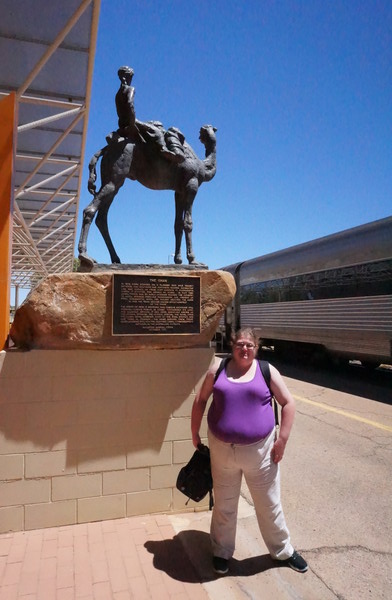
Coach over to Alice Springs, where we had a very quick look around
before taking the Ghan train down to Adelaide. The train was fun for a
day, and we got to see a lot of desert. In Adelaide,
we had a look around the city (lovely colonial feel!) and got a couple
of evenings in fun comedy shows at the Fringe. Great fun!
On to Tasmania, where we did a quick (3 days) run around the island
by car: into Hobart, up the east coast. Stopped in Swansea (a nice
version!) for some heavenly Devonshire teas, then on up to Grindelwald
near Launceston. Visited Trowunna Wildlife Park to see (and cuddle!)
lots of local animals, which was amazing - Jo's favourite day of the
holiday. Then on to Queenstown and drive back down to Hobart past some
impossibly beautiful views around Cradle Mountain. Tassie's gorgeous -
like the best bits of Scotland, Wales and Cornwall but with even fewer
people and better weather.
Next, on to Sydney
for Harry
and Cath's wedding. We stayed up in Chatswood. Not knowing
anything about the area beforehand, we were a little surprised to
basically find ourselves back in Hong Kong! We spent most of the
weekend catching up with friends from the wedding group, and the
wedding itself was at Quarantine Station, overlooking the harbour. It
couldn't have been a more perfect location / weather / view for our
friends' big day! We squeezed in a couple of the open-top bus tours of
Sydney on the Sunday, but got caught in the horrendous storm that hit
and ended up sheltering downstairs under cover on the bus. I'm told
Bondi is lovely, but it all looked grey from the bus. :-P
Down to Melbourne on the train (bit of a wasted day, in hindsight),
where we wandered around the city quite a bit. Caught up with an old
friend who lives there for a day, and we did a wine tour up the Yarra
Valley which was fun too.
Up to Port Douglas, where we headed out to the Reef for my
highlight of the holiday: a snorkelling tour with some local marine
experts who showed us the local flora and fauna. We also visited a
local Aboriginal cultural centre, skyrail and scenic railway around
Kuranda village.
Down to Hervey Bay and a 1-day tour of Fraser Island - an amazing
place in combination with quite a thrill-ride experience just being
driven around on the sand tracks. Finally, down to Brisbane where we
wandered around and visited both the Lone Pine Koala Sanctuary (more
cuddles!) and the Gold Coast. Then the long flights home. Whew!
We're knackered now. We knew we could't fit
everything in, but we're glad we travelled all over and got tastes of
almost everything. Now we can work out where we want to spend more
time on our future visit(s). We'll definitely want to head over and
see Perth and some of WA next time, and definitely more time in
Tasmania, Sydney and Adelaide.
We re now calling for proposals for DebConf15. Proposals are accepted from now until 15 June 2015. To submit an event, go to the Propose an Event page once you are registered for the conference.
The DebConf Content Team will decide on a first round of submissions in May, so be sure to submit your proposal soon if you need it to be accepted by then, e.g. for sponsorship requests.
The current, non-exhaustive list of proposed topics is:
Debian Packaging, Policy, and Infrastructure
Security,
Safety, and Hacking
Debian System Administration, Automation and
Orchestration
Containers and Cloud Computing with Debian
Debian Success Stories
Debian in the Social, Ethical, Legal, and
Political Context
Blends, Subprojects, Derivatives, and Projects using
Debian
Embedded Debian and Hardware-Level Systems
For all further information, please see the Proposals page of the
DebConf15 website.
 Some time ago I have embarked on a jurney to install NetBSD on one of my two NSLU2-s. I have ran into all sorts of hurdles and problems which I finally managed to overcome, except one:
 A hotfix release for the
 Edit to add: These patches on their own won't enable this functionality, they just give us a better set of options. Once they're merged we can look at changing the defaults so people get the benefit of this out of the box.



 Gnocchi provides a full REST API to manipulate time-series that are called
metrics. You can easily create a metric using a simple HTTP request:


 Another object and concept that Gnocchi provides is the ability to manipulate
resources. There is a basic type of resource, called generic, which has very
few attributes. You can extend this type to specialize it, and that's what
Gnocchi does by default by providing resource types known for OpenStack such as
instance, volume, network or even image.


 I implemented <? support (including <?php )
script embedding support for *.inc in MirWebseite today; the
specific syntax was explicitely requested by

 I intend to make the extra effort of republishing my own
 Experiments
Last week I discovered
 Jo and I just got back from our massive holiday in Australia. We
had an awesome time overall, fitting in lots of stuff
in 4 weeks. Time for a quick write-up and some photos!






 We re now