Matthew Garrett: The GPU, not the TPM, is the root of hardware DRM
 As part of their "Defective by Design" anti-DRM campaign, the FSF recently made the following claim:
Today, most of the major streaming media platforms utilize the TPM to decrypt media streams, forcefully placing the decryption out of the user's control(from here).
This is part of an overall argument that Microsoft's insistence that only hardware with a TPM can run Windows 11 is with the goal of aiding streaming companies in their attempt to ensure media can only be played in tightly constrained environments.
I'm going to be honest here and say that I don't know what Microsoft's actual motivation for requiring a TPM in Windows 11 is. I've been talking about TPM stuff for a long time. My job involves writing a lot of TPM code. I think having a TPM enables a number of worthwhile security features. Given the choice, I'd certainly pick a computer with a TPM. But in terms of whether it's of sufficient value to lock out Windows 11 on hardware with no TPM that would otherwise be able to run it? I'm not sure that's a worthwhile tradeoff.
What I can say is that the FSF's claim is just 100% wrong, and since this seems to be the sole basis of their overall claim about Microsoft's strategy here, the argument is pretty significantly undermined. I'm not aware of any streaming media platforms making use of TPMs in any way whatsoever. There is hardware DRM that the media companies use to restrict users, but it's not in the TPM - it's in the GPU.
Let's back up for a moment. There's multiple different DRM implementations, but the big three are Widevine (owned by Google, used on Android, Chromebooks, and some other embedded devices), Fairplay (Apple implementation, used for Mac and iOS), and Playready (Microsoft's implementation, used in Windows and some other hardware streaming devices and TVs). These generally implement several levels of functionality, depending on the capabilities of the device they're running on - this will range from all the DRM functionality being implemented in software up to the hardware path that will be discussed shortly. Streaming providers can choose what level of functionality and quality to provide based on the level implemented on the client device, and it's common for 4K and HDR content to be tied to hardware DRM. In any scenario, they stream encrypted content to the client and the DRM stack decrypts it before the compressed data can be decoded and played.
The "problem" with software DRM implementations is that the decrypted material is going to exist somewhere the OS can get at it at some point, making it possible for users to simply grab the decrypted stream, somewhat defeating the entire point. Vendors try to make this difficult by obfuscating their code as much as possible (and in some cases putting some of it in-kernel), but pretty much all software DRM is at least somewhat broken and copies of any new streaming media end up being available via Bittorrent pretty quickly after release. This is why higher quality media tends to be restricted to clients that implement hardware-based DRM.
The implementation of hardware-based DRM varies. On devices in the ARM world this is usually handled by performing the cryptography in a Trusted Execution Environment, or TEE. A TEE is an area where code can be executed without the OS having any insight into it at all, with ARM's TrustZone being an example of this. By putting the DRM code in TrustZone, the cryptography can be performed in RAM that the OS has no access to, making the scraping described earlier impossible. x86 has no well-specified TEE (Intel's SGX is an example, but is no longer implemented in consumer parts), so instead this tends to be handed off to the GPU. The exact details of this implementation are somewhat opaque - of the previously mentioned DRM implementations, only Playready does hardware DRM on x86, and I haven't found any public documentation of what drivers need to expose for this to work.
In any case, as part of the DRM handshake between the client and the streaming platform, encryption keys are negotiated with the key material being stored in the GPU or the TEE, inaccessible from the OS. Once decrypted, the material is decoded (again either on the GPU or in the TEE - even in implementations that use the TEE for the cryptography, the actual media decoding may happen on the GPU) and displayed. One key point is that the decoded video material is still stored in RAM that the OS has no access to, and the GPU composites it onto the outbound video stream (which is why if you take a screenshot of a browser playing a stream using hardware-based DRM you'll just see a black window - as far as the OS can see, there is only a black window there).
Now, TPMs are sometimes referred to as a TEE, and in a way they are. However, they're fixed function - you can't run arbitrary code on the TPM, you only have whatever functionality it provides. But TPMs do have the ability to decrypt data using keys that are tied to the TPM, so isn't this sufficient? Well, no. First, the TPM can't communicate with the GPU. The OS could push encrypted material to it, and it would get plaintext material back. But the entire point of this exercise was to avoid the decrypted version of the stream from ever being visible to the OS, so this would be pointless. And rather more fundamentally, TPMs are slow. I don't think there's a TPM on the market that could decrypt a 1080p stream in realtime, let alone a 4K one.
The FSF's focus on TPMs here is not only technically wrong, it's indicative of a failure to understand what's actually happening in the industry. While the FSF has been focusing on TPMs, GPU vendors have quietly deployed all of this technology without the FSF complaining at all. Microsoft has enthusiastically participated in making hardware DRM on Windows possible, and user freedoms have suffered as a result, but Playready hardware-based DRM works just fine on hardware that doesn't have a TPM and will continue to do so.
 Most of my Debian contributions this month were
 Another short status update of what happened on my side last
month. The larger blocks are the
 Another musical retrospective. If you enjoy this, I also did a















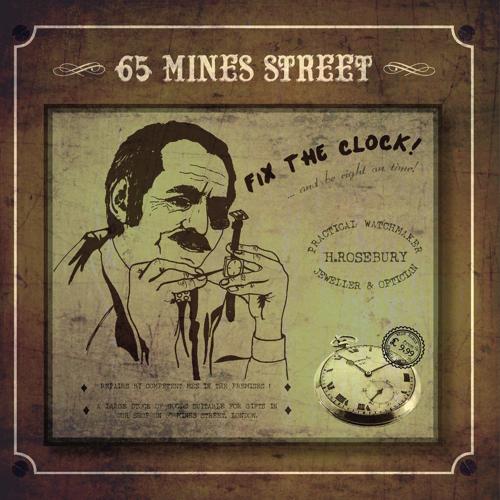




































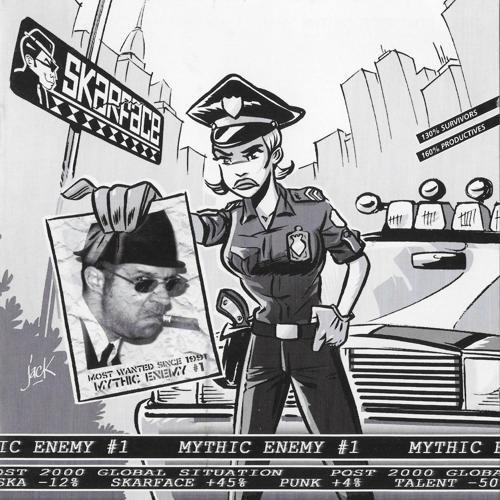


















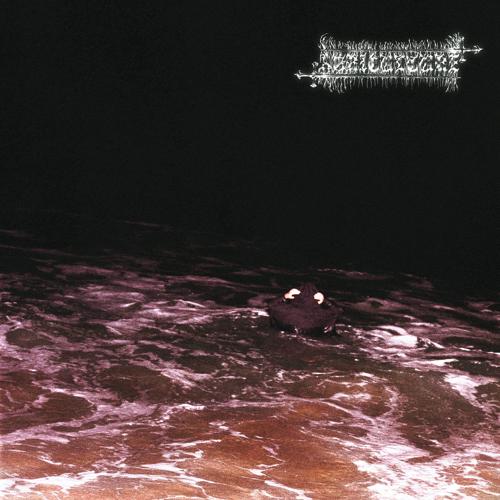











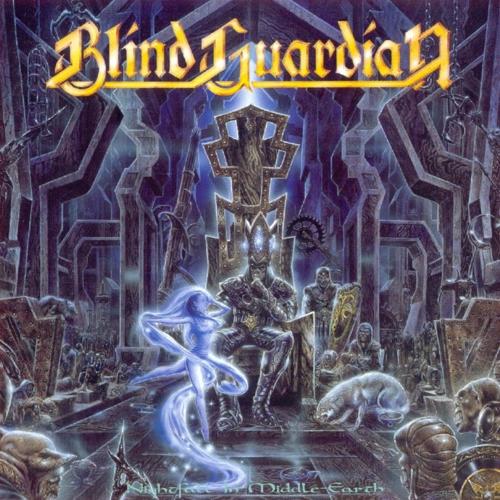





 Here are my favourite books and movies that I read and watched throughout 2024.
It wasn't quite the stellar year for books as











 Today I made a new release of my

 As I was tired of long build times, so I convinced my boss to buy me a Lenovo Legion pro 7. The reason is: this laptop has an AMD Ryzen 9 7945HX that has 16 cores (32 threads). This reduces a lot the time I have to just wait for my laptop to compile, or run unit tests, especially for big packages like Ceph, OpenVSwitch, and so on.
When buying it, I knew it would not be a good fit for Debian, as this type of laptop is aimed at gaming, and the support under Linux is rather bad. I wish Lenovo had other policies, but that is the way it is: if you re a Linux user, you re not suppose to be needing a big CPU, apparently.
Anyways, I slowly have been able to fix all issues over this year. In this blog post I ll explain how I fixed all problems, in the hope it can be useful to others. And I ll explain what the src:lenovolegionlinux package (that I now maintain in Debian) does.
Video
The laptop comes with an nVidia RTX-4080 and a Radeon. I quickly tried the radeon, but couldn t make it work with an external monitor. So I gave up on it, disabled it, and now I m using the proprietary nVidia driver from non-free. I don t like it: the nVidia card drains too much power, and I don t care at all 3D acceleration. I would have prefer an intel board, but no choice: all laptops with this kind of CPU comes with gamer s 3D card. Anyways, apart from the power issue, it works out well.
Fan control
This sounds like a non-issue, but it is a huge one. Indeed, if not controlling the fan, it is impossible to get the full potential of the CPUs that are otherwise throttling. One may end up using the laptop at a few hundred MHz instead of 5GHz+. More on this later.
Sound
It took me a really long time to figure out what to do. Indeed, while the sound card works out of the box, the issue was that my laptop came with a TI (Texas Instrument) speaker firmware that isn t on by default. I suppose the purpose is to save on power when it isn t in use. Anyways, to have sound working, one need in Debian, to run at least kernel 6.10, which means for me, running the Bookworm backport, so that there s a kernel module for the speakers. But that s not it. The speakers also need a proprietary firmware in /lib/firmware/TAS2XXX38*.bin. I was able to find that in the ti.com forum. As I tried so many packages, I wouldn t be able to tell which one was the correct one. Once that was done, the firmware needs to be initialized through the i2c interface. I could find a script that did that, which I pushed in my lenovolegionlinux package (see below).
WiFi
WiFi worked out of the box for me, just it wouldn t wake up if I closed the laptop lead. This fixed it for me in /etc/modprobe.d/rtw8852be.conf:
options rtw89_pci disable_aspm_l1=y disable_aspm_l1ss=y
 At work, I've been maintaining a perl script that needs to run a number
of steps as part of a release workflow.
Initially, that script was very simple, but over time it has grown to do
a number of things. And then some of those things did not need to be run
all the time. And then we wanted to do this one exceptional thing for
this one case. And so on; eventually the script became a big mess of
configuration options and unreadable flow, and so I decided that I
wanted it to be more configurable. I sat down and spent some time on
this, and eventually came up with what I now realize is a
domain-specific language (DSL) in JSON, implemented by creating objects
in