What happened about the reproducible
builds effort for this week:
Toolchain fixes
Guillem Jover uploaded dpkg/1.18.0 which now uses an approximation to compute Installed-Size, making it indpendent from the underlying filesystem. It now always sort the Dpkg::Dist::Files files list on output to make the output stable with parallel builds.
Lunar uploaded mozilla-devscripts/0.40 which told xpi-pack to skip saving extra zip attributes when making jar.
Patches submitted which did not make their way to the archive yet:
#775531 on console-setup by Reiner Herrmann: update and split patch written in January.
#785535 on maradns by Reiner Herrmann: use latest entry in debian/changelog as build date.
#785549 on dist by Reiner Herrmann: set hostname and domainname to predefined value.
#785583 on s5 by Juan Picca: set timezone to UTC when unzipping files.
#785617 on python-carrot by Juan Picca: use latest entry in debian/changelog as documentation build date.
#785774 on afterstep by Juan Picca: modify documentation generator to allow a build date to be set instead of the current time, then use latest entry in debian/changelog as reference.
#786508 on ttyload by Juan Picca: remove timestamp from documentation.
#786568 on linux-minidisc by Lunar: use latest entry in debian/changelog as build date.
#786615 on kfreebsd-10 by Steven Chamberlain: make order of file in source tarballs stable.
#786633 on webkit2pdf by Reiner Herrmann: use latest entry in debian/changelog as documentation build date.
reproducible.debian.net
Holger Levsen made several small bug fixes and a few more visible changes:
For packages in testing, comparisions will be done using the sid version
of debbindiff.
The scheduler will now schedule old packages from sid twice often as the
ones in testing as we care more about the former at the moment.
More statistics are now visible
and the layout has been improved.
Variations between the first and second build are now explained on the statistics
page.
strip-nondeterminism
Version 0.007-1 of
strip-nondeterminism the
tool to post-process various file formats to normalize them has been uploaded
by Holger Levsen. Version 0.006-1 was already in the reproducible repository,
the new version mainly improve the detection of Maven's pom.properties files.
debbindiff development
At the request of Emmanuel Bourg, Reiner Herrmann added a comparator for Java
.class files.
Documentation update
Christoph Berg created a new page for the timestamps in manpages created by
Doxygen.
Package reviews
93 obsolete
reviews have
been removed, 76 added and 43 updated this week.
New identified issues: timestamps in manpages generated by Doxygen, modification time differences in files extracted by unzip, tstamp task used in Ant build.xml, timestamps in documentation generated by ASDocGen. The description for build id related issues has been clarified.
Meetings
Holger Levsen announced a first
meeting on Wednesday,
June 3rd, 2015, 19:00 UTC. The agenda is amendable on the wiki.
Misc.
Lunar worked on a proof-of-concept script to import the build environment found
in .buildinfo
files to
UDD. Lucas Nussbaum has positively reviewed the
proposed schema.
Holger Levsen cleaned up various experimental toolchain repositories, marking
merged brances as such.
Ok, I have to admit, I sometimes do game and recently I finished Portal. Quite old (released in 2007), but still lots of fun. I started playing it about one year ago, off and on, until I recently finished the last level. Took me about 1 year of playing to finish the actual playing time of about 10h I guess you can see how much an addict I am
I have never been a gamer, and I think there are only three set of games I played for extended periods of time:
The Myst Series Fully played: Myst, Riven, Myst III Exile, and partly Uru: Ages beyond Myst, Myst IV Revelation, never played Myst V End of Ages
Puzzle games where one explores worlds that are created by writing books. I remember jotting down loads of notes and building models to solve all the problems (before the walk-through times), only to get stuck at one of the final riddles that were color based, practically impossible for me.
The Descent Series Descent, Descent II, Descent 3 These were some of the first games playable on Linux back in the old times, distributed by Linux Game Development, now long defunct. I still remember fighting with getting my joystick supported to play D3
Hard-core board gamer who I am (I prefer playing with people real games without computer), I loved the Myst series for its crazy riddles, where solving them often needs a combination of logical thinking, recognizing patterns in images and sounds, and piecing together long list of hints. This is something a normal board game cannot provide.
From the Descent series I loved the complete freedom of movement. Normal first-person shooters are just like humans running around, a bit of jumping and crouching, but Descent gives you 6D freedom which led to some people getting sick while watching me playing.
From the Civilization series I don t know what I liked particularly, but it got you involved and allowed you to play long rounds.
After these sins of youngsters, I haven t played for long long time, until a happy coincidence (of being Debian Developer) brought Steam onto my (Linux) machine together with a bunch of games I received for free. One of the games was Portal.
Portal is in the style of Myst games one can place dual portals in various places, and by entering one of the portals, one leaves through the other. Using this one has to manage to solve loads of puzzle, evade being shot, dissolved in acid, crashed to death, etc etc, with the only aim to leave the underground station.
Besides shooting these portals there are some cubes that one can carry around and use for a variety of purposes, like putting them onto buttons, using them as stairs, protecting yourself from being shot, etc. But that s already all the tools one has. Despite of this, the levels pose increasingly difficult problems, and one is surprised how strange things one can achieve with these limited abilities and no, one cannot buy new power-ups, its not WoW. Logical thinking, tactic, and a certain level of reaction suffices.
While not as philosophical as Myst, it was still a lot of fun. The only thing I am a bit unclear is, where to go from here. There are two possible successors: The logical one would be Portal 2. But I recently found a game that reminded me even more of the Myst series, combined with Portal: The Talos Principle, with stunning graphics:
And filled with riddles again, maybe not as involved as in the Myst series (I don t know by now), but still a bit more challenging than Portal s one:
Difficult decision. If you have any other suggestions, please let me know!
If you manage a bunch of server machines, you will undoubtedly have run into the following OpenSSH question:
The authenticity of host 'host.example.org (1.2.3.4)' can't be established.
RSA key fingerprint is 1b:9b:b8:5e:74:b1:31:19:35:48:48:ba:7d:d0:01:f5.
Are you sure you want to continue connecting (yes/no)?
If the server is a single-user machine, where you are the only person expected to login on it, answering yes once and then using the ~/.ssh/known_hosts file to record the key fingerprint will (sort-of) work and protect you against future man-in-the-middle attacks. I say sort-of, since if you want to access the server from multiple machines, you will need to sync the known_hosts file somehow. And once your organization grows larger, and you aren t the only person that needs to login, having a policy that everyone just answers yes on first connection on all their machines is bad. The risk that someone is able to successfully MITM attack you grows every time someone types yes to these prompts.
Setting up one (or more) SSH Certificate Authority (CA) to create SSH Host Certificates, and have your users trust this CA, will allow you and your users to automatically trust the fingerprint of the host through the indirection of the SSH Host CA. I was surprised (but probably shouldn t have been) to find that deploying this is straightforward. Even setting this up with hardware-backed keys, stored on a YubiKey NEO, is easy. Below I will explain how to set this up for a hypothethical organization where two persons (sysadmins) are responsible for installing and configuring machines.
I m going to assume that you already have a couple of hosts up and running and that they run the OpenSSH daemon, so they have a /etc/ssh/ssh_host_rsa_key* public/private keypair, and that you have one YubiKey NEO with the PIV applet and that the NEO is in CCID mode. I don t believe it matters, but I m running a combination of Debian and Ubuntu machines. The Yubico PIV tool is used to configure the YubiKey NEO, and I will be using OpenSC s PKCS#11 library to connect OpenSSH with the YubiKey NEO. Let s install some tools:
Every person responsible for signing SSH Host Certificates in your organization needs a YubiKey NEO. For my example, there will only be two persons, but the number could be larger. Each one of them will have to go through the following process.
The first step is to prepare the NEO. First mode switch it to CCID using some device configuration tool, like yubikey-personalization.
ykpersonalize -m1
Then prepare the PIV applet in the YubiKey NEO. This is covered by the YubiKey NEO PIV Introduction but I ll reproduce the commands below. Do this on a disconnected machine, saving all files generated on one or more secure media and store that in a safe.
Then generate a RSA private key for the SSH Host CA, and generate a dummy X.509 certificate for that key. The only use for the X.509 certificate is to make PIV/PKCS#11 happy they want to be able to extract the public-key from the smartcard, and do that through the X.509 certificate.
You import the key and certificate to the PIV applet as follows:
yubico-piv-tool -k $key -a import-key -s 9c < ssh-$user-ca-key.pem
yubico-piv-tool -k $key -a import-certificate -s 9c < ssh-$user-ca-crt.pem
You now have a SSH Host CA ready to go! The first thing you want to do is to extract the public-key for the CA, and you use OpenSSH's ssh-keygen for this, specifying OpenSC's PKCS#11 module.
The reason is that scdaemon exclusively locks the smartcard, so no other application can access it. You need to kill scdaemon, which can be done as follows:
Each sysadmin needs to go through this process, and each user needs to add one line for each sysadmin. While you could put the same key/certificate on multiple YubiKey NEOs, to allow users to only have to put one line into their file, dealing with revocation becomes a bit more complicated if you do that. If you have multiple CA keys in use at the same time, you can roll over to new CA keys without disturbing production. Users may also have different policies for different machines, so that not all sysadmins have the power to create host keys for all machines in your organization.
The CA setup is now complete, however it isn't doing anything on its own. We need to sign some host keys using the CA, and to configure the hosts' sshd to use them. What you could do is something like this, for every host host.example.com that you want to create keys for:
The ssh-keygen command will use OpenSC's PKCS#11 library to talk to the PIV applet on the NEO, and it will prompt you for the PIN. Enter the PIN that you set above. The output of the command would be something like this:
Enter PIN for 'PIV_II (PIV Card Holder pin)':
Signed host key ssh_host_rsa_key-cert.pub: id "host.example.com" serial 0 for host.example.com valid from 2015-06-16T13:39:00 to 2016-06-14T13:40:58
The host now has a SSH Host Certificate installed. To use it, you must make sure that /etc/ssh/sshd_config has the following line:
You need to restart sshd to apply the configuration change. If you now try to connect to the host, you will likely still use the known_hosts fingerprint approach. So remove the fingerprint from your machine:
ssh-keygen -R $h
Now if you attempt to ssh to the host, and using the -v parameter to ssh, you will see the following:
debug1: Server host key: RSA-CERT 1b:9b:b8:5e:74:b1:31:19:35:48:48:ba:7d:d0:01:f5
debug1: Host 'host.example.com' is known and matches the RSA-CERT host certificate.
Success!
One aspect that may warrant further discussion is the host keys. Here I only created host certificates for the hosts' RSA key. You could create host certificate for the DSA, ECDSA and Ed25519 keys as well. The reason I did not do that was that in this organization, we all used GnuPG's gpg-agent/scdaemon with YubiKey NEO's OpenPGP Card Applet with RSA keys for user authentication. So only the host RSA key is relevant.
Revocation of a YubiKey NEO key is implemented by asking users to drop the corresponding line for one of the sysadmins, and regenerate the host certificate for the hosts that the sysadmin had created host certificates for. This is one reason users should have at least two CAs for your organization that they trust for signing host certificates, so they can migrate away from one of them to the other without interrupting operations.
It s no secret that OpenStack is becoming the de-facto standard for private cloud and a way for telecom operators to differentiate against big names such as Amazon or Google.
OpenStack has already been adopted in some specific projects, but the wide adoption in enterprises is starting now, mostly because people simply find it difficult to understand. VMWare is still something to compare to, but OpenStack and cloud is different. While cloud implies virtualization, virtualization is not cloud.
Cloud is a huge shift in your organization and will change forever your way of working in the IT projects, improving your IT dramatically and cutting down costs.
In order to get the best of OpenStack, you need to understand deeply how cloud works. Moreover, you need to understand the whole picture beyond the software itself to provide new levels of agility, flexibility, and cost savings in your business.
Giuseppe Paterno , leading European consultant and recently awarded by HP, wrote OpenStack Explained to guide you through the OpenStack technology and reveal his secret ingredient to have a successful project. You can download the ebook for a small donation to provide emergency and reconstruction aid for Nepal. Your donation is certified by ZEWO , the Swiss federal agency that ensures that funds go to a real charity project.
but hurry up, the ebook is in a limited edition and it ends on July 2015.
Donate & Download here: https://life-changer.helvetas.ch/openstack
As with all the previous versions, I have prepared a mega update for the Kobo firmware 3.16.0, including all my favorite patches and features. Please see details for 3.15.0, 3.13.1 and 3.12.1. As before, the following addons are included: Kobo Start Menu, koreader, coolreader, pbchess, ssh access, custom dictionaries, plus as a new treat, some side-loaded fonts. What I dropped this time is most of the kobohack part, as the libraries seem to get outdated. But I included the dropbear ssh server from the kobohack package.
So what are all these items:
firmware (thread): the basic software of the device, shipped by Kobo company
Kobo Start Menu (V07, update 4 thread): an menu that pops up before the reading software (nickel) starts, which allows to start alternative readers (like koreader) etc.
KOreader (koreader-nightly-20150608, thread): an alternative document reader that supports epub, azw, pdf, djvu and many more
pbchess and CoolReader (2015.5, thread): a chess program and another alternative reader, bundled together with several other games
ssh access (old post: makes a full computer from your device by allowing you to log into it via ssh
custom dictionaries (thread): in particular Japanese-English
side-loaded fonts: GentiumBasic and GentiumBookBasic, Verdana, DroidSerif, and Charter-eInk
Please see this post for details.
Here is the combined Kobo-3.16.0-combined/KoboRoot.tgz
Update procedure
First install the normal firmware as obtained from above. Then, install the KoboRoot.tgz from above.
WARNINGS
Here a a few things you need to do after you have installed the mega update:
ssh passwords and telnet disabling needs to be done! This is an important step, please see this old post and follow the steps from step 9.
The combined KoboRoot.tgz is provided without warranty. If you need to reset your device, don t blame me!
The recent AWS introduction of the Elastic File System gives you an automatic grow-and-shrink capability as an NFS mount, an exciting option that takes away the previous overhead in creating shared block file systems for EC2 instances.
However it should be noted that the same auto-management of capacity is not true in the EC2 instance s Elastic Block Store (EBS) block storage disks; sizing (and resizing) is left to the customer. With current 2015 EBS, one cannot simply increase the size of an EBS Volume as the storage becomes full; (as at June 2015) an EBS volume, once created, has fixed size. For many applications, that lack of resize function on its local EBS disks is not a problem; many server instances come into existence for a brief period, process some data and then get Terminated, so long term managment is not needed.
However for a long term data store on an instance (instead of S3, which I would recommend looking closely at from a durability and pricing fit), and where I want to harness the capacity to grow (or shrink) disk for my data, then I will need to leverage some slightly more advanced disk management. And just to make life interesting, I wish to do all this while the data is live and in-use, if possible.
Enter: Logical Volume Management, or LVM. It s been around for a long, long time: LVM 2 made a debut around 2002-2003 (2.00.09 was Mar 2004) and LVM 1 was many years before that so it s pretty mature now. It s a powerful layer that sits between your raw storage block devices (as seen by the operating system), and the partitions and file systems you would normally put on them.
In this post, I ll walk through the process of getting set up with LVM on Debian in the AWS EC2 environment, and how you d do some basic maintenance to add and remove (where possible) storage with minimal interruption.
Getting Started
First a little prep work for a new Debian instance with LVM.
As I d like to give the instance its own ability to manage its storage, I ll want to provision an IAM Role for EC2 Instances for this host. In the AWS console, visit IAM, Roles, and I ll create a new Role I ll name EC2-MyServer (or similar), and at this point I ll skip giving it any actual privileges (later we ll update this). As at this date, we can only associate an instance role/profile at instance launch time.
Now I launch a base image Debian EC2 instance launched with this IAM Role/Profile; the root file system is an EBS Volume. I am going to put data that I ll be managing on a separate disk from the root file system.
First, I need to get the LVM utilities installed. It s a simple package to install: the lvm2 package. From my EC2 instance I need to get root privileges (sudo -i) and run:
apt update && apt install lvm2
After a few moments, the package is installed. I ll choose a location that I want my data to live in, such as /opt/. I want a separate disk for this task for a number of reasons:
Root EBS volumes cannot currently be encrypted using Amazon s Encrypted EBS Volumes at this point in time. If I want to also use AWS encryption option, it ll have to be on a non-root disk. Note that instance-size restrictions also exist for EBS Encrypted Volumes.
It s possibly not worth make a snapshot of the Operating System at the same time as the user content data I am saving. The OS install (except the /etc/ folder) can almost entirely be recreated from a fresh install. so why snapshot that as well (unless that s your strategy for preserving /etc, /home, etc).
The type of EBS volume that you require may be different for different data: today (Apr 2015) there is a choice of Magnetic, General Purpose 2 (GP2) SSD, and Provisioned IO/s (PIOPS) SSD, each with different costs; and depending on our volume, we may want to select one for our root volume (operating system), and something else for our data storage.
I may want to use EBS snapshots to clone the disk to another host, without the base OS bundled in with the data I am cloning.
I will create this extra volume in the AWS console and present it to this host. I ll start by using a web browser (we ll use CLI later) with the EC2 console.
The first piece of information we need to know is where my EC2 instance is running. Specifically, the AWS Region and Availability Zone (AZ). EBS Volumes only exist within the one designated AZ. If I accidentally make the volume(s) in the wrong AZ, then I won t be able to connect them to my instance. It s not a huge issue, as I would just delete the volume and try again.
I navigate to the Instances panel of the EC2 Console, and find my instance in the list:
A (redacted) list of instance from the EC2 console.
Here I can see I have located an instance and it s running in US-East-1A: that s AZ A in Region US-East-1. I can also grab this with a wget from my running Debian instance by asking the MetaData server:
The returned text is simply: us-east-1a .
Time to navigate to Elastic Block Store , choose Volumes and click Create :
Creating a volume in AWS EC2: ensure the AZ is the same as your instance
You ll see I selected that I wanted AWS to encrypt this and as noted above, at this time that doesn t include the t2 family. However, you have an option of using encryption with LVM where the customer looks after the encryption key see LUKS.
What s nice is that I can do both have AWS Encrypted Volumes, and then use encryption on top of this, but I have to manage my own keys with LUKS, and should I lose them, then I can keep all the cyphertext!
I deselected this for my example (with a t2.micro), and continue; I could see the new volume in the list as creating , and then shortly afterwards as available . Time to attach it: select the disk, and either right-click and choose Attach , or from the menu at the top of the list, chose Actions -> Attach (both do the same thing).
Attaching a volume to an instance: you ll be prompted for the compatible instances in the same AZ.
At this point in time your EC2 instance will now notice a new disk; you can confirm this with dmesg tail , and you ll see something like:
[1994151.231815] xvdg: unknown partition table
(Note the time-stamp in square brackets will be different).
Previously at this juncture you would format the entire disk with your favourite file system, mount it in the desired location, and be done. But we re adding in LVM here between this raw device, and the filesystem we are yet to make .
Marking the block device for LVM
Our first operation with LVM is to put a marker on the volume to indicate it s being use for LVM so that when we scan the block device, we know what it s for. It s a really simple command:
pvcreate /dev/xvdg
The device name above (/dev/xvdg) should correspond to the one we saw from the dmesg output above. The output of the above is rather straight forward:
Physical volume "/dev/xvdg" successfully created
Checking our EBS Volume
We can check on the EBS volume which LVM sees as a Physical Volume using the pvs command.
Here we see the entire disk is currently unused.
Creating our First Volume Group
Next step, we need to make an initial LVM Volume Group which will use our Physical volume (xvdg). The Volume Group will then contain one (or more) Logical Volumes that we ll format and use. Again, a simple command to create a volume group by giving it its first physical device that it will use:
# vgcreate  OptVG /dev/xvdg
  Volume group "OptVG" successfully created
And likewise we can check our set of Volume Groups with vgs :
The Attribute flags here indicate this is writable, resizable, and allocating extents in normal mode. Lets proceed to make our (first) Logical Volume in this Volume Group:
# lvcreate -n OptLV -L 4.9G OptVG
  Rounding up size to full physical extent 4.90 GiB
  Logical volume "OptLV" created
You ll note that I have created our Logical Volume as almost the same size as the entire Volume Group (which is currently one disk) but I left some space unused: the reason for this comes down to keeping some space available for any jobs that LVM may want to use on the disk and this will be used later when we want to move data between raw disk devices.
If I wanted to use LVM for Snapshots, then I d want to leave more space free (unallocated) again.
We can check on our Logical Volume:
The attribytes indicating that the Logical Volume is writeable, is allocating its data to the disk in inherit mode (ie, as the Volume Group is doing), and that it is active. At this stage you may also discover we have a device /dev/OptVG/OptLV, and this is what we re going to format and mount. But before we do, we should review what file system we ll use.
Filesystems
Popular Linux file systems
Name
Shrink
Grow
Journal
Max File Sz
Max Vol Sz
btrfs
Y
Y
N
16 EB
16 EB
ext3
Y off-line
Y
Y
2 TB
32 TB
ext4
Y off-line
Y
Y
16 TB
1 EB
xfs
N
Y
Y
8 EB
8 EB
zfs*
N
Y
Y
16 EB
256 ZB
For more details see Wikipedia comparison. Note that ZFS requires 3rd party kernel module of FUSE layer, so I ll discount that here. BTRFS only went stable with Linux kernel 3.10, so with Debian Jessie that s a possibility; but for tried and trusted, I ll use ext4.
The selection of ext4 also means that I ll only be able to shrink this file system off-line (unmounted).
I ll make the filesystem:
# mkfs.ext4 /dev/OptVG/OptLV
mke2fs 1.42.12 (29-Aug-2014)
Creating filesystem with 1285120 4k blocks and 321280 inodes
Filesystem UUID: 4f831d17-2b80-495f-8113-580bd74389dd
Superblock backups stored on blocks:
  32768, 98304, 163840, 229376, 294912, 819200, 884736
Allocating group tables: done
Writing inode tables: done
Creating journal (32768 blocks): done
Writing superblocks and filesystem accounting information: done
And now mount this volume and check it out:
# mount /dev/OptVG/OptLV /opt/
# df -HT /opt
Filesystem  Type  Size  Used Avail Use% Mounted on
/dev/mapper/OptVG-OptLV ext4  5.1G  11M  4.8G  1% /opt
Lastly, we want this to be mounted next time we reboot, so edit /etc/fstab and add the line:
/dev/OptVG/OptLV /opt ext4 noatime,nodiratime 0 0
With this in place, we can now start using this disk. I selected here not to update the filesystem every time I access a file or folder updates get logged as normal but access time is just ignored.
Time to expand
After some time, our 5 GB /opt/ disk is rather full, and we need to make it bigger, but we wish to do so without any downtime. Amazon EBS doesn t support resizing volumes, so our strategy is to add a new larger volume, and remove the older one that no longer suits us; LVM and ext4 s online resize ability will allow us to do this transparently.
For this example, we ll decide that we want a 10 GB volume. It can be a different type of EBS volume to our original we re going to online-migrate all our data from one to the other.
As when we created the original 5 GB EBS volume above, create a new one in the same AZ and attach it to the host (perhaps a /dev/xvdh this time). We can check the new volume is visible with dmesg again:
[1999786.341602] xvdh: unknown partition table
And now we initalise this as a Physical volume for LVM:
# pvcreate /dev/xvdh
  Physical volume "/dev/xvdh" successfully created
And then add this disk to our existing OptVG Volume Group:
# vgextend OptVG /dev/xvdh
  Volume group "OptVG" successfully extended
We can now review our Volume group with vgs, and see our physical volumes with pvs:
There are now 2 Physical Volumes we have a 4.9 GB filesystem taking up space, so 10.09 GB of unallocated space in the VG.
Now its time to stop using the /dev/xvgd volume for any new requests:
# pvchange -x n /dev/xvdg
  Physical volume "/dev/xvdg" changed
  1 physical volume changed / 0 physical volumes not changed
At this time, our existing data is on the old disk, and our new data is on the new one. Its now that I d recommend running GNU screen (or similar) so you can detach from this shell session and reconnect, as the process of migrating the existing data can take some time (hours for large volumes):
During the move, checking the Monitoring tab in the AWS EC2 Console for the two volumes should show one with a large data Read metric, and one with a large data Write metric clearly data should be flowing off the old disk, and on to the new.
A note on disk throughput
The above move was a pretty small, and empty volume. Larger disks will take longer, naturally, so getting some speed out of the process maybe key. There s a few things we can do to tweak this:
EBS Optimised: a launch-time option that reserves network throughput from certain instance types back to the EBS service within the AZ. Depending on the size of the instance this is 500 MB/sec up to 4GB/sec. Note that for the c4 family of instances, EBS Optimised is on by default.
Size of GP2 disk: the larger the disk, the longer it can sustain high IO throughput but read this for details.
Size and speed of PIOPs disk: if consistent high IO is required, then moving to Provisioned IO disk may be useful. Looking at the (2 weeks) history of Cloudwatch logs for the old volume will give me some idea of the duty cycle of the disk IO.
Back to the move
Upon completion I can see that the disk in use is the new disk and not the old one, using pvs again:
So all 5 GB is now unused (compare to above, where only 96 MB was PFree). With that disk not containing data, I can tell LVM to remove the disk from the Volume Group:
# vgreduce OptVG /dev/xvdg
  Removed "/dev/xvdg" from volume group "OptVG"
Then I cleanly wipe the labels from the volume:
# pvremove /dev/xvdg
  Labels on physical volume "/dev/xvdg" successfully wiped
If I really want to clean the disk, I could choose to use shred(1) on the disk to overwrite with random data. This can take a lng time
Now the disk is completely unused and disassociated from the VG, I can return to the AWS EC2 Console, and detach the disk:
Detach an EBS volume from an EC2 instance
Wait for a few seconds, and the disk is then shown as available ; I then chose to delete the disk in the EC2 console (and stop paying for it).
Back to the Logical Volume it s still 4.9 GB, so I add 4.5 GB to it:
# lvresize -L +4.5G /dev/OptVG/OptLV
  Size of logical volume OptVG/OptLV changed from 4.90 GiB (1255 extents) to 9.40 GiB (2407 extents).
  Logical volume OptLV successfully resized
We now have 0.6GB free space on the physical volume (pvs confirms this).
Finally, its time to expand out ext4 file system:
# resize2fs /dev/OptVG/OptLV
resize2fs 1.42.12 (29-Aug-2014)
Filesystem at /dev/OptVG/OptLV is mounted on /opt; on-line resizing required
old_desc_blocks = 1, new_desc_blocks = 1
The filesystem on /dev/OptVG/OptLV is now 2464768 (4k) blocks long.
And with df we can now see:
# df -HT /opt/
Filesystem  Type  Size  Used Avail Use% Mounted on
/dev/mapper/OptVG-OptLV ext4  9.9G  12M  9.4G  1% /opt
Automating this
The IAM Role I made at the beginning of this post is now going to be useful. I ll start by adding an IAM Policy to the Role to permit me to List Volumes, Create Volumes, Attach Volumes and Detach Volumes to my instance-id. Lets start with creating a volume, with a policy like this:
This policy puts some restrictions on the volumes that this instance can create: only within the given Availability Zone (matching our instance), only GP2 SSD (no PIOPs volumes), and size no more than 250 GB. I ll add another policy to permit this instance role to tag volumes in this AZ that don t yet have a tag called InstanceId:
Now that I can create (and then tag) volumes, this becomes a simple procedure as to what else I can do to this volume. Deleting and creating snapshots of this volume are two obvious options, and the corresponding policy:
Of course it would be lovely if I could use a variable inside the policy condition instead of the literal string of the instance ID, but that s not currently possible.
Clearly some of the more important actions I want to take are to attach and detach a volume to my instance:
Now with this in place, we can start to fire up the AWS CLI we spoke of. We ll let the CLI inherit its credentials form the IAM Instance Role and the polices we just defined.
and at this stage, the above manipulation of the raw block device with LVM can begin. Likewise you can then use the CLI to detach and destroy any unwanted volumes if you are migrating off old block devices.
Last weekend Hermann Zapf, one of the greatest font designers and typographers of our times, has passed away at the age of 96. Much has been written about his life, his immense sphere of influence, his excellent typefaces, and some of the links to other obituaries can be found here at the end. There is nothing of value I can contribute, but let Hermann Zapf speak for himself with a few images from two books by or dedicated to him.
The books I have taken these photos from are:
Manuale Zapficum Typographic arrangements of words by and about the work of Hermann Zapf & Gudrun Zapf von Hesse. Cary Graphic Arts Press, Rochester 2008 (shown on the right below).
Alphabetgeschichten Eine Chronik technischer Entwicklungen von Hermann Zapf. Mergenthaler Edition, Linotype GmbH. Cary Graphic Arts Press, Rochester 2007 (shown on the left below).
In his long life, Hermann Zapf has created a wide range of typefaces, some if which have become the main staple in the printing business, most notably Palatino, Janson, Optima, and Zapf Dingbats. But there are many more:
While probably not as popular anymore as some years (decades?) ago, Palatino still is one of my favorite typefaces. I often wished to have the freedom to choose my own fonts for publications, but normally that doesn t happen. Palatino has found many offspring (or imitations?), and there are excellent renderings for use with (La)TeX, too.
Hermann Zapf also had connections with Don Knuth and the AMS (American Mathematical Society), and he designed for the AMS the Euler typeface, using Knuth s MetaFont program.
Last weekend, when I heard of Hermann Zapf s death, I was at a conference at Tsukuba University. What a coincidence that all the signs in the building (floor numbers, indications, etc) were set in another of his great typefaces, the Optima. I had a strange feeling, and reset my presentation in Optima/Euler in honor of Hermann Zapf s great life.
Although I never met Hermann Zapf personally I missed the TeX conferences where he participated it was to a great extent his influence that years ago I got started in typography. Living a life like he did, dedicating himself to the beauty and expressiveness of letters, design, calligraphy, seems like a dream for me. But beauty can be found even in the strangest equation in mathematics, the queerest theorem in logic. While not all of us are as gifted as Hermann Zapf in creating beauty, we should strive to increase our ability to appreciate the beauty.
The beauty of letters is subtle, evasive, and needs training, that is practice, to be appreciated. Hermann Zapf taught us how even self-training can lead to excellence. His letters, which I meet every day, are a permanent reminder to strive for beauty and clarity, and never relent in our exercise.
Thanks Hermann Zapf.
Links to tributes around the world
English
Linotype (Type foundry where Zapf started working) Bigelow and Holmes (Type designers) New York Times (Newspaper) Type Drawers Quarz (News magazine) Kaveh Bazargan (next president of TUG) TeX Overflow (Q&A website concerning TeX)
German
FontShop (Type foundry and internet shop) Deutschland Funk (News station) S ddeutsche (Newspaper) Echo (Newspaper) Heise (Techology News page)
Zyne is a modular synthetizer written in
Python. Anyone can create and extend its modules using the Pyo library. Zyne's GUI
is coded using WXPython and will look nicely in GNU/Linux, Mac and Windows
systems. It's written by the same author of Pyo, and together with Cecilia and Soundgrain is part of an amazing set
of libre tools for sound synthesis and electronic music composition.
Zyne loading 6 of its 14 default modules
Zyne package is result of a successful one-day event called MicroDebconf
Brasilia 2015,
being created during a track about packaging and QA leaded by Eriberto Mota and
Antonio Terceiro.
What happened about the reproducible
builds effort for this week:
Presentations
On May 26th,Holger Levsen presented reproducible builds in Debian at CCC Berlin for the Datengarten 52. The presentation was in German and the slides in English. Audio and video recordings are available.
Toolchain fixes
Dmitry Shachnev uploaded pyqt5/5.4.1+dfsg-3 which makes pyuic output imports in stable order. Original patch by Reiner Herrmann.
Lunar uploaded mozilla-devscripts/0.41 which uses the UTC timezone when calling zip or unzip.
Patches submitted which did not make their way to the archive yet:
#787327 on vim by Reiner Herrmann: set a constant user and set modified-by option.
#787650 on lush by Daniel Kahn Gillmor: remove __DATE__ and __TIME__ macros from source.
#787669 on cloc by Daniel Kahn Gillmor: use time of latest debian/changelog entry in manpage.
#787675 on ricochet by Daniel Kahn Gillmor: patch configure to allow an external build date and set it to the time of latest debian/changelog entry.
#787804 on clipper by akira: set HTML_TIMESTAMP to NO in Doxygen configuration.
#787829 on colobot by akira: set HTML_TIMESTAMP to NO in Doxygen configuration.
#787865 on fastjet by akira: call Doxygen with HTML_TIMESTAMP set to NO.
#787916 on cal3d by akira: remove $datetime from the file api_footer.html.
#787918 on dime by akira: remove $datetime from the file footer.html.
Daniel Kahn Gilmor also started discussions for emacs24 and the unsorted lists in generated .el files, the recording of a PID number in lush, and the reproducibility of ISO images in grub2.
reproducible.debian.net
Notifications are now sent when the build environment for a package has changed between two builds. This is a first step before automatically building the package once more. (Holger Levsen)
jenkins.debian.net was upgraded to Debian Jessie. (Holger Levsen)
A new variation is now being tested: $PATH. The second build will be done with a /i/capture/the/path added. (Holger Levsen)
Holger Levsen with the help of Alexander Couzens wrote extra job to test the reproducibility of coreboot. Thanks James McCoy for helping with certificate issues.
Mattia Rizollo made some more internal improvements.
strip-nondeterminism development
Andrew Ayer released strip-nondeterminism/0.008-1. This new version fixes the gzip handler so that it now skip adding a predetermined timestamp when there was none.
Holger Levsen sponsored the upload.
Documentation update
The pages about timestamps in manpages generated by Doxygen, GHC .hi files, and Jar files have been updated to reflect their status in upstream.
Markus Koschany documented an easy way to prevent Doxygen to write timestamps in HTML output.
Package reviews
83 obsolete
reviews have
been removed, 71 added and 48 updated this week.
Meetings
A meeting was held on 2015-06-03. Minutes and full logs are available.
It was agreed to hold such a meeting every two weeks for the time being. The time of the next meeting should be announced soon.
Nota: Este art culo, en espa ol, aqu .
I m not a gamer, although probably I ve played with machines/computers more than most of the girls of my age. My path has been: handheld machine, Pong and tenis in my uncle s console, MSX (with that one, in addition to playing, I learnt what was an algorithm and a program, and I started to write small programs in Basic, and I copied and ran the source code of small games and programs to make graphics, which I found in MSX magazines). My parents considered that arcade machines in bars were like slot machines so they were banned for us (even pinball, only table soccer was saved from them, and only if my father was playing with us).
In the MSX I played Magical Tree, Galaxians, Arkanoid, Konami s Sports Games, Spanish games from Dinamic, and some arcades like Golden Axe, Xenon, and maybe some more. The next computers (PC AT, later a 286) were not so for gaming; let s say that we played more with the printer (Harvard Graphics, Bannermania ). Later, I was interested in other things more than in computer games, and later there were highschool homework, dBase III, and later the University and programming again and more, and it was the end of gaming, computer was for office and Uni homework.
Later, it came the internet and since then, reading and writing and communicating was more interesting for me than playing.
I was not good at playing, and if you are not good, you play less, and you don t get better, so you begin to find other ways to loose your time, or to win it :)
The new generation
My son is 6 years old now, and I m living with him a second adventure about games. Games have changed a lot, and the family computing try to stay in the libre software side whenever I am the one that can decide, so sometimes some challenges arise.
Android (phone and tablet)
The kid has played games in the phone and tablet with Android since he was a baby. We tried some of the last years popular games. I am not so keen of banning things, but I don t feel comfortable with the popular games for Android (advertisements, nonfree software, addictive elements, massive data recollection and possible surveillance ), so I try to control without being Cruella de Vil . Some techniques I use:
We agree in the amount of time for using the table, setting a tomato to control the time (thanks Pomodoro in F-Droid)
I set the airplane mode and shut down internet everytime that I can. I never register account or login to play (if it s mandatory to login in Google or create an account, sorry but we cannot play, or we create a new empty profile).
I put barriers to installing games (for example, I say that he should uninstall 2 or 3 games first if he wants a new one, or he should explain well why he wants that game and why the ones that were installed became boring suddenly).
I ve never bought games for Android, and I m not thinking about buying them in the future. I prefer to donate for some libre game project.
I try to divert attention to other games (not computer games, usually).
If the equivalent non-computer game exists, we play that one (tic-tac-toe, hungman, battleship )
I seldom play in the phone/tablet, unless we play together.
On the other side, in my phone there is no Google Play, so we have been able to discover the section Games of F-Droid.
We have tried (all of them available in F-Droid, emphasis in the ones that he liked best): 2048, AndroFish, Bomber, Coloring for Kids, Core, Dodge, Falling Blocks, Free Fall, Frozen Bubble, HeriSwap (this one in the tablet), Hex, HyperRogue, Meerkat Challenge, Memory, Pixel Dungeon, Robotfindskitten, Slow it!, Tux Memory, Tux Rider, Vector Pinball.
Playing in my phone with CyanogenMod and having downloaded the games from F-Droid provides a relief similar to the one when playing a non-computer game. At least with the games that I have listed above. Maybe it is because they are simpler games, or they make me remember the ones that I played time ago. But it s also because of the peace of mind of knowing that they are libre software, that have been audited by the F-Droid community, that they don t abuse the user.
The same happens with Debian, what takes me to the next part of this blogpost.
Computer games: Debian
The kid has learnt to play with the tablet and the phone before than with the computer, because our computers have no joysticks nor touchscreens. He learnt to use the touchpad before than the mouse, because it s easier and we have no mouse at home. He learnt to use the mouse at school, where they work with educative games via CD or via web, using Flash :(
So Flash player appears and dissapears from my Debian setup depending on his willness to play with the school games .
Until few time ago, in the computer we played with GCompris, ChildsPlay, and TuxPaint.
When he learnt to use the arrow keys, I installed Hannah and he liked a lot, specially when we learnt to do hannah -l 900 :)
Later, in ClanTV there were advertisements about some online computer games about their favorite series, resulting in that they need Flash or a framework called Unity3D (no, it s not Ubuntu s Unity), and after digging a bit I decided that I was not going to install that #@%! in my Debian, so when he insisted in play those games, I booted the Windows 7 partition in his father s laptop and I installed it there.
Windows is slow and sad in the computer, and those web games with that framework are not very light, so luckily they have not become very interesting.
We have not played in the computer much more, maybe some incursion in Minetest, what takes me to the next section.
(Not without stating my eternal thanks to the Games Team in Debian. I think they do a very important work and I think that next year I ll try to get involved in some way, because I know that the future of our family computer games is tied to libre games in Debian).
PlayStation 3 and Minecraft
Some time ago my husband bought a PlayStation 3 for home. The shop had discounts prices and so. He would play together with the kid an so.
The machine came home with some games for free (included in the price), but most of them were classified for +13 or so, so the only two left were Pro Evolution Soccer, and Minecraft.
I decided not to connect the machine to the network. Maybe we are loosing cool things, but I feel safer like that. So, no ethernet cable plugged, no registration in the Sony shop (or whatever its name is).
The controllers are quite complex for the three of us. They are DualShock don t-know-what, and I think there is something (software) that makes the game adaptative to the person playing, because my husband is worse player after the son plays, if they play in turns and use the same controller.
The kid liked Minecraft. I didn t know anything about that game (well, I knew that there was a libre clone called Minetest), so, for learning the basics I had a look at the wiki and searched videos about how to and we began learning. Now, the kid can read a bit so he needs less help, and he has watched a lot of videos about Minecraft, so he is interested in exploring and building.
I had a look at Minetest, and I installed it in Debian. Having to use the keyboard is a disadvantage, and we didn t know how to dig, so it was not much attractive at first sight. I have looked a bit about how to use the PS3 controller in the computer, via USB, and it seems to work, but I suppose I need to write something to match each controller button with the corresponding key and subsequent action in Minetest. This is work, and I am lazy, and the boy seems not very interested in playing with the computer.
Watching the videos we have infered that it s possible to download saved games and worlds to upload them in the videogame console. We have done some tests. I wanted to upload a saved game about an amusement park, but the file was in a folder of name NPEB01899* and even when the PS3 saw it to copy it from USB to the console, later it didn t appear in the list of saved games (our sved games were in folders named BLES01976). And renaming the folder didn t work, of course. I understood that we had met Sony s restrictions, so I searched for more info. The games are saved using an encryption key and you are not able to use saved games from consoles in other world zone or using a media different than ours (the game can be played using a disc or purchasing it in the digital shop, it seems). Very ugly all of this! I read somewhere that there is certain software (libre software, BTW) that allows to break the encryption and re-encrypt the saved game with the zone and type of media of your console, but it seems the program only works for Windows, and it needs a console ID that we have not, because we didn t register the console in the PlayStation network. All these things look shaky grounds for me, unpleasant stuff, I don t want to spend time on this, maybe I should learn a bit more about Minetest and make it work and interesting and tell Sony go fly a kite. Finally, I found a saved game in the same format as ours (BLES01976), it s not an amusement park but it is a world with interesting places to explore and many things already built, so I ve tried to import it and it worked, so my son will be happy for some time, I suppose.
We have tried Minetest in the tablet too, but the touchscreen is not comfortable for this kind of games.
I feel quite frustrated and angry about this issue of Sony s restrictions on saved games. So I suppose that in the next months I ll try to learn more about Minetest in Debian, game controllers in Debian, and games in Debian in general. So I hope to be able to offer cool stuff to my son, and he becomes more interested in playing in a safe environment which does not abuse the user.
And with this, I finish
Libre games in GNU/Linux, Debian, and info about games in internet
When we have searched info about games in internet, I found that many times you need to go out from the secure environment: webpages with links to downloads that who knows if they contain what they say they contain, advertisements, videoblogs with a language not adequate for kids (or any person that loves their mother language) That s why I believe the path is to go into detail about libre games provided by the distro you use (Debian in my case). Here I bookmark a list of website with info that surely will be useful for me, to read in depth:
Internet references saved for May 2015
Instead of keeping substantial tabs open until I have read all of them, or
losing them in the jungle of browser bookmarks, I have written a script
that collects them into a file per month, and turns them into markdown files
for my blog. This way I sort of know where to find them, and if I do not, some
internet search might. And if I wish, I can even choose to share it.
The programming talent myth [LWN.net]
Jacob Kaplan-Moss is known for his work on Django but, as he would describe
in his keynote, many think he had more to do with its creation than he
actually did. While his talk ranged quite a bit, the theme covered
something that software development organizations and open source
projects may be grappling with: a myth about developer performance and how
it impacts the industry. It was a thought-provoking talk that was
frequently punctuated by applause; these are the kinds of issues that the
Python community tries to confront head on, so the talk was aimed well.
Matt Palmer: The Vicious Circle of Documentation
Why are there so many more undocumented systems than documented ones out
there, and how can we cause more well-documented systems to exist? The
answer isn t people are lazy , and the solution is simple though not
easy.
Jono Bacon, Dealing With Disrespect
This book is about helping us to focus on good people creating good things,
to preserve that spirit of sharing, and to protect against those whose
primary contribution is obstruction and disrespect
OFTC: Automatically Identifying Using SSL + CertFP
This page describes how to use SSL with a certificate fingerprint to
automatically identify your registered nickname with NickServ on connect.
You must have an IRC client that supports SSL with a client certificate.
Fran ois Marier: Usual Debian Server Setup
I manage a few servers for myself, friends and family as well as for the
Libravatar project. Here is how I customize recent releases of Debian on
those servers.
How to name things: the hardest problem in programming
Developers can get better at their craft by learning from the great writers
who mastered theirs. Writing software isn t the same as writing a novel,
but there are parallels. Besides, advice from writers is better because
writers have been struggling with their craft for many centuries, not just
a few decades. It s better-written as well. This talk shares great writers
best advice for coders: Stephen King on refactoring, Anne Rice on
development hardware, Hemingway on modelling with personas, and Neil Gaiman
on everything.
Hello
One of my last blog introduced the new cme update dpkg-copyright command and explained how to use this command to create a debian/copyright file from scratch.
We will see in this blog how cme update dpkg-copyright command can also be used if a debian/copyright file already exists.
During the lifetime of a package, creating a new debian/copyright copyright file should only happen once. When updating a package to a new upstream version, the content of the copyright file should be modified to reflect upstream changes by:
adding or removing file entries
updating years or owners
updating licenses
cme update dpkg-copyright can be run with an existing debian/copyright file: the information extracted by licensecheck are merged in debian/copyright. Unfortunately, this merge may bring back the errors coming from licensecheck that you ve cleaned up manually last time.
This last part is not optimal as the manual clean up must be repeated after cme update dpkg-copyright is run.
Here s a way to avoid the last problem: cme update dpkg-copyright supports a way to modify the content of debian/copyright after the merge: the optional file debian/fix.scanned.copyright contains instructions to tweak the content of debian/copyright. (See Config::Model::Dpkg::Copyright man page for more details)
You may remember that Config::Model handles all configuration information as a tree. The information contained in the copyright file is also stored in a tree structure. debian/fix.scanned.copyright contains instructions to navigate this tree and modify the content of the tree.
Imagine that there s a robot (or a monkey) in that configuration tree. Each instruction tells the robot either to move in the tree or to perform an operation.
The most useful instructions for debian/fix.scanned.copyright are:
! to move to the root of the tree
= to assign a value , e.g: short_name=MIT or Copyright="2014, FooBar" (use double quotes when the value white space or other fancy characters).
.= to append to a value, e.g Copyright.=" Appended info."
=~ to apply a substitution with a Perl regexp, e.g. Copyright=~"/ \s*//g"
: to move a Files element, e.g. Files:"foo/baz.c"
:~ to remove a Files element, e.g. Files:~"bogus.c"
Otherwise:
Comments with # or // must begin at the beginning of the line
Instructions are separated by space(s) or new lines
Let s see a commented example:
# go to the root of the tree (with '!')
# and remove a bogus Files entry (with ":~")
! Files:~"foo/bogus.c"
// go to a Files entry and append (operator '.=') some info to   owner
! Files:"foo/bar.h"
  Copyright.=" Appended info."
# go back to tree root and assign   info
! Files:"foo/baz.c" Copyright="2014, FooBar"
# add a global license and a file entry missed by licensecheck
# global license must be set before using it in Files entry
# note: MIT text license is provided by cme
! License=MIT
! Files:"3rdparty/missed.c" Copyright="2005 FooBar" License short_name=MIT
Other possible instructions for this file are described in Config::Model::Loader doc.
The number of instructions depends on the accuracy of licencecheck command. Hopefully, this number can be reduced by improving licensecheck.
Last but not least, the following packages are required:
You may want to install also libconfig-model-tkui-perl to update the copyright file with cme GUI.
In summary, the command cme updated dpkg-copyright associated with instructions stored in debian/fix.scanned.copyright enable Debian packagers to update with less effort debian/copyright file when updating a package.
All the best
You might have already read this
comment by RMS in the Guardian. That comment and a recent discussion about
the relevance of GPL changes post GPLv2 made me think again about the
battle RMS started to fight. While some think RMS should "retire", at
least I still fail on my personal goal to not depend on non-free software
and services. So for me this battle is far from over, and here is my
personal list of "non-free debt" I've to pay off.
general purpose systems aka your computer
Looking at the increasing list of firmware blobs required to use a GPU, wireless chipsets and
more and more wired NICs, the situation seems to be worse then in the late 90s. Back then
the primary issue was finding supported hardware, but the driver was free. Nowadays even the
open sourced firmware often requires obscure patched compilers to build. If I look at this
stuff I think the OpenBSD project got that right with the more radical position.
Oh and then there is CPU microcode. I'm not yet sure what to think about it, but in the end
it's software and it's not open source. So it's non-free software running on my system.
Maybe my memory is blurred due to the fact, that the seperation of firmware from the Linux kernel,
and proper firmware loading got implemented only years later. I remember the discussion
about the pwc driver and its removal from Linux.
Maybe the situation wasn't better at that time but the firmware was just hidden inside the Linux
driver code?
On my system at work I've to add the Flash plugin to the list due to my latest test with
Prezi which I'll touch later.
I also own a few Humble Indie bundles.
I played parts of Osmos after a recommendation by
Joey Hess, I later finished to play
through Limbo and I got pretty far with
Machinarium
on a Windows system I still had at that time. I also tried a few others but never got
far or soon lost interest.
Another thing I can not really get rid of is unrar because of stuff I need to pull
from xda-developer links just to keep a cell phone running.
Update: Josh Triplett pointed out that there is
unar available in the Debian archive. And indeed that one works on the rar file I just extracted.
Android ecosystem
I will soon get rid of a stock S3 mini and try to replace it with a
moto g
loaded with CyanogenMod.
That leaves me with a working phone with a OS that just works
because of a shitload of non-free blobs. The time and work required
to get there is another story. Among others you need a new bootloader
that requires a newer fastboot compared to what we have in Jessie, and later
you also need the newer adb to be able to sideload the CM image.
There I gave in and just downloaded the pre build SDK from Google. And there
you've another binary I did not even try to build from source. Same for the
CM image itself, though that's not that much different from using a GNU/Linux
distribution if you ignore the trust issues.
It's hard to trust the phone I've build that way, but it's the best I can
get at the moment with at least some bigger chunks of free software inside.
So let's move to the applications on the phone. I do not use GooglePlay,
so I rely on f-droid and freeware I can
download directly from the vendor.
Threema: a bit (a single one) more trustworthy then WhatsApp, they started
around the company of Michael Kasper
Wunderlist: well done shared shopping list, also non-free webservice
Opera: the compression proxy is awesome, also kind of a non-free webservice
"Cloud" services
This category mixes a lot with the stuff listed above, most of them are not only an application,
in fact Threema and Wunderlist are useless without the backend service. And Opera is just
degraded to a browser - and to be replaced with Firefox - if you discount the compression proxy.
The other big addition in this category is Prezi. We tried it out at work
after it got into my focus due to a post
by Dave Aitel. It's kind of the poster child of non-freeness. It requires a non-free, unstable,
insecure and half way deprecated browser plugin to work, you can not download your result in a
useful format, you've to buy storage for your presentation at this one vendor, you've to
pay if you want to keep your presentation private. It's the perfect lockin situation. But still
it's very convenient, prevents a lot of common mistakes you can make when you create a presentation
and they invented a new concept of presenting.
I know about impress.js(hosted on a non-free
platform by the way, but at least you can export it from there) and I also know about
hovercraft. I'm impressed by them, but it's
still not close to the ease of use of Prezi. So here you can also very prominently see the
cost of free and non-free software. Invest the time and write something cool with CSS3 and impress.js
or pay Prezi to just klick yourself through. To add something about the instability - I had to use
a windows laptop for presenting with Prezi because the Flash plugin on Jessie crashed in the presentation
mode, I did not yet check the latest Flash update. I guess that did not make the situation worse, it
already is horrible.
Update: Daniel Kahn Gillmore pointed out that you can combine
inkscape with sozi, though
the Debian package is in desperate need for an active maintainer, see also #692989.
I also use kind of database services like duden.de and dict.cc.
When I was younger you bought such things printed on dead trees but they did not update very well.
Thinking a bit further, a Certification Authority is not only questionable due to the whole
trust issue, they also provide OCSP responder as kind of a web service. And I've already
had the experience what the internet looks like when the OCSP systems of GlobalSign failed.
So there is still a lot to fight for and a lot of "personal non-free debt" to pay off.
The other day I received from my Japanese teacher an interesting article by Yamazaki Masakazu comparing garden styles, and in particular the attitude towards and presentation of water in Japanese and European gardens (page 1, page 2). The author s list of achievements is long, various professorships, dramatist, literature critique, recognized as Person of Cultural Merit, just to name a view. I was looking forward to an interesting and high quality article!
The article itself introduces the reader to Shishiodoshi, one of the standard ingredients of a Japanese garden: It is a device where water drips into a bamboo tube that is also a seesaw. At some point the water in the bamboo tube makes the seesaw switch over and the water pours out, after which the seesaw returns to the original position and a new cycle begins.
The author describes his feelings and thoughts about the shishiodoshi, in particular connects human life (stress and relieve, cycles), the flow of time, and some other concepts with the shishiodoshi. Up to here it is a wonderful article providing interesting insights into the way the author thinks. Unfortunately, then the author tries to underline his ideas by comparing the Japanese shishiodoshi with European style water fountains, describing the former with all favorable properties and full of deep meaning, while the latter is qualified as beautiful and nice, but bare of any deeper meaning.
I don t go into details that the whole comparison is anyway a bad one, as he is comparing Baroque style fountains, a very limited period, and furthermore ignores the fact that water fountains are not genuinely European (isn t there one in the Kenrokuen, one of the three most famous gardens in Japan!?), nor does he consider any other water-installation that might be available. What really destroys the in principle very nice article is the tone:
The general tone of the article then can be summarized into: The shishiodoshi is rich on meaning, connects to the life of humans, instigates philosophical reflections, represents nature, the flow of time etc. The water fountain is beautiful and gorgeous, but that is all.
I don t think that this separation, or this negative undertone, was created on purpose by the author. A person of his stature is supposedly above this level of primitive comparison. I believe that it is nothing else but a consequence of upbringing and the general attitude that permeates the whole society with this feeling of separateness.
Us and They
Repeatedly providing sentences like Japanese people and Western people have different tastes.. ( ). About 10 times in this short article expressions like Japanese and Westerner appear, leaving the reader with a bitter taste of an author that considers first the Japanese a people (what about Ainu, Ryukyu, etc?), and second that the Japanese are exclusive in the sense that they are set apart from the rest of the world in their way of thinking, living, being.
What puzzles me is that this is not only a singular opinion, but a very general straight in the Japanese media, TV, radio, newspaper, books. Everyone considers Japan and Japanese as something that is fundamentally and profoundly different from everyone else in the world.
There is We the Japanese (and that doesn t mean nationality of passport, but blood line!), and there are They the Rest or, as the way of writing and and description on many occasion suggestions, They the Barbarians .
A short anecdote will underly this: One of the favorite TV talk show / pseudo-documentary style is about Japanese living abroad. That day a lady married in Paris was interviewed. What followed was a guided tour through Paris showing: Dirt in the gutter, street cleaning cars, waste disposal places. Yes, that was all. Just about the dirt . Of course, at length the (unfortunately only apparent) cleanliness of Japanese cities and neighborhoods are mentioned and shown to remind everyone how wonderful Japan is and how dirty the Barbarians. I don t want to say that I consider Japan more dirty than most other countries just the visible part is clean, the moment you step a bit aside and around the corner, there are the worst trash just thrown away without consideration. Anyway.
To return to the topic of Us and They I consider us all humans, first and foremost, and nationality, birthplace, and all that are just by chance. I do NOT reject cultural differences, they are here, of course. But cultural differences are one thing, separating one self and one s perceived people from the rest of the world is another.
Conclusion
I repeat, I don t think that the author had any ill intentions, but it would have been nicer if the article wouldn t make such a stark distinction. He could have written about Shishiodoshi and water fountains without using the Us They categorization. He could have compared other water installations, could have discussed the long tradition of small ponds in European gardens, just to name a few things. But the author choose to highlight differences instead of commonalities.
It is the Us against Them feeling that often makes life in Japan for a foreigner difficult. Japanese are not special, Austrians, too, are not special, nor are Americans, Russians, Tibetans, or any other nationality. No nationality is special, we are all humans. Maybe at some point this will arrive also in the Japanese society and thinking.
Today I feel more special than I have ever felt.
Or... Well, or something like that.
Thing is, there is no clear adjective for this But I successfully finished my Specialization degree! Yes, believe it or not, today I can formally say I am Specialist in Informatic Security and Information Technologies (Especialista en Seguridad Inform tica y Tecnolog as de la Informaci n), as awarded by the Higher School of Electric and Mechanic Engineering (Escuela Superior de Ingenier a Mec nica y El ctrica) of the National Polytechnical Institute (Instituto Polit cnico Nacional).
In Mexico and most Latin American countries, degrees are usually incorporated to your name as if they were a nobiliary title. Thus, when graduating from Engineering studies (pre-graduate universitary level), I became "Ingeniero Gunnar Wolf". People graduating from further postgraduate programs get to introduce themselves as "Maestro Foobar Baz" or "Doctor Quux Noox". And yes, a Specialization is a small posgraduate program (I often say, the smallest possible posgraduate). And as a Specialist... What can I brag about? Can say I am Specially Gunnar Wolf? Or Special Gunnar Wolf? Nope. The honorific title for a Specialization is a pointer to null, and when casted into a char* it might corrupt your honor-recognizing function. So I'm still Ingeniero Gunnar Wolf, for information security reasons.
So that's the reason I am now enrolled in the Masters program. I hope to write an addenda to this message soonish (where soonish 18 months) saying I'm finally a Maestro.
As a sidenote, many people asked me: Why did I take on the specialization, which is a degree too small for most kinds of real work recognition? Because it's been around twenty years since I last attended a long-term scholar program as a student. And my dish is quite full with activities and responsabilities. I decided to take a short program, designed for 12 months (I graduated in 16, minus two months that the university was on strike... Quite good, I'd say ;-) ) to see how I fared on it, and only later jumping on the full version.
Because, yes, to advance my career at the university, I finally recognized and understood that I do need postgraduate studies.
Oh, and what kind of work did I do for this? Besides the classes I took, I wrote a thesis on a model for evaluating covert channels for establishing secure communications.
I recently acquired a Lenovo Yoga 2 13. While, at the time, the Yoga 3 was available, I decided to go for Yoga 2 13. The Yoga 3 comes with the newer Core M Broadwell family, which, in my opinion, doesn't really bring any astounding benefits.
The Yoga 2 13 comes in mulitple variants worldwide. Infact these hardware variations have different effets when run under Linux.
My varaint of Yoga 2 13 is:
CPU: Intel(R) Core(TM) i7-4510U CPU @ 2.00GHz
RAM: 8 GiB - Occupying 2 slots
Memory Controller Information
        Supported Interleave: One-way Interleave
        Current Interleave: One-way Interleave
        Maximum Memory Module Size: 8192 MB
        Maximum Total Memory Size: 16384 MB

Handle 0x0006, DMI type 6, 12 bytes
Handle 0x0007, DMI type 6, 12 bytes
The usual PCI devices:
rrs@learner:~$ lspci
00:00.0 Host bridge: Intel Corporation Haswell-ULT DRAM Controller (rev 0b)
00:02.0 VGA compatible controller: Intel Corporation Haswell-ULT Integrated Graphics Controller (rev 0b)
00:03.0 Audio device: Intel Corporation Haswell-ULT HD Audio Controller (rev 0b)
00:14.0 USB controller: Intel Corporation 8 Series USB xHCI HC (rev 04)
00:16.0 Communication controller: Intel Corporation 8 Series HECI #0 (rev 04)
00:1b.0 Audio device: Intel Corporation 8 Series HD Audio Controller (rev 04)
00:1c.0 PCI bridge: Intel Corporation 8 Series PCI Express Root Port 4 (rev e4)
00:1d.0 USB controller: Intel Corporation 8 Series USB EHCI #1 (rev 04)
00:1f.0 ISA bridge: Intel Corporation 8 Series LPC Controller (rev 04)
00:1f.2 SATA controller: Intel Corporation 8 Series SATA Controller 1 [AHCI mode] (rev 04)
00:1f.3 SMBus: Intel Corporation 8 Series SMBus Controller (rev 04)
01:00.0 Network controller: Realtek Semiconductor Co., Ltd. RTL8723BE PCIe Wireless Network Adapter
17:37
And the storage devices
Device Model:     WDC WD5000M22K-24Z1LT0-SSHD-16GB
Device Model:     KINGSTON SM2280S3120G
Storage
The drive runs into serious performance problems when its SSHD's NCQ (mis)feature is under use in Linux <= 4.0.
[28974.232550] ata2.00: configured for UDMA/133
[28974.232565] ahci 0000:00:1f.2: port does not support device sleep
[28983.680955] ata1.00: exception Emask 0x10 SAct 0x7fffffff SErr 0x400100 action 0x6 frozen
[28983.681000] ata1.00: irq_stat 0x08000000, interface fatal error
[28983.681027] ata1: SError:   UnrecovData Handshk
[28983.681052] ata1.00: failed command: WRITE FPDMA QUEUED
[28983.681082] ata1.00: cmd 61/40:00:b8:84:88/05:00:0a:00:00/40 tag 0 ncq 688128 out
                        res 40/00:3c:78:a9:88/00:00:0a:00:00/40 Emask 0x10 (ATA bus error)
[28983.681152] ata1.00: status:   DRDY
[28983.681171] ata1.00: failed command: WRITE FPDMA QUEUED
[28983.681202] ata1.00: cmd 61/40:08:f8:89:88/05:00:0a:00:00/40 tag 1 ncq 688128 out
                        res 40/00:3c:78:a9:88/00:00:0a:00:00/40 Emask 0x10 (ATA bus error)
[28983.681271] ata1.00: status:   DRDY
[28983.681289] ata1.00: failed command: WRITE FPDMA QUEUED
[28983.681316] ata1.00: cmd 61/40:10:38:8f:88/05:00:0a:00:00/40 tag 2 ncq 688128 out
                        res 40/00:3c:78:a9:88/00:00:0a:00:00/40 Emask 0x10 (ATA bus error)
[28983.681387] ata1.00: status:   DRDY
[28983.681407] ata1.00: failed command: WRITE FPDMA QUEUED
[28983.681435] ata1.00: cmd 61/40:18:78:94:88/05:00:0a:00:00/40 tag 3 ncq 688128 out
                        res 40/00:3c:78:a9:88/00:00:0a:00:00/40 Emask 0x10 (ATA bus error)
[28983.697642] ata1.00: status:   DRDY
[28983.697643] ata1.00: failed command: WRITE FPDMA QUEUED
[28983.697646] ata1.00: cmd 61/40:c8:38:65:88/05:00:0a:00:00/40 tag 25 ncq 688128 out
                        res 40/00:3c:78:a9:88/00:00:0a:00:00/40 Emask 0x10 (ATA bus error)
[28983.697647] ata1.00: status:   DRDY
[28983.697648] ata1.00: failed command: WRITE FPDMA QUEUED
[28983.697651] ata1.00: cmd 61/40:d0:78:6a:88/05:00:0a:00:00/40 tag 26 ncq 688128 out
                        res 40/00:3c:78:a9:88/00:00:0a:00:00/40 Emask 0x10 (ATA bus error)
[28983.697651] ata1.00: status:   DRDY
[28983.697652] ata1.00: failed command: WRITE FPDMA QUEUED
[28983.697656] ata1.00: cmd 61/40:d8:b8:6f:88/05:00:0a:00:00/40 tag 27 ncq 688128 out
                        res 40/00:3c:78:a9:88/00:00:0a:00:00/40 Emask 0x10 (ATA bus error)
[28983.697657] ata1.00: status:   DRDY
[28983.697658] ata1.00: failed command: WRITE FPDMA QUEUED
[28983.697661] ata1.00: cmd 61/40:e0:f8:74:88/05:00:0a:00:00/40 tag 28 ncq 688128 out
                        res 40/00:3c:78:a9:88/00:00:0a:00:00/40 Emask 0x10 (ATA bus error)
[28983.697662] ata1.00: status:   DRDY
[28983.697663] ata1.00: failed command: WRITE FPDMA QUEUED
[28983.697666] ata1.00: cmd 61/40:e8:38:7a:88/05:00:0a:00:00/40 tag 29 ncq 688128 out
                        res 40/00:3c:78:a9:88/00:00:0a:00:00/40 Emask 0x10 (ATA bus error)
[28983.697667] ata1.00: status:   DRDY
[28983.697668] ata1.00: failed command: WRITE FPDMA QUEUED
[28983.697672] ata1.00: cmd 61/40:f0:78:7f:88/05:00:0a:00:00/40 tag 30 ncq 688128 out
                        res 40/00:3c:78:a9:88/00:00:0a:00:00/40 Emask 0x10 (ATA bus error)
[28983.697672] ata1.00: status:   DRDY
[28983.697676] ata1: hard resetting link
[28984.017356] ata1: SATA link up 6.0 Gbps (SStatus 133 SControl 300)
[28984.022612] ata1.00: configured for UDMA/133
[28984.022740] ata1: EH complete
[28991.611732] Suspending console(s) (use no_console_suspend to debug)
[28992.183822] sd 1:0:0:0: [sdb] Synchronizing SCSI cache
[28992.186569] sd 1:0:0:0: [sdb] Stopping disk
[28992.186604] sd 0:0:0:0: [sda] Synchronizing SCSI cache
[28992.189594] sd 0:0:0:0: [sda] Stopping disk
[28992.967426] PM: suspend of devices complete after 1351.349 msecs
[28992.999461] PM: late suspend of devices complete after 31.990 msecs
[28993.000058] ehci-pci 0000:00:1d.0: System wakeup enabled by ACPI
[28993.000306] xhci_hcd 0000:00:14.0: System wakeup enabled by ACPI
[28993.016463] PM: noirq suspend of devices complete after 16.978 msecs
[28993.017024] ACPI: Preparing to enter system sleep state S3
[28993.017349] PM: Saving platform NVS memory
[28993.017357] Disabling non-boot CPUs ...
[28993.017389] intel_pstate CPU 1 exiting
[28993.018727] kvm: disabling virtualization on CPU1
[28993.019320] smpboot: CPU 1 is now offline
[28993.019646] intel_pstate CPU 2 exiting
In the interim, to overcome this problem, we can force the device to run in degraded mode. I'm not sure if it is really the degraded mode, or the device was falsely advertised as a 6 GiB capable device. Time will tell, but for now, force it to run in 3 GiB mode, and so far, I haven't run into the above mentioned probems. To force 3 GiB speed, apply the following.
And then verify it... As you can see below, I've forced it for ata1 because I want my SSD drive to run at full-speed. I've done enough I/O, which earlier resulted in the kernel spitting the SATA errors. With this workaround, the kernel does not spit any error messages.
[    1.273365] libata version 3.00 loaded.
[    1.287290] ahci 0000:00:1f.2: AHCI 0001.0300 32 slots 4 ports 6 Gbps 0x3 impl SATA mode
[    1.288238] ata1: FORCE: PHY spd limit set to 3.0Gbps
[    1.288240] ata1: SATA max UDMA/133 abar m2048@0xb051b000 port 0xb051b100 irq 41
[    1.288242] ata2: SATA max UDMA/133 abar m2048@0xb051b000 port 0xb051b180 irq 41
[    1.288244] ata3: DUMMY
[    1.288245] ata4: DUMMY
[    1.606971] ata1: SATA link up 3.0 Gbps (SStatus 123 SControl 320)
[    1.607906] ata1.00: ATA-9: WDC WD5000M22K-24Z1LT0-SSHD-16GB, 02.01A03, max UDMA/133
[    1.607910] ata1.00: 976773168 sectors, multi 0: LBA48 NCQ (depth 31/32), AA
[    1.608856] ata1.00: configured for UDMA/133
[    1.609106] scsi 0:0:0:0: Direct-Access     ATA      WDC WD5000M22K-2 1A03 PQ: 0 ANSI: 5
[    1.927167] ata2: SATA link up 6.0 Gbps (SStatus 133 SControl 300)
[    1.928980] ata2.00: ATA-8: KINGSTON SM2280S3120G, S8FM06.A, max UDMA/133
[    1.928983] ata2.00: 234441648 sectors, multi 16: LBA48 NCQ (depth 31/32), AA
[    1.929616] ata2.00: configured for UDMA/133
And the throughput you get out of your WD SATA SSHD drive, with capability set to 3.0 GiB is:
rrs@learner:/media/SSHD/tmp$ while true; do dd if=/dev/zero of=foo.img bs=1M count=20000; sync; rm -rf foo.img; sync; done
20000+0 records in
20000+0 records out
20971520000 bytes (21 GB) copied, 202.014 s, 104 MB/s
20000+0 records in
20000+0 records out
20971520000 bytes (21 GB) copied, 206.111 s, 102 MB/s
Hannes Reinecke has submitted patches for NCQ enhancements, for Linux 4.1, which I hope will resolve these problems. Another option is to disable NCQ for the drive, or else blacklist the make/model in driver/ata/libata-core.c
By the time I finished this blog entry draft, I had tests to conclude that this did not look like an NCQ problem. Because in degraded mode too, it runs with NCQ enabled (check above).
Another interesting feature of this drive is support for TRIM / DISCARD. This drive's FTL accepts the TRIM command. Ofcourse, you need to ensure that you have discard enabled in all the layers. In my case, SATA + Device Mapper (Crypt and LVM) + File System (ext4)
Display
The overall display of this device is amazing. It is large enough to give you vibrant look. At 1920x1080 resolution, things look good. The display support was available out-of-the-box.
There were some suspend / resume hangs that occured with kernels < 4.x, during suspend / resume. The issue was root caused and fixed for Linux 4.0.
You may still notice the following kernel messages, though not problematic to me so far.
[28977.518114] PM: thaw of devices complete after 3607.979 msecs
[28977.590389] i915 0000:00:02.0: BAR 6: [??? 0x00000000 flags 0x2] has bogus alignment
[28977.590582] i915 0000:00:02.0: BAR 6: [??? 0x00000000 flags 0x2] has bogus alignment
[28977.591095] i915 0000:00:02.0: BAR 6: [??? 0x00000000 flags 0x2] has bogus alignment
[28977.591185] i915 0000:00:02.0: BAR 6: [??? 0x00000000 flags 0x2] has bogus alignment
[28977.591368] acpi device:30: Cannot transition to power state D3cold for parent in (unknown)
[28977.591911] pci_bus 0000:01: Allocating resources
[28977.591933] i915 0000:00:02.0: BAR 6: [??? 0x00000000 flags 0x2] has bogus alignment
[28977.592093] i915 0000:00:02.0: BAR 6: [??? 0x00000000 flags 0x2] has bogus alignment
[28977.592401] i915 0000:00:02.0: BAR 6: [??? 0x00000000 flags 0x2] has bogus alignment
You may need to disable the Intel Management Engine Interface (mei.ko), incase you run into suspend/resume problems.
rrs@learner:/media/SSHD/tmp$ cat /etc/modprobe.d/intel-mei-blacklist.conf
blacklist mei
blacklist mei-me
17:01
You may also run into the following Kernel Oops during suspend/resume. Below, you see 2 interation of sleep because it first hibernates and then sleeps (s2both).
[  180.470206] Syncing filesystems ... done.
[  180.473337] Freezing user space processes ... (elapsed 0.001 seconds) done.
[  180.475210] PM: Marking nosave pages: [mem 0x00000000-0x00000fff]
[  180.475213] PM: Marking nosave pages: [mem 0x0006f000-0x0006ffff]
[  180.475215] PM: Marking nosave pages: [mem 0x00088000-0x000fffff]
[  180.475220] PM: Marking nosave pages: [mem 0x97360000-0x97b5ffff]
[  180.475274] PM: Marking nosave pages: [mem 0x9c36f000-0x9cffefff]
[  180.475356] PM: Marking nosave pages: [mem 0x9d000000-0xffffffff]
[  180.476877] PM: Basic memory bitmaps created
[  180.477003] PM: Preallocating image memory... done (allocated 380227 pages)
[  180.851800] PM: Allocated 1520908 kbytes in 0.37 seconds (4110.56 MB/s)
[  180.851802] Freezing remaining freezable tasks ... (elapsed 0.001 seconds) done.
[  180.853355] Suspending console(s) (use no_console_suspend to debug)
[  180.853520] wlan0: deauthenticating from c4:6e:1f:d0:67:26 by local choice (Reason: 3=DEAUTH_LEAVING)
[  180.864159] cfg80211: Calling CRDA to update world regulatory domain
[  181.172222] PM: freeze of devices complete after 319.294 msecs
[  181.196080] ------------[ cut here ]------------
[  181.196124] WARNING: CPU: 3 PID: 3707 at drivers/gpu/drm/i915/intel_display.c:7904 hsw_enable_pc8+0x659/0x7c0 [i915]()
[  181.196125] SPLL enabled
[  181.196159] Modules linked in: rfcomm ctr ccm bnep pci_stub vboxpci(O) vboxnetadp(O) vboxnetflt(O) vboxdrv(O) bridge stp llc xt_conntrack iptable_filter ipt_MASQUERADE nf_nat_masquerade_ipv4 iptable_nat nf_conntrack_ipv4 nf_defrag_ipv4 nf_nat_ipv4 nf_nat nf_conntrack xt_CHECKSUM xt_tcpudp iptable_mangle ip_tables x_tables nls_utf8 nls_cp437 vfat fat rtsx_usb_ms memstick snd_hda_codec_hdmi joydev mousedev hid_sensor_rotation hid_sensor_incl_3d hid_sensor_als hid_sensor_accel_3d hid_sensor_magn_3d hid_sensor_gyro_3d hid_sensor_trigger industrialio_triggered_buffer kfifo_buf industrialio hid_sensor_iio_common iTCO_wdt iTCO_vendor_support hid_multitouch x86_pkg_temp_thermal intel_powerclamp coretemp intel_rapl iosf_mbi kvm_intel kvm btusb hid_sensor_hub bluetooth uvcvideo videobuf2_vmalloc videobuf2_memops
[  181.196203]  videobuf2_core v4l2_common videodev media pcspkr evdev mac_hid arc4 psmouse serio_raw efivars i2c_i801 rtl8723be btcoexist rtl8723_common rtl_pci rtlwifi mac80211 snd_soc_rt5640 cfg80211 snd_soc_rl6231 snd_hda_codec_realtek i915 snd_soc_core snd_hda_codec_generic ideapad_laptop ac snd_compress dw_dmac sparse_keymap drm_kms_helper rfkill battery dw_dmac_core snd_hda_intel snd_pcm_dmaengine snd_soc_sst_acpi snd_hda_controller video 8250_dw regmap_i2c snd_hda_codec drm snd_hwdep snd_pcm spi_pxa2xx_platform i2c_designware_platform soc_button_array snd_timer i2c_designware_core snd i2c_algo_bit soundcore shpchp lpc_ich button processor fuse ipv6 autofs4 ext4 crc16 jbd2 mbcache btrfs xor raid6_pq algif_skcipher af_alg dm_crypt dm_mod sg usbhid sd_mod rtsx_usb_sdmmc rtsx_usb crct10dif_pclmul
[  181.196220]  crc32_pclmul crc32c_intel ghash_clmulni_intel aesni_intel aes_x86_64 lrw gf128mul glue_helper ablk_helper cryptd ahci libahci libata xhci_pci ehci_pci xhci_hcd ehci_hcd scsi_mod usbcore usb_common thermal fan thermal_sys hwmon i2c_hid hid i2c_core sdhci_acpi sdhci mmc_core gpio_lynxpoint
[  181.196224] CPU: 3 PID: 3707 Comm: kworker/u16:7 Tainted: G           O    4.0.4+ #14
[  181.196225] Hardware name: LENOVO 20344/INVALID, BIOS 96CN29WW(V1.15) 10/16/2014
[  181.196230] Workqueue: events_unbound async_run_entry_fn
[  181.196233]  0000000000000000 ffffffffa0706f68 ffffffff81522198 ffff880064debc88
[  181.196235]  ffffffff8106c5b1 ffff880251460000 ffff880250f83b68 ffff880250f83b78
[  181.196237]  ffff880250f83800 0000000000000001 ffffffff8106c62a ffffffffa071407c
[  181.196238] Call Trace:
[  181.196248]  [<ffffffff81522198>] ? dump_stack+0x40/0x50
[  181.196251]  [<ffffffff8106c5b1>] ? warn_slowpath_common+0x81/0xb0
[  181.196254]  [<ffffffff8106c62a>] ? warn_slowpath_fmt+0x4a/0x50
[  181.196278]  [<ffffffffa06ae349>] ? hsw_enable_pc8+0x659/0x7c0 [i915]
[  181.196289]  [<ffffffffa0643ee0>] ? intel_suspend_complete+0xe0/0x6e0 [i915]
[  181.196300]  [<ffffffffa0644501>] ? i915_drm_suspend_late+0x21/0x90 [i915]
[  181.196311]  [<ffffffffa0644690>] ? i915_pm_poweroff_late+0x40/0x40 [i915]
[  181.196318]  [<ffffffff813fa7ba>] ? dpm_run_callback+0x4a/0x100
[  181.196321]  [<ffffffff813fb010>] ? __device_suspend_late+0xa0/0x180
[  181.196324]  [<ffffffff813fb10e>] ? async_suspend_late+0x1e/0xa0
[  181.196326]  [<ffffffff8108b973>] ? async_run_entry_fn+0x43/0x160
[  181.196330]  [<ffffffff81083a5d>] ? process_one_work+0x14d/0x3f0
[  181.196332]  [<ffffffff81084463>] ? worker_thread+0x53/0x480
[  181.196334]  [<ffffffff81084410>] ? rescuer_thread+0x300/0x300
[  181.196338]  [<ffffffff81089191>] ? kthread+0xc1/0xe0
[  181.196341]  [<ffffffff810890d0>] ? kthread_create_on_node+0x180/0x180
[  181.196346]  [<ffffffff81527898>] ? ret_from_fork+0x58/0x90
[  181.196349]  [<ffffffff810890d0>] ? kthread_create_on_node+0x180/0x180
[  181.196350] ---[ end trace 8e339004db298838 ]---
[  181.220094] PM: late freeze of devices complete after 47.936 msecs
[  181.220972] PM: noirq freeze of devices complete after 0.875 msecs
[  181.221577] ACPI: Preparing to enter system sleep state S4
[  181.221886] PM: Saving platform NVS memory
[  181.222702] Disabling non-boot CPUs ...
[  181.222731] intel_pstate CPU 1 exiting
[  181.224041] kvm: disabling virtualization on CPU1
[  181.224680] smpboot: CPU 1 is now offline
[  181.225121] intel_pstate CPU 2 exiting
[  181.226407] kvm: disabling virtualization on CPU2
[  181.227025] smpboot: CPU 2 is now offline
[  181.227441] intel_pstate CPU 3 exiting
[  181.227728] Broke affinity for irq 19
[  181.227747] Broke affinity for irq 41
[  181.228771] kvm: disabling virtualization on CPU3
[  181.228793] smpboot: CPU 3 is now offline
[  181.229624] PM: Creating hibernation image:
[  181.563651] PM: Need to copy 379053 pages
[  181.563655] PM: Normal pages needed: 379053 + 1024, available pages: 1697704
[  182.472910] PM: Hibernation image created (379053 pages copied)
[  181.232347] PM: Restoring platform NVS memory
[  181.233171] Enabling non-boot CPUs ...
[  181.233246] x86: Booting SMP configuration:
[  181.233248] smpboot: Booting Node 0 Processor 1 APIC 0x1
[  181.246771] kvm: enabling virtualization on CPU1
[  181.249339] CPU1 is up
[  181.249389] smpboot: Booting Node 0 Processor 2 APIC 0x2
[  181.262313] kvm: enabling virtualization on CPU2
[  181.264853] CPU2 is up
[  181.264903] smpboot: Booting Node 0 Processor 3 APIC 0x3
[  181.277831] kvm: enabling virtualization on CPU3
[  181.280317] CPU3 is up
[  181.288471] ACPI: Waking up from system sleep state S4
[  182.340655] PM: noirq thaw of devices complete after 0.637 msecs
[  182.378087] PM: early thaw of devices complete after 37.428 msecs
[  182.378436] rtlwifi: rtlwifi: wireless switch is on
[  182.451021] rtc_cmos 00:01: System wakeup disabled by ACPI
[  182.697575] ata1: SATA link up 3.0 Gbps (SStatus 123 SControl 320)
[  182.697617] ata2: SATA link up 6.0 Gbps (SStatus 133 SControl 300)
[  182.699248] ata1.00: configured for UDMA/133
[  182.699911] ata2.00: configured for UDMA/133
[  182.699917] ahci 0000:00:1f.2: port does not support device sleep
[  186.059539] PM: thaw of devices complete after 3685.338 msecs
[  186.134292] i915 0000:00:02.0: BAR 6: [??? 0x00000000 flags 0x2] has bogus alignment
[  186.134479] i915 0000:00:02.0: BAR 6: [??? 0x00000000 flags 0x2] has bogus alignment
[  186.134992] i915 0000:00:02.0: BAR 6: [??? 0x00000000 flags 0x2] has bogus alignment
[  186.135080] i915 0000:00:02.0: BAR 6: [??? 0x00000000 flags 0x2] has bogus alignment
[  186.135266] acpi device:30: Cannot transition to power state D3cold for parent in (unknown)
[  186.135950] pci_bus 0000:01: Allocating resources
[  186.135974] pcieport 0000:00:1c.0: bridge window [mem 0x00100000-0x000fffff 64bit pref] to [bus 01] add_size 200000
[  186.135980] i915 0000:00:02.0: BAR 6: [??? 0x00000000 flags 0x2] has bogus alignment
[  186.136049] pcieport 0000:00:1c.0: res[15]=[mem 0x00100000-0x000fffff 64bit pref] get_res_add_size add_size 200000
[  186.136072] pcieport 0000:00:1c.0: BAR 15: assigned [mem 0x9fb00000-0x9fcfffff 64bit pref]
[  186.136174] i915 0000:00:02.0: BAR 6: [??? 0x00000000 flags 0x2] has bogus alignment
[  186.136490] i915 0000:00:02.0: BAR 6: [??? 0x00000000 flags 0x2] has bogus alignment
[  199.454497] Suspending console(s) (use no_console_suspend to debug)
[  200.024190] sd 1:0:0:0: [sdb] Synchronizing SCSI cache
[  200.024356] sd 0:0:0:0: [sda] Synchronizing SCSI cache
[  200.025359] sd 1:0:0:0: [sdb] Stopping disk
[  200.028701] sd 0:0:0:0: [sda] Stopping disk
[  201.106085] PM: suspend of devices complete after 1651.336 msecs
[  201.106591] ------------[ cut here ]------------
[  201.106628] WARNING: CPU: 0 PID: 3725 at drivers/gpu/drm/i915/intel_display.c:7904 hsw_enable_pc8+0x659/0x7c0 [i915]()
[  201.106628] SPLL enabled
[  201.106656] Modules linked in: rfcomm ctr ccm bnep pci_stub vboxpci(O) vboxnetadp(O) vboxnetflt(O) vboxdrv(O) bridge stp llc xt_conntrack iptable_filter ipt_MASQUERADE nf_nat_masquerade_ipv4 iptable_nat nf_conntrack_ipv4 nf_defrag_ipv4 nf_nat_ipv4 nf_nat nf_conntrack xt_CHECKSUM xt_tcpudp iptable_mangle ip_tables x_tables nls_utf8 nls_cp437 vfat fat rtsx_usb_ms memstick snd_hda_codec_hdmi joydev mousedev hid_sensor_rotation hid_sensor_incl_3d hid_sensor_als hid_sensor_accel_3d hid_sensor_magn_3d hid_sensor_gyro_3d hid_sensor_trigger industrialio_triggered_buffer kfifo_buf industrialio hid_sensor_iio_common iTCO_wdt iTCO_vendor_support hid_multitouch x86_pkg_temp_thermal intel_powerclamp coretemp intel_rapl iosf_mbi kvm_intel kvm btusb hid_sensor_hub bluetooth uvcvideo videobuf2_vmalloc videobuf2_memops
[  201.106694]  videobuf2_core v4l2_common videodev media pcspkr evdev mac_hid arc4 psmouse serio_raw efivars i2c_i801 rtl8723be btcoexist rtl8723_common rtl_pci rtlwifi mac80211 snd_soc_rt5640 cfg80211 snd_soc_rl6231 snd_hda_codec_realtek i915 snd_soc_core snd_hda_codec_generic ideapad_laptop ac snd_compress dw_dmac sparse_keymap drm_kms_helper rfkill battery dw_dmac_core snd_hda_intel snd_pcm_dmaengine snd_soc_sst_acpi snd_hda_controller video 8250_dw regmap_i2c snd_hda_codec drm snd_hwdep snd_pcm spi_pxa2xx_platform i2c_designware_platform soc_button_array snd_timer i2c_designware_core snd i2c_algo_bit soundcore shpchp lpc_ich button processor fuse ipv6 autofs4 ext4 crc16 jbd2 mbcache btrfs xor raid6_pq algif_skcipher af_alg dm_crypt dm_mod sg usbhid sd_mod rtsx_usb_sdmmc rtsx_usb crct10dif_pclmul
[  201.106711]  crc32_pclmul crc32c_intel ghash_clmulni_intel aesni_intel aes_x86_64 lrw gf128mul glue_helper ablk_helper cryptd ahci libahci libata xhci_pci ehci_pci xhci_hcd ehci_hcd scsi_mod usbcore usb_common thermal fan thermal_sys hwmon i2c_hid hid i2c_core sdhci_acpi sdhci mmc_core gpio_lynxpoint
[  201.106714] CPU: 0 PID: 3725 Comm: kworker/u16:25 Tainted: G        W  O    4.0.4+ #14
[  201.106715] Hardware name: LENOVO 20344/INVALID, BIOS 96CN29WW(V1.15) 10/16/2014
[  201.106720] Workqueue: events_unbound async_run_entry_fn
[  201.106723]  0000000000000000 ffffffffa0706f68 ffffffff81522198 ffff880064dd7c88
[  201.106725]  ffffffff8106c5b1 ffff880251460000 ffff880250f83b68 ffff880250f83b78
[  201.106727]  ffff880250f83800 0000000000000002 ffffffff8106c62a ffffffffa071407c
[  201.106728] Call Trace:
[  201.106737]  [<ffffffff81522198>] ? dump_stack+0x40/0x50
[  201.106740]  [<ffffffff8106c5b1>] ? warn_slowpath_common+0x81/0xb0
[  201.106742]  [<ffffffff8106c62a>] ? warn_slowpath_fmt+0x4a/0x50
[  201.106765]  [<ffffffffa06ae349>] ? hsw_enable_pc8+0x659/0x7c0 [i915]
[  201.106776]  [<ffffffffa0643ee0>] ? intel_suspend_complete+0xe0/0x6e0 [i915]
[  201.106786]  [<ffffffffa0644501>] ? i915_drm_suspend_late+0x21/0x90 [i915]
[  201.106797]  [<ffffffffa0644690>] ? i915_pm_poweroff_late+0x40/0x40 [i915]
[  201.106802]  [<ffffffff813fa7ba>] ? dpm_run_callback+0x4a/0x100
[  201.106805]  [<ffffffff813fb010>] ? __device_suspend_late+0xa0/0x180
[  201.106809]  [<ffffffff813fb10e>] ? async_suspend_late+0x1e/0xa0
[  201.106811]  [<ffffffff8108b973>] ? async_run_entry_fn+0x43/0x160
[  201.106813]  [<ffffffff81083a5d>] ? process_one_work+0x14d/0x3f0
[  201.106815]  [<ffffffff81084463>] ? worker_thread+0x53/0x480
[  201.106818]  [<ffffffff81084410>] ? rescuer_thread+0x300/0x300
[  201.106821]  [<ffffffff81089191>] ? kthread+0xc1/0xe0
[  201.106824]  [<ffffffff810890d0>] ? kthread_create_on_node+0x180/0x180
[  201.106827]  [<ffffffff81527898>] ? ret_from_fork+0x58/0x90
[  201.106830]  [<ffffffff810890d0>] ? kthread_create_on_node+0x180/0x180
[  201.106832] ---[ end trace 8e339004db298839 ]---
[  201.130052] PM: late suspend of devices complete after 23.960 msecs
[  201.130725] ehci-pci 0000:00:1d.0: System wakeup enabled by ACPI
[  201.130885] xhci_hcd 0000:00:14.0: System wakeup enabled by ACPI
[  201.146986] PM: noirq suspend of devices complete after 16.930 msecs
[  201.147591] ACPI: Preparing to enter system sleep state S3
[  201.147942] PM: Saving platform NVS memory
[  201.147948] Disabling non-boot CPUs ...
[  201.147999] intel_pstate CPU 1 exiting
[  201.149324] kvm: disabling virtualization on CPU1
[  201.149337] smpboot: CPU 1 is now offline
[  201.149640] intel_pstate CPU 2 exiting
[  201.151096] kvm: disabling virtualization on CPU2
[  201.151108] smpboot: CPU 2 is now offline
[  201.152017] intel_pstate CPU 3 exiting
[  201.153250] kvm: disabling virtualization on CPU3
[  201.153256] smpboot: CPU 3 is now offline
[  201.156229] ACPI: Low-level resume complete
[  201.156307] PM: Restoring platform NVS memory
[  201.160033] CPU0 microcode updated early to revision 0x1c, date = 2014-07-03
[  201.160190] Enabling non-boot CPUs ...
[  201.160241] x86: Booting SMP configuration:
[  201.160243] smpboot: Booting Node 0 Processor 1 APIC 0x1
[  201.172665] kvm: enabling virtualization on CPU1
[  201.174982] CPU1 is up
[  201.175013] smpboot: Booting Node 0 Processor 2 APIC 0x2
[  201.187569] CPU2 microcode updated early to revision 0x1c, date = 2014-07-03
[  201.188796] kvm: enabling virtualization on CPU2
[  201.191130] CPU2 is up
[  201.191158] smpboot: Booting Node 0 Processor 3 APIC 0x3
[  201.203297] kvm: enabling virtualization on CPU3
[  201.205679] CPU3 is up
[  201.210414] ACPI: Waking up from system sleep state S3
[  201.224617] ehci-pci 0000:00:1d.0: System wakeup disabled by ACPI
[  201.332523] xhci_hcd 0000:00:14.0: System wakeup disabled by ACPI
[  201.332634] PM: noirq resume of devices complete after 121.623 msecs
[  201.372718] PM: early resume of devices complete after 40.058 msecs
[  201.372892] rtlwifi: rtlwifi: wireless switch is on
[  201.373270] sd 0:0:0:0: [sda] Starting disk
[  201.373271] sd 1:0:0:0: [sdb] Starting disk
[  201.445954] rtc_cmos 00:01: System wakeup disabled by ACPI
[  201.692510] ata2: SATA link up 6.0 Gbps (SStatus 133 SControl 300)
[  201.694719] ata2.00: configured for UDMA/133
[  201.694724] ahci 0000:00:1f.2: port does not support device sleep
[  201.836724] usb 2-4: reset high-speed USB device number 2 using xhci_hcd
[  201.890158] psmouse serio1: synaptics: queried max coordinates: x [..5702], y [..4730]
[  201.930768] psmouse serio1: synaptics: queried min coordinates: x [1242..], y [1124..]
[  202.076784] usb 2-5: reset full-speed USB device number 3 using xhci_hcd
[  202.205100] usb 2-5: ep 0x2 - rounding interval to 64 microframes, ep desc says 80 microframes
[  202.316799] usb 2-7: reset full-speed USB device number 5 using xhci_hcd
[  202.444945] usb 2-7: No LPM exit latency info found, disabling LPM.
[  202.556817] usb 2-8: reset full-speed USB device number 6 using xhci_hcd
[  202.908691] usb 2-6: reset high-speed USB device number 4 using xhci_hcd
[  203.932602] ata1: SATA link up 3.0 Gbps (SStatus 123 SControl 320)
[  204.044890] ata1.00: configured for UDMA/133
[  206.228698] PM: resume of devices complete after 4855.892 msecs
[  206.380738] i915 0000:00:02.0: BAR 6: [??? 0x00000000 flags 0x2] has bogus alignment
[  206.383152] i915 0000:00:02.0: BAR 6: [??? 0x00000000 flags 0x2] has bogus alignment
[  206.385775] i915 0000:00:02.0: BAR 6: [??? 0x00000000 flags 0x2] has bogus alignment
[  206.388066] i915 0000:00:02.0: BAR 6: [??? 0x00000000 flags 0x2] has bogus alignment
[  206.390415] acpi device:30: Cannot transition to power state D3cold for parent in (unknown)
[  206.393078] pci_bus 0000:01: Allocating resources
[  206.393098] i915 0000:00:02.0: BAR 6: [??? 0x00000000 flags 0x2] has bogus alignment
[  206.395470] i915 0000:00:02.0: BAR 6: [??? 0x00000000 flags 0x2] has bogus alignment
[  206.397927] i915 0000:00:02.0: BAR 6: [??? 0x00000000 flags 0x2] has bogus alignment
[  206.518516] Restarting kernel threads ... done.
[  206.518812] PM: Basic memory bitmaps freed
[  206.518816] Restarting tasks ... done.
There is one more occasional Kernel Oops (below), which I believe again has to do with Intel.
In my case, the laptop came with the Realtek Wireless device (details above in lspci output). Note: The machine has no wired interface.
While the Intel Wifi devices shipped with this laptop have their own share of problems, this device (rtl8723be) works out of the box. But only for a while. There is no certain pattern on what triggers the bug, but once triggered, the network just freezes. Nothing is logged.
If your Yoga 2 13 came with the RTL chip, the following workaround may help avoid the network issues.
Almost every boot, eventually, the kernel reports MCE errors. Not something I understand well, but so far, it hasn't caused any visible issues. And from what I have googled so far, nobodyseemstohavefixeditanywhere
So, with fingers crossed, lets just hope this never translates into a real problem.
What the kernel reports of the CPU's capabilities.
mcelog: failed to prefill DIMM database from DMI data
Hardware event. This is not a software error.
MCE 0
CPU 0 BANK 5
MISC 38a0000086 ADDR fef81880
TIME 1432455005 Sun May 24 13:40:05 2015
MCG status:
MCi status:
Error overflow
Uncorrected error
MCi_MISC register valid
MCi_ADDR register valid
Processor context corrupt
MCA: corrected filtering (some unreported errors in same region)
Generic CACHE Level-2 Generic Error
STATUS ee0000000040110a MCGSTATUS 0
MCGCAP c07 APICID 0 SOCKETID 0
CPUID Vendor Intel Family 6 Model 69
Hardware event. This is not a software error.
MCE 1
CPU 0 BANK 6
MISC 78a0000086 ADDR fef81780
TIME 1432455005 Sun May 24 13:40:05 2015
MCG status:
MCi status:
Uncorrected error
MCi_MISC register valid
MCi_ADDR register valid
Processor context corrupt
MCA: corrected filtering (some unreported errors in same region)
Generic CACHE Level-2 Generic Error
STATUS ae0000000040110a MCGSTATUS 0
MCGCAP c07 APICID 0 SOCKETID 0
CPUID Vendor Intel Family 6 Model 69
Hardware event. This is not a software error.
MCE 2
CPU 0 BANK 5
MISC 38a0000086 ADDR fef81880
TIME 1432455114 Sun May 24 13:41:54 2015
MCG status:
MCi status:
Error overflow
Uncorrected error
MCi_MISC register valid
MCi_ADDR register valid
Processor context corrupt
MCA: corrected filtering (some unreported errors in same region)
Generic CACHE Level-2 Generic Error
STATUS ee0000000040110a MCGSTATUS 0
MCGCAP c07 APICID 0 SOCKETID 0
CPUID Vendor Intel Family 6 Model 69
Hardware event. This is not a software error.
MCE 3
CPU 0 BANK 6
MISC 78a0000086 ADDR fef81780
TIME 1432455114 Sun May 24 13:41:54 2015
MCG status:
MCi status:
Uncorrected error
MCi_MISC register valid
MCi_ADDR register valid
Processor context corrupt
MCA: corrected filtering (some unreported errors in same region)
Generic CACHE Level-2 Generic Error
STATUS ae0000000040110a MCGSTATUS 0
MCGCAP c07 APICID 0 SOCKETID 0
CPUID Vendor Intel Family 6 Model 69
Christian Hofstaedtler uploaded yard/0.8.7.4-2 which will not write timestamps in the generated documentation. Original patch by Chris Lamb, does not write timestamps in the generated documentation anymore.
Emmanuel Bourg uploaded maven-plugin-tools/3.3-2 which removes the date from the plugin descriptor. Patch by Reiner Herrmann.
Emmanuel Bourg uploaded maven-archiver/2.6-1 which now uses the date set in the DEB_CHANGELOG_DATETIME environment variable for the timestamp in the pom.properties file embedded in the jar files. Original patch by Chris West.
Nicolas Boulenguez uploaded dh-ada-library/6.4 which will warn against non deterministic ALI for sources newer than changelog.
reproducible.debian.net
Alioth now hosts a script that can be used to redo builds and test for a package. This
was preliminary done manually through requests over the IRC channel. This should reduce
the number of interruptions for jenkins' maintainers
The graph of the oldest build per day has been fixed. Maintainance scripts will not
error out when they are no files to remove.
Holger Levsen started work on being able to test variations of CPU features and
build date (as in build in another month of 1984) by using virtual machines.
debbindiff development
Version 18 has been released. It will uses proper comparators for pk3 and info
files. Tar member names are now assumed to be UTF-8 encoded.
The limit for the maximum number of different lines has been removed. Let's see
on reproducible.debian.net how it goes for pathological cases.
It's now possible to specify both --html and --text output. When neither of
them is specified, the default will be to print a text report on the standard
output (thanks to Paul Wise for the suggestion).
Documentation update
Nicolas Boulenguez investigated Ada
libraries.
Package reviews
451 obsolete
reviews have
been removed and 156 added this week.
New identified issues: running kernel version getting captured, random filenames in GHC debug symbols, and timestamps in headers generated by qdbusxml2cpp.
Misc.
Holger Levsen went to re:publica and talked about
reproducible builds to developers and users there.
Holger also had a chance to meet FreeBSD developers and discuss the status of
FreeBSD. Investigations have
started on how it could be made part of our current test
system.
Laurent Guerby gave Lunar access to systems in the GCC Compile
Farm. Hopefully access to these powerful
machines will help to fix packages for GCC, Iceweasel, and similar packages
requiring long build times.
I admit defeat. I have made some effort into researching recent laptop models (see first and second post). Last week I asked myself what the biggest problem with my current 4+ year old X201 is. I couldn t articulate any significant concern. So I have bought another second-hand X201 for semi-permanent use at my second office. At ~225 USD/EUR, including another docking station, it is an amazing value. I considered the X220-X240 but they have a different docking station, and were roughly twice the price the latter allowed for a Samsung 850 PRO SSD purchase. Thanks everyone for your advice, anyway!
I've recently been contacted by Johannes Hubertz,
who is writing a new book about Python in German called "Softwaretests mit
Python" which will be published by Open Source Press, Munich this
summer. His book will feature some interviews, and he was kind enough to let me
write a bit about software testing. This is the interview that I gave for his
book. Johannes translated to German and it will be included in Johannes' book,
and I decided to publish it on my blog today. Following is the original
version.
How did you come to Python?
I don't recall exactly, but around ten years ago, I saw more and more people
using it and decided to take a look. Back then, I was more used to Perl. I
didn't really like Perl and was not getting a good grip on its object system.
As soon as I found an idea to work on if I remember correctly that was
rebuildd I started to code in
Python, learning the language at the same time.
I liked how Python worked, and how fast I was to able to develop and learn it,
so I decided to keep using it for my next projects. I ended up diving into
Python core for some reasons, even doing things like briefly hacking on
projects like Cython at some point, and finally ended up working on OpenStack.
OpenStack is a cloud computing platform entirely written in Python. So I've
been writing Python every day since working on it.
That's what pushed me to write
The Hacker's Guide to Python in
2013 and then self-publish it a year later in 2014, a book where I talk about
doing smart and efficient Python.
It had a great success, has even been translated in Chinese and Korean, so I'm
currently working on a second edition of the book. It has been an amazing
adventure!
Zen of Python: Which line is the most important for you and why?
I like the "There should be one and preferably only one obvious way to do
it". The opposite is probably something that scared me in languages like Perl.
But having one obvious way to do it is and something I tend to like in
functional languages like Lisp, which are in my humble opinion, even better at
that.
For a python newbie, what are the most difficult subjects in Python?
I haven't been a newbie since a while, so it's hard for me to say. I
don't think the language is hard to learn. There are some subtlety in
the language itself when you deeply dive into the internals, but for
beginners most of the concept are pretty straight-forward. If I had to
pick, in the language basics, the most difficult thing would be around
the generator objects (yield).
Nowadays I think the most difficult subject for new comers is what
version of Python to use, which libraries to rely on, and how to package
and distribute projects. Though things get better, fortunately.
When did you start using Test Driven Development and why?
I learned unit testing and TDD at school where teachers forced me to
learn Java, and I hated it. The frameworks looked complicated, and I had
the impression I was losing my time. Which I actually was, since I was
writing disposable programs that's the only thing you do at school.
Years later, when I started to write real and bigger programs (e.g. rebuildd),
I quickly ended up fixing bugs I already fixed. That recalled me about unit
tests and that it may be a good idea to start using them to stop fixing the
same things over and over again.
For a few years, I wrote less Python and more C code and Lua (for the
awesome window manager), and I didn't use any
testing. I probably lost hundreds of hours testing manually and fixing
regressions that was a good lesson. Though I had good excuses at that time
it is/was way harder to do testing in C/Lua than in Python.
Since that period, I have never stopped writing "tests". When I started to hack
on OpenStack, the project was adopting a "no test? no merge!" policy due to the
high number of regressions it had during the first releases.
I honestly don't think I could work on any project that does not have at
least a minimal test coverage. It's impossible to hack efficiently on a code
base that you're not able to test in just a simple command. It's also a real
problem for new comers in the open source world. When there are no test, you
can hack something and send a patch, and get a "you broke this" in response.
Nowadays, this kind of response sounds unacceptable to me: if there is no test,
then I didn't break anything!
In the end, it's just too much frustration to work on non tested projects as I
demonstrated in
my study of whisper source code.
What do you think to be the most often seen pitfalls of TDD and how to avoid them best?
The biggest problems are when and at what rate writing tests.
On one hand, some people starts to write too precise tests way too soon. Doing
that slows you down, especially when you are prototyping some idea or concept
you just had. That does not mean that you should not do test at all, but you
should probably start with a light coverage, until you are pretty sure that
you're not going to rip every thing and start over. On the other hand, some
people postpone writing tests for ever, and end up with no test all or a too
thin layer of test. Which makes the project with a pretty low coverage.
Basically, your test coverage should reflect the state of your project. If it's
just starting, you should build a thin layer of test so you can hack it on it
easily and remodel it if needed. The more your project grow, the more you
should make it sold and lay more tests.
Having too detailed tests is painful to make the project evolve at the start.
Having not enough in a big project makes it painful to maintain it.
Do you think, TDD fits and scales well for the big projects like OpenStack?
Not only I think it fits and scales well, but I also think it's just impossible
to not use TDD in such big projects.
When unit and functional tests coverage was weak in OpenStack at its
beginning it was just impossible to fix a bug or write a new feature without
breaking a lot of things without even noticing. We would release version N, and
a ton of old bugs present in N-2 but fixed in N-1 were reopened.
For big projects, with a lot of different use cases, configuration options,
etc, you need belt and braces. You cannot throw code in a repository thinking
it's going to work ever, and you can't afford to test everything manually at
each commit. That's just insane.
I have spent today making my first ever batch of Kimchi. I have been
documenting it in photos as I go, but thought I'd write up what I did so
that if anyone else fancies having a go too, we can compare results.
For a start, this recipe is nowhere near "traditional" because I don't have
access to certain ingredients such as glutinous rice flour. I'm sure if I
searched in many of the asian supermarkets around the city centre I could find
it, but I'm lazy so I didn't even try.
I am not writing this up as a traditional recipe because I'm kinda making it up
as I go along, with hints from various sources including the great and
wonderful Maangchi whose YouTube channel I follow. Observant readers
or followers of Maangchi will recognise the recipe as being close to her
Easy Kimchi recipe, however since I'm useless, it won't be exact. If this
batch turns out okay then I'll write it up as a proper recipe for you to
follow.
I started off with three Chinese Leaf cabbages which seemed to be about
1.5kg or so once I'd stripped the less nice outer leaves, cored and chopped
them.
I then soaked and drained the cabbage in cold water...
...before sprinkling a total of one third of a cup of salt over the cabbage and
mixing it to distribute the salt.
Then I returned to the cabbage every 30 minutes to re-mix it a total of three
times. After the cabbage had been salted for perhaps 1h45m or so, I rinsed it
out. Maangchi recommends washing the cabbage three times so that's what I did
before setting it out to drain in a colander.
Maangchi then calls for the creation of a porridge made from
sweet rice flour which it turns out is very glutinous. Since I lack the
ability to get that flour easily I substituted cornflour which I hope will
be okay and then continued as before. One cup of water, one third of a cup
of cornflour was heated until it started to bubble and then one sixth of a cup
of sugar was added. Stirred throughout, once it went translucent I turned the
heat off and proceeded.
One half of a red onion, a good thumb (once peeled) of ginger, half a bulb of
garlic and one third of a cup of fish sauce went into a mini-zizzer. I then
diagonal-chopped about five spring onions, and one leek, before cutting a fair
sized carrot into inch long pieces before halving and then thinly slicing it.
Maangchi calls for julienned carrots but I am not that patient.
Into the cooled porridge I put two thirds of a cup of korean hot pepper flakes
(I have the coarse, but a mix of coarse and fine would possibly be better), the
zizzed onion/garlic/ginger/fish mix and the vegetables...
...before mixing that thoroughly with a spatula.
Next came the messy bit (I put latex gloves on, and thoroughly washed my gloved
hands for this). Into my largest mixing bowl I put a handful of the drained
cabbage into the bowl and a handful of the pepper mix. Thoroughly mixing this
before adding another handful of cabbage and pepper mix I repeated until all
the cabbage and hot pepper mixed vegetables are well combined. I really got
your arms into it, squishing it around, separating the leek somewhat, etc.
As a final task, I scooped the kimchi into a clicklok type box, pressing it
down firmly to try and remove all the air bubbles, before sealing it in for
a jolly good fermenting effort. I will have to remove a little tonight for
our dinner (beef strips marinated in onion, ginger and garlic, with kimchi
on rice) but the rest will then sit to ferment for a bit. Expect a part-2
with the report from tonight's dinner and a part-3 with the results after
fermentation.
As an aside, I got my hot pepper flakes from Sous Chef who, it turns out,
also stock glutinous rice flour -- I may have to get some more from them in
the future. (#notsponsored)
 What happened about the reproducible
builds effort for this week:
Toolchain fixes
 Ok, I have to admit, I sometimes do game and recently I finished


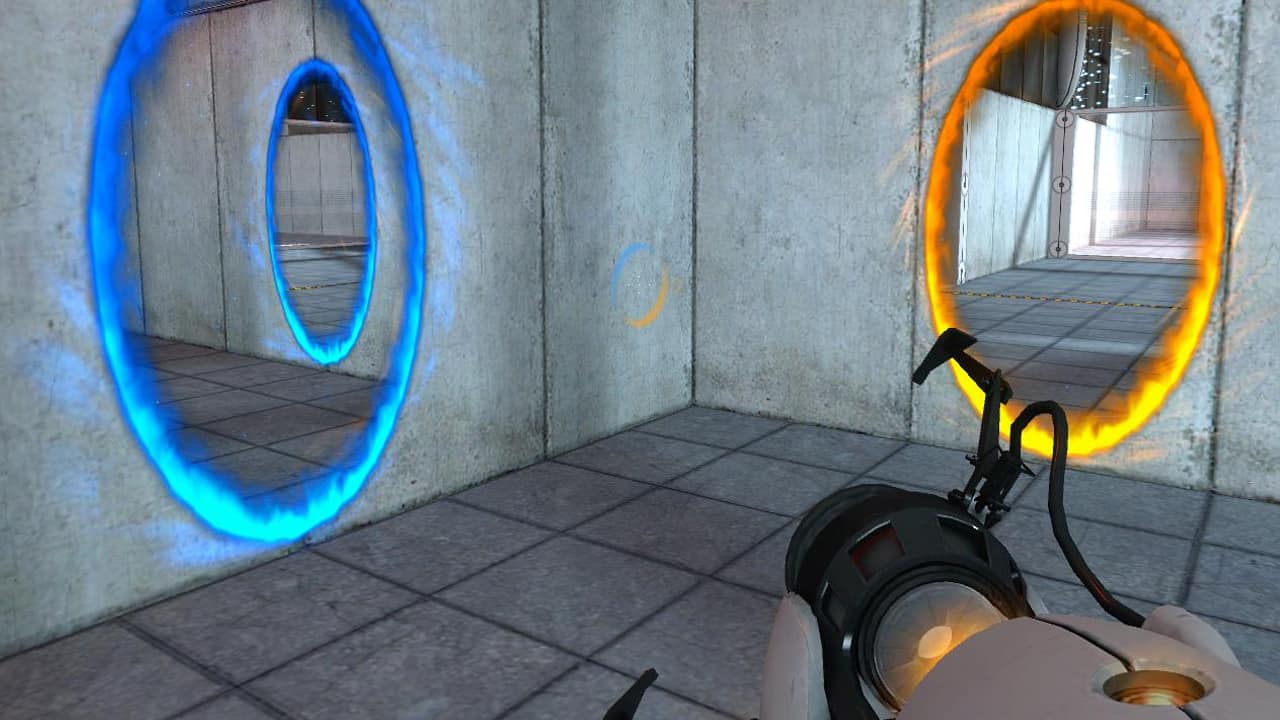
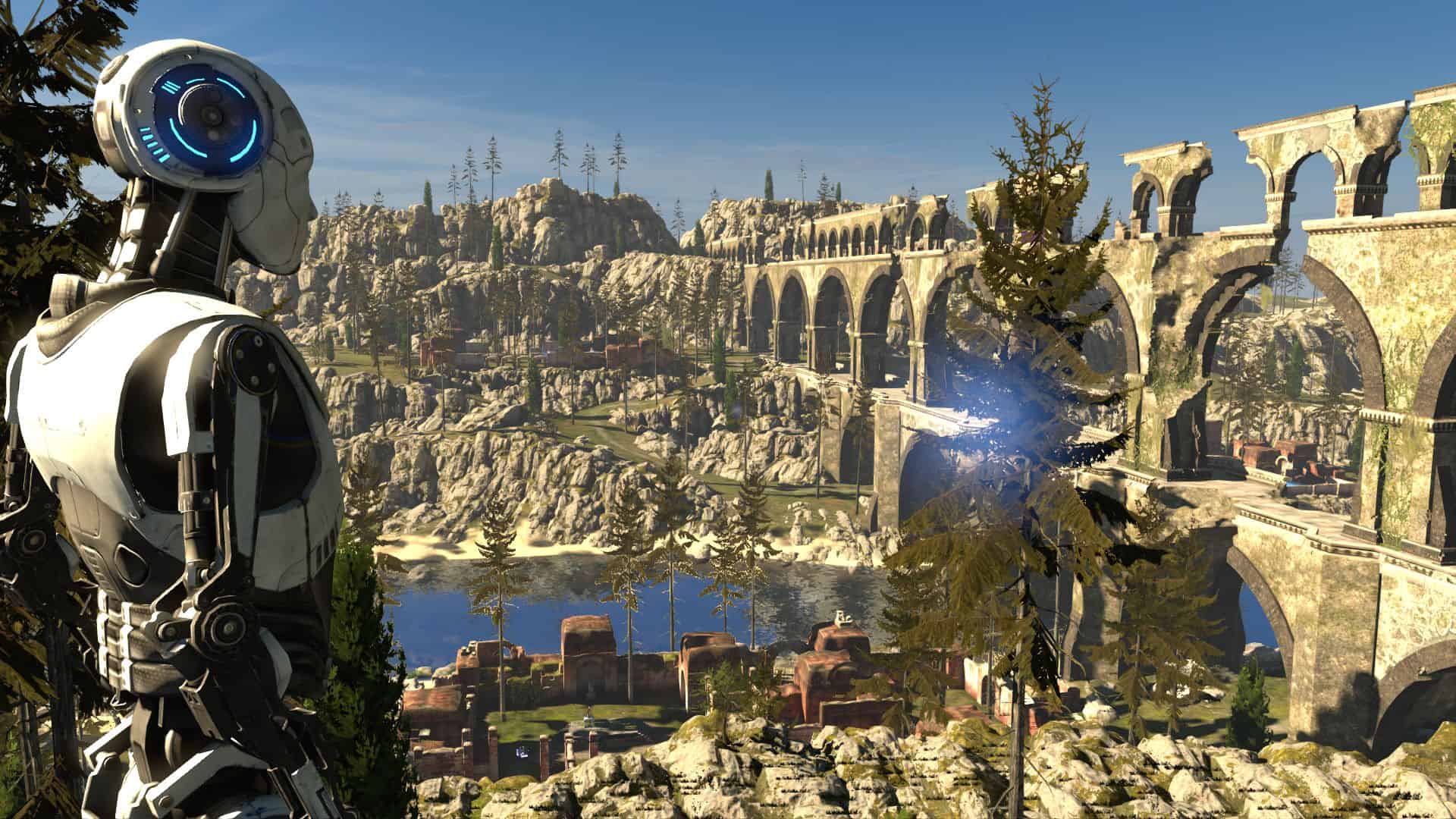


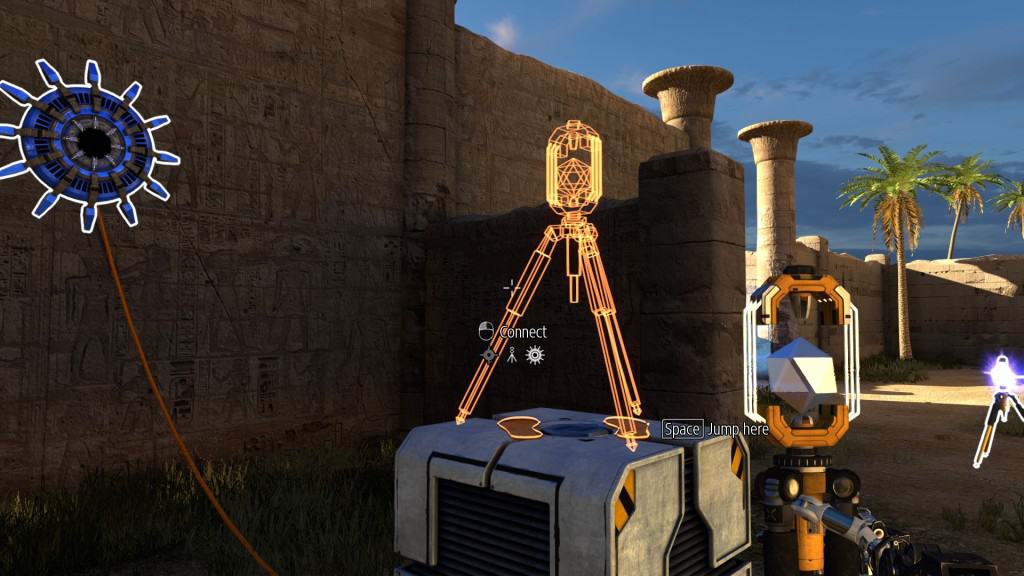
 It s no secret that OpenStack is becoming the de-facto standard for private cloud and a way for telecom operators to differentiate against big names such as Amazon or Google.


 The recent
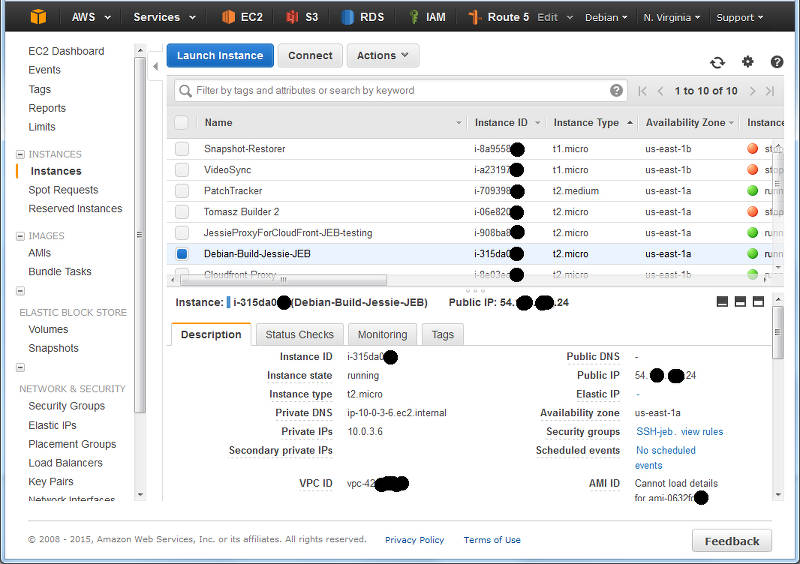
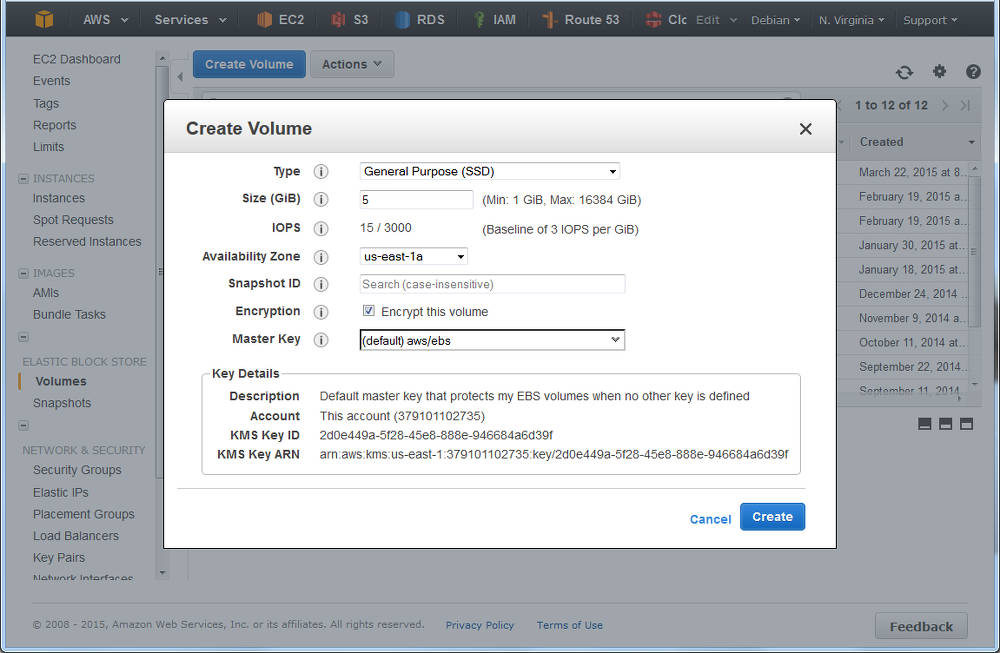
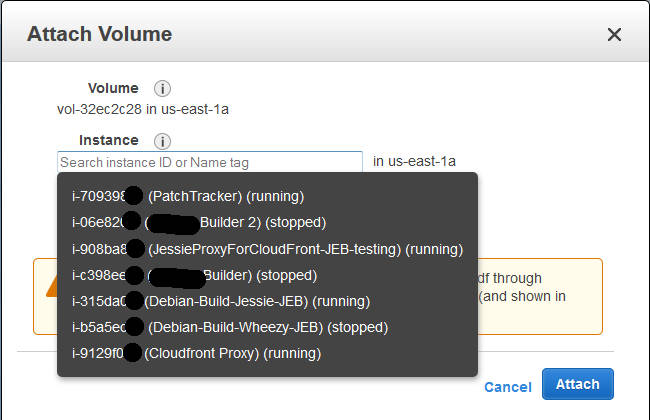
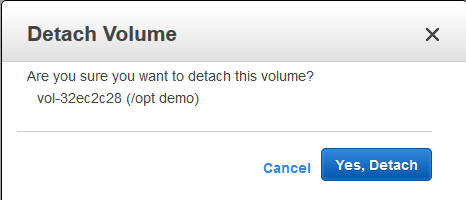

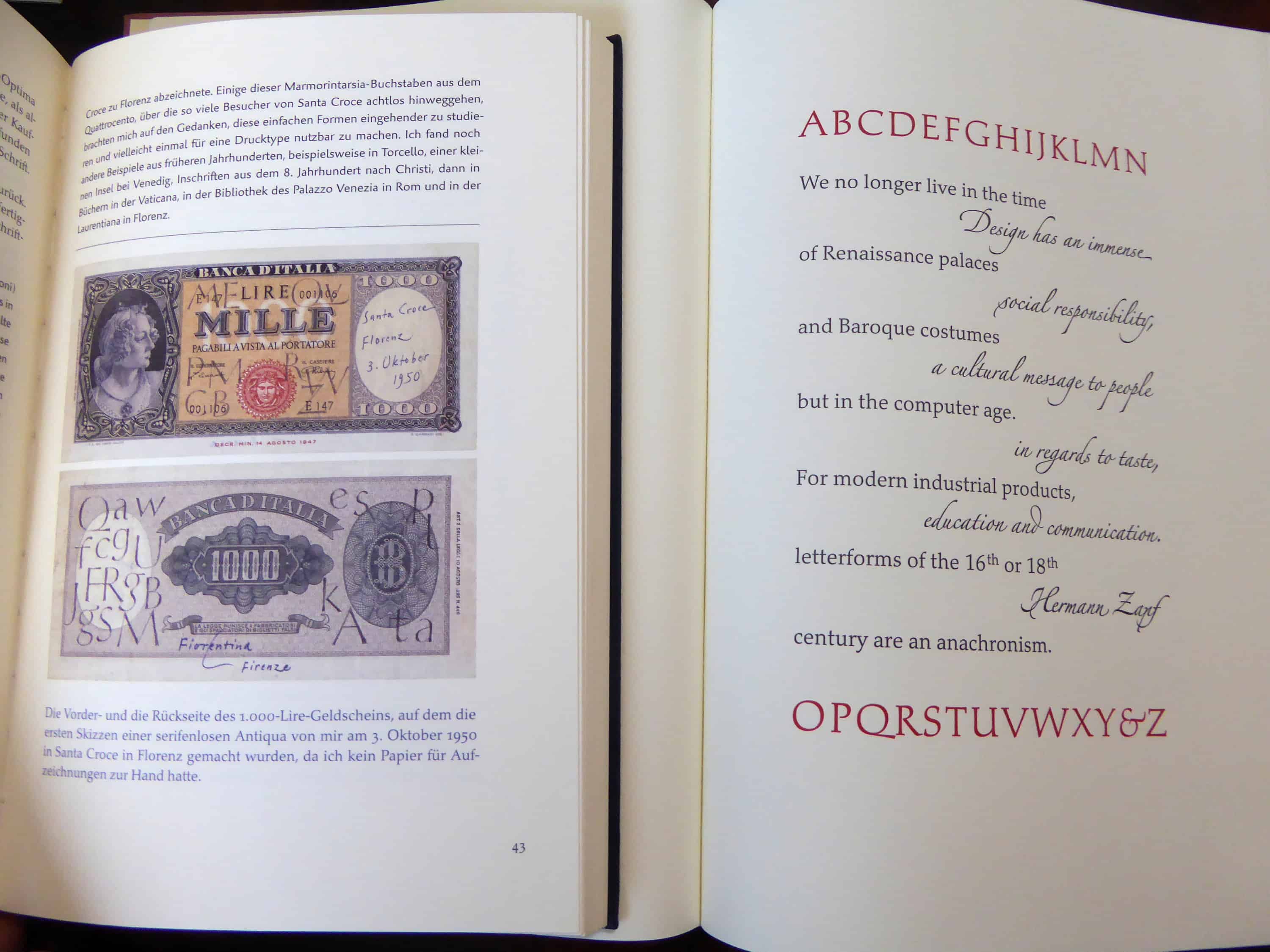
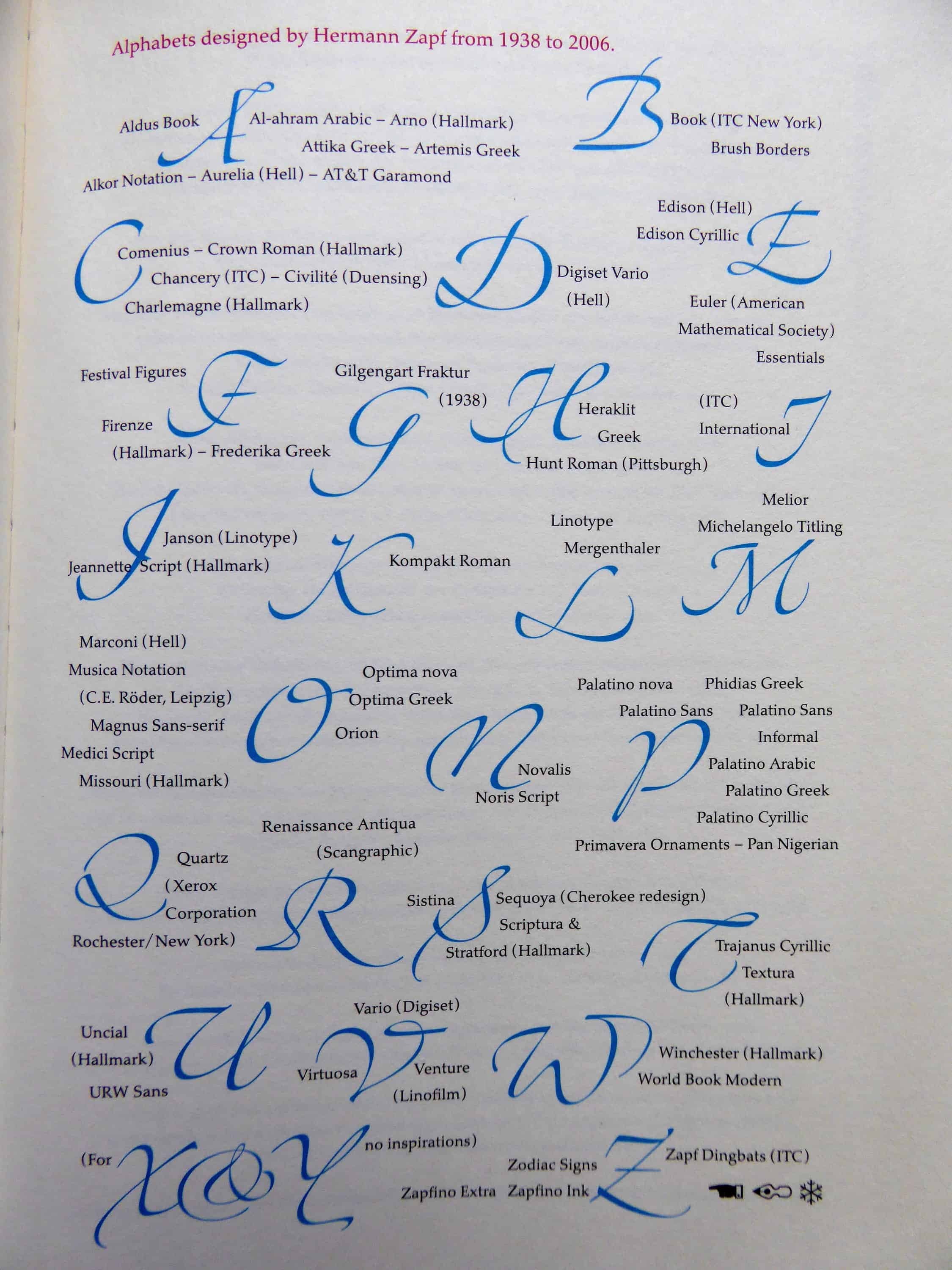

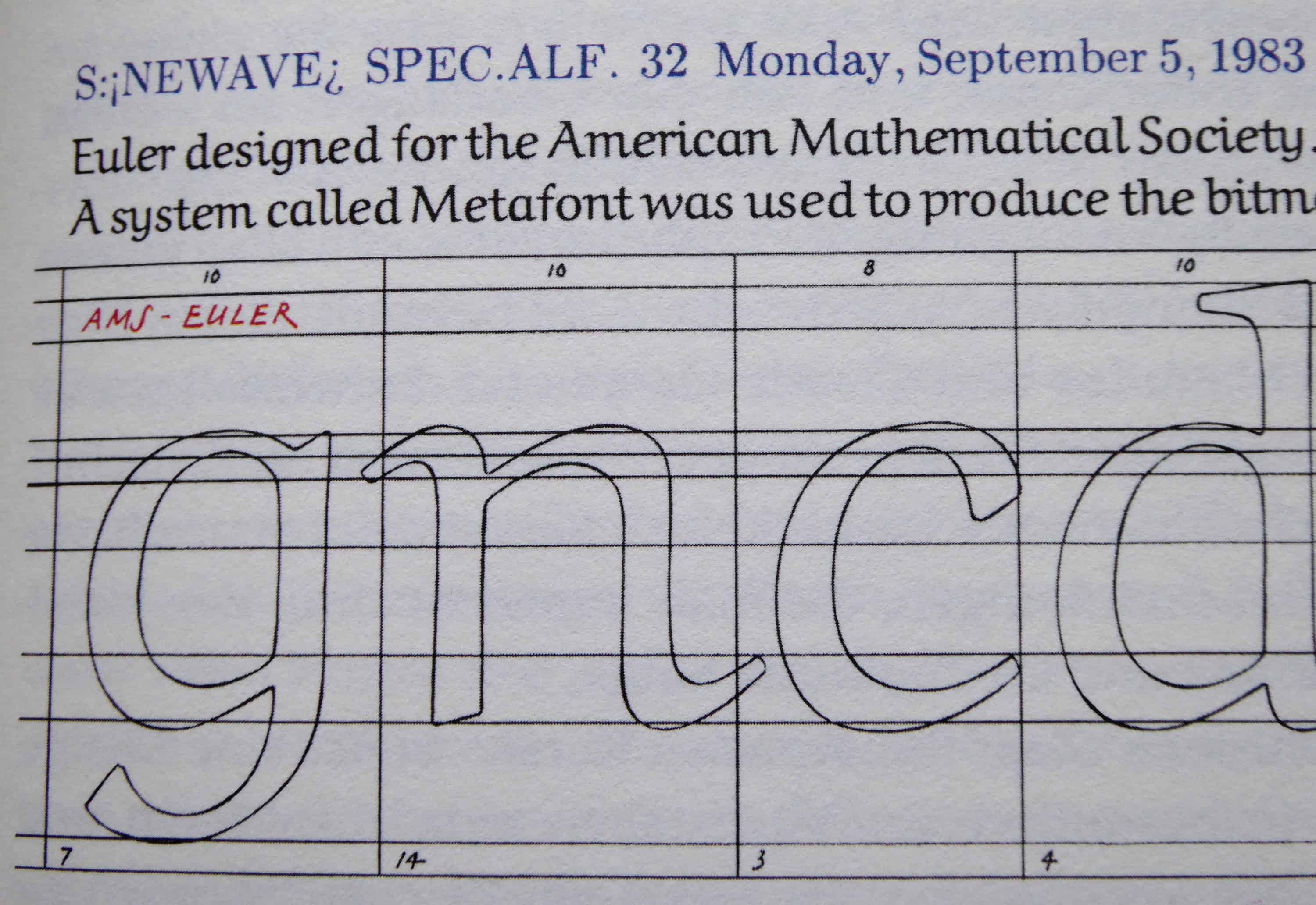




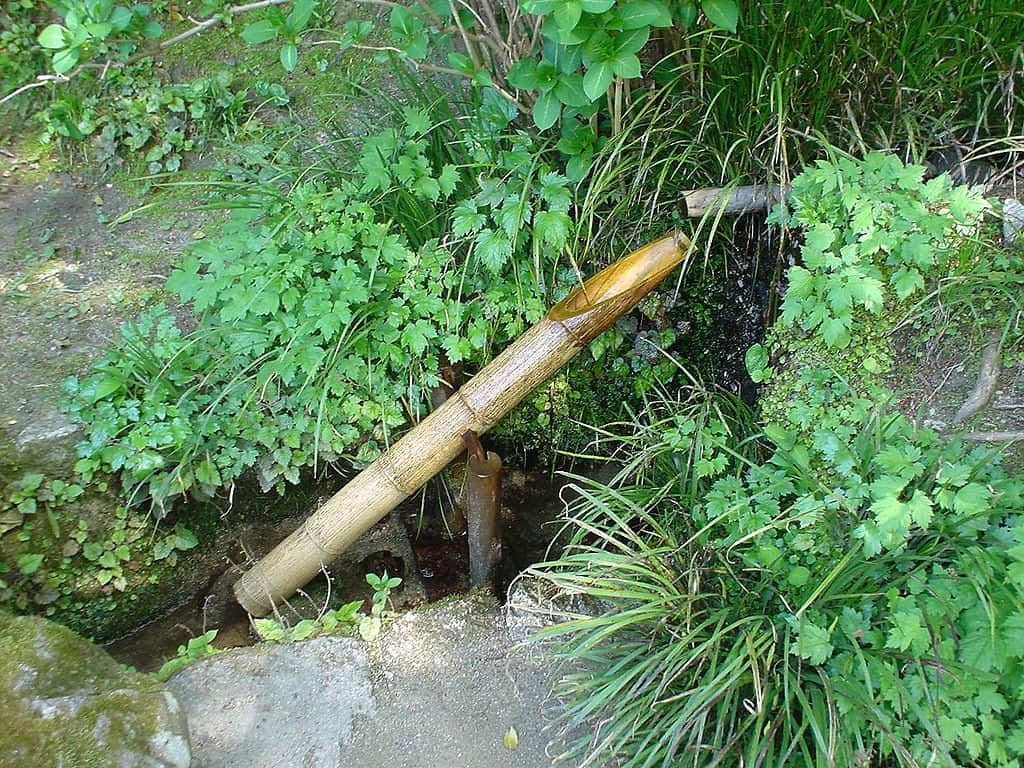 The author describes his feelings and thoughts about the shishiodoshi, in particular connects human life (stress and relieve, cycles), the flow of time, and some other concepts with the shishiodoshi. Up to here it is a wonderful article providing interesting insights into the way the author thinks. Unfortunately, then the author tries to underline his ideas by comparing the Japanese shishiodoshi with European style water fountains, describing the former with all favorable properties and full of deep meaning, while the latter is qualified as beautiful and nice, but bare of any deeper meaning.
I don t go into details that the whole comparison is anyway a bad one, as he is comparing Baroque style fountains, a very limited period, and furthermore ignores the fact that water fountains are not genuinely European (isn t there one in the Kenrokuen, one of the three most famous gardens in Japan!?), nor does he consider any other water-installation that might be available. What really destroys the in principle very nice article is the tone:
The general tone of the article then can be summarized into: The shishiodoshi is rich on meaning, connects to the life of humans, instigates philosophical reflections, represents nature, the flow of time etc. The water fountain is beautiful and gorgeous, but that is all.
I don t think that this separation, or this negative undertone, was created on purpose by the author. A person of his stature is supposedly above this level of primitive comparison. I believe that it is nothing else but a consequence of upbringing and the general attitude that permeates the whole society with this feeling of separateness.
Us and They
Repeatedly providing sentences like Japanese people and Western people have different tastes.. ( ). About 10 times in this short article expressions like Japanese and Westerner appear, leaving the reader with a bitter taste of an author that considers first the Japanese a people (what about Ainu, Ryukyu, etc?), and second that the Japanese are exclusive in the sense that they are set apart from the rest of the world in their way of thinking, living, being.
What puzzles me is that this is not only a singular opinion, but a very general straight in the Japanese media, TV, radio, newspaper, books. Everyone considers Japan and Japanese as something that is fundamentally and profoundly different from everyone else in the world.
There is We the Japanese (and that doesn t mean nationality of passport, but blood line!), and there are They the Rest or, as the way of writing and and description on many occasion suggestions, They the Barbarians .
A short anecdote will underly this: One of the favorite TV talk show / pseudo-documentary style is about Japanese living abroad. That day a lady married in Paris was interviewed. What followed was a guided tour through Paris showing: Dirt in the gutter, street cleaning cars, waste disposal places. Yes, that was all. Just about the dirt . Of course, at length the (unfortunately only apparent) cleanliness of Japanese cities and neighborhoods are mentioned and shown to remind everyone how wonderful Japan is and how dirty the Barbarians. I don t want to say that I consider Japan more dirty than most other countries just the visible part is clean, the moment you step a bit aside and around the corner, there are the worst trash just thrown away without consideration. Anyway.
To return to the topic of Us and They I consider us all humans, first and foremost, and nationality, birthplace, and all that are just by chance. I do NOT reject cultural differences, they are here, of course. But cultural differences are one thing, separating one self and one s perceived people from the rest of the world is another.
Conclusion
I repeat, I don t think that the author had any ill intentions, but it would have been nicer if the article wouldn t make such a stark distinction. He could have written about Shishiodoshi and water fountains without using the Us They categorization. He could have compared other water installations, could have discussed the long tradition of small ponds in European gardens, just to name a few things. But the author choose to highlight differences instead of commonalities.
It is the Us against Them feeling that often makes life in Japan for a foreigner difficult. Japanese are not special, Austrians, too, are not special, nor are Americans, Russians, Tibetans, or any other nationality. No nationality is special, we are all humans. Maybe at some point this will arrive also in the Japanese society and thinking.


 Today I feel more special than I have ever felt.
Or... Well, or something like that.
Thing is, there is no clear adjective for this But I successfully finished my Specialization degree! Yes, believe it or not, today I can formally say I am



 I've recently been contacted by


 I have spent today making my first ever batch of