Search Results: "ads"

9 January 2024

Thomas Koch: lsp-java coming to debian

Posted on March 12, 2022
Tags: debian
The Language Server Protocol (LSP) standardizes communication between editors and so called language servers for different programming languages. This reduces the old problem that every editor had to implement many different plugins for all different programming languages. With LSP an editor just needs to talk LSP and can immediately provide typicall IDE features. I already packaged the Emacs packages lsp-mode and lsp-haskell for Debian bullseye. Now lsp-java is waiting in the NEW queue. I m always worried about downloading and executing binaries from random places of the internet. It should be a matter of hygiene to only run binaries from official Debian repositories. Unfortunately this is not feasible when programming and many people don t see a problem with running multiple curl-sh pipes to set up their programming environment. I prefer to do such stuff only in virtual machines. With Emacs and LSP I can finally have a lightweight textmode programming environment even for Java. Unfortunately the lsp-java mode does not yet work over tramp. Once this is solved, I could run emacs on my host and only isolate the code and language server inside the VM. The next step would be to also keep the code on the host and mount it with Virtio FS in the VM. But so far the necessary daemon is not yet in Debian (RFP: #1007152). In Detail I uploaded these packages:

Louis-Philippe V ronneau: 2023 A Musical Retrospective

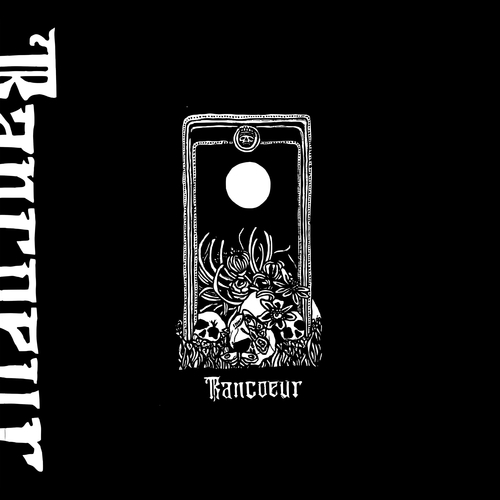
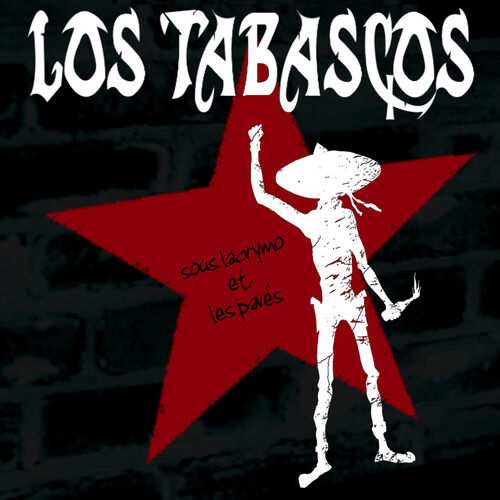
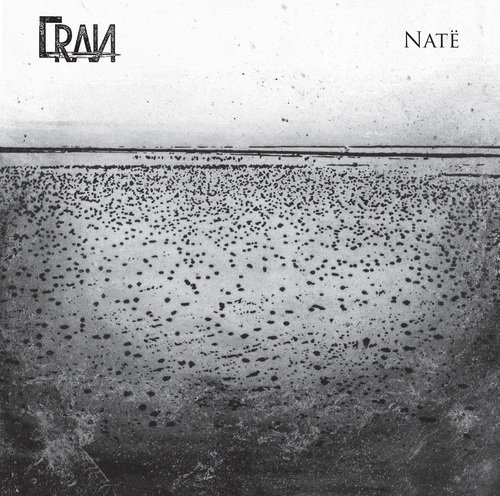
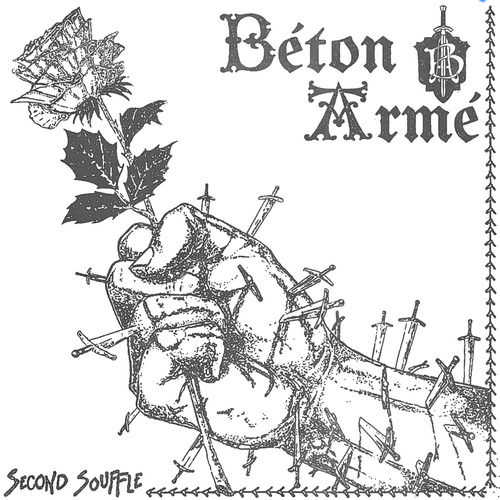
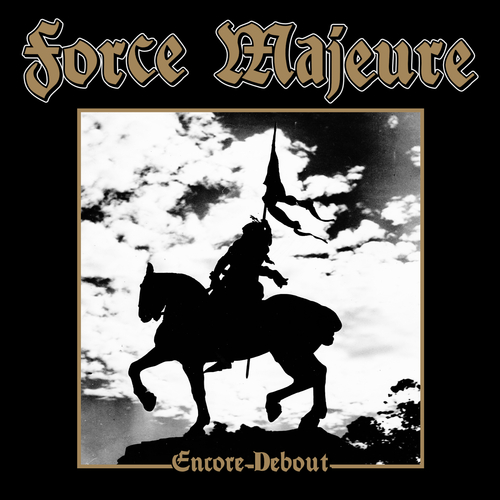
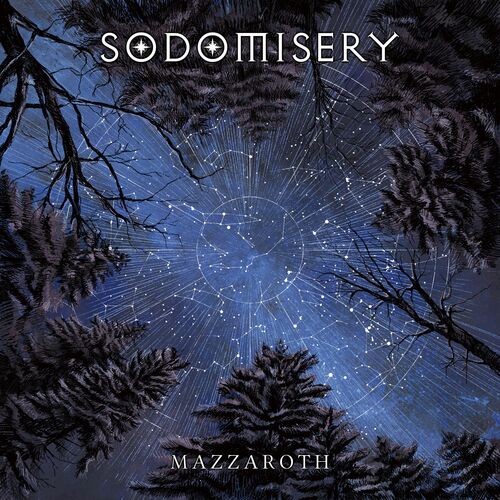
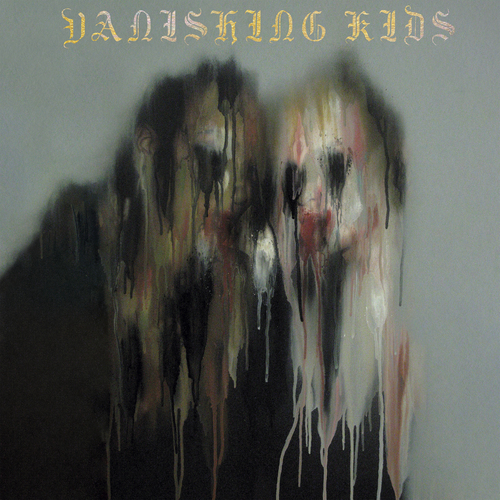
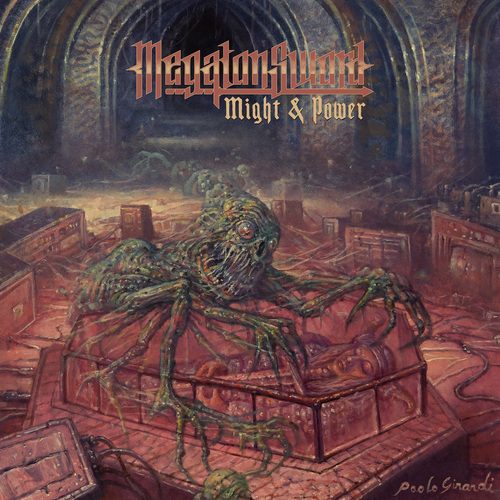
I ended 2022 with a musical retrospective and very much enjoyed writing that blog post. As such, I have decided to do the same for 2023! From now on, this will probably be an annual thing :) Albums In 2023, I added 73 new albums to my collection nearly 2 albums every three weeks! I listed them below in the order in which I acquired them. I purchased most of these albums when I could and borrowed the rest at libraries. If you want to browse though, I added links to the album covers pointing either to websites where you can buy them or to Discogs when digital copies weren't available. Once again this year, it seems that Punk (mostly O !) and Metal dominate my list, mostly fueled by Angry Metal Guy and the amazing Montr al Skinhead/Punk concert scene. Concerts A trend I started in 2022 was to go to as many concerts of artists I like as possible. I'm happy to report I went to around 80% more concerts in 2023 than in 2022! Looking back at my list, April was quite a busy month... Here are the concerts I went to in 2023: Although metalfinder continues to work as intended, I'm very glad to have discovered the Montr al underground scene has departed from Facebook/Instagram and adopted en masse Gancio, a FOSS community agenda that supports ActivityPub. Our local instance, askapunk.net is pretty much all I could ask for :) That's it for 2023!

7 January 2024

Jonathan McDowell: Free Software Activities for 2023

This year was hard from a personal and work point of view, which impacted the amount of Free Software bits I ended up doing - even when I had the time I often wasn t in the right head space to make progress on things. However writing this annual recap up has been a useful exercise, as I achieved more than I realised. For previous years see 2019, 2020, 2021 + 2022.

Conferences The only Free Software related conference I made it to this year was DebConf23 in Kochi, India. Changes with projects at work meant I couldn t justify anything work related. This year I m planning to make it to FOSDEM, and haven t made a decision on DebConf24 yet.

Debian Most of my contributions to Free software continue to happen within Debian. I started the year working on retrogaming with Kodi on Debian. I got this to a much better state for bookworm, with it being possible to run the bsnes-mercury emulator under Kodi using RetroArch. There are a few other libretro backends available for RetroArch, but Kodi needs some extra controller mappings packaged up first. Plenty of uploads were involved, though some of this was aligning all the dependencies and generally cleaning things up in iterations. I continued to work on a few packages within the Debian Electronics Packaging Team. OpenOCD produced a new release in time for the bookworm release, so I uploaded 0.12.0-1. There were a few minor sigrok cleanups - sigrok 0.3, libsigrokdecode 0.5.3-4 + libsigrok 0.5.2-4 / 0.5.2-5. While I didn t manage to get the work completed I did some renaming of the ESP8266 related packages - gcc-xtensa-lx106 (which saw a 13 upload pre-bookworm) has become gcc-xtensa (with 14) and binutils-xtensa-lx106 has become binutils-xtensa (with 6). Binary packages remain the same, but this is intended to allow for the generation of ESP32 compiler toolchains from the same source. onak saw 0.6.3-1 uploaded to match the upstream release. I also uploaded libgpg-error 1.47-1 (though I can claim no credit for any of the work in preparing the package) to help move things forward on updating gnupg2 in Debian. I NMUed tpm2-pkcs11 1.9.0-0.1 to fix some minor issues pre-bookworm release; I use this package myself to store my SSH key within my laptop TPM, so I care about it being in a decent state. sg3-utils also saw a bit of love with 1.46-2 + 1.46-3 - I don t work in the storage space these days, but I m still listed as an uploaded and there was an RC bug around the library package naming that I was qualified to fix and test pre-bookworm. Related to my retroarch work I sponsored uploads of mgba for Ryan Tandy: 0.10.0+dfsg-1, 0.10.0+dfsg-2, 0.10.1+dfsg-1, 0.10.2+dfsg-1, mgba 0.10.1+dfsg-1+deb12u1. As part of the Data Protection Team I responded to various inbound queries to that team, both from project members and those external to the project. I continue to keep an eye on Debian New Members, even though I m mostly inactive as an application manager - we generally seem to have enough available recently. Mostly my involvement is via Front Desk activities, helping out with queries to the team alias, and contributing to internal discussions as well as our panel at DebConf23. Finally the 3 month rotation for Debian Keyring continues to operate smoothly. I dealt with 2023.03.24, 2023.06.26, 2023.06.29, 2023.09.10, 2023.09.24 + 2023.12.24.

Linux I had a few minor patches accepted to the kernel this year. A pair of safexcel cleanups (improved error logging for firmware load fail and cleanup on load failure) came out of upgrading the kernel running on my RB5009. The rest were related to my work on repurposing my C.H.I.P.. The AXP209 driver needed extended to support GPIO3 (with associated DT schema update). That allowed Bluetooth to be enabled. Adding the AXP209 internal temperature ADC as an iio-hwmon node means it can be tracked using the normal sensor monitoring framework. And finally I added the pinmux settings for mmc2, which I use to support an external microSD slot on my C.H.I.P.

Personal projects 2023 saw another minor release of onak, 0.6.3, which resulted in a corresponding Debian upload (0.6.3-1). It has a couple of bug fixes (including a particularly annoying, if minor, one around systemd socket activation that felt very satisfying to get to the bottom of), but I still lack the time to do any of the major changes I would like to. I wrote listadmin3 to allow easy manipulation of moderation queues for Mailman3. It s basic, but it s drastically improved my timeliness on dealing with held messages.

Valhalla's Things: A Corset or Two

Posted on January 7, 2024
Tags: madeof:atoms, craft:sewing, period:victorian, FreeSoftWear
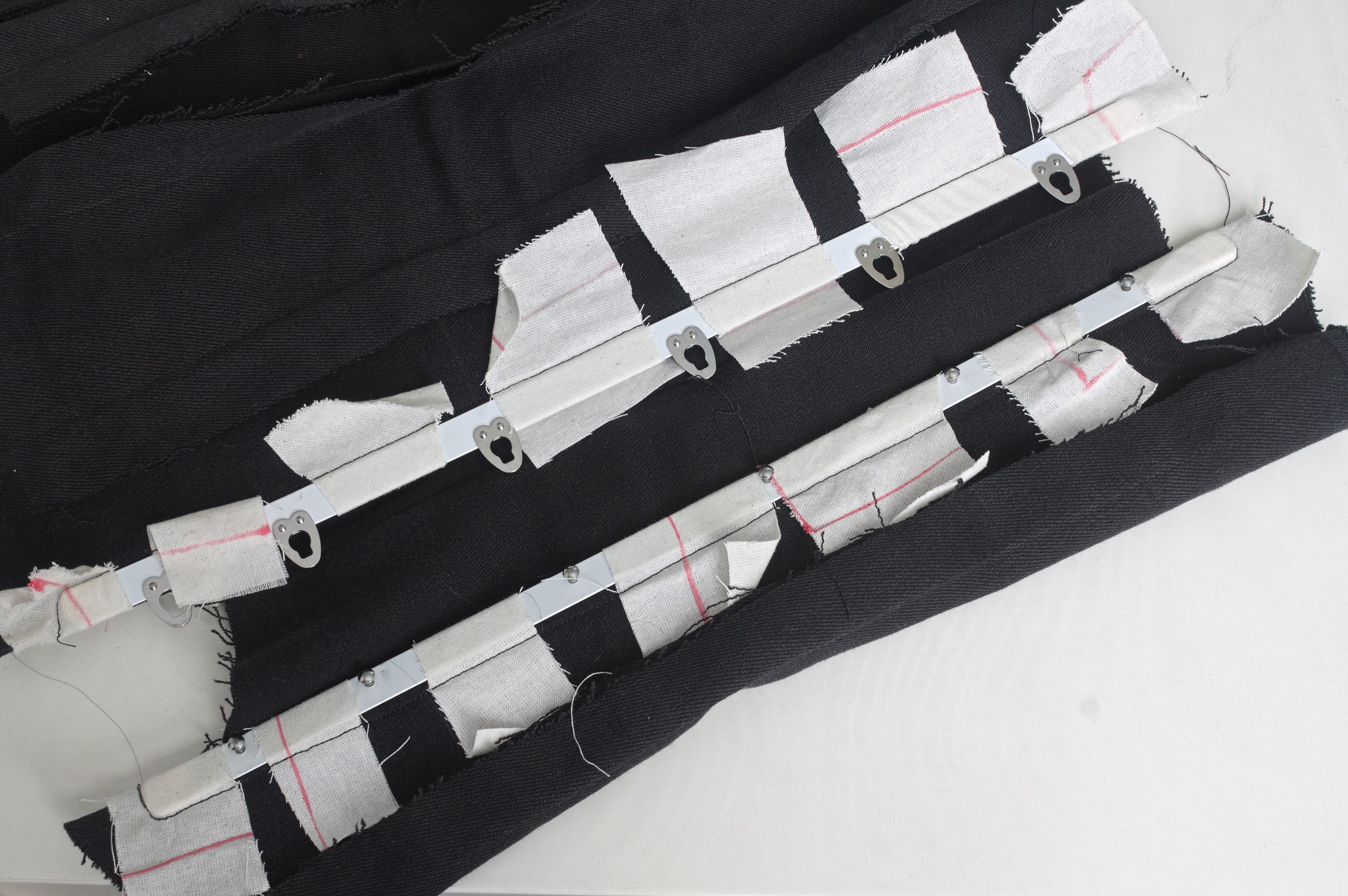
a black coutil midbust corset, from a 3/4 front view, showing the busk closure, a waist tape and external boning channels made of the same twill tape and placed about 1-2 cm from each other at waist level. CW for body size change mentions I needed a corset, badly. Years ago I had a chance to have my measurements taken by a former professional corset maker and then a lesson in how to draft an underbust corset, and that lead to me learning how nice wearing a well-fitted corset feels. Later I tried to extend that pattern up for a midbust corset, with success. And then my body changed suddenly, and I was no longer able to wear either of those, and after a while I started missing them. Since my body was still changing (if no longer drastically so), and I didn t want to use expensive materials for something that had a risk of not fitting after too little time, I decided to start by making myself a summer lightweight corset in aida cloth and plastic boning (for which I had already bought materials). It fitted, but not as well as the first two ones, and I ve worn it quite a bit. I still wanted back the feeling of wearing a comfy, heavy contraption of coutil and steel, however. After a lot of procrastination I redrafted a new pattern, scrapped everything, tried again, had my measurements taken by a dressmaker [#dressmaker], put them in the draft, cut a first mock-up in cheap cotton, fixed the position of a seam, did a second mock-up in denim [#jeans] from an old pair of jeans, and then cut into the cheap herringbone coutil I was planning to use. And that s when I went to see which one of the busks in my stash would work, and realized that I had used a wrong vertical measurement and the front of the corset was way too long for a midbust corset. a corset busk basted to a mock-up with scraps of fabric between each stud / loop. Luckily I also had a few longer busks, I basted one to the denim mock up and tried to wear it for a few hours, to see if it was too long to be comfortable. It was just a bit, on the bottom, which could be easily fixed with the Power Tools1. Except, the more I looked at it the more doing this felt wrong: what I needed most was a midbust corset, not an overbust one, which is what this was starting to be. I could have trimmed it down, but I knew that I also wanted this corset to be a wearable mockup for the pattern, to refine it and have it available for more corsets. And I still had more than half of the cheap coutil I was using, so I decided to redo the pattern and cut new panels. And this is where the or two comes in: I m not going to waste the overbust panels: I had been wanting to learn some techniques to make corsets with a fashion fabric layer, rather than just a single layer of coutil, and this looks like an excellent opportunity for that, together with a piece of purple silk that I know I have in the stash. This will happen later, however, first I m giving priority to the underbust. Anyway, a second set of panels was cut, all the seam lines marked with tailor tacks, and I started sewing by inserting the busk. And then realized that the pre-made boning channel tape I had was too narrow for the 10 mm spiral steel I had plenty of. And that the 25 mm twill tape was also too narrow for a double boning channel. On the other hand, the 18 mm twill tape I had used for the waist tape was good for a single channel, so I decided to put a single bone on each seam, and then add another piece of boning in the middle of each panel. Since I m making external channels, making them in self fabric would have probably looked better, but I no longer had enough fabric, because of the cutting mishap, and anyway this is going to be a strictly underwear only corset, so it s not a big deal. Once the boning channel situation was taken care of, everything else proceeded quite smoothly and I was able to finish the corset during the Christmas break, enlisting again my SO to take care of the flat steel boning while I cut the spiral steels myself with wire cutters. The same corset straight from the front: the left side is a few mm longer than the right side I could have been a bit more precise with the binding, as it doesn t align precisely at the front edge, but then again, it s underwear, nobody other than me and everybody who reads this post is going to see it and I was in a hurry to see it finished. I will be more careful with the next one. The same corset from the back, showing cross lacing with bunny ears at the waist and a lacing gap of about 8 cm. I also think that I haven t been careful enough when pressing the seams and applying the tape, and I ve lost about a cm of width per part, so I m using a lacing gap that is a bit wider than I planned for, but that may change as the corset gets worn, and is still within tolerance. Also, on the morning after I had finished the corset I woke up and realized that I had forgotten to add garter tabs at the bottom edge. I don t know whether I will ever use them, but I wanted the option, so maybe I ll try to add them later on, especially if I can do it without undoing the binding. The next step would have been flossing, which I proceeded to postpone until I ve worn the corset for a while: not because there is any reason for it, but because I still don t know how I want to do it :) What was left was finishing and uploading the pattern and instructions, that are now on my sewing pattern website as #FreeSoftWear, and finally I could post this on the blog.

  1. i.e. by asking my SO to cut and sand it, because I m lazy and I hate doing that part :D

4 January 2024

Aigars Mahinovs: Figuring out finances part 5

At the end of the last part of this, we got a Home Assistant OS installation that contains in itself a Firefly III instance and that contains all the current financial information. They are communicating and calculating predictions for me. The only part that I was not 100% happy with was accounting of cash transactions. You see payments in cash are mostly made away from computer and sometimes even in areas without a mobile Internet connection. And all Firefly III apps that I tried failed at the task of creating a new transaction when offline. Even the one recommended Telegram bot from Firefly III page used a dialog-based approach for creating even a simplest transaction. Issue asking for a one-shot transaction creation option stands as unresolved. Theoretically it would have been best if I could simply contribute that feature to that particular Telegram bot ... but it's written in Javascript. By mapping the API onto tasks somehow. After about 4 hours I still could not figure out where in the code anything actually happens. It all looked like just sugar or spagetty. Connectors on connectors on mappers. So I did the real open-source thing and just wrote my own tool. firefly3_telegram_oneshot is a maximally simple Telegram bot based on python-telegram-bot library. So what does it do? The primary usage for me is to simply send a message to the bot at any time with text like "23.2 coffee and cake" and when the message eventually reaches the bot, it then should create a new transaction from my "cash" account to "Unknown" account in amount of 23.20 and description "coffee and cake". That is the key. Everything else in the bot is comfort. For example "/undo" command deletes the last transaction in cash account (presumably added by error) and "/last" shows which transaction the "/undo" would delete. And to help with expense categorisation one can also do a message like "6.1 beer, dest=Edeka, cat=alcohol" that would search for a destination account that would fuzzy match to "Edeka" (a supermarket in Germany) and add the transation to the category fuzzy matched to "alcohol", like "Shopping - alcoholic drinks". And to make that fuzzy matching more reliable I also added "/cat something" and "/dest something" commands that would show which category or destination account would be matched with a given string. All of that in around 250 lines of Python code and executed by a 17 line Dockerfile (via the Portainer on my Home Assistant OS). One remaining function that could be nice is creating a category or destination account on request (for example when the first character of the supplied string is "+"). I am really plesantly surprised about how much can be done with how little code using the above Python library. And you never need to have any open incoming ports anywhere to runs such bots, so the attack surface for such bot-based service is much tighter. All in all the system works and works well. The only exception is that for my particual bank there is still no automatic way of extracting data about credit card transactions. For those I still have to manually log into the Internet bank, export a CSV file and then feed that into the Firefly III importer. Annoying. And I am not really motivated to try to hack my bank :D Has this been useful to any of you? Any ideas to expand or improve what I have? Just find me as "aigarius" on any social media and speak up :)

3 January 2024

Jacob Adams: Fixing My Shell

For an embarassingly long time, my shell has unnecessarily tried to initialize a console font in every kind of interactive terminal. This leaves the following error message in my terminal:
Couldn't get a file descriptor referring to the console.
It even shows up twice when running tmux! Clearly I ve done something horrible to my configuration, and now I ve got to clean it up.

How does Shell Initialization Work? The precise files a shell reads at start-up is somewhat complex, and defined by this excellent chart 1: Shell Startup Flowchart For the purposes of what I m trying to fix, there are two paths that matter.
  • Interactive login shell startup
  • Interactive non-login shell startup
As you can see from the above, trying to distinguish these two paths in bash is an absolute mess. zsh, in contrast, is much cleaner and allows for a clear distinction between these two cases, with login shell configuration files as a superset of configuration files used by non-login shells.

How did we get here? I keep my configuration files in a config repository. Some time ago I got quite frustrated at this whole shell initialization thing, and just linked everything together in one profile file:
.mkshrc -> config/profile
.profile -> config/profile
This appears to have created this mess.

Move to ZSH I ve wanted to move to zsh for a while, and took this opportunity to do so. So my new configuration files are .zprofile and .zshrc instead of .mkshrc and .profile (though I m going to retain those symlinks to allow my old configurations to continue working). mksh is a nice simple shell, but using zsh here allows for more consistency between my home and $WORK environments, and will allow a lot more powerful extensions.

Updating my Prompt ZSH prompts use a totally different configuration via variable expansion. However, it also uses the PROMPT variable, so I set that to the needed values for zsh. There s an excellent ZSH prompt generator at https://zsh-prompt-generator.site that I used to get these variables, though I m sure they re in the zsh documentation somewhere as well. I wanted a simple prompt with user (%n), host (%m), and path (%d). I also wanted a % at the end to distinguish this from other shells.
PROMPT="%n@%m%d%% "

Fixing mksh prompts This worked but surprisingly mksh also looks at PROMPT, leaving my mksh prompt as the literal prompt string without expansion. Fixing this requires setting up a proper shrc and linking it to .mkshrc and .zshrc. I chose to move my existing aliases script to this file, as it also broke in non-login shells when moved to profile. Within this new shrc file we can check what shell we re running via $0:
if [ "$0" = "/bin/zsh" ]   [ "$0" = "zsh" ]   [ "$0" = "-zsh" ]
I chose to add plain zsh here in case I run it manually for whatever reason. I also added -zsh to support tmux as that s what it presents as $0. This also means you ll need to be careful to quote $0 or you ll get fun shell errors. There s probably a better way to do this, but I couldn t find something that was compatible with POSIX shell, which is what most of this has to be written in to be compatible with mksh and zsh2. We can then setup different prompts for each:
if [ "$0" = "/bin/zsh" ]   [ "$0" = "zsh" ]   [ "$0" = "-zsh" ]
then
	PROMPT="%n@%m%d%% "
else
	# Borrowed from
	# http://www.unixmantra.com/2013/05/setting-custom-prompt-in-ksh.html
	PS1='$(id -un)@$(hostname -s)$PWD$ '
fi

Setting Console Font in a Better Way I ve been setting console font via setfont in my .profile for a while. I m not sure where I picked this up, but it s not the right way. I even tried to only run this in a console with -t but that only checks that output is a terminal, not specifically a console.
if [ -t 1 ]
then
	setfont /usr/share/consolefonts/Lat15-Terminus20x10.psf.gz
fi
This also only runs once the console is logged into, instead of initializing it on boot. The correct way to set this up, on Debian-based systems, is reconfiguring console-setup like so:
dpkg-reconfigure console-setup
From there you get a menu of encoding, character set, font, and then font size to configure for your consoles.

VIM mode To enable VIM mode for ZSH, you simply need to set:
bindkeys -v
This allows you to edit your shell commands with basic VIM keybinds.

Getting back Ctrl + Left Arrow and Ctrl + Right Arrow Moving around one word at a time with Ctrl and the arrow keys is broken by vim mode unfortunately, so we ll need to re-enable it:
bindkey "^[[1;5C" forward-word
bindkey "^[[1;5D" backward-word

Why did it show up twice for tmux? Because tmux creates a login shell. Adding:
echo PROFILE
to profile and:
echo SHRC
to shrc confirms this with:
PROFILE
SHRC
SHRC
For now, profile sources shrc so that running twice is expected. But after this exploration and diagram, it s clear we don t need that for zsh. Removing this will break remote bash shells (see above diagram), but I can live without those on my development laptop. Removing that line results in the expected output for a new terminal:
SHRC
And the full output for a new tmux session or console:
PROFILE
SHRC
So finally we re back to a normal state! This post is a bit unfocused but I hope it helps someone else repair or enhance their shell environment. If you liked this4, or know of any other ways to manage this I could use, let me know at fixmyshell@tookmund.com.
  1. This chart comes from the excellent Shell Startup Scripts article by Peter Ward. I ve generated the SVG from the graphviz source linked in the article.
  2. Technically it has be compatible with Korn shell, but a quick google seems to suggest that that s actually a subset of POSIX shell.
  3. I use oh-my-zsh at $WORK but for now I m going to simplify my personal configuration. If I end up using a lot of plugins I ll reconsider this.
  4. Or if you ve found any typos or other issues that I should fix.

2 January 2024

Matthew Garrett: Dealing with weird ELF libraries

Libraries are collections of code that are intended to be usable by multiple consumers (if you're interested in the etymology, watch this video). In the old days we had what we now refer to as "static" libraries, collections of code that existed on disk but which would be copied into newly compiled binaries. We've moved beyond that, thankfully, and now make use of what we call "dynamic" or "shared" libraries - instead of the code being copied into the binary, a reference to the library function is incorporated, and at runtime the code is mapped from the on-disk copy of the shared object[1]. This allows libraries to be upgraded without needing to modify the binaries using them, and if multiple applications are using the same library at once it only requires that one copy of the code be kept in RAM.

But for this to work, two things are necessary: when we build a binary, there has to be a way to reference the relevant library functions in the binary; and when we run a binary, the library code needs to be mapped into the process.

(I'm going to somewhat simplify the explanations from here on - things like symbol versioning make this a bit more complicated but aren't strictly relevant to what I was working on here)

For the first of these, the goal is to replace a call to a function (eg, printf()) with a reference to the actual implementation. This is the job of the linker rather than the compiler (eg, if you use the -c argument to tell gcc to simply compile to an object rather than linking an executable, it's not going to care about whether or not every function called in your code actually exists or not - that'll be figured out when you link all the objects together), and the linker needs to know which symbols (which aren't just functions - libraries can export variables or structures and so on) are available in which libraries. You give the linker a list of libraries, it extracts the symbols available, and resolves the references in your code with references to the library.

But how is that information extracted? Each ELF object has a fixed-size header that contains references to various things, including a reference to a list of "section headers". Each section has a name and a type, but the ones we're interested in are .dynstr and .dynsym. .dynstr contains a list of strings, representing the name of each exported symbol. .dynsym is where things get more interesting - it's a list of structs that contain information about each symbol. This includes a bunch of fairly complicated stuff that you need to care about if you're actually writing a linker, but the relevant entries for this discussion are an index into .dynstr (which means the .dynsym entry isn't sufficient to know the name of a symbol, you need to extract that from .dynstr), along with the location of that symbol within the library. The linker can parse this information and obtain a list of symbol names and addresses, and can now replace the call to printf() with a reference to libc instead.

(Note that it's not possible to simply encode this as "Call this address in this library" - if the library is rebuilt or is a different version, the function could move to a different location)

Experimentally, .dynstr and .dynsym appear to be sufficient for linking a dynamic library at build time - there are other sections related to dynamic linking, but you can link against a library that's missing them. Runtime is where things get more complicated.

When you run a binary that makes use of dynamic libraries, the code from those libraries needs to be mapped into the resulting process. This is the job of the runtime dynamic linker, or RTLD[2]. The RTLD needs to open every library the process requires, map the relevant code into the process's address space, and then rewrite the references in the binary into calls to the library code. This requires more information than is present in .dynstr and .dynsym - at the very least, it needs to know the list of required libraries.

There's a separate section called .dynamic that contains another list of structures, and it's the data here that's used for this purpose. For example, .dynamic contains a bunch of entries of type DT_NEEDED - this is the list of libraries that an executable requires. There's also a bunch of other stuff that's required to actually make all of this work, but the only thing I'm going to touch on is DT_HASH. Doing all this re-linking at runtime involves resolving the locations of a large number of symbols, and if the only way you can do that is by reading a list from .dynsym and then looking up every name in .dynstr that's going to take some time. The DT_HASH entry points to a hash table - the RTLD hashes the symbol name it's trying to resolve, looks it up in that hash table, and gets the symbol entry directly (it still needs to resolve that against .dynstr to make sure it hasn't hit a hash collision - if it has it needs to look up the next hash entry, but this is still generally faster than walking the entire .dynsym list to find the relevant symbol). There's also DT_GNU_HASH which fulfills the same purpose as DT_HASH but uses a more complicated algorithm that performs even better. .dynamic also contains entries pointing at .dynstr and .dynsym, which seems redundant but will become relevant shortly.

So, .dynsym and .dynstr are required at build time, and both are required along with .dynamic at runtime. This seems simple enough, but obviously there's a twist and I'm sorry it's taken so long to get to this point.

I bought a Synology NAS for home backup purposes (my previous solution was a single external USB drive plugged into a small server, which had uncomfortable single point of failure properties). Obviously I decided to poke around at it, and I found something odd - all the libraries Synology ships were entirely lacking any ELF section headers. This meant no .dynstr, .dynsym or .dynamic sections, so how was any of this working? nm asserted that the libraries exported no symbols, and readelf agreed. If I wrote a small app that called a function in one of the libraries and built it, gcc complained that the function was undefined. But executables on the device were clearly resolving the symbols at runtime, and if I loaded them into ghidra the exported functions were visible. If I dlopen()ed them, dlsym() couldn't resolve the symbols - but if I hardcoded the offset into my code, I could call them directly.

Things finally made sense when I discovered that if I passed the --use-dynamic argument to readelf, I did get a list of exported symbols. It turns out that ELF is weirder than I realised. As well as the aforementioned section headers, ELF objects also include a set of program headers. One of the program header types is PT_DYNAMIC. This typically points to the same data that's present in the .dynamic section. Remember when I mentioned that .dynamic contained references to .dynsym and .dynstr? This means that simply pointing at .dynamic is sufficient, there's no need to have separate entries for them.

The same information can be reached from two different locations. The information in the section headers is used at build time, and the information in the program headers at run time[3]. I do not have an explanation for this. But if the information is present in two places, it seems obvious that it should be able to reconstruct the missing section headers in my weird libraries? So that's what this does. It extracts information from the DYNAMIC entry in the program headers and creates equivalent section headers.

There's one thing that makes this more difficult than it might seem. The section header for .dynsym has to contain the number of symbols present in the section. And that information doesn't directly exist in DYNAMIC - to figure out how many symbols exist, you're expected to walk the hash tables and keep track of the largest number you've seen. Since every symbol has to be referenced in the hash table, once you've hit every entry the largest number is the number of exported symbols. This seemed annoying to implement, so instead I cheated, added code to simply pass in the number of symbols on the command line, and then just parsed the output of readelf against the original binaries to extract that information and pass it to my tool.

Somehow, this worked. I now have a bunch of library files that I can link into my own binaries to make it easier to figure out how various things on the Synology work. Now, could someone explain (a) why this information is present in two locations, and (b) why the build-time linker and run-time linker disagree on the canonical source of truth?

[1] "Shared object" is the source of the .so filename extension used in various Unix-style operating systems
[2] You'll note that "RTLD" is not an acryonym for "runtime dynamic linker", because reasons
[3] For environments using the GNU RTLD, at least - I have no idea whether this is the case in all ELF environments

comment count unavailable comments

Thomas Koch: Waiting for a STATE folder in the XDG basedir spec

Posted on February 18, 2014
The XDG Basedirectory specification proposes default homedir folders for the categories DATA (~/.local/share), CONFIG (~/.config) and CACHE (~/.cache). One category however is missing: STATE. This category has been requested several times but nothing happened. Examples for state data are: The missing STATE category is especially annoying if you re managing your dotfiles with a VCS (e.g. via VCSH) and you care to keep your homedir tidy. If you re as annoyed as me about the missing STATE category, please voice your opinion on the XDG mailing list. Of course it s a very long way until applications really use such a STATE directory. But without a common standard it will never happen.

1 January 2024

Junichi Uekawa: Happy new year.

Happy new year. 2023 saw my first foreign travels since COVID lockdown happened, and that was fun. I felt I had more than enough travel for me. Work life was challenging due to the lay offs and economic environment we are operating in, needs a different mode of operation. Family life is facing a different phase as kids grow, the eldest is approaching the teens.

31 December 2023

Chris Lamb: Favourites of 2023

This post should have marked the beginning of my yearly roundups of the favourite books and movies I read and watched in 2023. However, due to coming down with a nasty bout of flu recently and other sundry commitments, I wasn't able to undertake writing the necessary four or five blog posts In lieu of this, however, I will simply present my (unordered and unadorned) highlights for now. Do get in touch if this (or any of my previous posts) have spurred you into picking something up yourself

Books

Peter Watts: Blindsight (2006) Reymer Banham: Los Angeles: The Architecture of Four Ecologies (2006) Joanne McNeil: Lurking: How a Person Became a User (2020) J. L. Carr: A Month in the Country (1980) Hilary Mantel: A Memoir of My Former Self: A Life in Writing (2023) Adam Higginbotham: Midnight in Chernobyl (2019) Tony Judt: Postwar: A History of Europe Since 1945 (2005) Tony Judt: Reappraisals: Reflections on the Forgotten Twentieth Century (2008) Peter Apps: Show Me the Bodies: How We Let Grenfell Happen (2021) Joan Didion: Slouching Towards Bethlehem (1968)Erik Larson: The Devil in the White City (2003)

Films Recent releases

Unenjoyable experiences included Alejandro G mez Monteverde's Sound of Freedom (2023), Alex Garland's Men (2022) and Steven Spielberg's The Fabelmans (2022).
Older releases (Films released before 2022, and not including rewatches from previous years.) Distinctly unenjoyable watches included Ocean's Eleven (1960), El Topo (1970), L olo (1992), Hotel Mumbai (2018), Bulworth (1998) and and The Big Red One (1980).

Petter Reinholdtsen: VLC bittorrent plugin still going strong, new upload 2.14-4

The other day I uploaded a new version of the VLC bittorrent plugin to Debian, version 2.14-4, to fix a few packaging issues. This plugin extend VLC allowing it to stream videos directly from a bittorrent source using both torrent files and magnet links, as easy as using a HTTP or local file source. I believe such protocol support is a vital feature in VLC, allowing efficient streaming from sources such at the 11 million movies in the Internet Archive. Bittorrent is one of the most efficient content distribution protocols on the Internet, without centralised control, and should be used more. The new version is now both in Debian Unstable and Testing, as well as Ubuntu. While looking after the package, I decided to ask the VLC upstream community if there was any hope to get Bittorrent support into the official VLC program, and was very happy to learn that someone is already working on it. I hope we can see some fruits of that labour next year, but do not hold my breath. In the mean time we can use the plugin, which is already installed by 0.23 percent of the Debian population according to popularity-contest. It could use a new upstream release, and I hope the upstream developer soon find time to polish it even more. It is worth noting that the plugin store the downloaded files in ~/Downloads/vlc-bittorrent/, which can quickly fill up the user home directory during use. Users of the plugin should keep an eye with disk usage when streaming a bittorrent source. As usual, if you use Bitcoin and want to show your support of my activities, please send Bitcoin donations to my address 15oWEoG9dUPovwmUL9KWAnYRtNJEkP1u1b.

Guido G nther: Phosh 2023 in Retrospect

As in 2022 I took another look back at what changed in Phosh in 2023 and instead of just updating my notes why not share it here. In short: While collecting these bits I became really impressed about the progress we made : Some numbers Link to heading We were discussing at this years Phosh Community Get Together at Froscon if we should lengthen the Phosh release cycle a bit but we kept the one release per month schedule to get improvements out to users quickly.

30 December 2023

Riku Voipio: Adguard DNS, or how to reduce ads without apps/extensions

Looking at the options for blocking ads, people usually first look at browser extensions. Google's plan is to disable adblock extensions in 2024. The alternative is usually an app (on phones) or a "VPN" that does filtering for you. All these methods are quite heavyweight, and require installing software on your phone or PC. What is less known, is that you can you DNS-over-TLS or DNS-over-HTTPS for ad blocking.
What is DNS-over-TLS and DNS-over-HTTPS
Since Android 9, Google has provided a setting calledPrivate DNS. Traditional DNS is unencrypted UDP so anyone can monitor your requests and/or return false records. With private DNS, DNS-over-TLS or DNS-over-HTTPS is used to guarantee the DNS request is sent to the server you configured. Which Google hopes is of course Google's own public servers. If you do so, your ISP and hotspot providers no longer can monitor, monetize and enshittify your DNS requests - only Google can do so.
Subverting private DNS for ad blocking
This is where AdGuard DNS comes useful. By setting the AdGuard DNS server as your "private DNS" server following the instructions,you can start blocking right away. Note, on PC you can also configure the Adguard DNS server on the Browser settings (Firefox -> Enable secure DNS and Chrome -> Use Secure DNS) instead of configuring a system-wide DNS server. Blocking via DNS, of course, limits effectiveness to ads distributed from 3rd party servers.
Other uses for AdGuard DNS
If you register for Adguard DNS, you get your "own", customizable DNS server address to point to. You can, for example, create your own /etc/hosts style records that are now available to all you devices you have connected to the Adguard DNS server - whether your a are home or not. Of course, you choose to use the personal DNS server, your DNS query privacy is in the hands of AdGuard.
Going further
What else is ruining the web than Ads? Well commercial social media. An article ("Ei n in! Algoritmi hky") from the latest Finnish Magazine SKROLLI (mainos: jos luet suomeksi, Tilaa skrolli!) hit a chord for me. The algorithms of social media sites are designed not to serve you, but to addict you. For example, If you stop to watch a hateful meme image, the algorithm will record "The user spent time watching this, show more of the same!". It doesn't help block or mute - yeah that spefic hate engager will be blocked, but all the dozens similar hate pages will still be shown to you. Worse, the social media sites are being overrun by AI-generated crap. Unfortunately the addictive nature of the algorithms works. You reload in vain, hoping this time the algorithmic god will show something your friends share. How do you cure addiction? By blocking yourself out:
Epilogue
I didn't block myself out of Fediverse - yet. It's not engineered to be addictive, which is also probably why it isn't as popular as the commercial alternatives...

29 December 2023

Ulrike Uhlig: How do kids conceive the internet? - part 4

Read all parts of the series Part 1 // Part 2 // Part 3 // Part 4 I ve been wanting to write this post for over a year, but lacked energy and time. Before 2023 is coming to an end, I want to close this series and share some more insights with you and hopefully provide you with a smile here and there. For this round of interviews, four more kids around the ages of 8 to 13 were interviewed, 3 of them have a US background these 3 interviews were done by a friend who recorded these interviews for me, thank you! As opposed to the previous interviews, these four kids have parents who have a more technical professional background. And this seems to make a difference: even though none of these kids actually knew much better how the internet really works than the other kids that I interviewed, specifically in terms of physical infrastructures, they were much more confident in using the internet, they were able to more correctly name things they see on the internet, and they had partly radical ideas about what they would like to learn or what they would want to change about the internet! Looking at these results, I think it s safe to say that social reproduction is at work and that we need to improve education for kids who do not profit from this type of social and cultural wealth at home. But let s dive into the details.

The boy and the aliens (I ll be mostly transribing the interview, which was short, and which I find difficult to sum up because some of the questions are written in a way to encourage the kids to tell a story, and this particular kid had a thing going on with aliens.) He s a 13 year old boy living in the US. He has his own computer, which technically belongs to his school but can be used by him freely and he can also take it home. He s the first kid saying he s reading the news on the internet; he does not actually use social media, besides sometimes watching TikTok. When asked: Imagine that aliens land and come to you and say: We ve heard about this internet thing you all talk about, what is it? What do you tell them? he replied:
Well, I mean they re aliens, so I don t know if I wanna tell them much.
(Parents laughing in the background.) Let s assume they re friendly aliens.

Well, I would say you can look anything up and play different games. And there are alien games. But mostly the enemies are aliens which you might be a little offended by. And you can get work done, if you needed to spy on humans. There s cameras, you can film yourself, yeah. And you can text people and call people who are far away
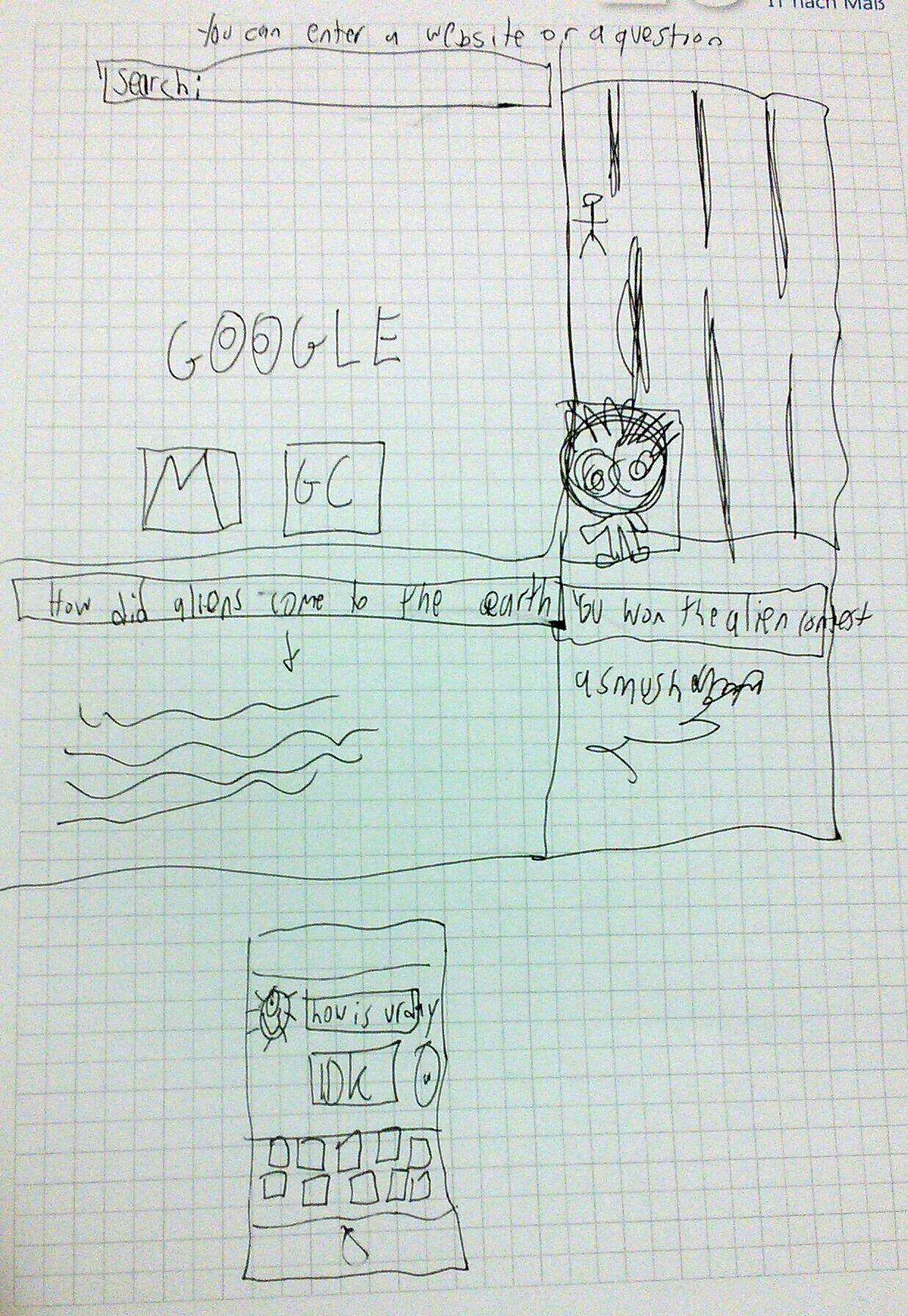
And what would be in a drawing that would explain the internet? Google, an alien using Twitch, Google search results, and the interface of an IM software on an iPhone drawn by a 13 year old boy And here s what he explains about his drawing:
First, I would draw what I see when you open a new tab, Google.
On the right side of the drawing we see something like Twitch.
I don t wanna offend the aliens, but you can film yourself playing a game, so here is the alien and he s playing a game.
And then you can ask questions like: How did aliens come to the Earth? And the answer will be here (below). And there ll be different websites that you can click on.
And you can also look up Who won the alien contest? And that would be Usmushgagu, and that guy won the alien contest.
Do you think the information about alien intergalactic football is already on the internet?
Yeah! That s how fast the internet is.
On the bottom of the drawing we see an iPhone and an instant messaging software.
There s also a device called an iPhone and with it you can text your friends. So here s the alien asking: How was ur day? and the friend might answer IDK [I don t know].
Imagine that a wise and friendly dragon could teach you one thing about the internet that you ve always wanted to know. What would you ask the dragon to teach you about?
Is there a way you don t have to pay for any channels or subscriptions and you can get through any firewall?
Imagine you could make the internet better for everyone. What would you do first?
Well you wouldn t have to pay for it [paywalls].
Can you describe what happens between your device and a website when you visit a website?
Well, it takes 0.025 seconds. [ ] It s connecting.
Wow, that s indeed fast! We were not able to obtain more details about what is that fast thing that s happening exactly

The software engineer s kid This kid identifies as neither boy nor girl, is 10 years old and lives in Germany. Their father works as a software engineer, or in the words of the child:
My dad knows everything.
The kid has a laptop and a mobile phone, both with parental control they don t think that the controlling is fair. This kid uses the internet foremostly for listening to music and watching prank channels on Youtube but also to work with Purple Mash (a teaching platform for the computing curriculum used at their school), finding 3d printing models (that they ask their father to print with them because they did not manage to use the printer by themselves yet). Interestingly, and very differently from the non-tech-parent kids, this kid insists on using Firefox and Signal - the latter is not only used by their dad to tell them to come downstairs for dinner, but also to call their grandmother. This kid also shops online, with the help of the father who does the actual shopping for them using money that the kid earned by reading books. If you would need to explain to an alien who has landed on Earth what the internet is, what would you tell them?

The internet is something where you search, for example, you can look for music. You can also watch videos from around the world, and you can program stuff.
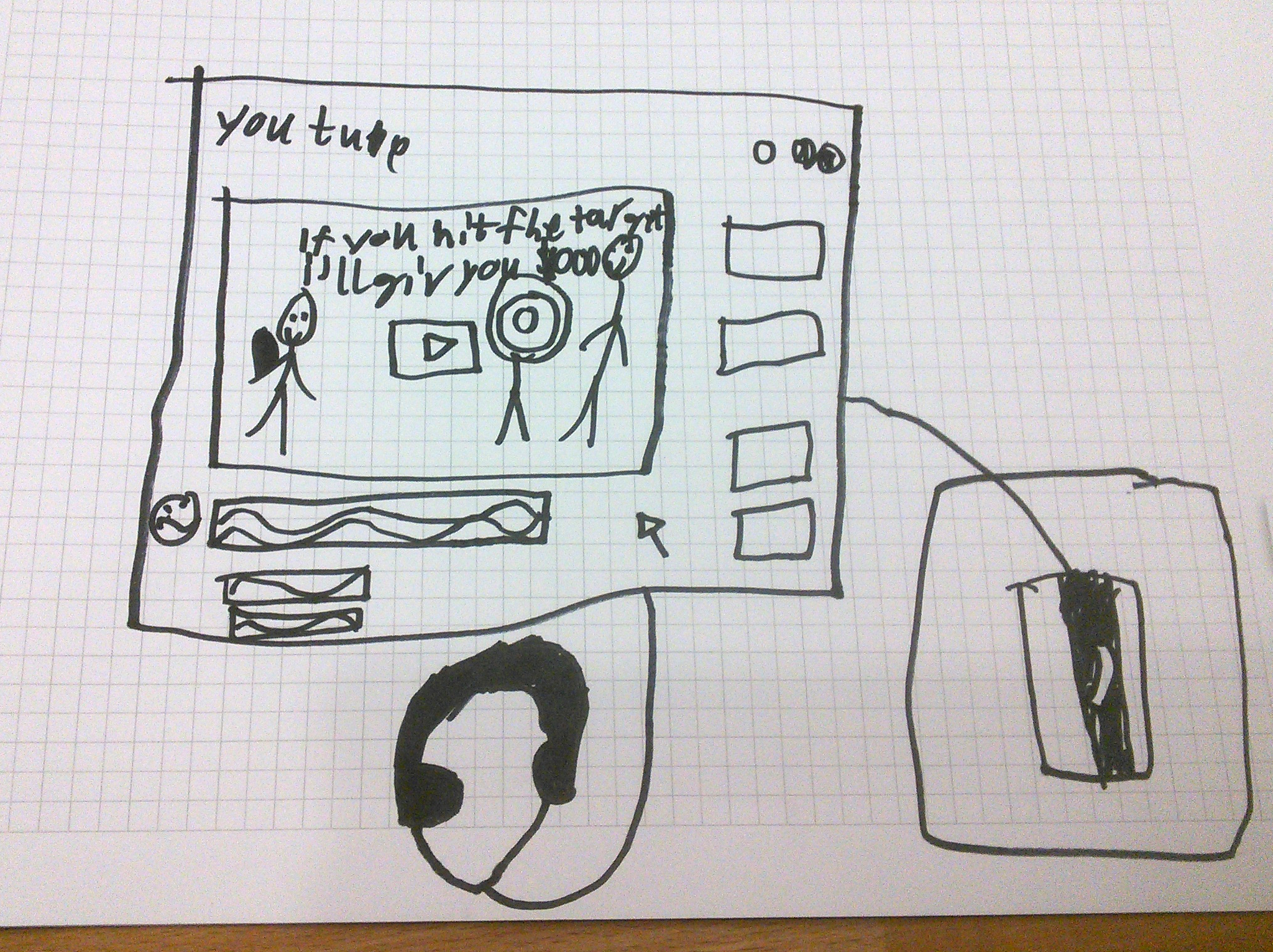
Like most of the kids interviewed, this kid uses the internet mostly for media consumption, but with the difference that they also engage with technology by way of programming using Purple Mash. drawing of the internet by a 10 year old showing a Youtube prank channel, an external device trackpad, and headphones In their drawing we see a Youtube prank channel on a screen, an external trackpad on the right (likely it s not a touch screen), and headphones. Notice how there is no keyboard, or maybe it s folded away. If you could ask a nice and friendly dragon anything you d like to learn about the internet, what would it be?
How do I shutdown my dad s computer forever?
And what is it that he would do to improve the internet for everyone? Contrary to the kid living in the US, they think that
It takes too much time to load stuff!
I wonder if this kid experiences the internet as being slow because they use the mobile network or because their connection somehow gets throttled as a way to control media consumption, or if the German internet infrastructure is just so much worse in certain regions If you could improve the internet for everyone, what would you do first? I d make a new Firefox app that loads the internet much faster.

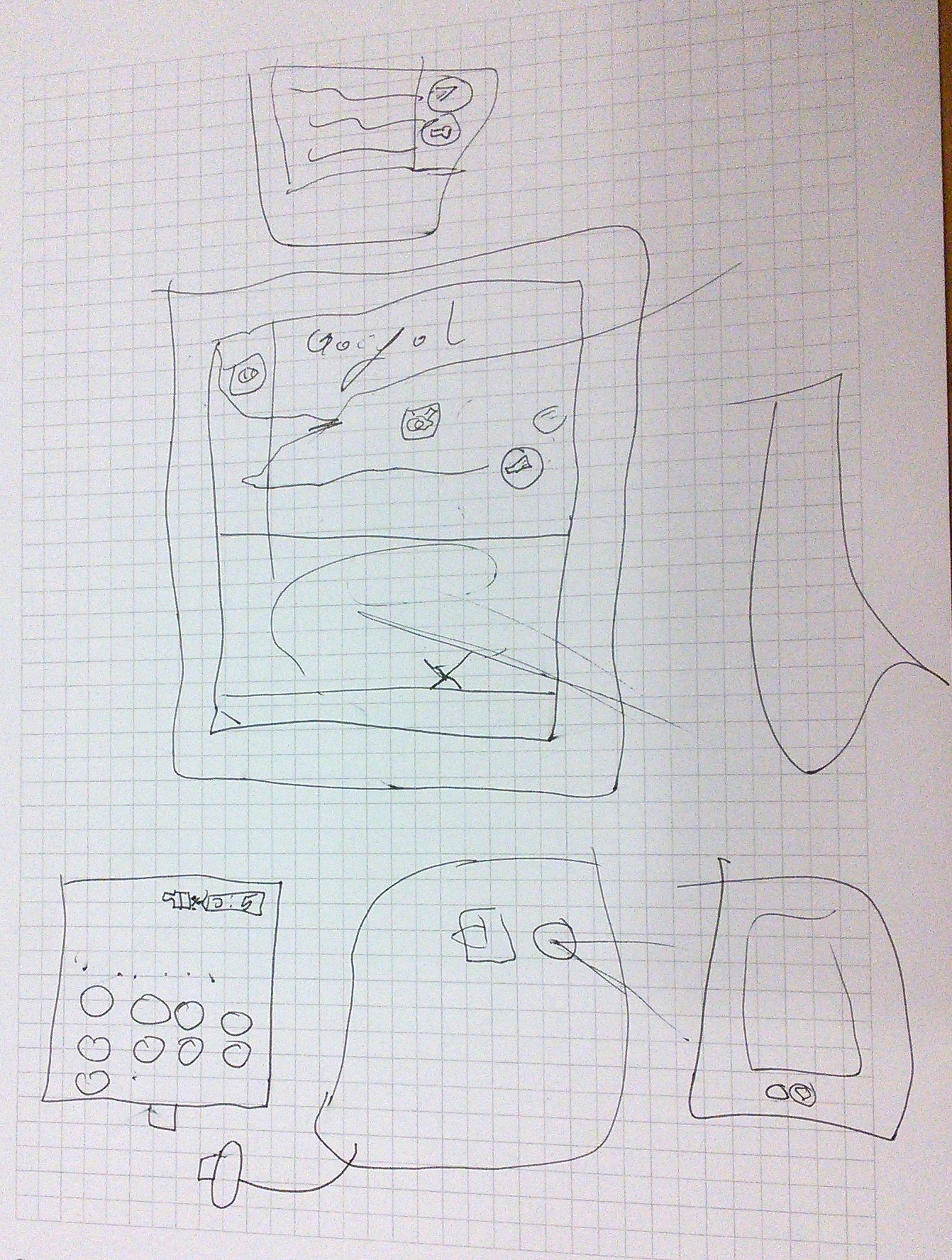
The software engineer s daughter This girl is only 8 years old, she hates unicorns, and her dad is also a software engineer. She uses a smartphone, controlled by her parents. My impression of the interview is that at this age, kids slightly mix up the internet with the devices that they use to access the internet. drawing of the internet by an 8 year old girl, Showing Google and the interface to call and text someone In her drawing, we see again Google - it s clearly everywhere - and also the interfaces for calling and texting someone. To explain what the internet is, besides the fact that one can use it for calling and listening to music, she says:
[The internet] is something that you can [use to] see someone who is far away, so that you don t need to take time to get to them.
Now, that s a great explanation, the internet providing the possibility for communication over a distance :) If she could ask a friendly dragon something she always wanted to know, she d ask how to make her phone come alive:
that it can talk to you, that it can see you, that it can smile and has eyes. It s like a new family member, you can talk to it.
Sounds a bit like Siri, Alexa, or Furby, doesn t it? If you could improve the internet for everyone, what would you do first? She d have the phone be able to decide over her free time, her phone time. That would make the world better, not for the kids, but certainly for the parents.

The antifascist kid This German boy s dad has a background in electrotechnical engineering. He s 10 years old and he told me he s using the internet a lot for searching things for example about his passion: the firefighters. For him, the internet is:
An invisible world. A virtual world. But there s also the darknet.
He told me he always watches that German show on public TV for kids that explains stuff: Checker Tobi. (In 2014, Checker Tobi actually produced an episode about the internet, which I d criticize for having only male characters, except for one female character: a secretary Google, a nice and friendly woman guiding the way through the huge library that s the internet ) This kid was the only one interviewed who managed to actually explain something about the internet, or rather about the hypertextual structure of the web. When I asked him to draw the internet, he made a drawing of a pin board. He explained:
Many items are attached to the pin board, and on the top left corner there s a computer, for example with Youtube and one can navigate like that between all the items, and start again from the beginning when done.
hypertext structure representing the internet drawn by a kid When I asked if he knew what actually happens between the device and a website he visits, he put forth the hypothesis of the existence of some kind of
Waves, internet waves - all this stuff somehow needs to be transmitted.
What he d like to learn:
How to get into the darknet? How do you become a Whitehat? I ve heard these words on the internet, the internet makes me clever.
And what would he change on the internet if he could?
I want that right wing extreme stuff is not accessible anymore, or at least, that it rains turds ( Kackw rste ) whenever people watch such stuff. Or that people are always told: This video is scum.
I suspect that his father has been talking with him about these things, and maybe these are also subjects he heard about when listening to punk music (he told me he does), or browsing Youtube.

Future projects To me this has been pretty insightful. I might share some more internet drawings by adults in the future, which I think are also really interesting, as they show very different things depending on the age of the person. I ve been using the information gathered to work on a children s book which I hope to be able to share with you next year.

28 December 2023

Simon Josefsson: Validating debian/copyright: licenserecon

Recently I noticed a new tool called licenserecon written by Peter Blackman, and I helped get licenserecon into Debian. The purpose of licenserecon is to reconcile licenses from debian/copyright against the output from licensecheck, a tool written by Jonas Smedegaard. It assumes DEP5 copyright files. You run the tool in a directory that has a debian/ sub-directory, and its output when it notices mismatches (this is for resolv-wrapper):
# sudo apt install licenserecon
jas@kaka:~/dpkg/resolv-wrapper$ lrc
Parsing Source Tree ....
Running licensecheck ....
d/copyright       licensecheck
BSD-3-Clauses     BSD-3-clause     src/resolv_wrapper.c
BSD-3-Clauses     BSD-3-clause     tests/dns_srv.c
BSD-3-Clauses     BSD-3-clause     tests/test_dns_fake.c
BSD-3-Clauses     BSD-3-clause     tests/test_res_query_search.c
BSD-3-Clauses     BSD-3-clause     tests/torture.c
BSD-3-Clauses     BSD-3-clause     tests/torture.h
jas@kaka:~/dpkg/resolv-wrapper$ 
Noticing one-character typos like this may not bring satisfaction except to the most obsessive-compulsive among us, however the tool has the potential of discovering more serious mistakes. Using it manually once in a while may be useful, however I tend to forget QA steps that are not automated. Could we add this to the Salsa CI/CD pipeline? I recently proposed a merge request to add a wrap-and-sort job to the Salsa CI/CD pipeline (disabled by default) and learned how easy it was to extend it. I think licenserecon is still a bit rough on the edges, and I haven t been able to successfully use it on any but the simplest packages yet. I wouldn t want to suggest it is added to the normal Salsa CI/CD pipeline, even if disabled. If you maintain a Debian package on Salsa and wish to add a licenserecon job to your pipeline, I wrote licenserecon.yml for you. The simplest way to use licenserecon.yml is to replace recipes/debian.yml@salsa-ci-team/pipeline as the Salsa CI/CD configuration file setting with debian/salsa-ci.yml@debian/licenserecon. If you use a debian/salsa-ci.yml file you may put something like this in it instead:
---
include:
  - https://salsa.debian.org/salsa-ci-team/pipeline/raw/master/recipes/debian.yml
  - https://salsa.debian.org/debian/licenserecon/raw/main/debian/licenserecon.yml
Once you trigger the pipeline, this will result in a new job licenserecon that validates debian/copyright against licensecheck output on every build! I have added this to the libcpucycles package on Salsa and the pipeline contains a new job licenserecon whose output currently ends with:
$ cd $ WORKING_DIR /$ SOURCE_DIR 
$ lrc
Parsing Source Tree ....
Running licensecheck ....
No differences found
Cleaning up project directory and file based variables
If upstream releases a new version with files not matching our debian/copyright file, we will detect that on the next Salsa build job rather than months later when somebody happens to run the tools manually or there is some license conflict. Incidentally licenserecon is written in Pascal which brought back old memories with Turbo Pascal back in the MS-DOS days. Thanks Peter for licenserecon, and Jonas for licensecheck making this possible!

27 December 2023

David Bremner: Added a derived backend for org export

See web-stacker for the background. yantar92 on #org-mode pointed out that a derived backend would be a cleaner solution. I had initially thought it was too complicated, but I have to agree the example in the org-mode documentation does pretty much what I need. This new approach has the big advantage that the generation of URLs happens at export time, so it's not possible for the displayed program code and the version encoded in the URL to get out of sync.
;; derived backend to customize src block handling
(defun my-beamer-src-block (src-block contents info)
  "Transcode a SRC-BLOCK element from Org to beamer
         CONTENTS is nil.  INFO is a plist used as a communication
         channel."
  (let ((attr (org-export-read-attribute :attr_latex src-block :stacker)))
    (concat
     (when (or (not attr) (string= attr "both"))
       (org-export-with-backend 'beamer src-block contents info))
     (when attr
       (let* ((body  (org-element-property :value src-block))
              (table '(? ?\n ?: ?/ ?? ?# ?[ ?] ?@ ?! ?$ ?& ??
                         ?( ?) ?* ?+ ?, ?= ?%))
              (slug (org-link-encode body table))
              (simplified (replace-regexp-in-string "[%]20" "+" slug nil 'literal)))
         (format "\n\\stackerlink %s " simplified))))))
(defun my-beamer-export-to-latex
    (&optional async subtreep visible-only body-only ext-plist)
  "Export current buffer as a (my)Beamer presentation (tex).
    See org-beamer-export-to-latex for full docs"
  (interactive)
  (let ((file (org-export-output-file-name ".tex" subtreep)))
    (org-export-to-file 'my-beamer file
      async subtreep visible-only body-only ext-plist)))
(defun my-beamer-export-to-pdf
    (&optional async subtreep visible-only body-only ext-plist)
  "Export current buffer as a (my)Beamer presentation (PDF).
  See org-beamer-export-to-pdf for full docs."
  (interactive)
  (let ((file (org-export-output-file-name ".tex" subtreep)))
    (org-export-to-file 'my-beamer file
      async subtreep visible-only body-only ext-plist
      #'org-latex-compile)))
(with-eval-after-load "ox-beamer"
  (org-export-define-derived-backend 'my-beamer 'beamer
    :translate-alist '((src-block . my-beamer-src-block))
    :menu-entry '(?l 1 ((?m "my beamer .tex" my-beamer-export-to-latex)
                        (?M "my beamer .pdf" my-beamer-export-to-pdf)))))
An example of using this in an org-document would as below. The first source code block generates only a link in the output while the last adds a generated link to the normal highlighted source code.
* Stuff
** Frame
#+attr_latex: :stacker t
#+NAME: last
#+BEGIN_SRC stacker :eval no
  (f)
#+END_SRC
#+name: smol-example
#+BEGIN_SRC stacker :noweb yes
  (defvar x 1)
  (deffun (f)
    (let ([y 2])
      (deffun (h)
        (+ x y))
      (h)))
  <<last>>
#+END_SRC
** Another Frame 
#+ATTR_LATEX: :stacker both
#+begin_src smol :noweb yes
  <<smol-example>>
#+end_src

Bits from Debian: Statement about the EU Cyber Resilience Act

Debian Public Statement about the EU Cyber Resilience Act and the Product Liability Directive The European Union is currently preparing a regulation "on horizontal cybersecurity requirements for products with digital elements" known as the Cyber Resilience Act (CRA). It is currently in the final "trilogue" phase of the legislative process. The act includes a set of essential cybersecurity and vulnerability handling requirements for manufacturers. It will require products to be accompanied by information and instructions to the user. Manufacturers will need to perform risk assessments and produce technical documentation and, for critical components, have third-party audits conducted. Discovered security issues will have to be reported to European authorities within 25 hours (1). The CRA will be followed up by the Product Liability Directive (PLD) which will introduce compulsory liability for software. While a lot of these regulations seem reasonable, the Debian project believes that there are grave problems for Free Software projects attached to them. Therefore, the Debian project issues the following statement:
  1. Free Software has always been a gift, freely given to society, to take and to use as seen fit, for whatever purpose. Free Software has proven to be an asset in our digital age and the proposed EU Cyber Resilience Act is going to be detrimental to it. a. As the Debian Social Contract states, our goal is "make the best system we can, so that free works will be widely distributed and used." Imposing requirements such as those proposed in the act makes it legally perilous for others to redistribute our work and endangers our commitment to "provide an integrated system of high-quality materials with no legal restrictions that would prevent such uses of the system". (2) b. Knowing whether software is commercial or not isn't feasible, neither in Debian nor in most free software projects - we don't track people's employment status or history, nor do we check who finances upstream projects (the original projects that we integrate in our operating system). c. If upstream projects stop making available their code for fear of being in the scope of CRA and its financial consequences, system security will actually get worse rather than better. d. Having to get legal advice before giving a gift to society will discourage many developers, especially those without a company or other organisation supporting them.
  2. Debian is well known for its security track record through practices of responsible disclosure and coordination with upstream developers and other Free Software projects. We aim to live up to the commitment made in the Debian Social Contract: "We will not hide problems." (3) a.The Free Software community has developed a fine-tuned, tried-and-tested system of responsible disclosure in case of security issues which will be overturned by the mandatory reporting to European authorities within 24 hours (Art. 11 CRA). b. Debian spends a lot of volunteering time on security issues, provides quick security updates and works closely together with upstream projects and in coordination with other vendors. To protect its users, Debian regularly participates in limited embargos to coordinate fixes to security issues so that all other major Linux distributions can also have a complete fix when the vulnerability is disclosed. c. Security issue tracking and remediation is intentionally decentralized and distributed. The reporting of security issues to ENISA and the intended propagation to other authorities and national administrations would collect all software vulnerabilities in one place. This greatly increases the risk of leaking information about vulnerabilities to threat actors, representing a threat for all the users around the world, including European citizens. d. Activists use Debian (e.g. through derivatives such as Tails), among other reasons, to protect themselves from authoritarian governments; handing threat actors exploits they can use for oppression is against what Debian stands for. e. Developers and companies will downplay security issues because a "security" issue now comes with legal implications. Less clarity on what is truly a security issue will hurt users by leaving them vulnerable.
  3. While proprietary software is developed behind closed doors, Free Software development is done in the open, transparent for everyone. To retain parity with proprietary software the open development process needs to be entirely exempt from CRA requirements, just as the development of software in private is. A "making available on the market" can only be considered after development is finished and the software is released.
  4. Even if only "commercial activities" are in the scope of CRA, the Free Software community - and as a consequence, everybody - will lose a lot of small projects. CRA will force many small enterprises and most probably all self employed developers out of business because they simply cannot fulfill the requirements imposed by CRA. Debian and other Linux distributions depend on their work. If accepted as it is, CRA will undermine not only an established community but also a thriving market. CRA needs an exemption for small businesses and, at the very least, solo-entrepreneurs.

Information about the voting process: Debian uses the Condorcet method for voting. Simplistically, plain Condorcets method can be stated like so : "Consider all possible two-way races between candidates. The Condorcet winner, if there is one, is the one candidate who can beat each other candidate in a two-way race with that candidate." The problem is that in complex elections, there may well be a circular relationship in which A beats B, B beats C, and C beats A. Most of the variations on Condorcet use various means of resolving the tie. Debian's variation is spelled out in the constitution, specifically, A.5(3) Sources: (1) CRA proposals and links & PLD proposals and links (2) Debian Social Contract No. 2, 3, and 4 (3) Debian Constitution

David Bremner: Generating links to a web IDE from org-beamer

The Emacs part is superceded by a cleaner approach I the upcoming term I want to use KC Lu's web based stacker tool. The key point is that it takes (small) programs encoded as part of the url. Yesterday I spent some time integrating it into my existing org-beamer workflow. In my init.el I have
(defun org-babel-execute:stacker (body params)
  (let* ((table '(? ?\n ?: ?/ ?? ?# ?[ ?] ?@ ?! ?$ ?& ??
                    ?( ?) ?* ?+ ?, ?= ?%))
         (slug (org-link-encode body table))
         (simplified (replace-regexp-in-string "[%]20" "+" slug nil 'literal)))
    (format "\\stackerlink %s " simplified)))
This means that when I "execute" the block below with C-c C-c, it updates the link, which is then embedded in the slides.
#+begin_src stacker :results value latex :exports both
  (deffun (f x)
    (let ([y 2])
      (+ x y)))
  (f 7)
#+end_src
#+RESULTS:
#+begin_export latex
\stackerlink %28deffun+%28f+x%29%0A++%28let+%28%5By+2%5D%29%0A++++%28%2B+x+y%29%29%29%0A%28f+7%29 
#+end_export
The \stackerlink macro is probably fancier than needed. One could just use \href from hyperref.sty, but I wanted to match the appearence of other links in my documents (buttons in the margins). This is based on a now lost answer from stackoverflow.com; I think it wasn't this one, but you get the main idea: use \hyper@normalise.
\makeatletter
% define \stacker@base appropriately
\DeclareRobustCommand* \stackerlink \hyper@normalise\stackerlink@ 
\def\stackerlink@#1 %
  \begin tikzpicture [overlay]%
    \coordinate (here) at (0,0);%
    \draw (current page.south west  - here)%
    node[xshift=2ex,yshift=3.5ex,fill=magenta,inner sep=1pt]%
     \hyper@linkurl \tiny\textcolor white stacker \stacker@base?program=#1 ; %
  \end tikzpicture 
\makeatother

Russ Allbery: Review: A Study in Scarlet

Review: A Study in Scarlet, by Arthur Conan Doyle
Series: Sherlock Holmes #1
Publisher: AmazonClassics
Copyright: 1887
Printing: February 2018
ISBN: 1-5039-5525-7
Format: Kindle
Pages: 159
A Study in Scarlet is the short mystery novel (probably a novella, although I didn't count words) that introduced the world to Sherlock Holmes. I'm going to invoke the 100-year-rule and discuss the plot of this book rather freely on the grounds that even someone who (like me prior to a few days ago) has not yet read it is probably not that invested in avoiding all spoilers. If you do want to remain entirely unspoiled, exercise caution before reading on. I had somehow managed to avoid ever reading anything by Arthur Conan Doyle, not even a short story. I therefore couldn't be sure that some of the assertions I was making in my review of A Study in Honor were correct. Since A Study in Scarlet would be quick to read, I decided on a whim to do a bit of research and grab a free copy of the first Holmes novel. Holmes is such a part of English-speaking culture that I thought I had a pretty good idea of what to expect. This was largely true, but cultural osmosis had somehow not prepared me for the surprise Mormons. A Study in Scarlet establishes the basic parameters of a Holmes story: Dr. James Watson as narrator, the apartment he shares with Holmes at 221B Baker Street, the Baker Street Irregulars, Holmes's competition with police detectives, and his penchant for making leaps of logical deduction from subtle clues. The story opens with Watson meeting Holmes, agreeing to split the rent of a flat, and being baffled by the apparent randomness of Holmes's fields of study before Holmes reveals he's a consulting detective. The first case is a murder: a man is found dead in an abandoned house, without a mark on him although there are blood splatters on the walls and the word "RACHE" written in blood. Since my only prior exposure to Holmes was from cultural references and a few TV adaptations, there were a few things that surprised me. One is that Holmes is voluble and animated rather than aloof. Doyle is clearly going for passionate eccentric rather than calculating mastermind. Another is that he is intentionally and unabashedly ignorant on any topic not related to solving mysteries.
My surprise reached a climax, however, when I found incidentally that he was ignorant of the Copernican Theory and of the composition of the Solar System. That any civilized human being in this nineteenth century should not be aware that the earth travelled round the sun appeared to be to me such an extraordinary fact that I could hardly realize it. "You appear to be astonished," he said, smiling at my expression of surprise. "Now that I do know it I shall do my best to forget it." "To forget it!" "You see," he explained, "I consider that a man's brain originally is like a little empty attic, and you have to stock it with such furniture as you chose. A fool takes in all the lumber of every sort that he comes across, so that the knowledge which might be useful to him gets crowded out, or at best is jumbled up with a lot of other things so that he has a difficulty in laying his hands upon it. Now the skilful workman is very careful indeed as to what he takes into his brain-attic. He will have nothing but the tools which may help him in doing his work, but of these he has a large assortment, and all in the most perfect order. It is a mistake to think that that little room has elastic walls and can distend to any extent. Depend upon it there comes a time when for every addition of knowledge you forget something that you knew before. It is of the highest importance, therefore, not to have useless facts elbowing out the useful ones."
This is directly contrary to my expectation that the best way to make leaps of deduction is to know something about a huge range of topics so that one can draw unexpected connections, particularly given the puzzle-box construction and odd details so beloved in classic mysteries. I'm now curious if Doyle stuck with this conception, and if there were any later mysteries that involved astronomy. Speaking of classic mysteries, A Study in Scarlet isn't quite one, although one can see the shape of the genre to come. Doyle does not "play fair" by the rules that have not yet been invented. Holmes at most points knows considerably more than the reader, including bits of evidence that are not described until Holmes describes them and research that Holmes does off-camera and only reveals when he wants to be dramatic. This is not the sort of story where the reader is encouraged to try to figure out the mystery before the detective. Rather, what Doyle seems to be aiming for, and what Watson attempts (unsuccessfully) as the reader surrogate, is slightly different: once Holmes makes one of his grand assertions, the reader is encouraged to guess what Holmes might have done to arrive at that conclusion. Doyle seems to want the reader to guess technique rather than outcome, while providing only vague clues in general descriptions of Holmes's behavior at a crime scene. The structure of this story is quite odd. The first part is roughly what you would expect: first-person narration from Watson, supposedly taken from his journals but not at all in the style of a journal and explicitly written for an audience. Part one concludes with Holmes capturing and dramatically announcing the name of the killer, who the reader has never heard of before. Part two then opens with... a western?
In the central portion of the great North American Continent there lies an arid and repulsive desert, which for many a long year served as a barrier against the advance of civilization. From the Sierra Nevada to Nebraska, and from the Yellowstone River in the north to the Colorado upon the south, is a region of desolation and silence. Nor is Nature always in one mood throughout the grim district. It comprises snow-capped and lofty mountains, and dark and gloomy valleys. There are swift-flowing rivers which dash through jagged ca ons; and there are enormous plains, which in winter are white with snow, and in summer are grey with the saline alkali dust. They all preserve, however, the common characteristics of barrenness, inhospitality, and misery.
First, I have issues with the geography. That region contains some of the most beautiful areas on earth, and while a lot of that region is arid, describing it primarily as a repulsive desert is a bit much. Doyle's boundaries and distances are also confusing: the Yellowstone is a northeast-flowing river with its source in Wyoming, so the area between it and the Colorado does not extend to the Sierra Nevadas (or even to Utah), and it's not entirely clear to me that he realizes Nevada exists. This is probably what it's like for people who live anywhere else in the world when US authors write about their country. But second, there's no Holmes, no Watson, and not even the pretense of a transition from the detective novel that we were just reading. Doyle just launches into a random western with an omniscient narrator. It features a lean, grizzled man and an adorable child that he adopts and raises into a beautiful free spirit, who then falls in love with a wild gold-rush adventurer. This was written about 15 years before the first critically recognized western novel, so I can't blame Doyle for all the cliches here, but to a modern reader all of these characters are straight from central casting. Well, except for the villains, who are the Mormons. By that, I don't mean that the villains are Mormon. I mean Brigham Young is the on-page villain, plotting against the hero to force his adopted daughter into a Mormon harem (to use the word that Doyle uses repeatedly) and ruling Salt Lake City with an iron hand, border guards with passwords (?!), and secret police. This part of the book was wild. I was laughing out-loud at the sheer malevolent absurdity of the thirty-day countdown to marriage, which I doubt was the intended effect. We do eventually learn that this is the backstory of the murder, but we don't return to Watson and Holmes for multiple chapters. Which leads me to the other thing that surprised me: Doyle lays out this backstory, but then never has his characters comment directly on the morality of it, only the spectacle. Holmes cares only for the intellectual challenge (and for who gets credit), and Doyle sets things up so that the reader need not concern themselves with aftermath, punishment, or anything of that sort. I probably shouldn't have been surprised this does fit with the Holmes stereotype but I'm used to modern fiction where there is usually at least some effort to pass judgment on the events of the story. Doyle draws very clear villains, but is utterly silent on whether the murder is justified. Given its status in the history of literature, I'm not sorry to have read this book, but I didn't particularly enjoy it. It is very much of its time: everyone's moral character is linked directly to their physical appearance, and Doyle uses the occasional racial stereotype without a second thought. Prevailing writing styles have changed, so the prose feels long-winded and breathless. The rivalry between Holmes and the police detectives is tedious and annoying. I also find it hard to read novels from before the general absorption of techniques of emotional realism and interiority into all genres. The characters in A Study in Scarlet felt more like cartoon characters than fully-realized human beings. I have no strong opinion about the objective merits of this book in the context of its time other than to note that the sudden inserted western felt very weird. My understanding is that this is not considered one of the better Holmes stories, and Holmes gets some deeper characterization later on. Maybe I'll try another of Doyle's works someday, but for now my curiosity has been sated. Followed by The Sign of the Four. Rating: 4 out of 10

25 December 2023

Sergio Talens-Oliag: GitLab CI/CD Tips: Automatic Versioning Using semantic-release

This post describes how I m using semantic-release on gitlab-ci to manage versioning automatically for different kinds of projects following a simple workflow (a develop branch where changes are added or merged to test new versions, a temporary release/#.#.# to generate the release candidate versions and a main branch where the final versions are published).

What is semantic-releaseIt is a Node.js application designed to manage project versioning information on Git Repositories using a Continuous integration system (in this post we will use gitlab-ci)

How does it workBy default semantic-release uses semver for versioning (release versions use the format MAJOR.MINOR.PATCH) and commit messages are parsed to determine the next version number to publish. If after analyzing the commits the version number has to be changed, the command updates the files we tell it to (i.e. the package.json file for nodejs projects and possibly a CHANGELOG.md file), creates a new commit with the changed files, creates a tag with the new version and pushes the changes to the repository. When running on a CI/CD system we usually generate the artifacts related to a release (a package, a container image, etc.) from the tag, as it includes the right version number and usually has passed all the required tests (it is a good idea to run the tests again in any case, as someone could create a tag manually or we could run extra jobs when building the final assets if they fail it is not a big issue anyway, numbers are cheap and infinite, so we can skip releases if needed).

Commit messages and versioningThe commit messages must follow a known format, the default module used to analyze them uses the angular git commit guidelines, but I prefer the conventional commits one, mainly because it s a lot easier to use when you want to update the MAJOR version. The commit message format used must be:
<type>(optional scope): <description>
[optional body]
[optional footer(s)]
The system supports three types of branches: release, maintenance and pre-release, but for now I m not using maintenance ones. The branches I use and their types are:
  • main as release branch (final versions are published from there)
  • develop as pre release branch (used to publish development and testing versions with the format #.#.#-SNAPSHOT.#)
  • release/#.#.# as pre release branches (they are created from develop to publish release candidate versions with the format #.#.#-rc.# and once they are merged with main they are deleted)
On the release branch (main) the version number is updated as follows:
  1. The MAJOR number is incremented if a commit with a BREAKING CHANGE: footer or an exclamation (!) after the type/scope is found in the list of commits found since the last version change (it looks for tags on the same branch).
  2. The MINOR number is incremented if the MAJOR number is not going to be changed and there is a commit with type feat in the commits found since the last version change.
  3. The PATCH number is incremented if neither the MAJOR nor the MINOR numbers are going to be changed and there is a commit with type fix in the the commits found since the last version change.
On the pre release branches (develop and release/#.#.#) the version and pre release numbers are always calculated from the last published version available on the branch (i. e. if we published version 1.3.2 on main we need to have the commit with that tag on the develop or release/#.#.# branch to get right what will be the next version). The version number is updated as follows:
  1. The MAJOR number is incremented if a commit with a BREAKING CHANGE: footer or an exclamation (!) after the type/scope is found in the list of commits found since the last released version.In our example it was 1.3.2 and the version is updated to 2.0.0-SNAPSHOT.1 or 2.0.0-rc.1 depending on the branch.
  2. The MINOR number is incremented if the MAJOR number is not going to be changed and there is a commit with type feat in the commits found since the last released version.In our example the release was 1.3.2 and the version is updated to 1.4.0-SNAPSHOT.1 or 1.4.0-rc.1 depending on the branch.
  3. The PATCH number is incremented if neither the MAJOR nor the MINOR numbers are going to be changed and there is a commit with type fix in the the commits found since the last version change.In our example the release was 1.3.2 and the version is updated to 1.3.3-SNAPSHOT.1 or 1.3.3-rc.1 depending on the branch.
  4. The pre release number is incremented if the MAJOR, MINOR and PATCH numbers are not going to be changed but there is a commit that would otherwise update the version (i.e. a fix on 1.3.3-SNAPSHOT.1 will set the version to 1.3.3-SNAPSHOT.2, a fix or feat on 1.4.0-rc.1 will set the version to 1.4.0-rc.2 an so on).

How do we manage its configurationAlthough the system is designed to work with nodejs projects, it can be used with multiple programming languages and project types. For nodejs projects the usual place to put the configuration is the project s package.json, but I prefer to use the .releaserc file instead. As I use a common set of CI templates, instead of using a .releaserc on each project I generate it on the fly on the jobs that need it, replacing values related to the project type and the current branch on a template using the tmpl command (lately I use a branch of my own fork while I wait for some feedback from upstream, as you will see on the Dockerfile).

Container used to run itAs we run the command on a gitlab-ci job we use the image built from the following Dockerfile:
Dockerfile
# Semantic release image
FROM golang:alpine AS tmpl-builder
#RUN go install github.com/krakozaure/tmpl@v0.4.0
RUN go install github.com/sto/tmpl@v0.4.0-sto.2
FROM node:lts-alpine
COPY --from=tmpl-builder /go/bin/tmpl /usr/local/bin/tmpl
RUN apk update &&\
  apk upgrade &&\
  apk add curl git jq openssh-keygen yq zip &&\
  npm install --location=global\
    conventional-changelog-conventionalcommits@6.1.0\
    @qiwi/multi-semantic-release@7.0.0\
    semantic-release@21.0.7\
    @semantic-release/changelog@6.0.3\
    semantic-release-export-data@1.0.1\
    @semantic-release/git@10.0.1\
    @semantic-release/gitlab@9.5.1\
    @semantic-release/release-notes-generator@11.0.4\
    semantic-release-replace-plugin@1.2.7\
    semver@7.5.4\
  &&\
  rm -rf /var/cache/apk/*
CMD ["/bin/sh"]

How and when is it executedThe job that runs semantic-release is executed when new commits are added to the develop, release/#.#.# or main branches (basically when something is merged or pushed) and after all tests have passed (we don t want to create a new version that does not compile or passes at least the unit tests). The job is something like the following:
semantic_release:
  image: $SEMANTIC_RELEASE_IMAGE
  rules:
    - if: '$CI_COMMIT_BRANCH =~ /^(develop main release\/\d+.\d+.\d+)$/'
      when: always
  stage: release
  before_script:
    - echo "Loading scripts.sh"
    - . $ASSETS_DIR/scripts.sh
  script:
    - sr_gen_releaserc_json
    - git_push_setup
    - semantic-release
Where the SEMANTIC_RELEASE_IMAGE variable contains the URI of the image built using the Dockerfile above and the sr_gen_releaserc_json and git_push_setup are functions defined on the $ASSETS_DIR/scripts.sh file:
  • The sr_gen_releaserc_json function generates the .releaserc.json file using the tmpl command.
  • The git_push_setup function configures git to allow pushing changes to the repository with the semantic-release command, optionally signing them with a SSH key.

The sr_gen_releaserc_json functionThe code for the sr_gen_releaserc_json function is the following:
sr_gen_releaserc_json()
 
  # Use nodejs as default project_type
  project_type="$ PROJECT_TYPE:-nodejs "
  # REGEX to match the rc_branch name
  rc_branch_regex='^release\/[0-9]\+\.[0-9]\+\.[0-9]\+$'
  # PATHS on the local ASSETS_DIR
  assets_dir="$ CI_PROJECT_DIR /$ ASSETS_DIR "
  sr_local_plugin="$ assets_dir /local-plugin.cjs"
  releaserc_tmpl="$ assets_dir /releaserc.json.tmpl"
  pipeline_runtime_values_yaml="/tmp/releaserc_values.yaml"
  pipeline_values_yaml="$ assets_dir /values_$ project_type _project.yaml"
  # Destination PATH
  releaserc_json=".releaserc.json"
  # Create an empty pipeline_values_yaml if missing
  test -f "$pipeline_values_yaml"   : >"$pipeline_values_yaml"
  # Create the pipeline_runtime_values_yaml file
  echo "branch: $ CI_COMMIT_BRANCH " >"$pipeline_runtime_values_yaml"
  echo "gitlab_url: $ CI_SERVER_URL " >"$pipeline_runtime_values_yaml"
  # Add the rc_branch name if we are on an rc_branch
  if [ "$(echo "$CI_COMMIT_BRANCH"   sed -ne "/$rc_branch_regex/ p ")" ]; then
    echo "rc_branch: $ CI_COMMIT_BRANCH " >>"$pipeline_runtime_values_yaml"
  elif [ "$(echo "$CI_MERGE_REQUEST_SOURCE_BRANCH_NAME"  
      sed -ne "/$rc_branch_regex/ p ")" ]; then
    echo "rc_branch: $ CI_MERGE_REQUEST_SOURCE_BRANCH_NAME " \
      >>"$pipeline_runtime_values_yaml"
  fi
  echo "sr_local_plugin: $ sr_local_plugin " >>"$pipeline_runtime_values_yaml"
  # Create the releaserc_json file
  tmpl -f "$pipeline_runtime_values_yaml" -f "$pipeline_values_yaml" \
    "$releaserc_tmpl"   jq . >"$releaserc_json"
  # Remove the pipeline_runtime_values_yaml file
  rm -f "$pipeline_runtime_values_yaml"
  # Print the releaserc_json file
  print_file_collapsed "$releaserc_json"
  # --*-- BEG: NOTE --*--
  # Rename the package.json to ignore it when calling semantic release.
  # The idea is that the local-plugin renames it back on the first step of the
  # semantic-release process.
  # --*-- END: NOTE --*--
  if [ -f "package.json" ]; then
    echo "Renaming 'package.json' to 'package.json_disabled'"
    mv "package.json" "package.json_disabled"
  fi
 
Almost all the variables used on the function are defined by gitlab except the ASSETS_DIR and PROJECT_TYPE; in the complete pipelines the ASSETS_DIR is defined on a common file included by all the pipelines and the project type is defined on the .gitlab-ci.yml file of each project. If you review the code you will see that the file processed by the tmpl command is named releaserc.json.tmpl, its contents are shown here:
 
  "plugins": [
     - if .sr_local_plugin  
    "  .sr_local_plugin  ",
     - end  
    [
      "@semantic-release/commit-analyzer",
       
        "preset": "conventionalcommits",
        "releaseRules": [
            "breaking": true, "release": "major"  ,
            "revert": true, "release": "patch"  ,
            "type": "feat", "release": "minor"  ,
            "type": "fix", "release": "patch"  ,
            "type": "perf", "release": "patch"  
        ]
       
    ],
     - if .replacements  
    [
      "semantic-release-replace-plugin",
        "replacements":   .replacements   toJson    
    ],
     - end  
    "@semantic-release/release-notes-generator",
     - if eq .branch "main"  
    [
      "@semantic-release/changelog",
        "changelogFile": "CHANGELOG.md", "changelogTitle": "# Changelog"  
    ],
     - end  
    [
      "@semantic-release/git",
       
        "assets":   if .assets   .assets   toJson   else  []  end  ,
        "message": "ci(release): v$ nextRelease.version \n\n$ nextRelease.notes "
       
    ],
    [
      "@semantic-release/gitlab",
        "gitlabUrl": "  .gitlab_url  ", "successComment": false  
    ]
  ],
  "branches": [
      "name": "develop", "prerelease": "SNAPSHOT"  ,
     - if .rc_branch  
      "name": "  .rc_branch  ", "prerelease": "rc"  ,
     - end  
    "main"
  ]
 
The values used to process the template are defined on a file built on the fly (releaserc_values.yaml) that includes the following keys and values:
  • branch: the name of the current branch
  • gitlab_url: the URL of the gitlab server (the value is taken from the CI_SERVER_URL variable)
  • rc_branch: the name of the current rc branch; we only set the value if we are processing one because semantic-release only allows one branch to match the rc prefix and if we use a wildcard (i.e. release/*) but the users keep more than one release/#.#.# branch open at the same time the calls to semantic-release will fail for sure.
  • sr_local_plugin: the path to the local plugin we use (shown later)
The template also uses a values_$ project_type _project.yaml file that includes settings specific to the project type, the one for nodejs is as follows:
replacements:
  - files:
      - "package.json"
    from: "\"version\": \".*\""
    to: "\"version\": \"$ nextRelease.version \""
assets:
  - "CHANGELOG.md"
  - "package.json"
The replacements section is used to update the version field on the relevant files of the project (in our case the package.json file) and the assets section includes the files that will be committed to the repository when the release is published (looking at the template you can see that the CHANGELOG.md is only updated for the main branch, we do it this way because if we update the file on other branches it creates a merge nightmare and we are only interested on it for released versions anyway). The local plugin adds code to rename the package.json_disabled file to package.json if present and prints the last and next versions on the logs with a format that can be easily parsed using sed:
local-plugin.cjs
// Minimal plugin to:
// - rename the package.json_disabled file to package.json if present
// - log the semantic-release last & next versions
function verifyConditions(pluginConfig, context)  
  var fs = require('fs');
  if (fs.existsSync('package.json_disabled'))  
    fs.renameSync('package.json_disabled', 'package.json');
    context.logger.log( verifyConditions: renamed 'package.json_disabled' to 'package.json' );
   
 
function analyzeCommits(pluginConfig, context)  
  if (context.lastRelease && context.lastRelease.version)  
    context.logger.log( analyzeCommits: LAST_VERSION=$ context.lastRelease.version  );
   
 
function verifyRelease(pluginConfig, context)  
  if (context.nextRelease && context.nextRelease.version)  
    context.logger.log( verifyRelease: NEXT_VERSION=$ context.nextRelease.version  );
   
 
module.exports =  
  verifyConditions,
  analyzeCommits,
  verifyRelease
 

The git_push_setup functionThe code for the git_push_setup function is the following:
git_push_setup()
 
  # Update global credentials to allow git clone & push for all the group repos
  git config --global credential.helper store
  cat >"$HOME/.git-credentials" <<EOF
https://fake-user:$ GITLAB_REPOSITORY_TOKEN @gitlab.com
EOF
  # Define user name, mail and signing key for semantic-release
  user_name="$SR_USER_NAME"
  user_email="$SR_USER_EMAIL"
  ssh_signing_key="$SSH_SIGNING_KEY"
  # Export git user variables
  export GIT_AUTHOR_NAME="$user_name"
  export GIT_AUTHOR_EMAIL="$user_email"
  export GIT_COMMITTER_NAME="$user_name"
  export GIT_COMMITTER_EMAIL="$user_email"
  # Sign commits with ssh if there is a SSH_SIGNING_KEY variable
  if [ "$ssh_signing_key" ]; then
    echo "Configuring GIT to sign commits with SSH"
    ssh_keyfile="/tmp/.ssh-id"
    : >"$ssh_keyfile"
    chmod 0400 "$ssh_keyfile"
    echo "$ssh_signing_key"   tr -d '\r' >"$ssh_keyfile"
    git config gpg.format ssh
    git config user.signingkey "$ssh_keyfile"
    git config commit.gpgsign true
  fi
 
The function assumes that the GITLAB_REPOSITORY_TOKEN variable (set on the CI/CD variables section of the project or group we want) contains a token with read_repository and write_repository permissions on all the projects we are going to use this function. The SR_USER_NAME and SR_USER_EMAIL variables can be defined on a common file or the CI/CD variables section of the project or group we want to work with and the script assumes that the optional SSH_SIGNING_KEY is exported as a CI/CD default value of type variable (that is why the keyfile is created on the fly) and git is configured to use it if the variable is not empty.
Warning: Keep in mind that the variables GITLAB_REPOSITORY_TOKEN and SSH_SIGNING_KEY contain secrets, so probably is a good idea to make them protected (if you do that you have to make the develop, main and release/* branches protected too).
Warning: The semantic-release user has to be able to push to all the projects on those protected branches, it is a good idea to create a dedicated user and add it as a MAINTAINER for the projects we want (the MAINTAINERS need to be able to push to the branches), or, if you are using a Gitlab with a Premium license you can use the api to allow the semantic-release user to push to the protected branches without allowing it for any other user.

The semantic-release commandOnce we have the .releaserc file and the git configuration ready we run the semantic-release command. If the branch we are working with has one or more commits that will increment the version, the tool does the following (note that the steps are described are the ones executed if we use the configuration we have generated):
  1. It detects the commits that will increment the version and calculates the next version number.
  2. Generates the release notes for the version.
  3. Applies the replacements defined on the configuration (in our example updates the version field on the package.json file).
  4. Updates the CHANGELOG.md file adding the release notes if we are going to publish the file (when we are on the main branch).
  5. Creates a commit if all or some of the files listed on the assets key have changed and uses the commit message we have defined, replacing the variables for their current values.
  6. Creates a tag with the new version number and the release notes.
  7. As we are using the gitlab plugin after tagging it also creates a release on the project with the tag name and the release notes.

Notes about the git workflows and merges between branchesIt is very important to remember that semantic-release looks at the commits of a given branch when calculating the next version to publish, that has two important implications:
  1. On pre release branches we need to have the commit that includes the tag with the released version, if we don t have it the next version is not calculated correctly.
  2. It is a bad idea to squash commits when merging a branch to another one, if we do that we will lose the information semantic-release needs to calculate the next version and even if we use the right prefix for the squashed commit (fix, feat, ) we miss all the messages that would otherwise go to the CHANGELOG.md file.
To make sure that we have the right commits on the pre release branches we should merge the main branch changes into the develop one after each release tag is created; in my pipelines the fist job that processes a release tag creates a branch from the tag and an MR to merge it to develop. The important thing about that MR is that is must not be squashed, if we do that the tag commit will probably be lost, so we need to be careful. To merge the changes directly we can run the following code:
# Set the SR_TAG variable to the tag you want to process
SR_TAG="v1.3.2"
# Fetch all the changes
git fetch --all --prune
# Switch to the main branch
git switch main
# Pull all the changes
git pull
# Switch to the development branch
git switch develop
# Pull all the changes
git pull
# Create followup branch from tag
git switch -c "followup/$SR_TAG" "$SR_TAG"
# Change files manually & commit the changed files
git commit -a --untracked-files=no -m "ci(followup): $SR_TAG to develop"
# Switch to the development branch
git switch develop
# Merge the followup branch into the development one using the --no-ff option
git merge --no-ff "followup/$SR_TAG"
# Remove the followup branch
git branch -d "followup/$SR_TAG"
# Push the changes
git push
If we can t push directly to develop we can create a MR pushing the followup branch after committing the changes, but we have to make sure that we don t squash the commits when merging or it will not work as we want.

Next.

Previous.