Search Results: "will"

5 December 2007

Peter Van Eynde: Installing debian on a DG33TL G33 system

Someone commented rightfully that I should explain how I got debian installed on the DG33TL.

There are 4 problems:
  1. The standard kernel hangs at boot. This is because of a mmconfig related problem. To fix this use "pci=nommconf" as kernel boot option which will ignore the mmconfig information but still enable acpi so you still have a SMP machine.
  2. The CD/DVD chipset is not yet supported. It is a "Marvell Technology Group Ltd. Unknown device 6101" which not even 2.6.23.9 seems to want to talk to. To solve this I booted from CD, but then continued to install from a USB stick.
  3. The standard kernel uses the experimental firewire driver, which gives me an oops. The older firewire driver works perfectly.
  4. The ethernet card is not recognised. It is a "Ethernet controller: Intel Corporation Unknown device 294c" which works with the 7.6.12-NAPI version e1000 driver.
So to install I used the CD image from Kenshi Muto to install. Afterwards the standard kernel needs the newer e1000 driver. At the moment I'm running 2.6.23.9.

Kartik Mistry: Foss.in: Debian/Ubuntu Project Day

* I was too tired to write this yesterday. Yes, it was very hectic day (but great fun!). Things started very well. Sam and Bubulle did great presentations (specially, this slide from bubulle’s presentation!). Problem with G0SUB’s laptop lead our workshop in very bad situation but Karunakar’s laptop made life easy by some percent! Thanks to him!! Personally, I will not say anything about last two talks, but we have to be very careful next time :( * Congrats to Varun for being 4th Indian Debian Developer! Yeppie!

Sylvain Le Gall: Thinkpad X60s configuration (ipw3945, network-manager, hda-intel...)

I spend quite a long time to fully configure my new Thinkpad X60s laptop. This will be my work computer and i wish to use Debian Etch on it. Since it is for my job, i want to use a stable debian release. The aim of this laptop is to always have something that works -- to keep focus on my job. The configuration was tricky because there is a lot of people reporting that everything works with this laptop, but not a lot of people describing problems they encounter. Here is a list: Sound:
   hda_intel: azx_get_response timeout, switching to polling mode 
   hda_intel: azx_get_response timeout, switching to single_cmd mode 
It prevents to have the sound working. The problem is related to the modem. You need to be sure that the modem is enabled in the BIOS. ipw3945: The WIFI driver of etch doesn't work well. To fix this, you must get the version 1.2.2 of ipw3945-source and rebuild it with module-assistant. I also use firmware-ipw3945 from unstable (v0.7) but I am not sure this is a firmware issue. network-manager disconnects every 10 seconds or so: This bug was pretty annoying. The wifi connection was good with wpasupplicant alone (or at least seems to be OK). With network-manager-gnome i keep getting messages about connection and disconnection every 10 seconds. The solution is to remove everything which is related to bluetooth. This really improves the situation a lot! (i.e. i am not having disconnection messages for at least the time i am writing this blog entry).
 apt-get remove --Purge bluez-utils bluetooth
in file /etc/modprobe.d/myblacklist:
 blacklist bluetooth
and run:
 update-initramfs -u
"linux is an HDD killer": You need to copy /etc/acpi/start.d/90-hdparm.sh from unstable and place it in /etc/acpi/ suspend resume start .d. This prevents an increase of the Load_Cycle_Count. Now the laptop seems stable, the wifi connection is up and running -- let's start working (again).

Matthew Palmer: Strategists and Tacticians

Like most things, the scale of decisions that have to be made by a person or organisation fall across a wide spectrum. At one end, you've got the fine-detail work: lines of code, individual config settings, IP addresses, that sort of thing. This is crucial work, because it's this detail that ultimately produces saleable results. Travelling all the way to the other end, there's the "big picture" decisions: the "visionary" stuff. What market segment will we target? What will we do (in large-scale terms) to get there? I am convinced that individuals naturally gravitate towards one end of this spectrum or the other, depending on their psychology. While people usually can work at all scales, they have a "most comfortable" point where they work the most naturally. The further away from this point they are pushed, the less comfortable and effective they are. No level of thinking is better or worse than the other; they're just different. While "large scale thinker" and "small scale thinker" could be taken as being insulting, I certainly don't mean it that way. I should point out that "Strategy" isn't (just) about setting goals. A strategist isn't someone who comes out with grand pronouncements like "By the end of next year this company should be providing telecommunications services to 20% of the Fortune 500" without knowing how to get there. That's not a strategist, that's a poor-quality management consultant. People whose only skill is making vague pronouncements should just be taken out and shot. They're not doing anything useful for anyone. A strategist is someone who is good at planning the goal of "20% of the Fortune 500". They're thinking about the big picture issues, without getting bogged down in the minutiae. A tactician, given the job of planning something at the macro scale, will chase some good idea down an intricately detailed rabbit hole, and miss the other dozen or so large issues that need to be considered. The strategist's planning needs to stop at a certain level and let other people take on the detail work. Conversely, a good tactician can focus on the individual details without getting distracted by the big picture. A strategist put into a tactical role will miss all the important minutiae because they're working out how their little part fits into the big picture, instead of working out how to make their little part work, in and of itself. It's important, for individual happiness, to try and work out what level you're most comfortable thinking at, and then trying to find a job that puts you there. It's almost as important to make sure that the people who are working at the more and less detail levels around you are equally comfortable. Take, for example, the micromanager. We've all either been there ourselves or have heard multiple stories on the subject. I think the micromanager is nothing more than a person who wants to work at a smaller scale than they're being forced to by their organisational rank. Since they can't do the detail work any more, their only outlet is working vicariously through their subordinates. Voila! Instant micromanagement. An even more painful case of micromanagement would be when the subordinate wants to think at a larger scale than the superior. In that case, the subordinate will naturally be thinking large scale, and will miss the details. To the small scale thinking superior, that is incompetence, and will naturally be dealt with by more micromanagement. In reality, both parties are incompetent at their jobs, and they should really swap roles, so that everyone is in their element. It would be nice if companies stopped thinking hierarchically in this way -- that a more "senior" person has to think at larger levels. Just because you've been somewhere longer (or have been working in an industry longer, or got higher marks, or whatever), it doesn't mean that you're more of a strategist. This is probably the Peter Principle restated: people get promoted to a level where they just can't comfortably think at the necessary scale any more. If instead people were put into a planning hierarchy based on their natural scale of thinking, we'd all be a lot better off. There'd be a lot less power games, though, which makes me think it's not going to happen any time soon. A business, at whatever size it might be, needs an appropriate mix of strategists and tacticians. A really small business (1-10 people) can get away without needing large scale thinkers, in the same way that a really small boat can get away without needing a rudder or pilot. If a really small boat gets itself into trouble, everyone on board can grab an oar or bucket and help get the boat out it's predicament -- it's small and nimble enough to be able to do that. As the company expands, though, it's important to make sure you've got some strategists around. If you don't have anyone to keep an eye out for problems and plan around them, your small-to-medium sized boat is likely to have a hole punched in it by a submerged rock. Even if somebody on board happens to notice the rock before you actually hit it, once you get to a certain size you can't physically stop or turn the boat in time. If you don't understand the growth issues in the company, you might not even realise that you're no longer the nimble and low-inertia dinghy until you're up to your knees in sea water. Although an obvious solution to this problem might be to say that all businesses should be small and nimble ones, it's as impractical as saying that all boats should be dinghies. A fleet of dinghies isn't going to be able to support the worldwide sea freight market, and a fleet of small companies doesn't have the necessary resources on hand to take on the big projects that are so often needed. Also, a dinghy is at risk of being swamped by one freak wave, while a larger ship can weather significant storms without going under. Regardless of the size of the business, there always needs to be a good supply of tacticians. A boat (of whatever size) full of people who are all looking out for rocks isn't going to go anywhere, because nobody's making the thing move. Similarly, a company full of strategists isn't going to be doing any of the day-to-day work that actually earns money, and no money means no company. The single most important thing, though, is be self-aware enough to know what sort of person you are, and try to find something that lets you work at the level you're most comfortable at. Otherwise you're just setting yourself up for unhappiness.
(I'm not really sure why I'm suddenly writing management blog posts; this idea of "levels of thinking" just came to me and I figured I'd put it out there. If it makes you feel more comfortable, there's a fairly transparent mapping of these ideas to the practice of software development, although I'll leave the execution of that mapping to the reader. Comments are welcome.)

4 December 2007

Julien Danjou: rebuildd demo

I've set up a quick rebuildd demo. It may allow you to rebuild one of your package on etch/lenny/sid and for amd64/i386 as you wish. You will get build log by email. I've just wrote the PHP page in 2 hours. I just hate Web interfaces and PHP is crap, seriously. For the record, I've tried to use DataGrid, and after having lost 1h to get it work with no PHP/PEAR error printed or available, I managed to have it working with a big pear upgrade-all. OMFG.

Eddy Petrișor: wiki.d.o theme -is it bad timing or too late?

I have been working recently working on the wiki.d.o theme; this work was started last year around May - June and I halted it due to lack of time. The point was (opposed to what many might have thought) to make a theme that looks like the www.d.o theme.

Currently the TODO is outdated, so here is an updated one (I'll update it and push it there, too):
There are some screen shots with the current theme as seen on Opera, Epiphany (for some reason sometimes different from iceweasel) and MSIE 6.0, but here are again since I expect that my public darcs repo will change:

In MSIE (by far the most annoying browser and creates the most issues):


In Opera:


In Epiphany (the window was smaller, the content isn't bigger):

If you want to contribute, you can:

darcs get http://users.alioth.debian.org/~eddyp-guest/darcs/wiki.debian.org_theme

read the README to understand what matters, and tackle one of the items on the TODO list above.


I found it pitiful that Zack has based his PTS rework based on the wiki.d.o default theme since that theme is, in my opinion the one that should be corrected (at least the colors should be).

I am not an expert in aesthetics and i don't claim that the www.d.o theme is beautiful, but it seems that the recurrent discussion of it being replaced with something better never found a person to make it true. This is one of the reasons I stopped last year since it seemed the dream would come true at that time.

Ondřej Čertík: M rida - wrap up

From November 28 till December 2, 2007, I attended a Debian QA and release teams work session in Extremadura, which is an autonomous community of western Spain, that managed to install Debian on 90000 computers in every school (technically a Debian based distribution called gnuLinEx) and Junta de Extremadura also sponsored this meeting.

I took photos of all participants, see my first, second and third posts. When I arrived at the Madrid airport where we first met, I set myself a goal to remember all names and faces, so I used my blog to help me and I think I succeeded in the end. :)

See also our wiki page that we used prior and during the meeting.

So what did we do besides throwing candies?


Lucas Nussbaum will send a summary email soon about the meeting, so I'll just speak for myself:
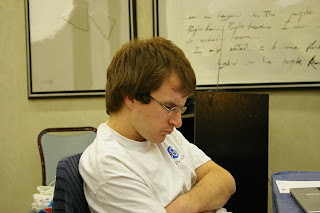

I worked with Gon ri on svnbuildstat, that is a service for building packages and show statistics about lintian/linda/piuparts checks. It for example contains all packages of the Debian Python Modules Team (that I am a member of) and many others. We discussed and started to work on how to create robust buildbots, that can be installed as a regular Debian package with zero (if possible) configuration, so that many people can just install them without pain, thus providing a huge scalability to the project.

We wrote a preliminary patch to pbuilder for killing the build if it exceeds given memory/disk usage. I had to learn the internals of pbuilder and I lost quite some time squashing some stupid bug I caused while writing the patch.

I spent most of my time with svnbuildstat, mostly learning and discussing things. This will be important for the future, but to also have some real results, I also fixed some packages I comaintain:

Together with Kumar Appaiah we fixed the python-numpy package and I had it uploaded, then I learned how to work with quilt instead of dpatch to handle patches in Debian packages, thanks to Holger's webpage, that contains a nice tutorial. Then I switched from dpatch to quilt in python-scipy and backported a patch from upstream svn to fix a segfault bug and had the package uploaded.

Then I finished the Cython package and had it uploaded. Cython is a marvelous package to speed up Python programs and interface C/C++ programs. I greatly recommend to try. If you don't like it, you can try some of at least 10 other ways to wrap C code in Python. I also used quilt in there to backport a patch from the upstream Mercurial repository to implement parsing @classmethods. Quilt is really a pleasure to work with.

Impressions from the meeting

I've been using Debian since 2001 as my only operating system on all of my computers, so I am not a complete beginner. But it never occured to me I could get involved in Debian more than a user and an occasional bug reporter. What a mistake.

I started packaging new things and fixing packages that I need for my work and that didn't work. This got me involved quite a bit in Debian. But in M rida it was the first time I could dring a beer (well, especially wine) with Debian Developers and I found out they are really cool people. They are all very skilled. Also something, that I love about Debian, is that the people involved in it share two common features, that are very important for them - respect to democracy and personal freedom. When I think about it, those are probably the first two items on my presonal list of values.

Of course, everytime there is a group of 1000+ people, there are good and bad people, more and less skilled, but important is the overall atmosphere - and that is as I described. I think Debian is truly unique. There is Gentoo, that has maybe 40 (?) active developers. There is Ubuntu, that has maybe 100 (?) developers, but it's basically a comercial distribution and there is not so many interesting work for non employees of Canonical. There is opensuse and fedora, where I am not sure about the numbers. The atmosphere in Debian can change in the future, one never knows, but as of the end of 2007, I think it's very cool to get involved.

Maybe it's not for everyone, but it's the right place for me.

Ondřej Čertík: Merida

We spent the whole Friday hacking, Lucas will send a summary email soon. More people joined.

Ana Guerrero:


Amaya Rodrigo:


Mark Purcell:


Kilian Krause and C sar G mez Mart n


and Holger Levsen with red hair:


On Saturday we were again working and in the late afternoon we took a walk in M rida, visited the famous ancient Roman monuments. Now it's 3:30am and we will soon go to Madrid and back home.

Lucas Nussbaum: BLOB

I didn’t know about that movie. Funny. Will try to remember to use the poster in a databases course ;-)

Ian Murdock: Watch that space

Simon Phipps: “We’ve got an exciting development bubbling that I hope to be able to announce in full detail at FOSS.IN in Bangalore on Friday when I speak there. Just to give you a glimpse of what’s happening, Sun will be announcing a multi-year award program in support of fostering innovation and advancing open source within our open source communities…”

Evan Prodromou: 13 Frimaire CCXVI

I'm organizing a micro-coworking session here in Montreal for 6 December (15 Frimaire). "Micro-coworking session" is just a fancy way of saying "hanging out together and working at a caf ". Folks will be meeting in the back of Caff ArtJava from about 9AM to about 5PM. More info on the subStation Coworking event page on Upcoming. The event is for people interested/involved in (or supportive of) Station-C, the incipient Montreal coworking facility scheduled to open in February 2008. But everyone's welcome to come by -- heck, we'd have a hard time keeping you away. tag:

Private and public life in the age of Facebook One of the things I find interesting about life on the Internet is the distinction between public and private life. So much of our lives are on-line today; for many of us, the Web is where we make our living, make our friends, enjoy our social life, and plan our off-line activities. But what about those personal activities that don't jibe with our intended professional image? If we have out-of-the-mainstream political or religious views, or unorthodox social activities, how do we keep them to ourselves? How do you talk about things on-line with friends that maybe you don't want your parents or other family to know about -- or vice versa? How do we preserve our reputation in more than one sphere, in situations where those spheres are very different? I think there are a number of strategies for doing this.
  1. Be discreet. In other words, just don't put personal stuff on the Web. Keep up your professional image at all times, and don't use Web sites or tools to make connections in more private ways. This is probably the safest strategy, and the one that most privacy groups and media recommend. But there are some downsides, too. You miss out on the Web's power to enhance your life as a well-rounded human being -- your personal life languishes for the benefit of your professional one. You give up on some important opportunities to connect with other human beings in a deep and meaningful way. Especially if your interests are shared by only a small percent of the human population, it's unlikely you'll run into other people who share them off-line. I also think there's something unhealthy about stifling your personal side for your professional life's benefit.
  2. Use pseudonyms. Another way of being "discrete" -- here, I mean separated into different parts. I think this is one of the most common ways to deal with the problem. Use your "real name" for activities, groups, and opinions that you feel safe presenting to the world at large, and use made-up names or handles for activities you might not feel like discussing at a job interview. This can be very successful, but also nerve-wracking. What parts of life require a "secret identity", and what parts don't? What if one part of your life leaks into another? It can also be tedious to set up, say, two or three different Flickr accounts, two or three Facebook accounts, umpteen blogs, etc. Or, you keep a LinkedIn account for work and a MySpace one for your partying set, and hope that Google doesn't make a link between the two. But you can get sick of managing them, and other people don't know which name or pseudonym to use and when to "out" you to their other friends.
  3. Integrate. By this I mean: let your personal and professional life grow together. Decide what parts of your personal life you're willing to make public, and bring them into your public persona. Parts of your life that you don't feel you can integrate, consider letting go of. I think this can be risky and difficult, but ultimately I think it's the most healthy psychologically for people who spend a lot of time on the Web. Most often, these people either work for themselves and don't have to answer to others, or they work in industries where offbeat or out-of-the-mainstream lifestyles are tolerated or encouraged (or the need for highly-skilled people makes those "quirks" easier to ignore). Or they just gamble that nobody at their work or in their family is really checking (quite often the case).
  4. Wait for better software. I think the main reason that this is a problem is that social software developers aren't very good sociologists. Or, rather, we focus on the software rather than on the social. It would be nice to see the next generation of Web services support the multiple facets of a person's life. I'm an Open Source fanatic, a Web developer, a wikitista, an entrepreneur, a father, a Burner, a Montrealer, a man, a prankster, a partier and a cook -- among many other things. How can social software, or a federation of services, let me reflect these different aspects of my personality to my friends, coworkers, colleagues, relatives and strangers? Could I define finer-grained relationships with others than just "friend", and choose what parts of my life to feature or downplay with each? It's a fascinating design and implementation question, and my hope is that someone will take on the challenge in the future.
I think this is a situation where our society and our software both need to evolve and change. It would be nice -- very nice -- if edgy politics or weirdo culture didn't hurt your chances of advancing in your chosen field. And if friends, family and colleagues could accept us all for who we are, in all our parts. But it will also be nice if software and software usage patterns on the Web let us find a way to adapt to that, too. People have lots of different parts and lots of different personae that they inhabit at different times and in different contexts -- it would be great to match our social software more to that reality. tags:

One-liners Some other things to note:
  • Montr al has had an insane amount of snow in the last few days. I dug out our car for about 90 minutes this morning, and drove for hours in snow-blind traffic. Not an easy time, but boy the city is lovely like this.
  • I'm doing a talk on extending MediaWiki at the PHP Qu bec meeting this Thursday, Dec 6. Meeting info is here.
  • Pictures from Montreal Santarchy are available on Grimmwire's Santarchy Montreal 2007 set. Great group, fun crowd, loooooong night. Oh boy.
  • Speaking of SantaCon, Santarchy in Second Life sounds totally nutso.
  • My server overload problems seem to be getting better. I moved Vinismo to its own server on Amazon Elastic Compute Cloud. I also moved SonaUiki and the Br leurs site to GoDaddy, where I have a ridiculous number of free Web hosting credits. It worked surprisingly well, and GoDaddy supports PmWiki out-of-the-box. Nice! Update: Apparently GoDaddy adds a whole bunch of ads in on their free Web hosting. I didn't notice; I have Adblock Plus installed. Gar. I'll have to move these sites back pronto.
  • My light and convenient Toshiba Port g R200 has been throwing I/O errors. So I gotta get a new hard drive. Good news: the thing's still under warranty (yay!). Bad news: I gotta drive through this miserable weather to a place in St. L onard to get the HD replaced. Boo!
tags:

3 December 2007

David Welton: Interest in a simple open source newsletter system for Rails?

I'm putting together a very simple newsletter system for a client, based on Rails. It's meant to handle around 1000 addresses, and be simple to use: you create a newsletter with fckeditor, look at it, then send it if everything looks good. It also ads links so that people can unsubscribe, or subscribe from the site (with confirmation provided via a link in an email). It's not nearly as extensive as a lot of what I've seen out there in PHP, but I really needed something in Rails and didn't find anything that worked for me. I'm considering open sourcing the code, but am only likely to do so if there is interest from people willing to work on the code. I'm just not in the mood to put code out there that just sits there. If you are interested, email me and we can work something out.

Edd Dumbill: Smartcard authentication on Linux and Mac

For various reasons, I need to secure access to some resources using two-factor authentication, and thus have been looking at smartcards. These little devices store digital keys and certificates, protected by a passphrase, and calculate digital signatures on-device. Hence the two factors: possession of the card, and knowledge of the password.This sort of scheme is widely used by government agencies and large corporations (and largely reliant on Windows, too), but I wanted to find the low cost way in for the small operator using open source.

OpenSC on Linux
The best starting point for Linux is the OpenSC project. It supports a reasonably broad array of devices, and is well supported by Linux distributions. Using command line tools you can create keys and certificates, as you would in OpenSSL for web servers and so on, and then upload them to the smartcard.Although OpenSSH source code has support for OpenSC, it is not compiled in by default in Debian and derived distributions. Unfortunately this means a bit of recompilation to get SSH supporting OpenSC. When that's done, you have an SSH implementation that can use an RSA key from your smartcard, and best of all, you can add this key to the ssh-agent like you would with regular keys. The hardwareI ordered two devices, which seemed to have the best support from OpenSC, the Axalto Cryptoflex E-Gate, and an Aladdin eToken. I got these from UsaSmartCard, who have a special section in their catalogue for Open Source compatible products. Both these cards have a USB interface built-in, I didn't want to be toting around an extra card reader in addition to the tokens themselves.
On the MacWhile both the devices worked as advertised under Linux, the experience has been a lot less fruitful under Mac OS 10.5 Leopard. There is a port of the OpenSC project for Mac OS, called SCA. The promise of the integration is great: you can use the on-device keys with apps like Safari and Mail, but there is a change in the way that the daemon responsible for talking to the smartcards (pcscd) works on Leopard, which means OpenSC won't recognise the cards.
With some fiddling, I have managed to force the Cryptoflex device to work with Mac. Unfortunately the Leopard/Darwin source for OpenSSH has diverged significantly enough from the upstream OpenSSH, that I couldn't apply the OpenSC patches. Not having ssh-agent work with the smartcard is a significant nuisance for me, as it's the easiest way to patch in the extra security to deployment processes.The Aladdin eToken just plain didn't work on Leopard. There is a report that Aladdin are working on Leopard drivers, however.I think a small number of mainly US federal smart cards will work out of the box on Leopard, though I've seen a few complaints about these on the Apple forums. It loooks unfortunately like smartcard support slipped through the net a bit. ConclusionSmartcard support is relatively straightforward on Linux. On Mac OS 10.5, it looks like some waiting is in order before things will work properly.

Christian Perrier: Arrived in BLR

I finally arrived in Bangalore. Unfortunately, alone, without suitcase, which Air India apparently managed to lose. So, it will be the first time I experience the happiness of people who don't get their luggage in an airport and have to live for a few days with nothing but the clothes they had on them while travelling. Running around in local shops to get socks or pants wasn't exactly what I planned to do here and I probably won't. So, I'll take the local stance and learn about patience, and wait. The place we're hosted at is *very* nice (B&B, probably with a few other speakers I haven't seen yet). And, it has a really good Internet connection so I feel pretty safe and can give news around. I'm currently waiting for Sam whose flight was apparently delayed (I hope *he* gets his suitcase).... I hope he won't be too much in trouble: we don't want to lose our DPL in India (maybe they want to keep him here, though).

Russell Coker: New Bonnie++ Releases

Today I released new versions of my Bonnie++ [1] benchmark. The main new feature (in both the stable 1.03b version and the experimental 1.93d version) is the ability of zcav to write to devices. The feature in question was originally written at the request of some people who had strange performance results when testing SATA disks [2]. Now I plan to focus entirely on the 1.9x branch. I have uploaded 1.03b to Debian/unstable but shortly I plan to upgrade a 1.9x version and to have Lenny include Bonnie++ 2.0x. One thing to note is that Bonnie++ in the 1.9x branch is multi-threaded which does mean that lower performance will be achieved with some combinations of OS and libc. I think that this is valid as many applications that you will care about (EG MySQL and probably all other modern database servers) will only support a threaded mode of operation (at least for the default configuration) and many other applications (EG Apache) will have a threaded option which can give performance benefits. In any case the purpose of a benchmark is not to give a high number that you can boast about, but to identify areas of performance that need improvement. So doing things that your OS might not be best optimised for is a feature! While on this topic, I will never add support for undocumented APIs to the main Bonnie++ and ZCAV programs. The 1.9x branch of Bonnie++ includes a program named getc_putc which is specifically written to test various ways of writing a byte at a time, among other things it uses getc_unlocked() and putc_unlocked() - both of which were undocumented at the time I started using them. Bonnie++ will continue using the locking versions of those functions, last time I tested it meant that the per-char IO tests in Bonnie++ on Linux gave significantly less performance than on Solaris (to the degree that it obviously wasn’t hardware). I think this is fine, everyone knows that IO one character at a time is not optimal anyway so whether your program sucks a little or a lot because of doing such things probably makes little difference.

2 December 2007

Thijs Kinkhorst: NWERC over

The NW-Europe Programming Contest NWERC is over (for two weeks already). The winners were from Oxford, and the best Dutch team were our Utrecht prodigies at number 7 (full standings). If I may, I think it's been a great success, but of course, there's in our eyes much to be improved. And we will, in 2008. We also got some compliments about our own jury system DOMjudge, which is nice to hear. Even more good news is that we were allowed to send three teams off to the ICPC World Finals. These finals are in Bannf, Canada and I'll probably be there aswell.

Christine Spang: media rant

Dear Warner Brothers, As a poor hosed college student, I have spent many a month where I have not bought any movies. Finally, I got some money for my birthday and decided to buy the film March of the Penguins. However, I did not read the very fine print, and when I got home I found that it crashes mplayer, and totem will only play the previews; it is completely unable to play the feature title. I don’t want to copy this goddamn DVD, I only wanted to be able to play it on my computer since the TV room downstairs was full of LARPers at the time. However, due to your ridiculously anti-consumer copy protection, I had to borrow my roommate’s Powerbook in order to accomplish this. I don’t like Macs. I already paid you for the movie; why does my software need to pay you to play the movie? Maybe next time I will download your movie instead of paying you for it. No love, Christine

Neil Williams: Emdebian translation support

I've just uploaded the first (hopefully) working version of langupdate to Emdebian. Full details on the emdebian website.
There are only a few packages in the emdebian locale repository right now. langupdate will be part of the default Emdebian GPE setup.
This is all very experimental. Emdebian needs tdebs urgently so the decision was taken to proceed on an experimental basis and then feed back to the Debian tdeb implementation and fold the Emdebian code into the Debian tdeb support.

Matthew Johnson: Passwordless Encrypted Root in Debian

If, like me, you wanted both an encrypted root filesystem and some form of bootsplash you may have discovered that this is tricky. You need to enter the decryption passphrase on the terminal which means exiting the bootsplash. I decided it must be possible to use a USB token with the key on it rather than a passphrase to decrypt the drive and while this seems supported upstream, it is not supported out of the box on Debian. This is a short howto explaining my solution. Pre-requisites You will need a USB hard disk and a computer using Debian with an encrypted root filesystem. I am assuming that you are using a stock kernel with an initramfs image and have a luks encrypted LVM containing the root filesystem. You will have to change some of the details below to match your specific system. In the examples below /dev/hda5 is the encrypted partition and /dev/sda2 is the partition on the USB disk holding the key. Setting up the key First we need to generate a random key and put it on the disk. To save having to mount things in the initramfs, I chose to use a partition at the end of the USB flash disk. This means repartitioning and reformatting your USB disk. I recommend allocating the last cylinder in fdisk to primary partition 2. Once you have the second, small partition (you are only going to use 1k, so as small a partition as possible) you can put a key on it. This is as simple as dd if=/dev/urandom of=/dev/sda2 bs=1M . Adding the key to the luks partition Next, you need to add your new key as able to decrypt the partition. Luks allows several keys to be able to unlock the partition. The real key is decrypted under each of the user keys or passphrases and stored in a key slot' in the partition. To add your key type:
touch /tmp/keyfile
chmod 600 /tmp/keyfile 
dd if=/dev/sda2 bs=1k count=1 of=/tmp/keyfile
cryptsetup luksAddKey /dev/hda5 /tmp/keyfile
wipe /tmp/keyfile
Note the careful handling of the temporary key file (luksKeyAdd won't read from stdin, whereas luksOpen will), I recommend storing it on a ramdisk and you should certainly use wipe rather than rm if you don't. Once you have added your USB key you could remove the passphrase from the key list with luksDelKey, but if for any reason you lose the USB hdd you will be unable to decrypt the partition; I recommend leaving both keys available. Booting automatically In order to boot using the USB key we need to provide a couple of helper scripts in order for the initramfs to work. We also need to set some parameters on the kernel command line. In Debian these scripts can be added to the initramfs by putting them in /etc/initramfs-tools/. The first script is a helper script used when building the initramfs. This writes a second script into the initramfs itself which takes the partition as a parameter and prints the key on stdout. This should be written to /etc/initramfs-tools/hooks/cryptkey (executable) and contain:
#!/bin/sh --
PREREQ=""
prereqs()
 
   echo "$PREREQ"
 
case $1 in
prereqs)
   prereqs
   exit 0
   ;;
esac
. /usr/share/initramfs-tools/hook-functions
cat > $ DESTDIR /bin/loadkey 
The second script runs immediately before the cryptsetup script in the initramfs and ensures that the USB disk is available. This will cause the boot sequence to block until the USB disk is inserted and the device nodes created by udev. It can be provided directly in /etc/initramfs-tools/scripts/local-top/00ensureusb (executable) and should contain:
#!/bin/sh --
PREREQ=""
prereqs()
 
   echo "$PREREQ"
 
case $1 in
   prereqs)
      prereqs
      exit 0
   ;;
esac
if ! grep cryptopts /proc/cmdline >/dev/null; then return; fi
. /scripts/functions
log_begin_msg "Waiting for USB to become available..."
modprobe usbcore
modprobe uhci_hcd
modprobe ehci_hcd
modprobe usb_storage
while [ ! -b /dev/sda2 ]; do
   sleep 1
done
log_end_msg
exit 0
The cryptsetup script itself reads configuration from the kernel command line. Here you can give it a script which will read the key and the source for the key to read. Edit your grub or lilo config and append the following to the kernel command line: cryptopts=keyscript=/bin/loadkey,key=/dev/sda2,source=/dev/hda5,target=hda5_crypt,lvm=hecate-root You will obviously have to change the name of your lvm root partition (volumegroup-logicalvolume). I recommend having two entries in the boot menu, one with the cryptopts and one without to allow easy decryption using the passphrase instead. Conclusion That should be everything. Boot your computer and inset the usb hdd. When the boot process passes decryption you can remove it again. You may have to replug it if you boot with it inserted to start with.

Simon Richter: Obvious

My flight got delayed. There is still a slim chance I will be home before midnight. Having a laptop would definitely be an advantage.

Next.

Previous.