Search Results: "sf"

1 December 2016

Daniel Pocock: Using a fully free OS for devices in the home

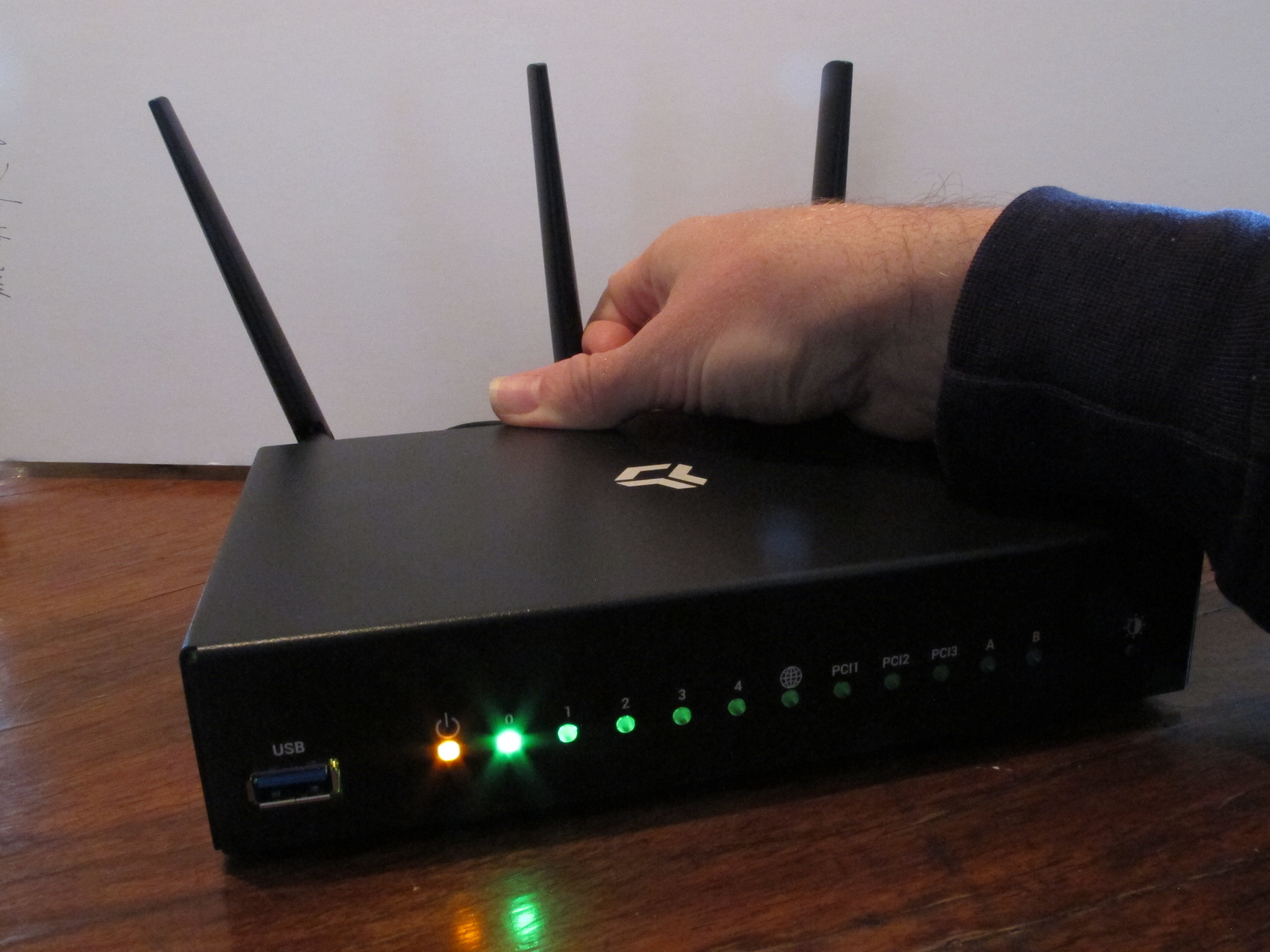
There are more and more devices around the home (and in many small offices) running a GNU/Linux-based firmware. Consider routers, entry-level NAS appliances, smart phones and home entertainment boxes. More and more people are coming to realize that there is a lack of security updates for these devices and a big risk that the proprietary parts of the code are either very badly engineered (if you don't plan to release your code, why code it properly?) or deliberately includes spyware that calls home to the vendor, ISP or other third parties. IoT botnet incidents, which are becoming more widely publicized, emphasize some of these risks. On top of this is the frustration of trying to become familiar with numerous different web interfaces (for your own devices and those of any friends and family members you give assistance to) and the fact that many of these devices have very limited feature sets. Many people hail OpenWRT as an example of a free alternative (for routers), but I recently discovered that OpenWRT's web interface won't let me enable both DHCP and DHCPv6 concurrently. The underlying OS and utilities fully support dual stack, but the UI designers haven't encountered that configuration before. Conclusion: move to a device running a full OS, probably Debian-based, but I would consider BSD-based solutions too. For many people, the benefit of this strategy is simple: use the same skills across all the different devices, at home and in a professional capacity. Get rapid access to security updates. Install extra packages or enable extra features if really necessary. For example, I already use Shorewall and strongSwan on various Debian boxes and I find it more convenient to configure firewall zones using Shorewall syntax rather than OpenWRT's UI. Which boxes to start with? There are various considerations when going down this path:
  • Start with existing hardware, or buy new devices that are easier to re-flash? Sometimes there are other reasons to buy new hardware, for example, when upgrading a broadband connection to Gigabit or when an older NAS gets a noisy fan or struggles with SSD performance and in these cases, the decision about what to buy can be limited to those devices that are optimal for replacing the OS.
  • How will the device be supported? Can other non-technical users do troubleshooting? If mixing and matching components, how will faults be identified? If buying a purpose-built NAS box and the CPU board fails, will the vendor provide next day replacement, or could it be gone for a month? Is it better to use generic components that you can replace yourself?
  • Is a completely silent/fanless solution necessary?
  • Is it possibly to completely avoid embedded microcode and firmware?
  • How many other free software developers are using the same box, or will you be first?
Discussing these options I recently started threads on the debian-user mailing list discussing options for routers and home NAS boxes. A range of interesting suggestions have already appeared, it would be great to see any other ideas that people have about these choices.

30 November 2016

Enrico Zini: Links for December 2016

German Cities Are Solving The Age-Old Public Toilet Problem [map]
City governments are paying local businesses to open up their restrooms to the public. The program, called Nette Toilette or Nice Toilet, is active in 210 cities and has been running since 2000. Cities pay from $34 to $112 per month to a business, and it puts a sticker in its window to tell people that they can come in and pee for free. Bremen, a city with a population of over half a million people, reckons it saves $1 million per year by using the network, which costs it $168,000 per year. So successful is the scheme that it has given Bremen the best ratio of public toilets to citizens in Germany.

Chris Lamb: Free software activities in November 2016

Here is my monthly update covering what I have been doing in the free software world (previous month):
Reproducible builds

Whilst anyone can inspect the source code of free software for malicious flaws, most software is distributed pre-compiled to end users. The motivation behind the Reproducible Builds effort is to permit verification that no flaws have been introduced either maliciously or accidentally during this compilation process by promising identical results are always generated from a given source, thus allowing multiple third-parties to come to a consensus on whether a build was compromised.

This month:

My work in the Reproducible Builds project was also covered in our weekly reports. (#80, #81, #82 #83.

Toolchain issues I submitted the following patches to fix reproducibility-related toolchain issues with Debian:

strip-nondeterminism

strip-nondeterminism is our tool to remove specific non-deterministic results from a completed build.


jenkins.debian.net

jenkins.debian.net runs our comprehensive testing framework.

  • buildinfo.debian.net has moved to SSL. (ac3b9e7)
  • Submit signing keys to keyservers after generation. (bdee6ff)
  • Various cosmetic changes, including
    • Prefer if X not in Y over if not X in Y. (bc23884)
    • No need for a dictionary; let's just use a set. (bf3fb6c)
    • Avoid DRY violation by using a for loop. (4125ec5)

I also submitted 9 patches to fix specific reproducibility issues in apktool, cairo-5c, lava-dispatcher, lava-server, node-rimraf, perlbrew, qsynth, tunnelx & zp.

Debian

Debian LTS This month I have been paid to work 11 hours on Debian Long Term Support (LTS). In that time I did the following:
  • "Frontdesk" duties, triaging CVEs, etc.
  • Issued DLA 697-1 for bsdiff fixing an arbitrary write vulnerability.
  • Issued DLA 705-1 for python-imaging correcting a number of memory overflow issues.
  • Issued DLA 713-1 for sniffit where a buffer overflow allowed a specially-crafted configuration file to provide a root shell.
  • Issued DLA 723-1 for libsoap-lite-perl preventing a Billion Laughs XML expansion attack.
  • Issued DLA 724-1 for mcabber fixing a roster push attack.

Uploads
  • redis:
    • 3.2.5-2 Tighten permissions of /var/ lib,log /redis. (#842987)
    • 3.2.5-3 & 3.2.5-4 Improve autopkgtest tests and install upstream's MANIFESTO and README.md documentation.
  • gunicorn (19.6.0-9) Adding autopkgtest tests.
  • libfiu:
    • 0.94-1 Add autopkgtest tests.
    • 0.95-1, 0.95-2 & 0.95-3 New upstream release and improve autopkgtest coverage.
  • python-django (1.10.3-1) New upstream release.
  • aptfs (0.8-3, 0.8-4 & 0.8-5) Adding and subsequently improving the autopkgtext tests.


I performed the following QA uploads:


Finally, I also made the following non-maintainer uploads:
  • libident (0.22-3.1) Move from obsolete Source-Version substvar to binary:Version. (#833195)
  • libpcl1 (1.6-1.1) Move from obsolete Source-Version substvar to binary:Version. (#833196)
  • pygopherd (2.0.18.4+nmu1) Move from obsolete Source-Version substvar to $ source:Version . (#833202)


RC bugs


I also filed 59 FTBFS bugs against arc-gui-clients, asyncpg, blhc, civicrm, d-feet, dpdk, fbpanel, freeciv, freeplane, gant, golang-github-googleapis-gax-go, golang-github-googleapis-proto-client-go, haskell-cabal-install, haskell-fail, haskell-monadcatchio-transformers, hg-git, htsjdk, hyperscan, jasperreports, json-simple, keystone, koji, libapache-mod-musicindex, libcoap, libdr-tarantool-perl, libmath-bigint-gmp-perl, libpng1.6, link-grammar, lua-sql, mediatomb, mitmproxy, ncrack, net-tools, node-dateformat, node-fuzzaldrin-plus, node-nopt, open-infrastructure-system-images, open-infrastructure-system-images, photofloat, ppp, ptlib, python-mpop, python-mysqldb, python-passlib, python-protobix, python-ttystatus, redland, ros-message-generation, ruby-ethon, ruby-nokogiri, salt-formula-ceilometer, spykeviewer, sssd, suil, torus-trooper, trash-cli, twisted-web2, uftp & wide-dhcpv6.

FTP Team

As a Debian FTP assistant I ACCEPTed 70 packages: bbqsql, coz-profiler, cross-toolchain-base, cross-toolchain-base-ports, dgit-test-dummy, django-anymail, django-hstore, django-html-sanitizer, django-impersonate, django-wkhtmltopdf, gcc-6-cross, gcc-defaults, gnome-shell-extension-dashtodock, golang-defaults, golang-github-btcsuite-fastsha256, golang-github-dnephin-cobra, golang-github-docker-go-events, golang-github-gogits-cron, golang-github-opencontainers-image-spec, haskell-debian, kpmcore, libdancer-logger-syslog-perl, libmoox-buildargs-perl, libmoox-role-cloneset-perl, libreoffice, linux-firmware-raspi3, linux-latest, node-babel-runtime, node-big.js, node-buffer-shims, node-charm, node-cliui, node-core-js, node-cpr, node-difflet, node-doctrine, node-duplexer2, node-emojis-list, node-eslint-plugin-flowtype, node-everything.js, node-execa, node-grunt-contrib-coffee, node-grunt-contrib-concat, node-jquery-textcomplete, node-js-tokens, node-json5, node-jsonfile, node-marked-man, node-os-locale, node-sparkles, node-tap-parser, node-time-stamp, node-wrap-ansi, ooniprobe, policycoreutils, pybind11, pygresql, pysynphot, python-axolotl, python-drizzle, python-geoip2, python-mockupdb, python-pyforge, python-sentinels, python-waiting, pythonmagick, r-cran-isocodes, ruby-unicode-display-width, suricata & voctomix-outcasts. I additionally filed 4 RC bugs against packages that had incomplete debian/copyright files against node-cliui, node-core-js, node-cpr & node-grunt-contrib-concat.

29 November 2016

Shirish Agarwal: The Iziko South African Museum

This would be a bit long on my stay in Cape Town, South Africa after Debconf16. Before I start, let me share the gallery works, you can see some photos that I have been able to upload to my gallery . It seems we are using gallery 2 while upstream had made gallery 3 and then it sort of died. I actually asked in softwarerecs stackexchange site if somebody knows of a drop-in replacement for gallery and was told/shared about Pwigo . I am sure the admin knows about it. There would be costs to probably migrate from gallery to Pwigo with the only benefit that it would be something which would perhaps be more maintainable. The issues I face with the current gallery system are few things a. There is no way to know how much your progress your upload has taken.
b. After it has submit, it gives a fake error message saying some error has occurred. This has happened on every occasion/attempt. Now I don t know whether it is because I have slow upload speeds or something else altogether. I had shared the error page last time in the blog post hence not sharing again. Although, all the pictures which would be shared in this blog post would be from the same gallery Another thing I would like to share is a small beginner article I wrote about why I like Debian. Another interesting/tit-bit of news I came to know few days back that both Singapore and Qatar have given 96 hours visa free stopovers for Indians for select destinations. Now to start with the story/experience due to some unknown miracle/angel looking upon me I got the chance to go to Debconf16, South Africa. I m sure there was lot of backend discussions but in the end I was given the opportunity to be part of Debcamp and Debconf. While I hope to recount my Debcamp and Debconf experience in another or two blog posts, this would be exclusively the Post-Debconf Experiences I had. As such opportunities to visit another country are rare, I wanted to make the most of it. Before starting from Pune, I had talked with Amey about Visas, about Debconf as he had just been to Debconf15 the year before and various things related to travel. He was instrumental in me having a bit more knowledge about how to approach things. I was also lucky to have both Graham and Bernelle who also suggested, advised and made it possible to have a pleasant stay both during Debcamp and Debconf. The only quibble is I didn t know heaters were being made available to us without any cost. Moving on, a day or two before Debconf was about to conclude, I asked Bernelle s help even though she was battling a burn-out I believe as I was totally clueless about Cape Town. She accepted my request and asked me to look at hostels near Longmarket Street. I had two conditions a. It should not be very far from the airport
b. It should be near to all or most cultural experiences the city has to offer. We looked at hostelworld and from the options listed, it looked like Homebasecapetown looked to be a perfect fit. It was one of the cheaper options and they also had breakfast included in the pricing. I booked through hostelworld for a mixed dorm for 2 days as I was unsure how it would be (the first night effect I have shared about previously) . When I reached there, I found it to be as good as the pictures shared were, the dorm was clean (most important), people were friendly (also important) as well as toilets and shower were also clean while the water was hot, so all in all it was a win-win situation for me. Posters I saw at homebasecapetown While I m not much of an adrenaline-junkie it was nice to know the activities that could be done/taken. Brochures and Condoms just left of main hall. This was again interesting. While apologies for the poor shaky quality of the picture, I believe it is easy to figure out. There were Brochures of the city attractions as well as condoms that people could discreetly use if need be. I had seen such condoms in few toilets during and around Debconf and it felt good that the public were aware and prioritizing safety for their guests and students instead of having fake holier than thou attitudes that many places have. For instance, you wouldn t find something like this in toilets of most colleges in India or anywhere else for that matter. There are few vending machines in what are termed as red light areas or where prostitution is known/infamous to happen and even then most times it is empty. I have 2-3 social workers as friends and they are a source of news on such things. While I went to few places and each had an attraction to it, the one which had my literally eyes out of socket was the Iziko South African Museum . I have been lucky to been quite a few museums in India, the best rated science museum in India in my limited experience has been the Visvesvaraya Industrial & Technological Museum, Bengaluru India . A beer from me if a European can get it right. Don t worry if you mispronounce it, I mispronounce it couple of times till I get it right . Looking up the word Iziko the meaning of the word seems to be the hearth and if you look at the range of collections in the museum, you would think it fits. I was lucky to find couple of friends, one of whom was living at homebase and we decided to go to the museum together. Making friends on the road So Eduardo, my friend on the left and his friend, we went to the museum. While viewing the museum, there were no adjectives to describe it other than Wow and Endless . See fossils of fish-whale-shark ? OR Giant fish-whale-dolphin-shark some million years ago. and Reminder of JAWS ;) While I have more than a few pictures, the point is easily made. It seems almost inconceivable that creatures of such masses actually were on earth. While I played with the model of the jaws of a whale/shark in reality if something like that happened, I would have been fighting for my life. The only thing I missed or could have been better if they had some interactive installations to showcase the now universally accepted Charles Darwin s On the Origin of Species I had never seen anything like this. Sadly, there was nobody around to help us figure out things as I had read that most species of fish don t leave a skeleton behind so how were these models made? It just boggles the mind. Apart from the Science Museum I was also introduced to the bloody history that South Africa had. I saw The 1913 native land act which was not honored . I had been under the impression that India had got a raw deal when it was under British rule but looking at South African history I don t know. While we got our freedom in 1947 they got rid of apartheid about 20 years+ . I talked to lot of young African males and there was lot of naked hostility for the Europeans even today. It was a bit depressing but could relate to their point of view as similar sentiments were echoed by our forefathers. I read in the newspapers and it seemed to be a pretty mixed picture. I can t comment as only South Africans can figure out the way forward. For me, it was enough to know and see that we both had similar political histories as nations. It seemed the racial divide and anger was much more highly pronounced towards Europeans and divisive then the caste divisions here between Indians. I also shared with them my limited knowledge and understanding of the Indian history (as history is re-written all the time) and it was clear to them that we had common/similar pasts. As a result, what was surprising (actually not) is that many South Africans have no knowledge of Indian history. as well otherwise the political differences that South Africa and India has in the current scenario wouldn t have been. In the end, the trip proved to be fun, stimulating, educative, thought-provoking as questions about self-identity , national identity, our place in the Universe kinda questions which should be asked all the time. Thank you Bremmer and the team for letting me experience Cape Town, South Africa, I would have been poorer if I hadn t had the experience.
Filed under: Miscellenous Tagged: #Debconf16, #Dinosaur Fishes, #gallery, #Identity, #Iziko South African Museum, #Nation-state Identity, #pwigo

28 November 2016

Michal Čihař: phpMyAdmin security issues

You might wonder why there is so high number of phpMyAdmin security announcements this year. This situations has two main reasons and I will comment a bit on those. First of all we've got quite a lot of attention of people doing security reviews this year. It has all started with Mozilla SOS Fund funded audit. It has discovered few minor issues which were fixed in the 4.6.2 release. However this was really just the beginning of the story and the announcement has attracted quite some attention to us. In upcoming weeks the security@phpmyadmin.net mailbox was full of reports and we really struggled to handle such amount. Handling that amount actually lead to creating more formalized approach to handling them as we clearly were no longer able to deal with them based on email only. Anyway most work here was done by Emanuel Bronshtein, who is really looking at every piece of our code and giving useful tips to harden our code base and infrastructure. Second thing which got changed is that we release security announcements for security hardening even when there might not be any practical attack possible. Typical example here might be PMASA-2016-61, where using hash_equals is definitely safer, but even if the timing attack would be doable here, the practical result of figuring out admin configured allow/deny rules is usually not critical. Many of the issues also cover quite rare setups (or server misconfigurations, which we've silently fixed in past) like PMASA-2016-54 being possibly caused by server executing shell scripts shipped together with phpMyAdmin. Overall phpMyAdmin indeed got safer this year. I don't think that there was any bug that would be really critical, on the other side we've made quite a lot of hardenings and we use current best practices when dealing with sensitive data. On the other side, I'm pretty sure our code was not in worse shape than any similarly sized projects with 18 years of history, we just become more visible thanks to security audit and people looked deeper into our code base. Besides security announcements this all lead to generic hardening of our code and infrastructure, what might be not that visible, but are important as well:

Filed under: Debian English phpMyAdmin SUSE 0 comments

23 November 2016

Joachim Breitner: microG on Jolla

I am a incorrigibly in picking non-mainstream, open smartphones, and then struggling hard. Back then in 2008, I tried to use the OpenMoko FreeRunner, but eventually gave up because of hardware glitches and reverted to my good old Siemens S35. It was not that I would not be willing to put up with inconveniences, but as soon as it makes live more difficult for the people I communicate with, it becomes hard to sustain. Two years ago I tried again, and got myself a Jolla phone, running Sailfish OS. Things are much nicer now: The hardware is mature, battery live is good, and the Android compatibility layer enables me to run many important apps that are hard to replace, especially the Deutsche Bahn Navigator and various messengers, namely Telegram, Facebook Messenger, Threema and GroupMe. Some apps that require Google Play Services, which provides a bunch of common tasks and usually comes with the Google Play store would not run on my phone, as Google Play is not supported on Sailfish OS. So far, the most annoying ones of that sort were Uber and Lyft, making me pay for expensive taxis when others would ride cheaper, but I can live with that. I tried to install Google Play Services from shady sources, but it would regularly crash.

Signal on Jolla Now in Philadelphia, people urged me to use the Signal messenger, and I was convinced by its support for good end-to-end crypto, while still supporting offline messages and allowing me to switch from my phone to my desktop and back during a conversation. The official Signal app uses Google Cloud Messaging (GCM, part of Google Play Services) to get push updates about new posts, and while I do not oppose this use of Google services (it really is just a ping without any metadata), this is a problem on Sailfish OS. Luckily, the Signal client is open source, and someone created a LibreSignal edition that replaced the use of GCM with websockets, and indeed, this worked on my phone, and I could communicate. Things were not ideal, though: I would often have to restart the app to get newly received messages; messages that I send via Signal Desktop would often not show up on the phone and, most severe, basically after every three messages, sending more messages from Desktop would stop working for my correspondents, which freaked them out. (Strangely it continued working from their phone app, so we coped for a while.) So again, my choice of non-standard devices causes inconveniences to others. This, and the fact that the original authors of Signal and the maintainers of LibreSignal got into a fight that ended LibreSignal discontinued, meant that I have to change something about this situation. I was almost ready to give in and get myself a Samsung S7 or something boring of the sort, but then I decided to tackle this issue once more, following some of the more obscure instructions out there, trying to get vanilla Signal working on my phone. About a day later, I got it, and this is how I did it.

microG So I need Google Play Services somehow, but installing the real thing did not seem to be very promising (I tried, and regularly got pop-ups telling me that Play Services has crashed.) But I found some references to a project called microG , which is an independent re-implementation of (some of) of the play services, in particular including GCM. Installing microG itself was easy, as you can add their repository to F-Droid. I installed the core services, the services framework and the fake store apps. If this had been all that was to do, things would be easy!

Play Store detection work arounds But Signal would still complain about the lack of Google Play Services. It asks Android if an app with a certain name is installed, and would refuse to work if this app does not exist. For some reason, the microG apps cannot just have the names of the real Google apps. There seem to be two ways of working around this: Patching Signal, or enabling Signature Spoofing. The initially most promising instructions (which are in a README in a tarball on a fishy file hoster linked from an answer on the Jolla support forum ) suggested patching Signal, and actually came both with a version of an app called Lucky Patcher as well as a patched Android package, but both about two years old. I tried a recent version of the Lucky Patcher, but it failed to patch the current version of Signal.

Signature Spoofing So on to Signature Spoofing. This is a feature of some non-standard Android builds that allow apps (such as microG) to fake the existence of other apps (the Play Store), and is recommended by the microG project. Sailfish OS s Android compatibility layer Alien Dalvik does not support it out of the box, but there is a tool tingle that adds this feature to existing Android systems. One just has to get the /system/framework/framework.jar file, put it into the input folder of this project, run python main.py, select 2, and copy the framework.jar from output/ back. Great.

Deodexing Alien Dalvik Only that it only works on deodexed files. I did not know anything about odexed Android Java classes (and did not really want to know), but there was not way around. Following this explanation I gathered that one finds files foo.odex in the Android system folder, runs some tool on them to create a classes.dex file, and adds that to the corresponding foo.jar or foo.apk file, copies this back to the phone and deletes the foo.odex file. The annoying this is that one does not only have to do it for framework.jar in order to please tingle, because if one does it to one odex file, one has to do to all! It seems that for people using Windows, the Universal Deodexer V5 seems to be a convenient tool, but I had to go more manually. So I first fetched smali , compiled it using ./gradlew build. Then I fetched the folders /opt/alien/system/framework and /opt/alien/system/app from the phone (e.g. using scp). Keep a backup of these in case something breaks. Then I ran these commands (disclaimer: I fetched these from my bash history and slightly cleaned them up. This is not a fire-and-forget script! Use it when you know what it and you are doing):
cd framework
for file in *.odex
do
  java -jar ~/build/smali/baksmali/build/libs/baksmali.jar deodex $file -o out
  java -jar ~/build/smali/smali/build/libs/smali.jar a out -o classes.dex
  zip -u $(basename $file .odex).jar classes.dex
  rm -rf out classes.dex $file
done
cd ..
cd app
for file in *.odex
do
  java -jar ~/build/smali/baksmali/build/libs/baksmali.jar deodex -d ../framework $file -o out
  java -jar ~/build/smali/smali/build/libs/smali.jar a out -o classes.dex
  zip -u $(basename $file .odex).apk classes.dex
  rm -rf out classes.dex $file
done
cd ..
The resulting framework.jar can now be patched with tingle:
mv framework/framework.jar ~/build/tingle/input
cd ~/build/tingle
./main.py
# select 2
cd -
mv ~/build/tingle/output/framework.jar framework/framework.jar
Now I copy these framework and app folders back on my phone, and restart Dalvik:
devel-su systemctl restart aliendalvik.service
It might start a bit slower than usually, but eventually, all the Android apps should work as before. The final bit that was missing in my case was that I had to reinstall Signal: If it is installed before microG is installed, it does not get permission to use GCM, and when it tries (while registering: After generating the keys) it just crashes. I copied /data/data/org.thoughtcrime.secretsms/ before removing Signal and moved it back after (with cp -a to preserve permissions) so that I could keep my history. And now, it seems, vanilla Signal is working just fine on my Jolla phone!

What s missing Am I completely happy with Signal? No! An important feature that it is lacking is a way to get out all data (message history including media files) in a file format that can be read without Signal; e.g. YAML files or clean HTML code. I do want to be able to re-read some of the more interesting conversations when I am 74 or 75, and I doubt that there will be a Signal App, or even Android, then. I hope that this becomes available in time, maybe in the Desktop version. I would also hope that pidgin gets support to the Signal protocol, so that I conveniently use one program for all my messaging needs on the desktop. Finally it would be nice if my Signal identity was less tied to one phone number. I have a German and a US phone number, and would want to be reachable under both on all my clients. (If you want to contact me on Signal, use my US phone number.)

Alternatives Could I have avoided this hassle by simply convincing people to use something other than Signal? Tricky, at the moment. Telegram (which works super reliable for me, and has a pidgin plugin) has dubious crypto and does not support crypto while using multiple clients. Threema has no desktop client that I know of. OTR on top of Jabber does not support offline messages. So nothing great seems to exist right now. In the long run, the best bet seems to be OMEMO (which is, in essence, the Signal protocol) on top of Jabber. It is currently supported by one Android Jabber client (Conversations) and one Desktop application (gajim, via a plugin). I should keep an eye on pidgin support for OMEMO and other development around this.

21 November 2016

Gustavo Noronha Silva: A tale of cylinders and shadows

Like I wrote before, we at Collabora have been working on improving WebKitGTK+ performance for customer projects, such as Apertis. We took the opportunity brought by recent improvements to WebKitGTK+ and GTK+ itself to make the final leg of drawing contents to screen as efficient as possible. And then we went on investigating why so much CPU was still being used in some of our test cases. The first weird thing we noticed is performance was actually degraded on Wayland compared to running under X11. After some investigation we found a lot of time was being spent inside GTK+, painting the window s background. Here s the thing: the problem only showed under Wayland because in that case GTK+ is responsible for painting the window decorations, whereas in the X11 case the window manager does it. That means all of that expensive blurring and rendering of shadows fell on GTK+ s lap. During the web engines hackfest, a couple of months ago, I delved deeper into the problem and noticed, with Carlos Garcia s help, that it was even worse when HiDPI displays were thrown into the mix. The scaling made things unbearably slower. You might also be wondering why would painting of window decorations be such a problem, anyway? They should only be repainted when a window changes size or state anyway, which should be pretty rare, right? Right, that is one of the reasons why we had to make it fast, though: the resizing experience was pretty terrible. But we ll get back to that later. So I dug into that, made a few tries at understanding the issue and came up with a patch showing how applying the blur was being way too expensive. After a bit of discussion with our own Pekka Paalanen and Benjamin Otte we found the root cause: a fast path was not being hit by pixman due to the difference in scale factors on the shadow mask and the target surface. We made the shadow mask scale the same as the surface s and voil , sane performance. I keep talking about this being a performance problem, but how bad was it? In the following video you can see how huge the impact in performance of this problem was on my very recent laptop with a HiDPI display. The video starts with an Epiphany window running with a patched GTK+ showing a nice demo the WebKit folks cooked for CSS animations and 3D transforms. After a few seconds I quickly alt-tab to the version running with unpatched GTK+ I made the window the exact size and position of the other one, so that it is under the same conditions and the difference can be seen more easily. It is massive. Yes, all of that slow down was caused by repainting window shadows! OK, so that solved the problem for HiDPI displays, made resizing saner, great! But why is GTK+ repainting the window even if only the contents are changing, anyway? Well, that turned out to be an off-by-one bug in the code that checks whether the invalidated area includes part of the window decorations. If the area being changed spanned the whole window width, say, it would always cause the shadows to be repainted. By fixing that, we now avoid all of the shadow drawing code when we are running full-window animations such as the CSS poster circle or gtk3-demo s pixbufs demo. As you can see in the video below, the gtk3-demo running with the patched GTK+ (the one on the right) is using a lot less CPU and has smoother animation than the one running with the unpatched GTK+ (left). Pretty much all of the overhead caused by window decorations is gone in the patched version. It is still using quite a bit of CPU to animate those pixbufs, though, so some work still remains. Also, the overhead added to integrate cairo and GL rendering in GTK+ is pretty significant in the WebKitGTK+ CSS animation case. Hopefully that ll get much better from GTK+ 4 onwards.

19 November 2016

Keith Packard: AltOS-Lisp-2

Updates to Altos Lisp I wrote a few days ago about a tiny lisp interpreter I wrote for AltOS Really, it's almost "done" now, I just wanted to make a few improvements Incremental Collection I was on a walk on Wednesday when I figured out that I didn't need to do a full collection every time; a partial collection that only scanned the upper portion of memory would often find plenty of free space to keep working for a while. To recap, the heap is in two pieces; the ROM piece and the RAM piece. The ROM piece is generated during the build process and never changes afterwards (hence the name), so the only piece which is collected is the RAM piece. Collection works like:
chunk_low = heap base
new_top = heap base
For all of the heap
    Find the first 64 live objects above chunk_low
    Compact them all to new_top
    Rewrite references in the whole heap for them
    Set new_top above the new locations
    Set chunk_low above the old locations
top = new_top
The trick is to realize that there's really no need to start at the bottom of the heap; you can start anywhere you like and compact stuff, possibly leaving holes below that location in the heap. As the heap tends to have long-lived objects slowly sift down to the beginning, it's useful to compact objects higher than that, skipping the compaction process for the more stable area in memory. Each time the whole heap is scanned, the top location is recorded. After that, incremental collects happen starting at that location, and when that doesn't produce enough free space, a full collect is done. The collector now runs a bunch faster on average now. Binary Searches I stuck some linear searches in a few places in the code, the first was in the collector when looking to see where an object had moved to. As there are 64 entries, the search is reduced from 32 to 6 compares on average. The second place was in the frame objects, which hold the list of atom/value bindings for each lexical scope (including the global scope). These aren't terribly large, but a binary search is still a fine plan. I wanted to write down here the basic pattern I'm using for binary searches these days, which avoids some of the boundary conditions I've managed to generate in the past:
int find (needle)  
    int l = 0;
    int r = count - 1;
    while (l <= r)  
        int m = (l + r) >> 1;
        if (haystack[m] < needle)
            l = m + 1;
        else
            r = m - 1;
     
    return l;
 
With this version, the caller can then check to see if there's an exact match, and if not, then the returned value is the location in the array where the value should be inserted. If the needle is known to not be in the haystack, and if the haystack is large enough to accept the new value:
void insert(needle)  
    int l = find(needle);
    memmove(&haystack[l+1],
        &haystack[l],
        (num - l) * sizeof (haystack[0]));
    haystack[l] = needle;
 
Similarly, if the caller just wants to know if the value is in the array:
bool exists(needle)  
    int l = find(needle);
    return (l < count && haystack[l] == needle);
 
Call with Current Continuation Because the execution stack is managed on the heap, it's completely trivial to provide the scheme-like call with current continuation, which constructs an object which can be 'called' to transfer control to a saved location:
> (+ "hello " (call/cc (lambda (return) (setq boo return) (return "foo "))) "world")
"hello foo world"
> (boo "bar ")
"hello bar world"
> (boo "yikes ")
"hello yikes world"
One thing I'd done previously is dump the entire state of the interpreter on any error, and that included a full stack trace. I adopted that code for printing of these continuation objects:
boo
[
    expr:   (call/cc (lambda (return) (set (quote boo) return) (return "foo ")))
    state:  val
    values: (call/cc
             [recurse...]
             )
    sexprs: ()
    frame:   
]
[
    expr:   (+ "hello " (call/cc (lambda (return) (set (quote boo) return) (return "foo "))) "world")
    state:  formal
    values: (+
             "hello "
             )
    sexprs: ((call/cc (lambda (return) (set (quote boo) return) (return "foo ")))
             "world"
             )
    frame:   
]
The top stack frame is about to return from the call/cc spot with a value; supply a value to 'boo' and that's where you start. The next frame is in the middle of computing formals for the + s-expression. It's found the + function, and the "hello " string and has yet to get the value from call/cc or the value of the "world" string. Once the call/cc "returns", that value will get moved to the values list and the sexpr list will move forward one spot to compute the "world" value. Implementing this whole mechanism took only a few dozen lines of code as the existing stack contexts were already a continuation in effect. The hardest piece was figuring out that I needed to copy the entire stack each time the continuation was created or executed as it is effectively destroyed in the process of evaluation. I haven't implemented dynamic-wind yet; when I did that for nickle, it was a bit of a pain threading execution through the unwind paths. Re-using Frames I decided to try and re-use frames (those objects which hold atom/value bindings for each lexical scope). It wasn't that hard; the only trick was to mark frames which have been referenced from elsewhere as not-for-reuse and then avoid sticking those in the re-use queue. This reduced allocations even further so that for simple looping or tail-calling code, the allocator may never end up being called. How Big Is It? I've managed to squeeze the interpreter and all of the rest of the AltOS system into 25kB of Cortex-M0 code. That leaves space for the 4kB boot loader and 3kB of flash to save/restore the 3kB heap across resets. Adding builtins to control timers and GPIOs would make this a reasonable software load for an Arduino; offering a rather different programming model for those with a taste for adventure. Modern ARM-based Arduino boards have plenty of flash and ram for this. It might be interesting to get this running on the Arduino Zero; there's no real reason to replace the OS either; porting the lisp interpreter into the bare Arduino environment wouldn't take long.

17 November 2016

Uwe Kleine-K nig: Installing Debian Stretch on a Turris Omnia

Recently I got "my" Turris Omnia and it didn't take long to replace the original firmware with Debian. If you want to reproduce, here is what you have to do: Open the case of the Turris Omnia, connect the hacker pack (or an RS232-to-TTL adapter) to access the U-Boot prompt (see Turris Omnia: How to use the "Hacker pack"). Then download the installer and device tree:
# cd /srv/tftp
# wget https://d-i.debian.org/daily-images/armhf/daily/netboot/vmlinuz
# wget https://d-i.debian.org/daily-images/armhf/daily/netboot/initrd.gz
# wget https://www.kleine-koenig.org/tmp/armada-385-turris-omnia.dtb
(The latter is not included yet in Debian, but I'm working on that.) and after connecting the Turris Omnia's WAN to a dhcp managed network start it in U-Boot:
dhcp
setenv serverip 192.168.1.17
tftpboot 0x01000000 vmlinuz
tftpboot 0x02000000 armada-385-turris-omnia.dtb
tftpboot 0x03000000 initrd.gz
bootz 0x01000000 0x03000000:$filesize 0x02000000
With 192.168.1.17 being the IPv4 of the machine you have the tftp server running. I suggest to use btrfs as rootfs because that works well with U-Boot. Before finishing the installation put the dtb in the rootfs as /boot/dtb. To then boot into Debian do in U-Boot:
setenv mmcboot=btrload mmc 0 0x01000000 boot/vmlinuz\; btrload mmc 0 0x02000000 boot/dtb\; btrload mmc 0 0x03000000 boot/initrd.img\; bootz 0x01000000 0x03000000:$filesize 0x02000000
setenv bootargs console=ttyS0,115200 rootfstype=btrfs rootdelay=2 root=/dev/mmcblk0p1 rootflags=commit=5 rw
saveenv
boot
Known issues: If you have problems, don't hesitate to contact me. Also check the Debian Wiki for further details.

16 November 2016

Shirish Agarwal: The long tail in a common s man journey to debconf16 2

This is an extension of part 1 which I shared few days ago. This would be a longish one so please bear. First of all somebody emailed me this link so in the future a layover at Doha Airport will be a bit expensive from before, approx INR 700/- added to the ticket costs Moving on, Let me share an experience I shared one of the last few days I had while I was in Cape Town
Singer singing some great oldies from 60's , 70's till 90's.

Singer singing some great oldies from 60 s , 70 s till 90 s.

I had booked a place near Long Street, Cape Town using Bernelle s help. What I had not known at that time that near Long Street there are free walking tours every couple of hours. I took part in all the tours and those were nice experiences. Where they start the walk, there was the gentleman pictured above. I was amazed by this gentleman s rich voice. He strummed lot of classics from the 60 s, 70 s till the 90 s . I had two coffees and thought I was at a premium rock concert. It was a bitter-sweet experience for me because I could see that he has such prodigious talent and still he had to struggle to survive to make ends meet. I did my 2 bit but wish I could have done something more. Side note Before I forget there is one trick of feh which I use to view images without it getting very high-resolution (especially on my low-end systems) [shirish@debian] - [/run/user/1000/gvfs/mtp:host=%5Busb%3A001%2C006%5D/Card/DCIM/Camera] - [4621]
[$] feh -g 1350x1000 .
This actually makes it far far easier to traverse through the 1000 odd photos of the trip that I have in my personal archive without doing any sort of conversion methodology. Btw, it took me time but finally was able to create an album at gallery.debconf.org . Haven t been able to upload photos as came across an error which I have shared at https://lists.debconf.org/lurker/message/20161113.215659.fce58823.en.html Moving on, here s the funny story/experience I wanted to share could have been arrested ;) What happened was this. This is from the Doha Airport. I had seen big buggies (ones similar to golf carts) which was ferrying people from end of the concourse to the other. I had been walking the whole day and even with the horizontal escalators and everything, it takes a toll. I was half-tired, half-sleepy and saw a buggy stationed. From behind it looked like the buggies I had seen. As there was no place to park my behind there, I entered into the buggy and sat there. Around 15-20 minutes later a Doha cop in another buggy came to me and asked me if something had happened ? I had no clue what he was talking about. He told/shared/asked me in friendly tone whether I had committed a crime or wanted to report a crime. When I replied in negative to both, he asked then why I was sitting there. I replied it was for stretching my legs and it was the buggy which was being used to transport people from A. to B. He gently told me I had entered into the wrong one and it was actually a cop buggy. I couldn t believe it. He did go his own way as he saw I was dead-tired. After 10-15 minutes, half-believingly I came out of the buggy and to my shock the gentleman was right. There was nothing to do but solder on to find a spot in this big airport. I shared this with few friends and family and managed to elicit few laughs hence sharing. The somewhat sad one was I had met a couple with a baby. Now as shared before, Most Airports including the Doha Airport is Air-Conditioned/Climate-Controlled and is probably in mid-20 s so it was more than cold for me. The couples with the baby were from Asian sub-continent. From their clothes and the way they were, they were not very well off. I do remember them sharing that they had a death in the family and hence were going. I didn t know at that point in time that there was something called bereavement fares and if they were able to take opportunity of those tickets. But this is besides the point . The issue was that their baby had been running a high-fever and the A/C was making matters worse. I had seen a pharmacy but no clinic in the airport. It was much later I came across http://dohahamadairport.com/airport-guide/facilities-services/medical-emergencies but as can be seen on the web-page it doesn t tell whether the services are chargeable or not. I assume it would be paid, although in some of the developed/industrialized countries it is rumoured not to be for simple ailments such as the baby was going through. Have no idea if that s true or not. I also don t know how it equates with travel insurance as well as most travel insurance is also supposed to help you in situations like these. I was concerned as it was a baby and babies as all know are very very fragile. If anybody has an idea or had similar experience would like to know specifically related to International Airport environment as it has transit issues unlike in domestic airports where I don t think it would be a bit more easy. Now coming to my own inadequacies/lack of foresight which I had mentioned I will share, I had asked/queried and got to lead a Debian-installation workshop on the Open Debian Day. I had done a few earlier and had installed it a few times on my system and for my friends, relatives and some clients. The only bad experiences I had were to do with UEFI but even those in the jessie releases had got resolved quite a bit, so was pretty confident. The day before the Installfest was to happen, Mensah Nyarko Yaa Dufie (one full name) of Ghana approached me to install Debian on her system. I had some older version of the Debian DVD either 8.1 or 8.3 and had known that 8.5 had been released just a few days back. Had seen pretty fast internet (as far as downloading Debian DVD) is concerned hence asked her to wait a bit while I downloaded the newest image. I sha256summed it to make sure that the image was bit-to-bit perfect. Now I hadn t bought a pen drive/disk from India as I was under the impression that in such conferences, pen drives should not be an issue. I had asked Bernelle privately before via e-mail as well and she had assured me that some pen-drives would be available. She gave me a handful of HP pen drives. The pen drives as we came know during our usage were somewhat flaky. It would pop out/lose connection even with the slightest nudge to the lappy. Somehow I was able to transfer the image to the usb disk. As people say hindsight is 50:50 maybe it was not such a smart move on my part to download the big DVD image and maybe I should have got the netinstall iso . Be careful, the link I have just shared is of the old version, if you have good web link and want to try the newest stable netinstall head to cdimage.debian.org . Apart from that goof-up I dunno (still) of anyway to know if a copy from an .iso image to usb was successful or not and did it do correctly I did the following command sudo dd if=/path_to/debian-dvd.iso of=/dev/usb-mount-point which is usually /dev/sdb on all of my systems . Her system was a brand new HP (don t remember the model details) which she had bought just a few weeks/months before debconf. We tried a few times but it failed at installing the boot-loader stage. I asked Ritesh Raj Saraff (a friend and DD) and while he had some ideas, none of them worked. Ritesh later pointed out Steve McIntyre and shared he is part of the Debian-Installer team. At that point in time, I had no clue who Steve McIntyre was otherwise I probably would not have approached him. He quickly acquiesced to my request and shared that he would be there for the workshop. With load of my mind little bit, I apologized to mensah and asked her to be at the workshop the following day. I had no clue what was wrong at this point in time, whether it was the iso image in the usb disk or a UEFI issue. This also wasn t good for my confidence but as somebody from the Debian-Installer team was there, I was somewhat relaxed. Next day, some more people came for the Installfest. While I had made 2-3 copies, clearly it was not enough as more people came. I was in a frenzy and asked Deven Bansod, Keerthana Krishnan, Prabaharan Jaminy (the whole GSOC and Outreachy attendees) to volunteer to help out in making more iso images on usb disks. I introduced mensah to Steve McIntyre and we tried 2-3 times to get debian installed on the system but it didn t move from the same place. Ritesh shared that dd had a memory leak and hence cat was a better way to do it. So we did

$ cat debian.iso > /dev/sdb
and soon other machines had debian sporting on their desktops. But mensa s lappy wouldn t get move from the boot-loader stage. Suddenly Steve had the bright idea (light bulb moment) that maybe the .iso is corrupted/usb disk is bad or something is incomplete. We started on another usb disk. Now this is where I have a query While I don t want to compare, in Ubuntu there was an image self-checking mechanism where probably behind the scenes (backend) the checksums published in a file are compared with checksums generated by apps. which are on the .iso image. While it does extend your time, the end result is you know if there is some issue on the decompressed image on the usb disk. AFAIK we don t have anything similar. The only two things I know is the wiki page and of course the various checksums of the image as shared at http://cdimage.debian.org/debian-cd/8.6.0/amd64/iso-cd/ or http://cdimage.debian.org/debian-cd/8.6.0/amd64/iso-dvd/ If anybody knows of any movement or a bug in the BTS which I can follow for the above issue please let me know. This time Steve was able to install it without any issues. I asked him whether he had to make some specific FAT/Ex-FAT/NTFS partitions as some new UEFI-based lappies need one or more but he replied in the negative. While mensa did get her debian install, the GUI didn t come while command-prompt was available. Then Steve added backports to the sources.list, got the new kernel, new Intel/Nvidia drivers (think it was one of those hybrid models IIRC) and she was able to boot into GNOME-Debian. I didn t saw any bug-reports about checksumming state of the applications before installation but did couple of reports about badblocks support and memory checking and from action on both bug-reports it is also need of the hour (although the earlier one has been marked as won t fix :(). In this whole thing, I liked/appreciated the way Steve handled things, I intuitively understood/knew that he wasn t just part of the Debian-installer team but someone better. I can t explain it but it was there. A little investigation in the evening and it turned out that he had been Debian Project Leader for two consecutive years (2008 and 2009) . In hindsight it probably was a good thing I didn t know that before otherwise I probably wouldn t have interacted with him and it would have been my loss. To have been the DPL and still being so humble while technically being so proficient, I was amazed and didn t know what to make of it. Here i.e. in India, if somebody wins even the mohalla elections (neighbourhood elections) the person carries a big chip on her/is shoulder not just till he is on the seat but even beyond, and here was an example of a previous DPL asking time from one of the developers in a video if it s possible in the next couple of days. Lastly,last week have able to report 2 bugs upstream. The first one is of youtube-dl . It s somewhat complicated hence will not go there atm. The second and more surprising one was from nano our esteemed text-editor- Hopefully the bug will be fixed once a new version comes.
Filed under: Miscellenous Tagged: #buggy, #cop, #Debconf16, #doha airport, #Installfest, #nano, #singer, #youtube-dl, travel

Russ Allbery: Review: The Philosopher Kings

Review: The Philosopher Kings, by Jo Walton
Series: Thessaly #2
Publisher: Tor
Copyright: June 2015
ISBN: 0-7653-3267-1
Format: Hardcover
Pages: 345
Despite the cliffhanger at the end of The Just City, The Philosopher Kings doesn't pick up immediately afterwards. Argh. It's a great book (as I'm about to describe), but I really wanted to also read that book that happened in between. Still, this is the conclusion to the problem posed in The Just City, and I wouldn't recommend reading this book on its own (or, really, either book separate from the other). Despite the unwanted gap, and another change at the very start of the book that I won't state explicitly since it's a spoiler but that made me quite unhappy (despite driving the rest of the plot), this is much closer to the book that I wanted to read. Walton moves away from the SF philosophical question that drove much of the second half of The Just City in favor of going back to arguments about human organization, the nature of justice, choices between different modes of life, and the nature of human relationships. Those were the best parts of The Just City, and they're elaborated here in some fascinating ways that wouldn't have been possible in the hothouse environment of the previous book. I also thought Apollo was more interesting here than in the previous book. Still somewhat infuriating, particularly near the start, but I felt like I got more of what Walton was trying for, and more of what Apollo was attempting to use this existence to understand. And, once the plot hits its stride towards the center of the book, I started really liking Apollo. I guess it took a book and a half for him to mature enough to be interesting. A new viewpoint character, Arete, gets most of the chapters in this book, rather than following the pattern of The Just City and changing viewpoint characters every chapter. Her identity is a spoiler for The Just City, so I'll leave that a mystery. She's a bit more matter-of-fact and observational than Maia, but she does that thing that I love in Walton's characters: take an unexpected, fantastic situation, analyze and experiment with it, and draw some practical and matter-of-fact conclusions about how to proceed. I think that's the best way to describe this entire series: take a bunch of honest, thoughtful, and mostly good people, put them into a fantastic situation (at first Plato's Republic, a thought experiment made real, and then some additional fantasy complexities), and watch them tackle that situation like reasonable human beings. There is some drama, of course, because humans will disagree and will occasionally do awful, or just hurtful, things to each other. But the characters try to defuse the drama, try to be thoughtful and fair and just in their approach, and encourage change, improvement, and forgiveness in others. I don't like everyone in these books, but the vast majority of them are good people (and the few who aren't stand out), and there's something satisfying in reading about them. And the philosophical debate is wonderful throughout this book (which I'm not saying entirely because the characters have a similar reaction to a newly-introduced philosophical system as I did as a reader, although that certainly helps). I'm not saying much about the plot since so much would spoil the previous book. But Walton adds some well-done complexities and complications, and while I was dubious about them at the start of the book, I definitely came around. I enjoyed watching the characters reinvent some typical human problems, but still come at them from a unique and thoughtful angle and come up with some novel solutions. And the ending took me entirely by surprise, in a very good way. It's better than the best ending I could have imagined for the book, providing some much-needed closure and quite a bit of explanation. (And, thankfully, does not end on another cliffhanger; in fact, I'm quite curious to see what the third book is going to tackle.) Recommended, including the previous book, despite the bits that irritated me. Followed by Necessity. Rating: 9 out of 10

15 November 2016

Antoine Beaupr : The Turris Omnia router: help for the IoT mess?

The Turris Omnia router is not the first FLOSS router out there, but it could well be one of the first open hardware routers to be available. As the crowdfunding campaign is coming to a close, it is worth reflecting on the place of the project in the ecosystem. Beyond that, I got my hardware recently, so I was able to give it a try.

A short introduction to the Omnia project The Turris Omnia Router The Omnia router is a followup project on CZ.NIC's original research project, the Turris. The goal of the project was to identify hostile traffic on end-user networks and develop global responses to those attacks across every monitored device. The Omnia is an extension of the original project: more features were added and data collection is now opt-in. Whereas the original Turris was simply a home router, the new Omnia router includes:
  • 1.6GHz ARM CPU
  • 1-2GB RAM
  • 8GB flash storage
  • 6 Gbit Ethernet ports
  • SFP fiber port
  • 2 Mini-PCI express ports
  • mSATA port
  • 3 MIMO 802.11ac and 2 MIMO 802.11bgn radios and antennas
  • SIM card support for backup connectivity
Some models sold had a larger case to accommodate extra hard drives, turning the Omnia router into a NAS device that could actually serve as a multi-purpose home server. Indeed, it is one of the objectives of the project to make "more than just a router". The NAS model is not currently on sale anymore, but there are plans to bring it back along with LTE modem options and new accessories "to expand Omnia towards home automation". Omnia runs a fork of the OpenWRT distribution called TurrisOS that has been customized to support automated live updates, a simpler web interface, and other extra features. The fork also has patches to the Linux kernel, which is based on Linux 4.4.13 (according to uname -a). It is unclear why those patches are necessary since the ARMv7 Armada 385 CPU has been supported in Linux since at least 4.2-rc1, but it is common for OpenWRT ports to ship patches to the kernel, either to backport missing functionality or perform some optimization. There has been some pressure from backers to petition Turris to "speedup the process of upstreaming Omnia support to OpenWrt". It could be that the team is too busy with delivering the devices already ordered to complete that process at this point. The software is available on the CZ-NIC GitHub repository and the actual Linux patches can be found here and here. CZ.NIC also operates a private GitLab instance where more software is available. There is technically no reason why you wouldn't be able to run your own distribution on the Omnia router: OpenWRT development snapshots should be able to run on the Omnia hardware and some people have installed Debian on Omnia. It may require some customization (e.g. the kernel) to make sure the Omnia hardware is correctly supported. Most people seem to prefer to run TurrisOS because of the extra features. The hardware itself is also free and open for the most part. There is a binary blob needed for the 5GHz wireless card, which seems to be the only proprietary component on the board. The schematics of the device are available through the Omnia wiki, but oddly not in the GitHub repository like the rest of the software.

Hands on I received my own router last week, which is about six months late from the original April 2016 delivery date; it allowed me to do some hands-on testing of the device. The first thing I noticed was a known problem with the antenna connectors: I had to open up the case to screw the fittings tight, otherwise the antennas wouldn't screw in correctly. Once that was done, I simply had to go through the usual process of setting up the router, which consisted of connecting the Omnia to my laptop with an Ethernet cable, connecting the Omnia to an uplink (I hooked it into my existing network), and go through a web wizard. I was pleasantly surprised with the interface: it was smooth and easy to use, but at the same time imposed good security practices on the user. Install wizard performing automatic updates For example, the wizard, once connected to the network, goes through a full system upgrade and will, by default, automatically upgrade itself (including reboots) when new updates become available. Users have to opt-in to the automatic updates, and can chose to automate only the downloading and installation of the updates without having the device reboot on its own. Reboots are also performed during user-specified time frames (by default, Omnia applies kernel updates during the night). I also liked the "skip" button that allowed me to completely bypass the wizard and configure the device myself, through the regular OpenWRT systems (like LuCI or SSH) if I needed to. The Omnia router about to rollback to latest snapshot Notwithstanding the antenna connectors themselves, the hardware is nice. I ordered the black metal case, and I must admit I love the many LED lights in the front. It is especially useful to have color changes in the reset procedure: no more guessing what state the device is in or if I pressed the reset button long enough. The LEDs can also be dimmed to reduce the glare that our electronic devices produce. All this comes at a price, however: at \$250 USD, it is a much higher price tag than common home routers, which typically go for around \$50. Furthermore, it may be difficult to actually get the device, because no orders are being accepted on the Indiegogo site after October 31. The Turris team doesn't actually want to deal with retail sales and has now delegated retail sales to other stores, which are currently limited to European deliveries.

A nice device to help fight off the IoT apocalypse It seems there isn't a week that goes by these days without a record-breaking distributed denial-of-service (DDoS) attack. Those attacks are more and more caused by home routers, webcams, and "Internet of Things" (IoT) devices. In that context, the Omnia sets a high bar for how devices should be built but also how they should be operated. Omnia routers are automatically upgraded on a nightly basis and, by default, do not provide telnet or SSH ports to run arbitrary code. There is the password-less wizard that starts up on install, but it forces the user to chose a password in order to complete the configuration. Both the hardware and software of the Omnia are free and open. The automatic update's EULA explicitly states that the software provided by CZ.NIC "will be released under a free software licence" (and it has been, as mentioned earlier). This makes the machine much easier to audit by someone looking for possible flaws, say for example a customs official looking to approve the import in the eventual case where IoT devices end up being regulated. But it also makes the device itself more secure. One of the problems with these kinds of devices is "bit rot": they have known vulnerabilities that are not fixed in a timely manner, if at all. While it would be trivial for an attacker to disable the Omnia's auto-update mechanisms, the point is not to counterattack, but to prevent attacks on known vulnerabilities. The CZ.NIC folks take it a step further and encourage users to actively participate in a monitoring effort to document such attacks. For example, the Omnia can run a honeypot to lure attackers into divulging their presence. The Omnia also runs an elaborate data collection program, where routers report malicious activity to a central server that collects information about traffic flows, blocked packets, bandwidth usage, and activity from a predefined list of malicious addresses. The exact data collected is specified in another EULA that is currently only available to users logged in at the Turris web site. That data can then be turned into tweaked firewall rules to protect the overall network, which the Turris project calls a distributed adaptive firewall. Users need to explicitly opt-in to the monitoring system by registering on a portal using their email address. Turris devices also feature the Majordomo software (not to be confused with the venerable mailing list software) that can also monitor devices in your home and identify hostile traffic, potentially leading users to take responsibility over the actions of their own devices. This, in turn, could lead users to trickle complaints back up to the manufacturers that could change their behavior. It turns out that some companies do care about their reputations and will issue recalls if their devices have significant enough issues. It remains to be seen how effective the latter approach will be, however. In the meantime, the Omnia seems to be an excellent all-around server and router for even the most demanding home or small-office environments that is a great example for future competitors.
Note: this article first appeared in the Linux Weekly News.

14 November 2016

Dimitri John Ledkov: /boot less LVM rootfs in Zesty


On Ubuntu many of the default boot loaders support booting kernels located on LVM volumes. This includes following platforms

  • i686, x86_64 bios grub2
  • arm64, armhf, i686, x86_64 UEFI grub2
  • PReP partitions on IBM PowerPC
  • zipl on IBM zSystems
For all of the above the d-i has been modified in Zesty to create LVM based installations without a dedicated /boot partition. We shall celebrate this achievement. Hopefully this means one doesn't need to remove kernels as much, or care about sizing /boot volume appropriately any more.

If there are more bootloaders in Ubuntu that support booting off LVM, please do get in touch with me. I'm interested if I can safely enable following platforms as well:
  • armhf with u-boot
  • arm64 with u-boot
  • ppc64el with PReP volume
ps. boots pic is from here

13 November 2016

Andrew Cater: Debian Miniconf ARM, Cambridge 10/11/16 - post 2

Now about 30 people here: the video team are chasing down power leads and cables in readiness for the weekend.

One large open plan room with about 30 small quadrilateral tables - two make a hexagon. Very quiet for open plan: periodically the room falls completely silent - lots of developers quietly coding / reading screens.

Lunch was very good curry: ARM caterers feed us very well indeed :D

The radio I'm trying to program refuses to play with the software: the maintainer is at the back of the room and has offered to sort out a backport to Debian stable. Debian can occasionally seem like a dysfunctional family but it's good to be a member.

The Cubietruck I bought last year is sitting with another developer as I speak - he's going to try adding multiple disks for a RAID array on a machine that only draws 5W or so.

11 November 2016

Jonathan Dowland: Vinyl is killing Vinyl (but that's ok)

I started buying vinyl records about 16 years ago, but recently I've become a bit uncomfortable being identified as a "vinyl lover". The market is ascendant, with vinyl album sales growing for 8 consecutive years, at least in the UK. So why am I uncomfortable about it? A quick word about audio fidelity/quality here. I don't subscribe to the school of thought that audio on vinyl is inherently better than digital audio, far from it. I'm aware of its limitations. For recordings that I love, I try to seek out the best quality version available, which is almost always digital. Some believe that vinyl is immune to the "loudness war" brickwall mastering plaguing some modern releases, but for some of the worst offenders (Depeche Mode's Playing The Angel; Red Hot Chili Pepper's Californication) I haven't found the vinyl masterings to sound any different. 16 years ago Let's go back to why I started buying vinyl. Back when I started, the world was a very different place to what it is today. You could not buy most music in a digital form: it was 3 more years before the iTunes Store was opened, and it was Mac-only at first, and the music it sold was DRM-crippled for the first 5 or so years afterwards. The iPod had not been invented yet and there was no real market for personal music players. Minidiscs were still around, but Net-MD (the only sanctioned way to get digital music onto them from a computer) was terrible.
old-ish LPs old-ish LPs
Buying vinyl 16 years ago was a way to access music that was otherwise much harder to reach. There were still plenty of albums, originally recorded and released before CDs, which either had not been re-issued digitally at all, or had been done so early, and badly. Since vinyl was not fashionable, the second hand market was pretty cheap. I bought quite a lot of stuff for pennies at markets and car boot sales. Some music such as b-sides and 12" mixes and other mixes prepared especially for the format remains unavailable and uncollected on CD. (I'm a big fan of the B-side culture that existed prior to CDs. I might write more about that one day.) 10 years ago
modern-ish 7 inches modern-ish 7 inches
Fast forward to around 10 years ago. Ephemeral digital music is now much more common, the iPod and PMPs are well established. High-street music stores start to close down, including large chains like MOS, Our Price, and Virgin. Streaming hasn't particularly taken off yet, attempts to set up digital radio stations are fought by the large copyright owners. Vinyl is still not particularly fashionable, but it is still being produced, in particular for singles for up-and-coming bands in 7" format. You can buy a 7" single for between 1 and 4, getting the b-side with it. The b-side is often exclusive to the 7" release as an incentive to collectors. I was very prepared to punt 1-2 on a single from a group I was not particularly familiar with just to see what they were like. I discovered quite a lot of artists this way. One of the songs we played at our wedding was such an exclusive: a recording of the Zutons' covering Jackie Wilson's "Higher and Higher", originally broadcast once on Colin Murray's Evening Session radio show. Now
Vangelis - Blade Runner OST An indulgence
So, where are we now? Vinyl album sales are a huge growth market. They are very fashionable. Many purchasers are younger people who are new to the format; it's believed many don't have the means to play the music on the discs. Many (most?) albums are now issued as 12" vinyl in parallel with digital releases. These are usually exactly the same product (track listing, mixes, etc.) and usually priced at exactly twice that of the CD (with digital prices normally a fraction under that). The second hand market for 12" albums has inflated enormously. Gone are the bargains that could be had, a typical second hand LP is now priced quite close to the digital price for a popular/common album in most places. The popularity of vinyl has caused a huge inflation in the price of most 7" singles, which average somewhere between 8- 10 each, often without any b-side whatsoever. The good news is from my observations the 2nd hand market for 7" singles hasn't been affected quite as much. I guess they are not as desirable to buyers. The less said about Record Store Day, the better. So, that's all quite frustrating. But most of the reasons I used to buy vinyl have gone away anyway. Many of the rushed-to-market CD masterings have been reworked and reissued, correcting the earlier problems. B-side compilations are much more common so there are far fewer obscure tracks or mixes, and when the transfer has been done right, you're getting those previously-obscure tracks in a much higher quality. Several businesses exist to sell 2nd hand CDs for rock bottom prices, so it's still possible to get popular music very cheaply. The next thing to worry about is probably streaming services.

9 November 2016

Daniel Pocock: Understanding what lies behind Trump and Brexit

As the US elections finish, many people are scratching their heads wondering what it all means. For example, is Trump serious about the things he has been saying, or is he simply saying whatever was most likely to make a whole bunch of really stupid people crawl out from under their rocks to vote for him? Was he serious about winning at all, or was it just the ultimate reality TV experiment? Will he show up for work in 2017, or like Australia's billionaire Clive Palmer, will he set a new absence record for an elected official? Ironically, Palmer and Trump have both been dogged by questions over their business dealings, will Palmer's descent towards bankruptcy be replicated in the ongoing fraud trial against Trump University and similar scandals? While the answer to those questions may not be clear for some time, some interesting observations can be made at this point. The world has been going racist. In the UK, for example, authorities have started putting up anti-Muslim posters with an eery resemblance to Hitler's anti-Jew propaganda. It makes you wonder if the Brexit result was really the "will of the people", or were the people deliberately whipped up into a state of irrational fear by a bunch of thugs seeking political power? Who thought The Man in the High Castle was fiction? In January 2015, a pilot of The Man in the High Castle, telling the story of a dystopian alternative history where Hitler has conquered America, was the most-watched original series on Amazon Prime. It appears Trump supporters have already been operating US checkpoints abroad for some time, achieving widespread notoriety when they blocked a family of British Muslims from visiting Disneyland in 2015. Ambushing them at the last moment as they were about to board their flight, it is unthinkable how anybody could be so cruel. When you reflect on statements made by Trump and the so-called "security" practices around the world, this would appear to be only a taste of things to come though. Is it a coincidence that Brexit and Trump both happened in the same year that the copyright on Mein Kampf expired? Ironically, in the chapter on immigration Hitler specifically singles out the U.S.A. for his praise, is that the sort of rave review that Trump aspires to when he talks about making America great again? US voters have traditionally held concerns about the power of the establishment. The US Federal Reserve has been in the news almost every week since the financial crisis, but did you know that the very concept of central banking was thrown out the window four times in America's history? Is Trump the type of hardliner who will go down this path again, or will it be business as usual? In his book Rich Dad's Guide to Investing in Gold & Silver, Robert Kiyosaki and Michael Maloney encourage people to consider putting most of their wealth into gold and silver bullion. Whether you like the politics of Trump and Brexit or not, are we entering an era where it will be prudent for people to keep at least ten percent of net wealth in this asset class again? Online dealers like BullionVault in Europe already appear to be struggling under the pressure as people rush to claim the free grams of bullion credited to newly opened accounts. The Facebook effect In recent times, there has been significant attention on the question of how Facebook and Google can influence elections, some European authorities have even issued alerts comparing this threat to terrorism. Yet in the US election, it was simple email that stole the limelight (or conveniently diverted attention from other threats), first with Clinton's private email server and later with Wikileaks exposing the entire email history of Clinton's chief of staff. The Podesta emails, while being boring for outsiders, are potentially far more damaging as they undermine the morale of Clinton's grass roots supporters. These people are essential for knocking on doors and distributing leaflets in the final phase of an election campaign, but after reading about Clinton's close relationship with big business, many of them may well have chosen to stay home. Will future political candidates seek to improve their technical competance, or will they simply be replaced by candidates who are born hackers and fluent in the language of a digital world?

8 November 2016

Uwe Kleine-K nig: Installing Debian Stretch on an Omnia Turris

Recently I got "my" Omnia Turris and it didn't take long to replace the original firmware with Debian. If you want to reproduce, here is what you have to do: Open the case of the Omnia Turris, connect the hacker pack (or an RS232-to-TTL adapter) to access the U-Boot prompt (see Turris Omnia: How to use the "Hacker pack"). Then download the installer and device tree:
# cd /srv/tftp
# wget https://d-i.debian.org/daily-images/armhf/daily/netboot/vmlinuz
# wget https://d-i.debian.org/daily-images/armhf/daily/netboot/initrd.gz
# wget https://www.kleine-koenig.org/tmp/armada-385-turris-omnia.dtb
(The latter is not included yet in Debian, but I'm working on that.) and after connecting the Omnia Turris's WAN to a dhcp managed network start it in U-Boot:
dhcp
setenv serverip 192.168.1.17
tftpboot 0x01000000 vmlinuz
tftpboot 0x02000000 armada-385-turris-omnia.dtb
tftpboot 0x03000000 initrd.gz
bootz 0x01000000 0x03000000:$filesize 0x02000000
With 192.168.1.17 being the IPv4 of the machine you have the tftp server running. I suggest to use btrfs as rootfs because that works well with U-Boot. Before finishing the installation put the dtb in the rootfs as /boot/dtb. To then boot into Debian do in U-Boot:
setenv mmcboot=btrload mmc 0 0x01000000 boot/vmlinuz\; btrload mmc 0 0x02000000 boot/dtb\; btrload mmc 0 0x03000000 boot/initrd.img\; bootz 0x01000000 0x03000000:$filesize 0x02000000
setenv bootargs console=ttyS0,115200 rootfstype=btrfs rootdelay=2 root=/dev/mmcblk0p1 rootflags=commit=5 rw
saveenv
boot
Known issues: If you have problems, don't hesitate to contact me.

7 November 2016

Jaldhar Vyas: New Laptop / Problems with Windows part 896,324

I had mentioned previously that I had been forced to purchase a new laptop. I decided that I didn't want another Thinkpad. The Lenovo ones no longer have the high quality they had in the IBM days and while support is still pretty good by todays dismal standards it's not worth the premium price. (If I'm buying it with my own money that is.) I had heard good thing about Dells' Linux support so I looked into their offerings and ended up buying a Precision 7510. Mind you this model came with Windows 7 installed but I didn't mind. As I wanted to install Debian according to my own specs anyway, I was ok with just knowing that the hardware would be compatible. So I prepared a Jessie USB installation stick (This model doesn't have a CD/DVD drive.) and shrunk down the Windows installation (but not deleted it altogether for reasons to be explained below.) At this point it is traditional to give a long, tortured account of how Heaven and Earth had to be moved to get Linux installed. But that is a thing of the past. The combination of good hardware and the excellent work of the debian-installer team, made the setup a breeze with only a couple of minor bumps in the road. One is that the kernel on the Jessie cd was not quite up to snuff. Downloading 4.6.0 from backports did the trick. Post-install, to get the most out of my nifty new 4K display, I needed the latest, alas non-free, nvidia-drivers. And for stable wifi (I always install over ethernet for this reason) I had to install the firmware-iwlwifi package. Everything else even my printer either "just worked" or needed only minor fiddling around. Having used this machine for a while, the biggest problem I have is with the keyboard. It is nowhere near as tactile and comfortable to use as the old IBM Thinkpads. Even Lenovo Thinkpad keyboards are better. I'm a hunt-and-peck type myself but it is annoying. I think a real touch typist would hate it. The cursor and home, end, page up, page down etc. keys are in the wrong place and home and end are actually function keys. There is a pointer and a trackpad and two sets of mouse buttons which seems like a waste of space. In fact much space is wasted everywhere, space which could be used to improve the keyboard. Other than that I like it. The battery life is not the best but fairly good. It's a bit heavier than I was used to but I've gotten used to it. Although I didn't go with the SSD option, it is not that noisy; again you can get used to it. All in all, I think it is worth it for the price.
I installed Debian but I only really use it as a base to run VMWare Workstation. I occasionally have to support software across multiple platforms but I don't want the hassle or expense of multiple computers so I have Windows (the original installation upgraded to Windows 10) and Mac OS X running in VMs. Plus I have another VM running Kubuntu LTS for my day to day computing, another Debian install running sid for packaging, and Minix. Backups are as simple as making a snapshot of the VM. If something accidently gets screwed up, I can easily revert it back to a known good state. Ideally, I would like to replace VMWare with a free solution such as qemu or virtualbox etc. but as far as I know VMWare is far ahead in emulation capabilities (OpenGL support for example.) which is vital for efficiently using the proprietary OS's. Things were going swimmingly until a few days ago which brings me to part two of this post. I booted into the Windows 10 VM only to be greeted by a message from the Windows boot manager that "A component of the operating system has expired." I tried going back to a snapshot from September (when this definitely was working) but I still got the same thing. A bit of googling revealed this has happened to others and the advice seemed to be to reset the computers date and reinstall Windows 10. It took several tries but I finally got that done, completed the task I needed to do and shut it down. At the end of the day I shut the whole laptop down and thought no more of it. The next day I boot up and...where is grub? It seems that during the Windows reinstall, it had overwritten grub with the Windows boot loader. And while grub is nice enough to add an entry for Windows when detected, Windows does not extend the same courtesy to Linux. Ok time to bring out my trusty USB stick again and reinstall grub. Oops I've wiped it off to store other things. No matter, download another image and do it again. Reboot and...back in Windows. Fiddle around in the EFI settings until I can get it to boot from USB. Now i'm in the shell provided by debian-installer so I can mount and chroot my Linux partition and reinstall grub. Except no I can't because it is Luks encrypted. Ok apt-get install cryptsetup, open it with my passphrase and now I can mount the partion, chroot into and reinstall grub. Except no I can't because it is a logical volume group. Back to apt-get, install lvm2, vgscan (because of course I've forgotten the name of the group,) vgchange and now I can mount, chroot, etc. etc. Except no I can't.

# mount /dev/mapper/vg00-root /mnt
# chroot /mnt
# grub-install /dev/sda
error: cannot find a device for /boot/grub (is /dev mounted?).
sigh

# mount /dev/sda5 /boot
special device /dev/sda5 does not exist.
Well, /dev is mounted but it does indeed not contain a device called sda5.

# /etc/init.d/udev start
udev requires a mounted procfs.  not started.
Very well then.

# mount -t proc none /proc
# /etc/init.d/udev start
Nope. proc needs sysfs.

# mount -t sysfs none /sys
# /etc/init.d/udev start
Still no. You get a warning about how it is a bad idea to run udev from an interactive shell and there is still not /dev/sda5. Time to start googling again. It turns out what I should have done is open another shell from the installer environment and do...

# mount --bind /dev/ /mnt/dev
Now I can mount /boot/grub and reinstall grub and it should all work right? I should be so lucky. Ok back to square one. I now did what I should have done in the first place and searched the Debian wiki. Sure enough there is a page which deals exactly with my predicament. Finally I get everything installed correctly and triumphantly reboot into Linux. Of course now Windows doesn't work again...

6 November 2016

Russ Allbery: Review: Digger

Review: Digger, by Ursula Vernon
Publisher: Sofawolf
Copyright: October 2013
ISBN: 1-936689-32-4
Format: Graphic novel
Pages: 837
As Digger opens, the eponymous wombat is digging a tunnel. She's not sure why, or where to, since she hit a bad patch of dirt. It happens sometimes, underground: pockets of cave gas and dead air that leave one confused and hallucinating. But this one was particularly bad, it's been days, she broke into a huge cave system, and she's thoroughly lost. Tripping on an ammonite while running from voices in the dark finally helps her come mostly to her senses and start tunneling up, only to break out at the feet of an enormous statue of Ganesh. A talking statue of Ganesh. Digger is a web comic that ran from 2005 to 2011. The archives are still on the web, so you can read the entire saga for free. Reviewed here is the complete omnibus edition, which collects the entire strip (previously published in six separate graphic novels containing two chapters each), a short story, a bonus story that was published in volume one, a bunch of random illustrated bits about the world background, author's notes from the web version, and all of the full-color covers of the series chapters (the rest of the work is in black and white). Publication of the omnibus was originally funded by a Kickstarter, but it's still available for regular sale. (I bought it normally via Amazon long after the Kickstarter finished.) It's a beautiful and durable printing, and I recommend it if you have the money to buy things you can read for free. This was a very long-running web comic, but Digger is a single story. It has digressions, of course, but it's a single coherent work with a beginning, middle, and end. That's one of the impressive things about it. Another is that it's a fantasy work involving gods, magic, oracles, and prophecies, but it's not about a chosen one, and it's not a coming of age story. Digger (Digger-of-Needlessly-Convoluted-Tunnels, actually, but Digger will do) is an utterly pragmatic wombat who considers magic to be in poor taste (as do all right-thinking wombats), gods to be irritating underground obstacles that require care and extra bracing, and prophecies to not be worth the time spent listening to them. It's a bit like the famous Middle Earth contrast between the concerns of the hobbits and the affairs of the broader world, if the hobbits were well aware of the broader world, able to deal with it, but just thought all the magic was tacky and irritating. Magic and gods do not, of course, go away just because one is irritated by them, and Digger eventually has to deal with quite a lot of magic and mythology while trying to figure out where home is and how to get back to it. However, she is drawn into the plot less by any grand danger to the world and more because she keeps managing to make friends with everyone, even people who hate each other. It's not really an explicit goal, but Digger is kind-hearted, sensible, tries hard to do the right thing, and doesn't believe in walking away from problems. In this world, that's a recipe for eventual alliances from everything from warrior hyenas to former pirate shrews, not to mention a warrior cult, a pair of trolls, and a very confused shadow... something. All for a wombat who would rather be digging out a good root cellar. (She does, at least, get a chance to dig out a good root cellar.) The characters are the best part, but I love everything about this story. Vernon's black and white artwork isn't as detailed as, say, Dave Sim at his best, and some of the panels (particularly mostly dark ones) seemed a bit scribbly. But it's mostly large-panel artwork with plenty of room for small touches and Easter eggs (watch for the snail, and the cave fish graffiti that I missed until it was pointed out by the author's notes), and it does the job of telling the story. Honestly, I like the black and white panels better than the color chapter covers reproduced in the back. And the plot is solid and meaty, with a satisfying ending and some fantastic detours (particularly the ghosts). I think my favorite bits, though, are the dialogue.
"Do you have any idea how long twelve thousand years is?"
"I know it's not long enough to make a good rock."
Digger is snarky in all the right ways, and sees the world in terms of tunnels, digging, and geology. Vernon is endlessly creative in how she uses that to create comebacks, sayings, analysis, and an entire culture. This is one of the best long-form comics I've read: a solid fantasy story with great characters, reliably good artwork, a coherent plot arc, wonderful dialogue, a hard-working and pragmatic protagonist (who happens to be female), and a wonderfully practical sense of morality and ethics. I'm sorry it's over. If you've not already read it, I highly recommend it. Remember tunnel 17! Rating: 9 out of 10

5 November 2016

Russ Allbery: Review: The Just City

Review: The Just City, by Jo Walton
Series: Thessaly #1
Publisher: Tor
Copyright: 2014
Printing: January 2015
ISBN: 0-7653-3266-3
Format: Hardcover
Pages: 368
The premise for The Just City is easy to state: The time-traveling goddess Athene (Athena) decides to organize and aid an attempt to create the society described in Plato's Republic. She chooses Thera (modern Santorini) before the eruption, as a safe place where this experiment wouldn't alter history. The elders of the city are seeded by people throughout history who at some point prayed to Athene, wanting to live in the Republic. The children of the age of ten that Plato suggested starting with are purchased as slaves from various points in history and transported by Athene to the island. Apollo, shaken and confused by Daphne wanting to turn into a tree rather than sleep with him, finds out about this experiment as Athene tries to explain the concept of consent to him. He decides that becoming human for a while might help him learn about volition and equal significance, and that this is the perfect location. He's one of the three viewpoint characters. The others are two women: one (Maia) from Victorian times who prayed to Athene in a moment of longing for the tentative sexual equality of the Republic and was recruited as one of the elders, and another (Simmea) who is bought as a slave and becomes one of the children. I should admit up-front that I've never read Plato's Republic, or indeed much of Plato at all, just small bits for classes. The elders (and of course the gods) all have, and are attempting to stick quite closely to Plato's outline of the ideal city. The children haven't, though, so the book is quite readable for people like me who only remember a few vague aspects of Plato's vision from school. The reader learns the principles alongside Simmea. One of Walton's strengths is taking a science fiction concept, putting real people into it, and letting the quotidian mingle with the fantastic. Simmea is my favorite character here: her journey to the city is deeply traumatic, but the opportunity she gets there is incredible and unforeseen, and she comes to love the city while still understanding, and arguing about, its possible flaws. Maia is nearly as successful; Walton does a good job with committee debates and discussions, avoids coming down too heavily on the drama, and shows a believable picture of people with very different backgrounds and beliefs coming together to flesh out the outlines of something they all agree with, or at least want to try. I found Apollo less engaging as a character, partly because I never quite understood his motives or his weird failure to understand the principles of consent. Walton doesn't portray him as either hopelessly arrogant or hopelessly narcissistic, which would have been easy outs, but in avoiding those two obvious explanations for his failures of empathy, I felt like she left him with an odd and unexplained hole in his personality. He's a weirdly passive half-character for much of the book, although he does develop a bit more towards the end (which was probably the point). Half the fun of this book is working out what the Republic would be like in practice, and what breakdowns and compromises would happen as soon as you put real people in it. Athene obviously has to do a bit of cheating to make a utopia invented as an intellectual exercise work out in practice, plus a bit more for comfort (electricity and indoor plumbing, for instance). The most substantial cheat is robots to replace slaves and do quite a bit that slaves couldn't. Birth control (something Plato obviously never would have thought of) is another notable cheat; it's postulated to be an ancient method since lost, but even if that existed, there's no way it would be this reliable. But otherwise, the society mostly works, and Walton shows enough of the arguing and mechanics to make that believable, while still avoiding infodumps and boring descriptions. It's neatly done, although I'm still a bit dubious that the elders from later eras would have put up with the primitive conditions with this little complaint. The novel needs a plot, of course, and that's the other half of the fun. I can't talk about this in any detail without spoiling the book, since the plot only kicks in about halfway through once the setup and character introductions are complete. That makes it hard to explain why I found this a bit less successful, although parts of it are brilliant. What worked for me is the growth of Simmea and her friends as students and philosophers, the arguments and discussions (and their growing enthusiasm for argument and discussion), and the way Greek mythology is woven subtly and undramatically into the story. It really does feel like sitting in on ancient Greek philosophical arguments and experiments, and by that measure Walton has succeeded admirably in her goal. What didn't work for me was the driving conflict of the story, once it's introduced. I can't describe it without spoilers, but it's an old trope in science fiction and one with little scientific basis. It may seem weird to argue that point in a book with time-traveling Greek gods, a literal Lethe, and a Greek idea of souls, but those are mythological background material. The SF trope is something about which I have personal expertise and which simply doesn't work that way, and I had a harder time getting past that than alternate metaphysical properties. It threw me out of the book a bit. I see why Walton chose the conflict she did, but I felt like she could have gotten to the same place in the plot, admittedly with more difficulty, by using some of the more dubious aspects of Plato's long-term plan plus some other obstacles that were already built into the world. This more direct approach added a bit of SF-style analysis of the unknown that seemed weirdly at odds with the rest of the story (even if the delight of one of the characters is endearing). That complaint aside, I really enjoyed reading this book. Apollo didn't entirely work for me, but all of the other characters are excellent, and Walton keeps the story moving at a comfortable clip. Given the amount of description required, particularly for an audience that may not have read the Republic, a lesser writer could have easily slipped into the infodump trap. Walton never does. Fair warning, though: The Just City does end on a cliffhanger, and is in no way a standalone novel. You will probably want to have the sequel on hand. Followed by The Philosopher Kings. Rating: 7 out of 10

Next.

Previous.