Search Results: "jan"

8 September 2009

Gustavo Noronha Silva: WebKitGTK+ 1.1.14 is here!

1.1.14 is definitely worth blogging about. While I was updating the gtk-doc stuff to update the documentation that is available in our website I was thinking that this is probably the release with the largest amount of API addition I have seen in my time as a contributor to the project! Before I start talking about the new APIs, though, let me talk of something that went under the hood: Xan has patched WebKitGTK+ to override libsoup s connection limits, so that our limits match those of other modern browsers - we now allow up to 60 connections total, and 6 per host. People have been reporting load performance improvements for some sites! We have an initial set of APIs to deal with the data that was loaded to render the page, represented by the new DataSource object. This allows you to peek at the source of the HTML that was rendered, for instance. In the near future we will have ways of getting the data and other information for each resource that is downloaded to compose the page. Jan Alonzo has spent quite some time studying, implementing and perfecting this API, with some help from me and Xan. One initial piece of the larger API to control resource loading is already there, as well. The WebView will use the new resource-request-starting signal to let you know that a request is about to be sent, and allow you to modify headers, or even the URI that is going to be fetched. For some, the greatest news here is that this allows a basic implementation of AD blocking, which is now supported in Epiphany with the WebKit backend, as of version 2.27.92, released today! This is something I have been looking at in my Collabora time for some time now, and working along with Xan and Jan, we finally seem to have figure out the API interactions correctly. There s more to come regarding resource loading tracking, in the near future. That would already be a lot, from my point of view, but there s a whole lot more. A new contributor, Martin Robinson, has arrived proposing new API pieces for an important HTML5 tool: web databases, which brings with it the concept of SecurityOrigin. Jan has exposed API to put the WebView in view source mode, Xan has given us undo/redo support for editable content, and Zan Dobersek has done some overall improvement of our HTML5 media player. That s a lot of change for a release, which also goes to show we still have quite a gap to fill, but we are being able to move forward and fill them quite quickly. If you want to help out, pick something in your area of interest, and send us patches!

4 September 2009

Russell Coker: Ownership of Laptops for Work

Jetstar has announced some new changes to the way they manage their IT infrastructure [1]. Some parts of it are obvious things that people have been doing (or wanting to do) for a long time such as using thin clients with no moving parts (not even cooling fans). But the really interesting part is their plan for managing laptops. They are using a virtual machine image on a flash storage device that can run on any system. So deploying a new system will only require installing the virtual machine software and inserting a storage device. Moving a user s environment to a different system (EG due to hardware failure) will merely require inserting the storage device in a new system. That raises the issue of ownership of the device. It seems that Jetstar are considering using systems that are owned by employees, Stephen Tame said In two years time a laptop should be a condition of employment, and this includes bringing your own laptop . When introducing that I expect there would be some resistance by employees who don t want to spend the money. However
I have previously estimated the costs of running a car [2] which works out to more than $1,650 per year for insurance, registration, basic maintenance, and the interest that would have been received if the car had not been purchased and the money had been invested. Laptops can be purchased for significantly less than $1000 (currently the EeePC 701 is on sale for $219) and can be expected to last for three years or more if you are careful to avoid damage and don t run demanding software. So a job that demands ownership of a laptop is asking for a much smaller financial investment than one which demands ownership of a car. But I expect that many employees won t see it that way. The up-side for employees to bring their own laptops is that they can choose a model that suits their preference. Everyone has preferences regarding the size of keys on a keyboard, the distance that they travel and the pressure required to register a key-press. For desktop machines it s easy to swap keyboards but for laptops there is no such option. Then there s the issue of the trade-off between physical size and weight vs display resolution, personal preferences in this regard will depend to some extent on the body mass and strength of the employee. Now there are a number of security issues related to personal laptop use. Obviously if the laptop has a Trojan-horse program installed then it could sniff any data that goes past on the network. The most trivial case of this could be addressed by running VPN software inside the emulated environment. This would force a Trojan to compromise the virtual environment (EG by modifying the address space) or to compromise the files on disk (insert a Trojan inside the filesystem for the virtual environment). The former would be tricky to get right while the latter would be trivial. Both attack methods have been used in the past and proven to work. This is why many companies prohibit their employees from connecting their own systems to the corporate network. One example of a system that is based around running virtual machines for all desktop operations is the NSA NetTop project [3]. NetTop involves a SE Linux system that runs multiple instances of VMWare for different desktop environments. Each VMWare instance runs at a particular sensitivity level and uses a VPN connection to a back-end network running at the same level. The aim of NetTop is to prevent applications in the different VMWare instances from communicating with each other. The significant difference between a typical NetTop installation and what JetStar might be doing is that NetTop runs on a secure base it s hardware that has been purchased and installed by a military organisation and is run in a secure facility. While personal laptops that are owned by employees can be expected to be infected with viruses and Trojan-horse programs. In the past I have suggested that an employment package for any skilled employee should include some budget for buying things that facilitate the work [4]. It seems to me that a company like JetStar could best achieve their goals by assigning a budget to each new employee to buy a machine for their use. The employee then gets to choose a machine up to that budget which would only be for work purposes. Then when the employee leaves or the machine becomes due for replacement it could be sold at auction. When considering all the costs involved in hiring a new person, spending something less than $1,000 to buy a laptop is nothing. Finally if buying machines for work purposes, you really don t want employees using them for surfing porn. Porn sites tend to be particularly bad for malware distribution. To reduce the incidence of such problems I think that work machines should have their sound hardware disabled and laptops should not be purchased with overly large displays. There is no need to make work machines totally unsuitable for porn surfing (which would also make them less effective for work), but making them less suitable than a $500 budget PC should dramatically reduce the scope of the problem.

6 June 2009

Asheesh Laroia: MUST HAVE EXTENSIVE PYTHON

"MUST HAVE EXTENSIVE PYTHON" "MUST HAVE EXTENSIVE DJANGO" -- A JOB LISTING.

31 May 2009

Russell Coker: LG U990 Viewty

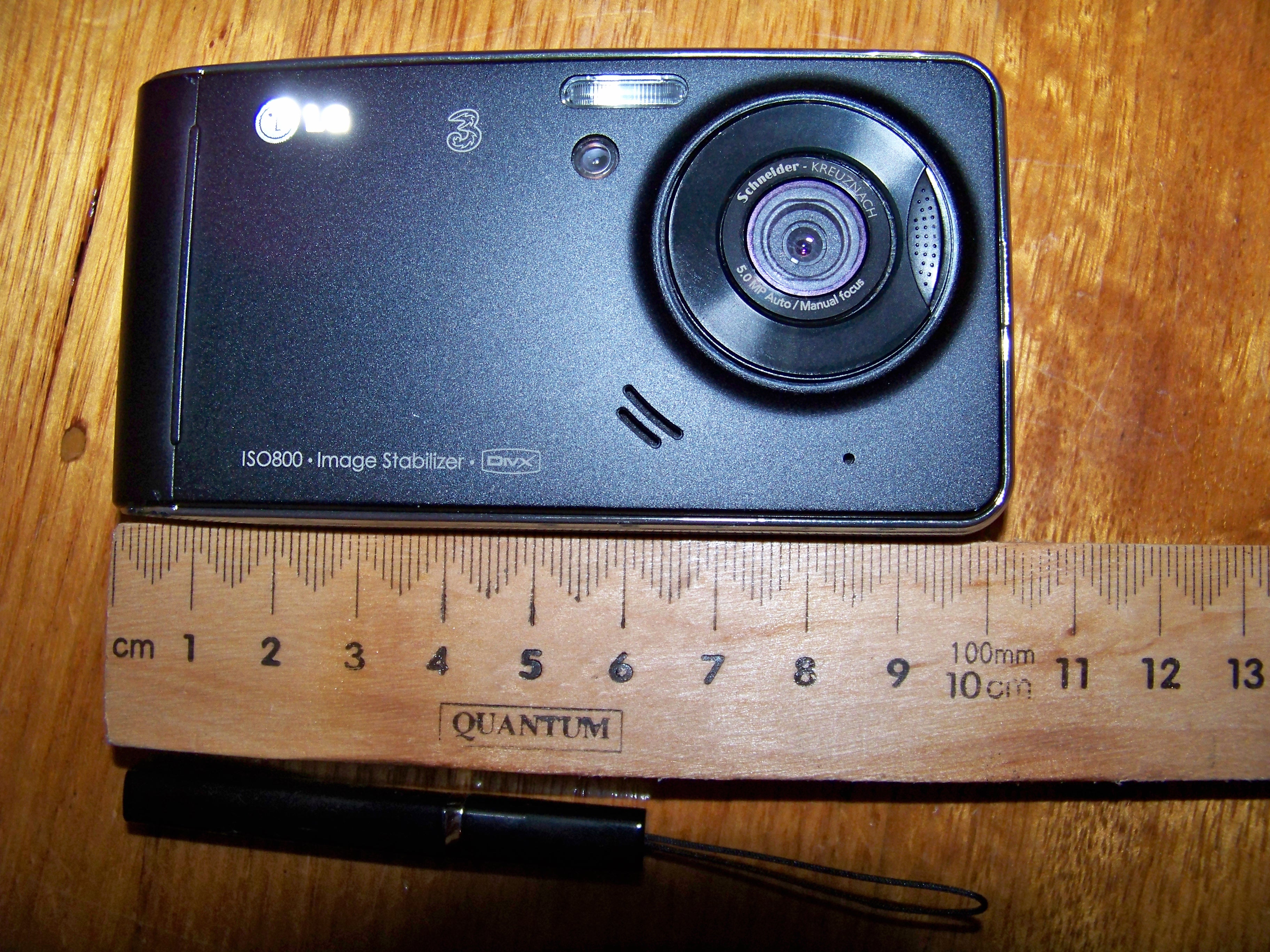
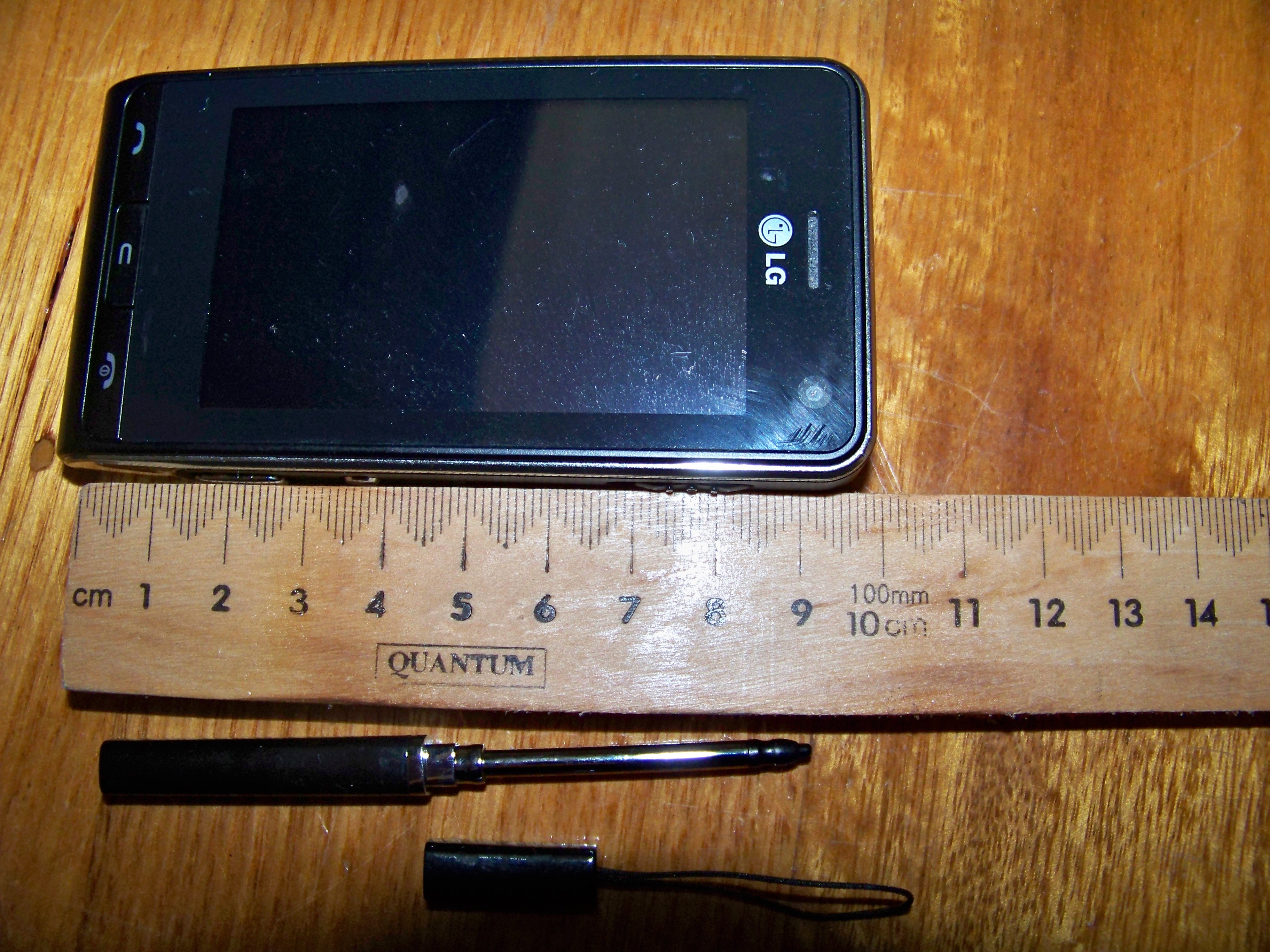
I have just got a LG U990 Viewty mobile phone [1]. It s a 3G phone and came free on the $29 monthly cap plan from Three (minimum monthly spend is $29 - but this is free if you use $29 per month). My previous plan was the $29 cap but had a minimum spend of $20 per month, as I never happened to use less than $29 per month I am not paying more. For a modern mobile phone the actual phone functionality is a sideline. If a device was strictly designed to be a phone then I think it would be very similar to the Nokia phones that were available 5+ years ago - the Nokia I had in 1999 performed every phone function that I desired of it. Like most modern phones the LG U990 Viewty suffers in it s phone functionality from the desire to make it do non-phone tasks and from the desire to cripple it to meet the desires of the carriers (not the desires of the users). For example the home screen will always have at least two buttons for paid Three services and I have no configuration option to remove them. Replacing them with speed dial options for a couple of numbers that I regularly call would be handy. As the main screen is a touch-screen there is no excuse for this, they should allow the software to be reconfigured with more useful options. Eventually the Android will kill most of the other phones and this problem of phones being designed to suit the telephone companies instead of the users will be solved. One of the most annoying mis-features of the phone is that it doesn t properly handle address book entries with multiple phone numbers. One of my friends turns his mobile off when he is at home, so I regularly call his mobile and then immediately call his home number if the mobile is unavailable. With my previous two mobile phones I could press the dial button to bring up the list of previous calls and then use the arrow buttons to select from the other numbers that are attached to the same address-book entry, so with three button presses I would be dialing his other number. With the Viewty I have to go back to the address book. The compelling feature of the Viewty is the camera and display. It has a 5MP camera which makes it the second highest resolution camera-phone offered by Three - the LG Renoir (KC910) has 8MP but needs a $99 plan for it to be free. It also has a 240*320 resolution touch-screen display (in a quick search in January when I bought my phone the best resolution display I could find on a phone is 240*400 in the LG Renoir). While the camera is documented as being 5mp there are no specs available about the resolution of the CCD. I want to use the native resolution of the CCD for pictures (I think interpolation is a waste of space). The CCD might actually be 5mp, a picture of the 1400*1050 resolution screen on my Thinkpad allows me to read all the text even when small fonts are in use, so the CCD resolution must be significantly greater than 1400*1050. This is a really important feature as the Viewty will work well for making screen-shots for bug reports about crashed computers (several of my clients have expressed interest in getting one after seeing such a demonstration). One annoying problem is that the camera software takes a while to load, my trusty Sony digital camera starts a lot faster and the LG U890 phone I used for the past two years is also a lot faster and more convenient. This won t work well for photographing unexpected events. When I am traveling by public transport I will photograph the relevant pages of my street directory as I can zoom in to photos of the maps and read the street names, it saves some weight when traveling. The 2G micro-SD card (which incidentally cost $10 from OfficeWorks) will allow me to store a lot of maps. One interesting feature is the video recording capabilities. It can do 640*480 resolution at 30fps (which is pretty good) and 320*240 resolution at 120fps (they claim that you can film a balloon popping). In my quick tests the standard 640*480*30fps mode works well, but the 120fps mode requires much brighter light than most of my test environments, so I have not yet got it working properly. The phone has a reasonable voice recording function, it can record considerably more than 34 hours of audio and the quality is reasonably good if you use an external microphone. It is however quite poor if you use the built-in microphone for a dictaphone function, it seems that quality is poor at any distance. I had wanted to record my LCA mini-conf talks with my phone but unfortunately forgot to bring the adapter for the external microphone. It s a pity that the phone doesn t have a standard microphone socket as I have misplaced my Viewty microphone, when designing the phone they should assume that misplacing attachments is a common occurrence and design it to use common parts. I recently spoke to a journalist who uses his mobile phone to record interviews. He said that his phone supported phone calls, voice recording, and taking pictures - all the essential tasks for his work. It seems that the Viewty would be better than most phones for journalistic work apart from the issue of low quality voice recording when you have misplaced your external microphone. The text editor is unfriendly in the keyboard mode (I have not tried hand-writing recognition), one thing I don t like is the fact that the letters jump when you press them. This does allow changing a letter by moving the stylus before releasing the press (some people consider this a great feature). There are no cursor control keys (which is a serious omission), and the keyboard doesn t resemble a real keyboard. My iPaQ is far better for writing (I once wrote a full-length magazine article on an iPaQ). The stylus is quite strange and interesting. In the picture of the front of the phone the stylus is compacted with it s lid on. In the picture of the back of the phone the stylus is extended with the lid off. The end of the stylus clips in to the lid so that removing the lid drags the central part out of the body. It s an interesting design and with the string on the lid allows the stylus to be attached to the phone when it s not being used. But I have never used it. Even with an iPaQ (which had a proper stylus that attached firmly inside the body of the device) I often used a fingernail on the touch screen. I have not felt the need to ever use a stylus with my Viewty. One final noteworthy thing is the support for Google services. It seems to have client support for YouTube, Google Maps, GMail, and Blogger. This seems to be a major win for Google, the Viewty is one of the most popular phones at the moment and I expect that lots of people who buy them will now have an incentive to use the Google services. Between these sorts of deals and the Android I think that it will be necessary to have some sort of anti-trust action against Google. Google are generally doing good things for the users. I have been quite satisfied to use Google search, Google advertising on my blog, and Gmail. Also I have been moderately happy with Blogger (it was good when I started blogging) and Google Maps is useful on occasion. So generally I am happy with Google, but monopolies are bad for the users so I think that if things continue on their current trend then Google may have to be split into several little Googlets some time in the next few years.

30 May 2009

Stefano Zacchiroli: kick-starting turbogears 2 packaging

TurboGears 2 in debian ... soon ! After a long incubation, a few days ago TurboGears 2 has been released. Historically, I've been preferring TurboGears over Django for being closer to the open source philosophy of reusing existing components. Since the long 2.0 release was marking a gap with Django, I was eager to test the 2.0, and I was delighted to find it in Debian. Unfortunately, it doesn't seem to be in good shape yet. In particular it lacks several dependencies before it can even be used to quickstart a project, in spite of its presence in unstable. To give an idea of the needed work, after having installed it manually (via easy_install), my virgin /usr/local/lib/python2.5/site-packages/ has been polluted by 26 egg-thingies. I decided to spend some week-end time to start closing the gap, because we cannot lack such an important web framework in Debian (and ... erm, yes, also because I need it :-) ). Here is the current status of what has been ITP-ed / packaged already (by yours truly): Where to Considering, foolishly, the last package as being already done, the way to go is still long:
    zack@usha:~$ ls /usr/local/lib/python2.5/site-packages/ grep -v repoze.what
    AddOns-0.6-py2.5.egg
    BytecodeAssembler-0.3-py2.5.egg
    Catwalk-2.0.2-py2.5.egg
    easy-install.pth
    Extremes-1.1-py2.5.egg
    PEAK_Rules-0.5a1.dev_r2582-py2.5.egg
    prioritized_methods-0.2.1-py2.5.egg
    sprox-0.5.5-py2.5.egg
    sqlalchemy_migrate-0.5.2-py2.5.egg
    SymbolType-1.0-py2.5.egg
    tg.devtools-2.0-py2.5.egg
    tgext.admin-0.2.4-py2.5.egg
    tgext.crud-0.2.4-py2.5.egg
    TurboGears2-2.0-py2.5.egg
    tw.forms-0.9.3-py2.5.egg
    WebFlash-0.1a9-py2.5.egg
    zope.sqlalchemy-0.4-py2.5.egg

Possibly, some of them are already in Debian hidden somewhere, but sure there is still work to be done. If you want to help, you are more then welcome. The rules are simple: all packages will be maintained under the umbrella of the Python Modules Team, but you should be willing to take responsibility as the primary maintainer. Please get in touch with if you are interested, as I'm in turn already in touch with some other very kind volunteers (thanks Enrico and Federico2!) to coordinate who-is-doing-what. Preview packages available What has already been packaged, including a temporary workaround for python-transaction, will be available in experimental after NEW processing. The idea is that nothing will go to unstable until TurboGears 2 will be (proven to be) fully functional. In the meantime, packages are available from my personal APT repository (signed by my key), here are the friendly /etc/apt/sources.list :
    deb http://people.debian.org/~zack/debian zack-unstable/
    deb-src http://people.debian.org/~zack/debian zack-unstable/

Versions are tilde-friendly and shouldn't get in your way when the official packages will hit unstable. Packaging multiple-egg / multiple-upstream packages In all this, I've faced an interesting problem with the python-repoze. who,what -plugins packages. They correspond to a handful of plugins, each of which is about 20/30 Kb. I didn't consider appropriate to prepare 5 different packages, due to archive bloat potential. Hence, you get the usual problems of multiple-upstream packages. To counter some of them, as well as some egg-specific packaging annoyances with multiple upstream, I wrote a couple of very simple helpers: I'm no Python-packaging-guru so, lazyweb, if you spot in this choice something I utterly overlooked, or if you have improvements to suggest, please let me know. Repacking eggs An interesting problem will be faced in trying to integrate the above approach with Python modules that are shipped only as .egg files (i.e., no tarballs, ... yes there are such horrifying things out there). To preserve uniformity, we would need uscan to support --repack ing of .egg files as they were simple .zip archives. Since eggs are .zip archives ... why not?

24 May 2009

Jan Wagner: [vacation] 30/05/09 - 14/06/09 Manerba del Garda

I m on vacation the 1rst two weeks of June in Manerba del Garda at Lago di Garda. If some dudes are around for beering / chatting / keysigning, feel free to contact me til Friday.
In case of urgent actions (for example #530271), I m without regular internet access there. Feel free to NMU if needed, but try to avoid breaking things. For secuirty related issues please coordinate with team@security.debian.org.
Since I m probably most of the rest of the week busy with organising our camping, please send a short ping, if I m not responding by time, please go ahead.

23 May 2009

Ben Armstrong: Bits from the Eee PC team, Spring 2009

Lenny well supported We re pleased that Lenny released with good support for the Eee PC and are now turning our efforts to make Squeeze even better, while continuing to provide support for our Lenny user base. The standard Lenny installer can install Debian on all models of Eee and our custom installer provides the ability to install over wireless for almost every model (more about this later) from a very small image. The latter continues to be our recommended install method, since in addition to being wireless-ready, the custom installer also handles a few other small eee-specific configuration chores to make as much as possible just work right after the install. Solid mainstream support We ve made good on our promise to make Debian work on the Eee PC, not a derivative, many of which use a custom kernel instead of the stock kernel as we do and use a special desktop instead of our users favourites. While we agree that some intriguing things can be done in these areas, it is no substitute for mainstream support. Our users are better served by a solid foundation than specialised modifications that limit their choices. We want them to be able to enjoy the freedom to mold Debian, the universal OS, into whatever suits them best. Squeeze support started Work is well underway on supporting all Eee models in Squeeze. For months, several team members have been experimenting with new kernels, producing support for them in eeepc-acpi-scripts. The current release of this key package (version 1.1.0) supports Linux 2.6.29 and contains enhancements for wifi, sound hotkeys, bluetooth, external displays and OSD. Squeeze will support wired & wifi on all current models With the appearance of 2.6.29 in Sid, all ethernet and wifi cards used in all models of Eee today are supportable without the need for out-of-kernel or non-free drivers. Madwifi is replaced by the free ath5k driver, the non-free rt2860 package is replaced by mainstream kernel support, (though it still requires non-free firmware provided separately,) rtl8187se is included, making it possible now for us to support the model 701SD, and ath9k is included, making full support for newer models such as the 1000HE possible. Lenny backports and live demo All of these changes can be enjoyed today by Lenny users. Just add Daniel Baumann s Lenny kernel backport repository and then install the 2.6.29 kernel and an updated acpid. See our upgrade howto for details. You can try a small (less than 256M) demo of this configuration by downloading beta 2 of our Live USB image. Accessibility Late last year, we discussed how to make it easier for the blind to install Debian unassisted on their Eee PCs. As it was a simple change, we now include brltty in the custom installer, but we understand that some users also need software synthesized text-to-speech, something for which there is no support yet in the standard Debian-installer. We understand this isn t an easy thing to fix, but hope someone will rise to the challenge. Growing team of developers We welcome Darren Salt and Raphael Geissert to the team this year. Both have been actively making contributions to the eeepc-acpi-scripts package over the past months, fixing some outstanding bugs and readying it to handle changes in more recent kernel releases. Moved eeepc.debian.net to new hosting Nico Golde, who hosted eeepc.debian.net for the first year development, has turned his focus to other areas of Debian. Glenn Saberton has stepped in to provide a new home for it. We thank them both for their efforts and for a smooth, uneventful transition from one host to the other. Size of user community Speaking of the move, earlier this year, Glenn shared with us some interesting archive traffic statistics that give us a rough idea how many users we have. For the months of December and January, after factoring out bot hits, we were seeing about 300,000 hits from 15,000 unique users per month. The site handles roughly 60G of traffic per month, most of that from thousands of downloads of our custom installer image. It s hard to draw any firm conclusions about the size of our user base from these stats, as many users may be on dynamic IP numbers, inflating the numbers, but we can conservatively say we have at least 5000 users. Other interesting statistics are that we have anywhere up to 80 users at any given time on our irc channel and over 250 users on the mailing list. Help wanted The Asus Eee PC line continues to expand, with 24 models listed so far. It is a challenge to keep up support for all of them. We re encouraged to see Asus choose a new b/g/n wifi chipset for their 1002HA that is supported by a DFSG free driver ath9k in this case. It appears that the new Atom N280-based 1000HE uses the same chipset as well (though be careful: I know of at least one user who bought a 1000HE in Argentina expecting it to have this chipset and was disappointed to find it had the Ralink chipset instead, we guess because of availability). If this trend continues, we ll be that much closer to our goal of full support for Squeeze main. As it stands, we re already as close as we can get given the state of rt2860 and no prospect on the horizon for replacing the non-free firmware. If you would like to help us out in any way, whether by testing, debugging, patching, or improving our documentation, get in touch with our team. We rely on your feedback to keep Lenny in good shape and work towards making Squeeze even better for all users of Debian on the Eee PC.

John Goerzen: Review: In The Beginning. . . Was The Command Line

A few dud universes can really clutter up your basement. - Neal Stephenson, In The Beginning. . . was the Command Line
What a fun read. It s about technology, sure, but more about culture. Neal takes a good look at operating systems, why we get emotionally involved with them, and why Windows is still so popular. He does this with a grand detour to Disneyland, and a hefty dose of humor. The above quote was from near the end of the book, where he imagines hackers creating big bangs from the command line. He starts out the book from some anecdotes from the early 1970s, when he had his first computer class in high school. His school didn t have a computer, but they did have a teletype (the physical kind that used paper) with a modem link to some university s system. But time on that system was so expensive that they couldn t just dial in and run things interactively. The teletype had a paper tape device. You d type your commands in advance, and it would punch them out on the tape. Then when you dial in, it would replay the tape at high speed . Neal liked this because the stuff punched out of the tape were, actually, bits in both the literal and the mathematical sense. This, of course, led to a scene at the end of the schoolyear where a classmate dumped the bin of bits on the teacher, and Neal witnessed megabytes falling to the floor. Although the book was written in 1999, and needs an update in some ways, it still speaks with a strong voice today and is now also an interesting look at what computing was like 10 years ago. He had an analogy of car dealerships to operating systems. Microsoft had the big shiny dealership selling station wagons. Their image was all wrapped up in people feeling good about their purchase like they got something for their money. And he said that the Linux folks were selling tanks, illustrated with this exchange:
Hacker with bullhorn: Save your money! Accept one of our free tanks! It is invulnerable, and can drive across rocks and swamps at ninety miles an hour while getting a hundred miles to the gallon! Prospective station wagon buyer: I know what you say is true but er I don t know how to maintain a tank! Bullhorn: You don t know how to maintain a station wagon either! Buyer: But this dealership has mechanics on staff. If something goes wrong with my station wagon, I can take a day off work, bring it here, and pay them to work on it while I sit in the waiting room for hours, listening to elevator music. Bullhorn: But if you accept one of our free tanks we will send volunteers to your house to fix it for free while you sleep! Buyer: Stay away from my house, you freak! Bullhorn: But Buyer: Can t you see that everyone is buying station wagons?
That doesn t mean that Stephenson is just a Linux apologetic. He points out that the CLI has its place, and has a true love-hate relationship with the text-based config files (remember XF86Config before the days of automatic modelines? Back when you had to get out a calculator and work some things out with pencil and paper, or else risk burning out your monitor?) He points out that some people want to just have the thing work reasonably well. They don t want control in fact, would gladly give it up if offered something reasonably pretty and reasonably functional. He speaks to running Linux at times:
Sometimes when you finish working with a program and shut it down, you find that it has left behind a series of mild warnings and low-grade error messages in the command-line interface window from which you launched it. As if the software were chatting to you about how it was doing the whole time you were working with it.
Even if the application is imploding like a damaged submarine, it can still usually eke out a little S.O.S. message.
Or about booting Linux the first time, and noticing all sorts of cryptic messages on the console:
This is slightly alarming the first time you see it, but completely harmless.
I use emacs, which might be thought of as a thermonuclear word processor. . . Microsoft Word, were devoted to features like mail merge, and the ability to embed feature-length motion pictures in corporate memoranda, were, in the case of emacs, focused with maniacal intensity on the deceptively simple-seeming problem of editing text. If you are a professional writer i.e., if someone else is getting paid to worry about how your words are formatted and printed emacs outshines all other editing software in approximately the same way that the noonday sun does the stars. It is not just bigger and brighter; it simply makes everything else vanish. For page layout and printing you can use TeX: a vast corpus of typesetting lore written in C and also available on the Net for free.
I love these vivid descriptions: programs secretly chatting with us, TeX being a corpus of typesetting lore rather than a program. Or how about this one: Unix. . . is not so much a product as it is a painstakingly compiled oral history of the hacker subculture. It is our Gilgamesh epic. Yes, my operating system is an oral history project, thankyouverymuch. The book feels like a weird (but well-executed and well-written) cross between Douglas Adams and Cory Doctorow. Which makes is so indescribably awesome that I can t help but ending this review with a few more quotes.
Because Linux is not commercial because it is, in fact, free, as well as rather difficult to obtain, install, and operate it does not have to maintain any pretensions as to its reliability. Consequently, it is much more reliable.
what really sold me on it [Debian] was its phenomenal bug database (http://www.debian.org/Bugs), which is a sort of interactive Doomsday Book of error, fallibility, and redemption. It is simplicity itself. When had a problem with Debian in early January of 1997, I sent in a message describing the problem to submit@bugs.debian.org. My problem was promptly assigned a bug report number (#6518) and a severity level (the available choices being critical, grave, important, normal, fixed, and wishlist) and forwarded to mailing lists where Debian people hang out.
That should be our new slogan for bugs.debian.org: Debian s interactive Doomsday Book of error, fallibility, and redemption.
Unix is hard to learn. The process of learning it is one of multiple small epiphanies. Typically you are just on the verge of inventing some necessary tool or utility when you realize that someone else has already invented it, and built it in, and this explains some odd file or directory or command that you have noticed but never really understood before.
I ve been THERE countless times.
Note the obsessive use of abbreviations and avoidance of capital letters; this is a system invented by people to whom repetitive stress disorder is what black lung is to miners. Long names get worn down to three-letter nubbins, like stones smoothed by a river.
It is obvious, to everyone outside of the United States, that our arch-buzzwords, multiculturalism and diversity, are false fronts that are being used (in many cases unwittingly) to conceal a global trend to eradicate cultural differences. The basic tenet of multiculturalism (or honoring diversity or whatever you want to call it) is that people need to stop judging each other-to stop asserting (and, eventually, to stop believing ) that this is right and that is wrong, this true and that false, one thing ugly and another thing beautiful, that God exists and has this or that set of qualities.
The stone tablets bearing the Ten Commandments carved in immutable stone the original command-line interface
Apparently this actually works to some degree, for police in many lands are now complaining that local arrestees are insisting on having their Miranda rights read to them, just like perps in American TV cop shows. When it s explained to them that they are in a different country, where those rights do not exist, they become outraged. Starsky and Hutch reruns, dubbed into diverse languages, may turn out, in the long run, to be a greater force for human rights than the Declaration of Independence.
Unix has always lurked provocatively in the background of the operating system wars, like the Russian Army.
Available for free online, or as a 160-page book from Amazon.

22 May 2009

Martin F. Krafft: Django: a beautiful and truly thin web development framework

Take the following URL:
http://my.server.tld/wow/summary/2009/05/21/?style=boxed

and imagine the following Python function:
def summary(request, year, month, day):
    response = HttpResponse()
    // do something
    return response

If you see a relation between the two, then Django is for you. The missing part is a URL mapping, a list of regular expressions, which transforms a URL into a keyword list, and maps it to a function (a HTTP view, as it s called):
(r'^wow/summary/(?P<year>\d 4 )/(?P<month>\d 2 )/(?P<day>\d 2 )/$',
    mysite.wow.summary,  'additional':'information' )

You do not have to use keyword arguments, positional parameters will work as well, and you can do anything you like within the powers of regular expressions, but the result is always along the same lines: When someone visits the above URL, Django calls the above summary( ) function (defined in the modules mysite/wow.py) and passes an object encapsulating the request, along with the components from the URL as parameters:
summary(request, 2009, 05, 21,  'additional':'information' )

It then renders the return value. The function can also throw an exception if it need to communicate e.g. a 404 error. Very clean, and there are even generic views if your data doesn t need any massaging, of if you just want to do standard things like generate PDFs. This is the core idea of Django, which I ve gathered from one talk and four hours of invested time. It s a truly thin layer, and its elegance made me bouncey. The QUERY STRING of the request will be passed in the request object, along with all the other CGI variables you re familiar with. Django provides a large number of helpers and shortcuts to save you from having to do the ugly work, including topics such as internationalisation, syndication, authentication, file uploads, and caching. In addition, Django gives you an object-relational_mapper to map the data into, and manage the data definition within your favourite RDBMS, a templating language designed to fit in with the whole philosophy, and widgets to work with forms. You do not have to use any of those. You are free to use any other Python module for the task, just as you can use all of the other features of and modules written for Python. This is particularly powerful in the context of the middleware layer. There s also a large number of pluggable applications and snippets for re-use. The only concern I have at this point is whether features like tagging are going to find their way into the framework, because tracking numerous external plugins for a site and keeping them working across versions reminds me of the nightmares I had with Zope and Plone (I stopped working with (and on) those before I had a chance to dive into version 3 of each). The fact that Django leaves data storage to other tools (in fact, it s entirely up to you) makes those nightmares seem further distant. All in all, I am excited to have had a chance to take a brief glance at the software, and I am looking forward to doing more with it. Unfortunately, it looks like it will take quite some time to wade through existing plugins and design the rest of an application that can finally replace the horrific dung-pile that is my homepage.

18 May 2009

Jan Hauke Rahm: 27

Sorry for the noise but it s always the same. When it happens I can t really believe it. No, not my birthday is unbelievable I do trust the calendar. It s the fact that I m 27 now. I mean, I m supposed to be grown up, ain t I? I don t think it s happening soon

16 May 2009

Antti-Juhani Kaijanaho: This is Alue

I have made a couple of references in my blog to the new software suite I am writing, which I am calling Alue. It is time to explain what it is all about. Alue will be a discussion forum system providing a web-based forum interface, a NNTP (Netnews) interface and an email interface, all with equal status. What will be unusual compared to most of the competition is that all these interfaces will be coequal views to the same abstract discussion, instead of being primarily one of these things and providing the others as bolted-on gateways. (I am aware of at least one other such system, but it is proprietary and thus not useful to my needs. Besides, I get to learn all kinds of fun things while doing this.) I have, over several years, come across many times the need for such systems and never found a good, free implementation. I am now building this software for the use of one new discussion site that is being formed (which is graciously willing to serve as my guinea pig), but I hope it will eventually be of use to many other places as well. I now have the first increment ready for beta testing. Note that this is not even close to being what I described above; it is merely a start. It currently provides a fully functional NNTP interface to a rudimentary (unreliable and unscalable) discussion database. The NNTP server implements most of RFC 3977 (the base NNTP spec IHAVE, MODE-READER, NEWNEWS and HDR are missing), all of RFC 4642 (STARTTLS) and a part of RFC 4643 (AUTHINFO USER the SASL part is missing). The article database is intended to support with certain deliberate omissions the upcoming Netnews standards (USEFOR and USEPRO), but currently omits most of the mandatory checks. There is a test installation at verbosify.org (port 119), which allows anonymous reading but requires identification and authentication for posting. I am currently handing out accounts only by invitation. Code can be browsed in a Gitweb; git clone requests should be directed to git://git.verbosify.org/git/alue.git/. There are some tweaks to be done to the NNTP frontend, but after that I expect to be rewriting the message filing system to be at least reliable if not scalable. After that, it is time for a web interface.

15 May 2009

Neil Williams: svn-buildpackage

I'm adopting svn-buildpackage and I've made a few commits via collab-maint already. So #528733 is now mine.

I expect to be working with Jan and anyone else who wants to work on the svn-inject and svn-upgrade functionality that I don't use personally. For this reason, I've re-opened #377467 as an RFH.

I use svn-bp for a lot of my own packages and I'm not going to use git if I can possibly avoid it (quite possibly, ever). The current collab-maint changelog is already long enough so I won't be making many changes prior to the first upload to close the ITA. However, once that is done, I'll be looking at Jan's 0.7 branch code and gradually working through the rest of the bugs.

It's not as if I have a huge amount of time available for svn-bp, so things will take time, but it can't stay orphaned.

Jan Hauke Rahm: Bug#528733: O: svn-buildpackage

Oh dear, it happened Hundreds of developers seem to have switched to git (man, I want to be as famous as Linus) and finally the packaging helper for subversion is orphaned. Yeah, I know, this is just partly related if at all but at least the low interest in its further development seems to prove my point. Anyways, I m not going to fully give up on it. Eddy just copied the bug message to d-devel to arrest some attention and actually I m trying the same here. svn-buildpackage is still needed, let alone the entire texlive stuff which is maintained in subversion repositories and many packages in collab-maint. So, let s see if we can t get it somewhere. 0.6.24 - release soon As Eddy mentioned in the bug report there is a version 0.6.24 prepared in trunk. Looking at my working copies I seem to have fixes for #363003, #414564, #467614, #480684, and #506876 lying around which I didn t commit yet. They should be sent to the bug reports, though. If you consider working on a release of svn-bp please contact me (or just write to the bug reports, I m subscribed). 0.7 - do it right ;-) This is far away but maybe a worthy goal. Two months ago I started working on a rewrite of svn-bp in order to fix some long outstanding bugs which would need gross hacks in the current version or aren t even fixable by design. Find my first experiments in branches/0.7. But then let me be honest, I didn t do anything about it lately - partly because of the low interest, but majorly because of vcs-pkg. I hope to figure out during debconf9 (I hope I can attend) if it is a possible replacement of svn-bp. But that s still up in the air. Well, that s my two cents about the situation.

14 May 2009

Antti-Juhani Kaijanaho: Asynchronous transput and gnutls

CC0
To the extent possible under law,
Antti-Juhani Kaijanaho has waived all copyright and related or neighboring rights to
Asynchronous transput and gnutls. This work is published from Finland.
GnuTLS is a wonderful thing. It even has a thick manual but nevertheless its documentation is severely lacking from the programmer s point of view (and there doesn t even seem to be independent howtos floating on the net). My hope is to remedy with this post, in small part, that problem. I spent the weekend adding STARTTLS support to the NNTP (reading) server component of Alue. Since Alue is written in C++ and uses the Boost ASIO library as its primary concurrency framework, it seemed prudent to use ASIO s SSL sublibrary. However, the result wasn t stable and debugging it looked unappetizing. So, I wrote my own TLS layer on top of ASIO, based on gnutls. Now, the gnutls API looks like it works only with synchronous transput: all TLS network operations are of the form do this and return when done ; for example gnutls_handshake returns once the handshake is finished. So how does one adapt this to asynchronous transput? Fortunately, there are (badly documented) hooks for this purpose. An application can tell gnutls to call application-supplied functions instead of the read(2) and write(2) system calls. Thus, when setting up a TLS session but before the handshake, I do the following:
                gnutls_transport_set_ptr(gs, this);
                gnutls_transport_set_push_function(gs, push_static);
                gnutls_transport_set_pull_function(gs, pull_static);
                gnutls_transport_set_lowat(gs, 0);
Here, gs is my private copy of the gnutls session structure, and the push_static and pull_static are static member functions in my sesssion wrapper class. The first line tells gnutls to give the current this pointer (a pointer to the current session wrapper) as the first argument to them. The last line tells gnutls not to try treating the this pointer as a Berkeley socket. The pull_static static member function just passes control on to a non-static member, for convenience:
ssize_t session::pull_static(void * th, void *b, size_t n)
 
        return static_cast<session *>(th)->pull(b, n);
 
The basic idea of the pull function is to try to return immediately with data from a buffer, and if the buffer is empty, to fail with an error code signalling the absence of data with the possibility that data may become available later (the POSIX EAGAIN code):
class session
 
        [...]
        std::vector<unsigned char> ins;
        size_t ins_low, ins_high;
        [...]
 ;
ssize_t session::pull(void *b, size_t n_wanted)
 
        unsigned char *cs = static_cast<unsigned char *>(b);
        if (ins_high - ins_low > 0)
         
                errno = EAGAIN;
                return -1;
         
        size_t n = ins_high - ins_low < n_wanted
                ?  ins_high - ins_low
                :  n_wanted;
        for (size_t i = 0; i < n; i++)
         
                cs[i] = ins[ins_low+i];
         
        ins_low += n;
        return n;
 
Here, ins_low is an index to the ins vector specifying the first byte which has not already been passed on to gnutls, while ins_high is an index to the ins vector specifying the first byte that does not contain data read from the network. The assertions 0 <= ins_low, ins_low <= ins_high and ins_high <= ins.size() are obvious invariants in this buffering scheme. The push case is simpler: all one needs to do is buffer the data that gnutls wants to send, for later transmission:
class session
 
        [...]
        std::vector<unsigned char> outs;
        size_t outs_low;
        [...]
 ;
ssize_t session::push(const void *b, size_t n)
 
        const unsigned char *cs = static_cast<const unsigned char *>(b);
        for (size_t i = 0; i < n; i++)
         
                outs.push_back(cs[i]);
         
        return n;
 
The low water mark outs_low (indicating the first byte that has not yet been sent to the network) is not needed in the push function. It would be possible for the push callback to signal EAGAIN, but it is not necessary in this scheme (assuming that one does not need to establish hard buffer limits). Once gnutls receives an EAGAIN condition from the pull callback, it suspends the current operation and returns to its caller with the gnutls condition GNUTLS_E_AGAIN. The caller must arrange for more data to become available to the pull callback (in this case by scheduling an asynchronous write of the data in the outs buffer scheme and scheduling an asynchronous read to the ins buffer scheme) and then call the operation again, allowing the operation to resume. The code so far does not actually perform any network transput. For this, I have written two auxiliary methods:
class session
 
        [...]
        bool read_active, write_active;
        [...]
 ;
void session::post_write()
 
        if (write_active) return;
        if (outs_low > 0 && outs_low == outs.size())
         
                outs.clear();
                outs_low = 0;
         
        else if (outs_low > 4096)
         
                outs.erase(outs.begin(), outs.begin() + outs_low);
                outs_low = 0;
         
        if (outs_low < outs.size())
         
                stream.async_write_some
                        (boost::asio::buffer(outs.data()+outs_low,
                                             outs.size()-outs_low),
                         boost::bind(&session::sent_some,
                                     this, _1, _2));
                write_active = true;
         
 
void session::post_read()
 
        if (read_active) return;
        if (ins_low > 0 && ins_low == ins.size())
         
                ins.clear();
                ins_low = 0;
                ins_high = 0;
         
        else if (ins_low > 4096)
         
                ins.erase(ins.begin(), ins.begin() + ins_low);
                ins_high -= ins_low;
                ins_low = 0;
         
        if (ins_high + 4096 >= ins.size()) ins.resize(ins_high + 4096);
        stream.async_read_some(boost::asio::buffer(ins.data()+ins_high,
                                                   ins.size()-ins_high),
                               boost::bind(&session::received_some,
                                           this, _1, _2));
        read_active = true;
 
Both helpers prune the buffers when necessary. (I should really remove those magic 4096s and make them a symbolic constant.) The data members read_active and write_active ensure that at most one asynchronous read and at most one asynchronous write is pending at any given time. My first version did not have this safeguard (instead trying to rely on the ASIO stream reset method to cancel any outstanding asynchronous transput at need), and the code sent some TLS records twice which is not good: sending the ServerHello twice is guaranteed to confuse the client. Once ASIO completes an asynchronous transput request, it calls the corresponding handler:
void session::received_some(boost::system::error_code ec, size_t n)
 
        read_active = false;
        if (ec)   pending_error = ec; return;  
        ins_high += n;
        post_pending_actions();
 
void session::sent_some(boost::system::error_code ec, size_t n)
 
        write_active = false;
        if (ec)   pending_error = ec; return;  
        outs_low += n;
        post_pending_actions();
 
Their job is to update the bookkeeping and to trigger the resumption of suspended gnutls operations (which is done by post_pending_actions). Now we have all the main pieces of the puzzle. The remaining pieces are obvious but rather messy, and I d rather not repeat them here (not even in a cleaned-up form). But their essential idea goes as follows: When called by the application code or when resumed by post_pending_actions, an asynchronous wrapper of a gnutls operation first examines the session state for a saved error code. If one is found, it is propagated to the application using the usual ASIO techniques, and the operation is cancelled. Otherwise, the wrapper calls the actual gnutls operation. When it returns, the wrapper examines the return value. If successful completion is indicated, the handler given by the application is posted in the ASIO io_service for later execution. If GNUTLS_E_AGAIN is indicated, post_read and post_write are called to schedule actual network transput, and the wrapper is suspended (by pushing it into a queue of pending actions). If any other kind of failure is indicated, it is propagated to the application using the usual ASIO techniques. The post_pending_actions merely empties the queue of pending actions and schedules the actions that it found in the queue for resumption. The code snippets above are not my actual working code. I have mainly removed from them some irrelevant details (mostly certain template parameters, debug logging and mutex handling). I don t expect the snippets to compile. I expect I will be able to post my actual git repository to the web in a couple of days. Please note that my (actual) code has received only rudimentary testing. I believe it is correct, but I won t be surprised to find it contains bugs in the edge cases. I hope this is, still, of some use to somebody :)

Kees Cook: partial NX emulation in Ubuntu

Now available for early testing, Ubuntu Karmic Alpha 1 has a kernel feature I ve long wanted in Ubuntu: NX emulation. Basically, if your hardware lacks NX support, the kernel will emulate the feature using memory segment limits and ordering. This was AFAIBT originally developed by PaX, and a similar version (with histories including work by Solar Designer and maybe OpenBSD?) has been carried in RedHat/Fedora for a while now (under the larger project called ExecShield , covering multiple protection technologies). As more and more of the monolithic ExecShield kernel patch has been taken upstream (many thanks to Arjan van de Ven for pushing them), the patch in RedHat has been shrinking. Recently, Dave Jones split up the remaining pieces into logical chunks small enough that I could actually read it without going cross-eyed. From this, I ported the nx-emulation patches to Ubuntu s kernel, and now they re happily live in Karmic. So, instead of this:
$ ./vulnerable-setuid-program $OVERFLOW_AND_SHELLCODE
# id
uid=0(root) gid=0(root) groups=0(root)
We get this:
$ ./vulnerable-setuid-program $OVERFLOW_AND_SHELLCODE
Segmentation fault (core dumped)
$ dmesg tail -n1
[170131.763976] vulnerable-set[16278]: general protection ip:80489c5 sp:bfa3e330 error:0 in vulnerable-setuid-program[8048000+1000]
Though, as always, please just use 64bit instead. :) Update: gave credit to PaX, thanks for the corrections!

9 May 2009

Jan Hauke Rahm: HoldingNuts

ITP: #525841 I know there already is a poker client and server application in Debian but I do like the simplicity of this one. So, until it s officially uploaded beta testing is appreciated. Download packages for sid at http://downloads.jhr-online.de/holdingnuts/sid/. Packages for M$ Win and Gentoo are upstream available at http://www.holdingnuts.net/download. The best part: upstream has a running server instance which you can connect to for testing (and playing of course). It s the default connection when you start the client the first time. Go for it! Let s play poker

8 May 2009

Antti-Juhani Kaijanaho: Star Trek

It is curious to see that the eleventh movie in a series is the first to bear the series name with no adornment. It is apt, however: Star Trek is a clear attempt at rebooting the universe and basically forgetting most of the decades-heavy baggage. It seems to me that the reboot was fairly well done, too. The movie opens with the birth of James Tiberius Kirk, and follows his development into the Captain of the Enterprise. Along the way, we also see the growth of Spock from adolescence into Kirk s trusted sidekick and also into well. Despite the fact that the action plot macguffins are time travel and planet-killer weaponry, it is mainly a story of personal vengeance, personal tragedy, and personal growth. Curiously enough, although Kirk gets a lot of screen time, it is really the personal story of Spock. Besides Kirk and Spock, we also get to meet reimagined versions of Uhura (I like!), McCoy, Sulu, Chekov and Scott. And Christopher Pike, the first Captain of the Enterprise. The appearance of Leonard Nimoy as the pre-reboot Spock merits a special mention and a special thanks. I overheard someone say in the theatre, after the movie ended, that the movie was a ripoff and had nothing to do with anything that had gone before. I respectfully disagree. The old Star Trek continuum had been weighed down by all the history into being a 600-pound elderly man who is unable to leave the couch on his own. This movie provided a clearn reboot, ripping out most of the baggage, retaining the essence of classic Star Trek and giving a healthy, new platform for good new stories. One just hopes Paramount is wise enough not to foul it up again. It was worth it, I thought.

7 May 2009

Jan Hauke Rahm: Drawing in LaTeX

Just recently I convinced a friend of mine to use LaTeX for her papers. A huge step for her and a small one for me as I just had to copy my templates and show her a few hints about LaTeX. Well, that s what I thought. It was actually even the very same day when she asked me for help: she needed an image in there. That was of course easy but when I saw it I felt like I needed to replace it (it was seriously awfull). So, drawing She needed three rectangles connected with arrows. Easy thing with pstricks one might think but then pstricks is a PITA when you need a pdf document. So I tried tikz (of course, Debian delivers it right away). And see how easy that looks like:
\begin figure [htbp]
    \centering
    \begin tikzpicture 
    [<->, auto,
    block/.style =  rectangle, draw=blue, thick, fill=blue!20,
                    text width=3.5cm, text centered, rounded corners,
                    minimum height=2cm, font=\sffamily ,
    line/.style  =  draw, thick ]
    \matrix [column sep=5mm, row sep=2cm]
     
        % row 1
        & \node [block] (top)  Rectangle A ; \\
        % row 2
        \node [block] (left)  Rectangle B ; &
        & \node [block] (right)  Rectangle C ; & \\
     ;
    \begin scope [every path/.style=line]
        \path   (left) -- node [midway,font=\sffamily\footnotesize]  Arrow desc 1  (top);
        \path   (left) -- node [midway,font=\sffamily\footnotesize]  Arrow desc 2  (right);
        \path   (top)  -- node [midway,font=\sffamily\footnotesize]  Arrow desc 3  (right);
    \end scope 
    \end tikzpicture 
 
    \caption My fancy image 
    \label fancyimage 
\end figure 
Don t you like it that way?

6 May 2009

Tiago Bortoletto Vaz: Homage to Augusto Boal


The 9 may, 2009 at 20:00 UTC, the Center of The Theater of the Oppressed in Rio de Janeiro will pay homage to Augusto Boal. There will be a live video and audio streaming available at: http://aovivo.pontaodaeco.org:8000/homenagemboal.ogg.m3u It s recommended using the free software VLC to watch it: http://www.videolan.org/vlc/ There will also be an IRC chat room open for everyone in FreeNode, channel #homenagemboal. Posted in english Tagged: augusto boal, theater, theater of the oppressed

Jan Hauke Rahm: irssi rulez

It s done all messages are now running through my fancy IRC client named irssi. What messages you ask? Well, there is all IRC traffic obviously, then all jabber contacts, and all ICQ/AIM contacts and woohoo thanks to twirssi I now even have my identi.ca (or Twitter if you re brave enough) feeds in an irssi window (from which I can also update my identi.ca stuff, of course). Isn t that great?

Next.

Previous.