Search Results: "nic"

15 August 2022

John Goerzen: The Joy of Easy Personal Radio: FRS, GMRS, and Motorola DLR/DTR

Most of us carry cell phones with us almost everywhere we go. So much so that we often forget not just the usefulness, but even the joy, of having our own radios. For instance: From my own experience, as a person and a family that enjoys visiting wilderness areas, having radio communication is great. I have also heard from others that they re also very useful on cruise ships (I ve never been on one so I can t attest to that). There is also a sheer satisfaction in not needing anybody else s infrastructure, not paying any sort of monthly fee, and setting up the radios ourselves.

How these services fit in This article is primarily about handheld radios that can be used by anybody. I laid out some of their advantages above. Before continuing, I should point out some of the other services you may consider:
  • Cell phones, obviously. Due to the impressive infrastructure you pay for each month (many towers in high locations), in areas of cell coverage, you have this ability to connect to so many other phones around the world. With radios like discussed here, your range will likely a few miles.
  • Amateur Radio has often been a decade or more ahead of what you see in these easy personal radio devices. You can unquestionably get amateur radio devices with many more features and better performance. However, generally speaking, each person that transmits on an amateur radio band must be licensed. Getting an amateur radio license isn t difficult, but it does involve passing a test and some time studying for the exam. So it isn t something you can count on random friends or family members being able to do. That said, I have resources on Getting Started With Amateur Radio and it s not as hard as you might think! There are also a lot of reasons to use amateur radio if you want to go down that path.
  • Satellite messengers such as the Garmin Inreach or Zoleo can send SMS-like messages across anywhere in the globe with a clear view of the sky. They also often have SOS features. While these are useful safety equipment, it can take many minutes for a message to be sent and received it s not like an interactive SMS conversation and there are places where local radios will have better signal. Notably, satellite messengers are almost useless indoors and can have trouble in areas without a clear view of the sky, such as dense forests, valleys, etc.
  • My earlier Roundup of secure messengers with off-the-grid capabilities (distributed/mesh messengers) highlighted a number of other options as well, for text-only communication. For instance:
    • For very short-range service, Briar can form a mesh over Bluetooth from cell phones or over Tor, if Internet access is available.
    • Dedicated short message services Mesh Networks like Meshtastic or Beartooth have no voice capability, but share GPS locations and short text messages over their own local mesh. Generally they need to pair to a cell phone (even if that phone has no cell service) for most functionality.
  • Yggdrasil can do something similar over ad-hoc Wifi, but it is a lower-level protocol and you d need some sort of messaging to run atop it.
This article is primarily about the USA, though these concepts, if not the specific implementation, apply many other areas as well.

The landscape of easy personal radios The oldest personal radio service in the US is Citizens Band (CB). Because it uses a lower frequency band than others, handheld radios are larger, heavier, and less efficient. It is mostly used in vehicles or other installations where size isn t an issue. The FRS/GMRS services mostly share a set of frequencies. The Family Radio Service is unlicensed (you don t have to get a license to use it) and radios are plentiful and cheap. When you get a blister pack or little radios for maybe $50 for a pair or less, they re probably FRS. FRS was expanded by the FCC in 2017, and now most FRS channels can run up to 2 watts of power (with channels 8-14 still limited to 0.5W). FRS radios are pretty much always handheld. GMRS runs on mostly the same frequencies as FRS. GMRS lets you run up to 5W on some channels, up to 50W on others, and operate repeaters. GMRS also permits limited occasional digital data bursts; three manufacturers currently use this to exchange GPS data or text messages. To use GMRS, you must purchase a GMRS license; it costs $35 for a person and their immediate family and is good for 10 years. No exam is required. GMRS radios can transmit on FRS frequencies using the GMRS authorization. The extra power of GMRS gets you extra distance. While only the best handheld GMRS radios can put out 5W of power, some mobile (car) or home radios can put out the full 50W, and use more capable exterior antennas too. There is also the MURS band, which offers very few channels and also very few devices. It is not in wide use, probably for good reason. Finally, some radios use some other unlicensed bands. The Motorola DTR and DLR series I will talk about operate in the 900MHz ISM band. Regulations there limit them to a maximum power of 1W, but as you will see, due to some other optimizations, their range is often quite similar to a 5W GMRS handheld. All of these radios share something in common: your radio can either transmit, or receive, but not both simultaneously. They all have a PTT (push-to-talk) button that you push and hold while you are transmitting, and at all other times, they act as receivers. You ll learn that doubling is a thing where 2 or more people attempt to transmit at the same time. To listeners, the result is often garbled. To the transmitters, they may not even be aware they did it since, after all, they were transmitting. Usually it will be clear pretty quickly as people don t get responses or responses say it was garbled. Only the digital Motorola DLR/DTR series detects and prevents this situation.

FRS and GMRS radios As mentioned, the FRS/GMRS radios are generally the most popular, and quite inexpensive. Those that can emit 2W will have pretty decent range; 5W even better (assuming a decent antenna), though the 5W ones will require a GMRS license. For the most part, there isn t much that differentiates one FRS radio from another, or (with a few more exceptions) one GMRS handheld from another. Do not believe the manufacturers claims of 50 mile range or whatever; more on range below. FRS and GMRS radios use FM. GMRS radios are permitted to use a wider bandwidth than FRS radios, but in general, FRS and GMRS users can communicate with each other from any brand of radio to any other brand of radio, assuming they are using basic voice services. Some FRS and GMRS radios can receive the NOAA weather radio. That s nice for wilderness use. Nicer ones can monitor it for alert tones, even when you re tuned to a different channel. The very nicest on this as far as I know, only the Garmin Rino series will receive and process SAME codes to only trigger alerts for your specific location. GMRS (but not FRS) also permits 1-second digital data bursts at periodic intervals. There are now three radio series that take advantage of this: the Garmin Rino, the Motorola T800, and BTech GMRS-PRO. Garmin s radios are among the priciest of GMRS handhelds out there; the top-of-the-line Rino will set you back $650. The cheapest is $350, but does not contain a replaceable battery, which should be an instant rejection of a device like this. So, for $550, you can get the middle-of-the-road Rino. It features a sophisticated GPS system with Garmin trail maps and such, plus a 5W GMRS radio with GPS data sharing and a very limited (13-character) text messaging system. It does have a Bluetooth link to a cell phone, which can provide a link to trail maps and the like, and limited functionality for the radio. The Rino is also large and heavy (due to its large map-capable screen). Many consider it to be somewhat dated technology; for instance, other ways to have offline maps now exist (such as my Garmin Fenix 6 Pro, which has those maps on a watch!). It is bulky enough to likely be left at home in many situations. The Motorola T800 doesn t have much to talk about compared to the other two. Both of those platforms are a number of years old. The newest entrant in this space, from budget radio maker Baofeng, is the BTech GMRS-PRO, which came out just a couple of weeks ago. Its screen, though lacking built-in maps, does still have a GPS digital link similar to Garmin s, and can show you a heading and distance to other GMRS-PRO users. It too is a 5W unit, and has a ton of advanced features that are rare in GMRS: ability to pair a Bluetooth headset to it directly (though the Garmin Rino supports Bluetooth, it doesn t support this), ability to use the phone app as a speaker/mic for the radio, longer text messages than the Garmin Rino, etc. The GMRS-PRO sold out within a few days of its announcement, and I am presently waiting for mine to arrive to review. At $140 and with a more modern radio implementation, for people that don t need the trail maps and the like, it makes a compelling alternative to Garmin for outdoor use. Garmin documents when GPS beacons are sent out: generally, when you begin a transmission, or when another radio asks for your position. I couldn t find similar documentation from Motorola or BTech, but I believe FCC regulations mean that the picture would be similar with them. In other words, none of these devices is continuously, automatically, transmitting position updates. However, you can request a position update from another radio. It should be noted that, while voice communication is compatible across FRS/GMRS, data communication is not. Garmin, Motorola, and BTech all have different data protocols that are incompatible with radios from other manufacturers. FRS/GMRS radios often advertise privacy codes. These do nothing to protect your privacy; see more under the privacy section below.

Motorola DLR and DTR series Although they can be used for similar purposes, and I do, these radios are unique from the others in this article in several ways:
  • Their sales and marketing is targeted at businesses rather than consumers
  • They use digital encoding of audio, rather than analog FM or AM
  • They use FHSS (Frequency-Hopping Spread Spectrum) rather than a set frequency
  • They operate on the 900MHz ISM band, rather than a 460MHz UHF band (or a lower band yet for MURS and CB)
  • The DLR series is quite small, smaller than many GMRS radios.
I don t have space to go into a lot of radio theory in this article, but I ll briefly expand on some of this. First, FHSS. A FHSS radio hops from frequency to frequency many times per second, following some preset hopping algorithm that is part of the radio. Although it complicates the radio design, it has some advantages; it tends to allow more users to share a band, and if one particular frequency has a conflict with something else, it will be for a brief fraction of a second and may not even be noticeable. Digital encoding generally increases the quality of the audio, and keeps the quality high even in degraded signal conditions where analog radios would experience static or a quieter voice. However, you also lose that sort of audible feedback that your signal is getting weak. When you get too far away, the digital signal drops off a cliff . Often, either you have a crystal-clear signal or you have no signal at all. Motorola s radios leverage these features to build a unique radio. Not only can you talk to a group, but you can select a particular person to talk to with a private conversation, and so forth. DTR radios can send text messages to each other (but only preset canned ones, not arbitrary ones). Channels are more like configurations; they can include various arbitrary groupings of radios. Deconfliction with other users is established via hopsets rather than frequencies; that is, the algorithm that it uses to hop from frequency to frequency. There is a 4-digit PIN in the DLR radios, and newer DTR radios, that makes privacy very easy to set up and maintain. As far as I am aware, no scanner can monitor DLR/DTR signals. Though they technically aren t encrypted, cracking a DLR/DTR conversation would require cracking Motorola s firmware, and the chances of this happening in your geographical proximity seem vanishingly small. I will write more below on comparing the range of these to GMRS radios, but in a nutshell, it compares well, despite the fact that the 900MHz band restrictions allow Motorola only 1W of power output with these radios. There are three current lines of Motorola DLR/DTR radios:
  • The Motorola DLR1020 and DLR1060 radios. These have no screen; the 1020 has two channels (configurations) while the 1060 supports 6. They are small and compact and great pocketable just work radios.
  • The Motorola DTR600 and DTR700 radios. These are larger, with a larger antenna (that should theoretically provide greater range) and have a small color screen. They support more channels and more features (eg, short messages, etc).
  • The Motorola Curve (aka DLR110). Compared to the DLR1060, it adds limited WiFi capabilities that are primarily useful in certain business environments. See this thread for more. These features are unlikely to be useful in the environments we re talking about here.
These radios are fairly expensive new, but DLRs can be readily found at around $60 on eBay. (DTRs for about $250) They are quite rugged. Be aware when purchasing that some radios sold on eBay may not include a correct battery and charger. (Not necessarily a problem; Motorola batteries are easy to find online, and as with any used battery, the life of a used one may not be great.) For more advanced configuration, the Motorola CPS cable works with both radios (plugs into the charging cradle) and is used with the programming software to configure them in more detail. The older Motorola DTR650, DTR550, and older radios are compatible with the newer DLR and DTR series, if you program the newer ones carefully. The older ones don t support PINs and have a less friendly way of providing privacy, but they do work also. However, for most, I think the newer ones will be friendlier; but if you find a deal on the older ones, hey, why not? This thread on the MyGMRS forums has tons of useful information on the DLR/DTR radios. Check it out for a lot more detail. One interesting feature of these radios is that they are aware if there are conflicting users on the channel, and even if anybody is hearing your transmission. If your transmission is not being heard by at least one radio, you will get an audible (and visual, on the DTR) indication that your transmission failed. One thing that pleasantly surprised me is just how tiny the Motorola DLR is. The whole thing with antenna is like a small candy bar, and thinner. My phone is slightly taller, much wider, and only a little thinner than the Motorola DLR. Seriously, it s more pocketable than most smartphones. The DTR is of a size more commonly associated with radios, though still on the smaller side. Some of the most low-power FRS radios might get down to that size, but to get equivolent range, you need a 5W GMRS unit, which will be much bulkier. Being targeted at business users, the DLR/DTR don t include NOAA weather radio or GPS.

Power These radios tend to be powered by:
  • NiMH rechargable battery packs
  • AA/AAA batteries
  • Lithium Ion batteries
Most of the cheap FRS/GMRS radios have a NiMH rechargable battery pack and a terrible charge controller that will tend to overcharge, and thus prematurely destroy, the NiMH packs. This has long ago happened in my GMRS radios, and now I use Eneloop NiMH AAs in them (charged separately by a proper charger). The BTech, Garmin, and Motorola DLR/DTR radios all use Li-Ion batteries. These have the advantage of being more efficient batteries, though you can t necessarily just swap in AAs in a pinch. Pay attention to your charging options; if you are backpacking, for instance, you may want something that can charge from solar-powered USB or battery banks. The Motorola DLR/DTR radios need to sit in a charging cradle, but the cradle is powered by a Micro USB cable. The BTech GMRS-PRO is charged via USB-C. I don t know about the Garmin Rino or others. Garmin offers an optional AA battery pack for the Rino. BTech doesn t (yet) for the GMRS-PRO, but they do for some other models, and have stated accessories for the GMRS-PRO are coming. I don t have information about the T800. This is not an option for the DLR/DTR.

Meshtastic I ll briefly mention Meshtastic. It uses a low-power LoRa system. It can t handle voice transmissions; only data. On its own, it can transmit and receive automatic GPS updates from other Meshtastic devices, which you can view on its small screen. It forms a mesh, so each node can relay messages for others. It is also the only unit in this roundup that uses true encryption, and its battery lasts about a week more than the a solid day you can expect out of the best of the others here. When paired with a cell phone, Meshtastic can also send and receive short text messages. Meshtastic uses much less power than even the cheapest of the FRS radios discussed here. It can still achieve respectable range because it uses LoRa, which can trade bandwidth for power or range. It can take it a second or two to transmit a 50-character text message. Still, the GMRS or Motorola radios discussed here will have more than double the point-to-point range of a Meshtastic device. And, if you intend to take advantage of the text messaging features, keep in mind that you must now take two electronic devices with you and maintain a charge for them both.

Privacy The privacy picture on these is interesting.

Cell phone privacy Cell phones are difficult for individuals to eavesdrop, but a sophisticated adversary probably could: or an unsophisticated adversary with any manner of malware. Privacy on modern smartphones is a huge area of trouble, and it is safe to say that data brokers and many apps probably know at least your location and contact list, if not also the content of your messages. Though end-to-end encrypted apps such as Signal can certainly help. See Tools for Communicating Offline and in Difficult Circumstances for more details.

GMRS privacy GMRS radios are unencrypted and public. Anyone in range with another GMRS radio, or a scanner, can listen to your conversations even if you have a privacy code set. The privacy code does not actually protect your privacy; rather, it keeps your radio from playing conversations from others using the same channel, for your convenience. However, note the in range limitation. An eavesdropper would generally need to be within a few miles of you.

Motorola DLR/DTR privacy As touched on above, while these also aren t encrypted, as far as I am aware, no tools exist to eavesdrop on DLR/DTR conversations. Change the PIN away from the default 0000, ideally to something that doesn t end in 0 (to pick a different hopset) and you have pretty decent privacy right there. Decent doesn t mean perfect; it is certainly possible that sophisticated adversaries or state agencies could decode DLR/DTR traffic, since it is unencrypted. As a practical matter, though, the lack of consumer equipment that can decode this makes it be, as I say, pretty decent .

Meshtastic Meshtastic uses strong AES encryption. But as messaging features require a paired phone, the privacy implications of a phone also apply here.

Range I tested my best 5W GMRS radios, as well as a Motorola DTR600 talking to a DLR1060. (I also tried two DLR1060s talking to each other; there was no change in rnage.) I took a radio with me in the car, and had another sitting on my table indoors. Those of you familiar with radios will probably recognize that being in a car and being indoors both attenuate (reduce the strength of) the signal significantly. I drove around in a part of Kansas with gentle rolling hills. Both the GMRS and the DLR/DTR had a range of about 2-3 miles. There were times when each was able to pull out a signal when the other was not. The DLR/DTR series was significantly better while the vehicle was in motion. In weaker signal conditions, the GMRS radios were susceptible to significant picket fencing (static caused by variation in the signal strength when passing things like trees), to the point of being inaudible or losing the signal entirely. The DLR/DTR remained perfectly clear there. I was able to find some spots where, while parked, the GMRS radios had a weak but audible signal but the DLR/DTR had none. However, in all those cases, the distance to GMRS dropping out as well was small. Basically, no radios penetrate the ground, and the valleys were a problem for them all. Differences may play out in other ways in other environments as well: for instance, dense urban environments, heavy woods, indoor buildings, etc. GMRS radios can be used with repeaters, or have a rooftop antenna mounted on a car, both of which could significantly extend range and both of which are rare. The DLR/DTR series are said to be exceptionally good at indoor environments; Motorola rates them for penetrating 20 floors, for instance. Reports on MyGMRS forums state that they are able to cover an entire cruise ship, while the metal and concrete in them poses a big problem for GMRS radios. Different outdoor landscapes may favor one or the other also. Some of the cheapest FRS radios max out at about 0.5W or even less. This is probably only a little better than yelling distance in many cases. A lot of manufacturers obscure transmit power and use outlandish claims of range instead; don t believe those. Find the power output. A 2W FRS transmitter will be more credible range-wise, and the 5W GMRS transmitter as I tested better yet. Note that even GMRS radios are restricted to 0.5W on channels 8-14. The Motorola DLR/DTR radio gets about the same range with 1W as a GMRS radio does with 5W. The lower power output allows the DLR to be much smaller and lighter than a 5W GMRS radio for similar performance.

Overall conclusions Of course, what you use may depend on your needs. I d generally say:
  • For basic use, the high quality, good range, reasonable used price, and very small size of the Motorola DLR would make it a good all-arounder. Give one to each person (or kid) for use at the mall or amusement park, take them with you to concerts and festivals, etc.
  • Between vehicles, the Motorola DLR/DTR have a clear range advantage over the GMRS radios for vehicles in motion, though the GPS features of the more advanced GMRS radios may be more useful here.
  • For wilderness hiking and the like, GMRS radios that have GPS, maps, and NOAA weather radio reception may prove compelling and worth the extra bulk. More flexible power options may also be useful.
  • Low-end FRS radios can be found very cheap; around $20-$30 new for the lowest end, though their low power output and questionable charging circuits may limit their utility where it really counts.
  • If you just can t move away from cell phones, try the Zoleo app, which can provide some radio-like features.
  • A satellite communicator is still good backup safety gear for the wilderness.

Postscript: A final plug for amateur radio My 10-year-old Kenwood TH-D71A already had features none of these others have. For instance, its support for APRS and ability to act as a digipeater for APRS means that TH-D71As can form an automatic mesh between them, each one repeating new GPS positions or text messages to the others. Traditional APRS doesn t perform well in weak signal situations; however, more modern digital systems like D-Star and DMR also support APRS over more modern codecs and provide all sorts of other advantages as well (though not FHSS). My conclusions above assume a person is not going to go the amateur radio route for whatever reason. If you can get those in your group to get their license the technician is all you need a whole world of excellent options opens to you.

Appendix: The Trisquare eXRS Prior to 2012, a small company named Trisquare made a FHSS radio they called the eXRS that operated on the 900MHz band like Motorola s DLR/DTR does. Trisquare aimed at consumers and their radios were cheaper than the Motorola DLR/DTR. However, that is where the similarities end. Trisquare had an analog voice transmission, even though it used FHSS. Also, there is a problem that can arise with FHSS systems: synchronization. The receiver must hop frequencies in exactly the same order at exactly the same time as the sender. Motorola has clearly done a lot of engineering around this, and I have never encountered a synchronization problem in my DLR/DTR testing, not even once. eXRS, on the other hand, had frequent synchronization problems, which manifested themselves in weak signal conditions and sometimes with doubling. When it would happen, everyone would have to be quiet for a minute or two to give all the radios a chance to timeout and reset to the start of the hop sequence. In addition, the eXRS hardware wasn t great, and was susceptible to hardware failure. There are some that still view eXRS as a legendary device and hoard them. You can still find them used on eBay. When eXRS came out in 2007, it was indeed nice technology for the day, ahead of its time in some ways. I used and loved the eXRS radios back then; powerful GMRS wasn t all that common. But compared to today s technology, eXRS has inferior range to both GMRS and Motorola DLR/DTR (from my recollection, about a third to half of what I get with today s GMRS and DLR/DTR), is prone to finicky synchronization issues when signals are weak, and isn t made very robustly. I therefore don t recommend the eBay eXRS units. Don t assume that the eXRS weaknesses extend to Motorola DLR/DTR. The DLR/DTR radios are done well and don t suffer from the same problems. Note: This article has a long-term home on my website, where it may be updated from time to time.

14 August 2022

Dirk Eddelbuettel: RcppArmadillo used by 1001 CRAN Packages

It is with a mix of pride and joy, but also some genuine astonishment and amazement, that we can share that the counter of reverse dependencies at CRAN for our RcppArmadillo package for R just crossed 1000 packages [1]: Conrad actually posted this a few weeks ago, by my count we were then still a few packages shy. In any event, having crossed this marker this summer, either then or now, and after more than a dozen years of working on the package is a really nice moment. Google Scholar counts nearly 500 citations for our CSDA paper (also this vignette), and that ratio of nearly a citation for every two packages used is certainly impressive. We have had the pleasure of working with so many other researchers and scientists using RcppArmadillo. Its combination of performance (C++, after all, and heavily tuned) and ease-of-use (inspired by another popular flavour for matrix computing that is however mostly interpreted) makes for a powerful package, and we are delighted to see it used so widely. Working on this with Conrad has been excellent. The (upstream) package (now at this GitLab repo) has received numerous releases at a rate that is in fact so high that we now slow it down to not exceed a monthly cadence of uploads to CRAN. But the package should always be in release condition at its GitHub repo, and is frequently also installable in rc versions via the Rcpp drat repo. So with that, a big Thank You! to Conrad, to Romain for all the early work laying the package foundations, and to all the users of (Rcpp)Armadillo for helping us along with testing, suggestions, extensions, and bug reports. Keep em coming! If you like this or other open-source work I do, you can now sponsor me at GitHub. [1] The code snippet shows that we remove some possible duplicates in the count (mostly for the total of packages). This is a correction we use across packages for consistency. It does not have an effect for RcppArmadillo.

This post by Dirk Eddelbuettel originated on his Thinking inside the box blog. Please report excessive re-aggregation in third-party for-profit settings.

Russ Allbery: Review: Still Not Safe

Review: Still Not Safe, by Robert L. Wears & Kathleen M. Sutcliffe
Publisher: Oxford University Press
Copyright: November 2019
ISBN: 0-19-027128-0
Format: Kindle
Pages: 232
Still Not Safe is an examination of the recent politics and history of patient safety in medicine. Its conclusions are summarized by the opening paragraph of the preface:
The American moral and social philosopher Eric Hoffer reportedly said that every great cause begins as a movement, becomes a business, and eventually degenerates into a racket. The reform movement to make healthcare safer is clearly a great cause, but patient safety efforts are increasingly following Hoffer's path.
Robert Wears was Professor of Emergency Medicine at the University of Florida specializing in patient safety. Kathleen Sutcliffe is Professor of Medicine and Business at Johns Hopkins. This book is based on research funded by a grant from the Robert Wood Johnson Foundation, for which both Wears and Sutcliffe were primary investigators. (Wears died in 2017, but the acknowledgments imply that at least early drafts of the book existed by that point and it was indeed co-written.) The anchor of the story of patient safety in Still Not Safe is the 1999 report from the Institute of Medicine entitled To Err is Human, to which the authors attribute an explosion of public scrutiny of medical safety. The headline conclusion of that report, which led nightly news programs after its release, was that 44,000 to 120,000 people died each year in the United States due to medical error. This report prompted government legislation, funding for new safety initiatives, a flurry of follow-on reports, and significant public awareness of medical harm. What it did not produce, in the authors' view, is significant improvements in patient safety. The central topic of this book is an analysis of why patient safety efforts have had so little measurable effect. The authors attribute this to three primary causes: an unwillingness to involve safety experts from outside medicine or absorb safety lessons from other disciplines, an obsession with human error that led to profound misunderstandings of the nature of safety, and the misuse of safety concerns as a means to centralize control of medical practice in the hands of physician-administrators. (The term used by the authors is "managerial, scientific-bureaucratic medicine," which is technically accurate but rather awkward.) Biggest complaint first: This book desperately needed examples, case studies, or something to make these ideas concrete. There are essentially none in 230 pages apart from passing mentions of famous cases of medical error that added to public pressure, and a tantalizing but maddeningly nonspecific discussion of the atypically successful effort to radically improve the safety of anesthesia. Apparently anesthesiologists involved safety experts from outside medicine, avoided a focus on human error, turned safety into an engineering problem, and made concrete improvements that had a hugely positive impact on the number of adverse events for patients. Sounds fascinating! Alas, I'm just as much in the dark about what those improvements were as I was when I started reading this book. Apart from a vague mention of some unspecified improvements to anesthesia machines, there are no concrete descriptions whatsoever. I understand that the authors were probably leery of giving too many specific examples of successful safety initiatives since one of their core points is that safety is a mindset and philosophy rather than a replicable set of actions, and copying the actions of another field without understanding their underlying motivations or context within a larger system is doomed to failure. But you have to give the reader something, or the book starts feeling like a flurry of abstract assertions. Much is made here of the drawbacks of a focus on human error, and the superiority of the safety analysis done in other fields that have moved beyond error-centric analysis (and in some cases have largely discarded the word "error" as inherently unhelpful and ambiguous). That leads naturally to showing an analysis of an adverse incident through an error lens and then through a more nuanced safety lens, making the differences concrete for the reader. It was maddening to me that the authors never did this. This book was recommended to me as part of a discussion about safety and reliability in tech and the need to learn from safety practices in other fields. In that context, I didn't find it useful, although surprisingly that's because the thinking in medicine (at least as presented by these authors) seems behind the current thinking in distributed systems. The idea that human error is not a useful model for approaching reliability is standard in large tech companies, nearly all of which use blameless postmortems for exactly that reason. Tech, similar to medicine, does have a tendency to be insular and not look outside the field for good ideas, but the approach to large-scale reliability in tech seems to have avoided the other traps discussed here. (Security is another matter, but security is also adversarial, which creates different problems that I suspect require different tools.) What I did find fascinating in this book, although not directly applicable to my own work, is the way in which a focus on human error becomes a justification for bureaucratic control and therefore a concentration of power in a managerial layer. If the assumption is that medical harm is primarily caused by humans making avoidable mistakes, and therefore the solution is to prevent humans from making mistakes through better training, discipline, or process, this creates organizations that are divided into those who make the rules and those who follow the rules. The long-term result is a practice of medicine in which a small number of experts decide the correct treatment for a given problem, and then all other practitioners are expected to precisely follow that treatment plan to avoid "errors." (The best distributed systems approaches may avoid this problem, but this failure mode seems nearly universal in technical support organizations.) I was startled by how accurate that portrayal of medicine felt. My assumption prior to reading this book was that the modern experience of medicine as an assembly line with patients as widgets was caused by the pressure for higher "productivity" and thus shorter visit times, combined with (in the US) the distorting effects of our broken medical insurance system. After reading this book, I've added a misguided way of thinking about medical error and risk avoidance to that analysis. One of the authors' points (which, as usual, I wish they'd made more concrete with a case study) is that the same thought process that lets a doctor make a correct diagnosis and find a working treatment is the thought process that may lead to an incorrect diagnosis or treatment. There is not a separable state of "mental error" that can be eliminated. Decision-making processes are more complicated and more integrated than that. If you try to prevent "errors" by eliminating flexibility, you also eliminate vital tools for successfully treating patients. The authors are careful to point out that the prior state of medicine in which each doctor was a force to themselves and there was no role for patient safety as a discipline was also bad for safety. Reverting to the state of medicine before the advent of the scientific-bureaucratic error-avoiding culture is also not a solution. But, rather at odds with other popular books about medicine, the authors are highly critical of safety changes focused on human error prevention, such as mandatory checklists. In their view, this is exactly the sort of attempt to blindly copy the machinery of safety in another field (in this case, air travel) without understanding the underlying purpose and system of which it's a part. I am not qualified to judge the sharp dispute over whether there is solid clinical evidence that checklists are helpful (these authors claim there is not; I know other books make different claims, and I suspect it may depend heavily on how the checklist is used). But I found the authors' argument that one has to design systems holistically for safety, not try to patch in safety later by turning certain tasks into rote processes and humans into machines, to be persuasive. I'm not willing to recommend this book given how devoid it is of concrete examples. I was able to fill in some of that because of prior experience with the literature on site reliability engineering, but a reader who wasn't previously familiar with discussions of safety or reliability may find much of this book too abstract to be comprehensible. But I'm not sorry I read it. I hadn't previously thought about the power dynamics of a focus on error, and I think that will be a valuable observation to keep in mind. Rating: 6 out of 10

12 August 2022

Shirish Agarwal: Mum and Books

The last day
The first lesson I would like everybody to know and have is to buy two machines, especially a machine to check low blood pressure. I had actually ordered one from Amazon but they never delivered. I hope to sue them in consumer court in due course of time. The other one is a blood sugar machine which I ordered and did get, but the former is more important than the latter, and the reason why will be known soon. Mum had stopped eating solids and was entirely on liquids for the last month of her life. I did try enticing her however I could with aromatic food but failed. Add to that we had weird weather this entire year. June is supposed to be when the weather turns and we have gentle showers, but this whole June it felt like we were in an oven. She asked for liquids whenever and although I hated that she was not eating solids, at least she was having liquids (juices and whatnot) and that s how I pacified myself. I had been repeatedly told by family and extended family to get a full-time nurse but she objected time and again for the same and I had to side with her. Then July 1st came around and part of extended family also came, and they impressed both on me and her to get a nurse so finally, I was able to get her nurse. I was also being pulled in various directions (outside my stuff, mumma s stuff) and doing whatever she needed in terms of supplies. On July 4th, think she had low blood pressure but without a machine, one cannot know. At least that s what I know. If somebody knows anything better, please share, who knows it may save lives. I don t have a blood pressure monitor even to date

There used to be 5-6 doctors in our locality before the Pandemic, but because of the Pandemic and whatever other reasons, almost all doctors had given up attending house calls. And the house where I live is a 100-year-old house so it has narrow passageways and we have no lift. So taking her in and out is a challenge and an ordeal, and something that is not easily done. I had to do some more works so I asked the nurse to stay a bit over 8 p.m. I came and the nurse left for the day. That day I had been distracted for a number of reasons which I don t remember what was but at that point in time, doing those works seemed important. I called out to her but she didn t respond. I remember the night before she had been agitated while sleeping, I slept nearby and kept an eye on her. I had called her a few times to ask whether she needed something but she didn t respond. (this is about the earlier night). That evening, it was raining quite a bit, I called her a few times but she didn t speak. I kissed her on the cheek and realized she is cold. Mumma usually becomes very agitated if she feels cold and shouts at me. I realized she is cold and her body a bit stiff. I was supposed to eat but just couldn t. I dunno what I suspected, I just hired a rickshaw and went around till 9 p.m. and it was a fruitless search for a doctor. I returned home, and again called her but there was no response. Because she was not responding, I became fearful, had a shat, and then dialed the hospital. Asking for the ambulance, it took about an hr. but finally, the ambulance came in. It was now 11 o clock or 2300 hrs. when the ambulance arrived in. It took another half an hr. getting few kids who had come from some movie or something to get them to help mum get down through the passage to the ambulance. We finally reached the hospital at 2330. The people on casualty that day were known to me, and they also knew my hearing problem, so it was much easier to communicate. Half an hour later, they proclaimed her dead. Fortunately or not, I had just bought the newer mobile phone just a few days back. And right now, In India, WhatsApp is one of the most used apps. So I was able to chat with everybody and tell them what was happening or rather what has happened. Of all, mamaji (mother s brother) shared that most members of the family would not be able to come except a cousin sister who lives in Mumbai. I was instructed to get the body refrigerated for a few hrs. It is only then I came to know various ways in which the body is refrigerated and how cruel it would have been towards Atal Bihari Vajpayee s family, but that is politics. I had to go to quite a few places and was back home around 3 a.m. I was supposed to sleep, but sleep was out of the question. I whiled away a few hrs. playing, seeing movies, something or the other to keep myself distracted as literally, I had no idea what to do. Morning came, took a bath, went outside, had some snacks, came home and somewhere then slept. One of my Mausi s (mother s sister) was insisting to get the body burnt in the morning itself but I wanted at least one relative to be there on the last journey. Cousin sister and her husband came to Pune around 4 p.m. I somehow woke, ringing, the vibration I do not know what. I took a short bath, rushed to the place where we had kept the body, got the body and from there where we had asked permission to get the body burned. More than anything else, I felt so sad that except for cousin sister, and me, nobody was with her on the last journey. Even that day, it was raining hard, so people avoided going out. Brother-in-law tried to give me some money, but I brushed it off. I just wanted their company, money is and was never the criteria. So, in the evening we had a meal, my cousin sister, brother-in-law, their two daughters and me. The next day we took the bones and ash to Alandi and did what was needed. I have tried to resurrect the day so many times in my head trying to figure out what I could have done better and am inconclusive. Having a blood pressure monitor for sure would have prevented the tragedy or at least post-phoned for it for a few more days, weeks, years, dunno. I am not medically inclined.

The Books I have to confess, the time they said she is no more, I was hoping that the doctors would say, we have a pill, would you like to take it, it would reunite you with mum. Maybe it wa crazy or whatever, but if such a situation had been, I would have easily gone for it. If I were to go, some people might miss me, but nobody would miss me terribly, and at least I would be with her. There was nothing to look forward to. What saved me from going mad was Michael Crichton s Timeline. It is a fascinating and seductive book. I had actually read it years ago but had forgotten. So many days and nights I was able to sleep hoping that quantum teleportation can be achieved. Anybody in my space would be easily enticed. What joy would it be if I were to meet mum once again. I can tell my other dumb child what to do so she lives for few more years. I could talk to her, just be with her for some time. It is a powerful and seductive idea. I can see so many cults and whatnot that can be formed around it, there may already be, who knows. Another good book that helped me to date has been Through The, Rings Of Fire (Hardcover, J. D. Benedict Thyagarajan). It is an autobiography of Venkat Chalasany (story of an orphan boy who became a successful builder in Pune and the setbacks he had.) While the author has very strong views and I sometimes feel very naive views about things, I was taken a ride of my own city as it was in 1970s and 1980s. I could very well imagine all the different places and people as if they were happening right now. While I have finished the main story, there is still a bit left to read and I read 5-10 minutes every day as it s like a sweet morsel, it s like somebody sharing a tale passed without me having to make an effort. And no lies, the author has been pretty upfront where he has exaggerated or told lies or simply made-up stuff. I was thinking of adding something about movies and some more info or impressions about android but it seems that would have to wait, I do hope, it does work for somebody, even if a single life can be saved from what I shared above, my job is done.

Guido G nther: On a road to Prizren with a Free Software Phone

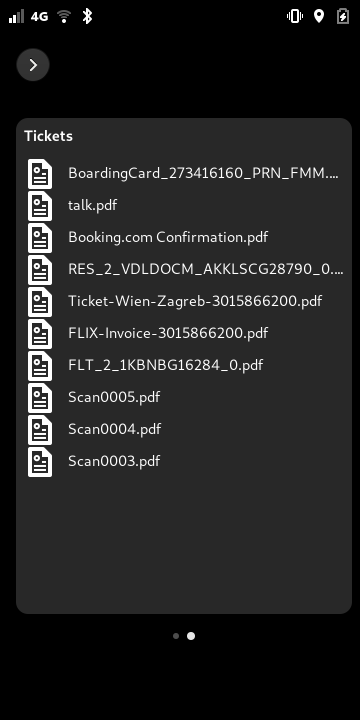
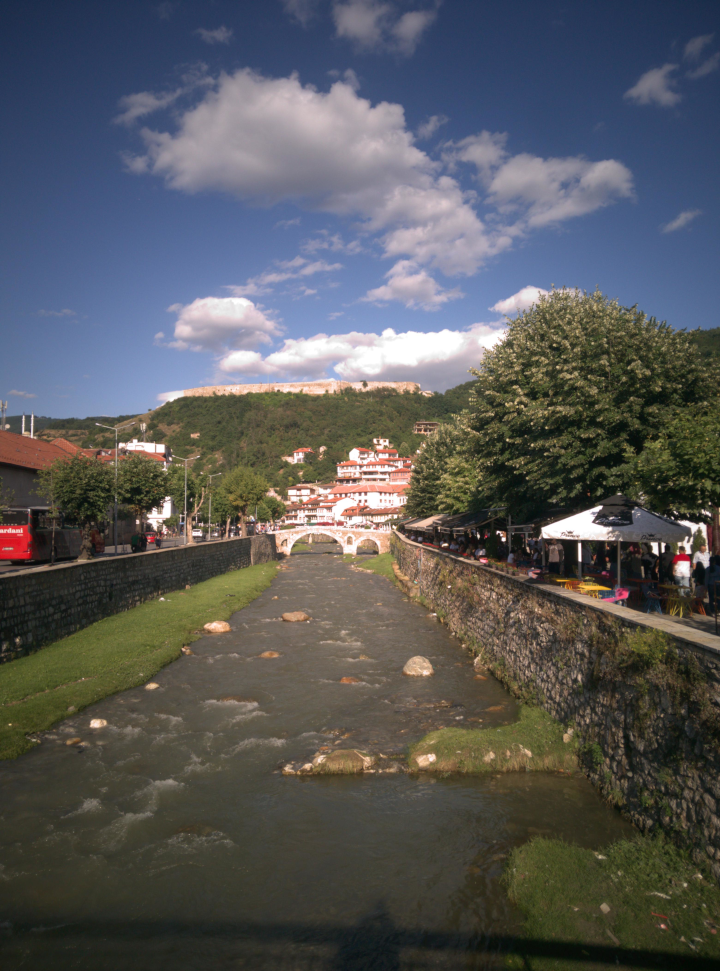
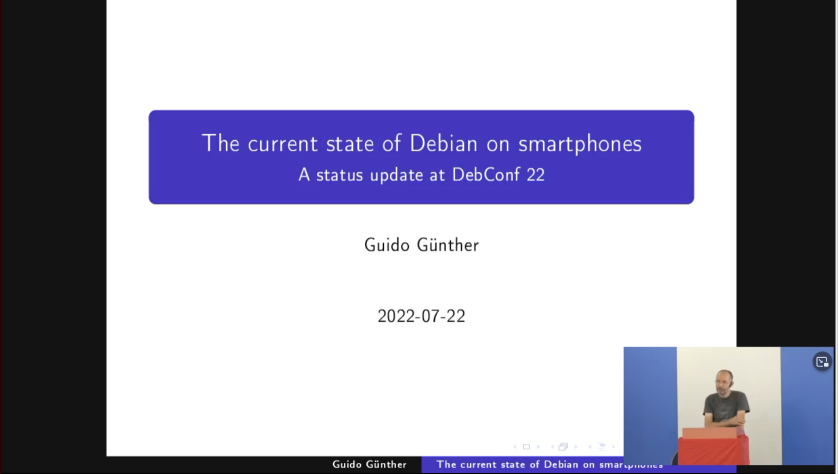
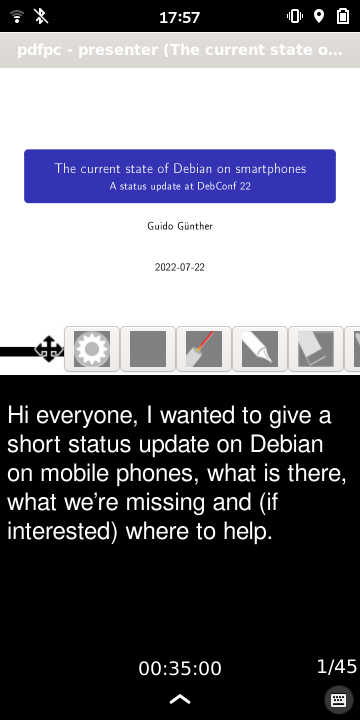
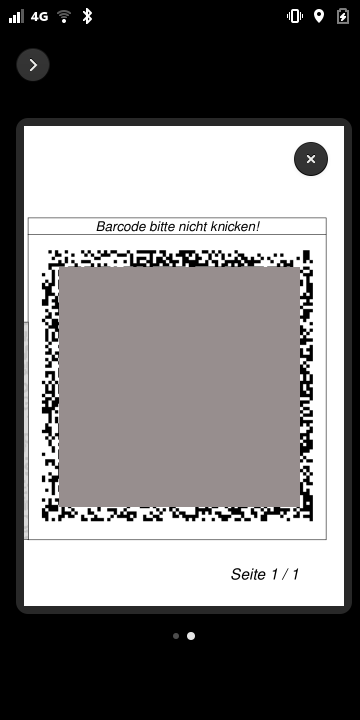
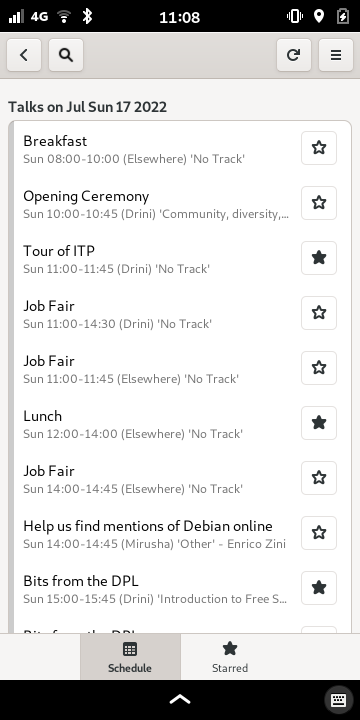
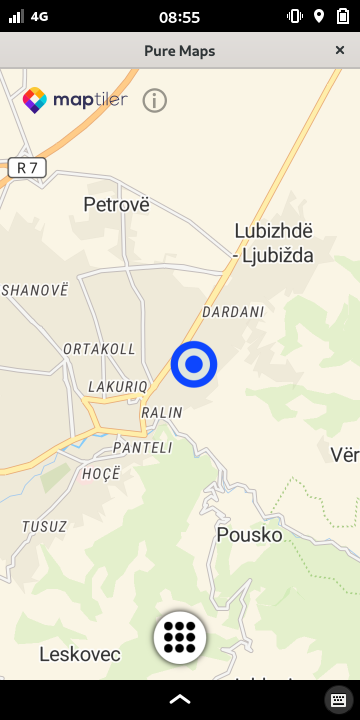
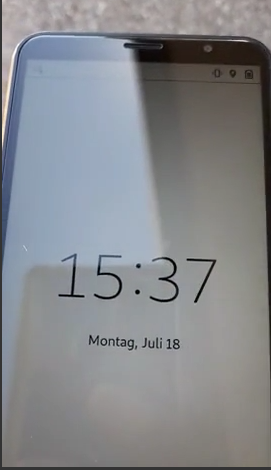
Since people are sometimes slightly surprised that you can go onto a multi week trip with a smartphone running free sofware so only I wanted to share some impressions from my recent trip to Prizren/Kosovo to attend Debconf 22 using a Librem 5. It's a mix of things that happend and bits that got improved to hopefully make things more fun to use. And, yes, there won't be any big surprises like being stranded without the ability to do phone calls in this read because there weren't and there shouldn't be. After two online versions Debconf 22 (the annual Debian Conference) took place in Prizren / Kosovo this year and I sure wanted to go. Looking for options I settled for a train trip to Vienna, to meet there with friends and continue the trip via bus to Zagreb, then switching to a final 11h direct bus to Prizren. When preparing for the trip and making sure my Librem 5 phone has all the needed documents I noticed that there will be quite some PDFs to show until I arrive in Kosovo: train ticket, bus ticket, hotel reservation, and so on. While that works by tapping unlocking the phone, opening the file browser, navigating to the folder with the PDFs and showing it via evince this looked like a lot of steps to repeat. Can't we have that information on the Phone Shell's lockscreen? This was a good opportunity to see if the upcoming plugin infrastructure for the lock screen (initially meant to allow for a plugin to show upcoming events) was flexible enough, so I used some leisure time on the train to poke at this and just before I reached Vienna I was able to use it for the first time. It was the very last check of that ticket, it also was a bit of cheating since I didn't present the ticket on the phone itself but from phosh (the phones graphical shell) running on my laptop but still. PDF barcode on phosh's lockscreen List of tickets on phosh's lockscreen This was possible since phosh is written in GTK and so I could just leverage evince's EvView. Unfortunately the hotel check in didn't want to see any documents . For the next day I moved the code over to the Librem 5 and (being a bit nervous as the queue to get on the bus was quite long) could happily check into the Flixbus by presenting the barcode to the barcode reader via the Librem 5's lockscreen. When switching to the bus to Prizren I didn't get to use that feature again as we bought the tickets at a counter but we got a nice krem banana after entering the bus - they're not filled with jelly, but krem - a real Kosovo must eat!). Although it was a rather long trip we had frequent breaks and I'd certainly take the same route again. Here's a photo of Prizren taken on the Librem 5 without any additional postprocessing: Prizren What about seeing the conference schedule on the phone? Confy(a conferences schedule viewer using GTK and libhandy) to the rescue: Confy with Debconf's schedule Since Debian's confy maintainer was around too, confy saw a bunch of improvements over the conference. For getting around Puremaps(an application to display maps and show routing instructions) was very helpful, here geolocating me in Prizren via GPS: Puremaps Puremaps currently isn't packaged in Debian but there's work onging to fix that (I used the flatpak for the moment). We got ourselves sim cards for the local phone network. For some reason mine wouldn't work (other sim cards from the same operator worked in my phone but this one just wouldn't). So we went to the sim card shop and the guy there was perfectly able to operate the Librem 5 without further explanation (including making calls, sending USSD codes to query balance, ). The sim card problem turned out to be a problem on the operator side and after a couple of days they got it working. We had nice, sunny weather about all the time. That made me switch between high contrast mode (to read things in bright sunlight) and normal mode (e.g. in conference rooms) on the phone quite often. Thankfully we have a ambient light sensor in the phone so we can make that automatic. Phosh in HighContrast See here for a video. Jathan kicked off a DebianOnMobile sprint during the conference where we were able to improve several aspects of mobile support in Debian and on Friday I had the chance to give a talk about the state of Debian on smartphones. pdf-presenter-console is a great tool for this as it can display the current slide together with additional notes. I needed some hacks to make it fit the phone screen but hopefully we figure out a way to have this by default. Debconf talk Pdf presenter console on a phone I had two great weeks in Prizren. Many thanks to the organizers of Debconf 22 - I really enjoyed the conference.

10 August 2022

Shirish Agarwal: Mum, Samsung Galaxy M-52

Mum I dunno from where to start. While I m not supposed to announce it, mum left this earth a month ago (thirteen days when I started to write this blog post) ago. I am still in part denial, part shock, and morose. Of all the seasons in a year, the rainy season used to be my favorite, now would I ever be able to look and feel other than the emptiness that this season has given me? In some senses, it is and was very ironic, when she became ill about last year, I had promised myself I would be by her side for 5-6 years, not go anywhere either Hillhacks or Debconf or any meetup and I was ok with that. Now that she s no more I have no clue why am I living. What is the purpose, the utility? When she was alive, the utility was understandable. We had an unspoken agreement, I would like after her, and she was supposed to look after me. A part of me self-blames as I am sure, I have done thousands of things wrong otherwise the deal was that she was going to be for another decade. But now that she has left not even halfway, I dunno what to do. I don t have someone to fight with anymore  It s mostly a robotic existence atm. I try to distract myself via movies, web series, the web, books, etc. whatever can take my mind off. From the day she died to date, I have a lower back pain which acts as a reminder. It s been a month, I eat, drink, and am surviving but still feel empty. I do things suggested by extended family but within there is no feeling, just emptiness :(. I have no clue if things will get better and even if I do want the change. I clearly have no idea, so let me share a little about what I know.

Samsung Galaxy M-52G Just a couple of days before she died, part of our extended family had come and she chose that opportunity to gift me Samsung Galaxy M-52G even though my birthday was 3 months away. Ironically, after I purchased it, the next day, one of the resellers of the phone cut the price from INR 28k to 20k. If a day more, I could have saved another 8k/- but what s done is done  To my mind, the phone is middling yet a solid phone. I had the phone drop accidentally at times but not a single scratch or anything like that. One can look at the specs in greater detail on fccd.io. Before the recent price drop, as I shared it was a mid-range phone so am gonna review it on that basis itself. One of the first things I did is to buy a plastic cover as well as a cover shield even though the original one is meant to work for a year or more. This was simply for added protection and it has served me to date. Even with the additional weight, I can easily use it with one hand. It only becomes problematic when using chatting apps. such as Whatsapp, Telegram, Quicksy and a few others where it comes with Samsung keyboard with the divided/split keyboard. The A.I. for guessing words and sentences are spot-on when you are doing it in English but if you try a mixture of Hinglish (Hindi and English) that becomes a bit of a nightmare. Tryng to each A.I; new words is something of a task. I wish there was an interface in which I could train the A.I. so it could be served for Hinglish words also. I do think it does, but it s too rudimentary as it is to be any useful at least where it is now.

WiFi Direct While my previous phone did use wifi direct but it that ancient android version wasn t wedded to Wifi Direct as this one is. You have essentially two ways to connect to any system outside. One is through Wi-Fi Direct and the more expensive way is through mobile data. One of the strange things I found quite a number of times, that Wifi would lose it pairings. Before we get into it, Wikipedia has a good explanation of what Wifi direct is all about. Apparently, either my phone or my modem loses the pairing, which of the two is the culprit, I really don t know. There are two apps from the Play Store that do help in figuring out what the issue is (although it is limited in what it gives out in info. but still good.) The first one is Wifi Signal Meter and the other one is WifiAnalyzer (open-source). I have found that pairing done through Wifi Signal Meter works better than through Google s own implementation which feels lacking. The whole universe of Android seems to be built on apps and games and many of these can be bought for money, but many of these can also be played using a combination of micro-transactions and ads. For many a game, you cannot play for more than 5 minutes before you either see an ad or wait for something like 2-3 hrs. before you attempt again. Hogwarts Mystery, for e.g., is an example of that. Another one would be Explore Lands . While Hogwarts Mystery is more towards the lore created by J.K.Rowling and you can really get into the thick of things if you know the lore, Explore lands is more into Exploration of areas. In both the games, you are basically looking to gain energy over a period of time, which requires either money or viewing ads or a combination of both Sadly most ads and even Google don t seem to have caught up that I m deaf so most ads do not have subtitles, so more often than not they are useless to me. I have found also that many games share screenshots or videos that have nothing to do with how the game is. So there is quite a bit of misleading going on. I did read that Android had been having issues with connecting with developers after their app. is in the Play Store. Most apps. ask and require a whole lot of permissions that aren t needed by that app.

F-Droid Think Pirate Praveen had introduced me to F-Droid and a whole lot of things have happened in F-Droid, lot more apps. games etc. the look of F-Droid has been pulled back. In fact, I found Neo Store to be a better skin to see F-Droid. I have yet to explore more of F-Droid before sharing any recommendations and spending some time on it. I do find that many of foss apps. do need to work on how we communicate with our users. For e.g. one app. that Praveen had shared with me recently was Quicksy. And while it is better, it uses a double negative while asking permission whether it should or not to use more of the phone s resources. It is an example of that sort of language that we need to be aware of and be better. I know this post is more on the mobile rather than the desktop but that is where I m living currently.

8 August 2022

Ian Jackson: dkim-rotate - rotation and revocation of DKIM signing keys

Background Internet email is becoming more reliant on DKIM, a scheme for having mail servers cryptographically sign emails. The Big Email providers have started silently spambinning messages that lack either DKIM signatures, or SPF. DKIM is arguably less broken than SPF, so I wanted to deploy it. But it has a problem: if done in a naive way, it makes all your emails non-repudiable, forever. This is not really a desirable property - at least, not desirable for you, although it can be nice for someone who (for example) gets hold of leaked messages obtained by hacking mailboxes. This problem was described at some length in Matthew Green s article Ok Google: please publish your DKIM secret keys. Following links from that article does get you to a short script to achieve key rotation but it had a number of problems, and wasn t useable in my context. dkim-rotate So I have written my own software for rotating and revoking DKIM keys: dkim-rotate. I think it is a good solution to this problem, and it ought to be deployable in many contexts (and readily adaptable to those it doesn t already support). Here s the feature list taken from the README: Complications It seems like it should be a simple problem. Keep N keys, and every day (or whatever), generate and start using a new key, and deliberately leak the oldest private key. But, things are more complicated than that. Considerably more complicated, as it turns out. I didn t want the DKIM key rotation software to have to edit the actual DNS zones for each relevant mail domain. That would tightly entangle the mail server administration with the DNS administration, and there are many contexts (including many of mine) where these roles are separated. The solution is to use DNS aliases (CNAME). But, now we need a fixed, relatively small, set of CNAME records for each mail domain. That means a fixed, relatively small set of key identifiers ( selectors in DKIM terminology), which must be used in rotation. We don t want the private keys to be published via the DNS because that makes an ever-growing DNS zone, which isn t great for performance; and, because we want to place barriers in the way of processes which might enumerate the set of keys we use (and the set of keys we have leaked) and keep records of what status each key had when. So we need a separate publication channel - for which a webserver was the obvious answer. We want the private keys to be readily noticeable and findable by someone who is verifying an alleged leaked email dump, but to be hard to enumerate. (One part of the strategy for this is to leave a note about it, with the prospective private key url, in the email headers.) The key rotation operations are more complicated than first appears, too. The short summary, above, neglects to consider the fact that DNS updates have a nonzero propagation time: if you change the DNS, not everyone on the Internet will experience the change immediately. So as well as a timeout for how long it might take an email to be delivered (ie, how long the DKIM signature remains valid), there is also a timeout for how long to wait after updating the DNS, before relying on everyone having got the memo. (This same timeout applies both before starting to sign emails with a new key, and before deliberately compromising a key which has been withdrawn and deadvertised.) Updating the DNS, and the MTA configuration, are fallible operations. So we need to cope with out-of-course situations, where a previous DNS or MTA update failed. In that case, we need to retry the failed update, and not proceed with key rotation. We mustn t start the timer for the key rotation until the update has been implemented. The rotation script will usually be run by cron, but it might be run by hand, and when it is run by hand it ought not to jump the gun and do anything too early (ie, before the relevant timeout has expired). cron jobs don t always run, and don t always run at precisely the right time. (And there s daylight saving time, to consider, too.) So overall, it s not sufficient to drive the system via cron and have it proceed by one unit of rotation on each run. And, hardest of all, I wanted to support post-deployment configuration changes, while continuing to keep the whole the system operational. Otherwise, you have to bake in all the timing parameters right at the beginning and can t change anything ever. So for example, I wanted to be able to change the email and DNS propagation delays, and even the number of selectors to use, without adversely affecting the delivery of already-sent emails, and without having to shut anything down. I think I have solved these problems. The resulting system is one which keeps track of the timing constraints, and the next event which might occur, on a per-key basis. It calculates on each run, which key(s) can be advanced to the next stage of their lifecycle, and performs the appropriate operations. The regular key update schedule is then an emergent property of the config parameters and cron job schedule. (I provide some example config.) Exim Integrating dkim-rotate itself with Exim was fairly easy. The lsearch lookup function can be used to fish information out of a suitable data file maintained by dkim-rotate. But a final awkwardness was getting Exim to make the right DKIM signatures, at the right time. When making a DKIM signature, one must choose a signing authority domain name: who should we claim to be? (This is the SDID in DKIM terms.) A mailserver that handles many different mail domains will be able to make good signatures on behalf of many of them. It seems to me that domain to be the mail domain in the From: header of the email. (The RFC doesn t seem to be clear on what is expected.) Exim doesn t seem to have anything builtin to do that. And, you only want to DKIM-sign emails that are originated locally or from trustworthy sources. You don t want to DKIM-sign messages that you received from the global Internet, and are sending out again (eg because of an email alias or mailing list). In theory if you verify DKIM on all incoming emails, you could avoid being fooled into signing bad emails, but rejecting all non-DKIM-verified email would be a very strong policy decision. Again, Exim doesn t seem to have cooked machinery. The resulting Exim configuration parameters run to 22 lines, and because they re parameters to an existing config item (the smtp transport) they can t even easily be deployed as a drop-in file via Debian s split config Exim configuration scheme. (I don t know if the file written for Exim s use by dkim-rotate would be suitable for other MTAs, but this part of dkim-rotate could easily be extended.) Conclusion I have today released dkim-rotate 0.4, which is the first public release for general use. I have it deployed and working, but it s new so there may well be bugs to work out. If you would like to try it out, you can get it via git from Debian Salsa. (Debian folks can also find it freshly in Debian unstable.)

comment count unavailable comments

4 August 2022

Reproducible Builds: Reproducible Builds in July 2022

Welcome to the July 2022 report from the Reproducible Builds project! In our reports we attempt to outline the most relevant things that have been going on in the past month. As a brief introduction, the reproducible builds effort is concerned with ensuring no flaws have been introduced during this compilation process by promising identical results are always generated from a given source, thus allowing multiple third-parties to come to a consensus on whether a build was compromised. As ever, if you are interested in contributing to the project, please visit our Contribute page on our website.

Reproducible Builds summit 2022 Despite several delays, we are pleased to announce that registration is open for our in-person summit this year: November 1st November 3rd
The event will happen in Venice (Italy). We intend to pick a venue reachable via the train station and an international airport. However, the precise venue will depend on the number of attendees. Please see the announcement email for information about how to register.

Is reproducibility practical? Ludovic Court s published an informative blog post this month asking the important question: Is reproducibility practical?:
Our attention was recently caught by a nice slide deck on the methods and tools for reproducible research in the R programming language. Among those, the talk mentions Guix, stating that it is for professional, sensitive applications that require ultimate reproducibility , which is probably a bit overkill for Reproducible Research . While we were flattered to see Guix suggested as good tool for reproducibility, the very notion that there s a kind of reproducibility that is ultimate and, essentially, impractical, is something that left us wondering: What kind of reproducibility do scientists need, if not the ultimate kind? Is reproducibility practical at all, or is it more of a horizon?
The post goes on to outlines the concept of reproducibility, situating examples within the context of the GNU Guix operating system.

diffoscope diffoscope is our in-depth and content-aware diff utility. Not only can it locate and diagnose reproducibility issues, it can provide human-readable diffs from many kinds of binary formats. This month, Chris Lamb prepared and uploaded versions 218, 219 and 220 to Debian, as well as made the following changes:
  • New features:
  • Bug fixes:
    • Fix a regression introduced in version 207 where diffoscope would crash if one directory contained a directory that wasn t in the other. Thanks to Alderico Gallo for the testcase. [ ]
    • Don t traceback if we encounter an invalid Unicode character in Haskell versioning headers. [ ]
  • Output improvements:
  • Codebase improvements:
    • Space out a file a little. [ ]
    • Update various copyright years. [ ]

Mailing list On our mailing list this month:
  • Roland Clobus posted his Eleventh status update about reproducible [Debian] live-build ISO images, noting amongst many other things! that all major desktops build reproducibly with bullseye, bookworm and sid.
  • Santiago Torres-Arias announced a Call for Papers (CfP) for a new SCORED conference, an academic workshop around software supply chain security . As Santiago highlights, this new conference invites reviewers from industry, open source, governement and academia to review the papers [and] I think that this is super important to tackle the supply chain security task .

Upstream patches The Reproducible Builds project attempts to fix as many currently-unreproducible packages as possible. This month, however, we submitted the following patches:

Reprotest reprotest is the Reproducible Builds project s end-user tool to build the same source code twice in widely and deliberate different environments, and checking whether the binaries produced by the builds have any differences. This month, the following changes were made:
  • Holger Levsen:
    • Uploaded version 0.7.21 to Debian unstable as well as mark 0.7.22 development in the repository [ ].
    • Make diffoscope dependency unversioned as the required version is met even in Debian buster. [ ]
    • Revert an accidentally committed hunk. [ ]
  • Mattia Rizzolo:
    • Apply a patch from Nick Rosbrook to not force the tests to run only against Python 3.9. [ ]
    • Run the tests through pybuild in order to run them against all supported Python 3.x versions. [ ]
    • Fix a deprecation warning in the setup.cfg file. [ ]
    • Close a new Debian bug. [ ]

Reproducible builds website A number of changes were made to the Reproducible Builds website and documentation this month, including:
  • Arnout Engelen:
  • Chris Lamb:
    • Correct some grammar. [ ]
  • Holger Levsen:
    • Add talk from FOSDEM 2015 presented by Holger and Lunar. [ ]
    • Show date of presentations if we have them. [ ][ ]
    • Add my presentation from DebConf22 [ ] and from Debian Reunion Hamburg 2022 [ ].
    • Add dhole to the speakers of the DebConf15 talk. [ ]
    • Add raboof s talk Reproducible Builds for Trustworthy Binaries from May Contain Hackers. [ ]
    • Drop some Debian-related suggested ideas which are not really relevant anymore. [ ]
    • Add a link to list of packages with patches ready to be NMUed. [ ]
  • Mattia Rizzolo:
    • Add information about our upcoming event in Venice. [ ][ ][ ][ ]

Testing framework The Reproducible Builds project runs a significant testing framework at tests.reproducible-builds.org, to check packages and other artifacts for reproducibility. This month, Holger Levsen made the following changes:
  • Debian-related changes:
    • Create graphs displaying existing .buildinfo files per each Debian suite/arch. [ ][ ]
    • Fix a typo in the Debian dashboard. [ ][ ]
    • Fix some issues in the pkg-r package set definition. [ ][ ][ ]
    • Improve the builtin-pho HTML output. [ ][ ][ ][ ]
    • Temporarily disable all live builds as our snapshot mirror is offline. [ ]
  • Automated node health checks:
    • Detect dpkg failures. [ ]
    • Detect files with bad UNIX permissions. [ ]
    • Relax a regular expression in order to detect Debian Live image build failures. [ ]
  • Misc changes:
    • Test that FreeBSD virtual machine has been updated to version 13.1. [ ]
    • Add a reminder about powercycling the armhf-architecture mst0X node. [ ]
    • Fix a number of typos. [ ][ ]
    • Update documentation. [ ][ ]
    • Fix Munin monitoring configuration for some nodes. [ ]
    • Fix the static IP address for a node. [ ]
In addition, Vagrant Cascadian updated host keys for the cbxi4pro0 and wbq0 nodes [ ] and, finally, node maintenance was also performed by Mattia Rizzolo [ ] and Holger Levsen [ ][ ][ ].

Contact As ever, if you are interested in contributing to the Reproducible Builds project, please visit our Contribute page on our website. However, you can get in touch with us via:

1 August 2022

Junichi Uekawa: August.

August. I think I finally understood what's going on in io_uring.

31 July 2022

Paul Wise: FLOSS Activities July 2022

Focus This month I didn't have any particular focus. I just worked on issues in my info bubble.

Changes

Issues

Review

Administration
  • Debian BTS: unarchive/reopen/triage bugs for reintroduced packages
  • Debian servers: check full disks, ping users of excessive disk usage, restart a hung service
  • Debian wiki: approve accounts

Communication
  • Respond to queries from Debian users and contributors on the mailing lists and IRC

Sponsors The SPTAG, SIMDEverywhere, cwidget, aptitude, tldextract work was sponsored. All other work was done on a volunteer basis.

Joachim Breitner: The Via Alpina red trail through Slovenia

This July my girlfriend and I hiked the Slovenian part of the Red Trail of the Via Alpina, from the edge of the Julian Alps to Trieste, and I d like to share some observations and tips that we might have found useful before our trip.
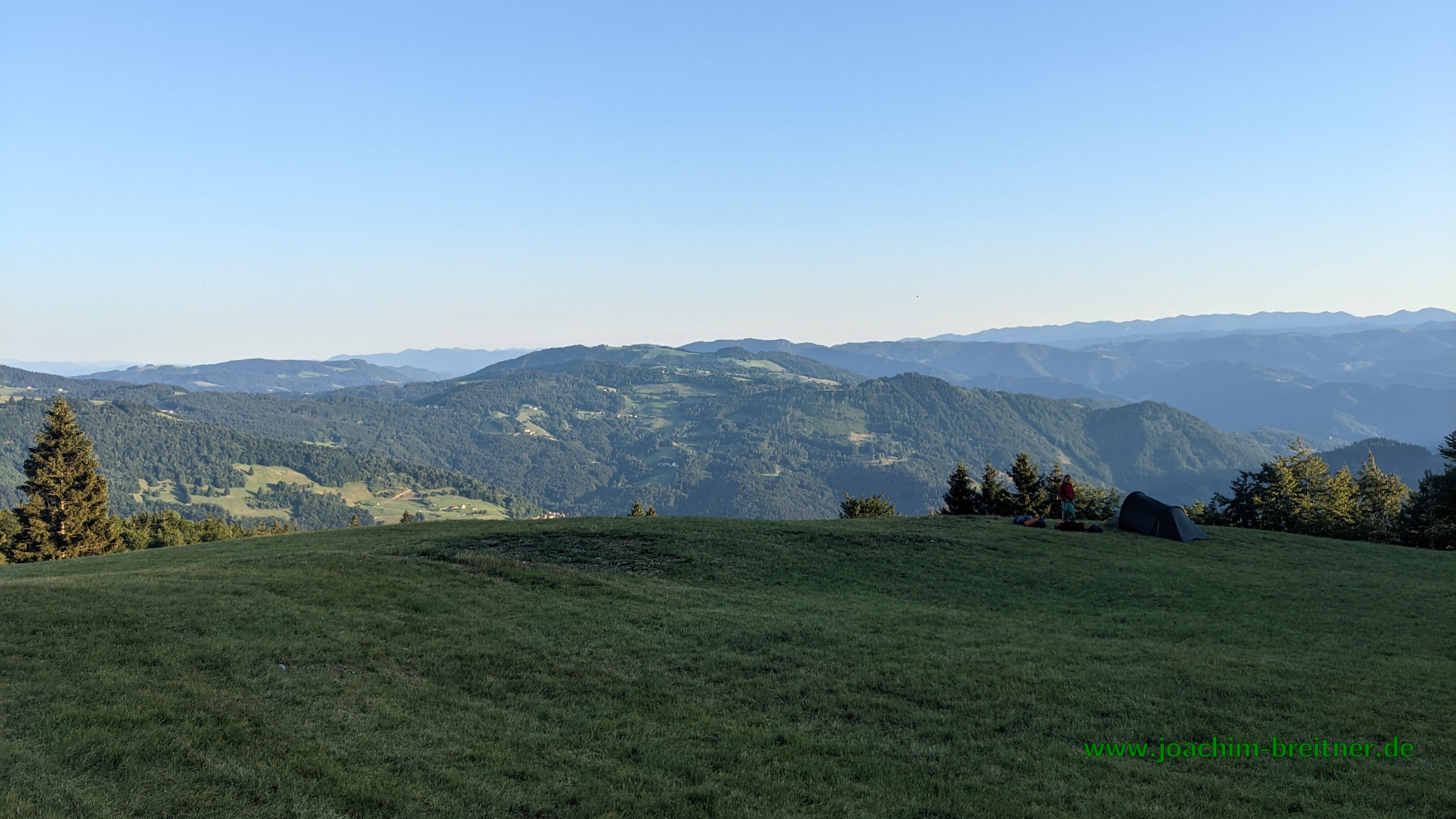
Our most favorite camp spot Our most favorite camp spot

Getting there As we traveled with complete camping gear and wanted to stay in our tent, we avoided the high alpine parts of the trail and started just where the trail came down from the Alps and entered the Karst. A great way to get there is to take the night train from Zurich or Munich towards Ljubljana, get off at Jesenice, have breakfast, take the local train to Podbrdo and you can start your tour at 9:15am. From there you can reach the trail at Pedrovo Brdo within 1 h.

Finding the way We did not use any paper maps, and instead relied on the OpenStreetMap data, which is very good, as well as the official(?) GPX tracks on Komoot, which are linked from the official route descriptions. We used OsmAnd. In general, trails are generally very well marked (red circle with white center, and frequent signs), but the signs rarely tell you which way the Via Alpina goes, so the GPS was needed. Sometimes the OpenStreetMap trail and the Komoot trail disagreed on short segments. We sometimes followed one and other times the other.

Variants We diverged from the trail in a few places:
  • We did not care too much about the horses in Lipica and at least on the map it looked like a longish boringish and sun-exposed detour, so we cut the loop and hiked from Prelo e pri Lokvi up onto the peak of the Veliko Gradi e (which unfortunately is too overgrown to provide a good view).
  • When we finally reached the top of Mali Kras and had a view across the bay of Trieste, it seemed silly to walk to down to Dolina, and instead we followed the ridge through Socerb, essentially the Alpe Adria Trail.
  • Not really a variant, but after arriving in Muggia, if one has to go to Trieste, the ferry is a probably nicer way to finish a trek than the bus.

Pitching a tent We used our tent almost every night, only in Idrija we got a room (and a shower ). It was not trivial to find good camp spots, because most of the trail is on hills with slopes, and the flat spots tend to have housed built on them, but certainly possible. Sometimes we hid in the forest, other times we found nice small and freshly mowed meadows within the forest.

Water Since this is Karst land, there is very little in terms of streams or lakes along the way, which is a pity. The Idrijca river right south of Idrija was very tempting to take a plunge. Unfortunately we passed there early in the day and we wanted to cover some ground first, so we refrained. As for drinking water, we used the taps at the bathrooms of the various touristic sites, a few (but rare) public fountains, and finally resorted to just ringing random doorbells and asking for water, which always worked.

Paths A few stages lead you through very pleasant narrow forest paths with a sight, but not all. On some days you find yourself plodding along wide graveled or even paved forest roads, though.

Landscape and sights The view from Nanos is amazing and, with this high peak jutting out over a wide plain, rather unique. It may seem odd that the trail goes up and down that mountain on the same day when it could go around, but it is certainly worth it. The Karst is mostly a cultivated landscape, with lots of forestry. It is very hilly and green, which is pretty, but some might miss some craggedness. It s not the high alps, after all, but at least they are in sight half the time. But the upside is that there are few sights along the way that are worth visiting, in particular the the Franja Partisan Hospital hidden in a very narrow gorge, the Predjama Castle and the kocjan Caves

28 July 2022

Matthew Garrett: UEFI rootkits and UEFI secure boot

Kaspersky describes a UEFI-implant used to attack Windows systems. Based on it appearing to require patching of the system firmware image, they hypothesise that it's propagated by manually dumping the contents of the system flash, modifying it, and then reflashing it back to the board. This probably requires physical access to the board, so it's not especially terrifying - if you're in a situation where someone's sufficiently enthusiastic about targeting you that they're reflashing your computer by hand, it's likely that you're going to have a bad time regardless.

But let's think about why this is in the firmware at all. Sophos previously discussed an implant that's sufficiently similar in some technical details that Kaspersky suggest they may be related to some degree. One notable difference is that the MyKings implant described by Sophos installs itself into the boot block of legacy MBR partitioned disks. This code will only be executed on old-style BIOS systems (or UEFI systems booting in BIOS compatibility mode), and they have no support for code signatures, so there's no need to be especially clever. Run malicious code in the boot block, patch the next stage loader, follow that chain all the way up to the kernel. Simple.

One notable distinction here is that the MBR boot block approach won't be persistent - if you reinstall the OS, the MBR will be rewritten[1] and the infection is gone. UEFI doesn't really change much here - if you reinstall Windows a new copy of the bootloader will be written out and the UEFI boot variables (that tell the firmware which bootloader to execute) will be updated to point at that. The implant may still be on disk somewhere, but it won't be run.

But there's a way to avoid this. UEFI supports loading firmware-level drivers from disk. If, rather than providing a backdoored bootloader, the implant takes the form of a UEFI driver, the attacker can set a different set of variables that tell the firmware to load that driver at boot time, before running the bootloader. OS reinstalls won't modify these variables, which means the implant will survive and can reinfect the new OS install. The only way to get rid of the implant is to either reformat the drive entirely (which most OS installers won't do by default) or replace the drive before installation.

This is much easier than patching the system firmware, and achieves similar outcomes - the number of infected users who are going to wipe their drives to reinstall is fairly low, and the kernel could be patched to hide the presence of the implant on the filesystem[2]. It's possible that the goal was to make identification as hard as possible, but there's a simpler argument here - if the firmware has UEFI Secure Boot enabled, the firmware will refuse to load such a driver, and the implant won't work. You could certainly just patch the firmware to disable secure boot and lie about it, but if you're at the point of patching the firmware anyway you may as well just do the extra work of installing your implant there.

I think there's a reasonable argument that the existence of firmware-level rootkits suggests that UEFI Secure Boot is doing its job and is pushing attackers into lower levels of the stack in order to obtain the same outcomes. Technologies like Intel's Boot Guard may (in their current form) tend to block user choice, but in theory should be effective in blocking attacks of this form and making things even harder for attackers. It should already be impossible to perform attacks like the one Kaspersky describes on more modern hardware (the system should identify that the firmware has been tampered with and fail to boot), which pushes things even further - attackers will have to take advantage of vulnerabilities in the specific firmware they're targeting. This obviously means there's an incentive to find more firmware vulnerabilities, which means the ability to apply security updates for system firmware as easily as security updates for OS components is vital (hint hint if your system firmware updates aren't available via LVFS you're probably doing it wrong).

We've known that UEFI rootkits have existed for a while (Hacking Team had one in 2015), but it's interesting to see a fairly widespread one out in the wild. Protecting against this kind of attack involves securing the entire boot chain, including the firmware itself. The industry has clearly been making progress in this respect, and it'll be interesting to see whether such attacks become more common (because Secure Boot works but firmware security is bad) or not.

[1] As we all remember from Windows installs overwriting Linux bootloaders
[2] Although this does run the risk of an infected user booting another OS instead, and being able to see the implant

comment count unavailable comments

26 July 2022

Raphaël Hertzog: Freexian s report about Debian Long Term Support, June 2022

A Debian LTS logo
Like each month, have a look at the work funded by Freexian s Debian LTS offering. Debian project funding No any major updates on running projects.
Two 1, 2 projects are in the pipeline now.
Tryton project is in a review phase. Gradle projects is still fighting in work. In June, we put aside 2254 EUR to fund Debian projects. We re looking forward to receive more projects from various Debian teams! Learn more about the rationale behind this initiative in this article. Debian LTS contributors In June, 15 contributors have been paid to work on Debian LTS, their reports are available: Evolution of the situation In June we released 27 DLAs.

This is a special month, where we have two releases (stretch and jessie) as ELTS and NO release as LTS. Buster is still handled by the security team and will probably be given in LTS hands at the beginning of the August. During this month we are updating the infrastructure, documentation and improve our internal processes to switch to a new release.
Many developers have just returned back from Debconf22, hold in Prizren, Kosovo! Many (E)LTS members could meet face-to-face and discuss some technical and social topics! Also LTS BoF took place, where the project was introduced (link to video).
Thanks to our sponsors Sponsors that joined recently are in bold. We are pleased to welcome Alter Way where their support of Debian is publicly acknowledged at the higher level, see this French quote of Alterway s CEO.

25 July 2022

Bits from Debian: DebConf22 closes in Prizren and DebConf23 dates announced

DebConf22 group photo - click to enlarge On Sunday 24 July 2022, the annual Debian Developers and Contributors Conference came to a close. Hosting 260 attendees from 38 different countries over a combined 91 event talks, discussion sessions, Birds of a Feather (BoF) gatherings, workshops, and activities, DebConf22 was a large success. The conference was preceded by the annual DebCamp held 10 July to 16 July which focused on individual work and team sprints for in-person collaboration towards developing Debian. In particular, this year there have been sprints to advance development of Mobian/Debian on mobile, reproducible builds and Python in Debian, and a BootCamp for newcomers, to get introduced to Debian and have some hands-on experience with using it and contributing to the community. The actual Debian Developers Conference started on Sunday 17 July 2022. Together with activities such as the traditional 'Bits from the DPL' talk, the continuous key-signing party, lightning talks and the announcement of next year's DebConf (DebConf23 in Kochi, India), there were several sessions related to programming language teams such as Python, Perl and Ruby, as well as news updates on several projects and internal Debian teams, discussion sessions (BoFs) from many technical teams (Long Term Support, Android tools, Debian Derivatives, Debian Installer and Images team, Debian Science...) and local communities (Debian Brasil, Debian India, the Debian Local Teams), along with many other events of interest regarding Debian and free software. The schedule was updated each day with planned and ad-hoc activities introduced by attendees over the course of the entire conference. Several activities that couldn\'t be organized in past years due to the COVID pandemic returned to the conference\'s schedule: a job fair, open-mic and poetry night, the traditional Cheese and Wine party, the group photos and the Day Trip. For those who were not able to attend, most of the talks and sessions were recorded for live streams with videos made, available through the Debian meetings archive website. Almost all of the sessions facilitated remote participation via IRC messaging apps or online collaborative text documents. The DebConf22 website will remain active for archival purposes and will continue to offer links to the presentations and videos of talks and events. Next year, DebConf23 will be held in Kochi, India, from September 10 to September 16, 2023. As tradition follows before the next DebConf the local organizers in India will start the conference activites with DebCamp (September 03 to September 09, 2023), with particular focus on individual and team work towards improving the distribution. DebConf is committed to a safe and welcome environment for all participants. See the web page about the Code of Conduct in DebConf22 website for more details on this. Debian thanks the commitment of numerous sponsors to support DebConf22, particularly our Platinum Sponsors: Lenovo, Infomaniak, ITP Prizren and Google. About Debian The Debian Project was founded in 1993 by Ian Murdock to be a truly free community project. Since then the project has grown to be one of the largest and most influential open source projects. Thousands of volunteers from all over the world work together to create and maintain Debian software. Available in 70 languages, and supporting a huge range of computer types, Debian calls itself the universal operating system. About DebConf DebConf is the Debian Project's developer conference. In addition to a full schedule of technical, social and policy talks, DebConf provides an opportunity for developers, contributors and other interested people to meet in person and work together more closely. It has taken place annually since 2000 in locations as varied as Scotland, Argentina, and Bosnia and Herzegovina. More information about DebConf is available from https://debconf.org/. About Lenovo As a global technology leader manufacturing a wide portfolio of connected products, including smartphones, tablets, PCs and workstations as well as AR/VR devices, smart home/office and data center solutions, Lenovo understands how critical open systems and platforms are to a connected world. About Infomaniak Infomaniak is Switzerland\'s largest web-hosting company, also offering backup and storage services, solutions for event organizers, live-streaming and video on demand services. It wholly owns its datacenters and all elements critical to the functioning of the services and products provided by the company (both software and hardware). About ITP Prizren Innovation and Training Park Prizren intends to be a changing and boosting element in the area of ICT, agro-food and creatives industries, through the creation and management of a favourable environment and efficient services for SMEs, exploiting different kinds of innovations that can contribute to Kosovo to improve its level of development in industry and research, bringing benefits to the economy and society of the country as a whole. About Google Google is one of the largest technology companies in the world, providing a wide range of Internet-related services and products such as online advertising technologies, search, cloud computing, software, and hardware. Google has been supporting Debian by sponsoring DebConf for more than ten years, and is also a Debian partner sponsoring parts of Salsa's continuous integration infrastructure within Google Cloud Platform. Contact Information For further information, please visit the DebConf22 web page at https://debconf22.debconf.org/ or send mail to press@debian.org.

19 July 2022

Russell Coker: DDC as a KVM Switch

With the recent resurgence in Covid19 I ve been working from home a lot and using both my work laptop and personal PC on the same monitor. HDMI KVM switches start at $150 and I didn t feel like buying one. So I wrote a script to change inputs on my monitor. The following script locks the session on the local machine and switches the monitor s input to the other machine. I ran the command ddcutil vcpinfo grep Input which shows that (on my monitor at least) 60 is the VCP for input. Then I ran the command ddcutil getvcp 60 to get the current value and tried setting values sequentially to find the value for the other port. Below is the script I m using on one system, the other is the same but setting the different port via setvcp. The loginctl command is to lock the screen to prevent accidental keyboard or mouse input from messing anything up.
# lock the session, assumes that seat0 is the only session
loginctl lock-session $(loginctl list-sessions grep "seat0 *$" cut -c1-7)
# 0xf is DisplayPort, 0x11 is HDMI-1
ddcutil setvcp 60 0x11
For keyboard, mouse, and speakers I m using a USB 2.0 hub that I can switch between computers. I idly considered getting a three-pole double-throw switch (four pole switches aren t available at my local electronic store) to switch USB 2.0 as I only need to switch 3 of the 4 wires. But for the moment just plugging the hub into different systems is enough, I only do that a couple of times a day.

18 July 2022

Bits from Debian: DebConf22 welcomes its sponsors!

DebConf22 is taking place in Prizren, Kosovo, from 17th to 24th July, 2022. It is the 23rd edition of the Debian conference and organizers are working hard to create another interesting and fruitful event for attendees. We would like to warmly welcome the sponsors of DebConf22, and introduce you to them. We have four Platinum sponsors. Our first Platinum sponsor is Lenovo. As a global technology leader manufacturing a wide portfolio of connected products, including smartphones, tablets, PCs and workstations as well as AR/VR devices, smart home/office and data center solutions, Lenovo understands how critical open systems and platforms are to a connected world. Infomaniak is our second Platinum sponsor. Infomaniak is Switzerland's largest web-hosting company, also offering backup and storage services, solutions for event organizers, live-streaming and video on demand services. It wholly owns its datacenters and all elements critical to the functioning of the services and products provided by the company (both software and hardware). The ITP Prizren is our third Platinum sponsor. ITP Prizren intends to be a changing and boosting element in the area of ICT, agro-food and creatives industries, through the creation and management of a favourable environment and efficient services for SMEs, exploiting different kinds of innovations that can contribute to Kosovo to improve its level of development in industry and research, bringing benefits to the economy and society of the country as a whole. Google is our fourth Platinum sponsor. Google is one of the largest technology companies in the world, providing a wide range of Internet-related services and products such as online advertising technologies, search, cloud computing, software, and hardware. Google has been supporting Debian by sponsoring DebConf for more than ten years, and is also a Debian partner sponsoring parts of Salsa's continuous integration infrastructure within Google Cloud Platform. Our Gold sponsors are: Roche, a major international pharmaceutical provider and research company dedicated to personalized healthcare. Microsoft, enables digital transformation for the era of an intelligent cloud and an intelligent edge. Its mission is to empower every person and every organization on the planet to achieve more. Ipko Telecommunications, provides telecommunication services and it is the first and the most dominant mobile operator which offers fast-speed mobile internet 3G and 4G networks in Kosovo. Ubuntu, the Operating System delivered by Canonical. U.S. Agency for International Development, leads international development and humanitarian efforts to save lives, reduce poverty, strengthen democratic governance and help people progress beyond assistance. Our Silver sponsors are: Pexip, is the video communications platform that solves the needs of large organizations. Deepin is a Chinese commercial company focusing on the development and service of Linux-based operating systems. Hudson River Trading, a company researching and developing automated trading algorithms using advanced mathematical techniques. Amazon Web Services (AWS), is one of the world's most comprehensive and broadly adopted cloud platforms, offering over 175 fully featured services from data centers globally. The Bern University of Applied Sciences with near 7,800 students enrolled, located in the Swiss capital. credativ, a service-oriented company focusing on open-source software and also a Debian development partner. Collabora, a global consultancy delivering Open Source software solutions to the commercial world. Arm: with the world s Best SoC Design Portfolio, Arm powered solutions have been supporting innovation for more than 30 years and are deployed in over 225 billion chips to date. GitLab, an open source end-to-end software development platform with built-in version control, issue tracking, code review, CI/CD, and more. Two Sigma, rigorous inquiry, data analysis, and invention to help solve the toughest challenges across financial services. Starlabs, builds software experiences and focus on building teams that deliver creative Tech Solutions for our clients. Solaborate, has the world s most integrated and powerful virtual care delivery platform. Civil Infrastructure Platform, a collaborative project hosted by the Linux Foundation, establishing an open source base layer of industrial grade software. Matanel Foundation, operates in Israel, as its first concern is to preserve the cohesion of a society and a nation plagued by divisions. Bronze sponsors: bevuta IT, Kutia, Univention, Freexian. And finally, our Supporter level sponsors: Altus Metrum, Linux Professional Institute, Olimex, Trembelat, Makerspace IC Prizren, Cloud68.co, Gandi.net, ISG.EE, IPKO Foundation, The Deutsche Gesellschaft f r Internationale Zusammenarbeit (GIZ) GmbH. Thanks to all our sponsors for their support! Their contributions make it possible for a large number of Debian contributors from all over the globe to work together, help and learn from each other in DebConf22. DebConf22 logo

17 July 2022

Russ Allbery: Review: Trang

Review: Trang, by Mary Sisson
Series: Trang #1
Publisher: Mary Sisson
Copyright: 2011
Printing: December 2013
ASIN: B004I6DAQ8
Format: Kindle
Pages: 374
In 2113, a radio mapping satellite near the Titan station disappeared. It then reappeared five days later, apparently damaged and broadcasting a signal that made computers crash. The satellite was immediately sent back to the Space Authority base in Beijing for careful examination, but the techs on the station were able to decode the transmission: a request for the contents of databases. The general manager of the station sent a probe to the same location and it too vanished, returning two days later with a picture of a portal, followed shortly by an alien probe. Five years later, Philippe Trang has been assigned as the first human diplomat to an alien space station in intergalactic space at the nexus of multiple portals. Humans will apparently be the eighth type of intelligent life to send a representative to the station. He'll have a translation system, a security detail, and the groundwork of five years of audiovisual communications with the aliens, including one that was able to learn English. But he'll be the first official diplomatic representative physically there. The current style in SF might lead you to expect a tense thriller full of nearly incomprehensible aliens, unexplained devices, and creepy mysteries. This is not that sort of book. The best comparison point I could think of is James White's Sector General novels, except with a diplomat rather than a doctor. The aliens are moderately strange (not just humans in prosthetic makeup), but are mostly earnest, well-meaning, and welcoming. Trang's security escort is more military than he expects, but that becomes a satisfying negotiation rather than an ongoing problem. There is confusion, misunderstandings, and even violence, but most of it is sorted out by earnest discussion and attempts at mutual understanding. This is, in other words, diplomat competence porn (albeit written by someone who is not a diplomat, so I wouldn't expect too much realism). Trang defuses rather than confronts, patiently sorts through the nuances of a pre-existing complex dynamic between aliens without prematurely picking sides, and has the presence of mind to realize that the special forces troops assigned to him are another culture he needs to approach with the same skills. Most of the book is low-stakes confusion, curiosity, and careful exploration, which could have been boring but wasn't. It helps that Sisson packs a lot of complexity into the station dynamics and reveals it in ways that I found enjoyably unpredictable. Some caveats: This is a self-published first novel (albeit by an experienced reporter and editor) and it shows. The book has a sort of plastic Technicolor feel that I sometimes see in self-published novels, where the details aren't quite deep enough, the writing isn't quite polished, and the dialog isn't quite as tight as I'm used to. It also meanders in a way that few commercial novels do, including slice-of-life moments and small asides that don't go anywhere. This can be either a bug or a feature depending on what you're in the mood for. I found it relaxing and stress-relieving, which is what I was looking for, but you may have a different experience. I will warn that the climax features a sudden escalation of stakes that I don't think was sufficiently signaled by the tone of the writing, and thus felt a bit unreal. Sisson also includes a couple deus ex machina twists that felt a bit predictable and easy, and I didn't find the implied recent history of one of the alien civilizations that believable. The conclusion is therefore not the strongest part of the book; if you're not enjoying the journey, it probably won't get better. But, all that said, this was fun, and I've already bought the second book in the series. It's low-stakes, gentle SF with a core of discovery and exploration rather than social dynamics, and I haven't run across much of that recently. The worst thing in the book is some dream glimpses at a horrific event in Trang's past that's never entirely on camera. It's not as pacifist as James White, but it's close. Recommended, especially if you liked Sector General. White's series is so singular that I previously would have struggled to find a suggestion for someone who wanted more exactly like that (but without the Bewitched-era sexism). Now I have an answer. Score another one for Susan Stepney, who is also how I found Julie Czerneda. Trang is also currently free for Kindle, so you can't beat the price. Followed by Trust. Rating: 8 out of 10

16 July 2022

Thomas Goirand: My work during debcamp

I arrived in Prizren late on Wednesday. Here s what I did during debcamp (so over 3 days). I hope this post just motivates others to contribute more to Debian. At least 2 DDs want to upload packages that need a new version of python3-jsonschema (ie: version > 4.x). Unfortunately, version 4 broke a few packages. I therefore uploaded it to Experimental a few months/week, so I could see the result of autopkgtest reading the pseudo excuse page. And it showed a few packages broke. Here s the one used (or part of) OpenStack: Thanks to a reactive upstream, I was able to fix the first 4 above, but not Sahara yet. Vitrage poped-up when I uploade Debian release 2 of jsonschema, surprisingly. Also python3-jsonschema autopkgtest itself was broken because missing python3-pip in depends, but that should be fixed also.

I then filed bugs for packages not under my control: It looks tlike now there s also spyder which wasn t in the list a few hours ago. Maybe I should also file a bug against it. At this point, I don t think the python-jsonschema transition is finished, but it s on good tracks.
Then I also uploaded a new package of Ceph removing the ceph-mgr-diskprediction-local because it depended on python3-sklearn that the release team wanted to remove. I also prepared a point release update for it, but I m currently waiting for the previous upload to migrate to testing before uploading the point release.

Last, I wrote the missing update command for extrepo, and pushed the merge request to Salsa. Now extrepo should be feature complete (at least from my point of view). I also merged the patch for numberstation fixing the debian/copyright, and uploaded it to the NEW queue. It s a new package that does 2 factor authentication, and is mobile friendly: it works perfectly on any Mobian powered phone. Next, I intend to work with Arthur on the Cloud image finder. I hope we can find the time to work on it so it does what I need (ie: support the kind of setup I want to do, with HA, puppet, etc.).

15 July 2022

Reproducible Builds (diffoscope): diffoscope 219 released

The diffoscope maintainers are pleased to announce the release of diffoscope version 219. This version includes the following changes:
* Don't traceback if we encounter an invalid Unicode character in Haskell
  versioning headers. (Closes: reproducible-builds/diffoscope#307)
* Update various copyright years.
You find out more by visiting the project homepage.

13 July 2022

Reproducible Builds: Reproducible Builds in June 2022

Welcome to the June 2022 report from the Reproducible Builds project. In these reports, we outline the most important things that we have been up to over the past month. As a quick recap, whilst anyone may inspect the source code of free software for malicious flaws, almost all software is distributed to end users as pre-compiled binaries.

Save the date! Despite several delays, we are pleased to announce dates for our in-person summit this year: November 1st 2022 November 3rd 2022
The event will happen in/around Venice (Italy), and we intend to pick a venue reachable via the train station and an international airport. However, the precise venue will depend on the number of attendees. Please see the announcement mail from Mattia Rizzolo, and do keep an eye on the mailing list for further announcements as it will hopefully include registration instructions.

News David Wheeler filed an issue against the Rust programming language to report that builds are not reproducible because full path to the source code is in the panic and debug strings . Luckily, as one of the responses mentions: the --remap-path-prefix solves this problem and has been used to great effect in build systems that rely on reproducibility (Bazel, Nix) to work at all and that there are efforts to teach cargo about it here .
The Python Security team announced that:
The ctx hosted project on PyPI was taken over via user account compromise and replaced with a malicious project which contained runtime code which collected the content of os.environ.items() when instantiating Ctx objects. The captured environment variables were sent as a base64 encoded query parameter to a Heroku application [ ]
As their announcement later goes onto state, version-pinning using hash-checking mode can prevent this attack, although this does depend on specific installations using this mode, rather than a prevention that can be applied systematically.
Developer vanitasvitae published an interesting and entertaining blog post detailing the blow-by-blow steps of debugging a reproducibility issue in PGPainless, a library which aims to make using OpenPGP in Java projects as simple as possible . Whilst their in-depth research into the internals of the .jar may have been unnecessary given that diffoscope would have identified the, it must be said that there is something to be said with occasionally delving into seemingly low-level details, as well describing any debugging process. Indeed, as vanitasvitae writes:
Yes, this would have spared me from 3h of debugging But I probably would also not have gone onto this little dive into the JAR/ZIP format, so in the end I m not mad.

Kees Cook published a short and practical blog post detailing how he uses reproducibility properties to aid work to replace one-element arrays in the Linux kernel. Kees approach is based on the principle that if a (small) proposed change is considered equivalent by the compiler, then the generated output will be identical but only if no other arbitrary or unrelated changes are introduced. Kees mentions the fantastic diffoscope tool, as well as various kernel-specific build options (eg. KBUILD_BUILD_TIMESTAMP) in order to prepare my build with the known to disrupt code layout options disabled .
Stefano Zacchiroli gave a presentation at GDR S curit Informatique based in part on a paper co-written with Chris Lamb titled Increasing the Integrity of Software Supply Chains. (Tweet)

Debian In Debian in this month, 28 reviews of Debian packages were added, 35 were updated and 27 were removed this month adding to our knowledge about identified issues. Two issue types were added: nondeterministic_checksum_generated_by_coq and nondetermistic_js_output_from_webpack. After Holger Levsen found hundreds of packages in the bookworm distribution that lack .buildinfo files, he uploaded 404 source packages to the archive (with no meaningful source changes). Currently bookworm now shows only 8 packages without .buildinfo files, and those 8 are fixed in unstable and should migrate shortly. By contrast, Debian unstable will always have packages without .buildinfo files, as this is how they come through the NEW queue. However, as these packages were not built on the official build servers (ie. they were uploaded by the maintainer) they will never migrate to Debian testing. In the future, therefore, testing should never have packages without .buildinfo files again. Roland Clobus posted yet another in-depth status report about his progress making the Debian Live images build reproducibly to our mailing list. In this update, Roland mentions that all major desktops build reproducibly with bullseye, bookworm and sid but also goes on to outline the progress made with automated testing of the generated images using openQA.

GNU Guix Vagrant Cascadian made a significant number of contributions to GNU Guix: Elsewhere in GNU Guix, Ludovic Court s published a paper in the journal The Art, Science, and Engineering of Programming called Building a Secure Software Supply Chain with GNU Guix:
This paper focuses on one research question: how can [Guix]((https://www.gnu.org/software/guix/) and similar systems allow users to securely update their software? [ ] Our main contribution is a model and tool to authenticate new Git revisions. We further show how, building on Git semantics, we build protections against downgrade attacks and related threats. We explain implementation choices. This work has been deployed in production two years ago, giving us insight on its actual use at scale every day. The Git checkout authentication at its core is applicable beyond the specific use case of Guix, and we think it could benefit to developer teams that use Git.
A full PDF of the text is available.

openSUSE In the world of openSUSE, SUSE announced at SUSECon that they are preparing to meet SLSA level 4. (SLSA (Supply chain Levels for Software Artifacts) is a new industry-led standardisation effort that aims to protect the integrity of the software supply chain.) However, at the time of writing, timestamps within RPM archives are not normalised, so bit-for-bit identical reproducible builds are not possible. Some in-toto provenance files published for SUSE s SLE-15-SP4 as one result of the SLSA level 4 effort. Old binaries are not rebuilt, so only new builds (e.g. maintenance updates) have this metadata added. Lastly, Bernhard M. Wiedemann posted his usual monthly openSUSE reproducible builds status report.

diffoscope diffoscope is our in-depth and content-aware diff utility. Not only can it locate and diagnose reproducibility issues, it can provide human-readable diffs from many kinds of binary formats. This month, Chris Lamb prepared and uploaded versions 215, 216 and 217 to Debian unstable. Chris Lamb also made the following changes:
  • New features:
    • Print profile output if we were called with --profile and we were killed via a TERM signal. This should help in situations where diffoscope is terminated due to some sort of timeout. [ ]
    • Support both PyPDF 1.x and 2.x. [ ]
  • Bug fixes:
    • Also catch IndexError exceptions (in addition to ValueError) when parsing .pyc files. (#1012258)
    • Correct the logic for supporting different versions of the argcomplete module. [ ]
  • Output improvements:
    • Don t leak the (likely-temporary) pathname when comparing PDF documents. [ ]
  • Logging improvements:
    • Update test fixtures for GNU readelf 2.38 (now in Debian unstable). [ ][ ]
    • Be more specific about the minimum required version of readelf (ie. binutils), as it appears that this patch level version change resulted in a change of output, not the minor version. [ ]
    • Use our @skip_unless_tool_is_at_least decorator (NB. at_least) over @skip_if_tool_version_is (NB. is) to fix tests under Debian stable. [ ]
    • Emit a warning if/when we are handling a UNIX TERM signal. [ ]
  • Codebase improvements:
    • Clarify in what situations the main finally block gets called with respect to TERM signal handling. [ ]
    • Clarify control flow in the diffoscope.profiling module. [ ]
    • Correctly package the scripts/ directory. [ ]
In addition, Edward Betts updated a broken link to the RSS on the diffoscope homepage and Vagrant Cascadian updated the diffoscope package in GNU Guix [ ][ ][ ].

Upstream patches The Reproducible Builds project detects, dissects and attempts to fix as many currently-unreproducible packages as possible. We endeavour to send all of our patches upstream where appropriate. This month, we wrote a large number of such patches, including:

Testing framework The Reproducible Builds project runs a significant testing framework at tests.reproducible-builds.org, to check packages and other artifacts for reproducibility. This month, the following changes were made:
  • Holger Levsen:
    • Add a package set for packages that use the R programming language [ ] as well as one for Rust [ ].
    • Improve package set matching for Python [ ] and font-related [ ] packages.
    • Install the lz4, lzop and xz-utils packages on all nodes in order to detect running kernels. [ ]
    • Improve the cleanup mechanisms when testing the reproducibility of Debian Live images. [ ][ ]
    • In the automated node health checks, deprioritise the generic kernel warning . [ ]
  • Roland Clobus (Debian Live image reproducibility):
    • Add various maintenance jobs to the Jenkins view. [ ]
    • Cleanup old workspaces after 24 hours. [ ]
    • Cleanup temporary workspace and resulting directories. [ ]
    • Implement a number of fixes and improvements around publishing files. [ ][ ][ ]
    • Don t attempt to preserve the file timestamps when copying artifacts. [ ]
And finally, node maintenance was also performed by Mattia Rizzolo [ ].

Mailing list and website On our mailing list this month: Lastly, Chris Lamb updated the main Reproducible Builds website and documentation in a number of small ways, but primarily published an interview with Hans-Christoph Steiner of the F-Droid project. Chris Lamb also added a Coffeescript example for parsing and using the SOURCE_DATE_EPOCH environment variable [ ]. In addition, Sebastian Crane very-helpfully updated the screenshot of salsa.debian.org s request access button on the How to join the Salsa group. [ ]

Contact If you are interested in contributing to the Reproducible Builds project, please visit our Contribute page on our website. However, you can get in touch with us via:

Next.

Previous.