John Goerzen: Recommendations for Tools for Backing Up and Archiving to Removable Media
I have several TB worth of family photos, videos, and other data. This needs to be backed up and archived.
Backups and archives are often thought of as similar. And indeed, they may be done with the same tools at the same time. But the goals differ somewhat:
Backups are designed to recover from a disaster that you can fairly rapidly detect.
Archives are designed to survive for many years, protecting against disaster not only impacting the original equipment but also the original person that created them.
Reflecting on this, it implies that while a nice ZFS snapshot-based scheme that supports twice-hourly backups may be fantastic for that purpose, if you think about things like family members being able to access it if you are incapacitated, or accessibility in a few decades time, it becomes much less appealing for archives. ZFS doesn t have the wide software support that NTFS, FAT, UDF, ISO-9660, etc. do.
This post isn t about the pros and cons of the different storage media, nor is it about the pros and cons of cloud storage for archiving; these conversations can readily be found elsewhere. Let s assume, for the point of conversation, that we are considering BD-R optical discs as well as external HDDs, both of which are too small to hold the entire backup set.
What would you use for archiving in these circumstances?
Establishing goals
The goals I have are:
- Archives can be restored using Linux or Windows (even though I don t use Windows, this requirement will ensure the broadest compatibility in the future)
- The archival system must be able to accommodate periodic updates consisting of new files, deleted files, moved files, and modified files, without requiring a rewrite of the entire archive dataset
- Archives can ideally be mounted on any common OS and the component files directly copied off
- Redundancy must be possible. In the worst case, one could manually copy one drive/disc to another. Ideally, the archiving system would automatically track making n copies of data.
- While a full restore may be a goal, simply finding one file or one directory may also be a goal. Ideally, an archiving system would be able to quickly tell me which discs/drives contain a given file.
- Ideally, preserves as much POSIX metadata as possible (hard links, symlinks, modification date, permissions, etc). However, for the archiving case, this is less important than for the backup case, with the possible exception of modification date.
- Must be easy enough to do, and sufficiently automatable, to allow frequent updates without error-prone or time-consuming manual hassle
- Dar can both read and write files sequentially (streaming, like tar), or with random-access (quick seek to extract a subset without having to read the entire archive)
- Dar can apply compression to individual files, rather than to the archive as a whole, faciliting both random access and resilience (corruption in one file doesn t invalidate all subsequent files). Dar also supports numerous compression algorithms including gzip, bzip2, xz, lzo, etc., and can omit compressing already-compressed files.
- The end of each dar file contains a central directory (dar calls this a catalog). The catalog contains everything necessary to extract individual files from the archive quickly, as well as everything necessary to make a future incremental archive based on this one. Additionally, dar can make and work with isolated catalogs a file containing the catalog only, without data.
- Dar can split the archive into multiple pieces called slices. This can best be done with fixed-size slices ( slice and first-slice options), which let the catalog regord the slice number and preserves random access capabilities. With the execute option, dar can easily wait for a given slice to be burned, etc.
- Dar normally stores an entire new copy of a modified file, but can optionally store an rdiff binary delta instead. This has the potential to be far smaller (think of a case of modifying metadata for a photo, for instance).

 As we get closer to
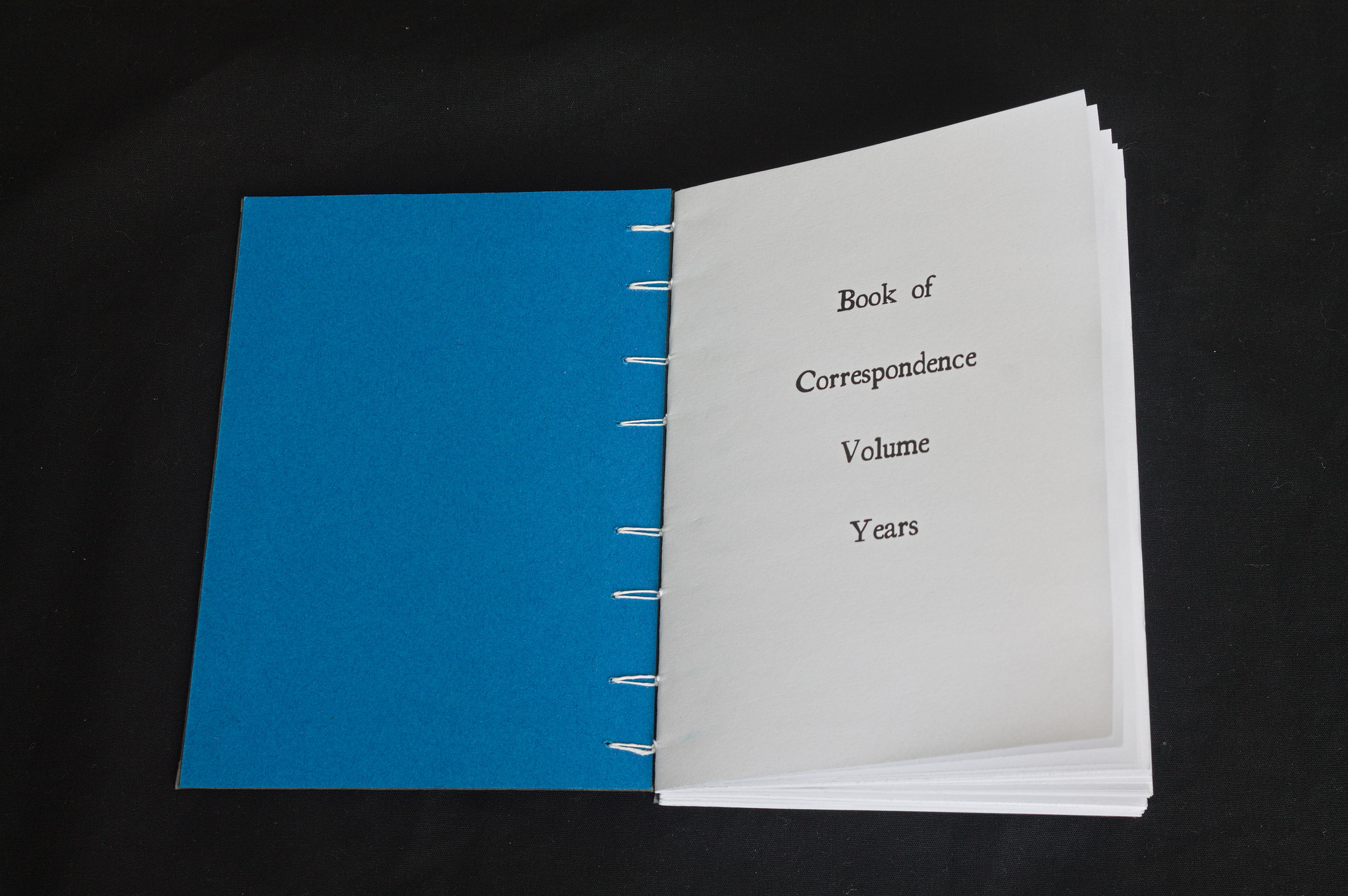 I write letters. The kind that are written on paper with a dip pen
 So I headed over to the obvious program anybody would use for these things (XeLaTeX, of course) and quickly designed a page with fields for the basic thinks I want to record; it was a bit hurried, and I may improve on it the next time I make one, but I expect this one to last me two or three years, and it is good enough.
I ve decided to make it A6 sized, so that it doesn t require a lot of space on my busy desktop, and it could be carried inside a portable desktop, if I ever decide to finish the one for which I ve made a mockup years ago :)
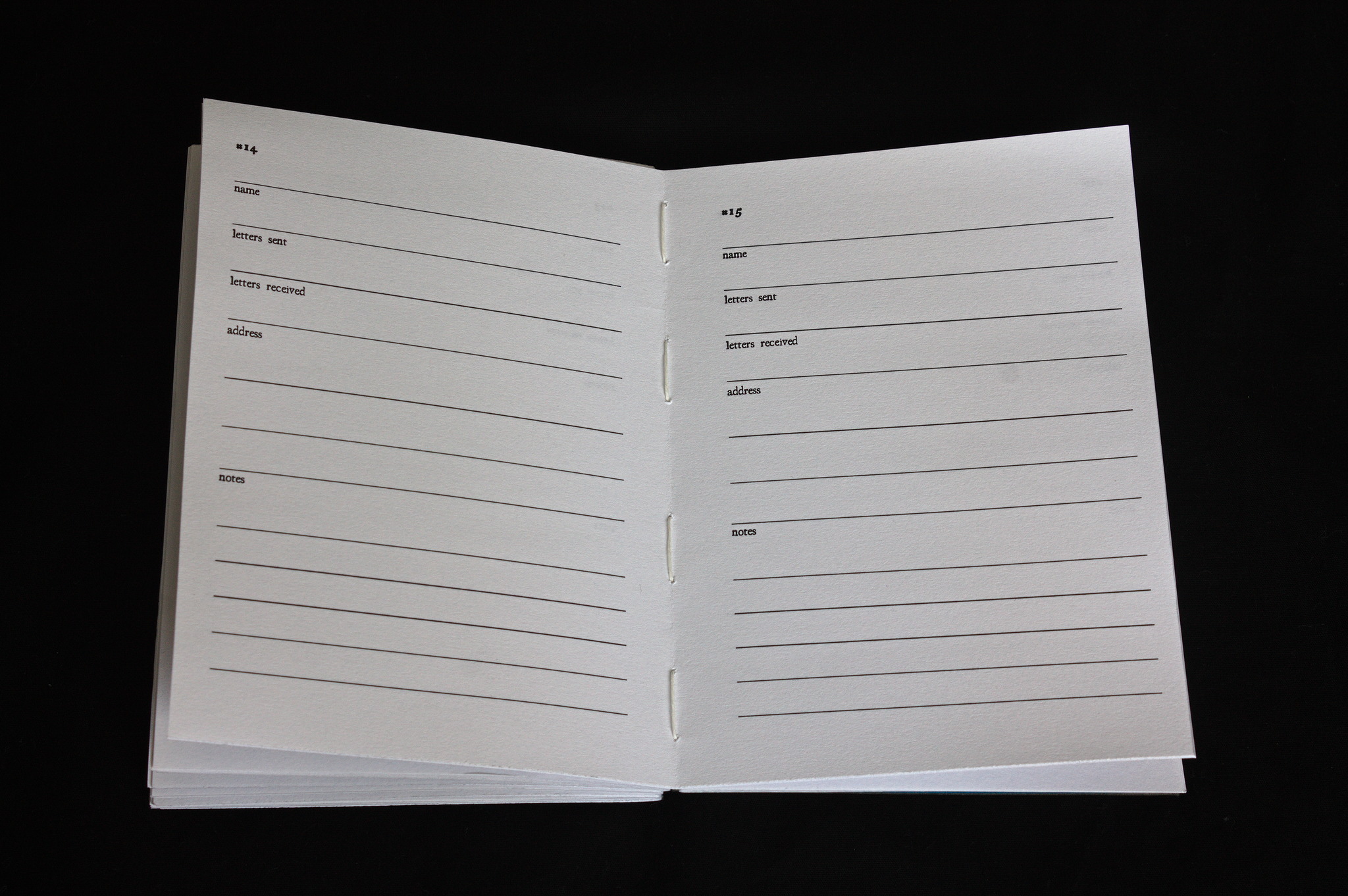 I ve also added a few pages for the addresses of my correspondents (and an index of the letters I ve exchanged with them), and a few empty pages for other notes.
Then I ve used my
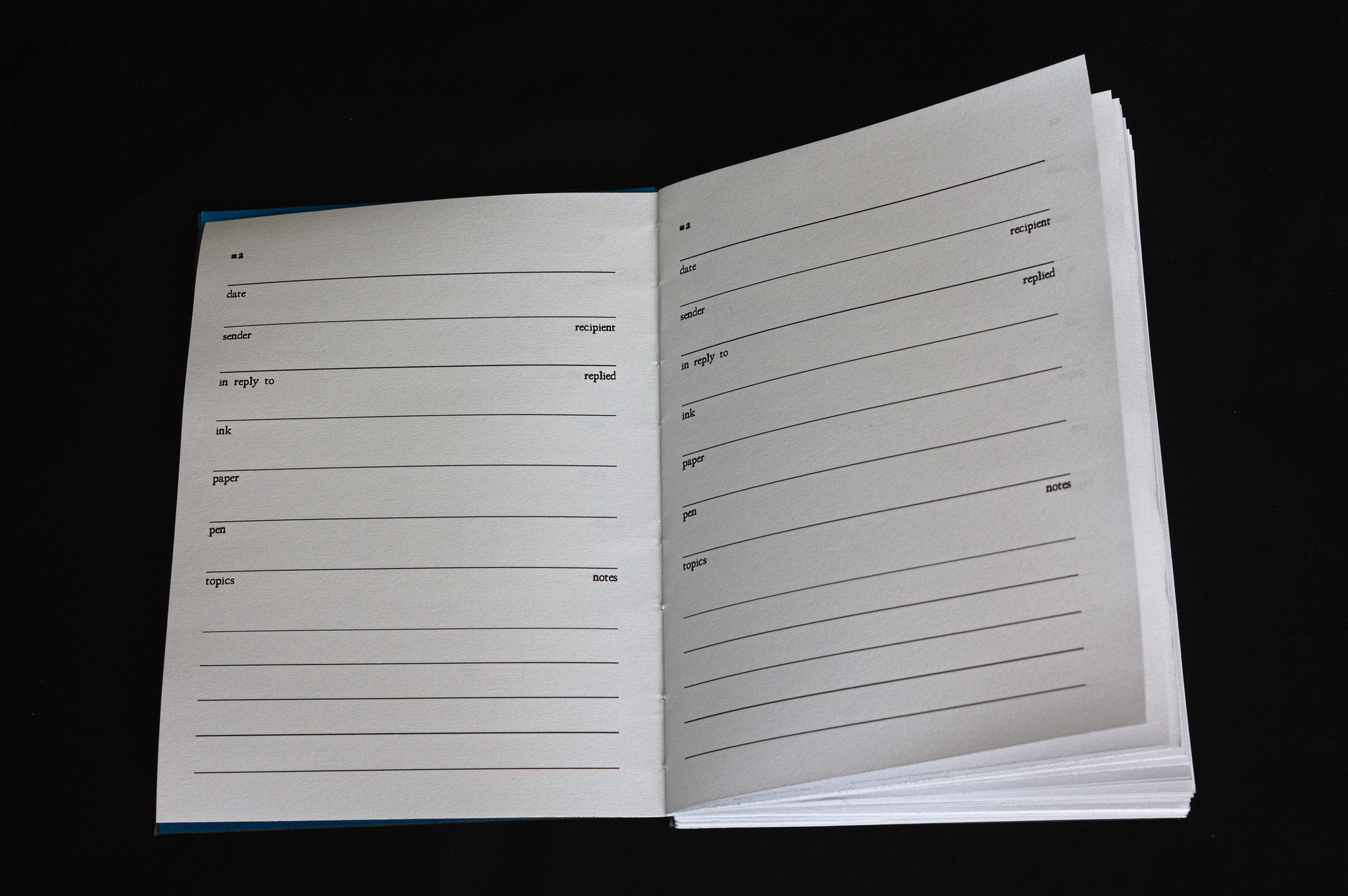 After printing (an older version where some of the pages are repeated. whoops, but it only happened 4 times, and it s not a big deal), it was time for binding this into a book.
I ve opted for Coptic stitch, so that the book will open completely flat and writing on it will be easier and the covers are 2 mm cardboard covered in linen-look bookbinding paper (sadly I no longer have a source for bookbinding cloth made from actual cloth).
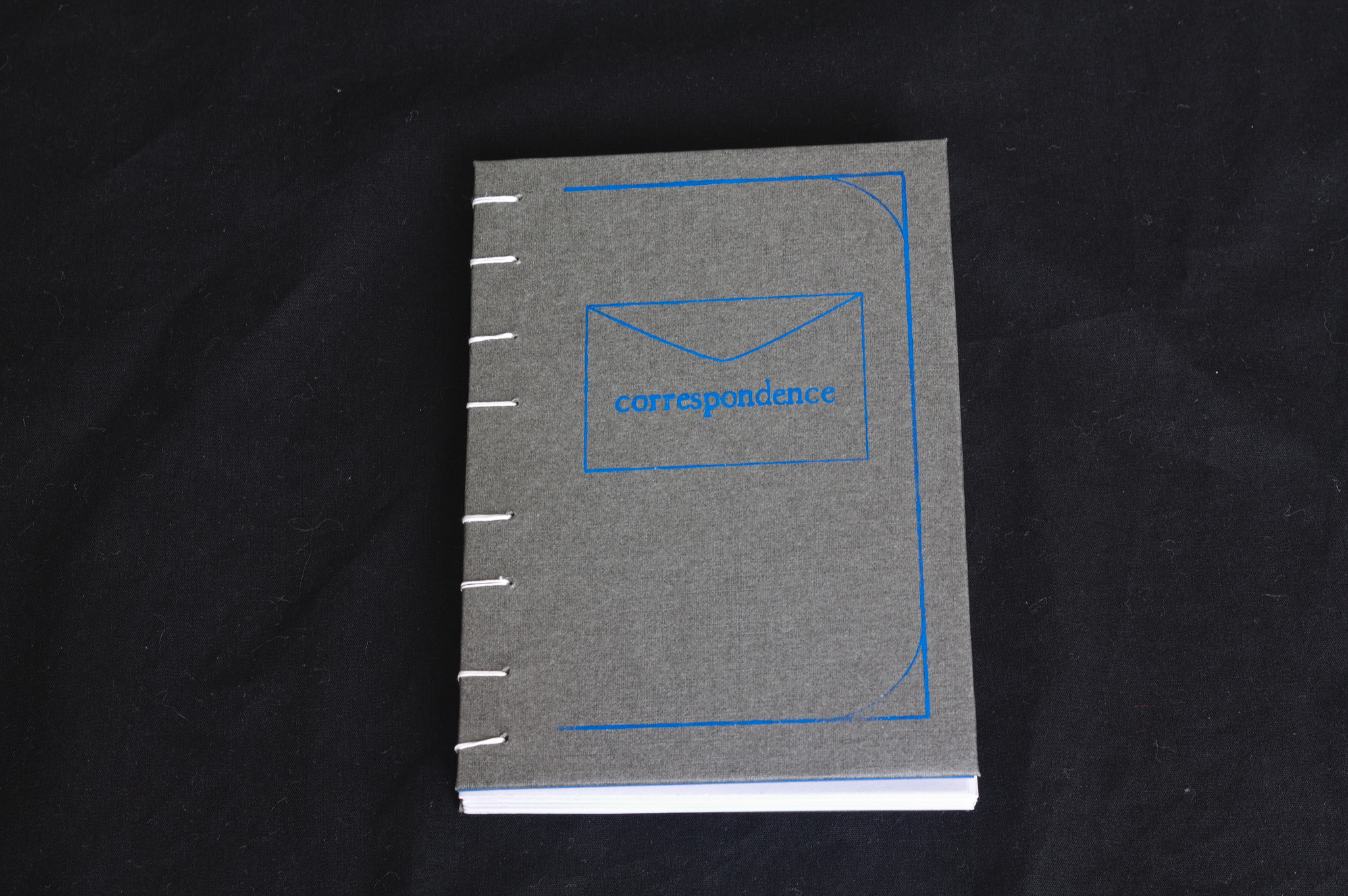 I tried to screenprint a simple design on the cover: the first attempt was unusable (the paper was smaller than the screen, so I couldn t keep it in the right place and moved as I was screenprinting); on the second attempt I used some masking tape to keep the paper in place, and they were a bit better, but I need more practice with the technique.
Finally, I decided that for such a Victorian thing I will use an Iron-gall ink, but it s Rohrer & Knlingner Scabiosa, with a purple undertone, because life s too short to use blue-black ink :D
And now, I m off to write an actual letter, rather than writing online about things that are related to letter writing.
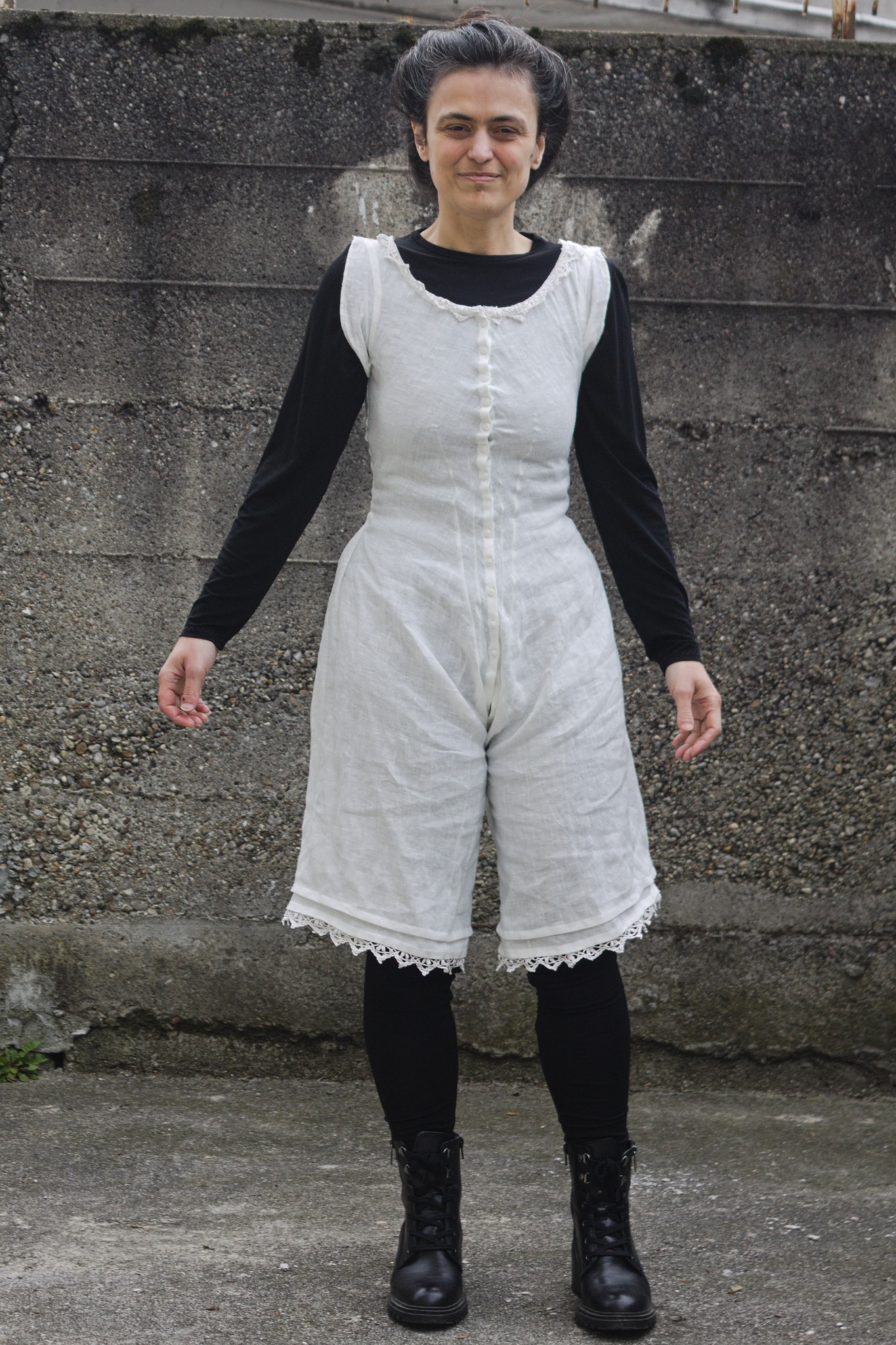 Some time ago, on an early Friday afternoon our internet connection died. After a reasonable time had passed we called the customer service, they told us that they would look into it and then call us back.
On Friday evening we had not heard from them, and I was starting to get worried. At the time in the evening when I would have been relaxing online I grabbed the first Victorian sewing-related book I found on my hard disk and started to read it.
For the record, it wasn t actually Victorian, it was
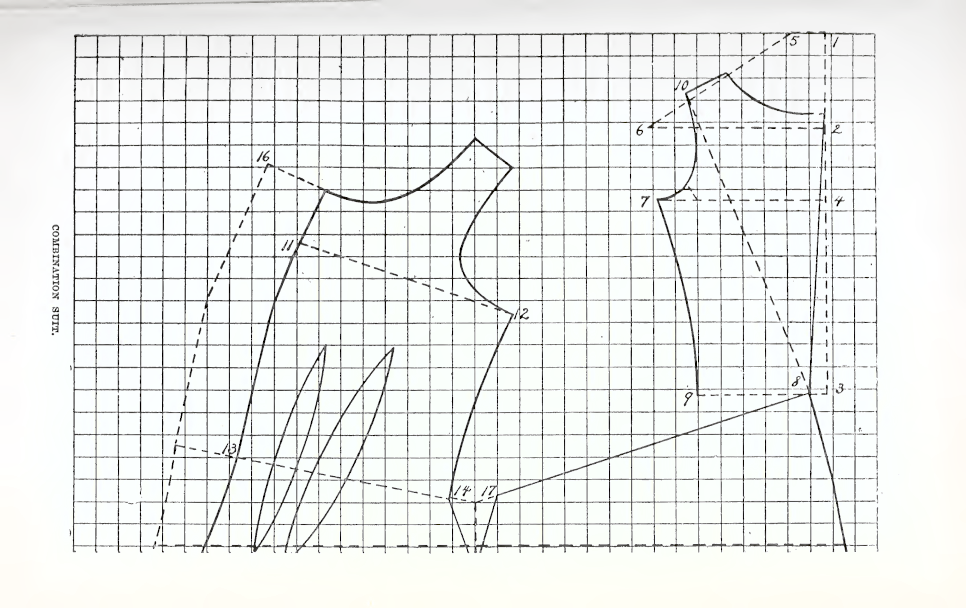 Anyway, this book had a system to draft a pair of combinations (chemise top + drawers); and months ago I had already tried to draft a pair from another system, but they didn t really fit and they were dropped low on the priority list, so on a whim I decided to try and draft them again with this new-to-me system.
Around 23:00 in the night the pattern was ready, and I realized that my SO had gone to sleep without waiting for me, as I looked too busy to be interrupted.
The next few days were quite stressful (we didn t get our internet back until Wednesday) and while I couldn t work at my day job I didn t sew as much as I could have done, but by the end of the week I had an almost complete mockup from an old sheet, and could see that it wasn t great, but it was a good start.
One reason why the mockup took a whole week is that of course I started to sew by machine, but then I wanted flat-felled seams, and felling them by hand is so much neater, isn t it?
And let me just say, I m grateful for the fact that I don t depend on streaming services for media, but I have a healthy mix of DVDs and stuff I had already temporary downloaded to watch later, because handsewing and being stressed out without watching something is not really great.
Anyway, the mockup was a bit short on the crotch, but by the time I could try it on and be sure I was invested enough in it that I decided to work around the issue by inserting a strip of lace around the waist.
And then I went back to the pattern to fix it properly, and found out that I had drafted the back of the drawers completely wrong, making a seam shorter rather than longer as it should have been. ooops.
I fixed the pattern, and then decided that YOLO and cut the new version directly on some lightweight linen fabric I had originally planned to use in this project.
The result is still not perfect, but good enough, and I finished it with a very restrained amount of lace at the neckline and hems, wore it one day when the weather was warm (loved the linen on the skin) and it s ready to be worn again when the weather will be back to being warm (hopefully not too soon).
The last problem was taking pictures of this underwear in a way that preserves the decency (and it even had to be outdoors, for the light!).
This was solved by wearing leggings and a matched long sleeved shirt under the combinations, and then promptly forgetting everything about decency and, well, you can see what happened.
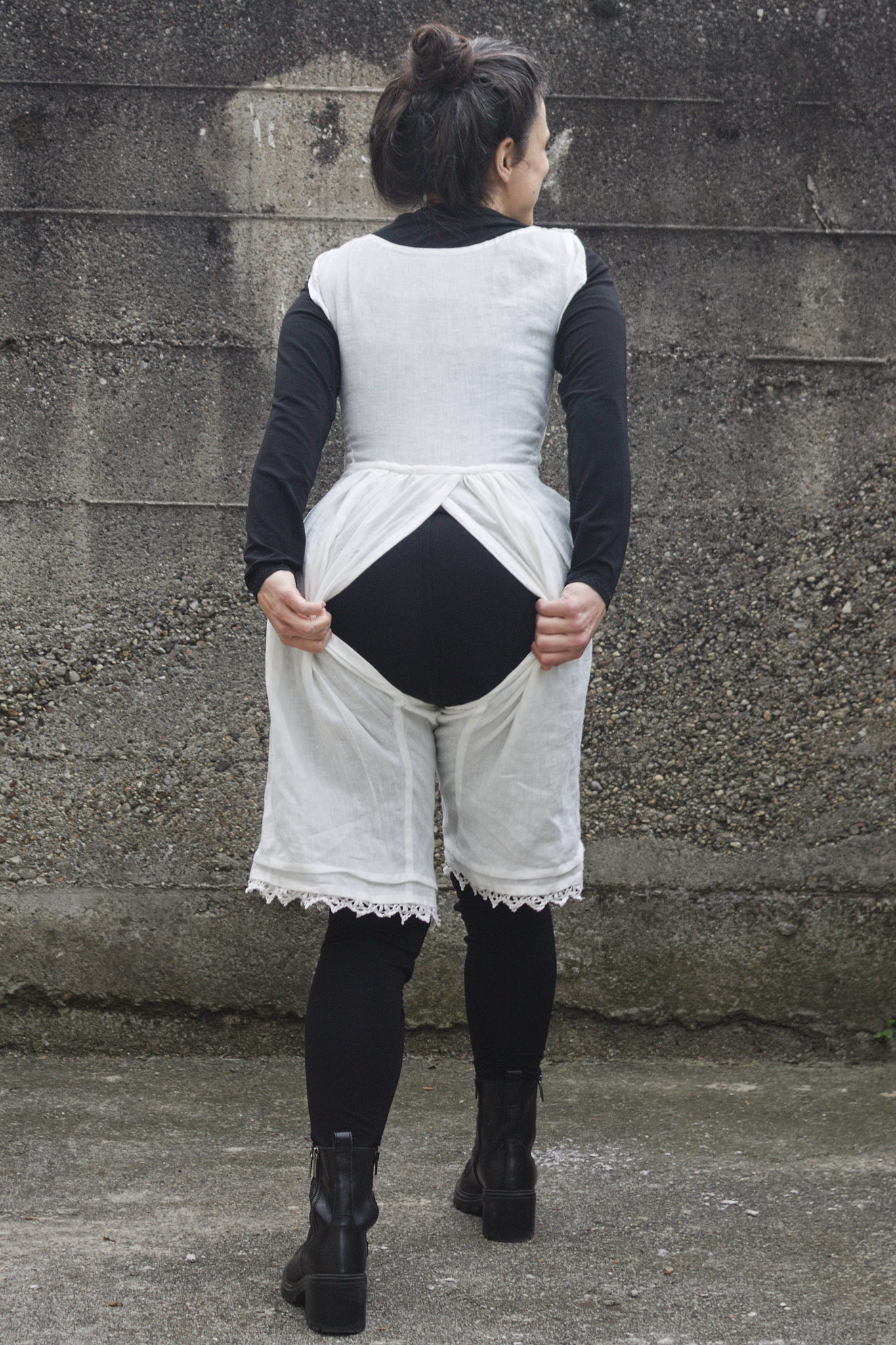 The pattern is, as usual, published on my
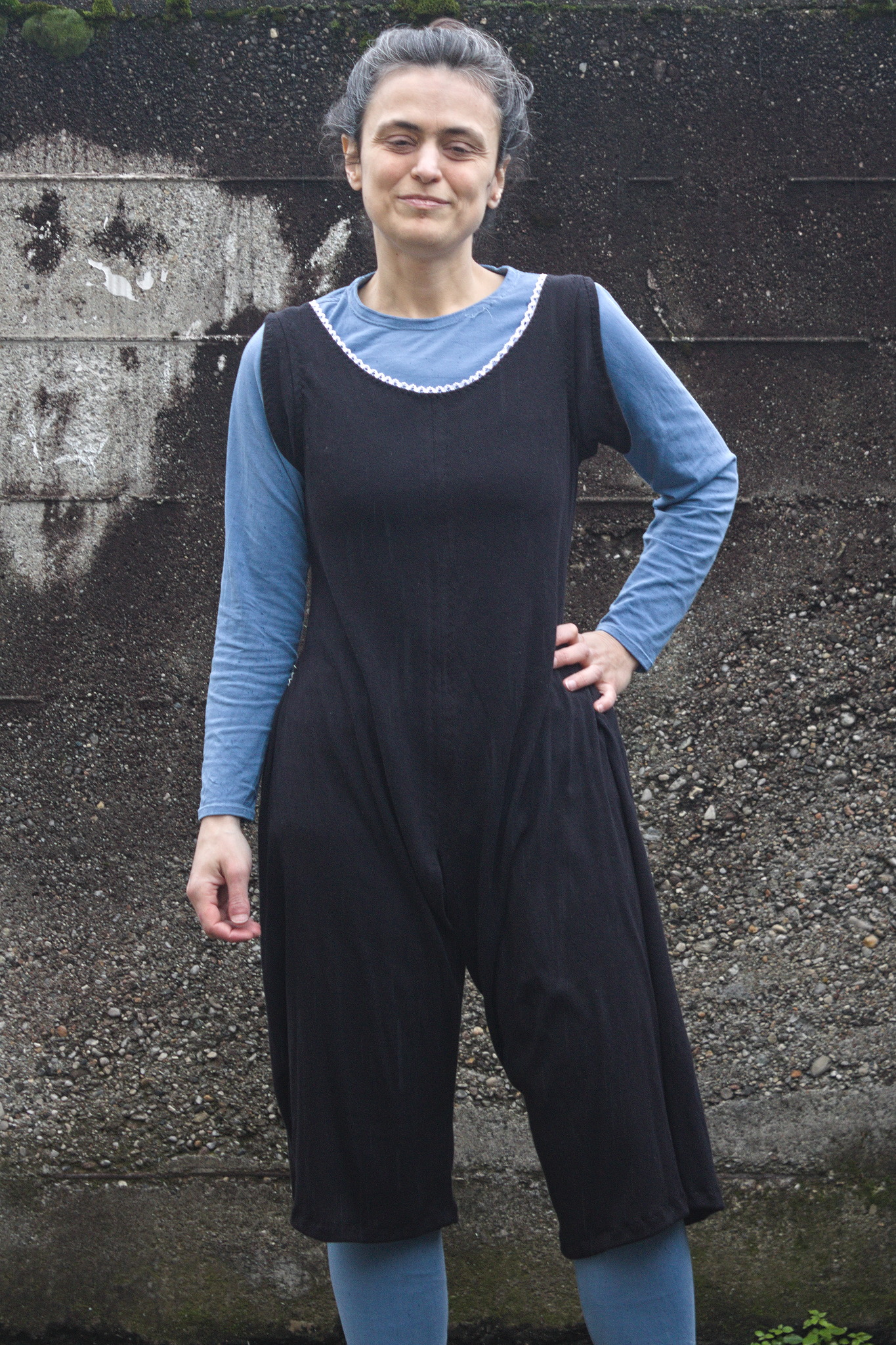 I suspect that the linen one will get worn a lot this summer (linen on the skin. nothing else need to be said), while the cotton one will be stored away for winter. And then maybe I may make a couple more, if I find out that I m using it enough.
 The sixth release of the still new-ish
 My mother died earlier this month. She d been diagnosed with cancer back in February 2022 and had been through major surgery and a couple of rounds of chemotherapy, so it wasn t a complete surprise even if it was faster at the end than expected. That doesn t make it easy, but I m glad to be able to say that her immediate family were all with her at home at the end.
I was touched by the number of people who turned up, both to the wake and the subsequent funeral ceremony. Mum had done a lot throughout her life and was settled in Newry, and it was nice to see how many folk wanted to pay their respects. It was also lovely to hear from some old school friends who had fond memories of her.
There are many things I could say about her, but I don t feel that here is the place to do so. My father and brother did excellent jobs at eulogies at the funeral. However, while I blog less about life things than I did in the past, I did not want it to go unmarked here. She was my Mum, I loved her, and I am sad she is gone.
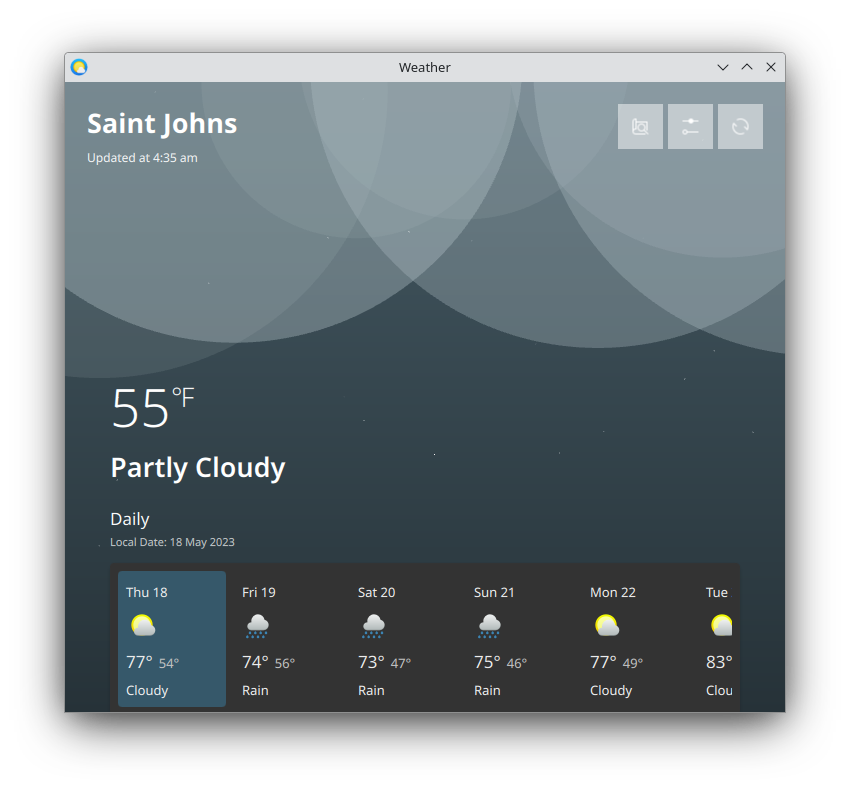 Kweather Snap
 I've been watching the neovim community for a while and what seems like a
cambrian explosion of plugins emerging. A few weeks back I decided to spend
most of a "day of learning" on investigating some of the plugins and
technologies that I'd read about:


