Search Results: "ghe"

26 February 2007

Biella Coleman: Critical Mass in Computing

Social Studies of Science just published an article by on the importance of reaching a critical mass for recruiting women to study computer science. Below is the abstract: The Strength of Numbers
Strategies to Include Women into Computer Science
Vivian Anette Lagesen Vivian Anette Lagesen, Norwegian University of Science and Technology (NTNU), Norway, Vivian.Lagesen@hf.ntnu.no This paper investigates four different inclusion strategies used to recruit women to computer science: achieving a critical mass, educational reform, redefining the gendered symbolism of computer science and changing the content of the discipline. The relationship between and the relative importance of these four strategies are explored by looking at the extensive and successful Women and Computing Initiative (WCI) that was run by the Norwegian University of Science and Technology (NTNU), starting in 1996, to recruit and retain more women in computer science. The findings suggest that a direct effort to increase the relative number of women is the most important strategy. While raising the number of women recruited seems to affect the symbolic perception of computer science, this effect is difficult to achieve through attempts to directly change the symbolic image of the discipline. In addition, a substantial increase in the number of women appears to cause an improvement in their learning environment, probably because minority problems such as too much visibility and unwanted attention became less prominent. Key Words: computer science critical mass gender higher education inclusion

25 February 2007

Biella Coleman: Grave Food vs Flowers

“A plains Indian had just placed food on a new grave, when a whilte man looking on jocularly asked, “Do you expect the dead man to come up and eat that food?” To which the Indian responded, “As soon as your dead come up to smell the flowers you place on their graves” [Story told by anthropologist Margaret Mead, and which I read about this morning (and laughed, seriously) in Taking Laughter Seriously by John Morreal]

24 February 2007

Andrew Stribblehill: Laphroaig quarter-cask

We went to Scotland on a family holiday this week (brave or stupid, answers on a postcard). You would not believe the number of puns you can get from the simple town of Ayr. For example, R: “You should have turned right there!” Me: “Oh well. To Ayr is human.” I shall spare you the rest: if your mind isn’t already overflowing with similar appalling jokes, you’re no friend of mine. Whilst in Ayr, I came across a marvellous whisky shop, Robbie’s Drams, and bought a bottle of Laphroaig quarter-cask and another of Smokehead. This article, or what remains of it, is to describe the Laphroaig quarter-cask whisky. Should you wish to avoid the Flash-animated website, here’s a precis. Tales are told of a time when the business of Laphroaig was carried on less than legally and it was useful to carry away smaller casks when the Excise men were coming than the more conventional full-size casks. Over the past few years, they have tried their best to recreate the whisky that would have been drunk as Laphroaig a couple of centuries ago: quarter-sized casks, slightly higher strength and an older filtration model. The effect of the smaller barrels is to increase the surface area to volume ratio substantially, so more flavour will enter the whisky from the barrel. Thus, they bottle it much younger than their standard ten-year-old offering. To smell it, a sweet smell hits the nose — perhaps toffee apple. On the taste, there is an initial earthy sensation followed quickly by a brief flash of kedgeree, leaving the smoky aftertaste of turmeric at the back of the throat. This is a much more subtle whisky than Laphroaig’s ten-year-old: thinner and less oily, and with a much more delicate, though still substantial, peaty hit. Because it’s not chill-filtered, the whisky becomes delightfully cloudy when water is added. I recommend that you try it both with and without additional water: many of the flavours become more muted with water, but a creamy taste comes to the fore. In summary: if you can get your hands on a bottle or two of this, it’s well worth doing so. An excellent whisky. I should also say that even if you’ve disliked other Laphroaigs in the past, give this a shot. It may just be your way into the other delights from the Laphroaig distillery.

23 February 2007

Edd Dumbill: XTech 2007 schedule: behind the scenes

After a couple of months' hard work, I've posted the schedule for XTech 2007. And, though I say so myself, it looks good. XTech 2007 grid You can read more about the schedule itself over on the XTech web site, but I thought it would be interesting to explain how we got there. The people bit  After the call for participation, we wound up with 200 proposals in the system. From there, the target was to get down to 5 tutorials and 68 presentations. Each proposal contains an abstract of at most 500 words. I enlisted a small army of reviewers (69 in all) to help, and assigned four or five reviewers to each abstract. 829 reviews were assigned in all. The reviewers work blind, so they don't get to see who the proposer is.
After the review, I read every score and proposal, and created a shortlist of the best scoring proposals plus those that had spuriously low scores given their quality. From this shortlist the hard graft of preparing a draft schedule started. We had already decided in advance on our usual format: four parallel tracks of browsers, core tech, applications and open data. I then filled in the schedule, aiming to create themes for days, or at least for the 2-session blocks. The draft schedule and details of those shortlisted but who missed the cut were circulated among the committee. After some iteration and feedback the final schedule emerged. Picking tutorials was a little different, as this is done by myself and the committee directly. The constraints on choice are more commercially-oriented. Experience has shown we need mainstream topics that people will be happy to pay for. Even so, each year we try to include one emerging topic. Last year, it was Rails. This year, it's OpenStreetMap.
Choices made, I then notified the speakers, awaited their confirmation, and reached the point where we could publish the schedule. The mechanics of it all A glib reading of the above would make it all sound quite simple. And this year I'm pleased to report that it was a lot simpler than previous years. We have been able to use Expectnation from beginning to end, which has streamlined a lot of the work.  Expectnation's my super startup that's taking up the time that XTech and fatherhood don't! I'm about to tell you why it's wonderful, so please forgive a little pride.
Gathering the proposals was easy once the CFP had been set up inside Expectnation. I set up three calls: one for presentations, one for tutorials, and a secret one that the public doesn't get to see. (We always need a secret one for people who have very good reasons why they didn't make the public deadlines.) Request response The review phase Recruiting reviewers was done by Expectnation's request system. This lets me send a request to a large number of people simultaneously, and collect their responses via the web app. (Previously, this had involved email, spreadsheets and wasted time.) The chart you see to the right shows the breakdown of the response to this request. If a reviewer said 'yes', they added a note to say which types of proposal they would review, and signed up for an account in the system. I then passed through every paper assigning four or five appropriate reviewers. A quick search each time allowed me to look for the right reviewers, and ensure no one reviewer got overloaded with work. Once reviewers were assigned, I headed over to the Mailroom department. Expectnation has a large number of configurable mailing targets, one of which is "reviewers with work to do". I emailed each reviewer with details of how to get on with the reviewing. Every reviewer then logged into Expectnation, saw the proposals they needed to review, and used the interface to efficiently score the proposals. One big lesson here is that it needs to be very efficient if you want to get the best reviewers, who are often the busiest. Another wizzy graph enabled me to keep track of the reviews, and the mailroom let me send out a reminder to those reviewers who hadn't finished their work yet, when the time for the close of reviewing drew near. Picking the papers Gridding out XTech 2007 Expectnation lets me sort and filter proposals pretty flexibly, so I went through the papers for each track in turn, ordered by their review score. Anything scored 3 or higher (4 is best, 1 is worst) was almost certain to be shortlisted. I read all the reviews and the abstract, and moderated any score that was unusually low (for some reason, reviewers rarely overrate proposals!) The next step was to set up the empty grid, shown in the top half of the diagram to the right. Here I added the empty time slots to the rooms we had, and assigned putative tracks to each of the rooms (they can be swapped around later if needed.) After that, the scheduling can start, shown in the second half of the picture to the right. Each empty slot can be assigned a paper from the shortlist for the relevant topic. That way it's easy to "paint on" talks into each room and quickly get a sense for the overall flow of the conference. Once it was time to finalize matters, I mass-marked all the scheduled papers as accepted, which automatically sent a notification to the presenters, using the same request system as for reviewers. When a speaker confirms, their proposal status changes and they appear in the final public grid. From there, I am able to use the mailroom again to inform speakers of the information they need to know. Additionally, speakers can log into the system at any time to see when they've been scheduled to speak.
Gridding out the conference in Expectnation is probably the biggest timesaver of all. Previously this involved a lot of sketching on paper or a spreadsheet, and a lot of manual work notifying people, and then more work creating the timetable to go on the web site. Now, both the grid and a full web of abstracts and speaker details are generated automatically. What next? As you can probably tell, I'm rather excited about both XTech 2007 and also about the work we're doing with Expectnation. What's next for XTech is the process of publicising the conference among attendees, recruiting session moderators, and also the writing of papers by the presenters. As the conference draws nearer, the attendee-level interactive features of Expectnation will kick in, allowing personal scheduling and rating of sessions. What's next for Expectnation is that we're ramping up to our 1.0 launch. We're working with a handful of early adopter customers right now, and are always interested in new use cases. As we get nearer the end of the first tranche of engineering work, we're going to gear up the publicity effort and start explaining to the world why we're special. As usual, I'd love to hear questions, feedback and suggestions.

Ian Murdock: Microsoft and the innovator s dilemma

Henry Blodget: “Google’s current offerings–Gmail, Docs & Spreadsheets, etc.–bear all the markings of a classic disruptive technology. As Harvard professor Clayton Christensen observed, disruption begins when a dominant market leader has built so much functionality into its core products that it has begun to over-serve its core customers. Some of these customers, realizing that a simpler, cheaper product will do, abandon the old technology. At first, this does not concern the incumbent, as it maintains a chokehold on the highest margin business–the high-end customers who need most of that complicated functionality and support. But, gradually, as the lower end product gets better, and the incumbent is forced to migrate to even more complex and expensive solutions, more of the overall customer base defects. And, then, voila, one day the incumbent wakes up and discovers that it is DEC, Sears, or AOL…and by then it’s far too late to do anything about it.”

20 February 2007

Bastian Venthur: Rebuilding the Archive Using Cowbuilder

Did you ever want to rebuild the archive, but setting up this whole wanna-build/sbuild/buildd stuff somewhat scared you? Then this small script might be for you. All you need is cowbuilder, the rights to build inside a cowbuilder environment and this script. When you call it with a list of packages as argument it will build every package in a clean cowbuilder environment, saving the buildlog (succeeded-$package or failed-$package) and cleaning up the rest afterwards. To speed up things you can run several instances of this script concurrently — lockfiles will prevent the script from building the same package more than once. It is even safe to kill the script and restart it later. It will automatically skip all packages where a logfile (succeded failed)-$package already exists. All you have to do after you killed the script is to remove the lockfile in the LOGDIR and the $package-directory in the BUILDDIR.

#!/bin/sh
# Version: 2007-02-20
LIST=$1
LOGDIR=$(pwd)/"logs"
BUILDDIR=$(pwd)/"build"
BASEPATH="/var/cache/pbuilder/base-testing.cow"
function build  
    PACKAGE=$1
    mkdir -p $BUILDDIR/$PACKAGE
    cd $BUILDDIR/$PACKAGE
    apt-get source $PACKAGE &> /dev/null
    cd $(find . -type d ! -name .)
    pdebuild --pbuilder cowbuilder --use-pdebuild-internal --buildresult .. -- --basepath $BASEPATH &> $LOGDIR/.$PACKAGE
    if [ $? -eq 0 ]; then
        mv $LOGDIR/.$PACKAGE $LOGDIR/succeeded-$PACKAGE
    else
        mv $LOGDIR/.$PACKAGE $LOGDIR/failed-$PACKAGE
    fi
    cd $BUILDDIR
    rm -rf $PACKAGE
 
[ -d $LOGDIR ]   mkdir $LOGDIR
if [ ! -e $LIST ]; then
    echo "No Buildlist given."
    exit 1
fi
while read package; do
    # Create Lockfile (ln -s is atomic and fails if link already exists)
    ln -s $package $LOGDIR/.$package.lock 2> /dev/null   continue
    # Build the package if not already built
    if [ ! -e $LOGDIR/succeeded-$package -a ! -e $LOGDIR/failed-$package ]; then
        echo $(date +%F %T) Building $package...
        build $package
    fi
    # Remove Lockfile
    rm -f $LOGDIR/.$package.lock
done  $LIST

I know my bash scripting skills are shitty, so please send patches after you laughed ;) I’m currently running two instances concurrently for 3 days on my Pentium 2,4GHz HT box and have rebuilt ~70% of the testing archive so far. It would be cool to distribute the rebuilt across a few computers via ssh, so that they’re all building on the same list but using their own cowbuilders. It should be sufficient if all computers shared the same LOGDIR across the network, but I’m not sure how to do this. NFS does not the trick since it cannot guarantee the atomicity of the ln-command.

18 February 2007

Stefano Zacchiroli: dtd2vim

Vim's Feature of the Day #2: Context-Aware Completion for XML (in 5 minutes!!!) You're editing yet another Debian sub-policy. Of course the policy is written in Docbook XML and (should I even need to mention it?) of course you're using Vim. The Docbook v4.4 specification is huuuuge and you happen to know just a tiny teeny part of it. Hence you're dreaming of XML Spy or Emacs context-aware completion. Shame on you misbeliever!, Vim can do the same!! Here is how to set-up in 9 easy steps context aware completion for Docbook v4.4 with Vim7 in Debian/unstable:
# aptitude install docbook vim-scripts perlsgml
$ mkdir -p ~/.vim/autoload/xml/ ~/.vim/after/ftplugin/xml/
$ cp -r /usr/share/sgml/docbook/dtd/xml/4.4/ /tmp/docbook-dtd/
$ cd /tmp/docbook-dtd/
$ SGML_CATALOG_FILES=/etc/sgml/catalog dtd2vim docbookx.dtd docbk44
$ mv docbookx.vim ~/.vim/autoload/xml/docbk44.vim
$ rm -rf /tmp/docbook-dtd/
$ echo "runtime ftplugin/xml.vim" >> ~/.vim/after/ftplugin/docbk.vim
$ echo "XMLns docbk44" >> ~/.vim/after/ftplugin/docbk.vim

Now just start Vim on an .xml file containing some Docbook markup and let the fun begin: Warnings: dtd2vim is a recent addition to vim-scripts, you will need >= 7.05. If you start editing a file which Vim is not yet able to recognized as a Docbook file (e.g. an empty file) don't panic, setf docbk is your friend. Enjoy! PS an even higher fun level while editing XML with Vim can be obtained using the "xml" ftplugin shipped by vim-scripts ...

15 February 2007

Jordi Mallach: Tunisia

Last month, Bel n and I managed to secure our trip to Tunisia on the very last moment. So, planning trips on the very last moment isn't nothing new around this place, but we made a big effort to take things to the limit. I can't remember why exactly, but on January 31 we were *so* close to fucking everything up before it started, when we packed our stuff just a pair of hours before having to leave to the train station. My luggage was prepared in a rush, so while I think I took everything I thought I'd need, I didn't really select my clothes too much. The idea was to have our suitcases mostly empty to bring back stuff from the markets: smoking cachimbas, lamps, leather stuff, etc. At that time I didn't know that would end up being a great strategy. Anyway, like 9 minutes before the train's departure we were stuck in Nuevo Centro without a taxi and at that point I really had lost hope about being on time. For some reason, there were no taxis in the area, when it's normally a place where there's tons of them. Suddenly one appeared, we rushed in and I asked the taxi driver to please fly to the station. Happily, we got an incredible green wave around the avenues, he drove us at like 80 Km/h and we even had to wait for a few minutes at the station. In Barcelona, we prepared our small New Year's Eve dinner with my cousin Laia and Marc, and while the plan was to go to sleep pretty early to be in good shape to go to the airport next morning, the bottles of wine and cava emptied quite fast, and around 4:30 we were quite drunk when we decided it was enough. When some annoying sound woke us up next morning, it was really late, so we again rushed out to the empty streets of Barcelona, sneaked into a regional train, without knowing it was the only way to get in time in El Prat airport, and after some initial confusion trying to find the travel's agency desk in the wrong terminal, we managed to check into our flight, being the very last to do so. With all the rush, I couldn't get some clothes from my suitcase transfered into my hand luggage, which I really wanted to do after my nice lost luggage experience during Debconf 5 in Helsinki. Anyway, chances are small that your luggage gets lost, right? But of course, Murphy is always vigilant, and this was a great opportunity to fuck me up. After a short but horrible (due to our really bad hangover) to Tunis/Carthage airport, we were in the long security/passport check. When Bel n picked up her bag and mine didn't appear, I tried to tell myself hey, it'll appear, no worries! . After 15 minutes, the stupid suitcase was nowhere to be found. Apparently, another two pieces of luggage had the same luck, which made us contact a group of four Uruguayans who were missing one of them. Nothing too terrible; it'll surely come on tomorrow's flight. After reclaiming our lost luggage, we went out to the parking where a bus was waiting for us, and on the way there, the six of us nearly fell into the first Tunisian scam, involving a dude selling jasmine flowers at 2 each. The bus took us down to Jasmine Hammamet, the most touristic place in Tunisia. Valencians might have an easy imagining the atrocity of the area by picturing what twice Marina d'Or plus Benidorm including Terra M tica would look like. Kilometres and kilometres of a disgusting Who can build the most horrible giant hotel right next to the beach contest. So it was pretty clear we had to spend as little time as possible in the area. We soon learned about how transport works in Tunisia. The cheapest is to use the public busses and the luagge collective taxis, we soon found out. Our first morning there, our guide Rejeb, working for Iberojet and Solplan touroperators, gave a talk where he advised us against travelling alone, specially around the South, while he offered organised trips around the country for every day of the week. Although we expected this danger! speech, we decided to book the two day trip to the South and Great South of the country, basically because it was the best way to see many places in a short time, even if it meant having limited time in each destination. We wandered around Jasmine Hammamet and discovered Carthage Land, sort of a Disneyland set in the age of Anibal and Carthage's empire, which was inside a newly built medina complex. This was a really bad place to practice the art of haggling, as the place was so desert, merchants really tried hard to get you buy something. Again, we were close to fucking up after our first negotiation, but we finally decided we weren't so interested. Lucky, we later found out the price was outrageous. Sadly, we spent way too much time in that tourist trap, and we found it was too late to go to the real Hammamet town to see a real medina and real stuff, so we had a long walk around the immense beach until sunset. On Wednesday, we did organise a bit with the Uruguayans and some others we had met: Mar a and Santi Kuchi Kuchy , Cristina and Pedro and an Argentinian family, and managed to hire a van driver to drive us all over the North. For quite a good price, we were taken to a few ruin sites in Carthago, now mostly a residential area, and it was really impressive. While the condition of many of the remainings is not optimal, it was exciting to see things which had been built by Phoenicians and Romans 2,000 years ago. I really enjoyed the remainings of the Antonine thermal baths of the city. It had been a huge building right next to the sea; one of the standing columns helps figuring out how big it had been. Right next to this site, the Presidential Palace dominated the whole gulf. Military places are treated zealously in Tunisia, and it is against the law to take pictures of any bit of it, not even a barbwire of the fence. The Palace had a great Tunisian flag waving over it, and many signs advised you against taking pictures in that direction. I couldn't resist.


The ruins of the Roman Antonine Baths After Carthage, we went to Sidi Bou Said, a small touristic town, which had the peculiarity and beauty of having all windows and doors painted in a beautiful light blue colour. Our last stop for the day was in Tunis, where we visited the most amazing medina of the whole week. Unlike the new medina in Jasmine Hammamet, this one was literally packed with people going up and down the maze of very narrow streets. Every few metres you'd come across a new, attractive smell coming from the few salons de th or spice, leather or perfume shops. Here we finally started developing our haggling skills, and managed to get a few items for reasonable amounts.


Streets of Sidi Bou Said Back at our hotel, everyone tried to get a quick dinner and go early to bed, as next morning we were taking a bus for our trip around the South. There was time to call yet another time to the Airport, to find out that one of the luggage pieces had been found. While there was no news about my suitcase, we shared a taxi to the airport to pick the found suitcase, and see if mine was actually there by any chance. Unluckily, it wasn't, so I wouldn't have any clothes for the desert visit. Some people in the group were kind enough to lend me some t-shirts and pants. For my underwear, I actually resorted to using some of Bel n's (no kidding, it was way too sexy :P), while mine dried up after some manual washing. The alarm clock went off at 5:15 or so, and soon after we were ready in the hall with our small bags. When the bus was ready to pick us up, the guide said we weren't allowed in, as we weren't on the list. WTF? We were nearly the first ones to book and pay for it! So he finally let us in, for a short while, until he realised there was no space for everyone, so he demanded that we got off. Of course, we didn't, and a long and very disgusting argument started between the guide, us and a few people who had seen us pay for our trip, and were trying to support us. To make a long story short, we ended up stepping down when I noticed the bus driver calling the police, and after Rejeb, our guide, told us the other bus would be waiting for us at the travel agency if we quickly took a taxi there. We of course knew that was a fantasy to get the bus moving, but dealing with the police at 6:30AM wasn't on my list of activities for the day, so we finally gave up to let the rest of the people get in time to their visits, as they were very tightly scheduled to make everything fit in two days. Nobody was waiting for us at the travel agency, but we were promised our money back, which did happen in the evening; our plans for Thursday and Friday were a bit broken though, and the rest of the morning was spent looking for alternatives. When we had managed to book a new trip in a different agency for Saturday, we took the bus to Nabeul, the capital of the province, well known for their medina specialised in pottery. In Nabeul, we lived a tourist trap which I found to be quite original. Not having walked 3 metres into the city walls, some young dude stops us and tells us that he knows us, as he works in the restaurant of our hotel . I totally didn't remember his face at all, but why not? So he quickly tells us Nabeul has good carpet workshops, and her sister is working in one which is regulated by the Government, and you can only visit two days a week. Coincidentally, Thursday is one of them! So he literally grabs us by the arm and takes us to one of the streets perpendicular to the main market street, and we enter a carpet shop. To the right, his sister probably being like 45 years older, is knitting a nice carpet on the loom. And a few seconds after, we're taken upstairs, where a Teletienda show starts before us. Without being asked if we want to buy a carpet, some other dude starts to unroll carpets and more carpets before us, talking in some very basic Spanish. While we're offered jasmine tea, which is really nice, Ali the brother quickly excuses himself and vanishes, leaving us with the salesman, which continues unrolling more and more before us, now helped by someone else. When 10 minutes later we convince them that we won't buy any carpet, he asks a donative for his young employee, who has unrolled and will now roll back a zillion carpets. Back in the hotel, we have dinner with a pair of Catalans from our flight, and when we tell us about the carpet place, they tell us they went over the same story like one hour before us! On Friday, we got some advice on other places to visit, and decided to go up to Cape Bon and visit Kerkuan, the only important remainings of a Punic city which, when conquered by the Romans, was destroyed to the grounds, but not rebuilt on top (they were busy with Carthage). Romans did an excellent job when destroying cities, and the result is a site which still lets you see perfectly how a small town (around 1,500) looked like 2,000 years ago.


Ruins of a Kerkuan neighbourhood, with their red bathrooms nearly intact To reach Kerkuan we had taken the bus up to Nabeul and then our first luagge to Kelibia, where we took a taxi (after no less than half an hour arguing in French with the taxi driver to settle on a rate for a ride to Kerkuan and then to the tip of the Cape in El Haouaria. Luagges are undoubtedly the best way to travel medium distances for very little money, while getting mixed with locals. During our ride up North, we chatted with a nursing student from Kelibia who was going back to her town for the weekend. She was really open, like most of the people we found in Tunisia, and we ended up exchanging our post addresses; we still need to send her a postcard from Val ncia soonish. This area wasn't so touristic, so the roads, while totally acceptable, weren't as good as the highway from Tunis to Sfax we were used to. We had seen some bits of the local driving skills , but the luagge driver performed some of the most extreme overtakings I've ever seen. These happened every three of four minutes, so after a while I was actually amused about what was going on. We would overtake two lorries on one go when there was absolutely no visibility; if things went too far, people would just slow down to let the overtaker get back into his lane on time, and those coming ahead would just use their headlamps to make them know it was just a bit too close. The taxi driver, annoyed at us, took us to Kerkuan but didn't wait for us; he immediately left, leaving us without any transportation in the middle of nowhere. After a visit at the site, we walked around 2.5 kilometres back to the main road, where we decided it was too late and risky to continue the journey up to El Haouaria, so we waited on the road gutter for a taxi. The first one which stopped was, to our surprise, the same bastard who left us one hour before, who stopped, laughing at us a little. Luckily some other taxi came by in the correct direction, and soon forgot about that man. After a taxi, luagge and bus ride, we were back in Hammamet, and the desert group had already got back from the two day trip. We were asked over and over what happened, what did we do, etc. People who hadn't talked to us before would come over and see; we were really surprised about the warm welcome we had. After dinner, we improvised a customes party, and many people managed to dress up in Tunisian/arabic fashions using bed sheets and so on. We had to wake up at 5AM next morning, but didn't go to bed until 2AM. Nothing could go wrong this time. We had our tickets, we had confirmed we would be going on Sunday the night before, so at 6:15, our new guide came in, and came straight towards me. He said something in German, and after I told him I spoke absolutely no German, he said huh, well you know the bus is full of Germans, and my indications will be in German? . Pretty incredible, but again a fuckup by the agency. My ticket said, clearly: Sahara safari. Bus + 4x4. (ALL). Turns out ALL meant Allemand, not everything included , although we had requested English pretty clearly. This was quite a minor problem though, after having no clothes for a whole week and having been left behind two days before. I think we were really lucky getting that German group, though. We were only 16 people on the minibus, making the stops a lot faster than the normal ones, where 55 persons need to get out and in of the bus. We had our own Routard guide for Tunisia, so we could read about the places we were about to visit before getting ther. Also, I surprisingly knew much of what our guide was talking about, just missing the details he talked about oil production in Tunisia compared to Spain's, among other topics . When the landscape was becoming drier and drier, Bel n and I spotted something dark far away ahead in the completely straight road. As it became bigger, I started thinking it might be the #1 place to visit for me in Tunisia: El Djem's impressive Roman amphitheatre. When we got off the bus, I was totally excited. Before me, the walls of an incredibly well preserved, huge Roman building; in fact, the best Roman ruins in the whole continent. El Djem's amphitheatre was the third biggest of the Roman empire with 35,000 seats, only surpased by Rome's and Capua's. It remained mostly intact until the 17th century, when some of its stones were used to build the city and some of the treasures taken to the Great Mosque of Kairouan, but when it took more damage was during two consequent wars, when the Turks didn't have many problems to blow part of the wall away using cannons to end up a siege of the city.


The Roman amphitheatre of El Djem The underground tunnels are intact, and it's difficult to not have flashes of Gladiator while walking under the arena's trapdoors. Sadly, there was little time to spend there, and we had to continue the journey after just 45 minutes. I would have spent half of the day there. From here, the landscape truly started to get drier and more desertic. The south of Tunisia is a giant olive field, until you reach the Great South, where it's dry enough that the only thing that grows in the land are rocks. Hours later we arrived in Matm ta, the very famous troglodyte village of small holes in the ground. Although I was curious about being there, watching how organised and massive tourism has destroyed these Berber's ways of life dissapointed me greatly. Our guide stopped the bus in one of the pits, which was decorated with white and light blue. In the first room, an old woman was grinding something in a small, stone mill. The dwellers of the few pits still used by their original inhabitants now make a living by letting people into their homes and getting dinar as a payment for taking photographs. What the woman was doing was just a bit of theatre, part of the show. After this first room, we got into the middle of the pit, which had a series of other passages to some rooms, some of which were simply open so we could get in and have a look. I felt a little bit like violating someone's privacy, and wondered how much the house had changed in the last years.


Inside a troglodyte underground house in Matm ta After our visit, we continued up the mountains of Matm ta, and after going by a giant "WELCOME TO MATMATA" sign drawn in white in the middle of a mountain, Hollywood style (!), we stopped for a brief photo-stop (sic). Indeed, the view was quite impressive, and is universally famous as one of the filming spots of Tatoonie scenes in Star Wars: A New Hope. Speaking of famous places, a few minutes later we stopped at the top of one of the hills, were we'd have lunch in the Hotel Sidi Driss, a place of pilgrimage for Star Wars fans, as it was the troglodyte pit which served as the Skywalker's home. The place is full of references to the film saga, and one of the open pits is full of set pieces stuck into the walls. We were served couscous, which wasn't bad, but was cooked and served in the most genuine fast-food fashion. Everyone there gets couscous to eat, apparently, and it's the same in many other touristic places in the area.


Matm ta's lunar landscape From here, our journey headed straight West, in the middle of the rocky desert, until after some time, you could start to see lines of palm tree branches planted here and there, a sign that rocks would soon disappear, being replaced by sand and dunes. As when we were approaching El Djem, at some point a huge, dark spot appeared on the horizon. Douz, probably named after some 12th French batallion which stayed there, is a small town in the very limit of the Sahara desert, built right next to a huge oasis, exclusively dedicated to palm tree plantations, making dates production a big source of income, along with, of course tourism. The travel agencies use Douz as the starting point for several-day trips into the desert, camel rides and stuff like this. Our guide offered us getting a camel and carriage ride in Tozeus for 20 dinar, but Bel n and I declined. He didn't seem to be too happy about it, and had no problem commenting this in German and Arab with the driver (Spanisch and Spanien were clear to me). We learned that the agency (or the guide) makes around 3 Dinar for everyone who contracts the camel rides, after speaking to one native young kid who worked in the camel place. While our German trip mates got dressed in berber fashion, we opted to walk into the desert and play around in the sand on our own. I discovered a few desert insects which were unlike anything I've seen anywhere, and their diminute trails were all over the dunes. Looking West, the view was astonishing, with only thousands of kilometres of yellow dunes ahead us.


The evening sun over the dunes After they came back, we were taken to our hotel, which was really impressive. After leaving our stuff in our room, we headed back to the desert, which was like 300 metres away, to see the sunset over the Great Dune . There's a street which literally serves as the frontier between the rocky ground and the sand desert. From there, you could see many lines of palm tree branches, which are planted by locals in a futile attempt to stop the inexorable advance of the desert. Women in Douz and other towns in the desert limit spend their days sweeping the entrances to their homes, as sand gets in really fast. A small village next to Douz even had to be abandoned and rebuilt in some other place, with the old one being finally devoured by the dunes. When it got dark, we still had some time to kill before dinner, and we discovered a hammam in our hotel. I got in, and saw there was a bored young man inside. He informed us about the prices, and after some short deliberation, we realised we'd spent half of the camel money in some Arab relaxation; while I got a really cool massage, Bel n enjoyed a Turkish bath. I spoke to the guy for a while, and he said not that many people used that hammam. He actually handed the list of services since 2002, which easily fitted in one piece of paper. People don't know what they are missing; he explained that most of the hotel's clients just showed no interest in the baths. I wonder how Fins or Norwegians would react, given their sauna culture. The dinner and breakfast in that hotel was absolutely awesome, and I actually ate too much to have an easy sleep. Next morning we had to be ready at 5:30. That's pushing my limits. The bus started crossing the Chott Jerid when it was still quite dark. The chotts are dry, salt lakes in the middle of the desert, which during some seasons do get some water, sometimes from the underground. The Chott Jerid is the biggest of the three chotts in the area, and the views are fantastic. It's like a giant, totally flat muddy sea which reflects light creating dangerous mirages of oasis-like dark patterns. Before the construction of the recent road that links Douz and Tozeur, crossing the chott was so risky that many people died in the attempt. We had the unique opportunity to see the sun rise over the salty horizon.


Sunrise at the Chott Jerid Again, on our way to Tozeur, we were offered a carriage ride for ten dinar, and again we declined. The guide then asked us if we had no money or what. So in Tozeur we basically wanted to walk around the oasis fields, and ended up talking most of the time with some old man who sold drums and desert roses. On a 4x4, we went up North to Chebika, a really cool town with a small oasis of thermal water, which I guess was around 40 C. The short walk to the wall where the oasis surfaced was packed with children who insistently begged for money or offered necklaces and other items. It was difficult to make them understand you didn't want anything. We then went up the mountain behind Chebika through a road which had its own piece of history. It seems that during WWII, Rommel suffered an Allied siege in Chebika, with a range of mountains behind their backs. The Allies gave him one month to surrender, and he took his time to answer. During that time, he ordered his engineers to design and build a road which would let them escape Chebika through the steep mountains, and they managed. When the ultimatum expired, the Allies apparently found out Chebika had been abandoned by the Germans, including tanks and most of their equipment. So, on the way up, a few kilometres away from the Algerian border, there was another typical visit to the biggest oasis waterfall in Tunisia, which was several metres high.


The oasis at Chebika Our Sahara trip would soon end, and after lunch we headed Northeast on our way to Hammamet. On our way back, we stopped in Kairouan, one of the key Islam pilgrimace spots, with the Great Mosque as the biggest attraction. Unluckily, as we arrived after lunch, we didn't had a chance to see it. Apparently it is really impressive. We haggled a bit for a pair of babouches and a small leather couch in the medina. We came back to our hotel around 7, and found most of the people around the hall. After the obligatory update on how it went, we went to bed as we were exhausted, and of course we had to get up really early to head to the airport. The airport was at that early time of the morning a total chaos, and while people stood in the checkin lines, I tried to find out what was going on with my still lost luggage. I went back to the lost luggage window, which would be closed for 5 more minutes. When they finally opened, they told me once again they had no clue about what was going on with my luggage. I finally understood they had no clue: my tracking number wasn't in their database. I asked them if I could have a look at the unreclaimed luggage storage room. They kindly opened a small door for me, and invited me to go inside and have a look. The view was gross: hundreds of lost bags all over the place. As I was in a bit of a hurry (I actually had to get back to Barcelona), I asked him where to find the bags of one week ago, and he nearly bursted into laugher. Okay, I had to look all over the place, scanning every piece of luggage in an attempt to spot mine. There were bags of absolutely every type in there. In one of the corridors, I sensed a disgusting smell, and figured out some poor guy may have food or something in one of their lost bags, which was rotting in that horrible room. So wrong: soon after I found myself nearly stepping on a puddle of shit, as if someone had literally dumped it right there. Oh my... luckily my search was nearly over and unsuccessful, and I got back to Barcelona with the hope of finding my bag in El Prat. After looking in their two storage rooms I realised I'd probably not see the luggage again, which is a real pain in the ass. A few hours of train later we were back in Val ncia, with a feeling of having spent 3 or 4 weeks in Tunisia, not just 8 days. Really a great place to visit, not only for their cultural treasures, both current and ancient, but for the openness of their people. I hope I'll be back at some point!

9 February 2007

Alastair McKinstry: [astronomy] Galway Astronomy Festival, 2007.

I went to the Astronomy Festival on Jan 27 organised by Galway Astronomy Club. Worth seeing; it attracted about 100 people (the Hotel conference room was full); successful for a town like Galway, so frequently covered in Cloud. Dr. Lucie Green save a good talk on Solar Physics, describing the different methods we now have of exploring the Suns behaviour, Flares, Sunspots, etc. and the different missions such as SOHO and the new STEREO mission to observe the Sun. Prof. Chris Dainty gave a clear presentation describing the state of the Art in Adaptive Optics, and work his group has been doing, both in Astronomy and pushing AO into other fields, such as opthalmology (treating the eye as the obstacle and observing the retina behind) and productising A.O. for 'non-professional' use. He hopes in the near future to be able to provide Adaptive Optics to Amateurs (price range around Eur 5000, status: not ready yet, the first units would be for 'University Dept' observatories, costing 20-30k, in the next year or two). Of particular interest were one by Prof. Dick Butler, head of the Chemistry dept. here in NUIG; it was on Organic Chemistry and meteorites. He is a long-time amateur astronomer but professional chemist; he was particularly interested in the organic chemistry of the Murchison meteorite. After pointing out the out the false alarm of ALH 84001, he gave a convincing presentation of the extra-terrestrial origin of complex organic compounds, including amino acids, etc. in the Murchison meteorite. In particular he disputed claims that the meteorite was contaminated, pointing to the Deuterium enrichment of the compounds within; as the C-D bond is stronger that C-H, Carbon-Hydrogen compounds are more likely to be broken up by extraterrestrial radiation that their deuterium variants, leading to deuterium enrichment over terrestrial equivalents. Later he gave a nice summary of conditions on Saturn's moon Titan, pointing to its rich supply of organic compounds, showing that when hit by meteorites, lakes of water would be possible for several hundred years at a time, as the impact craters cooled, and called Titan a utopia for organic chemistry exploration. This seems to make the idea of panspermia: life originating off-Earth more plausible. For a while now I've had a book (found in the Bargain bin somewhere) by Fred Hoyle and Chandra Wickramasinghe, From Grains to Bacteria, a collection of papers documenting their belief that they've discovered bacteria in free space via spectroscopy. I must admit my spectroscopy is not up to challenging them; time to dig deeper and fish it out. Dr. Aaron Golden gave a very interesting talk on Brown Dwarfs: Planets or Pulsars that he and his students have been doing. Basically it turns out that while Brown Dwarfs have long been seen as the 'runt' of the Stellar world, stars that didn't make it, some of them it seems are Pulsars. (He's invented the acronym SPUDs: Sporadically Pulsating Ultracool Dwarfs, for them; maybe it'll help people remember that Pulars were originally discovered by an Irishwoman, too). This was first seen by Andys Postgrads Greg Hallinan and Steve Bourke - (see the papers). Kinda interesting as Aaron studied under Dr. Andy Shearer in NUIG working on Pulsars, so knew a bit about them, and had seen behaviour like this before, with a bit of a clue what might be causing it. It was wierd going to this talk; Andy hired me to work in ICHEC, and we have an office in NUIG; Greg and Steve work down the hall, and indeed, I see them occasionally working on our computers; but didn't know what they'd been working on until now. So, it appears that these Brown Dwarfs (they've seen Pulsar behaviour in several) have Starspots (details here and here; some hot-off-the-press stuff: rumour has it he was checking the results of observations from the night before to ensure they didn't disprove what he was about to say). Aaron was pointing out the coherent maser behaviour was similar to that seen at Jupiter, leading to its strong radio emissions. I didn't get to talk to him about it in detail, but the idea of an Object with both sunspots and clouds sounds fairly exotic and interesting. Beyond that, the Festival was a good opportunity to see what Irish Amateur Astronomers have been doing, and meet some interesting people. Kudos to all those who organised it.

7 February 2007

David Nusinow: We've Moved!

For several months now, the XSF has been discussing, planning, and preparing to move from our old reliable svn repository to our new distributed git repositories on git.debian.org. As of a few minutes ago, that move is complete.

I'd like to thank the Alioth admins for setting up git.debian.org and letting us hammer it with the whole xorg codebase. Also deserving the lion's share of the credit for this move is Thierry Reding, who wrote the infrastructure and did a lot of debugging of the conversion script that came with git to let us make this move. It was a huge task, and I'm still amazed at how quickly he managed to pull it off.

I'm really excited that this is finally done. I've been wanting to have our codebase in some sort of distributed system ever since I started working on xorg a while back. Because I was deriving packages from Ubuntu, who was in turn deriving packages from us, it seemed like having the whole thing in a distributed system would have made my life a lot easier. It would also potentially make it easier on other derivatives who customize the X packages, like Knoppix. For a while I thought we were going to move to mercurial, but once X.org itself moved to git, it only made sense to follow suit. I'm excited at the benefits that this move will provide us, which will hopefully translate to faster updates and higher quality packages for Debian users. And this is only the beginning of what's going to come during the Lenny release cycle.

5 February 2007

Biella Coleman: Pharma and psychiatry joined at the hips, positive or negative?

Are psychiatry and big pharma joined at the hips ? And if yes is this a bad thing? In a recent speech, the new president of the APA sees the relationship as a little too cozy for comfort: “We have allowed ourselves to be corrupted in this marketplace with lucrative consulting to industry, speaker panels, boards of directors, and visits from industry representatives bearing gifts.” Some industry representatives and psychiatrists were not moved and responded with their assessment statement:
Unless another model is proposed and shown to be effective, we believe that the strong partnerships and collective contributions of academic, clinical, and industry-employed psychiatrists and neuroscience researchers can best maximize our potential to deliver the highest quality of psychiatric care to all who suffer from mental illness.
. It is nice to see the debate occuring within the field itself and I hope that it continues, especially with some hashing out of other models. And here is one of the most interesting ones in that it takes physical activity and cultural expectations quite seriously.

Daniel Baumann: Debian Live Autobuild

In the past, I uploaded manually new Debian Live images once or twice per month. Then, I setup a new server some weeks ago and as of today, the following flavours are now autobuilt weekly for testing and daily for unstable (currently i386 only): All images can be downloaded from http://live.debian.net/.

2 February 2007

Evan Prodromou: 13 Pluvi se CCXV

I spent most of the day yesterday travelling from Montreal to Portland for RecentChangesCamp 2007. I got a pretty decent last-minute ticket with flyer miles from Aeroplan, but the flight took me through Washington (D.C.) which was probably 2-3 hours out of my way. The first leg of the flight was great -- one of those nice puddle-jumpers with leather seats and lots of legroom. I got into Dulles and had time for an impressive (for airport food) pair of crabcakes at the Tidewater bar and restaurant. I shared a table with Mary Beth from Albany (New York), who was en route to Beijing to adopt a 1-year-old baby girl. We had a pretty good talk. The second leg was brutal, though. It was three big guys in a three-seat row on a crowded 6-hour flight. (Just before they closed the doors, the guy in the aisle seat scooted over to an open seat in the adjacent row. We all laughed at dodging the bullet of having to sit on top of each other... then the family who had those seats made a last-minute rush for the plane, and aisle-guy moved back to Elbonia with us. We sat in sullen silence for the rest of the flight. Gar.) I managed to distract myself by reading The Good Earth and watching Marie Antoinette (2006 film), which was actually really good. I'd heard about the soundtrack -- New Wave -- and thought it'd be an anachronistic distraction from the period, but it turned out to fit very well. Between the two I managed to keep myself from going insane. I got a nice Mazda 6 from Hertz at the airport and after missing the 84 turn-off and driving 20 miles out of my way (and back again) I got to my hotel for the weekend. The Jupiter Hotel is a remodeled cheap-o motel on Portland's hip East Side. The rooms have been stripped of their clown paintings, fly-specked wallpaper and floral-print bedspreads, and replaced with a spare, pleasant d cor reminiscent of a smart European DJ lounge or an Ikea catalog. Free Wi-Fi, full-length chalkboards on the doors for doodlers, organic soaps and shampoo. French press for morning coffee. Branded jimmy-hat with a big J on it next to the bed. Isn't that sweet? The place reminds me a bit of boutique hotels like the Hotel Palomar in San Francisco, but it doesn't quite have the full high-end feel. After all, if you look at it through squinty eyes, the room is a cinder-block motel cell, and the nice look doesn't quite hide that. But a regular room rate starting at $79/night is hard to beat. There's an outdoor fireplace, pleasant grounds, and lots of bare hewn logs around the lot. The adjacent Doug Fir Lounge has impressively medium-name music acts and a really nice post-modern ski-lodge look. I'm a bit worried about noise tonight (the complimentary earplugs in the bedstand have be concerned), but my room is waaaay in the back of the lot, away from the lounge, so hopefully it won't be too bad. The Doug Fir also has a restaurant, and I'm sitting there right now writing this entry. I just had a very tasty smoked-salmon eggs benedict (b n dictine, for you Montrealers out there), and once I finish this sentence and my surprisingly decent decaf, I'm off for RCC07. tags:

30 January 2007

Biella Coleman: Wikipedia in the classroom or not

Thankfully I don’t have to directly deal with the Wikipedia question till next fall when I am teaching a bunch of students but the debate is totally fascinating and the comments in this Inside Higher Ed article are quite provocative and thought-provoking (if not sometimes downright hialrious).

21 January 2007

Daniel Burrows: How to Breathe, Functionally (part 1)

David Welton writes that the problem with functional languages is that you don't get to mentally "catch your breath" between computations; piling function invocations on function invocations makes it hard to understand what's actually being calculated. He has an amusing summary of how functional code can become unreadable:


Do this with the result of this with what this produces when given this input that is derived from this function which takes the result of this other thing after calculating the result of something that is derived from the output of a function that ...


Indeed, I've seen functional code like this (much of it written by myself). Here's a particular gem:


f splitPoints = map fst $ tail $ scanl (flip ($) . snd) ([], toSplit) $
map splitAt splitPoints


I wrote this code a year ago, and I don't know what it does! It's hard to read and hard to understand. So, however, is imperative code that says


Add 5 to A, now if B is not zero we jump to where we subtract one from B and if C is less than 3 we add 4 to C otherwise we divide C by 2 and then add it to A, then we ...


The reason both pieces of pseudocode are hard to understand is that they don't use the abstraction features built into the language. Good imperative code uses meaningful variable names, uses the structured-programming primitives the language provides, and abstracts complex operations into functions.

My rule of thumb (which is, heh, not always religiously followed) is that a piece of program structure that does more than about 3-6 things is probably too complicated; it seems like that's about as much local context as I can hold in my head comfortably (and the number is more 3 than 6 these days, if you get my drift). As David puts it,


If you'll bear with a poor comparison, sometimes programming is like a song. You do the tricky section, then you go back to an easier section and catch your breath for a bit.


The problem seems to be that people trained on imperative languages, when they're tossed into the ocean of functional coding, can't find the guideposts and landmarks that would help them impose some structure on the water. Should I put this complicated expression inside a "let", or break it out into another function? When do I use a higher-order function to unify two dissimilar pieces of code? Should I write this code in terms of higher-order library functions or directly? It's easy to wander off down a chain of nested invocations of anonymous higher-order functions, or composed partially applied library functions, just "because you can" and end up forgetting what you were trying to do in the first place.

Luckily, some of the basic rules of keeping your code readable remain more or less the same: assign intermediate results to variables with meaningful names, and abstract complicated operations into separate functions. To tackle David's example:


You get sections with DoThisAndThisAndThatWithTheResultsOfSelectThisFromTableXYZ that you have to slow down to think through.

...

GoToTheNextTrickyBit where ManyThingsHappen.

All in all, you wind up with a sort of ebb and flow that works out pretty well if you're in tune with the code being written, going from intense calculations, to a line or two where you do no more than store things in a variable, take a breather, and prepare for the next important stanza.


The way to "take a breath" in a functional language is generally to assign an intermediate result to a variable, or to extract a complicated operation into a function and give it a meaningful name. One Haskell approximation to David's example is


do DoThis
AndThis
results - SelectThisFromTableXYZ
someVal - AndThat results
GoToTheNextTrickyBit someval


If you're writing pure functional code, you might write


let
results = SelectThisFromTableXYZ
someVal = AndThat results
in
GoToTheNextTrickyBit someVal


Of course, this will become unreadable if you write a huge complicated nested "let" expression in place of "AndThat". For a truly dreadful example of this kind of coding, check out the Gnucash Scheme code that generates the "Cash Flow" report (warning: read this in short bursts, or you WILL go blind). This is exactly analogous to writing too many nested loops and conditionals in imperative code, and the fix is the same: find logically distinct bits of code and extract them into separate functions.

I have a few more thoughts, but this post is getting too long, so I'll inflict them on the world in another post. The rule that short things are easier to understand applies to blog posts as well as code. :-)

17 January 2007

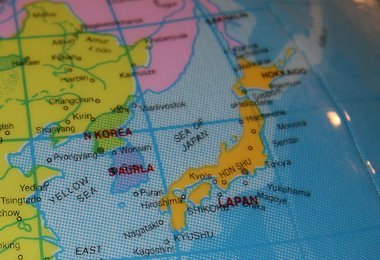
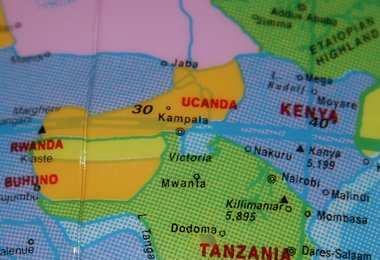
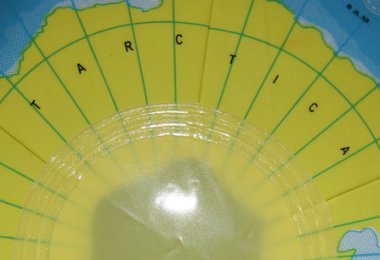
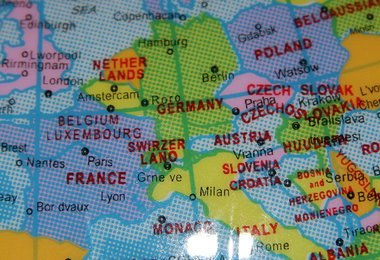
Benjamin Mako Hill: Geography Lesson (Part II)

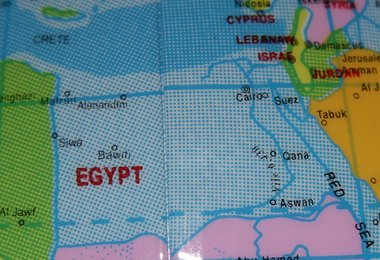
Yesterday, I received many requests to post pictures of my rather inaccurate globe. I'm pleased to oblige. Please read the summary I posted yesterday for a list of some of the errors you should have little trouble picking out. You can click on each cropped thumbnail to see much larger, higher resolution versions of the area and the surrounding continent or region.
/copyrighteous/images/bad_map-1-thumb.jpg
/copyrighteous/images/bad_map-2-thumb.jpg
/copyrighteous/images/bad_map-3-thumb.jpg
/copyrighteous/images/bad_map-4-thumb.jpg
/copyrighteous/images/bad_map-5-thumb.jpg
Enrico suggested that if the globe was manufactutered in China, Taiwan would be the same color as China and Taipei would be marked as a provincial, rather than national capital. Sure enough, I now have both a good idea of the globe's origin plus an idea of how to spell Taipei with an o.

16 January 2007

Gunnar Wolf: Ok, now we are getting somewhere! (Re: XML-based configurations)

Ok, at least Erich states something I agree with (and, lets be fair, its also told by Marius on a comment to my previous post): XML should not be pushed where the data to be represented is flat (or flattish - Say, a INI-style configuration is enough with a not-exactly-flat-but-still-unnested configuration).
Still, I do not buy XML as adequate. Erich insists on the Apache configuration file as an example of how not to do things - And I agree wholeheartedly: It sucks and makes no sense. However, it's just too easy to break proper XML nesting (for the love of the FSM, why is it necessary to repeat the element name we are closing?!) to be something I want to deal with when in a hurry. XML might be great as a data interchange language, but -in my always humble opinion- not more than that.
PS- Erich, your blog is broken as well ;-) The generated RSS has URLs which repeat the '/en' part. Oh, and about my blog complaining about XML: Yes, I was syndicating another site - And the XML parsing engine I use was somehow b0rked as well. Nah, I don't feel like changing my blog's software, it's mostly fine as it is ;-)

15 January 2007

Brett Parker: Random Interesting Things of the Day

iPhone news So, looking around at what's happening in the media we seem to be getting a fair few non-overly impressive insights in to the iPhone (not least of all the fact that Apple haven't secured the name, and that Linksys have had the iPhone name for a while now - see http://www.linksys.com/iphone/ for the real iPhone, the one that does exist, the one that's already in the market place...) So, back to Apple, people (being people, and therefore incredibably fallable ;) have created iPhone themes for current mobiles, and they're being hunted down by Apple's lawyers, that can't be good publicity, surely? I thought imitation was the sincerest form of flattery... tut, bad evil corporate giant! According to Matthew Lynn on Bloomberg's opinion pages, """To its many fans, Apple is more of a religious cult than a company. An iToaster that downloads music while toasting bread would probably get the same kind of worldwide attention.""", which seems about true to me - the rest of the article is worth reading, gives more insite in to why he thinks it will fail, and is quite an interesting article. Health There's a story in the Guardian about Low cholesterol levels linked with higher risk of Parkinson's disease - so we'll continue the Monday trip to the Cafe then, and have us a nice lunch of bacon and eggs, in the name of health, obviously. From NewScientist, we get the news that being bilingual delays the onset of dementia, so maybe it's time I got round to learning a language that isn't English... I wonder if knowing a reasonable number of programming languages and their syntax works... Someone should do a study in to that. Random Tech And just for more fun, lets just have a bunch of interesting links Miniature jet engines could power cellphones, Silicon 'Lego bricks' used to build 3D chips, Gravity gets a quantum boost. And that's that... So, we'll end that there, tonight is, as with every Monday, the pub quiz over in the Hop Poles in Brighton. Should be very silly, and fun.

14 January 2007

Ian Murdock: On the importance of backward compatibility

I’m often asked why I’m so obsessed with backward compatibility and, as a result, why I’ve made the issue such a central part of the LSB over the past year. Yes, it’s hard, particularly in the Linux world, because there are thousands of developers building the components that make up the platform, and it just takes one to break compatibility and make our lives difficult. Even worse, the idea of keeping extraneous stuff around for the long term “just” for the sake of compatibility is anathema to most engineers. Elegance of design is a much higher calling than the pedestrian task of making sure things don’t break. Why is backward compatibility important? Here’s a great example, via Joel Spolsky (note: from 2004):
Raymond Chen is a developer on the Windows team at Microsoft. He’s been there since 1992, and his weblog The Old New Thing is chock-full of detailed technical stories about why certain things are the way they are in Windows, even silly things, which turn out to have very good reasons. The most impressive things to read on Raymond’s weblog are the stories of the incredible efforts the Windows team has made over the years to support backwards compatibility: “Look at the scenario from the customer’s standpoint. You bought programs X, Y and Z. You then upgraded to Windows XP. Your computer now crashes randomly, and program Z doesn’t work at all. You’re going to tell your friends, ‘Don’t upgrade to Windows XP. It crashes randomly, and it’s not compatible with program Z.’ Are you going to debug your system to determine that program X is causing the crashes, and that program Z doesn’t work because it is using undocumented window messages? Of course not. You’re going to return the Windows XP box for a refund. (You bought programs X, Y, and Z some months ago. The 30-day return policy no longer applies to them. The only thing you can return is Windows XP.)” I first heard about this from one of the developers of the hit game SimCity, who told me that there was a critical bug in his application: it used memory right after freeing it, a major no-no that happened to work OK on DOS but would not work under Windows where memory that is freed is likely to be snatched up by another running application right away. The testers on the Windows team were going through various popular applications, testing them to make sure they worked OK, but SimCity kept crashing. They reported this to the Windows developers, who disassembled SimCity, stepped through it in a debugger, found the bug, and added special code that checked if SimCity was running, and if it did, ran the memory allocator in a special mode in which you could still use memory after freeing it. This was not an unusual case. The Windows testing team is huge and one of their most important responsibilities is guaranteeing that everyone can safely upgrade their operating system, no matter what applications they have installed, and those applications will continue to run, even if those applications do bad things or use undocumented functions or rely on buggy behavior that happens to be buggy in Windows n but is no longer buggy in Windows n+1… A lot of developers and engineers don’t agree with this way of working. If the application did something bad, or relied on some undocumented behavior, they think, it should just break when the OS gets upgraded. The developers of the Macintosh OS at Apple have always been in this camp. It’s why so few applications from the early days of the Macintosh still work… To contrast, I’ve got DOS applications that I wrote in 1983 for the very original IBM PC that still run flawlessly, thanks to the Raymond Chen Camp at Microsoft.
I can almost feel the revulsion among my readership right about now. However, next time you’re in Best Buy or CompUSA, look at the shelf of Windows applications, then compare it to the shelf of Mac applications, and perhaps you’ll better understand why it’s important. Beyond the results speaking for themselves, I’ll argue that it takes a better engineer to move a platform forward while at the same time making sure things don’t break. It’s pretty easy to wash your hands of something and declare it to be someone else’s problem.

11 January 2007

Manoj Srivastava: Mail Filtering with CRM114: Part 2

Or, Cleanliness is next to godliness The last time when I blogged about Spam fighting Mail Filtering With CRM114 Part 1, I left y'all with visions of non-converging learning, various ingenious ways of working around a unclean corpus, and perhaps a sinking feeling that this whole thing was more fragile than it ought to be. During this eriod of flailing around, trying to get mailtrainer to learn the full corpus correctly, I upgraded to an unpackaged version of crm114. Thanks to the excellent packaging effort by the maintianers, this was dead easy: get the debian sources using apt-get source crm114, download tghe new tarball from crm114 upstream, cp the debian dir over, and just edit the changelog file to reflect the new version. I am currently running my own, statically linked 20061103-Blame Dalkey.src-1. Cleaning the corpus made a major difference to the quality of discrimination. As mentioned earlier, I examined every mail that was initially incorrectly classified during learning. Now, there are two ways this can happen: That the piece of mail was correctly placed in the corpus, but had a feature that was different from those learned before; or that it was wrongly classified by me. When I started the chances were almost equally likely; I have now hopefully eliminated most of the misclassifications. When mailtrainer goes into cycles, retraining on a couple of emails round after round, you almost certainly are trying to train in conflicting ways. Cyclic retraining is almost always a human's error in classification. Some of the errors discovered were not just misclassifications: some where things that were inappropriate mail, but not Spam; for instance there was the whole conversation where someone one subscribed debian-devel to another mailing list, there was the challenge, the subscription notice, the un-subscription, challenge, and notice -- all of which were inappropriate, and interrupted the flow, and contributed to the noise -- but were not really Spam. I had, in a fit of pique, labelled them as Spam; but they were really like any other mailing list subscription conversations, which I certainly want to see for my subscriptions. crm114 did register the conversations as Spam and non-Spam, as requested, but that increased the similarity between Spam and non-Spam features -- and probably decreased the accuracy. I've since decided to train only on Spam, not on inappropriate mails; and let Gnus keep inappropriate mails from my eyes. I've also waffled over time about whether or not to treat newsletters from Dr. Dobbs Journal or USENIX as Spam or not -- now my rule of thumb is that since I signed up for them at some point, they are not Spam -- though I don't feel guilty about letting mailagent squirrel them away mostly out of sight. A few tips about using mailtrainer:

Next.

Previous.