Search Results: "ed"

30 January 2013

Ian Campbell: Going to FOSDEM 2013

Like many people I'll be going to FOSDEM again this year. I'll be giving a talk on Saturday at 1800 in the Virtualisation devroom on Evolving Xen Paravirtualization. I'll also be manning the Xen.org booth at least some of the time but hopefully I'll get to see some of the other talks too. Hope to see everyone there!

Roland Mas: Various small bits

Dear reader, I know you're wondering what I'm getting up to these days. Or at least, I guess there's a possibility that you're wondering. So since there's no single bit of news that would be worthy of a post here by itself, here's one summarizing things, in the hope that the accumulation makes a tiny bit of a difference. On the rock'n'roll front: Eleven did its first true gig on our own in a pub last Saturday. And when I say on our own , it could almost be taken literally, for we must have had a grand total of about 10 people. A bit of a disappointment, to say the least, especially since the pub was about 120 kilometers from home, 60 of which I rode on my motorbike at 2 AM (and close to 0 C). However, the landlord seemed to like us and hinted at further gigs during seasons where people are more likely to go out for drinks and music than to stay warm at home. In a related note: we got ourselves a small set of stage lights (LED-powered, of course), and they have, in addition to the power cord and various switches, two sockets at the back for plugging XLR-3 cables. On investigation, it seems that this means they can be controlled by a protocol known as DMX 512, which opens up a lot of possibilities for someone who likes to control various things from a computer. I read a few web pages to get an idea of how this is supposed to work, it seems rather simple and straightforward, but the required software isn't in Debian yet. So I guess that if/when I get the necessary hardware, I'll have a new hobby and new toys to play with. Maybe our next gig will have bursts of lights on the big accented beats, triggered by strong enough hits on my drum cymbals. This allows me to link to a new minor release of Wiimidi. The only addition is a new configuration section mapping to the default drumkit provided by Hydrogen. And finally, to stay in the small bits of software , I was prompted to give my simple GPG-encrypted password store, a.k.a. SGEPS, its own page, with a proper release and so on. So there, 0.1 is out, with minimal Debian packaging included.

James Morrison: Married

In response to my own post from 7 years ago Bachelorhood, I would like to announce that I am a much better married man than Simon. My bachelorhood days are truly over, my laundry goes in a laundry basket, my clothes are always put away (whether I like it or not). My fridge is plugged in, has real food in it; I have a cell phone (actually numerous cell phones); I have an awesome custom made table; lastly I have a TV in my house. Bachelorhood officially ended last year, 30 years was a good run :)

James Morrison: Penance driven development

Recently, I got to try out working in a couple different environments. Working in these environments helped me formalize some of the things that I like and some of the things I don't like. With these new environments I've come to realize my style of development. It's called penance driven development. It's called this because there are two important things:
1) It's better to ask forgiveness than for permissions
2) You need to be deserving of forgiveness.

So the concept is simple, whenever you break something, you first fix the symptom, then you improve the infrastructure so similar breaks should be harder to do. The cost of the penance doesn't have to be huge, but the penance has to be done, otherwise technical debt accumulates and people believe there is no downside to breaking things.

What needs to be improved depends on what is missing. For example, if an engineer broke a feature, but that feature didn't have a test, the penance should be to write a test. Even if the one that broke the feature isn't the owner or the one that wrote the feature. If someone breaks the build and no one noticed because the continuous build didn't email, the fix could be setting up the continuous build to email out build failures, or even better, run each change on a build bot before allowing commits.

I think I'll have to start a penance of the day blog/twitter stream.

I've been practicing this style of development for most of my career, and it's similar if less precise than the 5 whys . As mentioned in the The Lean Startup, the cost of the penance should be proportional to the cost of the break.

James Morrison: Issues with Appengine

I like App Engine, my wedding website runs on App Engine as well as a couple recent commercial projects. However, there are some annoyances that make a lot of the useful things I learned at Google not applicable.

  1. Chunked responses
    App Engine doesn't have a way of doing chunked responses.
    1.5. Processing after sending the response My annoyance here is that I can't send an early response and wait for some resource. Say I want to do 5 url fetches that I cache for a short period of time. If I want to reply in 250ms, I want to use any of the results I've gotten and reply to the user. Then once the rest of the fetches come in, I want to put them in the cache, so they will come back quickly the next time.
  2. Counters
    App Engine has crappy support for counters. You can shard your counters into the datastore: https://developers.google.com/appengine/articles/sharding_counters#counter_python or you can use taskqueues: http://blog.appenginefan.com/2009/10/non-sharded-counters-part-2-using-task.html . Now, how do you graph these counters over time, well, that is left as an exercise for the reader. Google has special datastores for stores and retrieving counters.
  3. Backends
    Backends in appengine are versioned separately from frontends. This sounds like a good idea, but to run the devserver with backends, the backends need to be in the same source tree. Thus backends share the same url space. Backends also share the same app.yaml, so again the url space is shared. Thus, if you make a change that you want to coordinate between the frontend and the backend, you need to change the application version in app.yaml, then rename all the backends in backends.yaml. If backends are supposed to be in the same source tree as frontends, then they should be prefixed with the application version. If backends should be versioned separately from frontends, then they shouldn't share url handlers from app.yaml.
    3.5 Uploading backends is slow
    Each backend is uploaded through appcfg.py separately. So if you are crazy and have one backend per backend level, then you need to upload 4 copies of the source code each time the backends get updated.
  4. Logging
    I want structured logs. Instead what you have to do is use the python logging module to write out human readable logs, then parse them out into the structure you want.
    http://code.google.com/p/google-app-engine-samples/source/browse/trunk/logparser/logparser.py

As a preemptive counter, 1.5 could be dealt with using backends and a background thread, except backends don't scale to the number of queries, so my use case above isn't fixed.

James Morrison: Testing email receive for appengine

It's not too obvious how to test email receive handlers in Appengine. The important observation is that the handlers take HTTP POSTs with multipart/form-data encoded data. In python you can build an email to be handled with the following code:
from email.message import Message 

def test_email(self):
body = Message()
body.add_header('to', 'test-unknown@other-app.com')
body.add_header('from', 'test@app.com')
body.add_header('Content-Type', 'multipart/alternative', boundary=self.boundary)
text = Message()
text['content-type'] = 'text/plain'
text.set_payload('I am I! Don Quixote! The man of La Mancha!')
body.attach(text)

post(payload=body.as_string())

James Morrison: ndb OR query with cursors

I have two annoyances with Appengine's NDB OR queries. One is that the order must be by key, the other is that OR queries are done in series, so ndb.OR(a == 1, a == 2) are done as query(a == 1) then query(a == 2). To work around this, I created a new cursor class that allows sorting by any attribute.

Using this cursor does come with it's own caveats, one is that the order between the queries is not maintained (fixable) and two the limit attribute is per query not for the results of all queries (fixable).

import base64
import json

from google.appengine.ext import ndb

class MultiCursor(object):
@staticmethod
def from_websafe_string(value):
values = None
try:
value = base64.urlsafe_b64decode(str(value))
values = json.loads(value)
except Exception as e:
logging.error('Invalid Cursor %s - %s', e, value)
if not values:
return MultiCursor()

cursors = MultiCursor()
for key, cursor in values.iteritems():
try:
if isinstance(cursor, basestring):
cursors.set(key, ndb.Cursor.from_websafe_string(cursor))
else:
cursors.set(key, cursor)
except:
logging.error('MultiCursor.from_string - bad cursor (%s) for %s in %s',
cursor, key, values)
return cursors

def to_websafe_string(self):
values =
for key, value in self.values:
if isinstance(value, ndb.Cursor):
values[key] = value.to_websafe_string()
else:
values[key] = value
return base64.urlsafe_b64encode(json.dumps(values))

def __init__(self, values=None):
self.values = values or

def get(self, key):
return self.values.get(key), self.values.get(key + _'done')

def set(self, key, cursor, more):
self.values[key] = cursor
self.values[key + _'done'] = not more

def __len__(self):
return len(self.values)

To use the cursor the code should look like:
@ndb.tasklet
def _query_A_by_value_async(value, cursor, limit=100):
start_cursor, done = cursor.get(value)
if not done:
query = Foo.query(Foo.A == value)
query = Foo.order(-Foo.last_access_time)
foos, end_cursor, more = yield query.fetch_page_async(
limit, start_cursor=start_cursor)
cursor.set(value, end_cursor, more)
raise ndb.Return(foos, end_cursor, more)
raise ndb.Return([], None, False)

Michal Čihař: phpMyAdmin translations status

Next round of phpMyAdmin 4.0 translation status report is coming. So let's look at which translations are at 100% right now: There are also several languages which need just few strings to be complete: As you can see, there is still lot of languages missing, this might be your opportunity to contribute to phpMyAdmin. Also you are welcome to translate phpMyAdmin 4.0 using translation server. If your language is already fully translated and you want to help as well, you can translate our documentation as well.

Filed under: English Phpmyadmin 0 comments Flattr this!

Wouter Verhelst: HOWTO: create a PXE netboot debian-installer image with firmware files

Debian-installer is a great piece of software, which allows one to install the system in a variety of situations: manually, on a serial console, graphically, automatically, there are a number of scenarios it handles well. However, there is one issue: when installing Debian to a machine that requires firmware just to get at the network, getting things to work can be a hassle. There is a tarball containing the most-often required firmware blobs in order to be able to use the installer on such systems; but since they fail the DFSG, these cannot be part of Debian, for political reasons. To use them, you need to write the required firmware packages to a directory "/firmware" on a USB stick or similar, and put that in the system when asked. This is acceptable when you have just one system to install and have a USB stick handy; but if you have a lot of systems to install, or (as recently happened to me) you don't have a USB stick handy, then things become slightly more problematic. Luckily, there's an easy solution: you can update the initrd image so it contains the firmware packages already on it; when doing that, you don't need to deal with USB sticks anymore. Of course, using such an initrd image will cause the installer to automatically install all provided firmware packages, even if your hardware will function (at a basic level) without said firmware. Additionally, if you pass firmware packages to the installer in any way (through a USB stick, or through the method I'm about to describe, that makes no difference), and the installer determines that it might help to install one of these firmware packages, then the installed system will have them installed, and have the non-free repository enabled, which is not the default. Don't do this if you don't want that. Anyway, on to the actual procedure now: Tadaa! You've now created an initrd image that will not ask you for firmware images, instead just install them.

Tanguy Ortolo: Using the UDF as a successor of FAT for USB sticks

USB Stick FAT USB sticks are traditionally formatted with FAT 32, because this file system is implemented by almost every operating system and device. Unfortunately, it sucks, as it cannot use more than 2 TiB, store files larger than 2 GiB or store symbolic links for instance. In a word, it is an obsolete and deficient file system.

exFAT Good news: someone addressed that problem. Bad new: that someone is Microsoft. So as you could expect, exFAT, the extended FAT, is a stinking proprietary, secret and patented file system. There are free implementations of that shit, but it is safer to stay away from it.UDF to the rescue! Good news: there is one file system that is implemented almost everywhere as well, and which does not suffer from such limitations. UDF, the Universal Disk Format, is an ISO standard originally designed for DVDs, but it is perfectly usable for USB sticks. It also supports POSIX permissions, with one killer feature for removable media: a file can belong to no specific person or group. So, to use it, assuming you USB stick is /dev/sdc:
$ dd if=/dev/zero of=/dev/sdc bs=1M count=1
$ mkudffs -b 512 --media-type=hd /dev/sdc
The initial dd is to erase the existing partition table or file system information, to prevent you USB stick from being detected as a FAT after it has been formatted with UDF. The -b 512 is to force a file system block size equal to the USB stick's physical block size, as required by the UDF specification. Adapt it if you have the luck of having a USB stick with an more appropriate block size. After that, you USB stick will be usable for reading and writing with GNU/Linux and the other free operating systems of course, but also with current versions of Windows (read-only with the outdated version XP) and with MacOS.

Bastian Venthur: Synchronizing Google Mail Contacts with Thunderbird

Dear Lazyweb, can anyone recommend a good Thunderbird extension which allows for synchronizing the address book with Google mail? So far I tried Google Contacts, but something went wrong with the syncing and some contacts where deleted on both sides. To avoid this problem, one can use Google Contacts in read-only mode (it will only fetch contacts from Google, but never write to it) but then you have to import new Thunderbird contacts to Google mail manually. Google introduced CardDav in December 2012, which allows for syncing of contacts, but since Thunderbird s development is apparently on hold this is probably not gonna be supported out-of-the-box. There are some other extensions for Thunderbird, but since synchronization is hard and a lot more complicated than: replace newer version with older one I m looking for something mature and well tested. Before someone suggests it, I know Evolution has this feature built-in. I gave it a try last week and found so many other grave bugs with the calendar and newsgroups that Evolution is simply unfit for my needs. I really like Thunderbird and want to stick with it for a few more years until I have to look for something else. Yours truly, Basti

Raphael Geissert: A bashism a week: sleep

To delay execution of some commands in a shell script, the sleep command comes handy.
Even though many shells do not provide it as a built-in and the GNU sleep command is used, there are a couple of things to note:


This of course is regarding what is required by POSIX:2001; it only requires the sleep command to take an unsigned integer. FreeBSD's sleep command does accept fractions of seconds, for example.

Remember, if you rely on any non-standard behaviour or feature make sure you document it and, if feasible, check for it at run-time.

In this case, since the sleep command is not required to be a built-in, it does not matter what shell you specify in your script's shebang. Moreover, calling /bin/sleep doesn't guarantee you anything. The exception is if you specify a shell that has its own sleep built-in, then you could probably rely on it.

The easiest replacement for suffixes is calculating the desired amount of time in seconds. As for the second case, you may want to reconsider your use of a shell script.

Russ Allbery: Quick Module::Build note

I'm struggling a little to keep to a schedule since the weekend, so I both didn't follow my normal evening exercise schedule nor did I write this up earlier when I could add more details. Ah well. But I'm still going to post something today, since I like this streak of (mostly) providing some useful or at least hopefully entertaining content. Today, I converted the Perl module build system inside WebAuth to use Module::Build instead of ExtUtils::MakeMaker, and it was a rousing success. I highly recommend doing this, and am going to be doing this with all of my other Perl packages, both embedded in larger packages and standalone. I have several packages where Perl XS modules are embedded within a larger Autoconf and Automake project that includes a shared library used by the Perl module. The largest problem with doing this is integrating the build systems in such a way that the Perl module is built against the in-tree version of the shared library, rather than some version of it that may already be on the system. I've managed to do this with ExtUtils::MakeMaker, but it was horribly ugly, involving overriding internal target rules and setting a bunch of other variables. With Module::Build and ExtUtils::CBuilder, it's much easier and even sensible. Both support standard ways of overriding Config settings, which provides just the lever required. So this:
    our $PATH = '@abs_top_builddir@/lib/.libs';
    my $lddlflags = $Config lddlflags ;
    my $additions = "-L$PATH @LDFLAGS@";
    $lddlflags =~ s%(^  )-L% $additions -L%;
    package MY;
    sub const_loadlibs  
        my $loadlibs = shift->SUPER::const_loadlibs (@_);
        $loadlibs =~ s%^(LD_RUN_PATH =.*[\s:])$main::PATH(: \n)%$1$2%m;
        return $loadlibs;
     
    package main;
(comments stripped to just show the code) became this:
    my @LDFLAGS = qw(-L@abs_top_builddir@/lib/.libs @LDFLAGS@);
    my $LDDLFLAGS = join q   , @LDFLAGS, $Config lddlflags ;
plus adding config => lddlflags => $LDDLFLAGS to the standard Module::Build configuration. So much better! At some point, I'll write up a set of guidelines on how to embed Perl XS modules into Automake projects.

Gunnar Wolf: The phone is dead. How to stay reasonably unbound?

So, today an endurance test can be declared as finished. In early 2008, for the first time, I paid for a cellular phone (as my previous ones were all 100% subsidized by the operator in a fixed plan). I got a Nokia N95. And, although at the beginnning I was quite thrilled with my smartphone (when such things were still a novelty), it didn't take much to me to start dumbing it down to what is really useful to me: A phone with a GPS. And the GPS only because it is the only toy I want in such a form factor. Anyway, despite the operator repeatedly offering me newer and more capable models, I kept this one, and as soon as I was free of the forced 18 month rental period, switched to a not-data-enabled, pay-as-you-go plan. I don't want to be connected to the intertubes when I'm away from a usable computer! But yes, five years are over what a modern phone wants to endure. Over time, I first started getting SIM card errors whenever the phone was dropped or slightly twisted - As I'm a non-frequent phone user, I didn't care much. Charging it also became a skill of patience, as getting the Nokia micro-connector to make contact has been less and less reliable. Over one year ago, the volume control (two sensors on the side) died after a phone drop (and some time later I found the switches broken from the mainboard loose) - A nuisance, yes, but nothing too bad. I don't know how, but some time ago the volume went down when using the radio, and as I can't raise it again, my phone became radio-disabled. And today, the screen died (it gets power, but stays black). I can blind-operate the phone, but of course, it is really not meant for that. So, I expect this Saturday to go get a new phone. Between now and then, I'll be cellphone-deprived (in case you wonder why I'm not answering to your messages or whatever). I would love to get a phone with a real keyboard (as I prefer not to look at the screen when writing messages, just to check if everything came out right and fix what's needed). I understand Android phones are more likely to keep me happy as a free software geek, and I'd be delighted to use Cyanogen if it is usable and stable But my phone is *not* my smart computer and it should not attempt to be, so it's not such a big deal. I will look for something with FM radio capability, and GPS. Of course, I want something cheap. It would be great to get it at no cost, but I don't expect I'll find such a bargain. Oh, and I want something I can find at the first Telcel office I come to, am I asking for too much? :) Anyway - I'll enjoy some days of being really disconnected from any wireless bugs (that I am aware off).

Paul Tagliamonte: dput-ng/1.4 in unstable

Changes:
dput-ng (1.4) unstable; urgency=low
   [ Arno T ll ]
   * Really fix #696659 by making sure the command line tool uses the most recent
     version of the library.
   * Mark several fields to be required in profiles (incoming, method)
   * Fix broken tests.
   * Do not run the check-debs hook in our mentors.d.n profile
   * Fix "[dcut] dm bombed out" by using the profile key only when defined
     (Closes: #698232)
   * Parse the gecos field to obtain the user name / email address from the local
     system when DEBFULLNAME and DEBEMAIL are not set.
   * Fix "dcut reschedule sends "None-day" to ftp-master if the delay is
     not specified" by forcing the corresponding parameter (Closes: #698719)
 .
   [ Luca Falavigna ]
   * Implement default_keyid option. This is particularly useful with multiple
     GPG keys, so dcut is aware of which one to use.
   * Make scp uploader aware of "port" configuration option.
 .
   [ Paul Tagliamonte ]
   * Hack around Launchpad's SFTP implementation. We musn't stat *anything*.
     "Be vewy vewy quiet, I'm hunting wabbits" (Closes: #696558).
   * Rewrote the test suite to actually test the majority of the codepaths we
     take during an upload. Back up to 60%.
   * Added a README for the twitter hook, Thanks to Sandro Tosi for the bug,
     and Gergely Nagy for poking me about it. (Closes: #697768).
   * Added a doc for helping folks install hooks into dput-ng (Closes: #697862).
   * Properly remove DEFAULT from loadable config blocks. (Closes: #698157).
   * Allow upload of more then one file. Thanks to Iain Lane for the
     suggestion. (Closes: #698855).
 .
   [ Bernhard R. Link ]
   * allow empty incoming dir to upload directly to the home directory
 .
   [ Sandro Tosi ]
   * Install example hooks (Closes: #697767).
Thanks to all the contributors! For anyone who doesn t know, you should check out the docs.

Uwe Hermann: libsigrokdecode 0.1.1 released, more protocol decoders supported

sigrok logo Just a quick announce: We released libsigrokdecode 0.1.1 today, a new version of one of the shared libraries part of the open-source sigrok project (for signal acquisition/analysis of various test&measurement gear, like logic analyzers, scopes, multimeters, etc). I will update the Debian package soonish. As you probably know, in addition to the infrastructure for protocol decoding, this library also ships with a bunch of protocol decoders written in Python. Currently we support 29 different ones (in various states of "completeness", improvements are ongoing). This release adds support for the following new protocol decoders:
CAN probing Please check the announce on the sigrok blog and/or the NEWS file for the full list of changes and improvements. Happy hacking and decoding!

Rog rio Brito: Looking for (Free) a Video Editor

Let's suppose that you went to a show of your favourite some time ago and you were able to sneak in a camera (well, in those times, cell phones weren't able to record much more than 176x144 pixels at 12fps). But, then, you suddenly found that some people uploaded (short) fragments of that very same show to youtube and, collecting those, you may be able to create a "multi-camera" version of the video that you can record to keep of your memorable concert. The multi-camera, in the sense above, is not the same as multiple angles (like some DVDs), but something like a TV broadcast, where the stage is filmed by cameras positioned at some places and the image that is broadcast is switched from time to time according to that who is singing, or playing etc. So, Dear Lazyweb, do we happen to have any Free Software (preferably already packaged in Debian) that is able to help with the task of "aligning" (in time) videos from various (different) sources so as to produce one multi-camera video? What would my options be? I asked this on youtube for a person that did exactly what I want and their answer was Sony Vegas, which I fear that does not exactly would be allowed in Debian. :) Any comments are welcome, thanks, and if I am successful, I will upload the final video. :)

29 January 2013

Jonathan Carter: Ubuntu Developer Summit for 13.04 (Raring)

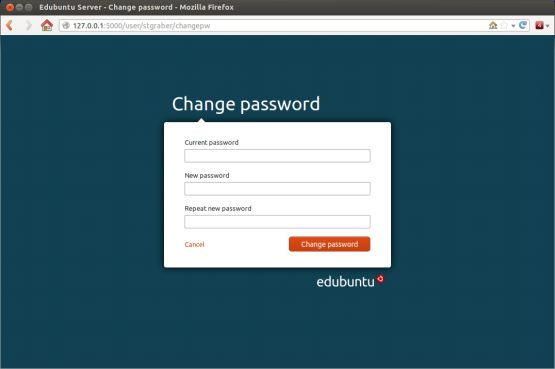
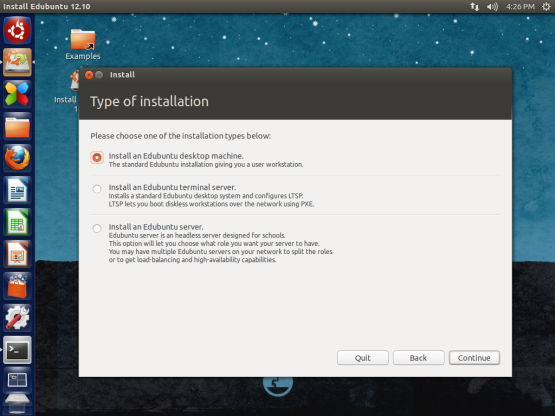
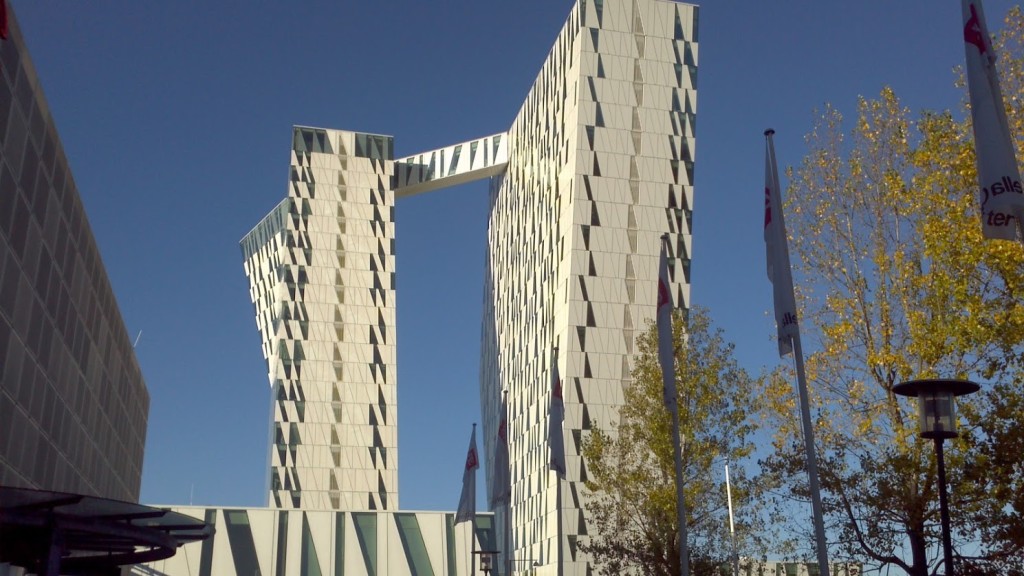
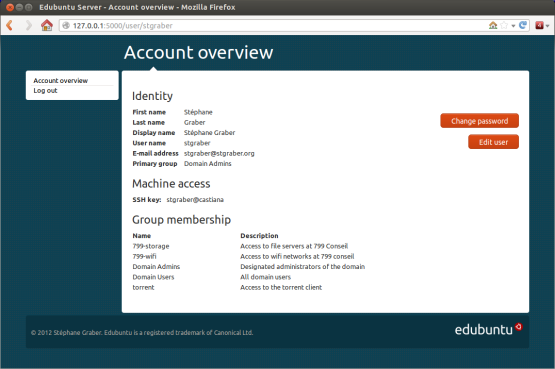
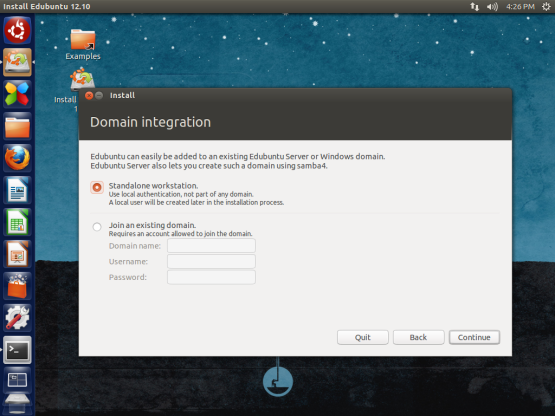
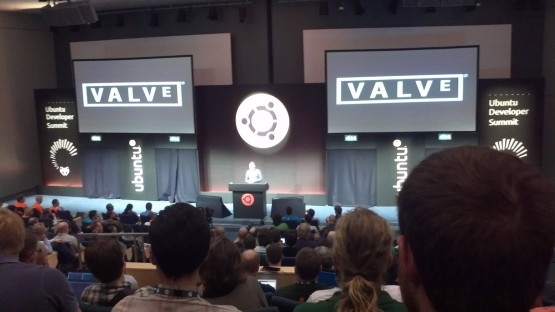
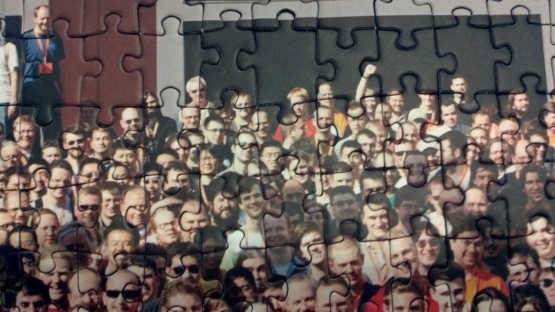
The War on Time Whoosh! I ve been incredibly quiet on my blog for the last 2-3 months. It s been a crazy time but I ll catch up and explain everything over the next few entries. Firstly, I d like to get out a few details about the last Ubuntu Developer Summit that took place in Copenhagen, Denmark in October. I m usually really good at getting my blog post out by the end of UDS or a day or two after, but this time it just flew by so incredibly fast for me that I couldn t keep up. It was a bit shorter than usual at 4 days, as apposed to the usual 5. The reason I heard for that was that people commented in previous post-UDS surveys that 5 days were too long, which is especially understandable for Canonical staff who are often in sprints (away from home) for the week before the UDS as well. I think the shorter period works well, it might need a bit more fine-tuning, I think the summary session at the end wasn t that useful because, like me, there wasn t enough time for people to process the vast amount of data generated during UDS and give nice summaries on it. Overall, it was a great get-together of people who care about Ubuntu and also many areas of interest outside of Ubuntu. Copenhagen, Denmark I didn t take many photos this UDS, my camera is broken and only takes blurry pics (not my fault I swear!). So I just ended up taking a few pictures with my phone. Go tag yourself on Google+ if you were there. One of the first interesting things I saw when arriving in Copenhagen was the hotel we stayed in. The origami-like design reminded me of the design of the Quantal Quetzel logo that is used for the current stable Ubuntu release. 2012-10-28_05-50-14_21 quantal The Road ahead for Edubuntu to 14.04 and beyond St phane previously posted about the vision we share for Edubuntu 14.04 and beyond, this was what was mostly discussed during UDS and how we ll approach those goals for the 13.04 release. This release will mostly focus on the Edubuntu Server aspect. If everything works out, you will be able to use the standard Edubuntu DVD to also install an Edubuntu Server system that will act as a Linux container host as well as an Active Directory compatible directory server using Samba 4. The catch with Samba 4 is that it doesn t have many administration tools for Linux yet. St phane has started work on a web interface for Edubuntu server that looks quite nice already. I m supposed to do some CSS work on it, but I have to say it looks really nice already, it s based on the MAAS service theme and St phane did some colour changes and fixes on it already. edu-server-account edu-server-password From the Edubuntu installer, you ll be able to choose whether this machine should act as a domain server, or whether you would like to join an existing domain. Since Edubuntu Server is highly compatible with Microsoft Active Directory, the installer will connect to it regardless of whether it s a Windows Domain or Edubuntu Domain. This should make it really easy for administrators in schools with mixed environments and where complete infrastructure migrations are planned. Authentication Options Choosing machine role You will be able to connect to the same domain whether you re using Edubuntu on thin clients, desktops or tablets and everything is controllable using the Epoptes administration tool. Many people are asking whether this is planned for Ubuntu / Ubuntu Server as well, since this could be incredibly useful in other organisations who have a domain infrastructure. It s currently meant to be easily rebrandable and the aim is to have it available as a general solution for Ubuntu once all the pieces work together. Empowering Ubuntu Flavours This cycle, Ubuntu is making some changes to the release schedule. One of the biggest changes made this cycle is that the alpha and beta releases are being dropped for the main Ubunut product. This session was about establishing how much divergence and changes the Ubuntu Flavours (Ubuntu Studio, Mythbuntu, Kubuntu, Lubuntu and Edubuntu) could have from the main release cycle. Edubuntu and Kubuntu decided to be a bit more conservative and maintain the snapshot releases. For Edubuntu it has certainly helped so far in identifying and finding some early bugs and I m already glad that we did that. Mythbuntu is also a notable exception since it will now only do LTS releases. We re tempted to change Edubuntu s official policy that the LTS releases are the main releases and treat the releases in between more like technology previews for the next LTS. It s already not such a far stretch from the truth, but we ll need to properly review and communicate that at some point. Valve at UDS and Steam for Linux One of the first plenaries was from Valve where Drew Bliss talked about Steam on Linux. Steam is one of the most popular publishing and distribution systems for games and up until recently it has only been available on Windows and Mac. Valve (the company behind Steam and many popular games such as Half Life and Portal) are actively working on porting games to run natively on Linux as well. Some people have asked me what I think about it, since the system is essentially using a free software platform to promote a lot of non-free software. My views on this is pretty simple, I think it s an overwhelmingly good thing for Linux desktop adoption and it s been proven to be a good thing for people who don t even play games. Since the announcement from Valve, Nvidia has already doubled perfomance in many cases for its Linux drivers. AMD, who have been slacking on Linux support the last few years have beefed up their support drastically with the announcement of new drivers that were released earlier this month. This new collection of AMD drivers also adds support for a range of cards where the drivers were completely discontinued, giving new life to many older laptops and machines which would be destined for the dumpster otherwise. This benefits not only gamers, but everyone from an average office worker who wants snappy office suite performance and fast web browsing to designers who work with graphics, videos and computer aided design. Also, it means that many home users who prefer Linux-based systems would no longer need to dual-boot to Windows or OS X for their games. While Steam will actively be promoting non-free software, it more than makes up for that by the enablement it does for the free software eco-system. I think anyone who disagrees with that is somewhat of a purist and should be more willing to make compromises in order to make progress. Ubuntu Release Changes Last week, there was a lot of media noise stating that Ubuntu will no longer do releases and will become a rolling release except for the LTS releases. This is certainly not the case, at least not any time soon. One meme that I ve noticed increasingly over the last UDSs was that there s an increasing desire to improve the LTS releases and using the usual Ubuntu releases more and more for experimentation purposes. I think there s more and more consensus that the current 6 month cycle isn t really optimal and that there must be a better way to get Ubuntu to the masses, it s just the details of what the better way is that leaves a lot to be figured out. There s a desire between developers to provide better support (better SRUs and backports) for the LTS releases to make it easier for people to stick with it and still have access to new features and hardware support. Having less versions between LTS releases will certainly make that easier. In my opinion it will probably take at least another 2 cycles worth of looking at all the factors from different angles and getting feedback from all the stakeholders before a good plan will have formed for the future of Ubuntu releases. I m glad to see that there is so much enthusiastic discussion around this and I m eager to see how Ubuntu s releases will continue to evolve. Lightning Talks Lightning talks are a lot like punk-rock songs. When it s good, it s really, really amazingly good and fun. When it s bad, at least it will be over soon :) Unfortunately, since it s been a few months since the UDS, I can t remember all the details of the lightning talks, but one thing that I find worth mentioning is that they re not just awesome for the topic they aim to produce (for example, the one lightning talks session I attended was on the topic of Tests in your software ), but since they are more demo-like than presentation-like, you get to learn a lot of neat tricks and cool things that you didn t know before. Every few minutes someone would do something and I d hear someone say something like Awesome! I didn t know you could do that with apt-daemon! . It s fun and educational and I hope lightning talks will continue to be a tradition at future UDSs. Social Stefano Rivera (fellow MOTU, Debianista, Capetonian, Clugger) wins the prize for person I ve seen in the most countries in one year. In 2012, I saw him in Cape Town for Scaleconf, Managua during Debconf, Oakland for a previous UDS and Copenhagen for this UDS. Sometimes when I look at silly little statistics like that I realise what a great adventure the year was! Between the meet n greet, an evening of lightning talks and the closing party (which was viking themed and pretty awesome) there was just one free evening left. I used it to gather with the Debian folk who were at UDS. It was great to see how many Debian people were attending, I think we had around a dozen or so people at the dinner and there were even more who couldn t make it since they work for Canonical or Linaro and had to attend team dinners the same evening. It was as usual, great to put some more faces to names and get to know some people better. It was also great to have a UDS with many strong technical community folk present who is willing to engage in discussion. There were still a few people who felt missing but it was less than at some previous UDSs. I also discovered my face on a few puzzles! They were a *great* idea, I saw a few people come and go to work on them during the week, they seem to have acted as good menial activities for people to fix their brains when they got fried during sessions :) 2012-10-31_14-32-28_374 Overall, this was a good and punchy UDS. I ll probably not make the next one in Oakland due to many changes in my life currently taking place (although I will remotely participate), but will probably make the one later this year, especially if it s in Europe. I ll also make a point of live-blogging a bit more, it s just so hard remembering all the details a few months after the fact. Thanks to everyone who contributed their piece in making it a great week!
Julien Danjou: Going to FOSDEM 2013

For the first time, I'll be at FOSDEM 2013 in Brussels on Sunday 2nd February 2013. You'll find me probably hanging out in the cloud devroom where I'll talk about Ceilometer with my fellow developers Nick Barcet and Eoghan Glynn. I also hope I'll find time to take a peek at some other talks, like PostgreSQL's ones that Dimitri Fontaine will handle. See you there!

Hideki Yamane: upstream and distro has a "same" goal


Tom Marble has a nice blog entry "Crowdsourcing Upstream Refactoring". It's interesting and I agree with most, but I want to say against one thing in "conclusion" in his presentation.

He said "upstreams and distros have different goals" but I don't think so. We distro and upstream has a same goal, "Deliver the value to users", but we distro have much criteria than upstream, like license, non-duplicate library, etc.

If we (distro and upstream) cannot share this view, then we would be failed, IMHO.

Next.

Previous.