Shirish Agarwal: Ayisha, Manju Warrier, Debutsav, Books

 But I m drifting from the topic/movie.

 I've moved to having containers be first-class citizens on my home network, so
any local machine (laptop, phone,tablet) can communicate directly with them all,
but they're not (by default) exposed to the wider Internet. Here's why, and how.
After I moved containers from docker to Podman and
systemd, it became much more convenient to run web apps on
my home server, but the default approach to networking
(each container gets an address on a private network between the host server
and containers) meant tedious work (maintaining and reconfiguring a HTTP
reverse proxy) to make them reachable by other devices. A more attractive
arrangement would be if each container received an IP from the range used by
my home LAN, and were automatically addressable from any device on it.
To make the containers first-class citizens on my home LAN, first I needed to
configure a Linux network bridge and attach the host machine's interface to it
(I've done that many times before);
then define a new Podman network, of type "bridge". podman-network-create
(1)
serves as reference, but the blog post Exposing Podman containers fully on the
network
is an easier read (skip past the
macvlan bit).
I've opted to choose IP addresses for each container by hand. The Podman
network is narrowly defined to a range of IPs that are within the subnet that
my ISP-provided router uses, but outside the range of IPs that it allocates.
When I start up a container by hand for the first time, I choose a free IP from
the sub-range by hand and add a line to /etc/avahi/hosts on the parent
machine, e.g.
192.168.1.33 octoprint.local
podman run --rm -d --name octoprint \
        ...
        --network bridge_local --ip 192.168.1.33 \
        octoprint/octoprint
octoprint.local.
What's next
Although it's not a huge burden, it would be nice to not need to statically
define the addresses in /etc/avahi/hosts (perhaps via "IPAM"). I've also been
looking at
WireGuard
(which should be the subject of a future blog post) and combining this with
that would be worthwhile.

 Debian v12 with codename bookworm was released as new stable release on 10th of June 2023. Similar to what we had with #newinbullseye and previous releases, now it s time for #newinbookworm!
I was the driving force at several of my customers to be well prepared for bookworm. As usual with major upgrades, there are some things to be aware of, and hereby I m starting my public notes on bookworm that might be worth also for other folks. My focus is primarily on server systems and looking at things from a sysadmin perspective.
Further readings
As usual start at the official Debian release notes, make sure to especially go through What s new in Debian 12 + Issues to be aware of for bookworm.
Package versions
As a starting point, let s look at some selected packages and their versions in bullseye vs. bookworm as of 2023-02-10 (mainly having amd64 in mind):
| Package | bullseye/v11 | bookworm/v12 |
|---|---|---|
| ansible | 2.10.7 | 2.14.3 |
| apache | 2.4.56 | 2.4.57 |
| apt | 2.2.4 | 2.6.1 |
| bash | 5.1 | 5.2.15 |
| ceph | 14.2.21 | 16.2.11 |
| docker | 20.10.5 | 20.10.24 |
| dovecot | 2.3.13 | 2.3.19 |
| dpkg | 1.20.12 | 1.21.22 |
| emacs | 27.1 | 28.2 |
| gcc | 10.2.1 | 12.2.0 |
| git | 2.30.2 | 2.39.2 |
| golang | 1.15 | 1.19 |
| libc | 2.31 | 2.36 |
| linux kernel | 5.10 | 6.1 |
| llvm | 11.0 | 14.0 |
| lxc | 4.0.6 | 5.0.2 |
| mariadb | 10.5 | 10.11 |
| nginx | 1.18.0 | 1.22.1 |
| nodejs | 12.22 | 18.13 |
| openjdk | 11.0.18 + 17.0.6 | 17.0.6 |
| openssh | 8.4p1 | 9.2p1 |
| openssl | 1.1.1n | 3.0.8-1 |
| perl | 5.32.1 | 5.36.0 |
| php | 7.4+76 | 8.2+93 |
| podman | 3.0.1 | 4.3.1 |
| postfix | 3.5.18 | 3.7.5 |
| postgres | 13 | 15 |
| puppet | 5.5.22 | 7.23.0 |
| python2 | 2.7.18 | (gone!) |
| python3 | 3.9.2 | 3.11.2 |
| qemu/kvm | 5.2 | 7.2 |
| ruby | 2.7+2 | 3.1 |
| rust | 1.48.0 | 1.63.0 |
| samba | 4.13.13 | 4.17.8 |
| systemd | 247.3 | 252.6 |
| unattended-upgrades | 2.8 | 2.9.1 |
| util-linux | 2.36.1 | 2.38.1 |
| vagrant | 2.2.14 | 2.3.4 |
| vim | 8.2.2434 | 9.0.1378 |
| zsh | 5.8 | 5.9 |
--fsync: fsync every written file--old-dirs: works like dirs when talking to old rsync--old-args: disable the modern arg-protection idiom--secluded-args, -s: use the protocol to safely send the args (replaces protect-args option)--trust-sender: trust the remote sender s file list Contributing to Debian
is part of Freexian s mission. This article
covers the latest achievements of Freexian and their collaborators. All of this
is made possible by organizations subscribing to our
Long Term Support contracts and
consulting services.
 A long time ago, before the pandemic, I bought a Librem 5 phone from Purism. I also moved home since then, and sadly my phone was sleeping peacefully in a box in the garage since I moved.
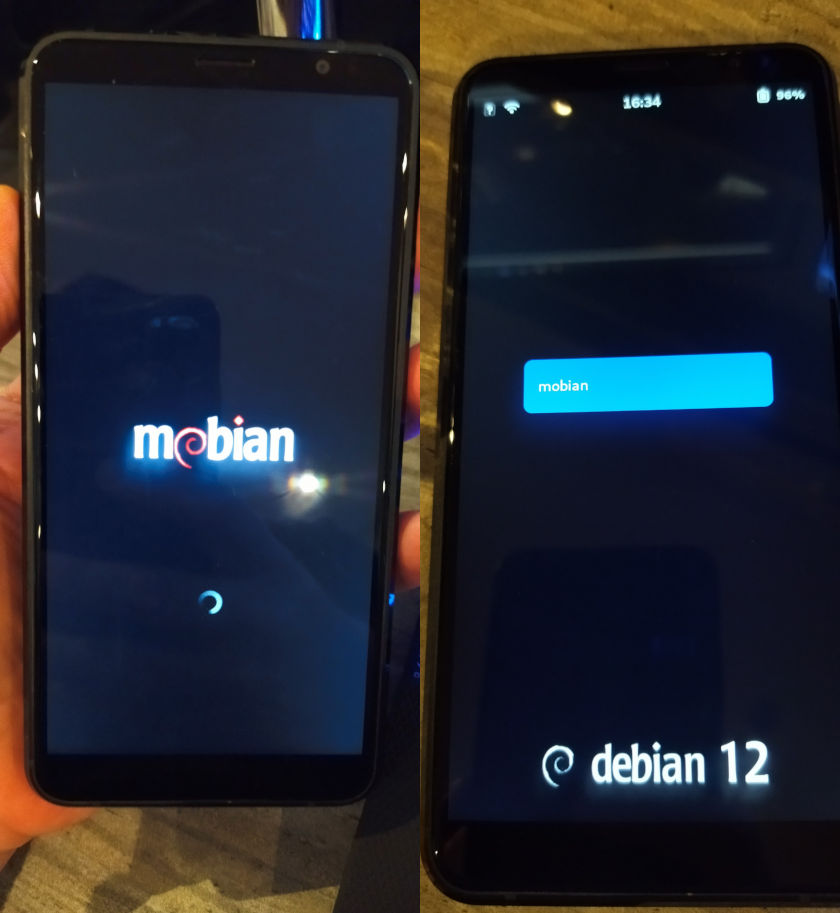
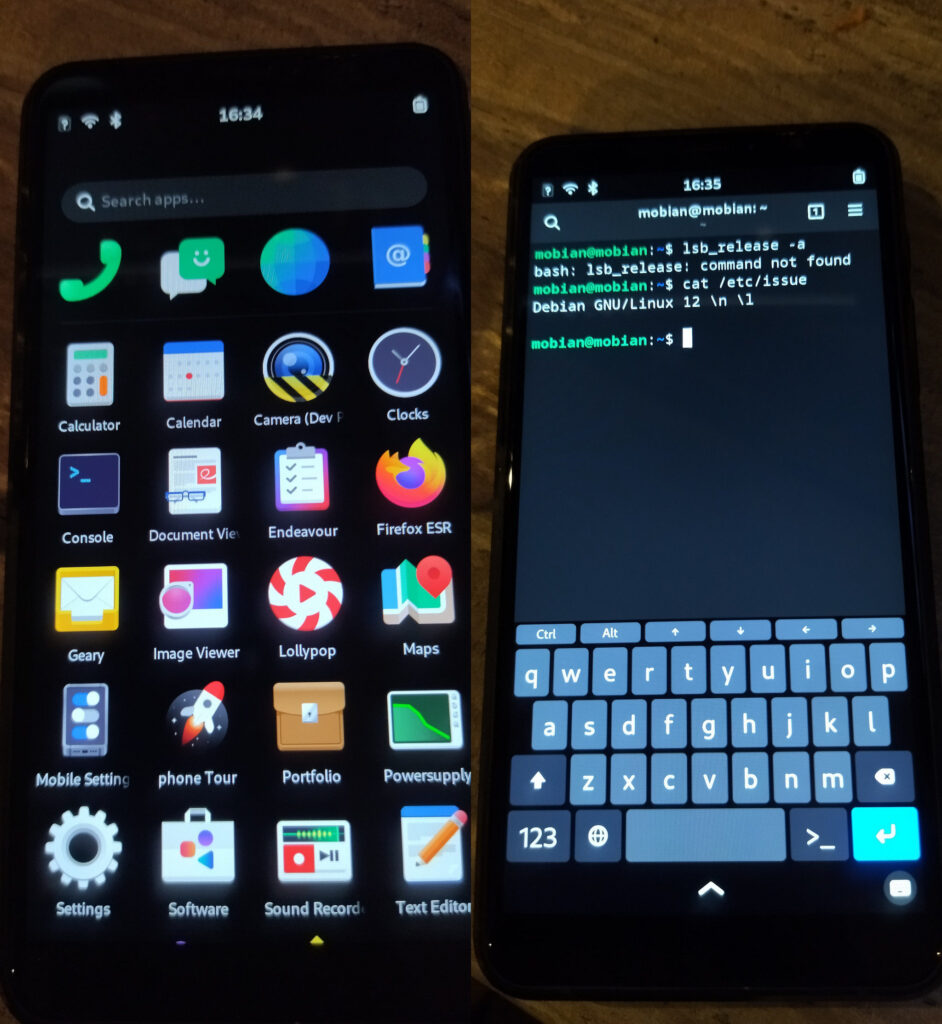
When I was in Hamburg last month, I saw how great Mobian and Phosh was coming along, and this inspired me to go dig up the Librem 5 which was about 2 Debian releases behind, and upgrade it to the latest and greatest version.
I followed the instruction on the Debian wiki, and after some stumbles, managed to flash it with the latest Mobian image:
 Just a few days back we came to know about the horrific Train Crash that happened in Odisha (Orissa). There are some things that are known and somethings that can be inferred by observance. Sadly, it seems the incident is going to be covered up . Some of the facts that have not been contested in the public domain are that there were three lines. One loop line on which the Goods Train was standing and there was an up and a down line. So three lines were there. Apparently, the signalling system and the inter-locking system had issues as highlighted by an official about a month back. That letter, thankfully is in the public domain and I have downloaded it as well. It s a letter that goes to 4 pages. The RW is incensed that the letter got leaked and is in public domain. They are blaming everyone and espousing conspiracy theories rather than taking the minister to task. Incidentally, the Minister has three ministries that he currently holds. Ministry of Communication, Ministry of Electronics and Information Technology (MEIT), and Railways Ministry. Each Ministry in itself is important and has revenues of more than 6 lakh crore rupees. How he is able to do justice to all the three ministries is beyond me
The other thing is funds both for safety and relaying of tracks has been either not sanctioned or unutilized. In fact, CAG and the Railway Brass had shared how derailments have increased and unfulfilled vacancies but they were given no importance In fact, not talking about safety in the recently held Chintan Shivir (brainstorming session) tells you how much the Govt. is serious about safety. In fact, most of the programme was on high speed rail which is a white elephant. I have shared a whitepaper done by RW in the U.S. that tells how high-speed rail doesn t make economic sense. And that is an economy that is 20 times + the Indian Economy. Even the Chinese are stopping with HSR as it doesn t make economic sense.
Incidentally, Air Fares again went up 200% yesterday. Somebody shared in the region of 20k + for an Air ticket from their place to Bangalore
Coming back to the story itself. the Goods Train was on the loopline. Some say it was a little bit on the outer, some say otherwise, but it is established that it was on the loopline. This is standard behavior on and around Railway Stations around the world. Whether it was in the Inner or Outer doesn t make much of a difference with what happened next. The first train that collided with the goods train was the 12864 (SMVB-HWH) Yashwantpur Howrah Express and got derailed on to the next track where from the opposite direction 12841 (Shalimar- Bangalore) Coramandel Express was coming. Now they have said that around 300 people have died and that seems to be part of the cover-up. Both the trains are long trains, having between 23 odd coaches each. Even if you have reserved tickets you have 80 odd people in a coach and usually in most of these trains, it is at least double of that. Lot of money goes to TC and then above (Corruption). The Railway fares have gone up enormously but that s a question for perhaps another time . So at the very least, we could be looking at more than 1000 people having died. The numbers are being under-reported so that nobody has to take responsibility. The Railways itself has told that it is unable to identify 80% of the people who have died. This means that 80% were unreserved ticket holders or a majority of them. There have been disturbing images as how bodies have been flung over on tractors and whatnot to be either buried or cremated without a thought. We are in peak summer season so bodies will start to rot within 24-48 hours No arrangements made to cool the bodies and take some information and identifying marks or whatever. The whole thing being done in a very callous manner, not giving dignity to even those who have died for no fault of their own. The dissent note also tells that a cover-up is also in the picture. Apparently, India doesn t have nor does it feel to have a need for something like the NTSB that the U.S. used when it hauled both the plane manufacturer (Boeing) and the FAA when the 737 Max went down due to improper data collection and sharing of data with pilots. And with no accountability being fixed to Minister or any of the senior staff, a small junior staff person may be fired. Perhaps the same official that actually told them about the signal failures almost 3 months back
There were and are also some reports that some jugaadu /temporary fixes were applied to signalling and inter-locking just before this incident happened. I do not know nor confirm one way or the other if the above happened. I can however point out that if such a thing happened, then usually a traffic block is announced and all traffic on those lines are stopped. This has been the thing I know for decades. Traveling between Mumbai and Pune multiple times over the years am aware about traffic block. If some repair work was going on and it wasn t able to complete the work within the time-frame then that may well have contributed to the accident. There is also a bit muddying of the waters where it is being said that one of the trains was 4 hours late, which one is conflicting stories.
On top of the whole thing, they have put the case to be investigated by CBI and hinting at sabotage. They also tried to paint a religious structure as mosque, later turned out to be a temple. The RW says done by Muslims as it was Friday not taking into account as shared before that most Railway maintenance works are usually done between Friday Monday. This is a practice followed not just in India but world over.
There has been also move over a decade to remove wooden sleepers and have concrete sleepers. Unlike the wooden ones they do not expand and contract as much and their life is much more longer than the wooden ones. Funds had been marked (although lower than last few years) but not yet spent. As we know in case of any accident, it is when all the holes in cheese line up it happens. Fukushima is a great example of that, no sea wall even though Japan is no stranger to Tsunamis. External power at the same level as the plant. (10 meters above sea-level), no training for cascading failures scenarios which is what happened. The Days mini-series shares some but not all the faults that happened at Fukushima and the Govt. response to it. There is a difference though, the Japanese Prime Minister resigned on moral grounds. Here, nor the PM, nor the Minister would be resigning on moral grounds or otherwise :(. Zero accountability and that was partly a natural disaster, here it s man-made. In fact, both the Minister and the Prime Minister arrived with their entourages, did a PR blitzkrieg showing how concerned they are. Within 50 hours, the lines were cleared. The part-time Railway Minister shared that he knows the root cause and then few hours later has given the case to CBI. All are saying, wait for the inquiry report. To date, none of the accidents even in this Govt. has produced an investigation report. And even if it did, I am sure it will whitewash as it did in case of Adani as I had shared before in the previous blog post. Incidentally, it is reported that Adani paid off some of its debt, but when questioned as to where they got the money, complete silence on that part :(. As can be seen cover-up after cover-up
FWIW, the Coramandel Express is known as the Migrant train so has a huge number of passengers, the other one which was collided with is known as sick train as huge number of cancer patients use it to travel to Chennai and come back
The main takeaway is if you do not have their voice, you won t make policies for them. They won t go away but you will make life hell for them. One thing to keep in mind that most people assume that most people are disabled from birth. This may or may not be true. For e.g. in the above triple Railways accidents, there are bound to be disabled people or newly disabled people who were healthy before the accident. The most common accident is road accidents, some involving pedestrians and vehicles or both, the easiest is Ministry of Road Transport data that says 4,00,000 people sustained injuries in 2021 alone in road mishaps. And this is in a country where even accidents are highly under-reported, for more than one reason. The biggest reason especially in 2 and 4 wheeler is the increased premium they would have to pay if in an accident, so they usually compromise with the other and pay off the Traffic Inspector.
Sadly, I haven t read a new book, although there are a few books I m looking forward to have. People living in India and neighbors please be careful as more heat waves are expected. Till later.
Welcome to the May 2023 report from the Reproducible Builds project
 In our reports, we outline the most important things that we have been up to over the past month. As always, if you are interested in contributing to the project, please visit our Contribute page on our website.
 Holger Levsen gave a talk at the 2023 edition of the Debian Reunion Hamburg, a semi-informal meetup of Debian-related people in northern Germany. The slides are available online.
 In April, Holger Levsen gave a talk at foss-north 2023 titled Reproducible Builds, the first ten years. Last month, however, Holger s talk was covered in a round-up of the conference on the Free Software Foundation Europe (FSFE) blog.
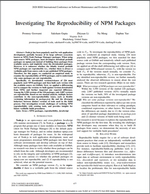 Pronnoy Goswami, Saksham Gupta, Zhiyuan Li, Na Meng and Daphne Yao from Virginia Tech published a paper investigating the Reproducibility of NPM Packages. The abstract includes:
When using open-source NPM packages, most developers download prebuilt packages on npmjs.com instead of building those packages from available source, and implicitly trust the downloaded packages. However, it is unknown whether the blindly trusted prebuilt NPM packages are reproducible (i.e., whether there is always a verifiable path from source code to any published NPM package). [ ] We downloaded versions/releases of 226 most popularly used NPM packages and then built each version with the available source on GitHub. Next, we applied a differencing tool to compare the versions we built against versions downloaded from NPM, and further inspected any reported difference.The paper reports that among the 3,390 versions of the 226 packages, only 2,087 versions are reproducible, and furthermore that multiple factors contribute to the non-reproducibility including flexible versioning information in package.json file and the divergent behaviors between distinct versions of tools used in the build process. The paper concludes with insights for future verifiable build procedures. Unfortunately, a PDF is not available publically yet, but a Digital Object Identifier (DOI) is available on the paper s IEEE page.
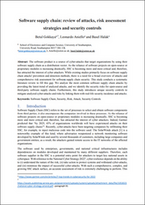 Elsewhere in academia, Betul Gokkaya, Leonardo Aniello and Basel Halak of the School of Electronics and Computer Science at the University of Southampton published a new paper containing a broad overview of attacks and comprehensive risk assessment for software supply chain security.
Their paper, titled Software supply chain: review of attacks, risk assessment strategies and security controls, analyses the most common software supply-chain attacks by providing the latest trend of analyzed attack, and identifies the security risks for open-source and third-party software supply chains. Furthermore, their study introduces unique security controls to mitigate analyzed cyber-attacks and risks by linking them with real-life security incidence and attacks . (arXiv.org, PDF)
 NixOS is now tracking two new reports at reproducible.nixos.org. Aside from the collection of build-time dependencies of the minimal and Gnome installation ISOs, this page now also contains reports that are restricted to the artifacts that make it into the image. The minimal ISO is currently reproducible except for Python 3.10, which hopefully will be resolved with the coming update to Python version 3.11.
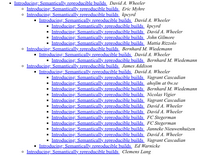 David A. Wheeler started a thread noting that the OSSGadget project s oss-reproducible tool was measuring something related to but not the same as reproducible builds. Initially they had adopted the term semantically reproducible build term for what it measured, which they defined as being if its build results can be either recreated exactly (a bit for bit reproducible build), or if the differences between the release package and a rebuilt package are not expected to produce functional differences in normal cases. This generated a significant number of replies, and several were concerned that people might confuse what they were measuring with reproducible builds . After discussion, the OSSGadget developers decided to switch to the term semantically equivalent for what they measured in order to reduce the risk of confusion.
Vagrant Cascadian (vagrantc) posted an update about GCC, binutils, and Debian s build-essential set with some progress, some hope, and I daresay, some fears .
Lastly, kpcyrd asked a question about building a reproducible Linux kernel package for Arch Linux (answered by Arnout Engelen). In the same, thread David A. Wheeler pointed out that the Linux Kernel documentation has a chapter about Reproducible kernel builds now as well.
 In Debian this month, nine reviews of Debian packages were added, 20 were updated and 6 were removed this month, all adding to our knowledge about identified issues. In addition, Vagrant Cascadian added a link to the source code causing various
ecbuild issues. [ ]
 The F-Droid project updated its Inclusion How-To with a new section explaining why it considers reproducible builds to be best practice and hopes developers will support the team s efforts to make as many (new) apps reproducible as it reasonably can.
 In diffoscope development this month, version
242 was uploaded to Debian unstable by Chris Lamb who also made the following changes:
binwalk is not available, ensure the user knows they may be missing more info. [ ]0.7.24 and 0.7.25 to Debian unstable which added support for Tox versions 3 and 4 with help from Vagrant Cascadian [ ][ ][ ]
mtools (forwarded upstream).lombok.lcov.lucene8.bnd.clc-intercal.proj.gcc-13.pygopherd.pytorch-audio.vcmi.proj.generateLocaleConfig in Android Gradle Plugin version 8.1.0 generates XML files using non-deterministic ordering, breaking reproducible builds. [ ]
 The Reproducible Builds project operates a comprehensive testing framework (available at tests.reproducible-builds.org) in order to check packages and other artifacts for reproducibility. In May, a number of changes were made by Holger Levsen:
arm64 nodes only put required modules in the initrd to save space in the /boot partition. [ ]--fetch, --help, --no-future and --verbose options [ ][ ][ ][ ] as well as adding a suite of new actions, such as apt-upgrade, command, deploy-git, rmstamp, etc. [ ][ ][ ][ ] in addition a significant amount of refactoring [ ][ ][ ][ ].apt has updates to install. [ ]bind9-dnsutils on some Ubuntu 18.04 nodes. [ ][ ]apt upgrades are available. [ ]nocheck, nopgo and nolto when building gcc-* and binutils packages [ ] as well as performed some node maintenance [ ][ ]. In addition, Roland Clobus updated the openQA configuration to specify longer timeouts and access to the developer mode [ ] and updated the URL used for reproducible Debian Live images [ ].
#reproducible-builds on irc.oftc.net.
rb-general@lists.reproducible-builds.org

1 2 3 4 5 6 7 8 9 10 11 12 13 14 15 16 | def parse_plain_text_body(text): lines = text.splitlines() for i, line in enumerate(lines): if line == 'Reply to this email directly or view it on GitHub:': return lines[i + 1].split('#')[0] if (line == 'For more details, see:' and lines[i + 1].startswith('https://code.launchpad.net/')): return lines[i + 1] try: (field, value) = line.split(':', 1) except ValueError: continue if field.lower() == 'merge request url': return value.strip() return None |
1 2 3 4 5 6 7 8 9 10 11 12 13 14 15 16 17 18 19 20 | pub fn parse_plain_text_body(text: &str) -> Option<String> let lines: Vec<&str> = text.lines().collect(); for (i, line) in lines.iter().enumerate() if line == &"Reply to this email directly or view it on GitHub:" return Some(lines[i + 1].split('#').next().unwrap().to_string()); if line == &"For more details, see:" && lines[i + 1].starts_with("https://code.launchpad.net/") return Some(lines[i + 1].to_string()); if let Some((field, value)) = line.split_once(':') if field.to_lowercase() == "merge request url" return Some(value.trim().to_string()); None |
1 2 3 4 5 6 7 8 9 10 11 12 13 | use pyo3::prelude::*; #[pyfunction] fn parse_plain_text_body(text: &str) -> Option<String> janitor_mail_filter::parse_plain_text_body(text) #[pymodule] pub fn _mail_filter(py: Python, m: &PyModule) -> PyResult<()> m.add_function(wrap_pyfunction!(parse_plain_text_body, m)?)?; Ok(()) |
1 2 3 4 5 6 7 8 9 10 11 12 | [package] name = "mailfilter-py" version = "0.0.0" authors = ["Jelmer Vernoo <jelmer@jelmer.uk>"] edition = "2018" [lib] crate-type = ["cdylib"] [dependencies] janitor-mail-filter = path = "../mailfilter" pyo3 = version = ">=0.14", features = ["extension-module"] |
1 2 3 4 5 6 7 8 9 | #!/usr/bin/python3 from setuptools import setup from setuptools_rust import RustExtension, Binding setup( rust_extensions=[RustExtension( "janitor._mailfilter", "crates/mailfilter-py/Cargo.toml", binding=Binding.PyO3)], ) |
1 | from ._mailfilter import parse_plain_text_body |
 I m calling time on DNSSEC. Last week, prompted by a change in my DNS hosting setup, I began removing it from the few personal zones I had signed. Then this Monday the .nz ccTLD experienced a multi-day availability incident triggered by the annual DNSSEC key rotation process. This incident broke several of my unsigned zones, which led me to say very unkind things about DNSSEC on Mastodon and now I feel compelled to more completely explain my thinking:
For almost all domains and use-cases, the costs and risks of deploying DNSSEC outweigh the benefits it provides. Don t bother signing your zones.
The .nz incident, while topical, is not the motivation or the trigger for this conclusion. Had it been a novel incident, it would still have been annoying, but novel incidents are how we learn so I have a small tolerance for them. The problem with DNSSEC is precisely that this incident was not novel, just the latest in a long and growing list.
It s a clear pattern. DNSSEC is complex and risky to deploy. Choosing to sign your zone will almost inevitably mean that you will experience lower availability for your domain over time than if you leave it unsigned. Even if you have a team of DNS experts maintaining your zone and DNS infrastructure, the risk of routine operational tasks triggering a loss of availability (unrelated to any attempted attacks that DNSSEC may thwart) is very high - almost guaranteed to occur. Worse, because of the nature of DNS and DNSSEC these incidents will tend to be prolonged and out of your control to remediate in a timely fashion.
The only benefit you get in return for accepting this almost certain reduction in availability is trust in the integrity of the DNS data a subset of your users (those who validate DNSSEC) receive. Trusted DNS data that is then used to communicate across an untrusted network layer. An untrusted network layer which you are almost certainly protecting with TLS which provides a more comprehensive and trustworthy set of security guarantees than DNSSEC is capable of, and provides those guarantees to all your users regardless of whether they are validating DNSSEC or not.
In summary, in our modern world where TLS is ubiquitous, DNSSEC provides only a thin layer of redundant protection on top of the comprehensive guarantees provided by TLS, but adds significant operational complexity, cost and a high likelihood of lowered availability.
In an ideal world, where the deployment cost of DNSSEC and the risk of DNSSEC-induced outages were both low, it would absolutely be desirable to have that redundancy in our layers of protection. In the real world, given the DNSSEC protocol we have today, the choice to avoid its complexity and rely on TLS alone is not at all painful or risky to make as the operator of an online service. In fact, it s the prudent choice that will result in better overall security outcomes for your users.
Ignore DNSSEC and invest the time and resources you would have spent deploying it improving your TLS key and certificate management.
Ironically, the one use-case where I think a valid counter-argument for this position can be made is TLDs (including ccTLDs such as .nz). Despite its many failings, DNSSEC is an Internet Standard, and as infrastructure providers, TLDs have an obligation to enable its use. Unfortunately this means that everyone has to bear the costs, complexities and availability risks that DNSSEC burdens these operators with. We can t avoid that fact, but we can avoid creating further costs, complexities and risks by choosing not to deploy DNSSEC on the rest of our non-TLD zones.
 src:developers-reference translations wanted
I've just uploaded developers-reference 12.19, bringing the German
translation status back to 100% complete, thanks to Carsten Schoenert. Some
other translations however could use some updates:
$ make status
for l in de fr it ja ru; do     \
    if [ -d source/locales/$l/LC_MESSAGES ] ; then  \
        echo -n "Stats for $l: " ;          \
        msgcat --use-first source/locales/$l/LC_MESSAGES/*.po   msgfmt --statistics - 2>&1 ; \
    fi ;                            \
done
Stats for de: 1374 translated messages.
Stats for fr: 1286 translated messages, 39 fuzzy translations, 49 untranslated messages.
Stats for it: 869 translated messages, 46 fuzzy translations, 459 untranslated messages.
Stats for ja: 891 translated messages, 26 fuzzy translations, 457 untranslated messages.
Stats for ru: 870 translated messages, 44 fuzzy translations, 460 untranslated messages.
| Series: | Discworld #29 |
| Publisher: | Harper |
| Copyright: | November 2002 |
| Printing: | August 2014 |
| ISBN: | 0-06-230740-1 |
| Format: | Mass market |
| Pages: | 451 |
Keep the peace. That was the thing. People often failed to understand what that meant. You'd go to some life-threatening disturbance like a couple of neighbors scrapping in the street over who owned the hedge between their properties, and they'd both be bursting with aggrieved self-righteousness, both yelling, their wives would either be having a private scrap on the side or would have adjourned to a kitchen for a shared pot of tea and a chat, and they all expected you to sort it out. And they could never understand that it wasn't your job. Sorting it out was a job for a good surveyor and a couple of lawyers, maybe. Your job was to quell the impulse to bang their stupid fat heads together, to ignore the affronted speeches of dodgy self-justification, to get them to stop shouting and to get them off the street. Once that had been achieved, your job was over. You weren't some walking god, dispensing finely tuned natural justice. Your job was simply to bring back peace.When Vimes is thrown back in time, he has to pick up the role of his own mentor, the person who taught him what policing should be like. His younger self is right there, watching everything he does, and he's desperately afraid he'll screw it up and set a worse example. Make history worse when he's trying to make it better. It's a beautifully well-done bit of tension that uses time travel as the hook to show both how difficult mentorship is and also how irritating one's earlier naive self would be.
He wondered if it was at all possible to give this idiot some lessons in basic politics. That was always the dream, wasn't it? "I wish I'd known then what I know now"? But when you got older you found out that you now wasn't you then. You then was a twerp. You then was what you had to be to start out on the rocky road of becoming you now, and one of the rocky patches on that road was being a twerp.The backdrop of this story, as advertised by the map at the front of the book, is a revolution of sorts. And the revolution does matter, but not in the obvious way. It creates space and circumstance for some other things to happen that are all about the abuse of policing as a tool of politics rather than Vimes's principle of keeping the peace. I mentioned when reviewing Men at Arms that it was an awkward book to read in the United States in 2020. This book tackles the ethics of policing head-on, in exactly the way that book didn't. It's also a marvelous bit of competence porn. Somehow over the years, Vimes has become extremely good at what he does, and not just in the obvious cop-walking-a-beat sort of ways. He's become a leader. It's not something he thinks about, even when thrown back in time, but it's something Pratchett can show the reader directly, and have the other characters in the book comment on. There is so much more that I'd like to say, but so much would be spoilers, and I think Night Watch is more effective when you have the suspense of slowly puzzling out what's going to happen. Pratchett's pacing is exquisite. It's also one of the rare Discworld novels where Pratchett fully commits to a point of view and lets Vimes tell the story. There are a few interludes with other people, but the only other significant protagonist is, quite fittingly, Vetinari. I won't say anything more about that except to note that the relationship between Vimes and Vetinari is one of the best bits of fascinating subtlety in all of Discworld. I think it's also telling that nothing about Night Watch reads as parody. Sure, there is a nod to Back to the Future in the lightning storm, and it's impossible to write a book about police and street revolutions without making the reader think about Les Miserables, but nothing about this plot matches either of those stories. This is Pratchett telling his own story in his own world, unapologetically, and without trying to wedge it into parody shape, and it is so much the better book for it. The one quibble I have with the book is that the bits with the Time Monks don't really work. Lu-Tze is annoying and flippant given the emotional stakes of this story, the interludes with him are frustrating and out of step with the rest of the book, and the time travel hand-waving doesn't add much. I see structurally why Pratchett put this in: it gives Vimes (and the reader) a time frame and a deadline, it establishes some of the ground rules and stakes, and it provides a couple of important opportunities for exposition so that the reader doesn't get lost. But it's not good story. The rest of the book is so amazingly good, though, that it doesn't matter (and the framing stories for "what if?" explorations almost never make much sense). The other thing I have a bit of a quibble with is outside the book. Night Watch, as you may have guessed by now, is the origin of the May 25th Pratchett memes that you will be familiar with if you've spent much time around SFF fandom. But this book is dramatically different from what I was expecting based on the memes. You will, for example see a lot of people posting "Truth, Justice, Freedom, Reasonably Priced Love, And a Hard-Boiled Egg!", and before reading the book it sounds like a Pratchett-style humorous revolutionary slogan. And I guess it is, sort of, but, well... I have to quote the scene:
"You'd like Freedom, Truth, and Justice, wouldn't you, Comrade Sergeant?" said Reg encouragingly. "I'd like a hard-boiled egg," said Vimes, shaking the match out. There was some nervous laughter, but Reg looked offended. "In the circumstances, Sergeant, I think we should set our sights a little higher " "Well, yes, we could," said Vimes, coming down the steps. He glanced at the sheets of papers in front of Reg. The man cared. He really did. And he was serious. He really was. "But...well, Reg, tomorrow the sun will come up again, and I'm pretty sure that whatever happens we won't have found Freedom, and there won't be a whole lot of Justice, and I'm damn sure we won't have found Truth. But it's just possible that I might get a hard-boiled egg."I think I'm feeling defensive of the heart of this book because it's such an emotional gut punch and says such complicated and nuanced things about politics and ethics (and such deeply cynical things about revolution). But I think if I were to try to represent this story in a meme, it would be the "angels rise up" song, with all the layers of meaning that it gains in this story. I'm still at the point where the lilac sprigs remind me of Sergeant Colon becoming quietly furious at the overstep of someone who wasn't there. There's one other thing I want to say about that scene: I'm not naturally on Vimes's side of this argument. I think it's important to note that Vimes's attitude throughout this book is profoundly, deeply conservative. The hard-boiled egg captures that perfectly: it's a bit of physical comfort, something you can buy or make, something that's part of the day-to-day wheels of the city that Vimes talks about elsewhere in Night Watch. It's a rejection of revolution, something that Vimes does elsewhere far more explicitly. Vimes is a cop. He is in some profound sense a defender of the status quo. He doesn't believe things are going to fundamentally change, and it's not clear he would want them to if they did. And yet. And yet, this is where Pratchett's Dickensian morality comes out. Vimes is a conservative at heart. He's grumpy and cynical and jaded and he doesn't like change. But if you put him in a situation where people are being hurt, he will break every rule and twist every principle to stop it.
He wanted to go home. He wanted it so much that he trembled at the thought. But if the price of that was selling good men to the night, if the price was filling those graves, if the price was not fighting with every trick he knew... then it was too high. It wasn't a decision that he was making, he knew. It was happening far below the areas of the brain that made decisions. It was something built in. There was no universe, anywhere, where a Sam Vimes would give in on this, because if he did then he wouldn't be Sam Vimes any more.This is truly exceptional stuff. It is the best Discworld novel I have read, by far. I feel like this was the Watch novel that Pratchett was always trying to write, and he had to write five other novels first to figure out how to write it. And maybe to prepare Discworld readers to read it. There are a lot of Discworld novels that are great on their own merits, but also it is 100% worth reading all the Watch novels just so that you can read this book. Followed in publication order by The Wee Free Men and later, thematically, by Thud!. Rating: 10 out of 10
| Series: | Mossa and Pleiti #1 |
| Publisher: | Tordotcom |
| Copyright: | 2023 |
| ISBN: | 1-250-86051-2 |
| Format: | Kindle |
| Pages: | 169 |
Apart from it, the show also shows prejudice about caste and background. I wouldn t go much into it as it s worth seeing and experiencing.
Content Security Policy: Ignoring 'unsafe-inline' within script-src or style-src: nonce-source or hash-source specifiedContent Security Policy: The page s settings blocked the loading of a resource at data:text/css,%0A%20%20%20%20%20%20%20%2 ( style-src ). data:44:30Content Security Policy: Ignoring 'unsafe-inline' within script-src or style-src: nonce-source or hash-source specifiedTypeError: AudioContext is not a constructor 138875 https://discord.com/assets/cbf3a75da6e6b6a4202e.js:262 l https://discord.com/assets/f5f0b113e28d4d12ba16.js:1ed46a18578285e5c048b.js:241:118
What is being done is dom.webaudio.enabled being disabled in Firefox.
Then on a hunch, searched on reddit and saw the following. Be careful while visiting the link as it s labelled NSFW although to my mind there wasn t anything remotely NSFW about it. They do mention using another tool AudioContext Fingerprint Defender which supposedly fakes or spoofs an id. As this add-on isn t tracked by Firefox privacy team it s hard for me to say anything positive or negative.
So, in the end I stopped using discord as the alternative was being tracked by them
Last but not the least, saw this about a week back. Sooner or later this had to happen as Elon tries to make money off Twitter.
Next.