Search Results: "ed"

10 February 2013

Richard Hartmann: Cables

Leaving for Finland in less than 5 hours and my GPS keeps acting up, external disks refuse to be mounted, and copying data off of SD cards results in I/O errors... The SD card I/O errors are apparently caused by my still-half-broken ThinkPad X201 which never got fixed properly. To be specific, the internal card reader is acting up. But to get back to the GPS and my external drives... I had feared my ThinkPad was in its death throes when I decided to try another cable. Lo and behold, everything (other than my built-in SD card reader) started to work all of a sudden. This is the third time I've had issues with random USB cables. For Micro USB I decided to only use ones that came packaged with a phone or similar as those tend to be high quality. If anyone has a suggestion about where to source high-quality Mini USB cables after returning from Finland, please let me know.

9 February 2013

Richard Hartmann: Look at my hats...

...my hats are amazing, give them a lick, they taste just like raisins... I gained two new hats, recently: Debian On 2013-01-24, I became a Debian Maintainer. This should allow me to annoy bremner less often with sponsor requests (thanks for all that work). FOSDEM After carrying lots of stuff around in the past and volunteering for the token sale at last year's beer event while also holding two lightning talks, I became a proper staff member early this year. Doing what I do at my dayjob, I am focussing on RIPE interfacing and backbone/networking in the broader sense. Well, and OCDing on the booklet for the last few hours ;) So yes, "I am going to FOSDEM"; see you when I sell tokens for what, other than the cactus beer, basically amounts to sweet lemonade.

Christian Perrier: Bug #700000 has been reported...and I won the bet..:-)

Here it is. Debian had seven hundred thousand bugs reported in its history. Yet another French winner, indeed two, this time: The French gang already got #200000 (by Michel Grentzinger) and #400000 (by /me), and #600000 by Cyril "KiBi" Brulebois. We're good at stupid games, as it seems. Of course, I will soon open the wiki page for the bug #800000 bet, which will again include a place where you can also bet for bug #1000000. Be patient, the week-end is coming..:-)

Matthew Garrett: Samsung laptop bug is not Linux specific

I bricked a Samsung laptop today. Unlike most of the reported cases of Samsung laptops refusing to boot, I never booted Linux on it - all experimentation was performed under Windows. It seems that the bug we've been seeing is simultaneously simpler in some ways and more complicated in others than we'd previously realised.

So, some background. The original belief was that the samsung-laptop driver was doing something that caused the system to stop working. This driver was coded to a Samsung specification in order to support certain laptop features that weren't accessible via any standardised mechanism. It works by searching a specific area of memory for a Samsung-specific signature. If it finds it, it follows a pointer to a table that contains various magic values that need to be written in order to trigger some system management code that actually performs the requested change. This is unusual in this day and age, but not unique. The problem is that the magic signature is still present on UEFI systems, but attempting to use the data contained in the table causes problems.

We're not quite sure what those problems are yet. Originally we assumed that the magic values we wrote were causing the problem, so the samsung-laptop driver was patched to disable it on UEFI systems. Unfortunately, this doesn't actually fix the problem - it just avoids the easiest way of triggering it. It turns out that it wasn't the writes that caused the problem, it was what happened next. Performing the writes triggered a hardware error of some description. The Linux kernel caught and logged this. In the old days, people would often never see these logs - the system would then be frozen and it would be impossible to access the hard drive, so they never got written to disk. There's code in the kernel to make this easier on UEFI systems. Whenever a severe error is encountered, the kernel copies recent messages to the UEFI variable storage space. They're then available to userspace after a reboot, allowing more accurate diagnostics of what caused the crash.

That crash dump takes about 10K of UEFI storage space. Microsoft require that Windows 8 systems have at least 64K of storage space available. We only keep one crash dump - if the system crashes again it'll simply overwrite the existing one rather than creating another. This is all completely compatible with the UEFI specification, and Apple actually do something very similar on their hardware. Unfortunately, it turns out that some Samsung laptops will fail to boot if too much of the variable storage space is used. We don't know what "too much" is yet, but writing a bunch of variables from Windows is enough to trigger it. I put some sample code here - it writes out 36 variables each containing a kilobyte of random data. I ran this as an administrator under Windows and then rebooted the system. It never came back.

This is pretty obviously a firmware bug. Writing UEFI variables is expressly permitted by the specification, and there should never be a situation in which an OS can fill the variable store in such a way that the firmware refuses to boot the system. We've seen similar bugs in Intel's reference code in the past, but they were all fixed early last year. For now the safest thing to do is not to use UEFI on any Samsung laptops. Unfortunately, if you're using Windows, that'll require you to reinstall it from scratch.

comment count unavailable comments

8 February 2013

Richard Hartmann: Release Critical Bug report for Week 06

Only a few minutes too late; this blog post is sponsored by the word "meh"... The UDD bugs interface currently knows about the following release critical bugs: How do we compare to the Squeeze release cycle?
Week Squeeze Wheezy Diff
43 284 (213+71) 468 (332+136) +184 (+119/+65)
44 261 (201+60) 408 (265+143) +147 (+64/+83)
45 261 (205+56) 425 (291+134) +164 (+86/+78)
46 271 (200+71) 401 (258+143) +130 (+58/+72)
47 283 (209+74) 366 (221+145) +83 (+12/+71)
48 256 (177+79) 378 (230+148) +122 (+53/+69)
49 256 (180+76) 360 (216+155) +104 (+36/+79)
50 204 (148+56) 339 (195+144) +135 (+47/+90)
51 178 (124+54) 323 (190+133) +145 (+66/+79)
52 115 (78+37) 289 (190+99) +174 (+112/+62)
1 93 (60+33) 287 (171+116) +194 (+111/+83)
2 82 (46+36) 271 (162+109) +189 (+116/+73)
3 25 (15+10) 249 (165+84) +224 (+150/+74)
4 14 (8+6) 244 (176+68) +230 (+168/+62)
5 2 (0+2) 224 (132+92) +222 (+132/+90)
6 release! 212 (129+83) +212 (+129/+83)
Graphical overview of bug stats thanks to azhag:

Philipp Kern: Mozilla's direction

Am I the only one who's disappointed with the route Mozilla's taking and left wondering what the direction is? First they killed off the development of Thunderbird because, as we all know, people mainly use webmail these days. Then they presented us their view that the big Certificate Authorities are too big to fail, as CAs gravely violated our trust (c.f. Trustwave and their MitM authority). And "now" they're also blocking the introduction of new formats into their browser because they cannot be the one who innovates. Instead Microsoft and Apple obviously need to take the lead in introducing a format into their browsers because otherwise it wouldn't be useful. Even though it's safe to say that Chrome and Firefox make up for more than half of the desktop browser market share. It might be that Chrome's nibbling from Firefox's, still IE seems to be in decline and Safari is rather a further mention than something many people would care strongly about.

There were of course some valid reasons for not supporting WebP yet. But most of them got fixed in the meantime and all we hear is the referal to proprietary vendors who need to move first. If I'd want to depend on such vendors I'd go with proprietary operating systems. (Having to deal with hardware products of proprietary vendors at $dayjob is enough.) So what's up Mozilla? The solution is to ignore your users and tag bugs with patches wontfix?

The only real advantage of Firefox over Chromium these days is the vast amount of plugins and extensions (e.g. Pentadactyl, for which there is no real equivalent available). Another sad fact is that you need to pull Firefox from a 3rd party repository (even though packages are coming from the 2nd party) to get a current version onto your Debian system to work with the web. But then it's not Mozilla who's to blame here. Maybe we should've introduced one Iceweasel version that's allowed to have reverse-dependencies and one that cannot.

(This post might contain hyberboles, which should be considered as such.)

Keith Packard: MicroPeakUSB

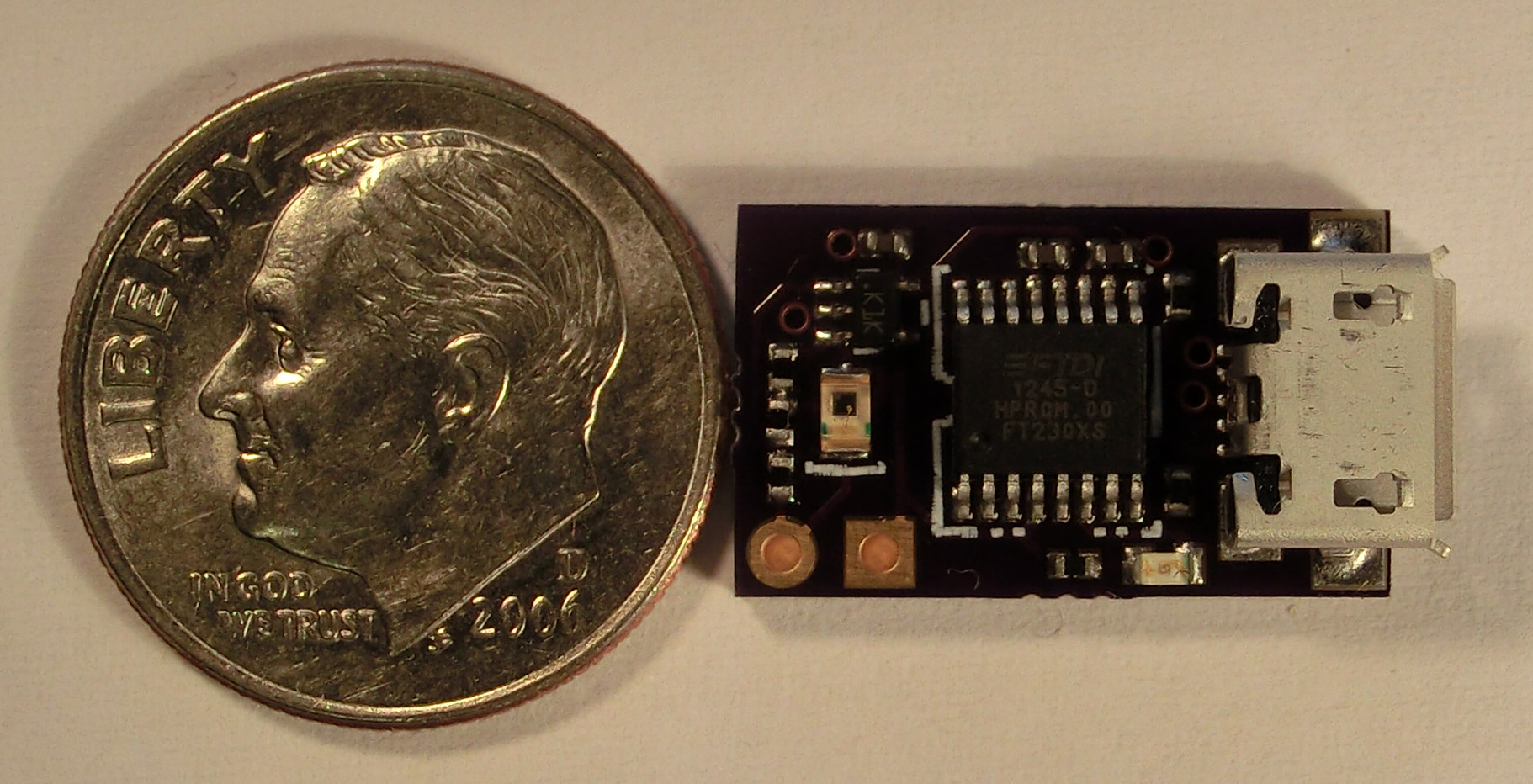
MicroPeak USB Interface now available. Altus Metrum is pleased to announce the immediate availability of the MicroPeak USB interface. MicroPeak USB Interface MicroPeak and the MicroPeak USB Interface MicroPeak is fun to use all by itself, providing a quick way to know how high your rocket has flown. But, for those people itching for more data, MicroPeakUSB offers a way to download raw flight data and analyze that on your computer. MicroPeakUSB doesn t require any changes to the MicroPeak hardware new MicroPeak firmware transmits the entire flight log through the on-board LED to a phototransistor on the MicroPeakUSB Interface and then to the USB port on your computer. Existing MicroPeak owners can contact us for a special deal on the MicroPeak USB interface and upgrading the MicroPeak firmware.

Jelmer Vernooij: OpenChange 2.0 released

Apparently 'tis the season for major software releases. Julien has just announced the release of OpenChange 2.0, codenamed quadrant. This release fixes a number of important bugs and enables integration with SOGo. With the SOGo backend, it is now possible to set up an Exchange-compatible groupware server that can be accessed from Outlook without the need to connect any connectors. See the release notes for more details.

Neil Williams: Update on klibc for AArch64

klibc_2.0.1-3.2_arm64.changes

:-)

I've now completed the first patch for klibc 2.0.1 for arm64 support - it's completely untested and likely to break things, so it's up for review not usage. Those who are brave enough to look at the patch, please report issues via the github issue tracker.

35 files changed, 509 insertions(+), 19 deletions(-)

21 new C files to replace removed syscalls, most of which simply borrow from glibc and provide a general purpose call (like open) instead of the actual syscall (openat).

Next is to test the build and look into what is necessary to push the patch to the current 2.0.3 upstream.

Michal Čihař: Hosted Weblate and new website

Today, Weblate got new website. It should better promote it's unique features and give users better idea what it is about. I was pretty much convinced by few Weblate users at FOSDEM to do something like this, so I hope the new website will serve good it's purpose. Same as previous version, the code is hosted on GitHub, so feel free to make improvements and open pull requests :-). Also the new website misses some translations, your help is especially welcome in this area. Together with launching this website, I've decided to make more visible that there is option to get your free software project hosted for free on my server. This is now being called Hosted Weblate and your project will be hosted at http://hosted.weblate.org/. Currently there is already first user of this service - Freeplane, but you are welcome to ask for inclusion.

Filed under: English Weblate 0 comments Flattr this!

Olivier Berger: RDF development in PHP with a PostGreSQL triple store thanks to the LibRDF OO wrapper for redland/librdf

Redland/librdf offers powerful features like being able to persist an RDF model to a relational database (only PostGreSQL seems to work on my setup with 1.0.16, but I may have misconfigured it). You can then do SPARQL queries over the model, and lots of other nice things. Unfortunately, the default PHP bindings are not really object-oriented, so the code isn t looking so good. But thanks to a gentleman named David Shea, there is an object-oriented library named LibRDF (case is sensitive), that helps write nice looking PHP. I discovered it via the blog post of Felix Ostrowski, who took over the maintenance of the LibRDF library (still the docs live on the original author s site). In his post, Felix illustrates how you may use it to parse Richard Cyganiak s FOAF profile. But the examples he gives don t illustrate the full potential of persistence of the RDF graph into the DB. Here s my contribution in 2 examples that will hopefully help : first, one that load Richard s FOAF to the DB, and one, that later retrieve the saved model and perform the same query (both pushed to my github clone of the library). There may be some problems with the use of librdf, including its availability, as it is not full PHP of course and I ve heard of memory management problems, but, depening on your needs, this may be quite handy for writing Linked Data applications.

Russ Allbery: Still here

Well, I had a very nice run at the start of this year in writing journal entries nearly every day, and then I seem to have gotten much quieter. This is not actually because less stuff is going on, but I started working on larger projects without meaningful daily progress, and I also got drawn into some very rewarding creative work that has kicked my schedule in the ass. Schedules are something that I've always struggled with. I'm fairly convinced that I have even more than the natural human tendency towards a longer than 24-hour schedule. (I lived in 28-hour days and 6-day weeks for one full quarter when I was a college student and rather liked it, but it wasn't practical enough to stay with.) This means that, without applying a lot of discipline, I tend to stay up later and later because I'm engaged in interesting things and don't want to stop, and then drift further and further out of sync with the world. When I was just out of college and working as just another member of a team that wasn't very close-knit, I just shrugged and let it happen. I used to get into work at about two or three in the afternoon and work until well past midnight. It had some lovely properties, such as getting to work most of my "day" after everyone else had left and the building was quiet. Unfortunately, it's really not compatible with a lead position that requires interaction with people and quite a few meetings and other types of coordination. Given that I can't just let my schedule go wherever, I realized a year or two ago that I do much better if I can stick to a fairly reliable and consistent schedule and go to bed at a regular time, even if I'm involved in something. It cuts off my evenings in a way I don't like, but it makes mornings much more pleasant and it makes it easier to schedule and stick with various chores like exercise. But it's remarkably hard to get back into that mode once I've gotten out of it, particularly when I get caught up in things in the evenings. This meander is mostly my way of getting these thoughts out of my head and on a screen in front of me so that I'll think about them and build up enough willpower to go back to a regular schedule. It really is worth it; I was keeping one through most of January and it had a lot to do with why January was awesome. Hopefully a more sustantive update tomorrow.

Christian Perrier: Bug #700000 has been reported...and I won the bet..:-)

Here it is. Debian had seven hundred thousand bugs reported in its history. Yet another French winner, indeed two, this time: The French gang already got #200000 (by Michel Grentzinger) and #400000 (by /me), and #600000 by Cyril "KiBi" Brulebois. We're good at stupid games, as it seems. Of course, I will soon open the wiki page for the bug #800000 bet, which will again include a place where you can also bet for bug #1000000. Be patient, the week-end is coming..:-)

MJ Ray: Clevo 7872-9040/A built Jan 13 with Debian 6

My trusty Asus seems to have succumbed to graphic fault. I got an OS-free Zoostorm as its replacement, to avoid paying the MS tax. Zoostorm is one brand that Clevo laptops are sold under. It was actually a Clevo 7872-9040/A built Jan 13. I installed Debian 6 on it. The download button was easy to spot on the front page, but I actually used mini.iso so I could use a smaller usb stick. The first larger stick I tried was a dud and I m not sure where other sticks went in the move. The base installation went fine and most things went well, but the wireless networking and sound required an upgrade, but more on that next tech post.

7 February 2013

Steve Kemp: Let there be slaughter-documentation, and cake.

Tonight I've made a new release of my slaughter automation tool. Recent emails lead me to believe I've now got two more users, so I hope they appreciate this: That covers installation, setup, usage, and more. Took a while to write, but I actually enjoyed it. I'm sure further additions will be made going forward. Until them I'm going to call it a night and enjoy some delicious cake.

Matthew Garrett: The Samsung laptop issue is not fixed

The recent Linux kernel commits avoid one mechanism by which Samsung laptops can be bricked, but the information we now have indicates that there are other ways of triggering this. It also seems likely that it's possible for a userspace application to cause the same problem under Windows. We're still trying to figure out the full details, but until then you're safest ensuring that you're using BIOS mode on Samsung laptops no matter which operating system you're running.

comment count unavailable comments

Joey Hess: Sydney nostalgia

Sydney opera house viewed from a ferry Last Saturday, when the bus from Canberra pulled into Sydney's central station, I found myself feeling curiously nostalgic for this city, and particularly this bustling and somewhat seedy[1] neighborhood of Haymarket and Redfern. glowing angels in Kimber lane I only spent 5 days in Sydney, but living in a shared house there, walking up to Central every day, and returning to the outskirts of the Haymarket every evening to slurp noodles or other asian food, I got into a routine. And got a sense of the place that goes perhaps a bit beyond the tourist sights. Manly beach panorama Perhaps if I'd had more time I would have found a decent coffee shop that had both free wifi and abundant seating. They seem scarce in Sydney. I instead often got on the ferry to Manly when I wanted some sit down and code time. Cliffside Protect Our Water Dragons sign
One time when I was exploring the headlands above Manly beach, I noticed this sign.
Then I ran into this guy. Click him for an amusing video.
lizard Anyway, Sydney is on my very short list of cities I'd actually enjoy spending some more time in some day, along with San Francisco, Vancouver, Oslo, and London.
[1] Depending on what's inside all the "VIP lounges" and "Thai massage parlours" on every corner that I did not explore, perhaps thoroughly seedy?

Russell Coker: Links February 2013

Aaron on Software wrote an interesting series of blog posts about psychology and personal development collectively Titled Raw Nerve , here s a link to part 2 [1]. The best sections IMHO are 2, 3, and 7. The Atlantic has an insightful article by Thomas E. Ricks about the failures in leadership in the US military that made the problems in Afghanistan and Iraq a lot worse than they needed to be [2] Kent Larson gave an interesting TED talk about how to fit more people in cities [3]. He covers issues of power use, transport, space use, and sharing. I particularly liked the apartments that transform and the design for autonomous vehicles that make eye contact with pedestrians. Andrew McAfee gave an interesting TED talk titled Are Droids Taking Our Jobs [4]. I don t think he adequately supported his conclusion that computers and robots are making things better for everyone (he also presented evidence that things are getting worse for many people), but it was an interesting talk anyway. I Psychopath is an interesting documentary about Sam Vaknin who is the world s most famous narcissist [5]. The entire documentary is available from Youtube and it s really worth watching. The movie Toy Story has been recreated in live action by a couple of teenagers [6]. That s a huge amount of work. Rory Stewart gave an interesting TED talk about how to rebuild democracy [7]. I think that his arguments against using the consequences to argue for democracy and freedom (he suggests not using the torture doesn t work and women s equality doubles the workforce arguments) are weak, but he made interesting points all through his talk. Ernesto Sirolli gave an interesting TED talk about aid work and development work which had a theme of Want to help someone? Shut up and listen! [8]. That made me think of Mary Gardiner s much quoted line from the comments section of her Wikimania talk which was also shut up and listen . Waterloo Labs has some really good engineering Youtube videos [9]. The real life Mario Kart game has just gone viral but there are lots of other good things like the iPhone controlled car and eye controlled Mario Brothers. Robin Chase of Zipcar gave an interesting TED talk about various car sharing systems (Zipcar among others), congestion taxes, the environmental damage that s caused by cars, mesh networks, and other things [10]. She has a vision of a future where most cars are shared and act as nodes in a giant mesh network. Madeleine Albright gave an interesting TED talk about being a female diplomat [11]. She s an amazing speaker. Ron Englash gave an interesting TED talk about the traditional African use of fractals [12]. Among the many interesting anecdotes concerning his research in Africa he was initiated as a priest after explaining Georg Cantor s set theories. Racialicious has an insightful article about the low expectations that members of marginalised groups have of members of the privileged groups [13]. Rick Falkvinge has a radical proposal for reforming copyrights with a declared value system [14]. I don t think that this will ever get legislative support, but if it did I think it would work well for books and songs. I think that some thought should be given to how this would work for Blogs and other sources of periodical content. Obviously filing for every blog post would be an unreasonable burden. Maybe aggregating a year of posts into one copyright assignment block would work. Scott Fraser gave an interesting TED talk about the problem with eyewitness testimony [15]. He gave a real-world example of what had to be done to get an innocent man acquitted, it s quite amazing. Sarah Kendzior wrote an interesting article for al Jazeera about the common practice in American universities to pay Adjunct Professors wages that are below the poverty line [16]. That s just crazy, when students pay record tuition fees there s more than enough money to pay academics decent wages, where does all the money go to anyway?

Christoph Berg: PostgreSQL minor releases

We've just put the new PostgreSQL minor releases live on apt.postgresql.org. Building 5 major versions for 10 distributions produces quite a lot of stuff: Compiling took a bit more than 10 hours on a 2-cpu VM. Of course that includes running regression tests and the postgresql-common testsuite. Note: This will be the last update published on pgapt.debian.net. Please update your sources.list entries to point to apt.postgresql.org!

Ian Wienand: Shared libraries and execute permissions

In the few discussions you can find on the web about shared-libraries and execute-permissions, you can find a range of various opinions but not a lot about what goes when you execute a library. The first thing to consider is how the execute-permission interacts with the dynamic loader. When mapping a library, the dynamic-loader doesn't care about file-permissions; it cares about mapping specific internal parts of the .so. Specifically, it wants to map the PT_LOAD segments as-per the permissions specified by the program-header. A random example:
 $ readelf --segments /usr/lib/x86_64-linux-gnu/libcrypto.so.1.0.0
Elf file type is DYN (Shared object file)
Entry point 0x77c00
There are 7 program headers, starting at offset 64
Program Headers:
  Type           Offset             VirtAddr           PhysAddr
                 FileSiz            MemSiz              Flags  Align
  LOAD           0x0000000000000000 0x0000000000000000 0x0000000000000000
                 0x00000000001b5ea4 0x00000000001b5ea4  R E    200000
  LOAD           0x00000000001b6b60 0x00000000003b6b60 0x00000000003b6b60
                 0x0000000000028dc4 0x000000000002c998  RW     200000
The permissions to load the code and data segments are given the Flags output. Code has execute-permissions, and data has write-permissions. These flags are mapped into flags for the mmap call, which the loader then uses to map the various segments of the file into memory. So, do you actually need execute-permissions on the underlying file to mmap that segment as executable? No, because you can read it. If I can read it, then I can copy the segment to another area of memory I have already mapped with PROT_EXEC and execute it there anyway. Googling suggests that some systems do require execute-permissions on a file if you want to directly mmap pages from it with PROT_EXEC (and if you dig into the kernel source, there's an ancient system call uselib that looks like it comes from a.out days, given it talks about loading libraries at fixed addresses, that also wants this). This doesn't sound like a terrible hardening step; I wouldn't be surprised if some hardening patches require it. Maximum compatability and historical-features such as a.out also probably explains why gcc creates shared libraries with execute permissions by default. Thus, should you feel like it, you can run a shared-library. Something trivial will suffice:
int function(void)  
      return 100;
 
$ gcc -fPIC -shared -o libfoo.so foo.c
$ ./libfoo.so
Segmentation fault
This is a little more interesting (to me anyway) to dig into. At a first pass, why does this even vaguely work? That's easy -- an ELF file is an ELF file, and the kernel is happy to map those PT_LOAD segments in and jump to the entry point for you:
$ readelf --segments ./libfoo.so
Elf file type is DYN (Shared object file)
Entry point 0x570
There are 6 program headers, starting at offset 64
Program Headers:
  Type           Offset             VirtAddr           PhysAddr
                 FileSiz            MemSiz              Flags  Align
  LOAD           0x0000000000000000 0x0000000000000000 0x0000000000000000
                 0x000000000000070c 0x000000000000070c  R E    200000
  LOAD           0x0000000000000710 0x0000000000200710 0x0000000000200710
                 0x0000000000000238 0x0000000000000240  RW     200000
What's interesting here is that the shared-library has an entry point (e_entry) at all. ELF defines it as:
This member gives the virtual address to which the system first transfers control, thus starting the process. If the file has no associated entry point, this member holds zero.
First things first, where did that entry point come from? The ld manual tells us that the linker will set the entry point based upon the following hierarchy:
  • the -e entry command-line option;
  • the ENTRY(symbol) command in a linker script;
  • the value of a target specific symbol
  • the address of the first byte of the .text section, if present;
  • The address 0.
We know we're not specifying an entry point. The ENTRY command is interesting; we can check our default-link script to see if that is specified:
$ ld --verbose   grep ENTRY
ENTRY(_start)
Interesting. Obviously we didn't specify a _start; so do we have one? A bit of digging leads to the crt files, for C Run-Time. These are little object files automatically linked in by gcc that actually do the support-work to get a program to the point that main is ready to run. So, if we go and check out the crt files, one can find a definition of _start in crt1.o
$ nm /usr/lib/x86_64-linux-gnu/crt1.o
crt1.o:
0000000000000000 R _IO_stdin_used
0000000000000000 D __data_start
                 U __libc_csu_fini
                 U __libc_csu_init
                 U __libc_start_main
0000000000000000 T _start
0000000000000000 W data_start
                 U main
But do we have that for our little shared-library? We can get a feel for what gcc is linking in by examining the output of -dumpspecs. Remembering gcc is mostly just a driver that calls out to other things, a specs file is what gcc uses to determine which arguments pass around to various stages of a compile:
$ gcc -dumpspecs
...
*startfile:
% !shared: % pg p profile:gcrt1.o%s;pie:Scrt1.o%s;:crt1.o%s 
 crti.o%s % static:crtbeginT.o%s;shared pie:crtbeginS.o%s;:crtbegin.o%s 
The format isn't really important here (of course you can read about it); but the gist is that various flags, such as -static or -pie get passed different run-time initailisation helpers to link-in. But we can see that if we're creating a shared library we won't be getting crt1.o. We can double-confirm this by checking the output of gcc -v (cut down for clarity).
$ gcc -v -fPIC -shared -o libfoo.so foo.c
Using built-in specs.
 ...
/usr/lib/gcc/x86_64-linux-gnu/4.4.5/collect2 -shared -o libfoo.so
/usr/lib/gcc/x86_64-linux-gnu/4.4.5/../../../../lib/crti.o
/usr/lib/gcc/x86_64-linux-gnu/4.4.5/crtbeginS.o
/tmp/ccRpsQU3.o
/usr/lib/gcc/x86_64-linux-gnu/4.4.5/crtendS.o
/usr/lib/gcc/x86_64-linux-gnu/4.4.5/../../../../lib/crtn.o
So this takes us further down ld's entry-point logic to pointing to the first bytes of .text, which is where the entry-point comes from. So that solves the riddle of the entry point. There's one more weird thing you notice when you run the library, which is the faulting address in kern.log:
libfoo.so[8682]: segfault at 1 ip 0000000000000001 sp 00007fffcd63ec48 error 14 in libfoo.so[7f54c51fa000+1000]
The first thing is decoding error; 14 doesn't seem to have any relation to anything. Of course everyone has the Intel 64 Architecture Manual (or mm/fault.c that also mentions the flags) to decode this into 1110 which means "no page found for a user-mode write access with reserved-bits found to be set" (there's another post in all that someday!). So why did we segfault at 0x1, which is an odd address to turn up? Let's disassemble what actually happens when this starts.
00000000000004a0 <call_gmon_start>:
 4a0:   48 83 ec 08             sub    $0x8,%rsp
 4a4:   48 8b 05 2d 03 20 00    mov    0x20032d(%rip),%rax        # 2007d8 <_DYNAMIC+0x190>
 4ab:   48 85 c0                test   %rax,%rax
 4ae:   74 02                   je     4b2 <call_gmon_start+0x12>
 4b0:   ff d0                   callq  *%rax
 4b2:   48 83 c4 08             add    $0x8,%rsp
 4b6:   c3                      retq
We're moving something in rax and testing it; if true we call that value, otherwise skip and retq. In this case, objdump is getting a bit confused telling us that 2007d8 is related to _DYNAMIC; in fact we can check the relocations to see it's really the value of __gmon_start__:
$ readelf --relocs ./libfoo.so
Relocation section '.rela.dyn' at offset 0x3f0 contains 4 entries:
  Offset          Info           Type           Sym. Value    Sym. Name + Addend
000000200810  000000000008 R_X86_64_RELATIVE                    0000000000200810
0000002007d8  000200000006 R_X86_64_GLOB_DAT 0000000000000000 __gmon_start__ + 0
0000002007e0  000300000006 R_X86_64_GLOB_DAT 0000000000000000 _Jv_RegisterClasses + 0
0000002007e8  000400000006 R_X86_64_GLOB_DAT 0000000000000000 __cxa_finalize + 0
Relocation section '.rela.plt' at offset 0x450 contains 1 entries:
  Offset          Info           Type           Sym. Value    Sym. Name + Addend
000000200808  000400000007 R_X86_64_JUMP_SLO 0000000000000000 __cxa_finalize + 0
Thus call_gmon_start, rather unsurprisingly, checks the value of __gmon_start__ and calls it if it is set. Presumably this is set as part of profiling and called during library initialisation -- but it is clearly not an initialiser by itself. The retq ends up popping a value off the stack and jumping to it, which in this case just happens to be 0x1 -- which we can confirm with gdb by putting a breakpoint on the first text address and examining the stack-pointer:
(gdb) x/2g $rsp
0x7fffffffe7d8:        0x0000000000000000      0x0000000000000001
So that gives us our ultimate failure. Of course, if you're clever, you can get around this and initalise yourself correctly and actually make your shared-library do something when executed. The canonical example of this is libc.so itself:
$ /lib/x86_64-linux-gnu/libc-2.13.so
GNU C Library (Debian EGLIBC 2.13-37) stable release version 2.13, by Roland McGrath et al.
Copyright (C) 2011 Free Software Foundation, Inc.
This is free software; see the source for copying conditions.
...
You can trace through how this actually does work in the same way as we traced through why the trivial example doesn't work. If you wondering my opinion on executable-bits for shared-libraries; I would not give them execute permissions. I can't see it does anything but open the door to confusion. However, understanding exactly why the library segfaults the way it does actually ends up being a fun little tour around various parts of the toolchain!

Next.

Previous.