Search Results: "dom"

16 November 2016

Shirish Agarwal: The long tail in a common s man journey to debconf16 2

This is an extension of part 1 which I shared few days ago. This would be a longish one so please bear. First of all somebody emailed me this link so in the future a layover at Doha Airport will be a bit expensive from before, approx INR 700/- added to the ticket costs Moving on, Let me share an experience I shared one of the last few days I had while I was in Cape Town
Singer singing some great oldies from 60's , 70's till 90's.

Singer singing some great oldies from 60 s , 70 s till 90 s.

I had booked a place near Long Street, Cape Town using Bernelle s help. What I had not known at that time that near Long Street there are free walking tours every couple of hours. I took part in all the tours and those were nice experiences. Where they start the walk, there was the gentleman pictured above. I was amazed by this gentleman s rich voice. He strummed lot of classics from the 60 s, 70 s till the 90 s . I had two coffees and thought I was at a premium rock concert. It was a bitter-sweet experience for me because I could see that he has such prodigious talent and still he had to struggle to survive to make ends meet. I did my 2 bit but wish I could have done something more. Side note Before I forget there is one trick of feh which I use to view images without it getting very high-resolution (especially on my low-end systems) [shirish@debian] - [/run/user/1000/gvfs/mtp:host=%5Busb%3A001%2C006%5D/Card/DCIM/Camera] - [4621]
[$] feh -g 1350x1000 .
This actually makes it far far easier to traverse through the 1000 odd photos of the trip that I have in my personal archive without doing any sort of conversion methodology. Btw, it took me time but finally was able to create an album at gallery.debconf.org . Haven t been able to upload photos as came across an error which I have shared at https://lists.debconf.org/lurker/message/20161113.215659.fce58823.en.html Moving on, here s the funny story/experience I wanted to share could have been arrested ;) What happened was this. This is from the Doha Airport. I had seen big buggies (ones similar to golf carts) which was ferrying people from end of the concourse to the other. I had been walking the whole day and even with the horizontal escalators and everything, it takes a toll. I was half-tired, half-sleepy and saw a buggy stationed. From behind it looked like the buggies I had seen. As there was no place to park my behind there, I entered into the buggy and sat there. Around 15-20 minutes later a Doha cop in another buggy came to me and asked me if something had happened ? I had no clue what he was talking about. He told/shared/asked me in friendly tone whether I had committed a crime or wanted to report a crime. When I replied in negative to both, he asked then why I was sitting there. I replied it was for stretching my legs and it was the buggy which was being used to transport people from A. to B. He gently told me I had entered into the wrong one and it was actually a cop buggy. I couldn t believe it. He did go his own way as he saw I was dead-tired. After 10-15 minutes, half-believingly I came out of the buggy and to my shock the gentleman was right. There was nothing to do but solder on to find a spot in this big airport. I shared this with few friends and family and managed to elicit few laughs hence sharing. The somewhat sad one was I had met a couple with a baby. Now as shared before, Most Airports including the Doha Airport is Air-Conditioned/Climate-Controlled and is probably in mid-20 s so it was more than cold for me. The couples with the baby were from Asian sub-continent. From their clothes and the way they were, they were not very well off. I do remember them sharing that they had a death in the family and hence were going. I didn t know at that point in time that there was something called bereavement fares and if they were able to take opportunity of those tickets. But this is besides the point . The issue was that their baby had been running a high-fever and the A/C was making matters worse. I had seen a pharmacy but no clinic in the airport. It was much later I came across http://dohahamadairport.com/airport-guide/facilities-services/medical-emergencies but as can be seen on the web-page it doesn t tell whether the services are chargeable or not. I assume it would be paid, although in some of the developed/industrialized countries it is rumoured not to be for simple ailments such as the baby was going through. Have no idea if that s true or not. I also don t know how it equates with travel insurance as well as most travel insurance is also supposed to help you in situations like these. I was concerned as it was a baby and babies as all know are very very fragile. If anybody has an idea or had similar experience would like to know specifically related to International Airport environment as it has transit issues unlike in domestic airports where I don t think it would be a bit more easy. Now coming to my own inadequacies/lack of foresight which I had mentioned I will share, I had asked/queried and got to lead a Debian-installation workshop on the Open Debian Day. I had done a few earlier and had installed it a few times on my system and for my friends, relatives and some clients. The only bad experiences I had were to do with UEFI but even those in the jessie releases had got resolved quite a bit, so was pretty confident. The day before the Installfest was to happen, Mensah Nyarko Yaa Dufie (one full name) of Ghana approached me to install Debian on her system. I had some older version of the Debian DVD either 8.1 or 8.3 and had known that 8.5 had been released just a few days back. Had seen pretty fast internet (as far as downloading Debian DVD) is concerned hence asked her to wait a bit while I downloaded the newest image. I sha256summed it to make sure that the image was bit-to-bit perfect. Now I hadn t bought a pen drive/disk from India as I was under the impression that in such conferences, pen drives should not be an issue. I had asked Bernelle privately before via e-mail as well and she had assured me that some pen-drives would be available. She gave me a handful of HP pen drives. The pen drives as we came know during our usage were somewhat flaky. It would pop out/lose connection even with the slightest nudge to the lappy. Somehow I was able to transfer the image to the usb disk. As people say hindsight is 50:50 maybe it was not such a smart move on my part to download the big DVD image and maybe I should have got the netinstall iso . Be careful, the link I have just shared is of the old version, if you have good web link and want to try the newest stable netinstall head to cdimage.debian.org . Apart from that goof-up I dunno (still) of anyway to know if a copy from an .iso image to usb was successful or not and did it do correctly I did the following command sudo dd if=/path_to/debian-dvd.iso of=/dev/usb-mount-point which is usually /dev/sdb on all of my systems . Her system was a brand new HP (don t remember the model details) which she had bought just a few weeks/months before debconf. We tried a few times but it failed at installing the boot-loader stage. I asked Ritesh Raj Saraff (a friend and DD) and while he had some ideas, none of them worked. Ritesh later pointed out Steve McIntyre and shared he is part of the Debian-Installer team. At that point in time, I had no clue who Steve McIntyre was otherwise I probably would not have approached him. He quickly acquiesced to my request and shared that he would be there for the workshop. With load of my mind little bit, I apologized to mensah and asked her to be at the workshop the following day. I had no clue what was wrong at this point in time, whether it was the iso image in the usb disk or a UEFI issue. This also wasn t good for my confidence but as somebody from the Debian-Installer team was there, I was somewhat relaxed. Next day, some more people came for the Installfest. While I had made 2-3 copies, clearly it was not enough as more people came. I was in a frenzy and asked Deven Bansod, Keerthana Krishnan, Prabaharan Jaminy (the whole GSOC and Outreachy attendees) to volunteer to help out in making more iso images on usb disks. I introduced mensah to Steve McIntyre and we tried 2-3 times to get debian installed on the system but it didn t move from the same place. Ritesh shared that dd had a memory leak and hence cat was a better way to do it. So we did

$ cat debian.iso > /dev/sdb
and soon other machines had debian sporting on their desktops. But mensa s lappy wouldn t get move from the boot-loader stage. Suddenly Steve had the bright idea (light bulb moment) that maybe the .iso is corrupted/usb disk is bad or something is incomplete. We started on another usb disk. Now this is where I have a query While I don t want to compare, in Ubuntu there was an image self-checking mechanism where probably behind the scenes (backend) the checksums published in a file are compared with checksums generated by apps. which are on the .iso image. While it does extend your time, the end result is you know if there is some issue on the decompressed image on the usb disk. AFAIK we don t have anything similar. The only two things I know is the wiki page and of course the various checksums of the image as shared at http://cdimage.debian.org/debian-cd/8.6.0/amd64/iso-cd/ or http://cdimage.debian.org/debian-cd/8.6.0/amd64/iso-dvd/ If anybody knows of any movement or a bug in the BTS which I can follow for the above issue please let me know. This time Steve was able to install it without any issues. I asked him whether he had to make some specific FAT/Ex-FAT/NTFS partitions as some new UEFI-based lappies need one or more but he replied in the negative. While mensa did get her debian install, the GUI didn t come while command-prompt was available. Then Steve added backports to the sources.list, got the new kernel, new Intel/Nvidia drivers (think it was one of those hybrid models IIRC) and she was able to boot into GNOME-Debian. I didn t saw any bug-reports about checksumming state of the applications before installation but did couple of reports about badblocks support and memory checking and from action on both bug-reports it is also need of the hour (although the earlier one has been marked as won t fix :(). In this whole thing, I liked/appreciated the way Steve handled things, I intuitively understood/knew that he wasn t just part of the Debian-installer team but someone better. I can t explain it but it was there. A little investigation in the evening and it turned out that he had been Debian Project Leader for two consecutive years (2008 and 2009) . In hindsight it probably was a good thing I didn t know that before otherwise I probably wouldn t have interacted with him and it would have been my loss. To have been the DPL and still being so humble while technically being so proficient, I was amazed and didn t know what to make of it. Here i.e. in India, if somebody wins even the mohalla elections (neighbourhood elections) the person carries a big chip on her/is shoulder not just till he is on the seat but even beyond, and here was an example of a previous DPL asking time from one of the developers in a video if it s possible in the next couple of days. Lastly,last week have able to report 2 bugs upstream. The first one is of youtube-dl . It s somewhat complicated hence will not go there atm. The second and more surprising one was from nano our esteemed text-editor- Hopefully the bug will be fixed once a new version comes.
Filed under: Miscellenous Tagged: #buggy, #cop, #Debconf16, #doha airport, #Installfest, #nano, #singer, #youtube-dl, travel

15 November 2016

Antoine Beaupr : The Turris Omnia router: help for the IoT mess?

The Turris Omnia router is not the first FLOSS router out there, but it could well be one of the first open hardware routers to be available. As the crowdfunding campaign is coming to a close, it is worth reflecting on the place of the project in the ecosystem. Beyond that, I got my hardware recently, so I was able to give it a try.

A short introduction to the Omnia project The Turris Omnia Router The Omnia router is a followup project on CZ.NIC's original research project, the Turris. The goal of the project was to identify hostile traffic on end-user networks and develop global responses to those attacks across every monitored device. The Omnia is an extension of the original project: more features were added and data collection is now opt-in. Whereas the original Turris was simply a home router, the new Omnia router includes:
  • 1.6GHz ARM CPU
  • 1-2GB RAM
  • 8GB flash storage
  • 6 Gbit Ethernet ports
  • SFP fiber port
  • 2 Mini-PCI express ports
  • mSATA port
  • 3 MIMO 802.11ac and 2 MIMO 802.11bgn radios and antennas
  • SIM card support for backup connectivity
Some models sold had a larger case to accommodate extra hard drives, turning the Omnia router into a NAS device that could actually serve as a multi-purpose home server. Indeed, it is one of the objectives of the project to make "more than just a router". The NAS model is not currently on sale anymore, but there are plans to bring it back along with LTE modem options and new accessories "to expand Omnia towards home automation". Omnia runs a fork of the OpenWRT distribution called TurrisOS that has been customized to support automated live updates, a simpler web interface, and other extra features. The fork also has patches to the Linux kernel, which is based on Linux 4.4.13 (according to uname -a). It is unclear why those patches are necessary since the ARMv7 Armada 385 CPU has been supported in Linux since at least 4.2-rc1, but it is common for OpenWRT ports to ship patches to the kernel, either to backport missing functionality or perform some optimization. There has been some pressure from backers to petition Turris to "speedup the process of upstreaming Omnia support to OpenWrt". It could be that the team is too busy with delivering the devices already ordered to complete that process at this point. The software is available on the CZ-NIC GitHub repository and the actual Linux patches can be found here and here. CZ.NIC also operates a private GitLab instance where more software is available. There is technically no reason why you wouldn't be able to run your own distribution on the Omnia router: OpenWRT development snapshots should be able to run on the Omnia hardware and some people have installed Debian on Omnia. It may require some customization (e.g. the kernel) to make sure the Omnia hardware is correctly supported. Most people seem to prefer to run TurrisOS because of the extra features. The hardware itself is also free and open for the most part. There is a binary blob needed for the 5GHz wireless card, which seems to be the only proprietary component on the board. The schematics of the device are available through the Omnia wiki, but oddly not in the GitHub repository like the rest of the software.

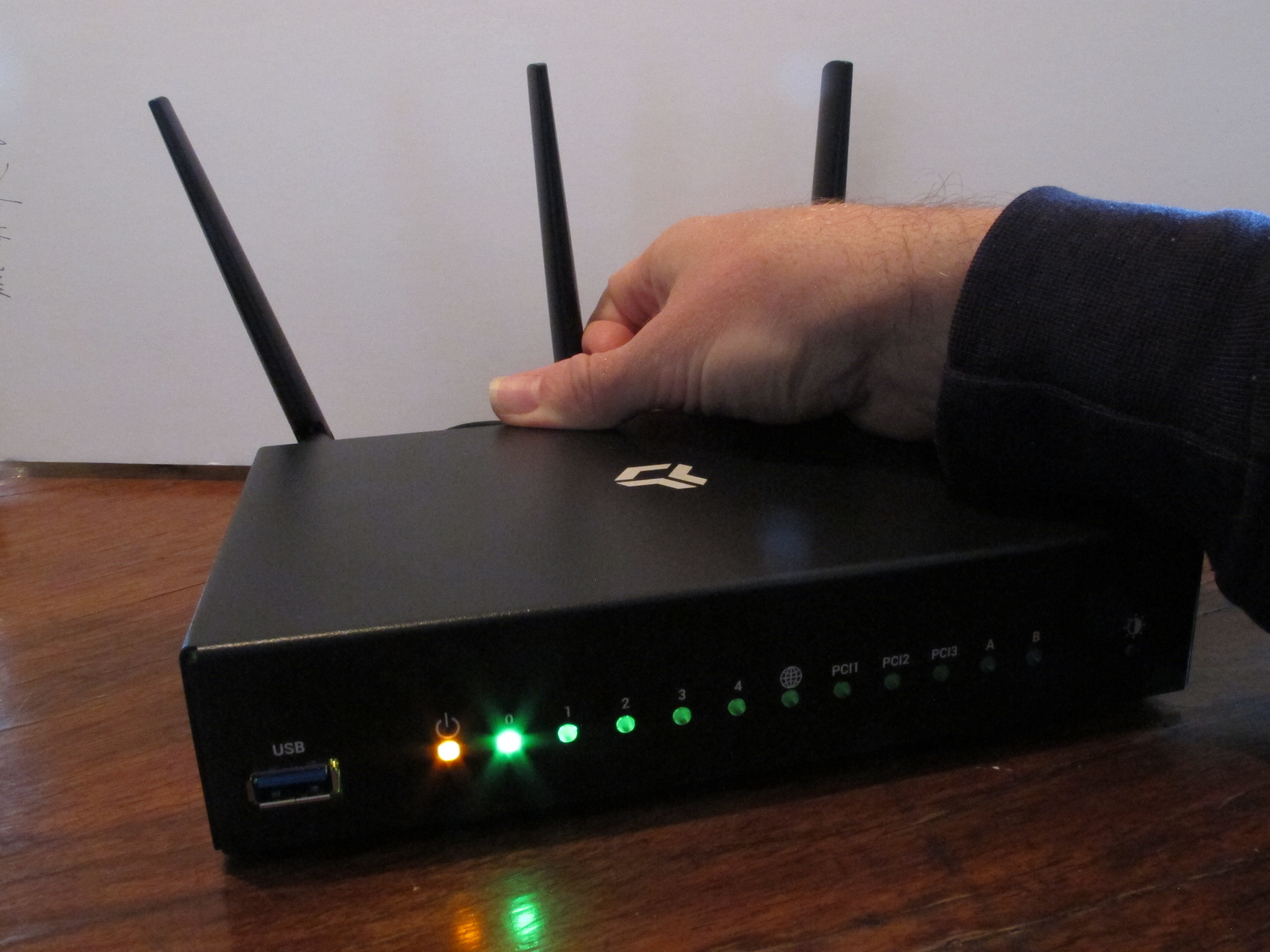
Hands on I received my own router last week, which is about six months late from the original April 2016 delivery date; it allowed me to do some hands-on testing of the device. The first thing I noticed was a known problem with the antenna connectors: I had to open up the case to screw the fittings tight, otherwise the antennas wouldn't screw in correctly. Once that was done, I simply had to go through the usual process of setting up the router, which consisted of connecting the Omnia to my laptop with an Ethernet cable, connecting the Omnia to an uplink (I hooked it into my existing network), and go through a web wizard. I was pleasantly surprised with the interface: it was smooth and easy to use, but at the same time imposed good security practices on the user. Install wizard performing automatic updates For example, the wizard, once connected to the network, goes through a full system upgrade and will, by default, automatically upgrade itself (including reboots) when new updates become available. Users have to opt-in to the automatic updates, and can chose to automate only the downloading and installation of the updates without having the device reboot on its own. Reboots are also performed during user-specified time frames (by default, Omnia applies kernel updates during the night). I also liked the "skip" button that allowed me to completely bypass the wizard and configure the device myself, through the regular OpenWRT systems (like LuCI or SSH) if I needed to. The Omnia router about to rollback to latest snapshot Notwithstanding the antenna connectors themselves, the hardware is nice. I ordered the black metal case, and I must admit I love the many LED lights in the front. It is especially useful to have color changes in the reset procedure: no more guessing what state the device is in or if I pressed the reset button long enough. The LEDs can also be dimmed to reduce the glare that our electronic devices produce. All this comes at a price, however: at \$250 USD, it is a much higher price tag than common home routers, which typically go for around \$50. Furthermore, it may be difficult to actually get the device, because no orders are being accepted on the Indiegogo site after October 31. The Turris team doesn't actually want to deal with retail sales and has now delegated retail sales to other stores, which are currently limited to European deliveries.

A nice device to help fight off the IoT apocalypse It seems there isn't a week that goes by these days without a record-breaking distributed denial-of-service (DDoS) attack. Those attacks are more and more caused by home routers, webcams, and "Internet of Things" (IoT) devices. In that context, the Omnia sets a high bar for how devices should be built but also how they should be operated. Omnia routers are automatically upgraded on a nightly basis and, by default, do not provide telnet or SSH ports to run arbitrary code. There is the password-less wizard that starts up on install, but it forces the user to chose a password in order to complete the configuration. Both the hardware and software of the Omnia are free and open. The automatic update's EULA explicitly states that the software provided by CZ.NIC "will be released under a free software licence" (and it has been, as mentioned earlier). This makes the machine much easier to audit by someone looking for possible flaws, say for example a customs official looking to approve the import in the eventual case where IoT devices end up being regulated. But it also makes the device itself more secure. One of the problems with these kinds of devices is "bit rot": they have known vulnerabilities that are not fixed in a timely manner, if at all. While it would be trivial for an attacker to disable the Omnia's auto-update mechanisms, the point is not to counterattack, but to prevent attacks on known vulnerabilities. The CZ.NIC folks take it a step further and encourage users to actively participate in a monitoring effort to document such attacks. For example, the Omnia can run a honeypot to lure attackers into divulging their presence. The Omnia also runs an elaborate data collection program, where routers report malicious activity to a central server that collects information about traffic flows, blocked packets, bandwidth usage, and activity from a predefined list of malicious addresses. The exact data collected is specified in another EULA that is currently only available to users logged in at the Turris web site. That data can then be turned into tweaked firewall rules to protect the overall network, which the Turris project calls a distributed adaptive firewall. Users need to explicitly opt-in to the monitoring system by registering on a portal using their email address. Turris devices also feature the Majordomo software (not to be confused with the venerable mailing list software) that can also monitor devices in your home and identify hostile traffic, potentially leading users to take responsibility over the actions of their own devices. This, in turn, could lead users to trickle complaints back up to the manufacturers that could change their behavior. It turns out that some companies do care about their reputations and will issue recalls if their devices have significant enough issues. It remains to be seen how effective the latter approach will be, however. In the meantime, the Omnia seems to be an excellent all-around server and router for even the most demanding home or small-office environments that is a great example for future competitors.
Note: this article first appeared in the Linux Weekly News.

Russ Allbery: Review: The Broken Kingdoms

Review: The Broken Kingdoms, by N.K. Jemisin
Series: Inheritance #2
Publisher: Orbit
Copyright: November 2010
Printing: September 2011
ISBN: 0-316-04395-8
Format: Mass market
Pages: 395
The Broken Kingdoms is a fairly direct sequel to The Hundred Thousand Kingdoms and depends heavily on the end of that book. It had been a long time since I'd read the previous book (about five years), and I looked up plot summaries to remind myself what happened. It turned out that I probably didn't have to do that; the explanation does come when it's critical. But this book will definitely spoil the end of The Hundred Thousand Kingdoms. Oree is an artist who sells her work to tourists in Shadow, the city beneath the World Tree. It's a good enough living, particularly for a blind immigrant from Nimaro, the area settled by the survivors of the destruction of Maro. Oree is not strictly entirely blind, since she can see magic, but that's not particularly helpful in daily life. She's content to keep that quiet, along with her private paintings that carry a strange magic not found in her public trinkets. One of the many godlings who inhabit Shadow is Oree's former lover, so she has some connection to the powerful of the city. But she prefers her quiet life until, that is, she finds a man at sunrise in a pile of muck and takes him home to clean him up. A man who she ends up taking care of, despite the fact that he never speaks to her, and despite his total lack of desire or apparent capability to take care of himself or avoid any danger. Not that it seems to matter, since he comes back to life every time he dies. If you've read The Hundred Thousand Kingdoms, you have a pretty good guess at who the man Oree calls Shiny actually is. But that discovery is not the core plot of this book. Someone is killing the godlings. They're not immortal, although they don't age, but killing them should require immense power or the intervention of the Three, the gods who run the metaphysical universe of this series. Neither of those seem to be happening, and still godlings are being murdered. Nahadoth is not amused: the humans and godlings have one month to find the killer before he does something awful to all of them. Then Shiny somehow kills a bunch of priests of Itempas, and the Order is after both him and Oree. Desperate, she turns to her former boyfriend and the godlings for help, and is pulled into the heart of a dark conspiracy. The Broken Kingdoms adds a few new elements to Jemisin's world-building, although it never quite builds up to the level of metaphysics of the previous book. But it's mostly a book about Oree: her exasperated care of Shiny, her attempts to navigate her rapidly complicating life, and her determination to do the right thing for her friends. It's the sort of book that pits cosmic power and grand schemes against the determined inner morality of a single person who is more powerful than she thinks she is. That part of the story I liked quite a lot. Shiny, and Oree's complicated relationship with Shiny, I wasn't as fond of. Oree treats him like a broken and possibly healing person, which is true, but he's also passively abusive in his dark moping. Jemisin tries very hard throughout the book to help the reader try to grasp a bit of what must be going through Shiny's head, and she does succeed at times, but I never much cared for what I found there. And neither Nahadoth nor Yeine, when they finally make their appearance, are very likable. (Yeine in particular I found deeply disappointing and not up to her level of ethics in the first book.) Oree is still quite capable of carrying the story single-handed, and I did like her godling friends. But I felt like the ending required liking Shiny a lot more than I did, or being a lot more sympathetic to Nahadoth and Yeine than I was, and it left a bad taste in my mouth. I enjoyed reading about Oree, but I felt like this story gave her a remarkably depressing ending. This book is also structured with a long middle section where everything seems to get more and more horrible and the antagonists are doing awful things. It's a common structural way to build tension that I rarely like. Even knowing that there's doubtless an upward arc and protagonist triumph coming, those sections are often unpleasant and difficult to read through, and I had that reaction here. The Broken Kingdoms is less of a weird romance than The Hundred Thousand Kingdoms (although there is some romance), so you may enjoy it more if you thought that angle was overdone. It does have some interesting world-building, particularly at the godling level, and Lil is one of my favorite characters. I think Oree got a raw deal from the story and would have preferred a different ending, but I'm not sorry I read it. Followed by The Kingdoms of Gods. Rating: 7 out of 10

14 November 2016

Raphaël Hertzog: Freexian s report about Debian Long Term Support, October 2016

A Debian LTS logoLike each month, here comes a report about the work of paid contributors to Debian LTS. Individual reports In October, about 175 work hours have been dispatched among 14 paid contributors. Their reports are available: Evolution of the situation The number of sponsored hours did not change this month. We still need a couple of supplementary sponsors to reach our objective of funding the equivalent of a full time position. The security tracker currently lists 34 packages with a known CVE and the dla-needed.txt file 29. The situation improved slightly compared to last month. Thanks to our sponsors New sponsors are in bold.

No comment Liked this article? Click here. My blog is Flattr-enabled.

Dimitri John Ledkov: /boot less LVM rootfs in Zesty


On Ubuntu many of the default boot loaders support booting kernels located on LVM volumes. This includes following platforms

  • i686, x86_64 bios grub2
  • arm64, armhf, i686, x86_64 UEFI grub2
  • PReP partitions on IBM PowerPC
  • zipl on IBM zSystems
For all of the above the d-i has been modified in Zesty to create LVM based installations without a dedicated /boot partition. We shall celebrate this achievement. Hopefully this means one doesn't need to remove kernels as much, or care about sizing /boot volume appropriately any more.

If there are more bootloaders in Ubuntu that support booting off LVM, please do get in touch with me. I'm interested if I can safely enable following platforms as well:
  • armhf with u-boot
  • arm64 with u-boot
  • ppc64el with PReP volume
ps. boots pic is from here

13 November 2016

Andrew Cater: Debian MiniConf, ARM, Cambridge 11/11/16 - Day 2 post 2

It's raining cats and dogs in Cambridge.

Just listening to Lars Wirzenius - who shared an office with Linus Torvalds, owned the computer that first ran Linux, founded the Linux Documentation Project. Living history in more than one sense :)

Live streaming is also happening.

Building work is also happening - so there may be random noise happening occasionally.

12 November 2016

John Goerzen: Morning in the Skies

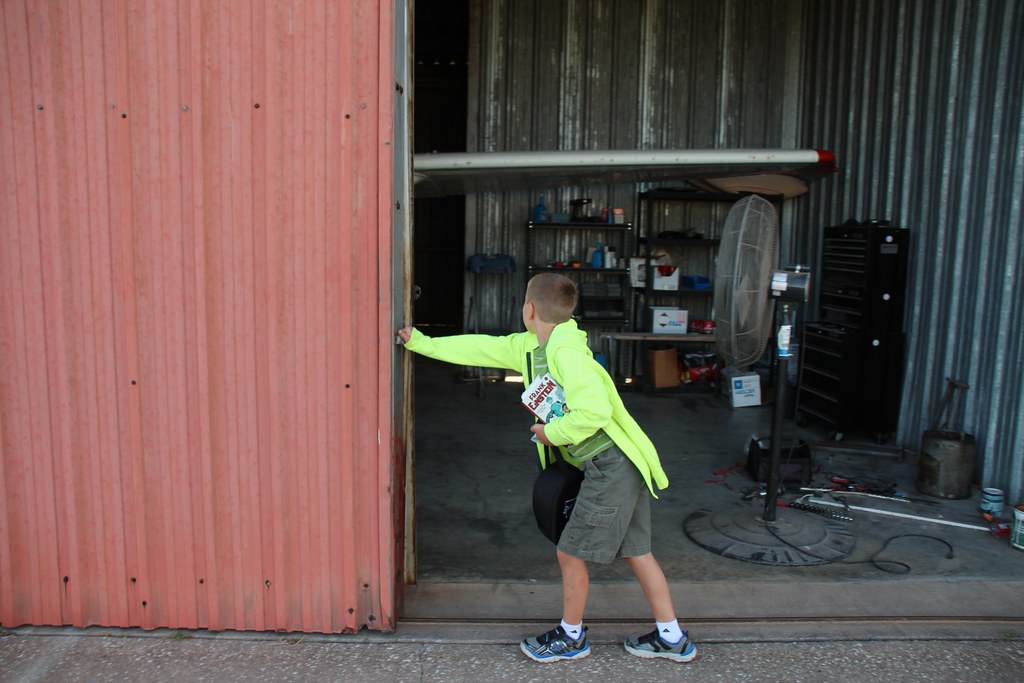
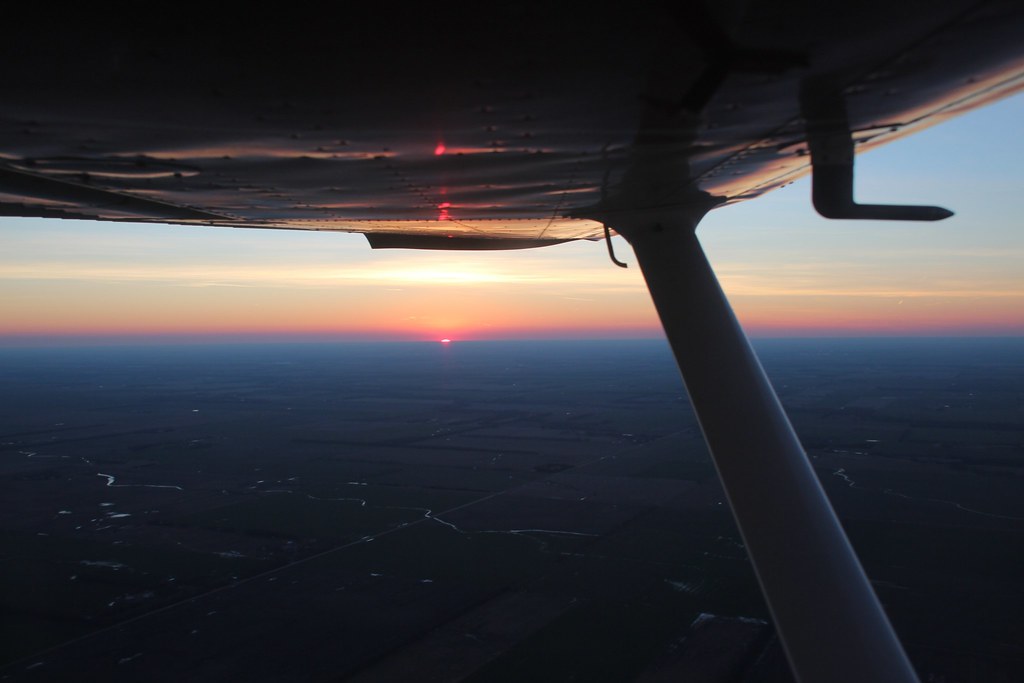
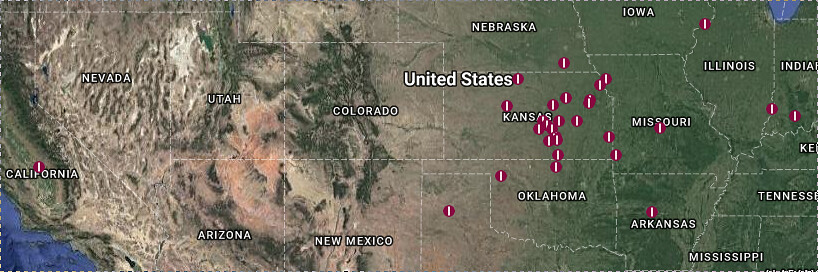
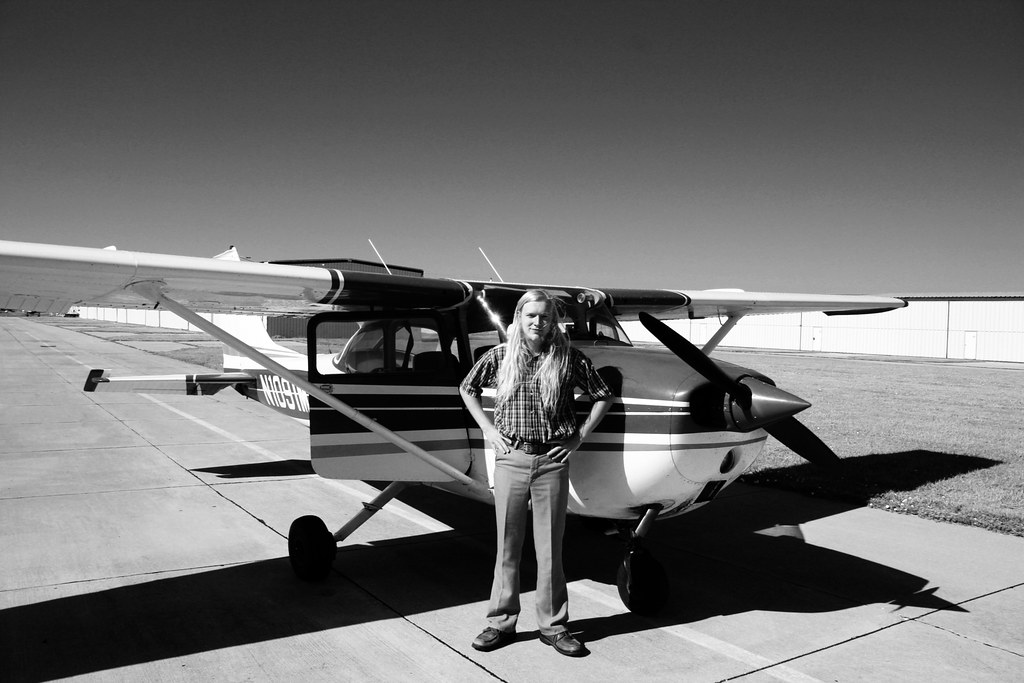
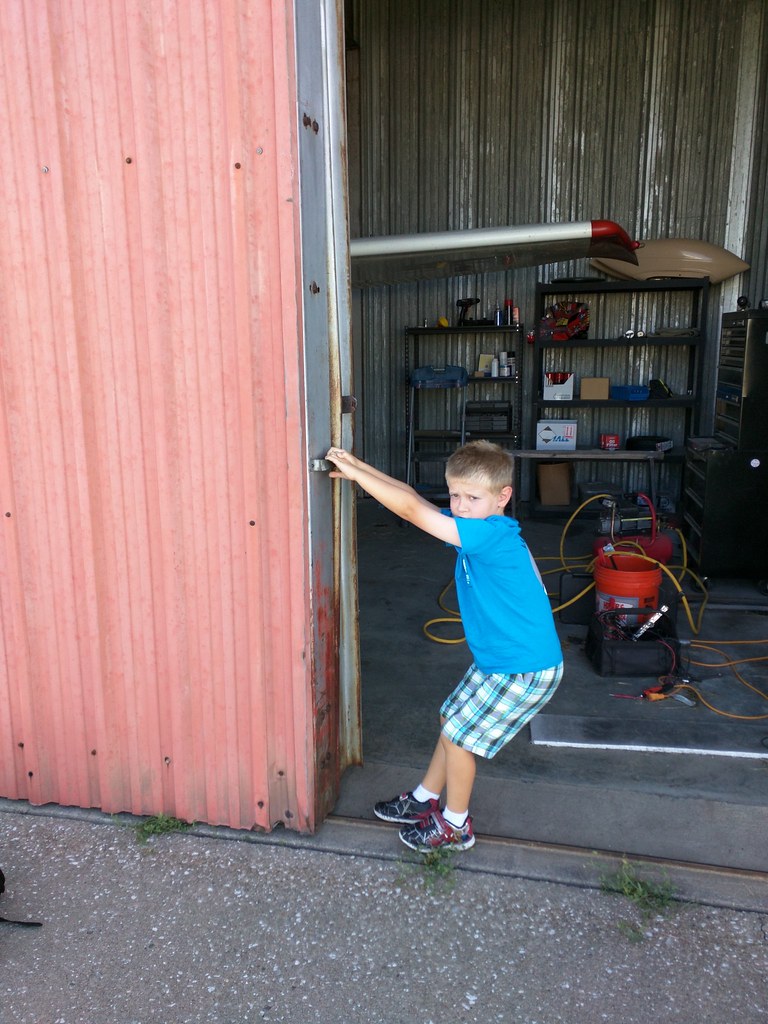
IMG_8515 This is morning. Time to fly. Two boys, happy to open the hangar door and get the plane ready. It s been a year since I passed the FAA exam and became a pilot. Memories like these are my favorite reminders why I did. It is such fun to see people s faces light up with the joy of flying a few thousand feet above ground, of the beauty and freedom and peace of the skies. I ve flown 14 different passengers in that time; almost every flight I ve taken has been with people, which I enjoy. I ve heard wow or beautiful so many times, and said it myself even more times. IMG_6083 I ve landed in two state parks, visited any number of wonderful small towns, seen historic sites and placid lakes, ascended magically over forests and plains. I ve landed at 31 airports in 10 states, flying over 13,000 miles. airports Not once have I encountered anyone other than friendly, kind, and outgoing. And why not? After all, we re working around magic flying carpet machines, right? IMG_7867_bw (That s my brother before a flight with me, by the way) Some weeks it is easy to be glum. This week has been that way for many, myself included. But then, whether you are in the air or on the ground, if you pay attention, you realize we still live in a beautiful world with many wonderful people. And, in fact, I got a reminder of that this week. Not long after the election, I got in a plane, pushed in the throttle, and started the takeoff roll down a runway in the midst of an Indiana forest. The skies were the best kind of clear blue, and pretty soon I lifted off and could see for miles. Off in the distance, I could see the last cottony remnants of the morning s fog, lying still in the valleys, surrounding the little farms and houses as if to give them a loving hug. Wow. Sometimes the flight is bumpy. Sometimes the weather doesn t cooperate, and it doesn t happen at all. Sometimes you can fly across four large states and it feels as smooth as glass the whole way. Whatever happens, at the end of the day, the magic flying carpet machine gets locked up again. We go home, rest our heads on our soft pillows, and if we so choose, remember the beauty we experienced that day. Really, this post is not about being a pilot. This post is a reminder to pay attention to all that is beautiful in this world. It surrounds us; the smell of pine trees in the forest, the delight in the faces of children, the gentle breeze in our hair, the kind word from a stranger, the very sunrise. I hope that more of us will pay attention to the moments of clear skies and wind at our back. Even at those moments when we pull the hangar door shut. IMG_20160716_093627

10 November 2016

Matthew Garrett: Tor, TPMs and service integrity attestation

One of the most powerful (and most scary) features of TPM-based measured boot is the ability for remote systems to request that clients attest to their boot state, allowing the remote system to determine whether the client has booted in the correct state. This involves each component in the boot process writing a hash of the next component into the TPM and logging it. When attestation is requested, the remote site gives the client a nonce and asks for an attestation, the client OS passes the nonce to the TPM and asks it to provide a signed copy of the hashes and the nonce and sends them (and the log) to the remote site. The remoteW site then replays the log to ensure it matches the signed hash values, and can examine the log to determine whether the system is trustworthy (whatever trustworthy means in this context).

When this was first proposed people were (justifiably!) scared that remote services would start refusing to work for users who weren't running (for instance) an approved version of Windows with a verifiable DRM stack. Various practical matters made this impossible. The first was that, until fairly recently, there was no way to demonstrate that the key used to sign the hashes actually came from a TPM[1], so anyone could simply generate a set of valid hashes, sign them with a random key and provide that. The second is that even if you have a signature from a TPM, you have no way of proving that it's from the TPM that the client booted with (you can MITM the request and either pass it to a client that did boot the appropriate OS or to an external TPM that you've plugged into your system after boot and then programmed appropriately). The third is that, well, systems and configurations vary so much that outside very controlled circumstances it's impossible to know what a "legitimate" set of hashes even is.

As a result, so far remote attestation has tended to be restricted to internal deployments. Some enterprises use it as part of their VPN login process, and we've been working on it at CoreOS to enable Kubernetes clusters to verify that workers are in a trustworthy state before running jobs on them. While useful, this isn't terribly exciting for most people. Can we do better?

Remote attestation has generally been thought of in terms of remote systems requiring that clients attest. But there's nothing that requires things to be done in that direction. There's nothing stopping clients from being able to request that a server attest to its state, allowing clients to make informed decisions about whether they should provide confidential data. But the problems that apply to clients apply equally well to servers. Let's work through them in reverse order.We have no idea what expected "good" values areYes, and this is a problem. CoreOS ships with an expected set of good values, and we had general agreement at the Linux Plumbers Conference that other distributions would start looking at what it would take to do the same. But how do we know that those values are themselves trustworthy? In an ideal world this would involve reproducible builds, allowing anybody to grab the source code for the OS, build it locally and verify that they have the same hashes.

Ok. So we're able to verify that the booted OS was good. But how about the services? The rkt container runtime supports measuring each container into the TPM, which means we can verify which container images were started. If container images are also built in such a way that they're reproducible, users can grab the source code, rebuild the container locally and again verify that it has the same hashes. Users can then be sure that the remote site is running the code they're looking at.

Or can they? Not really - a general purpose OS has all kinds of ways to inject code into containers, so an admin could simply replace the binaries inside the container after it's been measured, or ptrace() the server, or modify rkt so it generates correct measurements regardless of the image or, well, there's lots they could do. So a general purpose OS is probably a bad idea here. Instead, let's imagine an immutable OS that does nothing other than bring up networking and then reads a config file that tells it which container images to download and run. This reduces the amount of code that needs to support reproducible builds, making it easier for a client to verify that the source corresponds to the code the remote system is actually running.

Is this sufficient? Eh sadly no. Even if we know the valid values for the entire OS and every container, we don't know the legitimate values for the system firmware. Any modified firmware could tamper with the rest of the trust chain, making it possible for you to get valid OS values even if the OS has been subverted. This isn't a solved problem yet, and really requires hardware vendor support. Let's handwave this for now, or assert that we'll have some sidechannel for distributing valid firmware values.Avoiding TPM MITMingThis one's more interesting. If I ask the server to attest to its state, it can simply pass that through to a TPM running on another system that's running a trusted stack and happily serve me content from a compromised stack. Suboptimal. We need some way to tie the TPM identity and the service identity to each other.

Thankfully, we have one. Tor supports running services in the .onion TLD. The key used to identify the service to the Tor network is also used to create the "hostname" of the system. I wrote a pretty hacky implementation that generates that key on the TPM, tying the service identity to the TPM. You can ask the TPM to prove that it generated a key, and that allows you to tie both the key used to run the Tor service and the key used to sign the attestation hashes to the same TPM. You now know that the attestation values came from the same system that's running the service, and that means you know the TPM hasn't been MITMed.How do you know it's a TPM at all?This is much easier. See [1].


There's still various problems around this, including the fact that we don't have this immutable minimal container OS, that we don't have the infrastructure to ensure that container builds are reproducible, that we don't have any known good firmware values and that we don't have a mechanism for allowing a user to perform any of this validation. But these are all solvable, and it seems like an interesting project.

"Interesting" isn't necessarily the right metric, though. "Useful" is. And I think this is very useful. If I'm about to upload documents to a SecureDrop instance, it seems pretty important that I be able to verify that it is a SecureDrop instance rather than something pretending to be one. This gives us a mechanism.

The next few years seem likely to raise interest in ensuring that people have secure mechanisms to communicate. I'm not emotionally invested in this one, but if people have better ideas about how to solve this problem then this seems like a good time to talk about them.

[1] More modern TPMs have a certificate that chains from the TPM's root key back to the TPM manufacturer, so as long as you trust the TPM manufacturer to have kept control of that you can prove that the signature came from a real TPM

comment count unavailable comments

8 November 2016

Uwe Kleine-K nig: Installing Debian Stretch on an Omnia Turris

Recently I got "my" Omnia Turris and it didn't take long to replace the original firmware with Debian. If you want to reproduce, here is what you have to do: Open the case of the Omnia Turris, connect the hacker pack (or an RS232-to-TTL adapter) to access the U-Boot prompt (see Turris Omnia: How to use the "Hacker pack"). Then download the installer and device tree:
# cd /srv/tftp
# wget https://d-i.debian.org/daily-images/armhf/daily/netboot/vmlinuz
# wget https://d-i.debian.org/daily-images/armhf/daily/netboot/initrd.gz
# wget https://www.kleine-koenig.org/tmp/armada-385-turris-omnia.dtb
(The latter is not included yet in Debian, but I'm working on that.) and after connecting the Omnia Turris's WAN to a dhcp managed network start it in U-Boot:
dhcp
setenv serverip 192.168.1.17
tftpboot 0x01000000 vmlinuz
tftpboot 0x02000000 armada-385-turris-omnia.dtb
tftpboot 0x03000000 initrd.gz
bootz 0x01000000 0x03000000:$filesize 0x02000000
With 192.168.1.17 being the IPv4 of the machine you have the tftp server running. I suggest to use btrfs as rootfs because that works well with U-Boot. Before finishing the installation put the dtb in the rootfs as /boot/dtb. To then boot into Debian do in U-Boot:
setenv mmcboot=btrload mmc 0 0x01000000 boot/vmlinuz\; btrload mmc 0 0x02000000 boot/dtb\; btrload mmc 0 0x03000000 boot/initrd.img\; bootz 0x01000000 0x03000000:$filesize 0x02000000
setenv bootargs console=ttyS0,115200 rootfstype=btrfs rootdelay=2 root=/dev/mmcblk0p1 rootflags=commit=5 rw
saveenv
boot
Known issues: If you have problems, don't hesitate to contact me.

Jonathan Carter: A few impressions of DebConf 16 in Cape Town

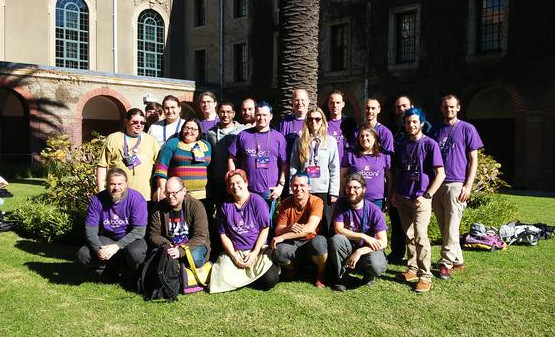
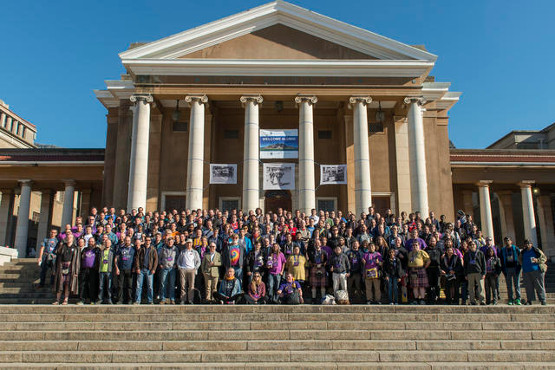
DebConf16 Group Photo

DebConf16 Group Photo by Jurie Senekal.

DebConf16 Firstly, thanks to everyone who came out and added their own uniqueness and expertise to the pool. The feedback received so far has been very positive and I feel that the few problems we did experience was dealt with very efficiently. Having a DebConf in your hometown is a great experience, consider a bid for hosting a DebConf in your city! DebConf16 Open Festival (5 August) The Open Festival (usually Debian Open Day) turned out pretty good. It was a collection of talks, a job fair, and some demos of what can be done with Debian. I particularly liked Hetzner s stand. I got to show off some 20 year old+ Super Mario skills and they had some fun brain teasers as well. It s really great to see a job stand that s so interactive and I think many companies can learn from them. The demo that probably drew the most attention was from my friend Georg who demoed some LulzBot Mini 3D Printers. They really seem to love Debian which is great! DebConf (6 August to 12 August) If I try to write up all my thoughts and feeling about DC16, I ll never get this post finished. Instead, here as some tweets from DebConf that other have written:


Day Trip We had 3 day trips: Brought to you by
orga

DebConf16 Orga Team.

See you in Montr al! DebConf17 dates: The DC17 sponsorship brochure contains a good deal of information, please share it with anyone who might be interested in sponsoring DebConf! Media

7 November 2016

Reproducible builds folks: Reproducible Builds: week 80 in Stretch cycle

What happened in the Reproducible Builds effort between Sunday October 30 and Saturday November 5 2016: Upcoming events Reproducible work in other projects Bugs filed Reviews of unreproducible packages 81 package reviews have been added, 14 have been updated and 43 have been removed in this week, adding to our knowledge about identified issues. 3 issue types have been updated: 1 issue type has been removed: 1 issue type has been updated: Weekly QA work During of reproducibility testing, some FTBFS bugs have been detected and reported by: diffoscope development buildinfo.debian.net development tests.reproducible-builds.org Reproducible Debian: Misc. Also with thanks to Profitbricks sponsoring the "hardware" resources, Holger created a 13 core machine with 24GB RAM and 100GB SSD based storage so that Ximin can do further tests and development on GCC and other software on a fast machine. This week's edition was written by Chris Lamb, Ximin Luo, Vagrant Cascadian, Holger Levsen and reviewed by a bunch of Reproducible Builds folks on IRC.

Petter Reinholdtsen: How to talk with your loved ones in private

A few days ago I ran a very biased and informal survey to get an idea about what options are being used to communicate with end to end encryption with friends and family. I explicitly asked people not to list options only used in a work setting. The background is the uneasy feeling I get when using Signal, a feeling shared by others as a blog post from Sander Venima about why he do not recommend Signal anymore (with feedback from the Signal author available from ycombinator). I wanted an overview of the options being used, and hope to include those options in a less biased survey later on. So far I have not taken the time to look into the individual proposed systems. They range from text sharing web pages, via file sharing and email to instant messaging, VOIP and video conferencing. For those considering which system to use, it is also useful to have a look at the EFF Secure messaging scorecard which is slightly out of date but still provide valuable information. So, on to the list. There were some used by many, some used by a few, some rarely used ones and a few mentioned but without anyone claiming to use them. Notice the grouping is in reality quite random given the biased self selected set of participants. First the ones used by many: Then the ones used by a few. Then the ones used by even fewer people And finally the ones mentioned by not marked as used by anyone. This might be a mistake, perhaps the person adding the entry forgot to flag it as used? Given the network effect it seem obvious to me that we as a society have been divided and conquered by those interested in keeping encrypted and secure communication away from the masses. The finishing remarks from Aral Balkan in his talk "Free is a lie" about the usability of free software really come into effect when you want to communicate in private with your friends and family. We can not expect them to allow the usability of communication tool to block their ability to talk to their loved ones. Note for example the option IRC w/OTR. Most IRC clients do not have OTR support, so in most cases OTR would not be an option, even if you wanted to. In my personal experience, about 1 in 20 I talk to have a IRC client with OTR. For private communication to really be available, most people to talk to must have the option in their currently used client. I can not simply ask my family to install an IRC client. I need to guide them through a technical multi-step process of adding extensions to the client to get them going. This is a non-starter for most. I would like to be able to do video phone calls, audio phone calls, exchange instant messages and share files with my loved ones, without being forced to share with people I do not know. I do not want to share the content of the conversations, and I do not want to share who I communicate with or the fact that I communicate with someone. Without all these factors in place, my private life is being more or less invaded.

6 November 2016

Shirish Agarwal: The long tail in a common s man journey to debconf16 1

I was going to put a technical post but saw the discussion of one of the meetings of the debconf meets and decided to share a novice s travel experience. Before I start here s the discussion log http://meetbot.debian.net/debconf-team/2016/debconf-team.2016-10-20-20.01.log.html and specifically this part which hit me (using fake names for discussion as haven t taken permission from the folks to cite them by name.)
20:36:52 abcd: $100 CAD is a lot for some, but you d only need it if you won t sleep in sponsored accom, which arguably is acceptable.
20:37:04 it would, efgh, fixed sponsorship sum for everybody and allocation of rooms completely decoupled. Hotel gets the money from everybody and the base fee from DebConf.
20:37:15 people who can t afford also have special needs and may be uncomfortable in sharing rooms. That s quite frequently in our community. Managing each case will be much more complicated.
20:37:31 hijk: we could set aside budget for such special needs, for sure.
20:37:43 I m talking about managing each case
20:37:46 hijk: yes, but we ll have the special cases no matter what.
20:37:48 yes, and the special cases need to be catered for regardless of how everybody else is housed
20:38:06 hijk: room allocation already includes this.
20:38:19 people having to expose their personal problems to have us permitting them staying in the hotel
20:38:23 that s just too weird
It just goes on. I dunno whether I m weird or not or the experience I would share is just normal, this I would leave for you to decide. As have shared before, some friends of mine from the free software community had cajoled me last year to apply for debconf bursary (debconf15), which surprisingly got approved, but as it was late and my pre-conceived myths/notions of visas taking a looooong time decided not to go further. Many things take a long time to happen in the Indian bureaucratic maze. For instance have been in a civil case for almost a decade now among other things so know and accept that things take their own sweet time otherwise known as Indian patience  Did the application and again, surprise, surprise this time too I was approved. Luckily, had done the application for bursary early so was a bit positive on the visa-front. There was a goof-up at the embassay but thanks to people at travel.stackexchange.com where I asked quite a few questions, I was a bit informed and travel was relatively hassle-free. Internally though, I was nervous as hell. I had been feeling like a conman or a fraud or being an imposter because I knew before-hand that the project is so huge and had done the mistake of putting up a talk and a workshop where the big guns would be, which again was accepted (not good). The only thing I was thinking of as a saving grace is that there might be some newbies who don t know about the project at all (on Open Day) and hopefully I could help with that but as you will see, even there I was fully inadequate. I live in Pune which is around 3.5 hours from Mumbai (BOM) from where international flights take off. While Pune has an Airport, due to defence considerations, there cannot be much improvement either for domestic or International carriers. There have been attempts to have an exclusive civilian Airport for a long time (almost a decade) and would still take a decade or more. Hence had decided to take an early morning train from Pune to Mumbai, change couple of locals and finally land up at the Mumbai International Airport. Hind-sight as they say is 50:50, while I do have friends in Mumbai, I also found about a homestay which is closer to the Airport and still relatively budget-friendly. Anyways, met few friends but as was paranoid about missing connections found myself in front of the Airport at 20:00 hrs. with about 7 hours + to go before my flight. While there is nothing to do around the airport rather than hanging around, just hung around outside the airport as knew that inside the airport will be chilling and once you go in, you cannot come out or at least it s an inconvenience to the security therein. The International Airport in on three levels, the basement is for vehicles, the first level to receive International and Domestic passengers and the upper-most level exclusively for people flying internationally. This again, came to know when I tried to enter into the ones meant for Domestic and International Passengers coming into the city. Came to the check-in counter at around 02:00 hrs, did the security thing and just had to wait as the flight was of 0400 hrs (from my limited search experience, the cheapest flights are at such times when nobody else (i.e.civilized people) wants to fly). Entered Doha around 5:15 Doha time and saw a much much bigger airport than either the Mumbai International Airport or/and the Delhi International Airport . While I have written some negative stuff about Doha, there were two positives that I am sure, I had forgotten to share a. There were no transit Visa Fees that I had to pay. Most countries and airports I researched have something called transit visa and that can really get expensive, so saved money on that. b. The free ride into the city and back with voluntary tipping the driver or/and guide (approx. 3-4 hours) While the second from what I could tell/know is a gimmick, this is something I wish other countries and airports emulate. There are hotels in the airport and I could have had hotel accommodation if I had booked a slightly more expensive ticket, roughly INR 5k/- each way which would have given me a bit more legroom as well as stay as my layover was more than 24 hours. But this information was known at last minute. Qatar Airways has just a toll-free number and trying more than a few times gave up. They don t have an office in the city. When I reached the check-in counter they said if I had upgraded to Y class I would have had the hotel thing. Changing tickets at the last moment was too expensive and anyways for hotel accommodation for layovers they required at least 24 hours notice. Had to make do with recliners and chairs which are not really comfortable. There were only a couple of waiting rooms on air-side which had a view of the aircraft and hence were a bit more pleasing than those which were on the land-side and were fully blocked without a view. I wish there was a map of the Airport from within the Airport as even with the single terminal it is really easy to get lost. Somehow the day and night went by and took my second flight and reached Cape Town, South Africa. Throughout the journey had been stressed as had to be awake at all times and make sure that nothing gets stolen. Having attendants at toilets were also good so that there is no possibility of any violence there. So it had been 2 days, no shower and no sleep. Later also came to know about Airport Sleeping Pods and shower stalls but these also seem to be less in number, at few airports and there always be a bit of premium attached to them as airports are a monopoly business. Anyways, reached the venue. Throughout the travel there was quite a bit of unnamed fear which I later came to know after seeing Dr. Ramanujan s The Man who knew Infinity . It was/is the fear or unknown, while in the movie it is articulated as fear of crossing seven seas, symbolically it is the fear or unknown. Now while I was dead tired, I still pushed myself as I didn t want to have the effects of jet lag interfere with the normal sleeping and waking patterns. I did freshen myself but didn t allow myself the luxury of the bath-tub as I knew that if I went in, I would not come out that day. Met all the people, learnt who s who, where things are happening etc. and slowly night came. Night came and I was so-looking forward to sleep but sleep was not to be. I later learnt it could be either of the two reasons, it could either have been travel-induced insomnia or/and what is known as the first night effect . It was only on the second day when I was in bath-tub for about 2/3 hours I could feel the tension leaving my body. I finally realized that I am in Cape Town, South Africa and could enjoy and be surprised at seeing birds within few feet of me . Now I don t know whether I m the only weird/paranoid one, I do know that it would not have been easier for me at least for the first night as I was turning and twisting throughout the night. I opened the lights, read for some time hoping for sleep to take over but that didn t work. Tried quite a few things but sleep didn t come. If I had been sleeping with other people I dunno how they would have reacted. I myself am a light sleeper (most of the time) and if I had sleep coming and somebody else acted or been the way I was, I wouldn t been able to sleep. However much you try, whatever is the natural reaction is, will be. There are still some bits to share but that would be in part 2.
Filed under: Miscellenous Tagged: #air-travel, #Debconf16, #paranoia, #sleep

Russ Allbery: Review: Digger

Review: Digger, by Ursula Vernon
Publisher: Sofawolf
Copyright: October 2013
ISBN: 1-936689-32-4
Format: Graphic novel
Pages: 837
As Digger opens, the eponymous wombat is digging a tunnel. She's not sure why, or where to, since she hit a bad patch of dirt. It happens sometimes, underground: pockets of cave gas and dead air that leave one confused and hallucinating. But this one was particularly bad, it's been days, she broke into a huge cave system, and she's thoroughly lost. Tripping on an ammonite while running from voices in the dark finally helps her come mostly to her senses and start tunneling up, only to break out at the feet of an enormous statue of Ganesh. A talking statue of Ganesh. Digger is a web comic that ran from 2005 to 2011. The archives are still on the web, so you can read the entire saga for free. Reviewed here is the complete omnibus edition, which collects the entire strip (previously published in six separate graphic novels containing two chapters each), a short story, a bonus story that was published in volume one, a bunch of random illustrated bits about the world background, author's notes from the web version, and all of the full-color covers of the series chapters (the rest of the work is in black and white). Publication of the omnibus was originally funded by a Kickstarter, but it's still available for regular sale. (I bought it normally via Amazon long after the Kickstarter finished.) It's a beautiful and durable printing, and I recommend it if you have the money to buy things you can read for free. This was a very long-running web comic, but Digger is a single story. It has digressions, of course, but it's a single coherent work with a beginning, middle, and end. That's one of the impressive things about it. Another is that it's a fantasy work involving gods, magic, oracles, and prophecies, but it's not about a chosen one, and it's not a coming of age story. Digger (Digger-of-Needlessly-Convoluted-Tunnels, actually, but Digger will do) is an utterly pragmatic wombat who considers magic to be in poor taste (as do all right-thinking wombats), gods to be irritating underground obstacles that require care and extra bracing, and prophecies to not be worth the time spent listening to them. It's a bit like the famous Middle Earth contrast between the concerns of the hobbits and the affairs of the broader world, if the hobbits were well aware of the broader world, able to deal with it, but just thought all the magic was tacky and irritating. Magic and gods do not, of course, go away just because one is irritated by them, and Digger eventually has to deal with quite a lot of magic and mythology while trying to figure out where home is and how to get back to it. However, she is drawn into the plot less by any grand danger to the world and more because she keeps managing to make friends with everyone, even people who hate each other. It's not really an explicit goal, but Digger is kind-hearted, sensible, tries hard to do the right thing, and doesn't believe in walking away from problems. In this world, that's a recipe for eventual alliances from everything from warrior hyenas to former pirate shrews, not to mention a warrior cult, a pair of trolls, and a very confused shadow... something. All for a wombat who would rather be digging out a good root cellar. (She does, at least, get a chance to dig out a good root cellar.) The characters are the best part, but I love everything about this story. Vernon's black and white artwork isn't as detailed as, say, Dave Sim at his best, and some of the panels (particularly mostly dark ones) seemed a bit scribbly. But it's mostly large-panel artwork with plenty of room for small touches and Easter eggs (watch for the snail, and the cave fish graffiti that I missed until it was pointed out by the author's notes), and it does the job of telling the story. Honestly, I like the black and white panels better than the color chapter covers reproduced in the back. And the plot is solid and meaty, with a satisfying ending and some fantastic detours (particularly the ghosts). I think my favorite bits, though, are the dialogue.
"Do you have any idea how long twelve thousand years is?"
"I know it's not long enough to make a good rock."
Digger is snarky in all the right ways, and sees the world in terms of tunnels, digging, and geology. Vernon is endlessly creative in how she uses that to create comebacks, sayings, analysis, and an entire culture. This is one of the best long-form comics I've read: a solid fantasy story with great characters, reliably good artwork, a coherent plot arc, wonderful dialogue, a hard-working and pragmatic protagonist (who happens to be female), and a wonderfully practical sense of morality and ethics. I'm sorry it's over. If you've not already read it, I highly recommend it. Remember tunnel 17! Rating: 9 out of 10

5 November 2016

Elizabeth Ferdman: Applying to Debian for Outreachy 2016

This year, Outreachy featured internships from organizations such as Debian, Fedora, GNOME, the Linux Kernel, Mozilla, Python, and Wikimedia, just to name a few. Each organization features mentored projects and in order to apply, applicants must contact the mentor, introduce themselves on the appropriate channels and make a small contribution to the project. After that, applicants might be required to fulfill additional tasks to demonstrate their abilities. Successful applicants will make quality contributions, communicate effectively with mentors, ask questions, fulfill tasks, help out their peers via mailing lists, and/or blog about their experience. One of the projects I applied to was the Clean Room for PGP and X.509 (PKI) Key Management. The project aims to create a Live Disc that enables users to create and manage their PGP keys easily and securely, using a text-based UI. I ve been a Debian user for about a year, but before applying to the project I didn t know much about GnuPG or public key encryption. Since then, I ve made some contributions and attended my first keysigning event in San Francisco featuring a lecture by Neal Walfield (more on that below). For my initial contribution, Daniel Pocock, the mentor for this project, asked that I write a script that lists the USB flash devices connected to the system and specifies which device the system booted from. Here s the bash script that I wrote, and that was enough to submit an application for Debian. My next task was to write a dns hook script for the dehydrated project, a shell client for signing certificates with Let s Encrypt (for free!). The script completes a dns challenge sent by the ACME-server by provisioning a TXT record for a given domain in order to prove ownership of the domain. I chose to write it in python and used the dnspython API. I posted my solution on github and there are many more here. At the lecture, Neal talked about good practices for key creation and management. Here are a few of those points: See the slides for Neal s full presentation.

4 November 2016

Michal Čihař: Weblate 2.9

Slightly behind schedule (it should have been released in October), Weblate 2.9 is out today. This release brings Subversion support or improved zen mode. Full list of changes: If you are upgrading from older version, please follow our upgrading instructions. You can find more information about Weblate on https://weblate.org, the code is hosted on Github. If you are curious how it looks, you can try it out on demo server. You can login there with demo account using demo password or register your own user. Weblate is also being used on https://hosted.weblate.org/ as official translating service for phpMyAdmin, OsmAnd, Aptoide, FreedomBox, Weblate itself and many other projects. Should you be looking for hosting of translations for your project, I'm happy to host them for you or help with setting it up on your infrastructure. Further development of Weblate would not be possible without people providing donations, thanks to everybody who have helped so far! The roadmap for next release is just being prepared, you can influence this by expressing support for individual issues either by comments or by providing bounty for them.

Filed under: Debian English phpMyAdmin SUSE Weblate 4 comments

3 November 2016

Simon Josefsson: Why I don t Use 2048 or 4096 RSA Key Sizes

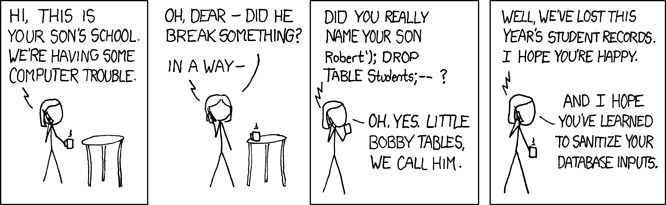
I have used non-standard RSA key size for maybe 15 years. For example, my old OpenPGP key created in 2002. With non-standard key sizes, I mean a RSA key size that is not 2048 or 4096. I do this when I generate OpenPGP/SSH keys (using GnuPG with a smartcard like this) and PKIX certificates (using GnuTLS or OpenSSL, e.g. for XMPP or for HTTPS). People sometimes ask me why. I haven t seen anyone talk about this, or provide a writeup, that is consistent with my views. So I wanted to write about my motivation, so that it is easy for me to refer to, and hopefully to inspire others to think similarily. Or to provoke discussion and disagreement that s fine, and hopefully I will learn something. Before proceeding, here is some context: When building new things, it is usually better to use the Elliptic Curve technology algorithm Ed25519 instead of RSA. There is also ECDSA which has had a comparatively slow uptake, for a number of reasons that is widely available and is a reasonable choice when Ed25519 is not available. There are also post-quantum algorithms, but they are newer and adopting them today requires a careful cost-benefit analysis. First some background. RSA is an asymmetric public-key scheme, and relies on generating private keys which are the product of distinct prime numbers (typically two). The size of the resulting product, called the modulus n, is usually expressed in bit length and forms the key size. Historically RSA key sizes used to be a couple of hundred bits, then 512 bits settled as a commonly used size. With better understanding of RSA security levels, the common key size evolved into 768, 1024, and later 2048. Today s recommendations (see keylength.com) suggest that 2048 is on the weak side for long-term keys (5+ years), so there has been a trend to jump to 4096. The performance of RSA private-key operations starts to suffer at 4096, and the bandwidth requirements is causing issues in some protocols. Today 2048 and 4096 are the most common choices. My preference for non-2048/4096 RSA key sizes is based on the simple and na ve observation that if I would build a RSA key cracker, there is some likelihood that I would need to optimize the implementation for a particular key size in order to get good performance. Since 2048 and 4096 are dominant today, and 1024 were dominent some years ago, it may be feasible to build optimized versions for these three key sizes. My observation is a conservative decision based on speculation, and speculation on several levels. First I assume that there is an attack on RSA that we don t know about. Then I assume that this attack is not as efficient for some key sizes than others, either on a theoretical level, at implementation level (optimized libraries for certain characteristics), or at an economic/human level (decision to focus on common key sizes). Then I assume that by avoiding the efficient key sizes I can increase the difficulty to a sufficient level. Before analyzing whether those assumptions even remotely may make sense, it is useful to understand what is lost by selecting uncommon key sizes. This is to understand the cost of the trade-off. A significant burden would be if implementations didn t allow selecting unusual key sizes. In my experience, enough common applications support uncommon key sizes, for example GnuPG, OpenSSL, OpenSSH, FireFox, and Chrome. Some applications limit the permitted choices; this appears to be rare, but I have encountered it once. Some environments also restrict permitted choices, for example I have experienced that LetsEncrypt has introduced a requirement for RSA key sizes to be a multiples of 8. I noticed this since I chose a RSA key size of 3925 for my blog and received a certificate from LetsEncrypt in December 2015 however during renewal in 2016 it lead to an error message about the RSA key size. Some commercial CAs that I have used before restrict the RSA key size to one of 1024, 2048 or 4096 only. Some smart-cards also restrict the key sizes, sadly the YubiKey has this limitation. So it is not always possible, but possible often enough for me to be worthwhile. Another cost is that RSA signature operations are slowed down. This is because the exponentiation function is faster than multiplication, and if the bit pattern of the RSA key is a 1 followed by several 0 s, it is quicker to compute. I have not done benchmarks, but I have not experienced that this is a practical problem for me. I don t notice RSA operations in the flurry of all of other operations (network, IO) that is usually involved in my daily life. Deploying this on a large scale may have effects, of course, so benchmarks would be interesting. Back to the speculation that leads me to this choice. The first assumption is that there is an attack on RSA that we don t know about. In my mind, until there are proofs that the currently known attacks (GNFS-based attacks) are the best that can be found, or at least some heuristic argument that we can t do better than the current attacks, the probability for an unknown RSA attack is therefor, as strange as it may sound, 100%. The second assumption is that the unknown attack(s) are not as efficient for some key sizes than others. That statement can also be expressed like this: the cost to mount the attack is higher for some key sizes compared to others. At the implementation level, it seems reasonable to assume that implementing a RSA cracker for arbitrary key sizes could be more difficult and costlier than focusing on particular key sizes. Focusing on some key sizes allows optimization and less complex code. At the mathematical level, the assumption that the attack would be costlier for certain types of RSA key sizes appears dubious. It depends on the kind of algorithm the unknown attack is. For something similar to GNFS attacks, I believe the same algorithm applies equally for a RSA key size of 2048, 2730 and 4096 and that the running time depends mostly on the key size. Other algorithms that could crack RSA, such as some approximation algorithms, does not seem likely to be thwarted by using non-standard RSA key sizes either. I am not a mathematician though. At the economical or human level, it seems reasonable to say that if you can crack 95% of all keys out there (sizes 1024, 2048, 4096) then that is good enough and cracking the last 5% is just diminishing returns of the investment. Here I am making up the 95% number. Currently, I would guess that more than 95% of all RSA key sizes on the Internet are 1024, 2048 or 4096 though. So this aspect holds as long as people behave as they have done. The final assumption is that by using non-standard key sizes I raise the bar sufficiently high to make an attack impossible. To be honest, this scenario appears unlikely. However it might increase the cost somewhat, by a factor or two or five. Which might make someone target a lower hanging fruit instead. Putting my argument together, I have 1) identified some downsides of using non-standard RSA Key sizes and discussed their costs and implications, and 2) mentioned some speculative upsides of using non-standard key sizes. I am not aware of any argument that the odds of my speculation is 0% likely to be true. It appears there is some remote chance, higher than 0%, that my speculation is true. Therefor, my personal conservative approach is to hedge against this unlikely, but still possible, attack scenario by paying the moderate cost to use non-standard RSA key sizes. Of course, the QA engineer in me also likes to break things by not doing what everyone else does, so I end this with an ObXKCD.
2 November 2016

Reproducible builds folks: Reproducible Builds: week 79 in Stretch cycle

What happened in the Reproducible Builds effort between Sunday October 23 and Saturday October 29 2016: Upcoming events The second Reproducible Builds World Summit will be held from December 13th-15th in Berlin! See the link for more details. Other events: Introduction to Reproducible Builds - Vagrant Cascadian will be presenting at the SeaGL.org Conference In Seattle, USA on November 12th, 2016. Reproducible Debian Hackathon - A small hackathon organized in Boston, USA on December 3rd and 4th. If you are interested in attending, contact Valerie Young - spectranaut in the #debian-reproducible IRC channel on irc.oftc.net. IRC meeting The next IRC meeting will be held on 2016-11-01 at 18:00 UTC. The meeting after that will be held on 2016-11-15 at 18:00 UTC. Reproducible work in other projects Ximin Luo has had his fix to bug 77985 accepted into GCC. This is needed to be able to write test cases for patches to make GCC produce debugging symbols that are reproducible regardless of the build path. There was continued discussion on the mailing list regarding our build path proposals. It has now been decided to use an environment variable SOURCE_PREFIX_MAP instead of the older proposal SOURCE_ROOT_DIR. This would be similar to GCC's existing -fdebug-prefix-map option, which allows for better disambiguation between paths from different packages. mandoc's makewhatis is now reproducible. It is used by all the BSDs, including FreeBSD, as well as Alpine Linux and Void Linux. Packages reviewed and fixed, and bugs filed Chris Lamb: Reiner Herrmann: Reviews of unreproducible packages 145 package reviews have been added, 608 have been updated and 94 have been removed in this week, adding to our knowledge about identified issues. 3 issue types have been updated: Weekly QA work During of reproducibility testing, some FTBFS bugs have been detected and reported by: tests.reproducible-builds.org Debian: General: diffoscope development Misc. This week's edition was written by Ximin Luo, Chris Lamb and Holger Levsen and reviewed by a bunch of Reproducible Builds folks on IRC.

1 November 2016

Jonathan Wiltshire: Reflecting on a year of regular, public IRC meetings

The release team first started holding a regular, public planning and status meeting a little over a year ago, in September 2015. At that time, FTP masters had experimented along similar lines and I took some inspiration from that, including the keeping of proper minutes that anyone can look at. I wanted to open up our discussion processes and allow other developers and users to see (and perhaps influence) our plans for the release taking shape month by month, and how we reached certain decisions with a lot of mature discussion and not just on a whim. A secondary aim, since we are quite geographically distributed and getting together for same-room meetings is hard, was to bring more accountability to ourselves when we decided something ought to happen; if it s in the minutes, there s no escaping someone asking so what happened to ? . That s worked better for us on some topics than on others. Finally, public minutes mean that anyone who might be interested in joining the team can see easily what we re up to and how we shape the release throughout the cycle. That might help lower the barrier to entry, which can only be good for the team. I had hoped that regular meetings would inspire other teams to do similar; I haven t seen any indication of that to date (though perhaps it s just down to awareness). The Reproducible Builds contributors held fortnightly meetings for a period in 2015, though not inspired by ours, and I heard recent talk of starting those again. I still think that there is plenty of scope to improve the transparency of core teams in general in Debian, but also that regular meetings aren t going to work for every team. A regular slot which is not varied except when absolutely necessary, is essential for avoiding the temptation to just push it back another week when things are busy. In our office we have an allegedly-regular Thursday afternoon slot for technical demonstrations, which has suffered from exactly that problem for a long time now, and I wanted to avoid that issue. We have a calendar to remind us when each meeting is due, along with other important events like freeze milestones. Our slot is the fourth Wednesday of the month, a fairly arbitrary choice which seems to have worked out quite well. Time zones are more of an issue, even within Europe. We have mostly used a European evening time, but that s not very helpful further West where it s in the middle of the working day, or the middle of the night if you re further East (that one fortunately isn t an issue for us so far). Even within Europe it s difficult, as we have to try and balance commuting time in the UK with dinner on the continent, or dinner with late evening, or adjust for saving changes, or you get the idea. If we gained a far-eastern team member one day, this would be a real issue. We use Meetbot for recording the minutes. I have heard criticism that it publicly archives IRC logs to the web essentially forever, but for us that s the whole point. With a little practice and discipline it does generate really nice minutes, with a bullet summary of the important parts, a summary of actions agreed and a log of the conversation for detailed reference. Anybody reading them can see how we reached a conclusion, and I m of the view that goes some way to avoiding a reputation for cabal-ism. It does pay to use the #info, #agree and #action tags liberally, but other things are slightly unnatural like always remembering to use a URL at the beginning of a line and not in the middle of a sentence, or Meetbot doesn t notice it. Practice goes a long way. I ve naturally fallen into chairing most meetings, for better or worse the consistency seems beneficial, but I worry that I m dominating the discussion sometimes. Discipline in making sure everybody has been included is something I ve had to get better at. It s essential to have a public agenda and to stick to it, and it should include some stock items at the start and end (including making sure the URL to the previous minutes has been given, reviewing outstanding actions, and arranging the next meeting before ending the current one). There is some skill in judging the agenda length and deciding which items can be deferred to make sure it doesn t drag on too late we ve found anything more than an hour is far too long, and between 45 and 60 minutes is pushing it. Getting some easy topics out of the way before starting one which is more contentious can be helpful to avoid having to defer them later. I circulate the URL to the minutes and the date of the next meeting publicly on the mailing list immediately after each meeting, or as soon as possible. With little feedback, I have no idea if our meetings are helpful to those outside the team or not. We do still hold in-person meetings from time to time when we re all together, because they re useful for some circumstances (like some genuinely private topics we occasionally need to discuss, or for sprinting). I would hope that public meetings inspire confidence that we re on top of the release process, that they show we have a mature and transparent decision making process (for example, in deciding to move the freeze date to accommodate an external release schedule as a one-off, and subsequently deciding to not move it back when circumstances changed), and mostly that other teams might benefit for the same reasons. But I can also see that they make more sense in a team with a defined project cycle than they might in one which is more administrative or where work is more sporadic (no point holding a meeting for the sake of it, after all).

Next.

Previous.