Search Results: "bod"

25 March 2016

Daniel Pocock: With Facebook, everybody can betray Jesus

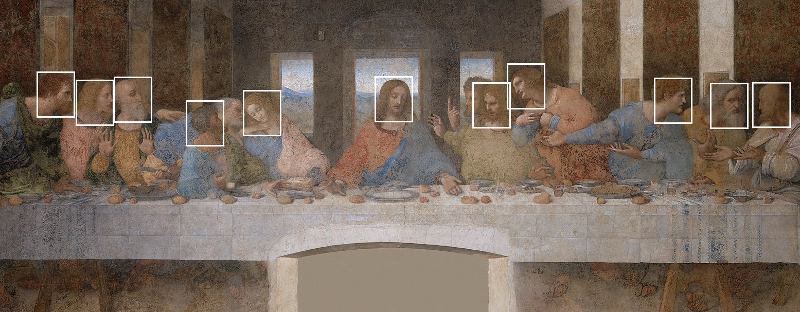
It's Easter time again and many of those who are Christian will be familiar with the story of the Last Supper and the subsequent betrayal of Jesus by his friend Judas. If Jesus was around today and didn't immediately die from a heart attack after hearing about the Bishop of Bling (who spent $500,000 just renovating his closet and flew first class to visit the poor in India), how many more of his disciples would betray him and each other by tagging him in selfies on Facebook? Why do people put the short term indulgence of social media ahead of protecting privacy in the long term? Is this how you treat your friends?

23 March 2016

John Goerzen: Free cars, sunsets, and Kansas

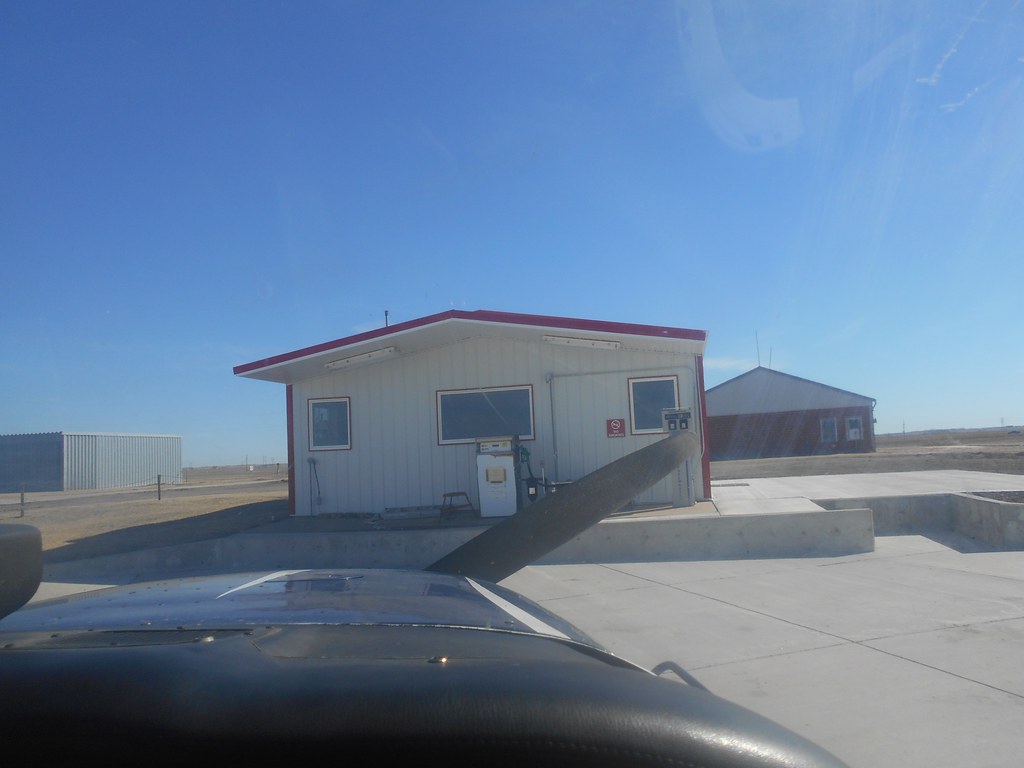
Will you have a car I can borrow? I asked. Sure. No charge. There s a sign telling you where to find the key. It is pretty common for small airports to have a car for a pilot to borrow when flying in. This lets a person go into town for lunch, or visit friends. And it s usually free, with a can to donate a few bucks or a polite request to fill up the tank when you re done. Still, when I had called ahead to ask about flying into the airport in a small town in north-central Kansas, I hadn t expected to be told to just waltz into the place and take the key. But they had no staff at the airport most of the time. So, to me another person from a small town it made perfect sense. Somehow, because of that phone call, this town I had visited once, maybe 25 years ago, seemed instantly familiar. My mom grew up in a small town near there. She wanted me to see where she grew up, to meet some people that meant a lot to her. As it s quite a distance from home, I offered to fly her there. So, Laura, mom, and I climbed into a Cessna one morning for the flight northwest. We touched down at the airport, and I pulled the plane up to the little terminal building. Smith Center, KS airport terminal After I took care of parking the plane, I went to find the car. Except the car was missing. Some other pilot had flown in the same day and was using it, according to the logbook on the desk. I called the number on a sign which rang to the sheriff s office and they confirmed it. According to the logbook, this was only the third time that car had been driven since Thanksgiving. Were we stuck at the airport a few miles out of down? Nope. Mom called the people we were going to meet, a wonderful couple in their upper 80s. They drove out to pick us up. I m rather glad the car was gone, because I had such a great time visiting with them. Norris told me about the days when the state highways were gravel how they d have to re-blade them every few days due to all the traffic. I heard about what happened when the people in that community heard of some folks in Africa in need of car equipment they modified a tractor to fit in a shipping container and shipped it to Africa, along with a lot of books, blankets, supplies, and anything else needed to fill up a huge shipping container. Sounds like something people around here would do. We drove around a couple of the small towns. The town my mom grew up in has seen better days. Its schools closed years ago, the old hotel whose owner gave her piano lessons is condemned, and many houses have been lost. But the town lives on. A new community center was built a few years ago. The grain elevator is expanding. Every time a business on Main Street closes, the grocery store expands a little bit: it s now a grocery store with a little hardware store and a little restaurant mixed in. The mall , as the locals jokingly call it. And, of course, two beautiful small churches still meet every Sunday. Here s the one my mom attended as a child. IMG_7085 We drove past the marker at the geographic center of the contiguous United States. Norris saw some other visitors, rolled down his windows, and treated them and us to an unexpected story of the time thousands of people banded together to completely build a house in a single day, just down the road. Smiles all around. So here I was, nearly 200 miles from home, in an unfamiliar town but one where I could just feel the goodness. After spending a few hours with these people, I felt like they were old friends. As I flew us home, I spotted one of my favorite Kansas sights: a beautiful sunset. From the plane, it almost looks like the land at the horizon turns blue like the ocean, and above it the last hint of sun paints the canvas-sky. In this week of controversy, politics, and reports of violence, it reminds me that we all get the privilege of sharing this beautiful Earth. I didn t ask anybody on that trip about their politics, religion, or opinions on any of the divisive issues of the day. Whether they agree with me on those things or not is irrelevant. I got to spend a day with good-hearted and delightful people, so I flew back with a smile. IMG_7099

Ingo Juergensmann: Xen randomly crashing server

It's a long story... an oddessey of almost two years... But to start from the beginning: Back then I rented a server at Hetzner until they decided to bill for every IP address you got from them. I got a /26 in the past and so I would have to pay for every IP address of that subnet in addition to the server rent of 79.- EUR/month. That would have meant nearly doubling the monthly costs. So I moved with my server from Hetzner to rrbone Net, which offered me a /26 on a rented Cisco C200 M2 server for a competitve price. After migrating the VMs from Hetzner to rrbone with the same setup that was running just fine at Hetzner I experienced spontaneous reboots of the server, sometimes several times per day and in short time frame. The hosting provider was very, very helpful in debugging this like exchanging the memory, setting up a remote logging service for the CIMC and such. But in the end we found no root cause for this. The CIMC logs showed that the OS was rebooting the machine. Anyway, I then bought my own server and exchanged the Cisco C200 by my own hardware, but the reboots still happen as before. Sometimes the servers runs for weeks, sometimes the server crashes 4-6 times a day, but usually it's like a pattern: when it crashes and reboots, it will do that again within a few hours and after the second reboot the chances are high that the server will run for several days without a reboot - or even weeks. The strange thing is, that there are absolutely no hints in the logs, neither syslog or in the Xen logs, so I assume that's something quite deep in the kernel that causes the reboot. Another hint is, that the reboots fairly often happened, when I used my Squid proxy on one of the VMs to access the net. I'm connecting for example by SSH with portforwarding to one VM, whereas the proxy runs on another VM, which led to network traffic between the VMs. Sometimes the server crashed on the very firsts proxy requests. So, I exchanged Squid by tinyproxy or other proxies, moved the proxy from one VM to that VM I connect to using SSH, because I thought that the inter-VM traffic may cause the machine to reboot. Moving the proxy to another virtual server I rented at another hosting provider to host my secondary nameserver did help a little bit, but with no real hard proof and statistics, just an impression of mine. I moved from xm toolstack to xl toolstack as well, but didn't help either. The reboots are still happening and in the last few days very frequent. Even with the new server I exchanged the memory, used memory mirroring as well, because I thought that it might be a faulty memory module or something, but still rebooting out of the blue. During the last weekend I configured grub to include "noreboot" command line and then got my first proof that somehow the Xen network stack is causing the reboots: This is a screenshot of the IPMI console, so it's not showing the full information of that kernel oops, but as you can see, there are most likely such parts involved like bridge, netif, xenvif and the physical igb NIC. Here's another screenshot of a crash from this night: Slightly different information, but still somehow network involved as you can see in the first line (net_rx_action). So the big question is: is this a bug Xen or with my setup? I'm using xl toolstack, the xl.conf is basically the default, I think:
## Global XL config file ##

# automatically balloon down dom0 when xen doesn't have enough free
# memory to create a domain
autoballoon=0

# full path of the lockfile used by xl during domain creation
#lockfile="/var/lock/xl"

# default vif script
#vif.default.script="vif-bridge"
With this the default network scripts of the distribution (i.e. Debian stable) should be used. The network setup consists of two brdiges:
auto xenbr0
iface xenbr0 inet static
address 31.172.31.193
netmask 255.255.255.192
gateway 31.172.31.254
bridge_ports eth0
pre-up brctl addbr xenbr0 auto xenbr1
iface xenbr1 inet static
address 192.168.254.254
netmask 255.255.255.0
pre-up brctl addbr xenbr1
There are some more lines to that config like setting up some iptables rules with up commands and such. But as you can see my eth0 NIC is part of the "main" xen bridge with all the IP addresses that are reachable from the outside. The second bridge is used for internal networking like database connections and such. I would rather like to use a netconsole to capture the full debug output in case of a new crash, but unfortunately this only works until the bridge is brought up and in place:
[ 0.000000] Command line: placeholder root=UUID=c3....22 ro debug ignore_loglevel loglevel=7 netconsole=port@31.172.31.193/eth0,514@5.45.x.y/e0:ac:f1:4c:y:x
[ 32.565624] netpoll: netconsole: local port $port
[ 32.565683] netpoll: netconsole: local IPv4 address 31.172.31.193
[ 32.565742] netpoll: netconsole: interface 'eth0'
[ 32.565799] netpoll: netconsole: remote port 514
[ 32.565855] netpoll: netconsole: remote IPv4 address 5.45.x.y
[ 32.565914] netpoll: netconsole: remote ethernet address e0:ac:f1:4c:y:x
[ 32.565982] netpoll: netconsole: device eth0 not up yet, forcing it
[ 36.126294] netconsole: network logging started
[ 49.802600] netconsole: network logging stopped on interface eth0 as it is joining a master device
So, the first question is: how to use netconsole with an interface that is used on a bridge? The second question is: is the setup with two bridges with Xen ok? I've been using this setup for years now and it worked fairly well on the Hetzner server as well, although I used there xm toolstack with a mix of bridge and routed setup, because Hetzner didn't like to see the MAC addresses of the other VMs on the switch and shut the port down if that happens.
Kategorie:

Daniel Pocock: GSoC 2016 opportunities for Voice, Video and Chat Communication

I've advertised a GSoC project under Debian for improving voice, video and chat communication with free software. Replacing Skype, Viber and WhatsApp is a big task, however, it is quite achievable by breaking it down into small chunks of work. I've been cataloguing many of the key improvements needed to make Free RTC products work together. Many of these chunks are within the scope of a GSoC project. If you can refer any students, if you would like to help as a mentor or if you are a student, please come and introduce yourself on the FreeRTC mailing list. If additional mentors volunteer, there is a good chance we can have more than one student funded to work on this topic. The deadline is Friday, 25 March 2016 The student application deadline is 25 March 2016 19:00 UTC. This is a hard deadline for students. Mentors can still join after the deadline, during the phase where student applications are evaluated. The Google site can be very busy in the hours before the deadline so it is recommended to try and complete the application at least 8 hours before the final deadline. Action items for students:
  • Register yourself on the Google Site and submit an application. You can submit applications to multiple organizations. For example, if you wish to focus on the DruCall module for Drupal, you can apply to both Debian and Drupal.
  • Join the FreeRTC mailing list and send a message introducing yourself. Tell us which topics you are interested in, which programming languages your are most confident with and which organizations you applied to through the Google site.
  • Create an application wiki page on the Debian wiki. You are permitted to edit the page after the 25 March deadline, so if you are applying at the last minute, just create a basic list of things you will work on and expand it over the following 2-3 days
Introducing yourself and making a strong application When completing the application form for Google, the wiki page and writing the email to introduce yourself, consider including the following details:
  • Link to any public profile you have on sites like Github or bug trackers
  • Tell us about your programming language skills, list the top three programming languages you are comfortable with and tell us how many years you have used each
  • other skills you have or courses you have completed
  • any talks you have given at conferences
  • any papers you have had published
  • any conferences you have attended or would like to attend
  • where you are located and where you study, including timezone
  • any work experience you already have
  • any courses, exams or employment commitments you have between 22 May and 24 August
  • anybody from your local free software community or university who may be willing to help as an additional mentor
Further reading Please also see my other project idea, for ham radio / SDR projects and my blog Want to be selected for Google Summer of Code 2016?. If you are not selected in 2016 We try to make contact with all students who apply and give some feedback, in particular, we will try to let you know what to do to increase your chances of selection in the next year, 2017. Applying for GSoC and being interviewed by mentors is a great way to practice for applying for other internships and jobs.

18 March 2016

Daniel Pocock: FOSSASIA 2016 at the Science Centre Singapore

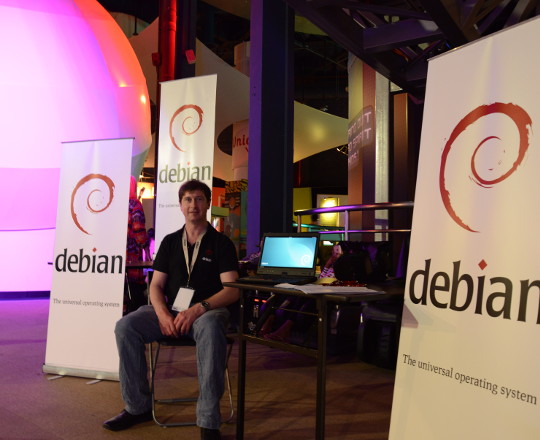
FOSSASIA 2016 is now under way. The Debian, Red Hat and Ring (Savoir-Faire Linux) teams are situated beside each other in the exhibit area. Thanks to Hong Phuc from the FOSSASIA team for helping us produce these new Debian banners Google Summer of Code 2016 If you are keen to participate in GSoC 2016, please feel free to come and discuss it with me in person or attend any of my sessions at FOSSASIA this weekend. Please also see my blog about getting selected for GSoC, attending a community event like FOSSASIA is a great way to distinguish yourself from the many applications we receive each year. (Debian Outreach / GSoC information). Real-time communications, WebRTC and mobile VoIP at FOSSASIA There are a number of events involving real-time communications technology throughout FOSSASIA 2016, please come and join us at these:
Event Time
Hands-on workshop with WebRTC and mobile VoIP (1 hr) Saturday, 14:30
Talk: Free Communications with Free Software (20 min) Saturday, 17:40
Ring: a decentralized and secure communication platform Sunday, 13:00
and the full program details, including locations, are in the schedule.

13 March 2016

Ingo Juergensmann: Letsencrypt: challenging challenges solved

A few weeks ago I was wondering in Letsencrypt: challenging challenges about how to setup Letsencrypt when a domain is spread across several virtual machines (VM). One of the possible solutions would be to consolidate everything on one single VM, which is nothing I would like to do. The second option would need to generate the Letsencrypt certs on the webserver and copy over the certs to the appropriate VM on a regular basis or event driven. The third option is to use a network share - and this is what I'm using right now. So, my setup is as following after I solved the GlusterFS issue with rpcbind binding to all interfaces, although it has been configured to only listen to certain interfaces (solution was: simply remove all NFS related stuff): On Dom0 (or the host machine) I run GlusterFS as a server on a small 1 GB LVM as part of a replicate with the VM that will do the actual Letsencrypt work:
Volume Name: le
Type: Replicate
Status: Started
Number of Bricks: 1 x 2 = 2
Transport-type: tcp
Bricks:
Brick1: 192.168.x.254:/srv/gfs/le
Brick2: 192.168.x.1:/srv/gfs/le
This is to ensure that on reboot of the machine every other VM using Letsencrypt certs can mount the GlusterFS share, because the host machine will be there for sure whereas the other VM generating the certs with the letsencrypt.sh script might still be booting. And when the GlusterFS share is missing services will not start on the other VMs because of the missing certs, of course. So, the replica on the virtualization host (Dom0) is only acting as some kind of always-being-available network share, because, well, the other VM will not always be there... for example during a kernel update when a reboot is required. The same setup is on my mailserver, acting as the second GlusterFS brick of that replica drive. The mailserver hosts the bind9 nameserver as well and I might do something that new domains with Letsencrypt certs get added to my DNSSEC setup as well. Of course, when the letsencrypt.sh script creates or updates the certs, it needs the certs being mounted in that configured location, so I needed to add a line to /etc/fstab:
192.168.x.254:/le /etc/letsencrypt.sh/certs glusterfs noexec,nodev,_netdev 0 0
Basically the same needs to be done on the other VMs where you want to use the certs as well, but you may want to mount the share as read-only there. The next step was a little more tricky. When letsencrypt.sh generates new certs, Letsencrypt will contact the webserver for that domain to respond to the ACME challenge. This requires that on each VM you want to use letsencrypt you have to run a webserver. Well, actually at least that there is somewhere a webserver that can answer these requests for that specific domain... Now, the setup of the webserver (Apache in my case) is like this: I'm using the Apache macro module to make it more easy, so I generated two small configs in /etc/apache/conf-available and enabled them bei a2enconf: letsencrypt-proxy.conf to do some setup for proxying the ACME challenges to a common website called acme.example.org. And then letsencrypt-sslredir.conf to setup SSL redirection when everything is in place and the domain can be switched over to HTTPS-only. letsencrypt-proxy.conf:
<Macro le_proxy>
ProxyRequests Off
<Proxy *>
Order deny,allow
Allow from all
</Proxy>
ProxyPass /.well-known/acme-challenge/ http://acme.windfluechter.net/
ProxyPassReverse / http://% HTTP_HOST /.well-known/acme-challenge/
</Macro>
letsencrypt-sslredir.conf:
<Macro le_sslredir>
RewriteEngine on
RewriteCond % HTTPS !=on
RewriteRule . https://% HTTP_HOST % REQUEST_URI [L]
</Macro>
So, after all the setup of a virtual host for Apache looks like this:
<Macro example.org>
(lots of setup stuff)
</Macro>
<VirtualHost 31.172.31.x:443 [2a01:a700:4629:x::1]:443>
Header always set Strict-Transport-Security "max-age=31556926; includeSubDomains"
SSLEngine on
# letsencrypt certs:
SSLCertificateFile /etc/letsencrypt.sh/certs/example.org/fullchain.pem
SSLCertificateKeyFile /etc/letsencrypt.sh/certs/example.org/privkey.pem
SSLHonorCipherOrder On
Use example.org
Use le_proxy
</VirtualHost>
<VirtualHost 31.172.31.x:80 [2a01:a700:4629:x::1]:80>
Use example.org
Use le_proxy
Use le_sslredir
</VirtualHost>
le_sslredir is only needed when you are sure that you want all traffic being redirected to HTTPS. For example when your blog is listed on planet.debian.org or other Planets you might want to omit this from your HTTP config because bug #813313 is not yet solved. In the end, when creating a new Letsencrypt cert, you need to add the le_proxy macro to your website, add the domain to letsencrypt.sh config in /etc/letsencrypt.sh/domains.txt and then the scripts will request a new cert from Letsencrypt, handling the ACME challenge stuff via the URL redirection in le_proxy being redirected to your acme.exmaple.org site and finally writes your new cert to the GlusterFS share. From that share you can then use the new cert on all needed VMs, be it your mailserver, webserver or XMPP/SIP server VMs. At least this works for me.
Kategorie:

12 March 2016

Daniel Pocock: Google Summer of Code opportunities for ham radio and SDR

I've started preparing some ideas for Google Summer of Code projects I'd be willing to help mentor this year and one of them is for ham radio, with a focus on software defined radio (SDR). Can you help? If you can help as a co-mentor or simply help refer students for this project please get in touch with me. Ander the terms of the program students are paid a $US 5,500 stipend by Google and source code is fully published under a genuine free software license . Details about the project and how students can apply Students applying for this project are invited to submit two applications, one under the GNU Radio project and another under the Debian Project. The aim of this project is to make ready-to-run solutions for ham radio enthusiasts. The typical use case is a ham who has a spare computer in his shack, he should be able to boot the computer from DVD or USB stick using the Debian Ham Radio Live Blend or the GNU Radio Live SDR and have a functional transceiver within a few minutes. A student may not be able to do everything required for this project in one summer. We are looking for a student who can make any incremental improvement to bring us closer to this goal. Here are some of the tasks that may be involved:
  • survey the existing GNU Radio samples for ham radio, many are listed on the HamRadio page of the GNU Radio wiki.
  • design user interface improvements for the samples to make them more intuitive to new users and traditional radio operators. Consider how they can interact with Hardware such as a VFO tuning knob, PTT microphone switch and even a morse key.
  • look through the other packages in the Debian Ham Radio metapackage list and consider how they could interact with GNU Radio. In particular, we are interested in the use of message bus solutions, such as ZeroMQ or D-Bus - for example, GNU Radio could send alerts on the bus when incoming signals exceed the squelch threshold. GNU Radio could also receive events over a message bus, for example, patching GPredict to send Doppler shift information.
  • developing and packaging libraries needed to process digital voice transmissions
  • look at how one or more of the samples can be deployed as a Debian package so users can just install the package and have a working radio
Prerequisites The following experience is highly desirable:
  • ham radio license
  • GNU/Linux skills (Debian or Ubuntu or another distribution like Fedora)
  • use of version control systems (Git)
  • C++ or Python or both
Mentor(s)
  • Daniel Pocock (VK3TQR/M0GLR/HB9FZT)
Application process To apply
  • please introduce yourself on both the GNU Radio mailing list and the Debian Hams mailing list
  • Fill in the formal application for both GNU Radio and Debian
  • Pick some items from the list above or feel free to suggest another piece of work relevant to this theme. Give us a detailed, week-by-week plan for completing the task over the summer.
  • find at least one other member of the GNU Radio or Debian community who is willing to be a co-mentor on the project. Please try communicating with us over IRC or email and give us examples of your existing work on Github or elsewhere.

11 March 2016

Steinar H. Gunderson: Agon and the Candidates tournament

The situation where Agon (the designated organizer of the Chess World Championship, and also the Candidates tournament, the prequalifier to said WC) is trying to claim exclusive rights of the broadcasting of the moves (not just the video) is turning bizarre. First of all, they have readily acknowledged they have no basis in copyright to do so; chess moves, once played, are facts and cannot be limited. They try to jump through some hoops with a New York-specific doctrine (even though the Candidates, unlike the World Championship, is played in Moscow) about hot news , but their main weapon seems to be that they simply will throw out anyone from the hall who tries to report on the moves, and then try to give them only to those that promise not to give them on. This leads to the previously unheard-of situation where you need to register and accept their terms just to get to watch the games in your browser. You have to wonder what they will be doing about the World Championship, which is broadcast unencrypted on Norwegian television (previous editions also with no geoblock). Needless to say, this wasn't practically possible to hold together. All the big sites (like Chessdom, ChessBomb and Chess24) had coverage as if nothing had happened. Move sourcing is a bit of a murky business where nobody really wants to say where they get the moves from (although it's pretty clear that for many tournaments, the tournament organizers will simply come to one or more of the big players with an URL they can poll at will, containing the games in the standard PGN format), and this was no exception ChessBomb went to the unusual move of asking their viewers to download Tor and crowdsource the moves, while Chessdom and Chess24 appeared to do no such thing. In fact, unlike Chessdom and ChessBomb, Chess24 didn't seem to say a thing about the controversy, possibly because they now found themselves on the other side of the fence from Norway Chess 2015, where they themselves had exclusive rights to the PGN in a similar controversy although it would seem from a tweet that they were perfectly okay with people just re-broadcasting from their site if they paid for a (quite expensive) premium membership, and didn't come up with any similar legal acrobatics to try to scare other sites. However, their ToS were less clear on the issue, and they didn't respond to requests for clarification at the time, so I guess all of this just continues to be on some sort of gentleman's agreement among the bigger players. (ChessBomb also provides PGNs for premium members for the tournaments they serve, but they expressly prohibit rebroadcast. They claim that for the tournaments they host, which is a small minority, they provide free PGNs for all.) Agon, predictably, sent out angry letters where they threatened to sue the sites in question, although it's not clear at all to me what exactly they would sue for. Nobody seemed to care, except one entity TWIC, which normally has live PGNs from most tournaments, announced they would not be broadcasting from the Candidats tournament. This isn't that unexpected, as TWIC (which is pretty much a one-man project anyway) mainly is about archival, where they publish weekly dumps of all top-level games played that week. This didn't affect a lot of sites, though, as TWIC's live PGNs are often not what you'd want to base a top-caliber site on (they usually lack clock information, and moves are often delayed by half a minute or so). I run a hobby chess relay/analysis site myself (mainly focusing on the games of Magnus Carlsen), though, so I've used TWIC a fair bit in the past, and if I were to cover the Candidates tournament (I don't plan to do so, given Agon's behavior, although I plan to cover the World Championship itself), I might have been hit by this. So, that was the background. The strange part started when worldchess.com, Agon's broadcasting site, promptly went down during the first round of the Candidates tournament today Agon blamed DDoS, which I'm sure is true, but it's unclear exactly how strong the DDoS was, and if they did anything at all to deal with it other than to simply wait it out. But this lead to the crazy situation where the self-declared monopolist was the only big player not broadcasting the tournament in some form. And now, in the trully bizarre move, World Chess is publishing a detailed rebuttal of Agon's arguments, explaining how it is bad for chess, not juridically sound, and also morally wrong. Yes, you read that right; Agon's broadcast site is carrying an op-ed saying Agon is wrong. You at least have to give them credit for not trying to censor their columinst when he says something they don't agree with. Oh, and if you want those PGNs? I will, at least for the time being, be pushing them out live on http://pgn.sesse.net/. I have not gone into any agreement with Agon, and they're hosted in Norway, far from any New York-specific doctrines. So feel free to relay from them, although I would of course be happy to know if you do.

10 March 2016

Antoine Beaupr : Trying out Keybase

I was privileged enough to get access to the alpha preview of Keybase.io. Last year, the project raised 11M$ in venture capital and they seem to be attacking the hard problems, so it is a serious project, worth considering for any cryptography hacker like me. This was obviously discussed elsewhere previously but since Keybase has evolved a bit since then, I figured it would be worth adding my grain of salt.

The elite alpha problem My first problem with Keybase was of course that I wasn't in the elite club of invited people. Somehow, I finally got in but the problem remains for the everyone else. In my case, it was the Keybase filesystem announcement that brought my attention back to the project, although I have yet to test that itself - yet another invite-only problem (need to email chris@keybase.io to get access, I guess). Still, 10GB of storage might be interesting for some people, but considering the number of hurdles or "friction", as they say, that needs to be jumped over to get access, I am not sure how much traction this will get for now. The project has been in alpha for a while now (more than a year) with no announced public beta just yet, which is way slower than similarly challenging projects with less capital. Let's encrypt, as a comparison, was publicly announced in 2014 and by the end of 2015, the public beta was opened.

Private key leakage My second major concern is that Keybase does worrisome things to private key material. If you tell it to import your regular GPG keys, it will copy them into the keybase keyring, which is already a problem: now you have two places where you store sensitive secrets. But worse, Keybase offers you to upload your private key material on the server, without clearly and explicitely exposing the potential risks that means to the user. The key, presumably, is encrypted (at least that is what I can parse from the Keybase privacy policy). Yet this is still a concern: a determined attacker (e.g. the government or another malicious entity) could force Keybase to give up the encrypted private key material and install sniffers that would reveal the passphrase that would allow decryption and impersonation of the related identity. That is a huge deal. This is what caused Hushmail's demise in 2007: they had similar promises about how they had a "secure" email (in this case) service based on OpenPGP, but since they key was stored on the server, they only had to serve a malicious applet to victims and were able to give cleartext data to the US government (12 CDs!) under a Mutual Legal Assistance Treaty with Canada. In Keybase, When I generate a new key, it asks me if I want to upload the key to their servers, and "Yes" is chosen as a default, so it is clearly a policy that is encouraged. This is presumably to enable browser-based crypto, yet this could be done by storing keys within the browser, not on the server. The mere possibility that the client can meddle with secret key material in such a way is a problem. Even if uploading secret keys to the server is optional, the fact that it is a possibility widens the attack surface on the client significantly. GPG has been working on isolating private key operations to a different process (gpg-agent) or smart cards, SSH has privilege seperation. The idea of uploading secret key material online is so beyond current practices that it should bring the project to a full stop already. My private key material is pretty sensitive. I am a Debian developer: if someone gets access to that key, they can upload arbitrary code for thousands of packages, affecting thousands if not millions of users. That is a huge deal, and I am not ready to give that power to an arbitrary third party that I know little about.

Privacy policy issues Furthermore, the Keybase privacy policy explicitely states that "Logs of this information may persist for an indefinite period", which include, and I quote:
  • Your computer s IP address
  • Your preferences and settings (time zone, language, privacy preferences, application preferences, etc.)
  • The URL of the site that referred you to the Service
  • The buttons and controls you clicked on (if any) within the Service
  • How long you used the Service and which parts and features you used
  • Session times and lengths
For a company working to improve user's privacy, this is a pretty bad policy. It exposes Keybase users to undue surveillance, on a lot of private information that is not necessary to operate the service. I haven't actually read the remaining of the policy, as I was already scared as hell and figure I would just log off for now and try not to add any extra personal information in that already growing pile. Let's mention, while I'm here, that the keybase commandline client has this odd way of working that it forks a daemon in the background all the time, even to run just keybase status. One has to wonder if this thing is included in the surveillance data above, which would make the keybase client an amazing surveillance device in itself. To stop all this, you need:
keybase logout
keybase ctl stop
Not quite obvious...

Usability issues Which brings me to a series of usability issues I have found while working with Keybase. Having worked on usability myself in the Monkeysphere project, I understand how hard those problems can be. But right now, the fact is that keybase is only a commandline client, with some web-based sugar sprinkled on top. I recognize the huge efforts that have been done to make the user experience (UX) as easy as possible through the commandline, but this is definitely not "grand public" material yet. Even as a OpenPGP hacker, Keybase can get confusing. Since it has its own separate keyring from GPG, things that used to be obvious before are suddenly new things to learn. For example, I originally generated a key for anarcat@debian.org in keybase, thinking it would be a separate thing from my current GPG identity. Well, that ended up creating a new key in my GPG keyring, duplicating my existing identity, with no way for me to tell this was a Keybase copy. This could have ended up on the keyservers and confuse anyone looking for my PGP key.

Revoking keys So I revoked that key, which, in itself, is not such an obvious process either. I first had to "drop" the key:
keybase pgp drop '010143572d4e438f457a7447c9758804cc7be44c1ee2b7915c3904567d0a3fb5cf590a'
To find that magic number, I had to go on the website and click through the PGP key to end up on the revoke link which told me which magic string to put. The web UI was telling me I could use keybase status to get that information, but I couldn't find that in the output here:
$ keybase status
Username:      anarcat
Logged in:     no
Device:
    name:      angela
    ID:        070f6a13f2a66afbb463f49dadfd4518
    status:    active
Keybase keys:  unlocked
Session:       anarcat [salt only]
KBFS:
    status:    not running
    version:
    log:       /home/anarcat/.cache/keybase/keybase.kbfs.log
Service:
    status:    running
    version:   1.0.14-1
    log:       /home/anarcat/.cache/keybase/keybase.service.log
Platform Information:
    OS:        linux
    Runtime:   go1.5.3
    Arch:      amd64
Client:
    version:   1.0.14-1
Desktop app:
    status:    not running
    version:
    log:       /home/anarcat/.cache/keybase/Keybase.app.log
Config path:   /home/anarcat/.config/keybase/config.json
Default user:  anarcat
Other users:
command-line client:
    keybase status [pid: 14562, version: 1.0.14-1]
So keybase drop "deletes" the key from the keybase client (and presumably the server). One problem here is that we have three different verbs to mean the same thing: in some places, the website says "deleted" (in the web graph), the commandline client uses "drop" and everyone else using PGP in the world uses "revoke". So what is it? Also note that just dropping that key is not enough to eradicate that key: you still need to generate and import a revocation certificate on GPG's side as well, for that key. This makes sense, because you may have imported that key and you may not want to destroy it when you remove it from keybase, but there could be a little better guessing and UX here as well.

Password usage Then another problem is that, when you signup on the commandline, it asks you to choose a passphrase. It's not clear at all from the UI what that passphrase is for. Is it to protect the private key material? To login the website? Both? It turns out it is actually to login to the website and the Keybase API. It could also be the key to the private key material, but I haven't quite figured that out yet. Similarly, the "paper devices" are a little confusing to me as well. The registration process is fairly insistent that I need to write a series of secret words down on a piece of paper and put it my wallet. This is based on the idea that you can use that key to recover your account and setup new devices. However, it is not made clear at all how those credentials should be protected or used. What if I lose my wallet? What do I do then? Is it okay if i write it on the back of my laptop instead? I know it sounds like stupid questions to crypto geek, but it's definitely stuff people will do, and education, at all levels, is necessary here.

The existing web of trust Finally, I found it surprisingly counter-intuitive to sign keys with keybase. I was assuming the whole point of the thing was to expand the web of trust, but it seems their mission lies somewhere else: there is no facility to sign keys directly in keybase. You sign statements on various social sites (Github, Twitter, Reddit...) but doing traditional key exchanges seems to be off limits. My obvious use case was to sign my existing key material with my newly generated anarcat@keybase.io key, so that keybase would become another way of verifying my identity. Well, this is not possible with keybase directly - you still have to go through the regular:
gpg --sign-key DEADBEEF
Which is really unfortunate, because some craaaazy people like me insist on doing in person, actually secure key exchanges sometimes, and the tools to do this right now (mainly gpg, caff and monkeysign) really need a lot of love and help. Keybase could have helped a lot in pushing those initiatives forward and bring new ways of doing secure key exchanges, instead of only lowering the standards on cryptographic identity.

Usual proprietary startup rant I can't help but finish by noticing that the whole basic problem with Keybase is more fundamental than a few usability issues, which can all be fixed fairly easily. Keybase.IO is a web-based service that is entirely proprietary. The client is freely downloadable and free software - but the server side is not. This makes us rely on a central point of failure and the goodwill of those operators to not only keep the service running (for free?) indefinitely, but to protect us against all attackers, state-run or otherwise. This is definitely against basic free software principles and the open architecture of the internet federation, well embodied in the Franklin street statement. Online services should be decentralized and open like the OpenPGP keyservers have always been, period.

Conclusion I am curious to see where Keybase brings us, as a community. So far, I am concerned about centralization and devaluation of the web of trust as cryptographic system. I do not believe that trusting multiple corporate social networking sites bring much benefit to our security, although it does improve usability significantly and is certainly better than TOFU, so that part of the project is definitely interesting, especially since it allows leveraging classical internet protocols like DNS and HTTPS. Key exchange is a critical problem that still hasn't properly been resolved in the cryptographic community. Most efforts at building communication tools (say like Signal or Telegram) mostly ignore the problem and expect people to read up strings of numbers or rely on synchronous communications (see the Axolotl rachet for Signal's take on it). Keybase's attempts at fixing this are great, but needs much more work to actually resolve the PKI issues in a significant way. More fundamentally, the practice of storing keys on the servers should just stop: it is a definite no go for me, and a classic crypto mistake that has bitten way too many people. In my mind, it discredits the whole project. The point of OpenPGP is end to end encryption across devices: storing the keys on a server breaks that apart, and doesn't improve much on the existing HTTPS security systems already in place on the web. It is especially a problem given the new waves of attacks on cryptography from western governments, from the UK to California... Until those issues are resolved, I can't get myself to recommend Keybase to anyone just yet.

Post-scriptum Note to Keybase developers: I have considered filing issues regarding the above, but unfortunately, I was unable to filter through the gigantic github issues list for duplicates, and didn't have time to file detailed reports for everything. I apologize for bypassing those usual conventions. If you want to try out Keybase to make your own opinion, I do have 4 invites I can give away, but I will do so only if you need to test specific issues. Otherwise, I note that there is a Request For Package for the Debian package to become official, that Debian developers (or Keybase developers!) may be interested in completing.

Michal &#268;iha&#345;: Weblate 2.5

After almost six months of development Weblate 2.5 has been released. It brings lot of improvements and it's quite hard to point few ones. The most important ones include support for Python 3, reports generators, placeables highlighting, extended keyboard shortcuts, configurable dashboard or group based ACLs. Full list of changes for 2.5: If you are upgrading from older version, please follow our upgrading instructions. You can find more information about Weblate on https://weblate.org, the code is hosted on Github. If you are curious how it looks, you can try it out on demo server. You can login there with demo account using demo password or register your own user. Weblate is also being used https://hosted.weblate.org/ as official translating service for phpMyAdmin, OsmAnd, Aptoide, FreedomBox, Weblate itself and many other projects. Should you be looking for hosting of translations for your project, I'm happy to host them for you or help with setting it up on your infrastructure. Further development of Weblate would not be possible without people providing donations, thanks to everybody who have helped so far! The roadmap for next release is just being prepared, you can influence this by expressing support for individual issues either by comments or by providing bounty for them.

Filed under: English Weblate 0 comments

7 March 2016

Laura Arjona Reina: More involved in the Debian Publicity team

More than 6months since I am Debian Developer and I m learning new things every day and trying to organize my time better to accomplish all the things I would like to do.
In September I became publicity delegate (and we joined Press+Publicity into the Publicity team). We continued discussing how the team works, and hopefully revitalizing it.
I became more active in the IRC channel, installed quassel in my home server and then I could read all the backlog too.
I ve tried to contribute more to Debian Project News (less than I d like), to bits.debian.org and to the social networks (Pump.io and GNU Social).
Since November I ve been failing to call for meeting but finally on 2016/02/29 we had it. I hope to resume semi-regular meetings each 1-2 months.
At the beginning of the year I helped to handle all the news and announcements about the loss of Ian Murdock. It has been hard work but I feel that I could turn some of the sadness into something useful for others. There is still work to be done: parse the condolence emails and setup a website to publish them.
About bits.debian.org, DPN and announcements, I ve learned how to perform the parts of the work that require membership permissions (building the blog, actually publishing the announcement, sending the DPN/announcement mail to the corresponding lists). Not without mistakes, but I guess no matter how much you care, sometimes things happen, and then you learn and then things get better and you too.
Some things I discovered Some clarifications
  • I ve written hard word 4 times in this post (well, 5 now!) but that does not mean I don t want to do those tasks. I feel going out of my comfort zone and that s ok, needed to learn and experience. I m having a good time in Debian in the last months, as always!
  • We re 4 people delegated and more team members and contributors, so anybody could think: Publicity is well covered, let s go to do other things in Debian . It s perfectly ok if you want to do other things in Debian, but please consider combining your contributions with some minutes for the publicity team. Aiming to be the universal operating system, our community and target audience is big and diverse and we d like to show that diversity to the world. The more we are, the merrier!
Comments?
You can comment about this blog post in this pump.io thread.

Filed under: My experiences and opinion Tagged: Communities, Contributing to libre software, Debian, Developer motivations, English, Free Software

Ritesh Raj Sarraf: Laptop Mode Tools 1.69 Released

Today is an auspicious day. For those who know (or follow) the Hindu religion will be familiar; Today is Maha Shivaratri On this day, It is great delight for me to be able to release Laptop Mode Tools, version 1.69 This release adds on many bug fixes and some enhancements. There is a new module (disabled by default) for cpuhotplug. The release tarball also includes a basic PolicyKit file for convenience, that packagers can use for the Laptop Mode Tools Graphical Configuration Interface. Apart from the policykit file, the graphical invocation script has been slightly fine tuned to work under pkexec and sudo. Some defaults have been tuned based on user requests - This should improve in situations where your External USB Mouse/Keyboard used to suspend after idle time periods. In January this year, I had the pleasure of meeting Bart Samwel in person at his office in Amsterdam. For those who don't know, Bart started off Laptop Mode Tools around 2004, and I took over maintenance around 2008. Meeting in person has been a delight, especially with the ones you work over email for years; This is something I cherished last year at Debconf 15 too. IMPORTANT:- Until now, Laptop Mode Tools project was hosted on Bart's webserver. Now, as you read, the homepage and mailing lists have changed. I'd urge all users to subscribe to the new mailing list and update their bookmarks. Homepage: https://github.com/rickysarraf/laptop-mode-tools/wiki Mailing List: https://groups.google.com/d/forum/laptop-mode-tools Note: For users who are not comfortable with creating a google a/c for mailing list subscription, you should still be able to subscribe with your personal email address. Please follow the steps in the mentioned homepage. Since last couple releases, I've also been providing RPM packages for Opensuse Tumbleweed and Fedora. The same should be available on the github release page. The Debian package will follow shortly in the Debian repository. Thank you and a Happy Maha Shivaratri. Har Har Mahadev.
1.69 - Mon Mar  7 17:44:42 IST 2016
    * Wait for all forked modules to complete
    * Add new module: cputhotplug
    * CPU online/offine is reverse here
    * Fix shell syntax
    * Install policykit file
    * Detach polling daemon from main process
    * Do NOT touch speed if throttling is not set
    * Restore to MAX speed when back to AC Power
    * Fix manpage about DISABLE_ETHERNET_ON_BATTERY setting
    * Update documentation about ENABLE_LAPTOP_MODE_ON_AC setting
    * Change powersaving default for USB class devices
    * Drop usbhid from default (black)list
    * Add usb keyboard driver to the list default list
    * Be consistent with passing args to LMT from different invokers
    * Honor device plug/unplug events on a per device basis;
      like how Chromium initially submitted this patch
    * Also be consistent with option in the event parser
    * Update links in README.md
    * Update new github homepage location
    * Add lmt-config-gui shell script

Categories:

Keywords:

Like:

6 March 2016

Thorsten Glaser: mksh R52c, paxmirabilis 20160306 released; PA4 paper size PDF manpages

The MirBSD Korn Shell R52c was published today as bugfix-accumulating release of low upto medium importance. Thanks to everyone who helped squashing all those bugs; this includes our bug reporters who always include reproducer testcases; you re wonderful! MirCPIO was also resynchronised from OpenBSD, to address the CVE-2015- 1193,1194 test cases, after a downstream (wow there are so many?) reminded us of it; thanks!
This is mostly to prevent extracting ../foo either directly or from a symlink(7) from actually ending up being placed in the parent directory. As such the severity is medium-high. And it has a page now initially just a landing page / stub; will be fleshed out later. Uploads for both should make their way into Debian very soon (these are the packages mksh and pax). Uploading backports for mksh (jessie and wheezy-sloppy) have been requested by several users, but none of the four(?) DDs asked about sponsoring them even answered at all, and the regular (current) sponsors don t have experience with bpo, so SOL I ve also tweaked a bug in sed(1), in MirBSD. Unfortunately, this means it now comes with the GNUism -i too: don t use it, use ed(1) (much nicer anyway) or perlrun(1) -p/-n Finally, our PDF manpages now use the PA4 paper size instead of DIN ISO A4, meaning they can be printed without cropping or scaling on both A4 and US-american letter paper. And a from the last announcement: we now use Gentium and Inconsolata as body text and monospace fonts, respectively. (And propos, the website ought to be more legible due to text justification and better line spacing now.) I managed to hack this up in GNU groff and Ghostscript, thankfully. (LaTeX too) Currently there are PDF manpages for joe (jupp), mksh, and cpio/pax/tar. And we had Gr nkohl today! Also, new console-setup package in the WTF APT repository since upstream managed to do actual work on it (even fixed some bugs). Read its feed if interested, as its news will not be repeated here usually. (That means, subscribe as there won t be many future reminders in this place.) The netboot.me service appears to be gone. I ll not remove our images, but if someone knows what became of it drop us a message (IRC or mailing list will work just fine). PS: This was originally written on 20160304 but opax refused to be merged in time Happy Birthday, gecko2! In the meantime, the Street Food festival weekend provided wonderful food at BaseCamp, and headache prevented this from being finished on the fifth. Update 06.03.2016: The pax changes were too intrusive, so I decided to only backport the fixes OpenBSD did (both those they mentioned and those silently included), well, the applicable parts of them, anyway, instead. There will be a MirCPIO release completely rebased later after all changes are merged and, more importantly, tested. Another release although not set for immediate future should bring a more sensible (and mksh-like) buildsystem for improved portability (and thus some more changes we had to exclude at first). I ve also cloned the halfwidth part of the FixedMisc [MirOS] font as FixedMiscHW for use with Qt5 applications, xfonts-base in the WTF APT repo. (Debian #809979) tl;dr: mksh R52c (bugfix-only, low-medium); mircpio 20160306 (security backport; high) with future complete rebase (medium) upstream and in Debian. No mksh backports due to lacking a bpo capable sponsor. New console-setup in WTF APT repo, and mksh there as usual. xfonts-base too. netboot.me gone?

4 March 2016

Daniel Pocock: Machine Learning for Hackers with Debian and Ubuntu

Data Science and Machine Learning are hot topics at the moment. Many people are considering how to extend their skills into these areas and many solutions have appeared, including full online degrees, free online courses combined with free software and for those who prefer hard copy, a staggering choice of books on the topic. One of those books is O'Reilly's Machine Learning for Hackers by John Myles White and Drew Conway. The book uses R to demonstrate a series of techniques for analysis and prediction. The book offers a great opportunity to simultaneously get an introduction to basic machine learning techniques and also an introduction to the increasingly popular R platform. On page 11 they list all the major R packages needed to run their examples (available on Github). I had a look over this list to see how many could be installed on a Debian system using apt-get and found that about half of them were already present. Five of them and one dependency, however, were not already available so I've whipped up packages for them and they are now in jessie-backports for all users of the current stable release. If you are following the exercises in this book, you can get all the software you need with one convenient command:
$ sudo apt-get install -t jessie-backports \
  r-cran-ggplot2 r-cran-lme4 r-cran-rcurl \
  r-cran-reshape r-cran-xml r-cran-arm \
  r-cran-glmnet r-cran-igraph r-cran-lubridate \
  r-cran-rjsonio r-cran-tm
Thanks to all those who already packaged other parts of R and backported the relevant packages. Note that the RJSONIO package's authors have not provided a valid free software license so it is in non-free. It is there to support people using the book but I would encourage people to use RJSON for any new projects as it does have a valid license.

Arturo Borrero Gonz lez: How are we training to climb Mulhacen

Alcazaba, Punta de la Cornisa and Mulhac n 3.479 m

I have been in some adventures with a group of friends for a couple of years now. We call ourselves Los Extraviaos (a quick translation to english is perhaps The Wanderers).

We like nature adventures. During summer we use to do water adventures (like rivers trekking, waterfall climbing, snorkeling, canyoning, rafting, kayaking and so on). During winter and spring, we use to do trekking, hiking and mountaineering (low altitudes, keep reading).

For this sport season, one of our main milestones is to climb the second most prominent mountain in Spain: Mulhacen, with 3.479 m over sea level, during summer (June).
From an alpinist point of view, this isn't a very big deal, since most of the mountain's snow and ice is completely melted and the altitude is not that high.
However, from our amateur mountaineering point of view we will be taking a lot of kilometres to walk and a lot of elevation gain uphill (almost 1.600 m), which is in fact a thing to take into account.
Anyway, Mulhacen is considered 'high mountaineering' and all cautions should be taken both during preparation/training and during the climbing of the mountain itself.

To train our bodies and minds we are climbing lower mountains. We have climbed 3 or 4 already, and will continue to climb more in upcoming moths until we go to Mulhacen.
Also, it's important to climb mountains in different weather conditions. We need to train how to overcome wind, snow, storm, cold, night situations. The way we learn most is facing new, challenging situations.

We started by going to the summit of 'El Aljibe', 1.094 m over sea level, with about 500 m elevation gain uphill during 13 km.
This time, the weather was very windy. A video of the summit moment:


A pic of the group:


Next was the 'Torrecilla' peak. The summit is at 1.919 m over sea level, with about 900 m elevation gain uphill during 15 km.
This time we faced a snowy trekking.
Here a music video of that day:


The Torrecilla peak is in fact challenging with snow, so we went a second time, with even more snow and wind:


This second time we faced winds of 70km/h which, due to wind-chill, resulted in a very cold day.

We also went to Sierra de Grazalema Natural Park, in a hard trekking under snowfall:


This time we walked about 15 km with about 500m elevation gain uphill, while enjoying this kind of environment:


What's next: more mountains! We plan to reach 2.069 m over sea level next week in 'La Maroma' and keep doing steep trekking in upcoming months until we go in June to Mulhacen.

It should be very funny to do some FLOSS contribution from the summit of a mountain. Do you know of someone who did that?

1 March 2016

Ritesh Raj Sarraf: Linux Power Savings 2016

Having moved to a new place, now at times, I also have to deal with power outages. As heat increases, the power outages will be much longer and more frequent. So much, that UPS and Power Inverters run out. Such are ideal times to measure idle power consumption for my laptop. Here's what my default (and idle) OS looks like. It should be standard to most "typical" users. Some minor odds could be apport, dnsmasq, and maybe, tor. Also, thanks to systemd, there are some native services which are now converted to socket activation based ones. There's also Laptop Mode Tools for userspace power savings. But huge thanks to Intel's work in making the kernel more power efficient. With things like Runtime PM and Intel P-State, we can now define, default and aggressive power-savings modes, helping conserve more power. We still have challenges with things like binary-only drivers; and also stock GPL drivers but with an external firmware blob. There have been many instances when my previous machines (which had both) ran into severe power drain. The challenge with power savings is that it is not just the job of the kernel. All components, kernel and userspace, need to be made aware of, and work in unison. Otherwise, one ill behaving web browser tab can be the cause of power drain. P-State driver seems to already be doing some scale down of CPU resources. And with CGroups maturing moe I think we'll eventually have all Desktop Environments making use of it.
systemd-+-ModemManager-+- gdbus 
                        - gmain 
         -NetworkManager-+- gdbus 
                          - gmain 
         -accounts-daemon-+- gdbus 
                           - gmain 
         -agetty
         -apport-notifyd
         -atd
         -avahi-daemon---avahi-daemon
         -bluetoothd
         -colord-+- gdbus 
                  - gmain 
         -cron
         -dbus-daemon
         -dnsmasq
         -evolution-+- book-client-dbu 
                     - dconf worker 
                     -7*[ evolution ]
                     - gdbus 
                     - gmain 
         -gdm3-+-gdm-session-wor-+-gdm-x-session-+-Xorg
                                                  -gnome-session-b-+-gnome-settings--+- dconf worker 
                                                                                      - gdbus 
                                                                                      - gmain 
                                                                                      - pool 
                                                                                      - threaded-ml 
                                                                    -gnome-shell-+-ibus-daemon-+-ibus-dconf-+- dconf worker 
                                                                                                             - gdbus 
                                                                                                             - gmain 
                                                                                                -ibus-engine-sim-+- gdbus 
                                                                                                                  - gmain 
                                                                                                - gdbus 
                                                                                                - gmain 
                                                                                  - JS GC Helper 
                                                                                  - JS Sour~ Thread 
                                                                                  - dconf worker 
                                                                                  - gdbus 
                                                                                  - gmain 
                                                                                  - threaded-ml 
                                                                    - dconf worker 
                                                                    - gdbus 
                                                                    - gmain 
                                                  - gdbus 
                                                  - gmain 
                                  - gdbus 
                                  - gmain 
                -gdm-session-wor-+-gdm-x-session-+-Xorg
                                                  -gnome-session-b-+-evolution-alarm-+- cal-client-dbus 
                                                                                      - dconf worker 
                                                                                      - evolution-alarm 
                                                                                      - gdbus 
                                                                                      - gmain 
                                                                    -gnome-settings--+- dconf worker 
                                                                                      - gdbus 
                                                                                      - gmain 
                                                                                      - pool 
                                                                                      - threaded-ml 
                                                                    -gnome-shell-+-2*[redshift-+- gdbus ]
                                                                                                - gmain ]
                                                                                  - JS GC Helper 
                                                                                  - JS Sour~ Thread 
                                                                                  - dconf worker 
                                                                                  - gdbus 
                                                                                  - gmain 
                                                                                  - threaded-ml 
                                                                    -parcimonie
                                                                    -parcimonie-appl-+- gdbus 
                                                                                      - gmain 
                                                                    -python3---libinput-debug-
                                                                    -ssh-agent
                                                                    -tracker-extract-+- dconf worker 
                                                                                      - gdbus 
                                                                                      - gmain 
                                                                                      -10*[ pool ]
                                                                    -tracker-miner-a-+- gdbus 
                                                                                      - gmain 
                                                                    -tracker-miner-f-+- dconf worker 
                                                                                      - gdbus 
                                                                                      - gmain 
                                                                    -tracker-miner-u-+- gdbus 
                                                                                      - gmain 
                                                                    - dconf worker 
                                                                    - gdbus 
                                                                    - gmain 
                                                  - gdbus 
                                                  - gmain 
                                  - gdbus 
                                  - gmain 
                - gdbus 
                - gmain 
         -geoclue-+- gdbus 
                   - gmain 
         -gnome-keyring-d-+- gdbus 
                           - gmain 
                           - timer 
         -gpg-agent
         -gsd-printer-+- gdbus 
                       - gmain 
         -ibus-daemon-+-ibus-dconf-+- dconf worker 
                                    - gdbus 
                                    - gmain 
                       -ibus-engine-sim-+- gdbus 
                                         - gmain 
                       - gdbus 
                       - gmain 
         -ibus-x11-+- gdbus 
                    - gmain 
         -iio-sensor-prox-+- gdbus 
                           - gmain 
         -inetd---leafnode
         -libvirtd---15*[ libvirtd ]
         -lvmetad
         -master-+-pickup
                  -qmgr
                  -tlsmgr
         -mcelog
         -minissdpd
         -mount.ntfs
         -onboard-+- dconf worker 
                   - gdbus 
                   - gmain 
         -packagekitd-+- gdbus 
                       - gmain 
         -polkitd-+- gdbus 
                   - gmain 
         -2*[pulseaudio-+-gconf-helper]
                         - alsa-sink-ALC23 ]
                         - alsa-sink-HDMI  ]
                         - alsa-sink-pcspe ]
                         - alsa-source-ALC ]
         -rtkit-daemon---2*[ rtkit-daemon ]
         -systemd-+-(sd-pam)
                   -at-spi-bus-laun-+-dbus-daemon
                                     - dconf worker 
                                     - gdbus 
                                     - gmain 
                   -at-spi2-registr-+- gdbus 
                                     - gmain 
                   -dbus-daemon
                   -dconf-service-+- gdbus 
                                   - gmain 
                   -goa-daemon-+- dconf worker 
                                - gdbus 
                                - gmain 
                   -goa-identity-se-+- gdbus 
                                     - gmain 
                                     - pool 
                   -gvfs-afc-volume-+- gdbus 
                                     - gmain 
                                     - gvfs-afc-volume 
                   -gvfs-goa-volume-+- gdbus 
                                     - gmain 
                   -gvfs-gphoto2-vo-+- gdbus 
                                     - gmain 
                   -gvfs-mtp-volume-+- gdbus 
                                     - gmain 
                   -gvfs-udisks2-vo-+- gdbus 
                                     - gmain 
                   -gvfsd-+- gdbus 
                           - gmain 
                   -gvfsd-fuse-+- gdbus 
                                - gmain 
                                - gvfs-fuse-sub 
                                -2*[ gvfsd-fuse ]
                   -gvfsd-metadata-+- gdbus 
                                    - gmain 
                   -mission-control-+- dconf worker 
                                     - gdbus 
                                     - gmain 
         -systemd-+-(sd-pam)
                   -at-spi-bus-laun-+-dbus-daemon
                                     - dconf worker 
                                     - gdbus 
                                     - gmain 
                   -at-spi2-registr-+- gdbus 
                                     - gmain 
                   -dbus-daemon
                   -gconfd-2
         -systemd-+-(sd-pam)
                   -at-spi-bus-laun-+-dbus-daemon
                                     - dconf worker 
                                     - gdbus 
                                     - gmain 
                   -at-spi2-registr-+- gdbus 
                                     - gmain 
                   -dbus-daemon
                   -dconf-service-+- gdbus 
                                   - gmain 
                   -evolution-addre-+-2*[evolution-addre-+- dconf worker ]
                                                          - evolution-addre ]
                                                          - gdbus ]
                                                          - gmain ]
                                     - dconf worker 
                                     - evolution-addre 
                                     - gdbus 
                                     - gmain 
                   -evolution-calen-+-evolution-calen-+- dconf worker 
                                                       - evolution-calen 
                                                       - gdbus 
                                                       - gmain 
                                                       -6*[ pool ]
                                     -evolution-calen-+- book-client-dbu 
                                                       - dconf worker 
                                                       - evolution-calen 
                                                       - gdbus 
                                                       - gmain 
                                                       - pool 
                                     -2*[evolution-calen-+- dconf worker ]
                                                          - evolution-calen ]
                                                          - gdbus ]
                                                          - gmain ]
                                     - dconf worker 
                                     - evolution-calen 
                                     - gdbus 
                                     - gmain 
                   -evolution-sourc-+- dconf worker 
                                     - gdbus 
                                     - gmain 
                   -gconfd-2
                   -gnome-shell-cal-+- cal-client-dbus 
                                     - dconf worker 
                                     - gdbus 
                                     - gmain 
                                     - gnome-shell-cal 
                   -gnome-terminal--+-bash---pstree
                                     -bash
                                     - dconf worker 
                                     - gdbus 
                                     - gmain 
                   -goa-daemon-+- dconf worker 
                                - gdbus 
                                - gmain 
                   -goa-identity-se-+- gdbus 
                                     - gmain 
                                     - pool 
                   -gpaste-daemon-+- dconf worker 
                                   - gdbus 
                                   - gmain 
                   -gvfs-afc-volume-+- gdbus 
                                     - gmain 
                                     - gvfs-afc-volume 
                   -gvfs-goa-volume-+- gdbus 
                                     - gmain 
                   -gvfs-gphoto2-vo-+- gdbus 
                                     - gmain 
                   -gvfs-mtp-volume-+- gdbus 
                                     - gmain 
                   -gvfs-udisks2-vo-+- gdbus 
                                     - gmain 
                   -gvfsd-+- gdbus 
                           - gmain 
                   -gvfsd-burn-+- gdbus 
                                - gmain 
                   -gvfsd-dnssd-+- gdbus 
                                 - gmain 
                   -gvfsd-fuse-+- gdbus 
                                - gmain 
                                - gvfs-fuse-sub 
                                -2*[ gvfsd-fuse ]
                   -gvfsd-metadata-+- gdbus 
                                    - gmain 
                   -gvfsd-network-+- dconf worker 
                                   - gdbus 
                                   - gmain 
                   -gvfsd-trash-+- gdbus 
                                 - gmain 
                   -mission-control-+- dconf worker 
                                     - gdbus 
                                     - gmain 
                   -nautilus-+-gedit
                              - dconf worker 
                              - gdbus 
                              - gmain 
                   -tracker-store-+- dconf worker 
                                   - gdbus 
                                   - gmain 
                                   -4*[ pool ]
         -systemd-journal
         -systemd-logind
         -systemd-network
         -systemd-timesyn--- sd-resolve 
         -systemd-udevd
         -thermald--- thermald 
         -tor
         -udisksd-+- cleanup 
                   - gdbus 
                   - gmain 
                   - probing-thread 
         -upowerd-+- gdbus 
                   - gmain 
         -wpa_supplicant
So I used the standard power measurement tool, powertop. Below is a screenshot of PowerTop claiming 9 - 10 hours of possible battery backup. This is idle state. "Idle" would mean when the user is not interacting with the machine. When under basic usage (email, web), the actual battery backup I've sensed is somewhere around 6-7 hrs, which is still good from what we got a couple years ago. There's one oddity in the screenshot though. The estimated power consumption reported is 4.55W, where as, the power consumption of just the wifi card is reported 6.17W. That too, when the wifi was disconnected. This reminded me of the bug report against PowerTop, which is now more than 2 years old. We've still not concluded in that bug report, so if anyone can shed some light on PowerTop's reporting, please do share it in the bug report. Note: Please ignore the terminal's title in the screenshot. That is wrong and I've not bothered to figure out why it is displaying the title name constructed from an outdated session, which is already terminated.

Categories:

Keywords:

Like:

Russ Allbery: Review: The Lost Steersman

Review: The Lost Steersman, by Rosemary Kirstein
Series: Steerswomen #3
Publisher: Rosemary Kirstein
Copyright: 2003, 2014
Printing: 2014
ISBN: 0-9913546-2-1
Format: Kindle
Pages: 432
This is the third book in the Steerswomen series and a direct follow-up to the events of The Outskirter's Secret. It does, marvel of marvels, feature an in-character summary of the events of the series to date! I do love when authors do this; it helps immensely if you come back to a series after a bit of a break between books. But this whole series is so good, and the emotional tone and development of Rowan as a character is so strong, that I recommend against starting here. After the events of the last book, Rowan has returned to the Inner Lands. She's sent her report back to the Archives, but stopped at the Annex in Alemeth. This is an auxiliary library that should have copies of the journals and other research that Rowan wants to search, and stopping there saves substantial travel time. However, she finds the steerswoman who was custodian of the Annex is deceased and the Annex is, from Rowan's perspective, a mess. Nothing is organized, the books aren't properly cared-for, and Mira's interactions with the townsfolk were far different than Rowan's natural attitude. The start of this book was a surprising shift. After the large-scale revelations at the end of The Outskirter's Secret, and the sense of escalating danger, Rowan's return to small-town life in the Inner Lands comes as a shock. That's true for both the reader and for Rowan, and the parallels make it a remarkably effective bit of writing. At the beginning of the story, the reader is already familiar with Rowan (at least if you've read the previous books) and how she thinks of being a steerswoman. Rowan is very much on edge and in a hurry given what's going on in the broader world. But the town is used to Mira: a gregarious socializer who cared far more about town gossip and her role as coordinator of it than she cared about most of her steerswoman duties. (At least as seen from Rowan's perspective. By the end of the book, we have a few hints that something else might be going on, but the damage to the books at least feels unforgivable.) Rowan is resented and even disliked at first, particularly by Steffie and Gwen who did most of the chores at the Annex and were closest to Mira. One of the reasons why I love this series so much is that Kirstein has a gift for characterization. Rowan (and Bel, who largely doesn't appear in this book) are brilliant characters, but it's not just them. At the start of this book, the reader tends to share Rowan's opinion of the town: a sort of half-bemused, half-exasperated indifference. Even as the characters start to grow on one, it seems like a backwater and a diversion from the larger story. But it becomes clear that Rowan is very on-edge from her experience in the Outskirts, that she's underestimated the relevance of Mira to at least the town's happiness, and she's greatly underestimated the ability of the townsfolk to help her. Steffie, in particular, is a wonderful character; by the end of the book, he had become one of my favorite people in the series so far. He doesn't think he's particularly smart, and his life before Rowan is very simple, but there are depths to him that no one, including him, expected. There is a plot here, apart from small town politics and Rowan's slow relaxation. (Although those were so compelling that I'm not sure I would have minded if that were the entire book.) The lost steersman of the title is an old student friend of Rowan that she unexpectedly meets in town, a former steersman who quit the order and refused to explain why. Rowan, of course, cannot resist trying to fix this situation. The second plot driver is a dangerous invasion of Outskirts monsters into the town. Those who have read the previous books will have some immediate guesses as to why this might be, and Rowan does as well. But there's more going on than it might first appear. This book is not entirely a diversion. It returns to the main plot of the series by the end of the book, and we learn much more about Rowan's world. But, somewhat surprisingly, that was my least favorite part of the book. It has some nice bits of exploration and puzzle-solving, and Rowan is always a delight to spend time with. But the last section of the book is similar to many other genre books I've read before well-written, to be sure, but not as unique. It also features a rather long section following a character who is severely physically ill, which is something I always find very hard to read (a personal quirk). But there's a lot of meat here for the broader plot, and I have no idea what will happen in the next book. The part of The Lost Steersman that I'm going to remember, though, are the town bits, up through the arrival of Zenna (another delightful character who adds even more variety to Kirstein's presentation of steerswomen). Kirstein is remarkably good at mixing small-town characters with the scientific investigation of the steerswomen and letting them bounce off of each other to reveal more about the character of both. If it weren't for the end of the book, which bothered me for partly idiosyncratic reasons, I think this would have been my favorite book of the series. Followed by The Language of Power, and be warned that this book ends on something close to a cliffhanger. Rating: 8 out of 10

29 February 2016

Dirk Eddelbuettel: New CRAN package gunsales

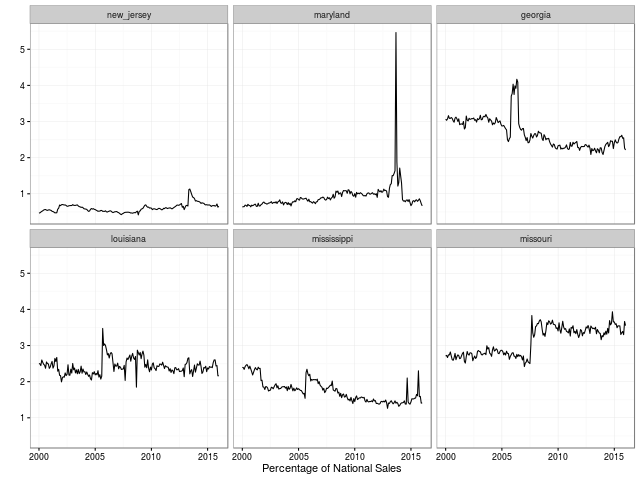
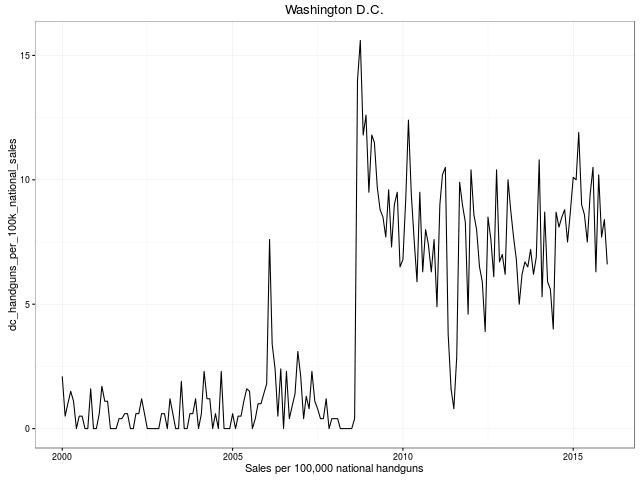
This is based on joint work with Gregor Aisch and Josh Keller of the New York Times. A new package gunsales is now on the CRAN network for R. It is based the NYTimes/gunsales repository underlying the excellent New York Times visualizations, first published first in December 2015 and updated with more recent data since. The analysis takes public government data on gun sales from the National Instant Criminal Background Check System (NICS). The original data is scraped from the pdf, included in the package, and analysed in a cross-section and time-series manner. The standard US Census tool X-13ARIMA-SEATS is used to deseasonalize the timeseries at the national or state level. (Note that Buzzfeed also published data and (Python) code in another GitHub repo.) As an aside, it was the use of X-13ARIMA-SEATS here -- and its somewhat awkward and manual installation also seen in the initial versions of the code in the NYTimes/gunsales repo -- which lead to the recent work by Christoph Sax and myself. We now provide a new package x13binary on CRAN so that Christoph's excellent seasonal package can simply depend upon it and have a working binary provided and installed ready to use; see the recent blog post for more. The net result is that a package like this new gunsales project can simply depend upon seasonal and also be assurred that x13binary "just works". As Martha would say, "A Good Thing". Back to the gunsales project. Following the initial publication of the repository with the data and R code in a simple script, I felt compelled to reorganize it as a package. Packages for R, as we teach our students, colleagues, or anybody else who wants to listen are really the best way to bundle code, data, documentation (i.e. vignettes) and tests. All that exists now in the gunsales package. The package now has one main function, analysis(), which returns a single dataframe object. This dataframe object can then be fed to two plotting functions. The first, plot_gunsales(), will then recreate all the (base R) plots from the original code base. The second, ggplot_gunsales(), does the same but via ggplot2. This should give anybody the ability to look at the data, study the transformations done, form and maybe test new hypotheses and visualize in manner comparable to the original publication. As an amuse gueule, here are the key plots also shown in the main README.md at GitHub: Total Estimated Gun Sales Total Estimated Gun Sales, Seasonally Adjusted Total Estimated Gun Sales, Population-Growth Adjusted Handguns vs Longguns Six States DC We look forward to more remixes and analysis of this data. The plan of the GitHub repository is to keep the data set updated as new data points are published.

This post by Dirk Eddelbuettel originated on his Thinking inside the box blog. Please report excessive re-aggregation in third-party for-profit settings.

26 February 2016

Ritesh Raj Sarraf: Linux IO + Memory + CPU Contention

I very recently met someone, and we had a good productive discussion on the features and (long standing) bugs of the Linux kernel. No doubt, Linux is the most featureful kernel in the market. Is also a lot appealing given its breadth of platform support. Of that discussion we had, it led about Linux's behavior in tighter stressed scenarios where there is a lot of contention among the core subsystems. From the conversation, I got the feedback that perhaps the issue is no more valid. My conclusion was I must have missed out on the fix because I haven't really spent any Engineering Lab time in recent past. But a picture says a thousand words. And no, the issue is NOT fixed. And it is still simple to reproduce the bug. And it is just that we have faster advancements in underlying hardware, that we may eventually find it much harder to reproduce these bugs. The kernel spitting the screen is Linux 4.4 Stock Debian.

Categories:

Keywords:

Like:

25 February 2016

Matthew Garrett: I bought some awful light bulbs so you don't have to

I maintain an application for bridging various non-Hue lighting systems to something that looks enough like a Hue that an Amazon Echo will still control them. One thing I hadn't really worked on was colour support, so I picked up some cheap bulbs and a bridge. The kit is badged as an iSuper iRainbow001, and it's terrible.

Things seemed promising enough at first, although the bulbs were alarmingly heavy (there's a significant chunk of heatsink built into them, which seems to get a lot warmer than I'd expect from something that claims a 7W power consumption). The app was a bit clunky, but eh - I wasn't planning on using it for long. I pressed the button on the bridge, launched the app and could control the bulbs. The first thing I noticed was that they had a separate "white" and "colour" mode. White mode was pretty bright, but colour mode massively less so - presumably the white LEDs are entirely independent of the RGB ones, and much higher intensity. Still, potentially useful as mood lighting.

Anyway. Next step was to start playing with the protocol, which meant finding the device on my network. I checked anything that had picked up a DHCP lease recently and nmapped them. The OS detection reported Linux, which wasn't hugely surprising - there was no GPL notice or source code included with the box, but I'm way past the point of shock at that. It also reported that there was a telnet daemon running. I connected and got a login prompt. And then I typed admin as the username and admin as the password and got a root prompt. So, there's that. The copy of Busybox included even came with tftp, so it was easy to get copies of tcpdump and strace on there to see what was up.

So. Next step. Protocol sniffing. I wanted to know how discovery worked, so reset the device to factory and watched what happens. The app on my phone sent out a discovery packet on UDP port 18602 which looked like this:

INLAN:CLIP:23.21.212.48:CLPT:22345:MAC:02:00:00:00:00:00

The CLIP and CLPT fields refer to the cloud server that allows for management when you're not on the local network. The mac field contains an utterly fake address. If you send out a discovery packet and your mac hasn't been registered with the device, you get a denial back. If your mac has been (and by "mac" here I mean "utterly fake mac that's the same for all devices"), you get back a response including the device serial number and IP address. And if you just leave out the mac field entirely, you get back a response no matter whether your address is registered or not. So, that's a start. Once you've registered one copy of the app with the device, anything can communicate with it by just using the same fake mac in the discovery packets.

Onwards. The command format turns out to be simple. They start ##, are followed by two ascii digits encoding a command, four ascii digits containing a bulb id, two ascii digits containing the number of following bytes and then the command data (in ascii). An example is:

##05010002ff

which decodes as command 5 (set white intensity) on bulb 1 with two bytes of data following, each of which is an f. This translates as "Set bulb 1 to full white intensity". I worked out the rest pretty quickly - command 03 sets the RGB colour of the bulb, 0A asks the bridge to search for new bulbs, 0B tells you which bulbs are available and their capabilities and 0E gives you the MAC addresses of the bulbs( ). 0C crashes the server process, and 06 spews a bunch of garbage back at you and potentially crashes the bulb in a hilarious way that involves it flickering at about 15Hz. It turns out that 06 is actually the "Rename bulb" command, and if you send it less data than it's expecting something goes hilariously wrong in string parsing and everything is awful.

Ok. Easy enough, but not hugely exciting. What about the remote protocol? This turns out to involve sending a login packet and then a wrapped command packet. The login has some length data, a header of "MQIsdp", a long bunch of ascii-encoded hex, a username and a password.

The username is w13733 and the password is gbigbi01. These are hardcoded in the app. The ascii-encoded hex can be replaced with 0s and the login succeeds anyway.

Ok. What about the wrapping on the command? The login never indicated which device we wanted to talk to, so presumably there's some sort of protection going on here oh wait. The command packet is a length, the serial number of the bridge and then a normal command packet. As long as you know the serial number of the device (which it tells you in response to a discovery packet, even if you're unauthenticated), you can use the cloud service to send arbitrary commands to the device (including the one that crashes the service). One of which involves the device then doing some kind of string parsing that doesn't appear to work that well. What could possibly go wrong?

Ok, so that seemed to be the entirety of the network protocol. Anything else to do? Some poking around on the bridge revealed (a) that it had an active wireless device and (b) a running DHCP server. They wouldn't, would they?

Yes. Yes, they would.

The devices all have a hardcoded SSID of "iRainbow", although they don't broadcast it. There's no security - anybody can associate. It'll then hand out an IP address. It's running telnetd on that interface as well. You can bounce through there to the owner's internal network.

So, in summary: it's a device that infringes my copyright, gives you root access in response to trivial credentials, has access control that depends entirely on nobody ever looking at the packets, is sufficiently poorly implemented that you can crash both it and the bulbs, has a cloud access protocol that has no security whatsoever and also acts as an easy mechanism for people to circumvent your network security. This may be the single worst device I've ever bought.

I called the manufacturer and they insisted that the device was designed in 2012, was no longer manufactured or supported, that they had no source code to give me and there would be no security fixes. The vendor wants me to pay for shipping back to them and reserves the right to deduct the cost of the original "free" shipping from the refund. Everything is awful, which is why I just ordered four more random bulbs to play with over the weekend.

comment count unavailable comments

Next.

Previous.