Search Results: freedom

28 February 2021

Chris Lamb: Free software activities in February 2021

Here is my monthly update covering what I have been doing in the free software world during February 2021 (previous month):

Reproducible Builds The motivation behind the Reproducible Builds effort is to ensure no flaws have been introduced during compilation process by promising identical results are always generated from a given source, therefore allowing multiple third-parties to come to a consensus on whether a build was compromised. The project is proud to be a member project of the Software Freedom Conservancy. Conservancy acts as a corporate umbrella allowing projects to operate as non-profit initiatives without managing their own corporate structure. If you like the work of the Conservancy or the Reproducible Builds project, please consider becoming an official supporter. This month, I: I also made the following changes to diffoscope, including preparing and uploading versions 167 and 168 to Debian:

Debian Uploads I also sponsored an upload of adminer (4.7.9-1) for Alexandre Rossi. Debian LTS This month I have worked 18 hours on Debian Long Term Support (LTS) and 12 hours on its sister Extended LTS project. You can find out more about the project via the following video:

22 February 2021

John Goerzen: Recovering Our Lost Free Will Online: Tools and Techniques That Are Available Now

As I ve been thinking and writing about privacy and decentralization lately, I had a conversation with a colleague this week, and he commented about how loss of privacy is related to loss of agency: that is, loss of our ability to make our own choices, pursue our own interests, and be master of our own attention. In terms of telecommunications, we have never really been free, though in terms of Internet and its predecessors, there have been times where we had a lot more choice. Many are too young to remember this, and for others, that era is a distant memory. The irony is that our present moment is one of enormous consolidation of power, and yet also one of a proliferation of technologies that let us wrest back some of that power. In this post, I hope to enlighten or remind us of some of the choices we have lost and also talk about the ways in which we can choose to regain them, already, right now. I will talk about the possibilities, the big dreams that are possible now, and then go into more detail about the solutions. The Problems & Possibilities The limitations of online We make the assumption that we must be online to exchange data. This is reinforced by many modern protocols; Twitter clients, for instance, don t tend to let you make posts by relaying them through disconnected devices. What would it be like if you could fully participate in global communities without a constant Internet connection? If you could share photos with your friends, read the news, read your email, etc. even if you don t have a connection at present? Even if the device you use to do that never has a connection, but can route messages via other devices that do? Would it surprise you to learn that this was once the case? Back in the days of UUCP, much email and Usenet news a global discussion forum that didn t require an Internet connection was relayed via occasional calls over phone lines. This technology remains with us, and has even improved. Sadly, many modern protocols make no effort in this regard. Some email clients will let you compose messages offline to send when you get online later, but the assumption always is that you will be connected to an IP network again soon. NNCP, on the other hand, lets you relay messages over TCP, a radio, a satellite, or a USB stick. Email and Usenet, since they were designed in an era where store-and-forward was valued, can actually still be used in an entirely offline fashion (without ever touching an IP-based network). All it takes is for someone to care to make it happen. You can even still do it over UUCP if you like. The physical and data link layers Many of us just accept that we communicate in a few ways: Wifi for short distances, and then cable modems or DSL for our local Internet connection, and then many people are fuzzy about what happens after that. Or, alternatively, we have 4G phones that are the local Internet connection, and the same fuzzy things happen after. Think about this for a moment. Which of these do you control in any way? Sometimes just wifi, sometimes maybe you have choices of local Internet providers. After that, your traffic is handled by enormous infrastructure companies. There is choice here. People in ham radio have been communicating digitally over long distances without the support of the traditional Internet for decades, but the technology to do this is now more accessible to anyone. Long-distance radio has had tremendous innovation in the last decade; cheap radios can now communicate over several miles/km without any other infrastructure at all. We all carry around radios (Wifi and Bluetooth) in our pockets that don t have to be used as mere access points to the Internet or as drivers of headphones, but can also form their own networks directly (Briar). Meshtastic is an example; it s an instant messenger that can form a mesh over many miles/km and requires no IP infrastructure at all. Briar is similar. XBee radios form a mesh in hardware, allowing peers to reach each other (also over many miles/km) with a serial or framed protocol. Loss of peer-to-peer Back in the late 90s, I worked at a university. I had a 386 on my desk for a workstation not a powerful computer even then. But I put the boa webserver on it and could just serve pages on the Internet. I didn t have to get permission. Didn t have to pay a hosting provider. I could just DO it. And of course that is because the university had no firewall and no NAT. Every PC at the university was a full participant on the Internet as much as the servers at Microsoft or DEC. All I needed was a DNS entry. I could run my own SMTP server if I wanted, run a web or Gopher server, and that was that. There are many reasons why this changed. Nowadays most residential ISPs will block SMTP for their customers, and if they didn t, others would; large email providers have decided not to federate with IPs in residential address spaces. Most people have difficulty even getting a static IP address in the first place. Many are behind firewalls, NATs, or both, meaning that incoming connections of any kind are problematic. Do you see what that means? It has weakened the whole point of the Internet being a network of peers. While IP still acts that way, as a practical matter, there are clients that are prevented from being servers by administrative policy they have no control over. Imagine if you, a person with an Internet connection to your laptop or phone, could just decide to host a website, or a forum on it. For moderate levels of load, they are certainly capable of this. The only thing in the way is the network management policies you can t control. Elaborate technologies exist to try to bridge this divide, and some, like Tor or cjdns, can work quite well. More on this below. Expense of running something popular Related to the loss of peer-to-peer infrastructure is the very high cost of hosting something popular. Do you want to share videos with lots of people? That almost certainly is going to require expensive equipment and bandwidth. There is a reason that there are only a small handful of popular video streaming sites online. It requires a ton of money to host videos at scale. What if it didn t? What if you could achieve economies of scale so much that you, an individual, could compete with the likes of YouTube? You wouldn t necessarily have to run ads to support the service. You wouldn t have to have billions of dollars or billions of viewers just to make it work. This technology exists right now. Of course many of you are aware of how Bittorrent leverages the swarm for files. But projects like IPFS, Dat, and Peertube have taken this many steps further to integrate it into a global ecosystem. And, at least in the case of Peertube, this is a thing that works right now in any browser already! Application-level walled gardens I was recently startled at how much excitement there was when Github introduced dark mode . Yes, Github now offers two colors on its interface. Already back in the 80s and 90s, many DOS programs had more options than that. Git is a decentralized protocol, but Github has managed to make it centralized. Email is a decentralized protocol pick your own provider, and they all communicate but Facebook and Twitter aren t. You can t just pick your provider for Facebook. It s Facebook or nothing. There is a profit motive in locking others out; these networks want to keep you using their platforms because their real customers are advertisers, and they want to keep showing you ads. Is it possible to have a world where you get to pick your own app for sharing photos, and it works even if your parents use a different one? Yes, yes it is. Mastodon and the Fediverse are fantastic examples for social media. Pixelfed is specifically designed for photos, Mastodon for short-form communication, there s Pleroma for more long-form communication, and they all work together. You can use Mastodon to read Pleroma content or look at Pixelfed photos, and there are many (free) providers of each. Freedom from manipulation I recently wrote about the dangers of the attention economy, so I won t go into a lot of detail here. Fundamentally, you are not the customer of Facebook or Google; advertisers are. They optimize their site to keep you on it as much as possible so that they can show you as many ads as possible which makes them as much money as possible. Ads, of course, are fundamentally seeking to manipulate your behavior ( buy this product ). By lowering the cost of running services, we can give a huge boost to hobbyists and nonprofits that want to do so without an ultimate profit motive. For-profit companies benefit also, with a dramatically reduced cost structure that frees them to pursue their mission instead of so many ads. Freedom from snooping (privacy and anonymity) These days, it s not just government snooping that people think about. It s data stolen by malware, spies at corporations (whether human or algorithmic), and even things like basic privacy of one s own security footage. Here the picture is improving; encryption in transit, at least at a basic level, has become much more common with TLS being a standard these days. Sadly, end-to-end encryption (E2EE) is not nearly as much, perhaps because corporations have a profit motive to have access to your plaintext and metadata. Closely related to privacy is anonymity: that is, being able to do things in an anonymous fashion. The two are not necessarily equal: you could send an encrypted message but reveal who the correspondents are, as with email; or, you could send a plaintext message over a Tor exit node that hides who the correspondents are. It is sometimes difficult to achieve both. Nevertheless, numerous answers exist here that tackle one or both problems, from the Signal messenger to Tor. Solutions That Exist Today Let s dive in to some of the things that exist today. One concept you ll see in many of these is integrated encryption with public keys used for addressing. In other words, your public key is akin to an IP address (and in some cases, is literally your IP address.) Data link and networking technologies (some including P2P) P2P Infrastructure While some of the technologies above, such as cjdns, explicitly facitilitate peer-to-peer communication, there are some other application-level technologies to look at. Instant Messengers and Chat I won t go into a lot of detail here since I recently wrote a roundup of secure mesh messengers and also a followup article about Signal and some hidden drawbacks of P2P. Please refer to those articles for some interesting things that are happening in this space. Matrix is a distributed IM platform similar in concept to Slack or IRC, but globally distributed in a mesh. It supports optional E2EE. Social Media I wrote recently about how to join the Fediverse, which covered joining Mastodon, a federeated, decentralized social network. Mastodon is the largest of these, with several million users, and is something of a much nicer version of Twitter. Mastodon is also part of what is known as the Fediverse , which are applications that are loosely joined together by their support of the ActivityPub protocol. Other popular Fediverse applications include Pixelfed (similar to Instagram) and Peertube for sharing video. Peertube is particularly interesting in that it supports Webtorrent for efficiently distributing popular videos. Webtorrent is akin to Bittorrent running efficiently inside your browser. Concluding Remarks Part of my goal with this is encouraging people to dream big, to ask questions like: What could you do if offline were easy? What is possible if you have freedom in the physical and data link layers? Dream big. We re so used to thinking that it s quite difficult for two devices on the Internet to talk to each other. What would be possible if this were actually quite easy? The assumption that costs rise dramatically as popularity increases is also baked into our thought processes. What if that weren t the case could you take on Youtube from your garage? Would lowering barriers to entry lower the ad economy and let nonprofits have more equal footing with large corporations? We have so many walled gardens, from Github to Facebook, that we almost forget it doesn t have to be that way. So having asked these questions, my secondary point is to suggest that these aren t pie-in-the-sky notions. These possibilites are with us right now. You ll notice from this list that virtually every one of these technologies is ad-free at its heart (though some would be capable of serving ads). They give you back your attention. Many preserve privacy, anonymity, or both. Many dramatically improve your freedom of association and communication. Technologies like IPFS and Bittorrent ease the burden of running something popular. Some are quite easy to use (Mastodon or Peertube) while others are much more complex (libp2p or the lower-level mesh network systems). Clearly there is still room for improvement in many areas. But my fundamental point is this: good technology is here, right now. Technical people can vote with their feet and wallets and start using it. Early adopters will help guide the way for the next set of improvements. Join us!

13 February 2021

Molly de Blanc: Proprietary (definition) 02

I ve had some good conversations about this attempt to define proprietary software. In many of these conversations, people focused on explicitly what I m trying to not do (i.e. define proprietary by saying it s not FOSS). Some people helped me clarify that I m looking to do really, which is have a pithy way to explain proprietary to people who are never going to look at source code or pay someone to write new code for them. How do you explain to people who don t care about technical matters nor have the language to discuss them? How do you talk about licenses to people who may not have the language for it? (In a past life I explained Creative Commons licenses to academics and educators.) Talking about licensing seemed very important to people, as licenses are what define freedoms, restrictions, and restrictions that protect freedoms. With these points in mind, I present the following: Proprietary software is software that comes with restrictions that retain control of how software can be used, shared, and changed through the use of copyright and licensing. I worry that this is too technical and then I worry that I m worrying too much about that. In this I added a truncated version of a common explanation of the Four Freedoms (typically use, study, modify, share). This is in part because I believe study is included in modify. I included copyright and licensing in hopes that a reader would understand at least one of them. I also wanted to take into account that communities may have other policies (e.g. community guidelines) that might in some way restrict how software is used, shared, and changed. I don t like retain control as a phrase, but it was suggested to me (thanks! If you want credit, just ping me). I think it s pretty clear about the intention and consequence of proprietary licensing. A potential criticism I see is that it s not clear enough that you must be able to do all three (use, share, and change) in order for software to be FOSS and that restrictions on any of them renders software proprietary.

31 January 2021

Paul Wise: FLOSS Activities January 2021

Focus This month I didn't have any particular focus. I just worked on issues in my info bubble.

Changes

Issues

Review

Administration
  • Debian ports: fix header on incoming.ports.d.o/buildd
  • Debian wiki: unblock IP addresses, approve accounts

Communication
  • Initiate discussions about aptly, Linux USB gadgets maintenance
  • Respond to queries from Debian users and contributors on the mailing lists and IRC
  • Invite organisations to post on FOSSjobs

Sponsors The samba work, apt-listchanges work, pytest-rerunfailures upload, python-testfixtures/python-scrapy bugs and python-scrapy related backports were sponsored by my employer. All other work was done on a volunteer basis.

17 January 2021

Wouter Verhelst: Software available through Extrepo

Just over 7 months ago, I blogged about extrepo, my answer to the "how do you safely install software on Debian without downloading random scripts off the Internet and running them as root" question. I also held a talk during the recent "MiniDebConf Online" that was held, well, online. The most important part of extrepo is "what can you install through it". If the number of available repositories is too low, there's really no reason to use it. So, I thought, let's look what we have after 7 months... To cut to the chase, there's a bunch of interesting content there, although not all of it has a "main" policy. Each of these can be enabled by installing extrepo, and then running extrepo enable <reponame>, where <reponame> is the name of the repository. Note that the list is not exhaustive, but I intend to show that even though we're nowhere near complete, extrepo is already quite useful in its current state:

Free software
  • The debian_official, debian_backports, and debian_experimental repositories contain Debian's official, backports, and experimental repositories, respectively. These shouldn't have to be managed through extrepo, but then again it might be useful for someone, so I decided to just add them anyway. The config here uses the deb.debian.org alias for CDN-backed package mirrors.
  • The belgium_eid repository contains the Belgian eID software. Obviously this is added, since I'm upstream for eID, and as such it was a large motivating factor for me to actually write extrepo in the first place.
  • elastic: the elasticsearch software.
  • Some repositories, such as dovecot, winehq and bareos contain upstream versions of their respective software. These two repositories contain software that is available in Debian, too; but their upstreams package their most recent release independently, and some people might prefer to run those instead.
  • The sury, fai, and postgresql repositories, as well as a number of repositories such as openstack_rocky, openstack_train, haproxy-1.5 and haproxy-2.0 (there are more) contain more recent versions of software packaged in Debian already by the same maintainer of that package repository. For the sury repository, that is PHP; for the others, the name should give it away. The difference between these repositories and the ones above is that it is the official Debian maintainer for the same software who maintains the repository, which is not the case for the others.
  • The vscodium repository contains the unencumbered version of Microsoft's Visual Studio Code; i.e., the codium version of Visual Studio Code is to code as the chromium browser is to chrome: it is a build of the same softare, but without the non-free bits that make code not entirely Free Software.
  • While Debian ships with at least two browsers (Firefox and Chromium), additional browsers are available through extrepo, too. The iridiumbrowser repository contains a Chromium-based browser that focuses on privacy.
  • Speaking of privacy, perhaps you might want to try out the torproject repository.
  • For those who want to do Cloud Computing on Debian in ways that isn't covered by Openstack, there is a kubernetes repository that contains the Kubernetes stack, the as well as the google_cloud one containing the Google Cloud SDK.

Non-free software While these are available to be installed through extrepo, please note that non-free and contrib repositories are disabled by default. In order to enable these repositories, you must first enable them; this can be accomplished through /etc/extrepo/config.yaml.
  • In case you don't care about freedom and want the official build of Visual Studio Code, the vscode repository contains it.
  • While we're on the subject of Microsoft, there's also Microsoft Teams available in the msteams repository. And, hey, skype.
  • For those who are not satisfied with the free browsers in Debian or any of the free repositories, there's opera and google_chrome.
  • The docker-ce repository contains the official build of Docker CE. While this is the free "community edition" that should have free licenses, I could not find a licensing statement anywhere, and therefore I'm not 100% sure whether this repository is actually free software. For that reason, it is currently marked as a non-free one. Merge Requests for rectifying that from someone with more information on the actual licensing situation of Docker CE would be welcome...
  • For gamers, there's Valve's steam repository.
Again, the above lists are not meant to be exhaustive. Special thanks go out to Russ Allbery, Kim Alvefur, Vincent Bernat, Nick Black, Arnaud Ferraris, Thorsten Glaser, Thomas Goirand, Juri Grabowski, Paolo Greppi, and Josh Triplett, for helping me build the current list of repositories. Is your favourite repository not listed? Create a configuration based on template.yaml, and file a merge request!

12 January 2021

Molly de Blanc: 1028 Words on Free Software

The promise of free software is a near-future utopia, built on democratized technology. This future is just and it is beautiful, full of opportunity and fulfillment for everyone everywhere. We can create the things we dream about when we let our minds wander into the places they want to. We can be with the people we want and need to be, when we want and need to. This is currently possible with the technology we have today, but it s availability is limited by the reality of the world we live in the injustice, the inequity, the inequality. Technology runs the world, but it does not serve the interests of most of us. In order to create a better world, our technology must be transparent, accountable, trustworthy. It must be just. It must be free. The job of the free software movement is to demonstrate that this world is possible by living its values now: justice, equity, equality. We build them into our technology, and we build technology that make it possible for these values to exist in the world. At the Free Software Foundation, we liked to say that we used all free software because it was important to show that we could. You can do anything with free software, so we did everything with it. We demonstrated the importance of unions for tech workers and non-profit workers by having one. We organized collectively and protected our rights for the sake of ourselves and one another. We had non-negotiable salaries, based on responsibility level and position. That didn t mean we worked in an office free from the systemic problems that plague workplaces everywhere, but we were able to think about them differently. Things were this way because of Richard Stallman but I view his influence on these things as negative rather than positive. He was a cause that forced these outcomes, rather than being supportive of the desires and needs of others. Rather than indulge in gossip or stories, I would like to jump to the idea that he was supposed to have been deplatformed in October 2019. In resigning from his position as president of the FSF, he certainly lost some of his ability to reach audiences. However, Richard still gives talks. The FSF continues to use his image and rhetoric in their own messaging and materials. They gave him time to speak at their annual conference in 2020. He maintains leadership in the GNU project and otherwise within the FSF sphere. The people who empowered him for so many years are still in charge. Richard, and the continued respect and space he is given, is not the only problem. It represents a bigger problem. Sexism and racism (among others) run rampant in the community. This happens because of bad actors and, more significantly, by the complacency of organizations, projects, and individuals afraid of losing contributors, respect, or funding. In a sector that has so much money and so many resources, women are still being paid less than men; we deny people opportunities to learn and grow in the name of immediate results; people who aren t men, who aren t white, are abused and harassed; people are mentally and emotionally taken advantage of, and we are coerced into burn out and giving up our lives for these companies and projects and we are paid for tolerating all of this by being told we re doing a good job or making a difference. But we re not making a difference. We re perpetuating the worst of the status quo that we should be fighting against. We must not continue. We cannot. We need to live our ideals as they are, and take the natural next steps in their evolution. We cannot have a world of just technology when we live in a world of exclusion; we cannot have free software if we continue to allow, tolerate, and laud the worst of us. I ve been in and around free software for seventeen years. Nearly every part of it I ve participated in has members and leadership that benefit from allowing and encouraging the continuation of maleficence and systemic oppression. We must purge ourselves of these things of sexism, racism, injustice, and the people who continue and enable it. There is no space to argue over whether a comment was transphobic if it hurt a trans person then it is transphobic and it is unacceptable. Racism is a global problem and we must be anti-racist or we are complicit. Sexism is present and all men benefit from it, even if they don t want to. These are free software issues. These are things that plague software, and these are things software reinforces within our societies. If a technology is exclusionary, it does not work. If a community is exclusionary, it must be fixed or thrown away. There is no middle ground here. There is no compromise. Without doing this, without taking the hard, painful steps to actually live the promise of user freedom and everything it requires and entails, our work is pointless and free software will fail. I don t think it s too late for there to be a radical change the radical change that allows us to create the utopia we want to see in the world. We must do that by acknowledging that just technology leads to a just society, and that a just society allows us to make just technology. We must do that by living within the principles that guide this future now. I don t know what will happen if things don t change soon. I recently saw someone comment that change doesn t happens unless one person is willing to sacrifice everything to make that change, to lead and inspire others to play small parts. This is unreasonable to ask of or expect from someone. I ve been burning myself out to meet other people s expectations for seventeen years, and I can t keep doing it. Of course I am not alone, and I am not the only one working on and occupied by these problems. More people must step up, not just for my sake, but for the sake of all of us, the work free software needs to do, and the future I dream about.

5 January 2021

Steve Kemp: Brexit has come

Nothing too much has happened recently, largely as a result of the pandemic killing a lot of daily interests and habits. However as a result of Brexit I'm having to do some paperwork, apparently I now need to register for permanent residency under the terms of the withdrawal agreement, and that will supersede the permanent residency I previously obtained. Of course as a UK citizen I've now lost the previously-available freedom of movement. I can continue to reside here in Helsinki, Finland, indefinitely, but I cannot now move to any other random EU country. It has crossed my mind, more than a few times, that I should attempt to achieve Finnish citizenship. As a legal resident of Finland the process is pretty simple, I just need two things: Of course the latter requirement is hard, I can understand a lot of spoken and written Finnish, but writing myself, and speaking a lot is currently beyond me. I need to sit down and make the required effort to increase my fluency. There is the alternative option of learning Swedish, which is a hack a lot of immigrants use: Finland has two official languages, and so the banks, the medical world, the tax-office, etc, are obliged to provide service in both. However daily life, ordering food at restaurants, talking to parents in the local neighborhood? Finnish, or English are the only real options. So if I went this route I'd end up in a weird situation where I had to learn a language to pass a test, but then would continue to need to learn more Finnish to live my life. That seems crazy, unless I were desperate for a second citizenship which I don't think I am. Learning Finnish has not yet been a priority, largely because I work in English in the IT-world, and of course when I first moved here I was working (remotely) for a UK company, and didn't have the time to attend lessons (because they were scheduled during daytime, on the basis that many immigrants are unemployed). Later we had a child, which meant that early-evening classes weren't a realistic option either. (Of course I learned a lot of the obvious things immediately upon moving, things like numbers, names for food, days of the week were essential. Without those I couldn't have bought stuff in shops and would have starved!) On the topic of languages a lot of people talk about how easy it is for children to pick up new languages, and while that is broadly true it is also worth remembering just how many years of correction and repetition they have to endure as part of the process. For example we have a child, as noted already, he is spoken to by everybody in Finnish. I speak to him in English, and he hears his mother and myself speaking English. But basically he's 100% Finnish with the exception of: If he speaks Finnish to me I pretend to not understand him, even when I do, just for consistency. As a result of that I've heard him tell strangers "Daddy doesn't speak Finnish" (in Finnish) when we've been stopped and asked for directions. He also translates what some other children have said into English for my benefit which is adorable Anyway he's four, and he's pretty amazing at speaking to everybody in the correct language - he's outgrown the phase where he'd mix different languages in the same sentence ("more leip ", "saisinko milk") - when I took him to the UK he surprised and impressed me by being able to understand a lot of the heavy/thick accents he'd never heard before. (I'll still need to train him on Rab C. Nesbitt when he's a wee bit older, but so far no worries.) So children learn languages, easily and happily? Yes and no. I've spent nearly two years correcting his English and he still makes the same mistake with gender. It's not a big deal, at all, but it's a reminder that while children learn this stuff, they still don't do it as easily as people imagine. I'm trying to learn and if I'd been corrected for two years over the same basic point you'd rightly think I was "slow", but actually that's just how it works. Learning languages requires a hell of a lot of practice, a lot of effort, and a lot of feedback/corrections. Specifically Finnish doesn't have gendered pronouns, the same word is used for "he" and "she". This leads to a lot of Finnish people, adults and children, getting the pronouns wrong in English. In the case of our child he'll say "Mommy is sleeping, when he wake up?" In the case of adults I've heard people say "My girlfriend is a doctor, he works in a hospital", or "My dad is an accountant, she works for a big firm". As I say I've spent around two years making this correction to the child, and he's still nowhere near getting it right. Kinda adorable actually:

2 January 2021

Paul Wise: FLOSS Activities December 2020

Focus This month I didn't have any particular focus. I just worked on issues in my info bubble.

Changes

Issues

Review

Administration
  • Debian: restart bacula director, ping some people about disk usage
  • Debian wiki: unblock IP addresses, approve accounts, update email for accounts with bouncing email

Communication
  • Respond to queries from Debian users and contributors on the mailing lists and IRC

Sponsors All work was done on a volunteer basis.

31 December 2020

Chris Lamb: Free software activities in December 2020

Here is my monthly update covering what I have been doing in the free software world during December 2020 (previous month):

Reproducible Builds One of the original promises of open source software is that distributed peer review and transparency of process results in enhanced end-user security. However, whilst anyone may inspect the source code of free and open source software for malicious flaws, almost all software today is distributed as pre-compiled binaries. This allows nefarious third-parties to compromise systems by injecting malicious code into ostensibly secure software during the various compilation and distribution processes. The motivation behind the Reproducible Builds effort is to ensure no flaws have been introduced during this compilation process by promising identical results are always generated from a given source, thus allowing multiple third-parties to come to a consensus on whether a build was compromised. This month, I: I also made the following changes to diffoscope, our in-depth and content-aware diff utility that can locate and diagnose reproducibility issues, including releasing version 163:

Debian Uploads I also sponsored an upload of adminer (4.7.8-2) on behalf of Alexandre Rossi and performed two QA uploads of sendfile (2.1b.20080616-7 and 2.1b.20080616-8) to make the build the build reproducible (#776938) and to fix a number of other unrelated issues. Debian LTS This month I have worked 18 hours on Debian Long Term Support (LTS) and 12 hours on its sister Extended LTS project. You can find out more about the Debian LTS project via the following video:

21 December 2020

Chris Lamb: Interview: Reproducibility and the future of free software

I recently took part in an interview with Vladimir Bejdo, an intern at the Software Freedom Conservancy, in order to talk about the Reproducible Builds project, my own participation in software freedom, the importance of reproducibility in software development and to have a brief discussion on the issues facing free software as a whole:
VB: To start off with, it might be useful to first ask you this how would you relate the importance of reproducibility to a user who is non-technical? CL: I sometimes use the analogy of the food supply chain to quickly relate our work to non-technical audiences. The multiple stages of how our food reaches our plates today (such as seeding, harvesting, picking, transportation, packaging, etc.) can loosely translate to how software actually ends up on our computers, particularly in the way that if any of the steps in the multi-stage food supply chain has an issue then it quickly becomes a serious problem. For example, even if we could guarantee that only the most wholesome apples were picked in our orchards, if they became tainted on the way to the supermarket it will be a real problem for us at the end of the day. We may not even be able to even tell by simply inspecting our Pink Ladies or Honeycrisps, and washing them thoroughly under the tap may not be enough either. In an ideal world, we would be able to personally inspect the provenance of our food at all of the stages of manufacturing and transportation. But at some point, we must place our trust in the process and in brands, as well as various regulatory bodies to ensure that potential problems in our food are minimized, possibly even paying a time/effort premium by growing our own or buying direct from local markets in order to minimize the number of steps, etc. However, when we use free software we can do better: Reproducible builds are a set of software development practices, ideas and tools that create an independently-verifiable path all the way from the original source code to what actually runs on our machines. Reproducible builds can reveal the injection of back-doors introduced by the hacking of developers own computers, build servers and package repositories, and also expose where volunteers or companies have been coerced into making changes via blackmail, court order, and so on. With reproducible builds, there is no longer any need to trust any particular source of authority. In the same way that, say, a Mr Smith might check that his calculator is giving him the right answer to 2+2=4 by asking enough of his friends to check theirs too, users and developers of a reproducible build can verify the software they are using by creating a collective consensus instead.
The full interview can be found on the Conservancy webpages.

Russ Allbery: Review: Behind the Throne

Review: Behind the Throne, by K.B. Wagers
Series: Indranan War #1
Publisher: Orbit
Copyright: August 2016
ISBN: 0-316-30859-5
Format: Kindle
Pages: 416
Hail is a gunrunner, an outlaw and criminal, someone who knows how to survive violence and navigate by personal loyalty. That world knows her as Cressen Stone. What her colleagues don't know is that she's also an Imperial Princess. Hailimi Mercedes Jaya Bristol left that world twenty years earlier in secret pursuit of her father's killer and had no intention of returning. But her sisters are dead, her mother's health is failing, and two Imperial Trackers have been sent to bring her back to her rightful position as heir. I'm going to warn up-front that the first half of this novel was rough to the point of being unreadable. Wagers tries much too hard to establish Hail as a reluctant heroine torn between her dislike of royal protocols and her grief and anger at the death of her sisters. The result is excessively melodramatic and, to be frank, badly written. There are a lot of passages like this:
His words slammed into me, burning like the ten thousand volts of a Solarian Conglomerate police Taser.
(no, there's no significance to the Solarian Conglomerate here), or, just three paragraphs later:
The air rushed out of my lungs. Added grief for a niece I'd never known. One more log on the pyre set to burn my freedom to ashes. The hope I'd had of getting out of this mess was lost in that instant, and I couldn't do anything but stare at Emmory in abject shock.
Given how much air rushes out of Hail's lungs and how often she's struck down with guilt or grief, it's hard to believe she doesn't have brain damage. Worse, Hail spends a great deal of the first third of the book whining, which given that the book is written in first person gets old very quickly. Every emotion is overwritten and overstressed as Hail rails against obvious narrative inescapability. It's blatantly telegraphed from the first few pages that Hail is going to drop into the imperial palace like a profane invasion force and shake everything up, but the reader has to endure far too long of Hail being dramatically self-pitying about the plot. I almost gave up on this book in irritation (and probably should have). And then it sort of grew on me, because the other thing Wagers is doing (also not subtly) is a story trope for which I have a particular weakness: The fish out of water who nonetheless turns out to be the person everyone needs because she's systematically and deliberately kind and thoughtful while not taking any shit. Hail left Pashati young and inexperienced, with a strained relationship with her mother and a habit of letting her temper interfere with her ability to negotiate palace politics. She still has the temper, but age, experience, and confidence mean that she's decisive and confident in a way she never was before. The second half of this book is about Hail building her power base and winning loyalty by being loyal and decent. It's still not great writing, but there's something there I enjoyed reading. Wagers's setting is intriguing, although it makes me a bit nervous. The Indranan Empire was settled by colonists of primarily Indian background. The court trappings, mythology, and gods referenced in Behind the Throne are Hindu-derived, and I suspect (although didn't confirm) that the funeral arrangements are as well. Formal wear (and casual wear) for women is a sari. There's a direct reference to the goddess Lakshimi (not Lakshmi, which Wikipedia seems to indicate is the correct spelling, although transliteration is always an adventure). I was happy to see this, since there are more than enough SF novels out there that seem to assume only western countries go into space. But I'm never sure whether the author did enough research or has enough personal knowledge to pull off the references correctly, and I personally wouldn't know the difference. The Indranan Empire is also matriarchal, and here Wagers goes for an inversion of sexism that puts men in roughly the position women were in the 1970s. They can, in theory, do most jobs, but there are many things they're expected not to do, there are some explicit gender lines in power structures, and the role of men in society is a point of political conflict. It's skillfully injected as social background, with a believable pattern of societal prejudice that doesn't necessarily apply to specific men in specific situations. I liked that Wagers did this without giving the Empire itself any feminine-coded characteristics. All admirals are women because the characters believe women are obviously better military leaders, not because of some claptrap about nurturing or caring or some other female-coded reason from our society. That said, this gender role inversion didn't feel that significant to the story. The obvious "sexism is bad, see what it would be like if men were subject to it" message ran parallel to the main plot and never felt that insightful to me. I'm therefore not sure it was successful or worth the injection of sexism into the reading experience, although it certainly is different from the normal fare of space empires. I can't recommend Behind the Throne because a lot of it just isn't very good. But I still kind of want to because I sincerely enjoyed the last third of the book, despite some lingering melodrama. Watching Hail succeed by being a decent, trustworthy, loyal, and intelligent person is satisfying, once she finally stops whining. The destination is probably not worth the journey, but now that I've finished the first book, I'm tempted to grab the second. Followed by After the Crown. Rating: 6 out of 10

16 December 2020

John Goerzen: Non-Creepy Technology Purchasing & Gifting Guides

This time of year, a lot of people are thinking of buying gadgets and phones as gifts. But there are a lot of tech companies that have unethical practices, from terrible working conditions in their factories to spying on their users. Here are some buying guides to help you find gadgets that are fun and not creepy. The Free Software Foundation s Ethical Tech Giving Guide is a fantastic resource from what s probably the pickiest organization out there when it comes to tech. Not only do they highlight good devices, they also explain why and why you should, for instance, avoid the iPhone (their history of silencing political activists and spying on users). The FSF also has a Guide to DRM-Free Living talks about books, video, audio, and software that respects your freedom by letting you make your own backups, move it to other devices, and continue to use your purchases even if you have no Internet or the company you bought them from goes bankrupt. This is a fantastic and HUGE resource; there are hundreds of organizations out there that provide content in a way that respects your rights and many of them do it for free, legally, as well. PrivacyTools has a fantastic series of guides on everything from email providers to operating systems, as well as links to a number of other guides. The DeGoogle wiki on Reddit (as well as the sidebar) has a lot of fantastic alternatives to things like Chromebooks, Chrome, Gmail, etc. Related resources Here are some resources for education (what the issues are) and information about what companies and products to avoid. In addition to the FSF s other fantastic resources above, they also have a list of proprietary malware. It lists things, practices, and companies to avoid, and talks about the reasons why. Their addictions page is particularly good and relevant to my recent post on the problems of the attention economy. The Surveillance Self-Defense site from the Electronic Frontier Foundation is a fantastic introduction into how corporate surveillance works and how to defend against it. Use with a grain of salt: Mozilla, the people behind Firefox, have a site called Privacy Not Included that rates products by how creepy they are. They focus more narrowly on privacy than the more expansive set of freedoms the FSF considers (privacy is one of a number of things the FSF looks at), and in some cases I would say Mozilla is too generous (eg, with the Amazon Kindle, a number of their data points are just incorrect.)

1 December 2020

Shirish Agarwal: The Constitution of Knowledge

Truth, Untruths and Education in India. I read this somewhat disturbing and yet pretty raw truth from foreign affairs. It took me quite a few days to not only digest but also say yes and see the same situation playing out in India. I have been seeing the discourse on Twitter and while a part of it is the equivalent of road rage, a huge part is a disconnect to not acknowledge and be civil. We may come to different conclusions from the same data but being civil seems to be difficult for a lot of people. One part is of course ego, where nobody wants to lose, but more than that are the plain comprehension issues. Most of the literature, good literature is unfortunately based in English.

And while we can have differing opinions of what constitutes good literature, for me it s books like Battle of Belonging,The:On Nationalism, Patriotism, and What it Means Shashi Tharoor. From what little I have understood, the book makes the case of civic nationalism which is far more inclusive than the narrow confines of patriotism. Now this begs the question when you have such books and many books which do tell you about different aspects of social, political and knowledge, why are so many people prone to disinformation in India similar to U.S. and probably other countries as well. One of the biggest reasons per-se is lack of education and quality education. When the number of graduates is less than five percent how do you expect that population to be able to take decisions in their economic self-interest? So sadly the understanding is ingrained from WhatsApp and there is no need to check from alternate sources. And just like Mr. Trump followers, they believe those versions to be the unvarnished truth. I do understand that no truth is immutable except for life and death. All others are imperfect unless it is validated by some sort of scientific validation behind it. At the same time, these truths may themselves be invalidated if a stronger scientific evidence establishes itself. This is the reason why hypothesis and facts themselves are challenged again and again. Sharing couple of examples below.

Nationalization of Banking, RERA and RCEP Most of the people want freedom of the banks i.e. private banking don t really know that private banking existed at a time in free India before they were nationalized and these banks failed at surprisingly regular intervals. Now it isn t as if this fact is hidden but it is not as popular as maybe some other facts or ideas. Now the Government in the center obviously doesn t want to share these facts as they want corporates in banking. And if that fact is known by many people it will be a huge setback to their plans. RBI failures have been to many to count. Even recent legislations like RERA and others which were supposed to bring relief to millions of potential homeowners has become a pawn in the hands of builders and this has been known. One of the interesting points of RCEP which is not so much in public domain is that RCEP would have a mere 4.5% duty on most products which will go down to 1.5% over a 20 year period. Now with India staying out of it, we have done two things. We have said that we will not be competitive even after 20 years of this which is the more damning part. And we will not take part in the growth that other countries will have due to this. Contempt Proceedings against Comic Artist because she has an opinion on SC The fall in SC and constitutional values grows day by day. The AG today consented to have contempt proceedings against a comic artist saying she insulted the SC. Gone are the days when an artist made fun of the PM, and she gave him a Padam Shri (one of the highest civilian honors) for his contributions. Then, even dissent or being cynical was looked as being a contribution to the national effort rather than today. This is the reason why India has been continuously falling in the Global Freedom of Expression Index. I have seen censoring many a time here. I, myself has been locked out of Wikipedia many times. Can you imagine, being locked out of Wikipedia which is perhaps one of the more neutral sites on the web. And then there was this wikibio thing, such a sad thing to happen. Guessing this is the future of the Indian interweb.
Stick figure by Sanitary Panels on SC

30 November 2020

Chris Lamb: Free software activities in November 2020

Here is my monthly update covering what I have been doing in the free software world during November 2020 (previous month):

Reproducible Builds One of the original promises of open source software is that distributed peer review and transparency of process results in enhanced end-user security. However, whilst anyone may inspect the source code of free and open source software for malicious flaws, almost all software today is distributed as pre-compiled binaries. This allows nefarious third-parties to compromise systems by injecting malicious code into ostensibly secure software during the various compilation and distribution processes. The motivation behind the Reproducible Builds effort is to ensure no flaws have been introduced during this compilation process by promising identical results are always generated from a given source, thus allowing multiple third-parties to come to a consensus on whether a build was compromised. The project is proud to be a member project of the Software Freedom Conservancy. Conservancy acts as a corporate umbrella allowing projects to operate as non-profit initiatives without managing their own corporate structure. If you like the work of the Conservancy or the Reproducible Builds project, please consider becoming an official supporter.
This month, I:
I also made the following changes to diffoscope:

Debian I performed the following uploads to the Debian Linux distribution this month: I also filed a release-critical bug against the minidlna package which could not be successfully purged from the system without reporting a cannot remove '/var/log/minidlna' error. (#975372)

Debian LTS This month I have worked 18 hours on Debian Long Term Support (LTS) and 12 hours on its sister Extended LTS project, including: You can find out more about the Debian LTS project via the following video:

21 November 2020

Michael Stapelberg: Winding down my Debian involvement

This post is hard to write, both in the emotional sense but also in the I would have written a shorter letter, but I didn t have the time sense. Hence, please assume the best of intentions when reading it it is not my intention to make anyone feel bad about their contributions, but rather to provide some insight into why my frustration level ultimately exceeded the threshold. Debian has been in my life for well over 10 years at this point. A few weeks ago, I have visited some old friends at the Z rich Debian meetup after a multi-year period of absence. On my bike ride home, it occurred to me that the topics of our discussions had remarkable overlap with my last visit. We had a discussion about the merits of systemd, which took a detour to respect in open source communities, returned to processes in Debian and eventually culminated in democracies and their theoretical/practical failings. Admittedly, that last one might be a Swiss thing. I say this not to knock on the Debian meetup, but because it prompted me to reflect on what feelings Debian is invoking lately and whether it s still a good fit for me. So I m finally making a decision that I should have made a long time ago: I am winding down my involvement in Debian to a minimum.

What does this mean? Over the coming weeks, I will:
  • transition packages to be team-maintained where it makes sense
  • remove myself from the Uploaders field on packages with other maintainers
  • orphan packages where I am the sole maintainer
I will try to keep up best-effort maintenance of the manpages.debian.org service and the codesearch.debian.net service, but any help would be much appreciated. For all intents and purposes, please treat me as permanently on vacation. I will try to be around for administrative issues (e.g. permission transfers) and questions addressed directly to me, permitted they are easy enough to answer.

Why? When I joined Debian, I was still studying, i.e. I had luxurious amounts of spare time. Now, over 5 years of full time work later, my day job taught me a lot, both about what works in large software engineering projects and how I personally like my computer systems. I am very conscious of how I spend the little spare time that I have these days. The following sections each deal with what I consider a major pain point, in no particular order. Some of them influence each other for example, if changes worked better, we could have a chance at transitioning packages to be more easily machine readable.

Change process in Debian The last few years, my current team at work conducted various smaller and larger refactorings across the entire code base (touching thousands of projects), so we have learnt a lot of valuable lessons about how to effectively do these changes. It irks me that Debian works almost the opposite way in every regard. I appreciate that every organization is different, but I think a lot of my points do actually apply to Debian. In Debian, packages are nudged in the right direction by a document called the Debian Policy, or its programmatic embodiment, lintian. While it is great to have a lint tool (for quick, local/offline feedback), it is even better to not require a lint tool at all. The team conducting the change (e.g. the C++ team introduces a new hardening flag for all packages) should be able to do their work transparent to me. Instead, currently, all packages become lint-unclean, all maintainers need to read up on what the new thing is, how it might break, whether/how it affects them, manually run some tests, and finally decide to opt in. This causes a lot of overhead and manually executed mechanical changes across packages. Notably, the cost of each change is distributed onto the package maintainers in the Debian model. At work, we have found that the opposite works better: if the team behind the change is put in power to do the change for as many users as possible, they can be significantly more efficient at it, which reduces the total cost and time a lot. Of course, exceptions (e.g. a large project abusing a language feature) should still be taken care of by the respective owners, but the important bit is that the default should be the other way around. Debian is lacking tooling for large changes: it is hard to programmatically deal with packages and repositories (see the section below). The closest to sending out a change for review is to open a bug report with an attached patch. I thought the workflow for accepting a change from a bug report was too complicated and started mergebot, but only Guido ever signaled interest in the project. Culturally, reviews and reactions are slow. There are no deadlines. I literally sometimes get emails notifying me that a patch I sent out a few years ago (!!) is now merged. This turns projects from a small number of weeks into many years, which is a huge demotivator for me. Interestingly enough, you can see artifacts of the slow online activity manifest itself in the offline culture as well: I don t want to be discussing systemd s merits 10 years after I first heard about it. Lastly, changes can easily be slowed down significantly by holdouts who refuse to collaborate. My canonical example for this is rsync, whose maintainer refused my patches to make the package use debhelper purely out of personal preference. Granting so much personal freedom to individual maintainers prevents us as a project from raising the abstraction level for building Debian packages, which in turn makes tooling harder. How would things look like in a better world?
  1. As a project, we should strive towards more unification. Uniformity still does not rule out experimentation, it just changes the trade-off from easier experimentation and harder automation to harder experimentation and easier automation.
  2. Our culture needs to shift from this package is my domain, how dare you touch it to a shared sense of ownership, where anyone in the project can easily contribute (reviewed) changes without necessarily even involving individual maintainers.
To learn more about how successful large changes can look like, I recommend my colleague Hyrum Wright s talk Large-Scale Changes at Google: Lessons Learned From 5 Yrs of Mass Migrations .

Fragmented workflow and infrastructure Debian generally seems to prefer decentralized approaches over centralized ones. For example, individual packages are maintained in separate repositories (as opposed to in one repository), each repository can use any SCM (git and svn are common ones) or no SCM at all, and each repository can be hosted on a different site. Of course, what you do in such a repository also varies subtly from team to team, and even within teams. In practice, non-standard hosting options are used rarely enough to not justify their cost, but frequently enough to be a huge pain when trying to automate changes to packages. Instead of using GitLab s API to create a merge request, you have to design an entirely different, more complex system, which deals with intermittently (or permanently!) unreachable repositories and abstracts away differences in patch delivery (bug reports, merge requests, pull requests, email, ). Wildly diverging workflows is not just a temporary problem either. I participated in long discussions about different git workflows during DebConf 13, and gather that there were similar discussions in the meantime. Personally, I cannot keep enough details of the different workflows in my head. Every time I touch a package that works differently than mine, it frustrates me immensely to re-learn aspects of my day-to-day. After noticing workflow fragmentation in the Go packaging team (which I started), I tried fixing this with the workflow changes proposal, but did not succeed in implementing it. The lack of effective automation and slow pace of changes in the surrounding tooling despite my willingness to contribute time and energy killed any motivation I had.

Old infrastructure: package uploads When you want to make a package available in Debian, you upload GPG-signed files via anonymous FTP. There are several batch jobs (the queue daemon, unchecked, dinstall, possibly others) which run on fixed schedules (e.g. dinstall runs at 01:52 UTC, 07:52 UTC, 13:52 UTC and 19:52 UTC). Depending on timing, I estimated that you might wait for over 7 hours (!!) before your package is actually installable. What s worse for me is that feedback to your upload is asynchronous. I like to do one thing, be done with it, move to the next thing. The current setup requires a many-minute wait and costly task switch for no good technical reason. You might think a few minutes aren t a big deal, but when all the time I can spend on Debian per day is measured in minutes, this makes a huge difference in perceived productivity and fun. The last communication I can find about speeding up this process is ganneff s post from 2008. How would things look like in a better world?
  1. Anonymous FTP would be replaced by a web service which ingests my package and returns an authoritative accept or reject decision in its response.
  2. For accepted packages, there would be a status page displaying the build status and when the package will be available via the mirror network.
  3. Packages should be available within a few minutes after the build completed.

Old infrastructure: bug tracker I dread interacting with the Debian bug tracker. debbugs is a piece of software (from 1994) which is only used by Debian and the GNU project these days. Debbugs processes emails, which is to say it is asynchronous and cumbersome to deal with. Despite running on the fastest machines we have available in Debian (or so I was told when the subject last came up), its web interface loads very slowly. Notably, the web interface at bugs.debian.org is read-only. Setting up a working email setup for reportbug(1) or manually dealing with attachments is a rather big hurdle. For reasons I don t understand, every interaction with debbugs results in many different email threads. Aside from the technical implementation, I also can never remember the different ways that Debian uses pseudo-packages for bugs and processes. I need them rarely enough to establish a mental model of how they are set up, or working memory of how they are used, but frequently enough to be annoyed by this. How would things look like in a better world?
  1. Debian would switch from a custom bug tracker to a (any) well-established one.
  2. Debian would offer automation around processes. It is great to have a paper-trail and artifacts of the process in the form of a bug report, but the primary interface should be more convenient (e.g. a web form).

Old infrastructure: mailing list archives It baffles me that in 2019, we still don t have a conveniently browsable threaded archive of mailing list discussions. Email and threading is more widely used in Debian than anywhere else, so this is somewhat ironic. Gmane used to paper over this issue, but Gmane s availability over the last few years has been spotty, to say the least (it is down as I write this). I tried to contribute a threaded list archive, but our listmasters didn t seem to care or want to support the project.

Debian is hard to machine-read While it is obviously possible to deal with Debian packages programmatically, the experience is far from pleasant. Everything seems slow and cumbersome. I have picked just 3 quick examples to illustrate my point. debiman needs help from piuparts in analyzing the alternatives mechanism of each package to display the manpages of e.g. psql(1). This is because maintainer scripts modify the alternatives database by calling shell scripts. Without actually installing a package, you cannot know which changes it does to the alternatives database. pk4 needs to maintain its own cache to look up package metadata based on the package name. Other tools parse the apt database from scratch on every invocation. A proper database format, or at least a binary interchange format, would go a long way. Debian Code Search wants to ingest new packages as quickly as possible. There used to be a fedmsg instance for Debian, but it no longer seems to exist. It is unclear where to get notifications from for new packages, and where best to fetch those packages.

Complicated build stack See my Debian package build tools post. It really bugs me that the sprawl of tools is not seen as a problem by others.

Developer experience pretty painful Most of the points discussed so far deal with the experience in developing Debian, but as I recently described in my post Debugging experience in Debian , the experience when developing using Debian leaves a lot to be desired, too.

I have more ideas At this point, the article is getting pretty long, and hopefully you got a rough idea of my motivation. While I described a number of specific shortcomings above, the final nail in the coffin is actually the lack of a positive outlook. I have more ideas that seem really compelling to me, but, based on how my previous projects have been going, I don t think I can make any of these ideas happen within the Debian project. I intend to publish a few more posts about specific ideas for improving operating systems here. Stay tuned. Lastly, I hope this post inspires someone, ideally a group of people, to improve the developer experience within Debian.

20 November 2020

Shirish Agarwal: Rights, Press freedom and India

In some ways it is sad and interesting to see how personal liberty is viewed in India. And how it differs from those having the highest fame and power can get a different kind of justice then the rest cannot.

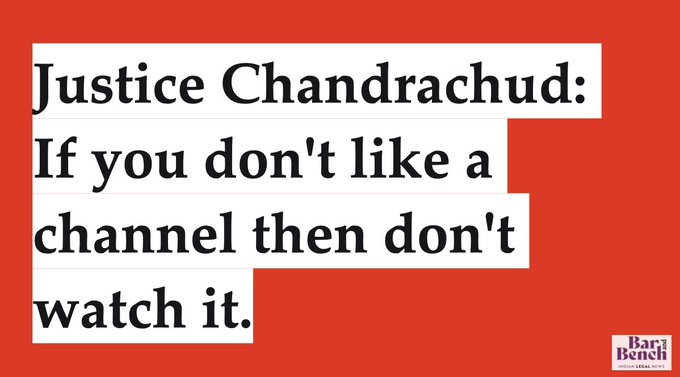
Arnab Goswami This particular gentleman is a class apart. He is the editor as well as Republic TV, a right-leaning channel which demonizes the minority, women whatever is antithesis to the Central Govt. of India. As a result there have been a spate of cases against him in the past few months. But surprisingly, in each of them he got hearing the day after the suit was filed. This is unique in Indian legal history so much so that a popular legal site which publishes on-going cases put up a post sharing how he was getting prompt hearings. That post itself needs to be updated as there have been 3 more hearings which have been done back to back for him. This is unusual as there have been so many cases pending for the SC attention, some arguably more important than this gentleman . So many precedents have been set which will send a wrong message. The biggest one, that even though a trial is taking place in the sessions court (below High Court) the SC can interject on matters. What this will do to the morale of both lawyers as well as judges of the various Sessions Court is a matter of speculation and yet as shared unprecedented. The saddest part was when Justice Chandrachud said
Justice Chandrachud If you don t like a channel then don t watch it. 11th November 2020 .
This is basically giving a free rope to hate speech. How can a SC say like that ? And this is the Same Supreme Court which could not take two tweets from Shri Prashant Bhushan when he made remarks against the judiciary .

J&K pleas in Supreme Court pending since August 2019 (Abrogation 370) After abrogation of 370, citizens of Jammu and Kashmir, the population of which is 13.6 million people including 4 million Hindus have been stuck with reduced rights and their land being taken away due to new laws. Many of the Hindus which regionally are a minority now rue the fact that they supported the abrogation of 370A . Imagine, a whole state whose answers and prayers have not been heard by the Supreme Court and the people need to move a prayer stating the same.

100 Journalists, activists languishing in Jail without even a hearing 55 Journalists alone have been threatened, booked and in jail for reporting of pandemic . Their fault, they were bring the irregularities, corruption made during the pandemic early months. Activists such as Sudha Bharadwaj, who giving up her American citizenship and settling to fight for tribals is in jail for 2 years without any charges. There are many like her, There are several more petitions lying in the Supreme Court, for e.g. Varavara Rao, not a single hearing from last couple of years, even though he has taken part in so many national movements including the emergency as well as part-responsible for creation of Telengana state out of Andhra Pradesh .

Then there is Devangana kalita who works for gender rights. Similar to Sudha Bharadwaj, she had an opportunity to go to UK and settle here. She did her master s and came back. And now she is in jail for the things that she studied. While she took part in Anti-CAA sittings, none of her speeches were incendiary but she still is locked up under UAPA (Unlawful Practises Act) . I could go on and on but at the moment these should suffice.

Petitions for Hate Speech which resulted in riots in Delhi are pending, Citizen s Amendment Act (controversial) no hearings till date. All of the best has been explained in a newspaper article which articulates perhaps all that I wanted to articulate and more. It is and was amazing to see how in certain cases Article 32 is valid and in many it is not. Also a fair reading of Justice Bobde s article tells you a lot how the SC is functioning. I would like to point out that barandbench along with livelawindia makes it easier for never non-lawyers and public to know how arguments are done in court, what evidences are taken as well as give some clue about judicial orders and judgements. Both of these resources are providing an invaluable service and more often than not, free of charge.

Student Suicide and High Cost of Education
For quite sometime now, the cost of education has been shooting up. While I have visited this topic earlier as well, recently a young girl committed suicide because she was unable to pay the fees as well as additional costs due to pandemic. Further investigations show that this is the case with many of the students who are unable to buy laptops. Now while one could think it is limited to one college then it would be wrong. It is almost across all India and this will continue for months and years. People do know that the pandemic is going to last a significant time and it would be a long time before R value becomes zero . Even the promising vaccine from Pfizer need constant refrigeration which is sort of next to impossible in India. It is going to make things very costly.

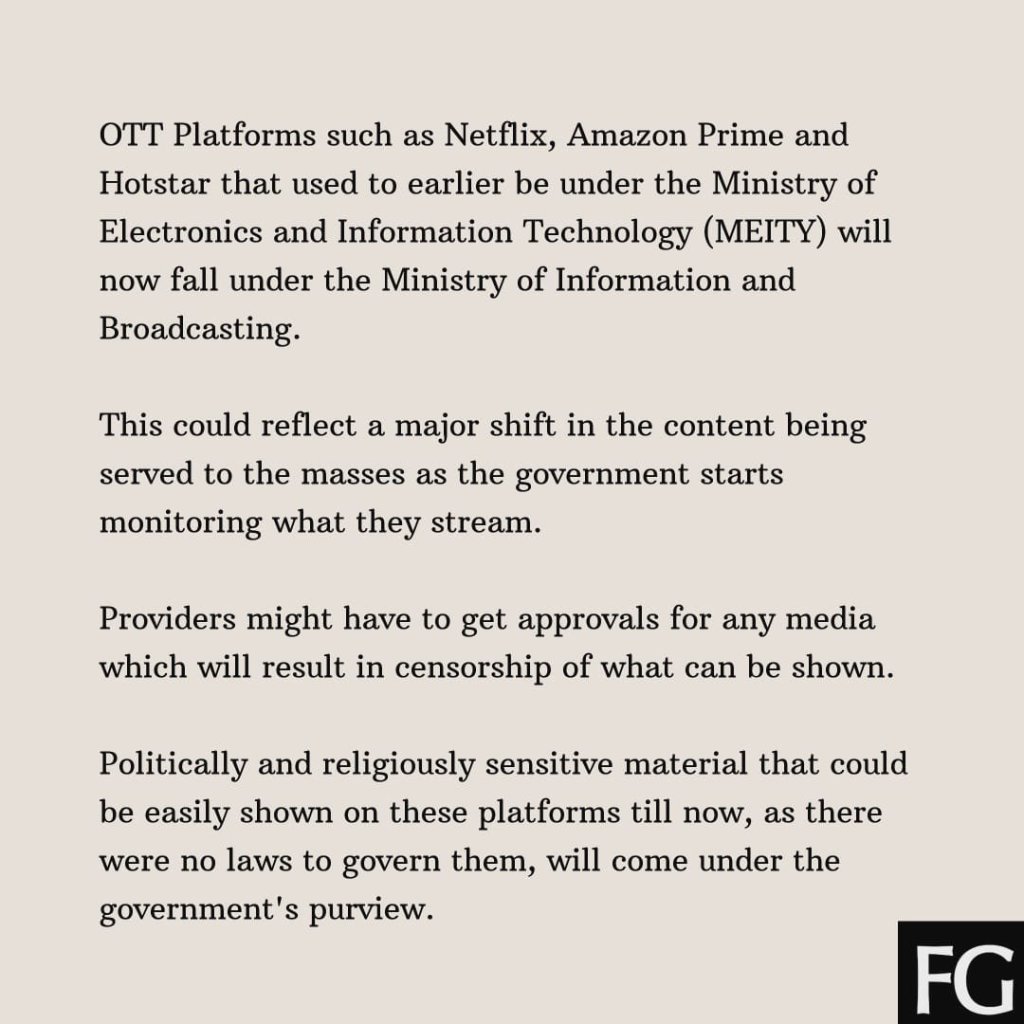
Last Nail on Indian Media Just today the last nail on India has been put. Thankfully Freedom Gazette India did a much better job so just pasting that
Information and Broadcasting Ministry bringing OTT services as well as news within its ambit.
With this, projects like Scam 1992, The Harshad Mehta Story or Bad Boy Billionaires:India, Test Case, Delhi Crime, Laakhon Mein Ek etc. etc. such kind of series, investigative journalism would be still-births. Many of these web-series also shared tales of woman empowerment while at the same time showed some of the hard choices that women had to contend to live with. Even western media may be censored where it finds the political discourse not to its liking. There had been so many accounts of Mr. Ravish Kumar, the winner of Ramon Magsaysay, how in his shows the electricity was cut in many places. I too have been the victim when the BJP governed in Maharashtra as almost all Puneities experienced it. Light would go for just half or 45 minutes at the exact time. There is another aspect to it. The U.S. elections showed how independent media was able to counter Mr. Trump s various falsehoods and give rise to alternative ideas which lead the team of Bernie Sanders, Joe Biden and Kamala Harris, Biden now being the President-elect while Kamala Harris being the vice-president elect. Although the journey to the white house seems as tough as before. Let s see what happens. Hopefully 2021 will bring in some good news. Update On 27th November 2020 Martin who runs the planet got an e-mail/notice by a Mr. Nikhil Sethi who runs the wikibio.com property. Mr. Sethi asked to remove the link pointing Devangana Kalita from my blog post to his site as he has used the no follow link. On inquiring further, the gentleman stated that it is an Updated mandate (his exact quote) from Google algorithm. To further understand the issue, I went to SERP as they are one of the more known ones on the subject. I also looked it up on Google as well. Found that the gentleman was BSing the whole time. The page basically talks about weightage of a page/site and authoritativeness which is known and yet highly contested ideas. In any case, the point for me was for whatever reason (could be fear, could be something else entirely), Mr. Sethi did not want me to link the content. Hence, I have complied above. I could have dragged it out but I do not wish Mr. Sethi any ill-being or/and further harm unduly and unintentionally caused by me. Hence, have taken down the link.

31 October 2020

Chris Lamb: Free software activities in October 2020

Here is my monthly update covering what I have been doing in the free software world during October 2020 (previous month): For Lintian, the static analysis tool for Debian packages, I uploaded versions 2.97.0, 2.98.0, 2.99.0 & 2.100.0 as well as updated the declares-possibly-conflicting-debhelper-compat-versions tag as we may specify the Debhelper compatibility level in debian/rules or debian/control (#972464) and dropped a reference to missing manual page [...].

Reproducible Builds One of the original promises of open source software is that distributed peer review and transparency of process results in enhanced end-user security. However, whilst anyone may inspect the source code of free and open source software for malicious flaws, almost all software today is distributed as pre-compiled binaries. This allows nefarious third-parties to compromise systems by injecting malicious code into ostensibly secure software during the various compilation and distribution processes. The motivation behind the Reproducible Builds effort is to ensure no flaws have been introduced during this compilation process by promising identical results are always generated from a given source, thus allowing multiple third-parties to come to a consensus on whether a build was compromised. The project is proud to be a member project of the Software Freedom Conservancy. Conservancy acts as a corporate umbrella allowing projects to operate as non-profit initiatives without managing their own corporate structure. If you like the work of the Conservancy or the Reproducible Builds project, please consider becoming an official supporter. This month, I: I also updated the main Reproducible Builds website and documentation:
Lastly, I made the following changes to diffoscope, including preparing and uploading version 161 to Debian: trydiffoscope is the web-based version of diffoscope. This month, I made the following changes:

Debian Debian LTS This month I have worked 18 hours on Debian Long Term Support (LTS) and 12 hours on its sister Extended LTS project. You can find out more about the project via the following video:

Uploads Bugs filed

19 October 2020

Louis-Philippe V ronneau: Musings on long-term software support and economic incentives

Although I still read a lot, during my college sophomore years my reading habits shifted from novels to more academic works. Indeed, reading dry textbooks and economic papers for classes often kept me from reading anything else substantial. Nowadays, I tend to binge read novels: I won't touch a book for months on end, and suddenly, I'll read 10 novels back to back1. At the start of a novel binge, I always follow the same ritual: I take out my e-reader from its storage box, marvel at the fact the battery is still pretty full, turn on the WiFi and check if there are OS updates. And I have to admit, Kobo Inc. (now Rakuten Kobo) has done a stellar job of keeping my e-reader up to date. I've owned this model (a Kobo Aura 1st generation) for 7 years now and I'm still running the latest version of Kobo's Linux-based OS. Having recently had trouble updating my Nexus 5 (also manufactured 7 years ago) to Android 102, I asked myself:
Why is my e-reader still getting regular OS updates, while Google stopped issuing security patches for my smartphone four years ago?
To try to answer this, let us turn to economic incentives theory. Although not the be-all and end-all some think it is3, incentives theory is not a bad tool to analyse this particular problem. Executives at Google most likely followed a very business-centric logic when they decided to drop support for the Nexus 5. Likewise, Rakuten Kobo's decision to continue updating older devices certainly had very little to do with ethics or loyalty to their user base. So, what are the incentives that keep Kobo updating devices and why are they different than smartphone manufacturers'? A portrait of the current long-term software support offerings for smartphones and e-readers Before delving deeper in economic theory, let's talk data. I'll be focusing on 2 brands of e-readers, Amazon's Kindle and Rakuten's Kobo. Although the e-reader market is highly segmented and differs a lot based on geography, Amazon was in 2015 the clear worldwide leader with 53% of the worldwide e-reader sales, followed by Rakuten Kobo at 13%4. On the smartphone side, I'll be differentiating between Apple's iPhones and Android devices, taking Google as the barometer for that ecosystem. As mentioned below, Google is sadly the leader in long-term Android software support. Rakuten Kobo According to their website and to this Wikipedia table, the only e-readers Kobo has deprecated are the original Kobo eReader and the Kobo WiFi N289, both released in 2010. This makes their oldest still supported device the Kobo Touch, released in 2011. In my book, that's a pretty good track record. Long-term software support does not seem to be advertised or to be a clear selling point in their marketing. Amazon According to their website, Amazon has dropped support for all 8 devices produced before the Kindle Paperwhite 2nd generation, first sold in 2013. To put things in perspective, the first Kindle came out in 2007, 3 years before Kobo started selling devices. Like Rakuten Kobo, Amazon does not make promises of long-term software support as part of their marketing. Apple Apple has a very clear software support policy for all their devices:
Owners of iPhone, iPad, iPod or Mac products may obtain a service and parts from Apple or Apple service providers for five years after the product is no longer sold or longer, where required by law.
This means in the worst-case scenario of buying an iPhone model just as it is discontinued, one would get a minimum of 5 years of software support. Android Google's policy for their Android devices is to provide software support for 3 years after the launch date. If you buy a Pixel device just before the new one launches, you could theoretically only get 2 years of support. In 2018, Google decided OEMs would have to provide security updates for at least 2 years after launch, threatening not to license Google Apps and the Play Store if they didn't comply. A question of cost structure From the previous section, we can conclude that in general, e-readers seem to be supported longer than smartphones, and that Apple does a better job than Android OEMs, providing support for about twice as long. Even Fairphone, who's entire business is to build phones designed to last and to be repaired was not able to keep the Fairphone 1 (2013) updated for more than a couple years and seems to be struggling to keep the Fairphone 2 (2015) running an up to date version of Android. Anyone who has ever worked in IT will tell you: maintaining software over time is hard work and hard work by specialised workers is expensive. Most commercial electronic devices are sold and developed by for-profit enterprises and software support all comes down to a question of cost structure. If companies like Google or Fairphone are to be expected to provide long-term support for the devices they manufacture, they have to be able to fund their work somehow. In a perfect world, people would be paying for the cost of said long-term support, as it would likely be cheaper then buying new devices every few years and would certainly be better for the planet. Problem is, manufacturers aren't making them pay for it. Economists call this type of problem externalities: things that should be part of the cost of a good, but aren't for one a reason or another. A classic example of an externality is pollution. Clearly pollution is bad and leads to horrendous consequences, like climate change. Sane people agree we should drastically cut our greenhouse gas emissions, and yet, we aren't. Neo-classical economic theory argues the way to fix externalities like pollution is to internalise these costs, in other words, to make people pay for the "real price" of the goods they buy. In the case of climate change and pollution, neo-classical economic theory is plain wrong (spoiler alert: it often is), but this is where band-aids like the carbon tax comes from. Still, coming back to long-term software support, let's see what would happen if we were to try to internalise software maintenance costs. We can do this multiple ways. 1 - Include the price of software maintenance in the cost of the device This is the choice Fairphone makes. This might somewhat work out for them since they are a very small company, but it cannot scale for the following reasons:
  1. This strategy relies on you giving your money to an enterprise now, and trusting them to "Do the right thing" years later. As the years go by, they will eventually look at their books, see how much ongoing maintenance is costing them, drop support for the device, apologise and move on. That is to say, enterprises have a clear economic incentive to promise long-term support and not deliver. One could argue a company's reputation would suffer from this kind of behaviour. Maybe sometime it does, but most often people forget. Political promises are a great example of this.
  2. Enterprises go bankrupt all the time. Even if company X promises 15 years of software support for their devices, if they cease to exist, your device will stop getting updates. The internet is full of stories of IoT devices getting bricked when the parent company goes bankrupt and their servers disappear. This is related to point number 1: to some degree, you have a disincentive to pay for long-term support in advance, as the future is uncertain and there are chances you won't get the support you paid for.
  3. Selling your devices at a higher price to cover maintenance costs does not necessarily mean you will make more money overall raising more money to fund maintenance costs being the goal here. To a certain point, smartphone models are substitute goods and prices higher than market prices will tend to drive consumers to buy cheaper ones. There is thus a disincentive to include the price of software maintenance in the cost of the device.
  4. People tend to be bad at rationalising the total cost of ownership over a long period of time. Economists call this phenomenon hyperbolic discounting. In our case, it means people are far more likely to buy a 500$ phone each 3 years than a 1000$ phone each 10 years. Again, this means OEMs have a clear disincentive to include the price of long-term software maintenance in their devices.
Clearly, life is more complex than how I portrayed it: enterprises are not perfect rational agents, altruism exists, not all enterprises aim solely for profit maximisation, etc. Still, in a capitalist economy, enterprises wanting to charge for software maintenance upfront have to overcome these hurdles one way or another if they want to avoid failing. 2 - The subscription model Another way companies can try to internalise support costs is to rely on a subscription-based revenue model. This has multiple advantages over the previous option, mainly:
  1. It does not affect the initial purchase price of the device, making it easier to sell them at a competitive price.
  2. It provides a stable source of income, something that is very valuable to enterprises, as it reduces overall risks. This in return creates an incentive to continue providing software support as long as people are paying.
If this model is so interesting from an economic incentives point of view, why isn't any smartphone manufacturer offering that kind of program? The answer is, they are, but not explicitly5. Apple and Google can fund part of their smartphone software support via the 30% cut they take out of their respective app stores. A report from Sensor Tower shows that in 2019, Apple made an estimated US$ 16 billion from the App Store, while Google raked in US$ 9 billion from the Google Play Store. Although the Fortune 500 ranking tells us this respectively is "only" 5.6% and 6.5% of their gross annual revenue for 2019, the profit margins in this category are certainly higher than any of their other products. This means Google and Apple have an important incentive to keep your device updated for some time: if your device works well and is updated, you are more likely to keep buying apps from their store. When software support for a device stops, there is a risk paying customers will buy a competitor device and leave their ecosystem. This also explains why OEMs who don't own app stores tend not to provide software support for very long periods of time. Most of them only make money when you buy a new phone. Providing long-term software support thus becomes a disincentive, as it directly reduces their sale revenues. Same goes for Kindles and Kobos: the longer your device works, the more money they make with their electronic book stores. In my opinion, it's likely Amazon and Rakuten Kobo produce quarterly cost-benefit reports to decide when to drop support for older devices, based on ongoing support costs and the recurring revenues these devices bring in. Rakuten Kobo is also in a more precarious situation than Amazon is: considering Amazon's very important market share, if your device stops getting new updates, there is a greater chance people will replace their old Kobo with a Kindle. Again, they have an important economic incentive to keep devices running as long as they are profitable. Can Free Software fix this? Yes and no. Free Software certainly isn't a magic wand one can wave to make everything better, but does provide major advantages in terms of security, user freedom and sometimes costs. The last piece of the puzzle explaining why Rakuten Kobo's software support is better than Google's is technological choices. Smartphones are incredibly complex devices and have become the main computing platform of many. Similar to the web, there is a race for features and complexity that tends to create bloat and make older devices slow and painful to use. On the other hand, e-readers are simpler devices built for a single task: display electronic books. Control over the platform is also a key aspect of the cost structure of providing software updates. Whereas Apple controls both the software and hardware side of iPhones, Android is a sad mess of drivers and SoCs, all providing different levels of support over time6. If you take a look at the platforms the Kindle and Kobo are built on, you'll quickly see they both use Freescale I.MX SoCs. These processors are well known for their excellent upstream support in the Linux kernel and their relative longevity, chips being produced for either 10 or 15 years. This in turn makes updates much easier and less expensive to provide. So clearly, open architectures, free drivers and open hardware helps tremendously, but aren't enough on their own. One of the lessons we must learn from the (amazing) LineageOS project is how lack of funding hurts everyone. If there is no one to do the volunteer work required to maintain a version of LOS for your device, it won't be supported. Worse, when purchasing a new device, users cannot know in advance how many years of LOS support they will get. This makes buying new devices a frustrating hit-and-miss experience. If you are lucky, you will get many years of support. Otherwise, you risk your device becoming an expensive insecure paperweight. So how do we fix this? Anyone with a brain understands throwing away perfectly good devices each 2 years is not sustainable. Government regulations enforcing a minimum support life would be a step in the right direction, but at the end of the day, Capitalism is to blame. Like the aforementioned carbon tax, band-aid solutions can make things somewhat better, but won't fix our current economic system's underlying problems. For now though, I'll leave fixing the problem of Capitalism to someone else.

  1. My most recent novel binge has been focused on re-reading the Dune franchise. I first read the 6 novels written by Frank Herbert when I was 13 years old and only had vague and pleasant memories of his work. Great stuff.
  2. I'm back on LineageOS! Nice folks released an unofficial LOS 17.1 port for the Nexus 5 last January and have kept it updated since then. If you are to use it, I would also recommend updating TWRP to this version specifically patched for the Nexus 5.
  3. Very few serious economists actually believe neo-classical rational agent theory is a satisfactory explanation of human behavior. In my opinion, it's merely a (mostly flawed) lens to try to interpret certain behaviors, a tool amongst others that needs to be used carefully, preferably as part of a pluralism of approaches.
  4. Good data on the e-reader market is hard to come by and is mainly produced by specialised market research companies selling their findings at very high prices. Those particular statistics come from a MarketWatch analysis.
  5. If they were to tell people: You need to pay us 5$/month if you want to receive software updates, I'm sure most people would not pay. Would you?
  6. Coming back to Fairphones, if they had so much problems providing an Android 9 build for the Fairphone 2, it's because Qualcomm never provided Android 7+ support for the Snapdragon 801 SoC it uses.

5 October 2020

Reproducible Builds: Reproducible Builds in September 2020

Welcome to the September 2020 report from the Reproducible Builds project. In our monthly reports, we attempt to summarise the things that we have been up to over the past month, but if you are interested in contributing to the project, please visit our main website. This month, the Reproducible Builds project was pleased to announce a donation from Amateur Radio Digital Communications (ARDC) in support of its goals. ARDC s contribution will propel the Reproducible Builds project s efforts in ensuring the future health, security and sustainability of our increasingly digital society. Amateur Radio Digital Communications (ARDC) is a non-profit which was formed to further research and experimentation with digital communications using radio, with a goal of advancing the state of the art of amateur radio and to educate radio operators in these techniques. You can view the full announcement as well as more information about ARDC on their website.
In August s report, we announced that Jennifer Helsby (redshiftzero) launched a new reproduciblewheels.com website to address the lack of reproducibility of Python wheels . This month, Kushal Das posted a brief follow-up to provide an update on reproducible sources as well. The Threema privacy and security-oriented messaging application announced that within the next months , their apps will become fully open source, supporting reproducible builds :
This is to say that anyone will be able to independently review Threema s security and verify that the published source code corresponds to the downloaded app.
You can view the full announcement on Threema s website.

Events Sadly, due to the unprecedented events in 2020, there will be no in-person Reproducible Builds event this year. However, the Reproducible Builds project intends to resume meeting regularly on IRC, starting on Monday, October 12th at 18:00 UTC (full announcement). The cadence of these meetings will probably be every two weeks, although this will be discussed and decided on at the first meeting. (An editable agenda is available.) On 18th September, Bernhard M. Wiedemann gave a presentation in German titled Wie reproducible builds Software sicherer machen ( How reproducible builds make software more secure ) at the Internet Security Digital Days 2020 conference. (View video.) On Saturday 10th October, Morten Linderud will give a talk at Arch Conf Online 2020 on The State of Reproducible Builds in the Arch Linux distribution:
The previous year has seen great progress in Arch Linux to get reproducible builds in the hands of the users and developers. In this talk we will explore the current tooling that allows users to reproduce packages, the rebuilder software that has been written to check packages and the current issues in this space.
During the Reproducible Builds summit in Marrakesh, GNU Guix, NixOS and Debian were able to produce a bit-for-bit identical binary when building GNU Mes, despite using three different major versions of GCC. Since the summit, additional work resulted in a bit-for-bit identical Mes binary using tcc and this month, a fuller update was posted by the individuals involved.

Development work In openSUSE, Bernhard M. Wiedemann published his monthly Reproducible Builds status update.

Debian Chris Lamb uploaded a number of Debian packages to address reproducibility issues that he had previously provided patches for, including cfingerd (#831021), grap (#870573), splint (#924003) & schroot (#902804) Last month, an issue was identified where a large number of Debian .buildinfo build certificates had been tainted on the official Debian build servers, as these environments had files underneath the /usr/local/sbin directory to prevent the execution of system services during package builds. However, this month, Aurelien Jarno and Wouter Verhelst fixed this issue in varying ways, resulting in a special policy-rcd-declarative-deny-all package. Building on Chris Lamb s previous work on reproducible builds for Debian .ISO images, Roland Clobus announced his work in progress on making the Debian Live images reproducible. [ ] Lucas Nussbaum performed an archive-wide rebuild of packages to test enabling the reproducible=+fixfilepath Debian build flag by default. Enabling the fixfilepath feature will likely fix reproducibility issues in an estimated 500-700 packages. The test revealed only 33 packages (out of 30,000 in the archive) that fail to build with fixfilepath. Many of those will be fixed when the default LLVM/Clang version is upgraded. 79 reviews of Debian packages were added, 23 were updated and 17 were removed this month adding to our knowledge about identified issues. Chris Lamb added and categorised a number of new issue types, including packages that captures their build path via quicktest.h and absolute build directories in documentation generated by Doxygen , etc. Lastly, Lukas Puehringer s uploaded a new version of the in-toto to Debian which was sponsored by Holger Levsen. [ ]

diffoscope diffoscope is our in-depth and content-aware diff utility that can not only locate and diagnose reproducibility issues, it provides human-readable diffs of all kinds too. In September, Chris Lamb made the following changes to diffoscope, including preparing and uploading versions 159 and 160 to Debian:
  • New features:
    • Show ordering differences only in strings(1) output by applying the ordering check to all differences across the codebase. [ ]
  • Bug fixes:
    • Mark some PGP tests that they require pgpdump, and check that the associated binary is actually installed before attempting to run it. (#969753)
    • Don t raise exceptions when cleaning up after guestfs cleanup failure. [ ]
    • Ensure we check FALLBACK_FILE_EXTENSION_SUFFIX, otherwise we run pgpdump against all files that are recognised by file(1) as data. [ ]
  • Codebase improvements:
    • Add some documentation for the EXTERNAL_TOOLS dictionary. [ ]
    • Abstract out a variable we use a couple of times. [ ]
  • diffoscope.org website improvements:
    • Make the (long) demonstration GIF less prominent on the page. [ ]
In addition, Paul Spooren added support for automatically deploying Docker images. [ ]

Website and documentation This month, a number of updates to the main Reproducible Builds website and related documentation. Chris Lamb made the following changes: In addition, Holger Levsen re-added the documentation link to the top-level navigation [ ] and documented that the jekyll-polyglot package is required [ ]. Lastly, diffoscope.org and reproducible-builds.org were transferred to Software Freedom Conservancy. Many thanks to Brett Smith from Conservancy, J r my Bobbio (lunar) and Holger Levsen for their help with transferring and to Mattia Rizzolo for initiating this.

Upstream patches The Reproducible Builds project detects, dissects and attempts to fix as many currently-unreproducible packages as possible. We endeavour to send all of our patches upstream where appropriate. This month, we wrote a large number of these patches, including: Bernhard M. Wiedemann also reported issues in git2-rs, pyftpdlib, python-nbclient, python-pyzmq & python-sidpy.

Testing framework The Reproducible Builds project operates a Jenkins-based testing framework to power tests.reproducible-builds.org. This month, Holger Levsen made the following changes:
  • Debian:
    • Shorten the subject of nodes have gone offline notification emails. [ ]
    • Also track bugs that have been usertagged with usrmerge. [ ]
    • Drop abort-related codepaths as that functionality has been removed from Jenkins. [ ]
    • Update the frequency we update base images and status pages. [ ][ ][ ][ ]
  • Status summary view page:
    • Add support for monitoring systemctl status [ ] and the number of diffoscope processes [ ].
    • Show the total number of nodes [ ] and colourise critical disk space situations [ ].
    • Improve the visuals with respect to vertical space. [ ][ ]
  • Debian rebuilder prototype:
    • Resume building random packages again [ ] and update the frequency that packages are rebuilt. [ ][ ]
    • Use --no-respect-build-path parameter until sbuild 0.81 is available. [ ]
    • Treat the inability to locate some packages as a debrebuild problem, and not as a issue with the rebuilder itself. [ ]
  • Arch Linux:
    • Update various components to be compatible with Arch Linux s move to the xz compression format. [ ][ ][ ]
    • Allow scheduling of old packages to catch up on the backlog. [ ][ ][ ]
    • Improve formatting on the summary page. [ ][ ]
    • Update HTML pages once every hour, not every 30 minutes. [ ]
    • Use the Ubuntu (!) GPG keyserver to validate packages. [ ]
  • System health checks:
    • Highlight important bad conditions in colour. [ ][ ]
    • Add support for detecting more problems, including Jenkins shutdown issues [ ], failure to upgrade Arch Linux packages [ ], kernels with wrong permissions [ ], etc.
  • Misc:
    • Delete old schroot sessions after 2 days, not 3. [ ]
    • Use sudo to cleanup diffoscope schroot sessions. [ ]
In addition, stefan0xC fixed a query for unknown results in the handling of Arch Linux packages [ ] and Mattia Rizzolo updated the template that notifies maintainers by email of their newly-unreproducible packages to ensure that it did not get caught in junk/spam folders [ ]. Finally, build node maintenance was performed by Holger Levsen [ ][ ][ ][ ], Mattia Rizzolo [ ][ ] and Vagrant Cascadian [ ][ ][ ].
If you are interested in contributing to the Reproducible Builds project, please visit our Contribute page on our website. However, you can get in touch with us via:

30 September 2020

Chris Lamb: Free software activities in September 2020

Here is my monthly update covering what I have been doing in the free software world during September 2020 (previous month):

Reproducible Builds One of the original promises of open source software is that distributed peer review and transparency of process results in enhanced end-user security. However, whilst anyone may inspect the source code of free and open source software for malicious flaws, almost all software today is distributed as pre-compiled binaries. This allows nefarious third-parties to compromise systems by injecting malicious code into ostensibly secure software during the various compilation and distribution processes. The motivation behind the Reproducible Builds effort is to ensure no flaws have been introduced during this compilation process by promising identical results are always generated from a given source, thus allowing multiple third-parties to come to a consensus on whether a build was compromised. The project is proud to be a member project of the Software Freedom Conservancy. Conservancy acts as a corporate umbrella allowing projects to operate as non-profit initiatives without managing their own corporate structure. If you like the work of the Conservancy or the Reproducible Builds project, please consider becoming an official supporter. This month, I:

diffoscope I made the following changes to diffoscope, including preparing and uploading versions 159 and 160 to Debian:

Debian Lintian For Lintian, the static analysis tool for Debian packages, I uploaded versions 2.93.0, 2.94.0, 2.95.0 & 2.96.0 (not counting uploads to the backports repositories), as well as: Debian LTS This month I've worked 18 hours on Debian Long Term Support (LTS) and 12 hours on its sister Extended LTS project. You can find out more about the project via the following video:
Uploads Bugs filed

Next.

Previous.