Search Results: "tach"

12 November 2023

Petter Reinholdtsen: New and improved sqlcipher in Debian for accessing Signal database

For a while now I wanted to have direct access to the Signal database of messages and channels of my Desktop edition of Signal. I prefer the enforced end to end encryption of Signal these days for my communication with friends and family, to increase the level of safety and privacy as well as raising the cost of the mass surveillance government and non-government entities practice these days. In August I came across a nice recipe on how to use sqlcipher to extract statistics from the Signal database explaining how to do this. Unfortunately this did not work with the version of sqlcipher in Debian. The sqlcipher package is a "fork" of the sqlite package with added support for encrypted databases. Sadly the current Debian maintainer announced more than three years ago that he did not have time to maintain sqlcipher, so it seemed unlikely to be upgraded by the maintainer. I was reluctant to take on the job myself, as I have very limited experience maintaining shared libraries in Debian. After waiting and hoping for a few months, I gave up the last week, and set out to update the package. In the process I orphaned it to make it more obvious for the next person looking at it that the package need proper maintenance. The version in Debian was around five years old, and quite a lot of changes had taken place upstream into the Debian maintenance git repository. After spending a few days importing the new upstream versions, realising that upstream did not care much for SONAME versioning as I saw library symbols being both added and removed with minor version number changes to the project, I concluded that I had to do a SONAME bump of the library package to avoid surprising the reverse dependencies. I even added a simple autopkgtest script to ensure the package work as intended. Dug deep into the hole of learning shared library maintenance, I set out a few days ago to upload the new version to Debian experimental to see what the quality assurance framework in Debian had to say about the result. The feedback told me the pacakge was not too shabby, and yesterday I uploaded the latest version to Debian unstable. It should enter testing today or tomorrow, perhaps delayed by a small library transition. Armed with a new version of sqlcipher, I can now have a look at the SQL database in ~/.config/Signal/sql/db.sqlite. First, one need to fetch the encryption key from the Signal configuration using this simple JSON extraction command:
/usr/bin/jq -r '."key"' ~/.config/Signal/config.json
Assuming the result from that command is 'secretkey', which is a hexadecimal number representing the key used to encrypt the database. Next, one can now connect to the database and inject the encryption key for access via SQL to fetch information from the database. Here is an example dumping the database structure:
% sqlcipher ~/.config/Signal/sql/db.sqlite
sqlite> PRAGMA key = "x'secretkey'";
sqlite> .schema
CREATE TABLE sqlite_stat1(tbl,idx,stat);
CREATE TABLE conversations(
      id STRING PRIMARY KEY ASC,
      json TEXT,
      active_at INTEGER,
      type STRING,
      members TEXT,
      name TEXT,
      profileName TEXT
    , profileFamilyName TEXT, profileFullName TEXT, e164 TEXT, serviceId TEXT, groupId TEXT, profileLastFetchedAt INTEGER);
CREATE TABLE identityKeys(
      id STRING PRIMARY KEY ASC,
      json TEXT
    );
CREATE TABLE items(
      id STRING PRIMARY KEY ASC,
      json TEXT
    );
CREATE TABLE sessions(
      id TEXT PRIMARY KEY,
      conversationId TEXT,
      json TEXT
    , ourServiceId STRING, serviceId STRING);
CREATE TABLE attachment_downloads(
    id STRING primary key,
    timestamp INTEGER,
    pending INTEGER,
    json TEXT
  );
CREATE TABLE sticker_packs(
    id TEXT PRIMARY KEY,
    key TEXT NOT NULL,
    author STRING,
    coverStickerId INTEGER,
    createdAt INTEGER,
    downloadAttempts INTEGER,
    installedAt INTEGER,
    lastUsed INTEGER,
    status STRING,
    stickerCount INTEGER,
    title STRING
  , attemptedStatus STRING, position INTEGER DEFAULT 0 NOT NULL, storageID STRING, storageVersion INTEGER, storageUnknownFields BLOB, storageNeedsSync
      INTEGER DEFAULT 0 NOT NULL);
CREATE TABLE stickers(
    id INTEGER NOT NULL,
    packId TEXT NOT NULL,
    emoji STRING,
    height INTEGER,
    isCoverOnly INTEGER,
    lastUsed INTEGER,
    path STRING,
    width INTEGER,
    PRIMARY KEY (id, packId),
    CONSTRAINT stickers_fk
      FOREIGN KEY (packId)
      REFERENCES sticker_packs(id)
      ON DELETE CASCADE
  );
CREATE TABLE sticker_references(
    messageId STRING,
    packId TEXT,
    CONSTRAINT sticker_references_fk
      FOREIGN KEY(packId)
      REFERENCES sticker_packs(id)
      ON DELETE CASCADE
  );
CREATE TABLE emojis(
    shortName TEXT PRIMARY KEY,
    lastUsage INTEGER
  );
CREATE TABLE messages(
        rowid INTEGER PRIMARY KEY ASC,
        id STRING UNIQUE,
        json TEXT,
        readStatus INTEGER,
        expires_at INTEGER,
        sent_at INTEGER,
        schemaVersion INTEGER,
        conversationId STRING,
        received_at INTEGER,
        source STRING,
        hasAttachments INTEGER,
        hasFileAttachments INTEGER,
        hasVisualMediaAttachments INTEGER,
        expireTimer INTEGER,
        expirationStartTimestamp INTEGER,
        type STRING,
        body TEXT,
        messageTimer INTEGER,
        messageTimerStart INTEGER,
        messageTimerExpiresAt INTEGER,
        isErased INTEGER,
        isViewOnce INTEGER,
        sourceServiceId TEXT, serverGuid STRING NULL, sourceDevice INTEGER, storyId STRING, isStory INTEGER
        GENERATED ALWAYS AS (type IS 'story'), isChangeCreatedByUs INTEGER NOT NULL DEFAULT 0, isTimerChangeFromSync INTEGER
        GENERATED ALWAYS AS (
          json_extract(json, '$.expirationTimerUpdate.fromSync') IS 1
        ), seenStatus NUMBER default 0, storyDistributionListId STRING, expiresAt INT
        GENERATED ALWAYS
        AS (ifnull(
          expirationStartTimestamp + (expireTimer * 1000),
          9007199254740991
        )), shouldAffectActivity INTEGER
        GENERATED ALWAYS AS (
          type IS NULL
          OR
          type NOT IN (
            'change-number-notification',
            'contact-removed-notification',
            'conversation-merge',
            'group-v1-migration',
            'keychange',
            'message-history-unsynced',
            'profile-change',
            'story',
            'universal-timer-notification',
            'verified-change'
          )
        ), shouldAffectPreview INTEGER
        GENERATED ALWAYS AS (
          type IS NULL
          OR
          type NOT IN (
            'change-number-notification',
            'contact-removed-notification',
            'conversation-merge',
            'group-v1-migration',
            'keychange',
            'message-history-unsynced',
            'profile-change',
            'story',
            'universal-timer-notification',
            'verified-change'
          )
        ), isUserInitiatedMessage INTEGER
        GENERATED ALWAYS AS (
          type IS NULL
          OR
          type NOT IN (
            'change-number-notification',
            'contact-removed-notification',
            'conversation-merge',
            'group-v1-migration',
            'group-v2-change',
            'keychange',
            'message-history-unsynced',
            'profile-change',
            'story',
            'universal-timer-notification',
            'verified-change'
          )
        ), mentionsMe INTEGER NOT NULL DEFAULT 0, isGroupLeaveEvent INTEGER
        GENERATED ALWAYS AS (
          type IS 'group-v2-change' AND
          json_array_length(json_extract(json, '$.groupV2Change.details')) IS 1 AND
          json_extract(json, '$.groupV2Change.details[0].type') IS 'member-remove' AND
          json_extract(json, '$.groupV2Change.from') IS NOT NULL AND
          json_extract(json, '$.groupV2Change.from') IS json_extract(json, '$.groupV2Change.details[0].aci')
        ), isGroupLeaveEventFromOther INTEGER
        GENERATED ALWAYS AS (
          isGroupLeaveEvent IS 1
          AND
          isChangeCreatedByUs IS 0
        ), callId TEXT
        GENERATED ALWAYS AS (
          json_extract(json, '$.callId')
        ));
CREATE TABLE sqlite_stat4(tbl,idx,neq,nlt,ndlt,sample);
CREATE TABLE jobs(
        id TEXT PRIMARY KEY,
        queueType TEXT STRING NOT NULL,
        timestamp INTEGER NOT NULL,
        data STRING TEXT
      );
CREATE TABLE reactions(
        conversationId STRING,
        emoji STRING,
        fromId STRING,
        messageReceivedAt INTEGER,
        targetAuthorAci STRING,
        targetTimestamp INTEGER,
        unread INTEGER
      , messageId STRING);
CREATE TABLE senderKeys(
        id TEXT PRIMARY KEY NOT NULL,
        senderId TEXT NOT NULL,
        distributionId TEXT NOT NULL,
        data BLOB NOT NULL,
        lastUpdatedDate NUMBER NOT NULL
      );
CREATE TABLE unprocessed(
        id STRING PRIMARY KEY ASC,
        timestamp INTEGER,
        version INTEGER,
        attempts INTEGER,
        envelope TEXT,
        decrypted TEXT,
        source TEXT,
        serverTimestamp INTEGER,
        sourceServiceId STRING
      , serverGuid STRING NULL, sourceDevice INTEGER, receivedAtCounter INTEGER, urgent INTEGER, story INTEGER);
CREATE TABLE sendLogPayloads(
        id INTEGER PRIMARY KEY ASC,
        timestamp INTEGER NOT NULL,
        contentHint INTEGER NOT NULL,
        proto BLOB NOT NULL
      , urgent INTEGER, hasPniSignatureMessage INTEGER DEFAULT 0 NOT NULL);
CREATE TABLE sendLogRecipients(
        payloadId INTEGER NOT NULL,
        recipientServiceId STRING NOT NULL,
        deviceId INTEGER NOT NULL,
        PRIMARY KEY (payloadId, recipientServiceId, deviceId),
        CONSTRAINT sendLogRecipientsForeignKey
          FOREIGN KEY (payloadId)
          REFERENCES sendLogPayloads(id)
          ON DELETE CASCADE
      );
CREATE TABLE sendLogMessageIds(
        payloadId INTEGER NOT NULL,
        messageId STRING NOT NULL,
        PRIMARY KEY (payloadId, messageId),
        CONSTRAINT sendLogMessageIdsForeignKey
          FOREIGN KEY (payloadId)
          REFERENCES sendLogPayloads(id)
          ON DELETE CASCADE
      );
CREATE TABLE preKeys(
        id STRING PRIMARY KEY ASC,
        json TEXT
      , ourServiceId NUMBER
        GENERATED ALWAYS AS (json_extract(json, '$.ourServiceId')));
CREATE TABLE signedPreKeys(
        id STRING PRIMARY KEY ASC,
        json TEXT
      , ourServiceId NUMBER
        GENERATED ALWAYS AS (json_extract(json, '$.ourServiceId')));
CREATE TABLE badges(
        id TEXT PRIMARY KEY,
        category TEXT NOT NULL,
        name TEXT NOT NULL,
        descriptionTemplate TEXT NOT NULL
      );
CREATE TABLE badgeImageFiles(
        badgeId TEXT REFERENCES badges(id)
          ON DELETE CASCADE
          ON UPDATE CASCADE,
        'order' INTEGER NOT NULL,
        url TEXT NOT NULL,
        localPath TEXT,
        theme TEXT NOT NULL
      );
CREATE TABLE storyReads (
        authorId STRING NOT NULL,
        conversationId STRING NOT NULL,
        storyId STRING NOT NULL,
        storyReadDate NUMBER NOT NULL,
        PRIMARY KEY (authorId, storyId)
      );
CREATE TABLE storyDistributions(
        id STRING PRIMARY KEY NOT NULL,
        name TEXT,
        senderKeyInfoJson STRING
      , deletedAtTimestamp INTEGER, allowsReplies INTEGER, isBlockList INTEGER, storageID STRING, storageVersion INTEGER, storageUnknownFields BLOB, storageNeedsSync INTEGER);
CREATE TABLE storyDistributionMembers(
        listId STRING NOT NULL REFERENCES storyDistributions(id)
          ON DELETE CASCADE
          ON UPDATE CASCADE,
        serviceId STRING NOT NULL,
        PRIMARY KEY (listId, serviceId)
      );
CREATE TABLE uninstalled_sticker_packs (
        id STRING NOT NULL PRIMARY KEY,
        uninstalledAt NUMBER NOT NULL,
        storageID STRING,
        storageVersion NUMBER,
        storageUnknownFields BLOB,
        storageNeedsSync INTEGER NOT NULL
      );
CREATE TABLE groupCallRingCancellations(
        ringId INTEGER PRIMARY KEY,
        createdAt INTEGER NOT NULL
      );
CREATE TABLE IF NOT EXISTS 'messages_fts_data'(id INTEGER PRIMARY KEY, block BLOB);
CREATE TABLE IF NOT EXISTS 'messages_fts_idx'(segid, term, pgno, PRIMARY KEY(segid, term)) WITHOUT ROWID;
CREATE TABLE IF NOT EXISTS 'messages_fts_content'(id INTEGER PRIMARY KEY, c0);
CREATE TABLE IF NOT EXISTS 'messages_fts_docsize'(id INTEGER PRIMARY KEY, sz BLOB);
CREATE TABLE IF NOT EXISTS 'messages_fts_config'(k PRIMARY KEY, v) WITHOUT ROWID;
CREATE TABLE edited_messages(
        messageId STRING REFERENCES messages(id)
          ON DELETE CASCADE,
        sentAt INTEGER,
        readStatus INTEGER
      , conversationId STRING);
CREATE TABLE mentions (
        messageId REFERENCES messages(id) ON DELETE CASCADE,
        mentionAci STRING,
        start INTEGER,
        length INTEGER
      );
CREATE TABLE kyberPreKeys(
        id STRING PRIMARY KEY NOT NULL,
        json TEXT NOT NULL, ourServiceId NUMBER
        GENERATED ALWAYS AS (json_extract(json, '$.ourServiceId')));
CREATE TABLE callsHistory (
        callId TEXT PRIMARY KEY,
        peerId TEXT NOT NULL, -- conversation id (legacy)   uuid   groupId   roomId
        ringerId TEXT DEFAULT NULL, -- ringer uuid
        mode TEXT NOT NULL, -- enum "Direct"   "Group"
        type TEXT NOT NULL, -- enum "Audio"   "Video"   "Group"
        direction TEXT NOT NULL, -- enum "Incoming"   "Outgoing
        -- Direct: enum "Pending"   "Missed"   "Accepted"   "Deleted"
        -- Group: enum "GenericGroupCall"   "OutgoingRing"   "Ringing"   "Joined"   "Missed"   "Declined"   "Accepted"   "Deleted"
        status TEXT NOT NULL,
        timestamp INTEGER NOT NULL,
        UNIQUE (callId, peerId) ON CONFLICT FAIL
      );
[ dropped all indexes to save space in this blog post ]
CREATE TRIGGER messages_on_view_once_update AFTER UPDATE ON messages
      WHEN
        new.body IS NOT NULL AND new.isViewOnce = 1
      BEGIN
        DELETE FROM messages_fts WHERE rowid = old.rowid;
      END;
CREATE TRIGGER messages_on_insert AFTER INSERT ON messages
      WHEN new.isViewOnce IS NOT 1 AND new.storyId IS NULL
      BEGIN
        INSERT INTO messages_fts
          (rowid, body)
        VALUES
          (new.rowid, new.body);
      END;
CREATE TRIGGER messages_on_delete AFTER DELETE ON messages BEGIN
        DELETE FROM messages_fts WHERE rowid = old.rowid;
        DELETE FROM sendLogPayloads WHERE id IN (
          SELECT payloadId FROM sendLogMessageIds
          WHERE messageId = old.id
        );
        DELETE FROM reactions WHERE rowid IN (
          SELECT rowid FROM reactions
          WHERE messageId = old.id
        );
        DELETE FROM storyReads WHERE storyId = old.storyId;
      END;
CREATE VIRTUAL TABLE messages_fts USING fts5(
        body,
        tokenize = 'signal_tokenizer'
      );
CREATE TRIGGER messages_on_update AFTER UPDATE ON messages
      WHEN
        (new.body IS NULL OR old.body IS NOT new.body) AND
         new.isViewOnce IS NOT 1 AND new.storyId IS NULL
      BEGIN
        DELETE FROM messages_fts WHERE rowid = old.rowid;
        INSERT INTO messages_fts
          (rowid, body)
        VALUES
          (new.rowid, new.body);
      END;
CREATE TRIGGER messages_on_insert_insert_mentions AFTER INSERT ON messages
      BEGIN
        INSERT INTO mentions (messageId, mentionAci, start, length)
        
    SELECT messages.id, bodyRanges.value ->> 'mentionAci' as mentionAci,
      bodyRanges.value ->> 'start' as start,
      bodyRanges.value ->> 'length' as length
    FROM messages, json_each(messages.json ->> 'bodyRanges') as bodyRanges
    WHERE bodyRanges.value ->> 'mentionAci' IS NOT NULL
  
        AND messages.id = new.id;
      END;
CREATE TRIGGER messages_on_update_update_mentions AFTER UPDATE ON messages
      BEGIN
        DELETE FROM mentions WHERE messageId = new.id;
        INSERT INTO mentions (messageId, mentionAci, start, length)
        
    SELECT messages.id, bodyRanges.value ->> 'mentionAci' as mentionAci,
      bodyRanges.value ->> 'start' as start,
      bodyRanges.value ->> 'length' as length
    FROM messages, json_each(messages.json ->> 'bodyRanges') as bodyRanges
    WHERE bodyRanges.value ->> 'mentionAci' IS NOT NULL
  
        AND messages.id = new.id;
      END;
sqlite>
Finally I have the tool needed to inspect and process Signal messages that I need, without using the vendor provided client. Now on to transforming it to a more useful format. As usual, if you use Bitcoin and want to show your support of my activities, please send Bitcoin donations to my address 15oWEoG9dUPovwmUL9KWAnYRtNJEkP1u1b.

25 October 2023

Russ Allbery: Review: Going Infinite

Review: Going Infinite, by Michael Lewis
Publisher: W.W. Norton & Company
Copyright: 2023
ISBN: 1-324-07434-5
Format: Kindle
Pages: 255
My first reaction when I heard that Michael Lewis had been embedded with Sam Bankman-Fried working on a book when Bankman-Fried's cryptocurrency exchange FTX collapsed into bankruptcy after losing billions of dollars of customer deposits was "holy shit, why would you talk to Michael Lewis about your dodgy cryptocurrency company?" Followed immediately by "I have to read this book." This is that book. I wasn't sure how Lewis would approach this topic. His normal (although not exclusive) area of interest is financial systems and crises, and there is lots of room for multiple books about cryptocurrency fiascoes using someone like Bankman-Fried as a pivot. But Going Infinite is not like The Big Short or Lewis's other financial industry books. It's a nearly straight biography of Sam Bankman-Fried, with just enough context for the reader to follow his life. To understand what you're getting in Going Infinite, I think it's important to understand what sort of book Lewis likes to write. Lewis is not exactly a reporter, although he does explain complicated things for a mass audience. He's primarily a storyteller who collects people he finds fascinating. This book was therefore never going to be like, say, Carreyrou's Bad Blood or Isaac's Super Pumped. Lewis's interest is not in a forensic account of how FTX or Alameda Research were structured. His interest is in what makes Sam Bankman-Fried tick, what's going on inside his head. That's not a question Lewis directly answers, though. Instead, he shows you Bankman-Fried as Lewis saw him and was able to reconstruct from interviews and sources and lets you draw your own conclusions. Boy did I ever draw a lot of conclusions, most of which were highly unflattering. However, one conclusion I didn't draw, and had been dubious about even before reading this book, was that Sam Bankman-Fried was some sort of criminal mastermind who intentionally plotted to steal customer money. Lewis clearly doesn't believe this is the case, and with the caveat that my study of the evidence outside of this book has been spotty and intermittent, I think Lewis has the better of the argument. I am utterly fascinated by this, and I'm afraid this review is going to turn into a long summary of my take on the argument, so here's the capsule review before you get bored and wander off: This is a highly entertaining book written by an excellent storyteller. I am also inclined to believe most of it is true, but given that I'm not on the jury, I'm not that invested in whether Lewis is too credulous towards the explanations of the people involved. What I do know is that it's a fantastic yarn with characters who are too wild to put in fiction, and I thoroughly enjoyed it. There are a few things that everyone involved appears to agree on, and therefore I think we can take as settled. One is that Bankman-Fried, and most of the rest of FTX and Alameda Research, never clearly distinguished between customer money and all of the other money. It's not obvious that their home-grown accounting software (written entirely by one person! who never spoke to other people! in code that no one else could understand!) was even capable of clearly delineating between their piles of money. Another is that FTX and Alameda Research were thoroughly intermingled. There was no official reporting structure and possibly not even a coherent list of employees. The environment was so chaotic that lots of people, including Bankman-Fried, could have stolen millions of dollars without anyone noticing. But it was also so chaotic that they could, and did, literally misplace millions of dollars by accident, or because Bankman-Fried had problems with object permanence. Something that was previously less obvious from news coverage but that comes through very clearly in this book is that Bankman-Fried seriously struggled with normal interpersonal and societal interactions. We know from multiple sources that he was diagnosed with ADHD and depression (Lewis describes it specifically as anhedonia, the inability to feel pleasure). The ADHD in Lewis's account is quite severe and does not sound controlled, despite medication; for example, Bankman-Fried routinely played timed video games while he was having important meetings, forgot things the moment he stopped dealing with them, was constantly on his phone or seeking out some other distraction, and often stimmed (by bouncing his leg) to a degree that other people found it distracting. Perhaps more tellingly, Bankman-Fried repeatedly describes himself in diary entries and correspondence to other people (particularly Caroline Ellison, his employee and on-and-off secret girlfriend) as being devoid of empathy and unable to access his own emotions, which Lewis supports with stories from former co-workers. I'm very hesitant to diagnose someone via a book, but, at least in Lewis's account, Bankman-Fried nearly walks down the symptom list of antisocial personality disorder in his own description of himself to other people. (The one exception is around physical violence; there is nothing in this book or in any of the other reporting that I've seen to indicate that Bankman-Fried was violent or physically abusive.) One of the recurrent themes of this book is that Bankman-Fried never saw the point in following rules that didn't make sense to him or worrying about things he thought weren't important, and therefore simply didn't. By about a third of the way into this book, before FTX is even properly started, very little about its eventual downfall will seem that surprising. There was no way that Sam Bankman-Fried was going to be able to run a successful business over time. He was extremely good at probabilistic trading and spotting exploitable market inefficiencies, and extremely bad at essentially every other aspect of living in a society with other people, other than a hit-or-miss ability to charm that worked much better with large audiences than one-on-one. The real question was why anyone would ever entrust this man with millions of dollars or decide to work for him for longer than two weeks. The answer to those questions changes over the course of this story. Later on, it was timing. Sam Bankman-Fried took the techniques of high frequency trading he learned at Jane Street Capital and applied them to exploiting cryptocurrency markets at precisely the right time in the cryptocurrency bubble. There was far more money than sense, the most ruthless financial players were still too leery to get involved, and a rising tide was lifting all boats, even the ones that were piles of driftwood. When cryptocurrency inevitably collapsed, so did his businesses. In retrospect, that seems inevitable. The early answer, though, was effective altruism. A full discussion of effective altruism is beyond the scope of this review, although Lewis offers a decent introduction in the book. The short version is that a sensible and defensible desire to use stronger standards of evidence in evaluating charitable giving turned into a bizarre navel-gazing exercise in making up statistical risks to hypothetical future people and treating those made-up numbers as if they should be the bedrock of one's personal ethics. One of the people most responsible for this turn is an Oxford philosopher named Will MacAskill. Sam Bankman-Fried was already obsessed with utilitarianism, in part due to his parents' philosophical beliefs, and it was a presentation by Will MacAskill that converted him to the effective altruism variant of extreme utilitarianism. In Lewis's presentation, this was like joining a cult. The impression I came away with feels like something out of a science fiction novel: Bankman-Fried knew there was some serious gap in his thought processes where most people had empathy, was deeply troubled by this, and latched on to effective altruism as the ethical framework to plug into that hole. So much of effective altruism sounds like a con game that it's easy to think the participants are lying, but Lewis clearly believes Bankman-Fried is a true believer. He appeared to be sincerely trying to make money in order to use it to solve existential threats to society, he does not appear to be motivated by money apart from that goal, and he was following through (in bizarre and mostly ineffective ways). I find this particularly believable because effective altruism as a belief system seems designed to fit Bankman-Fried's personality and justify the things he wanted to do anyway. Effective altruism says that empathy is meaningless, emotion is meaningless, and ethical decisions should be made solely on the basis of expected value: how much return (usually in safety) does society get for your investment. Effective altruism says that all the things that Sam Bankman-Fried was bad at were useless and unimportant, so he could stop feeling bad about his apparent lack of normal human morality. The only thing that mattered was the thing that he was exceptionally good at: probabilistic reasoning under uncertainty. And, critically to the foundation of his business career, effective altruism gave him access to investors and a recruiting pool of employees, things he was entirely unsuited to acquiring the normal way. There's a ton more of this book that I haven't touched on, but this review is already quite long, so I'll leave you with one more point. I don't know how true Lewis's portrayal is in all the details. He took the approach of getting very close to most of the major players in this drama and largely believing what they said happened, supplemented by startling access to sources like Bankman-Fried's personal diary and Caroline Ellis's personal diary. (He also seems to have gotten extensive information from the personal psychiatrist of most of the people involved; I'm not sure if there's some reasonable explanation for this, but based solely on the material in this book, it seems to be a shocking breach of medical ethics.) But Lewis is a storyteller more than he's a reporter, and his bias is for telling a great story. It's entirely possible that the events related here are not entirely true, or are skewed in favor of making a better story. It's certainly true that they're not the complete story. But, that said, I think a book like this is a useful counterweight to the human tendency to believe in moral villains. This is, frustratingly, a counterweight extended almost exclusively to higher-class white people like Bankman-Fried. This is infuriating, but that doesn't make it wrong. It means we should extend that analysis to more people. Once FTX collapsed, a lot of people became very invested in the idea that Bankman-Fried was a straightforward embezzler. Either he intended from the start to steal everyone's money or, more likely, he started losing money, panicked, and stole customer money to cover the hole. Lots of people in history have done exactly that, and lots of people involved in cryptocurrency have tenuous attachments to ethics, so this is a believable story. But people are complicated, and there's also truth in the maxim that every villain is the hero of their own story. Lewis is after a less boring story than "the crook stole everyone's money," and that leads to some bias. But sometimes the less boring story is also true. Here's the thing: even if Sam Bankman-Fried never intended to take any money, he clearly did intend to mix customer money with Alameda Research funds. In Lewis's account, he never truly believed in them as separate things. He didn't care about following accounting or reporting rules; he thought they were boring nonsense that got in his way. There is obvious criminal intent here in any reading of the story, so I don't think Lewis's more complex story would let him escape prosecution. He refused to follow the rules, and as a result a lot of people lost a lot of money. I think it's a useful exercise to leave mental space for the possibility that he had far less obvious reasons for those actions than that he was a simple thief, while still enforcing the laws that he quite obviously violated. This book was great. If you like Lewis's style, this was some of the best entertainment I've read in a while. Highly recommended; if you are at all interested in this saga, I think this is a must-read. Rating: 9 out of 10

20 October 2023

Freexian Collaborators: Debian Contributions: Freexian meetup, debusine updates, lpr/lpd in Debian, and more! (by Utkarsh Gupta, Stefano Rivera)

Contributing to Debian is part of Freexian s mission. This article covers the latest achievements of Freexian and their collaborators. All of this is made possible by organizations subscribing to our Long Term Support contracts and consulting services.

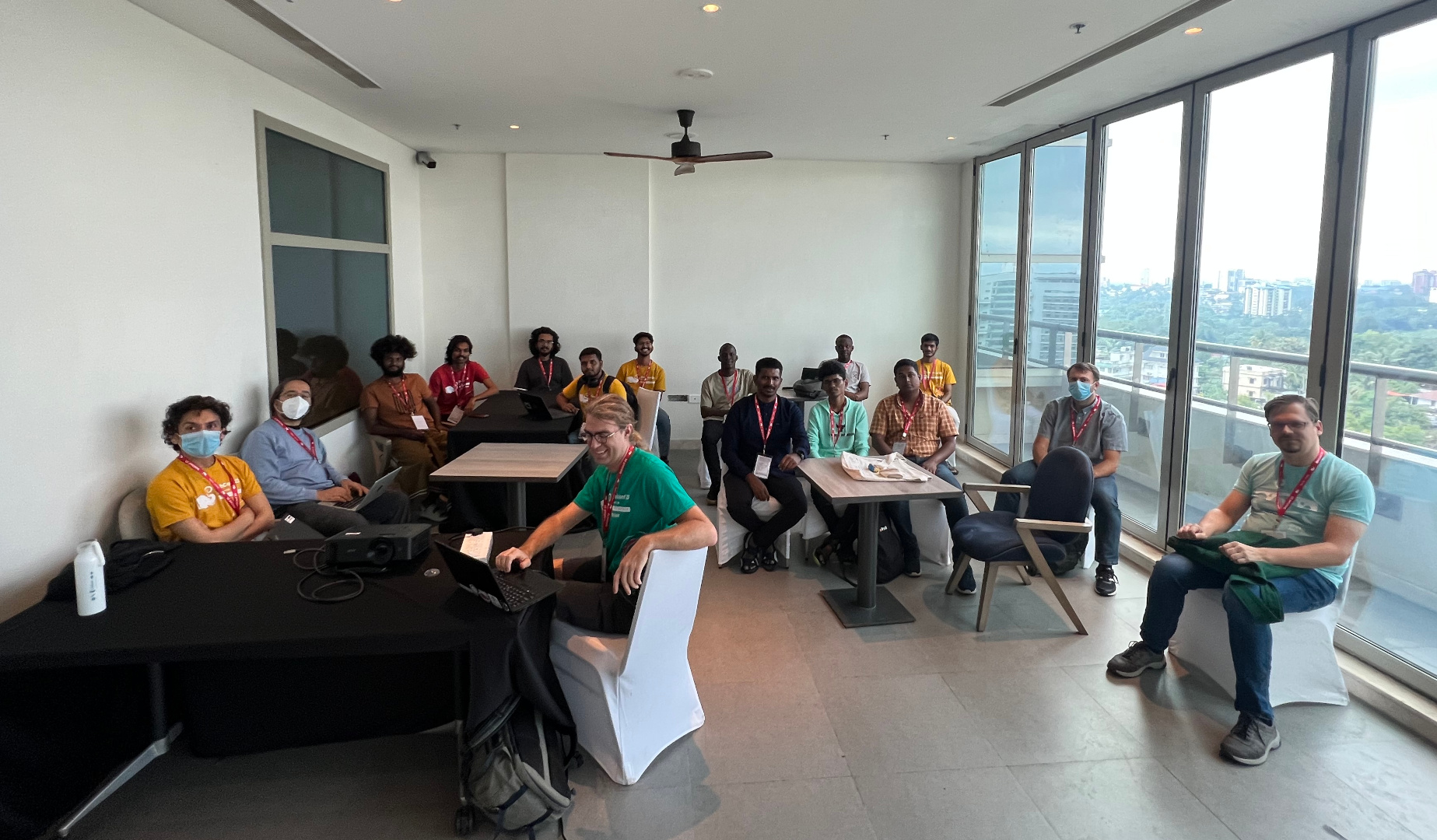
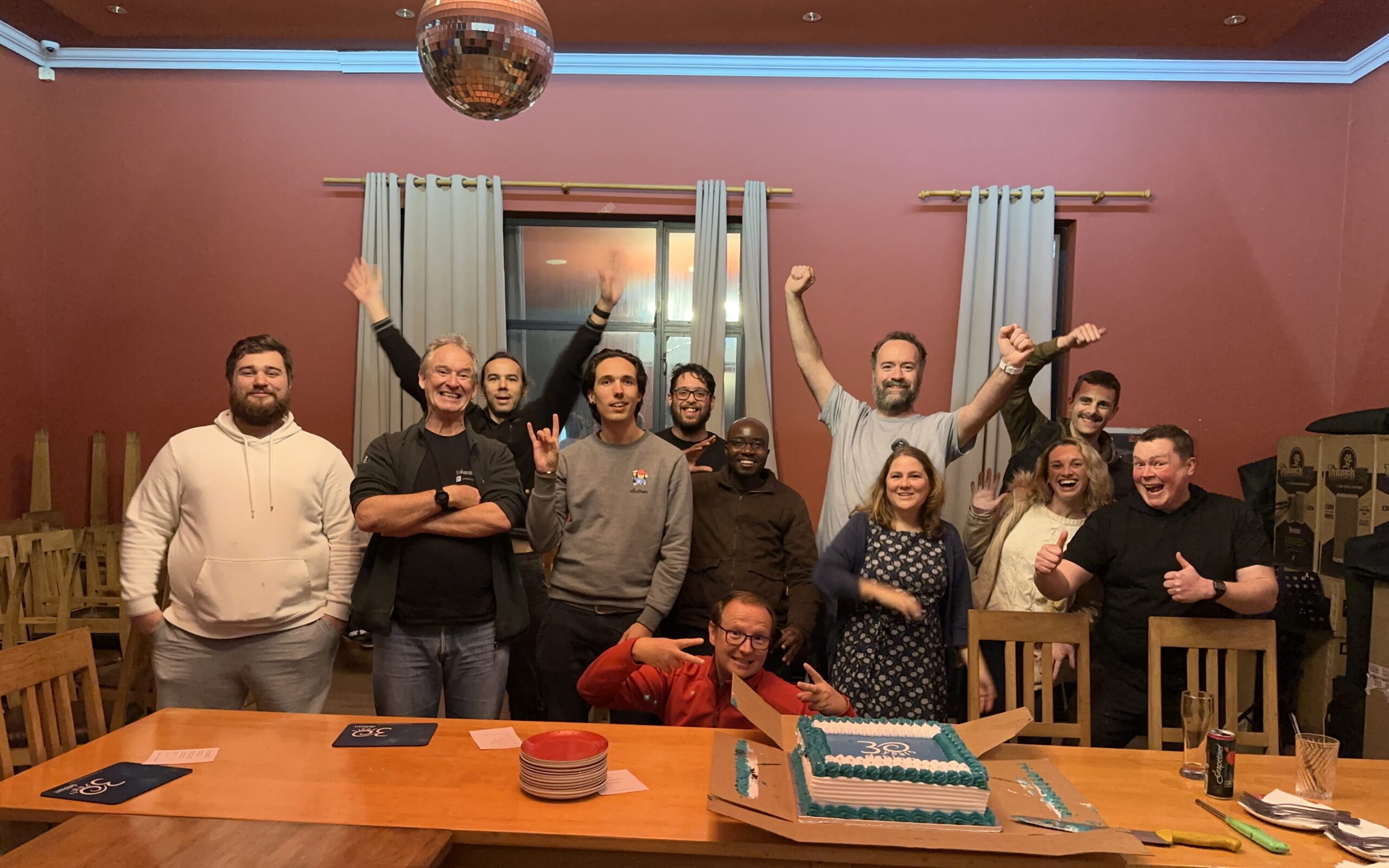
Freexian Meetup, by Stefano Rivera, Utkarsh Gupta, et al. During DebConf, Freexian organized a meetup for its collaborators and those interested in learning more about Freexian and its services. It was well received and many people interested in Freexian showed up. Some developers who were interested in contributing to LTS came to get more details about joining the project. And some prospective customers came to get to know us and ask questions. Sadly, the tragic loss of Abraham shook DebConf, both individually and structurally. The meetup got rescheduled to a small room without video coverage. With that, we still had a wholesome interaction and here s a quick picture from the meetup taken by Utkarsh (which is also why he s missing!).

Debusine, by Rapha l Hertzog, et al. Freexian has been investing into debusine for a while, but development speed is about to increase dramatically thanks to funding from SovereignTechFund.de. Rapha l laid out the 5 milestones of the funding contract, and filed the issues for the first milestone. Together with Enrico and Stefano, they established a workflow for the expanded team. Among the first steps of this milestone, Enrico started to work on a developer-friendly description of debusine that we can use when we reach out to the many Debian contributors that we will have to interact with. And Rapha l started the design work of the autopkgtest and lintian tasks, i.e. what s the interface to schedule such tasks, what behavior and what associated options do we support? At this point you might wonder what debusine is supposed to be let us try to answer this: Debusine manages scheduling and distribution of Debian-related build and QA tasks to a network of worker machines. It also manages the resulting artifacts and provides the results in an easy to consume way. We want to make it easy for Debian contributors to leverage all the great QA tools that Debian provides. We want to build the next generation of Debian s build infrastructure, one that will continue to reliably do what it already does, but that will also enable distribution-wide experiments, custom package repositories and custom workflows with advanced package reviews. If this all sounds interesting to you, don t hesitate to watch the project on salsa.debian.org and to contribute.

lpr/lpd in Debian, by Thorsten Alteholz During Debconf23, Till Kamppeter presented CPDB (Common Print Dialog Backend), a new way to handle print queues. After this talk it was discussed whether the old lpr/lpd based printing system could be abandoned in Debian or whether there is still demand for it. So Thorsten asked on the debian-devel email list whether anybody uses it. Oddly enough, these old packages are still useful:
  • Within a small network it is easier to distribute a printcap file, than to properly configure cups clients.
  • One of the biggest manufacturers of WLAN router and DSL boxes only supports raw queues when attaching an USB printer to their hardware. Admittedly the CPDB still has problems with such raw queues.
  • The Pharos printing system at MIT is still lpd-based.
As a result, the lpr/lpd stuff is not yet ready to be abandoned and Thorsten will adopt the relevant packages (or rather move them under the umbrella of the debian-printing team). Though it is not planned to develop new features, those packages should at least have a maintainer. This month Thorsten adopted rlpr, an utility for lpd printing without using /etc/printcap. The next one he is working on is lprng, a lpr/lpd printer spooling system. If you know of any other package that is also needed and still maintained by the QA team, please tell Thorsten.

/usr-merge, by Helmut Grohne Discussion about lifting the file move moratorium has been initiated with the CTTE and the release team. A formal lift is dependent on updating debootstrap in older suites though. A significant number of packages can automatically move their systemd unit files if dh_installsystemd and systemd.pc change their installation targets. Unfortunately, doing so makes some packages FTBFS and therefore patches have been filed. The analysis tool, dumat, has been enhanced to better understand which upgrade scenarios are considered supported to reduce false positive bug filings and gained a mode for local operation on a .changes file meant for inclusion in salsa-ci. The filing of bugs from dumat is still manual to improve the quality of reports. Since September, the moratorium has been lifted.

Miscellaneous contributions
  • Rapha l updated Django s backport in bullseye-backports to match the latest security release that was published in bookworm. Tracker.debian.org is still using that backport.
  • Helmut Grohne sent 13 patches for cross build failures.
  • Helmut Grohne performed a maintenance upload of debvm enabling its use in autopkgtests.
  • Helmut Grohne wrote an API-compatible reimplementation of autopkgtest-build-qemu. It is powered by mmdebstrap, therefore unprivileged, EFI-only and will soon be included in mmdebstrap.
  • Santiago continued the work regarding how to make it easier to (automatically) test reverse dependencies. An example of the ongoing work was presented during the Salsa CI BoF at DebConf 23.
    In fact, omniorb-dfsg test pipelines as the above were used for the omniorb-dfsg 4.3.0 transition, verifying how the reverse dependencies (tango, pytango and omnievents) were built and how their autopkgtest jobs run with the to-be-uploaded omniorb-dfsg new release.
  • Utkarsh and Stefano attended and helped run DebConf 23. Also continued winding up DebConf 22 accounting.
  • Anton Gladky did some science team uploads to fix RC bugs.

11 October 2023

Russell Coker: The PineTime

I have just got a PineTime smart watch [1] from Pine64. They cost $US27 each which ended up as $144.63 Australian for three including postage when I ordered on the 16th of September, it s annoying that you can t order more than 3 at a time to reduce postage costs. The Australian online store Kogan has smart watches starting at about $15 [2] with Bluetooth and support for phone notifications so the $48.21 for a PineTime doesn t compare well on just price and features. The watches Kogan sells start getting into high resolution at around the $25 price and many of them have features like 24*7 heart monitoring that the PineTime lacks (it just measures when you request it). No-one would order a PineTime for being cheap or having lots of features, you order it because you want open hardware that allows you to do things your way. Also the PineTime isn t going to be orphaned while it s likely that in a few years most of the cheap watches sold by Kogan etc won t support the new phones running the latest version of Android. The screen of the PineTime is 240*240 resolution (about 260dpi) with 64k colors. The screen resolution is lower than some high-end smart watches but higher than most phones and almost all monitors. I doubt that much benefit could be gained from higher resolution. Even on minimum brightness the screen is easy to read on all but the brightest sunny days. The compute capabilities are 4.5MB of flash storage, 64k of RAM, and a 64MHz CPU this can t run Linux and nothing like it will run Linux for a long time. I ve had the PineTime for 6 days now, I charged it once and it s now at 55% battery. It looks like it will last close to 2 weeks on a single charge and it s claimed that a newer firmware will make the battery last longer. Software The main Android app for using with the PineTime is GadgetBridge which I installed from the f-droid repository. It had lots of click-through menus for allowing access to various Android features (contacts, bluetooth, draw over foreground, location, and more) but after that it was easy to setup. It was the first bluetooth device I ve used which had a 6 digit PIN for connecting to a phone. Initially I used the PineTime with my Huawei Nova 7i [3]. The aim is to eventually have it run from my PinePhonePro but my test of the PinePhonePro didn t go as well as hoped [4]. Now I m using it on my Huawei Mate 10 Pro. It comes with InfiniTime [5] installed as the default firmware, mine had 1.11.0 which is a fairly recent version. I will probably upgrade it soon to get the better power optimisation and weather alerts in the watch face. I don t have any plans to use different watch firmware and I don t have any plans to contribute to firmware development I just can t hack on every FOSS project around it s better to do big contributions to a small number of projects. For people who don t want the default firmware the Wasp-OS project seems interesting as it s written in Python [6], I don t like Python but it s very popular. Python is particularly popular in ML development, it will be interesting to see if Wasp-OS becomes a preferred platform for smart watches that talk to GPT servers. Generally the software works well, one annoyance is that when a notification goes away on the phone it remains on the PineTime and has to be manually dismissed. It would be nice if clearing notifications on the phone would clear them on the PineTime too. The music control works with RocketPlayer on Android, it displays the track name and has options for pause/play and skipping forward and backward one track. Annoyingly the current firmware doesn t allow configuring the main screens, from the primary screen you swipe down for notifications, right for settings, up for menus, and there s nothing defined for swipe left. I d like to make swipe left the command to get to music control. Hardware It has a detachable band that appears to be within the common range of watch bands. According to the PineTime Wiki page [7] there are a selection of alternate bands that will fit it, but some don t because the band is recessed into the watch. It is IP67 rated which means you can probably wear it while swimming. The charging contacts are exposed on the bottom of the case which means that any chemicals left by pool water can be cleaned off and also as they are apparently not expected to be harmed by sweat and skin oil there shouldn t be a problem charging it. I have significant experience using a Samsung Galaxy S5 Mini which is rated at IP67 in swimming pools. I had two problems with the S5 Mini when getting out of the pool, firstly water in the headphone socket made the phone consider that it was in headphone mode and turn off the speakers and secondly it took hours to become dry enough to charge and after many swims the charge rate dropped presumably due to oxide on the contacts. There are reports of success when swimming with a PineTime. Generally it feels well made and appears more solid than the cheapest Kogan devices appear to be. Conclusion If I wanted monitoring for medical reasons then I would choose a different smart watch. I ve read about people doing things like tracking their body stats 24*7 and trying to discover useful things, the PineTime is not a good option for BioHacking type use. However if I did have a need for such things I d probably just buy a second smart watch and have one on each wrist. The PineTime generally works well. It s a pity it has fewer hardware features than closed devices that are cheaper. But having a firmware that can be continually improved by the community is good. The continually expanding use of mobile phone technology devices for custom use in corporations (such as mobile phone in custom case for scanning prices etc in a supermarket) has some potential for use with this. I can imagine someone adding some custom features to a PineTime for such use. When a supermarket chain has 200,000 employees (as Woolworths in Australia does) then paying for a few months of software development work to make a smart watch do specific things for that company could provide significant value. There are probably some business opportunities for FOSS developers to hack on extra hardware on a PineTime and write software to support it. I recommend that everyone who s into FOSS buy one of these. Preferably make a deal with two friends to get the minimum postage cost.

6 October 2023

Russ Allbery: Review: The Far Reaches

Review: The Far Reaches, edited by John Joseph Adams
Publisher: Amazon Original Stories
Copyright: June 2023
ISBN: 1-6625-1572-3
ISBN: 1-6625-1622-3
ISBN: 1-6625-1503-0
ISBN: 1-6625-1567-7
ISBN: 1-6625-1678-9
ISBN: 1-6625-1533-2
Format: Kindle
Pages: 219
Amazon has been releasing anthologies of original short SFF with various guest editors, free for Amazon Prime members. I previously tried Black Stars (edited by Nisi Shawl and Latoya Peterson) and Forward (edited by Blake Crouch). Neither were that good, but the second was much worse than the first. Amazon recently released a new collection, this time edited by long-standing SFF anthology editor John Joseph Adams and featuring a new story by Ann Leckie, which sounded promising enough to give them another chance. The definition of insanity is doing the same thing over and over again and expecting different results. As with the previous anthologies, each story is available separately for purchase or Amazon Prime "borrowing" with separate ISBNs. The sidebar cover is for the first in the sequence. Unlike the previous collections, which were longer novelettes or novellas, my guess is all of these are in the novelette range. (I did not do a word count.) If you're considering this anthology, read the Okorafor story ("Just Out of Jupiter's Reach"), consider "How It Unfolds" by James S.A. Corey, and avoid the rest. "How It Unfolds" by James S.A. Corey: Humans have invented a new form of physics called "slow light," which can duplicate any object that is scanned. The energy expense is extremely high, so the result is not a post-scarcity paradise. What the technology does offer, however, is a possible route to interstellar colonization: duplicate a team of volunteers and a ship full of bootstrapping equipment, and send copies to a bunch of promising-looking exoplanets. One of them might succeed. The premise is interesting. The twists Corey adds on top are even better. What can be duplicated once can be duplicated again, perhaps with more information. This is a lovely science fiction idea story that unfortunately bogs down because the authors couldn't think of anywhere better to go with it than relationship drama. I found the focus annoying, but the ideas are still very neat. (7) "Void" by Veronica Roth: A maintenance worker on a slower-than-light passenger ship making the run between Sol and Centauri unexpectedly is called to handle a dead body. A passenger has been murdered, two days outside the Sol system. Ace is in no way qualified to investigate the murder, nor is it her job, but she's watched a lot of crime dramas and she has met the victim before. The temptation to start poking around is impossible to resist. It's been a long time since I've read a story built around the differing experiences of time for people who stay on planets and people who spend most of their time traveling at relativistic speeds. It's a bit of a retro idea from an earlier era of science fiction, but it's still a good story hook for a murder mystery. None of the characters are that memorable and Roth never got me fully invested in the story, but this was still a pleasant way to pass the time. (6) "Falling Bodies" by Rebecca Roanhorse: Ira is the adopted son of a Genteel senator. He was a social experiment in civilizing the humans: rescue a human orphan and give him the best of Genteel society to see if he could behave himself appropriately. The answer was no, which is how Ira finds himself on Long Reach Station with a parole officer and a schooling opportunity, hopefully far enough from his previous mistakes for a second chance. Everyone else seems to like Rebecca Roanhorse's writing better than I do, and this is no exception. Beneath the veneer of a coming-of-age story with a twist of political intrigue, this is brutal, depressing, and awful, with an ending that needs a lot of content warnings. I'm sorry that I read it. (3) "The Long Game" by Ann Leckie: The Imperial Radch trilogy are some of my favorite science fiction novels of all time, but I am finding Leckie's other work a bit hit and miss. I have yet to read a novel of hers that I didn't like, but the short fiction I've read leans more heavily into exploring weird and alien perspectives, which is not my favorite part of her work. This story is firmly in that category: the first-person protagonist is a small tentacled alien creature, a bit like a swamp-dwelling octopus. I think I see what Leckie is doing here: balancing cynicism and optimism, exploring how lifespans influence thinking and planning, and making some subtle points about colonialism. But as a reading experience, I didn't enjoy it. I never liked any of the characters, and the conclusion of the story is the unsettling sort of main-character optimism that seems rather less optimistic to the reader. (4) "Just Out of Jupiter's Reach" by Nnedi Okorafor: K rm n scientists have found a way to grow living ships that can achieve a symbiosis with a human pilot, but the requirements for that symbiosis are very strict and hard to predict. The result was a planet-wide search using genetic testing to find the rare and possibly nonexistent matches. They found seven people. The deal was simple: spend ten years in space, alone, in her ship. No contact with any other human except at the midpoint, when the seven ships were allowed to meet up for a week. Two million euros a year, for as long as she followed the rules, and the opportunity to be part of a great experiment, providing data that will hopefully lead to humans becoming a spacefaring species. The core of this story is told during the seven days in the middle of the mission, and thus centers on people unfamiliar with human contact trying to navigate social relationships after five years in symbiotic ships that reshape themselves to their whims and personalities. The ships themselves link so that the others can tour, which offers both a good opportunity for interesting description and a concretized metaphor about meeting other people. I adore symbiotic spaceships, so this story had me at the premise. The surface plot is very psychological, and I didn't entirely click with it, but the sense of wonder vibes beneath that surface were wonderful. It also feels fresh and new: I've seen most of the ideas before, but not presented or written this way, or approached from quite this angle. Definitely the best story of the anthology. (8) "Slow Time Between the Stars" by John Scalzi: This, on the other hand, was a complete waste of time, redeemed only by being the shortest "story" in the collection. "Story" is generous, since there's only one character and a very dry, linear plot that exists only to make a philosophical point. "Speculative essay" may be closer. The protagonist is the artificial intelligence responsible for Earth's greatest interstellar probe. It is packed with a repository of all of human knowledge and the raw material to create life. Its mission is to find an exoplanet capable of sustaining that life, and then recreate it and support it. The plot, such as it is, follows the AI's decision to abandon that mission and cut off contact with Earth, for reasons that it eventually explains. Every possible beat of this story hit me wrong. The sense of wonder attaches to the most prosaic things and skips over the moments that could have provoked real wonder. The AI is both unbelievable and irritating, with all of the smug self-confidence of an Internet reply guy. The prose is overwrought in all the wrong places ("the finger of God, offering the spark to animate the dirt of another world" would totally be this AI's profile quote under their forum avatar). The only thing I liked about the story is the ethical point that it slowly meanders into, which I think I might agree with and at least find plausible. But it's delivered by the sort of character I would actively leave rooms to avoid, in a style that's about as engrossing as a tax form. Avoid. (2) Rating: 5 out of 10

30 September 2023

Ian Jackson: DKIM: rotate and publish your keys

If you are an email system administrator, you are probably using DKIM to sign your outgoing emails. You should be rotating the key regularly and automatically, and publishing old private keys. I have just released dkim-rotate 1.0; dkim-rotate is a tool to do this key rotation and publication. If you are an email user, your email provider ought to be doing this. If this is not done, your emails are non-repudiable , meaning that if they are leaked, anyone (eg, journalists, haters) can verify that they are authentic, and prove that to others. This is not desirable (for you). Non-repudiation of emails is undesirable This problem was described at some length in Matthew Green s article Ok Google: please publish your DKIM secret keys. Avoiding non-repudiation sounds a bit like lying. After all, I m advising creating a situation where some people can t verify that something is true, even though it is. So I m advocating casting doubt. Crucially, though, it s doubt about facts that ought to be private. When you send an email, that s between you and the recipient. Normally you don t intend for anyone, anywhere, who happens to get a copy, to be able to verify that it was really you that sent it. In practical terms, this verifiability has already been used by journalists to verify stolen emails. Associated Press provide a verification tool. Advice for all email users As a user, you probably don t want your emails to be non-repudiable. (Other people might want to be able to prove you sent some email, but your email system ought to serve your interests, not theirs.) So, your email provider ought to be rotating their DKIM keys, and publishing their old ones. At a rough guess, your provider probably isn t :-(. How to tell by looking at email headers A quick and dirty way to guess is to have a friend look at the email headers of a message you sent. (It is important that the friend uses a different email provider, since often DKIM signatures are not applied within a single email system.) If your friend sees a DKIM-Signature header then the message is DKIM signed. If they don t, then it wasn t. Most email traversing the public internet is DKIM signed nowadays; so if they don t see the header probably they re not looking using the right tools, or they re actually on the same email system as you. In messages signed by a system running dkim-rotate, there will also be a header about the key rotation, to notify potential verifiers of the situation. Other systems that avoid non-repudiation-through-DKIM might do something similar. dkim-rotate s header looks like this:
DKIM-Signature-Warning: NOTE REGARDING DKIM KEY COMPROMISE
 https://www.chiark.greenend.org.uk/dkim-rotate/README.txt
 https://www.chiark.greenend.org.uk/dkim-rotate/ae/aeb689c2066c5b3fee673355309fe1c7.pem
But an email system might do half of the job of dkim-rotate: regularly rotating the key would cause the signatures of old emails to fail to verify, which is a good start. In that case there probably won t be such a header. Testing verification of new and old messages You can also try verifying the signatures. This isn t entirely straightforward, especially if you don t have access to low-level mail tooling. Your friend will need to be able to save emails as raw whole headers and body, un-decoded, un-rendered. If your friend is using a traditional Unix mail program, they should save the message as an mbox file. Otherwise, ProPublica have instructions for attaching and transferring and obtaining the raw email. (Scroll down to How to Check DKIM and ARC .) Checking that recent emails are verifiable Firstly, have your friend test that they can in fact verify a DKIM signature. This will demonstrate that the next test, where the verification is supposed to fail, is working properly and fails for the right reasons. Send your friend a test email now, and have them do this on a Linux system:
    # save the message as test-email.mbox
    apt install libmail-dkim-perl # or equivalent on another distro
    dkimproxy-verify <test-email.mbox
You should see output containing something like this:
    originator address: ijackson@chiark.greenend.org.uk
    signature identity: @chiark.greenend.org.uk
    verify result: pass
    ...
If the output ontains verify result: fail (body has been altered) then probably your friend didn t manage to faithfully save the unalterered raw message. Checking old emails cannot be verified When you both have that working, have your friend find an older email of yours, from (say) month ago. Perform the same steps. Hopefully they will see something like this:
    originator address: ijackson@chiark.greenend.org.uk
    signature identity: @chiark.greenend.org.uk
    verify result: fail (bad RSA signature)
or maybe
    verify result: invalid (public key: not available)
This indicates that this old email can no longer be verified. That s good: it means that anyone who steals a copy, can t verify it either. If it s leaked, the journalist who receives it won t know it s genuine and unmodified; they should then be suspicious. If your friend sees verify result: pass, then they have verified that that old email of yours is genuine. Anyone who had a copy of the mail can do that. This is good for email thieves, but not for you. For email admins: announcing dkim-rotate 1.0 I have been running dkim-rotate 0.4 on my infrastructure, since last August. and I had entirely forgotten about it: it has run flawlessly for a year. I was reminded of the topic by seeing DKIM in other blog posts. Obviously, it is time to decreee that dkim-rotate is 1.0. If you re a mail system administrator, your users are best served if you use something like dkim-rotate. The package is available in Debian stable, and supports Exim out of the box, but other MTAs should be easy to support too, via some simple ad-hoc scripting. Limitation of this approach Even with this key rotation approach, emails remain nonrepudiable for a short period after they re sent - typically, a few days. Someone who obtains a leaked email very promptly, and shows it to the journalist (for example) right away, can still convince the journalist. This is not great, but at least it doesn t apply to the vast bulk of your email archive. There are possible email protocol improvements which might help, but they re quite out of scope for this article.
Edited 2023-10-01 00:20 +01:00 to fix some grammar


comment count unavailable comments

18 September 2023

Bits from Debian: DebConf23 closes in Kochi and DebConf24 announced

DebConf23 group photo - click to enlarge On Sunday 17 September 2023, the annual Debian Developers and Contributors Conference came to a close. Over 474 attendees representing 35 countries from around the world came together for a combined 89 events made up of Talks, Discussons, Birds of a Feather (BoF) gatherings, workshops, and activities in support of furthering our distribution, learning from our mentors and peers, building our community, and having a bit of fun. The conference was preceded by the annual DebCamp hacking session held September 3d through September 9th where Debian Developers and Contributors convened to focus on their Individual Debian related projects or work in team sprints geared toward in-person collaboration in developing Debian. In particular this year Sprints took place to advance development in Mobian/Debian, Reproducible Builds, and Python in Debian. This year also featured a BootCamp that was held for newcomers staged by a team of dedicated mentors who shared hands-on experience in Debian and offered a deeper understanding of how to work in and contribute to the community. The actual Debian Developers Conference started on Sunday 10 September 2023. In addition to the traditional 'Bits from the DPL' talk, the continuous key-signing party, lightning talks and the announcement of next year's DebConf4, there were several update sessions shared by internal projects and teams. Many of the hosted discussion sessions were presented by our technical teams who highlighted the work and focus of the Long Term Support (LTS), Android tools, Debian Derivatives, Debian Installer, Debian Image, and the Debian Science teams. The Python, Perl, and Ruby programming language teams also shared updates on their work and efforts. Two of the larger local Debian communities, Debian Brasil and Debian India shared how their respective collaborations in Debian moved the project forward and how they attracted new members and opportunities both in Debian, F/OSS, and the sciences with their HowTos of demonstrated community engagement. The schedule was updated each day with planned and ad-hoc activities introduced by attendees over the course of the conference. Several activities that were unable to be held in past years due to the Global COVID-19 Pandemic were celebrated as they returned to the conference's schedule: a job fair, the open-mic and poetry night, the traditional Cheese and Wine party, the group photos and the Day Trips. For those who were not able to attend, most of the talks and sessions were videoed for live room streams with the recorded videos to be made available later through the Debian meetings archive website. Almost all of the sessions facilitated remote participation via IRC messaging apps or online collaborative text documents which allowed remote attendees to 'be in the room' to ask questions or share comments with the speaker or assembled audience. DebConf23 saw over 4.3 TiB of data streamed, 55 hours of scheduled talks, 23 network access points, 11 network switches, 75 kb of equipment imported, 400 meters of gaffer tape used, 1,463 viewed streaming hours, 461 T-shirts, 35 country Geoip viewers, 5 day trips, and an average of 169 meals planned per day. All of these events, activies, conversations, and streams coupled with our love, interest, and participation in Debian annd F/OSS certainly made this conference an overall success both here in Kochi, India and On-line around the world. The DebConf23 website will remain active for archival purposes and will continue to offer links to the presentations and videos of talks and events. Next year, DebConf24 will be held in Haifa, Israel. As tradition follows before the next DebConf the local organizers in Israel will start the conference activites with DebCamp with particular focus on individual and team work towards improving the distribution. DebConf is committed to a safe and welcome environment for all participants. See the web page about the Code of Conduct in DebConf23 website for more details on this. Debian thanks the commitment of numerous sponsors to support DebConf23, particularly our Platinum Sponsors: Infomaniak, Proxmox, and Siemens. We also wish to thank our Video and Infrastructure teams, the DebConf23 and DebConf commitiees, our host nation of India, and each and every person who helped contribute to this event and to Debian overall. Thank you all for your work in helping Debian continue to be "The Universal Operating System". See you next year! About Debian The Debian Project was founded in 1993 by Ian Murdock to be a truly free community project. Since then the project has grown to be one of the largest and most influential open source projects. Thousands of volunteers from all over the world work together to create and maintain Debian software. Available in 70 languages, and supporting a huge range of computer types, Debian calls itself the universal operating system. About DebConf DebConf is the Debian Project's developer conference. In addition to a full schedule of technical, social and policy talks, DebConf provides an opportunity for developers, contributors and other interested people to meet in person and work together more closely. It has taken place annually since 2000 in locations as varied as Scotland, Argentina, and Bosnia and Herzegovina. More information about DebConf is available from https://debconf.org/. About Infomaniak Infomaniak is a key player in the European cloud market and the leading developer of Web technologies in Switzerland. It aims to be an independent European alternative to the web giants and is committed to an ethical and sustainable Web that respects privacy and creates local jobs. Infomaniak develops cloud solutions (IaaS, PaaS, VPS), productivity tools for online collaboration and video and radio streaming services. About Proxmox Proxmox develops powerful, yet easy-to-use open-source server software. The product portfolio from Proxmox, including server virtualization, backup, and email security, helps companies of any size, sector, or industry to simplify their IT infrastructures. The Proxmox solutions are based on the great Debian platform, and we are happy that we can give back to the community by sponsoring DebConf23. About Siemens Siemens is technology company focused on industry, infrastructure and transport. From resource-efficient factories, resilient supply chains, smarter buildings and grids, to cleaner and more comfortable transportation, and advanced healthcare, the company creates technology with purpose adding real value for customers. By combining the real and the digital worlds, Siemens empowers its customers to transform their industries and markets, helping them to enhance the everyday of billions of people. Contact Information For further information, please visit the DebConf23 web page at https://debconf23.debconf.org/ or send mail to press@debian.org.

13 September 2023

Matthew Garrett: Reconstructing an invalid TPM event log

TPMs contain a set of registers ("Platform Configuration Registers", or PCRs) that are used to track what a system boots. Each time a new event is measured, a cryptographic hash representing that event is passed to the TPM. The TPM appends that hash to the existing value in the PCR, hashes that, and stores the final result in the PCR. This means that while the PCR's value depends on the precise sequence and value of the hashes presented to it, the PCR value alone doesn't tell you what those individual events were. Different PCRs are used to store different event types, but there are still more events than there are PCRs so we can't avoid this problem by simply storing each event separately.

This is solved using the event log. The event log is simply a record of each event, stored in RAM. The algorithm the TPM uses to calculate the PCR values is known, so we can reproduce that by simply taking the events from the event log and replaying the series of events that were passed to the TPM. If the final calculated value is the same as the value in the PCR, we know that the event log is accurate, which means we now know the value of each individual event and can make an appropriate judgement regarding its security.

If any value in the event log is invalid, we'll calculate a different PCR value and it won't match. This isn't terribly helpful - we know that at least one entry in the event log doesn't match what was passed to the TPM, but we don't know which entry. That means we can't trust any of the events associated with that PCR. If you're trying to make a security determination based on this, that's going to be a problem.

PCR 7 is used to track information about the secure boot policy on the system. It contains measurements of whether or not secure boot is enabled, and which keys are trusted and untrusted on the system in question. This is extremely helpful if you want to verify that a system booted with secure boot enabled before allowing it to do something security or safety critical. Unfortunately, if the device gives you an event log that doesn't replay correctly for PCR 7, you now have no idea what the security state of the system is.

We ran into that this week. Examination of the event log revealed an additional event other than the expected ones - a measurement accompanied by the string "Boot Guard Measured S-CRTM". Boot Guard is an Intel feature where the CPU verifies the firmware is signed with a trusted key before executing it, and measures information about the firmware in the process. Previously I'd only encountered this as a measurement into PCR 0, which is the PCR used to track information about the firmware itself. But it turns out that at least some versions of Boot Guard also measure information about the Boot Guard policy into PCR 7. The argument for this is that this is effectively part of the secure boot policy - having a measurement of the Boot Guard state tells you whether Boot Guard was enabled, which tells you whether or not the CPU verified a signature on your firmware before running it (as I wrote before, I think Boot Guard has user-hostile default behaviour, and that enforcing this on consumer devices is a bad idea).

But there's a problem here. The event log is created by the firmware, and the Boot Guard measurements occur before the firmware is executed. So how do we get a log that represents them? That one's fairly simple - the firmware simply re-calculates the same measurements that Boot Guard did and creates a log entry after the fact[1]. All good.

Except. What if the firmware screws up the calculation and comes up with a different answer? The entry in the event log will now not match what was sent to the TPM, and replaying will fail. And without knowing what the actual value should be, there's no way to fix this, which means there's no way to verify the contents of PCR 7 and determine whether or not secure boot was enabled.

But there's still a fundamental source of truth - the measurement that was sent to the TPM in the first place. Inspired by Henri Nurmi's work on sniffing Bitlocker encryption keys, I asked a coworker if we could sniff the TPM traffic during boot. The TPM on the board in question uses SPI, a simple bus that can have multiple devices connected to it. In this case the system flash and the TPM are on the same SPI bus, which made things easier. The board had a flash header for external reprogramming of the firmware in the event of failure, and all SPI traffic was visible through that header. Attaching a logic analyser to this header made it simple to generate a record of that. The only problem was that the chip select line on the header was attached to the firmware flash chip, not the TPM. This was worked around by simply telling the analysis software that it should invert the sense of the chip select line, ignoring all traffic that was bound for the flash and paying attention to all other traffic. This worked in this case since the only other device on the bus was the TPM, but would cause problems in the event of multiple devices on the bus all communicating.

With the aid of this analyser plugin, I was able to dump all the TPM traffic and could then search for writes that included the "0182" sequence that corresponds to the command code for a measurement event. This gave me a couple of accesses to the locality 3 registers, which was a strong indication that they were coming from the CPU rather than from the firmware. One was for PCR 0, and one was for PCR 7. This corresponded to the two Boot Guard events that we expected from the event log. The hash in the PCR 0 measurement was the same as the hash in the event log, but the hash in the PCR 7 measurement differed from the hash in the event log. Replacing the event log value with the value actually sent to the TPM resulted in the event log now replaying correctly, supporting the hypothesis that the firmware was failing to correctly reconstruct the event.

What now? The simple thing to do is for us to simply hard code this fixup, but longer term we'd like to figure out how to reconstruct the event so we can calculate the expected value ourselves. Unfortunately there doesn't seem to be any public documentation on this. Sigh.

[1] What stops firmware on a system with no Boot Guard faking those measurements? TPMs have a concept of "localities", effectively different privilege levels. When Boot Guard performs its initial measurement into PCR 0, it does so at locality 3, a locality that's only available to the CPU. This causes PCR 0 to be initialised to a different initial value, affecting the final PCR value. The firmware can't access locality 3, so can't perform an equivalent measurement, so can't fake the value.

comment count unavailable comments

12 September 2023

Jo Shields: Building a NAS

The status quo Back in 2015, I bought an off-the-shelf NAS, a QNAP TS-453mini, to act as my file store and Plex server. I had previously owned a Synology box, and whilst I liked the Synology OS and experience, the hardware was underwhelming. I loaded up the successor QNAP with four 5TB drives in RAID10, and moved all my files over (after some initial DoA drive issues were handled).
QNAP TS-453mini product photoQNAP TS-453mini product photo
That thing has been in service for about 8 years now, and it s been a mixed bag. It was definitely more powerful than the predecessor system, but it was clear that QNAP s OS was not up to the same standard as Synology s perhaps best exemplified by HappyGet 2 , the QNAP webapp for downloading videos from streaming services like YouTube, whose icon is a straight rip-off of StarCraft 2. On its own, meaningless but a bad omen for overall software quality
The logo for QNAP HappyGet 2 and Blizzard's Starcraft 2 side by sideThe logo for QNAP HappyGet 2 and Blizzard s StarCraft 2 side by side
Additionally, the embedded Celeron processor in the NAS turned out to be an issue for some cases. It turns out, when playing back videos with subtitles, most Plex clients do not support subtitles properly instead they rely on the Plex server doing JIT transcoding to bake the subtitles directly into the video stream. I discovered this with some Blu-Ray rips of Game of Thrones some episodes would play back fine on my smart TV, but episodes with subtitled Dothraki speech would play at only 2 or 3 frames per second. The final straw was a ransomware attack, which went through all my data and locked every file below a 60MiB threshold. Practically all my music gone. A substantial collection of downloaded files, all gone. Some of these files had been carried around since my college days digital rarities, or at least digital detritus I felt a real sense of loss at having to replace. This episode was caused by a ransomware targeting specific vulnerabilities in the QNAP OS, not an error on my part. So, I decided to start planning a replacement with:
  • A non-garbage OS, whilst still being a NAS-appliance type offering (not an off-the-shelf Linux server distro)
  • Full remote management capabilities
  • A small form factor comparable to off-the-shelf NAS
  • A powerful modern CPU capable of transcoding high resolution video
  • All flash storage, no spinning rust
At the time, no consumer NAS offered everything (The Asustor FS6712X exists now, but didn t when this project started), so I opted to go for a full DIY rather than an appliance not the first time I ve jumped between appliances and DIY for home storage.

Selecting the core of the system There aren t many companies which will sell you a small motherboard with IPMI. Supermicro is a bust, so is Tyan. But ASRock Rack, the server division of third-tier motherboard vendor ASRock, delivers. Most of their boards aren t actually compliant Mini-ITX size, they re a proprietary Deep Mini-ITX with the regular screw holes, but 40mm of extra length (and a commensurately small list of compatible cases). But, thankfully, they do have a tiny selection of boards without the extra size, and I stumbled onto the X570D4I-2T, a board with an AMD AM4 socket and the mature X570 chipset. This board can use any AMD Ryzen chip (before the latest-gen Ryzen 7000 series); has built in dual 10 gigabit ethernet; IPMI; four (laptop-sized) RAM slots with full ECC support; one M.2 slot for NVMe SSD storage; a PCIe 16x slot (generally for graphics cards, but we live in a world of possibilities); and up to 8 SATA drives OR a couple more NVMe SSDs. It s astonishingly well featured, just a shame it costs about $450 compared to a good consumer-grade Mini ITX AM4 board costing less than half that. I was so impressed with the offering, in fact, that I crowed about it on Mastodon and ended up securing ASRock another sale, with someone else looking into a very similar project to mine around the same timespan. The next question was the CPU. An important feature of a system expected to run 24/7 is low power, and AM4 chips can consume as much as 130W under load, out of the box. At the other end, some models can require as little as 35W under load the OEM-only GE suffix chips, which are readily found for import on eBay. In their PRO variant, they also support ECC (all non-G Ryzen chips support ECC, but only Pro G chips do). The top of the range 8 core Ryzen 7 PRO 5750GE is prohibitively expensive, but the slightly weaker 6 core Ryzen 5 PRO 5650GE was affordable, and one arrived quickly from Hong Kong. Supplemented with a couple of cheap 16 GiB SODIMM sticks of DDR4 PC-3200 direct from Micron for under $50 a piece, that left only cooling as an unsolved problem to get a bootable test system. The official support list for the X570D4I-2T only includes two rackmount coolers, both expensive and hard to source. The reason for such a small list is the non standard cooling layout of the board instead of an AM4 hole pattern with the standard plastic AM4 retaining clips, it has an Intel 115x hole pattern with a non-standard backplate (Intel 115x boards have no backplate, the stock Intel 115x cooler attaches to the holes with push pins). As such every single cooler compatibility list excludes this motherboard. However, the backplate is only secured with a mild glue with minimal pressure and a plastic prying tool it can be removed, giving compatibility with any 115x cooler (which is basically any CPU cooler for more than a decade). I picked an oversized low profile Thermalright AXP120-X67 hoping that its 120mm fan would cool the nearby MOSFETs and X570 chipset too.
Thermalright AXP120-X67, AMD Ryzen 5 PRO 5650GE, ASRock Rack X570D4I-2T, all assembled and running on a flat surface

Testing up to this point Using a spare ATX power supply, I had enough of a system built to explore the IPMI and UEFI instances, and run MemTest86 to validate my progress. The memory test ran without a hitch and confirmed the ECC was working, although it also showed that the memory was only running at 2933 MT/s instead of the rated 3200 MT/s (a limit imposed by the motherboard, as higher speeds are considered overclocking). The IPMI interface isn t the best I ve ever used by a long shot, but it s minimum viable and allowed me to configure the basics and boot from media entirely via a Web browser.
Memtest86 showing test progress, taken from IPMI remote control window
One sad discovery, however, which I ve never seen documented before, on PCIe bifurcation. With PCI Express, you have a number of lanes which are allocated in groups by the motherboard and CPU manufacturer. For Ryzen prior to Ryzen 7000, that s 16 lanes in one slot for the graphics card; 4 lanes in one M.2 connector for an SSD; then 4 lanes connecting the CPU to the chipset, which can offer whatever it likes for peripherals or extra lanes (bottlenecked by that shared 4x link to the CPU, if it comes down to it). It s possible, with motherboard and CPU support, to split PCIe groups up for example an 8x slot could be split into two 4x slots (eg allowing two NVMe drives in an adapter card NVME drives these days all use 4x). However with a Cezanne Ryzen with integrated graphics, the 16x graphics card slot cannot be split into four 4x slots (ie used for for NVMe drives) the most bifurcation it allows is 8x4x4x, which is useless in a NAS.
Screenshot of PCIe 16x slot bifurcation options in UEFI settings, taken from IPMI remote control window
As such, I had to abandon any ideas of an all-NVMe NAS I was considering: the 16x slot split into four 4x, combined with two 4x connectors fed by the X570 chipset, to a total of 6 NVMe drives. 7.6TB U.2 enterprise disks are remarkably affordable (cheaper than consumer SATA 8TB drives), but alas, I was locked out by my 5650GE. Thankfully I found out before spending hundreds on a U.2 hot swap bay. The NVMe setup would be nearly 10x as fast as SATA SSDs, but at least the SATA SSD route would still outperform any spinning rust choice on the market (including the fastest 10K RPM SAS drives)

Containing the core The next step was to pick a case and power supply. A lot of NAS cases require an SFX (rather than ATX) size supply, so I ordered a modular SX500 unit from Silverstone. Even if I ended up with a case requiring ATX, it s easy to turn an SFX power supply into ATX, and the worst result is you have less space taken up in your case, hardly the worst problem to have. That said, on to picking a case. There s only one brand with any cachet making ITX NAS cases, Silverstone. They have three choices in an appropriate size: CS01-HS, CS280, and DS380. The problem is, these cases are all badly designed garbage. Take the CS280 as an example, the case with the most space for a CPU cooler. Here s how close together the hotswap bay (right) and power supply (left) are:
Internal image of Silverstone CS280 NAS build. Image stolen from ServeTheHome
With actual cables connected, the cable clearance problem is even worse:
Internal image of Silverstone CS280 NAS build. Image stolen from ServeTheHome
Remember, this is the best of the three cases for internal layout, the one with the least restriction on CPU cooler height. And it s garbage! Total hot garbage! I decided therefore to completely skip the NAS case market, and instead purchase a 5.25 -to-2.5 hot swap bay adapter from Icy Dock, and put it in an ITX gamer case with a 5.25 bay. This is no longer a served market 5.25 bays are extinct since nobody uses CD/DVD drives anymore. The ones on the market are really new old stock from 2014-2017: The Fractal Design Core 500, Cooler Master Elite 130, and Silverstone SUGO 14. Of the three, the Fractal is the best rated so I opted to get that one however it seems the global supply of new old stock fully dried up in the two weeks between me making a decision and placing an order leaving only the Silverstone case. Icy Dock have a selection of 8-bay 2.5 SATA 5.25 hot swap chassis choices in their ToughArmor MB998 series. I opted for the ToughArmor MB998IP-B, to reduce cable clutter it requires only two SFF-8611-to-SF-8643 cables from the motherboard to serve all eight bays, which should make airflow less of a mess. The X570D4I-2T doesn t have any SATA ports on board, instead it has two SFF-8611 OCuLink ports, each supporting 4 PCI Express lanes OR 4 SATA connectors via a breakout cable. I had hoped to get the ToughArmor MB118VP-B and run six U.2 drives, but as I said, the PCIe bifurcation issue with Ryzen G chips meant I wouldn t be able to run all six bays successfully.
NAS build in Silverstone SUGO 14, mid build, panels removed
Silverstone SUGO 14 from the front, with hot swap bay installed

Actual storage for the storage server My concept for the system always involved a fast boot/cache drive in the motherboard s M.2 slot, non-redundant (just backups of the config if the worst were to happen) and separate storage drives somewhere between 3.8 and 8 TB each (somewhere from $200-$350). As a boot drive, I selected the Intel Optane SSD P1600X 58G, available for under $35 and rated for 228 years between failures (or 11,000 complete drive rewrite cycles). So, on to the big expensive choice: storage drives. I narrowed it down to two contenders: new-old-stock Intel D3-S4510 3.84TB enterprise drives, at about $200, or Samsung 870 QVO 8TB consumer drives, at about $375. I did spend a long time agonizing over the specification differences, the ZFS usage reports, the expected lifetime endurance figures, but in reality, it came down to price $1600 of expensive drives vs $3200 of even more expensive drives. That s 27TB of usable capacity in RAID-Z1, or 23TB in RAID-Z2. For comparison, I m using about 5TB of the old NAS, so that s a LOT of overhead for expansion.
Storage SSD loaded into hot swap sled

Booting up Bringing it all together is the OS. I wanted an appliance NAS OS rather than self-administering a Linux distribution, and after looking into the surrounding ecosystems, decided on TrueNAS Scale (the beta of the 2023 release, based on Debian 12).
TrueNAS Dashboard screenshot in browser window
I set up RAID-Z1, and with zero tuning (other than enabling auto-TRIM), got the following performance numbers:
IOPSBandwidth
4k random writes19.3k75.6 MiB/s
4k random reads36.1k141 MiB/s
Sequential writes 2300 MiB/s
Sequential reads 3800 MiB/s
Results using fio parameters suggested by Huawei
And for comparison, the maximum theoretical numbers quoted by Intel for a single drive:
IOPSBandwidth
4k random writes16k?
4k random reads90k?
Sequential writes 280 MiB/s
Sequential reads 560 MiB/s
Numbers quoted by Intel SSD successors Solidigm.
Finally, the numbers reported on the old NAS with four 7200 RPM hard disks in RAID 10:
IOPSBandwidth
4k random writes4301.7 MiB/s
4k random reads800632 MiB/s
Sequential writes 311 MiB/s
Sequential reads 566 MiB/s
Performance seems pretty OK. There s always going to be an overhead to RAID. I ll settle for the 45x improvement on random writes vs. its predecessor, and 4.5x improvement on random reads. The sequential write numbers are gonna be impacted by the size of the ZFS cache (50% of RAM, so 16 GiB), but the rest should be a reasonable indication of true performance. It took me a little while to fully understand the TrueNAS permissions model, but I finally got Plex configured to access data from the same place as my SMB shares, which have anonymous read-only access or authenticated write access for myself and my wife, working fine via both Linux and Windows. And that s it! I built a NAS. I intend to add some fans and more RAM, but that s the build. Total spent: about $3000, which sounds like an unreasonable amount, but it s actually less than a comparable Synology DiskStation DS1823xs+ which has 4 cores instead of 6, first-generation AMD Zen instead of Zen 3, 8 GiB RAM instead of 32 GiB, no hardware-accelerated video transcoding, etc. And it would have been a whole lot less fun!
The final system, powered up
(Also posted on PCPartPicker)

11 September 2023

John Goerzen: For the First Time In Years, I m Excited By My Computer Purchase

Some decades back, when I d buy a new PC, it would unlock new capabilities. Maybe AGP video, or a PCMCIA slot, or, heck, sound. Nowadays, mostly new hardware means things get a bit faster or less crashy, or I have some more space for files. It s good and useful, but sorta meh. Not this purchase. Cory Doctorow wrote about the Framework laptop in 2021:
There s no tape. There s no glue. Every part has a QR code that you can shoot with your phone to go to a service manual that has simple-to-follow instructions for installing, removing and replacing it. Every part is labeled in English, too! The screen is replaceable. The keyboard is replaceable. The touchpad is replaceable. Removing the battery and replacing it takes less than five minutes. The computer actually ships with a screwdriver.
Framework had been on my radar for awhile. But for various reasons, when I was ready to purchase, I didn t; either the waitlist was long, or they didn t have the specs I wanted. Lately my aging laptop with 8GB RAM started OOMing (running out of RAM). My desktop had developed a tendency to hard hang about once a month, and I researched replacing it, but the cost was too high to justify. But when I looked into the Framework, I thought: this thing could replace both. It is a real shift in perspective to have a laptop that is nearly as upgradable as a desktop, and can be specced out to exactly what I wanted: 2TB storage and 64GB RAM. And still cheaper than a Macbook or Thinkpad with far lower specs, because the Framework uses off-the-shelf components as much as possible. Cory Doctorow wrote, in The Framework is the most exciting laptop I ve ever broken:
The Framework works beautifully, but it fails even better Framework has designed a small, powerful, lightweight machine it works well. But they ve also designed a computer that, when you drop it, you can fix yourself. That attention to graceful failure saved my ass.
I like small laptops, so I ordered the Framework 13. I loaded it up with the 64GB RAM and 2TB SSD I wanted. Frameworks have four configurable ports, which are also hot-swappable. I ordered two USB-C, one USB-A, and one HDMI. I put them in my preferred spots (one USB-C on each side for easy docking and charging). I put Debian on it, and it all Just Worked. Perfectly. Now, I orderd the DIY version. I hesitated about this I HATE working with laptops because they re all so hard, even though I KNEW this one was different but went for it, because my preferred specs weren t available in a pre-assembled model. I m glad I did that, because assembly was actually FUN. I got my box. I opened it. There was the bottom shell with the motherboard and CPU installed. Here are the RAM sticks. There s the SSD. A minute or two with each has them installed. Put the bezel on the screen, attach the keyboard it has magnets to guide it into place and boom, ready to go. Less than 30 minutes to assemble a laptop nearly from scratch. It was easier than assembling most desktops. So now, for the first time, my main computing device is a laptop. Rather than having a desktop and a laptop, I just have a laptop. I ll be able to upgrade parts of it later if I want to. I can rearrange the ports. And I can take all my most important files with me. I m quite pleased!

21 August 2023

Melissa Wen: AMD Driver-specific Properties for Color Management on Linux (Part 1)

TL;DR: Color is a visual perception. Human eyes can detect a broader range of colors than any devices in the graphics chain. Since each device can generate, capture or reproduce a specific subset of colors and tones, color management controls color conversion and calibration across devices to ensure a more accurate and consistent color representation. We can expose a GPU-accelerated display color management pipeline to support this process and enhance results, and this is what we are doing on Linux to improve color management on Gamescope/SteamDeck. Even with the challenges of being external developers, we have been working on mapping AMD GPU color capabilities to the Linux kernel color management interface, which is a combination of DRM and AMD driver-specific color properties. This more extensive color management pipeline includes pre-defined Transfer Functions, 1-Dimensional LookUp Tables (1D LUTs), and 3D LUTs before and after the plane composition/blending.
The study of color is well-established and has been explored for many years. Color science and research findings have also guided technology innovations. As a result, color in Computer Graphics is a very complex topic that I m putting a lot of effort into becoming familiar with. I always find myself rereading all the materials I have collected about color space and operations since I started this journey (about one year ago). I also understand how hard it is to find consensus on some color subjects, as exemplified by all explanations around the 2015 online viral phenomenon of The Black and Blue Dress. Have you heard about it? What is the color of the dress for you? So, taking into account my skills with colors and building consensus, this blog post only focuses on GPU hardware capabilities to support color management :-D If you want to learn more about color concepts and color on Linux, you can find useful links at the end of this blog post.

Linux Kernel, show me the colors ;D DRM color management interface only exposes a small set of post-blending color properties. Proposals to enhance the DRM color API from different vendors have landed the subsystem mailing list over the last few years. On one hand, we got some suggestions to extend DRM post-blending/CRTC color API: DRM CRTC 3D LUT for R-Car (2020 version); DRM CRTC 3D LUT for Intel (draft - 2020); DRM CRTC 3D LUT for AMD by Igalia (v2 - 2023); DRM CRTC 3D LUT for R-Car (v2 - 2023). On the other hand, some proposals to extend DRM pre-blending/plane API: DRM plane colors for Intel (v2 - 2021); DRM plane API for AMD (v3 - 2021); DRM plane 3D LUT for AMD - 2021. Finally, Simon Ser sent the latest proposal in May 2023: Plane color pipeline KMS uAPI, from discussions in the 2023 Display/HDR Hackfest, and it is still under evaluation by the Linux Graphics community. All previous proposals seek a generic solution for expanding the API, but many seem to have stalled due to the uncertainty of matching well the hardware capabilities of all vendors. Meanwhile, the use of AMD color capabilities on Linux remained limited by the DRM interface, as the DCN 3.0 family color caps and mapping diagram below shows the Linux/DRM color interface without driver-specific color properties [*]: Bearing in mind that we need to know the variety of color pipelines in the subsystem to be clear about a generic solution, we decided to approach the issue from a different perspective and worked on enabling a set of Driver-Specific Color Properties for AMD Display Drivers. As a result, I recently sent another round of the AMD driver-specific color mgmt API. For those who have been following the AMD driver-specific proposal since the beginning (see [RFC][V1]), the main new features of the latest version [v2] are the addition of pre-blending Color Transformation Matrix (plane CTM) and the differentiation of Pre-defined Transfer Functions (TF) supported by color blocks. For those who just got here, I will recap this work in two blog posts. This one describes the current status of the AMD display driver in the Linux kernel/DRM subsystem and what changes with the driver-specific properties. In the next post, we go deeper to describe the features of each color block and provide a better picture of what is available in terms of color management for Linux.

The Linux kernel color management API and AMD hardware color capabilities Before discussing colors in the Linux kernel with AMD hardware, consider accessing the Linux kernel documentation (version 6.5.0-rc5). In the AMD Display documentation, you will find my previous work documenting AMD hardware color capabilities and the Color Management Properties. It describes how AMD Display Manager (DM) intermediates requests between the AMD Display Core component (DC) and the Linux/DRM kernel interface for color management features. It also describes the relevant function to call the AMD color module in building curves for content space transformations. A subsection also describes hardware color capabilities and how they evolve between versions. This subsection, DC Color Capabilities between DCN generations, is a good starting point to understand what we have been doing on the kernel side to provide a broader color management API with AMD driver-specific properties.

Why do we need more kernel color properties on Linux? Blending is the process of combining multiple planes (framebuffers abstraction) according to their mode settings. Before blending, we can manage the colors of various planes separately; after blending, we have combined those planes in only one output per CRTC. Color conversions after blending would be enough in a single-plane scenario or when dealing with planes in the same color space on the kernel side. Still, it cannot help to handle the blending of multiple planes with different color spaces and luminance levels. With plane color management properties, userspace can get a more accurate representation of colors to deal with the diversity of color profiles of devices in the graphics chain, bring a wide color gamut (WCG), convert High-Dynamic-Range (HDR) content to Standard-Dynamic-Range (SDR) content (and vice-versa). With a GPU-accelerated display color management pipeline, we can use hardware blocks for color conversions and color mapping and support advanced color management. The current DRM color management API enables us to perform some color conversions after blending, but there is no interface to calibrate input space by planes. Note that here I m not considering some workarounds in the AMD display manager mapping of DRM CRTC de-gamma and DRM CRTC CTM property to pre-blending DC de-gamma and gamut remap block, respectively. So, in more detail, it only exposes three post-blending features:
  • DRM CRTC de-gamma: used to convert the framebuffer s colors to linear gamma;
  • DRM CRTC CTM: used for color space conversion;
  • DRM CRTC gamma: used to convert colors to the gamma space of the connected screen.

AMD driver-specific color management interface We can compare the Linux color management API with and without the driver-specific color properties. From now, we denote driver-specific properties with the AMD prefix and generic properties with the DRM prefix. For visual comparison, I bring the DCN 3.0 family color caps and mapping diagram closer and present it here again: Mixing AMD driver-specific color properties with DRM generic color properties, we have a broader Linux color management system with the following features exposed by properties in the plane and CRTC interface, as summarized by this updated diagram: The blocks highlighted by red lines are the new properties in the driver-specific interface developed by me (Igalia) and Joshua (Valve). The red dashed lines are new links between API and AMD driver components implemented by us to connect the Linux/DRM interface to AMD hardware blocks, mapping components accordingly. In short, we have the following color management properties exposed by the DRM/AMD display driver:
  • Pre-blending - AMD Display Pipe and Plane (DPP):
    • AMD plane de-gamma: 1D LUT and pre-defined transfer functions; used to linearize the input space of a plane;
    • AMD plane CTM: 3x4 matrix; used to convert plane color space;
    • AMD plane shaper: 1D LUT and pre-defined transfer functions; used to delinearize and/or normalize colors before applying 3D LUT;
    • AMD plane 3D LUT: 17x17x17 size with 12 bit-depth; three dimensional lookup table used for advanced color mapping;
    • AMD plane blend/out gamma: 1D LUT and pre-defined transfer functions; used to linearize back the color space after 3D LUT for blending.
  • Post-blending - AMD Multiple Pipe/Plane Combined (MPC):
    • DRM CRTC de-gamma: 1D LUT (can t be set together with plane de-gamma);
    • DRM CRTC CTM: 3x3 matrix (remapped to post-blending matrix);
    • DRM CRTC gamma: 1D LUT + AMD CRTC gamma TF; added to take advantage of driver pre-defined transfer functions;
Note: You can find more about AMD display blocks in the Display Core Next (DCN) - Linux kernel documentation, provided by Rodrigo Siqueira (Linux/AMD display developer) in a 2021-documentation series. In the next post, I ll revisit this topic, explaining display and color blocks in detail.

How did we get a large set of color features from AMD display hardware? So, looking at AMD hardware color capabilities in the first diagram, we can see no post-blending (MPC) de-gamma block in any hardware families. We can also see that the AMD display driver maps CRTC/post-blending CTM to pre-blending (DPP) gamut_remap, but there is post-blending (MPC) gamut_remap (DRM CTM) from newer hardware versions that include SteamDeck hardware. You can find more details about hardware versions in the Linux kernel documentation/AMDGPU Product Information. I needed to rework these two mappings mentioned above to provide pre-blending/plane de-gamma and CTM for SteamDeck. I changed the DC mapping to detach stream gamut remap matrixes from the DPP gamut remap block. That means mapping AMD plane CTM directly to DPP/pre-blending gamut remap block and DRM CRTC CTM to MPC/post-blending gamut remap block. In this sense, I also limited plane CTM properties to those hardware versions with MPC/post-blending gamut_remap capabilities since older versions cannot support this feature without clashes with DRM CRTC CTM. Unfortunately, I couldn t prevent conflict between AMD plane de-gamma and DRM plane de-gamma since post-blending de-gamma isn t available in any AMD hardware versions until now. The fact is that a post-blending de-gamma makes little sense in the AMD color pipeline, where plane blending works better in a linear space, and there are enough color blocks to linearize content before blending. To deal with this conflict, the driver now rejects atomic commits if users try to set both AMD plane de-gamma and DRM CRTC de-gamma simultaneously. Finally, we had no other clashes when enabling other AMD driver-specific color properties for our use case, Gamescope/SteamDeck. Our main work for the remaining properties was understanding the data flow of each property, the hardware capabilities and limitations, and how to shape the data for programming the registers - AMD color block capabilities (and limitations) are the topics of the next blog post. Besides that, we fixed some driver bugs along the way since it was the first Linux use case for most of the new color properties, and some behaviors are only exposed when exercising the engine. Take a look at the Gamescope/Steam Deck Color Pipeline[**], and see how Gamescope uses the new API to manage color space conversions and calibration (please click on the image for a better view): In the next blog post, I ll describe the implementation and technical details of each pre- and post-blending color block/property on the AMD display driver. * Thank Harry Wentland for helping with diagrams, color concepts and AMD capabilities. ** Thank Joshua Ashton for providing and explaining Gamescope/Steam Deck color pipeline. *** Thanks to the Linux Graphics community - explicitly Harry, Joshua, Pekka, Simon, Sebastian, Siqueira, Alex H. and Ville - to all the learning during this Linux DRM/AMD color journey. Also, Carlos and Tomas for organizing the 2023 Display/HDR Hackfest where we have a great and immersive opportunity to discuss Color & HDR on Linux.

17 August 2023

Jonathan Carter: Debian 30th Birthday: Local Group event and Interview

Inspired by the fine Debian Local Groups all over the world, I ve long since wanted to start one in Cape Town. Unfortunately, there s been many obstacles over the years. Shiny distractions, an epidemic, DPL terms these are just some of the things that got in the way. Fortunately, things are starting to gain traction, and we re well on our way to forming a bona fide local group for South Africa. We got together at Woodstock Grill, they have both a nice meeting room, and good food and beverage, also reasonably central for most of us.
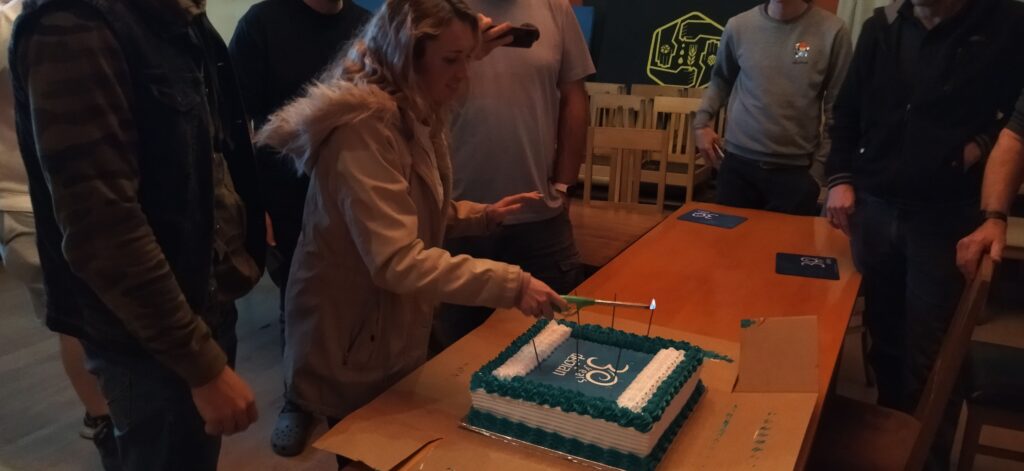
Cake Starting with the important stuff, we got this Debian cake made that ended up much bigger than we expected, at least we all got to take some home too! (it tasted great too)

Yes, cake.

Talk This event was planned very last minute, so we didn t do any kind of RSVP and I had no idea who exactly would show up, so I went ahead and prepared one of my usual introduction to Linux and Debian talks, and how these things are having an impact on the world out there. I also talked a bit about the community and how we intend to grow our local team here in South Africa. It turned out most of the audience were already experienced Linux users, but I was happy to see that they were very enthusiastic about the local group concept!
While reading through some material to find some inspiration for this talk, I came across an old quote from the original Debian Manifesto that I found very poignant again, so I feel compelled to share (didn t use it in my talk this time though since I didn t cover much current events): The time has come to concentrate on the future of Linux rather than on the destructive goal of enriching oneself at the expense of the entire Linux community and its future. Ian Murdock, 1994

Debian-ZA logo Tammy spent some time creating a whole bunch of logo concepts, that she presented to us. They aren t meant as final logo choices, but as initial concepts, and they worked well to invoke a very lively discussion about logos and design!
Here are just some of her designs that I cherry picked since they were the most discussed. We still haven t decided if it will be Debian ZA or Debian-ZA or Debian South Africa, although the latter will probably cause least confusion internationally.
Personally, the last one on this image that I referred to as the carpet is my personal favourite :-)

Happy Birthday Song John and Heila wrote a happy birthday song. After seeing the lyrics (and considering myself an amateur lyricist) I thought it was way too tacky and I told John to put it away. But when the cake came out, someone said we should sing! and the lyrics quickly re-emerged and was handed out to everyone. It s also meant to be a loopy clip for the upcoming DebConf23. I ll concede that it worked out alright in the end! You judge for yourself:

Mousepads People still use mousepads? That was my initial reaction when Heila told me that she was going to make some commemorative 30 year Debian mousepads for our birthday event, and they ended up being popular. It s probably a safer surface to put dev boards on than on my desk directly, so at least I do have a use for one!

Group Photo The group photo, complete with disco ball! We should ve taken this earlier because it was already getting late and some people had to head back home. Lesson learned for next time!

30th Birthday Interview with The Changelog I also did an interview with The Changelog for Debian s 30th birthday. It was late, and I haven t had a chance to listen to it yet, so I hope their producers managed to edit something coherent out of my usual Debian babbling:

More later There s so much more I d like to say about Debian, the last 30 years, local groups, the eco-system that we find ourselves in. And, Lemmy! But I ll see if I can get an instance up over the weekend and will then talk about that some more another time.

16 August 2023

Bits from Debian: Debian Celebrates 30 years!

Debian 30 years by Jeff Maier Over 30 years ago the late Ian Murdock wrote to the comp.os.linux.development newsgroup about the completion of a brand-new Linux release which he named "The Debian Linux Release". He built the release by hand, from scratch, so to speak. Ian laid out guidelines for how this new release would work, what approach the release would take regarding its size, manner of upgrades, installation procedures; and with great care of consideration for users without Internet connection. Unaware that he had sparked a movement in the fledgling F/OSS community, Ian worked on and continued to work on Debian. The release, now aided by volunteers from the newsgroup and around the world, grew and continues to grow as one of the largest and oldest FREE operating systems that still exist today. Debian at its core is comprised of Users, Contributors, Developers, and Sponsors, but most importantly, People. Ians drive and focus remains embedded in the core of Debian, it remains in all of our work, it remains in the minds and hands of the users of The Universal Operating System. The Debian Project is proud and happy to share our anniversary not exclusively unto ourselves, instead we share this moment with everyone, as we come together in celebration of a resounding community that works together, effects change, and continues to make a difference, not just in our work but around the world. Debian is present in cluster systems, datacenters, desktop computers, embedded systems, IoT devices, laptops, servers, it may possibly be powering the web server and device you are reading this article on, and it can also be found in Spacecraft. Closer to earth, Debian fully supports projects for accessibility: Debian Edu/Skolelinux - an operating system designed for educational use in schools and communities, Debian Science - providing free scientific software across many established and emerging fields, Debian Hamradio - for amateur radio enthusiasts, Debian-Accessibility - a project focused on the design of an operating system suited to fit the requirements of people with disabilites, and Debian Astro - focused on supporting professional and hobbyist astronomers. Debian strives to give, reach, embrace, mentor, share, and teach with internships through many programs internally and externally such as the Google Summer of Code, Outreachy, and the Open Source Promotion Plan. None of this could be possible without the vast amount of support, care, and contributions from what started as and is still an all volunteer project. We celebrate with each and every one who has helped shape Debian over all of these years and toward the future. Today we all certainly celebrate 30 years of Debian, but know that Debian celebrates with each and every one of you all at the same time. Over the next few days Celebration parties are planned to take place in Austria, Belgium, Bolivia, Brazil, Bulgaria, Czech Republic, France, Germany (CCCcamp), India, Iran, Portugal, Serbia, South Africa, and Turkey. You are of course, invited to join us! Check out, attend, or form your very own DebianDay 2023 Event. See you then! Thank you, thank you all so very much. With Love, The Debian Project

27 July 2023

Louis-Philippe V ronneau: My new friend Ted

About 6 months ago, I decided to purchase a bike trailer. I don't drive and although I also have a shopping caddy, it often can't handle a week's groceries. The trailer, attached to my bike, hauling two storage crates Since the goal for the trailer was to haul encumbering and heavy loads, I decided to splurge and got a Surly Ted. The 32" x 24" flat bed is very versatile and the trailer is rated for up to 300 lbs (~135 kg). At around 30 lbs (~13.5 kg), the trailer itself is light enough for me to climb up the stairs to my apartment with it. Having seldom driven a bike trailer before, I was at first worried about its handling and if it would jerk me around (as some children's chariots tend to). I'm happy to report the two pronged hitch Surly designed works very well and lets you do 180 turns effortlessly. The trailer on my balcony, ready to be hoisted So far, I've used the trailer to go grocery shopping, buy bulk food and haul dirt and mulch. To make things easier, I've purchased two 45L storing crates from Home Depot and added two planks of wood on each side of the trailer to stabilise things when I strap the crates down to the bed. Since my partner and I are subscribed to an organic farmer's box during the summer and get baskets from Lufa during the winter, picking up our groceries at the pick-up point is as easy as dumping our order in the storing crates and strapping them back to the trailer. The pulleys on the roof of my balcony Although my housing cooperative has a (small) indoor bicycle parking space, my partner uses our spot during the summer, which means I have to store the trailer on my balcony. To make things more manageable and free up some space, I set up a system of pulleys to hoist the trailer up the air when it's not in use. I did go through a few iterations, but I'm pretty happy with the current 8 pulleys block and tackle mechanism I rigged. The trailer hoisted to the roof of the balcony All and all, this trailer wasn't cheap, but I regret nothing. Knowing Surley's reputation, it will last me many years and not having to drive a car to get around always ends up being the cheaper solution.
26 July 2023

Valhalla's Things: Elastic Neck Top

Posted on July 26, 2023
A woman wearing a top in white fabric with thin blue lines and two groups of blue lozenges near the hems. It has a square neck gathered by a yellow elastic, the blue lines are horizontal on the wide sleeves and vertical, and more spaced, on the body. Since some time I ve been thinking about making myself a top or a dress with a wide gathered neckline that can be work at different widths, including off-the-shoulders. A few years ago I ve been gifted a cut of nice, thin white fabric with a print of lines and lozenges that isn t uniform along the fabric, but looks like it was designed for some specific garment, and it was waiting in my stash for a suitable pattern. And a few days ago, during a Sunday lunch, there was an off-hand mention of a dress from the late 1970s which had an elastic in the neckline, so that it could be optionally worn off-the-shoulders. And something snapped in place. I had plans for that afternoon, but they were scrapped, and I started to draw, measure, cut rectangles of fabric, pin and measure again, cut more fabric. The main pieces of the top laid flat: a big rectangle for the body,
two rectangular tubes for the sleeves laid so that they meet the body just at the corners, and a triangle (a square gusset folded on the diagonal) joins them to the body.
I decided on a pattern made of rectangles to be able to use as much fabric as possible, with the size of each rectangle based mostly on the various sections on the print of the fabric. I ve made the typical sleeves from a rectangle and a square gusset, and then attached them to the body just from the gusset to keep the neckline wide and low. The worn top shown from the side back: there is a strip of vertical lines spaced closer together like on the sleeves, and it continues to the bottom rather than ending with a strip of lozenges. The part of the fabric with large vertical stripes had two different widths: I could have made the back narrower, but I decided to just keep a strip with narrower lines to one side. The fabric also didn t have a full second strip of lozenges, so I had to hem it halfway through it. Closeup of the center front and center back of the neckline casing, showing the matched lines. The casing for the elastic was pieced from various scraps, but at least I was able to match the lines on the center front and back, even if they are different. Not that it matters a lot, since it s all hidden in the gathering, but I would have known. And since I was working on something definitely modern, even if made out of squares and rectangles, of course I decided to hand-sew everything, mostly to be able to use quite small sewing allowances, since the fabric was pretty thin. In my stash I had a piece of swimsuit elastic that feels nice, looks nice and makes a knot that doesn t slip, so I used it. It s a perfect match, except for the neon yellow colour, which I do like, but maybe is a bit too high visibility? I will see if the haberdasher has the same elastic in dark blue, but right now this will do. It was a quick project anyway: by the end of the working week the top was finished; I think that on a sewing machine it would be easy to make it in a day. the top worn with the neckline pulled down to leave the shoulders bare. And it can be worn off the shoulders! Which is something I will probably never do in public (and definitely not outdoors), but now if I wanted I could! :D As usual, the pattern (for what pattern there is) and instructions are on my pattern website under a #FreeSoftWear license, and I ve also added to the site a tip on how I use electrician fish tape to thread things through long casings


18 July 2023

Jamie McClelland: What am I missing about AI?

Last month I blogged about how the mainstream media is focusing on the wrong parts of the Artificial Intelligence/ChatGPT story. One of the comments left on the post was:
I encourage you to dig a little deeper. If LLM s were just probability
machines, no one would be raising any flags.
Hinton, Bengio, Tegmark and many others are not simpletons. It is the fact that
the architecture and specific training (deep NN, back prop / gradient descend)
produces a system with emergent properties, beyond just a probability machine,
when the system size reaches some thresholds, that has them spooked.
They do understand mathematics and stats and probabilities, i assure you. It is
just that you may have only read the layman s articles and not the scientific
ones
I confess: I haven t made much progress in this regard. I gave Vicky Boykis' Embeddings a go, and started to get a handle on the math, but honestly had a hard time following it. I m open to suggestions from anyone with a few good recommendations for scientific papers accessible to non-math professionals, particularly ones that explain the emergent properties and what that means. Meanwhile, regardless of the scientific truths or falsehoods around chat GPT, the mainstream media continues to miserably fail in helping the rest of us understand the implications of this technology. Most recently, I listend to This American Life s First Contact (part of their Greetings People of Earth show). They interviewed several Microsft AI researchers who first experimented with ChatGPT 4 prior to it s big release. The focus of the researchers was: can we demonstrate chat GPT s general intelligence ability by presenting it with logic problems it could not possibly have encountered before? And the answer: YES! The two examples were:
  1. Stacking: the researcher asked chat GPT how to stack a number of odd objects in a stable way (a book, a dozen eggs, a nail, etc) and chat GPT gave both the correct answer and a reasonable explanation of why.
  2. Hidden state: the researcher described two people in a room with a cat. One person put the cat in a basket and left. The other moved the cat to a box ad left. And, remarkably, chat GPT could explain that when they returned, the first person would think the cat is in the basket and the second person would know it s in the box.
I thought this was pretty cool. So I fired up chat GPT (and even ponied up for chat GPT version 4). I asked it my own stacking question and, hm, chat GPT thought a plate should be placed on top of a can of soda instead of beneath it. So, well, mostly right but I m pretty sure any reasonable human would put the can of soda on the plate not the other way around (chat GPT 3.5 wanted the can of soda to be balanced on the tip of the nail). I then asked it my own simple version of the cat problem and it got it right. Very good. But when I asked it a much more complicated and weird version of the cat problem (involving beetles in a mansion with a movie theater and changing movies and a butler with a big mustache) it got the answer flat out wrong. Did anyone at This American Life try this? Really? It seems like a basic responsibility of journalism to fact check the experts. Maybe the scientists would have had a convincing response? Or maybe scientists are just like everyone else and can get caught up in the excitement and make mistakes? I am amazed and awed by what chat GPT can do - it truly is remarkable. And, I think that a lot of human intelligence is synthesizing what we ve seen and simply regurgitating it in a different context - a task that chat GPT is way better at doing than we are. But the overriding message of most mainstream media stories is that chat GPT is somehow going beyond word synthesis and probability and magically tapping into a form of logic. If the scientific papers are demonstrating this remarkable feat, I think the media needs to do a way better job reporting it.

12 July 2023

Matt Brown: 2023 Mid Year Review

I m six months into my journey of building a business which means its time to reflect and review the goals I set for the year.

No further investment in co2mon.nz In March I made the decision to focus on completing the market research for co2mon.nz. The results of that research led to two key conclusions:
  1. Indoor air quality/ventilation is not a problem many people are actively thinking about or looking to spend money to improve.
  2. Even when introduced to the problem and educated about the need, most people are looking for a one-off expense or solution (e.g. the physical monitor) and are much less interested in a monitoring software service.
Based on that, it was clear that this is not an opportunity that I should continue pursuing and I ve put co2mon.nz into maintenance mode. I ve committed to maintaining the infrastructure to support existing customers, but I won t be investing time or energy in developing it further.

Discipline in selecting product opportunities The decision to stop investing more time into co2mon.nz was straightforward given the results of the research, but it was also painful given the time I ve already sunk into it. I hindsight it s clear that my enthusiasm to solve a problem with technology I enjoyed was my driving force rather than a deep understanding of the wants and needs of potential customers. I don t entirely regret trying my luck once - but it s not time efficient and I know that following that pattern again is not a sustainable or viable path to building a successful business. I ve decided to use the following list of questions to bring more discipline to how I evaluate product opportunities in future:
  1. Problem: Is this something that a sizeable number of people are struggling with AND are willing to spend money solving?
  2. Capability: Can I deliver a solution that solves the problem in a reliable and cost-effective way?
  3. Excitement: Am I excited and motivated to invest time in building the solution to this problem?
  4. Trust: Do I have the expertise and experience to be trusted to solve the problem by potential customers?
  5. Execution: Can I package, market and sell that solution in a profitable manner?
My plan is to answer these questions and then make an evaluation of the potential before I commit time to building any part of a product. As an example of how I think that will help, here s what I think the answer to those questions for ventilation monitoring would have been:
  1. Problem: No - as the market research eventually showed.
  2. Capability: Low - The part of the solution which customers primarily value (the hardware) is complex and outside of my core experience. The software I can easily deliver is not where the value is seen.
  3. Excitement: Yes - this was the primary driver of starting the project.
  4. Trust: Low - I m trusted to build software, but cannot claim any specific expertise in air quality and ventilation.
  5. Execution: Low confidence - These skills are not ones I ve exercised a lot in my career to date.
What these answers point to is that identifying the problem alone is not enough. I don t expect every question to have a perfect answer, but I want to hold myself to only pursuing opportunities where there s only one major area of doubt. In this case, even had the market research demonstrated a problem that many customers would pay to solve, there were still some big answers missing to the trust, capability and execution questions. Overall my conclusion is that co2mon.nz was not the ideal business to start my journey with given the number of open questions in the plan. I like to think that conclusion would also have been clear to me six months ago had I taken the time to go through this process then!

Prioritising areas of growth Applying those questions to my other product ideas results in a lot of I don t know yet answers to the problem and capability questions, further reinforcing the lesson that I need to spend more understanding if there is a problem with a viable business model attached in those areas before progressing any of those ideas. Beyond that lesson, a more interesting observation comes from the last question regarding execution. My answers to the first four questions vary between ideas, but my answers to this last question are always the same - I don t have a lot of confidence in my sales and marketing skills to sell a product. That s not a surprise. My career to date has been focused on software development and leadership, I don t have a lot of experience with sales and marketing. The opportunity to grow and develop those skills is actually a large part of my motivation for choosing the path of building my own business. But seeing that this is a common factor that will need significant investment regardless of which opportunity I pursue sends me a strong signal that I should focus on growth in this area as a priority. Following that logic through to the next step of what creating that focus would look like reveals a conflict: The nature of the mission I ve set for myself draws me to products in areas that are new to me, which means there s also a need to invest in building expertise in those areas. Again not a surprise, but the time and focus required to develop that expertise competes with time spent growing my sales and marketing skills. So I have a prioritisation problem. Solving it is going to require changing the type of product I m trying to build in the short term: I need to build a product that uses my existing expertise and strengths as much as possible, so that I can put the majority of my energy into growing the core business skills where my confidence is currently lacking. Trying to deliver meaningful improvements to a big problem in an area I don t have past experience in while also learning how to sell and market a product is biting off more than I chew right away.

Changing the goal posts With those lessons in hand I m making three changes to my 2023 Goals:
  1. Reducing the product development goal from several ideas to two. The first was co2mon.nz. The second will be drawn from my existing expertise - not one of the previously stated ideas that require me to develop expertise in a new area.
  2. Moving the consulting and product development goals to be alternatives - I expect I can achieve at most one of them this year.
  3. Reducing the publishing target for this site from at least once a week to once a month . I thought I d have more to say this year, but the words are coming very slowly to me.
Reducing scope and ambition is humbling, but that s reality. I hope it turns out to be a case of slow down and lay the foundations in order to then move faster. The good news is that I don t feel the need to make any changes to the vision, mission and strategy I m following - I think they re still the right destination and overall path for me even though the first six months has proven bumpy. I just need to be a bit more realistic on the short-term goals that will feed into them.

The next few months I m choosing to prioritise the product development goal. I m aiming to complete the market research/problem definition phase for a product opportunity I ve identified in the SRE/DevOps space (where my previous experience is) and make a decision on whether to start development by mid August. In making that decision I plan to gather the answers to my questions, and then diligently evaluate whether the opportunity is worth committing to or not. I will write more about this process in coming weeks. If I decide to proceed that gives me 2-3 months to get an MVP in the hands of customers and get concrete validation of whether the product has revenue and growth potential before the end of the year. Tight, but if things go well, and I don t take any further consulting work, there s a reasonable chance I can complete the revised goal successfully. In the event that I decide the product opportunity I m currently researching is not the right one to commit to, I will likely revert to focusing on my consulting goal in the remaining 2-3 months of the year rather than attempt a third product development iteration. Thanks for reading this far! As always, I d love your thoughts and feedback.

Appendix: Revised 2023 Goals Putting all that together, the ultimate outcome of this review (including updated progress scoring) looks like:
  1. Execute a series of successful consulting engagements, building a reputation for myself and leaving happy customers willing to provide testimonials that support a pipeline of future opportunities. Score: 3/10 - I focused entirely on co2mon.nz during April, May and June to the detriment of my pipeline of consulting work. This score is unlikely to improve given the above plan unless I decide not to commit to developing the idea I m currently investigating.
  2. Grow my product development skill set by taking two ideas (co2mon.nz, an SRE/DevOps focused product) to MVP stage with customer feedback received, and generate revenue and has growth potential from one of them. Score: 4/10 - I launched co2mon.nz and got feedback, I discovered it didn t solve a problem relevant to customers and therefore did not generate substantial revenue or growth potential. Idea number two is in still in progress.
  3. Develop and maintain a broad professional network.
    1. To build a professional relationship with at least 30 new people this year. Score: 6/10 - This is going well. On track for a 10/10 score.
    2. To publish a piece of writing on this site once a month and for many of those to generate interesting conversations and feedback. Score: 6/10 - 4 out of 6 months have featured a post meeting this goal so far.
    3. To support the growth of my local technical community by volunteering my experience and knowledge with others. Score: 5/10 - I ve given one talk and helped with SREcon23 APAC, but not as much other work in this area as I d like.

John Goerzen: Backing Up and Archiving to Removable Media: dar vs. git-annex

This is the fourth in a series about archiving to removable media (optical discs such as BD-Rs and DVD+Rs or portable hard drives). Here are the first three parts: I want to state at the outset that this is not a general review of dar or git-annex. This is an analysis of how those tools stack up to a particular use case. Neither tool focuses on this use case, and I note it is particularly far from the more common uses of git-annex. For instance, both tools offer support for cloud storage providers and special support for ssh targets, but neither of those are in-scope for this post. Comparison Matrix As part of this project, I made a comparison matrix which includes not just dar and git-annex, but also backuppc, bacula/bareos, and borg. This may give you some good context, and also some reference for other projects in this general space. Reviewing the Goals I identified some goals in part 1. They are all valid. As I have thought through the project more, I feel like I should condense them into a simpler ordered list, with the first being the most important. I omit some things here that both dar and git-annex can do (updates/incrementals, for instance; see the expanded goals list in part 1). Here they are:
  1. The tool must not modify the source data in any way.
  2. It must be simple to create or update an archive. Processes that require a lot of manual work, are flaky, or are difficult to do correctly, are unlikely to be done correctly and often. If it s easy to do right, I m more likely to do it. Put another way: an archive never created can never be restored.
  3. The chances of a successful restore by someone that is not me, that doesn t know Linux, and is at least 10 years in the future, should be maximized. This implies a simple toolset, solid support for dealing with media errors or missing media, etc.
  4. Both a partial point-in-time restore and a full restore should be possible. The full restore must, at minimum, provide a consistent directory tree; that is, deletions, additions, and moves over time must be accurately reflected. Preserving modification times is a near-requirement, and preserving hard links, symbolic links, and other POSIX metadata is a significant nice-to-have.
  5. There must be a strategy to provide redundancy; for instance, a way for one set of archive discs to be offsite, another onsite, and the two to be periodically swapped.
  6. Use storage space efficiently.
Let s take a look at how the two stack up against these goals. Goal 1: Not modifying source data With dar, this is accomplished. dar --create does not modify source data (and even has a mode to avoid updating atime) so that s done. git-annex normally does modify source data, in that it typically replaces files with symlinks into its hash-indexed storage directory. It can instead use hardlinks. In either case, you will wind up with files that have identical content (but may have originally been separate, non-linked files) linked together with git-annex. This would cause me trouble, as well as run the risk of modifying timestamps. So instead of just storing my data under a git-annex repo as is its most common case, I use the directory special remote with importtree=yes to sort of import the data in. This, plus my desire to have the repos sensible and usable on non-POSIX operating systems, accounts for a chunk of the git-annex complexity you see here. You wouldn t normally see as much complexity with git-annex (though, as you will see, even without the directory special remote, dar still has less complexity). Winner: dar, though I demonstrated a working approach with git-annex as well. Goal 2: Simplicity of creating or updating an archive Let us simply start by recognizing this: Both tools have a lot of power, but I must say, it is easier to wrap my head around what dar is doing than what git-annex is doing. Everything dar does is with files: here are the files to archive, here is an archive file, here is a detached (isolated) catalog. It is very straightforward. It took me far less time to develop my dar page than my git-annex page, despite having existing familiarity with both tools. As I pointed out in part 2, I still don t fully understand how git-annex syncs metadata. Unsolved mysteries from that post include why the two git-annex drives had no idea what was on the other drives, and why the export operation silenty did nothing. Additionally, for the optical disc case, I had to create a restricted-size filesystem/dataset for git-annex to write into in order to get the desired size limit. Looking at the optical disc case, dar has a lot of nice infrastructure built in. With pause and execute, it can very easily be combined with disc burning operations. slice will automatically limit the size of a given slice, regardless of how much disk space is free, meaning that the git-annex tricks of creating smaller filesystems/datasets are unnecessary with dar. To create an initial full backup with dar, you just give it the size of the device, and it will automatically split up the archive, with hooks to integrate for burning or changing drives. About as easy as you could get. With git-annex, you would run the commands to have it fill up the initial filesystem, then burn the disc (or remove the drive), then run the commands to create another repo on the second filesystem, and so forth. With hard drives, with git-annex you would do something similar; let it fill up a repo on a drive, and if it exits with a space error, swap in the next. With dar, you would slice as with an optical disk. Dar s slicing is less convenient in this case, though, as it assumes every drive is the same size and yours may not be. You could work around that by using a slice size no bigger than the smallest drive, and putting multiple slices on larger drives if need be. If a single drive is large enough to hold your entire data set, though, you need not worry about this with either tool. Here s a warning about git-annex: it won t store anything beneath directories named .git. My use case doesn t have many of those. If your use case does, you re going to have to figure out what to do about it. Maybe rename them to something else while the backup runs? In any case, it is simply a fact that git-annex cannot back up git repositories, and this cuts against being able to back up things correctly. Another point is that git-annex has scalability concerns. If your archive set gets into the hundreds of thousands of files, you may need to split it into multiple distinct git-annex repositories. If this occurs and it will in my case it may serve to dull the shine of some of git-annex s features such as location tracking. A detour down the update strategies path Update strategies get a little more complicated with both. First, let s consider: what exactly should our update strategy be? For optical discs, I might consider doing a monthly update. I could burn a disc (or more than one, if needed) regardless of how much data is going to go onto it, because I want no more than a month s data lost in any case. An alternative might be to spool up data until I have a disc s worth, and then write that, but that could possibly mean months between actually burning a disc. Probably not good. For removable drives, we re unlikely to use a new drive each month. So there it makes sense to continue writing to the drive until it s full. Now we have a choice: do we write and preserve each month s updates, or do we eliminate intermediate changes and just keep the most recent data? With both tools, the monthly burn of an optical disc turns out to be very similar to the initial full backup to optical disc. The considerations for spanning multiple discs are the same. With both tools, we would presumably want to keep some metadata on the host so that we don t have to refer to a previous disc to know what was burned. In the dar case, that would be an isolated catalog. For git-annex, it would be a metadata-only repo. I illustrated both of these in parts 2 and 3. Now, for hard drives. Assuming we want to continue preserving each month s updates, with dar, we could just write an incremental to the drive each month. Assuming that the size of the incremental is likely far smaller than the size of the drive, you could easily enough do this. More fancily, you could look at the free space on the drive and tell dar to use that as the size of the first slice. For git-annex, you simply avoid calling drop/dropunused. This will cause the old versions of files to accumulate in .git/annex. You can get at them with git annex commands. This may imply some degree of elevated risk, as you are modifying metadata in the repo each month, which with dar you could chmod a-w or even chattr +i the archive files once written. Hopefully this elevated risk is low. If you don t want to preserve each month s updates, with dar, you could just write an incremental each month that is based on the previous drive s last backup, overwriting the previous. That implies some risk of drive failure during the time the overwrite is happening. Alternatively, you could write an incremental and then use dar to merge it into the previous incremental, creating a new one. This implies some degree of extra space needed (maybe on a different filesystem) while doing this. With git-annex, you would use drop/dropunused as I demonstrated in part 2. The winner for goal 2 is dar. The gap is biggest with optical discs and more narrow with hard drives, thanks to git-annex s different options for updates. Still, I would be more confident I got it right with dar. Goal 3: Greatest chance of successful restore in the distant future If you use git-annex like I suggested in part 2, you will have a set of discs or drives that contain a folder structure with plain files in them. These files can be opened without any additional tools at all. For sheer ability to get at raw data, git-annex has the edge. When you talk about getting a consistent full restore without multiple copies of renamed files or deleted files coming back then you are going to need to use git-annex to do that. Both git-annex and dar provide binaries. Dar provides a win64 version on its Sourceforge page. On the author s releases site, you can find the win64 version in addition to a statically-linked x86_64 version for Linux. The git-annex install page mostly directs you to package managers for your distribution, but the downloads page also lists builds for Linux, Windows, and Mac OS X. The Linux version is dynamic, but ships most of its .so files alongside. The Windows version requires cygwin.dll, and all versions require you to also install git itself. Both tools are in package managers for Mac OS X, Debian, FreeBSD, and so forth. Let s just say that you are likely to be able to run either one on a future Windows or Linux system. There are also GUI frontends for dar, such as DARGUI and gdar. This can increase the chances of a future person being able to use the software easily. git-annex has the assistant, which is based on a different use case and probably not directly helpful here. When it comes to doing the actual restore process using software, dar provides the easier process here. For dealing with media errors and the like, dar can integrate with par2. While technically you could use par2 against the files git-annex writes, that s more cumbersome to manage to the point that it is likely not to be done. Both tools can deal reasonably with missing media entirely. I m going to give the edge on this one to git-annex; while dar does provide the easier restore and superior tools for recovering from media errors, the ability to access raw data as plain files without any tools at all is quite compelling. I believe it is the most critical advantage git-annex has, and it s a big one. Goal 4: Support high-fidelity partial and full restores Both tools make it possible to do a full restore reflecting deletions, additions, and so forth. Dar, as noted, is easier for this, but it is possible with git-annex. So, both can achieve a consistent restore. Part of this goal deals with fidelity of the restore: preserving timestamps, hard and symbolic links, ownership, permissions, etc. Of these, timestamps are the most important for me. git-annex can t do any of that. dar does all of it. Some of this can be worked around using mtree as I documented in part 2. However, that implies a need to also provide mtree on the discs for future users, and I m not sure mtree really exists for Windows. It also cuts against the argument that git-annex discs can be used without any tools. It is true, they can, but all you will get is filename and content; no accurate date. Timestamps are often highly relevant for everything from photos to finding an elusive document or record. Winner: dar. Goal 5: Supporting backup strategies with redundancy My main goal here is to have two separate backup sets: one that is offsite, and one that is onsite. Depending on the strategy and media, they might just always stay that way, or periodically rotate. For instance, with optical discs, you might just burn two copies of every disc and store one at each place. For hard drives, since you will be updating the content of them, you might swap them periodically. This is possible with both tools. With both tools, if using the optical disc scheme I laid out, you can just burn two identical copies of each disc. With the hard drive case, with dar, you can keep two directories of isolated catalogs, one for each drive set. A little identifier file on each drive will let you know which set to use. git-annex can track locations itself. As I demonstrated in part 2, you can make each drive its own repo, add all drives from a given drive set to a git-annex group. When initializing a drive, you tell git-annex what group it s a prt of. From then on, git-annex knows what content is in each group and will add whatever a given drive s group needs to that drive. It s possible to do this with both, but the winner here is git-annex. Goal 6: Efficient use of storage Here are situations in which one or the other will be more efficient: The winner depends on your particular situation. Other notes While not part of the goals above, dar is capable of using tapes directly. While not as common, they are often used in communities of people that archive lots of data. Conclusions Overall, dar is the winner for me. It is simpler in most areas, easier to get correct, and scales very well. git-annex does, however, have some quite compelling points. Being able to access files as plain files is huge, and its location tracking is nicer than dar s, even when using dar_manager. Both tools are excellent and I recommend them both and for more than the particular scenario shown here. Both have fantastic and responsive authors.

9 July 2023

Vasudev Kamath: Using LUKS-Encrypted USB Stick with TPM2 Integration

I use a LUKS-encrypted USB stick to store my GPG and SSH keys, which acts as a backup and portable key setup when working on different laptops. One inconvenience with LUKS-encrypted USB sticks is that you need to enter the password every time you want to mount the device, either through a Window Manager like KDE or using the cryptsetup luksOpen command. Fortunately, many laptops nowadays come equipped with TPM2 modules, which can be utilized to automatically decrypt the device and subsequently mount it. In this post, we'll explore the usage of systemd-cryptenroll for this purpose, along with udev rules and a set of scripts to automate the mounting of the encrypted USB. First, ensure that your device has a TPM2 module. You can run the following command to check:
sudo journalctl -k --grep=tpm2
The output should resemble the following:
Jul 08 18:57:32 bhairava kernel: ACPI: SSDT 0x00000000BBEFC000 0003C6 (v02
LENOVO Tpm2Tabl 00001000 INTL 20160422) Jul 08 18:57:32 bhairava kernel:
ACPI: TPM2 0x00000000BBEFB000 000034 (v03 LENOVO TP-R0D 00000830
PTEC 00000002) Jul 08 18:57:32 bhairava kernel: ACPI: Reserving TPM2 table
memory at [mem 0xbbefb000-0xbbefb033]
You can also use the systemd-cryptenroll command to check for the availability of a TPM2 device on your laptop:
systemd-cryptenroll --tpm2-device=list
The output will be something like following:
blog git:(master) systemd-cryptenroll --tpm2-device=list
PATH        DEVICE      DRIVER
/dev/tpmrm0 MSFT0101:00 tpm_tis
   blog git:(master)
Next, ensure that you have connected your encrypted USB device. Note that systemd-cryptenroll only works with LUKS2 and not LUKS1. If your device is LUKS1-encrypted, you may encounter an error while enrolling the device, complaining about the LUKS2 superblock not found. To determine if your device uses a LUKS1 header or LUKS2, use the cryptsetup luksDump <device> command. If it is LUKS1, the header will begin with:
LUKS header information for /dev/sdb1
Version:        1
Cipher name:    aes
Cipher mode:    xts-plain64
Hash spec:      sha256
Payload offset: 4096
Converting from LUKS1 to LUKS2 is a simple process, but for safety, ensure that you backup the header using the cryptsetup luksHeaderBackup command. Once backed up, use the following command to convert the header to LUKS2:
sudo cryptsetup convert --type luks2 /dev/sdb1
After conversion, the header will look like this:
Version:        2
Epoch:          4
Metadata area:  16384 [bytes]
Keyslots area:  2064384 [bytes]
UUID:           000b2670-be4a-41b4-98eb-9adbd12a7616
Label:          (no label)
Subsystem:      (no subsystem)
Flags:          (no flags)
The next step is to enroll the new LUKS key for the encrypted device using systemd-cryptenroll. Run the following command:
sudo systemd-cryptenroll --tpm2-device=/dev/tpmrm0 --tpm2-pcrs="0+7" /dev/sdb1
This command will prompt you to provide the existing key to unseal the device. It will then add a new random key to the volume, allowing it to be unlocked in addition to the existing keys. Additionally, it will bind this new key to PCRs 0 and 7, representing the system firmware and Secure Boot state. If there is only one TPM device on the system, you can use --tpm2-device=auto to automatically select the device. To confirm that the new key has been enrolled, you can dump the LUKS configuration and look for a systemd-tpm2 token entry, as well as an additional entry in the Keyslots section. To test the setup, you can use the /usr/lib/systemd/systemd-cryptsetup command. Additionally, you can check if the device is unsealed by using lsblk:
sudo /usr/lib/systemd/systemd-cryptsetup attach GPG_USB "/dev/sdb1" - tpm2-device=auto
lsblk
The lsblk command should display the unsealed and mounted device, like this:
NAME        MAJ:MIN RM   SIZE RO TYPE  MOUNTPOINTS
sda           8:0    0 223.6G  0 disk
 sda1        8:1    0   976M  0 part  /boot/efi
 sda2        8:2    0 222.6G  0 part
   root    254:0    0 222.6G  0 crypt /
sdb           8:16   1   7.5G  0 disk
 sdb1        8:17   1   7.5G  0 part
   GPG_USB 254:1    0   7.5G  0 crypt /media/vasudev/GPG_USB
Auto Mounting the device Now that we have solved the initial problem of unsealing the USB device using TPM2 instead of manually entering the key, the next step is to automatically mount the device upon insertion and remove the mapping when the device is removed. This can be achieved using the following udev rules:
ACTION=="add", KERNEL=="sd*", ENV DEVTYPE =="partition", ENV ID_BUS =="usb", ENV SYSTEMD_WANTS ="mount-gpg-usb@$env DEVNAME .service"
ACTION=="remove", KERNEL=="sd*", ENV DEVTYPE =="partition", ENV ID_BUS =="usb", RUN+="/usr/local/bin/umount_enc_usb.sh '%E ID_FS_UUID '"
When a device is added, a systemd service is triggered to mount the device at a specific location. Initially, I used a script with the RUN directive, but it resulted in an exit code of 32. This might be due to systemd-cryptsetup taking some time to return, causing udev to time out. To address this, I opted to use a systemd service instead. For device removal, even though the physical device is no longer present, the mapping may still remain, causing issues upon reinsertion. To resolve this, I created a script to close the luks mapping upon device removal. Below are the systemd service and script files: mount_enc_usb.sh:
#!/bin/bash
set -x
if [[ "$#" -ne 1 ]]; then
    echo "$(basename $0) <device>"
    exit 1
fi
device_uuid="$(blkid --output udev $1   grep ID_FS_UUID=   cut -d= -f2)"
if [[ "$device_uuid" == 000b2670-be4a-41b4-98eb-9adbd12a7616 ]]; then
    # Found our device, let's trigger systemd-cryptsetup
    /usr/lib/systemd/systemd-cryptsetup attach GPG_USB "$1" - tpm2-device=auto
    [[ -d /media/vasudev/GPG_USB ]]   (mkdir -p /media/vasudev/GPG_USB/ && chown vasudev:vasudev /media/vasudev/GPG_USB)
    mount /dev/mapper/GPG_USB /media/vasudev/GPG_USB
else
    echo "Not the interested device. Ignoring."
    exit 0
fi
umount_enc_usb.sh:
#!/bin/bash
if [[ "$#" -ne 1 ]]; then
  echo "$(basename $0) <fsuuid>"
  exit 1
fi
if [[ "$1" == "000b2670-be4a-41b4-98eb-9adbd12a7616" ]]; then
  # Our device is removed, let's close the luks mapping
  [[ -e /dev/mapper/GPG_USB ]] && cryptsetup luksClose /dev/mapper/GPG_USB
else
  echo "Not our device."
  exit 0
fi
mount-gpg-usb@.service:
[Unit]
Description=Mount the encrypted USB device service
[Service]
Type=simple
ExecStart=/usr/local/bin/mount_enc_usb.sh
With this setup, plugging in the USB device will automatically unseal and mount it, and upon removal, the luks mapping will be closed.

Note

This can be even done for LUKS2 encrypted root disk but will need some tweaking in initramfs.

29 June 2023

C.J. Collier: Converting a windows install to a libvirt VM

Reduce the size of your c: partition to the smallest it can be and then turn off windows with the understanding that you will never boot this system on the iron ever again.
Boot into a netinst installer image (no GUI). hold alt and press left arrow a few times until you get to a prompt to press enter. Press enter. In this example /dev/sda is your windows disk which contains the c: partition
and /dev/disk/by-id/usb0 is the USB-3 attached SATA controller that you have your SSD attached to (please find an example attached). This SSD should be equal to or larger than the windows disk for best compatability. A photo of a USB-3 attached SATA controller To find the literal path names of your detected drives you can run fdisk -l. Pay attention to the names of the partitions and the sizes of the drives to help determine which is which. Once you have a shell in the netinst installer, you should maybe be able to run a command like the following. This will duplicate the disk located at if (in file) to the disk located at of (out file) while showing progress as the status.
dd if=/dev/sda of=/dev/disk/by-id/usb0 status=progress
If you confirm that dd is available on the netinst image and the previous command runs successfully, test that your windows partition is visible in the new disk s partition table. The start block of the windows partition on each should match, as should the partition size.
fdisk -l /dev/disk/by-id/usb0
fdisk -l /dev/sda
If the output from the first is the same as the output from the second, then you are probably safe to proceed. Once you confirm that you have made and tested a full copy of the blocks from your windows drive saved on your usb disk, nuke your windows partition table from orbit.
dd if=/dev/zero of=/dev/sda bs=1M count=42
You can press alt-f1 to return to the Debian installer now. Follow the instructions to install Debian. Don t forget to remove all attached USB drives. Once you install Debian, press ctrl-alt-f3 to get a root shell. Add your user to the sudoers group:
# adduser cjac sudoers
log out
# exit
log in as your user and confirm that you have sudo
$ sudo ls
Don t forget to read the spider man advice enter your password you ll need to install virt-manager. I think this should help:
$ sudo apt-get install virt-manager libvirt-daemon-driver-qemu qemu-system-x86
insert the USB drive. You can now create a qcow2 file for your virtual machine.
$ sudo qemu-img convert -O qcow2 \
/dev/disk/by-id/usb0 \
/var/lib/libvirt/images/windows.qcow2
I personally create a volume group called /dev/vg00 for the stuff I want to run raw and instead of converting to qcow2 like all of the other users do, I instead write it to a new logical volume.
sudo lvcreate /dev/vg00 -n windows -L 42G # or however large your drive was
sudo dd if=/dev/disk/by-id/usb0 of=/dev/vg00/windows status=progress
Now that you ve got the qcow2 file created, press alt-left until you return to your GDM session. The apt-get install command above installed virt-manager, so log in to your system if you haven t already and open up gnome-terminal by pressing the windows key or moving your mouse/gesture to the top left of your screen. Type in gnome-terminal and either press enter or click/tap on the icon. I like to run this full screen so that I feel like I m in a space ship. If you like to feel like you re in a spaceship, too, press F11. You can start virt-manager from this shell or you can press the windows key and type in virt-manager and press enter. You ll want the shell to run commands such as virsh console windows or virsh list When virt-manager starts, right click on QEMU/KVM and select New.
In the New VM window, select Import existing disk image
When prompted for the path to the image, use the one we created with sudo qemu-img convert above.
Select the version of Windows you want.
Select memory and CPUs to allocate to the VM.
Tick the Customize configuration before install box
If you re prompted to enable the default network, do so now.
The default hardware layout should probably suffice. Get it as close to the underlying hardware as it is convenient to do. But Windows is pretty lenient these days about virtualizing licensed windows instances so long as they re not running in more than one place at a time. Good luck! Leave comments if you have questions.
Next.

Previous.