Search Results: "rui"

4 December 2020

Russell Coker: KDE Icons Disappearing in Debian/Unstable

One of my workstations is running Debian/Unstable with KDE and SDDM on an AMD Radeon R7 260X video card. Recently it stopped displaying things correctly after a reboot, all the icons failed to display as well as many of the Qt controls. When I ran a KDE application from the command line I got the error QSGTextureAtlas: texture atlas allocation failed, code=501 . Googling that error gave a blog post about a very similar issue in 2017 [1]. From that blog post I learned that I could stop the problem by setting MESA_EXTENSION_OVERRIDE= -GL_EXT_bgra -GL_EXT_texture_format_BGRA8888 in the environment. In a quick test I found that the environment variable setting worked, making the KDE apps display correctly and not report an error about a texture atlas. I created a file ~/.config/plasma-workspace/env/bgra.sh with the following contents:
export MESA_EXTENSION_OVERRIDE="-GL_EXT_bgra -GL_EXT_texture_format_BGRA8888"
Then after the next login things worked as desired! Now the issue is, where is the bug? GL, X, and the internals of KDE are things I don t track much. I welcome suggestions from readers of my blog as to what the culprit might be and where to file a Debian bug or a URL to a Debian bug report if someone has already filed one. Update When I run the game warzone2100 with this setting it crashes with the below output. So this Mesa extension override isn t always a good thing, just solves one corner case of a bug.
$ warzone2100 
/usr/bin/gdb: warning: Couldn't determine a path for the index cache directory.
27      ../sysdeps/unix/sysv/linux/wait4.c: No such file or directory.
No frame at level 0x7ffc3392ab50.
Saved dump file to '/home/etbe/.local/share/warzone2100-3.3.0//logs/warzone2100.gdmp-VuGo2s'
If you create a bugreport regarding this crash, please include this file.
Segmentation fault (core dumped)
Update 2 Carsten provided the REAL solution to this, run apt remove libqt5quick5-gles which will automatically install libqt5quick5 which makes things work. Another workstation I run that tracks Testing had libqt5quick5 installed which was why it didn t have the problem. The system in question had most of KDE removed due to package dependency issues when tracking Unstable and when I reinstalled it I guess the wrong one was installed.

27 November 2020

Shirish Agarwal: Farmer Protests and RCEP

Farmer Protests While I was hoping to write about RCEP exclusively, just today farmer protests have happened against three farm laws which had been passed by our Govt. about a month ago without consulting anybody. The bills benefit only big business houses at the cost of farmers. This has been amply shared by an open letter to one of the biggest business house which will benefit the most. Now while that is a national experience and what it tells, let me share, some experience from the State I come from, Maharashtra. About 4-5 years back Maharashtra delisted fruit and vegetables from the APMC market. But till date, the APMC market is working, why, the reasons are many. However, what it did was it forced the change to sugarcane, a water guzzling crop much more than previously. This has resulted in lowering the water table in Maharashtra and put them more into debt trap and later they had to commit suicide. Now let us see why the Punjab farmers have been so agitated that they are walking all the way to Delhi. They are right now, somewhere between Haryana-Delhi border. The reason is that because even their experiments with contract farming have not been good. This is why they are struggling to go to Delhi to make their collective voices heard and get the farm bills rolled back. Even the farmers from Gujarat were sued, but because of elections were put back, the intentions though are clear. This has also happened in Uttar Pradesh and for sugarcane and that too by Bajaj Company. At the end of the day, the laws made by the Govt. leaves our farmer at the mercy of big corporations. It is preposterous to believe that the farmer, with their small land holdings will be able to stand up to the Corporation. Add to that, they cannot go to Court. It is the SDM (Sub-Divisonal Magistrate) who will decide on the matters and has the last word. If this is allowed, in a couple of years there will be only few farmers or corporations who would have large hand-holdings, and they would be easily co-opted by the Government in power. Just in A gentleman who turned off water cannon being shot at farmers has been charged for murder  Currently, the Government procures rice in vast quantities and the farmers are assured at least some basic income, in the states of Punjab and Haryana
Procurement of Rice by Various States
Recently there was also an article in Indian Express which shares the farmer s apprehensions and does share that it s a complex problem with no easy solutions. The solution can only be dialogue between the two parties. This was also shared by Vivek Kaul, who is far more knowledgable than me on the subject and made a long read on the subject.

The Canada Way Recently, while sparring on the Internet, came to know of the Canada way. Here, the Government makes the farmer a corporation and the Government helps them. But the Canada way seems to largely work as the Canadian Government owns the majority of the lands in question. And yes, Indians have benefited from it but that is also due to a. the currency differential between Canadian dollar and Indian Rupee and the 99-year land lease. There may be other advantages that the Canadian Government bestows and that is the reason possibly that most Punjabi farmers go to Canada and UK to farm. While looking at it, I also came across the situation in the United States and it seems the situation there seems to be becoming even more grim.

RCEP RCEP stands for Regional Comprehensive Economic Partnership. We were supposed to be part of this partnership. Now why didn t we join, for two reasons, our judicial infrastructure is the worst. It took 8 years to decide on a tax retrospective case (Vodafone) and that too finally outside India. And that decision, by no means an end. The other thing is all those who have joined RCEP have lesser duties, tariffs then India. What this means is that they are much more competitive than India. While there is fear that perhaps that China may take over its assets as it has done with few countries around the world, the opportunity for those countries was too good to pass up even with the dangers. But, then even India has taken loans from the Asian Infrastructure Investment (AIIB) Bank where China is the biggest shareholder. So it doesn t make sense to be insecure on that front. And again, it is up to India or any other sovereign country to decide to take loans from some country, some multilateral organization or any other way and on what terms.

What China has done and doing is similar to what IMF (being used primarily by the United States) had done in its past. The only difference is that time it was the United States, now it is China. America co-opted Governments, and got assets, China doing the same, no difference in tactics, more or less the same. There has also been a somewhat interesting paper which discusses how the RCEP may unfold in different circumstances. In short, it tells that the partners will benefit, some more than others. It also does compare the RCEP to CPTPP (The Comprehensive and Progressive Agreement for Trans-Pacific Partnership). While the study is a bit academic in nature as the United States has walked out and the new president-elect Joe Biden hasn t made any moves and is unlikely to make any moves as there is deep divide and resentment about multilateral trade partnerships domestically within the United States. This news and understanding was quite shocking to me as it shows that unlike the United States of the past, which was supposed to be a beacon of capitalism and seemed to enjoy capitalism, it seems to be an opportunist only. There is also this truth that under Biden, there is only so many things on which he would need and can spend his political capital on.
Statistica Chart of differences between Republicans and Democrats
As can be seen, economy at least for the democrats, this time around is pretty far round the corner. He has a host of battles and would have to choose which to fight and which to ignore. In the end, we are left to our own devices. At the moment, India does not know when it s economy will recover
PTI News, Nov 27, 2020
There has been another worrying bit of news, now all newspapers will need to get some sort of permission, certification from Govt. of India about any news of the world. This is harking back on the 1970 s, 1980 s era

23 November 2020

Shirish Agarwal: White Hat Senior and Education

I had been thinking of doing a blog post on RCEP which China signed with 14 countries a week and a day back but this new story has broken and is being viraled a bit on the interwebs, especially twitter and is pretty much in our domain so thought would be better to do a blog post about it. Also, there is quite a lot packed so quite a bit of unpacking to do.

Whitehat, Greyhat and Blackhat For those of you who may not, there are actually three terms especially in computer science that one comes across. Those are white hats, grey hats and black hats. Now clinically white hats are like the fiery angels or the good guys who basically take permissions to try and find out weakness in an application, program, website, organization and so on and so forth. A somewhat dated reference to hacker could be Sandra Bullock (The Net 1995) , Sneakers (1992), Live Free or Die Hard (2007) . Of the three one could argue that Sandra was actually into viruses which are part of computer security but still she showed some bad-ass skills, but then that is what actors are paid to do  Sneakers was much more interesting for me because in that you got the best key which can unlock any lock, something like quantum computing is supposed to do. One could equate both the first movies in either as a White hat or a Grey hat . A Grey hat is more flexible in his/her moral values, and they are plenty of such people. For e.g. Julius Assange could be described as a Grey hat, but as you can see and understand those are moral issues.

A black hat on the other hand is one who does things for profit even if it harms the others. The easiest fictitious examples are all Die Hard series, all of them except the 4th one, all had bad guys or black hats. The 4th also had but is the odd one out as it had Matthew Farell (Justin Long) as a Grey hat hacker. In real life Kevin Mitnick, Kevin Poulsen, Robert Tappan Morris, George Hotz, Gary McKinnon are some examples of hackers, most of whom were black hats, most of them reformed into white hats and security specialists. There are many other groups and names but that perhaps is best for another day altogether. Now why am I sharing this. Because in all of the above, the people who are using and working with the systems have better than average understanding of systems and they arguably would be better than most people at securing their networks, systems etc. but as we shall see in this case there has been lots of issues in the company.

WhiteHat Jr. and 300 Million Dollars Before I start this, I would like to share that for me this suit in many ways seems to be similar to the suit filed against Krishnaraj Rao . Although the difference is that Krishnaraj Rao s case/suit is that it was in real estate while this one is in education although many things are similar to those cases but also differ in some obvious ways. For e.g. in the suit against Krishnaraj Rao, the plaintiff s first approached the High Court and then the Supreme Court. Of course Krishnaraj Rao won in the High Court and then in the SC plaintiff s agreed to Krishnaraj Rao s demands as they knew they could not win in SC. In that case, a compromise was reached by the plaintiff just before judgement was to be delivered. In this case, the plaintiff have directly approached the Delhi High Court. The charges against Mr. Poonia (the defendant in this case) are very much similar to those which were made in Krishnaraj Rao s suit hence won t be going into those details. They have claimed defamation and filed a 20 crore suit. The idea is basically to silence any whistle-blowers.

Fictional Character Wolf Gupta The first issue in this case or perhaps one of the most famous or infamous character is an unknown. While he has been reportedly hired by Google India, BJYU, Chandigarh. This has been reported by Yahoo News. I did a cursory search on LinkedIn to see if there indeed is a wolf gupta but wasn t able to find any person with such a name. I am not even talking the amount of money/salary the fictitious gentleman is supposed to have got and the various variations on the salary figures at different times and the different ads.

If I wanted to, I could have asked few of the kind souls whom I know are working in Google to see if they can find such a person using their own credentials but it probably would have been a waste of time. When you show a LinkedIn profile in your social media, it should come up in the results, in this case it doesn t. I also tried to find out if somehow BJYU was a partner to Google and came up empty there as well. There is another story done by Kan India but as I m not a subscriber, I don t know what they have written but the beginning of the story itself does not bode well. While I can understand marketing, there is a line between marketing something and being misleading. At least to me, all of the references shared seems misleading at least to me.

Taking down dissent One of the big no-nos at least from what I perceive, you cannot and should not take down dissent or critique. Indians, like most people elsewhere around the world, critique and criticize day and night. Social media like twitter, mastodon and many others would not exist in the place if criticisms are not there. In fact, one could argue that Twitter and most social media is used to drive engagements to a person, brand etc. It is even an official policy in Twitter. Now you can t drive engagements without also being open to critique and this is true of all the web, including of WordPress and me  . What has been happening is that whitehatjr with help of bjyu have been taking out content of people citing copyright violation which seems laughable. When citizens critique anything, we are obviously going to take the name of the product otherwise people would have to start using new names similar to how Tom Riddle was known as Dark Lord , Voldemort and He who shall not be named . There have been quite a few takedowns, I just provide one for reference, the rest of the takedowns would probably come in the ongoing suit/case.
Whitehat Jr. ad showing investors fighting

Now a brief synopsis of what the ad. is about. The ad is about a kid named Chintu who makes an app. The app. Is so good that investors come to his house and right in the lawn and start fighting each other. The parents are enjoying looking at the fight and to add to the whole thing there is also a nosy neighbor who has his own observations. Simply speaking, it is a juvenile ad but it works as most parents in India, as elsewhere are insecure.
Jihan critiquing the whitehatjr ad
Before starting, let me assure that I asked Jihan s parents if it s ok to share his ad on my blog and they agreed. What he has done is broken down the ad and showed how juvenile the ad is and using logic and humor as a template for the same. He does make sure to state that he does not know how the product is as he hasn t used it. His critique was about the ad and not the product as he hasn t used that.

The Website If you look at the website, sadly, most of the site only talks about itself rather than giving examples that people can look in detail. For e.g. they say they have few apps. on Google play-store but no link to confirm the same. The same is true of quite a few other things. In another ad a Paralympic star says don t get into sports and get into coding. Which athlete in their right mind would say that? And it isn t that we (India) are brimming with athletes at the international level. In the last outing which was had in 2016, India sent a stunning 117 athletes but that was an exception as we had the women s hockey squad which was of 16 women, and even then they were overshadowed in numbers by the bureaucratic and support staff. There was criticism about the staff bit but that is probably a story for another date. Most of the site doesn t really give much value and the point seems to be driving sales to their courses. This is pressurizing small kids as well as teenagers and better who are in the second and third year science-engineering whose parents don t get that it is advertising and it is fake and think that their kids are incompetent. So this pressurizes both small kids as well as those who are learning, doing in whatever college or educational institution . The teenagers more often than not are unable to tell/share with them that this is advertising and fake. Also most of us have been on a a good diet of ads. Fair and lovely still sells even though we know it doesn t work. This does remind me of a similar fake academy which used very much similar symptoms and now nobody remembers them today. There used to be an academy called Wings Academy or some similar name. They used to advertise that you come to us and we will make you into a pilot or an airhostess and it was only much later that it was found out that most kids were doing laundry work in hotels and other such work. Many had taken loans, went bankrupt and even committed suicide because they were unable to pay off the loans due to the dreams given by the company and the harsh realities that awaited them. They were sued in court but dunno what happened but soon they were off the radar so we never came to know what happened to those million of kids whose life dreams were shattered.

Security Now comes the security part. They have alleged that Mr. Poonia broke into their systems. While this may be true, what I find funny is that with the name Whitehat, how can they justify it? If you are saying you are white hat you are supposed to be much better than this. And while I have not tried to penetrate their systems, I did find it laughable that the site is using an expired https:// certificate. I could have tried further to figure out the systems but I chose not to. How they could not have an automated script to get the certificate fixed is beyond me, this is known as certificate outage and is very well understood in the industry. There are tools like Let s Encrypt and Certbot (both EFF) and many others. But that is their concern, not mine.

Comparison A similar offering would be unacademy but as can be seen they neither try to push you in any way and nor do they make any ridiculous claims. In fact how genuine unacademy is can be gauged from the fact that many of its learning resources are available to people to see on YT and if they have tools they can also download it. Now, does this mean that every educational website should have their content for free, of course not. But when a channel has 80% 90% of it YT content as ads and testimonials then they surely should give a reason to pause both for parents and students alike. But if parents had done that much research, then things would not be where they are now.

Allegations Just to complete, there are allegations by Mr. Poonia with some screenshots which show the company has been doing a lot of bad things. For e.g. they were harassing an employee at night 2 a.m. who was frustrated and working in the company at the time. Many of the company staff routinely made sexist and offensive, sexual abusive remarks privately between themselves for prospective women who came to interview via webcam (due to the pandemic). There also seems to be a bit of porn on the web/mobile server of the company as well. There also have been allegations that while the company says refund is done next day, many parents who have demanded those refunds have not got it. Now while Mr. Poonia has shared some quotations of the staff while hiding the identities of both the victims and the perpetrators, the language being used in itself tells a lot. I am in two minds whether to share those photos or not hence atm choosing not to. Poonia has also contended that all teachers do not know programming, and they are given scripts to share. There have been some people who did share that experience with him
Suruchi Sethi
From the company s side they are alleging he has hacked the company servers and would probably be using the Fruit of the poisonous tree argument which we have seen have been used in many arguments.

Conclusion Now that lies in the eyes of the Court whether the single bench chooses the literal meaning or use the spirit of the law or the genuine concerns of the people concerned. While in today s hearing while the company asked for a complete sweeping injunction they were unable to get it. Whatever may happen, we may hope to see some fireworks in the second hearing which is slated to be on 6.01.2021 where all of this plays out. Till later.

2 November 2020

Sandro Knau : Bugzilla integration for KDE Project API

The KDE Bugzilla handles a lot of projects and they often match with the repo name, but not always. For instance we have ancient products and components at Bugzilla, as projects have a lifecycle from playground into Release Service, or Frameworks, sometimes with a change of name. So you may end up searching Bugzilla quite awhile for the correct product and component to be able to confirm or create bug reports against an application. Let's have a look at KPeople, and see why the situation is complicated. You find two products in KDE Bugzilla: kpeople (the repository's name) and on the other hand Frameworks have the scheme of a "frameworks-" prefix: frameworks-kpeople. From the data displayed even I as a developer am unable to tell which is the correct product to add new bug reports. Both have bug reports this year that got fixed and the number of bug reports is too low to get a clear picture of which to choose. This is not only a problem of KDE; it is a general problem in different communities that it is hard for newcomers to find the correct place to search and add new bug reports. That's why Debian added the bug report information for every package. This should help users to search the upstream bug reports or create new ones (Bug-Submit and Bug-Database): https://wiki.debian.org/UpstreamMetadata#Fields While I was collecting this information for Frameworks and KDE PIM, I wondered why KDE does not have links between each project and Bugzilla. After some searching and discussions it became obvious, that KDE does not have this information that can be processed. Okay let's fix this. The obvious place to reach this information is the Project API available under https://projects.kde.org/api/. To reach this goal I began adding Bugzilla information to the data source of the Project API named Git Repo Metadata. Then a merge request later the Project API is able to generate the links to Bugzilla invent:sysadmin/projects-api!2. Where you should search for bugs in kontact? Go to https://projects.kde.org/api/v1/identifier/kontact: After implementing the needed bits I found out that Nicolas Alvarez had the same idea, to store Bugzilla information in Git Repo Metadata invent:sysadmin/repo-metadata@085d878ea. Fortunately I can say that since June the information are used by Project API. So now, back to my task to add upstream metadata to Debian packages. After I filled the needed information to Repo Metadata I created a script to update the links in Debian salsa:qt-kde-team/pkg-kde-dev-scripts/function_collection/functions_plasma.py:addMissingBugMetadatafields. This should hopefully help to always point to the correct Bugzilla links in future. A random list came to my mind of places that may benefit from the Bugzilla information in Git Metadata Repository: The truth is, that Nicolas is right that adding the Bugzilla links are a manual task. But on the other hand, let's add this information once at one place and than we can use it at several places. Please help adding this information; it is simple a yaml file. If you see the data missing example commit and create a merge request. Or you can also give me the data and I'll add it.

29 October 2020

Ulrike Uhlig: Better handling emergencies

We all know these situations when we receive an email asking Can you check the design of X, I need a reply by tonight. Or an instant message: My website went down, can you check? Another email: I canceled a plan at the hosting company, can you restore my website as fast as possible? A phone call: The TLS certificate didn t get updated, and now we can t access service Y. Yet another email: Our super important medical advice website is suddenly being censored in country Z, can you help? Everyone knows those messages that have URGENT in capital letters in the email subject. It might be that some of them really are urgent. Others are the written signs of someone having a hard time properly planning their own work and passing their delays on to someone who comes later in the creation or production chain. And others again come from people who are overworked and try to delegate some of their tasks to a friendly soul who is likely to help.

How emergencies create more emergencies In the past, my first reflex when I received an urgent request was to start rushing into solutions. This happened partly out of empathy, partly because I like to be challenged into solving problems, and I m fairly good at that. This has proven to be unsustainable, and here is why.

Emergencies create unplanned work The first issue is that emergencies create a lot of unplanned work. Which in turn means not getting other, scheduled, things done. This can create a backlog, end up in working late, or working on weekends.

Emergencies can create a permanent state of exception Unplanned work can also create a lot of frustration, out of the feeling of not getting the things done that one planned to do. We might even get a feeling of being nonautonomous (in German I would say fremdbestimmt, which roughly translates to being directed by others ). On the long term, this can generate unsustainable situations: higher work loads, and burnout. When working in a team of several people, A might have to take over the work of B because B has not enough capacities. Then A gets overloaded in turn, and C and D have to take over A s work. Suddenly the team is stuck in a permanent state of exception. This state of exception will produce more backlog. The team might start to deprioritize social issues over getting technical things done. They might not be able to recruit new people anymore because they have no capacity left to onboard newcomers.

One emergency can result in a variety of emergencies for many people The second issue produced by urgent requests is that if I cannot solve the initial emergency by myself, I might try to involve colleagues, other people who are skilled in the area, or people who work in another relevant organization to help with this. Suddenly, the initial emergency has become my emergency as well as the emergency of a whole bunch of other people.

A sidenote about working with friends This might be less of an issue in a classical work setup than in a situation in which a bunch of freelancers work together, or in setups in which work and friendships are intertwined. This is a problem, because the boundaries between friend and worker role, and the expectations that go along with these roles, can get easily confused. If a colleague asks me to help with task X, I might say no; if a friend asks, I might be less likely to say no.

What I learnt about handling emergencies I came up with some guidelines that help me to better handle emergencies.

Plan for unplanned work It doesn t matter and it doesn t help to distinguish if urgent requests are legitimate or if they come from people who have not done their homework on time. What matters is to make one s weekly todo list sustainable. After reading Making work visible by Domenica de Grandis, I understood the need to add free slots for unplanned work into one s weekly schedule. Slots for unplanned work can take up to 25% of the total work time!

Take time to make plans Now that there are some free slots to handle emergencies, one can take some time to think when an urgent request comes in. A German saying proposes to wait and have some tea ( abwarten und Tee trinken ). I think this is actually really good advice, and works for any non-obvious problem. Sit down and let the situation sink in. Have a tea, take a shower, go for a walk. It s never that urgent. Really, never. If possible, one can talk about the issue with another person, rubberduck style. Then one can make a plan on how to address the emergency properly, it could be that the solution is easier than at first thought.

Affirming boundaries: Saying no Is the emergency that I m asked to solve really my problem? Or is someone trying to involve me because they know I m likely to help? Take a deep breath and think about it. No? It s not my job, not my role? I have no time for this right now? I don t want to do it? Maybe I m not even paid for it? A colleague is pushing my boundaries to get some task on their own todo list done? Then I might want to say no. I can t help with this. or I can help you in two weeks. I don t need to give a reason. No. is a sentence. And: Saying no doesn t make me an arse.

Affirming boundaries: Clearly defining one s role Clearly defining one s role is something that is often overlooked. In many discussions I have with friends it appears that this is a major cause of overwork and underpayment. Lots of people are skilled, intelligent, and curious, and easily get challenged into putting on their super hero dress. But they re certainly not the only person that can help even if an urgent request makes them think that at first. To clearly define our role, we need to make clear which part of the job is our work, and which part needs to be done by other people. We should stop trying to accomodate people and their requests to the detriment of our own sanity. You re a language interpreter and are being asked to mediate a bi-lingual conflict between the people you are interpreting for? It s not your job. You re the graphic designer for a poster, but the text you ve been given is not good enough? Send back a recommendation to change the text; don t do these changes yourself: it s not your job. But you can and want to do this yourself and it would make your client s life easier? Then ask them to get paid for the extra time, and make sure to renegotiate your deadline!

Affirming boundaries: Defining expectations Along with our role, we need to define expectations: in which timeframe am I willing to do the job? Under which contract, which agreement, which conditions? For which payment? People who work in a salary office job generally do have a work contract in which their role and the expectations that come with this role are clearly defined. Nevertheless, I hear from friends that their superiors regularly try to make them do tasks that are not part of their role definition. So, here too, role and expectations sometimes need to be renegotiated, and the boundaries of these roles need to be clearly affirmed.

Random conclusive thoughts If you ve read until here, you might have experienced similar things. Or, on the contrary, maybe you re already good at communicating your boundaries and people around you have learnt to respect them? Congratulations. In any case, for improving one s own approach to such requests, it can be useful to find out which inner dynamics are at play when we interact with other people. Additionally, it can be useful to understand the differences between Asker and Guesser culture:
when an Asker meets a Guesser, unpleasantness results. An Asker won t think it s rude to request two weeks in your spare room, but a Guess culture person will hear it as presumptuous and resent the agony involved in saying no. Your boss, asking for a project to be finished early, may be an overdemanding boor or just an Asker, who s assuming you might decline. If you re a Guesser, you ll hear it as an expectation.
Askers should also be aware that there might be Guessers in their team. It can help to define clear guidelines about making requests (when do I expect an answer, under which budget/contract/responsibility does the request fall, what other task can be put aside to handle the urgent task?) Last, but not least, Making work visible has a lot of other proposals on how to visibilize and then deal with unplanned work.

19 October 2020

Louis-Philippe V ronneau: Musings on long-term software support and economic incentives

Although I still read a lot, during my college sophomore years my reading habits shifted from novels to more academic works. Indeed, reading dry textbooks and economic papers for classes often kept me from reading anything else substantial. Nowadays, I tend to binge read novels: I won't touch a book for months on end, and suddenly, I'll read 10 novels back to back1. At the start of a novel binge, I always follow the same ritual: I take out my e-reader from its storage box, marvel at the fact the battery is still pretty full, turn on the WiFi and check if there are OS updates. And I have to admit, Kobo Inc. (now Rakuten Kobo) has done a stellar job of keeping my e-reader up to date. I've owned this model (a Kobo Aura 1st generation) for 7 years now and I'm still running the latest version of Kobo's Linux-based OS. Having recently had trouble updating my Nexus 5 (also manufactured 7 years ago) to Android 102, I asked myself:
Why is my e-reader still getting regular OS updates, while Google stopped issuing security patches for my smartphone four years ago?
To try to answer this, let us turn to economic incentives theory. Although not the be-all and end-all some think it is3, incentives theory is not a bad tool to analyse this particular problem. Executives at Google most likely followed a very business-centric logic when they decided to drop support for the Nexus 5. Likewise, Rakuten Kobo's decision to continue updating older devices certainly had very little to do with ethics or loyalty to their user base. So, what are the incentives that keep Kobo updating devices and why are they different than smartphone manufacturers'? A portrait of the current long-term software support offerings for smartphones and e-readers Before delving deeper in economic theory, let's talk data. I'll be focusing on 2 brands of e-readers, Amazon's Kindle and Rakuten's Kobo. Although the e-reader market is highly segmented and differs a lot based on geography, Amazon was in 2015 the clear worldwide leader with 53% of the worldwide e-reader sales, followed by Rakuten Kobo at 13%4. On the smartphone side, I'll be differentiating between Apple's iPhones and Android devices, taking Google as the barometer for that ecosystem. As mentioned below, Google is sadly the leader in long-term Android software support. Rakuten Kobo According to their website and to this Wikipedia table, the only e-readers Kobo has deprecated are the original Kobo eReader and the Kobo WiFi N289, both released in 2010. This makes their oldest still supported device the Kobo Touch, released in 2011. In my book, that's a pretty good track record. Long-term software support does not seem to be advertised or to be a clear selling point in their marketing. Amazon According to their website, Amazon has dropped support for all 8 devices produced before the Kindle Paperwhite 2nd generation, first sold in 2013. To put things in perspective, the first Kindle came out in 2007, 3 years before Kobo started selling devices. Like Rakuten Kobo, Amazon does not make promises of long-term software support as part of their marketing. Apple Apple has a very clear software support policy for all their devices:
Owners of iPhone, iPad, iPod or Mac products may obtain a service and parts from Apple or Apple service providers for five years after the product is no longer sold or longer, where required by law.
This means in the worst-case scenario of buying an iPhone model just as it is discontinued, one would get a minimum of 5 years of software support. Android Google's policy for their Android devices is to provide software support for 3 years after the launch date. If you buy a Pixel device just before the new one launches, you could theoretically only get 2 years of support. In 2018, Google decided OEMs would have to provide security updates for at least 2 years after launch, threatening not to license Google Apps and the Play Store if they didn't comply. A question of cost structure From the previous section, we can conclude that in general, e-readers seem to be supported longer than smartphones, and that Apple does a better job than Android OEMs, providing support for about twice as long. Even Fairphone, who's entire business is to build phones designed to last and to be repaired was not able to keep the Fairphone 1 (2013) updated for more than a couple years and seems to be struggling to keep the Fairphone 2 (2015) running an up to date version of Android. Anyone who has ever worked in IT will tell you: maintaining software over time is hard work and hard work by specialised workers is expensive. Most commercial electronic devices are sold and developed by for-profit enterprises and software support all comes down to a question of cost structure. If companies like Google or Fairphone are to be expected to provide long-term support for the devices they manufacture, they have to be able to fund their work somehow. In a perfect world, people would be paying for the cost of said long-term support, as it would likely be cheaper then buying new devices every few years and would certainly be better for the planet. Problem is, manufacturers aren't making them pay for it. Economists call this type of problem externalities: things that should be part of the cost of a good, but aren't for one a reason or another. A classic example of an externality is pollution. Clearly pollution is bad and leads to horrendous consequences, like climate change. Sane people agree we should drastically cut our greenhouse gas emissions, and yet, we aren't. Neo-classical economic theory argues the way to fix externalities like pollution is to internalise these costs, in other words, to make people pay for the "real price" of the goods they buy. In the case of climate change and pollution, neo-classical economic theory is plain wrong (spoiler alert: it often is), but this is where band-aids like the carbon tax comes from. Still, coming back to long-term software support, let's see what would happen if we were to try to internalise software maintenance costs. We can do this multiple ways. 1 - Include the price of software maintenance in the cost of the device This is the choice Fairphone makes. This might somewhat work out for them since they are a very small company, but it cannot scale for the following reasons:
  1. This strategy relies on you giving your money to an enterprise now, and trusting them to "Do the right thing" years later. As the years go by, they will eventually look at their books, see how much ongoing maintenance is costing them, drop support for the device, apologise and move on. That is to say, enterprises have a clear economic incentive to promise long-term support and not deliver. One could argue a company's reputation would suffer from this kind of behaviour. Maybe sometime it does, but most often people forget. Political promises are a great example of this.
  2. Enterprises go bankrupt all the time. Even if company X promises 15 years of software support for their devices, if they cease to exist, your device will stop getting updates. The internet is full of stories of IoT devices getting bricked when the parent company goes bankrupt and their servers disappear. This is related to point number 1: to some degree, you have a disincentive to pay for long-term support in advance, as the future is uncertain and there are chances you won't get the support you paid for.
  3. Selling your devices at a higher price to cover maintenance costs does not necessarily mean you will make more money overall raising more money to fund maintenance costs being the goal here. To a certain point, smartphone models are substitute goods and prices higher than market prices will tend to drive consumers to buy cheaper ones. There is thus a disincentive to include the price of software maintenance in the cost of the device.
  4. People tend to be bad at rationalising the total cost of ownership over a long period of time. Economists call this phenomenon hyperbolic discounting. In our case, it means people are far more likely to buy a 500$ phone each 3 years than a 1000$ phone each 10 years. Again, this means OEMs have a clear disincentive to include the price of long-term software maintenance in their devices.
Clearly, life is more complex than how I portrayed it: enterprises are not perfect rational agents, altruism exists, not all enterprises aim solely for profit maximisation, etc. Still, in a capitalist economy, enterprises wanting to charge for software maintenance upfront have to overcome these hurdles one way or another if they want to avoid failing. 2 - The subscription model Another way companies can try to internalise support costs is to rely on a subscription-based revenue model. This has multiple advantages over the previous option, mainly:
  1. It does not affect the initial purchase price of the device, making it easier to sell them at a competitive price.
  2. It provides a stable source of income, something that is very valuable to enterprises, as it reduces overall risks. This in return creates an incentive to continue providing software support as long as people are paying.
If this model is so interesting from an economic incentives point of view, why isn't any smartphone manufacturer offering that kind of program? The answer is, they are, but not explicitly5. Apple and Google can fund part of their smartphone software support via the 30% cut they take out of their respective app stores. A report from Sensor Tower shows that in 2019, Apple made an estimated US$ 16 billion from the App Store, while Google raked in US$ 9 billion from the Google Play Store. Although the Fortune 500 ranking tells us this respectively is "only" 5.6% and 6.5% of their gross annual revenue for 2019, the profit margins in this category are certainly higher than any of their other products. This means Google and Apple have an important incentive to keep your device updated for some time: if your device works well and is updated, you are more likely to keep buying apps from their store. When software support for a device stops, there is a risk paying customers will buy a competitor device and leave their ecosystem. This also explains why OEMs who don't own app stores tend not to provide software support for very long periods of time. Most of them only make money when you buy a new phone. Providing long-term software support thus becomes a disincentive, as it directly reduces their sale revenues. Same goes for Kindles and Kobos: the longer your device works, the more money they make with their electronic book stores. In my opinion, it's likely Amazon and Rakuten Kobo produce quarterly cost-benefit reports to decide when to drop support for older devices, based on ongoing support costs and the recurring revenues these devices bring in. Rakuten Kobo is also in a more precarious situation than Amazon is: considering Amazon's very important market share, if your device stops getting new updates, there is a greater chance people will replace their old Kobo with a Kindle. Again, they have an important economic incentive to keep devices running as long as they are profitable. Can Free Software fix this? Yes and no. Free Software certainly isn't a magic wand one can wave to make everything better, but does provide major advantages in terms of security, user freedom and sometimes costs. The last piece of the puzzle explaining why Rakuten Kobo's software support is better than Google's is technological choices. Smartphones are incredibly complex devices and have become the main computing platform of many. Similar to the web, there is a race for features and complexity that tends to create bloat and make older devices slow and painful to use. On the other hand, e-readers are simpler devices built for a single task: display electronic books. Control over the platform is also a key aspect of the cost structure of providing software updates. Whereas Apple controls both the software and hardware side of iPhones, Android is a sad mess of drivers and SoCs, all providing different levels of support over time6. If you take a look at the platforms the Kindle and Kobo are built on, you'll quickly see they both use Freescale I.MX SoCs. These processors are well known for their excellent upstream support in the Linux kernel and their relative longevity, chips being produced for either 10 or 15 years. This in turn makes updates much easier and less expensive to provide. So clearly, open architectures, free drivers and open hardware helps tremendously, but aren't enough on their own. One of the lessons we must learn from the (amazing) LineageOS project is how lack of funding hurts everyone. If there is no one to do the volunteer work required to maintain a version of LOS for your device, it won't be supported. Worse, when purchasing a new device, users cannot know in advance how many years of LOS support they will get. This makes buying new devices a frustrating hit-and-miss experience. If you are lucky, you will get many years of support. Otherwise, you risk your device becoming an expensive insecure paperweight. So how do we fix this? Anyone with a brain understands throwing away perfectly good devices each 2 years is not sustainable. Government regulations enforcing a minimum support life would be a step in the right direction, but at the end of the day, Capitalism is to blame. Like the aforementioned carbon tax, band-aid solutions can make things somewhat better, but won't fix our current economic system's underlying problems. For now though, I'll leave fixing the problem of Capitalism to someone else.

  1. My most recent novel binge has been focused on re-reading the Dune franchise. I first read the 6 novels written by Frank Herbert when I was 13 years old and only had vague and pleasant memories of his work. Great stuff.
  2. I'm back on LineageOS! Nice folks released an unofficial LOS 17.1 port for the Nexus 5 last January and have kept it updated since then. If you are to use it, I would also recommend updating TWRP to this version specifically patched for the Nexus 5.
  3. Very few serious economists actually believe neo-classical rational agent theory is a satisfactory explanation of human behavior. In my opinion, it's merely a (mostly flawed) lens to try to interpret certain behaviors, a tool amongst others that needs to be used carefully, preferably as part of a pluralism of approaches.
  4. Good data on the e-reader market is hard to come by and is mainly produced by specialised market research companies selling their findings at very high prices. Those particular statistics come from a MarketWatch analysis.
  5. If they were to tell people: You need to pay us 5$/month if you want to receive software updates, I'm sure most people would not pay. Would you?
  6. Coming back to Fairphones, if they had so much problems providing an Android 9 build for the Fairphone 2, it's because Qualcomm never provided Android 7+ support for the Snapdragon 801 SoC it uses.

14 October 2020

Michael Stapelberg: distri: a Linux distribution to research fast package management

Over the last year or so I have worked on a research linux distribution in my spare time. It s not a distribution for researchers (like Scientific Linux), but my personal playground project to research linux distribution development, i.e. try out fresh ideas. This article focuses on the package format and its advantages, but there is more to distri, which I will cover in upcoming blog posts.

Motivation I was a Debian Developer for the 7 years from 2012 to 2019, but using the distribution often left me frustrated, ultimately resulting in me winding down my Debian work. Frequently, I was noticing a large gap between the actual speed of an operation (e.g. doing an update) and the possible speed based on back of the envelope calculations. I wrote more about this in my blog post Package managers are slow . To me, this observation means that either there is potential to optimize the package manager itself (e.g. apt), or what the system does is just too complex. While I remember seeing some low-hanging fruit , through my work on distri, I wanted to explore whether all the complexity we currently have in Linux distributions such as Debian or Fedora is inherent to the problem space. I have completed enough of the experiment to conclude that the complexity is not inherent: I can build a Linux distribution for general-enough purposes which is much less complex than existing ones. Those were low-hanging fruit from a user perspective. I m not saying that fixing them is easy in the technical sense; I know too little about apt s code base to make such a statement.

Key idea: packages are images, not archives One key idea is to switch from using archives to using images for package contents. Common package managers such as dpkg(1) use tar(1) archives with various compression algorithms. distri uses SquashFS images, a comparatively simple file system image format that I happen to be familiar with from my work on the gokrazy Raspberry Pi 3 Go platform. This idea is not novel: AppImage and snappy also use images, but only for individual, self-contained applications. distri however uses images for distribution packages with dependencies. In particular, there is no duplication of shared libraries in distri. A nice side effect of using read-only image files is that applications are immutable and can hence not be broken by accidental (or malicious!) modification.

Key idea: separate hierarchies Package contents are made available under a fully-qualified path. E.g., all files provided by package zsh-amd64-5.6.2-3 are available under /ro/zsh-amd64-5.6.2-3. The mountpoint /ro stands for read-only, which is short yet descriptive. Perhaps surprisingly, building software with custom prefix values of e.g. /ro/zsh-amd64-5.6.2-3 is widely supported, thanks to:
  1. Linux distributions, which build software with prefix set to /usr, whereas FreeBSD (and the autotools default), which build with prefix set to /usr/local.
  2. Enthusiast users in corporate or research environments, who install software into their home directories.
Because using a custom prefix is a common scenario, upstream awareness for prefix-correctness is generally high, and the rarely required patch will be quickly accepted.

Key idea: exchange directories Software packages often exchange data by placing or locating files in well-known directories. Here are just a few examples:
  • gcc(1) locates the libusb(3) headers via /usr/include
  • man(1) locates the nginx(1) manpage via /usr/share/man.
  • zsh(1) locates executable programs via PATH components such as /bin
In distri, these locations are called exchange directories and are provided via FUSE in /ro. Exchange directories come in two different flavors:
  1. global. The exchange directory, e.g. /ro/share, provides the union of the share sub directory of all packages in the package store.
    Global exchange directories are largely used for compatibility, see below.
  2. per-package. Useful for tight coupling: e.g. irssi(1) does not provide any ABI guarantees, so plugins such as irssi-robustirc can declare that they want e.g. /ro/irssi-amd64-1.1.1-1/out/lib/irssi/modules to be a per-package exchange directory and contain files from their lib/irssi/modules.

Search paths sometimes need to be fixed Programs which use exchange directories sometimes use search paths to access multiple exchange directories. In fact, the examples above were taken from gcc(1) s INCLUDEPATH, man(1) s MANPATH and zsh(1) s PATH. These are prominent ones, but more examples are easy to find: zsh(1) loads completion functions from its FPATH. Some search path values are derived from --datadir=/ro/share and require no further attention, but others might derive from e.g. --prefix=/ro/zsh-amd64-5.6.2-3/out and need to be pointed to an exchange directory via a specific command line flag.

FHS compatibility Global exchange directories are used to make distri provide enough of the Filesystem Hierarchy Standard (FHS) that third-party software largely just works. This includes a C development environment. I successfully ran a few programs from their binary packages such as Google Chrome, Spotify, or Microsoft s Visual Studio Code.

Fast package manager I previously wrote about how Linux distribution package managers are too slow. distri s package manager is extremely fast. Its main bottleneck is typically the network link, even at high speed links (I tested with a 100 Gbps link). Its speed comes largely from an architecture which allows the package manager to do less work. Specifically:
  1. Package images can be added atomically to the package store, so we can safely skip fsync(2) . Corruption will be cleaned up automatically, and durability is not important: if an interactive installation is interrupted, the user can just repeat it, as it will be fresh on their mind.
  2. Because all packages are co-installable thanks to separate hierarchies, there are no conflicts at the package store level, and no dependency resolution (an optimization problem requiring SAT solving) is required at all.
    In exchange directories, we resolve conflicts by selecting the package with the highest monotonically increasing distri revision number.
  3. distri proves that we can build a useful Linux distribution entirely without hooks and triggers. Not having to serialize hook execution allows us to download packages into the package store with maximum concurrency.
  4. Because we are using images instead of archives, we do not need to unpack anything. This means installing a package is really just writing its package image and metadata to the package store. Sequential writes are typically the fastest kind of storage usage pattern.
Fast installation also make other use-cases more bearable, such as creating disk images, be it for testing them in qemu(1) , booting them on real hardware from a USB drive, or for cloud providers such as Google Cloud.

Fast package builder Contrary to how distribution package builders are usually implemented, the distri package builder does not actually install any packages into the build environment. Instead, distri makes available a filtered view of the package store (only declared dependencies are available) at /ro in the build environment. This means that even for large dependency trees, setting up a build environment happens in a fraction of a second! Such a low latency really makes a difference in how comfortable it is to iterate on distribution packages.

Package stores In distri, package images are installed from a remote package store into the local system package store /roimg, which backs the /ro mount. A package store is implemented as a directory of package images and their associated metadata files. You can easily make available a package store by using distri export. To provide a mirror for your local network, you can periodically distri update from the package store you want to mirror, and then distri export your local copy. Special tooling (e.g. debmirror in Debian) is not required because distri install is atomic (and update uses install). Producing derivatives is easy: just add your own packages to a copy of the package store. The package store is intentionally kept simple to manage and distribute. Its files could be exchanged via peer-to-peer file systems, or synchronized from an offline medium.

distri s first release distri works well enough to demonstrate the ideas explained above. I have branched this state into branch jackherer, distri s first release code name. This way, I can keep experimenting in the distri repository without breaking your installation. From the branch contents, our autobuilder creates:
  1. disk images, which
  2. a package repository. Installations can pick up new packages with distri update.
  3. documentation for the release.
The project website can be found at https://distr1.org. The website is just the README for now, but we can improve that later. The repository can be found at https://github.com/distr1/distri

Project outlook Right now, distri is mainly a vehicle for my spare-time Linux distribution research. I don t recommend anyone use distri for anything but research, and there are no medium-term plans of that changing. At the very least, please contact me before basing anything serious on distri so that we can talk about limitations and expectations. I expect the distri project to live for as long as I have blog posts to publish, and we ll see what happens afterwards. Note that this is a hobby for me: I will continue to explore, at my own pace, parts that I find interesting. My hope is that established distributions might get a useful idea or two from distri.

There s more to come: subscribe to the distri feed I don t want to make this post too long, but there is much more! Please subscribe to the following URL in your feed reader to get all posts about distri: https://michael.stapelberg.ch/posts/tags/distri/feed.xml Next in my queue are articles about hermetic packages and good package maintainer experience (including declarative packaging).

Feedback or questions? I d love to discuss these ideas in case you re interested! Please send feedback to the distri mailing list so that everyone can participate!

9 October 2020

Yves-Alexis Perez: Airplane pilot

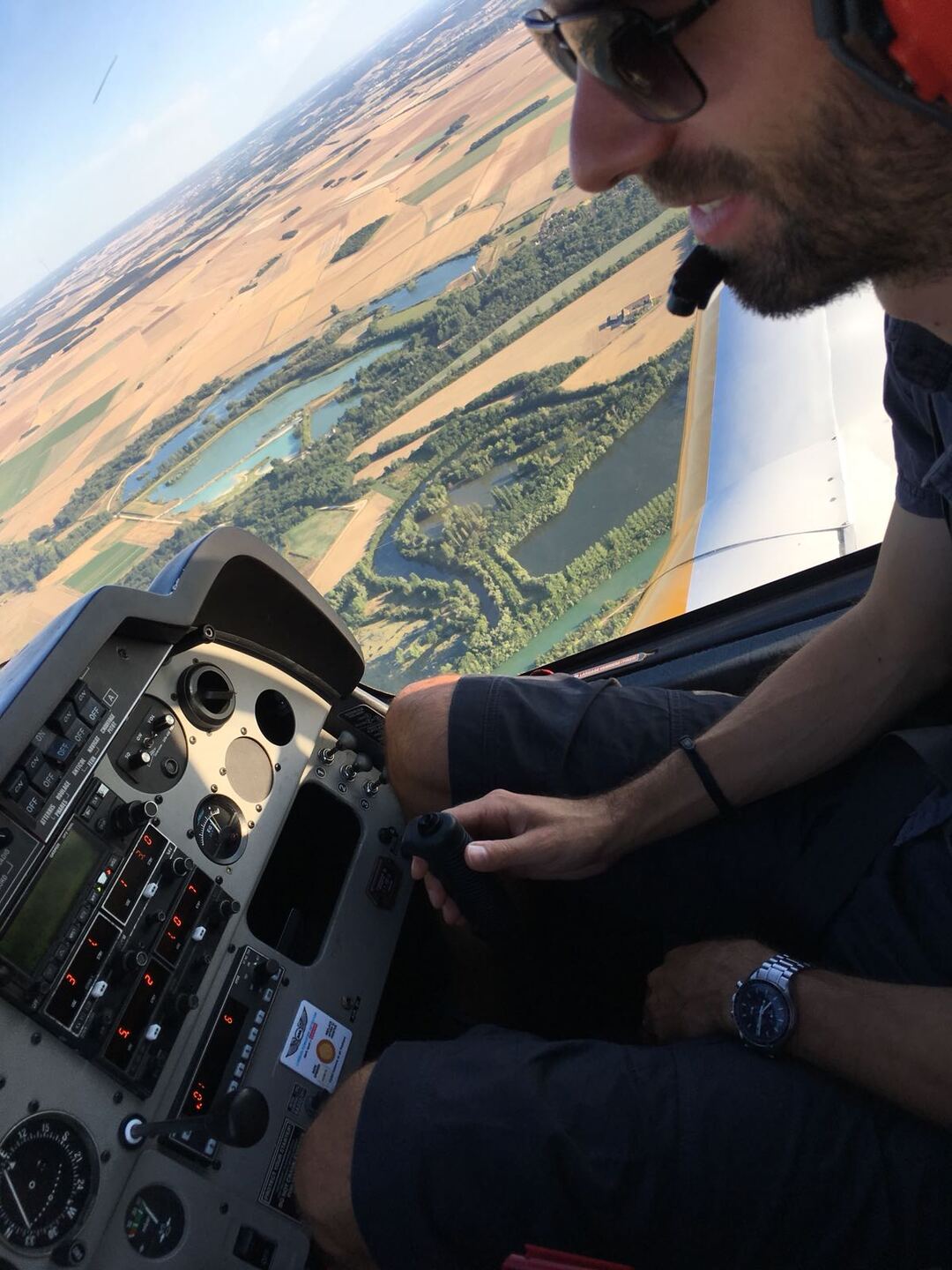
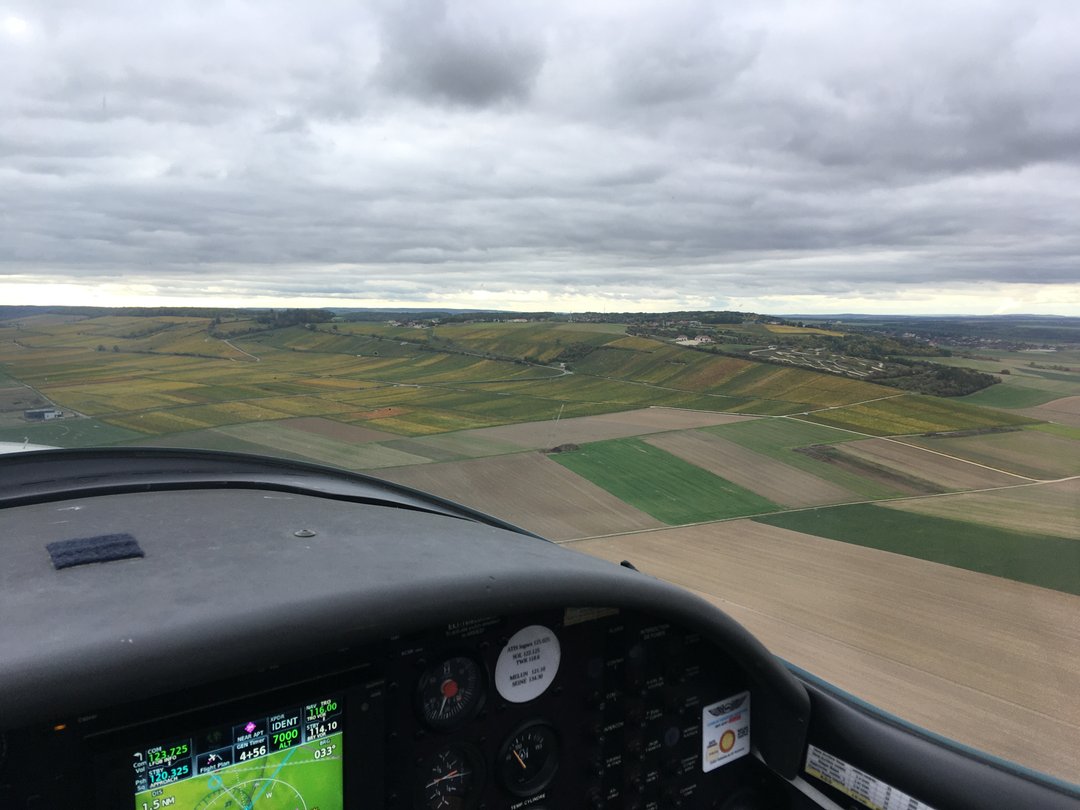
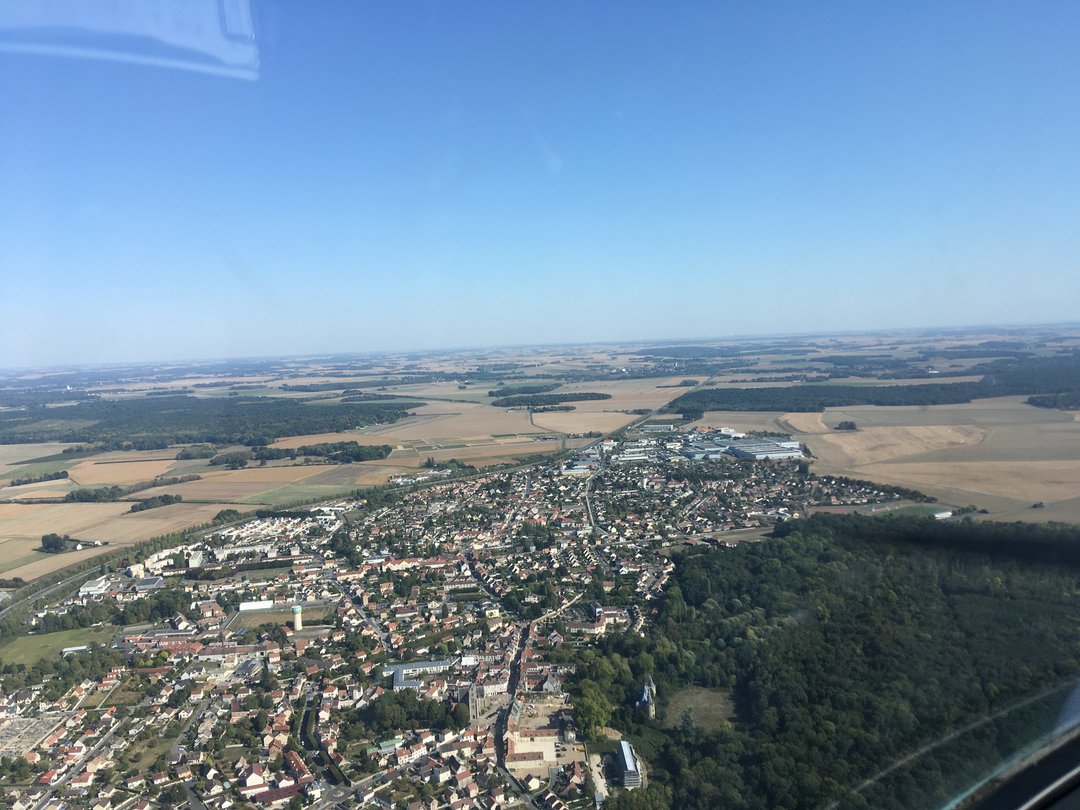
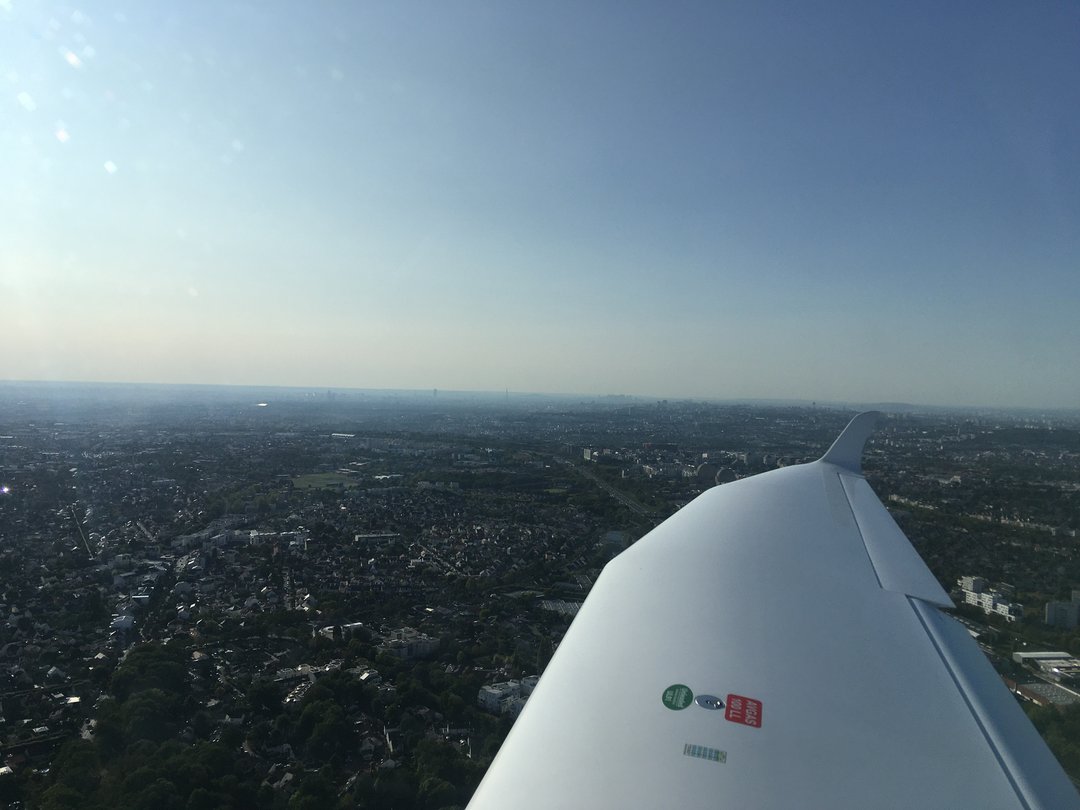
So, a bit more thank 18 months ago, I started a new adventure. After a few flights with a friend of mine in a Robin DR400 and Jodel aircrafts, I enlisted in a local flight club at the Lognes airfield (LFPL), and started a Pilot Private License training. A PPL is an international flight license for non commercial operations. Associated with a qualification like the SEP (Single Engine Piston), it enables you to fly basically anywhere in the world (or at least anywhere where French is spoken by the air traffic controllers) with passengers, under Visual Flight Rules (VFR).

A bit like with cars, training has two parts, theoretical and practical, both validated in a test. You don't have to pass the theoretical test before starting the practical training, and it's actually recommended to do both in parallel, especially since nowadays most of the theoretical training is done online (you still have to do 10h of in-person courses before taking the test).
So in March 2019 I started both trainings. Theoretical training is divided in various domains, like regulations, flight mechanics, meteorology, human factors etc. and you can obviously train in parallel. Practical is more sequential and starts with basic flight training (turns, climbs, descents), then take-off, then landing configuration, then landing itself. All of that obviously with a flight instructor sitting next to you (you're on the left seat but the FI is the pilot in command ). You then start doing circuit patterns, meaning you take off, do a circuit around the airfield, then land on the runway you just took off. Usually you actually don't do a complete landing but rather touch and go, and do it again in order to have more and more landing training.

Once you know how to take-off, do a pattern and land when everything is OK, you start practicing (still with your flight instructor aboard) various failures: especially engine failures at take off, but also flaps failure and stuff like that, all that while still doing patterns and practicing landings. At one point, the flight instructor deems you ready: he exits the plane, and you start your first solo flight: engine tests, take off, one pattern, landing.

For me practical training was done in an Aquila AT-01/A210, which is a small 2-seater. It's really light (it can actually be used as an ultralight), empty weight is a bit above 500kg and max weight is 750. It doesn't go really fast (it cruises at around 100 knots, 185 km/h) but it's nice to fly. As it's really lightweight the wind really shakes it though and it can be a bit hard to land because it really glides very well (with a lift-to-drag ratio at 14). I tried to fly a lot in the beginning, so the basic flight training was done in about 6 months and 23 flight hours. At that point my instructor stepped out of the plane and I did my first solo flight. Everything actually went just fine, because we did repeat a lot before that, so it wasn't even that scary. I guess I will remember my whole life, as people said, but it was pretty uneventful, although the controller did scold me a little because when taxiing back to the parking I misunderstood the instructions and didn't stop where asked (no runway incursion though).

After the first solo flight, you keep practicing patterns and solo flights every once in a while, and start doing cross-country flights: you're not restricted to the local airfields (LFPL, LFAI, LFPK) but start planning trips to more remote airports, about 30-40 minutes away (for me it was Moret/LFPU, Troyes/LFQB, Pontoise/LFPT). Cross country flights requires you to plan the route (draw it on the map, and write a navigation log so you know what to do when in flight), but also check the weather, relevant information, especially NOTAMs - Notice To Air Men (I hope someone rename those Notice to Air Crews at one point), estimate the fuel needed etc. For me, flight preparation time was between once and twice the flight time. Early flight preparation is completed on the day by last-minute checks, especially for weather. During the briefing (with the flight instructor at first, but for the test with the flight examiner and later with yourself) you check in turn every bit of information to decide if you're GO or not for the flight. As a lot of things in aviation, safety is really paramount here.

Once you've practiced cross country flight a bit, you start learning what to do in case of failures during a non-local flights, for example an engine failure in a middle of nowhere, when you have to chose a proper field to land, or a radio failure. And again when you're ready for it (and in case of my local club, once you pass your theoretical exam) you go for cross-country solo flights (of the 10h of solo flight required for taking the test, 5h should be done in cross-country flights). I went again to Troyes (LFQB), then Dijon-Darois (LFGI) and did a three-legs flight to Chalons-Ecury (LFQK) and Pont sur Yonne (LFGO).

And just after that, when I was starting to feel ready for the test, COVID-19 lockdown happened, grounding everyone for a few months. Even after it was over, I felt a bit rusty and had to take some more training. I finally took the test in the beginning of summer, but the first attempt wasn't good enough: I was really stressed, and maybe not completely ready actually. So a bit more training during summer, and finally in September I took the final test part, which was successful this time.

After some paperwork, a new, shiny, Pilot Private License arrived at my door.

And now that I can fly basically when I want, the autumn is finally here with bad weather all day long, so actually planning real flights is a bit tricky. For now I'm still flying solo on familiar trips, but at some point I should be able to bring a passenger with me (on the Aquila) and at some point migrate to a four-seaters like the DR400, ubiquitous in France.

6 October 2020

Iustin Pop: Late report for Nationalpark Bike Marathon 2020

I don t have to mention that 2020 is a special year, so all the normal race plan was out the window, and I was very happy and fortunate to be able to do even one race. And only delayed 3 weeks to write this race report :/ So, here s the story

Preparing for the race Because it was a special year, and everything was crazy, I actually managed to do more sports than usual, at least up to end of July. So my fitness, and even body weight, was relatively fine, so I subscribed to the mid-distance race (official numbers: 78km distance, 1570 meters altitude), and then off it went to a proper summer vacation in a hotel, even. And while I did do some bike rides during that vacation, from then on my training regime went just off? I did train, I did ride, I did get significant PRs, but it didn t click anymore. Plus, due to well, actually not sure what, work or coffee or something my sleep regime also got completely ruined On top of that, I didn t think about the fact that the race was going to be mid-September, and that high up in the mountains, the weather could have be bad enough (I mean, in 2018 the weather was really bad even in August ) such that I d need to seriously think about clothing.

Race week I arrive in Scuol two days before the race, very tired (I think I got only 6 hours of sleep the night before), and definitely not in a good shape. I was feeling bad enough that I was not quite sure I was going to race. At least weather was OK, such that normal summer clothing would suffice. But the race info was mentioning dangerous segments, to be very careful, etc. etc. so I was quite anxious. Note 1: my wife says, this was not the first time, and likely not the last time that two days before the race I feel like quitting. And as I m currently on-and-off reading the interesting The Brave Athlete: Calm the Fuck Down and Rise to the Occasion book (by Lesley Paterson and Simon Marshall; it s an interesting book, not sure if I recommend it or not), I am beginning to think that this is my reaction to races where I have overshot my usual distance. Or, in general, races where I fear the altitude gain. Not quite sure, but I think it is indeed the actual cause. So I spend Thursday evening feeling unwell, and thinking I ll see how Friday goes. Friday comes, and having slept reasonably well entire night, I pick up my race number, then I take another nap in the afternoon - in total, I ve slept around 13 hours that day. So I felt much better, and was looking forward to the race. Saturday morning comes, I manage to wake up early, and get ready in time; almost didn t panic at all that I m going to be late. Note 2: my wife also says that this is the usual way I behave. Hence, it must be most of it a mental issue, rather than real physical one

Race I reach the train station in time, I get on the train, and by the time the train reached Zernez, I fully calm down. There was am entire hour wait though before the race, and it was quite chilly. Of course I didn t bring anything beside what I was wearing, relying on temperature getting better later in the day. During the wait, there were two interesting things happening. First, we actually got there (in Zernez) before the first people from the long distance passed by, both men and women. Seeing them pass by was cool, thinking they already had ~1 200m altitude in just 30-ish kilometres. The second thing was, as this was the middle and not the shortest distance, the people in the group looked differently than in previous years. More precisely, they were looking very fit, and I was feeling fat. Well, I am overweight, so it was expected, but I was feeling it even more than usual. I think only one or two in ten people were looking as fit as me or less And of course, the pictures post-race show me even less fit-looking than I thought. Ah, self-deception is a sweet thing And yes, we all had to wear masks, up until the last minute. It was interesting, but not actually annoying - and small enough price for being able to race! Then the race starts, and as opposed to many other years, it starts slow. I didn t feel that rush of people starting fast, it was reasonable?

First part of the race (good) Thus started the first part of the race, on a new route that I was unfamiliar with. There was not too much climbing, to be honest, and there was some tricky single-trail through the woods, with lots of the roots. I actually had to get off the bike and push it, since it was too difficult to pedal uphill on that path. Other than that, I was managing so far to adjust my efforts well enough that my usual problems related to climbing (lower back pain) didn t yet appear, even as the overall climbed meters were increasing. I was quite happy at that, and had lots of reserves. To my (pleasant) surprise, two positive things happened:
  • I was never alone, a sign that I wasn t too far back.
  • I was passing/being passed by people, both on climbs but also on descents! It s rare, but I did overtake a few people on a difficult trail downhill.
With all the back and forth, a few people became familiar (or at least their kit), and it was fun seeing who is better uphill vs. downhill.

And second part (not so good) I finally get to (around) S-chanf, on a very nice but small descent, and on flat roads, and start the normal route for the short race. Something was off though - I knew from past years that these last ~47km have around 700-800m altitude, but I had already done around 1000m. So the promised 1571m were likely to be off, by at least 100-150m. I set myself a new target of 1700m, and adjust my efforts based on that. And then, like clockwork on the 3:00:00 mark, the route exited the forest, the sun got out of the clouds, and the temperature started to increase from 16-17 C to 26 +, with peaks of 31 C. I m not joking: at 2:58:43, temp was 16 , at 3:00:00, it was 18 , at 3:05:45, it was 26 . Heat and climbing are my two nemeses, and after having a pretty good race for the first 3 hours and almost exactly 1200m of climbing, I started feeling quite miserable. Well, it was not all bad. There were some nice stretches of flat, where I knew I can pedal strongly and keep up with other people, until my chain dropped, so I had to stop, re-set it, and lose 2 minutes. Sigh. But, at least, I was familiar with this race, or so I thought. I completely mis-remembered the last ~20km as a two-punch climb, Guarda and Ftan, whereas it is actually a three-punch one: Guarda, Ardez, and only then Ftan. Doesn t help that Ardez has the nice ruins that I was remembering and which threw me off. The saddest part of the day was here, on one of the last climbs - not sure if to Guarda or to Arddez, where a guy overtakes me, and tells me he s glad he finally caught up with me, he almost got me five or six times (!), but I always managed to break off. Always, until now. Now, this was sad (I was huffing and puffing like a steam locomotive now), but also positive, as I never had that before. One good, one bad? And of course, it was more than 1 700m altitude, it was 1 816m. And the descent to Scuol shorter and it didn t end as usual with the small but sharp climb which I just love, due to Covid changes. But, I finished, and without any actual issues, and no dangerous segments as far as I saw. I was anxious for no good reason

Conclusion (or confusion?) So this race was interesting: three hours (to the minute) in which I went 43.5km, climbed 1200m, felt great, and was able to push and push. And then the second part, only ~32km, climbed only 600m, but which felt quite miserable. I don t know if it was mainly heat, mainly my body giving up after that much climbing (or time?), or both. But it s clear that I can t reliably race for more than around these numbers: 3 hours, ~1000+m altitude, in >20 C temperature. One thing that I managed to achieve though: except due to the technically complex trail at the beginning where I pushed the bike, I did not ever stop and push the bike uphill because I was too tired. Instead, I managed (badly) to do the switch sitting/standing as much as I could motivate myself, and thus continue pushing uphill. This is an achievement for me, since mentally it s oh so easy to stop and push the bike, so I was quite glad. As to the race results, they were quite atrocious:
  • age category (men), 38 out of 52 finishers, 4h54m, with first finisher doing 3h09m, so 50% slower (!)
  • overall (men), 138 out of 173 finishers, with first finisher 2h53m.
These results clearly don t align with my feeling of a good first half of the race, so either it was purely subjective, or maybe in this special year, only really strong people registered for the race, or something else One positive aspect though, compared to most other years, was the consistency of my placement (age and overall):
  • Zuoz: 38 / 141
  • S-Chanf: 39 / 141
  • Zernez: 39 / 141
  • Guarda: 38 / 138
  • Ftan: 38 / 138
  • ( next - whatever this is): 38 / 138
  • Finish: 38 / 138
So despite all my ranting above, and all the stats I m pulling out of my own race, it looks like my position in the race was fully settled in the really first part, and I didn t gain nor lose practically anything afterwards. I did dip one place but then gained it back (on the climb to Guarda, even). The split times (per-segment rankings) are a bit more variable, and show that I was actually fast on the climbs but losing speed on the descents, which I really don t understand anymore:
  • Zernez-Zuoz (unclear type): 38 / 141
  • Zuoz-S-Chanf (unclear type): 40 / 141
  • S-Chanf-Zernez (mostly downhill): 39 / 143
  • Zernez-Guarda (mostly uphill): 37 / 136
  • Guarda-Ftan (mostly uphill): 37 / 131
  • Ftan-Scuol (mostly downhill): 43 / 156
The difference at the end is striking. I m visually matching the map positions to km and then use VeloViewer for computing the altitude gain, but Zernez to Guarda is 420m altitude, and Guarda to Ftan is 200m altitude gain, and yet on both, I was faster than my final place, and by quite a few places on overall, only to lose that on the descent (Ftan-Scuol), and by a large margin. So, amongst all the confusion here, I think the story overall is:
  • indeed I was quite fit for me, so the climbs were better than my place in the race (if that makes sense).
  • however, I m not actually good at climbing nor fit (watts/kg), so I m still way back in the pack (oops!).
  • and I do suck at descending, both me (skills) and possible my bike setup as well (too high tyre pressure, etc.) so I lose even more time here
As usual, the final take-away points are: lose the extra weight that is not needed, get better skills, get better core to be better at climbing. I ll finish here with one pic, taken in Guarda (4 hours into the race, more or less):
Climbing in Guarda Climbing in Guarda
Until next year!

4 October 2020

Sylvain Beucler: git filter-branch and --state-branch - how?

I'm mirroring and reworking a large Git repository with git filter-branch (conversion ETA: 20h), and I was wondering how to use --state-branch which is supposed to speed-up later updates, or split a large conversion in several updates. The documentation is pretty terse, the option can produce weird results (like an identity mapping that breaks all later updates, or calling the expensive tree-filter but discarding the results), wrappers are convoluted, but I got something to work so I'll share :) The main point is: run the initial script and the later updates in the same configuration, which means the target branch needs to be reset to the upstream branch each time, before it's rewritten again by filter-branch. In other words, don't re-run it on the rewritten branch, nor attempt some complex merge/cherry-pick.
git fetch
git branch --no-track -f myrewrite origin/master
git filter-branch \
  --xxx-filter ... \
  --xxx-filter ... \
  --state-branch refs/heads/filter-branch/myrewrite \
  -d /dev/shm/filter-branch/$$ -f \
  myrewrite
Updates restart from scratch but only take a few seconds to skim through all the already-rewritten commits, and maintain a stable history. Note that if the process is interrupted, the state-branch isn't modified, so it's not a stop/resume feature. If you want to split a lenghty conversion, you could simulate multiple upstream updates by checking out successive points in history (e.g. per year using $(git rev-list -1 --before='2020-01-01 00:00:00Z')). --state-branch isn't meant to rewrite in reverse chronological order either, because all commit ids would constantly change. Still, you can rewrite only the recent history for a quick discardable test. Be cautious when using/deleting rewritten branches, especially during early tests, because Git tends to save them to multiple places which may desync (e.g. .git/refs/heads/, .git/logs/refs/, .git/packed-refs). Also remember to delete the state-branch between different tests. Last, note the unique temporary directory -d to avoid ruining concurrent tests ^_^'

22 September 2020

Russ Allbery: Review: Unconquerable Sun

Review: Unconquerable Sun, by Kate Elliott
Series: Sun Chronicles #1
Publisher: Tor
Copyright: 2020
ISBN: 1-250-19725-2
Format: Kindle
Pages: 526
Sun is the daughter and heir of the mercurial Queen-Marshal Eirene, ruler of the Republic of Chaonia. Chaonia, thanks to Eirene and her ancestors, has carved out a fiercely independent position between the Yele League and the Phene Empire. Sun's father, Prince Jo o, is one of Eirene's three consorts, all chosen for political alliances to shore up that fragile position. Jo o is Gatoi, a civilization of feared fighters and supposed barbarians from outside Chaonia who normally ally with the Phene, which complicates Sun's position as heir. Sun attempts to compensate for that by winning battles for the Republic, following in the martial footsteps of her mother. The publisher's summary of this book is not great (I'm a huge fan of Princess Leia, but that is... not the analogy that comes to mind), so let me try to help. This is gender-swapped Alexander the Great in space. However, it is gender-swapped Alexander the Great in space with her Companions, which means the DNA of this novel is half space opera and half heist story (without, to be clear, an actual heist, although there are some heist-like maneuvers). It's also worth mentioning that Sun, like Alexander, is not heterosexual. The other critical thing to know before reading, mostly because it will get you through the rather painful start, is that the most interesting viewpoint character in this book is not Sun, the Alexander analogue. It's Persephone, who isn't introduced until chapter seven. Significant disclaimer up front: I got a reasonably typical US grade school history of Alexander the Great, which means I was taught that he succeeded his father, conquered a whole swath of the middle of the Eurasian land mass at a very young age, and then died and left his empire to his four generals who promptly divided it into four uninteresting empires that no one's ever heard of, and that's why Rome is more important than Greece. (I put in that last bit to troll one specific person.) I am therefore not the person to judge the parallels between this story and known history, or to notice any damage done to Greek pride, or to pick up on elements that might cause someone with a better grasp of that history to break out in hives. I did enough research to know that one scene in this book is lifted directly out of Alexander's life, but I'm not sure how closely the other parallels track. Yele is probably southern Greece and Phene is probably Persia, but I'm not certain even of that, and some of the details don't line up. If I had to hazard a guess, I'd say that Elliott has probably mangled history sufficiently to make it clear that this isn't intended to be a retelling, but if the historical parallels are likely to bother you, you may want to do more research before reading. What I can say is that the space opera setup, while a bit stock, has all the necessary elements to make me happy. Unconquerable Sun is firmly in the "lost Earth" tradition: The Argosy fleet fled the now-mythical Celestial Empire and founded a new starfaring civilization without any contact with their original home. Eventually, they invented (or discovered; the characters don't know) the beacons, which allow for instantaneous travel between specific systems without the long (but still faster-than-light) journeys of the knnu drive. More recently, the beacon network has partly collapsed, cutting off the characters' known world from the civilization that was responsible for the beacons and guarded their secrets. It's a fun space opera history with lots of lost knowledge to reference and possibly discover, and with plot-enabling military choke points at the surviving beacons that link multiple worlds. This is all background to the story, which is the ongoing war between Chaonia and the Phene Empire mixed with cutthroat political maneuvering between the great houses of the Chaonian Republic. This is where the heist aspects come in. Each house sends one representative to join the household of the Queen-Marshal and (more to the point for this story) another to join her heir. Sun has encouraged the individual and divergent talents of her Companions and their cee-cees (an unfortunate term that I suspect is short for Companion's Companion) and forged them into a good working team. A team that's about to be disrupted by the maneuverings of a rival house and the introduction of a new team member whom no one wants. A problem with writing tactical geniuses is that they often aren't good viewpoint characters. Sun's tight third-person chapters, which is a little less than half the book, advance the plot and provide analysis of the interpersonal dynamics of the characters, but aren't the strength of the story. That lies with the interwoven first-person sections that follow Persephone, an altogether more interesting character. Persephone is the scion of the house that is Sun's chief rival, but she has no interest in being part of that house or its maneuverings. When the story opens, she's a cadet in a military academy for recruits from the commoners, having run away from home, hidden her identity, and won a position through the open entrance exams. She of course doesn't stay there; her past catches up with her and she gets assigned to Sun, to a great deal of mutual suspicion. She also is assigned an impeccably dressed and stunningly beautiful cee-cee, Tiana, who has her own secrets and who was my favorite character in the book. Somewhat unusually for the space opera tradition, this is a book that knows that common people exist and have interesting lives. It's primarily focused on the ruling houses, but that focus is not exclusive and the rulers do not have a monopoly on competence. Elliott also avoids narrowing the political field too far; the Gatoi are separate from the three rival powers, and there are other groups with traditions older than the Chaonian Republic and their own agendas. Sun and her Companions are following a couple of political threads, but there is clearly more going on in this world than that single plot. This is exactly the kind of story I think of when I think space opera. It's not doing anything that original or groundbreaking, and it's not going to make any of my lists of great literature, but it's a fun romp with satisfyingly layered bits of lore, a large-scale setting with lots of plot potential, and (once we get through the confusing and somewhat tedious process of introducing rather too many characters in short succession) some great interpersonal dynamics. It's the kind of book in which the characters are in the middle of decisive military action in an interstellar war and are also near-teenagers competing for ratings in an ad hoc reality TV show, primarily as an excuse to create tactical distractions for Sun's latest scheme. The writing is okay but not great, and the first few chapters have some serious infodumping problems, but I thoroughly enjoyed the whole book and will pre-order the sequel. One Amazon review complained that Unconquerable Sun is not a space opera like Hyperion or Use of Weapons. That is entirely true, but if that's your standard for space opera, the world may be a disappointing place. This is a solid entry in a subgenre I love, with some great characters, sarcasm, competence porn, plenty of pages to keep turning, a few twists, and the promise of more to come. Recommended. Followed by the not-yet-published Furious Heaven. Rating: 7 out of 10

2 September 2020

Elana Hashman: My term at the Open Source Initiative thus far

When I ran for the OSI board in early 2019, I set three goals for myself: Now that the OSI has announced hiring an interim General Manager, I thought it would be a good time to publicly reflect on what I've accomplished and what I'd like to see next. As I promised in my campaign pitch, I aim to be publicly accountable :) Growing the OSI's membership I have served as our Membership Committee Chair since the May 2019 board meeting, tasked with devising and supervising strategy to increase membership and deliver value to members. As part of my election campaign last year, I signed up over 50 new individual members. Since May 2019, we've seen strong 33% growth of individual members, to reach a new all-time high over 600 (638 when I last checked). I see the OSI as a relatively neutral organization that occupies a unique position to build bridges among organizations within the FOSS ecosystem. In order to facilitate this, we need a representative membership, and we need to engage those members and provide forums for cross-pollination. As Membership Committee Chair, I have been running quarterly video calls on Jitsi for our affiliate members, where we can share updates between many global organizations and discuss challenges we all face. But it's not enough just to hold the discussion; we also need to bring fresh new voices into the conversation. Since I've joined the board, I'm thrilled to say that 16 new affiliate members joined (in chronological order) for a total of 81: I was also excited to run a survey of the OSI's individual and affiliate membership to help inform the future of the organization that received 58 long-form responses. The survey has been accepted by the board at our August meeting and should be released publicly soon! Defending the Open Source Definition When I joined the board, the first committee I joined was the License Committee, which is responsible for running the licence review process, making recommendations on new licenses, and maintaining our existing licenses. Over the past year, under Pamela Chestek's leadership as Chair, the full board has approved the following licenses (with SPDX identifiers in brackets) on the recommendation of the License Committee: We withheld approval of the following licenses: I've also worked to define the scope of work for hiring someone to improve our license review process, which we have an open RFP for! Chopping wood and carrying water I joined the OSI with the goal of improving an organization I didn't think was performing up to its potential. Its membership and board were not representative of the wider open source community, its messaging felt outdated, and it seemed to be failing to rise to today's challenges for FOSS. But before one can rise to meet these challenges, you need a strong foundation. The OSI needed the organizational structure, health, and governance in order to address such questions. Completing that work is essential, but not exactly glamourous and it's a place that I thrive. Honestly, I don't (yet?) want to be the public face of the organization, and I apologize to those who've missed me at events like FOSDEM. I want to talk a little about some of my behind-the-scenes activities that I've completed as part of my board service: All of this work is intended to improve the organization's health and provide it with an excellent foundation for its mission. Defining the future of open source Soon after I was elected to the board, I gave a talk at Brooklyn.js entitled "The Future of Open Source." In this presentation, I pondered about the history and future of the free and open source software movement, and the ethical questions we must face. In my election campaign, I wrote "Software licenses are a means, not an end, to open source software. Focusing on licensing is necessary but not sufficient to ensure a vibrant, thriving open source community. Focus on licensing to the exclusion of other serious community concerns is to our collective detriment." My primary goal for my first term on the board was to ensure the OSI would be positioned to answer wider questions about the open source community and its future beyond licenses. Over the past two months, I supported Megan Byrd-Sanicki's suggestion to hold (and then participated in, with the rest of the board) organizational strategy sessions to facilitate our long-term planning. My contribution to help inform these sessions was providing the member survey on behalf of the Membership Committee. Now, I think we are much better equiped to face the hard questions we'll have to tackle. In my opinion, the Open Source Initiative is better positioned than ever to answer them, and I can't wait to see what the future brings. Hope to see you at our first State of the Source conference next week!

31 August 2020

Russ Allbery: Review: Men at Arms

Review: Men at Arms, by Terry Pratchett
Series: Discworld #15
Publisher: Harper
Copyright: 1993
Printing: November 2013
ISBN: 0-06-223740-3
Format: Mass market
Pages: 420
Men at Arms is the fifteenth Discworld novel and a direct plot sequel to Guards! Guards!. You could start here without missing too much, but starting with Guards! Guards! would make more sense. And of course there are cameos (and one major appearance) by other characters who are established in previous books. Carrot, the adopted dwarf who joined the watch in Guards! Guards!, has been promoted to corporal. He is now in charge of training new recruits, a role that is more important because of the Night Watch's new Patrician-ordered diversity initiative. The Watch must reflect the ethnic makeup of the city. That means admitting a troll, a dwarf... and a woman? Trolls and dwarfs hate each other because dwarfs mine precious things out of rock and trolls are composed of precious things embedded in rocks, so relations between the new recruits are tense. Captain Vimes is leaving the Watch, and no one is sure who would or could replace him. (The reason for this is a minor spoiler for Guards! Guards!) A magical weapon is stolen from the Assassin's Guild. And a string of murders begins, murders that Vimes is forbidden by Lord Vetinari from investigating and therefore clearly is going to investigate. This is an odd moment at which to read this book. The Night Watch are not precisely a police force, although they are moving in that direction. Their role in Ankh-Morpork is made much stranger by the guild system, in which the Thieves' Guild is responsible for theft and for dealing with people who steal outside of the quota of the guild. But Men at Arms is in part a story about ethics, about what it means to be a police officer, and about what it looks like when someone is very good at that job. Since I live in the United States, that makes it hard to avoid reading Men at Arms in the context of the current upheavals about police racism, use of force, and lack of accountability. Men at Arms can indeed be read that way; community relations, diversity in the police force, the merits of making two groups who hate each other work together, and the allure of violence are all themes Pratchett is working with in this novel. But they're from the perspective of a UK author writing in 1993 about a tiny city guard without any of the machinery of modern police, so I kept seeing a point of clear similarity and then being slightly wrong-footed by the details. It also felt odd to read a book where the cops are the heroes, much in the style of a detective show. This is in no way a problem with the book, and in a way it was helpful perspective, but it was a strange reading experience.
Cuddy had only been a guard for a few days but already he had absorbed one important and basic fact: it is almost impossible for anyone to be in a street without breaking the law.
Vimes and Carrot are both excellent police officers, but in entirely different ways. Vimes treats being a cop as a working-class job and is inclined towards glumness and depression, but is doggedly persistent and unable to leave a problem alone. His ethics are covered by a thick layer of world-weary cynicism. Carrot is his polar opposite in personality: bright, endlessly cheerful, effortlessly charismatic, and determined to get along with everyone. On first appearance, this contrast makes Vimes seem wise and Carrot seem a bit dim. That is exactly what Pratchett is playing with and undermining in Men at Arms. Beneath Vimes's cynicism, he's nearly as idealistic as Carrot, even though he arrives at his ideals through grim contrariness. Carrot, meanwhile, is nowhere near as dim as he appears to be. He's certain about how he wants to interact with others and is willing to stick with that approach no matter how bad of an idea it may appear to be, but he's more self-aware than he appears. He and Vimes are identical in the strength of their internal self-definition. Vimes shows it through the persistent, grumpy stubbornness of a man devoted to doing an often-unpleasant job, whereas Carrot verbally steamrolls people by refusing to believe they won't do the right thing.
Colon thought Carrot was simple. Carrot often struck people as simple. And he was. Where people went wrong was thinking that simple meant the same thing as stupid.
There's a lot going on in this book apart from the profiles of two very different models of cop. Alongside the mystery (which doubles as pointed commentary on the corrupting influence of violence and personal weaponry), there's a lot about dwarf/troll relations, a deeper look at the Ankh-Morpork guilds (including a horribly creepy clown guild), another look at how good Lord Vetinari is at running the city by anticipating how other people will react, a sarcastic dog named Gaspode (originally seen in Moving Pictures), and Pratchett's usual collection of memorable lines. It is also the origin of the now-rightfully-famous Vimes boots theory:
The reason that the rich were so rich, Vimes reasoned, was because they managed to spend less money. Take boots, for example. He earned thirty-eight dollars a month plus allowances. A really good pair of leather boots cost fifty dollars. But an affordable pair of boots, which were sort of OK for a season or two and then leaked like hell when the cardboard gave out, cost about ten dollars. Those were the kind of boots Vimes always bought, and wore until the soles were so thin that he could tell where he was in Ankh-Morpork on a foggy night by the feel of the cobbles. But the thing was that good boots lasted for years and years. A man who could afford fifty dollars had a pair of boots that'd still be keeping his feet dry in ten years' time, while the poor man who could only afford cheap boots would have spent a hundred dollars on boots in the same time and would still have wet feet. This was the Captain Samuel Vimes 'Boots' theory of socioeconomic unfairness.
Men at Arms regularly makes lists of the best Discworld novels, and I can see why. At this point in the series, Pratchett has hit his stride. The plots have gotten deeper and more complex without losing the funny moments, movie and book references, and glorious turns of phrase. There is also a lot of life philosophy and deep characterization when one pays close attention to the characters.
He was one of those people who would recoil from an assault on strength, but attack weakness without mercy.
My one complaint is that I found it a bit overstuffed with both characters and subplots, and as a result had a hard time following the details of the plot. I found myself wanting a timeline of the murders or a better recap from one of the characters. As always with Pratchett, the digressions are wonderful, but they do occasionally come at the cost of plot clarity. I'm not sure I recommend the present moment in the United States as the best time to read this book, although perhaps there is no better time for Carrot and Vimes to remind us what good cops look like. But regardless of when one reads it, it's an excellent book, one of the best in the Discworld series to this point. Followed, in publication order, by Soul Music. The next Watch book is Feet of Clay. Rating: 8 out of 10

28 August 2020

Bits from Debian: DebConf20 welcomes its sponsors!

DebConf20 logo DebConf20 is taking place online, from 23 August to 29 August 2020. It is the 21st Debian conference, and organizers and participants are working hard together at creating interesting and fruitful events. We would like to warmly welcome the 17 sponsors of DebConf20, and introduce them to you. We have four Platinum sponsors. Our first Platinum sponsor is Lenovo. As a global technology leader manufacturing a wide portfolio of connected products, including smartphones, tablets, PCs and workstations as well as AR/VR devices, smart home/office and data center solutions, Lenovo understands how critical open systems and platforms are to a connected world. Our next Platinum sponsor is Infomaniak. Infomaniak is Switzerland's largest web-hosting company, also offering backup and storage services, solutions for event organizers, live-streaming and video on demand services. It wholly owns its datacenters and all elements critical to the functioning of the services and products provided by the company (both software and hardware). Google is our third Platinum sponsor. Google is one of the largest technology companies in the world, providing a wide range of Internet-related services and products such as online advertising technologies, search, cloud computing, software, and hardware. Google has been supporting Debian by sponsoring DebConf for more than ten years, and is also a Debian partner. Amazon Web Services (AWS) is our fourth Platinum sponsor. Amazon Web Services is one of the world's most comprehensive and broadly adopted cloud platforms, offering over 175 fully featured services from data centers globally (in 77 Availability Zones within 24 geographic regions). AWS customers include the fastest-growing startups, largest enterprises and leading government agencies. Our Gold sponsors are Deepin, the Matanel Foundation, Collabora, and HRT. Deepin is a Chinese commercial company focusing on the development and service of Linux-based operating systems. They also lead research and development of the Deepin Debian derivative. The Matanel Foundation operates in Israel, as its first concern is to preserve the cohesion of a society and a nation plagued by divisions. The Matanel Foundation also works in Europe, in Africa and in South America. Collabora is a global consultancy delivering Open Source software solutions to the commercial world. In addition to offering solutions to clients, Collabora's engineers and developers actively contribute to many Open Source projects. Hudson-Trading is a company led by mathematicians, computer scientists, statisticians, physicists and engineers. They research and develop automated trading algorithms using advanced mathematical techniques. Our Silver sponsors are: Linux Professional Institute, the global certification standard and career support organization for open source professionals, Civil Infrastructure Platform, a collaborative project hosted by the Linux Foundation, establishing an open source base layer of industrial grade software, Ubuntu, the Operating System delivered by Canonical, and Roche, a major international pharmaceutical provider and research company dedicated to personalized healthcare. Bronze sponsors: IBM, MySQL, Univention. And finally, our Supporter level sponsors, ISG.EE and Pengwin. Thanks to all our sponsors for their support! Their contributions make it possible for a large number of Debian contributors from all over the globe to work together, help and learn from each other in DebConf20. Participating in DebConf20 online The 21st Debian Conference is being held online, due to COVID-19, from August 23 to 29, 2020. Talks, discussions, panels and other activities run from 10:00 to 01:00 UTC. Visit the DebConf20 website at https://debconf20.debconf.org to learn about the complete schedule, watch the live streaming and join the different communication channels for participating in the conference.

7 August 2020

Antonio Terceiro: When community service providers fail

I'm starting a new blog, and instead of going into the technical details on how it's made, or on how I migrated my content from the previous ones, I want focus on why I did it. It's been a while since I have written a blog post. I wanted to get back into it, but also wanted to finally self-host my blog/homepage because I have been let down before. And sadly, I was not let down by a for-profit, privacy invading corporation, but by a free software organization. The sad story of wiki.softwarelivre.org My first blog that was hosted in a blog engine written by me, which was hosted in a TWiki, and later Foswiki instance previously available at wiki.softwarelivre.org, hosted by ASL.org. I was the one who introduced the tool to the organization in the first place. I had come from a previous, very fruitful experience on the use of wikis for creation of educational material while in university, which ultimately led me to become a core TWiki, and then Foswiki developer. In 2004, I had just moved to Porto Alegre, got involved in ASL.org, and there was a demand for a tool like that. 2 years later, I left Porto Alegre, and some time after that the daily operations of ASL.org when it became clear that it was not really prepared for remote participation. I was still maintaing the wiki software and the OS for quite some years after, until I wasn't anymore. In 2016, the server that hosted it went haywire, and there were no backups. A lot of people and free software groups lost their content forever. My blog was the least important content in there. To mention just a few examples, here are some groups that lost their content in there: Some of this can still be reached via the Internet Archive Wayback Machine, but that is only useful for recovering content, not for it to be used by the public. The announced tragedy of softwarelivre.org My next blog after that was hosted at softwarelivre.org, a Noosfero instance also hosted by ASL.org. When it was introduced in 2010, this Noosfero instance became responsible for the main domain softwarelivre.org name. This was a bold move by ASL.org, and was a demonstration of trust in a local free software project, led by a local free software cooperative (Colivre). I was a lead developer in the Noosfero project for a long time, and I was also involved in maintaining that server as well. However, for several years there is little to no investment in maintaining that service. I already expect that it will probably blow up at some point as the wiki did, or that it may be just shut down on purpose. On the responsibility of organizations Today, a large part of wast mot people consider "the internet" is controlled by a handful of corporations. Most popular services on the internet might look like they are gratis (free as in beer), but running those services is definitely not without costs. So when you use services provided by for-profit companies and are not paying for them with money, you are paying with your privacy and attention. Society needs independent organizations to provide alternatives. The market can solve a part of the problem by providing ethical services and charging for them. This is legitimate, and as long as there is transparency about how peoples' data and communications are handled, there is nothing wrong with it. But that only solves part of the problem, as there will always be people who can't afford to pay, and people and communities who can afford to pay, but would rather rely on a nonprofit. That's where community-based services, provided by nonprofits, are also important. We should have more of them, not less. So it makes me worry to realize ASL.org left the community in the dark. Losing the wiki wasn't even the first event of its kind, as the listas.softwarelivre.org mailing list server, with years and years of community communications archived in it, broke with no backups in 2012. I do not intend to blame the ASL.org leadership personally, they are all well meaning and good people. But as an organization, it failed to recognize the importance of this role of service provider. I can even include myself in it: I was member of the ASL.org board some 15 years ago; I was involved in the deployment of both the wiki and Noosfero, the former as a volunteer and the later professionally. Yet, I did nothing to plan the maintenance of the infrastructure going forward. When well meaning organizations fail, people who are not willing to have their data and communications be exploited for profit are left to their own devices. I can afford a virtual private server, and have the technical knowledge to import my old content into a static website generator, so I did it. But what about all the people who can't, or don't? Of course, these organizations have to solve the challenge of being sustainable, and being able to pay professionals to maintain the services that the community relies on. We should be thankful to these organizations, and their leadership needs to recognize the importance of those services, and actively plan for them to be kept alive.

Antonio Terceiro: When community service providers fail

I'm starting a new blog, and instead of going into the technical details on how it's made, or on how I migrated my content from the previous ones, I want to focus on why I did it. It's been a while since I have written a blog post. I wanted to get back into it, but also wanted to finally self-host my blog/homepage because I have been let down before. And sadly, I was not let down by a for-profit, privacy invading corporation, but by a free software organization. The sad story of wiki.softwarelivre.org My first blog that was hosted in a blog engine written by me, which was hosted in a TWiki, and later Foswiki instance previously available at wiki.softwarelivre.org, hosted by ASL.org. I was the one who introduced the tool to the organization in the first place. I had come from a previous, very fruitful experience on the use of wikis for creation of educational material while in university, which ultimately led me to become a core TWiki, and then Foswiki developer. In 2004, I had just moved to Porto Alegre, got involved in ASL.org, and there was a demand for a tool like that. 2 years later, I left Porto Alegre, and some time after that the daily operations of ASL.org when it became clear that it was not really prepared for remote participation. I was still maintaing the wiki software and the OS for quite some years after, until I wasn't anymore. In 2016, the server that hosted it went haywire, and there were no backups. A lot of people and free software groups lost their content forever. My blog was the least important content in there. To mention just a few examples, here are some groups that lost their content in there: Some of this can still be reached via the Internet Archive Wayback Machine, but that is only useful for recovering content, not for it to be used by the public. The announced tragedy of softwarelivre.org My next blog after that was hosted at softwarelivre.org, a Noosfero instance also hosted by ASL.org. When it was introduced in 2010, this Noosfero instance became responsible for the main domain softwarelivre.org name. This was a bold move by ASL.org, and was a demonstration of trust in a local free software project, led by a local free software cooperative (Colivre). I was a lead developer in the Noosfero project for a long time, and I was also involved in maintaining that server as well. However, for several years there is little to no investment in maintaining that service. I already expect that it will probably blow up at some point as the wiki did, or that it may be just shut down on purpose. On the responsibility of organizations Today, a large part of wast mot people consider "the internet" is controlled by a handful of corporations. Most popular services on the internet might look like they are gratis (free as in beer), but running those services is definitely not without costs. So when you use services provided by for-profit companies and are not paying for them with money, you are paying with your privacy and attention. Society needs independent organizations to provide alternatives. The market can solve a part of the problem by providing ethical services and charging for them. This is legitimate, and as long as there is transparency about how peoples' data and communications are handled, there is nothing wrong with it. But that only solves part of the problem, as there will always be people who can't afford to pay, and people and communities who can afford to pay, but would rather rely on a nonprofit. That's where community-based services, provided by nonprofits, are also important. We should have more of them, not less. So it makes me worry to realize ASL.org left the community in the dark. Losing the wiki wasn't even the first event of its kind, as the listas.softwarelivre.org mailing list server, with years and years of community communications archived in it, broke with no backups in 2012. I do not intend to blame the ASL.org leadership personally, they are all well meaning and good people. But as an organization, it failed to recognize the importance of this role of service provider. I can even include myself in it: I was member of the ASL.org board some 15 years ago; I was involved in the deployment of both the wiki and Noosfero, the former as a volunteer and the later professionally. Yet, I did nothing to plan the maintenance of the infrastructure going forward. When well meaning organizations fail, people who are not willing to have their data and communications be exploited for profit are left to their own devices. I can afford a virtual private server, and have the technical knowledge to import my old content into a static website generator, so I did it. But what about all the people who can't, or don't? Of course, these organizations have to solve the challenge of being sustainable, and being able to pay professionals to maintain the services that the community relies on. We should be thankful to these organizations, and their leadership needs to recognize the importance of those services, and actively plan for them to be kept alive.

23 July 2020

Sean Whitton: keyboardingupdates

Marks and mark rings in GNU Emacs I recently attempted to answer the question of whether experienced Emacs users should consider partially or fully disabling Transient Mark mode, which is (and should be) the default in modern GNU Emacs. That blog post was meant to be as information-dense as I could make it, but now I d like to describe the experience I have been having after switching to my custom pseudo-Transient Mark mode, which is labelled mitigation #2 in my older post. In summary: I feel like I ve uncovered a whole editing paradigm lying just beneath the surface of the editor I ve already been using for years. That is cool and enjoyable in itself, but I think it s also helped me understand other design decisions about the basics of the Emacs UI better than before in particular, the ideas behind how Emacs chooses where to display buffers, which were very frustrating to me in the past. I am now regularly using relatively obscure commands like C-x 4 C-o. I see it! It all makes sense now! I would encourage everyone who has never used Emacs without Transient Mark mode to try turning it off for a while, either fully or partially, just to see what you can learn. It s fascinating how it can come to seem more convenient and natural to pop the mark just to go back to the end of the current line after fixing up something earlier in the line, even though doing so requires pressing two modified keys instead of just C-e. Eshell I was amused to learn some years ago that someone was trying to make Emacs work as an X11 window manager. I was amazed and impressed to learn, more recently, that the project is still going and a fair number of people are using it. Kudos! I suspect that the basic motivation for such projects is that Emacs is a virtual Lisp machine, and it has a certain way of managing visible windows, and people would like to be able to bring both of those to their X11 window management. However, I am beginning to suspect that the intrinsic properties of Emacs buffers are tightly connected to the ways in which Emacs manages visible windows, and the intrinsic properties of Emacs buffers are at least as fundamental as its status as a virtual Lisp machine. Thus I am not convinced by the idea of trying to use Emacs ways of handling visible windows to handle windows which do not contain Emacs buffers. (but it s certainly nice to learn it s working out for others) The more general point is this. Emacs buffers are as fundamental to Emacs as anything else is, so it seems unlikely to be particularly fruitful to move something typically done outside of Emacs into Emacs, unless that activity fits naturally into an Emacs buffer or buffers. Being suited to run on a virtual Lisp machine is not enough. What could be more suited to an Emacs buffer, however, than a typical Unix command shell session? By this I mean things like running commands which produce text output, and piping this output between commands and into and out of files. Typically the commands one enters are sort of like tiny programs in themselves, even if there are no pipes involved, because you have to spend time determining just what options to pass to achieve what you want. It is great to have all your input and output available as ordinary buffer text, navigable just like all your other Emacs buffers. Full screen text user interfaces, like top(1), are not the sort of thing I have in mind here. These are suited to terminal emulators, and an Emacs buffer makes a poor terminal emulator what you end up with is a sort of terminal emulator emulator. Emacs buffers and terminal emulators are just different things. These sorts of thoughts lead one to Eshell, the Emacs Shell. Quoting from its documentation:
The shell s role is to make [system] functionality accessible to the user in an unformed state. Very roughly, it associates kernel functionality with textual commands, allowing the user to interact with the operating system via linguistic constructs. Process invocation is perhaps the most significant form this takes, using the kernel s fork' andexec functions. Emacs is a user application, but it does make the functionality of the kernel accessible through an interpreted language namely, Lisp. For that reason, there is little preventing Emacs from serving the same role as a modern shell. It too can manipulate the kernel in an unpredetermined way to cause system changes. All it s missing is the shell-ish linguistic model.
Eshell has been working very well for me for the past month or so, for, at least, Debian packaging work, which is very command shell-oriented (think tools like dch(1)). The other respects in which Eshell is tightly integrated with the rest of Emacs are icing on the cake. In particular, Eshell can transparently operate on remote hosts, using TRAMP. So when I need to execute commands on Debian s ftp-master server to process package removal requests, I just cd /ssh:fasolo: in Eshell. Emacs takes care of disconnecting and connecting to the server when needed there is no need to maintain a fragile SSH connection and a shell process (or anything else) running on the remote end. Or I can cd /ssh:athena\ sudo:root@athena: to run commands as root on the webserver hosting this blog, and, again, the text of the session survives on my laptop, and may be continued at my leisure, no matter whether athena reboots, or I shut my laptop and open it up again the next morning. And of course you can easily edit files on the remote host.

16 July 2020

Louis-Philippe V ronneau: DebConf Videoteam Sprint Report -- DebConf20@Home

DebConf20 starts in about 5 weeks, and as always, the DebConf Videoteam is working hard to make sure it'll be a success. As such, we held a sprint from July 9th to 13th to work on our new infrastructure. A remote sprint certainly ain't as fun as an in-person one, but we nonetheless managed to enjoy ourselves. Many thanks to those who participated, namely: We also wish to extend our thanks to Thomas Goirand and Infomaniak for providing us with virtual machines to experiment on and host the video infrastructure for DebConf20. Advice for presenters For DebConf20, we strongly encourage presenters to record their talks in advance and send us the resulting video. We understand this is more work, but we think it'll make for a more agreeable conference for everyone. Video conferencing is still pretty wonky and there is nothing worse than a talk ruined by a flaky internet connection or hardware failures. As such, if you are giving a talk at DebConf this year, we are asking you to read and follow our guide on how to record your presentation. Fear not: we are not getting rid of the Q&A period at the end of talks. Attendees will ask their questions either on IRC or on a collaborative pad and the Talkmeister will relay them to the speaker once the pre-recorded video has finished playing. New infrastructure, who dis? Organising a virtual DebConf implies migrating from our battle-tested on-premise workflow to a completely new remote one. One of the major changes this means for us is the addition of Jitsi Meet to our infrastructure. We normally have 3 different video sources in a room: two cameras and a slides grabber. With the new online workflow, directors will be able to play pre-recorded videos as a source, will get a feed from a Jitsi room and will see the audience questions as a third source. This might seem simple at first, but is in fact a very major change to our workflow and required a lot of work to implement.
               == On-premise ==                                          == Online ==
                                                      
              Camera 1                                                 Jitsi
                                                                          
                 v                 ---> Frontend                         v                 ---> Frontend
                                                                                            
    Slides -> Voctomix -> Backend -+--> Frontend         Questions -> Voctomix -> Backend -+--> Frontend
                                                                                            
                 ^                 ---> Frontend                         ^                 ---> Frontend
                                                                          
              Camera 2                                           Pre-recorded video
In our tests, playing back pre-recorded videos to voctomix worked well, but was sometimes unreliable due to inconsistent encoding settings. Presenters will thus upload their pre-recorded talks to SReview so we can make sure there aren't any obvious errors. Videos will then be re-encoded to ensure a consistent encoding and to normalise audio levels. This process will also let us stitch the Q&As at the end of the pre-recorded videos more easily prior to publication. Reducing the stream latency One of the pitfalls of the streaming infrastructure we have been using since 2016 is high video latency. In a worst case scenario, remote attendees could get up to 45 seconds of latency, making participation in events like BoFs arduous. In preparation for DebConf20, we added a new way to stream our talks: RTMP. Attendees will thus have the option of using either an HLS stream with higher latency or an RTMP stream with lower latency. Here is a comparative table that can help you decide between the two protocols:
HLS RTMP
Pros
  • Can be watched from a browser
  • Auto-selects a stream encoding
  • Single URL to remember
  • Lower latency (~5s)
Cons
  • Higher latency (up to 45s)
  • Requires a dedicated video player (VLC, mpv)
  • Specific URLs for each encoding setting
Live mixing from home with VoctoWeb Since DebConf16, we have been using voctomix, a live video mixer developed by the CCC VOC. voctomix is conveniently divided in two: voctocore is the backend server while voctogui is a GTK+ UI frontend directors can use to live-mix. Although voctogui can connect to a remote server, it was primarily designed to run either on the same machine as voctocore or on the same LAN. Trying to use voctogui from a machine at home to connect to a voctocore running in a datacenter proved unreliable, especially for high-latency and low bandwidth connections. Inspired by the setup FOSDEM uses, we instead decided to go with a web frontend for voctocore. We initially used FOSDEM's code as a proof of concept, but quickly reimplemented it in Python, a language we are more familiar with as a team. Compared to the FOSDEM PHP implementation, voctoweb implements A / B source selection (akin to voctogui) as well as audio control, two very useful features. In the following screen captures, you can see the old PHP UI on the left and the new shiny Python one on the right. The old PHP voctowebThe new Python3 voctoweb Voctoweb is still under development and is likely to change quite a bit until DebConf20. Still, the current version seems to works well enough to be used in production if you ever need to. Python GeoIP redirector We run multiple geographically-distributed streaming frontend servers to minimize the load on our streaming backend and to reduce overall latency. Although users can connect to the frontends directly, we typically point them to live.debconf.org and redirect connections to the nearest server. Sadly, 6 months ago MaxMind decided to change the licence on their GeoLite2 database and left us scrambling. To fix this annoying issue, Stefano Rivera wrote a Python program that uses the new database and reworked our ansible frontend server role. Since the new database cannot be redistributed freely, you'll have to get a (free) license key from MaxMind if you to use this role. Ansible & CI improvements Infrastructure as code is a living process and needs constant care to fix bugs, follow changes in DSL and to implement new features. All that to say a large part of the sprint was spent making our ansible roles and continuous integration setup more reliable, less buggy and more featureful. All in all, we merged 26 separate ansible-related merge request during the sprint! As always, if you are good with ansible and wish to help, we accept merge requests on our ansible repository :)

11 July 2020

Simon Quigley: Adventures in Writing

The Linux community is a fascinating and powerful space.When I joined the Ubuntu project approximately five years ago, I (vaguely at the time) understood that there was a profound sense of community and passion everywhere that is difficult to find in other spaces. My involvement has increased, and so has my understanding. I had thought of starting a blog as a means of conveying the information that I stumbled across, but my writing skills were very crude and regrettable, being in my early teenage years.I have finally decided to take the leap. In this blog, I would like to occasionally provide updates on my work, either through focused deep dives on a particular topic, or broad updates on low hanging fruit that has been eliminated. While the articles may be somewhat spontaneous, I decided that an initial post was in order to explain my goals. Feel free to subscribe for more detailed posts in the future, as there are many more to come.

4 July 2020

Russ Allbery: Review: The Light Brigade

Review: The Light Brigade, by Kameron Hurley
Publisher: Saga
Copyright: 2019
ISBN: 1-4814-4798-X
Format: Kindle
Pages: 355
In the wake of the Blink, which left a giant crater where S o Paulo was, Dietz signed up for the military. To be a hero. To satisfy an oath of vengeance. To kill aliens. Corporations have consumed the governments that used to run Earth and have divided the world between them. Dietz's family, before the Blink, were ghouls in Tene-Silva territory, non-citizens who scavenged a precarious life on the margins. Citizenship is a reward for loyalty and a mechanism of control. The only people who don't fit into the corporate framework are the Martians, former colonists who went dark for ten years and re-emerged as a splinter group offering to use their superior technology to repair environmental damage to the northern hemisphere caused by corporate wars. When the Blink happens, apparently done with technology far beyond what the corporations have, corporate war with the Martians is the unsurprising result. Long-time SF readers will immediately recognize The Light Brigade as a response to Starship Troopers with far more cynical world-building. For the first few chapters, the parallelism is very strong, down to the destruction of a large South American city (S o Paulo instead of Buenos Aires), a naive military volunteer, and horrific basic training. But, rather than dropships, the soldiers in Dietz's world are sent into battle via, essentially, Star Trek transporters. These still very experimental transporters send Dietz to a different mission than the one in the briefing. Advance warning that I'm going to talk about what's happening with Dietz's drops below. It's a spoiler, but you would find out not far into the book and I don't think it ruins anything important. (On the contrary, it may give you an incentive to stick through the slow and unappealing first few chapters.) I had so many suspension of disbelief problems with this book. So many. This starts with the technology. The core piece of world-building is Star Trek transporters, so fine, we're not talking about hard physics. Every SF story gets one or two free bits of impossible technology, and Hurley does a good job showing the transporters through a jaundiced military eye. But, late in the book, this technology devolves into one of my least-favorite bits of SF hand-waving that, for me, destroyed that gritty edge. Technology problems go beyond the transporters. One of the bits of horror in basic training is, essentially, torture simulators, whose goal is apparently to teach soldiers to dissociate (not that the book calls it that). One problem is that I never understood why a military would want to teach dissociation to so many people, but a deeper problem is that the mechanics of this simulation made no sense. Dietz's training in this simulator is a significant ongoing plot point, and it kept feeling like it was cribbed from The Matrix rather than something translatable into how computers work. Technology was the more minor suspension of disbelief problem, though. The larger problem was the political and social world-building. Hurley constructs a grim, totalitarian future, which is a fine world-building choice although I think it robs some nuance from the story she is telling about how militaries lie to soldiers. But the totalitarian model she uses is one of near-total information control. People believe what the corporations tell them to believe, or at least are indifferent to it. Huge world events (with major plot significance) are distorted or outright lies, and those lies are apparently believed by everyone. The skepticism that exists is limited to grumbling about leadership competence and cynicism about motives, not disagreement with the provided history. This is critical to the story; it's a driver behind Dietz's character growth and is required to set up the story's conclusion. This is a model of totalitarianism that's familiar from Orwell's Nineteen Eighty-Four. The problem: The Internet broke this model. You now need North Korean levels of isolation to pull off total message control, which is incompatible with the social structure or technology level that Hurley shows. You may be objecting that the modern world is full of people who believe outrageous propaganda against all evidence. But the world-building problem is not that some people believe the corporate propaganda. It's that everyone does. Modern totalitarians have stopped trying to achieve uniformity (because it stopped working) and instead make the disagreement part of the appeal. You no longer get half a country to believe a lie by ensuring they never hear the truth. Instead, you equate belief in the lie with loyalty to a social or political group, and belief in the truth with affiliation with some enemy. This goes hand in hand with "flooding the zone" with disinformation and fakes and wild stories until people's belief in the accessibility of objective truth is worn down and all facts become ideological statements. This does work, all too well, but it relies on more information, not less. (See Zeynep Tufekci's excellent Twitter and Tear Gas if you're unfamiliar with this analysis.) In that world, Dietz would have heard the official history, the true history, and all sorts of wild alternative histories, making correct belief a matter of political loyalty. There is no sign of that. Hurley does gesture towards some technology to try to explain this surprising corporate effectiveness. All the soldiers have implants, and military censors can supposedly listen in at any time. But, in the story, this censorship is primarily aimed at grumbling and local disloyalty. There is no sign that it's being used to keep knowledge of significant facts from spreading, nor is there any sign of the same control among the general population. It's stated in the story that the censors can't even keep up with soldiers; one would have to get unlucky to be caught. And yet the corporation maintains preternatural information control. The place this bugged me the most is around knowledge of the current date. For reasons that will be obvious in a moment, Dietz has reasons to badly want to know what month and year it is and is unable to find this information anywhere. This appears to be intentional; Tene-Silva has a good (albeit not that urgent) reason to keep soldiers from knowing the date. But I don't think Hurley realizes just how hard that is. Take a look around the computer you're using to read this and think about how many places the date shows up. Apart from the ubiquitous clock and calendar app, there are dates on every file, dates on every news story, dates on search results, dates in instant messages, dates on email messages and voice mail... they're everywhere. And it's not just the computer. The soldiers can easily smuggle prohibited outside goods into the base; knowledge of the date would be much easier. And even if Dietz doesn't want to ask anyone, there are opportunities to go off base during missions. Somehow every newspaper and every news bulletin has its dates suppressed? It's not credible, and it threw me straight out of the story. These world-building problems are unfortunate, since at the heart of The Light Brigade is a (spoiler alert) well-constructed time travel story that I would have otherwise enjoyed. Dietz is being tossed around in time with each jump. And, unlike some of these stories, Hurley does not take the escape hatch of alternate worlds or possible futures. There is a single coherent timeline that Dietz and the reader experience in one order and the rest of the world experiences in a different order. The construction of this timeline is incredibly well-done. Time can only disconnect at jump and return points, and Hurley maintains tight control over the number of unresolved connections. At every point in the story, I could list all of the unresolved discontinuities and enjoy their complexity and implications without feeling overwhelmed by them. Dietz gains some foreknowledge, but in a way that's wildly erratic and hard to piece together fast enough for a single soldier to do anything about the plot. The world spins out of control with foreshadowing of grimmer and grimmer events, and then Hurley pulls it back together in a thoroughly satisfying interweaving of long-anticipated scenes and major surprises. I'm not usually a fan of time travel stories, but this is one of the best I've read. It also has a satisfying emotional conclusion (albeit marred for me by some unbelievable mystical technobabble), which is impressive given how awful and nasty Hurley makes this world. Dietz is a great first-person narrator, believably naive and cynical by turns, and piecing together the story structure alongside the protagonist built my emotional attachment to Dietz's character arc. Hurley writes the emotional dynamics of soldiers thoughtfully and well: shit-talking, fights, sudden moments of connection, shared cynicism over degenerating conditions, and the underlying growth of squad loyalty that takes over other motivations and becomes the reason to keep on fighting. Hurley also pulled off a neat homage to (and improvement on) Starship Troopers that caught me entirely by surprise and that I've hopefully not spoiled. This is a solid science fiction novel if you can handle the world-building. I couldn't, but I understand why it was nominated for the Hugo and Clarke awards. Recommended if you're less picky about technological and social believability than I am, although content warning for a lot of bloody violence and death (including against children) and a horrifically depressing world. Rating: 6 out of 10

Next.

Previous.