Search Results: "matrix"

18 February 2022

Colin Watson: Launchpad now supports SSH Ed25519 keys and RSA SHA-2 signatures

As of 2022-02-16, Launchpad supports a couple of features on its SSH endpoints (git.launchpad.net, bazaar.launchpad.net, ppa.launchpad.net, and upload.ubuntu.com) that it previously didn t: Ed25519 public keys (a well-regarded format, supported by OpenSSH since 6.5 in 2014) and signatures with existing RSA public keys using SHA-2 rather than SHA-1 (supported by OpenSSH since 7.2 in 2016). I m hesitant to call these features new , since they ve been around for a long time elsewhere, and people might quite reasonably ask why it s taken us so long. The problem has always been that Launchpad can t really use a normal SSH server such as OpenSSH because it needs features that aren t practical to implement that way, such as virtual filesystems and dynamic user key authorization against the Launchpad database. Instead, we use Twisted Conch, which is a very extensible Python SSH implementation that has generally served us well. The downside is that, because it s an independent implementation and one that occupies a relatively small niche, it often lags behind in terms of newer protocol features. Catching up to this point has been something we ve been working on for around five years, although it s taken a painfully long time for a variety of reasons which I thought some people might find interesting to go into, at least people who have the patience for details of the SSH protocol. Many of the delays were my own responsibility, although realistically we probably couldn t have added Ed25519 support before OpenSSL/cryptography work that landed in 2019. Phew! Thanks to everyone who works on Twisted, cryptography, and OpenSSL - it s been really useful to be able to build on solid lower-level cryptographic primitives - and to those who helped with code review.

7 February 2022

Russ Allbery: Review: Embers of War

Review: Embers of War, by Gareth L. Powell
Series: Embers of War #1
Publisher: Titan Books
Copyright: February 2018
ISBN: 1-78565-519-1
Format: Kindle
Pages: 312
The military leadership of the Outward faction of humanity was meeting on the forest world of Pelapatarn, creating an opportunity for the Conglomeration to win the war at a stroke. Resistance was supposed to be minimal, since the Outward had attempted to keep the conference secret rather than massing forces to protect it. But the Outward resistance was stronger than expected, and Captain Deal's forces would not be able to locate and assassinate the Outward leadership before they could escape. She therefore followed orders from above her and ordered the four incoming Carnivore heavy cruisers to jump past the space battle and bomb the planet. The entire planet. The Carnivores' nuclear and antimatter weaponry reduced the billion-year-old sentient jungle of Pelapatarn to ash. Three years later, Sal Konstanz is a ship captain for the House of Reclamation, a strictly neutral search and rescue force modeled after a long-vanished alien fleet that prioritizes preservation of life above all else. Anyone can join Reclamation, provided that they renounce their previous alliances and devote themselves to the Reclamation cause. Sal and her crew member Alva Clay were Outward. The ship medic was Conglomeration. So was the ship: the Trouble Dog, a sentient AI heavy cruiser built to carry an arsenal of weapons and three hundred crew, and now carrying three humans and a Druff mechanic. More precisely, the Trouble Dog was one of the four Carnivores that destroyed Pelapatarn. Meanwhile, Ona Sudak, a popular war poet, is a passenger on a luxury cruise on the liner Geest van Amsterdam, which is making an unscheduled stop in the star system known as the Gallery. The Gallery is the home of the Objects: seven planets that, ten thousand years earlier, were carved by unknown aliens into immense sculptures for unknown reasons. The Objects appear to be both harmless and mysterious, making them an irresistible tourist attraction for the liner passengers. The Gallery is in disputed space, but no one was expecting serious trouble. They certainly weren't expecting the Geest van Amsterdam to be attacked and brought down on the Object known as the Brain, killing nearly everyone aboard. The Trouble Dog is the closest rescue ship. This book was... fine. It's a perfectly serviceable science fiction novel that didn't stand out for me, which I think says more about the current excellent state of the science fiction field than about this book. When I was a teenager reading Asimov, Niven, and Heinlein, I would have devoured this. It compares favorably to minor Niven or Heinlein (The Integral Trees, for example, or Double Star), but the bar for excellent science fiction is just so much higher now. The best character in this book (and the reason why I read it) is the Trouble Dog. I love science fiction about intelligent space ships, and she did not disappoint. The AI ships in this book are partly made from human and dog neurons, so their viewpoint is mostly human but with some interesting minor variations. And the Trouble Dog would be a great character even if she weren't an intelligent ship: ethical, aggressive, daring, and introspective, with a nuanced relationship with her human crew. Unfortunately, Embers of War has four other viewpoint characters, and Powell chose to write them all in the first person. First person narration depends heavily on a memorable and interesting character because the reader is so thoroughly within their perspective. This works great for the Trouble Dog, and is fine for Nod, the Druff who serves as the ship mechanic. (Nod's perspective is intriguing, short, almost free-verse musings, rather than major story segments.) Sal, the ship captain, is a bit of a default character, but I didn't mind her much. Neither of the other two viewpoint characters are interesting enough to warrant the narrative attention. The Conglomerate agent Ashton Childe has such an uninteresting internal monologue that I would have liked the character better if he'd only been seen through other people's viewpoints, and although Powell needs some way to show Ona Sudak's view of events, I didn't think her thoughts added much to the story. The writing is adequate but a bit clunky: slightly flat descriptions, a bit too predictable at the sentence level, and rarely that memorable. There is a bit of fun world-building of the ancient artifact variety and a couple of decent set pieces (and one rather-too-obvious Matrix homage that I didn't think was as effective as the author did), but most of the story is focused on characters navigating their lives and processing trauma from the war. The story kept me turning the pages with interest, but I also doubt it will surprise anyone who has read much science fiction. I suspect a lot of it is setup for the following two books of the trilogy, and there are plenty of hooks for more stories in this universe. I really wanted a first-person story from the perspective of the Trouble Dog, possibly with some tight third-person interludes showing Ona Sudak's story. What I got instead was entertaining but not memorable enough to stand out in the current rich state of science fiction. I think I'm invested enough in this story to want to read the next book, though, so that's still a recommendation of sorts. Followed by Fleet of Knives. Rating: 6 out of 10

21 January 2022

Neil McGovern: Further investments in desktop Linux

This was originally posted on the GNOME Foundation news feed The GNOME Foundation was supported during 2020-2021 by a grant from Endless Network which funded the Community Engagement Challenge, strategy consultancy with the board, and a contribution towards our general running costs. At the end of last year we had a portion of this grant remaining, and after the success of our work in previous years directly funding developer and infrastructure work on GTK and Flathub, we wanted to see whether we could use these funds to invest in GNOME and the wider Linux desktop platform. We re very pleased to announce that we got approval to launch three parallel contractor engagements, which started over the past few weeks. These projects aim to improve our developer experience, make more applications available on the GNOME platform, and move towards equitable and sustainable revenue models for developers within our ecosystem. Thanks again to Endless Network for their support on these initiatives. Flathub Verified apps, donations and subscriptions (Codethink and James Westman) This project is described in detail on the Flathub Discourse but goal is to add a process to verify first-party apps on Flathub (ie uploaded by a developer or an authorised representative) and then make it possible for those developers to collect donations or subscriptions from users of their applications. We also plan to publish a separate repository that contains only these verified first-party uploads (without any of the community contributed applications), as well as providing a repository with only free and open source applications, allowing users to choose what they are comfortable installing and running on their system. Creating the user and developer login system to manage your apps will also set us up well for future enhancements, such managing tokens for direct binary uploads (eg from a CI/CD system hosted elsewhere, as is already done with Mozilla Firefox and OBS) and making it easier to publish apps from systems such as Electron which can be hard to use within a flatpak-builder sandbox. For updates on this project you can follow the Discourse thread, check out the work board on GitHub or join us on Matrix. PWAs Integrating Progressive Web Apps in GNOME (Phaedrus Leeds) While everyone agrees that native applications can provide the best experience on the GNOME desktop, the web platform, and particularly PWAs (Progressive Web Apps) which are designed to be downloadable as apps and offer offline functionality, makes it possible for us to offer equivalent experiences to other platforms for app publishers who have not specifically targeted GNOME. This allows us to attract and retain users by giving them the choice of using applications from a wider range of publishers than are currently directly targeting the Linux desktop. The first phase of the GNOME PWA project involves adding back support to Software for web apps backed by GNOME Web, and making this possible when Web is packaged as a Flatpak. So far some preparatory pull requests have been merged in Web and libportal to enable this work, and development is ongoing to get the feature branches ready for review. Discussions are also in progress with the Design team on how best to display the web apps in Software and on the user interface for web apps installed from a browser. There has also been discussion among various stakeholders about what web apps should be included as available with Software, and how they can provide supplemental value to users without taking priority over apps native to GNOME. Finally, technical discussion is ongoing in the portal issue tracker to ensure that the implementation of a new dynamic launcher portal meets all security and robustness requirements, and is potentially useful not just to GNOME Web but Chromium and any other app that may want to install desktop launchers. Adding support for the launcher portal in upstream Chromium, to facilitate Chromium-based browsers packaged as a Flatpak, and adding support for Chromium-based web apps in Software are stretch goals for the project should time permit. GTK4 / Adwaita To support the adoption of Gtk4 by the community (Emmanuele Bassi) With the release of GTK4 and renewed interest in GTK as a toolkit, we want to continue improving the developer experience and ease of use of GTK and ensure we have a complete and competitive offering for developers considering using our platform. This involves identifying missing functionality or UI elements that applications need to move to GTK4, as well as informing the community about the new widgets and functionality available. We have been working on documentation and bug fixes for GTK in preparation for the GNOME 42 release and have also started looking at the missing widgets and API in Libadwaita, in preparation for the next release. The next steps are to work with the Design team and the Libadwaita maintainers and identify and implement missing widgets that did not make the cut for the 1.0 release. In the meantime, we have also worked on writing a beginners tutorial for the GNOME developers documentation, including GTK and Libadwaita widgets so that newcomers to the platform can easily move between the Interface Guidelines and the API references of various libraries. To increase the outreach of the effort, Emmanuele has been streaming it on Twitch, and published the VOD on YouTube as well.

14 January 2022

Debian Social Team: Some site updates

12 December 2021

Russell Coker: Some Ideas for Debian Security Improvements

Debian security is pretty good, but there s always scope for improvement. Here are some ideas that I think could be used to improve things.
  1. A security wizard , basically a set of scripts with support for plugins that will investigate your system and look for things that can be improved. It could give suggestions on LSMs that could be used, sysctl settings, lists of daemons running as root that possibly don t need root privs, etc. Plugins could be for different daemons, so there could be a plugin for Apache that looks for potential issues with Apache configuration. It wouldn t be possible to cover everything, but it would be possible to cover many common cases.
    It appears that we used to have a harden package to do some of these things which disappeared. It appears that the only remnant of that is the hardening-runtime package.
  2. Kali Linux [1] is a distribution designed for penetration testing, I recently tried out many of it s features and I was very impressed. While I don t think that the aim should be to copy all Kali features into Debian there are probably some that are worthy of inclusion. Most Kali features run well in a VM, but the Wifi penetration testing tools need access to the hardware, so they could be a good candidate for inclusion in Debian (license permitting).
  3. We have a Securing Debian Manual [2] that is really good. It s a little out of date and needs some contributions, it also needs to be better known.
  4. The Security Management page of the Debian wiki [3] has links to a number of pages about improving system security. It needs some updates, it doesn t have a link to a page about SE Linux so there s some work for me to do there.
  5. Can training help people? I would be happy to run some Debian SE Linux training sessions over Matrix or Jitsi. We can probably find people to offer training on other aspects of Linux security that are implemented in Debian if there is an audience. I don t think that I and other DDs (Debian Developers) can train everyone, but we could train people who then go on to run other training sessions and make the session notes etc available under the GPL.
    There would also be some benefits to training other DDs as probably no-one has a good overview of all the security features that are supported.
Any other ideas? Feel free to comment here or start a thread on a public mailing list. If you start a mailing list discussion please email me or comment here with the URL if it s a list that I m not on so I can track it via the archives. This post was inspired by a discussion on a private list of a related topic. I think it s better to have a public discussion instead.

19 November 2021

Dirk Eddelbuettel: RcppArmadillo 0.10.7.3.0 on CRAN: Bugfix, New Features

armadillo image Armadillo is a powerful and expressive C++ template library for linear algebra aiming towards a good balance between speed and ease of use with a syntax deliberately close to a Matlab. RcppArmadillo integrates this library with the R environment and language and is widely used by (currently) 928 other packages on CRAN. I somehow missed to blog and tweet about the recent release based on the Armadillo 10.7.3 upstream release. Conrad is in long-term support mode , and 10.7.* is meant to provide fixes and stability relative to the most recent release which we did on September 30. We did actually find a regression when checking reverse-dependencies requiring an upstream move to 10.7.3. At the same time, we folded pull request #352 in. It addresses an old bug of ours where Armadillo fields types were not converted correctly in all dimensions. So no we do have 0.10.7.3.0 on CRAN, as well as 0.10.7.3.1 with the (opt-in) field) fixes on the drat repo) repo. As the change perturbs a few existing packages, it is opt-in for now. We will likely aim at a proper deprecation of the old behaviour and give packages time to adjust. Stay tuned. With that, big thanks to Jonathan Berrisch for filing issue #351 and basically addressing it in pull request #352. Very nice work, and I basically just wrapped a few more tests around it. The full set of changes (since the last CRAN release 0.10.7.0.) follows.

Changes in RcppArmadillo version 0.10.7.3.1 (2021-11-18)
  • Correct dimensions setting in import/export of arma::field types, protected by #define (Jonathan Berrisch in #352 fixing #351)
  • Add unit tests for fields both with and without new #define (Dirk)

Changes in RcppArmadillo version 0.10.7.3.0 (2021-11-04)
  • Upgraded to Armadillo release 10.7.3
    • fix regression in alias handling by fliplr(), flipud(), reverse()

Changes in RcppArmadillo version 0.10.7.2.0 (2021-11-02)
  • Upgraded to Armadillo release 10.7.2
    • more robust handling of diagonal matrices by pinv()

Changes in RcppArmadillo version 0.10.7.1.0 (2021-10-08)
  • Upgraded to Armadillo release 10.7.1
    • fix regression in interactions between dense matrix subviews and sparse matrices

Courtesy of my CRANberries, there is a diffstat report relative to previous release. More detailed information is on the RcppArmadillo page. Questions, comments etc should go to the rcpp-devel mailing list off the R-Forge page. If you like this or other open-source work I do, you can sponsor me at GitHub.

This post by Dirk Eddelbuettel originated on his Thinking inside the box blog. Please report excessive re-aggregation in third-party for-profit settings.

30 September 2021

Dirk Eddelbuettel: RcppArmadillo 0.10.7.0.0 on CRAN: New Upstream

armadillo image Armadillo is a powerful and expressive C++ template library for linear algebra aiming towards a good balance between speed and ease of use with a syntax deliberately close to a Matlab. RcppArmadillo integrates this library with the R environment and language and is widely used by (currently) 912 other packages on CRAN. This new release brings us Armadillo 10.7.0 released this morning by Conrad. Leading up to this were three runs of reverse dependencies the first of which uncovered the need for a small PR for subview_cols support which Conrad kindly supplied. The full set of changes follows. We include the last interim release (sent as usual to the drat repo) as well.

Changes in RcppArmadillo version 0.10.7.0.0 (2021-09-30)
  • Upgraded to Armadillo release 10.7.0 (Entropy Maximizer)
    • faster handling of submatrix views accessed by X.cols(first_col,last_col)
    • faster handling of element-wise min() and max() in compound expressions
    • expanded solve() with solve_opts::force_approx option to force use of the approximate solver

Changes in RcppArmadillo version 0.10.6.2.0 (2021-08-05)
  • Upgraded to Armadillo release 10.6.2 (Keep Calm)
    • fix incorrect use of constexpr for handling fixed-size matrices and vectors
    • improved documentation
  • GitHub- and drat-only release

Courtesy of my CRANberries, there is a diffstat report relative to previous release. More detailed information is on the RcppArmadillo page. Questions, comments etc should go to the rcpp-devel mailing list off the R-Forge page. If you like this or other open-source work I do, you can sponsor me at GitHub.

This post by Dirk Eddelbuettel originated on his Thinking inside the box blog. Please report excessive re-aggregation in third-party for-profit settings.

14 September 2021

Debian Social Team: Some site updates

We re in the process of upgrading to Debian 11 (bullseye). If you come across any issues, feel free to raise them on the -social IRC channel on oftc (also accessible via Matrix) and we ll look into it as soon as we have a chance. We re aware that live streaming isn t currently working on our PeerTube instance, we have had some issues with this relatively new feature before, although at the moment we seem to be affected by upstream issue #4390.

9 September 2021

Debian Social Team: Matrix Synapse updated and new plumbed IRC rooms

Matrix synapse was updated to 1.40.0, during the upgrade the server was upgraded to Bullseye. The following Matrix rooms were plumbed to IRC:

1 September 2021

Paul Wise: FLOSS Activities August 2021

Focus This month I didn't have any particular focus. I just worked on issues in my info bubble.

Changes

Issues

Review

Administration
  • Debian servers: expand LV, fix debbugs config
  • Debian wiki: unblock IP addresses, approve accounts
  • Debian QA services: deploy changes

Communication

Sponsors The pyemd, pytest-rerunfailures, libpst, sptag, librecaptcha work was sponsored by my employer. All other work was done on a volunteer basis.

23 August 2021

Leandro Doctors: Clojure CLI Tools in Debian - GSoC 2021 Final Report

NOTE: this blog post is based on my "Clojure CLI Tools in Debian" GSoC 2021 project Final Report.

IntroMy name is Leandro Doctors ( allentiak on IRC), and I ve been the GSoC intern working with the Debian Clojure Team during 2021. This is my final report. You can also check my original proposal and my first report.

SummaryWhereas the raw data may not sound by itself very positive, my personal conclusion is. This is, whereas I didn t fully finish the required deliverables envisioned in my original proposal, I do feel I am much closer to, eventually, becoming a Debian Developer. So, by all means, I consider this project has had a positive outcome.

ProjectThe goal of the Clojure Build Tools in Debian project was to provide Clojure Debian users with some of the latest advanced build tools and libraries the upstream Clojure developers have been lately working on. These include tools.deps.alpha, a library for dependency graph resolution and classpath building, and the CLI tool clj, for REPL interaction. If time permitted, I was also to improve the quality of both new and existing Clojure packages, and the overall Debian Clojure packaging process. My mentor was Louis-Louis-Philippe V ronneau, and my co-mentor was Utkarsh Gupta.

MotivationWhy this project? On the one side, if you re a Clojure lover like me, you may have noticed that the Clojure experience in Debian is, as of mid 2021, well... still quiet limited. Additionally, this project aligned with my own background in Free Software community building and my research interest in Peer Production.When I mention how limited today s Clojure experience in Debian is, I can see two reasons for this, deeply intertwined. The first one is that there currently aren t many Clojure-specific packaging tools in Debian (such as a clojure-debian-helper). The second reason for which we only currently have a suboptimal Clojure experience in Debian, and probably the root of the previous one, is that many core build tools and libraries for the language have not simply been packaged yet. My project aimed to attack that seemingly root cause.As I said, another reason for me choosing this project is my own experience as the Co-founder and Leader of, probably, the first Free Software Community experience in my hometown of San Juan, Argentina. That interest in Free Software evolved in a first PhD attempt in what is now known as the field of Peer Production. A subject that has lived within me as a research interest during my day job at a University.Being a Clojure fan, it felt only logical combining all those interests somehow. And this project seemed like the ideal combination.

The Debian Clojure TeamI ve been working with a small, yet very warm team. The current incarnation of the Debian Clojure Team exists thanks to the hard work of three people.Elana Hashman (aka the Clojure necromancer ), revived the team around three years ago. Later on, the team gained the invaluable presence of Louis-Philippe V ronneau and Utkarsh Gupta (my mentor and co-mentor, respectively).Together, these Three Musketeers have maintained the team alive, allowing us, Debian users, to enjoy Clojure.

StatusDuring the first part of my project, I mainly worked on learning the basics of Debian packaging, and got my first package uploaded. I have to thank Louis-Philippe, Utkarsh, and Elana for their immense patience and support during that part, as it took me quite some effort grasping the basics of Debian packaging.During the second part of my project, I worked on my last packages, and almost completed the originally required scope of the project. I only have to finish working on the transition from the currently provided set of packages (based on a Debian-specific clojure runner) to the newly provided upstream clojure and clj runners.Unfortunately, I didn t have much time left to start working on the opportunities for improvement already identified by the Debian Clojure Team originally outlined in my proposal. Whereas I did update one older Clojure package not built using leiningen (tools-data-xml-clojure), I didn t write any Lintian tags to make Clojure packaging in Debian more robust, nor worked towards the automation of Clojure unit tests in autopkgtests via autodep8.

Deliverables: Data vs. ConclusionsIf we are to talk about deliverables, we should start with the data. According to my original proposal, I was required to provide both new and updated Clojure packages accepted into Debian unstable , and updated Clojure packaging documentation. Additionally, if time permitted, I was to also provide new Clojure Lintian tags merged by the Lintian maintainers, and new Clojure autodep8 scripts merged by the autodep8 maintainers. Whereas I partially accomplished both required tasks, I didn t manage to start working on any of the optional deliverables.When looked in isolation, those numbers may look somewhat disappointing for some people. However, I can draw a much more positive conclusion. Why?Firstly, GSoC is supposed to be a learning experience. Moreover, as I said in my original proposal, I approach[ed] this project as a great opportunity to, finally, start my journey towards becoming a Debian Developer . In that sense, I consider the time invested into this project fruitful. In this way, I have learned the basics of packaging, how to interact with the Debian Clojure Team, and and already got my first packages accepted. Plus, I m looking forward to continuing to work with the Debian Clojure Team so I can attain the original scope of the project. Therefore, all things considered, I can consider this experience as a moderate success.

Lessons LearnedTechnically speaking, if I have learned one thing during these weeks, is that packaging, although easy to be underestimated, is by no means a trivial process. As any Debian Developer surely knows, the onboarding process can take some time. Plus, what is easy for some people, can be difficult for others. In my case, this was quite evident. Whereas I can speak several languages and learning new ones takes me little effort, grasping the basics of packaging took me (literally!) blood, sweat and tears. Indeed, the packaging learning curve was quite steep for me.That being said, I did learn a thing or two about packaging. So, if I managed to get here, I m sure many others can. It may take them more or less time than what it took me, but learning (at least the basics) of packaging is an achievable goal.Technical skill learning aside, I value very highly the non-technical skills I have so far improved during this project.For instance, I also learned that it can take some time to adapt to real-time online communication. Before this project, remote working meant either exchanging emails or getting into video or audio calls, with a low emphasis on chat-based interaction. Early on, I realized that the Debian Clojure Team interacts almost exclusively via, well... chat! And those two approaches are very different indeed. It has taken me some time to adjust, but I ve improved greatly in this aspect as well.Finally, improving my time management skills has been also a key part of this process. Whereas I had already been working remotely for over a year and a half already, my day job is not so interaction-dependent as this project (specially in the beginning). So it took me some time to adapt to this way of working, and to plan my workload so I could use those waiting moments to advance in other parts of the project. Still a lot to improve here, but improving nevertheless.

AcknowledgmentsI first have to thank upstream. More specifically, one of the upstream developers of the clojure-tools, Alex Miller. Everytime I needed specific information on what do specific parts of the Clojure CLI tools s codebase do, tools.deps.alpha do, he popped up a reply in a matter of hours. He has shown genuine interest in the success of is project during by carefully replying to my emails with detailed explanations of code intent and form, both in private and in public conversations. Thank you for all that, Alex!Let s move on to the Debian Clojure Team.First, Elana. I thank Elana for her initial openness when I first contacted her about this idea. It was *her* who initially contacted Louis-Philippe so he would become my mentor. I wouldn t have started to work on this project if it wasn t for her. Plus, she provided quite a piece of advise in more that one ocassion. So, thank you very much for all that, Elana!I also thank Utkarsh, my co-mentor, for his overall technical advise. And a special mention to his initial help to setup my Matrix client for OFTC chat. At that moment, it was *him* who took the time to help me in real time so I could solve that problem. So, thank you very much for all that, Utkarsh!I finally have to thank Louis-Philippe, my mentor, for his patient guidance during the whole process. His dedication and hard work has been *instrumental* for my progress. And a special mention for his tolerance with respect to some unforeseen personal circumstances I had to endure during the first weeks. When one is playing the newbie, times abound when one depends on other people s feedback. And Debian is made of volunteers, who have a life outside it. Every time I asked, Louis-Philippe was there. I wouldn t have gotten here if it wasn t for him. So, thank you *so* much for all that, Louis-Philippe!

Final WordsI would like to close this report with a reflection.I have been using Debian for many, many years now, and I had been looking for a way to contribute back to the project for some time already. I even did some work on a non-packaging Debian project. That being said, I never managed to deliver much, really.So, the very existence of outreach programs as this one is, in my humble opinion, crucial. In my case, the funding I got through the GSoC program was instrumental in being able to allocate time for this endeavor, and to finally get started contributing to Debian. Plus, it has had a very positive impact on me; in many ways, some of which I am only starting to discover now that the project is ending.When I put things into perspective, this project is very important for me. Actually, it is nothing but the first step within a long-term journey: becoming a Debian member. Hopefully, I would like to be able to apply for Debian membership by the end of this year.

Questions?Thank you very much for your time reading this! I look forward to hearing (or reading) your feedback. Please come and meet with the Debian Clojure Team Moreover, I will be in the Clojure BoF on DebConf2021. Moreover, do not hesitate to send me an email.

Data

Task Status
  • Required Tasks:
    • T1: Setting up a full Debian packaging development environment and learning the basics of Debian packaging.
      • Successfully completed the first part during the Application period.
      • Successfully completed the second part during the Coding periods.
    • T2: Identifying and packaging the missing dependencies to package clojure-cli.
      • Successfully completed as of the end of Coding II.
    • T3: Packaging clojure-cli.
      • 90% done as of the end of Coding II.
    • T4: Updating clojure to use clojure-cli.
      • To be completed after GSoC.
    • T5: Updating the Clojure Packaging Guide with information on how to use the new clojure-cli scripts.
      • Improved existing documentation. To be completed after GSoC.
  • Optional Tasks:
    • T6: Writing Lintian tags to make Clojure packaging in Debian more robust.
      • To be completed after GSoC.
    • T7: Working to automate Clojure unit testing in autopkgtests using autodep8.
      • To be completed after GSoC.
    • T8: Updating older Clojure packages not built using leiningen or clojure-cli.
      • To be completed after GSoC.

Packages
  1. Updated packages:
  2. New packages:
    • tools-gitlibs-clojure -- Clojure API for programatically accessing git libraries. ITP: #905543 in NEW.
    • ITP: tools-deps-alpha-clojure -- functional API for dependency management and classpath creation https://bugs.debian.org/891136 Needs to be uploaded by Louis-Philippe.
  3. In-Progress packages:
    • ITP: clojure-cli -- upstream CLI entrypoints for Clojure https://bugs.debian.org/891141 90% done - Package completed. I only need to finish implementing the transition from existing clojure scripts. To be completed after GSoC.
  4. Opened ITPs:
  5. Reported bugs

Other
  1. Interactions with upstream in the Debian-Clojure mailing list:
    • Many productive interactions with one of the upstream developers, Alex Miller (June, August).
  2. Wiki page:
    1. https://wiki.debian.org/Clojure/Goals/ClojureCLIToolsInDebian

15 August 2021

Mike Gabriel: Chromium Policies Managed under Linux

For a customer project, I recently needed to take a closer look at best strategies of deploying Chromium settings to thrillions of client machines in a corporate network. Unfortunately, the information on how to deploy site-wide Chromium browser policies are a little scattered over the internet and the intertwining of Chromium preferences and Chromium policies required deeper introspection. Here, I'd like to provide the result of that research, namely a list of references that has been studied before setting up Chromium policies for the customer's proof-of-concept. Difference between Preferences and Policies Chromium can be controlled via preferences (mainly user preferences) and administratively rolled-out policy files. The difference between preferences and policies are explained here:
https://www.chromium.org/administrators/configuring-other-preferences The site-admin (or distro package maintainer) can pre-configure the user's Chromium experience via a master preferences file (/etc/chromium/master_preferences). This master preferences file is the template for the user's preferences file and gets copied over into the Chromium user profile folder on first browser start. Note: By studying the recent Chromium code it was found out that /etc/chromium/master_preferences is the legacy filename of the initial preferences file. The new filename is /etc/chromium/initial_preferences. We will continue with master_preferences here as most Linux distributions still provide the initial preferences via this file. Whereas the new filename is already supported by Chromium in openSUSE/SLES, it is not yet support by Chromium in Debian/Ubuntu. (See Debian bug #992178). Difference of 'managed' and 'recommended' Policies The difference between 'managed' and 'recommended' Chromium policies is explained here:
https://www.chromium.org/administrators/configuring-other-preferences Quoting from above URL (last visited 2021/08): Policies that should be editable by the user are called "recommended policies" and offer a better alternative than the master_preferences file. Their contents can be changed and are respected as long as the user has not modified the value of that preference themselves. So, policies of type 'managed' override user preferences (and also lock them in the Chromium settings UI). Those 'managed' policies are good for enforcing browser settings. They can be blended in also for existing browser user profiles. Policies ('managed' and 'recommended') even get blended it at browser run-time when modified. Use case: e.g. for rolling out browser security settings that are required for enforcing a site-policy-compliant browser user configuration. Policies of type 'recommended' have an impact on setting defaults of the Chromium browser. They apply to already existing browser profiles, if the user hasn't tweaked with the to-be-recommended settings, yet. Also, they get applied at browser run-time. However, if the user has already fiddled with such a to-be-recommended setting via the Chromium settings UI, the user choice takes precedence over the recommended policy. Use case: Policies of type 'recommended' are good for long-term adjustments to browser configuration options. Esp. if users don't touch their browser settings much, 'recommended' policies are a good approach for fine-tuning site-wide browser settings on user machines. CAVEAT: While researching on this topic, two problematic observations were made:
  1. All setting parameters put into the master preferences file (/etc/chromium/master_preferences) can't be superceded by 'recommended' Chromium policies. Pre-configured preferences are handled as if the user has already tinkered with those preferences in Chromium's settings UI. It also was discovered, that distributors tend to overload /etc/chromium/master_preferences with their best practice browser settings. Everything that is not required on first browser start should be provided as 'recommended' policies, already in the distribution packages for Chromium .
  2. There does not seem to be an elegant way to override the package maintainer's choice of options in /etc/chromium/master_preferences file via some file drop-in replacement. (See Debian bug #992179). So, deploying Chromium involves post-install config file tinkering by hand, by script or by config management tools. There is space for improvement here.
Managing Chromium Policy with Files Chromium supports 'managed' policies and 'recommended' policies. Policies get deployed as JSON files. For Linux, this is explained here:
https://www.chromium.org/administrators/linux-quick-start Note, that for Chromium, the policy files have to be placed into /etc/chromium. The example on the above web page shows where to place them for Google Chrome. Good 'How to Get Started' Documentation for Chromium Policy Setups This overview page provides a good get-started-documentation on how to provision Chromium via policies:
https://www.chromium.org/administrators/configuring-policy-for-extensions First-Run Preferences It seems, not every setting can be tweaked via a Chromium policy. Esp. the first-run preferences are affected by this:
https://www.chromium.org/developers/design-documents/first-run-customiza... So, for tweaking the first-run settings, one needs to adjust /etc/chromium/master_prefences (which is suboptimal, again see Debian bug #992179 for a detailed explanation on why this is suboptimal). The required adjustments to master_preferences can be achieved with the jq command line tool, here is one example:
# Tweak chromium's /etc/chromium/master_preferences file.
# First change: drop everything that can be provisioned via Chromium Policies.
# Rest of the changes: Adjust preferences for new users to our needs for all
# parameters that cannot be provisioned via Chromium Policies.
cat /etc/chromium/master_preferences   \
    jq 'del(.browser.show_home_button, .browser.check_default_browser, .homepage)'  
    jq '.first_run_tabs=[ "https://first-run.example.com/", "https://your-admin-faq.example.com" ]'  
    jq '.default_apps="noinstall"'  
    jq '.credentials_enable_service=false   .credentials_enable_autosignin=false'  
    jq '.search.suggest_enabled=false'  
    jq '.distribution.import_bookmarks=false   .distribution.verbose_logging=false   .distribution.skip_first_run_ui=true'  
    jq '.distribution.create_all_shortcuts=true   .distribution.suppress_first_run_default_browser_prompt=true'  
    cat > /etc/chromium/master_preferences.adapted
if [ -n "/etc/chromium/master_preferences.adapted" ]; then
        mv /etc/chromium/master_preferences.adapted /etc/chromium/master_preferences
else
        echo "WARNING (chromium tweaks): The file /etc/chromium/master_preferences.adapted was empty after tweaking."
        echo "                           Leaving /etc/chromium/master_preferences untouched."
fi
The list of available (first-run and other) initial preferences can be found in Chromium's pref_names.cc code file:
https://github.com/chromium/chromium/blob/main/chrome/common/pref_names.cc List of Available Chromium Policies The list of available Chromium policies used to be maintained in the Chromium wiki: https://www.chromium.org/administrators/policy-list-3 However, that page these days redirects to the Google Chrome Enterprise documentation:
https://chromeenterprise.google/policies/ Each policy variable has its own documentation page there. Please note the "Supported Features" section for each policy item. There, you can see, if the policy supports being placed into "recommended" and/or "managed". This is an example /etc/chromium/policies/managed/50_browser-security.json file (note that all kinds of filenames are allowed, even files without .json suffix):
 
  "HideWebStoreIcon": true,
  "DefaultBrowserSettingEnabled": false,
  "AlternateErrorPagesEnabled": false,
  "AutofillAddressEnabled": false,
  "AutofillCreditCardEnabled": false,
  "NetworkPredictionOptions": 2,
  "SafeBrowsingProtectionLevel": 0,
  "PaymentMethodQueryEnabled": false,
  "BrowserSignin": false,
 
And this is an example /etc/chromium/policies/recommended/50_homepage.json file:
 
  "ShowHomeButton": true,
  "WelcomePageOnOSUpgradeEnabled": false,
  "HomepageLocation": "https://www.example.com"
 
And for defining a custom search provider, I use /etc/chromium/policies/recommended/60_searchprovider.json (here, I recommend not using DuckDuckGo as DefaultSearchProviderName, but some custom name; unfortunately, I did not find a policy parameter that simply selects an already existing search provider name as the default :-( ):
 
  "DefaultSearchProviderEnabled": true,
  "DefaultSearchProviderName": "DuckDuckGo used by Example.com",
  "DefaultSearchProviderIconURL": "https://duckduckgo.com/favicon.ico",
  "DefaultSearchProviderEncodings": ["UTF-8"],
  "DefaultSearchProviderSearchURL": "https://duckduckgo.com/?q= searchTerms ",
  "DefaultSearchProviderSuggestURL": "https://duckduckgo.com/ac/?q= searchTerms &type=list",
  "DefaultSearchProviderNewTabURL": "https://duckduckgo.com/chrome_newtab"
 
The Essence and Recommendations On first startup, Chromium copies /etc/chromium/master_preferences to $HOME/.config/chromium/Default/Preferences. It does this only if the Chromium user profile has'nt been created, yet. So, settings put into master_preferences by the distro and the site or device admin are one-time-shot preferences (new user logs into a device, preferences get applied on first start of Chromium). Chromium policy files, however, get continuously applied at browser runtime. Chromium watches its policy files and you can observe Chromium settings change when policy files get modified. So, for continuously provisioning site-wide settings that mostly always trickle into the user's browser configuration, Chromium policies should definitely be preferred over master_preferences and this should be the approach to take. When using Chromium policies, one needs to take into account that settings in /etc/chromium/master_preferences seem to have precedence over 'recommended' policies. So, settings that you want to deploy as recommended policies must be removed from /etc/chromium/master_preferences. Essentially, these are the recommendations extracted from all the above research and information for deploying Chromium on enterprise scale:
  1. Everything that's required at first-run should go into /etc/chromium/master_preferences.
  2. Everything that's not required at first-run should be removed from /etc/chromium/master_preferences.
  3. Everything that's deployable as a Chromium policy should be deployed as a policy (as you can influence existing browser sessions with that, also long-term)
  4. Chromium policy files should be split up into several files. Chromium parses those files in alpha-numerical order. If policies occur more than once, the last policy being parsed takes precedence.
Feedback If you have any feedback or input on this post, I'd be happy to hear it. Please get in touch via the various channels where I am known as sunweaver (OFTC and libera.chat IRC, [matrix], Mastodon, E-Mail at debian.org, etc.). Looking forward to hearing from you. Thanks! light+love
Mike Gabriel (aka sunweaver)

2 August 2021

Colin Watson: Launchpad now runs on Python 3!

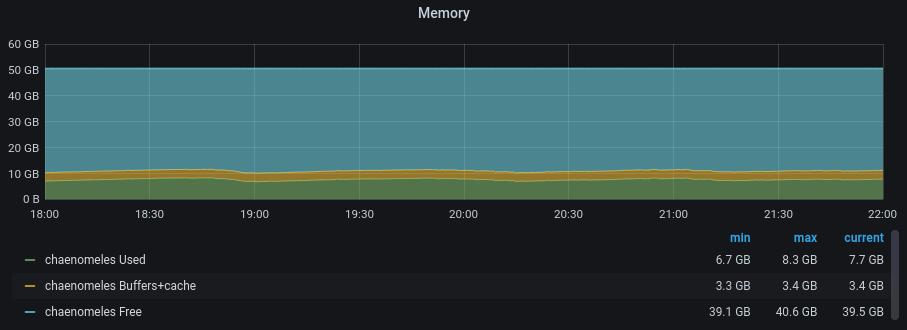
After a very long porting journey, Launchpad is finally running on Python 3 across all of our systems. I wanted to take a bit of time to reflect on why my emotional responses to this port differ so much from those of some others who ve done large ports, such as the Mercurial maintainers. It s hard to deny that we ve had to burn a lot of time on this, which I m sure has had an opportunity cost, and from one point of view it s essentially running to stand still: there is no single compelling feature that we get solely by porting to Python 3, although it s clearly a prerequisite for tidying up old compatibility code and being able to use modern language facilities in the future. And yet, on the whole, I found this a rewarding project and enjoyed doing it. Some of this may be because by inclination I m a maintenance programmer and actually enjoy this sort of thing. My default view tends to be that software version upgrades may be a pain but it s much better to get that pain over with as soon as you can rather than trying to hold back the tide; you can certainly get involved and try to shape where things end up, but rightly or wrongly I can t think of many cases when a righteously indignant user base managed to arrange for the old version to be maintained in perpetuity so that they never had to deal with the new thing (OK, maybe Perl 5 counts here). I think a more compelling difference between Launchpad and Mercurial, though, may be that very few other people really had a vested interest in what Python version Launchpad happened to be running, because it s all server-side code (aside from some client libraries such as launchpadlib, which were ported years ago). As such, we weren t trying to do this with the internet having Strong Opinions at us. We were doing this because it was obviously the only long-term-maintainable path forward, and in more recent times because some of our library dependencies were starting to drop support for Python 2 and so it was obviously going to become a practical problem for us sooner or later; but if we d just stayed on Python 2 forever then fundamentally hardly anyone else would really have cared directly, only maybe about some indirect consequences of that. I don t follow Mercurial development so I may be entirely off-base, but if other people were yelling at me about how late my project was to finish its port, that in itself would make me feel more negatively about the project even if I thought it was a good idea. Having most of the pressure come from ourselves rather than from outside meant that wasn t an issue for us. I m somewhat inclined to think of the process as an extreme version of paying down technical debt. Moving from Python 2.7 to 3.5, as we just did, means skipping over multiple language versions in one go, and if similar changes had been made more gradually it would probably have felt a lot more like the typical dependency update treadmill. I appreciate why not everyone might want to think of it this way: maybe this is just my own rationalization. Reflections on porting to Python 3 I m not going to defend the Python 3 migration process; it was pretty rough in a lot of ways. Nor am I going to spend much effort relitigating it here, as it s already been done to death elsewhere, and as I understand it the core Python developers have got the message loud and clear by now. At a bare minimum, a lot of valuable time was lost early in Python 3 s lifetime hanging on to flag-day-type porting strategies that were impractical for large projects, when it should have been providing for bilingual strategies (code that runs in both Python 2 and 3 for a transitional period) which is where most libraries and most large migrations ended up in practice. For instance, the early advice to library maintainers to maintain two parallel versions or perhaps translate dynamically with 2to3 was entirely impractical in most non-trivial cases and wasn t what most people ended up doing, and yet the idea that 2to3 is all you need still floats around Stack Overflow and the like as a result. (These days, I would probably point people towards something more like Eevee s porting FAQ as somewhere to start.) There are various fairly straightforward things that people often suggest could have been done to smooth the path, and I largely agree: not removing the u'' string prefix only to put it back in 3.3, fewer gratuitous compatibility breaks in the name of tidiness, and so on. But if I had a time machine, the number one thing I would ask to have been done differently would be introducing type annotations in Python 2 before Python 3 branched off. It s true that it s technically possible to do type annotations in Python 2, but the fact that it s a different syntax that would have to be fixed later is offputting, and in practice it wasn t widely used in Python 2 code. To make a significant difference to the ease of porting, annotations would need to have been introduced early enough that lots of Python 2 library code used them so that porting code didn t have to be quite so much of an exercise of manually figuring out the exact nature of string types from context. Launchpad is a complex piece of software that interacts with multiple domains: for example, it deals with a database, HTTP, web page rendering, Debian-format archive publishing, and multiple revision control systems, and there s often overlap between domains. Each of these tends to imply different kinds of string handling. Web page rendering is normally done mainly in Unicode, converting to bytes as late as possible; revision control systems normally want to spend most of their time working with bytes, although the exact details vary; HTTP is of course bytes on the wire, but Python s WSGI interface has some string type subtleties. In practice I found myself thinking about at least four string-like types (that is, things that in a language with a stricter type system I might well want to define as distinct types and restrict conversion between them): bytes, text, ordinary native strings (str in either language, encoded to UTF-8 in Python 2), and native strings with WSGI s encoding rules. Some of these are emergent properties of writing in the intersection of Python 2 and 3, which is effectively a specialized language of its own without coherent official documentation whose users must intuit its behaviour by comparing multiple sources of information, or by referring to unofficial porting guides: not a very satisfactory situation. Fortunately much of the complexity collapses once it becomes possible to write solely in Python 3. Some of the difficulties we ran into are not ones that are typically thought of as Python 2-to-3 porting issues, because they were changed later in Python 3 s development process. For instance, the email module was substantially improved in around the 3.2/3.3 timeframe to handle Python 3 s bytes/text model more correctly, and since Launchpad sends quite a few different kinds of email messages and has some quite picky tests for exactly what it emits, this entailed a lot of work in our email sending code and in our test suite to account for that. (It took me a while to work out whether we should be treating raw email messages as bytes or as text; bytes turned out to work best.) 3.4 made some tweaks to the implementation of quoted-printable encoding that broke a number of our tests in ways that took some effort to fix, because the tests needed to work on both 2.7 and 3.5. The list goes on. I got quite proficient at digging through Python s git history to figure out when and why some particular bit of behaviour had changed. One of the thorniest problems was parsing HTTP form data. We mainly rely on zope.publisher for this, which in turn relied on cgi.FieldStorage; but cgi.FieldStorage is badly broken in some situations on Python 3. Even if that bug were fixed in a more recent version of Python, we can t easily use anything newer than 3.5 for the first stage of our port due to the version of the base OS we re currently running, so it wouldn t help much. In the end I fixed some minor issues in the multipart module (and was kindly given co-maintenance of it) and converted zope.publisher to use it. Although this took a while to sort out, it seems to have gone very well. A couple of other interesting late-arriving issues were around pickle. For most things we normally prefer safer formats such as JSON, but there are a few cases where we use pickle, particularly for our session databases. One of my colleagues pointed out that I needed to remember to tell pickle to stick to protocol 2, so that we d be able to switch back and forward between Python 2 and 3 for a while; quite right, and we later ran into a similar problem with marshal too. A more surprising problem was that datetime.datetime objects pickled on Python 2 require special care when unpickling on Python 3; rather than the approach that ended up being implemented and documented for Python 3.6, though, I preferred a custom unpickler, both so that things would work on Python 3.5 and so that I wouldn t have to risk affecting the decoding of other pickled strings in the session database. General lessons Writing this over a year after Python 2 s end-of-life date, and certainly nowhere near the leading edge of Python 3 porting work, it s perhaps more useful to look at this in terms of the lessons it has for other large technical debt projects. I mentioned in my previous article that I used the approach of an enormous and frequently-rebased git branch as a working area for the port, committing often and sometimes combining and extracting commits for review once they seemed to be ready. A port of this scale would have been entirely intractable without a tool of similar power to git rebase, so I m very glad that we finished migrating to git in 2019. I relied on this right up to the end of the port, and it also allowed for quick assessments of how much more there was to land. git worktree was also helpful, in that I could easily maintain working trees built for each of Python 2 and 3 for comparison. As is usual for most multi-developer projects, all changes to Launchpad need to go through code review, although we sometimes make exceptions for very simple and obvious changes that can be self-reviewed. Since I knew from the outset that this was going to generate a lot of changes for review, I therefore structured my work from the outset to try to make it as easy as possible for my colleagues to review it. This generally involved keeping most changes to a somewhat manageable size of 800 lines or less (although this wasn t always possible), and arranging commits mainly according to the kind of change they made rather than their location. For example, when I needed to fix issues with / in Python 3 being true division rather than floor division, I did so in one commit across the various places where it mattered and took care not to mix it with other unrelated changes. This is good practice for nearly any kind of development, but it was especially important here since it allowed reviewers to consider a clear explanation of what I was doing in the commit message and then skim-read the rest of it much more quickly. It was vital to keep the codebase in a working state at all times, and deploy to production reasonably often: this way if something went wrong the amount of code we had to debug to figure out what had happened was always tractable. (Although I can t seem to find it now to link to it, I saw an account a while back of a company that had taken a flag-day approach instead with a large codebase. It seemed to work for them, but I m certain we couldn t have made it work for Launchpad.) I can t speak too highly of Launchpad s test suite, much of which originated before my time. Without a great deal of extensive coverage of all sorts of interesting edge cases at both the unit and functional level, and a corresponding culture of maintaining that test suite well when making new changes, it would have been impossible to be anything like as confident of the port as we were. As part of the porting work, we split out a couple of substantial chunks of the Launchpad codebase that could easily be decoupled from the core: its Mailman integration and its code import worker. Both of these had substantial dependencies with complex requirements for porting to Python 3, and arranging to be able to do these separately on their own schedule was absolutely worth it. Like disentangling balls of wool, any opportunity you can take to make things less tightly-coupled is probably going to make it easier to disentangle the rest. (I can see a tractable way forward to porting the code import worker, so we may well get that done soon. Our Mailman integration will need to be rewritten, though, since it currently depends on the Python-2-only Mailman 2, and Mailman 3 has a different architecture.) Python lessons Our database layer was already in pretty good shape for a port, since at least the modern bits of its table modelling interface were already strict about using Unicode for text columns. If you have any kind of pervasive low-level framework like this, then making it be pedantic at you in advance of a Python 3 port will probably incur much less swearing in the long run, as you won t be trying to deal with quite so many bytes/text issues at the same time as everything else. Early in our port, we established a standard set of __future__ imports and started incrementally converting files over to them, mainly because we weren t yet sure what else to do and it seemed likely to be helpful. absolute_import was definitely reasonable (and not often a problem in our code), and print_function was annoying but necessary. In hindsight I m not sure about unicode_literals, though. For files that only deal with bytes and text it was reasonable enough, but as I mentioned above there were also a number of cases where we needed literals of the language s native str type, i.e. bytes in Python 2 and text in Python 3: this was particularly noticeable in WSGI contexts, but also cropped up in some other surprising places. We generally either omitted unicode_literals or used six.ensure_str in such cases, but it was definitely a bit awkward and maybe I should have listened more to people telling me it might be a bad idea. A lot of Launchpad s early tests used doctest, mainly in the style where you have text files that interleave narrative commentary with examples. The development team later reached consensus that this was best avoided in most cases, but by then there were far too many doctests to conveniently rewrite in some other form. Porting doctests to Python 3 is really annoying. You run into all the little changes in how objects are represented as text (particularly u'...' versus '...', but plenty of other cases as well); you have next to no tools to do anything useful like skipping individual bits of a doctest that don t apply; using __future__ imports requires the rather obscure approach of adding the relevant names to the doctest s globals in the relevant DocFileSuite or DocTestSuite; dealing with many exception tracebacks requires something like zope.testing.renormalizing; and whatever code refactoring tools you re using probably don t work properly. Basically, don t have done that. It did all turn out to be tractable for us in the end, and I managed to avoid using much in the way of fragile doctest extensions aside from the aforementioned zope.testing.renormalizing, but it was not an enjoyable experience. Regressions I know of nine regressions that reached Launchpad s production systems as a result of this porting work; of course there were various other regressions caught by CI or in manual testing. (Considering the size of this project, I count it as a resounding success that there were only nine production issues, and that for the most part we were able to fix them quickly.) Equality testing of removed database objects One of the things we had to do while porting to Python 3 was to implement the __eq__, __ne__, and __hash__ special methods for all our database objects. This was quite conceptually fiddly, because doing this requires knowing each object s primary key, and that may not yet be available if we ve created an object in Python but not yet flushed the actual INSERT statement to the database (most of our primary keys are auto-incrementing sequences). We thus had to take care to flush pending SQL statements in such cases in order to ensure that we know the primary keys. However, it s possible to have a problem at the other end of the object lifecycle: that is, a Python object might still be reachable in memory even though the underlying row has been DELETEd from the database. In most cases we don t keep removed objects around for obvious reasons, but it can happen in caching code, and buildd-manager crashed as a result (in fact while it was still running on Python 2). We had to take extra care to avoid this problem. Debian imports crashed on non-UTF-8 filenames Python 2 has some unfortunate behaviour around passing bytes or Unicode strings (depending on the platform) to shutil.rmtree, and the combination of some porting work and a particular source package in Debian that contained a non-UTF-8 file name caused us to run into this. The fix was to ensure that the argument passed to shutil.rmtree is a str regardless of Python version. We d actually run into something similar before: it s a subtle porting gotcha, since it s quite easy to end up passing Unicode strings to shutil.rmtree if you re in the process of porting your code to Python 3, and you might easily not notice if the file names in your tests are all encoded using UTF-8. lazr.restful ETags We eventually got far enough along that we could switch one of our four appserver machines (we have quite a number of other machines too, but the appservers handle web and API requests) to Python 3 and see what happened. By this point our extensive test suite had shaken out the vast majority of the things that could go wrong, but there was always going to be room for some interesting edge cases. One of the Ubuntu kernel team reported that they were seeing an increase in 412 Precondition Failed errors in some of their scripts that use our webservice API. These can happen when you re trying to modify an existing resource: the underlying protocol involves sending an If-Match header with the ETag that the client thinks the resource has, and if this doesn t match the ETag that the server calculates for the resource then the client has to refresh its copy of the resource and try again. We initially thought that this might be legitimate since it can happen in normal operation if you collide with another client making changes to the same resource, but it soon became clear that something stranger was going on: we were getting inconsistent ETags for the same object even when it was unchanged. Since we d recently switched a quarter of our appservers to Python 3, that was a natural suspect. Our lazr.restful package provides the framework for our webservice API, and roughly speaking it generates ETags by serializing objects into some kind of canonical form and hashing the result. Unfortunately the serialization was dependent on the Python version in a few ways, and in particular it serialized lists of strings such as lists of bug tags differently: Python 2 used [u'foo', u'bar', u'baz'] where Python 3 used ['foo', 'bar', 'baz']. In lazr.restful 1.0.3 we switched to using JSON for this, removing the Python version dependency and ensuring consistent behaviour between appservers. Memory leaks This problem took the longest to solve. We noticed fairly quickly from our graphs that the appserver machine we d switched to Python 3 had a serious memory leak. Our appservers had always been a bit leaky, but now it wasn t so much a small hole that we can bail occasionally as the boat is sinking rapidly : A serious memory leak (Yes, this got in the way of working out what was going on with ETags for a while.) I spent ages messing around with various attempts to fix this. Since only a quarter of our appservers were affected, and we could get by on 75% capacity for a while, it wasn t urgent but it was definitely annoying. After spending some quality time with objgraph, for some time I thought traceback reference cycles might be at fault, and I sent a number of fixes to various upstream projects for those (e.g. zope.pagetemplate). Those didn t help the leaks much though, and after a while it became clear to me that this couldn t be the sole problem: Python has a cyclic garbage collector that will eventually collect reference cycles as long as there are no strong references to any objects in them, although it might not happen very quickly. Something else must be going on. Debugging reference leaks in any non-trivial and long-running Python program is extremely arduous, especially with ORMs that naturally tend to end up with lots of cycles and caches. After a while I formed a hypothesis that zope.server might be keeping a strong reference to something, although I never managed to nail it down more firmly than that. This was an attractive theory as we were already in the process of migrating to Gunicorn for other reasons anyway, and Gunicorn also has a convenient max_requests setting that s good at mitigating memory leaks. Getting this all in place took some time, but once we did we found that everything was much more stable: A rather flat memory graph This isn t completely satisfying as we never quite got to the bottom of the leak itself, and it s entirely possible that we ve only papered over it using max_requests: I expect we ll gradually back off on how frequently we restart workers over time to try to track this down. However, pragmatically, it s no longer an operational concern. Mirror prober HTTPS proxy handling After we switched our script servers to Python 3, we had several reports of mirror probing failures. (Launchpad keeps lists of Ubuntu archive and image mirrors, and probes them every so often to check that they re reasonably complete and up to date.) This only affected HTTPS mirrors when probed via a proxy server, support for which is a relatively recent feature in Launchpad and involved some code that we never managed to unit-test properly: of course this is exactly the code that went wrong. Sadly I wasn t able to sort out that gap, but at least the fix was simple. Non-MIME-encoded email headers As I mentioned above, there were substantial changes in the email package between Python 2 and 3, and indeed between minor versions of Python 3. Our test coverage here is pretty good, but it s an area where it s very easy to have gaps. We noticed that a script that processes incoming email was crashing on messages with headers that were non-ASCII but not MIME-encoded (and indeed then crashing again when it tried to send a notification of the crash!). The only examples of these I looked at were spam, but we still didn t want to crash on them. The fix involved being somewhat more careful about both the handling of headers returned by Python s email parser and the building of outgoing email notifications. This seems to be working well so far, although I wouldn t be surprised to find the odd other incorrect detail in this sort of area. Failure to handle non-ISO-8859-1 URL-encoded form input Remember how I said that parsing HTTP form data was thorny? After we finished upgrading all our appservers to Python 3, people started reporting that they couldn t post Unicode comments to bugs, which turned out to be only if the attempt was made using JavaScript, and was because I hadn t quite managed to get URL-encoded form data working properly with zope.publisher and multipart. The current standard describes the URL-encoded format for form data as in many ways an aberrant monstrosity , so this was no great surprise. Part of the problem was some very strange choices in zope.publisher dating back to 2004 or earlier, which I attempted to clean up and simplify. The rest was that Python 2 s urlparse.parse_qs unconditionally decodes percent-encoded sequences as ISO-8859-1 if they re passed in as part of a Unicode string, so multipart needs to work around this on Python 2. I m still not completely confident that this is correct in all situations, but at least now that we re on Python 3 everywhere the matrix of cases we need to care about is smaller. Inconsistent marshalling of Loggerhead s disk cache We use Loggerhead for providing web browsing of Bazaar branches. When we upgraded one of its two servers to Python 3, we immediately noticed that the one still on Python 2 was failing to read back its revision information cache, which it stores in a database on disk. (We noticed this because it caused a deployment to fail: when we tried to roll out new code to the instance still on Python 2, Nagios checks had already caused an incompatible cache to be written for one branch from the Python 3 instance.) This turned out to be a similar problem to the pickle issue mentioned above, except this one was with marshal, which I didn t think to look for because it s a relatively obscure module mostly used for internal purposes by Python itself; I m not sure that Loggerhead should really be using it in the first place. The fix was relatively straightforward, complicated mainly by now needing to cope with throwing away unreadable cache data. Ironically, if we d just gone ahead and taken the nominally riskier path of upgrading both servers at the same time, we might never have had a problem here. Intermittent bzr failures Finally, after we upgraded one of our two Bazaar codehosting servers to Python 3, we had a report of intermittent bzr branch hangs. After some digging I found this in our logs:
Traceback (most recent call last):
  ...
  File "/srv/bazaar.launchpad.net/production/codehosting1-rev-20124175fa98fcb4b43973265a1561174418f4bd/env/lib/python3.5/site-packages/twisted/conch/ssh/channel.py", line 136, in addWindowBytes
    self.startWriting()
  File "/srv/bazaar.launchpad.net/production/codehosting1-rev-20124175fa98fcb4b43973265a1561174418f4bd/env/lib/python3.5/site-packages/lazr/sshserver/session.py", line 88, in startWriting
    resumeProducing()
  File "/srv/bazaar.launchpad.net/production/codehosting1-rev-20124175fa98fcb4b43973265a1561174418f4bd/env/lib/python3.5/site-packages/twisted/internet/process.py", line 894, in resumeProducing
    for p in self.pipes.itervalues():
builtins.AttributeError: 'dict' object has no attribute 'itervalues'
I d seen this before in our git hosting service: it was a bug in Twisted s Python 3 port, fixed after 20.3.0 but unfortunately after the last release that supported Python 2, so we had to backport that patch. Using the same backport dealt with this. Onwards!

16 July 2021

Dirk Eddelbuettel: RcppArmadillo 0.10.6.0.0 on CRAN: A New Upstream

armadillo image Armadillo is a powerful and expressive C++ template library for linear algebra aiming towards a good balance between speed and ease of use with a syntax deliberately close to a Matlab. RcppArmadillo integrates this library with the R environment and language and is widely used by (currently) 882 other packages on CRAN. This new release gets us Armadillo 10.6.0 which was released yesterday. We did the usual reverse dependency checks (which came out spotless and clean), and had also just done even fuller checks for Rcpp 1.0.7. Since the previous RcppArmadillo 0.10.5.0.0 release we made a few interim releases to the drat repo. In general, Conrad is a little more active than we want to be with (montly or less frequent) CRAN updates so keep and eye on the drat repo (or follow the GitHub repo) for a higher-frequence cadence. To use the drat repo, use install.packages("RcppArmadillo", repos="https://RcppCore.github.io/drat") or update.packages() with a similar repos argument. The full set of changes follows. We include the last interim release as well.

Changes in RcppArmadillo version 0.10.6.0.0 (2021-07-16)
  • Upgraded to Armadillo release 10.6.0 (Keep Calm)
    • expanded chol() to optionally use pivoted decomposition
    • expanded vector, matrix and cube constructors to allow element initialisation via fill::value(scalar), eg. mat X(4,5,fill::value(123))
    • faster loading of CSV files when using OpenMP
    • added csv_opts::semicolon option to allow saving/loading of CSV files with semicolon (;) instead of comma (,) as the separator

Changes in RcppArmadillo version 0.10.5.3.0 (2021-07-01)
  • Upgraded to Armadillo release 10.5.3 (Antipodean Fortress)
  • GitHub-only release
  • Extended test coverage with several new tests, added a coverage badge.

Courtesy of my CRANberries, there is a diffstat report relative to previous release. More detailed information is on the RcppArmadillo page. Questions, comments etc should go to the rcpp-devel mailing list off the R-Forge page. If you like this or other open-source work I do, you can sponsor me at GitHub.

This post by Dirk Eddelbuettel originated on his Thinking inside the box blog. Please report excessive re-aggregation in third-party for-profit settings.

20 June 2021

Mike Gabriel: BBB Packaging for Debian, a short Heads-Up

Over the past days, I have received tons of positive feedback on my previous blog post about forming the Debian BBB Packaging Team [1]. Feedback arrived via mail, IRC, [matrix] and Mastodon. Awesome. Thanks for sharing your thoughts, folks... Therefore, here comes a short ... Heads-Up on the current Ongoings ... around packaging BigBlueButton for Debian: Credits light+love
Mike Gabriel

[1] https://sunweavers.net/blog/node/133
[2] https://bigbluebutton.org/event-page/
[3] https://docs.google.com/document/d/1kpYJxYFVuWhB84bB73kmAQoGIS59ari1_hn2...

11 June 2021

Mike Gabriel: New: The Debian BBB Packaging Team (and: Kurento Media Server goes Debian)

Today, Fre(i)e Software GmbH has been contracted for packaging Kurento Media Server for Debian. This packaging project will be funded by GUUG e.V. (the German Unix User Group e.V.). A big thanks to the people from GUUG e.V. for making this packaging project possible. About Kurento Media Server Kurento is an open source software project providing a platform suitable for creating modular applications with advanced real-time communication capabilities. For knowing more about Kurento, please visit the Kurento project website: https://www.kurento.org. Kurento is part of FIWARE. For further information on the relationship of FIWARE and Kurento check the Kurento FIWARE Catalog Entry. Kurento is also part of the NUBOMEDIA research initiative. Kurento Media Server is a WebRTC-compatible server that processes audio and video streams, doing composable pipeline-based processing of media. About BigBlueButton As some of you may know, Kurento Media Server is one of the core components of the BigBlueButton software, an ,,Open Source Virtual Classroom Software''. The context of the KMS funding is - after several other steps - getting the complete software component stack of BigBlueButton (aka BBB) into Debian some day, so that we can provide BBB as native Debian packages. On Debian. (Currently, one needs to use an always already a bit outdated version of Ubuntu). Due to this greater context, I just created the Debian BBB Packaging Team on salsa.debian.org. Outlook and Appreciation The current project (uploading Kurento Media Server to Debian) will very likely be extended to one year of package maintenance for all Kurento Media Server components in Debian. Extending this maintenance funding to a second year, has also been discussed, and seems a possible option. Probably most Debian Developer colleagues will agree with me when I say that Debian packaging is not a one-time shot until the first uploads of software packages have landed and settled. Debian package maintenance is a long term responsibility and requires long term commitment. I am very glad, that the people at GUUG e.V are on the same page with me (with us) regarding this. This is much and dearly appreciated. Thank you!!! What else? Well, we have also talked about another BigBlueButton component that is not yet in Debian: FreeSwitch. But more of that, when time has come. How to Join the Debian BBB Packaging Team? Please ping me via IRC (sunweaver on OFTC IRC) or [matrix] (@sunweaver:matrix.org). How to Support the Debian BBB Packaging Team? If you, your organization, your company, your municipality, your university, etc. feels like supporting the effort of packaging BigBlueButton for Debian, please get in touch with: mike.gabriel@freiesoftware.gmbh And yes, the company homepage is not online, yet, but it is in the makings... light+love
Mike (aka sunweaver)

24 May 2021

Antoine Beaupr : Leaving Freenode

The freenode IRC network has been hijacked. TL;DR: move to libera.chat or OFTC.net, as did countless free software projects including Gentoo, CentOS, KDE, Wikipedia, FOSDEM, and more. Debian and the Tor project were already on OFTC and are not affected by this.

What is freenode and why should I care? freenode is the largest remaining IRC network. Before this incident, it had close to 80,000 users, which is small in terms of modern internet history -- even small social networks are larger by multiple orders of magnitude -- but is large in IRC history. The IRC network is also extensively used by the free software community, being the default IRC network on many programs, and used by hundreds if not thousands of free software projects. I have been using freenode since at least 2006. This matters if you care about IRC, the internet, open protocols, decentralisation, and, to a certain extent, federation as well. It also touches on who has the right on network resources: the people who "own" it (through money) or the people who make it work (through their labor). I am biased towards open protocols, the internet, federation, and worker power, and this might taint this analysis.

What happened? It's a long story, but basically:
  1. back in 2017, the former head of staff sold the freenode.net domain (and its related company) to Andrew Lee, "American entrepreneur, software developer and writer", and, rather weirdly, supposedly "crown prince of Korea" although that part is kind of complex (see House of Yi, Yi Won, and Yi Seok). It should be noted the Korean Empire hasn't existed for over a century at this point (even though its flag, also weirdly, remains)
  2. back then, this was only known to the public as this strange PIA and freenode joining forces gimmick. it was suspicious at first, but since the network kept running, no one paid much attention to it. opers of the network were similarly reassured that Lee would have no say in the management of the network
  3. this all changed recently when Lee asserted ownership of the freenode.net domain and started meddling in the operations of the network, according to this summary. this part is disputed, but it is corroborated by almost a dozen former staff which collectively resigned from the network in protest, after legal threats, when it was obvious freenode was lost.
  4. the departing freenode staff founded a new network, irc.libera.chat, based on the new ircd they were working on with OFTC, solanum
  5. meanwhile, bot armies started attacking all IRC networks: both libera and freenode, but also OFTC and unrelated networks like a small one I help operate. those attacks have mostly stopped as of this writing (2021-05-24 17:30UTC)
  6. on freenode, however, things are going for the worse: Lee has been accused of taking over a channel, in a grotesque abuse of power; then changing freenode policy to not only justify the abuse, but also remove rules against hateful speech, effectively allowing nazis on the network (update: the change was reverted, but not by Lee)
Update: even though the policy change was reverted, the actual conversations allowed on freenode have already degenerated into toxic garbage. There are also massive channel takeovers (presumably over 700), mostly on channels that were redirecting to libera, but also channels that were still live. Channels that were taken over include #fosdem, #wikipedia, #haskell... Instead of working on the network, the new "so-called freenode" staff is spending effort writing bots and patches to basically automate taking over channels. I run an IRC network and this bot is obviously not standard "services" stuff... This is just grotesque. At this point I agree with this HN comment:
We should stop implicitly legitimizing Andrew Lee's power grab by referring to his dominion as "Freenode". Freenode is a quarter-century-old community that has changed its name to libera.chat; the thing being referred to here as "Freenode" is something else that has illegitimately acquired control of Freenode's old servers and user database, causing enormous inconvenience to the real Freenode.
I don't agree with the suggested name there, let's instead call it "so called freenode" as suggested later in the thread.

What now? I recommend people and organisations move away from freenode as soon as possible. This is a major change: documentation needs to be fixed, and the migration needs to be coordinated. But I do not believe we can trust the new freenode "owners" to operate the network reliably and in good faith. It's also important to use the current momentum to build a critical mass elsewhere so that people don't end up on freenode again by default and find an even more toxic community than your typical run-of-the-mill free software project (which is already not a high bar to meet). Update: people are moving to libera in droves. It's now reaching 18,000 users, which is bigger than OFTC and getting close to the largest, traditionnal, IRC networks (EFnet, Undernet, IRCnet are in the 10-20k users range). so-called freenode is still larger, currently clocking 68,000 users, but that's a huge drop from the previous count which was 78,000 before the exodus began. We're even starting to see the effects of the migration on netsplit.de. Update 2: the isfreenodedeadyet.com site is updated more frequently than netsplit and shows tons more information. It shows 25k online users for libera and 61k for so-called freenode (down from ~78k), and the trend doesn't seem to be stopping for so-called freenode. There's also a list of 400+ channels that have moved out. Keep in mind that such migrations take effect over long periods of time.

Where do I move to? The first thing you should do is to figure out which tool to use for interactive user support. There are multiple alternatives, of course -- this is the internet after all -- but here is a short list of suggestions, in preferred priority order:
  1. irc.libera.chat
  2. irc.OFTC.net
  3. Matrix.org, which bridges with OFTC and (hopefully soon) with libera as well, modern IRC alternative
  4. XMPP/Jabber also still exists, if you're into that kind of stuff, but I don't think the "chat room" story is great there, at least not as good as Matrix
Basically, the decision tree is this:
  • if you want to stay on IRC:
    • if you are already on many OFTC channels and few freenode channels: move to OFTC
    • if you are more inclined to support the previous freenode staff: move to libera
    • if you care about matrix users (in the short term): move to OFTC
  • if you are ready to leave IRC:
    • if you want the latest and greatest: move to Matrix
    • if you like XML and already use XMPP: move to XMPP
Frankly, at this point, everyone should seriously consider moving to Matrix. The user story is great, the web is a first class user, it supports E2EE (although XMPP as well), and has a lot of momentum behind it. It even bridges with IRC well (which is not the case for XMPP) so if you're worried about problems like this happening again. (Indeed, I wouldn't be surprised if similar drama happens on OFTC or libera in the future. The history of IRC is full of such epic controversies, takeovers, sabotage, attacks, technical flamewars, and other silly things. I am not sure, but I suspect a federated model like Matrix might be more resilient to conflicts like this one.) Changing protocols might mean losing a bunch of users however: not everyone is ready to move to Matrix, for example. Graybeards like me have been using irssi for years, if not decades, and would take quite a bit of convincing to move elsewhere. I have mostly kept my channels on IRC, and moved either to OFTC or libera. In retrospect, I think I might have moved everything to OFTC if I would have thought about it more, because almost all of my channels are there. But I kind of expect a lot of the freenode community to move to libera, so I am keeping a socket open there anyways.

How do I move? The first thing you should do is to update documentation, websites, and source code to stop pointing at freenode altogether. This is what I did for feed2exec, for example. You need to let people know in the current channel as well, and possibly shutdown the channel on freenode. Since my channels are either small or empty, I took the radical approach of:
  • redirecting the channel to ##unavailable which is historically the way we show channels have moved to another network
  • make the channel invite-only (which effectively enforces the redirection)
  • kicking everyone out of the channel
  • kickban people who rejoin
  • set the topic to announce the change
In IRC speak, the following commands should do all this:
/msg ChanServ set #anarcat mlock +if ##unavailable
/msg ChanServ clear #anarcat users moving to irc.libera.chat
/msg ChanServ set #anarcat restricted on
/topic #anarcat this channel has moved to irc.libera.chat
If the channel is not registered, the following might work
/mode #anarcat +if ##unavailable
Then you can leave freenode altogether:
/disconnect Freenode unacceptable hijack, policy changes and takeovers. so long and thanks for all the fish.
Keep in mind that some people have been unable to setup such redirections, because the new freenode staff have taken over their channel, in which case you're out of luck... Some people have expressed concern about their private data hosted at freenode as well. If you care about this, you can always talk to NickServ and DROP your nick. Be warned, however, that this assumes good faith of the network operators, which, at this point, is kind of futile. I would assume any data you have registered on there (typically: your NickServ password and email address) to be compromised and leaked. If your password is used elsewhere (tsk, tsk), change it everywhere. Update: there's also another procedure, similar to the above, but with a different approach. Keep in mind that so-called freenode staff are actively hijacking channels for the mere act of mentioning libera in the channel topic, so thread carefully there.

Last words This is a sad time for IRC in general, and freenode in particular. It's a real shame that the previous freenode staff have been kicked out, and it's especially horrible that if the new policies of the network are basically making the network open to nazis. I wish things would have gone out differently: now we have yet another fork in the IRC history. While it's not the first time freenode changes name (it was called OPN before), now the old freenode is still around and this will bring much confusion to the world, especially since the new freenode staff is still claiming to support FOSS. I understand there are many sides to this story, and some people were deeply hurt by all this. But for me, it's completely unacceptable to keep pushing your staff so hard that they basically all (except one?) resign in protest. For me, that's leadership failure at the utmost, and a complete disgrace. And of course, I can't in good conscience support or join a network that allows hate speech. Regardless of the fate of whatever we'll call what's left of freenode, maybe it's time for this old IRC thing to die already. It's still a sad day in internet history, but then again, maybe IRC will never die...

Dirk Eddelbuettel: RcppArmadillo 0.10.5.0.0 on CRAN: New Upstream

armadillo image Armadillo is a powerful and expressive C++ template library for linear algebra aiming towards a good balance between speed and ease of use with a syntax deliberately close to a Matlab. RcppArmadillo integrates this library with the R environment and language and is widely used by (currently) 865 other packages on CRAN. This new release brings Armadillo 10.5.0 which was released early on Friday. We had done one full test in the 10.5 rc1 prerelease one week earlier, and did another test on 10.5.0 and this 0.10.5.0.0 RcppArmadillo release just for added rigour. The package was then uploaded to CRAN late Friday (my timezone). The automated process flagged one NOTE as a false positive (yet another instance of the well-known (yet dreaded) issue of Suggests != Depends by one these 865 packages). This lead to a need of an inspection by one of the CRAN maintainers, and the weekend being the weekend it was only processed just now. Upstream moves at a speed that is a little faster than the cadence CRAN likes. As we had released RcppArmadillo 0.10.4.0.0 on April 13 we did not want to follow-up too soon thereafter with 0.10.4.1.0 which was thusly only a GitHub and drat release (which can always be had easily too via install.packages("RcppArmadillo", repos="https://RcppCore.github.io/drat").) The full set of changes follows. We include the aforementioned interim release as well.

Changes in RcppArmadillo version 0.10.5.0 (2021-05-21)
  • Upgraded to Armadillo release 10.5 (Antipodean Fortress)
    • added .clamp() member function
    • expanded the standalone clamp() function to handle complex values
    • more efficient use of OpenMP
    • vector, matrix and cube constructors now initialise elements to zero by default; use the fill::none specifier, eg. mat X(4,5,fill::none), to disable element initialisation
  • Added codecov.yml to exclude Armadillo from coverage analysis

Changes in RcppArmadillo version 0.10.4.1.0 (2021-04-23)
  • Upgraded to Armadillo release 10.4.1 (Pressure Cooker)
  • GitHub-only release

Courtesy of my CRANberries, there is a diffstat report relative to previous release. More detailed information is on the RcppArmadillo page. Questions, comments etc should go to the rcpp-devel mailing list off the R-Forge page. If you like this or other open-source work I do, you can sponsor me at GitHub.

This post by Dirk Eddelbuettel originated on his Thinking inside the box blog. Please report excessive re-aggregation in third-party for-profit settings.

4 May 2021

Erich Schubert: Machine Learning Lecture Recordings

I have uploaded most of my Machine Learning lecture to YouTube. The slides are in English, but the audio is in German. Some very basic contents (e.g., a demo of standard k-means clustering) were left out from this advanced class, and instead only a link to recordings from an earlier class were given. In this class, I wanted to focus on the improved (accelerated) algorithms instead. These are not included here (yet). I believe there are some contents covered in this class you will find nowhere else (yet). The first unit is pretty long (I did not split it further yet). The later units are shorter recordings. ML F1: Principles in Machine Learning ML F2/F3: Correlation does not Imply Causation & Multiple Testing Problem ML F4: Overfitting beranpassung ML F5: Fluch der Dimensionalit t Curse of Dimensionality ML F6: Intrinsische Dimensionalit t Intrinsic Dimensionality ML F7: Distanzfunktionen und hnlichkeitsfunktionen ML L1: Einf hrung in die Klassifikation ML L2: Evaluation und Wahl von Klassifikatoren ML L3: Bayes-Klassifikatoren ML L4: N chste-Nachbarn Klassifikation ML L5: N chste Nachbarn und Kerndichtesch tzung ML L6: Lernen von Entscheidungsb umen ML L7: Splitkriterien bei Entscheidungsb umen ML L8: Ensembles und Meta-Learning: Random Forests und Gradient Boosting ML L9: Support Vector Machinen - Motivation ML L10: Affine Hyperebenen und Skalarprodukte Geometrie f r SVMs ML L11: Maximum Margin Hyperplane die breitest m gliche Stra e ML L12: Training Support Vector Machines ML L13: Non-linear SVM and the Kernel Trick ML L14: SVM Extensions and Conclusions ML L15: Motivation of Neural Networks ML L16: Threshold Logic Units ML L17: General Artificial Neural Networks ML L18: Learning Neural Networks with Backpropagation ML L19: Deep Neural Networks ML L20: Convolutional Neural Networks ML L21: Recurrent Neural Networks and LSTM ML L22: Conclusion Classification ML U1: Einleitung Clusteranalyse ML U2: Hierarchisches Clustering ML U3: Accelerating HAC mit Anderberg s Algorithmus ML U4: k-Means Clustering ML U5: Accelerating k-Means Clustering ML U6: Limitations of k-Means Clustering ML U7: Extensions of k-Means Clustering ML U8: Partitioning Around Medoids (k-Medoids) ML U9: Gaussian Mixture Modeling (EM Clustering) ML U10: Gaussian Mixture Modeling Demo ML U11: BIRCH and BETULA Clustering ML U12: Motivation Density-Based Clustering (DBSCAN) ML U13: Density-reachable and density-connected (DBSCAN Clustering) ML U14: DBSCAN Clustering ML U15: Parameterization of DBSCAN ML U16: Extensions and Variations of DBSCAN Clustering ML U17: OPTICS Clustering ML U18: Cluster Extraction from OPTICS Plots ML U19: Understanding the OPTICS Cluster Order ML U20: Spectral Clustering ML U21: Biclustering and Subspace Clustering ML U22: Further Clustering Approaches
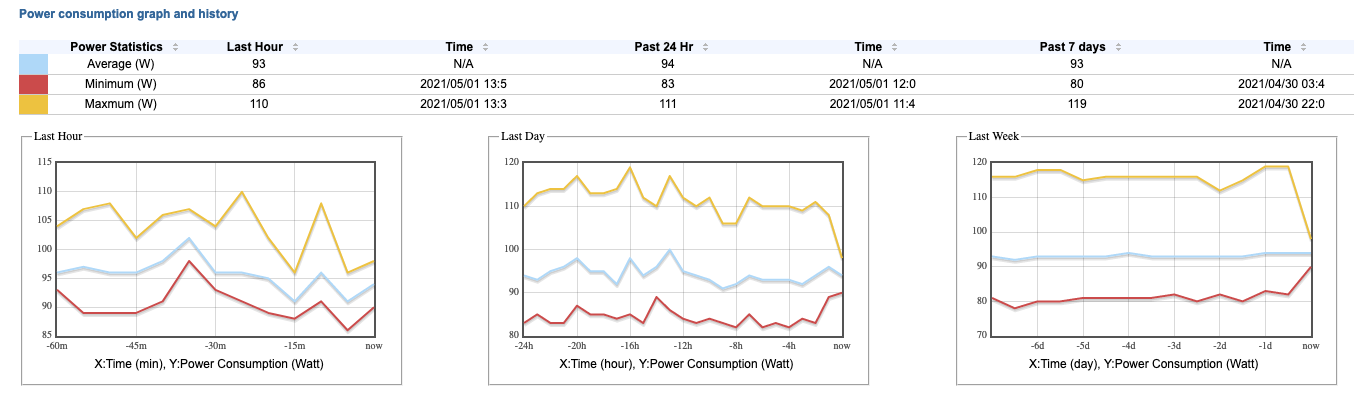
1 May 2021

Ingo Juergensmann: The Fediverse What About Resources?

Today ist May, 1st. In about two weeks on May, 15th WhatsApp will put their changed Terms of Service into action and when you don t accept their rules you won t be able to use WhatsApp any longer. Early this year there was already a strong movement away from WhatsApp towards other solutions. Mainly to Signal, but also some other services like the Fediverse gained some new users. And also XMPP got their fair share of new users. So, what to do about the WhatsApp ToS change then? Shall we go all to Signal? Surely not. Signal is another vendor lock-in silo. It s centralistic and recent development plans want to implement some crypto payment system. Even Bruce Schneier thinks that this is a bad idea. Other alternatives often named include Matrix/Element or XMPP. Today, Don di Dislessia in the (german) Fediverse asked about power consumption of the Fediverse incl. Matrix and XMPP and how much renewable energy is being used. Of course this is no easy answer to this question, but I tried my best at least for my own server. Here are my findings and conclusions Power
screenshot showing power consumption of serverscreenshot showing power consumption of server
Currently my server in the colocation is using about 93W in average with 6c Xeon E5-2630L, 128 GB RAM, 4x 2 TB WD Red + 1 Samsung 960pro NVMe. The server is 7 years old. When I started with that server the power consumption was about 75W, but back then there were far less users on the server. So, 20W more over the past year Users I m running my Friendica node on Nerdica.net since 2013. Over the years it became one of the largest Friendica servers in the Fediverse, for some time it was the largest one. It has currently like 700 total users and 180 monthly active users. My Mastodon instance on Nerdculture.de has about 1000 total users and about 300 monthly active users. Since last year I also run a Matrix-Synapse server. Although I invited my family I m in fact the only active user on that server and have joined some channels. My XMPP server is even older than my Friendica node. For long time I had like maybe 20 users. Now I setup a new website and added some domains like hookipa.net and xmpp.social the user count increased and currently I have like 130 users on those two domains and maybe like 50 monthly active users. Also note that all my Friendica and Mastodon users can use XMPP with their accounts, but won t be counted the same way as on native users on ejabberd, because the auth backend is different. So, let s assume I do have like 2000 total users and 500 monthly active users. CPU, Database Sizes and Disk I/O Let s have a look about how many resources are being used by those users. Database Sizes: CPU times according to xentop: Friendica does use the largest database and causes most disk I/O on NVMe, but it s difficult to differentiate between the load between the web apps on the webserver. So, let s have a quick look on an simple metric: Number of lines in webserver logfile: These metrics correlate to some degree with the database I/O load, at least for Friendica. If you take into account the number of users, things look quite different. Conclusion Overall, and my personal impression, is that Matrix is really bad in regards of resource usage. Given that I m the only active user it uses exceptionally many resources. When you also consider that Matrix is using a distributed database for its chat rooms, you can assume that the resource usage is multiplied across the network, making things even worse. Friendica is using a large database and many disk accesses, but has a fairly large user base, so it seems ok, but of course should be improved. Mastodon seems to be quite good, considering the database size, the number of log lines and the user count. XMPP turns out to be the most efficient contestant in this comparison: it uses much less CPU cycles and database disk I/O. Of course, Mastdon/Friendica are different services than XMPP or Matrix. So, coming back to the initial question about alternatives to WhatsApp, the answer for me is: you should prefer XMPP over Matrix alone for reasons of saving resources and thus reducing power consumption. Less power consumption also means a smaller ecological footprint and fewer CO2 emissions for your communication with your family and friends. XMPP is surely not the perfect replacement for WhatsApp, but I think it is the best thing to recommend. As said above, I don t think that Signal is an viable option. It s just another proprierary silo with all the problems that come with it. Matrix is a resource hog and not a messenger but a MS Teams replacement. Element as the main Matrix client is laggy and not multi-account/multi-server capable. Other Matrix clients do support multiple accounts but are not as feature-complete as Element. In the end the Matrix ecosystem will suffer from the same issues as XMPP did already a decade ago. But XMPP has learned to deal with it. Also XMPP is proceeding fast in the last years and it has solved many problems many people are still complaining about. Sure, there still some open issues. The situation on IOS is still not as good as on Android with Conversations, but it is fairly close to it. There are many efforts to improve XMPP. There is Quicksy IM, which is a service that will use your phone number as Jabber ID/JID and is thus comparable to Signal which uses phone numbers as well as unique identifier. But Quicksy is compatible with XMPP standards. Snikket is another new XMPP ecosystem aiming at smaller groups hosting their own server by simply installing a Docker container and setup some basic SRV records in the DNS. Or there is Mailcow, a Docker based mailserver setup that added XMPP server in their setup as well, so you can have the same mail and XMPP address. Snikket even got EU based funding for implementing XMPP Account Portability which also will improve the decentralization even further. Additionally XMPP helps vaccination in Canada and USA with vaxbot by Monal. Be smart and use ecofriendly infrastructure.

Next.

Previous.
