Search Results: "mako"

13 February 2012

Benjamin Mako Hill: Quasi-Private Resources

Public Resource republishes many court documents. Although these documents are all part of the public record and PR will not take them down because someone finds their publication uncomfortable, PR will evaluate and honor some requests to remove documents from search engine results. Public Resources does so using a robots.txt file or "robot exclusion protocol" which websites use to, among other things, tell search engine's web crawling "robots" which pages they do not want to be indexed and included in search results. Originally, the files were mostly used to keep robots from abusing server resources by walking through infinite lists of automatically generated pages or to block search engines from including user-contributed content that might include spam. The result for Public Resource, however, is that PR is now publishing, in the form of its robots.txt, a list of all of the cases that people have successfully requested to be made less visible! In Public Resource's case, this is is the result of a careful decision; PR makes the arrangement clear in on their website. The robots.txt home page also explains the situation saying, "the /robots.txt file is a publicly available file. Anyone can see what sections of your server you don't want robots to use,", and "don't try to use /robots.txt to hide information." That said, I've looked at a bunch of robots.txt files on websites I have visited recently and, sadly, I've found many sites that use robots.txt as a form of weak security. This is very dangerous. Some poorly designed robots simply ignore the robots.txt file. But one can also imagine an evil search engine that uses a web-crawler that does the opposite of what it's told and only indexes these "hidden" pages. This evil crawler might look for particular keywords or use existing search engine data to check for incoming links in order to construct a list of pages whose existence is only made public through a file meant to keep people away. Check your own robots.txt and ask yourself what it might reveal. By advertising the existence and locations of your secrets, the act of "hiding" might make your data even less private.

11 February 2012

Stefano Zacchiroli: mutt-notmuch 0.2

My mutt-notmuch hack seems to be a quite popular way to integrate Mutt with notmuch. As a nice consequence, my (indexed!) inbox attracts patches from mutt-notmuch users eager to improve it. Collecting some of them, I've just tagged mutt-notmuch 0.2 with the following changes: Many thanks to Scott Barker, Christine Spang, David Newgas, and Ryan Kavanagh for the above patches. While I was at it, I've also moved mutt-notmuch repository to Gitorious. Git self-hosting is nice, but either you move to something like gitolite (which I didn't have time to setup and tune ATM) or you're stuck without merge requests which are quite nice. (Why not Github? Because.) If you're using mutt-notmuch you might also be interested in the discussion of libnotmuch support in mutt. I'd love to see that landing in mutt and be able to throw away mutt-notmuch entirely, but that seems a bit premature as of yet.

4 February 2012

Stefano Zacchiroli: bits from the DPL for January 2012

Fresh from the oven, monthly report of what I've been working on as DPL during January 2012.
Dear Developers,
here is another monthly report of what happened in DPL-land, this time for January 2012. There's quite a bit to report about --- including an insane amount of legal-ish stuff --- so please bear with me. Or not. Legal stuff Most of the above wouldn't have been possible without the precious help of folks at SFLC working for SPI and Debian. Be sure to thank SFLC for what they're doing for us and many other Free Software projects. Coordination Nobody stepped up to coordinate the artwork collection for Wheezy I've mentioned last month, so I've tried to do a little bit of that myself. The -publicity team is now preparing the call for artwork and hopefully we'll send it out RSN. In case you want to help, there is still a lot of room for that; just show up on the debian-desktop mailing list. Sprints A Debian Med sprint has happened in January, and Andreas Tille has provided a nice and detailed report about it. Some more sprints are forthcoming this spring, how about yours? Money Important stuff going on Other important stuff has been going on in various area of the project in January. I'd like to point your attention to a couple of things: Miscellanea In the unlikely case you've read thus far, thanks for your attention! Happy Debian hacking.
PS as usual, the boring day-to-day activity log is available at master:/srv/leader/news/bits-from-the-DPL.*

20 January 2012

Benjamin Mako Hill: Internet Immortality

Kim Jong-Il is gone. That said, he continues to live on, looking at things, on the popular blog Kim Jong-Il Looking At Things which continues to be updated with new content from the archives. It is now joined by Kim Jong-Un Looking At Things. I think I agree with Jo o Rocha, creator of the original, that the younger Kim seems to be missing some hard-to-pin-down quality that made the original work well.

16 January 2012

Benjamin Mako Hill: Mystery Hunt

I've mentioned before that I compete every year in the MIT Mystery Hunt -- an enormous, multi-day, round-the-clock puzzle competition held in January at MIT each year. Last year, my team Codex won the hunt. The reward (punishment?) for winning is the responsibility to write the 100+ puzzles, (and meta-puzzles, and meta-meta-puzzles, and theme, and events) and to put on the whole event the following year. So over the last year, I've worked with a huge group of folks to put together this year's hunt which had a theme loosely based on The Producers. My own role was small compared to many of my teammates: I contributed to some puzzle writing and to a bunch of "test-solving" of candidate puzzles to make sure they were solvable, not too easy, fun, and well constructed. During the hunt, I visited competing teams, verified answer submissions, and took advantage of my jet-lag from my return from Japan on the day of the hunt to work the night shift distributing items to teams. To get an idea of what the hunt is like, you can check out a puzzle I wrote for this years hunt. The solution is linked from the corner of that page.

14 January 2012

Lior Kaplan: Israel to recognize software patents

The Israeli patent registrar have reverted previous ruling regarding patents on software and published a draft for the procedures to accept such patents. The procedures are open to public comments for the next 30 days. Two years ago the patent registrar have started to consider revising the the issue and got many position papers (e.g. Hamakor s papter). At the end he decided not to accept patents on software. De facto, at least one such patent (US patent 7,596,609) was accepted to be valid in Israel after that ruling. Now that the rulings is reverted, I guess will see many more software patents granted here. I wonder about the implications on the local software market hopefully it won t stagnate due to patent wars such as the ones we see every now and then in the US.
Filed under: Software Patents

19 December 2011

Benjamin Mako Hill: The Influence of the Ecstasy of Influence

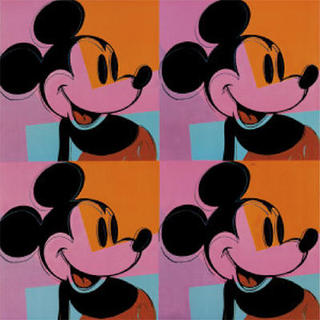
/copyrighteous/images/andy-warhol-mickey.jpg Back in 2007, Harpers Magazine published The Ecstasy of Influence: a beautiful article by Jonathan Lethem on reuse in art and literature. Like Lewis Hyde in The Gift (quite like Hyde, as readers discover) Lethem blurs the line between plagiarism, remix, and influence and points to his subject at the center of artistic production. Lethem's gimmick, which most readers only discover at the end, is that the article is constructed entirely out of "reused" (i.e., plagiarized) quotations and paraphrases. A couple months ago, I suggested to my friend Andr s Monroy-Hern ndez a very similar project: a literature review on academic work on remixing and remixing communities constructed entirely of text lifted from existing research. After some searching around, Andr s pointed out that Lethem had essentially beaten us to the punch and linked me to his article. Only after I visited the link did I remember that I had read Lethem's article when it was published and loved the idea then. Over time, I'd forgotten I read ever it. Without knowing it, I had read, loved, forgotten, and then -- influenced, if unconsciously -- copied and reproduced the idea myself in slightly modified form. And I suppose that was the point.

11 December 2011

Stefano Zacchiroli: bits from the DPL for November 2011

Mako's IronBlogger is a great idea. I often find myself postponing blog posts for a very long time, simply out of laziness. IronBlogger provides a nice community incentive to counter (my) laziness and blogging more often. As a related challenge, we have to face the fact that different subsets of our communities use different media to stay informed: mailing lists, blog (aggregators), social media, IRC, etc. Disparities in how they stay informed are a pity and can be countered using multiple medias at a time. Although I haven't blogged very often as of lately, I managed to keep the Debian (Developer) community informed of what happens in "DPL land" on a monthly basis, by the means of bits from the DPL mails sent to d-d-a. While the target of bits mails perfectly fits d-d-a, there is no reason to exclude a broader public from them. After all, who knows, maybe we'll find the next DPL victim^W candidate among Planet readers! Bonus point: blogging this also helped me realize that my mails are not as markdown-clean as I thought they were. I still have no IronBlogger squad, though. (And sharing beers with folks in the Boston area is not terribly handy for me ). Anyone interested in setting up a BloggeurDeFer in the Paris area? (SCNR)
Dear Project Members,
another month has passed, it's time to bother you again about what has happened in DPL land in November (this time, with even less delay than the last one, ah!). Call for Help: press/publicity team I'd like to highlight the call for help by the press / publicity teams. They are "hiring" and have sent out a call for new members a couple of weeks ago. The work they do is amazing and is very important for Debian, as important as maintaining packages or fixing RC bugs during a freeze. It is only by letting the world know what Debian is and what we do, that we can keep the Project thriving. And letting the world know is exactly what the publicity and press teams do. If you're into writing, blogging, or simply have a crush for social media, please read the call and "apply"! Interviews November has apparently been the "let's interview the DPL" month. I've spent quite some time giving interviews to interested journalists about various topics. For both my embarrassment and transparency on what I've said on behalf of Debian, here are the relevant links: Assets Legal advice (work in progress) Relationships with others Miscellanea Thanks for reading thus far,
and happy hacking.
PS as usual, the boring day-to-day activity log is available at master:/srv/leader/news/bits-from-the-DPL.*

7 December 2011

Benjamin Mako Hill: Wide Scream

<object data="https://upload.wikimedia.org/wikipedia/commons/d/de/Aspect-ratio-4x3.svg" type="image/svg+xml"> https://upload.wikimedia.org/wikipedia/commons/d/de/Aspect-ratio-4x3.svg</object> <object data="https://upload.wikimedia.org/wikipedia/commons/f/f8/Aspect-ratio-16x9.svg" type="image/svg+xml"> https://upload.wikimedia.org/wikipedia/commons/f/f8/Aspect-ratio-16x9.svg</object> It seems that nearly all computer monitors have now switched from a 4:3 aspect ratio popular several years ago to a "wide screen" 16:10 and now mostly to an even wider 16:9. But screen sizes are usually measured by their diagonal length and those sizes have not changed. For example, before I had my Thinkpad X201, I had a X60 and a X35. They are similar laptops in the same product line with 12.1" screens. But 12.1" describes the size along the diagonal and the aspect ratio switched from 4:3 to 16:10 between the X60 and the X201. As the screen stretched out but maintained the same diagonal length, the area shrunk: from 453 square centimeters to 425. But screens are not only getting smaller, they are also getting less useful. The switch to wider aspect ratios is done so that people can watch wide screen movies while using a larger proportion of their screens. Of course, the vast majority of people's time on their laptops is not spent watching wide screen movies but in programs like browsers, word processors, and editors. Because most of our writing systems lay out documents from top to bottom, the tools we most frequently use to display (and then scroll through) the things we read primarily use vertical screen space -- the dimension that is shrinking. If you have a desktop monitor, you might rotate the whole thing 90 degrees and "solve" the problem. If you're on a laptop though (as I usually am) this is clearly not an option. I am not the first person to be annoyed by this trend. In fact, many recent desktop UI changes are designed to work around this issue. In the free software world, both Unity and GNOME 3 have made efforts to hide, merge, or otherwise get ride of title bars, menu bars, and panels that take up dwindling vertical space. I use Awesome which I've mostly set up to do two side-by-side terminals with very little in the way of menu bars. /copyrighteous/images/awesome_screenshot_2011-small.png Applications are the worst offenders and the solutions for those things that won't run in a terminal (or people that don't want to live there) are still lacking. I have been using Firefox's Tree Style Tab extension to move tabs to the side and hand-customized toolbars that squeeze everything I need (i.e., back, forward, stop, refresh, and URL bar) onto a single menu bar. /copyrighteous/images/iceweasel_menu_eg_screenshot_2011-small.png But the situation still drives me crazy. I'd love to hear what others are doing.

5 December 2011

Benjamin Mako Hill: Winter Travels in Seattle and Japan

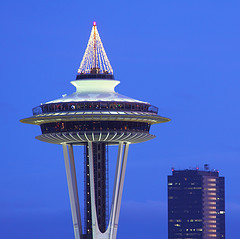
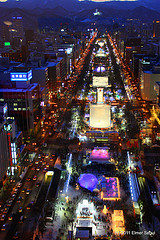
/copyrighteous/images/space_needle_christmas-small.jpg /copyrighteous/images/sapporo_winter-small.jpg Mika and I will be traveling this winter in the Seattle area and in Japan. The current plan is to be in Seattle December 19 through 28 and then in Japan from December 28 through January 12. After that, we will fly back to Boston for the MIT Mystery Hunt where, as punishment for winning last year, our team is running this year's hunt. We will be in Tokyo for New Years and then traveling around Japan for much of the rest of the time. We hope to visit Hokkaido and Aomori and to travel there from Tokyo along Japan's Western coast through Kanazawa and Niigata. We're still figuring out where we will visit and what we will do in both places. If you are interested in meeting up for dinner or drinks in either place (or in organizing a talk or meeting), please get in touch and let's try to figure something out.

30 November 2011

Benjamin Mako Hill: Bootstrapping

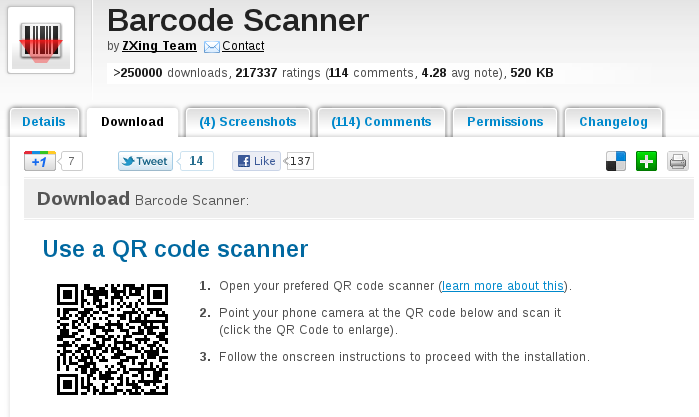
AndroidZoom, along with just about every other third-party interface to the Android Market out there, provides 2D barcodes which aim to make it easy to install Android applications that you find online on a phone. Maybe this would be a nice feature for F-Droid? Unfortunately, I found this feature when I was trying to help a friend install the (free software) ZXing Barcode Scanner because they wanted to read a 2D barcode.

28 November 2011

Benjamin Mako Hill: Voice Message of Peace

The Community Wellness team at MIT has a program on stress reduction, mindfulness, and relaxation. Among their services is a guided three-minute relaxation exercise recording (available at extension 3-2256 or 617-253-CALM). It's a very relaxing message. At the end of the recording, there's a revealing error where a standard voicemail robo-voice say "no messages are waiting" before you system hangs up on you. Turns out, the MIT wellness folks implemented this using the normal MIT voicemail system. This gave me a thought: What if my voicemail greeting included a guided relaxation message as part of its greeting so that anyone who left a message had the chance to relax a little bit first? Would messages left for me be more positive after a window of serenity? Would people ask less of me? Would my callers feel more relaxed and happier during the rest of their day? I just recorded a short version of the MIT message as my voicemail greeting. I suppose I will find out.

21 November 2011

Benjamin Mako Hill: Iron Blogger

I want to blog frequently but usually don't seem to find the time for it. I'm not above tying myself to the mast if it means blogging more. Iron Blogger is a blogging and drinking club based on this premise. The rules are pretty simple: Nelson Elhage ran the original Iron Blogger for about a year before the effort ran out of steam. I've started a new instance with a couple people from the previous group and a bunch of folks from Berkman, MIT, and beyond. If you live in Boston and want to join, there are still a couple of spots available. I'm going to cap the current group, at least temporarily, at about 30 people because I think that's the maximum we'll fit into a local pub. Look over the site and send me an email if you're interested. If you don't live in Boston but want to organize your own Iron Blogger, you can use the software in Nelson's git repository (or my branch) to automate nearly the whole process of tracking posts, generating reports, and updating the ledger of debts.

13 November 2011

Benjamin Mako Hill: Famous in Scratch

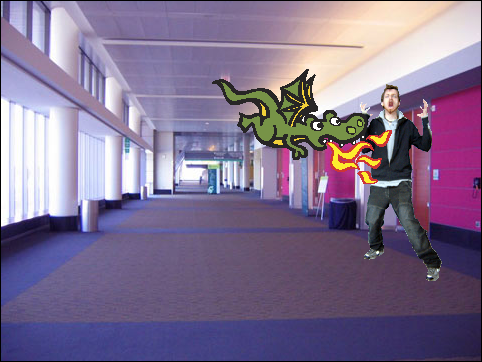
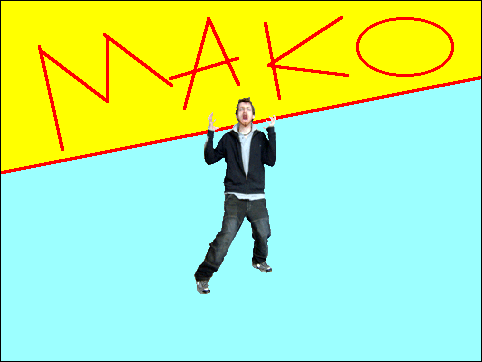
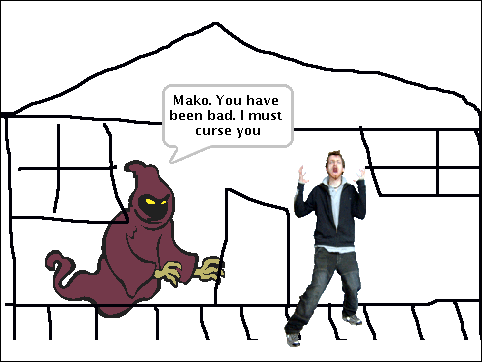
A few years ago, I ran into my friend Jay in the MIT Infinite Corridor. He was looking for volunteers to have their pictures taken and then added to the library of freely licensed and remixable media that would ship with every version of Scratch -- the graphical programming language built by Mitch Resnick's Lifelong Kindergarten group that is designed to let kids create animations and interactive games. Jay suggested I make some emotive faces and I posed for three images that made the final cut: /copyrighteous/images/scratchlib-mako-laughing.gif /copyrighteous/images/scratchlib-mako-screaming.gif /copyrighteous/images/scratchlib-mako-stop.gif But although I've spent quite a bit of time studying the Scratch community in the last few years as it is grown to include millions of participants and projects, I forgot about about Jay's photo shoot. A couple months ago, Acetarium resident Andres Lombana Bermudez pointed out that there was a mako tag on the Scratch website and that a whole bunch of users had been publishing projects using the pictures of me which, apparently, shipped in Scratch under my name. For example, in this project in which I dance in front of a enormous "MAKO" banner: /copyrighteous/images/scratchweb-dance.png That said, given the rather emotive nature of the pictures, I seem to usually end up being blown up shot, shrunk, set on fire by dragons, or meeting other similarly unfortunate ends. /copyrighteous/images/scratchweb-bad_mako.png /copyrighteous/images/scratchweb-looks_arent_everything.png There's quite many more entertaining examples under the tag and many more elsewhere on the Scratch website although they are a little trickier to track down. Jonathan Zittrain likes to say that the best technologies are generative in the sense that they encourage their users to make things with them that the designer never forsaw or anticipated. I feel generative.
2 November 2011

Benjamin Mako Hill: Slouching Toward Autonomy

I care a lot about free network services. Recently, I have been given lots of reasons to be happy with the progress the free software community has made in developing services that live up to my standards. I have personally switched from a few proprietary network services to alternative systems that respect my autonomy and have been very happy both with the freedom I have gained and with the no-longer-rudimentary feature sets that the free tools offer. Although there is plenty left to do, here are four tools I'm using now instead of the proprietary tools that many people use, or that I used to use myself: In trying to switch away from proprietary services, I have found that there still a lack of good information comparing the different systems out there and giving folks advice on who might be able to help with things like setup or hosting. I really value hearing from other people about what they use and what they find useful but finding this information online still seems to be a struggle. The autonomo.us wiki seems like the natural place to host or summarize this discussion and to collect and share information useful for those of us slouching (or running) toward autonomy in our use of network services. I invite folks to get involved in improving that already useful resource. For example, this week, I spent a few hours researching free social bookmarking tools and produced a major update to the (already useful) social bookmarking page on the autonomo.us wiki. Of course, I can imagine lots of ways to improve that page and to collect similar information on other classes of network services. Please join me in that effort!

23 October 2011

Joey Hess: california postcard

Visiting California this week and having a great time. Experienced my first earthquake; visited the Noisebridge hackspace with Seth and Mako; and yesterday went up to Point Reyes and flew a kite from cliffs over Drake's Bay.

Up there even the cows have a view. Tomorrow, off to Google for the GitTogether.

19 October 2011

Lior Kaplan: LibreOffice Conference 2011

I ve recently been to the LibreOffice Conference 2011 in Paris. It s very nice to finally meet in person all those names from the malinglist and the bug reports. Although meeting most people for the first time, I left the conference with a strong feeling of a community (which I m proud to be a member of), this is a very motivating feeling. During the conference I had the chance to work on LibreOffice related issues: The 3 patches began when I noticed a few weird strings to translate in the context of installation media good luck to those who will try to install LibreOffice from 5.25 disk, 3.5 disk or a tape drive. These 3 strings are now removed from the code with other 36 unused strings. So translators please take the strings to translate with a grain of salt. Post conference tasks (always ending up with more stuff to do after a conference):
Filed under: LibreOffice, Openoffice.org

30 September 2011

Axel Beckert: Fun facts from the UDD

After spotting an upload of mira, who in turn spotted an upload of abe (the package, not an upload by me aka abe@d.o), mira (mirabilos aka tg@d.o) noticed that there are Debian packages which have same name as some Debian Developers have as login name. Of course I noticed a long time ago that there is a Debian package with my login name abe . Another well-known Debian login and former package name is amaya. But since someone else came up with that thought, too, it was time for finding the definite answer to the question which are the DD login names which also exist as Debian package names. My first try was based on the list of trusted GnuPG keys:
$ apt-cache policy $(gpg --keyring /etc/apt/trusted.gpg --list-keys 2>/dev/null   \
                     grep @debian.org   \
        	     awk -F'[<@]' ' print $2 '   \
                     sort -u) 2>/dev/null   \
                   egrep -o '^[^ :]*'
alex
tor
ed
bam
ng
But this was not satisfying as my own name didn t show up and gpg also threw quite a lot of block reading errors (which is also the reason for redirecting STDERR). mira then had the idea of using the Ultimate Debian Database to answer this question more properly:
udd=> SELECT login, name FROM carnivore_login, carnivore_names
      WHERE carnivore_login.id=carnivore_names.id AND login IN
      (SELECT package AS login FROM packages, active_dds
       WHERE packages.package=active_dds.login UNION
       SELECT source AS name FROM sources, active_dds
       WHERE sources.source=active_dds.login)
      ORDER BY login;
 login                   name
-------+---------------------------------------
 abe     Axel Beckert
 alex    Alexander List
 alex    Alexander M. List  4402020774 9332554
 and     Andrea Veri
 ash     Albert Huang
 bam     Brian May
 ed      Ed Boraas
 ed      Ed G. Boraas [RSA Compatibility Key]
 ed      Ed G. Boraas [RSA]
 eric    Eric Dorland
 gq      Alexander GQ Gerasiov
 iml     Ian Maclaine-cross
 lunar   J r my Bobbio
 mako    Benjamin Hill
 mako    Benjamin Mako Hill
 mbr     Markus Braun
 mlt     Marcela Tiznado
 nas     Neil A. Schemenauer
 nas     Neil Schemenauer
 opal    Ola Lundkvist
 opal    Ola Lundqvist
 paco    Francisco Moya
 paul    Paul Slootman
 pino    Pino Toscano
 pyro    Brian Nelson
 stone   Fredrik Steen
(26 rows)
Interestingly tor (Tor Slettnes) is missing in this list, so it s not complete either At least I m quite sure that nobody maintains a package with his own login name as package name. :-) We also have no packages ending in -guest , so there s no chance that a package name matches an Alioth guest account either

26 September 2011

Benjamin Mako Hill: Science as Dance

The following selected bibliography showcases only a small portion of the academics who have demonstrated that while it may take two to tango, it only takes one to give a scholarly paper a silly cliche title:
Briganti, G. 2006. It Takes Two to Tango-The CH-53K is arguably the first serious US attempt to open the defense cooperation NATO has been seeking. Rotor and Wing 40(7):60 63.
Coehran, J. 2006. It Takes Two to Tango: Problems with Community Property Ownership of Copyrights and Patents in Texas. Baylor L. Rev. 58:407.
Diamond, M.J. 1984. It takes two to tango: Some thoughts on the neglected importance of the hypnotist in an interactive hypnotherapeutic relationship. American Journal of Clinical Hypnosis 27(1):3 13.
Kraack, A. 1999. It takes two to tango: The place of women in the construction of hegemonic masculinity in a student pub. Masculinities in Aotearoa/New Zealand 153 165.
Lackey, J. 2006. It takes two to tango: beyond reductionism and non-reductionism in the epistemology of testimony. The Epistemology of testimony 160 89.
Miller, C.A. 1998. It takes two to tango: understanding and acquiring symmetrical verbs. Journal of psycholinguistic research 27(3):385 411.
Modiano, N. 1984. It Takes Two to Tango, or Transmission is a Two-Way Street. Anthropology & Education Quarterly 15(4):326 330.
Ott, M.A. 2008. It Takes Two to Tango: Ethical Issues Raised by the Study of Topical Microbicides with Adolescent Dyads. The Journal of adolescent health: official publication of the Society for Adolescent Medicine 42(6):541.
Rubenstein, J.H. 2009. It takes two to tango: dance steps for diagnosing Barrett s esophagus. Respiratory Care Clinics of North America 69(6):1011 1013.
Settersten Jr, R.A. 2009. It takes two to tango: the (un) easy dance between life-course sociology and life-span psychology. Advances in Life Course Research 14(1-2):74 81.
Skaerbaek, E. 2004. It takes two to tango on knowledge production and intersubjectivity. NORA: Nordic Journal of Women's Studies 12(2):93 101.
Spencer, M. 2005. It takes two to tango. Journal of Business Strategy 26(5):62 68.
Vanaerschot, G. 2004. It Takes Two to Tango: On Empathy With Fragile Processes. Psychotherapy: Theory, Research, Practice, Training 41(2):112.
Viskochil, D.H. 2003. It takes two to tango: mast cell and Schwann cell interactions in neurofibromas. Journal of Clinical Investigation 112(12):1791 1792.
Weiner, A. 2001. It Takes Two to Tango:: Information, Metabolism, and the Origins of Life. Cell 105(3):307 308.
Wittman, M.L. 1990. It Takes Two to Tango: Your Simplistic System for Self-survival. Witmark Pub. Co.
There are also a few hundred groups who have demonstrated that larger groups can so as well.

17 September 2011

Benjamin Mako Hill: Software Freedom Day Boston 2011

This year, Software Freedom Day in Boston is being organized by Asheesh and Deb and OpenHatch which means a focus on increasing involvement in free software communities. If you are all interested in getting involved in the free software community in any way and at any level -- or interested in hearing about how that might happen someday -- this is a great event to attend. For my part, I'll be giving a short talk on getting involved in Debian. The event will be held on Saturday, September 17 at Cambridge College -- between Harvard and Central squares -- with an after party at Tommy Doyle's in Harvard.

Next.

Previous.