Search Results: "jan"

2 December 2024

Russ Allbery: Review: Long Live Evil

Review: Long Live Evil, by Sarah Rees Brennan
Series: Time of Iron #1
Publisher: Orbit
Copyright: July 2024
ISBN: 0-316-56872-4
Format: Kindle
Pages: 433
Long Live Evil is a portal fantasy (or, arguably more precisely, a western take on an isekai villainess fantasy) and the first book of a series. If the author's name sounds familiar, it's possibly because of In Other Lands, which got a bunch of award nominations in 2018, She has also written a lot of other YA fantasy, but this is her first adult epic fantasy novel. Rae is in the hospital, dying of cancer. Everything about that experience, from the obvious to the collapse of her friendships, absolutely fucking sucks. One of the few bright points is her sister's favorite fantasy series, Time of Iron, which her sister started reading to her during chemo sessions. Rae mostly failed to pay attention until the end of the first book and the rise of the Emperor. She fell in love with the brooding, dangerous anti-hero and devoured the next two books. The first book was still a bit hazy, though, even with the help of a second dramatic reading after she was too sick to read on her own. This will be important later. After one of those reading sessions, Rae wakes up to a strange woman in her hospital room who offers her an option. Rather than die a miserable death that bankrupts her family, she can go through a door to Eyam, the world of Time of Iron, and become the character who suits her best. If she can steal the Flower of Life and Death from the imperial greenhouse on the one day a year that it blooms, she will wake up, cured. If not, she will die. Rae of course goes through, and wakes in the body of Lady Rahela, the Beauty Dipped in Blood, the evil stepsister. One of the villains, on the night before she is scheduled to be executed. Rae's initial panic slowly turns to a desperate glee. She knows all of these characters. She knows how the story will turn out. And she has a healthy body that's not racked with pain. Maybe she's not the heroine, but who cares, the villains are always more interesting anyway. If she's going to be cast as the villain, she's going to play it to the hilt. It's not like any of these characters are real. Stories in which the protagonists are the villains are not new (Nimona and Hench come to mind just among books I've reviewed), but they are having a moment. Assistant to the Villain by Hannah Nicole Maehrer came out last year, and this book and Django Wexler's How to Become the Dark Lord and Die Trying both came out this year. This batch of villain books all take different angles on the idea, but they lean heavily on humor. In Long Live Evil, that takes the form of Rae's giddy embrace of villainous scheming, flouncing, and blatant plot manipulation, along with her running commentary on the various characters and their in-story fates. The setup here is great. Rae is not only aware that she's in a story, she knows it's full of cliches and tropes. Some of them she loves, some of them she thinks are ridiculous, and she isn't shy about expressing both of those opinions. Rae is a naturally dramatic person, and it doesn't take her long to lean into the opportunities for making dramatic monologues and villainous quips, most of which involve modern language and pop culture references that the story characters find baffling and disconcerting. Unfortunately, the base Time of Iron story is, well, bad. It's absurd grimdark epic fantasy with paper-thin characters and angst as a central character trait. This is clearly intentional for both in-story and structural reasons. Rae enjoys it precisely because it's full of blood and battles and over-the-top brooding, malevolent anti-heroes, and Rae's sister likes the impossibly pure heroes who suffer horrible fates while refusing to compromise their ideals. Rae is also about to turn the story on its head and start smashing its structure to try to get herself into position to steal the Flower of Life and Death, and the story has to have a simple enough structure that it doesn't get horribly confusing once smashed. But the original story is such a grimdark parody, and so not my style of fantasy, that I struggled with it at the start of the book. This does get better eventually, as Rae introduces more and more complications and discovers some surprising things about the other characters. There are several delightful twists concerning the impossibly pure heroine of the original story that I will not spoil but that I thought retroactively made the story far more interesting. But that leads to the other problem: Rae is both not very good at scheming, and is flippant and dismissive of the characters around her. These are both realistic; Rae is a young woman with cancer, not some sort of genius mastermind, and her whole frame for interacting with the story is fandom discussions and arguments with her sister. Early in the book, it's rather funny. But as the characters around her start becoming more fleshed out and complex, Rae's inability to take them seriously starts to grate. The grand revelation to Rae that these people have their own independent existence comes so late in the book that it's arguably a spoiler, but it was painfully obvious to everyone except Rae for hundreds of pages before it got through Rae's skull. Those are my main complaints, but there was a lot about this book that I liked. The Cobra, who starts off as a minor villain in the story, is by far the best character of the book. He's not only more interesting than Rae, he makes everyone else in the book, including Rae, more interesting characters through their interactions. The twists around the putative heroine, Lady Rahela's stepsister, are a bit too long in coming but are an absolute delight. And Key, the palace guard that Rae befriends at the start of the story, is the one place where Rae's character dynamic unquestionably works. Key anchors a lot of Rae's scenes, giving them a sense of emotional heft that Rae herself would otherwise undermine. The narrator in this book does not stick with Rae. We also get viewpoint chapters from the Cobra, the Last Hope, and Emer, Lady Rahela's maid. The viewpoints from the Time of Iron characters can be a bit eye-roll-inducing at the start because of how deeply they follow the grimdark aesthetic of the original story, but by the middle of the book I was really enjoying the viewpoint shifts. This story benefited immensely from being seen from more angles than Rae's chaotic manipulation. By the end of the book, I was fully invested in the plot line following Cobra and the Last Hope, to the extent that I was a bit disappointed when the story would switch back to Rae. I'm not sure this was a great book, but it was fun. It's funny in places, but I ended up preferring the heartfelt parts to the funny parts. It is a fascinating merger of gleeful fandom chaos and rather heavy emotional portrayals of both inequality and the experience of terminal illness. Rees Brennan is a stage four cancer survivor and that really shows; there's a depth, nuance, and internal complexity to Rae's reactions to illness, health, and hope that feels very real. It is the kind of book that can give you emotional whiplash; sometimes it doesn't work, but sometimes it does. One major warning: this book ends on a ridiculous cliffhanger and does not in any sense resolve its main plot arc. I found this annoying, not so much because of the wait for the second volume, but because I thought this book was about the right length for the amount of time I wanted to spend in this world and wish Rees Brennan had found a way to wrap up the story in one book. Instead, it looks like there will be three books. I'm in for at least one more, since the story was steadily getting better towards the end of Long Live Evil, but I hope the narrative arc survives being stretched out across that many words. This one's hard to classify, since it's humorous fantasy on the cover and in the marketing, and that element is definitely present, but I thought the best parts of the book were when it finally started taking itself seriously. It's metafictional, trope-subverting portal fantasy full of intentional anachronisms that sometimes fall flat and sometimes work brilliantly. I thought the main appeal of it would be watching Rae embrace being a proper villain, but then the apparent side characters stole the show. Recommended, but you may have to be in just the right mood. Content notes: Cancer, terminal illness, resurrected corpses, wasting disease, lots of fantasy violence and gore, and a general grimdark aesthetic. Rating: 7 out of 10

1 December 2024

Colin Watson: Free software activity in November 2024

Most of my Debian contributions this month were sponsored by Freexian. You can also support my work directly via Liberapay. Conferences I attended MiniDebConf Toulouse 2024, and the MiniDebCamp before it. Most of my time was spent with the Freexian folks working on debusine; Stefano gave a talk about its current status with a live demo (frantically fixed up over the previous couple of days, as is traditional) and with me and others helping to answer questions at the end. I also caught up with some people I haven t seen in ages, ate a variety of delicious cheeses, and generally had a good time. Many thanks to the organizers and sponsors! After the conference, Freexian collaborators spent a day and a half doing some planning for next year, and then went for an afternoon visiting the Cit de l espace. Rust team I upgraded these packages to new upstream versions, as part of upgrading pydantic and rpds-py: Python team Last month, I mentioned that we still need to work out what to do about the multipart vs. python-multipart name conflict in Debian (#1085728). We eventually managed to come up with an agreed plan; Sandro has uploaded a renamed binary package to experimental, and I ve begun work on converting reverse-dependencies (asgi-csrf, fastapi, python-curies, and starlette done so far). There s a bit more still to do, but I expect we can finish it soon. I fixed problems related to adding Python 3.13 support in: I fixed some packaging problems that resulted in failures any time we add a new Python version to Debian: I fixed other build/autopkgtest failures in: I packaged python-quart-trio, needed for a new upstream version of python-urllib3, and contributed a small packaging tweak upstream. I backported a twisted fix that caused problems in other packages, including breaking debusine s tests. I disentangled some upstream version confusion in python-catalogue, and upgraded to the current upstream version. I upgraded these packages to new upstream versions: Other small fixes I contributed Incus support to needrestart upstream. In response to Helmut s Cross building talk at MiniDebConf Toulouse, I fixed libfilter-perl to support cross-building (5b4c2e10, f9788c27). I applied a patch to move aliased files from / to /usr in iprutils (#1087733). I adjusted debconf to use the new /usr/lib/apt/apt-extracttemplates path (#1087523). I upgraded putty to 0.82.

28 November 2024

Bits from Debian: New Debian Developers and Maintainers (September and October 2024)

The following contributors got their Debian Developer accounts in the last two months: The following contributors were added as Debian Maintainers in the last two months: Congratulations!

17 November 2024

Russ Allbery: Review: Dark Deeds

Review: Dark Deeds, by Michelle Diener
Series: Class 5 #2
Publisher: Eclipse
Copyright: January 2016
ISBN: 0-6454658-4-4
Format: Kindle
Pages: 340
Dark Deeds is the second book of the self-published Class 5 science fiction romance series. It is a sequel to Dark Horse and will spoil the plot of that book, but it follows the romance series convention of switching to a new protagonist in the same universe and telling a loosely-connected story. Fiona, like Rose in the previous book, was kidnapped by the Tecran in one of their Class 5 ships, although that's not entirely obvious at the start of the story. The book opens with her working as a slave on a Garmman trading ship while its captain works up the nerve to have her killed. She's spared this fate when the ship is raided by Krik pirates. Some brave fast-talking, and a touch of honor among thieves, lets her survive the raid and be rescued by a pursuing Grih battleship, with a useful electronic gadget as a bonus. The author uses the nickname "Fee" for Fiona throughout this book and it was like nails on a chalkboard every time. I had to complain about that before getting into the review. If you've read Dark Horse, you know the formula: lone kidnapped human woman, major violations of the laws against mistreatment of sentient beings that have the Grih furious on her behalf, hunky Grih starship captain who looks like a space elf, all the Grih are fascinated by her musical voice, she makes friends with a secret AI... Diener found a formula that worked well enough that she tried it again, and it would not surprise me if the formula repeated through the series. You should not go into this book expecting to be surprised. That said, the formula did work the first time, and it largely does work again. I thoroughly enjoyed Dark Horse and wanted more, and this is more, delivered on cue. There are worse things, particularly if you're a Kindle Unlimited reader (I am not) and are therefore getting new installments for free. The Tecran fascination with kidnapping human women is explained sufficiently in Fiona's case, but I am mildly curious how Diener will keep justifying it through the rest of the series. (Maybe the formula will change, but I doubt it.) To give Diener credit, this is not a straight repeat of the first book. Fiona is similar to Rose but not identical; Rose had an unshakable ethical calm, and Fiona is more of a scrapper. The Grih are not stupid and, given the amount of chaos Rose unleashed in the previous book, treat the sudden appearance of another human woman with a great deal more caution and suspicion. Unfortunately, this also means far less of my favorite plot element of the first book: the Grih being constantly scandalized and furious at behavior the protagonist finds sadly unsurprising. Instead, this book has quite a bit more action. Dark Horse was mostly character interactions and tense negotiations, with most of the action saved for the end. Dark Deeds replaces a lot of the character work with political plots and infiltrating secret military bases and enemy ships. The AI (named Eazi this time) doesn't show up until well into the book and isn't as much of a presence as Sazo. Instead, there's a lot more of Fiona being drafted into other people's fights, which is entertaining enough while it's happening but which wasn't as delightful or memorable as Rose's story. The writing continues to be serviceable but not great. It's a bit cliched and a bit awkward. Also, Diener uses paragraph breaks for emphasis. It's hard to stop noticing it once you see it. Thankfully, once the story gets going and there's more dialogue, she tones that down, or perhaps I stopped noticing. It's that kind of book (and that kind of series): it's a bit rough to get started, but then there's always something happening, the characters involve a whole lot of wish-fulfillment but are still people I like reading about, and it's the sort of unapologetic "good guys win" type of light science fiction that is just the thing when one simply wants to be entertained. Once I get into the book, it's easy to overlook its shortcomings. I spent Dark Horse knowing roughly what would happen but wondering about the details. I spent Dark Deeds fairly sure of the details and wondering when they would happen. This wasn't as fun of an experience, but the details were still enjoyable and I don't regret reading it. I am hoping that the next book will be more of a twist, or will have a character more like Rose (or at least a character with a better nickname). Sort of recommended if you liked Dark Horse and really want more of the same. Followed by Dark Minds, which I have already purchased. Rating: 6 out of 10

8 November 2024

Thomas Lange: Using NIS (Network Information Service) in 2024

The topic of this posting already tells you that an old Unix guy tells stories about old techniques. I'm a happy NIS (formerly YP) user since 30+ years. I started using it with SunOS 4.0, later using it with Solaris and with Linux since 1999. In the past, a colleague wasn't happyly using NIS+ when he couldn't log in as root after a short time because of some well known bugs and wrong configs. NIS+ was also much slower than my NIS setup. I know organisations using NIS for more than 80.000 user accounts in 2024. I know the security implications of NIS but I can live with them, because I manage all computers in the network that have access to the NIS maps. And NIS on Linux offers to use shadow maps, which are only accessible to the root account. My users are forced to use very long passwords. Unfortunately NIS support for the PAM modules was removed in Debian in pam 1.4.0-13, which means Debian 12 (bookworm) is lacking NIS support in PAM, but otherwise it is still supported. This only affects changing the NIS password via passwd. You can still authenticate users and use other NIS maps. But yppasswd is deprecated and you should not use it! If you use yppasswd it may generate a new password hash by using the old DES crypt algorithm, which is very weak and only uses the first 8 chars in your password. Do not use yppasswd any more! yppasswd only detects DES, MD5, SHA256 and SHA512 hashes, but for me and some colleagues it only creates weak DES hashes after a password change. yescrypt hashes which are the default in Debian 12 are not supported at all. The solution is to use the plain passwd program. On the NIS master, you should setup your NIS configuration to use /etc/shadow and /etc/passwd even if your other NIS maps are in /var/yp/src or similar. Make sure to have these lines in your /var/yp/Makefile:
PASSWD      = /etc/passwd
SHADOW      = /etc/shadow
Call make once, and it will generate the shadow and passwd map. You may want to set the variable MINUID which defines which entries are not put into the NIS maps. On all NIS clients you still need the entries (for passwd, shadow, group,...) that point to the nis service. E.g.:
passwd:         files nis systemd
group:          files nis systemd
shadow:         files nis
You can remove all occurences of "nis" in your /etc/pam.d/common-password file. Then you can use the plain passwd program to change your password on the NIS master. But this does not call make in /var/yp for updating the NIS shadow map. Let's use inotify(7) for that. First, create a small shell script /usr/local/sbin/shadow-change:
#! /bin/sh
PATH=/usr/sbin:/usr/bin
# only watch the /etc/shadow file
if [ "$2" != "shadow" ]; then
  exit 0
fi
cd /var/yp   exit 3
sleep 2
make
Then install the package incron.
# apt install incron
# echo root >> /etc/incron.allow
# incrontab -e
Add this line:
/etc    IN_MOVED_TO     /usr/local/sbin/shadow-change $@ $# $%
It's not possible to use IN_MODIFY or watch other events on /etc/shadow directly, because the passwd command creates a /etc/nshadow file, deletes /etc/shadow and then moves nshadow to shadow. inotify on a file does not work after the file was removed. You can see the logs from incrond by using:
# journalctl _COMM=incrond
e.g.
Oct 01 12:21:56 kueppers incrond[6588]: starting service (version 0.5.12, built on Jan 27 2023 23:08:49)
Oct 01 13:43:55 kueppers incrond[6589]: table for user root created, loading
Oct 01 13:45:42 kueppers incrond[6589]: PATH (/etc) FILE (shadow) EVENT (IN_MOVED_TO)
Oct 01 13:45:42 kueppers incrond[6589]: (root) CMD ( /usr/local/sbin/shadow-change /etc shadow IN_MOVED_TO)
I've disabled the execution of yppasswd using dpkg-divert
# dpkg-divert --local --rename --divert /usr/bin/yppasswd-disable /usr/bin/yppasswd
chmod a-rwx /usr/bin/yppasswd-disable
Do not forget to limit the access to the shadow.byname map in ypserv.conf and general access to NIS in ypserv.securenets. I've also discovered the package pamtester, which is a nice package for testing your pam configs.

2 November 2024

Dirk Eddelbuettel: Rcpp 1.0.13-1 on CRAN: Hot Fix

rcpp logo A hot-fix release 1.0.13-1, consisting of two small PRs relative to the last regular CRAN release 1.0.13, just arrived on CRAN. When we prepared 1.0.13, we included a change related to the tightening of the C API of R itself. Sadly, we pinned an expected change to comes with next (minor) release 4.4.2 rather than now next (normal aka major) release 4.5.0 . And now that R 4.4.2 is out (as of two days ago) we accidentally broke building against the header file with that check. Whoops. Bugs happen, and we are truly sorry but this is now addressed in 1.0.13-1. The normal (bi-annual) release cycle will resume with 1.0.14 slated for January. As you can see from the NEWS file of the development branch, we have a number of changes coming. You can safely access that release candidate version, either off the default branch at github or via r-universe artifacts. The list below details all changes, as usual. The only other change concerns the now-mandatory use of Authors@R.

Changes in Rcpp release version 1.0.13-1 (2024-11-01)
  • Changes in Rcpp API:
    • Use read-only VECTOR_PTR and STRING_PTR only with with R 4.5.0 or later (Kevin in #1342 fixing #1341)
  • Changes in Rcpp Deployment:
    • Authors@R is now used in DESCRIPTION as mandated by CRAN

Thanks to my CRANberries, you can also look at a diff to the previous release Questions, comments etc should go to the rcpp-devel mailing list off the R-Forge page. Bugs reports are welcome at the GitHub issue tracker as well (where one can also search among open or closed issues). If you like this or other open-source work I do, you can sponsor me at GitHub.

This post by Dirk Eddelbuettel originated on his Thinking inside the box blog. Please report excessive re-aggregation in third-party for-profit settings.

1 November 2024

Colin Watson: Free software activity in October 2024

Almost all of my Debian contributions this month were sponsored by Freexian. You can also support my work directly via Liberapay. Ansible I noticed that Ansible had fallen out of Debian testing due to autopkgtest failures. This seemed like a problem worth fixing: in common with many other people, we use Ansible for configuration management at Freexian, and it probably wouldn t make our sysadmins too happy if they upgraded to trixie after its release and found that Ansible was gone. The problems here were really just slogging through test failures in both the ansible-core and ansible packages, but their test suites are large and take a while to run so this took some time. I was able to contribute a few small fixes to various upstreams in the process: This should now get back into testing tomorrow. OpenSSH Martin- ric Racine reported that ssh-audit didn t list the ext-info-s feature as being available in Debian s OpenSSH 9.2 packaging in bookworm, contrary to what OpenSSH upstream said on their specifications page at the time. I spent some time looking into this and realized that upstream was mistakenly saying that implementations of ext-info-c and ext-info-s were added at the same time, while in fact ext-info-s was added rather later. ssh-audit now has clearer output, and the OpenSSH maintainers have corrected their specifications page. I looked into a report of an ssh failure in certain cases when using GSS-API key exchange (which is a Debian patch). Once again, having integration tests was a huge win here: the affected scenario is quite a fiddly one, but I was able to set it up in the test, and thereby make sure it doesn t regress in future. It still took me a couple of hours to get all the details right, but in the past this sort of thing took me much longer with a much lower degree of confidence that the fix was correct. On upstream s advice, I cherry-picked some key exchange fixes needed for big-endian architectures. Python team I packaged python-evalidate, needed for a new upstream version of buildbot. The Python 3.13 transition rolls on. I fixed problems related to it in htmlmin, humanfriendly, postgresfixture (contributed upstream), pylint, python-asyncssh (contributed upstream), python-oauthlib, python3-simpletal, quodlibet, zope.exceptions, and zope.interface. A trickier Python 3.13 issue involved the cgi module. Years ago I ported zope.publisher to the multipart module because cgi.FieldStorage was broken in some situations, and as a result I got a recommendation into Python s dead batteries PEP 594. Unfortunately there turns out to be a name conflict between multipart and python-multipart on PyPI; python-multipart upstream has been working to disentangle this, though we still need to work out what to do in Debian. All the same, I needed to fix python-wadllib and multipart seemed like the best fit; I contributed a port upstream and temporarily copied multipart into Debian s python-wadllib source package to allow its tests to pass. I ll come back and fix this properly once we sort out the multipart vs. python-multipart packaging. tzdata moved some timezone definitions to tzdata-legacy, which has broken a number of packages. I added tzdata-legacy build-dependencies to alembic and python-icalendar to deal with this in those packages, though there are still some other instances of this left. I tracked down an nltk regression that caused build failures in many other packages. I fixed Rust crate versioning issues in pydantic-core, python-bcrypt, and python-maturin (mostly fixed by Peter Michael Green and Jelmer Vernoo , but it needed a little extra work). I fixed other build failures in entrypoints, mayavi2, python-pyvmomi (mostly fixed by Alexandre Detiste, but it needed a little extra work), and python-testing.postgresql (ditto). I fixed python3-simpletal to tolerate future versions of dh-python that will drop their dependency on python3-setuptools. I fixed broken symlinks in python-treq. I removed (build-)depends on python3-pkg-resources from alembic, autopep8, buildbot, celery, flufl.enum, flufl.lock, python-public, python-wadllib (contributed upstream), pyvisa, routes, vulture, and zodbpickle (contributed upstream). I upgraded astroid, asyncpg (fixing a Python 3.13 failure and a build failure), buildbot (noticing an upstream test bug in the process), dnsdiag, frozenlist, netmiko (fixing a Python 3.13 failure), psycopg3, pydantic-settings, pylint, python-asyncssh, python-bleach, python-btrees, python-cytoolz, python-django-pgtrigger, python-django-test-migrations, python-gssapi, python-icalendar, python-json-log-formatter, python-pgbouncer, python-pkginfo, python-plumbum, python-stdlib-list, python-tokenize-rt, python-treq (fixing a Python 3.13 failure), python-typeguard, python-webargs (fixing a build failure), pyupgrade, pyvisa, pyvisa-py (fixing a Python 3.13 failure), toolz, twisted, vulture, waitress (fixing CVE-2024-49768 and CVE-2024-49769), wtf-peewee, wtforms, zodbpickle, zope.exceptions, zope.interface, zope.proxy, zope.security, and zope.testrunner to new upstream versions. I tried to fix a regression in python-scruffy, but I need testing feedback. I requested removal of python-testing.mysqld.

21 October 2024

Sahil Dhiman: Free Software Mirrors in India

Last Updated on 15/11/2024. List of public mirrors in India. Location discovered basis personal knowledge, traces or GeoIP. Mirrors which aren t accessible outside their own ASN are excluded.

North India

East India

South India

West India

CDN (or behind one) Many thanks to Shrirang and Saswata for tips and corrections. Let me know if I m missing someone or something is amiss.

1 October 2024

Colin Watson: Free software activity in September 2024

Almost all of my Debian contributions this month were sponsored by Freexian. You can also support my work directly via Liberapay. Pydantic My main Debian project for the month turned out to be getting Pydantic back into a good state in Debian testing. I ve used Pydantic quite a bit in various projects, most recently in Debusine, so I have an interest in making sure it works well in Debian. However, it had been stalled on 1.10.17 for quite a while due to the complexities of getting 2.x packaged. This was partly making sure everything else could cope with the transition, but in practice mostly sorting out packaging of its new Rust dependencies. Several other people (notably Alexandre Detiste, Andreas Tille, Drew Parsons, and Timo R hling) had made some good progress on this, but nobody had quite got it over the line and it seemed a bit stuck. Learning Rust is on my to-do list, but merely not knowing a language hasn t stopped me before. So I learned how the Debian Rust team s packaging works, upgraded a few packages to new upstream versions (including rust-half and upstream rust-idna test fixes), and packaged rust-jiter. After a lot of waiting around for various things and chasing some failures in other packages I was eventually able to get current versions of both pydantic-core and pydantic into testing. I m looking forward to being able to drop our clunky v1 compatibility code once debusine can rely on running on trixie! OpenSSH I upgraded the Debian packaging to OpenSSH 9.9p1. YubiHSM I upgraded python-yubihsm, yubihsm-connector, and yubihsm-shell to new upstream versions. I noticed that I could enable some tests in python-yubihsm and yubihsm-shell; I d previously thought the whole test suite required a real YubiHSM device, but when I looked closer it turned out that this was only true for some tests. I fixed yubihsm-shell build failures on some 32-bit architectures (upstream PRs #431, #432), and also made it build reproducibly. Thanks to Helmut Grohne, I fixed yubihsm-connector to apply udev rules to existing devices when the package is installed. As usual, bookworm-backports is up to date with all these changes. Python team setuptools 72.0.0 removed the venerable setup.py test command. This caused some fallout in Debian, some of which was quite non-obvious as packaging helpers sometimes fell back to different ways of running test suites that didn t quite work. I fixed django-guardian, manuel, python-autopage, python-flask-seeder, python-pgpdump, python-potr, python-precis-i18n, python-stopit, serpent, straight.plugin, supervisor, and zope.i18nmessageid. As usual for new language versions, the addition of Python 3.13 caused some problems. I fixed psycopg2, python-time-machine, and python-traits. I fixed build/autopkgtest failures in keymapper, python-django-test-migrations, python-rosettasciio, routes, transmissionrpc, and twisted. buildbot was in a bit of a mess due to being incompatible with SQLAlchemy 2.0. Fortunately by the time I got to it upstream had committed a workable set of patches, and the main difficulty was figuring out what to cherry-pick since they haven t made a new upstream release with all of that yet. I figured this out and got us up to 4.0.3. Adrian Bunk asked whether python-zipp should be removed from trixie. I spent some time investigating this and concluded that the answer was no, but looking into it was an interesting exercise anyway. On the other hand, I looked into flask-appbuilder, concluded that it should be removed, and filed a removal request. I upgraded some embedded CSS files in nbconvert. I upgraded importlib-resources, ipywidgets, jsonpickle, pydantic-settings, pylint (fixing a test failure), python-aiohttp-session, python-apptools, python-asyncssh, python-django-celery-beat, python-django-rules, python-limits, python-multidict, python-persistent, python-pkginfo, python-rt, python-spur, python-zipp, stravalib, transmissionrpc, vulture, zodbpickle, zope.exceptions (adopting it), zope.i18nmessageid, zope.proxy, and zope.security to new upstream versions. debmirror The experimental and *-proposed-updates suites used to not have Contents-* files, and a long time ago debmirror was changed to just skip those files in those suites. They were added to the Debian archive some time ago, but debmirror carried on skipping them anyway. Once I realized what was going on, I removed these unnecessary special cases (#819925, #1080168).

29 September 2024

Reproducible Builds: Supporter spotlight: Kees Cook on Linux kernel security

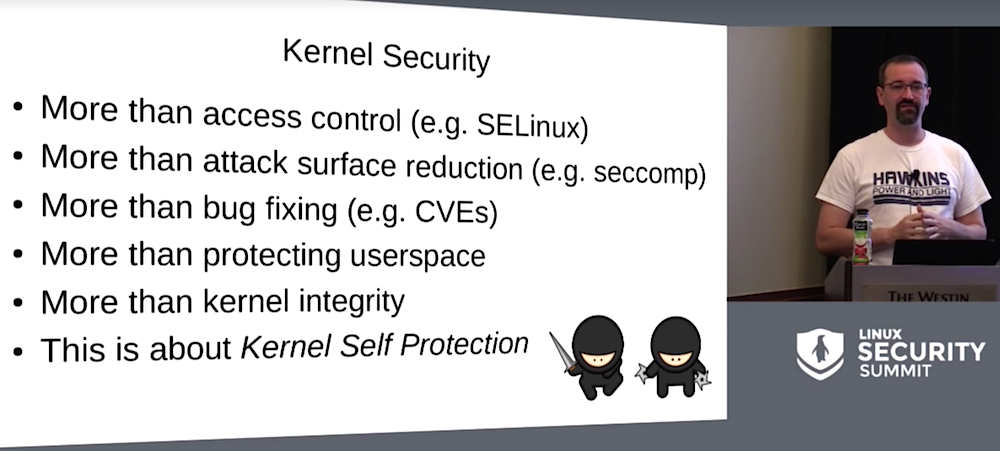
The Reproducible Builds project relies on several projects, supporters and sponsors for financial support, but they are also valued as ambassadors who spread the word about our project and the work that we do. This is the eighth installment in a series featuring the projects, companies and individuals who support the Reproducible Builds project. We started this series by featuring the Civil Infrastructure Platform project, and followed this up with a post about the Ford Foundation as well as recent ones about ARDC, the Google Open Source Security Team (GOSST), Bootstrappable Builds, the F-Droid project, David A. Wheeler and Simon Butler. Today, however, we will be talking with Kees Cook, founder of the Kernel Self-Protection Project.

Vagrant Cascadian: Could you tell me a bit about yourself? What sort of things do you work on? Kees Cook: I m a Free Software junkie living in Portland, Oregon, USA. I have been focusing on the upstream Linux kernel s protection of itself. There is a lot of support that the kernel provides userspace to defend itself, but when I first started focusing on this there was not as much attention given to the kernel protecting itself. As userspace got more hardened the kernel itself became a bigger target. Almost 9 years ago I formally announced the Kernel Self-Protection Project because the work necessary was way more than my time and expertise could do alone. So I just try to get people to help as much as possible; people who understand the ARM architecture, people who understand the memory management subsystem to help, people who understand how to make the kernel less buggy.
Vagrant: Could you describe the path that lead you to working on this sort of thing? Kees: I have always been interested in security through the aspect of exploitable flaws. I always thought it was like a magic trick to make a computer do something that it was very much not designed to do and seeing how easy it is to subvert bugs. I wanted to improve that fragility. In 2006, I started working at Canonical on Ubuntu and was mainly focusing on bringing Debian and Ubuntu up to what was the state of the art for Fedora and Gentoo s security hardening efforts. Both had really pioneered a lot of userspace hardening with compiler flags and ELF stuff and many other things for hardened binaries. On the whole, Debian had not really paid attention to it. Debian s packaging building process at the time was sort of a chaotic free-for-all as there wasn t centralized build methodology for defining things. Luckily that did slowly change over the years. In Ubuntu we had the opportunity to apply top down build rules for hardening all the packages. In 2011 Chrome OS was following along and took advantage of a bunch of the security hardening work as they were based on ebuild out of Gentoo and when they looked for someone to help out they reached out to me. We recognized the Linux kernel was pretty much the weakest link in the Chrome OS security posture and I joined them to help solve that. Their userspace was pretty well handled but the kernel had a lot of weaknesses, so focusing on hardening was the next place to go. When I compared notes with other users of the Linux kernel within Google there were a number of common concerns and desires. Chrome OS already had an upstream first requirement, so I tried to consolidate the concerns and solve them upstream. It was challenging to land anything in other kernel team repos at Google, as they (correctly) wanted to minimize their delta from upstream, so I needed to work on any major improvements entirely in upstream and had a lot of support from Google to do that. As such, my focus shifted further from working directly on Chrome OS into being entirely upstream and being more of a consultant to internal teams, helping with integration or sometimes backporting. Since the volume of needed work was so gigantic I needed to find ways to inspire other developers (both inside and outside of Google) to help. Once I had a budget I tried to get folks paid (or hired) to work on these areas when it wasn t already their job.
Vagrant: So my understanding of some of your recent work is basically defining undefined behavior in the language or compiler? Kees: I ve found the term undefined behavior to have a really strict meaning within the compiler community, so I have tried to redefine my goal as eliminating unexpected behavior or ambiguous language constructs . At the end of the day ambiguity leads to bugs, and bugs lead to exploitable security flaws. I ve been taking a four-pronged approach: supporting the work people are doing to get rid of ambiguity, identify new areas where ambiguity needs to be removed, actually removing that ambiguity from the C language, and then dealing with any needed refactoring in the Linux kernel source to adapt to the new constraints. None of this is particularly novel; people have recognized how dangerous some of these language constructs are for decades and decades but I think it is a combination of hard problems and a lot of refactoring that nobody has the interest/resources to do. So, we have been incrementally going after the lowest hanging fruit. One clear example in recent years was the elimination of C s implicit fall-through in switch statements. The language would just fall through between adjacent cases if a break (or other code flow directive) wasn t present. But this is ambiguous: is the code meant to fall-through, or did the author just forget a break statement? By defining the [[fallthrough]] statement, and requiring its use in Linux, all switch statements now have explicit code flow, and the entire class of bugs disappeared. During our refactoring we actually found that 1 in 10 added [[fallthrough]] statements were actually missing break statements. This was an extraordinarily common bug! So getting rid of that ambiguity is where we have been. Another area I ve been spending a bit of time on lately is looking at how defensive security work has challenges associated with metrics. How do you measure your defensive security impact? You can t say because we installed locks on the doors, 20% fewer break-ins have happened. Much of our signal is always secondary or retrospective, which is frustrating: This class of flaw was used X much over the last decade so, and if we have eliminated that class of flaw and will never see it again, what is the impact? Is the impact infinity? Attackers will just move to the next easiest thing. But it means that exploitation gets incrementally more difficult. As attack surfaces are reduced, the expense of exploitation goes up.
Vagrant: So it is hard to identify how effective this is how bad would it be if people just gave up? Kees: I think it would be pretty bad, because as we have seen, using secondary factors, the work we have done in the industry at large, not just the Linux kernel, has had an impact. What we, Microsoft, Apple, and everyone else is doing for their respective software ecosystems, has shown that the price of functional exploits in the black market has gone up. Especially for really egregious stuff like a zero-click remote code execution. If those were cheap then obviously we are not doing something right, and it becomes clear that it s trivial for anyone to attack the infrastructure that our lives depend on. But thankfully we have seen over the last two decades that prices for exploits keep going up and up into millions of dollars. I think it is important to keep working on that because, as a central piece of modern computer infrastructure, the Linux kernel has a giant target painted on it. If we give up, we have to accept that our computers are not doing what they were designed to do, which I can t accept. The safety of my grandparents shouldn t be any different from the safety of journalists, and political activists, and anyone else who might be the target of attacks. We need to be able to trust our devices otherwise why use them at all?
Vagrant: What has been your biggest success in recent years? Kees: I think with all these things I am not the only actor. Almost everything that we have been successful at has been because of a lot of people s work, and one of the big ones that has been coordinated across the ecosystem and across compilers was initializing stack variables to 0 by default. This feature was added in Clang, GCC, and MSVC across the board even though there were a lot of fears about forking the C language. The worry was that developers would come to depend on zero-initialized stack variables, but this hasn t been the case because we still warn about uninitialized variables when the compiler can figure that out. So you still still get the warnings at compile time but now you can count on the contents of your stack at run-time and we drop an entire class of uninitialized variable flaws. While the exploitation of this class has mostly been around memory content exposure, it has also been used for control flow attacks. So that was politically and technically a large challenge: convincing people it was necessary, showing its utility, and implementing it in a way that everyone would be happy with, resulting in the elimination of a large and persistent class of flaws in C.
Vagrant: In a world where things are generally Reproducible do you see ways in which that might affect your work? Kees: One of the questions I frequently get is, What version of the Linux kernel has feature $foo? If I know how things are built, I can answer with just a version number. In a Reproducible Builds scenario I can count on the compiler version, compiler flags, kernel configuration, etc. all those things are known, so I can actually answer definitively that a certain feature exists. So that is an area where Reproducible Builds affects me most directly. Indirectly, it is just being able to trust the binaries you are running are going to behave the same for the same build environment is critical for sane testing.
Vagrant: Have you used diffoscope? Kees: I have! One subset of tree-wide refactoring that we do when getting rid of ambiguous language usage in the kernel is when we have to make source level changes to satisfy some new compiler requirement but where the binary output is not expected to change at all. It is mostly about getting the compiler to understand what is happening, what is intended in the cases where the old ambiguity does actually match the new unambiguous description of what is intended. The binary shouldn t change. We have used diffoscope to compare the before and after binaries to confirm that yep, there is no change in binary .
Vagrant: You cannot just use checksums for that? Kees: For the most part, we need to only compare the text segments. We try to hold as much stable as we can, following the Reproducible Builds documentation for the kernel, but there are macros in the kernel that are sensitive to source line numbers and as a result those will change the layout of the data segment (and sometimes the text segment too). With diffoscope there s flexibility where I can exclude or include different comparisons. Sometimes I just go look at what diffoscope is doing and do that manually, because I can tweak that a little harder, but diffoscope is definitely the default. Diffoscope is awesome!
Vagrant: Where has reproducible builds affected you? Kees: One of the notable wins of reproducible builds lately was dealing with the fallout of the XZ backdoor and just being able to ask the question is my build environment running the expected code? and to be able to compare the output generated from one install that never had a vulnerable XZ and one that did have a vulnerable XZ and compare the results of what you get. That was important for kernel builds because the XZ threat actor was working to expand their influence and capabilities to include Linux kernel builds, but they didn t finish their work before they were noticed. I think what happened with Debian proving the build infrastructure was not affected is an important example of how people would have needed to verify the kernel builds too.
Vagrant: What do you want to see for the near or distant future in security work? Kees: For reproducible builds in the kernel, in the work that has been going on in the ClangBuiltLinux project, one of the driving forces of code and usability quality has been the continuous integration work. As soon as something breaks, on the kernel side, the Clang side, or something in between the two, we get a fast signal and can chase it and fix the bugs quickly. I would like to see someone with funding to maintain a reproducible kernel build CI. There have been places where there are certain architecture configurations or certain build configuration where we lose reproducibility and right now we have sort of a standard open source development feedback loop where those things get fixed but the time in between introduction and fix can be large. Getting a CI for reproducible kernels would give us the opportunity to shorten that time.
Vagrant: Well, thanks for that! Any last closing thoughts? Kees: I am a big fan of reproducible builds, thank you for all your work. The world is a safer place because of it.
Vagrant: Likewise for your work!


For more information about the Reproducible Builds project, please see our website at reproducible-builds.org. If you are interested in ensuring the ongoing security of the software that underpins our civilisation and wish to sponsor the Reproducible Builds project, please reach out to the project by emailing contact@reproducible-builds.org.

26 September 2024

Melissa Wen: Reflections on 2024 Linux Display Next Hackfest

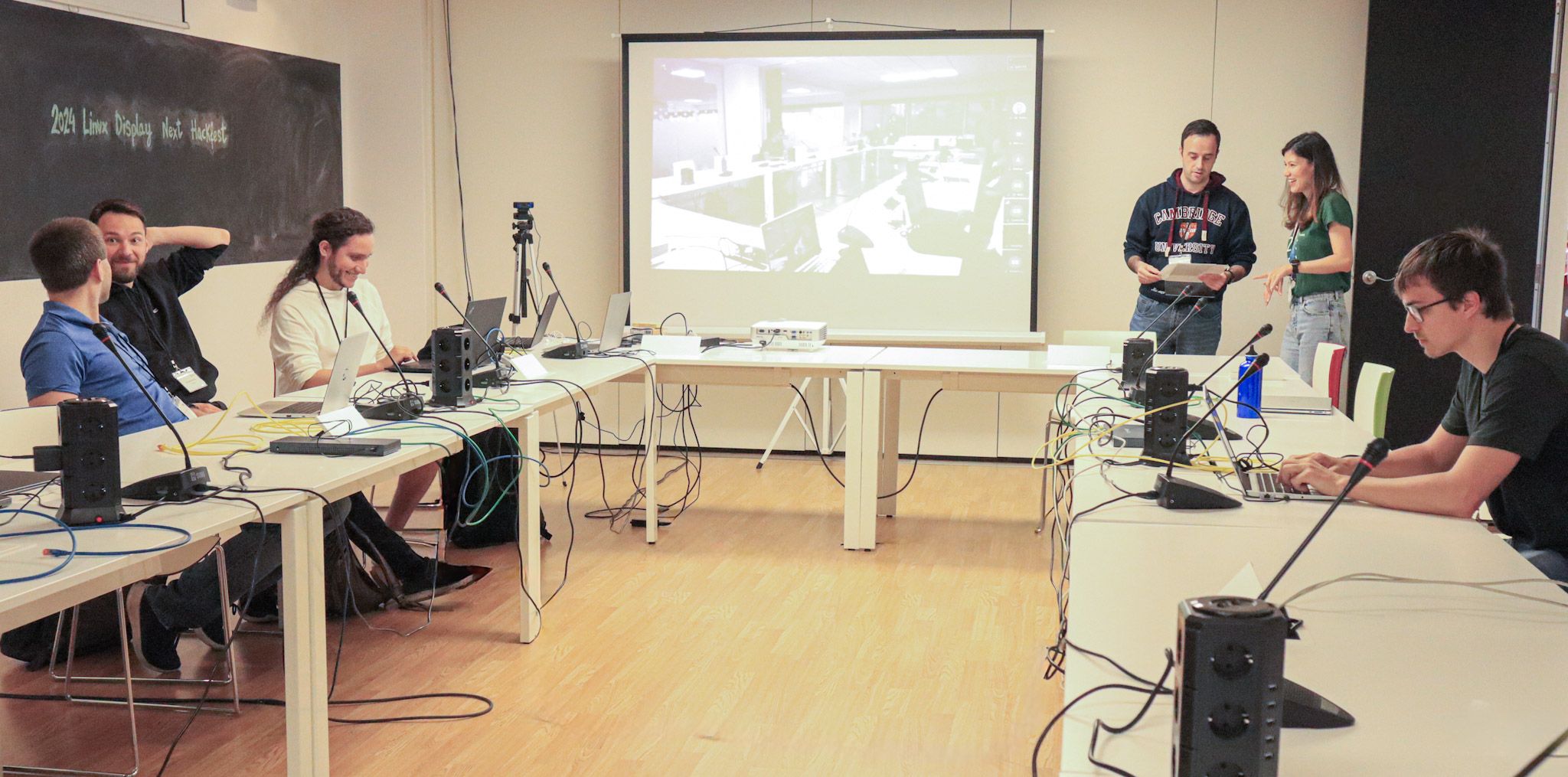
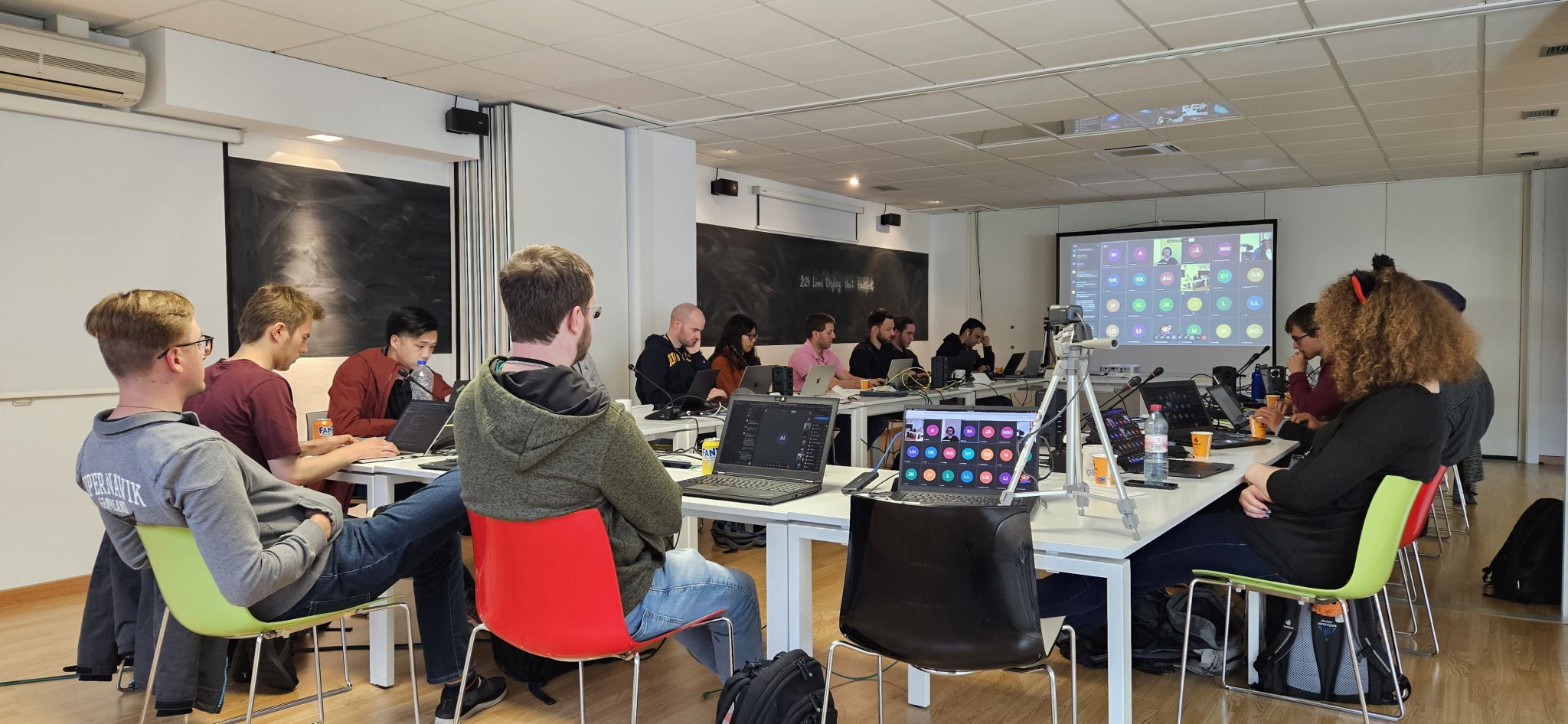
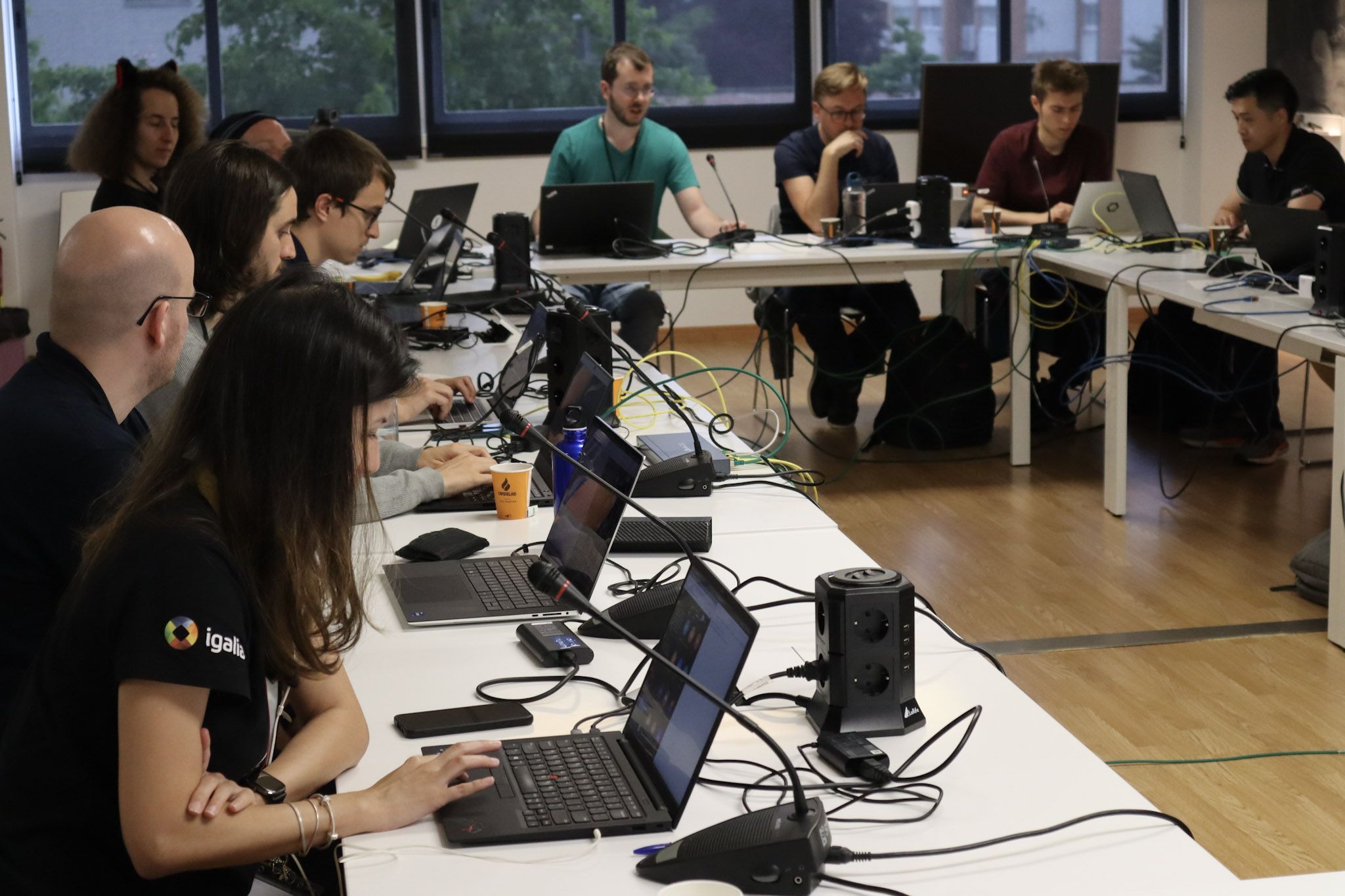
Hey everyone! The 2024 Linux Display Next hackfest concluded in May, and its outcomes continue to shape the Linux Display stack. Igalia hosted this year s event in A Coru a, Spain, bringing together leading experts in the field. Samuel Iglesias and I organized this year s edition and this blog post summarizes the experience and its fruits. One of the highlights of this year s hackfest was the wide range of backgrounds represented by our 40 participants (both on-site and remotely). Developers and experts from various companies and open-source projects came together to advance the Linux Display ecosystem. You can find the list of participants here. The event covered a broad spectrum of topics affecting the development of Linux projects, user experiences, and the future of display technologies on Linux. From cutting-edge topics to long-term discussions, you can check the event agenda here.

Organization Highlights The hackfest was marked by in-depth discussions and knowledge sharing among Linux contributors, making everyone inspired, informed, and connected to the community. Building on feedback from the previous year, we refined the unconference format to enhance participant preparation and engagement. Structured Agenda and Timeboxes: Each session had a defined scope, time limit (1h20 or 2h10), and began with an introductory talk on the topic.
  • Participant-Led Discussions: We pre-selected in-person participants to lead discussions, allowing them to prepare introductions, resources, and scope.
  • Transparent Scheduling: The schedule was shared in advance as GitHub issues, encouraging participants to review and prepare for sessions of interest.
Engaging Sessions: The hackfest featured a variety of topics, including presentations and discussions on how participants were addressing specific subjects within their companies.
  • No Breakout Rooms, No Overlaps: All participants chose to attend all sessions, eliminating the need for separate breakout rooms. We also adapted run-time schedule to keep everybody involved in the same topics.
  • Real-time Updates: We provided notifications and updates through dedicated emails and the event matrix room.
Strengthening Community Connections: The hackfest offered ample opportunities for networking among attendees.
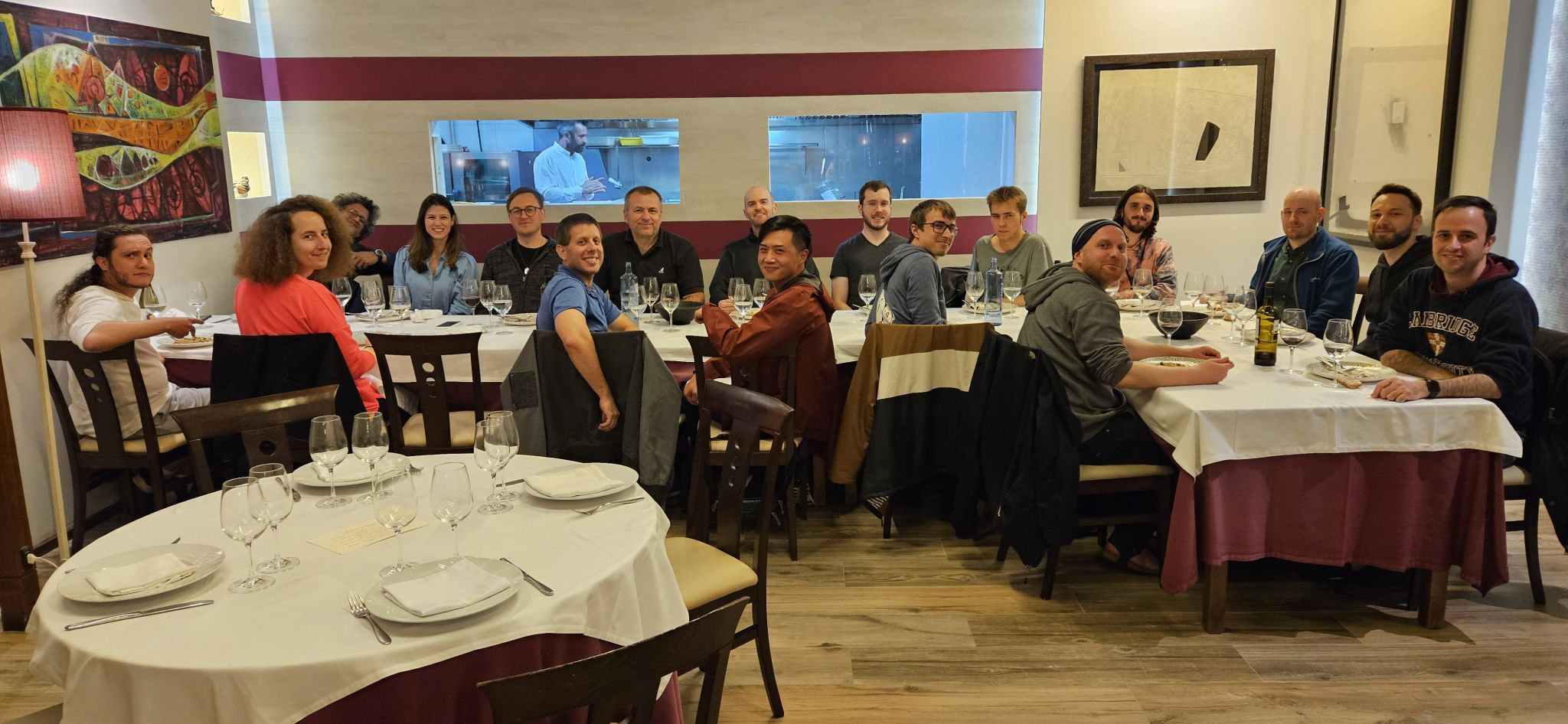
  • Social Events: Igalia sponsored coffee breaks, lunches, and a dinner at a local restaurant.
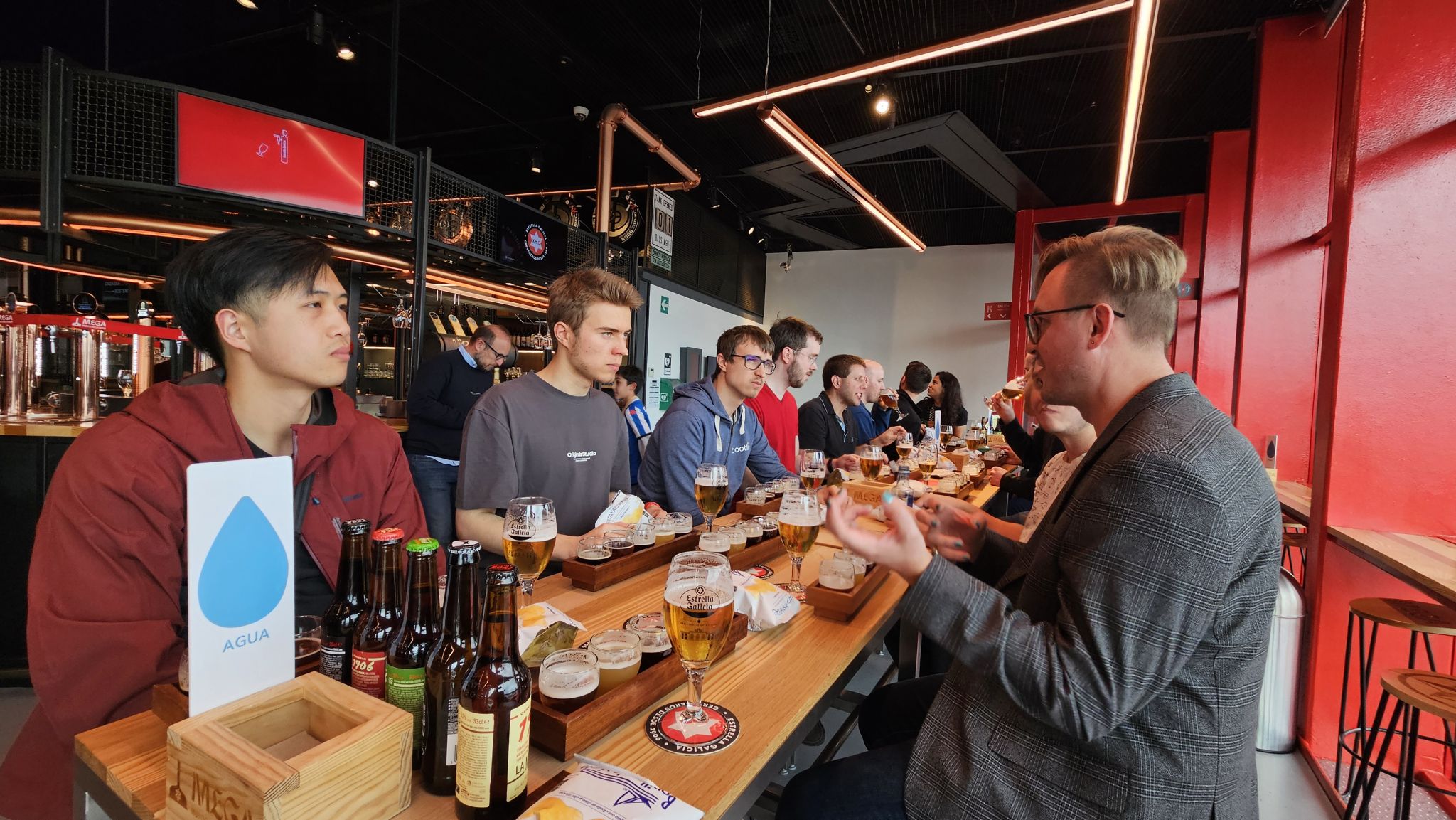
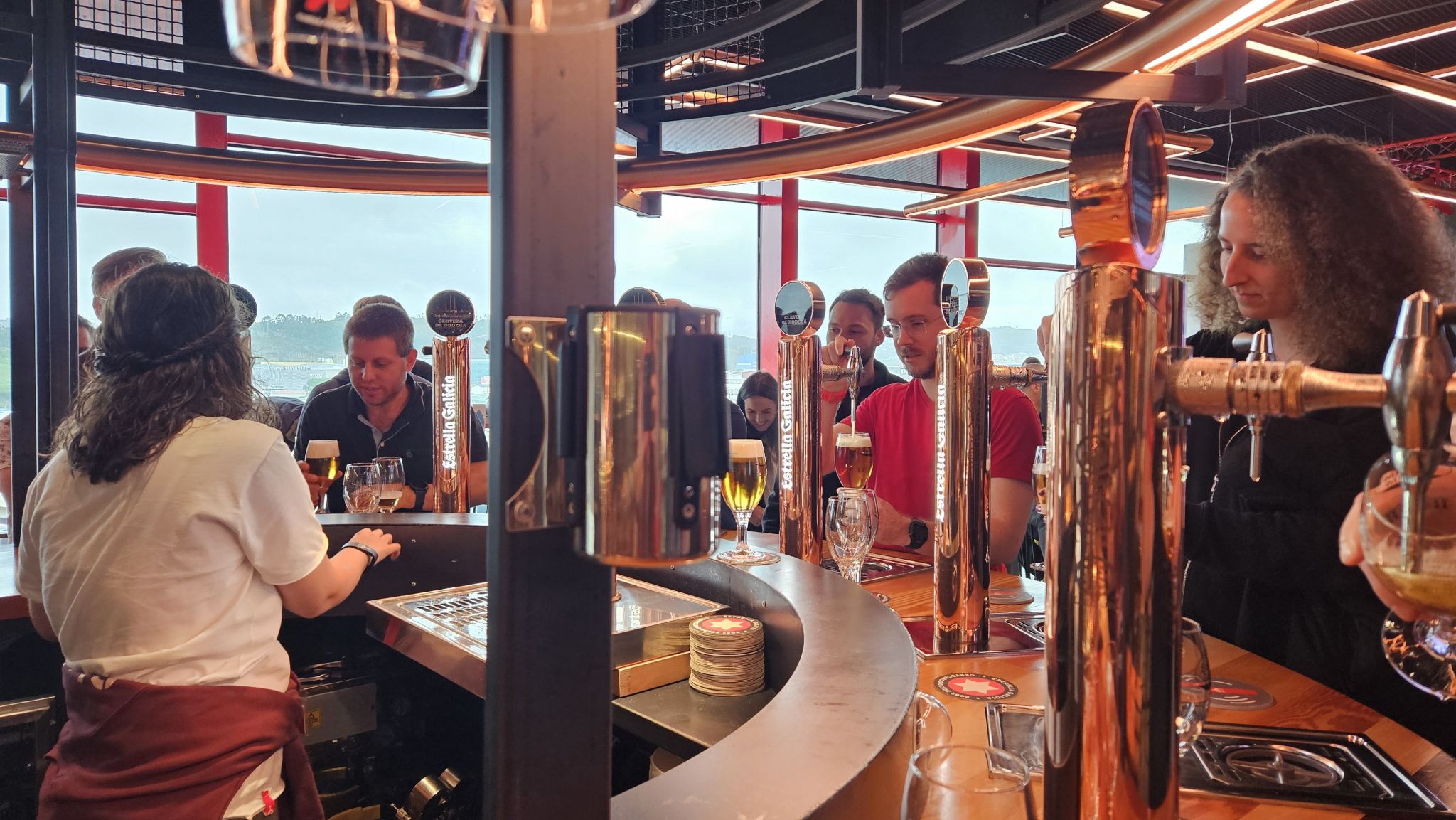
  • Museum Visit: Participants enjoyed a sponsored visit to the Museum of Estrela Galicia Beer (MEGA).

Fruitful Discussions and Follow-up The structured agenda and breaks allowed us to cover multiple topics during the hackfest. These discussions have led to new display feature development and improvements, as evidenced by patches, merge requests, and implementations in project repositories and mailing lists. With the KMS color management API taking shape, we discussed refinements and best approaches to cover the variety of color pipeline from different hardware-vendors. We are also investigating techniques for a performant SDR<->HDR content reproduction and reducing latency and power consumption when using the color blocks of the hardware.

Color Management/HDR Color Management and HDR continued to be the hottest topic of the hackfest. We had three sessions dedicated to discuss Color and HDR across Linux Display stack layers.

Color/HDR (Kernel-Level) Harry Wentland (AMD) led this session. Here, kernel Developers shared the Color Management pipeline of AMD, Intel and NVidia. We counted with diagrams and explanations from HW-vendors developers that discussed differences, constraints and paths to fit them into the KMS generic color management properties such as advertising modeset needs, IN\_FORMAT, segmented LUTs, interpolation types, etc. Developers from Qualcomm and ARM also added information regarding their hardware. Upstream work related to this session:

Color/HDR (Compositor-Level) Sebastian Wick (RedHat) led this session. It started with Sebastian s presentation covering Wayland color protocols and compositor implementation. Also, an explanation of APIs provided by Wayland and how they can be used to achieve better color management for applications and discussions around ICC profiles and color representation metadata. There was also an intensive Q&A about LittleCMS with Marti Maria. Upstream work related to this session:

Color/HDR (Use Cases and Testing) Christopher Cameron (Google) and Melissa Wen (Igalia) led this session. In contrast to the other sessions, here we focused less on implementation and more on brainstorming and reflections of real-world SDR and HDR transformations (use and validation) and gainmaps. Christopher gave a nice presentation explaining HDR gainmap images and how we should think of HDR. This presentation and Q&A were important to put participants at the same page of how to transition between SDR and HDR and somehow emulating HDR. We also discussed on the usage of a kernel background color property. Finally, we discussed a bit about Chamelium and the future of VKMS (future work and maintainership).

Power Savings vs Color/Latency Mario Limonciello (AMD) led this session. Mario gave an introductory presentation about AMD ABM (adaptive backlight management) that is similar to Intel DPST. After some discussions, we agreed on exposing a kernel property for power saving policy. This work was already merged on kernel and the userspace support is under development. Upstream work related to this session:

Strategy for video and gaming use-cases Leo Li (AMD) led this session. Miguel Casas (Google) started this session with a presentation of Overlays in Chrome/OS Video, explaining the main goal of power saving by switching off GPU for accelerated compositing and the challenges of different colorspace/HDR for video on Linux. Then Leo Li presented different strategies for video and gaming and we discussed the userspace need of more detailed feedback mechanisms to understand failures when offloading. Also, creating a debugFS interface came up as a tool for debugging and analysis.

Real-time scheduling and async KMS API Xaver Hugl (KDE/BlueSystems) led this session. Compositor developers have exposed some issues with doing real-time scheduling and async page flips. One is that the Kernel limits the lifetime of realtime threads and if a modeset takes too long, the thread will be killed and thus the compositor as well. Also, simple page flips take longer than expected and drivers should optimize them. Another issue is the lack of feedback to compositors about hardware programming time and commit deadlines (the lastest possible time to commit). This is difficult to predict from drivers, since it varies greatly with the type of properties. For example, color management updates take much longer. In this regard, we discusssed implementing a hw_done callback to timestamp when the hardware programming of the last atomic commit is complete. Also an API to pre-program color pipeline in a kind of A/B scheme. It may not be supported by all drivers, but might be useful in different ways.

VRR/Frame Limit, Display Mux, Display Control, and more and beer We also had sessions to discuss a new KMS API to mitigate headaches on VRR and Frame Limit as different brightness level at different refresh rates, abrupt changes of refresh rates, low frame rate compensation (LFC) and precise timing in VRR more. On Display Control we discussed features missing in the current KMS interface for HDR mode, atomic backlight settings, source-based tone mapping, etc. We also discussed the need of a place where compositor developers can post TODOs to be developed by KMS people. The Content-adaptive Scaling and Sharpening session focused on sharpening and scaling filters. In the Display Mux session, we discussed proposals to expose the capability of dynamic mux switching display signal between discrete and integrated GPUs. In the last session of the 2024 Display Next Hackfest, participants representing different compositors summarized current and future work and built a Linux Display wish list , which includes: improvements to VTTY and HDR switching, better dmabuf API for multi-GPU support, definition of tone mapping, blending and scaling sematics, and wayland protocols for advertising to clients which colorspaces are supported. We closed this session with a status update on feature development by compositors, including but not limited to: plane offloading (from libcamera to output) / HDR video offloading (dma-heaps) / plane-based scrolling for web pages, color management / HDR / ICC profiles support, addressing issues such as flickering when color primaries don t match, etc. After three days of intensive discussions, all in-person participants went to a guided tour at the Museum of Extrela Galicia beer (MEGA), pouring and tasting the most famous local beer.

Feedback and Future Directions Participants provided valuable feedback on the hackfest, including suggestions for future improvements.
  • Schedule and Break-time Setup: Having a pre-defined agenda and schedule provided a better balance between long discussions and mental refreshments, preventing the fatigue caused by endless discussions.
  • Action Points: Some participants recommended explicitly asking for action points at the end of each session and assigning people to follow-up tasks.
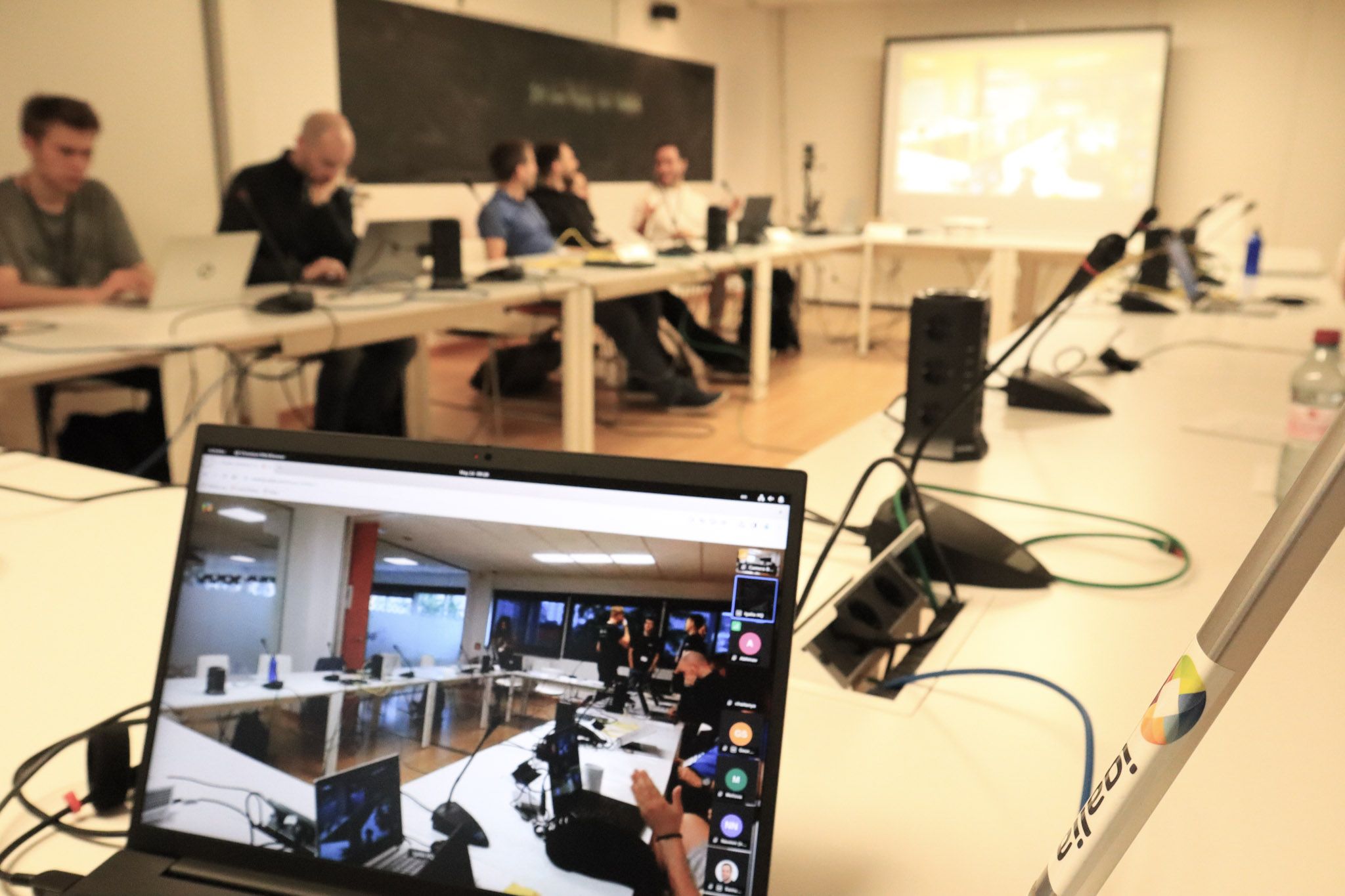
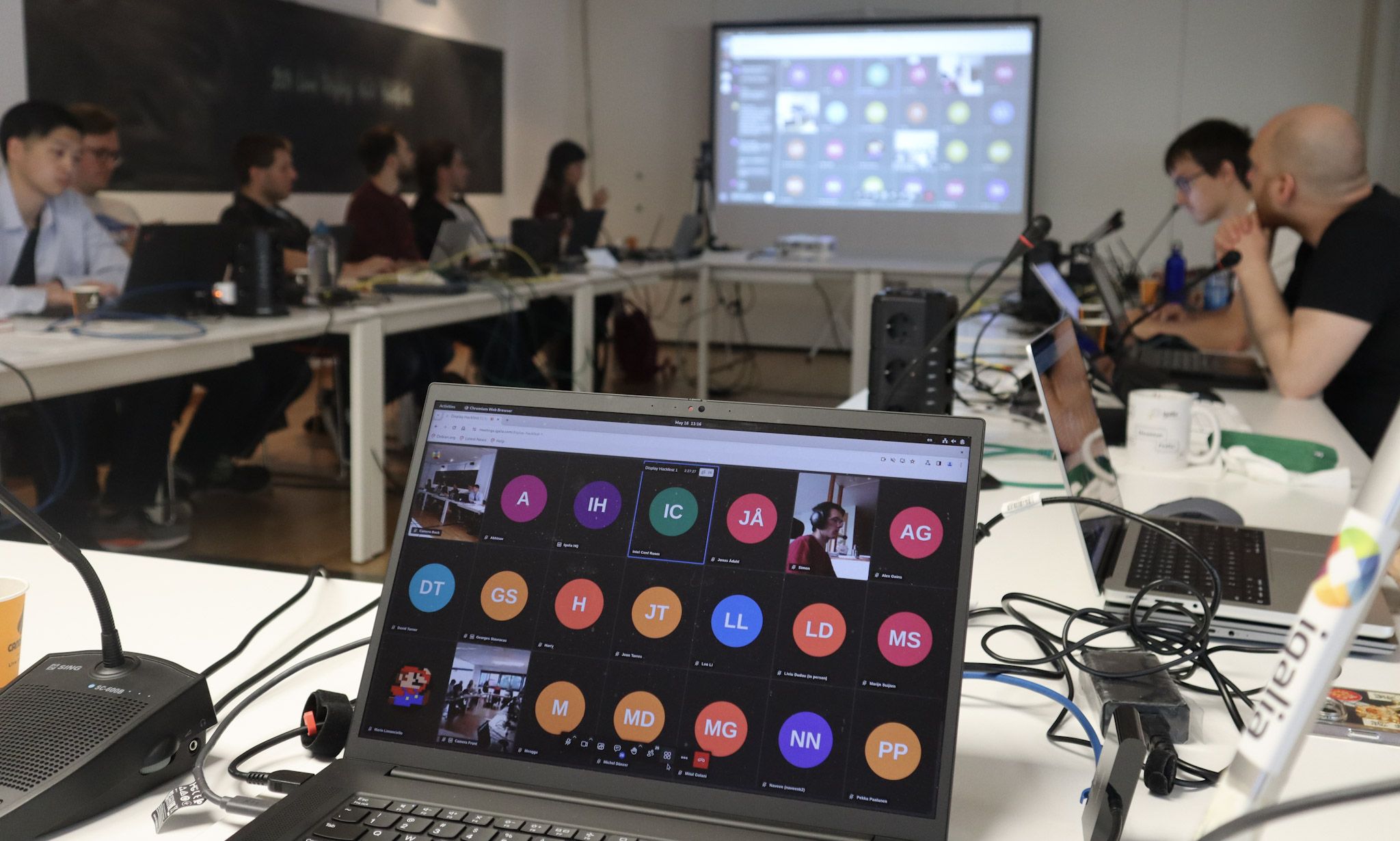
  • Remote Participation: Remote attendees appreciated the inclusive setup and opportunities to actively participate in discussions.
  • Technical Challenges: There were bandwidth and video streaming issues during some sessions due to the large number of participants.

Thank you for joining the 2024 Display Next Hackfest We can t help but thank the 40 participants, who engaged in-person or virtually on relevant discussions, for a collaborative evolution of the Linux display stack and for building an insightful agenda. A big thank you to the leaders and presenters of the nine sessions: Christopher Cameron (Google), Harry Wentland (AMD), Leo Li (AMD), Mario Limoncello (AMD), Sebastian Wick (RedHat) and Xaver Hugl (KDE/BlueSystems) for the effort in preparing the sessions, explaining the topic and guiding discussions. My acknowledge to the others in-person participants that made such an effort to travel to A Coru a: Alex Goins (NVIDIA), David Turner (Raspberry Pi), Georges Stavracas (Igalia), Joan Torres (SUSE), Liviu Dudau (Arm), Louis Chauvet (Bootlin), Robert Mader (Collabora), Tian Mengge (GravityXR), Victor Jaquez (Igalia) and Victoria Brekenfeld (System76). It was and awesome opportunity to meet you and chat face-to-face. Finally, thanks virtual participants who couldn t make it in person but organized their days to actively participate in each discussion, adding different perspectives and valuable inputs even remotely: Abhinav Kumar (Qualcomm), Chaitanya Borah (Intel), Christopher Braga (Qualcomm), Dor Askayo (Red Hat), Jiri Koten (RedHat), Jonas dahl (Red Hat), Leandro Ribeiro (Collabora), Marti Maria (Little CMS), Marijn Suijten, Mario Kleiner, Martin Stransky (Red Hat), Michel D nzer (Red Hat), Miguel Casas-Sanchez (Google), Mitulkumar Golani (Intel), Naveen Kumar (Intel), Niels De Graef (Red Hat), Pekka Paalanen (Collabora), Pichika Uday Kiran (AMD), Shashank Sharma (AMD), Sriharsha PV (AMD), Simon Ser, Uma Shankar (Intel) and Vikas Korjani (AMD). We look forward to another successful Display Next hackfest, continuing to drive innovation and improvement in the Linux display ecosystem!

25 September 2024

Melissa Wen: Reflections on 2024 Linux Display Next Hackfest

Hey everyone! The 2024 Linux Display Next hackfest concluded in May, and its outcomes continue to shape the Linux Display stack. Igalia hosted this year s event in A Coru a, Spain, bringing together leading experts in the field. Samuel Iglesias and I organized this year s edition and this blog post summarizes the experience and its fruits. One of the highlights of this year s hackfest was the wide range of backgrounds represented by our 40 participants (both on-site and remotely). Developers and experts from various companies and open-source projects came together to advance the Linux Display ecosystem. You can find the list of participants here. The event covered a broad spectrum of topics affecting the development of Linux projects, user experiences, and the future of display technologies on Linux. From cutting-edge topics to long-term discussions, you can check the event agenda here.

Organization Highlights The hackfest was marked by in-depth discussions and knowledge sharing among Linux contributors, making everyone inspired, informed, and connected to the community. Building on feedback from the previous year, we refined the unconference format to enhance participant preparation and engagement. Structured Agenda and Timeboxes: Each session had a defined scope, time limit (1h20 or 2h10), and began with an introductory talk on the topic.
  • Participant-Led Discussions: We pre-selected in-person participants to lead discussions, allowing them to prepare introductions, resources, and scope.
  • Transparent Scheduling: The schedule was shared in advance as GitHub issues, encouraging participants to review and prepare for sessions of interest.
Engaging Sessions: The hackfest featured a variety of topics, including presentations and discussions on how participants were addressing specific subjects within their companies.
  • No Breakout Rooms, No Overlaps: All participants chose to attend all sessions, eliminating the need for separate breakout rooms. We also adapted run-time schedule to keep everybody involved in the same topics.
  • Real-time Updates: We provided notifications and updates through dedicated emails and the event matrix room.
Strengthening Community Connections: The hackfest offered ample opportunities for networking among attendees.
  • Social Events: Igalia sponsored coffee breaks, lunches, and a dinner at a local restaurant.
  • Museum Visit: Participants enjoyed a sponsored visit to the Museum of Estrela Galicia Beer (MEGA).

Fruitful Discussions and Follow-up The structured agenda and breaks allowed us to cover multiple topics during the hackfest. These discussions have led to new display feature development and improvements, as evidenced by patches, merge requests, and implementations in project repositories and mailing lists. With the KMS color management API taking shape, we discussed refinements and best approaches to cover the variety of color pipeline from different hardware-vendors. We are also investigating techniques for a performant SDR<->HDR content reproduction and reducing latency and power consumption when using the color blocks of the hardware.

Color Management/HDR Color Management and HDR continued to be the hottest topic of the hackfest. We had three sessions dedicated to discuss Color and HDR across Linux Display stack layers.

Color/HDR (Kernel-Level) Harry Wentland (AMD) led this session. Here, kernel Developers shared the Color Management pipeline of AMD, Intel and NVidia. We counted with diagrams and explanations from HW-vendors developers that discussed differences, constraints and paths to fit them into the KMS generic color management properties such as advertising modeset needs, IN\_FORMAT, segmented LUTs, interpolation types, etc. Developers from Qualcomm and ARM also added information regarding their hardware. Upstream work related to this session:

Color/HDR (Compositor-Level) Sebastian Wick (RedHat) led this session. It started with Sebastian s presentation covering Wayland color protocols and compositor implementation. Also, an explanation of APIs provided by Wayland and how they can be used to achieve better color management for applications and discussions around ICC profiles and color representation metadata. There was also an intensive Q&A about LittleCMS with Marti Maria. Upstream work related to this session:

Color/HDR (Use Cases and Testing) Christopher Cameron (Google) and Melissa Wen (Igalia) led this session. In contrast to the other sessions, here we focused less on implementation and more on brainstorming and reflections of real-world SDR and HDR transformations (use and validation) and gainmaps. Christopher gave a nice presentation explaining HDR gainmap images and how we should think of HDR. This presentation and Q&A were important to put participants at the same page of how to transition between SDR and HDR and somehow emulating HDR. We also discussed on the usage of a kernel background color property. Finally, we discussed a bit about Chamelium and the future of VKMS (future work and maintainership).

Power Savings vs Color/Latency Mario Limonciello (AMD) led this session. Mario gave an introductory presentation about AMD ABM (adaptive backlight management) that is similar to Intel DPST. After some discussions, we agreed on exposing a kernel property for power saving policy. This work was already merged on kernel and the userspace support is under development. Upstream work related to this session:

Strategy for video and gaming use-cases Leo Li (AMD) led this session. Miguel Casas (Google) started this session with a presentation of Overlays in Chrome/OS Video, explaining the main goal of power saving by switching off GPU for accelerated compositing and the challenges of different colorspace/HDR for video on Linux. Then Leo Li presented different strategies for video and gaming and we discussed the userspace need of more detailed feedback mechanisms to understand failures when offloading. Also, creating a debugFS interface came up as a tool for debugging and analysis.

Real-time scheduling and async KMS API Xaver Hugl (KDE/BlueSystems) led this session. Compositor developers have exposed some issues with doing real-time scheduling and async page flips. One is that the Kernel limits the lifetime of realtime threads and if a modeset takes too long, the thread will be killed and thus the compositor as well. Also, simple page flips take longer than expected and drivers should optimize them. Another issue is the lack of feedback to compositors about hardware programming time and commit deadlines (the lastest possible time to commit). This is difficult to predict from drivers, since it varies greatly with the type of properties. For example, color management updates take much longer. In this regard, we discusssed implementing a hw_done callback to timestamp when the hardware programming of the last atomic commit is complete. Also an API to pre-program color pipeline in a kind of A/B scheme. It may not be supported by all drivers, but might be useful in different ways.

VRR/Frame Limit, Display Mux, Display Control, and more and beer We also had sessions to discuss a new KMS API to mitigate headaches on VRR and Frame Limit as different brightness level at different refresh rates, abrupt changes of refresh rates, low frame rate compensation (LFC) and precise timing in VRR more. On Display Control we discussed features missing in the current KMS interface for HDR mode, atomic backlight settings, source-based tone mapping, etc. We also discussed the need of a place where compositor developers can post TODOs to be developed by KMS people. The Content-adaptive Scaling and Sharpening session focused on sharpening and scaling filters. In the Display Mux session, we discussed proposals to expose the capability of dynamic mux switching display signal between discrete and integrated GPUs. In the last session of the 2024 Display Next Hackfest, participants representing different compositors summarized current and future work and built a Linux Display wish list , which includes: improvements to VTTY and HDR switching, better dmabuf API for multi-GPU support, definition of tone mapping, blending and scaling sematics, and wayland protocols for advertising to clients which colorspaces are supported. We closed this session with a status update on feature development by compositors, including but not limited to: plane offloading (from libcamera to output) / HDR video offloading (dma-heaps) / plane-based scrolling for web pages, color management / HDR / ICC profiles support, addressing issues such as flickering when color primaries don t match, etc. After three days of intensive discussions, all in-person participants went to a guided tour at the Museum of Extrela Galicia beer (MEGA), pouring and tasting the most famous local beer.

Feedback and Future Directions Participants provided valuable feedback on the hackfest, including suggestions for future improvements.
  • Schedule and Break-time Setup: Having a pre-defined agenda and schedule provided a better balance between long discussions and mental refreshments, preventing the fatigue caused by endless discussions.
  • Action Points: Some participants recommended explicitly asking for action points at the end of each session and assigning people to follow-up tasks.
  • Remote Participation: Remote attendees appreciated the inclusive setup and opportunities to actively participate in discussions.
  • Technical Challenges: There were bandwidth and video streaming issues during some sessions due to the large number of participants.

Thank you for joining the 2024 Display Next Hackfest We can t help but thank the 40 participants, who engaged in-person or virtually on relevant discussions, for a collaborative evolution of the Linux display stack and for building an insightful agenda. A big thank you to the leaders and presenters of the nine sessions: Christopher Cameron (Google), Harry Wentland (AMD), Leo Li (AMD), Mario Limoncello (AMD), Sebastian Wick (RedHat) and Xaver Hugl (KDE/BlueSystems) for the effort in preparing the sessions, explaining the topic and guiding discussions. My acknowledge to the others in-person participants that made such an effort to travel to A Coru a: Alex Goins (NVIDIA), David Turner (Raspberry Pi), Georges Stavracas (Igalia), Joan Torres (SUSE), Liviu Dudau (Arm), Louis Chauvet (Bootlin), Robert Mader (Collabora), Tian Mengge (GravityXR), Victor Jaquez (Igalia) and Victoria Brekenfeld (System76). It was and awesome opportunity to meet you and chat face-to-face. Finally, thanks virtual participants who couldn t make it in person but organized their days to actively participate in each discussion, adding different perspectives and valuable inputs even remotely: Abhinav Kumar (Qualcomm), Chaitanya Borah (Intel), Christopher Braga (Qualcomm), Dor Askayo, Jiri Koten (RedHat), Jonas dahl (Red Hat), Leandro Ribeiro (Collabora), Marti Maria (Little CMS), Marijn Suijten, Mario Kleiner, Martin Stransky (Red Hat), Michel D nzer (Red Hat), Miguel Casas-Sanchez (Google), Mitulkumar Golani (Intel), Naveen Kumar (Intel), Niels De Graef (Red Hat), Pekka Paalanen (Collabora), Pichika Uday Kiran (AMD), Shashank Sharma (AMD), Sriharsha PV (AMD), Simon Ser, Uma Shankar (Intel) and Vikas Korjani (AMD). We look forward to another successful Display Next hackfest, continuing to drive innovation and improvement in the Linux display ecosystem!

1 September 2024

Colin Watson: Free software activity in August 2024

All but about four hours of my Debian contributions this month were sponsored by Freexian. (I ended up going a bit over my 20% billing limit this month.) You can also support my work directly via Liberapay. man-db and friends I released libpipeline 1.5.8 and man-db 2.13.0. Since autopkgtests are great for making sure we spot regressions caused by changes in dependencies, I added one to man-db that runs the upstream tests against the installed package. This required some preparatory work upstream, but otherwise was surprisingly easy to do. OpenSSH I fixed the various 9.8 regressions I mentioned last month: socket activation, libssh2, and Twisted. There were a few other regressions reported too: TCP wrappers support, openssh-server-udeb, and xinetd were all broken by changes related to the listener/per-session binary split, and I fixed all of those. Once all that had made it through to testing, I finally uploaded the first stage of my plan to split out GSS-API support: there are now openssh-client-gssapi and openssh-server-gssapi packages in unstable, and if you use either GSS-API authentication or key exchange then you should install the corresponding package in order for upgrades to trixie+1 to work correctly. I ll write a release note once this has reached testing. Multiple identical results from getaddrinfo I expect this is really a bug in a chroot creation script somewhere, but I haven t been able to track down what s causing it yet. My sbuild chroots, and apparently Lucas Nussbaum s as well, have an /etc/hosts that looks like this:
$ cat /var/lib/schroot/chroots/sid-amd64/etc/hosts
127.0.0.1       localhost
127.0.1.1       [...]
127.0.0.1       localhost ip6-localhost ip6-loopback
The last line clearly ought to be ::1 rather than 127.0.0.1; but things mostly work anyway, since most code doesn t really care which protocol it uses to talk to localhost. However, a few things try to set up test listeners by calling getaddrinfo("localhost", ...) and binding a socket for each result. This goes wrong if there are duplicates in the resulting list, and the test output is typically very confusing: it looks just like what you d see if a test isn t tearing down its resources correctly, which is a much more common thing for a test suite to get wrong, so it took me a while to spot the problem. I ran into this in both python-asyncssh (#1052788, upstream PR) and Ruby (ruby3.1/#1069399, ruby3.2/#1064685, ruby3.3/#1077462, upstream PR). The latter took a while since Ruby isn t one of my languages, but hey, I ve tackled much harder side quests. I NMUed ruby3.1 for this since it was showing up as a blocker for openssl testing migration, but haven t done the other active versions (yet, anyway). OpenSSL vs. cryptography I tend to care about openssl migrating to testing promptly, since openssh uploads have a habit of getting stuck on it otherwise. Debian s OpenSSL packaging recently split out some legacy code (cryptography that s no longer considered a good idea to use, but that s sometimes needed for compatibility) to an openssl-legacy-provider package, and added a Recommends on it. Most users install Recommends, but package build processes don t; and the Python cryptography package requires this code unless you set the CRYPTOGRAPHY_OPENSSL_NO_LEGACY=1 environment variable, which caused a bunch of packages that build-depend on it to fail to build. After playing whack-a-mole setting that environment variable in a few packages build process, I decided I didn t want to be caught in the middle here and filed an upstream issue to see if I could get Debian s OpenSSL team and cryptography s upstream talking to each other directly. There was some moderately spirited discussion and the issue remains open, but for the time being the OpenSSL team has effectively reverted the change so it s no longer a pressing problem. GCC 14 regressions Continuing from last month, I fixed build failures in pccts (NMU) and trn4. Python team I upgraded alembic, automat, gunicorn, incremental, referencing, pympler (fixing compatibility with Python >= 3.10), python-aiohttp, python-asyncssh (fixing CVE-2023-46445, CVE-2023-46446, and CVE-2023-48795), python-avro, python-multidict (fixing a build failure with GCC 14), python-tokenize-rt, python-zipp, pyupgrade, twisted (fixing CVE-2024-41671 and CVE-2024-41810), zope.exceptions, zope.interface, zope.proxy, zope.security, and zope.testrunner to new upstream versions. In the process, I added myself to Uploaders for zope.interface; I m reasonably comfortable with the Zope Toolkit and I seem to be gradually picking up much of its maintenance in Debian. A few of these required their own bits of yak-shaving: I improved some Multi-Arch: foreign tagging (python-importlib-metadata, python-typing-extensions, python-zipp). I fixed build failures in pipenv, python-stdlib-list, psycopg3, and sen, and fixed autopkgtest failures in autoimport (upstream PR), python-semantic-release and rstcheck. Upstream for zope.file (not in Debian) filed an issue about a test failure with Python 3.12, which I tracked down to a Python 3.12 compatibility PR in zope.security. I made python-nacl build reproducibly (upstream PR). I moved aliased files from / to /usr in timekpr-next (#1073722). Installer team I applied a patch from Ubuntu to make os-prober support building with the noudeb profile (#983325).

29 August 2024

Jonathan Carter: Orphaning bcachefs-tools in Debian

Around a decade ago, I was happy to learn about bcache a Linux block cache system that implements tiered storage (like a pool of hard disks with SSDs for cache) on Linux. At that stage, ZFS on Linux was nowhere close to where it is today, so any progress on gaining more ZFS features in general Linux systems was very welcome. These days we care a bit less about tiered storage, since any cost benefit in using anything else than nvme tends to quickly evaporate compared to time you eventually lose on it. In 2015, it was announced that bcache would grow into its own filesystem. This was particularly exciting and it caused quite a buzz in the Linux community, because it brought along with it more features that compare with ZFS (and also btrfs), including built-in compression, built-in encryption, check-summing and RAID implementations. Unlike ZFS, it didn t have a dkms module, so if you wanted to test bcachefs back then, you d have to pull the entire upstream bcachefs kernel source tree and compile it. Not ideal, but for a promise of a new, shiny, full-featured filesystem, it was worth it. In 2019, it seemed that the time has come for bcachefs to be merged into Linux, so I thought that it s about time we have the userspace tools (bcachefs-tools) packaged in Debian. Even if the Debian kernel wouldn t have it yet by the time the bullseye (Debian 11) release happened, it might still have been useful for a future backported kernel or users who roll their own. By total coincidence, the first git snapshot that I got into Debian (version 0.1+git20190829.aa2a42b) was committed exactly 5 years ago today. It was quite easy to package it, since it was written in C and shipped with a makefile that just worked, and it made it past NEW into unstable in 19 January 2020, just as I was about to head off to FOSDEM as the pandemic started, but that s of course a whole other story. Fast-forwarding towards the end of 2023, version 1.2 shipped with some utilities written in Rust, this caused a little delay, since I wasn t at all familiar with Rust packaging yet, so I shipped an update that didn t yet include those utilities, and saw this as an opportunity to learn more about how the Rust eco-system worked and Rust in Debian. So, back in April the Rust dependencies for bcachefs-tools in Debian didn t at all match the build requirements. I got some help from the Rust team who says that the common practice is to relax the dependencies of Rust software so that it builds in Debian. So errno, which needed the exact version 0.2, was relaxed so that it could build with version 0.4 in Debian, udev 0.7 was relaxed for 0.8 in Debian, memoffset from 0.8.5 to 0.6.5, paste from 1.0.11 to 1.08 and bindgen from 0.69.9 to 0.66. I found this a bit disturbing, but it seems that some Rust people have lots of confidence that if something builds, it will run fine. And at least it did build, and the resulting binaries did work, although I m personally still not very comfortable or confident about this approach (perhaps that might change as I learn more about Rust). With that in mind, at this point you may wonder how any distribution could sanely package this. The problem is that they can t. Fedora and other distributions with stable releases take a similar approach to what we ve done in Debian, while distributions with much more relaxed policies (like Arch) include all the dependencies as they are vendored upstream. As it stands now, bcachefs-tools is impossible to maintain in Debian stable. While my primary concerns when packaging, are for Debian unstable and the next stable release, I also keep in mind people who have to support these packages long after I stopped caring about them (like Freexian who does LTS support for Debian or Canonical who has long-term Ubuntu support, and probably other organisations that I ve never even heard of yet). And of course, if bcachfs-tools don t have any usable stable releases, it doesn t have any LTS releases either, so anyone who needs to support bcachefs-tools long-term has to carry the support burden on their own, and if they bundle it s dependencies, then those as well. I ll admit that I don t have any solution for fixing this. I suppose if I were upstream I might look into the possibility of at least supporting a larger range of recent dependencies (usually easy enough if you don t hop onto the newest features right away) so that distributions with stable releases only need to concern themselves with providing some minimum recent versions, but even if that could work, the upstream author is 100% against any solution other than vendoring all its dependencies with the utility and insisting that it must only be built using these bundled dependencies. I ve made 6 uploads for this package so far this year, but still I constantly get complaints that it s out of date and that it s ancient. If a piece of software is considered so old that it s useless by the time it s been published for two or three months, then there s no way it can survive even a usual stable release cycle, nevermind any kind of long-term support. With this in mind (not even considering some hostile emails that I recently received from the upstream developer or his public rants on lkml and reddit), I decided to remove bcachefs-tools from Debian completely. Although after discussing this with another DD, I was convinced to orphan it instead, which I have now done. I made an upload to experimental so that it s still available if someone wants to work on it (without having to go through NEW again), it s been removed from unstable so that it doesn t migrate to testing, and the ancient (especially by bcachefs-tools standards) versions that are in stable and oldstable will be removed too, since they are very likely to cause damage with any recent kernel versions that support bcachefs. And so, my adventure with bcachefs-tools comes to an end. I d advise that if you consider using bcachefs for any kind of production use in the near future, you first consider how supportable it is long-term, and whether there s really anyone at all that is succeeding in providing stable support for it.

24 August 2024

Jonathan Dowland: Fediverse and feeds

It's clear that Twitter has been circling the drain for years, but things have been especially bad in recent times. I haven't quit (I have some sympathy with the viewpoint don't cede territory to fascists) but I try to read it much less, and I certainly post much less. Especially at the moment, I really appreciate distractions. Last time I wrote about Mastodon (by which I meant the Fediverse1), I was looking for a new instance to try. I settled on Debian's social instance2. I'm now trying to put any energy I might spend engaging on Twitter, into engaging in the Fediverse instead. (You can follow me via the handle @jon@dow.land, I think, which should repoint to my actual handle, @jmtd@pleroma.debian.social.) There are other potential successors to Twitter: two big ones are Bluesky and Facebook-owned Threads. They are effectively cookie-cutter copies of the Twitter model, and so, we will repeat the same mistakes there. Sadly I see the majority of communities and sub-cultures I follow are migrating to one or the other of these. The Fediverse (or the Mastodon-ish bits of it) should avoid the fate of Twitter. JWZ puts it better and more succinctly than I can. The Fedi experience is, sadly, pretty clunky. So I want to try and write a bit from time to time with tips and tricks that might improve people's experiences. First up, something I discovered only today about Mastodon instances. As JWZ noted, If you are worried about picking the "right" Mastodon instance, don't. Just spin the wheel.. You can spend too much time trying to guess a good answer to this. Better to just get started. At the same time, individual instances are supposed to cater to specific niches. So it could be useful to sample the public posts from an entire instance. For example, to find people to follow, or decide to hop over to that instance yourself. You can't (I think) follow an entire instance from within yours, but, they usually have a public page which shows you the latest traffic. For example, the infosec-themed instance infosec.exchange has one here: https://infosec.exchange/public/local These pages don't provide RSS or Atom feeds3, sadly. I hope that's on the software's roadmap, and hasn't been spurned for ideological reasons. For now at least, OpenRSS provide RSS/Atom feeds for many Mastodon instances. For example, an RSS/Atom feed of the above: https://openrss.org/infosec.exchange/public/local One can add these feeds to your Feed reader and over time get a flavour for the kind of discourse that takes place on given instances. I think the OpenRSS have to manually add Mastodon instances to their service. I tried three instances and only one (infosec.exchange) worked. I'm not sure but I think trying an instance that doesn't work automatically puts it on OpenRSS's backlog.

  1. the Fediverse-versus-Mastodon nomenclature problem is just the the tip of the iceberg, in terms of adoption problems. Mastodon provides a twitter-like service that participates in the Fediverse. But it isn't correct to call the twitter-like service "Mastodon" because other softwares also participate in/provide that service. And it's not correct to call it "Fediverse" because that describes a bigger thing, with e.g. youtube clones also taking part. I'm not sure what the right term should be for "the twitter-like thing". Also, everything I wrote here is probably subtly wrong.
  2. Debian's instance actually runs Pleroma, an alternative to Mastodon. Why should it matter? I think it's healthy for there to be more than one implementation in an open ecosystem. However the experience can be janky, as the features don't perfectly align, some Mastodon features/APIs are not documented/standardised/etc.
  3. I have to remind myself that the concept of RSS/Atom feeds and Feedreaders might need explaining to a modern audience too. Perhaps in another blog post.

11 August 2024

Ravi Dwivedi: My Austrian Visa Refusal Story

Vienna - the capital of Austria - is one of the most visited cities in the world, popular for its rich history, gardens, and cafes, along with well-known artists like Beethoven, Mozart, G del, and Freud. It has also been consistently ranked as the most livable city in the world. For these reasons, I was elated when my friend Snehal invited me last year to visit Vienna for a few days. We included Christmas and New Year s Eve in my itinerary due to the city s popular Christmas markets and lively events. The festive season also ensured that Snehal had some days off for sightseeing. Indians require a visa to visit Austria. Since the travel dates were near, I rushed to book an appointment online with VFS Global in Delhi, and quickly arranged the required documents. However, at VFS, I found out that I had applied in the wrong appointment category (tourist), which depends on the purpose of the visit, and that my travel dates do not allow enough time for visa authorities to make a decision. Apparently, even if you plan to stay only for a part of the trip with the host, you need to apply under the category Visiting Friends and Family . Thus, I had to book another appointment under this category, and took the opportunity to shift my travel dates to allow at least 15 business days for the visa application to be processed, removing Christmas and New Year s Eve from my itinerary. The process went smoothly, and my visa application was submitted by VFS. For reference, here s a list of documents I submitted - The following charges were collected from me.
Service Description Amount (Indian Rupees)
Cash Handling Charge - SAC Code: (SAC:998599) 0
VFS Fee - India - SAC Code: (SAC:998599) 1,820
VISA Fee - India - SAC Code: 7,280
Convenience Fee - SAC Code: (SAC:998599) 182
Courier Service - SAC Code: (SAC:998599) 728
Courier Assurance - SAC Code: (SAC:998599) 182
Total 10,192
I later learned that the courier charges (728 INR) and the courier assurance charges (182 INR) mentioned above were optional. However, VFS didn t ask whether I wanted to include them. When the emabssy is done processing your application, it will send your passport back to VFS, from where you can either collect it yourself or get it couriered back home, which requires you to pay courier charges. However, courier assurance charges do not add any value as VFS cannot assure anything about courier and I suggest you get them removed. My visa application was submitted on the 21st of December 2023. A few days later, on the 29th of December 2023, I received an email from the Austrian embassy asking me to submit an additional document -
Subject: AUSTRIAN VISA APPLICATION - AMENDMENT REQUEST: Ravi Dwivedi VIS 4331 Dear Applicant, On 22.12.2023 your application for Visa C was registered at the Embassy. You are requested to kindly send the scanned copies of the following documents via email to the Embassy or submit the documents at the nearest VFS centre, for further processing of your application:
  • Kindly submit Electronic letter of guarantee EVE- Elektronische Verpflichtungserkl rung obtained from the Fremdenpolizeibeh rde of the sponsor s district in Austria. Once your host company/inviting company has obtained the EVE, please share the reference number (starting from DEL_____) received from the authorities, with the Embassy.
Kindly Note: It is in your own interest to fulfil the requirements as indicated above and submit the missing documents within 14 days of the receipt of this email. Otherwise a decision will be taken based on the documentation available. Sie werden in Ihrem Interesse ersucht, die gekennzeichneten M ngel so schnell wie m glich zu beheben bzw. fehlende Unterlagen umgehend nachzureichen, um die weitere Bearbeitung des Antrages zu erm glichen. Sollten Sie innerhalb 14 Tagen die gekennzeichneten M ngel nicht beheben bzw. die fehlenden Unterlagen nicht nachreichen, wird ber den vorliegenden Antrag ohne diese Unterlagen bzw. M ngelbehebung entschieden. Austrian Embassy New Delhi R.J/ Consular Section +91 11 2419 2700 EP-13, Chandragupta Marg, Chanakyapuri, New Delhi 110 021, India bmeia.gv.at/botschaft/new-delhi facebook.at/AustrianEmbassyNewDelhihttp://www.facebook.at/AustrianEmbassyNewDelhi twitter.com/MFA_Austriahttp://www.twitter.com/MFA_Austria [refocus1][Signatur_V+30]https://www.bmeia.gv.at/en/european-foreign-policy/foreign-trade/refocus-austria/[Logo_AT_IN_22px]
I misunderstood the required document (the EVE) to be a scanned copy of the letter of guarantee form signed by Snehal, and responded by attaching it. Upon researching, Snehal determined that the document is an electronic letter of guarantee, and is supposed to be obtained at a local police station in Vienna. He visited a police station the next day and had a hard time conversing due to the language barrier (German is the common language in Austria, whereas Snehal speaks English). That day was a weekend, so he took an appointment for Monday, but in the meantime the embassy had finished processing my visa. My visa was denied, and the refusal letter stated:
The Austrian embassy in Delhi examined your application; the visa has been refused. The decision is based on the following reason(s):
  • The information submitted regarding the justification for the purpose and conditions of the intended stay was not reliable.
  • There are reasonable doubts as to your intention to leave the territory of the Member States before the expiry of the visa.
Other remarks: You have been given an amendment request, which you have failed to fulfil, or have only fulfilled inadequately, within the deadline set. You are a first-time traveller. The social and economic roots with the home country are not evident. The return from Schengen territory does therefore not seem to be certain.
I could have reapplied after obtaining the EVE, but I didn t because I found the following line
The social and economic roots with the home country are not evident.
offensive for someone who was born and raised in India, got the impression that the absence of electronic guarantee letter was not the only reason behind the refusal, had already wasted 12,000 INR on this application, and my friend s stay in Austria was uncertain after January. In fact, my friend soon returned to India. To summarize -
  1. If you are visiting a host, then the category of appointment at VFS must be Visiting Friends and Family rather than Tourist .
  2. VFS charged me for courier assurance, which is an optional service. Make sure to get these removed from your bill.
  3. Neither my travel agent nor the VFS application center mentioned the EVE.
  4. While the required documents list from the VFS website does mention it in point 6, it leads to a dead link.
  5. Snehal informed me that a mere two months ago, his wife s visa was approved without an EVE. This hints at inconsistency in processing of applications, even those under identical categories.
Such incidents are a waste of time and money for applicants, and an embarrassment to VFS and the Austrian visa authorities. I suggest that the Austrian visa authorities fix that URL, and provide instructions for hosts to obtain the EVE. Credits to Snehal and Contrapunctus for editing, Badri for proofreading.

30 July 2024

Russell Coker: Links July 2024

Interesting Scientific American article about the way that language shapes thought processes and how it was demonstrated in eye tracking experiments with people who have Aboriginal languages as their first language [1]. David Brin wrote an interesting article Do We Really Want Immortality [2]. I disagree with his conclusions about the politics though. Better manufacturing technology should allow decreasing the retirement age while funding schools well. Scientific American has a surprising article about the differences between Chimp and Bonobo parenting [3]. I d never have expected Chimp moms to be protective. Sam Varghese wrote an insightful and informative article about the corruption in Indian politics and the attempts to silence Australian journalist Avani Dias [4]. WorksInProgress has an insightful article about the world s first around the world solo yacht race [5]. It has some interesting ideas about engineering. Htwo has an interesting video about adverts for fake games [6]. It s surprising how they apparently make money from advertising games that don t exist. Elena Hashman wrote an insightful blog post about Chronic Fatigue Syndrome [7]. I hope they make some progress on curing it soon. The fact that it seems similar to long Covid which is quite common suggests that a lot of research will be applied to that sort of thing. Bruce Schneier wrote an insightful blog post about the risks of MS Copilot [8]. Krebs has an interesting article about how Apple does Wifi AP based geo-location and how that can be abused for tracking APs in warzones etc. Bad Apple! [9]. Bruce Schneier wrote an insightful blog post on How AI Will Change Democracy [10]. Charles Stross wrote an amusing and insightful post about MS Recall titled Is Microsoft Trying to Commit Suicide [11]. Bruce Schneier wrote an insightful blog post about seeing the world as a data structure [12]. Luke Miani has an informative YouTube video about eBay scammers selling overprices MacBooks [13]. The Yorkshire Ranter has an insightful article about Ronald Coase and the problems with outsourcing big development contracts as an array of contracts without any overall control [14].

17 July 2024

Dirk Eddelbuettel: Rcpp 1.0.13 on CRAN: Some Updates

rcpp logo The Rcpp Core Team is once again pleased to announce a new release (now at 1.0.13) of the Rcpp package. It arrived on CRAN earlier today, and has since been uploaded to Debian. Windows and macOS builds should appear at CRAN in the next few days, as will builds in different Linux distribution and of course r2u should catch up tomorrow too. The release was uploaded last week, but not only does Rcpp always gets flagged because of the grandfathered .Call(symbol) but CRAN also found two packages regressing which then required them to take five days to get back to us. One issue was known; another did not reproduce under our tests against over 2800 reverse dependencies leading to the eventual release today. Yay. Checks are good and appreciated, and it does take time by humans to review them. This release continues with the six-months January-July cycle started with release 1.0.5 in July 2020. As a reminder, we do of course make interim snapshot dev or rc releases available via the Rcpp drat repo as well as the r-universe page and repo and strongly encourage their use and testing I run my systems with these versions which tend to work just as well, and are also fully tested against all reverse-dependencies. Rcpp has long established itself as the most popular way of enhancing R with C or C++ code. Right now, 2867 packages on CRAN depend on Rcpp for making analytical code go faster and further, along with 256 in BioConductor. On CRAN, 13.6% of all packages depend (directly) on Rcpp, and 59.9% of all compiled packages do. From the cloud mirror of CRAN (which is but a subset of all CRAN downloads), Rcpp has been downloaded 86.3 million times. The two published papers (also included in the package as preprint vignettes) have, respectively, 1848 (JSS, 2011) and 324 (TAS, 2018) citations, while the the book (Springer useR!, 2013) has another 641. This release is incremental as usual, generally preserving existing capabilities faithfully while smoothing our corners and / or extending slightly, sometimes in response to changing and tightened demands from CRAN or R standards. The move towards a more standardized approach for the C API of R leads to a few changes; Kevin did most of the PRs for this. Andrew Johnsom also provided a very nice PR to update internals taking advantage of variadic templates. The full list below details all changes, their respective PRs and, if applicable, issue tickets. Big thanks from all of us to all contributors!

Changes in Rcpp release version 1.0.13 (2024-07-11)
  • Changes in Rcpp API:
    • Set R_NO_REMAP if not already defined (Dirk in #1296)
    • Add variadic templates to be used instead of generated code (Andrew Johnson in #1303)
    • Count variables were switches to size_t to avoid warnings about conversion-narrowing (Dirk in #1307)
    • Rcpp now avoids the usage of the (non-API) DATAPTR function when accessing the contents of Rcpp Vector objects where possible. (Kevin in #1310)
    • Rcpp now emits an R warning on out-of-bounds Vector accesses. This may become an error in a future Rcpp release. (Kevin in #1310)
    • Switch VECTOR_PTR and STRING_PTR to new API-compliant RO variants (Kevin in #1317 fixing #1316)
  • Changes in Rcpp Deployment:
    • Small updates to the CI test containers have been made (#1304)

Thanks to my CRANberries, you can also look at a diff to the previous release Questions, comments etc should go to the rcpp-devel mailing list off the R-Forge page. Bugs reports are welcome at the GitHub issue tracker as well (where one can also search among open or closed issues). If you like this or other open-source work I do, you can sponsor me at GitHub.

This post by Dirk Eddelbuettel originated on his Thinking inside the box blog. Please report excessive re-aggregation in third-party for-profit settings.

14 July 2024

Ravi Dwivedi: Kenya Visa Process

Prior to arrival in Kenya, you need to apply for an Electronic Travel Authorization (eTA) on their website by uploading all the required documents. This system is in place since Jan 2024 after the country abolished the visa system, implementing the eTA portal. The required documents will depend on the purpose of your visit, which in my case, was to attend a conference. Here is the list of documents I submitted for my eTA: Reservation means I didn t book the flights and hotels, but rather reserved them. Additionally, optional means that those documents were not mandatory to submit, but I submitted them in the Other Documents section in order to support my application. After submitting the eTA, I had to make a payment of around 35 US Dollars (approximately 3000 Indian Rupees). It took 40 hours for me to receive an email from Kenya stating that my eTA has been approved, along with an attached PDF, making this one of my smoothest experiences of obtaining travel documents to travel to a country :). An eTA is technically not a visa, but I put the word visa in the title due to familiarity with the term.

12 July 2024

Reproducible Builds: Reproducible Builds in June 2024

Welcome to the June 2024 report from the Reproducible Builds project! In our reports, we outline what we ve been up to over the past month and highlight news items in software supply-chain security more broadly. As always, if you are interested in contributing to the project, please visit our Contribute page on our website. Table of contents:
  1. Next Reproducible Builds Summit dates announced
  2. GNU Guix patch review session for reproducibility
  3. New reproducibility-related academic papers
  4. Misc development news
  5. Website updates
  6. Reproducibility testing framework


Next Reproducible Builds Summit dates announced We are very pleased to announce the upcoming Reproducible Builds Summit, set to take place from September 17th 19th 2024 in Hamburg, Germany. We are thrilled to host the seventh edition of this exciting event, following the success of previous summits in various iconic locations around the world, including Venice, Marrakesh, Paris, Berlin and Athens. Our summits are a unique gathering that brings together attendees from diverse projects, united by a shared vision of advancing the Reproducible Builds effort. During this enriching event, participants will have the opportunity to engage in discussions, establish connections and exchange ideas to drive progress in this vital field. Our aim is to create an inclusive space that fosters collaboration, innovation and problem-solving. If you re interesting in joining us this year, please make sure to read the event page which has more details about the event and location. We are very much looking forward to seeing many readers of these reports there.

GNU Guix patch review session for reproducibility Vagrant Cascadian will be holding a Reproducible Builds session as part of the monthly Guix patch review series on July 11th at 17:00 UTC. These online events are intended to encourage everyone everyone becoming a patch reviewer and the goal of reviewing patches is to help Guix project accept contributions while maintaining our quality standards and learning how to do patch reviews together in a friendly hacking session.

Development news In Debian this month, 4 reviews of Debian packages were added, 11 were updated and 14 were removed this month adding to our knowledge about identified issues. Only one issue types was updated, though, explaining that we don t vary the build path anymore.
On our mailing list this month, Bernhard M. Wiedemann wrote that whilst he had previously collected issues that introduce non-determinism he has now moved on to discuss about mitigations , in the sense of how can we avoid whole categories of problem without patching an infinite number of individual packages . In addition, Janneke Nieuwenhuizen announced the release of two versions of GNU Mes. [ ][ ]
In openSUSE news, Bernhard M. Wiedemann published another report for that distribution.
In NixOS, with the 24.05 release out, it was again validated that our minimal ISO is reproducible by building it on a virtual machine with no access to the binary cache.
What s more, we continued to write patches in order to fix specific reproducibility issues, including Bernhard M. Wiedemann writing three patches (for qutebrowser, samba and systemd), Chris Lamb filing Debian bug #1074214 against the fastfetch package and Arnout Engelen proposing fixes to refind and for the Scala compiler [ .
Lastly, diffoscope is our in-depth and content-aware diff utility that can locate and diagnose reproducibility issues. This month, Chris Lamb uploaded two versions (270 and 271) to Debian, and made the following changes as well:
  • Drop Build-Depends on liblz4-tool in order to fix Debian bug #1072575. [ ]
  • Update tests to support zipdetails version 4.004 that is shipped with Perl 5.40. [ ]

Website updates There were a number of improvements made to our website this month, including Akihiro Suda very helpfully making the <h4> elements more distinguishable from the <h3> level [ ][ ] as well as adding a guide for Dockerfile reproducibility [ ]. In addition Fay Stegerman added two tools, apksigcopier and reproducible-apk-tools, to our Tools page.

Reproducibility testing framework The Reproducible Builds project operates a comprehensive testing framework running primarily at tests.reproducible-builds.org in order to check packages and other artifacts for reproducibility. In June, a number of changes were made by Holger Levsen, including:
  • Marking the virt(32 64)c-armhf nodes as down. [ ]
  • Granting a developer access to the osuosl4 node in order to debug a regression on the ppc64el architecture. [ ]
  • Granting a developer access to the osuosl4 node. [ ][ ]
In addition, Mattia Rizzolo re-aligned the /etc/default/jenkins file with changes performed upstream [ ] and changed how configuration files are handled on the rb-mail1 host. [ ], whilst Vagrant Cascadian documented the failure of the virt32c and virt64c nodes after initial investigation [ ].

If you are interested in contributing to the Reproducible Builds project, please visit our Contribute page on our website. However, you can get in touch with us via:

Next.

Previous.