Paul Tagliamonte: DESFire EV3
 I ve long been interested in hardware key material storage devices. I ve been
a fan of yubikeys (I still remember
when my fancy new NEO-N showed up), PIV
(and its associated
smattering of
additional
fields),
SaaS HSMs,
the kernel keyring, some tooling
I ve fairly satisfied with the design of at prior companies, and of course,
our dear friend, the TPM. All that is not even to mention the scores of exotic
hardware security modules one generally comes across from time to time when
you re keeping a sharp eye out that you wind up playing with.
The concept of storing private key material on a disk, or even having it in
RAM has always skeeved me out, so I have a natural inclination to hardware
modules, and how shifting keying material around can change your risks
and threat model(s) in interesting ways.
I don t remember when I first came across the
MIFARE DESFire EV3, but a few weeks ago
I did a deep-dive into the state of the art of authentication schemes using
ID cards. My complete overview of what tradeoffs exist is pretty extensive
(and likely not interesting to the vast majority of the world), but the tl;dr
wound up being one of use PIV or use MIFARE DESFire EV3 . I wound up
picking DESFire for a recent project, and figured it s worth talking
a bit about what I learned, share some thoughts, and some code. That code is
published on crates.io/desox, and docs,
as is our custom, may be found at
docs.rs/desox
DESFire supports DES (I m sure most readers saw that one coming), 3DES (I
didn t bother playing with 3DES at all) or AES-128 (AFAICT always use this?)
keying material. It s worth noting that the DESFire only supports symmetric
keys and is not designed for public key cryptography, and operates exclusively
using shared symmetric key material. The DESFire EV series use those keys and
related authentication schemes to interact with files stored on the on-chip
EEPROM (2k, 4k, 8k, and 16k versions exist), or applications (groups of files
and authentication keys).
Talking to a DESFire EV3
Interactions with the card are done over NFC (ISO/IEC 14443 Type A), and
commands to/from the card may be in the usual ISO/IEC 7816-4 APDU format, or
unencapsulated bytes sent to/from the card are sent using a fixed instruction
set and return code structure saving a few bytes per message. I ve opted to
use their undocumented and proprietary format I found it easier to work
with and with a maximum message of 60 bytes, the savings matter a lot.
While powered via NFC, the card maintains a small amount of state about the
connection between the reader and the card in its RAM, including if the
session is authenticated or unauthenticated. I ll dig into how authentication
happens later, but it s worth knowing that sessions can become authenticated
using one of the symmetric keys shared by the card and the reader. The vast
majority of the
DESFire commands
I know about tend to work while either authenticated or unauthenticated,
with a few exceptions (GetUid, ChangeKey, and ChangeKeySettings
for example).
In general, I found working with this card particularly pleasant. There is a
fair amount of backwards-compatible behavior and multiple methods of
communication that confuse things a bit, but overall, it was better than
average to integrate with. Kudos to the NXP team. If the docs on this chip
were public, things would be orders of magnitude easier it s not entirely
clear to my why they re keeping so much of the interface documentation under
NDA, but it s the largest knock against the chip, by far.
Authentication
I found a lot of really great resources outlining how the handshake and
protocol works for a DESFire EV3, especially from
Ridrix,
some public datasheets
ThrRealRevK
and posts from AndroidCrypto.
The gist here is that, because the DESFire only does symmetric key operations,
the key exchange (a type of SKA Symmetric Key Agreement) uses symmetric keys
to establish a unique session key which is used to sign or encrypt data
exchanged between the reader and the card. I m not going to get too in-depth
here, since there s a ton of other resources out there to dig into but I
will do a quick high-level description to keep this post mostly self-contained.
The authentication protocol serves two main functions to verify that both
parties know the same shared secret, as well as to act as a SKA to construct a
new session shared secret key. Here s a quick overview of how a shared session
key is derived between the reader and the card using our symmetric keys
(AES-128 in the case below).
- the reader requests to start authentication with the card (something like
AA 00 to start an AES Authentication handshake with keyslot 0x00).
- The card will then reply with
AF (a status code that indicates more data
is to follow), followed by 16 bytes (in the case of AES-128) of encrypted
(using CBC) data.
- The hosts then decrypts this block with the symmetric key from keyslot 0,
returning the card s session nonce.
- The host generates 16 bytes (usually random) for its session
nonce.
- The host sends an instruction of
AF (indicating a continuation of
the previous command), followed by 32 bytes of encrypted data. When decrypted,
the first 16 bytes are our nonce generated in step #4, followed by the 16 bytes
provided by the card, decrypted in step #3, except where every byte is shifted
to the left by one place (the 0th byte is copied to the end).
- The card will reply with
00 indicating a successful operation, followed
by 16 bytes, which when decrypted, is our session nonce from step #4, shifted
to the left by one byte in the same way that we did in step #5 with the card s
nonce.
- At this point, both the reader and card have confirmed the other party has
the same symmetric secret key. The session is now authenticated and a
session key is derived using the two nonce blocks. Two hashing keys (K1
and K2) are derived from this key, which is used to maintain an ongoing
CMAC hash of the messages
coming and going to/from the card.
From here on out, the session is authenticated , and responses from the card
which were previously plain will now contain a 8-byte CMAC signature,
which can be used to ensure that the replies in question come from the
active session.
In my implementation of the handshake
I opted to encode the handshake state into rust types, just so I wouldn t make
any mistakes. The Handshake type contains the session internals (session
nonce values, keying state, to include IV, etc). This means the authentication
flow (from within my code) uses the Handshake struct to generate the commands
to send to the card in order:
/// Create a new  Handshake , and return the
/// start auth command (something like  AA 00 )
fn Handshake::<Initial>::begin(
 output: &mut [u8],
 key: [u8; 16],
 key_id: u8,
) -> (Self, &[u8]);
After we get a reply back from the card (the encrypted version of the card s
session nonce, sometimes called Rnd_B in code I ve seen), we transition
states from Initial into HalfOpen.
/// Given the card's encrypted response, generate
/// our session nonce and generate a reply
/// (something that starts with  AF  followed by
/// 32 bytes of encrypted data).
fn Handshake::<Initial>::rnd_b(
 self,
 output: &mut [u8],
 input: &[u8]
) -> (Handshake::<HalfOpen>, &[u8]);
Now that we re HalfOpen , we re waiting to hear back from the card to ensure
that it, too, can byte-shift our provided nonce. Once we have the card s reply,
we can check it using our complete helper, transitioning from HalfOpen to
Successful.
/// Check to ensure that the card replied with
/// our nonce byte-shifted by one place, indicating
/// that they know the symmetric secret in
/// this key slot.
fn Handshake::<HalfOpen>::complete(
 self,
 input: &[u8]
) -> Handshake::<Successful>;
Once the Handshake is successful, the only thing left to do is consume
the Handshake struct and turn it into the shared session key by running
it through the key derivation function.
/// Consume the  Handshake  struct and return the
/// new shared session secret key.
fn Handshake::<Successful>::into_key(self) -> [u8; 16];
From here on out we can use this session key for the remainder of our
interactions with the card signing messages from (and sometimes to!) the
card, or encrypted messages to and from the card. This key is used in CBC block
mode, where the session IV is updated with the last block of the encrypted
data.
Unit Testing
A nice proprietary of the SKA scheme we re using as part of DESFire is that the
derived session key is actually deterministic if you control your nonce RNG
(ok, actually, pretty true for most key agreements, but anyway), which means it
is possible to capture traffic over the NFC interface, and replay the NFC I/O
with cooked RNGs and ensure byte-identical messages and keys are generated.
Within desox-rs this is called replay (I m creative), and I ve got a few
replay sessions checked into VCS, which exercise a signficant amount fo the API
surface. All were derived from an actual session with a real DESFire card, and
can be updated with a live card and a --cfg flag.
Each replay file is a set of lines (request-response transactions), each
containing two space-delimited hex encoded NFC messages. For instance,
here s an authentication handshake in replay format:
1a00 afc7bbd82ff8fefae8
afc6dab54df2278d2952d560821be7e4c3 007d9abe94a9b14748
The code that generated that exchange came from the test stored adjacent
to that file a handshake with the default DES key (all zeros), and
an RndA value hardcoded to 32c28fdafd3960de.
let mut card = card
 .authenticate_with_rnd_a(
 0x00,
 Key::Des([0; 8]),
 Key::Des(hex_literal::hex!("32 c2 8f da fd 39 60 de")),
 )
 .await
 .unwrap();
Since the card s RndB is similarly unchanging (I m replaying this file every
time), this will always derive the same session key, which means messages
(including encrypted ones or CMAC signed responses) will be identical, as well.
If you re playing with the DESFire yourself, feel free to grab my replay
files if you need a
known good baseline.
By default this will run using the
MockBackend,
replaying each file expecting a byte-identical request, and responding with
the harcoded customary reply. If the code (or test!) needs to change, updating
the tests is done by swapping the MockBackend out for a real one. Since I
had to do this a bunch during development, running cargo test
with RUSTFLAGS="--cfg desox_replay_rw" will, on run, overwrite the replay
file(s) for the executed test(s), ensuring all line-protocol changes are
explicitly caught and reviewed.
Observations
Most commands, even ones which require authentication, are transmitted without
CMAC signature(s) or encryption. CMAC signatures from the reader to the card
are not really used (except for writes to a file which specifies communication
must be CMAC signed), ditto for encryption (although that one is used for key
change operations, in addition to file writes on files that specify encrypted
communication must be used). The vast majority of commands take a plain
request from the reader, and return a CMAC signed response.
By my eye, this means that a malicious reader, or something otherwise capable
of holding the card online after communication with an authentic reader is
complete are able to execute privilaged commands (since one can simply ignore
the CMAC signatures on responses), so long as the command doesn t require the
reader to provide CMAC signatures (or encryption), or allow the card to power
down.
Fun with DESFire
I ve played around a bit with ways to use the DESFire cards in interesting
configurations, given what they re capable of. Here s some half-baked thoughts
I had while mucking around with the cards these are all poorly thought out
sketches of some things we can do given the specific tradeoffs I see with the
DESFire card. It s also worth noting that I don t have any of the actual
documentation, and am not a cryptographic grown-up, so take these sketches with
a massive grain of salt.
The first thing that came to mind when implementing this is how the
authentication scheme can shift the boundary of what is and is not trusted
(assuming good secure keying, and provided the key slots and card/application
permissions are configured correctly). Rather than push the key material out to
the machine connected to the NFC reader ( reader machine ), I instead tried
turning the NFC reader and computer into something psuedo-untrusted by merely
having it pass messages from the card to a trusted remote system ( remote
machine ). This means that the reader machine is exchanging NFC data with the
card, but that data is being decrypted, encrypted and processed by the trusted
remote machine the reader is unable to derive the session key.
For each of these, I wind up needing to authenticate so there s still a few
latent risks, but these can mostly be mitigated by asking for a readbacks of
any changed file(s), setting key permissions carefully, and requesting the
card s UID via the encrypted channel all of which would require the
symmetric secrets (which undermine the whole security model if comprimised).
This general construction is also subject to a hostile takeover of the
untrusted reader machine , since most commands (including destructive ones!)
are sent in PLAIN mode the reader machine can wait until authentication
is complete and then inject commands into the card and simply ignore the CMAC
signatures on responses, severing ties with the remote machine. As such, we
also need to take steps to ensure that the key being used is not one that
allows any access beyond what is allowed. Here were some ideas I sketched out
off the back of this theory.
The second-factor
Given some established (and authenticated) connection, part of the initial
authentication flow may use the DESFire card to prove physical control over it
as part of a handshake. This can serve as a second factor during some
authentication flow, requiring physical card presence at a reader to fully
initialize a connection. This does have one glaring downside, however it s
phishable. To use this for real , we d need to take some steps to prevent
obvious MITM flows (XOR the NFC messages with the URI as seen by the client?),
but maybe there s something interesting there.
This also has a second interesting attribute when used as part of a physical
system authentication flow, this becomes a logical place to inject access
control, being able to determine if some person is permitted to operate some
device at that particular time (Is Joe current on his Laser Cutter
certifications?) I think of the ideas I landed on, while conceptually
interesting (using an employee id card as a 2FA token, it s very fast), this
one is the least likely to turn into something real.
The encrypted-cookie
This construction, when paired with an encrypted DESFire file, allows the
remote machine to read/write an encrypted cookie to the card storing
small amount of encrypted data that the remote machine can read/write, but
not the reader machine , since this uses an encrypted and authenticated
channel from the remote machine directly to the DESFire card, without any
intermediate hosts needing to be fully trusted. I keep calling this the
encrypted cookie in my head because it feels conceptually similar to how Ruby
on Rails and Laravel handles cookies.
We d need to take a few extra steps here (for instance, ensure that you read
the cookie back over the encrypted channel after writing to prevent a malicious
reader from dropping writes) to secure the system, but it feels like the
structure of this is definitely decent.
The takeover
This time, let s say the computer attached to the NFC reader ( reader machine )
is semi-trusted. For this scheme, our trusted remote machine and the
reader machine pass messages over the network to handle authentication to the
card (as above), where the handshake data is being decrypted, encrypted and
processed by the trusted remote machine as usual. However, once the
authentication handshake is complete and a session key has been derived, the
remote system return the session key to the reader machine , giving it a
one-time-use key and authenticated session to the card.
We need to be careful about global/application permissions and key access
control to files but in this construction, we can allow the reader machine
to take over privileged actions using a scope-limited DESFire key without
handing over the card s true keying material (preventing cloning of the card).
This can be helpful to ensure messages to/from the card are truely from the
card (verifying CMAC signatures), enables the reader machine to directly
read/write to/from encrypted file(s), but allows the symmetric key material to
remain in as few places as possible which is critical given compromising
that secret will undermine the security of the entire system.
AES-128 in the case below).
- the reader requests to start authentication with the card (something like
AA 00to start an AES Authentication handshake with keyslot0x00). - The card will then reply with
AF(a status code that indicates more data is to follow), followed by 16 bytes (in the case ofAES-128) of encrypted (using CBC) data. - The hosts then decrypts this block with the symmetric key from keyslot 0, returning the card s session nonce.
- The host generates 16 bytes (usually random) for its session nonce.
- The host sends an instruction of
AF(indicating a continuation of the previous command), followed by 32 bytes of encrypted data. When decrypted, the first 16 bytes are our nonce generated in step #4, followed by the 16 bytes provided by the card, decrypted in step #3, except where every byte is shifted to the left by one place (the 0th byte is copied to the end). - The card will reply with
00indicating a successful operation, followed by 16 bytes, which when decrypted, is our session nonce from step #4, shifted to the left by one byte in the same way that we did in step #5 with the card s nonce. - At this point, both the reader and card have confirmed the other party has the same symmetric secret key. The session is now authenticated and a session key is derived using the two nonce blocks. Two hashing keys (K1 and K2) are derived from this key, which is used to maintain an ongoing CMAC hash of the messages coming and going to/from the card.
Handshake type contains the session internals (session
nonce values, keying state, to include IV, etc). This means the authentication
flow (from within my code) uses the Handshake struct to generate the commands
to send to the card in order:
/// Create a new Handshake , and return the
/// start auth command (something like AA 00 )
fn Handshake::<Initial>::begin(
output: &mut [u8],
key: [u8; 16],
key_id: u8,
) -> (Self, &[u8]);
Rnd_B in code I ve seen), we transition
states from Initial into HalfOpen.
/// Given the card's encrypted response, generate
/// our session nonce and generate a reply
/// (something that starts with AF followed by
/// 32 bytes of encrypted data).
fn Handshake::<Initial>::rnd_b(
self,
output: &mut [u8],
input: &[u8]
) -> (Handshake::<HalfOpen>, &[u8]);
HalfOpen , we re waiting to hear back from the card to ensure
that it, too, can byte-shift our provided nonce. Once we have the card s reply,
we can check it using our complete helper, transitioning from HalfOpen to
Successful.
/// Check to ensure that the card replied with
/// our nonce byte-shifted by one place, indicating
/// that they know the symmetric secret in
/// this key slot.
fn Handshake::<HalfOpen>::complete(
self,
input: &[u8]
) -> Handshake::<Successful>;
Handshake is successful, the only thing left to do is consume
the Handshake struct and turn it into the shared session key by running
it through the key derivation function.
/// Consume the Handshake struct and return the
/// new shared session secret key.
fn Handshake::<Successful>::into_key(self) -> [u8; 16];
Unit Testing
A nice proprietary of the SKA scheme we re using as part of DESFire is that the
derived session key is actually deterministic if you control your nonce RNG
(ok, actually, pretty true for most key agreements, but anyway), which means it
is possible to capture traffic over the NFC interface, and replay the NFC I/O
with cooked RNGs and ensure byte-identical messages and keys are generated.
Within desox-rs this is called replay (I m creative), and I ve got a few
replay sessions checked into VCS, which exercise a signficant amount fo the API
surface. All were derived from an actual session with a real DESFire card, and
can be updated with a live card and a --cfg flag.
Each replay file is a set of lines (request-response transactions), each
containing two space-delimited hex encoded NFC messages. For instance,
here s an authentication handshake in replay format:
1a00 afc7bbd82ff8fefae8
afc6dab54df2278d2952d560821be7e4c3 007d9abe94a9b14748
The code that generated that exchange came from the test stored adjacent
to that file a handshake with the default DES key (all zeros), and
an RndA value hardcoded to 32c28fdafd3960de.
let mut card = card
.authenticate_with_rnd_a(
0x00,
Key::Des([0; 8]),
Key::Des(hex_literal::hex!("32 c2 8f da fd 39 60 de")),
)
.await
.unwrap();
Since the card s RndB is similarly unchanging (I m replaying this file every
time), this will always derive the same session key, which means messages
(including encrypted ones or CMAC signed responses) will be identical, as well.
If you re playing with the DESFire yourself, feel free to grab my replay
files if you need a
known good baseline.
By default this will run using the
MockBackend,
replaying each file expecting a byte-identical request, and responding with
the harcoded customary reply. If the code (or test!) needs to change, updating
the tests is done by swapping the MockBackend out for a real one. Since I
had to do this a bunch during development, running cargo test
with RUSTFLAGS="--cfg desox_replay_rw" will, on run, overwrite the replay
file(s) for the executed test(s), ensuring all line-protocol changes are
explicitly caught and reviewed.
Observations
Most commands, even ones which require authentication, are transmitted without
CMAC signature(s) or encryption. CMAC signatures from the reader to the card
are not really used (except for writes to a file which specifies communication
must be CMAC signed), ditto for encryption (although that one is used for key
change operations, in addition to file writes on files that specify encrypted
communication must be used). The vast majority of commands take a plain
request from the reader, and return a CMAC signed response.
By my eye, this means that a malicious reader, or something otherwise capable
of holding the card online after communication with an authentic reader is
complete are able to execute privilaged commands (since one can simply ignore
the CMAC signatures on responses), so long as the command doesn t require the
reader to provide CMAC signatures (or encryption), or allow the card to power
down.
Fun with DESFire
I ve played around a bit with ways to use the DESFire cards in interesting
configurations, given what they re capable of. Here s some half-baked thoughts
I had while mucking around with the cards these are all poorly thought out
sketches of some things we can do given the specific tradeoffs I see with the
DESFire card. It s also worth noting that I don t have any of the actual
documentation, and am not a cryptographic grown-up, so take these sketches with
a massive grain of salt.
The first thing that came to mind when implementing this is how the
authentication scheme can shift the boundary of what is and is not trusted
(assuming good secure keying, and provided the key slots and card/application
permissions are configured correctly). Rather than push the key material out to
the machine connected to the NFC reader ( reader machine ), I instead tried
turning the NFC reader and computer into something psuedo-untrusted by merely
having it pass messages from the card to a trusted remote system ( remote
machine ). This means that the reader machine is exchanging NFC data with the
card, but that data is being decrypted, encrypted and processed by the trusted
remote machine the reader is unable to derive the session key.
For each of these, I wind up needing to authenticate so there s still a few
latent risks, but these can mostly be mitigated by asking for a readbacks of
any changed file(s), setting key permissions carefully, and requesting the
card s UID via the encrypted channel all of which would require the
symmetric secrets (which undermine the whole security model if comprimised).
This general construction is also subject to a hostile takeover of the
untrusted reader machine , since most commands (including destructive ones!)
are sent in PLAIN mode the reader machine can wait until authentication
is complete and then inject commands into the card and simply ignore the CMAC
signatures on responses, severing ties with the remote machine. As such, we
also need to take steps to ensure that the key being used is not one that
allows any access beyond what is allowed. Here were some ideas I sketched out
off the back of this theory.
The second-factor
Given some established (and authenticated) connection, part of the initial
authentication flow may use the DESFire card to prove physical control over it
as part of a handshake. This can serve as a second factor during some
authentication flow, requiring physical card presence at a reader to fully
initialize a connection. This does have one glaring downside, however it s
phishable. To use this for real , we d need to take some steps to prevent
obvious MITM flows (XOR the NFC messages with the URI as seen by the client?),
but maybe there s something interesting there.
This also has a second interesting attribute when used as part of a physical
system authentication flow, this becomes a logical place to inject access
control, being able to determine if some person is permitted to operate some
device at that particular time (Is Joe current on his Laser Cutter
certifications?) I think of the ideas I landed on, while conceptually
interesting (using an employee id card as a 2FA token, it s very fast), this
one is the least likely to turn into something real.
The encrypted-cookie
This construction, when paired with an encrypted DESFire file, allows the
remote machine to read/write an encrypted cookie to the card storing
small amount of encrypted data that the remote machine can read/write, but
not the reader machine , since this uses an encrypted and authenticated
channel from the remote machine directly to the DESFire card, without any
intermediate hosts needing to be fully trusted. I keep calling this the
encrypted cookie in my head because it feels conceptually similar to how Ruby
on Rails and Laravel handles cookies.
We d need to take a few extra steps here (for instance, ensure that you read
the cookie back over the encrypted channel after writing to prevent a malicious
reader from dropping writes) to secure the system, but it feels like the
structure of this is definitely decent.
The takeover
This time, let s say the computer attached to the NFC reader ( reader machine )
is semi-trusted. For this scheme, our trusted remote machine and the
reader machine pass messages over the network to handle authentication to the
card (as above), where the handshake data is being decrypted, encrypted and
processed by the trusted remote machine as usual. However, once the
authentication handshake is complete and a session key has been derived, the
remote system return the session key to the reader machine , giving it a
one-time-use key and authenticated session to the card.
We need to be careful about global/application permissions and key access
control to files but in this construction, we can allow the reader machine
to take over privileged actions using a scope-limited DESFire key without
handing over the card s true keying material (preventing cloning of the card).
This can be helpful to ensure messages to/from the card are truely from the
card (verifying CMAC signatures), enables the reader machine to directly
read/write to/from encrypted file(s), but allows the symmetric key material to
remain in as few places as possible which is critical given compromising
that secret will undermine the security of the entire system.
1a00 afc7bbd82ff8fefae8
afc6dab54df2278d2952d560821be7e4c3 007d9abe94a9b14748
let mut card = card
.authenticate_with_rnd_a(
0x00,
Key::Des([0; 8]),
Key::Des(hex_literal::hex!("32 c2 8f da fd 39 60 de")),
)
.await
.unwrap();
CMAC signatures from the reader to the card
are not really used (except for writes to a file which specifies communication
must be CMAC signed), ditto for encryption (although that one is used for key
change operations, in addition to file writes on files that specify encrypted
communication must be used). The vast majority of commands take a plain
request from the reader, and return a CMAC signed response.
By my eye, this means that a malicious reader, or something otherwise capable
of holding the card online after communication with an authentic reader is
complete are able to execute privilaged commands (since one can simply ignore
the CMAC signatures on responses), so long as the command doesn t require the
reader to provide CMAC signatures (or encryption), or allow the card to power
down.
 Heads up, Debian IKE/IPsec users.
Starting with strongSwan
 The Reproducible Builds project

 A new version 0.0.7 of the
 The third release (in twelve years !!) of the


 There s not a whole lot to report here. During August I spent some
time on holiday and also had less work time available for Debian LTS.
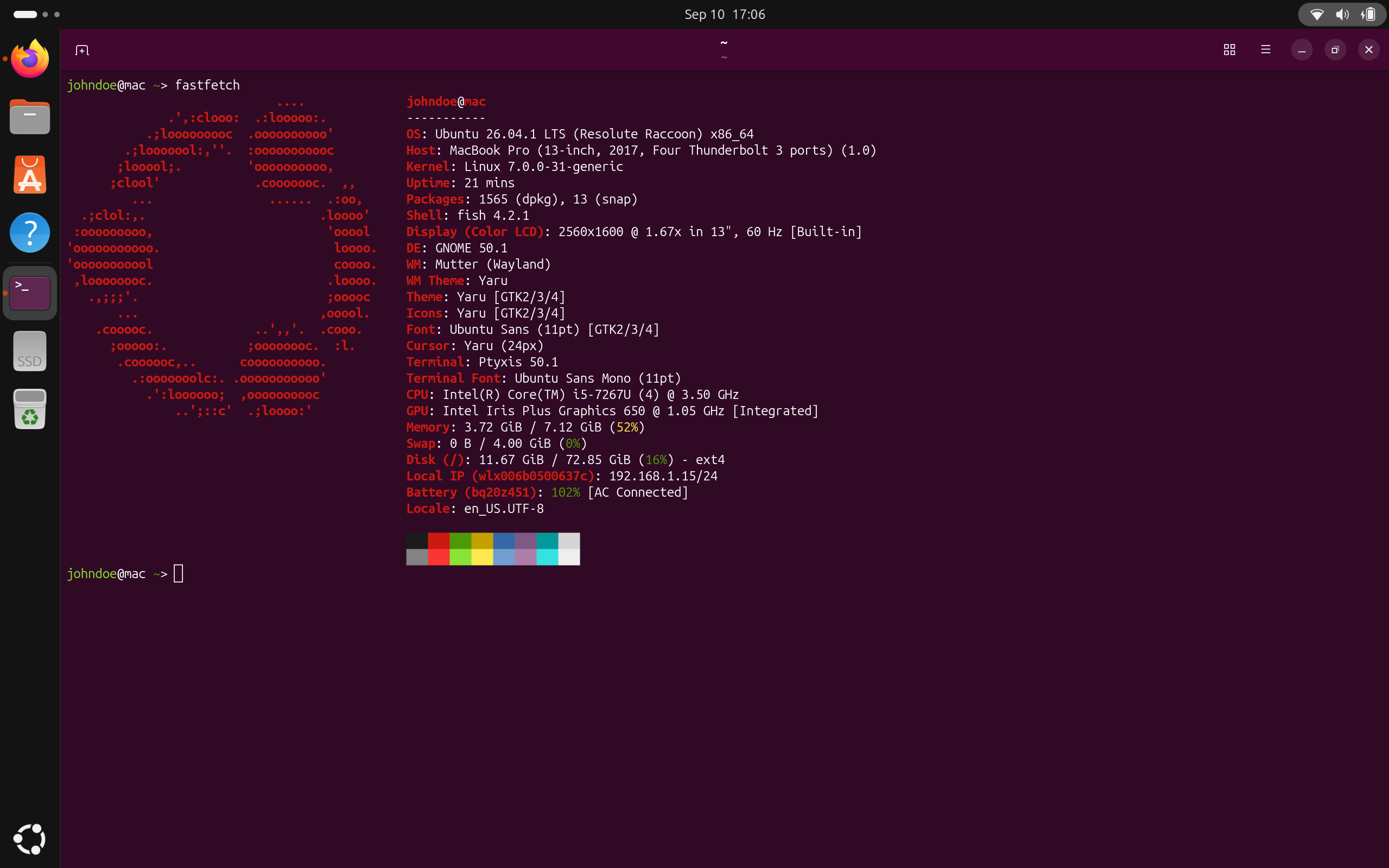 Just some notes about fixing some issues while installing Ubuntu on Macbook Pro 2017
 I m looking at something entirely unrelated, but tripped over some search results that made me realise that a lot of people still think getting errors like

 However, when playing it, it becomes very obvious (as you can likely see) that
there s a fair amount of packet loss (understandable) and probably some packet
collisions taking place.
 After tweaking the local routing tables (and restarting

 Yes! I forgot to make this one a video, so no gif. I did wind up having a bit
if trouble with a few gopher clients and IPv6 support I may send some
patches if I can find the time.
 Given i m going to stub most of that out, let s take a look at what some
similar Layer 2 protocols use things like Ethernet or WiFi frames. Both
contain structured information regarding the transmitter, desired recipient,
type of data, and the higher-level data itself (such as IP packets). As a
result of attempting to learn from others, the Pigeon Layer 2 (called, simply,
 I gave up the center bin (0 Hz) and 8 of the 64 bits on each side (1/4 of the
signal!) to give myself a bit of elbow room. This is perhaps definitely a bit
overkill, but it s been an extremely robust choice. If you multiply that
through, this accounts for 312.5 kHz of frequency domain padding at the high
and low end of the bandwidth, or 625.0 kHz of bandwidth which is not to be used.
 My intent in placement was to pick out roughly even stretches of data bins
bracketed between pilots, with as few data subcarriers as practical outside
of a pilot (using extrapolation). I ve played a bit with my AGWN simulator(s),
as well as logging errors between two SDRs, and the configuration I have this
in has been fairly resillant (for whatever reason), and withstood a few rounds
of tweaking.
 This puts the total number of data bins at 43, which, since Mode A carries data
in QPSK/QAM-4 (two bits per data subcarrier), means we can carry 86 bits of
data per OFDM symbol. That fairly modest capacity is largely due to the
modulation scheme (or fft size, but increasing that has been fraught) we re
using for Mode A but I ve made up for it by including