Search Results: "gq"

13 October 2012

Timo Jyrinki: OpenPhoenux GTA04

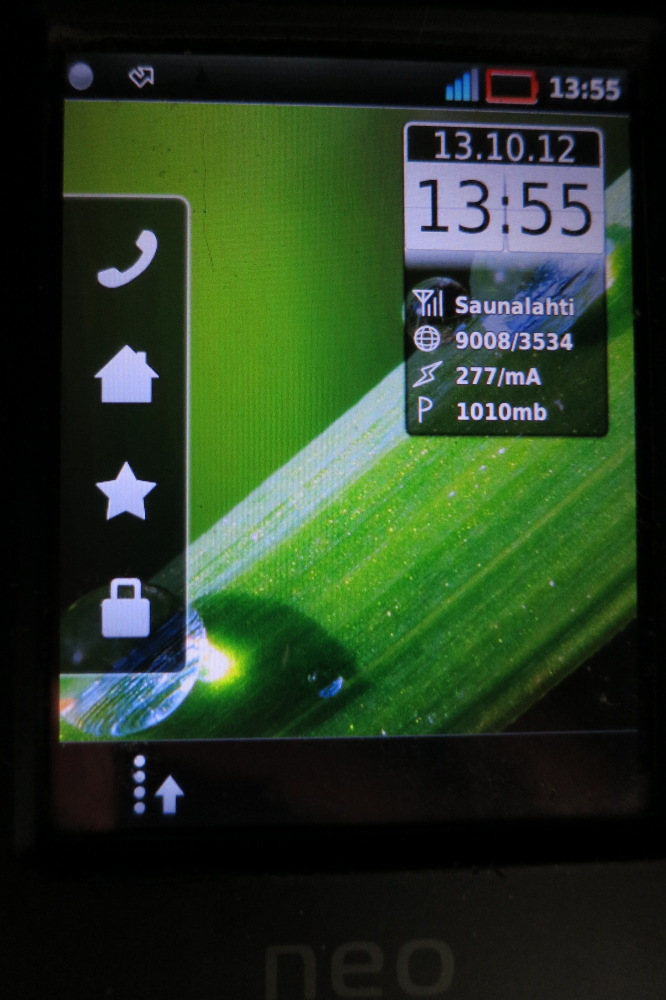
Postman was on a kind mood yesterday. My OpenPhoenux GTA04 arrived! I had my newer Neo FreeRunner upgraded via the service from Golden Delicious.

First, something rare to behold in phones nowadays - Made in Bavaria:


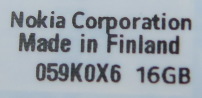
As a sidenote, also rare now - my Nokia N9 is one of the last phones that had this:

It's sad that's now a thing of the past for both hardware assembly and software! But that's just a hint for new companies to step in.

But back to GTA04 - a quick boot to the pre-installed Debian w/ LXDE:


And then as a shortcut unpacked and booted into QtMoko (well, it's also Debian) instead to test that phone functionality also works - and it does:


Next up: brewing something of my own!

12 July 2012

Ritesh Raj Sarraf: Reporting bugs with Apport

So yet another bug reporting tool. :-)When I prepared Apport for Debian, I wasn't sure how it will look going forward. If you look at the current one lying in experimental, it just detects your crashes and pops up in your systray. It doesn't have the mechanism to interact with BTS.So, like the title of this post says, this is the first worthy feature for Apport in the context of Debian.Apport Detail ReportNothing special here. You would have seen a similar window before if you have installed apport. What changes with this release is, that now, when you check the Send an error report to help fix this problem, it will really file a bug report on the BTS.Here's what the emailed bug report will look like:
Package: leafnode
Version: 2.0.0.alpha20090406a-1
=============================
ProblemType: Crash
Architecture: amd64
Date: Tue Jul  3 00:08:02 2012
Dependencies:
 adduser 3.113+nmu3
 base-passwd 3.5.24
 cron 3.0pl1-123
 debconf 1.5.44
 debianutils 4.3.1
 dpkg 1.16.4.3
 gcc-4.7-base 4.7.1-2
 libbz2-1.0 1.0.6-3
 libc-bin 2.13-33
 libc6 2.13-33
 libclass-isa-perl 0.36-3
 libdb5.1 5.1.29-4
 libfile-copy-recursive-perl 0.38-1
 libgcc1 1:4.7.1-2
 libgdbm3 1.8.3-11
 liblzma5 5.1.1alpha+20120614-1
 libpam-modules 1.1.3-7.1
 libpam-modules-bin 1.1.3-7.1
 libpam-runtime 1.1.3-7.1
 libpam0g 1.1.3-7.1
 libpcre3 1:8.30-5
 libpopt0 1.16-7
 libselinux1 2.1.9-5
 libsemanage-common 2.1.6-6
 libsemanage1 2.1.6-6
 libsepol1 2.1.4-3
 libswitch-perl 2.16-2
 libustr-1.0-1 1.0.4-3
 libwrap0 7.6.q-23
 logrotate 3.8.1-4
 lsb-base 4.1+Debian7 [modified: lib/lsb/init-functions]
 multiarch-support 2.13-33
 netbase 5.0
 openbsd-inetd 0.20091229-2
 passwd 1:4.1.5.1-1
 perl 5.14.2-12
 perl-base 5.14.2-12
 perl-modules 5.14.2-12
 sensible-utils 0.0.7
 tar 1.26-4
 tcpd 7.6.q-23
 update-inetd 4.43
 zlib1g 1:1.2.7.dfsg-13
Disassembly:
 => 0x7f8e69738475 <*__GI_raise+53>:	cmp    $0xfffffffffffff000,%rax
    0x7f8e6973847b <*__GI_raise+59>:	ja     0x7f8e69738492 <*__GI_raise+82>
    0x7f8e6973847d <*__GI_raise+61>:	repz retq 
    0x7f8e6973847f <*__GI_raise+63>:	nop
    0x7f8e69738480 <*__GI_raise+64>:	test   %eax,%eax
    0x7f8e69738482 <*__GI_raise+66>:	jg     0x7f8e69738465 <*__GI_raise+37>
    0x7f8e69738484 <*__GI_raise+68>:	test   $0x7fffffff,%eax
    0x7f8e69738489 <*__GI_raise+73>:	jne    0x7f8e697384a2 <*__GI_raise+98>
    0x7f8e6973848b <*__GI_raise+75>:	mov    %esi,%eax
    0x7f8e6973848d <*__GI_raise+77>:	nopl   (%rax)
    0x7f8e69738490 <*__GI_raise+80>:	jmp    0x7f8e69738465 <*__GI_raise+37>
    0x7f8e69738492 <*__GI_raise+82>:	mov    0x34e97f(%rip),%rdx        # 0x7f8e69a86e18
    0x7f8e69738499 <*__GI_raise+89>:	neg    %eax
    0x7f8e6973849b <*__GI_raise+91>:	mov    %eax,%fs:(%rdx)
    0x7f8e6973849e <*__GI_raise+94>:	or     $0xffffffff,%eax
    0x7f8e697384a1 <*__GI_raise+97>:	retq
DistroRelease: Debian 7.0
ExecutablePath: /usr/sbin/fetchnews
ExecutableTimestamp: 1265584779
Package: leafnode 2.0.0.alpha20090406a-1
PackageArchitecture: amd64
ProcCmdline: /usr/sbin/fetchnews
ProcCwd: /
ProcEnviron:
 LANGUAGE=en_US:en
 LC_TIME=en_IN.UTF-8
 LC_MONETARY=en_IN.UTF-8
 PATH=(custom, no user)
 LC_ADDRESS=en_IN.UTF-8
 LANG=en_US.UTF-8
 LC_TELEPHONE=en_IN.UTF-8
 LC_NAME=en_IN.UTF-8
 SHELL=/bin/sh
 LC_MEASUREMENT=en_IN.UTF-8
 LC_NUMERIC=en_IN.UTF-8
 LC_PAPER=en_IN.UTF-8
ProcMaps:
 00400000-00421000 r-xp 00000000 08:06 4464934                            /usr/sbin/fetchnews
 00621000-00622000 rw-p 00021000 08:06 4464934                            /usr/sbin/fetchnews
 00622000-00623000 rw-p 00000000 00:00 0 
 00be4000-00c05000 rw-p 00000000 00:00 0                                  [heap]
 7f8e68edc000-7f8e68eef000 r-xp 00000000 08:06 1179776                    /lib/x86_64-linux-gnu/libresolv-2.13.so
 7f8e68eef000-7f8e690ee000 ---p 00013000 08:06 1179776                    /lib/x86_64-linux-gnu/libresolv-2.13.so
 7f8e690ee000-7f8e690ef000 r--p 00012000 08:06 1179776                    /lib/x86_64-linux-gnu/libresolv-2.13.so
 7f8e690ef000-7f8e690f0000 rw-p 00013000 08:06 1179776                    /lib/x86_64-linux-gnu/libresolv-2.13.so
 7f8e690f0000-7f8e690f2000 rw-p 00000000 00:00 0 
 7f8e690f2000-7f8e690f7000 r-xp 00000000 08:06 1180036                    /lib/x86_64-linux-gnu/libnss_dns-2.13.so
 7f8e690f7000-7f8e692f6000 ---p 00005000 08:06 1180036                    /lib/x86_64-linux-gnu/libnss_dns-2.13.so
 7f8e692f6000-7f8e692f7000 r--p 00004000 08:06 1180036                    /lib/x86_64-linux-gnu/libnss_dns-2.13.so
 7f8e692f7000-7f8e692f8000 rw-p 00005000 08:06 1180036                    /lib/x86_64-linux-gnu/libnss_dns-2.13.so
 7f8e692f8000-7f8e692fa000 r-xp 00000000 08:06 1183392                    /lib/libnss_mdns4_minimal.so.2
 7f8e692fa000-7f8e694f9000 ---p 00002000 08:06 1183392                    /lib/libnss_mdns4_minimal.so.2
 7f8e694f9000-7f8e694fa000 rw-p 00001000 08:06 1183392                    /lib/libnss_mdns4_minimal.so.2
 7f8e694fa000-7f8e69505000 r-xp 00000000 08:06 1180055                    /lib/x86_64-linux-gnu/libnss_files-2.13.so
 7f8e69505000-7f8e69704000 ---p 0000b000 08:06 1180055                    /lib/x86_64-linux-gnu/libnss_files-2.13.so
 7f8e69704000-7f8e69705000 r--p 0000a000 08:06 1180055                    /lib/x86_64-linux-gnu/libnss_files-2.13.so
 7f8e69705000-7f8e69706000 rw-p 0000b000 08:06 1180055                    /lib/x86_64-linux-gnu/libnss_files-2.13.so
 7f8e69706000-7f8e69883000 r-xp 00000000 08:06 1179700                    /lib/x86_64-linux-gnu/libc-2.13.so
 7f8e69883000-7f8e69a83000 ---p 0017d000 08:06 1179700                    /lib/x86_64-linux-gnu/libc-2.13.so
 7f8e69a83000-7f8e69a87000 r--p 0017d000 08:06 1179700                    /lib/x86_64-linux-gnu/libc-2.13.so
 7f8e69a87000-7f8e69a88000 rw-p 00181000 08:06 1179700                    /lib/x86_64-linux-gnu/libc-2.13.so
 7f8e69a88000-7f8e69a8d000 rw-p 00000000 00:00 0 
 7f8e69a8d000-7f8e69a95000 r-xp 00000000 08:06 1180031                    /lib/x86_64-linux-gnu/libcrypt-2.13.so
 7f8e69a95000-7f8e69c94000 ---p 00008000 08:06 1180031                    /lib/x86_64-linux-gnu/libcrypt-2.13.so
 7f8e69c94000-7f8e69c95000 r--p 00007000 08:06 1180031                    /lib/x86_64-linux-gnu/libcrypt-2.13.so
 7f8e69c95000-7f8e69c96000 rw-p 00008000 08:06 1180031                    /lib/x86_64-linux-gnu/libcrypt-2.13.so
 7f8e69c96000-7f8e69cc4000 rw-p 00000000 00:00 0 
 7f8e69cc4000-7f8e69cc6000 r-xp 00000000 08:06 1180047                    /lib/x86_64-linux-gnu/libdl-2.13.so
 7f8e69cc6000-7f8e69ec6000 ---p 00002000 08:06 1180047                    /lib/x86_64-linux-gnu/libdl-2.13.so
 7f8e69ec6000-7f8e69ec7000 r--p 00002000 08:06 1180047                    /lib/x86_64-linux-gnu/libdl-2.13.so
 7f8e69ec7000-7f8e69ec8000 rw-p 00003000 08:06 1180047                    /lib/x86_64-linux-gnu/libdl-2.13.so
 7f8e69ec8000-7f8e69ed5000 r-xp 00000000 08:06 1179893                    /lib/x86_64-linux-gnu/libpam.so.0.83.0
 7f8e69ed5000-7f8e6a0d4000 ---p 0000d000 08:06 1179893                    /lib/x86_64-linux-gnu/libpam.so.0.83.0
 7f8e6a0d4000-7f8e6a0d5000 r--p 0000c000 08:06 1179893                    /lib/x86_64-linux-gnu/libpam.so.0.83.0
 7f8e6a0d5000-7f8e6a0d6000 rw-p 0000d000 08:06 1179893                    /lib/x86_64-linux-gnu/libpam.so.0.83.0
 7f8e6a0d6000-7f8e6a112000 r-xp 00000000 08:06 1182916                    /lib/x86_64-linux-gnu/libpcre.so.3.13.1
 7f8e6a112000-7f8e6a312000 ---p 0003c000 08:06 1182916                    /lib/x86_64-linux-gnu/libpcre.so.3.13.1
 7f8e6a312000-7f8e6a313000 rw-p 0003c000 08:06 1182916                    /lib/x86_64-linux-gnu/libpcre.so.3.13.1
 7f8e6a313000-7f8e6a333000 r-xp 00000000 08:06 1180134                    /lib/x86_64-linux-gnu/ld-2.13.so
 7f8e6a503000-7f8e6a507000 rw-p 00000000 00:00 0 
 7f8e6a530000-7f8e6a532000 rw-p 00000000 00:00 0 
 7f8e6a532000-7f8e6a533000 r--p 0001f000 08:06 1180134                    /lib/x86_64-linux-gnu/ld-2.13.so
 7f8e6a533000-7f8e6a534000 rw-p 00020000 08:06 1180134                    /lib/x86_64-linux-gnu/ld-2.13.so
 7f8e6a534000-7f8e6a535000 rw-p 00000000 00:00 0 
 7fffbc06e000-7fffbc08f000 rw-p 00000000 00:00 0                          [stack]
 7fffbc1ff000-7fffbc200000 r-xp 00000000 00:00 0                          [vdso]
 ffffffffff600000-ffffffffff601000 r-xp 00000000 00:00 0                  [vsyscall]
ProcStatus:
 Name:	fetchnews
 State:	S (sleeping)
 Tgid:	6872
 Pid:	6872
 PPid:	6871
 TracerPid:	0
 Uid:	9	9	9	9
 Gid:	9	9	9	9
 FDSize:	64
 Groups:	9 
 VmPeak:	   21440 kB
 VmSize:	   21276 kB
 VmLck:	       0 kB
 VmPin:	       0 kB
 VmHWM:	     984 kB
 VmRSS:	     984 kB
 VmData:	     380 kB
 VmStk:	     136 kB
 VmExe:	     132 kB
 VmLib:	    2132 kB
 VmPTE:	      64 kB
 VmSwap:	       0 kB
 Threads:	1
 SigQ:	0/23227
 SigPnd:	0000000000000000
 ShdPnd:	0000000000000000
 SigBlk:	0000000000000000
 SigIgn:	0000000000000000
 SigCgt:	0000000000000000
 CapInh:	0000000000000000
 CapPrm:	0000000000000000
 CapEff:	0000000000000000
 CapBnd:	ffffffffffffffff
 Cpus_allowed:	f
 Cpus_allowed_list:	0-3
 Mems_allowed:	00000000,00000001
 Mems_allowed_list:	0
 voluntary_ctxt_switches:	6
 nonvoluntary_ctxt_switches:	1
Registers:
 rax            0x0	0
 rbx            0x0	0
 rcx            0xffffffffffffffff	-1
 rdx            0x6	6
 rsi            0x1ad8	6872
 rdi            0x1ad8	6872
 rbp            0x0	0x0
 rsp            0x7fffbc08d4f8	0x7fffbc08d4f8
 r8             0x7f8e6a504700	140249645729536
 r9             0x6d6f642064656966	7885631562835126630
 r10            0x8	8
 r11            0x246	582
 r12            0x0	0
 r13            0x7fffbc08d920	140736348084512
 r14            0x0	0
 r15            0x0	0
 rip            0x7f8e69738475	0x7f8e69738475 <*__GI_raise+53>
 eflags         0x246	[ PF ZF IF ]
 cs             0x33	51
 ss             0x2b	43
 ds             0x0	0
 es             0x0	0
 fs             0x0	0
 gs             0x0	0
Signal: 6
SourcePackage: leafnode
Stacktrace:
 #0  0x00007f8e69738475 in *__GI_raise (sig=<optimized out>) at ../nptl/sysdeps/unix/sysv/linux/raise.c:64
         pid = <optimized out>
         selftid = <optimized out>
 #1  0x00007f8e6973b6f0 in *__GI_abort () at abort.c:92
         act =  __sigaction_handler =  sa_handler = 0x7f8e69850d3d, sa_sigaction = 0x7f8e69850d3d , sa_mask =  __val =  140736348083740, 140249634747968, 0, 0, 140736348084512, 140249631083424, 140249645738440, 0, 4294967295, 206158430232, 1, 6427272, 0, 0, 0, 0 , sa_flags = 1781664242, sa_restorer = 0x1 
         sigs =  __val =  32, 0 <repeats 15 times> 
 #2  0x0000000000416292 in ?? ()
 No symbol table info available.
 #3  0x0000000000411c80 in ?? ()
 No symbol table info available.
 #4  0x0000000000406952 in ?? ()
 No symbol table info available.
 #5  0x00007f8e69724ead in __libc_start_main (main=<optimized out>, argc=<optimized out>, ubp_av=<optimized out>, init=<optimized out>, fini=<optimized out>, rtld_fini=<optimized out>, stack_end=0x7fffbc08d918) at libc-start.c:228
         result = <optimized out>
         unwind_buf =  cancel_jmp_buf =  jmp_buf =  0, 498162418289285118, 4206480, 140736348084512, 0, 0, -498021567843461122, -435434157313288194 , mask_was_saved = 0 , priv =  pad =  0x0, 0x0, 0x418360, 0x7fffbc08d928 , data =  prev = 0x0, cleanup = 0x0, canceltype = 4293472 
         not_first_call = <optimized out>
 #6  0x0000000000402fb9 in ?? ()
 No symbol table info available.
 #7  0x00007fffbc08d918 in ?? ()
 No symbol table info available.
 #8  0x000000000000001c in ?? ()
 No symbol table info available.
 #9  0x0000000000000001 in ?? ()
 No symbol table info available.
 #10 0x00007fffbc08ee96 in ?? ()
 No symbol table info available.
 #11 0x0000000000000000 in ?? ()
 No symbol table info available.
StacktraceTop:
 ?? ()
 ?? ()
 ?? ()
 __libc_start_main (main=<optimized out>, argc=<optimized out>, ubp_av=<optimized out>, init=<optimized out>, fini=<optimized out>, rtld_fini=<optimized out>, stack_end=0x7fffbc08d918) at libc-start.c:228
 ?? ()
ThreadStacktrace:
 .
 Thread 1 (LWP 6872):
 #0  0x00007f8e69738475 in *__GI_raise (sig=<optimized out>) at ../nptl/sysdeps/unix/sysv/linux/raise.c:64
         pid = <optimized out>
         selftid = <optimized out>
 #1  0x00007f8e6973b6f0 in *__GI_abort () at abort.c:92
         act =  __sigaction_handler =  sa_handler = 0x7f8e69850d3d, sa_sigaction = 0x7f8e69850d3d , sa_mask =  __val =  140736348083740, 140249634747968, 0, 0, 140736348084512, 140249631083424, 140249645738440, 0, 4294967295, 206158430232, 1, 6427272, 0, 0, 0, 0 , sa_flags = 1781664242, sa_restorer = 0x1 
         sigs =  __val =  32, 0 <repeats 15 times> 
 #2  0x0000000000416292 in ?? ()
 No symbol table info available.
 #3  0x0000000000411c80 in ?? ()
 No symbol table info available.
 #4  0x0000000000406952 in ?? ()
 No symbol table info available.
 #5  0x00007f8e69724ead in __libc_start_main (main=<optimized out>, argc=<optimized out>, ubp_av=<optimized out>, init=<optimized out>, fini=<optimized out>, rtld_fini=<optimized out>, stack_end=0x7fffbc08d918) at libc-start.c:228
         result = <optimized out>
         unwind_buf =  cancel_jmp_buf =  jmp_buf =  0, 498162418289285118, 4206480, 140736348084512, 0, 0, -498021567843461122, -435434157313288194 , mask_was_saved = 0 , priv =  pad =  0x0, 0x0, 0x418360, 0x7fffbc08d928 , data =  prev = 0x0, cleanup = 0x0, canceltype = 4293472 
         not_first_call = <optimized out>
 #6  0x0000000000402fb9 in ?? ()
 No symbol table info available.
 #7  0x00007fffbc08d918 in ?? ()
 No symbol table info available.
 #8  0x000000000000001c in ?? ()
 No symbol table info available.
 #9  0x0000000000000001 in ?? ()
 No symbol table info available.
 #10 0x00007fffbc08ee96 in ?? ()
 No symbol table info available.
 #11 0x0000000000000000 in ?? ()
 No symbol table info available.
Title: fetchnews crashed with SIGABRT in __libc_start_main()
Uname: Linux 3.4-trunk-amd64 x86_64
UserGroups: 
The first 2 lines should be enough for the BTS server to file the bug report to the correct package and against the correct version.If you paid attention in the screen shot and the email report, you will notice that the email report does not include the CoreDump section. This was knocked off intentionally as we currently might not need it. If there is a need, the data is always available on the user's apport database, and the dev/user and seek it on a need basis. But in case, if a day comes when we really want it, that too is possible. The same email report will have the CoreDump seciton with a section like the following:
CoreDump: base64 
H4sICAAAAAAC/0NvcmVEdW1wAOx9C0AU1f7/7LLAggirouF7VDQ0xcVXWGqLoq4Kur6KMmV5CoqwwqJYVquggYqhlVm3B3mt7OWlbnXtZeubHtfobc9Lb6xUemiU5f7PmfkcmBl3VMzbvff3Px89fPb7nfOeM2fOOfOdMzeNT5pgNBgEBpMwRmiRBMEmnA6bEC8MbfYvI6eN4BePBfvX0zQC6Q9RJyULY6NKpuGC6A8rO56uE07wH44lI7YynINlc6cmnFE3n1L5nNB7j+Ssv8lPelbDaeEkuBCu8ag6HENjz9PCmZTh6sNz/aanVz4PS6+V4aoQTohQhxM1rK2XGoQTI/yn5xD814sX4VyacGerFxbOObh15atj6Z17OKl89Qjn0Qkn6pSvEeGqB59z+YKU4aqmtS6fQgDS0wlXo5NPC8I5HK07DyyczdW68yCy9FytK58V4Zw64eou8l8+G8JZy/2Xj51Abfmaw21Th7Np+LTrD+Fc21p5/SGcRxPOoX8dye0T4ep00vPotU92Hh5u3Xln4Wwvt6587A7jaGU4C8I5X/afz3qd/pqFs73WuutWZOm91rr20hzuu9aVz4pwru9adz3YEM6jE65Op3wOdh6OtO68s3C2tgtaVT4nS+/cw0nlc7H61AnnDfBfPg/Cie0WnOv5C1KFi2tdPqsQzqoTTtAZ91SzcI4Frepf6tlIbeaCc71PyyECcXxm686fBeGsrQwnIpytleGsCFcX9IJPVT6jmrXnwRHM2q863NnOn5MNbJ0+irOFo2EcBjn8uGkzxgvN/ZuMID8t7lAXQXiPuHfhLjTE983qMmswAVVmhpydm5UpZhYsEiaq254PCFLkW8nfQF9cViT1HUM18Te9LefjEhahJv6zgV3DtI7LMaJhdSzMwMFo+cIIgdPWbXaWOyMnP2tpEbwPLi4qHFyUnps/uPmI+EfqOhBD/SBF3nq19J1S+VmT8Z389iVVm8CBdhAzwQHNl 7xNNReLV6SpPH/NUzH0OWZNHkPAVYPl+Npo9GEaua1GDtfIF2ni7wz+5QP5fOOOIXxxTJYjWPgP/bfLQHSLRkUd3hTgv749PWm7FP7r0FcDP15U/cmO9fL4jLFNgzkaiBr4zwWL//QaYtey3vH/NtBrxEbbBHFJk6bOTuFt4v9cmwj4N/vn4ODg4ODg4ODg4OD4/wE3aZ7/G/H8n60B2aDfFmVs9kOf/5vJ325CV2n+HSgol59tKvYiasZmxRzNJCeIhG0q7gY1Y4OCA1UlsKl4b5hRxWxhu2Vdmq0Dp6vYi8UxS5SgCmdEuBiEi4F

Now, Is this going to be useful? Will we get flooded with bug reports?
 
Usefulness: I think this will uncover many bugs that might be getting unnoticed today. Take this example itself. This bug was detect against the leafnode package's fetchnews binary. That binary does a quiet job in the background, fetching news. I never was aware that it had been crashing. As a system-wide monitoring tool, apport was able to detect, trap and inform the user of the crash. So I think this will be useful and improve the overall quality.
Abuse/Flood: This is something I can't predict. Perhaps it will bring in challenges if people just blindly click on the Send Report button. One option can be to have the "Send Report" checkbox unchecked by default. That'll hopefully lower down the possibilities.
 
What do you think? Let me know your comments.
This change will soon be pushed to apport in experimental. Hopefully this weekend.
 
I want to wrap up this post with a Thank You note to Martin Pitt and his team who created Apport, and with such simplicity. It took me 30 lines of code to adapt it to Debian. My intent with Apport is to keep the changes to the minimum so that we can always leverage new features and fixes that Apport brings in. So, as far as I'll try, there will be no drift from its original shape.
Categories:
Keywords:

17 June 2012

C.J. Adams-Collier: Service Interruption

They heard my internets were down BEGIN PGP SIGNED MESSAGE
Hash: SHA256 , During the month of June, we experienced a service interruption which
has caused our mutual customer, School, an
inability to initiate outgoing calls. CenturyLink has also caused the
interruption of the school s DSL Internet service. During the interim
period, I have installed a VoIP phone and tied in to one of my backup
providers so that the school can function during the CenturyLink outage. My understanding is that will begin paying CenturyLink
directly for its service again due to the service interruption. Until
such time as I receive acknowledgment from you, we will continue paying
roughly $27/mo for the school s phone service. Once the transfer has
been completed to the satisfaction of the school board, Collier
Technologies LLC will discontinue payment for the DID - - ,
leaving a single DID, - - . I expect that the DID will be
moved back into the school s name within the next week. Please confirm
this or provide information as to why this will not happen. I have CC d
and , who represent the school board on this
email. Please include them in the reply. Since the DSL service has been interrupted at both the School s address
and at ours, and since CenturyLink has failed to provision the remaining
two $14.99/mo 10Mbit DSL circuits which Collier Technologies LLC has
been paying for despite their un-provisioned state, we will be reducing
the monthly payment from $150 to $70. My understanding is that $70 will
be more than sufficient to cover the two voice lines, inside wire
maintenance and regulatory fees. If this is not the case, please keep
us appraised of the situation. Do note that our decision to stop payment for service which is not being
provided does not, in our estimation, relieve CenturyLink from the three
year contract period negotiated verbally by you on its behalf on October
4th 2011. We currently consider CenturyLink to be in breach of
contract. Sincerely, C.J. Adams-Collier BEGIN PGP SIGNATURE
Version: GnuPG v1.4.12 (GNU/Linux) iQEcBAEBCAAGBQJP3TqdAAoJEEyimPmPQm23qqoH/jRmiIVHNCnH8EqgzsNQiUIm
LVrFg7kvpRIM692mzrGgkZTxG9KlVK+1/dZl1aPsmMP5Q6ni3NigzRDnywJZI53a
yTwTZhid8B4Tf+JOrhUhKPpmm+2YoHTYaobwgxk+rRgUGUHEMCZMPnjKNGGPDCgO
2jNz5fSnI6IinRz4nXwhAtGQRUXVJWXGrUCX1kQXGH4pNvjbgE8n6yAsC6sixlPa
ljDaNjxUEjUY4PmQdKNetkzQLxlq/OGJgRHZXHzfg37cJEF4L28DJBYvf8CHbt2K
87ELXGs6nDn54yI4q4ojODln9k/GzC+NY6MDXYdof7dNbeEPujvjQCiyRgjLc9E=
=uLKs
END PGP SIGNATURE

16 June 2012

Vincent Bernat: GPG Key Transition Statement 2012

I am transitioning my GPG key from an old 1024-bit DSA key to a new 4096-bit RSA key. The old key will continue to be valid for some time but I prefer all new correspondance to be encrypted with the new key. I will be making all signatures going forward with the new key. I have followed the excellent tutorial from Daniel Kahn Gillmor which also explains why this migration is needed. The only step that I did not execute is issuing a new certification for keys I have signed in the past. I did not find any search engine to tell me which key I have signed. Here is the signed transition statement (I have stolen it from Zack):
-----BEGIN PGP SIGNED MESSAGE-----
Hash: SHA256,SHA1
I am transitioning GPG keys from an old 1024-bit DSA key to a new
4096-bit RSA key.  The old key will continue to be valid for some
time, but I prefer all new correspondance to be encrypted in the new
key, and will be making all signatures going forward with the new key.
This transition document is signed with both keys to validate the
transition.
If you have signed my old key, I would appreciate signatures on my new
key as well, provided that your signing policy permits that without
reauthenticating me.
The old key, which I am transitional away from, is:
  pub   1024D/F22A794E 2001-03-23
      Key fingerprint = 5854 AF2B 65B2 0E96 2161  E32B 285B D7A1 F22A 794E
The new key, to which I am transitioning, is:
  pub   4096R/353525F9 2012-06-16 [expires: 2014-06-16]
      Key fingerprint = AEF2 3487 66F3 71C6 89A7  3600 95A4 2FE8 3535 25F9
To fetch the full new key from a public key server using GnuPG, run:
  gpg --keyserver keys.gnupg.net --recv-key 95A42FE8353525F9
If you have already validated my old key, you can then validate that
the new key is signed by my old key:
  gpg --check-sigs 95A42FE8353525F9
If you then want to sign my new key, a simple and safe way to do that
is by using caff (shipped in Debian as part of the "signing-party"
package) as follows:
  caff 95A42FE8353525F9
Please contact me via e-mail at <vincent@bernat.im> if you have any
questions about this document or this transition.
  Vincent Bernat
  vincent@bernat.im
  16-06-2012
-----BEGIN PGP SIGNATURE-----
Version: GnuPG v1.4.12 (GNU/Linux)
iQIcBAEBCAAGBQJP3LchAAoJEJWkL+g1NSX5fV0P/iEjcLp7EOky/AVkbsHxiV30
KId7aYmcZRLJpvLZPz0xxThZq2MTVhX+SdiPcrSTa8avY8Kay6gWjEK0FtB+72du
3RxhVYDqEQtrhUmIY2jOVyw9c0vMJh4189J+8iJ5HGQo9SjFEuRrP9xxNTv3OQD5
fRTMUBMC3q1/KcuhPA8ULp4L1OS0xTksRfvs6852XDfSJIZhsYxYODWpWqLsGEcu
DhQ7KHtbOUwjwsoiURGnjwdiFpbb6/9cwXeD3/GAY9uNHxac6Ufi4J64bealuPXi
O4GgG9cEreBTkPrUsyrHtCYzg43X0q4B7TSDg27j0xm+xd+jW/d/0AlBHPXcXemc
b+pw09qLOwQWbsd6d4bx22VXI75btSFs8HwR9hKHBeOAagMHz+AVl5pLXo2rYoiH
34fR1HWqyRdT3bCt19Ys1N+d0fznsZNFOMC+l23QyptOoMz7t7vZ6GbB20ExafrW
+gi7r1sV/6tb9sYMcVV2S3XT003Uwg8PXajyOnFHxPsMoX9zsk1ejo3lxkkTZs0H
yLZtUj3iZ3yX9e2yfv3eOxitR4+bIntEbMecnTI9xJn+33QTz/pWBqg9uDosqzUo
UoQtc6WVn9x3Zsi7aneDYcp06ZdphgsyWhgiLIhQG9MAK9wKthKiZv8DqGYDOsKt
WwpQFvns33e5x4SM4KxXiEYEARECAAYFAk/ctyEACgkQKFvXofIqeU5YLwCdFhEL
P7vpUJA2zv9+dpPN5GLfBlcAn0mDGJcjJpYZl/+aXEnP/8cE0day
=0QnC
-----END PGP SIGNATURE-----
For easier access, I have also published it in text format. You can check it with:
$ gpg --keyserver keys.gnupg.net --recv-key 95A42FE8353525F9
gpg: requesting key 353525F9 from hkp server keys.gnupg.net
gpg: key 353525F9: "Vincent Bernat <bernat@luffy.cx>" not changed
gpg: Total number processed: 1
gpg:              unchanged: 1
$ curl http://vincent.bernat.im/media/files/key-transition-2012.txt   \
>       gpg --verify
To avoid signing/encrypting with the old key who share the same email addresses than the new one, I have saved it, removed it from the keyring and added it again. The new key is now first in both the secret and the public keyrings and will be used whenever the appropriate email address is requested.
$ gpg --export-secret-keys F22A794E > ~/tmp/secret
$ gpg --export F22A794E > ~/tmp/public
$ gpg --delete-secret-key F22A794
sec  1024D/F22A794E 2001-03-23 Vincent Bernat <bernat@luffy.cx>
Delete this key from the keyring? (y/N) y
This is a secret key! - really delete? (y/N) y
$ gpg --delete-key F22A794E
pub  1024D/F22A794E 2001-03-23 Vincent Bernat <bernat@luffy.cx>
Delete this key from the keyring? (y/N) y
$ gpg --import ~/tmp/public
gpg: key F22A794E: public key "Vincent Bernat <bernat@luffy.cx>" imported
gpg: Total number processed: 1
gpg:               imported: 1
gpg: 3 marginal(s) needed, 1 complete(s) needed, classic trust model
gpg: depth: 0  valid:   2  signed:   0  trust: 0-, 0q, 0n, 0m, 0f, 2u
gpg: next trustdb check due at 2014-06-16
$ gpg --import ~/tmp/secret
gpg: key F22A794E: secret key imported
gpg: key F22A794E: "Vincent Bernat <bernat@luffy.cx>" not changed
gpg: Total number processed: 1
gpg:              unchanged: 1
gpg:       secret keys read: 1
gpg:   secret keys imported: 1
$ rm ~/tmp/public ~/tmp/secret
$ gpg --edit-key F22A794E
[...]
gpg> trust
[...]
Please decide how far you trust this user to correctly verify other users' keys
(by looking at passports, checking fingerprints from different sources, etc.)
  1 = I don't know or won't say
  2 = I do NOT trust
  3 = I trust marginally
  4 = I trust fully
  5 = I trust ultimately
  m = back to the main menu
Your decision? 5
Do you really want to set this key to ultimate trust? (y/N) y
I now need to gather some signatures for the new key. If this is appropriate for you, please sign the new key if you signed the old one.

31 January 2012

Pau Garcia i Quiles: LibreTab not?

In a perfectly orchestrated marketing campaign for a 100% free-libre tablet called Spark that will run KDE Plasma Active, Aaron Seigo writes today about the problems they are facing with GPL-violations. Apparently, every Chinese manufacturer is breaking the GPLv2 by not releasing the sources for their modified Linux kernel. Conversations and conversations with Zenithink (designers of the Spark), Synrgic (designers of the Dreambook W7), etc have arrived nowhere. To the point that CordiaTab, another similar effort using Gnome instead of KDE, has been cancelled. I have to say I am very surprised at the lack of the kernel sources. What is the Free Software Foundation doing? Why don t we seek ban of all imports of tablets whose manufacturers don t release the full GPL source? Apple got the Samsung GalaxyTab imports blocked in Germany and Australia for something as ethereal as patents covering the external frame design. We are talking about license infringement, which is easier to demonstrate in court. China may ignore intellectual property but they cannot ignore business, and no imports means no business. Let s get all GPL-infringing tablet imports banned and we will get more source in two weeks than we can digest in two years. Heck, I m surprised Apple is not trying this in court to block Android!

30 January 2012

Pau Garcia i Quiles: HTML5 for everything?

Apparently HTML5 applications are the best thing after sliced bread. HTML5 is the first platform any mobile vendor supports: iPhone, Android, Windows Phone, BlackBerry, Symbian. All of them. Windows 8 is said to promote HTML5 as the preferred application development solution. I used to look kindly at that. But about a month ago I started to get worried: is HTML5 good for everything? Long-lived applications In military, industrial, warehouse management, medical, etc is not rare that bespoke applications are developed and stay in use for many years (and I really mean many: 10, 20 or even more!) with barely an update. It s not rare that those applications only receive very small updates once very 5 years. Those applications, not Angry Birds, are what keeps the world running: troops know what supplies they can count on, iPhones are manufactured, FedEx is able to deliver your package and your doctor is able to check your health. But now that everybody seems to be moving to HTML5 webapps, what happens when my warehouse management application is a webapp and the additions in the newest browsers make the webapp no longer work? Are vain upgrades the future? Say my webapp is released in 2014 and it works fine with Firefox 14.0 and Chrome 26.0, the newest browsers when I release the application in 2014. Fast-forward to 2020 and Firefox 14.0 and Chrome 26.0 do not even install on Windows 10 computer! What s the solution? Should the customer pay for a huge update and redesign to make it work with Firefox 27.1 and Chrome 41.0 in 2020? A virtual machine with Windows 8 and Firefox 14.0? A portable Mozilla Firefox 14.0 on Windows 10 in 2020 to be able to use that line-of-business application that only requires a small update once or twice every 5 years? How are the virtual machine and/or Portable Firefox 14.0 different from or better than a fat client? What s the advantage? I d say none! Native applications usually do not have that kind of problems because APIs are much more stable. You can still run Win16 applications on Windows 7! You don t believe me? We may soon be developing for 76 browsers! While HTML5 may be fine for applications which are updated very often, it makes me feel very uneasy to see it used in environments where applications will be rarely updated, such as SCADAs, warehouse management, control system, medical records, etc. A solution is needed It looks like that choice of technology is going to make those applications much more expensive in the medium and long term, paying for adaptations to new browsers (sorry, I resist to call update or upgrade to something that adds zero value other than being able to run on a newer browser). Or maybe it s about time to define actual HTML5 profiles . ACID3 seems to be too weak of a profile: two very different browsers may pass ACID3 yet a webapp would work with one browser and fail with the other due to bugs, missing features/added features, etc. Something needs to be done.

13 January 2012

C.J. Adams-Collier: The Very Model of a Poster to CLPM

So, in 2002 I attended my first SPUG meeting. Also in attendance were Randal, Tim, J.P. (I think) and quite a few of the other usual suspects. The guest speaker was the inestimable Dr. Damian Conway. This night might be the single most important event in my career as a builder of the internets. I was already set in my ways regarding my operating system, and I knew enough perl to get by, but I wasn t in touch with any users groups until then. The crown jewel of the night was Damian s recital in full of his poem, I Am The Very Model of A Poster To CLPM (sung to the tune of that song from Pirates of Penzance). I must admit that I d never heard of CLPM and that it all sounded like gobble-de-gook at the time. If I recall correctly, this happened just after he took about 10 minutes to teach us all to pronounce the name of then-Pumpking, Jarkko Hietaniemi. This was the same year that the following video was made <iframe allowfullscreen="allowfullscreen" frameborder="0" height="315" src="http://www.youtube.com/embed/XkU_GQVOCqo" width="420"></iframe> With that in mind, there s one more thing I need to share with you before disclosing the lyrics. This piece was developed during a time when it was common for members of the perl community to flame one another on news feeds, take their anger and frustration out on newbies and generally be the bane of most of the internet. I like to think that it helped to shape me into a kinder, gentler perl programmer, debian user and general netizen over the years. I would also like to think that it will do the same for future members of our communities. And so, without further ado, Damian Conway s
I Am The Very Model of a Poster to CLPM Now everything I need to know about the Perl community
I learned in kindergarten when I was a little lad of three
And in these next few minutes I ll relate those five apothegm
For I am the very model of a poster to c.l.p.m. The first truism I was ever taught upon my mother s knee
Was that our dad s a better dad than their s could ever hope to be.
His name is Larry Wall, and that s determinism nom native
Since of the mural attributes he demonstrates proof positive. He s eight feet tall and ten feet wide; of granite-like solidity.
He wards us from the serpent s tabs and coffee bean s stupidity.
He guards us from that Gallic tower s B&D urbanity,
And makes sure we don t see sharp code that might cut loose our sanity. He watches over each of us, like Odin of the Norse belief
The stern All-Father figure and, at times, the comical relief.
So, if you vaunt our patriarch s supreme linguistic acumen,
You are a model sychophantic poster to c.l.p.m. The second tenet that I learned concerns, of course, the fairer sex
And why they are in short supply, while geek-boy JAPHs are multiplex.
As every schoolboy knows each conversation has single aim:
To raise one s own significance, whilst razing others down in flame. And thus good men and true who hold this principle as sacrosanct
Will all pursue beligerence as though they were from Mars. Or tanked.
It is the tenor of your newgroup posts that she from Venus flies:
Because most threads devolve into comparisons of ..meanness, guys. When every post affronts their own collaborative sorority
It must exasperate them, for it renders the majority
Of female Perl geeks absent, till we re forced to rename blonde Dutch men
To act as female models of a poster to c.l.p.m. The third grand aphorism that was drummed into my youthful head
Was: if you can t say something nice about someone, you should instead
Say every nasty thing you can impart, imagine, or invent
In any public forum that it happens you should both frequent. This goes especially for the young, and new, and shy, and innocent.
To flame a newbie is a joy, t will make you feel omnipotent.
To watch them squirm and bleat and bleed and scurry back into their hole,
The surge of ecstasy it brings is worth the way it eats your soul. So never hesitate to turn the wrath of your vocabul ry
Upon the hapless supplicant for Perl epistomology
And if you flame each FAQ, and every question that s beneath you then
You ll be the very model of curmudg nly R.T.F.M. The next point I should like to make s the obverse of the previous
For while it s true that to be newbie is a sin most grieveous
It ain t as bad as being old and greyed and staid and tedious
And sitting at the keys all day dispensing thoughts invidious. What right have you to tell me not to ask about my CGI???
I thought that Perl was all about website development, and I
Expect that you d extend to me the simple human courtesy
Of dropping everything so you can do this homework now for me. The Internet exists so I need never read the manual
And so my inane questioning can form a stream continual
While pleading for an email since I never read this group, as well
As posting them in jeopardy, in caps, and in HTML. The rule I learned in kinder that explains where this approach springs from
Is fundamental to a certain class of Gen-X hackerdom
The single principle that guides their Internet activity
Is: me, me, me, me, me, me, me, me, me, me, me, me, me, me, ME! So if you are prepared to treat the Net as your god-given right
And suck the newsgroups dry like some goodwill-devouring parasite
And use them as a help-desk and a perldoc substitute, well then
You are the very model clueless poster to c.l.p.m. The final precept that my pre-school inculcated in my head
Is one I would commend as antithetical to all I ve said.
It is a noble concept that once used to garner more elan
The idea that, when I grow up ..I want to be a fireman. The fire-fighter s job s to help, despite the inconvenience
And spare the inexperienced the cost of their own ignorance
And put out fires when the flames ignite the common living space
And through it all maintain an air of competence and skill and grace. And this, my friends, I recommend to all of our community
That rather than a careless match or carefully lit incendiary
You spray out knowledge, patience, and a gentle stream of good advice
And save the newbies from themselves, and oldies from their prejudice. And be yea more as Larry is, a fire-Wall against the threat
Of ignorance and arrogance, with both of which we re still beset.
For if you choose to help your fellow JAPHs instead of scorching them,
You ll be the next burnt offering we spit-roast on c.l.p.m. ;-) [edit]

6 January 2012

Timo Jyrinki: I have a new GPG key


-----BEGIN PGP SIGNED MESSAGE-----
Hash: SHA1,SHA512

Hello,

I'm transitioning from my 2003 GPG key to a new one.

The old key will continue to be valid for some time, but I eventually
plan to revoke it, so please use the new one from now on. I would also
like this new key to be re-integrated into the web of trust. This message
is signed by both keys to certify the transition.

The old key was:

pub 1024D/FC7F6D0F 2003-07-10
Key fingerprint = E6A8 8BA0 D28A 3629 30A9 899F 82D7 DF6D FC7F 6D0F

The new key is:

pub 4096R/90BDD207 2012-01-06
Key fingerprint = 6B85 4D46 E843 3CD7 CDC0 3630 E0F7 59F7 90BD D207

To fetch my new key from a public key server, you can simply do:

gpg --keyserver pgp.mit.edu --recv-key 90BDD207

If you already know my old key, you can now verify that the new key is
signed by the old one:

gpg --check-sigs 90BDD207

If you don't already know my old key, or you just want to be double
extra paranoid, you can check the fingerprint against the one above:

gpg --fingerprint 90BDD207

If you are satisfied that you've got the right key, and the UIDs match
what you expect, I'd appreciate it if you would sign my key:

gpg --sign-key 90BDD207

Lastly, if you could send me these signatures, i would appreciate it.
You can either send me an e-mail with the new signatures by attaching
the following file:

gpg --armor --export 90BDD207 > timojyrinki.asc

Or you can just upload the signatures to a public keyserver directly:

gpg --keyserver pgp.mit.edu --send-key 90BDD207

Please let me know if there is any trouble, and sorry for the inconvenience.

(this post has been modified from the example at
http://www.debian-administration.org/users/dkg/weblog/48)

-----BEGIN PGP SIGNATURE-----
Version: GnuPG v1.4.11 (GNU/Linux)

iEYEARECAAYFAk8GuZoACgkQgtffbfx/bQ9nqACglWyHnDTFQfdKmz8OCd3oL6iR
hcEAmgKJ7RZsgwxwkRGPhygy5y1Ztb+3iQIcBAEBCgAGBQJPBrmaAAoJEOD3WfeQ
vdIHdVQQAMT1yvIogzbtK6sUnWqwbrXI9pDEFk7AzJTb80R+wzxsw7gu9gcBDk8G
BL2O26GKUqKWA3ytuApSl42FJam/Lusi9npT3XNkmHs6FaBMNuLYrqEXmCwXwWr/
OrLyeeLiF4yxgbNWbv+600BqAWqFlo6NeTgQKsJWtCjR3RVMxX3R8nzjDnKJuF+z
c6+2JKBWyx/HVUKcJpJrFDDR36HRFvVJomTuma2JCQ/RAl9vzAguqNYOi1QkuuQv
EF1gXH7gLifukGuwquP1DHP6SWWkj77jtRWr5ewC0xymbrArzAwKbvMQl3VpKBHh
MmpJjYP3ECyL14AKi/TY2Lidi0Sf6yqFMcPcreoih01N0OU0NXmD4IrHMT24/ssb
okDUe1o3YImjGq1jTACvlzC8s54EfLsqDgSP98SGVpuoDqPJUwVk4nuHj8q0vDSs
qZox26gVwB2FAOUi1BFiZbIzM5rsyYfCGyWUGiAwBFf54lYRAeCDCt8iAOOL1Ov/
TumIGYdLoXnDuOJq1VjXLGx2OFDrpyU8SPGoa3zNEVz39tgxQ48ASJEqcqt7HvBy
IW+TTsMLdJ1Ait9aCM3mzzr1iwP8TrL0qUsdRLOE6AKdAqocIfqXY8OeDKhbUiOJ
CXWk5q3xheK3sDWUXX7J63bAAUH4jFnpQEOVMJKBUNMKsWa0iXDS
=mklN
-----END PGP SIGNATURE-----

4 January 2012

Pau Garcia i Quiles: FOSDEM 2012 CrossDesktop DevRoom: deadline extension

FOSDEM is one of the largest gatherings of Free Software contributors in the world and happens each February in Brussels (Belgium). One of the developer rooms will be the CrossDesktop DevRoom, which will host Desktop-related talks. Are you interested in giving a talk about open source and Qt, KDE, Enlightenment, Gnome, XFCE, Windows, Mac OS X, general desktop matters, mobile development, applications that enhance desktops and/or web? We have extended the deadline for a few more days, until January 8th. If you want to submit a talk proposal, hurry up! I have to say I am very surprised to see very few Qt/KDE talk proposals. Is there nothing interesting the Qt and KDE world have to say to 5,000+ people?
There is more information in the Call for Talks we published a couple of months. If you are interested in Qt/KDE, come visit us at the KDE booth. If you add yourself to the KDE FOSDEM 2012 wiki page, we will be able to better organize the usual dinner on Sunday and/or smaller meetings for special interest groups .

19 December 2011

Pau Garcia i Quiles: Reminder: FOSDEM 2012 CrossDesktop DevRoom Call for Talks

FOSDEM is one of the largest gatherings of Free Software contributors in the world and happens each February in Brussels (Belgium). One of the developer rooms will be the CrossDesktop DevRoom, which will host Desktop-related talks. Are you interested in giving a talk about open source and Qt, KDE, Enlightenment, Gnome, XFCE, Windows, Mac OS X, general desktop matters, mobile development, applications that enhance desktops and/or web? Hurry up and submit your proposal, deadline is December 20th! There is more information in the Call for Talks we published one month ago. If you are interested in Qt/KDE, come visit us at the KDE booth. If you add yourself to the KDE FOSDEM 2012 wiki page, we will be able to better organize the usual dinner on Sunday and/or smaller meetings for special interest groups .

18 November 2011

Pau Garcia i Quiles: FOSDEM 2012 CrossDesktop DevRoom Call for Talks

FOSDEM is one of the largest gatherings of Free Software contributors in the world and happens each February in Brussels (Belgium). One of the developer rooms will be the CrossDesktop DevRoom, which will host Desktop-related talks. We are now inviting proposals for talks about Free/Libre/Open-source Software on the topics of Desktop development, Desktop applications and interoperativity amongst Desktop Environments. This is a unique opportunity to show novel ideas and developments to a wide technical audience. Topics accepted include, but are not limited to: Enlightenment, Gnome, KDE, XFCE, Windows, Mac OS X, general desktop matters, applications that enhance desktops and web (when related to desktop). Talks can be very specific, such as developing mobile applications with Qt Quick; or as general as predictions for the fusion of Desktop and web in 5 years time. Topics that are of interest to the users and developers of all desktop environments are especially welcome. The FOSDEM 2011 schedule might give you some inspiration. Please include the following information when submitting a proposal: your name, the title of your talk (please be descriptive, as titles will be listed with around 250 from other projects) and a short abstract of one or two paragraphs. The deadline for submissions is December 20th 2011. FOSDEM will be held on the weekend of 4-5 February 2012. Please submit your proposals to crossdesktop-devroom@lists.fosdem.org Also, if you are attending FOSDEM 2012, please add yourself to the KDE community wiki page so that we organize better. We need volunteers for the booth!

3 November 2011

John Goerzen: Greece part 4: Food and Shopping

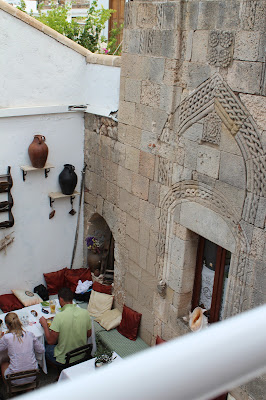
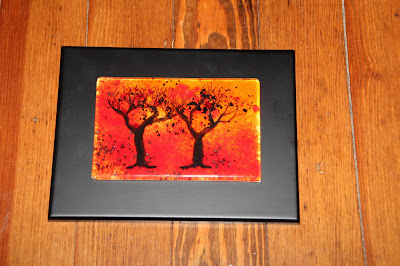
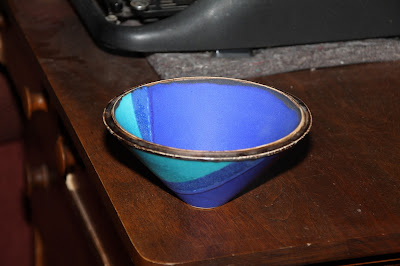
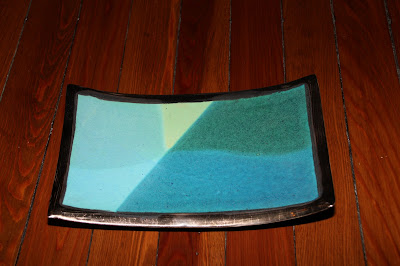
See also parts 1, 2, and 3. I am a person that enjoys food that s different from what s at home, and Rhodes didn t disappoint. Terah and I used to live close to an excellent Greek restaurant in Indianapolis, so we were already familiar in some way with the food. But there isn t any Greek restaurant at all in the Wichita area, so we missed it. Our favorite restaurant on Rhodes was Kalypso of Lindos. Everything there was just excellent, starting with the saganaki, one of my favorite Greek appetizers. I had yogurt with honey there for dessert both times we visited, a surprisingly tasty desert. Like many restaurants in Lindos, Kalypso had the option of eating on the rooftop, or at ground level. We ate on the roof, which had a nice view of the Lindos Acropolis. Being outdoors, there were sometimes cats around. This kitten enjoyed playing games with my shoestrings for awhile. Kalypso is at a 17th century captain s house. Here s a view of it from the rooftop: We, of course, had the chance to eat at quite a few different places during our visit, and I d go on way too long if I mentioned them all. Terah particularly enjoyed the gelaterie.gr ice cream shop in the square in Rhodes. We liked our lunch at Maria s Taverna in Lindos and enjoyed chatting with the staff there. I recently talked about shopping in Mexico, and perhaps learned a thing or two from that. I won t say we never buy them, but in general we don t buy souvenirs like t-shirts, plastic things made in China, etc. We prefer to buy local. Those items tend to be higher quality, more interesting, and we like to support the local economy. We also don t have lots of room for things, so we try to choose carefully. So it was something of a surprise to Terah, and perhaps even to me, when I suggested we go shopping one day. Terah typically enjoys shopping a lot more than I do. Anyhow, off we went to Lindos. One of the first things that had caught our eye in Lindos was the shop selling glass. But it wasn t just any glass; it appeared to be made with some sort of layered process, and has a distinctly three-dimensional feel to it. As you move around, it looks like the background shifts. We wound up with this item, which was made in Athens: By the time we visited Lindos specifically for shopping, we had a good feel for when the busy times of day were, so we could avoid them. It gave us the opportunity to visit with people and when they weren t busy, many shopkeepers liked to chat. I enjoy hearing people s stories and we heard several. One ceramics shop the Musa Shop -caught Terah s eye. They had such incredible and beautiful pieces outside that we just had to go in. We wound up with two pieces from there, both in shades of blue: Both remind me of the Aegean Sea and the deep blue sky of Rhodes. And then, as we were walking along, I pointed inside a shop and said to Terah, Hey, those look different. We went in, and eventually wound up buying these: The appearance, and even feel, of them is unlike anything I d seen. Quite interesting. And seeing those particular items in the Lakis Place shop led to making some new friends I ll write about it in the next post.

20 October 2011

Pau Garcia i Quiles: The Secure Boot controversy

Red Hat s Matthew Garrett let the cat out of the bag about a month ago: when UEFI Secure Boot is adopted by mainboard manufacturers to satisfy Microsoft Windows 8 requirements, it may very well be the case that Linux and others (BSD, Haiku, Minix, OS/2, etc) will no longer boot. Matthew has written about it extensively and seems to know very well what the issues are (part I, part II), the details about signing binaries and why Linux does not support Secure Boot yet. The Free Software Foundation has also released a statement and started a campaign, which is, as usually, anti-Microsoft instead of pro-solutions. Now let me express my opinion on this matter: this is not Microsoft s fault. Facts Let s see what are the facts in this controversy: Problem The problem stems from the fact that most Linux vendors do not have the power to get their certificates in UEFI BIOS. Red Hat and Suse will for sure get their certificates bundled in server UEFI BIOS. Debian and Ubuntu? Maybe. NetBSD, OpenIndiana, Slackware, etc? No way. This is, in my humble opinion, a serious defect in the standard. A huge omission. Apparently while developing the Secure Boot specification everybody was busy talking about signed binaries, yet nobody thought for a second how the certificates will get into the UEFI BIOS. What should have been done The UEFI secure boot standard should have defined an organization (a Secure Boot Certification Authority ) that would issue and/or receive certificates from organizations/companies (Red Hat, Oracle, Ubuntu, Microsoft, Apple, etc) that want their binaries signed. This SBCA would also be in charge of verifying the background of those organizations. There is actually no need for a new organization: just use an existing one, such as Verisign, that carries on with this task for Microsoft for kernel-level binaries (AuthentiCode). Given that there is no Secure Boot Certification Authority, Microsoft asked BIOS (UEFI) developers and manufacturers to include their certificates, which looks 100% logical to me. The fact that Linux distributions do not have such power is unfortunate, but it is not Microsoft s fault at all. What can we do? Given its strong ties with Intel, AMD and others, maybe the Linux Foundation could start a task force and a Temporary Secure Boot Certification Authority to deal with UEFI BIOS manufacturers and developers. This task force and TSBCA would act as a proxy for minorities such as Linux, BSD, etc distributions. I am convinced this is our best chance to get something done in a reasonable amount of time. Complaining will not get us anything. Screaming at Microsoft will not get us anything. We need to propose solutions. Wait! Non-Microsoft certificates? Why? In addition to the missing Secure Boot Certification Authority, there is a second problem apparently nobody is talking about: what is the advantage mainboard manufacturers get from including non-Microsoft certificates? For instance: why would Gigabyte (or any other mainboard manufacturer) include the certificate for, say, Haiku? The benefit for Gigabyte would be negligible and if someone with ill-intentions gets Haiku s certificate, that piece of malware will be installable on all Gigabyte s mainboards.This would lead to manufacturer-targetted malware, which would be fatal to Gigabyte: oh, want to be immune to the-grandchild-of-Stuxnet? Buy (a computer with) an MSI mainboard, which does not include Haiku s certificate Given that 99% of desktops and laptops only run Windows, the result of this (yet unresolved) problem would be that manufacturers will only install Microsoft certificates, therefore they would be immune to malware signed with a Slackware certificate in the wild. If we are lucky, mainboard manufacturers will give us an utility to install more certificates under your own risk. The solution to the first problem looks easy to me. The solution to the second looks much more worrying to me.

30 September 2011

Axel Beckert: Fun facts from the UDD

After spotting an upload of mira, who in turn spotted an upload of abe (the package, not an upload by me aka abe@d.o), mira (mirabilos aka tg@d.o) noticed that there are Debian packages which have same name as some Debian Developers have as login name. Of course I noticed a long time ago that there is a Debian package with my login name abe . Another well-known Debian login and former package name is amaya. But since someone else came up with that thought, too, it was time for finding the definite answer to the question which are the DD login names which also exist as Debian package names. My first try was based on the list of trusted GnuPG keys:
$ apt-cache policy $(gpg --keyring /etc/apt/trusted.gpg --list-keys 2>/dev/null   \
                     grep @debian.org   \
        	     awk -F'[<@]' ' print $2 '   \
                     sort -u) 2>/dev/null   \
                   egrep -o '^[^ :]*'
alex
tor
ed
bam
ng
But this was not satisfying as my own name didn t show up and gpg also threw quite a lot of block reading errors (which is also the reason for redirecting STDERR). mira then had the idea of using the Ultimate Debian Database to answer this question more properly:
udd=> SELECT login, name FROM carnivore_login, carnivore_names
      WHERE carnivore_login.id=carnivore_names.id AND login IN
      (SELECT package AS login FROM packages, active_dds
       WHERE packages.package=active_dds.login UNION
       SELECT source AS name FROM sources, active_dds
       WHERE sources.source=active_dds.login)
      ORDER BY login;
 login                   name
-------+---------------------------------------
 abe     Axel Beckert
 alex    Alexander List
 alex    Alexander M. List  4402020774 9332554
 and     Andrea Veri
 ash     Albert Huang
 bam     Brian May
 ed      Ed Boraas
 ed      Ed G. Boraas [RSA Compatibility Key]
 ed      Ed G. Boraas [RSA]
 eric    Eric Dorland
 gq      Alexander GQ Gerasiov
 iml     Ian Maclaine-cross
 lunar   J r my Bobbio
 mako    Benjamin Hill
 mako    Benjamin Mako Hill
 mbr     Markus Braun
 mlt     Marcela Tiznado
 nas     Neil A. Schemenauer
 nas     Neil Schemenauer
 opal    Ola Lundkvist
 opal    Ola Lundqvist
 paco    Francisco Moya
 paul    Paul Slootman
 pino    Pino Toscano
 pyro    Brian Nelson
 stone   Fredrik Steen
(26 rows)
Interestingly tor (Tor Slettnes) is missing in this list, so it s not complete either At least I m quite sure that nobody maintains a package with his own login name as package name. :-) We also have no packages ending in -guest , so there s no chance that a package name matches an Alioth guest account either

11 September 2011

John Goerzen: Mexico Part 1: Genesis and Travel

My family and I (including our boys) are just back from a great visit to Mexico. It was my first time there, and also the first time our boys have been outside the USA. I ll be writing about all the fun stuff in the posts to come, so you ll have to bear with me on this one as I describe why we did something that appears to horrify a segment of Americans. About a year ago, I wrote a review of Travel as a Political Act by Rick Steves. Rick s point wasn t actually directly political in the conventional sense, but summed up as:
I ve taught people how to travel. I focus mostly on the logistics: finding the right hotel, avoiding long lines But that s not why we travel. We travel to have enlightening experiences, to meet inspirational people, to be stimulated, to learn, and to grow. Travel has taught me the fun in having my cultural furniture rearranged and my ethnocentric self-assuredness walloped.
He speaks of giving onesself permission to have a conversation with someone that doesn t speak a language you know, for instance. I got an email this spring from my longtime friend Jonathan Hall, who had moved to Mexico a couple of years ago. He invited my family and me to go to Mexico, generously offered to host us and show us around, and specifically mentioned my review of Rick Steves as a reason to do so, this was immediately intriguing. Due to his other plans, it was also something of a limited-time offer. Those of you that don t live in the USA may not know what sort of stories we get about Mexico over here. Most of them involve either illegal immigration to the USA or the Mexican drug war. Occasionally there is some sort of drug-related violence on the US side of the border as well, which always makes the news. There are a lot of people that have the perception that Mexico is a dangerous place to be. Terah even knows some people that grew up in Mexico and are too afraid to return. So we did some research, asked some questions, and it became pretty clear that yes, some parts of Mexico are dangerous, but many parts are really quite safe, and Jonathan had invited us to one of those. The reactions we got from Americans when we told them of our plan ranged from excitement that we would get to visit a beautiful country to concern and worry about our safety. Besides that, I knew almost no Spanish and Terah had a few high school and college classes years ago to go on. And, we knew that Mexico would, in many ways, be more different from the USA than Germany was. We concluded that this would get us out of our comfort zone in a significant way, have lots of great things to do, be a good experience for the boys, and something that we wouldn t do without Jonathan. So we bought the tickets for it! As you might notice, I m quite glad we did. I ll follow up with the details in the next stories, but for today I ll end with the story of getting there. It involves two cute boys, so of course it ll be interesting. Jacob is almost 5 and Oliver is 2, and neither one of them had flown for over a year. Despite leaving home at 5AM to drive to the airport (about an hour away), they were both awake and alert. Jacob was jabbering away the whole way there. He enjoyed the security process and found it interesting I had to explain that they were checking to make sure everyone was following the airplane rules. Then as we walked to our gate, he pressed his face against every window, looking at the parked airplanes in the dark. Oliver would see him doing this and run over to join him. With a bit of help, he noticed some airplanes had United Express painted on them, and others had American with an AA on them. He would talk about American AA and United Express airplanes for the rest of the week whenever he heard one in the sky. I sat between the boys on our flight to Dallas, and Terah was in the row ahead of us. This is how Jacob spent most of the flight. And Oliver, who had the aisle seat, enjoyed paging through the inflight magazines, safety brochure, wifi instruction card, and airsickness bag. The real highlight came at the Dallas/Ft. Worth (DFW) airport, where we had a connection. And the reason: we needed to take a train to get to our connecting gate. The DFW Skylink system really works very well but the boys cared most that it s a TRAIN. It was difficult to get them both away from it when we got off. They wanted to see it leave, stay and watch the next one come, etc. Jacob was only happy when he realized he could see the Skylink trains running high above the window at our departure gate for Guadalajara. The 2.5-hour flight to Guadalajara got a little long for them, but they managed OK. We struck up several conversations with friendly people that knew English as we waited in various lines. It seems to be something of a rarity for American families with young children and no Mexican heritage to visit Mexico. People went out of their way to be friendly and welcoming even the customs officials. It felt like a great start to the visit. One Mexican man who was chatting with me encouraged me to learn some Spanish. I said my wife knows some, and that I had tried to learn some German back when I took foreign language classes. Laughing, he said, Why would you do that? Not as an insult; it just genuinely didn t seem useful to him. I think they were happy and proud that someone wanted to visit Mexico and was excited about it! More to come.

28 August 2011

Micha Lenk: Finally transitioning to a new GnuPG key

Finally I managed to write up a transition statement for my not so new, but stronger GnuPG key. See below:
-----BEGIN PGP SIGNED MESSAGE-----
Hash: SHA1,SHA256
I am transitioning my GPG key from an old 1024-bit key to a new 4096-bit key.
The old key will continue to be valid for some time, but I prefer all new
correspondence to be encrypted for the new key, and will be making all
signatures going forward with the new key.
If you have signed my old key, I would appreciate signatures on my new key as
well, provided that your signing policy permits that without reauthenticating
me.
The old key, which I am transitioning away from, is:
pub   1024D/99E141B4 2004-02-10
      Key fingerprint = 25FE 4741 4770 0558 949D  1DB1 58DD 3FE2 99E1 41B4
The new key, to which I am transitioning, is:
pub   4096R/51B85139 2009-06-18
      Key fingerprint = A3EB B41F C5AB D675 CEE4  1C45 EA6C A6B9 51B8 5139
Thanks in advance.
Cheers,
Micha Lenk
-----BEGIN PGP SIGNATURE-----
Version: GnuPG v1.4.10 (GNU/Linux)
iEYEARECAAYFAk5aOnkACgkQWN0/4pnhQbTxPgCgzRhREZlQiKJyI9UIdJLLs3Zq
bH4AnA1myFxgDWM7aUMHXgvvsujLTjiWiQIcBAEBCAAGBQJOWjp5AAoJEOpsprlR
uFE5gCsP/0dtCUPl9aQHV1MbQl7+bMofpsC2ikkpdZmrzi68jTG16We49BuzY+PV
S8FhXqg17/YxhKYDnDNTowfztUOyjAOJxy5vrqm3X5xiLwTqN3js9mra+vb4s35k
EVbKMzLLDhj3i0FjeargWEmJmm9cVhaZWKvOvQUhDJAilqvEQ0/50P7B8I+1YvtV
UHoQKbweTljVSlK5R1YPPy9i6r2/oZBYxK4nrknWwS+qPQ5luqelJd+mZdgQ6tow
7HIvtmPgCblJ+hYZWFpoZK6vxs8RaBbuCQcKwYArNhZT/v4TeD/LAaUmIkbQMyKV
J2TKuEHya4+5GMbtg6BGKeiZpleEHPnAq1AfvGpz6opkxjxCLG3RO3X8D3EuM3RW
mkq60mWM8+Zwu1yKbb62iHplp6jpyiQgdjJlB6eHjX7SdY7CvHgYZxGDx4kclP0/
HAdig2U1T+nG6Nn5XflmmKwvNLuKlQlIwJ5NeXyCONRnYvdomQn2hgvkjwMLCdFh
ulIhxa4UvDY7/aQNPZeOrvDHb2XYpiV3TwA9hLgQXXWd0FPmUMVVPpKpRjilaWth
Mtq/QiMGP5Mq/YxgLInRZHGyajDtE67RD4+RgHYOP50cP3UGPoB4ncc2EEtM2kfe
BzJrXPHmdtyGEA6Korl0YwUTRnYsqkqkY1VqDsO0UkOLlV7RAzb9
=9vw1
-----END PGP SIGNATURE-----

14 August 2011

Antonio Terceiro: Handling upstream patches with git-export-debian-patches

These days I briefly discussed with a fellow Debian developer about how to maintain upstream patches in Debian packages with Git, what brought me to rethink a little about my current practices. What I usually do is pretty much like point 4 in Raphael's post "4 tips to maintain a 3.0 (quilt) Debian source package in a VCS": I make commits in the Debian packaging branch, or in a separate branch that is merged into the Debian packaging branch. Then I add the single-debian-patch option to debian/source/options so that a single Debian patch is generated, and include a patch header that points people interested in the individual changes to the public Git repository where they were originally done. My reasoning for doing so was the following: most upstream developers will hardly care enough to come check the patches applied against their source in Debian, so it's not so important to have a clean source package with separated and explained patches. But then there is the people who will actually care about the patches: other distribution developers. Not imposing a specific VCS on them to review the patches applied in Debian is a nice thing to do. Then I wrote a script called git-export-debian-patches (download, manpage), which was partly inspired by David Bremner's script. It exports all commits in the Debian packaging branch that do not touch files under debian/ and were not applied upstream to debian/patches. The script also creates an appropriate debian/patches/series files. The script is even smart enough to detect patches that were later reverted in the Debian branch and exclude them (and the commit that reverted them) from the patch list. The advantage I see over gbp-pq is that I don't need to rebase (and thus lose history) to have a clean set of patches. The advantage over the gitpkg quilt-patches-deb-export-hook hook is that I don't need to explicitly say which ranges I want: every change that is merged in master, was not applied upstream and was not reverted gets listed as a patch. To be honest I don't have any experience with either gbp-pq or gitpkg and these advantages were based on what I read, so please leave a (nice ;-)) comment if I said something stupid. I am looking forward to receive feedback about the tool, specially about potential corner cases in which it would break. For now I have tested it in a package with simple changes agains upstream source, and it seems fine.

30 April 2011

Thomas Girard: ACE+TAO Debian packaging moved to git

We recently converted Debian ACE+TAO package repository from Subversion to git. This was a long and interesting process; I learned a lot on git in the course. I had been using git for a while for other packages: BOUML, dwarves and GNU Smalltalk. But I did not really get it. A preliminary study led by Pau[1] showed that out of the following three tools: the last one was giving results that look better.
The conversion svn-all-fast-export requires physical access to the repo, so the Alioth SVN repo was copied on my machine svn-pkg-ace/ before running the tool:
svn-all-fast-export --identity-map authors.txt --rules pkg-ace.rules svn-pkg-ace
Here's the content of the pkg-ace.rules configuration file that was used:
create repository pkg-ace
end repository
match /trunk/
  repository pkg-ace
  branch master
end match
match /(branches tags)/([^/]+)/
  repository pkg-ace
  branch \2
end match
The author mapping file authors.txt being:
markos = Konstantinos Margaritis <email-hidden>
mbrudka-guest = Marek Brudka <email-hidden>
pgquiles-guest = Pau Garcia i Quiles <email-hidden>
tgg = Thomas Girard <email-hidden>
tgg-guest = Thomas Girard <email-hidden>
The tool sample configuration file merged-branches-tags.rules recommends to post-process tags, which are just a branch in SVN. That's why the configuration file above treats branches as tags. The conversion was indeed fast: less than 1 minute.
Post-conversion observations Invoking gitk --all in the converted repo revealed different kind of issues:
  • svn tags as branches: http://thomas.g.girard.free.fr/ACE/tags-as-branches.png Branches are marked with green rectangles, and tags with yellow arrows. What we have here (expected given our configuration of the tool) are branches (e.g. 5.4.7-5) corresponding to tags, and tags matching the SVN tagging commit (e.g. backups/5.4.7-5@224). We'll review and fix this.

  • merged code that did not appear as such: http://thomas.g.girard.free.fr/ACE/missing-merge-metadata.png Branches that were not merged using svn merge look like they were not merged at all.

  • commits with wrong author: http://thomas.g.girard.free.fr/ACE/wrong-author.png Before being in SVN, the repository was stored in CVS. When it was imported into SVN, no special attention was given to the commit author. Hence I got credited for changes I did not write.
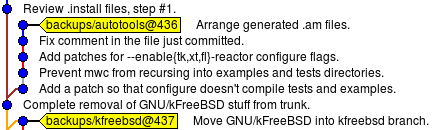
  • obsolete branches: http://thomas.g.girard.free.fr/ACE/obsolete-branches.png The tool leaves all branches, including removed ones (with tag on their end) so that you can decide what to do with them.

  • missing merges: http://thomas.g.girard.free.fr/ACE/missing-merge.png The branch 5.4.7-12 was never merged into the trunk!

Learning git Based on observations above, I realized my limited knowledge won't do to complete the conversion and clean the repository. There are tons of documentation on git out there, and you can find a lot of links from the git documentation page. Here's the one I've used:
The Git Object Model It's described with pictures here. You really need to understand this if you haven't already. Once you do, you understand that git is built bottom-up: the plumbing then the porcelain. If you can't find the tool you need, it's easy to write it.
git fast-import The Migrating to Git chapter explains how you can use the git fast-import tool to manually import anything into git. I've used it to create tags with dates in the past, slightly changing the Custom Importer example in the book:
#!/usr/bin/env ruby
#
# retag.rb
#
# Small script to create an annotated tag, specifying commiter as well as
# date, and tag comment.
#
# Based on Scott Chacon "Custom Importer" example.
#
# Arguments:
#  $1 -- tag name
#  $2 -- sha-1 revision to tag
#  $3 -- committer in the form First Last <email>
#  $4 -- date to use in the form YYYY/MM/DD_HH:MM:SS

def help
  puts "Usage: retag <tag> <sha1sum> <committer> <date> <comment>"
  puts "Creates a annotated tag with name <tag> for commit <sha1sum>, using "
  puts "given <committer>, <date> and <comment>"
  puts "The output should be piped to git fast-import"
end
def to_date(datetime)
  (date, time) = datetime.split('_')
  (year, month, day) = date.split('/')
  (hour, minute, second) = time.split(':')
  return Time.local(year, month, day, hour, minute, second).to_i
end
def generate_tag(tag, sha1hash, committer, date, message)
  puts "tag # tag "
  puts "from # sha1hash "
  puts "tagger # committer  # date  +0000"
  print "data # message.size \n# message "
end
if ARGV.length != 5
  help
  exit 1
else
  (tag, sha1sum, committer, date, message) = ARGV
  generate_tag(tag, sha1sum, committer, to_date(date), message)
end
graft points (graft means greffe in French) Because of missing svn:mergeinfo some changes appear unmerged. To fix this there are graft points: they override git idea of parents of a commit. To create a graft point, assuming 6a6d48814d0746fa4c9f6869bd8d5c3bc3af8242 is the commit you want to change, currently with a single parent 898ad49b61d4d8d5dc4072351037e2c8ade1ab68, but containing changes from commit 11cf74d4aa996ffed7c07157fe0780ec2224c73e:
me@mymachine$ echo 6a6d48814d0746fa4c9f6869bd8d5c3bc3af8242 11cf74d4aa996ffed7c07157fe0780ec2224c73e 898ad49b61d4d8d5dc4072351037e2c8ade1ab68 >> .git/info/grafts
git filter-branch git filter-branch allows you to completely rewrite history of a git branch, changing or dropping commits while traversing the branch. As an additional benefit, this tool use graft points and make them permanent. In other words: after running git filter-branch you can remove .git/info/grafts file. I've used it to rewrite author of a given set of commits, using a hack on top of Chris Johnsen script:
#!/bin/sh

br="HEAD"
TARG_NAME="Raphael Bossek"
TARG_EMAIL="hidden"
export TARG_NAME TARG_EMAIL
filt='
    if test "$GIT_COMMIT" = 546db1966133737930350a098057c4d563b1acdf -o \
            "$GIT_COMMIT" = 23419dde50662852cfbd2edde9468beb29a9ddcc; then
        if test -n "$TARG_EMAIL"; then
            GIT_AUTHOR_EMAIL="$TARG_EMAIL"
            export GIT_AUTHOR_EMAIL
        else
            unset GIT_AUTHOR_EMAIL
        fi
        if test -n "$TARG_NAME"; then
            GIT_AUTHOR_NAME="$TARG_NAME"
            export GIT_AUTHOR_NAME
        else
            unset GIT_AUTHOR_NAME
        fi
    fi
'
git filter-branch $force --tag-name-filter cat --env-filter "$filt" -- $br
(Script edited here; there were much more commits written by Raphael.)

Important

It's important to realize that the whole selected branch history is rewritten, so all objects id will change. You should not do this if you already published your repository.

The --tag-name-filter cat argument ensures our tags are copied during the traversal; otherwise they would be untouched, and hence not available in the new history.

Hint

Once git filter-branch completes you get a new history, as well as a new original ref to ease comparison. It is highly recommended to check the result of the rewrite before removing original. To shrink the repo after this, git clone the rewritten repo with file:// syntax -- git-filter-branch says it all.

Cleaning up the repo To recap, here's how the ACE+TAO git repo was changed after conversion:
  1. Add graft points where needed.

  2. Clean tags and branches. Using git tag -d, git branch -d and the Ruby script above it was possible to recreate tags. During this I was also able to add missing tags, and remove some SVN errors I did -- like committing in a branch created under tags/.

  3. Remove obsolete branches.

  4. Merge missing pieces. There were just two missing debian/changelog entries. I did this before git filter-branch because I did not find a way to use the tool correctly with multiple heads.

  5. Fix commit author where needed. Using the shell script above Raphael is now correctly credited for his work.

That's it. The ACE+TAO git repository for Debian packages is alive at http://git.debian.org/?p=pkg-ace/pkg-ace.git;a=summary.
[1]http://lists.alioth.debian.org/pipermail/pkg-ace-devel/2011-March/002421.html
[2]available in Debian as svn-all-fast-export

16 April 2011

Timo Jyrinki: MeeGo Summit FI Days 1 & 2

MeeGo Summit FI is now nearing completion, with several keynotes and other presentations, Meegathon 24h contest just coming to an end and a lot of interesting discussions had. See full program for details. Yesterday was a hugely energetic day, but today the lack of sleep starts to kick in a bit at least for me.

Some highlights via photos:


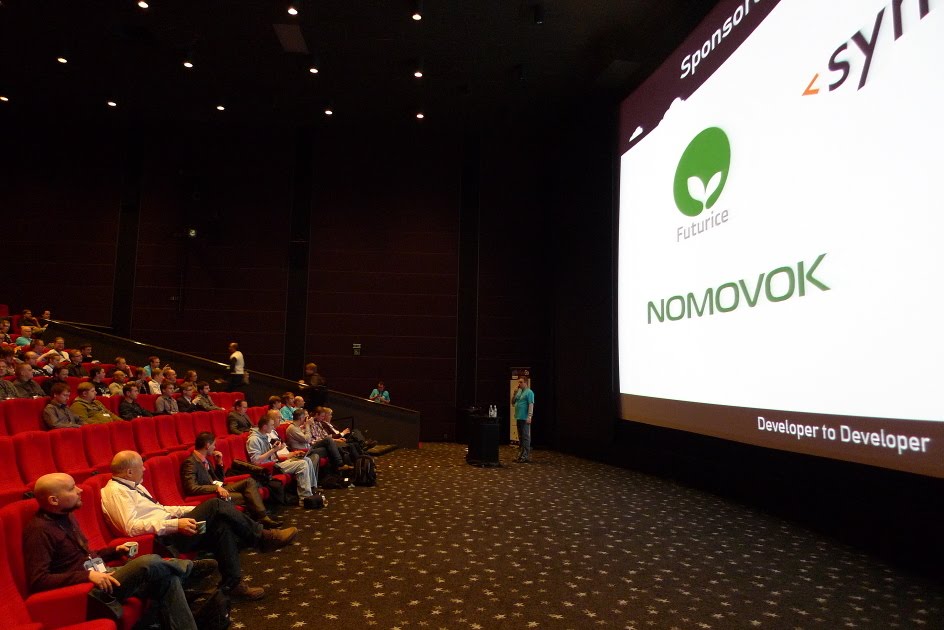
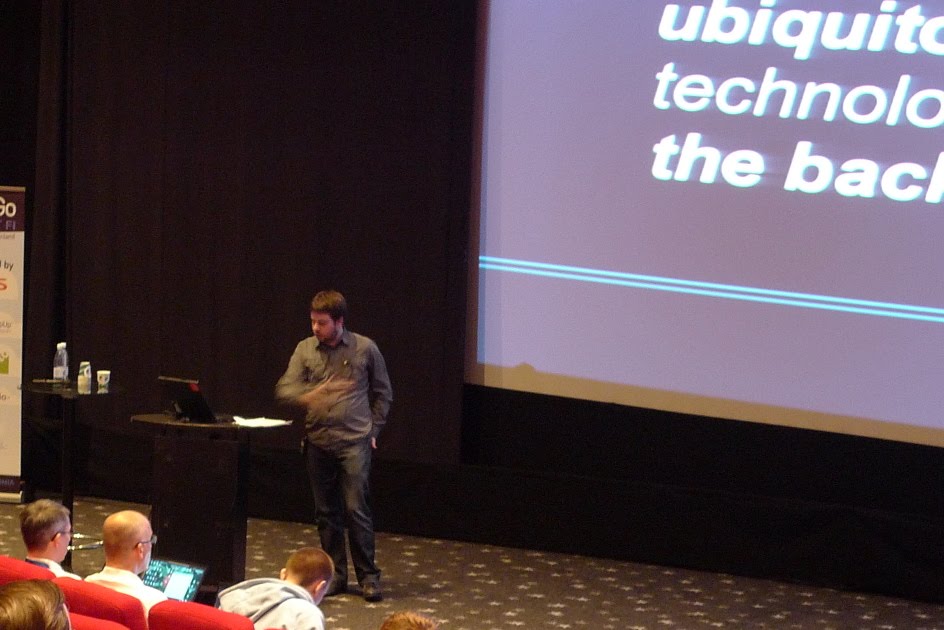
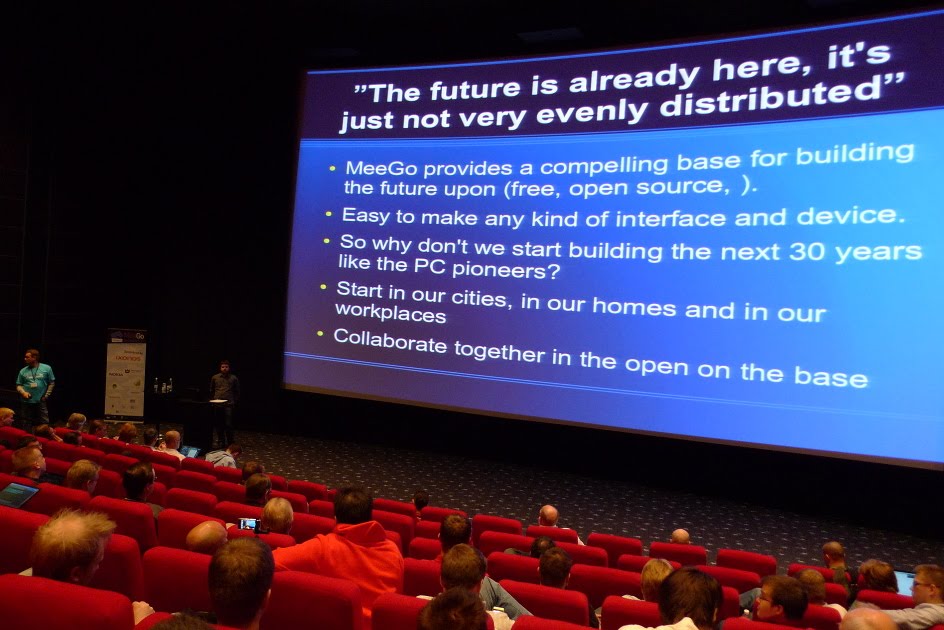
Keynote venue was a movie theater


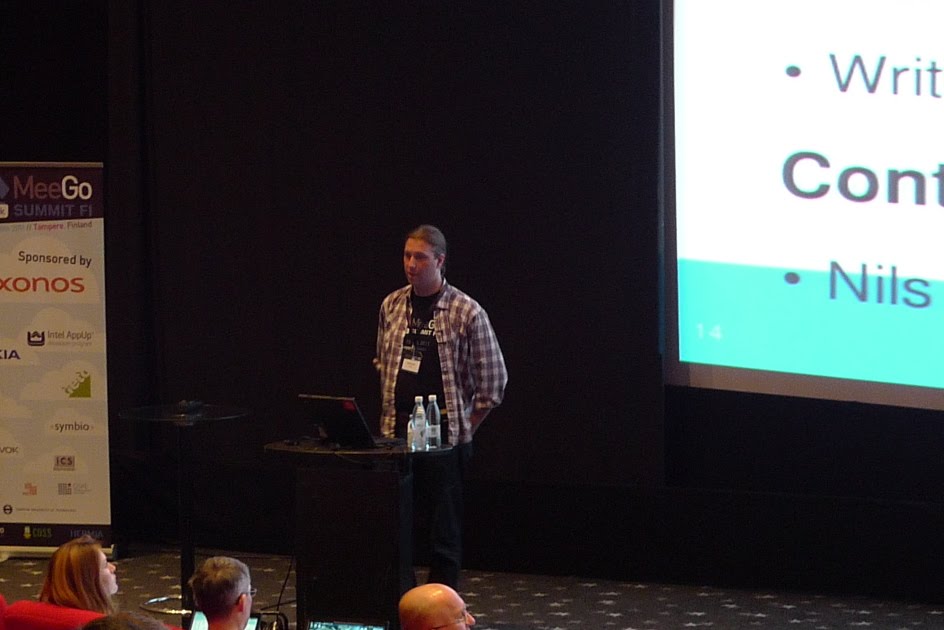
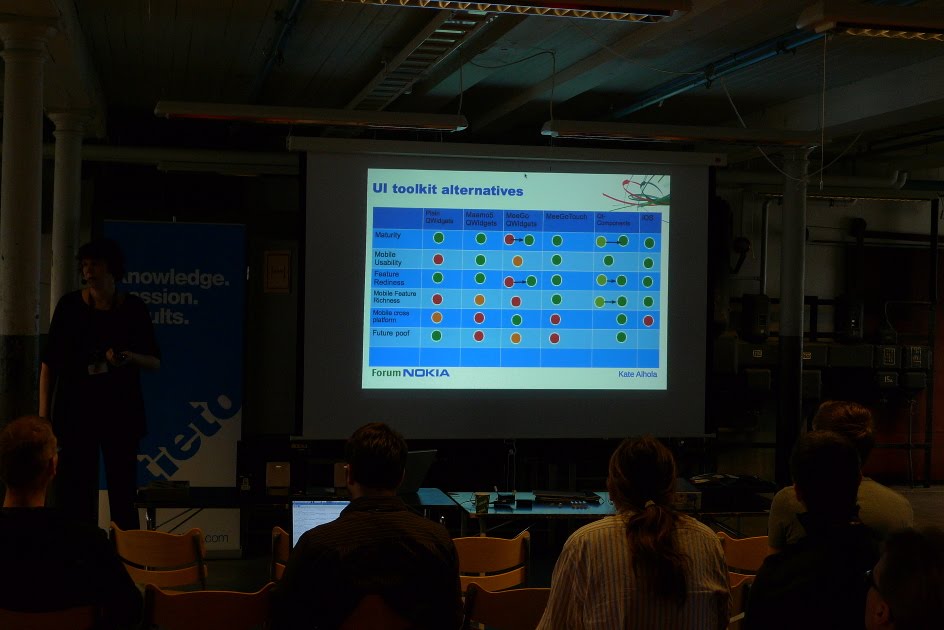
MeeGo status update by Valtteri Halla / Intel - talking among else about tablets, IVI, and the 20 person team at Nokia doing MeeGo(.com) for N900 phone


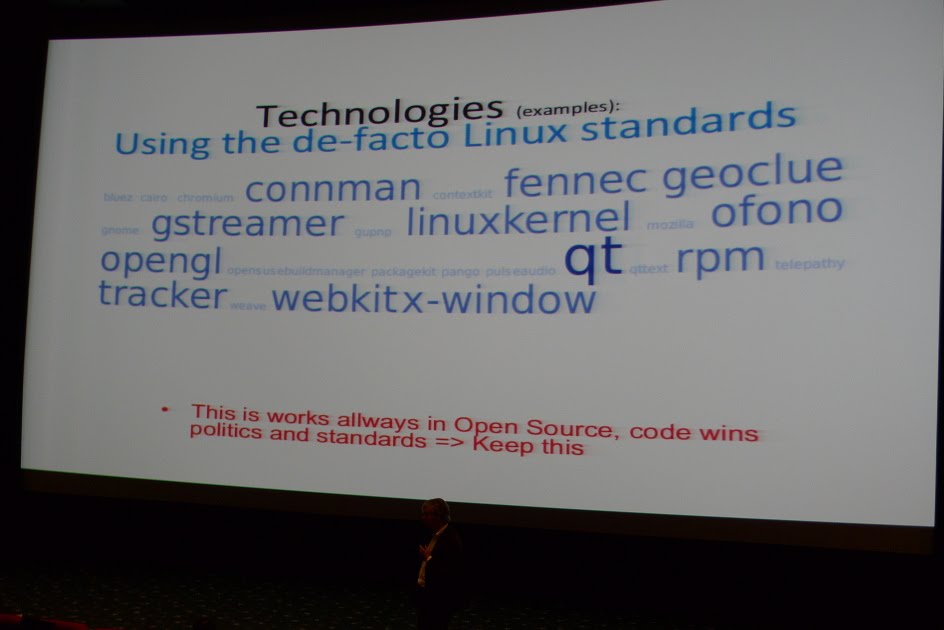
Mikko Terho / Nokia - "Internet for the next billion => Qt good candidate", "code wins politics and standards"


Carsten Munk / Nomovok - "Hacking your existence: the importance of open-ended devices in the MeeGo world"


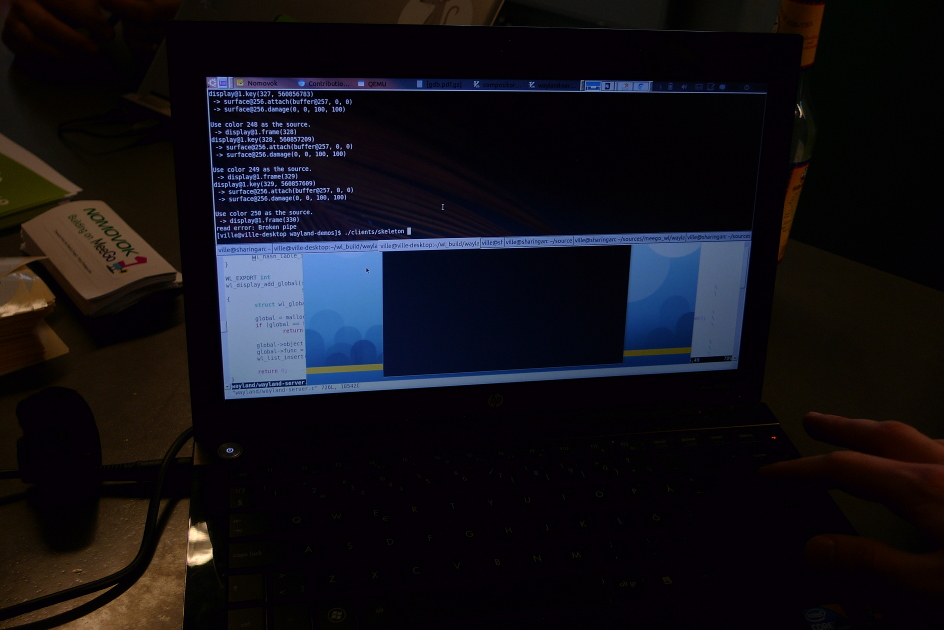
In addition to MeeGo tablet demonstrations a Wayland compositor was demoed by a Nomovok employee.


One of the many Qt / QML related talks was held by Tapani Mikola / Nokia


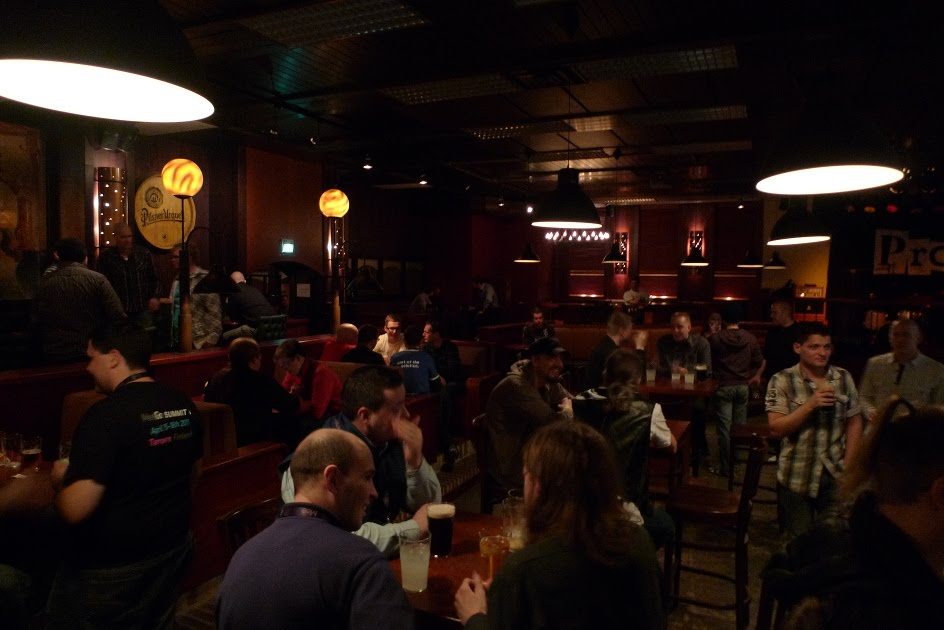
Evening party


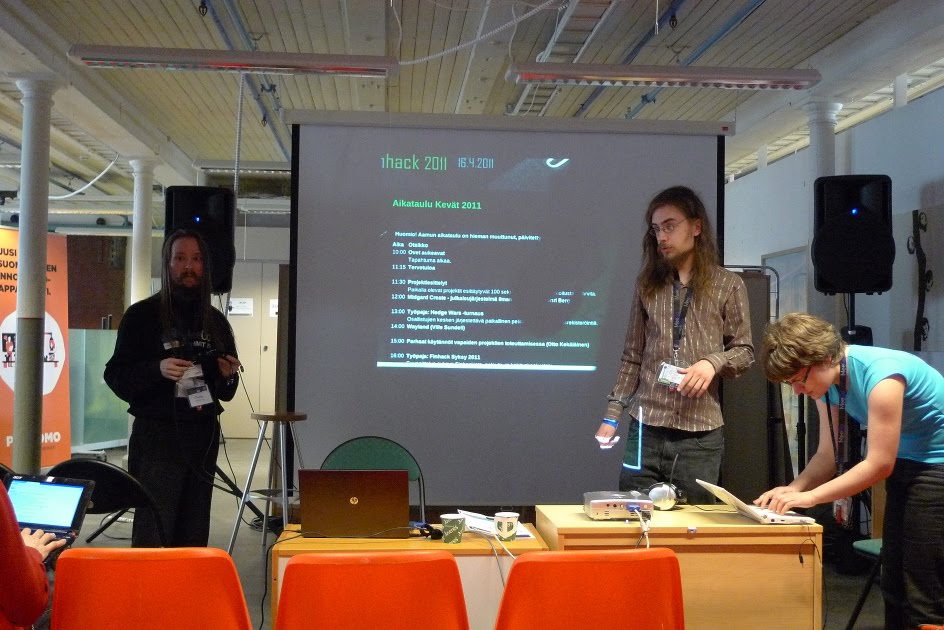
Day 2 started with a few more presentations and Finhack event launching in the Protomo room as well

Still remaining for the day are Meegathon demonstrations (well actually I'm right now already following those while finishing this - cool demos!) , Meegathon awards, a panel discussion on "MeeGo, Nokia, Finns - finished? Can MeeGo be important in Finland without being inside Nokia's core?", BoF sessions and finally Intel AppUp Application Lab including some MeeGo table give-outs.

Thanks to organizers, many of whom were volunteers. The event has been running completely smoothly, coming not as a big surprise after the hugely successful last summer's Akademy 2010 also held in Tampere.

31 March 2011

Pau Garcia i Quiles: A wish a day 7: make emerge a generic package manager for Windows

A while ago I said Koen from Emweb made an interesting proposal at FOSDEM about emerge, the KDE Windows build tool. Yesterday, Jaros aw Staniek and I reaffirmed our commitment to emerge . Today, I d like to go a bit further: let s bring more developers to emerge by opening it up to other projects. Keep reading! What is emerge, why is it important and what was Koen s proposal? Fact: Microsoft Windows is very different to Unix in regards to development. On Unix platforms -that includes Linux and Mac OS X-, software is usually installed to /usr: applications in /usr/bin and /usr/sbin, libraries in /usr/lib, headers in /usr/include, common resources in /usr/share, etc. Also, dependency management is usually something you can count on: when you install kdelibs5-dev in Ubuntu, it will automatically install libqt4-dev, kdelibs5-data, libfreetype (runtime), etc That makes setting up a development environment a very easy task: look for shared libraries, header files, etc in the common places and you will probably find them. On Windows there is nothing like that. When you want to compile an application, you need to provide (build and install) all its dependencies, and you need to tell Visual Studio where to find everything. Even CMake usually needs some help in the form of a hint for CMAKE_PREFIX_PATH. As you may imagine, building KDE, which has more than 200 third party dependencies and tens of modules (and with the move + split to git, many more) becomes an almost insurmountable task. Emerge to the rescue: inspired by Gentoo s emerge, Ralf Habacker, Christian Ehrlicher, Patrick Spendrin and others (yours faithfully included) developed a tool which downloads the source, configures, builds, installs and packages KDE and its dependencies. It makes a world of difference when building KDE. Actually, it makes building KDE on Windows possible. Once more: thank you very much guys, impressive tool. There are two well-differentiated parts in emerge, the engine and the recipes . The engine takes care of downloading the sources (tarballs, checkouts from Subversion and git clones, etc) , configuring and building for the usual build systems (QMake, CMake, NMake makefiles, etc), installing, bundling packages together and much more. All that for four compilers (MSVC2008, MSVC2010, MinGW32 and MinGW-W64). It s the equivalent to Gentoo s emerge, Debian s dpkg + debhelper/cdbs or Homebrew and MacPorts for Macintosh. The recipes are the package-specific instructions a particular piece of software needs to build: what s the name of the tarball? URL to download from? What versions are available? What build system to use to configure and build? Does it need any Windows-specific patch? They are written in Python using some helper modules emerge provides (the debhelper-like part I mentioned above). Currently, there are about 70 recipes in emerge, organized in our portage tree (bear in mind the names are taken from Gentoo but the internals of the tool are completely different). With those 70 recipes, we are able to build most KDE modules. Problem is to provide all the optional features, we are missing probably 200 to 250 more recipes. Given that KDE on Windows is quite short on developers, we have to decide: either we fix bugs and improve the integration of KDE on Windows, or we keep track of the dependencies. I won t lie: for KDE on Windows, I d rather focus on development than on packaging. Given that writing and maintaining recipes does not strictly require programming skills (although they help :-) ), during my talk at FOSDEM I kept asking people to join the KDE on Windows team as packagers, even if you know little to nothing about software development. If you think about it, that s what we have in Linux distributions: there are hundreds (thousands?) of packagers in Debian, Fedora, openSuse, etc which take care of the recipes to build software developed by someone else ( upstream , in the parlance). What we have in KDE on Windows, where we are the KDE packagers, the KDE developers (upstream) and the emerge developers, is actually an anomaly. Then Koen took the microphone and said: why don t you open emerge to other projects? And I there I realized he was damn right We have developed an awesome tool to download, configure, build, package and install third party software on Windows, to manage dependencies, to update, etc. For four compilers, no less. The engine of emerge is not really tied to KDE. We already have a lot of recipes for software which is not KDE specific: openssl, Qt, bzip2, libpng, mysql, etc. I see no actual reason to disallow Gnome, GStreamer, OpenSceneGraph, LibreOffice and many others in (assuming someone wants to take care of them, of course no, do not look at me! I don t have time!). Currently, the only barrier preventing those recipes in is emerge is developed in the KDE repository and you need a KDE developer account to commit your recipes. That s about it. There is also a perception problem: if emerge is developed in KDE, it s because it s a KDE-thingy, right? . Well, no. One way to avoid that would be to graduate emerge from KDE and make it an independent project, one in which the current developers have accounts, and new developers get an emerge project account instead of a KDE account to commit recipes. Please note graduating does not mean expelling , firing or anything peyorative. It does not mean that emerge developers (engine and recipes) are worse than KDE developers, or less KDE developers than our god David Faure: in KDE, we consider Debian, Fedora, openSuse, etc KDE packagers as equals, they are also KDE developers and many of them are in the KDE eV (funny thing is I am not). My wish for today: think of one application or library you d like to see in Windows and become its maintainer in emerge for Windows. For now, let s do this in the kde-windows mailing list and if this idea succeeds, then we ll talk about graduating. You could also try to add support for a new compiler (OpenWatcom, Intel C++, etc) but that s a lot more more and it s not a priority now. PS: Yes, I know about CoApp, Microsoft s similar effort, with some magic involved. I ve been watching and trying it since day 1. I m really interested. It s just not there yet and I do not have spare time to help Garrett (hey Microsoft, hire me and I ll have all the time in the world! :-) )

Next.

Previous.