Russ Allbery: Review: Nation
| Publisher: | Harper |
| Copyright: | 2008 |
| Printing: | 2009 |
| ISBN: | 0-06-143303-9 |
| Format: | Trade paperback |
| Pages: | 369 |
| Publisher: | Harper |
| Copyright: | 2008 |
| Printing: | 2009 |
| ISBN: | 0-06-143303-9 |
| Format: | Trade paperback |
| Pages: | 369 |
| Series: | Galactic Empire #2 |
| Publisher: | Fawcett Crest |
| Copyright: | 1950, 1951 |
| Printing: | June 1972 |
| Format: | Mass market |
| Pages: | 192 |
There was no way of telling when the threshold would be reached. Perhaps not for hours, and perhaps the next moment. Biron remained standing helplessly, flashlight held loosely in his damp hands. Half an hour before, the visiphone had awakened him, and he had been at peace then. Now he knew he was going to die. Biron didn't want to die, but he was penned in hopelessly, and there was no place to hide.Needless to say, Biron doesn't die. Even if your tolerance for pulp melodrama is high, 192 small-print pages of this sort of thing is wearying. Like a lot of Asimov plots, The Stars, Like Dust has some of the shape of a mystery novel. Biron, with the aid of some newfound companions on Rhodia, learns of a secret rebellion against the Tyranni and attempts to track down its base to join them. There are false leads, disguised identities, clues that are difficult to interpret, and similar classic mystery trappings, all covered with a patina of early 1950s imaginary science. To me, it felt constructed and artificial in ways that made the strings Asimov was pulling obvious. I don't know if someone who likes mystery construction would feel differently about it. The worst part of the plot thankfully doesn't come up much. We learn early in the story that Biron was on Earth to search for a long-lost document believed to be vital to defeating the Tyranni. The nature of that document is revealed on the final page, so I won't spoil it, but if you try to think of the stupidest possible document someone could have built this plot around, I suspect you will only need one guess. (In Asimov's defense, he blamed Galaxy editor H.L. Gold for persuading him to include this plot, and disavowed it a few years later.) The Stars, Like Dust is one of the worst books I have ever read. The characters are overwrought, the politics are slapdash and build on broad stereotypes, the romantic subplot is dire and plays out mainly via Biron egregiously manipulating his petulant love interest, and the writing is annoying. Sometimes pulp fiction makes up for those common flaws through larger-than-life feats of daring, sweeping visions of future societies, and ever-escalating stakes. There is little to none of that here. Asimov instead provides tedious political maneuvering among a class of elitist bankers and land owners who consider themselves natural leaders. The only places where the power structures of this future government make sense are where Asimov blatantly steals them from either the Roman Empire or the Doge of Venice. The one thing this book has going for it the thing, apart from bloody-minded completionism, that kept me reading is that the technology is hilariously weird in that way that only 1940s and 1950s science fiction can be. The characters have access to communication via some sort of interstellar telepathy (messages coded to a specific person's "brain waves") and can travel between stars through hyperspace jumps, but each jump is manually calculated by referring to the pilot's (paper!) volumes of the Standard Galactic Ephemeris. Communication between ships (via "etheric radio") requires manually aiming a radio beam at the area in space where one thinks the other ship is. It's an unintentionally entertaining combination of technology that now looks absurdly primitive and science that is so advanced and hand-waved that it's obviously made up. I also have to give Asimov some points for using spherical coordinates. It's a small thing, but the coordinate systems in most SF novels and TV shows are obviously not fit for purpose. I spent about a month and a half of this year barely reading, and while some of that is because I finally tackled a few projects I'd been putting off for years, a lot of it was because of this book. It was only 192 pages, and I'm still curious about the glue between Asimov's Foundation and Robot series, both of which I devoured as a teenager. But every time I picked it up to finally finish it and start another book, I made it about ten pages and then couldn't take any more. Learn from my error: don't try this at home, or at least give up if the same thing starts happening to you. Followed by The Currents of Space. Rating: 2 out of 10
| Series: | Discworld #37 |
| Publisher: | Harper |
| Copyright: | October 2009 |
| Printing: | November 2014 |
| ISBN: | 0-06-233500-6 |
| Format: | Mass market |
| Pages: | 517 |
Glenda enjoyed her job. She didn't have a career; they were for people who could not hold down jobs.She is the kind of person who knows where she fits in the world and likes what she does and is happy to stay there until she decides something isn't right, and then she changes the world through the power of common sense morality, righteous indignation, and sheer stubborn persistence. Discworld is full of complex and subtle characters fencing with each other, but there are few things I have enjoyed more than Glenda being a determinedly good person. Vetinari of course recognizes and respects (and uses) that inner core immediately. Unfortunately, as great as the setup and characters are, Unseen Academicals falls apart a bit at the end. I was eagerly reading the story, wondering what Pratchett was going to weave out of the stories of these individuals, and then it partly turned into yet another wizard book. Pratchett pulled another of his deus ex machina tricks for the climax in a way that I found unsatisfying and contrary to the tone of the rest of the story, and while the characters do get reasonable endings, it lacked the oomph I was hoping for. Rincewind is as determinedly one-note as ever, the wizards do all the standard wizard things, and the plot just isn't that interesting. I liked Mr. Nutt a great deal in the first part of the book, and I wish he could have kept that edge of enigmatic competence and unflappableness. Pratchett wanted to tell a different story that involved more angst and self-doubt, and while I appreciate that story, I found it less engaging and a bit more melodramatic than I was hoping for. Mr. Nutt's reactions in the last half of the book were believable and fit his background, but that was part of the problem: he slotted back into an archetype that I thought Pratchett was going to twist and upend. Mr. Nutt does, at least, get a fantastic closing line, and as usual there are a lot of great asides and quotes along the way, including possibly the sharpest and most biting Vetinari speech of the entire series.
The Patrician took a sip of his beer. "I have told this to few people, gentlemen, and I suspect never will again, but one day when I was a young boy on holiday in Uberwald I was walking along the bank of a stream when I saw a mother otter with her cubs. A very endearing sight, I'm sure you will agree, and even as I watched, the mother otter dived into the water and came up with a plump salmon, which she subdued and dragged on to a half-submerged log. As she ate it, while of course it was still alive, the body split and I remember to this day the sweet pinkness of its roes as they spilled out, much to the delight of the baby otters who scrambled over themselves to feed on the delicacy. One of nature's wonders, gentlemen: mother and children dining on mother and children. And that's when I first learned about evil. It is built into the very nature of the universe. Every world spins in pain. If there is any kind of supreme being, I told myself, it is up to all of us to become his moral superior."My dissatisfaction with the ending prevents Unseen Academicals from rising to the level of Night Watch, and it's a bit more uneven than the best books of the series. Still, though, this is great stuff; recommended to anyone who is reading the series. Followed in publication order by I Shall Wear Midnight. Rating: 8 out of 10
The problem here is with Open Source Software.I want to say not only is that view so myopic that it pushes towards the incorrect, but also it blinds us to more serious problems. Now, I don t pretend that there are no problems in the FLOSS community. There have been various pieces written about what this issue says about the FLOSS community (usually without actionable solutions). I m not here to say those pieces are wrong. Just that there s a bigger picture. So with this xz issue, it may well be a state actor (aka spy ) that added this malicious code to xz. We also know that proprietary software and systems can be vulnerable. For instance, a Twitter whistleblower revealed that Twitter employed Indian and Chinese spies, some knowingly. A recent report pointed to security lapses at Microsoft, including preventable lapses in security. According to the Wikipedia article on the SolarWinds attack, it was facilitated by various kinds of carelessness, including passwords being posted to Github and weak default passwords. They directly distributed malware-infested updates, encouraged customers to disable anti-malware tools when installing SolarWinds products, and so forth. It would be naive indeed to assume that there aren t black hat actors among the legions of programmers employed by companies that outsource work to low-cost countries some of which have challenges with bribery. So, given all this, we can t really say the problem is Open Source. Maybe it s more broad:
The problem here is with software.Maybe that inches us closer, but is it really accurate? We have all heard of Boeing s recent issues, which seem to have some element of root causes in corporate carelessness, cost-cutting, and outsourcing. That sounds rather similar to the SolarWinds issue, doesn t it?
Well then, the problem is capitalism.Maybe it has a role to play, but isn t it a little too easy to just say capitalism and throw up our hands helplessly, just as some do with FLOSS as at the start of this article? After all, capitalism also brought us plenty of products of very high quality over the years. When we can point to successful, non-careless products and I own some of them (for instance, my Framework laptop). We clearly haven t reached the root cause yet. And besides, what would you replace it with? All the major alternatives that have been tried have even stronger downsides. Maybe you replace it with better regulated capitalism , but that s still capitalism.
Then the problem must be with consumers.As this argument would go, it s consumers buying patterns that drive problems. Buyers individual and corporate seek flashy features and low cost, prizing those over quality and security. No doubt this is true in a lot of cases. Maybe greed or status-conscious societies foster it: Temu promises people to shop like a billionaire , and unloads on them cheap junk, which all but guarantees that shipments from Temu containing products made with forced labor are entering the United States on a regular basis . But consumers are also people, and some fraction of them are quite capable of writing fantastic software, and in fact, do so. So what we need is some way to seize control. Some way to do what is right, despite the pressures of consumers or corporations. Ah yes, dear reader, you have been slogging through all these paragraphs and now realize I have been leading you to this:
Then the solution is Open Source.Indeed. Faults and all, FLOSS is the most successful movement I know where people are bringing us back to the commons: working and volunteering for the common good, unleashing a thousand creative variants on a theme, iterating in every direction imaginable. We have FLOSS being vital parts of everything from $30 Raspberry Pis to space missions. It is bringing education and communication to impoverished parts of the world. It lets everyone write and release software. And, unlike the SolarWinds and Twitter issues, it exposes both clever solutions and security flaws to the world. If an authentication process in Windows got slower, we would all shrug and mutter Microsoft under our breath. Because, really, what else can we do? We have no agency with Windows. If an authentication process in Linux gets slower, anybody that s interested anybody at all can dive in and ask why and trace it down to root causes. Some look at this and say FLOSS is responsible for this mess. I look at it and say, this would be so much worse if it wasn t FLOSS and experience backs me up on this. FLOSS doesn t prevent security issues itself. What it does do is give capabilities to us all. The ability to investigate. Ability to fix. Yes, even the ability to break and its cousin, the power to learn. And, most rewarding, the ability to contribute.

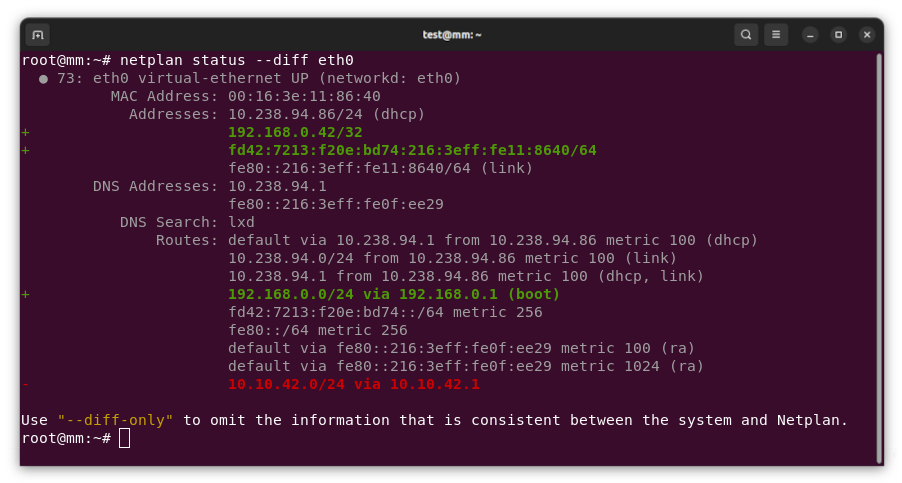
New netplan status diff subcommand, finding differences between configuration and system state As the maintainer and lead developer for Netplan, I m proud to announce the general availability of Netplan v1.0 after more than 7 years of development efforts. Over the years, we ve so far had about 80 individual contributors from around the globe. This includes many contributions from our Netplan core-team at Canonical, but also from other big corporations such as Microsoft or Deutsche Telekom. Those contributions, along with the many we receive from our community of individual contributors, solidify Netplan as a healthy and trusted open source project. In an effort to make Netplan even more dependable, we started shipping upstream patch releases, such as 0.106.1 and 0.107.1, which make it easier to integrate fixes into our users custom workflows. With the release of version 1.0 we primarily focused on stability. However, being a major version upgrade, it allowed us to drop some long-standing legacy code from the libnetplan1 library. Removing this technical debt increases the maintainability of Netplan s codebase going forward. The upcoming Ubuntu 24.04 LTS and Debian 13 releases will ship Netplan v1.0 to millions of users worldwide.
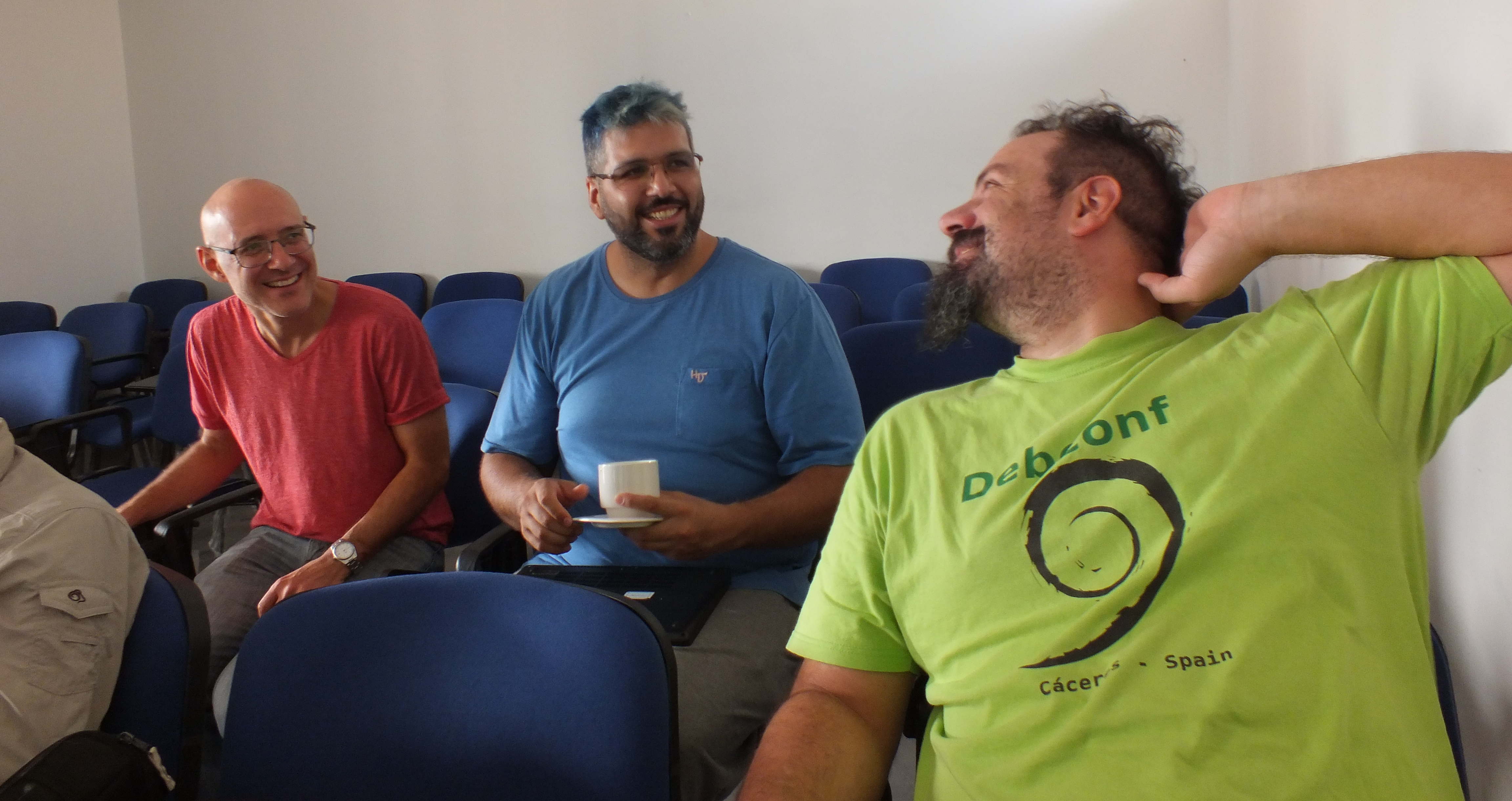
Last week we held our promised miniDebConf in Santa Fe City, Santa Fe province,
Argentina just across the river from Paran , where I have spent almost six
beautiful months I will never forget.
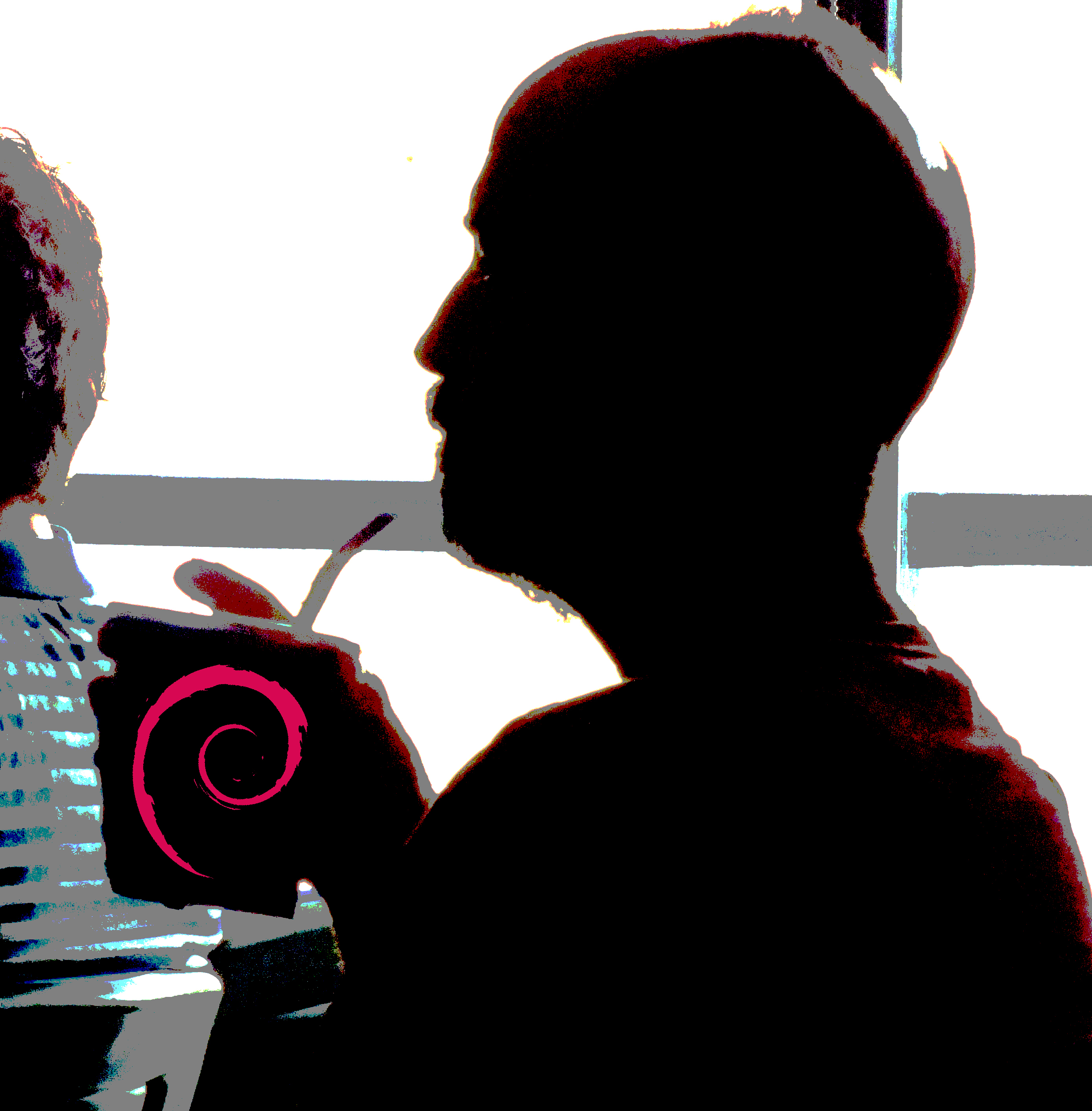
Around 500 Kilometers North from Buenos Aires, Santa Fe and Paran are separated
by the beautiful and majestic Paran river, which flows from Brazil, marks the
Eastern border of Paraguay, and continues within Argentina as the heart of the
litoral region of the country, until it merges with the Uruguay river (you
guessed right the river marking the Eastern border of Argentina, first with
Brazil and then with Uruguay), and they become the R o de la Plata.
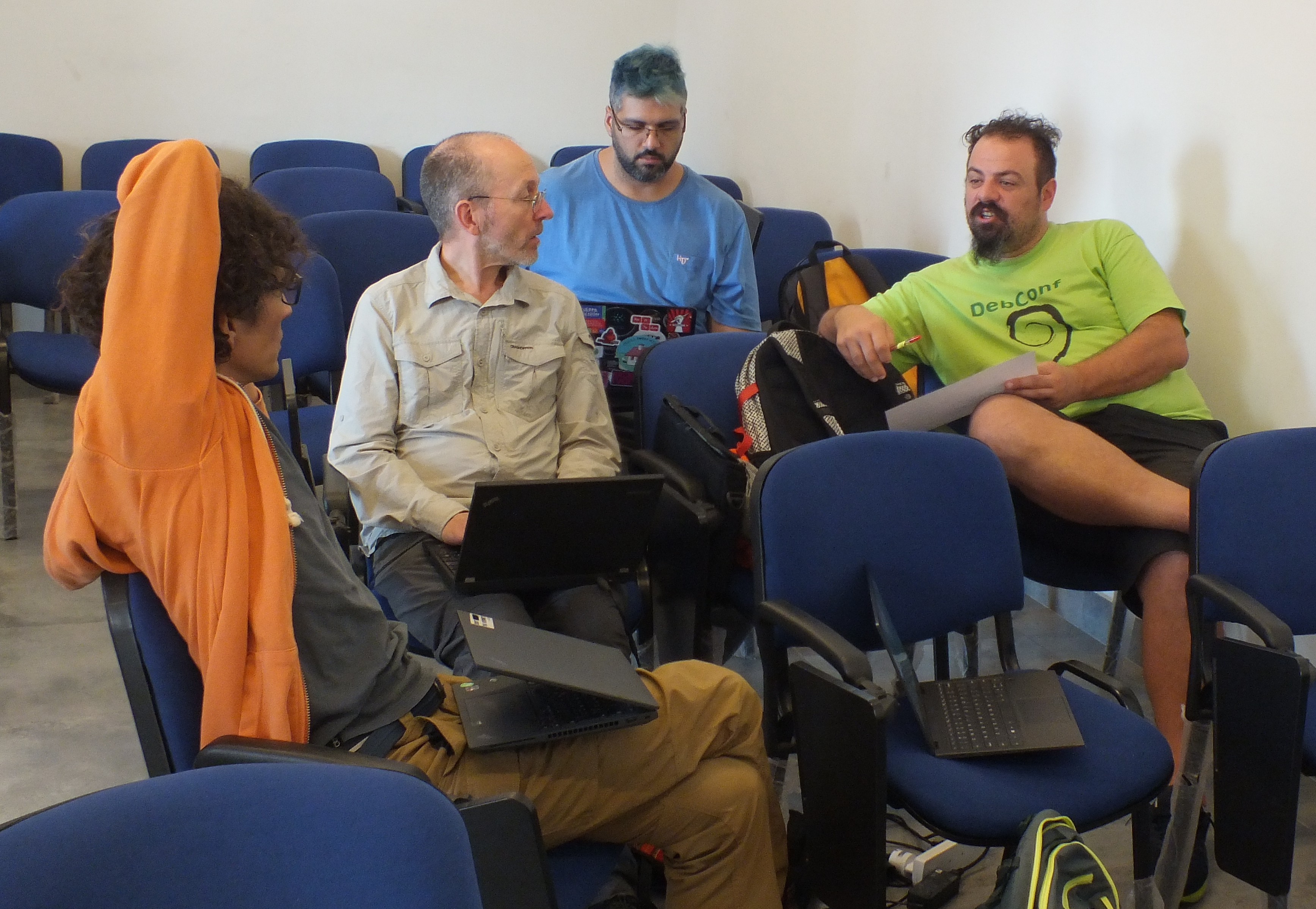
This was a short miniDebConf: we were lent the APUL union s building for the
weekend (thank you very much!); during Saturday, we had a cycle of talks, and on
sunday we had more of a hacklab logic, having some unstructured time to work
each on their own projects, and to talk and have a good time together.
We were five Debian people attending:
santiago debacle eamanu dererk gwolf @debian.org. My main contact to
kickstart organization was Mart n Bayo. Mart n was for many years the leader of
the Technical Degree on Free Software at Universidad Nacional del
Litoral,
where I was also a teacher for several years. Together with Leo Mart nez, also a
teacher at the tecnicatura, they contacted us with Guillermo and Gabriela,
from the APUL non-teaching-staff union of said university.
We had the following set of talks (for which there is a promise to get
electronic record, as APUL was kind enough to record them! of course, I will
push them to our usual conference video archiving service as soon as I get them)
| Hour | Title (Spanish) | Title (English) | Presented by |
|---|---|---|---|
| 10:00-10:25 | Introducci n al Software Libre | Introduction to Free Software | Mart n Bayo |
| 10:30-10:55 | Debian y su comunidad | Debian and its community | Emanuel Arias |
| 11:00-11:25 | Por qu sigo contribuyendo a Debian despu s de 20 a os? | Why am I still contributing to Debian after 20 years? | Santiago Ruano |
| 11:30-11:55 | Mi identidad y el proyecto Debian: Qu es el llavero OpenPGP y por qu ? | My identity and the Debian project: What is the OpenPGP keyring and why? | Gunnar Wolf |
| 12:00-13:00 | Explorando las masculinidades en el contexto del Software Libre | Exploring masculinities in the context of Free Software | Gora Ortiz Fuentes - Jos Francisco Ferro |
| 13:00-14:30 | Lunch | ||
| 14:30-14:55 | Debian para el d a a d a | Debian for our every day | Leonardo Mart nez |
| 15:00-15:25 | Debian en las Raspberry Pi | Debian in the Raspberry Pi | Gunnar Wolf |
| 15:30-15:55 | Device Trees | Device Trees | Lisandro Dami n Nicanor Perez Meyer (videoconferencia) |
| 16:00-16:25 | Python en Debian | Python in Debian | Emmanuel Arias |
| 16:30-16:55 | Debian y XMPP en la medici n de viento para la energ a e lica | Debian and XMPP for wind measuring for eolic energy | Martin Borgert |
? operator kind-of-looks-like
being in do blocks, but only and only for Option and Result,
sadly.assert_cmd, is
excellent to describe testing/assertion in Rust itself, rather than
via a separate, new DSL, like I was using shelltest for, in Haskell.
To some extent, I feel like I found the missing arrow in the
quiver. Haskell is good, quite very good for some type of workloads,
but of course not all, and Rust complements that very nicely, with
lots of overlap (as expected). Python can fill in any quick-and-dirty
scripting needed. And I just need to learn more frontend, specifically
Typescript (the language, not referring to any specific
libraries/frameworks), and I ll be ready for AI to take over coding
So, for now, I ll need to split my free time coding between all of the
above, and keep exercising my skills. But so glad to have found a
good new language!
| Publisher: | St. Martin's Press |
| Copyright: | 2023 |
| ISBN: | 1-250-27694-2 |
| Format: | Kindle |
| Pages: | 310 |
A lawyer for Dalio said he "treated all employees equally, giving people at all levels the same respect and extending them the same perks."Uh-huh. Anyway, I personally know nothing about Bridgewater other than what I learned here and the occasional mention in Matt Levine's newsletter (which is where I got the recommendation for this book). I have no independent information whether anything Copeland describes here is true, but Copeland provides the typical extensive list of notes and sourcing one expects in a book like this, and Levine's comments indicated it's generally consistent with Bridgewater's industry reputation. I think this book is true, but since the clear implication is that the world's largest hedge fund was primarily a deranged cult whose employees mostly spied on and rated each other rather than doing any real investment work, I also have questions, not all of which Copeland answers to my satisfaction. But more on that later. The center of this book are the Principles. These were an ever-changing list of rules and maxims for how people should conduct themselves within Bridgewater. Per Copeland, although Dalio later published a book by that name, the version of the Principles that made it into the book was sanitized and significantly edited down from the version used inside the company. Dalio was constantly adding new ones and sometimes changing them, but the common theme was radical, confrontational "honesty": never being silent about problems, confronting people directly about anything that they did wrong, and telling people all of their faults so that they could "know themselves better." If this sounds like textbook abusive behavior, you have the right idea. This part Dalio admits to openly, describing Bridgewater as a firm that isn't for everyone but that achieves great results because of this culture. But the uncomfortably confrontational vibes are only the tip of the iceberg of dysfunction. Here are just a few of the ways this played out according to Copeland:
Happy 2024!
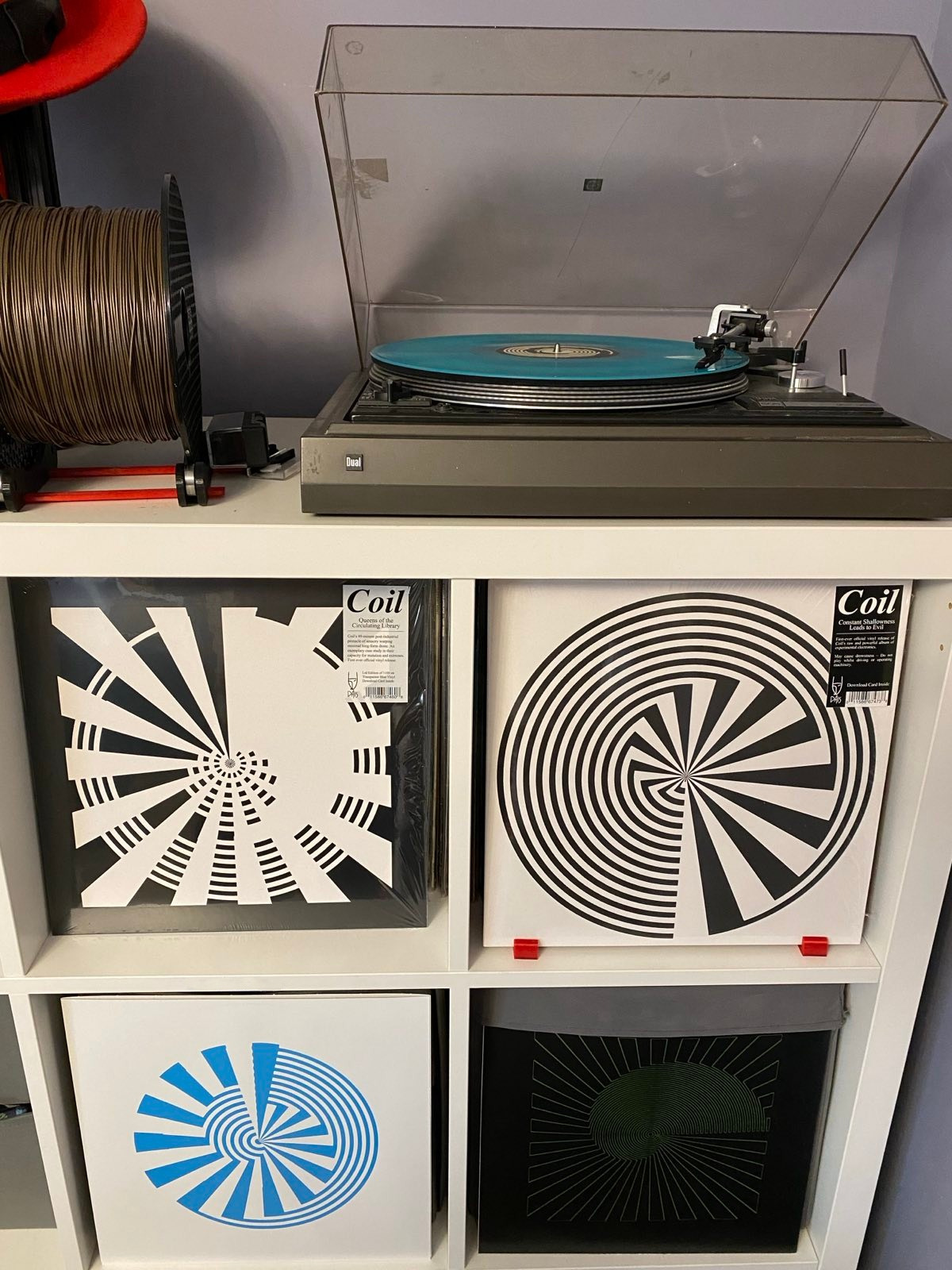
DAIS have continued their programme of posthumous Coil remasters and re-issues.
Constant Shallowness Leads To
Evil
was remastered by Josh Bonati in 2021 and re-released in 2022 in a dizzying
array of different packaging variants. The original releases in 2000 had barely
any artwork, and given that void I think Nathaniel Young has done a great job
of creating something compelling.
A limited number of the original re-issue have special lenticular covers, although
these were not sold by any distributors outside the US. I tried to find a copy on
my trip to Portland in 2022, to no avail.
Last year DAIS followed Constant with Queens Of The Circulating
Library,
same deal: limited lenticular covers, US only.
Both are also available digital-only, e.g. on Bandcamp:
Constant ,
Queens .
The original, pre-remastered releases have been freely available on archive.org for a long time:
Constant ,
Queens
Both of these releases feel to me that they were made available by the group
somewhat as an afterthought, having been produced primarily as part of their
live efforts. (I'm speculating freely here, it might not be true). Live takes
of some of this material exist in the form of Coil Presents Time
Machines, which
has not (yet) been reissued. In my opinion this is a really compelling
recording. I vividly remember listening to this whilst trying to get an hour's
rest in a hotel somewhere on a work trip. It took me to some strange places!
I'll leave you from one of my favourite moments from "Colour Sound Oblivion",
Coil's video collection of live backdrops. When this was performed live it
was also called "Constant Shallowness Leads To Evil", although it's distinct
from the material on the LP:
also available on
archive.org. A version of
this Constant made it onto a Russian live bootleg, which is available on
Spotify
and Bandcamp
complete with some John Balance banter: we only do this on religious holidaysConstant Shallowness Leads to Evil by Coil
| Publisher: | Scholastic Press |
| Copyright: | June 2023 |
| ISBN: | 1-338-29064-9 |
| Format: | Kindle |
| Pages: | 446 |
Read all parts of the series
Part 1
// Part 2
// Part 3
// Part 4
I ve been wanting to write this post for over a year, but lacked energy
and time. Before 2023 is coming to an end, I want to close this series
and share some more insights with you and hopefully provide you with a
smile here and there.
For this round of interviews, four more kids around the ages of 8 to 13
were interviewed, 3 of them have a US background these 3
interviews were done by a friend who recorded these interviews for me,
thank you!
As opposed to the previous interviews, these four kids have parents who
have a more technical professional background. And this seems to make a
difference: even though none of these kids actually knew much better how
the internet really works than the other kids that I interviewed,
specifically in terms of physical infrastructures, they were much more
confident in using the internet, they were able to more correctly name
things they see on the internet, and they had partly radical ideas about
what they would like to learn or what they would want to change about
the internet!
Looking at these results, I think it s safe to say that social
reproduction is at work and that we need to improve education for kids
who do not profit from this type of social and cultural wealth at home.
But let s dive into the details.
Well, I mean they re aliens, so I don t know if I wanna tell them much.(Parents laughing in the background.) Let s assume they re friendly aliens.
Well, I would say you can look anything up and play different games. And there are alien games. But mostly the enemies are aliens which you might be a little offended by. And you can get work done, if you needed to spy on humans. There s cameras, you can film yourself, yeah. And you can text people and call people who are far awayAnd what would be in a drawing that would explain the internet?
And here s what he explains about his drawing:
First, I would draw what I see when you open a new tab, Google.On the right side of the drawing we see something like Twitch.
I don t wanna offend the aliens, but you can film yourself playing a game, so here is the alien and he s playing a game.
And then you can ask questions like: How did aliens come to the Earth? And the answer will be here (below). And there ll be different websites that you can click on.
And you can also look up Who won the alien contest? And that would be Usmushgagu, and that guy won the alien contest.Do you think the information about alien intergalactic football is already on the internet?
Yeah! That s how fast the internet is.On the bottom of the drawing we see an iPhone and an instant messaging software.
There s also a device called an iPhone and with it you can text your friends. So here s the alien asking: How was ur day? and the friend might answer IDK [I don t know].Imagine that a wise and friendly dragon could teach you one thing about the internet that you ve always wanted to know. What would you ask the dragon to teach you about?
Is there a way you don t have to pay for any channels or subscriptions and you can get through any firewall?Imagine you could make the internet better for everyone. What would you do first?
Well you wouldn t have to pay for it [paywalls].Can you describe what happens between your device and a website when you visit a website?
Well, it takes 0.025 seconds. [ ] It s connecting.Wow, that s indeed fast! We were not able to obtain more details about what is that fast thing that s happening exactly
My dad knows everything.The kid has a laptop and a mobile phone, both with parental control they don t think that the controlling is fair. This kid uses the internet foremostly for listening to music and watching prank channels on Youtube but also to work with Purple Mash (a teaching platform for the computing curriculum used at their school), finding 3d printing models (that they ask their father to print with them because they did not manage to use the printer by themselves yet). Interestingly, and very differently from the non-tech-parent kids, this kid insists on using Firefox and Signal - the latter is not only used by their dad to tell them to come downstairs for dinner, but also to call their grandmother. This kid also shops online, with the help of the father who does the actual shopping for them using money that the kid earned by reading books. If you would need to explain to an alien who has landed on Earth what the internet is, what would you tell them?
The internet is something where you search, for example, you can look for music. You can also watch videos from around the world, and you can program stuff.Like most of the kids interviewed, this kid uses the internet mostly for media consumption, but with the difference that they also engage with technology by way of programming using Purple Mash.
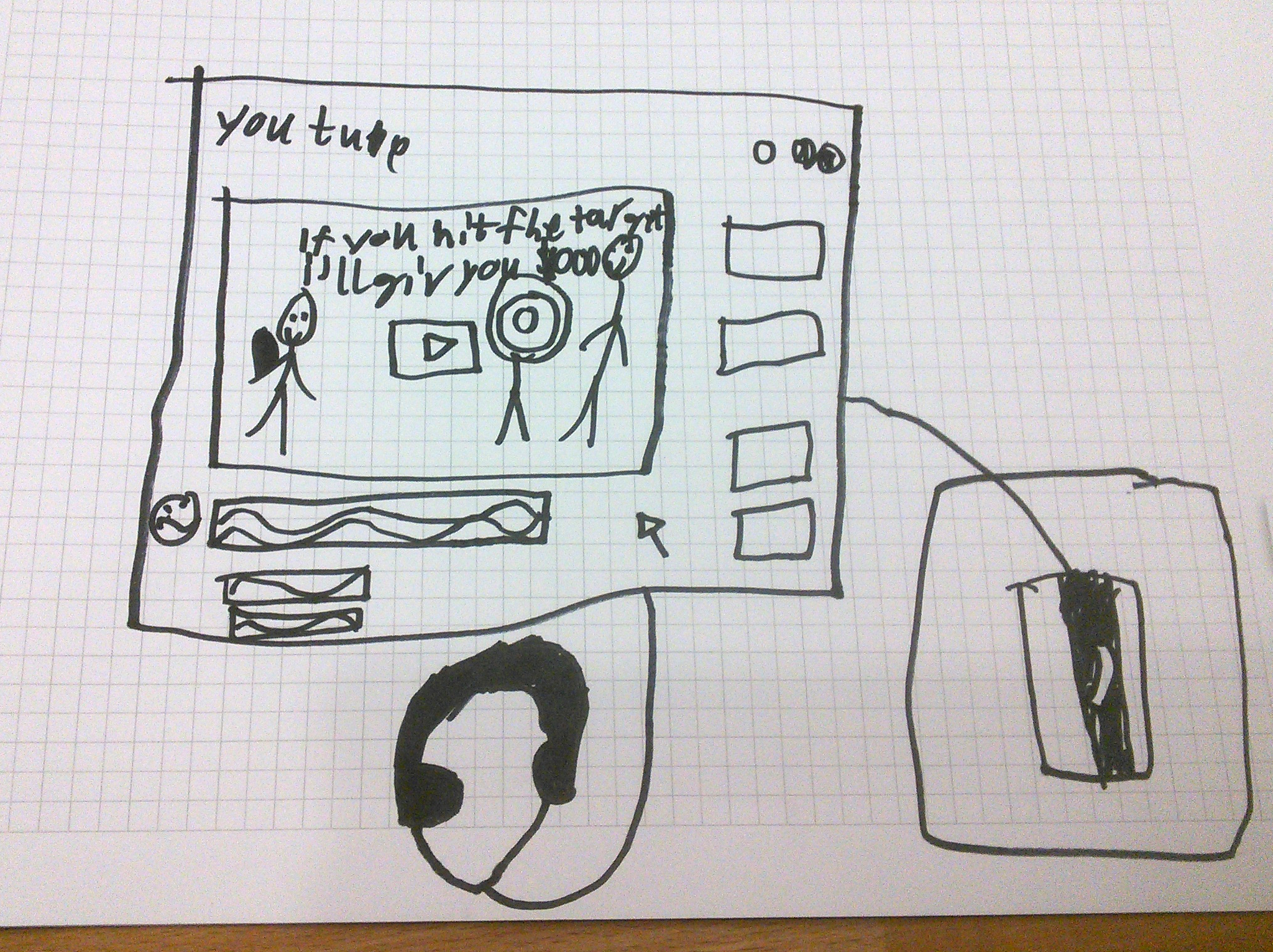
In their drawing we see a Youtube prank channel on a screen, an external
trackpad on the right (likely it s not a touch screen), and headphones.
Notice how there is no keyboard, or maybe it s folded away.
If you could ask a nice and friendly dragon anything you d like to
learn about the internet, what would it be?
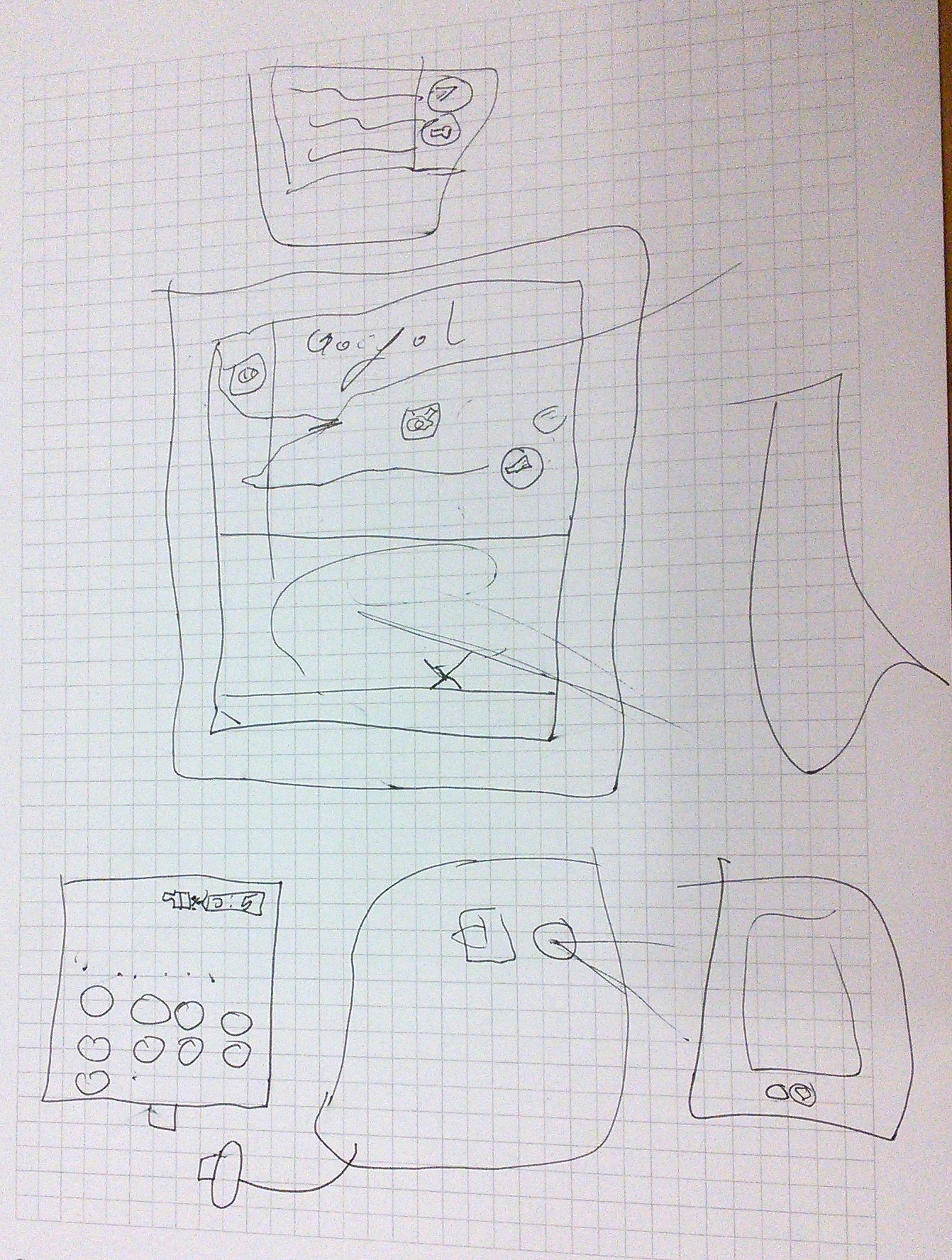
How do I shutdown my dad s computer forever?And what is it that he would do to improve the internet for everyone? Contrary to the kid living in the US, they think that
It takes too much time to load stuff!I wonder if this kid experiences the internet as being slow because they use the mobile network or because their connection somehow gets throttled as a way to control media consumption, or if the German internet infrastructure is just so much worse in certain regions If you could improve the internet for everyone, what would you do first? I d make a new Firefox app that loads the internet much faster.
In her drawing, we see again Google - it s clearly everywhere - and also
the interfaces for calling and texting someone.
To explain what the internet is, besides the fact that one
can use it for calling and listening to music, she says:
[The internet] is something that you can [use to] see someone who is far away, so that you don t need to take time to get to them.Now, that s a great explanation, the internet providing the possibility for communication over a distance :) If she could ask a friendly dragon something she always wanted to know, she d ask how to make her phone come alive:
that it can talk to you, that it can see you, that it can smile and has eyes. It s like a new family member, you can talk to it.Sounds a bit like Siri, Alexa, or Furby, doesn t it? If you could improve the internet for everyone, what would you do first? She d have the phone be able to decide over her free time, her phone time. That would make the world better, not for the kids, but certainly for the parents.
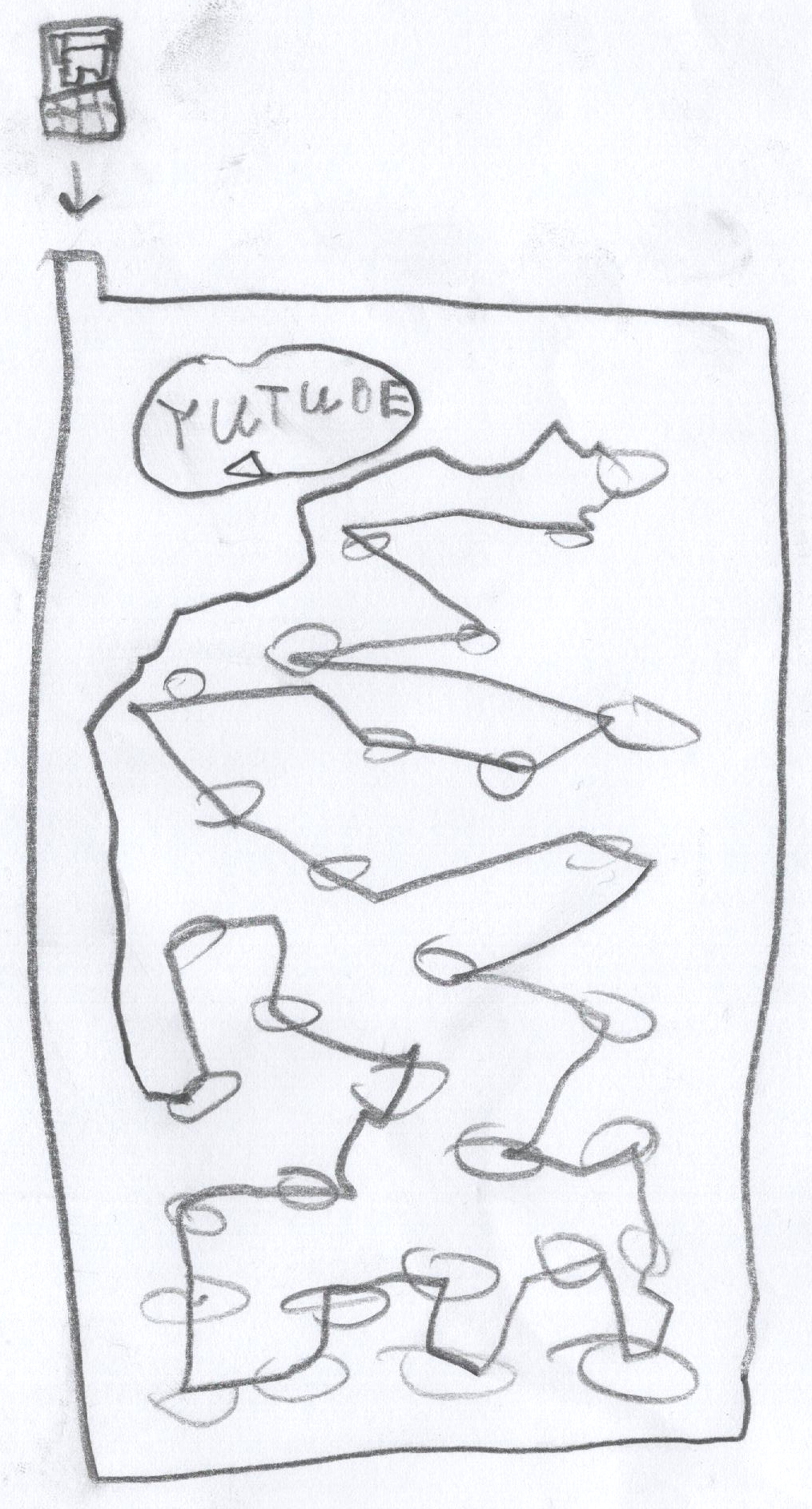
An invisible world. A virtual world. But there s also the darknet.He told me he always watches that German show on public TV for kids that explains stuff: Checker Tobi. (In 2014, Checker Tobi actually produced an episode about the internet, which I d criticize for having only male characters, except for one female character: a secretary Google, a nice and friendly woman guiding the way through the huge library that s the internet ) This kid was the only one interviewed who managed to actually explain something about the internet, or rather about the hypertextual structure of the web. When I asked him to draw the internet, he made a drawing of a pin board. He explained:
Many items are attached to the pin board, and on the top left corner there s a computer, for example with Youtube and one can navigate like that between all the items, and start again from the beginning when done.
When I asked if he knew what actually happens between the device and a
website he visits, he put forth the hypothesis of the existence of some
kind of
Waves, internet waves - all this stuff somehow needs to be transmitted.What he d like to learn:
How to get into the darknet? How do you become a Whitehat? I ve heard these words on the internet, the internet makes me clever.And what would he change on the internet if he could?
I want that right wing extreme stuff is not accessible anymore, or at least, that it rains turds ( Kackw rste ) whenever people watch such stuff. Or that people are always told: This video is scum.I suspect that his father has been talking with him about these things, and maybe these are also subjects he heard about when listening to punk music (he told me he does), or browsing Youtube.
| Publisher: | Tor |
| Copyright: | 2022 |
| ISBN: | 1-250-24403-X |
| Format: | Kindle |
| Pages: | 242 |
"We're a mystery religion," said the abbess, when she'd had a bit more wine than usual, "for people who have too much work to do to bother with mysteries. So we simply get along as best we can. Occasionally someone has a vision, but [the goddess] doesn't seem to want anything much, and so we try to return the favor."If you have read any other Kingfisher novels, much of this will be familiar: the speculative asides, the dogged determination, the slightly askew nature of the world, the vibes-based world-building that feels more like a fairy tale than a carefully constructed magic system, and the sense that the main characters (and nearly all of the supporting characters) are average people trying to play the hands they were dealt as ethically as they can. You will know that the tentative and woman-initiated romance is coming as soon as the party meets the paladin type who is almost always the romantic interest in one of these books. The emotional tone of the book is a bit predictable for regular readers, but Ursula Vernon's brain is such a delightful place to spend some time that I don't mind.
Marra had not managed to be pale and willowy and consumptive at any point in eighteen years of life and did not think she could achieve it before she died.Nettle & Bone won the Hugo for Best Novel in 2023. I'm not sure why this specific T. Kingfisher novel won and not any of the half-dozen earlier novels she's written in a similar style, but sure, I have no objections. I'm glad one of them won; they're all worth reading and hopefully that will help more people discover this delightful style of fantasy that doesn't feel like what anyone else is doing. Recommended, although be prepared for a few more horror touches than normal and a rather grim first chapter. Content warnings: domestic abuse. The dog... lives? Is equally as alive at the end of the book as it was at the end of the first chapter? The dog does not die; I'll just leave it at that. (Neither does the chicken.) Rating: 8 out of 10
| Series: | Sherlock Holmes #1 |
| Publisher: | AmazonClassics |
| Copyright: | 1887 |
| Printing: | February 2018 |
| ISBN: | 1-5039-5525-7 |
| Format: | Kindle |
| Pages: | 159 |
My surprise reached a climax, however, when I found incidentally that he was ignorant of the Copernican Theory and of the composition of the Solar System. That any civilized human being in this nineteenth century should not be aware that the earth travelled round the sun appeared to be to me such an extraordinary fact that I could hardly realize it. "You appear to be astonished," he said, smiling at my expression of surprise. "Now that I do know it I shall do my best to forget it." "To forget it!" "You see," he explained, "I consider that a man's brain originally is like a little empty attic, and you have to stock it with such furniture as you chose. A fool takes in all the lumber of every sort that he comes across, so that the knowledge which might be useful to him gets crowded out, or at best is jumbled up with a lot of other things so that he has a difficulty in laying his hands upon it. Now the skilful workman is very careful indeed as to what he takes into his brain-attic. He will have nothing but the tools which may help him in doing his work, but of these he has a large assortment, and all in the most perfect order. It is a mistake to think that that little room has elastic walls and can distend to any extent. Depend upon it there comes a time when for every addition of knowledge you forget something that you knew before. It is of the highest importance, therefore, not to have useless facts elbowing out the useful ones."This is directly contrary to my expectation that the best way to make leaps of deduction is to know something about a huge range of topics so that one can draw unexpected connections, particularly given the puzzle-box construction and odd details so beloved in classic mysteries. I'm now curious if Doyle stuck with this conception, and if there were any later mysteries that involved astronomy. Speaking of classic mysteries, A Study in Scarlet isn't quite one, although one can see the shape of the genre to come. Doyle does not "play fair" by the rules that have not yet been invented. Holmes at most points knows considerably more than the reader, including bits of evidence that are not described until Holmes describes them and research that Holmes does off-camera and only reveals when he wants to be dramatic. This is not the sort of story where the reader is encouraged to try to figure out the mystery before the detective. Rather, what Doyle seems to be aiming for, and what Watson attempts (unsuccessfully) as the reader surrogate, is slightly different: once Holmes makes one of his grand assertions, the reader is encouraged to guess what Holmes might have done to arrive at that conclusion. Doyle seems to want the reader to guess technique rather than outcome, while providing only vague clues in general descriptions of Holmes's behavior at a crime scene. The structure of this story is quite odd. The first part is roughly what you would expect: first-person narration from Watson, supposedly taken from his journals but not at all in the style of a journal and explicitly written for an audience. Part one concludes with Holmes capturing and dramatically announcing the name of the killer, who the reader has never heard of before. Part two then opens with... a western?
In the central portion of the great North American Continent there lies an arid and repulsive desert, which for many a long year served as a barrier against the advance of civilization. From the Sierra Nevada to Nebraska, and from the Yellowstone River in the north to the Colorado upon the south, is a region of desolation and silence. Nor is Nature always in one mood throughout the grim district. It comprises snow-capped and lofty mountains, and dark and gloomy valleys. There are swift-flowing rivers which dash through jagged ca ons; and there are enormous plains, which in winter are white with snow, and in summer are grey with the saline alkali dust. They all preserve, however, the common characteristics of barrenness, inhospitality, and misery.First, I have issues with the geography. That region contains some of the most beautiful areas on earth, and while a lot of that region is arid, describing it primarily as a repulsive desert is a bit much. Doyle's boundaries and distances are also confusing: the Yellowstone is a northeast-flowing river with its source in Wyoming, so the area between it and the Colorado does not extend to the Sierra Nevadas (or even to Utah), and it's not entirely clear to me that he realizes Nevada exists. This is probably what it's like for people who live anywhere else in the world when US authors write about their country. But second, there's no Holmes, no Watson, and not even the pretense of a transition from the detective novel that we were just reading. Doyle just launches into a random western with an omniscient narrator. It features a lean, grizzled man and an adorable child that he adopts and raises into a beautiful free spirit, who then falls in love with a wild gold-rush adventurer. This was written about 15 years before the first critically recognized western novel, so I can't blame Doyle for all the cliches here, but to a modern reader all of these characters are straight from central casting. Well, except for the villains, who are the Mormons. By that, I don't mean that the villains are Mormon. I mean Brigham Young is the on-page villain, plotting against the hero to force his adopted daughter into a Mormon harem (to use the word that Doyle uses repeatedly) and ruling Salt Lake City with an iron hand, border guards with passwords (?!), and secret police. This part of the book was wild. I was laughing out-loud at the sheer malevolent absurdity of the thirty-day countdown to marriage, which I doubt was the intended effect. We do eventually learn that this is the backstory of the murder, but we don't return to Watson and Holmes for multiple chapters. Which leads me to the other thing that surprised me: Doyle lays out this backstory, but then never has his characters comment directly on the morality of it, only the spectacle. Holmes cares only for the intellectual challenge (and for who gets credit), and Doyle sets things up so that the reader need not concern themselves with aftermath, punishment, or anything of that sort. I probably shouldn't have been surprised this does fit with the Holmes stereotype but I'm used to modern fiction where there is usually at least some effort to pass judgment on the events of the story. Doyle draws very clear villains, but is utterly silent on whether the murder is justified. Given its status in the history of literature, I'm not sorry to have read this book, but I didn't particularly enjoy it. It is very much of its time: everyone's moral character is linked directly to their physical appearance, and Doyle uses the occasional racial stereotype without a second thought. Prevailing writing styles have changed, so the prose feels long-winded and breathless. The rivalry between Holmes and the police detectives is tedious and annoying. I also find it hard to read novels from before the general absorption of techniques of emotional realism and interiority into all genres. The characters in A Study in Scarlet felt more like cartoon characters than fully-realized human beings. I have no strong opinion about the objective merits of this book in the context of its time other than to note that the sudden inserted western felt very weird. My understanding is that this is not considered one of the better Holmes stories, and Holmes gets some deeper characterization later on. Maybe I'll try another of Doyle's works someday, but for now my curiosity has been sated. Followed by The Sign of the Four. Rating: 4 out of 10
This post describes how I m using
semantic-release on
gitlab-ci to manage versioning automatically
for different kinds of projects following a simple workflow (a develop branch
where changes are added or merged to test new versions, a temporary
release/#.#.# to generate the release candidate versions and a main branch
where the final versions are published).
semantic-releaseIt is a Node.js application designed to manage project
versioning information on Git Repositories using a
Continuous integration
system (in this post we will use gitlab-ci)semantic-release uses semver for versioning
(release versions use the format MAJOR.MINOR.PATCH) and commit messages are
parsed to determine the next version number to publish.
If after analyzing the commits the version number has to be changed, the command
updates the files we tell it to (i.e. the package.json file for nodejs
projects and possibly a CHANGELOG.md file), creates a new commit with the
changed files, creates a tag with the new version and pushes the changes to the
repository.
When running on a CI/CD system we usually generate the artifacts related to a
release (a package, a container image, etc.) from the tag, as it includes the
right version number and usually has passed all the required tests (it is a good
idea to run the tests again in any case, as someone could create a tag manually
or we could run extra jobs when building the final assets if they fail it is
not a big issue anyway, numbers are cheap and infinite, so we can skip releases
if needed).
MAJOR version.
The commit message format used must be:
<type>(optional scope): <description>
[optional body]
[optional footer(s)]release, maintenance and
pre-release, but for now I m not using maintenance ones.
The branches I use and their types are:
main as release branch (final versions are published from there)develop as pre release branch (used to publish development and testing
versions with the format #.#.#-SNAPSHOT.#)release/#.#.# as pre release branches (they are created from develop
to publish release candidate versions with the format #.#.#-rc.# and once
they are merged with main they are deleted)main) the version number is updated as follows:
MAJOR number is incremented if a commit with a BREAKING CHANGE:
footer or an exclamation (!) after the type/scope is found in the list of
commits found since the last version change (it looks for tags on the same
branch).MINOR number is incremented if the MAJOR number is not going to be
changed and there is a commit with type feat in the commits found since
the last version change.PATCH number is incremented if neither the MAJOR nor the MINOR numbers
are going to be changed and there is a commit with type fix in the the
commits found since the last version change.develop and release/#.#.#) the version and
pre release numbers are always calculated from the last published version
available on the branch (i. e. if we published version 1.3.2 on main we need
to have the commit with that tag on the develop or release/#.#.# branch
to get right what will be the next version).
The version number is updated as follows:
MAJOR number is incremented if a commit with a BREAKING CHANGE:
footer or an exclamation (!) after the type/scope is found in the list of
commits found since the last released version.In our example it was 1.3.2 and the version is updated to 2.0.0-SNAPSHOT.1
or 2.0.0-rc.1 depending on the branch.MINOR number is incremented if the MAJOR number is not going to be
changed and there is a commit with type feat in the commits found since
the last released version.In our example the release was 1.3.2 and the version is updated to
1.4.0-SNAPSHOT.1 or 1.4.0-rc.1 depending on the branch.PATCH number is incremented if neither the MAJOR nor the MINOR numbers
are going to be changed and there is a commit with type fix in the the
commits found since the last version change.In our example the release was 1.3.2 and the version is updated to
1.3.3-SNAPSHOT.1 or 1.3.3-rc.1 depending on the branch.MAJOR, MINOR and PATCH
numbers are not going to be changed but there is a commit that would
otherwise update the version (i.e. a fix on 1.3.3-SNAPSHOT.1 will set the
version to 1.3.3-SNAPSHOT.2, a fix or feat on 1.4.0-rc.1 will set the
version to 1.4.0-rc.2 an so on).nodejs projects, it can be used
with multiple programming languages and project types.
For nodejs projects the usual place to put the configuration is the project s
package.json, but I prefer to use the .releaserc file instead.
As I use a common set of CI templates, instead of using a .releaserc on each
project I generate it on the fly on the jobs that need it, replacing values
related to the project type and the current branch on a template using the
tmpl command (lately I use a
branch of my own fork while I wait
for some feedback from upstream, as you will see on the Dockerfile).gitlab-ci job we use the image built from the
following Dockerfile:
# Semantic release image
FROM golang:alpine AS tmpl-builder
#RUN go install github.com/krakozaure/tmpl@v0.4.0
RUN go install github.com/sto/tmpl@v0.4.0-sto.2
FROM node:lts-alpine
COPY --from=tmpl-builder /go/bin/tmpl /usr/local/bin/tmpl
RUN apk update &&\
apk upgrade &&\
apk add curl git jq openssh-keygen yq zip &&\
npm install --location=global\
conventional-changelog-conventionalcommits@6.1.0\
@qiwi/multi-semantic-release@7.0.0\
semantic-release@21.0.7\
@semantic-release/changelog@6.0.3\
semantic-release-export-data@1.0.1\
@semantic-release/git@10.0.1\
@semantic-release/gitlab@9.5.1\
@semantic-release/release-notes-generator@11.0.4\
semantic-release-replace-plugin@1.2.7\
semver@7.5.4\
&&\
rm -rf /var/cache/apk/*
CMD ["/bin/sh"]semantic-release is executed when new commits are added
to the develop, release/#.#.# or main branches (basically when something
is merged or pushed) and after all tests have passed (we don t want to create a
new version that does not compile or passes at least the unit tests).
The job is something like the following:
semantic_release:
image: $SEMANTIC_RELEASE_IMAGE
rules:
- if: '$CI_COMMIT_BRANCH =~ /^(develop main release\/\d+.\d+.\d+)$/'
when: always
stage: release
before_script:
- echo "Loading scripts.sh"
- . $ASSETS_DIR/scripts.sh
script:
- sr_gen_releaserc_json
- git_push_setup
- semantic-releaseSEMANTIC_RELEASE_IMAGE variable contains the URI of the image built
using the Dockerfile above and the sr_gen_releaserc_json and
git_push_setup are functions defined on the $ASSETS_DIR/scripts.sh file:
sr_gen_releaserc_json function generates the .releaserc.json file
using the tmpl command.git_push_setup function configures git to allow pushing changes to the
repository with the semantic-release command, optionally signing them with a
SSH key.sr_gen_releaserc_json functionThe code for the sr_gen_releaserc_json function is the following:
sr_gen_releaserc_json()
# Use nodejs as default project_type
project_type="$ PROJECT_TYPE:-nodejs "
# REGEX to match the rc_branch name
rc_branch_regex='^release\/[0-9]\+\.[0-9]\+\.[0-9]\+$'
# PATHS on the local ASSETS_DIR
assets_dir="$ CI_PROJECT_DIR /$ ASSETS_DIR "
sr_local_plugin="$ assets_dir /local-plugin.cjs"
releaserc_tmpl="$ assets_dir /releaserc.json.tmpl"
pipeline_runtime_values_yaml="/tmp/releaserc_values.yaml"
pipeline_values_yaml="$ assets_dir /values_$ project_type _project.yaml"
# Destination PATH
releaserc_json=".releaserc.json"
# Create an empty pipeline_values_yaml if missing
test -f "$pipeline_values_yaml" : >"$pipeline_values_yaml"
# Create the pipeline_runtime_values_yaml file
echo "branch: $ CI_COMMIT_BRANCH " >"$pipeline_runtime_values_yaml"
echo "gitlab_url: $ CI_SERVER_URL " >"$pipeline_runtime_values_yaml"
# Add the rc_branch name if we are on an rc_branch
if [ "$(echo "$CI_COMMIT_BRANCH" sed -ne "/$rc_branch_regex/ p ")" ]; then
echo "rc_branch: $ CI_COMMIT_BRANCH " >>"$pipeline_runtime_values_yaml"
elif [ "$(echo "$CI_MERGE_REQUEST_SOURCE_BRANCH_NAME"
sed -ne "/$rc_branch_regex/ p ")" ]; then
echo "rc_branch: $ CI_MERGE_REQUEST_SOURCE_BRANCH_NAME " \
>>"$pipeline_runtime_values_yaml"
fi
echo "sr_local_plugin: $ sr_local_plugin " >>"$pipeline_runtime_values_yaml"
# Create the releaserc_json file
tmpl -f "$pipeline_runtime_values_yaml" -f "$pipeline_values_yaml" \
"$releaserc_tmpl" jq . >"$releaserc_json"
# Remove the pipeline_runtime_values_yaml file
rm -f "$pipeline_runtime_values_yaml"
# Print the releaserc_json file
print_file_collapsed "$releaserc_json"
# --*-- BEG: NOTE --*--
# Rename the package.json to ignore it when calling semantic release.
# The idea is that the local-plugin renames it back on the first step of the
# semantic-release process.
# --*-- END: NOTE --*--
if [ -f "package.json" ]; then
echo "Renaming 'package.json' to 'package.json_disabled'"
mv "package.json" "package.json_disabled"
fi
gitlab except the
ASSETS_DIR and PROJECT_TYPE; in the complete pipelines the ASSETS_DIR is
defined on a common file included by all the pipelines and the project type is
defined on the .gitlab-ci.yml file of each project.
If you review the code you will see that the file processed by the tmpl
command is named releaserc.json.tmpl, its contents are shown here:
"plugins": [
- if .sr_local_plugin
" .sr_local_plugin ",
- end
[
"@semantic-release/commit-analyzer",
"preset": "conventionalcommits",
"releaseRules": [
"breaking": true, "release": "major" ,
"revert": true, "release": "patch" ,
"type": "feat", "release": "minor" ,
"type": "fix", "release": "patch" ,
"type": "perf", "release": "patch"
]
],
- if .replacements
[
"semantic-release-replace-plugin",
"replacements": .replacements toJson
],
- end
"@semantic-release/release-notes-generator",
- if eq .branch "main"
[
"@semantic-release/changelog",
"changelogFile": "CHANGELOG.md", "changelogTitle": "# Changelog"
],
- end
[
"@semantic-release/git",
"assets": if .assets .assets toJson else [] end ,
"message": "ci(release): v$ nextRelease.version \n\n$ nextRelease.notes "
],
[
"@semantic-release/gitlab",
"gitlabUrl": " .gitlab_url ", "successComment": false
]
],
"branches": [
"name": "develop", "prerelease": "SNAPSHOT" ,
- if .rc_branch
"name": " .rc_branch ", "prerelease": "rc" ,
- end
"main"
]
releaserc_values.yaml) that includes the following keys and values:
branch: the name of the current branchgitlab_url: the URL of the gitlab server (the value is taken from the
CI_SERVER_URL variable)rc_branch: the name of the current rc branch; we only set the value if we
are processing one because semantic-release only allows one branch to match
the rc prefix and if we use a wildcard (i.e. release/*) but the users
keep more than one release/#.#.# branch open at the same time the calls to
semantic-release will fail for sure.sr_local_plugin: the path to the local plugin we use (shown later)values_$ project_type _project.yaml file that
includes settings specific to the project type, the one for nodejs is as
follows:
replacements:
- files:
- "package.json"
from: "\"version\": \".*\""
to: "\"version\": \"$ nextRelease.version \""
assets:
- "CHANGELOG.md"
- "package.json"replacements section is used to update the version field on the relevant
files of the project (in our case the package.json file) and the assets
section includes the files that will be committed to the repository when the
release is published (looking at the template you can see that the
CHANGELOG.md is only updated for the main branch, we do it this way because
if we update the file on other branches it creates a merge nightmare and we are
only interested on it for released versions anyway).
The local plugin adds code to rename the package.json_disabled file to
package.json if present and prints the last and next versions on the logs with
a format that can be easily parsed using sed:
// Minimal plugin to:
// - rename the package.json_disabled file to package.json if present
// - log the semantic-release last & next versions
function verifyConditions(pluginConfig, context)
var fs = require('fs');
if (fs.existsSync('package.json_disabled'))
fs.renameSync('package.json_disabled', 'package.json');
context.logger.log( verifyConditions: renamed 'package.json_disabled' to 'package.json' );
function analyzeCommits(pluginConfig, context)
if (context.lastRelease && context.lastRelease.version)
context.logger.log( analyzeCommits: LAST_VERSION=$ context.lastRelease.version );
function verifyRelease(pluginConfig, context)
if (context.nextRelease && context.nextRelease.version)
context.logger.log( verifyRelease: NEXT_VERSION=$ context.nextRelease.version );
module.exports =
verifyConditions,
analyzeCommits,
verifyRelease
git_push_setup functionThe code for the git_push_setup function is the following:
git_push_setup()
# Update global credentials to allow git clone & push for all the group repos
git config --global credential.helper store
cat >"$HOME/.git-credentials" <<EOF
https://fake-user:$ GITLAB_REPOSITORY_TOKEN @gitlab.com
EOF
# Define user name, mail and signing key for semantic-release
user_name="$SR_USER_NAME"
user_email="$SR_USER_EMAIL"
ssh_signing_key="$SSH_SIGNING_KEY"
# Export git user variables
export GIT_AUTHOR_NAME="$user_name"
export GIT_AUTHOR_EMAIL="$user_email"
export GIT_COMMITTER_NAME="$user_name"
export GIT_COMMITTER_EMAIL="$user_email"
# Sign commits with ssh if there is a SSH_SIGNING_KEY variable
if [ "$ssh_signing_key" ]; then
echo "Configuring GIT to sign commits with SSH"
ssh_keyfile="/tmp/.ssh-id"
: >"$ssh_keyfile"
chmod 0400 "$ssh_keyfile"
echo "$ssh_signing_key" tr -d '\r' >"$ssh_keyfile"
git config gpg.format ssh
git config user.signingkey "$ssh_keyfile"
git config commit.gpgsign true
fi
GITLAB_REPOSITORY_TOKEN variable (set on the
CI/CD variables section of the project or group we want) contains a token with
read_repository and write_repository permissions on all the projects we are
going to use this function.
The SR_USER_NAME and SR_USER_EMAIL variables can be defined on a common file
or the CI/CD variables section of the project or group we want to work with and
the script assumes that the optional SSH_SIGNING_KEY is exported as a CI/CD
default value of type variable (that is why the keyfile is created on the fly)
and git is configured to use it if the variable is not empty.
GITLAB_REPOSITORY_TOKEN and SSH_SIGNING_KEY
contain secrets, so probably is a good idea to make them protected (if you do
that you have to make the develop, main and release/* branches protected
too).semantic-release user has to be able to push to all the projects on those
protected branches, it is a good idea to create a dedicated user and add it as a
MAINTAINER for the projects we want (the MAINTAINERS need to be able to push
to the branches), or, if you are using a Gitlab with a Premium license you can
use the
api
to allow the semantic-release user to push to the protected branches without
allowing it for any other user.semantic-release commandOnce we have the .releaserc file and the git configuration ready we run the
semantic-release command.
If the branch we are working with has one or more commits that will increment
the version, the tool does the following (note that the steps are described are
the ones executed if we use the configuration we have generated):
version field on the package.json file).CHANGELOG.md file adding the release notes if we are going to
publish the file (when we are on the main branch).assets key have
changed and uses the commit message we have defined, replacing the variables
for their current values.gitlab plugin after tagging it also creates a release
on the project with the tag name and the release notes.git workflows and merges between branchesIt is very important to remember that semantic-release looks at the commits of
a given branch when calculating the next version to publish, that has two
important implications:
semantic-release needs to calculate
the next version and even if we use the right prefix for the squashed commit
(fix, feat, ) we miss all the messages that would otherwise go to the
CHANGELOG.md file.main branch changes into the develop one after each release
tag is created; in my pipelines the fist job that processes a release tag
creates a branch from the tag and an MR to merge it to develop.
The important thing about that MR is that is must not be squashed, if we do that
the tag commit will probably be lost, so we need to be careful.
To merge the changes directly we can run the following code:
# Set the SR_TAG variable to the tag you want to process
SR_TAG="v1.3.2"
# Fetch all the changes
git fetch --all --prune
# Switch to the main branch
git switch main
# Pull all the changes
git pull
# Switch to the development branch
git switch develop
# Pull all the changes
git pull
# Create followup branch from tag
git switch -c "followup/$SR_TAG" "$SR_TAG"
# Change files manually & commit the changed files
git commit -a --untracked-files=no -m "ci(followup): $SR_TAG to develop"
# Switch to the development branch
git switch develop
# Merge the followup branch into the development one using the --no-ff option
git merge --no-ff "followup/$SR_TAG"
# Remove the followup branch
git branch -d "followup/$SR_TAG"
# Push the changes
git pushdevelop we can create a MR pushing the followup
branch after committing the changes, but we have to make sure that we don t
squash the commits when merging or it will not work as we want.
Over roughly the last year and a half I have been participating as a reviewer in
ACM s Computing Reviews, and have even
been honored as a Featured
Reviewer.
Given I have long enjoyed reading friends reviews of their reading material
(particularly, hats off to the very active Russ
Allbery, who both beats all of my
frequency expectations (I could never sustain the rythm he reads to!) and holds
documented records for his >20 years as a book reader, with far more clarity and
readability than I can aim for!), I decided to explicitly share my reviews via
this blog, as the audience is somewhat congruent; I will also link here some
reviews that were not approved for publication, clearly marking them so.
I will probably work on wrangling my Jekyll site
to display an (auto-)updated page and RSS feed for the reviews. In the meantime,
the reviews I have published are:
This is a post I wrote in June 2022, but did not publish back then.
After first publishing it in December 2023, a perfectionist insecure
part of me unpublished it again. After receiving positive feedback, i
slightly amended and republish it now.
In this post, I talk about unpaid work in F/LOSS, taking on the example
of hackathons, and why, in my opinion, the expectation of volunteer work
is hurting diversity.
Disclaimer: I don t have all the answers, only some ideas and questions.
Indeed, while we have proven that there is a strong and significative correlation between the income and the participation in a free/libre software project, it is not possible for us to pronounce ourselves about the causality of this link.In the French original text:
En effet, si nous avons prouv qu il existe une corr lation forte et significative entre le salaire et la participation un projet libre, il ne nous est pas possible de nous prononcer sur la causalit de ce lien.Said differently, it is certain that there is a relationship between income and F/LOSS contribution, but it s unclear whether working on free/libre software ultimately helps finding a well paid job, or if having a well paid job is the cause enabling work on free/libre software. I would like to scratch this question a bit further, mostly relying on my own observations, experiences, and discussions with F/LOSS contributors.
It is unclear whether working on free/libre software ultimately helps finding a well paid job, or if having a well paid job is the cause enabling work on free/libre software.Maybe we need to imagine this cause-effect relationship over time: as a student, without children and lots of free time, hopefully some money from the state or the family, people can spend time on F/LOSS, collect experience, earn recognition - and later find a well-paid job and make unpaid F/LOSS contributions into a hobby, cementing their status in the community, while at the same time generating a sense of well-being from working on the common good. This is a quite common scenario. As the Flosspols study revealed however, boys often get their own computer at the age of 14, while girls get one only at the age of 20. (These numbers might be slightly different now, and possibly many people don t own an actual laptop or desktop computer anymore, instead they own mobile devices which are not exactly inciting them to look behind the surface, take apart, learn, appropriate technology.) In any case, the above scenario does not allow for people who join F/LOSS later in life, eg. changing careers, to find their place. I believe that F/LOSS projects cannot expect to have more women, people of color, people from working class backgrounds, people from outside of Germany, France, USA, UK, Australia, and Canada on board as long as volunteer work is the status quo and waged labour an earned privilege.
| Series: | Discworld #34 |
| Publisher: | Harper |
| Copyright: | October 2005 |
| Printing: | November 2014 |
| ISBN: | 0-06-233498-0 |
| Format: | Mass market |
| Pages: | 434 |
It is more important to recognize what direction people are moving than where they are.I support trains and transit. I ve donated money and written letters to politicians. But, realistically, there will never be transit here. People in my county are unable to move all the way to transit. But what can we do? Plenty. We bought an EV. I ve been writing letters to the board of our local electrical co-op advocating for relaxation of rules around residential solar installations, and am planning one myself. It may well be that our solar-powered transportation winds up having a lower carbon footprint than the poster s transit use. Pick your favorite cause. Whatever it is, consider your strategy: What do you do with someone that is very far away from you, but has taken the first step to move an inch in your direction? Do you yell at them for not being there instantly? Or do you celebrate that they have changed and are moving?
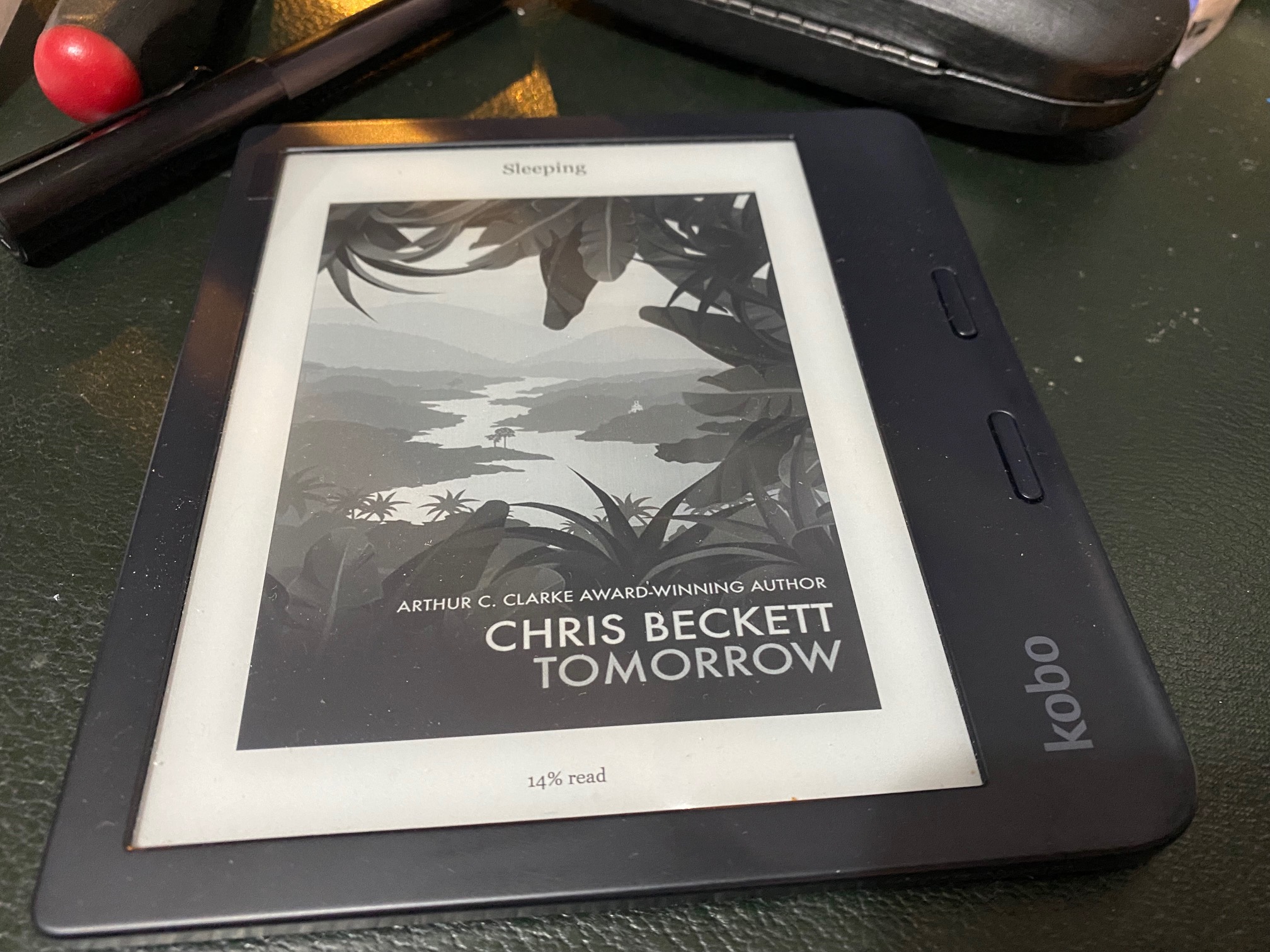
Until now, I haven't hacked my Kobo Libra 2 ereader, despite knowing it
is a relatively open device. The default document reader (Nickel) does
everything I need it to. Syncing the books via USB is tedious, but I don't do
it that often.
Via Videah's blog post My E-Reader
Setup, I learned of
Plato, an alternative document reader.
Plato doesn't really offer any headline features that I need, but it cost
me nothing to try it out, so I installed it (fairly painlessly) and launched
it just once. The library view seems good, although I've not used it much:
I picked a book and read it through1, and I'm 60% through another2. I tend to
read one ebook at a time.
The main reader interface is great: Just the text3.
Page transitions are really, really fast. Tweaking the backlight intensity
is a little slower than Nickel: menu-driven rather than an active scroll
region (which is convenient in Nickel but easy to accidentally turn to 0%
and hard to recover from in pitch black).
Now that I've started down the road of hacking the Kobo, I think I will explore
wifi-syncing the library, perhaps using a variation on the hook scripts shared
in Videah's blog post.
Next.