Search Results: "gfa"

15 May 2011

Steve Kemp: Images transitioned, and mysql solications.

Images Moved
So I've retired my old picture hosting sub-domain, and moved all the files which were hosted by the dynamic system into a large web-root. This means no more uploads are possible, but each link continues to work. For example: Happily the system generated "random" links, and it was just a matter of moving each uploaded file into that static location, then removing the CGI application. The code for the new site has now been made public, although I suspect there will need to be some email-pong if anybody wishes to use it. Comments welcome.
MySQL replacements?
Lets pretend I work for a company which has dealings with many MySQL users. Lets pretend that, even though it is true, such that I don't have to get into specifics. Let us pretend that we have many many hundreds of users who are very happy with MySQL, but that we have a few users who have "issues". That might be:
  • mysqld segfaulting every few months, with no real idea why.
    • Transactions are involved. So are stored proceedures.
    • MySQL paid support might have been perfect, or it might have lead to "yup, its a bug. good luck rebuilding with this patch. let us know how it turns out kthxbai."
    • Alternatively it might not have been re-producable.
  • Master-Master and Master-Slave setups being "unreliable" such that data inconsistencies arise despite MySQL regarding them as being in sync.
    • Good luck resolving that when you have two almost-identical "mysqldump" outputs which are 6Gb each and which cause "diff" to exit with "out of memory" even on a 64Gb host.
    • Is it possible to view differences in table-data, via the binary records? That'd be a fun project .. for a masochist.
  • Poor usage of resources.
  • Heavy concurrancy caused by poorly developed applications in a load-balanced environment, leading to stalling queries. (Wordpress + Poor wordpress plugins I'm looking at you; you're next on my killfile).
To compound this problem some of these installations may or may not be running Etch. let us pretend they are not, just to simplify things. (They mostly arent' these days, but I'm sure I could think of one or two if I tried) So, in this hypothetical situation what would you recommend? I know there are new forks aplenty of MySQL. Drizzle et al. I suspect most of the forks will be short-lived - lots of this stuff is hard and non-sexy. I suspect the long-lived forks are probably concentrating on edge-cases we've not hit (yet), or on sexy exciting things like new storage engines and going nosql like all the cool kids. Realistically going down the postgresql road is liable to lead to wholly different sets of problems, and a significant re-engineering of several sites, applications and tools with no proof of stability. Without wanting to jump ship entirely, what, if any, are our options?
PS. MySQL I still mostly love you, but my two most recent applications were written to use redis instead. Just a coincidence... I swear. No, put down that axe. Please can't we just talk about it?/p> ObQoote: "I've calculated your chance of survival, but I don't think you'll like it. " - Hitchhikers Film.

7 May 2011

Kai Wasserb ch: KVIrc 4.1 snapshot and the stable update

I've just uploaded a new KVIrc SVN snapshot (r5829) to Unstable. This one took a little longer than the "normal" ten days because the transition of the previous version waited for some other packages to migrate first. This transition might also take longer than we hope for, due to #625607 in EGLIBC, which leads to a segfault in CMake on SPARC. The stable update to (more or less) upstream's 4.0.4 is also almost ready. We hope for an upload soon.

30 April 2011

Julien Blache: forked-daapd: v0.16

forked-daapd v0.16 is a bugfix release, mainly addressing a bad regression introduced in v0.15. Fixes: The DAAP bug is what causes an incorrect display and sorting in iTunes, the tags issue could cause a segfault in some cases, and finally fixing the file size in the HTTP streaming code may or may not fix some issues but was a bad bug anyway. Tarballs available at http://alioth.debian.org/~jblache/forked-daapd/ ; GPG signatures made with my Debian key F5D65169.

19 February 2011

Kees Cook: ptracing siblings

In Ubuntu, the use of ptrace is restricted. The default allowed relationship between the debugger and the debuggee is that parents are allowed to ptrace their descendants. This means that running gdb /some/program and strace /some/program Just Works. Using gdb s attach and strace s -p options need CAP_SYS_PTRACE, care of sudo. The next most common use-case was that of crash handlers needing to do a live ptrace of a crashing program (in the rare case of Apport being insufficient). For example, KDE applications have a segfault handler that calls out to kdeinit and requests that the crash handling process be started on it, and then sits in a loop waiting to be attached to. While kdeinit is the parent of both the crashing program (debuggee) and the crash handling program (debugger), the debugger cannot attach to the debugee since they are siblings, not parent/descendant. To solve this, a prctl() call was added so that the debugee could declare who s descendants were going to attach to it. KDE patched their segfault handler to make the prctl() and everything Just Works again. Breakpad, the crash handler for Firefox and Chromium, was updated to do effectively the same thing, though they had to add code to pass the process id back to the debuggee since they didn t have it handy like KDE. Another use-case was Wine, where for emulation to work correctly, they needed to allow all Wine processes to ptrace each other to correctly emulate Windows. For this, they just declared that all descendants of the wine-server could debug a given Wine process, there-by confining their ptrace festival to just Wine programs. One of the remaining use-cases is that of a debugging IDE that doesn t directly use ptrace itself. For example, qtcreator will launch a program and then later attach to it by launching gdb and using the attach command. This looks a lot like the crash handler use-case, except that the debuggee doesn t have any idea that it is running under an IDE. A simple solution for this is to have the IDE run its programs with the LD_PRELOAD environment variable aimed at a short library that just calls prctl() with the parent process id, and suddenly the IDE and its descendants (i.e. gdb) can debug the program all day long. I ve got an example of this preloadable library written. If it turns out this is generally useful for IDEs, I could package it up like fakeroot and faketime.

15 January 2011

Thorsten Glaser: FOSDEM 2011 Let the beards grow!

FOSDEM, the Free and Open Source Software Developers' European Meeting

Who s not? Same procedure as every year.

(okay, lolando prefers ski ng but ) Anyway. A cow orker told me that Belgium again/still has no gouvernment, and they have been asked to grow out their beards until they do. I found evidence on the net but won t link it here, also it s on German anyway. Let s all join in. (Besides, I now have an excuse to not shave, maybe even my grandmother will accept this one ) RT said on IRC that mksh will probably work on MSYS. My Debian/m68k stuff is coming around nicely, but I still haven t gotten around to do everything planned, plus I need to grow a new kernel and eglibc, after the latest uploads, and the 2.6.37 based one panics. Also I ve got to take care to not overwork myself. (And make a MirBSD ISO for FOSDEM.) But hey, it s been not working for some time and better now. And slow anyway yet we re progressing. Does anyone know how to debug that a C programme only calling res_init(3) segfaults? Benny is apparently not just working on making NetBSD pkgsrc available on MirOS BSD (picking up my work from 4+ years ago) but also replacing The MirPorts Framework with it. Sad, as I got a request for a gajim MirPort over a cocktail just this evening

27 November 2010

Petter Reinholdtsen: Why isn't Debian Edu using VLC?

In the latest issue of Linux Journal, the readers choices were presented, and the winner among the multimedia player were VLC. Personally, I like VLC, and it is my player of choice when I first try to play a video file or stream. Only if VLC fail will I drag out gmplayer to see if it can do better. The reason is mostly the failure model and trust. When VLC fail, it normally pop up a error message reporting the problem. When mplayer fail, it normally segfault or just hangs. The latter failure mode drain my trust in the program. But even if VLC is my player of choice, we have choosen to use mplayer in Debian Edu/Skolelinux. The reason is simple. We need a good browser plugin to play web videos seamlessly, and the VLC browser plugin is not very good. For example, it lack in-line control buttons, so there is no way for the user to pause the video. Also, when I last tested the browser plugins available in Debian, the VLC plugin failed on several video pages where mplayer based plugins worked. If the browser plugin for VLC was as good as the gecko-mediaplayer package (which uses mplayer), we would switch. While VLC is a good player, its user interface is slightly annoying. The most annoying feature is its inconsistent use of keyboard shortcuts. When the player is in full screen mode, its shortcuts are different from when it is playing the video in a window. For example, space only work as pause when in full screen mode. I wish it had consisten shortcuts and that space also would work when in window mode. Another nice shortcut in gmplayer is [enter] to restart the current video. It is very nice when playing short videos from the web and want to restart it when new people arrive to have a look at what is going on.

13 November 2010

Gregor Herrmann: RC bugs 2010/43 - 2010/45

if I'm not mistaken, more & more people are trying to hunt down RC bugs nice! here are my contributions during the last weeks: some remarks:

25 October 2010

Axel Beckert: ratpoison and focus follows mouse

I use ratpoison as window manager on my ASUS EeePC netbook nemo for more than two years now. But although I m very happy with ratpoison in the EeePC, there are two feature wishes which have been refused by upstream: One is more flexibel window name matching for the unmanage command. The other one is focus follows mouse between ratpoison frames. Well, I always guessed that it was possible, but it took until now to find outhow to implement focus follows mouse for ratpoison. There s an ancient but still useful tool called Not a Window Manager (nawm) which is a small awk-like interpreter offering mostly window handling functions. The following .nawmrc implements focus follows mouse in nawm:
window newwin;  # stores window to raise
window lastwin; # stores previous window to prevent race conditions
leave  
    lastwin = currentwindow;
 
enter  
    newwin = pointerwindow();
    if (name(newwin) != "" && newwin != lastwin)  
        raise newwin;
        sync;
     
 
The leave hook is necessary to prevent flapping between two windows if switched between them via ratpoison s commands. I also had to add the following hook to my .ratpoisonrc to work around some cases where ratpoison s own window switching didn t work anymore. Only happened with more than one frame with one frame banishing the mouse cursor was annoying, so I filtered that case:
addhook switchwin exec if [  ratpoison -c fdump fgrep -o frame wc -l  -gt 1 ]; then ratpoison -c banish; fi
Unfortunately nawm has been removed from Debian Sid about a year ago due to being buggy and orphaned. There was not upstream development for seven years or so either. So for the moment you can get nawm either from Debian Lenny or from snapshot.debian.org. But I had to fix a segfault in nawm when calling name() on a window without name to be able to use it at all, so you will probably have to rebuild it anyway with the following patch:
diff -u nawm-0.0.20030130/builtins.c nawm-0.0.20030130-patched/builtins.c
--- nawm-0.0.20030130/builtins.c        2010-10-25 06:00:02.000000000 +0200
+++ nawm-0.0.20030130-patched/builtins.c        2010-10-25 04:15:25.000000000 +0200
@@ -546,8 +546,12 @@
     *name = gcstrdup("");
   else
      
-      *name = gcstrdup((char *)nm);
-      XFree(nm);
+      if ((char *)nm)  
+        *name = gcstrdup((char *)nm);
+        XFree(nm);
+        else  
+        *name = gcstrdup("");
+       
      
  
And yes, I m thinking about adopting and reintroducing the nawm package into Debian Sid. But I d prefer if anyone could give me a hint how to do this with more current and still maintained tools (or a patch against ratpoison :-). I looked into suckless-tools, but I haven t found anything in there which provides hooks on X events. And the Perl module Tk seems to be able to set X event hooks, but only within the application being written itself.

4 October 2010

Iustin Pop: ICFP 2010 short report

I've recently returned from ICFP 2010 (International conference on functional programming). This was the second time I went there, and like last year, it was a very interesting conference. This year, I've even managed to do one keysigning with a fellow Debian Developer (hello Sylvain!) While there were many talks, I only mention a few key ones, that I have found very cool. Note: I'm a layman in this field. The text below is my own interpretation of the talks and contains many errors and wrong facts corrections are welcome! Workshop on ML I wasn't present at this workshop, but other people pointed me to this very cool talk: Mirage project The abstract, to be found at http://www.cs.rit.edu/~mtf/ml2010/program.html#Program (search for Mirage), says:
Our framework, dubbed Mirage, extends the Objective Caml language with I/O extensions and a custom runtime to emit binaries that execute as a paravirtual operating system directly under Xen. The custom run-time is significantly simpler than a general-purpose operating system, with a static single-process 64-bit address space, and "zero-copy" I/O that works directly with the OCaml garbage collector. As a result, Mirage applications exhibit significant performance speedups for I/O and memory handling versus the same code running under Linux/Xen.
It's extremely interesting, IMHO. You write your code as a more-or-less normal OCaml program, but you compile it with this special tool-chain, and you boot it directly on ton of Xen, as a domU, without the intermediate OS. The project Git repo is at http://github.com/avsm/mirage, and that links a bit older presentation (http://anil.recoil.org/papers/2010-hotcloud-lamp.pdf) which IMHO is a required read for anyone interested in cloud-related stuff. ICFP proper ICFP, the main conference, is as usual, full of math, designed to scare people away. Err, I mean, designed to tell about new developments in this field. The papers are gathered in this reddit post: http://www.reddit.com/r/haskell/comments/dji4v/papers_from_icfp_2010/. XenServer The paper http://anil.recoil.org/papers/2010-icfp-xen.pdf describes the XenServer project, and more specifically the management interface, which is written entirely in OCaml, by a team of ~10 people. They also have a bit of bin-packing code (http://xenbits.xen.org/xapi/xen-api.hg?file/95b9e4f1b9dd/ocaml/xapi/binpack.ml), but much simpler than the ganeti-htools project on which I'm working (no balancing or similar). On the other hand, it is interesting to see that they committed themselves to write the entire management suite in OCaml, as opposed to our Python plus just a few bits of Haskell. I envy them, very much so ;) The fun tidbit was how stable they found the OCaml tool-chain. In three years, they had just one bug related to this (the tool-chain), a segfault due to wrong formatting code in the handling path of a seldom-triggered Python exception, which led to a %s to be translated as is to C code, which meant printf got the wrong specifiers. So in an OCaml project, a serious bug was due to lack of type checking in string formatting in a Python component :) Overall I have found interesting parallels between their experience and my own with Haskell; from is this language/tool-chain stable enough for use to concerns about using FP for a significant project (but of course, orders of magnitude difference between their case and mine). Super-compilation There were two papers on this topic; one at ICFP proper and one at the Haskell symposium. If I understood things right, super-compilation is the opposite of lazy evaluation. But let's start a bit back. First, programs written in a functional languages contain many pure function. Pure functions, being side-effect-free, exhibit many interesting properties, and one of them is that they permit decoupling of the computation of a value from the declaration of such computation. One technique derived from this is lazy computations. Lazy computation means that even though you write y = sin(x) + 1, the actual call to sin and the increment is not actually done until you need the actual value of y (not just for storing it in y, that is). Super-compilation is the opposite of this. While laziness postpones doing a computation to as late as possible, in the hope it won't be needed at all, super-compilation runs the actual computation way ahead of time, even before the program starts, that is at compile time. Since programs use input data at runtime, which is not known at compile time, the trick is to pre-compute as much as possible at this stage, given incomplete information; and the papers showed that it's possible to pre-compute much more than you'd usually believe. Optimising compilers already do some form of CAF (constant applicative form) optimisation, but the techniques presented in both papers are going beyond simple CAFs. The details are in the papers, and are complicated, but one simple example is converting this:
ones = map inc [1..]
(note that is an infinite list, and you don't want to fully compute that at any time, neither at compile nor at runtime), into:
ones = [2..]
The details on how this is done depend on the exact super-compilation implementation, and not all implementations can do the same optimisations, but in the presentations at this ICFP the idea was to split things into static/non-static parts, and build on that, or to do partial evaluation, etc. The result is that super-compilation shows significant increases in speed (in some synthetic benchmarks up to 80%), with a few benchmarks not being sped up at all, but most are. The downside is an explosion in code size, as many more things are pre-computed. Still, as a research topic, this is very interesting. My own paper Surprisingly, it seems I survived giving my talk (just an experience report, not actually fancy stuff like the rest). Either the people actually found it interesting (less likely), or they were very polite (more probably). Anyway, the paper is on the papers page (shameless self-promotion) (if you care). Haskell symposium This is co-located with ICFP, and is more practical than ICFP (which is, as I said, way too much math). The papers are again available on reddit: http://www.reddit.com/r/haskell/comments/dkzn4/papers_from_the_haskell_symposium_2010/. Orc: Concurrent Orchestration in Haskell How to easily write code for synchronising concurrent work? As an example, how complicated is to solve this problem:
[from the Orc literature] we might wish to contact two airlines simultaneously seeking price quotes. If either quote comes back below a threshold price, say $300, then let's buy a ticket immediately. On the other hand if both quotes exceed the threshold, then buy the cheapest ticket. Additionally, buy a ticket if the other airline does not give a timely quote, or notify the user if neither airline provides a timely quote.
Now, in my experience, this would require manual management and synchronisation of threads, and for example in Python the early abort of querying the price from airline B if airline A returned a good price would be non-trivial; in addition, adding two extra conditions would be again not a simple composition of rules. In Orc however, it takes all of 10 lines of code to do this, safely. I won't copy the code here, see the paper for details, or the API docs. And the best part is, this is just a cabal install orc away! I'll be very interested to see how I can use this in practice, as it is seems indeed a very powerful library. Nikola: Embedding Compiled GPU Functions in Haskell Interesting project. Using almost 100% Haskell code, and it marshalls the data to/from the GPU; in the example given, the performance is as good as hand-written CUDA code of course, this doesn't happen in all cases. It it's interesting how they manage to compile the GPU-related code to actual object code at Haskell compile time, which makes it transparent for the user. Given the prevalence of high-speed GPUs, this could be a nice way to utilise them without learning yet another language (or two, since NVidia and ATI have different stacks). They've also developed some interesting techniques (e.g. manual control of sharing, to prevent inlining) as part of their project. Scalable Event Handling for GHC This is a paper co-authored by Johan Tibell of Google Switzerland and Bryan O'Sullivan of Real World Haskell fame. Very interesting serving 20K QPS from a Haskell process while having 16K+ idle clients connected:
[ ] the performance of the epoll back end does not begin to fall off significantly until we have 50,000 idle connections open.
The talk started with the idea that we're on the path to serving 10 clients from a single machine, and how to improve Haskell's I/O manager to achieve (almost) 10 concurrent clients. The slides (which I don't have a link for) were a bit more cool on numbers than the paper. Oh, and this will come with GHC 7.0, for free :) An LLVM Backend For GHC The eternal fight to get better than the C backend in other words, to not have to translate Haskell to C It is interesting to see how many languages target LLVM nowadays, as opposed to plain old C via gcc. A fun trivia item was that, according to the author, there are many features in LLVM that are not actually used by 90% of the languages targeting it (e.g. the garbage collector) (if I heard correctly in the talk). The results are interesting, although not too much overall speedup is gained; this seems to be due to the hard-to-optimise Cmm intermediate language inside GHC. In any case, a few benchmarks get more than 10% speedup, even in the current form. This will also come in GHC 7.0, although not enabled by default; probably needs to mature some more Conclusion I've enjoyed this conference a lot, and I've learned a lot from it. Given that many of the talks are about research topics, it's harder to apply them in day-to-day work, but I think the pay-offs will be long term rather than immediate.

30 July 2010

Jaldhar Vyas: PreventaCamp Day 1

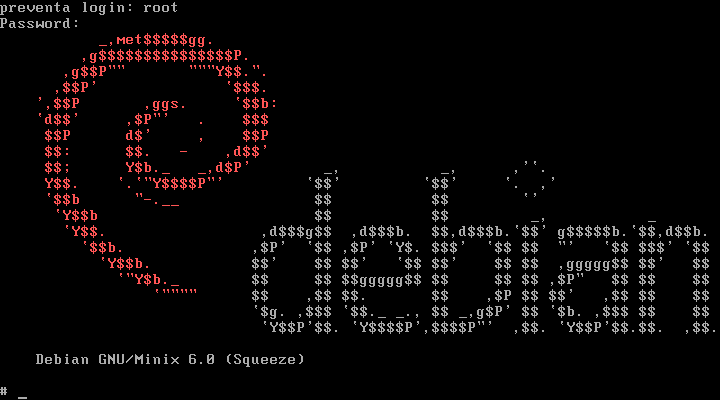
Debian Minix MOTD banner Actually I was at the venue on Tuesday for a little while but my name wasn't in the system either because I has given my name in Unicode or, more likely, I had forgotten to check the "reconfirm" box on the registration form. For some reason Columbia U's DHCP server makes Minix lock up on boot. Also I left my laptops AC adapter at home. Some kind souls lent me their European adapters but they didn't work. (I have a set of international converters. Also unfortunately at home.) So after about three hours, my battery ran out and I had to leave. So we will pretend that never happened and instead call today day 1. (Wednesday I had some unexpected family stuff to attend to so that doesn't count either.) Today I first concentrated on tracking down why the boot process was hanging. The culprit seems to be nonamed a daemon Minix runs to do DNS resolution/caching etc. I'm consulting with the Minix devs to see what can be done about this. I added the cool MOTD banner you see above (made by Osmo). And I ported some more GNU software to match the versions in Squeeze. Tomorrow, the biggies gcc and perl, and seeing if I can get a dpkg binary that doesn't segfault.

21 July 2010

Marco Túlio Gontijo e Silva: Immix on GHC Summer of Code weekly report #10

My project. This post assumes that the reader has read my last post. This weekly report is late, because I was too interested in the project to stop working on it to write. Next week it have to be earlier, since I m going to New York on Sunday, and will have to take a time from the project. First of all, I need to say that I thought all problems were gone in my last post, but I noticed after a lot of testing that there is a segfault (or memory corruption or etc) that happens about one of five times I ran the real/maillist benchmark. I tried a lot of combinations of parameters to the RTS (-C0 -A4k -i0 -DS and others) to make it behave deterministically, and it did, without segfaults. I could not reproduce the segfault deterministically, because all of these parameters made the segfault disappear. My old debugging technique, of printing a log to see where the program has went before the segfault happened, also is causing the segfault to disappear, so this one is being much harder to debug than the last ones. I m still looking at it. In a moment of this week I thought of pulling the latests patches from GHC, which created the need of rebuilding the whole system. I probably rebuilt with a different mk/build.mk, so I got some very distorted benchmark results when comparing before executions from before this build and after them. Because this distortion only made itself visible in a benchmark where I ve introduced some improvements which I was very positive about, I naively thought that the -46% results were actually real. After a reasonable disbelief of my mentor, I remembered the complete rebuild and thought that was the cause. I reran the pre-rebuild benchmarks, and got the updated results. This whole week I kept on benchmarking. At first I was using my usual system, but I noticed some very unexpected results, so I decided to run them in single-user mode, running nothing in parallel. In this condition, I belive the distortions are minimized. I organized my changes in sequential patches to the repository, to make it easier to measure. It takes a long time to run nofib, specially gc/gc_bench. While I organized the code, I notice the segfault was gone. I don t know still what was causing it, but I m not worrying very much, since it s gone. I m planning to write a bigger report next week with the complete results of the benchmarks.

7 July 2010

Marco Túlio Gontijo e Silva: Immix on GHC Summer of Code weekly report #9

My project. This post assumes that the reader has read my last post. I m posting this weekly report earlier this week because there are too many things to tell already. I ve found the reason behind the segfault I m looking for so much time. The last problem, which is the only I know exactly when was fixed, because the programs started working, was related to allocating two times in the same region of memory. This happened because in each major GC the list of free line groups is generated again, but my old code was still allocating in the same line group of the last generation. So the last part of the line group, which was not yet used, would be a part of a line group in generated in the new collection, and it will be used for allocation two times: one in the allocation of the current line group, and another when this new line group starts being allocated. The implementation of the allocation of memory in lines is not very complicated, but it has some details that should be paid attention, and that were the cause of most trouble last weeks, and still need improvement. Initially I was allocating one object per line, just to see if it would work. As it didn t, I kept on improving the approach until I could find the problem. The next attempt was by setting ws->todo_free and ws->todo_lim in alloc_for_copy() in rts/sm/Evac.c. I think this is not ideal, because I didn t want the code to become too inconsistent with the way memory was allocated using these pointers before my changes. So I created new variables, line_free and line_lim, at first in the gen_workspace ws, the same place that todo_free and todo_lim are, but because of the last problem I described in the previous paragraph I changed it to generation. I m still not sure about where to place these pointers, this is something that can be improved. Another problem that I took a long time to understand is that the object need to be scavenged after being allocated. When it was allocated in todo_free, it was being scavenged by scavenge_block() in rts/sm/Scav.c, because the block in which it s in, todo_bd, is scavenged by this function. As I didn t wanted to the whole block where the free line group is to get scavenged again, I didn t want to send it to this function. So I thought about creating a way to scavenge only part of a block, that is, the space in the free line group that was allocated. This is still a valid idea, but I noticed that it was easier to use the mark stack. So I mark the object that is allocated in the line and push it in the mark stack. The main problem with this approach it s only possible to allocate in lines during major GCs, since only in this kind of GCs the mark stack is active. This is certainly the place where I can make more improvement. The patch of these changes and another one for the sanity checking explained in the last post. I m now benchmarking these changes with nofib, to see how much it affects the performance.

5 July 2010

Marco Túlio Gontijo e Silva: Immix on GHC Summer of Code weekly report #8

My project. This post assumes that the reader has read my last post. This week I could get my focus on the project again, since most of my classes are already over. I ve investigated the segfault that was happening in GHC with +RTS -w -DS, and I noticed that the code in rts/sm/Sanity.c assumed that all objects in the allocated area of the block are being used.
    for (; bd != NULL; bd = bd->link)  
	p = bd->start;
	while (p < bd->free)  
	    nat size = checkClosure((StgClosure *)p);
	    /* This is the smallest size of closure that can live in the heap */
	    ASSERT( size >= MIN_PAYLOAD_SIZE + sizeofW(StgHeader) );
	    p += size;
	    /* skip over slop */
	    while (p < bd->free &&
		   (*p < 0x1000   !LOOKS_LIKE_INFO_PTR(*p)))   p++;  
	 
     
Since this is true for copy collection and mark compact, it was only with mark sweep that the error happened. The only way I could manage to make the segfault disappear by now was marking the swept blocks with a new flag, and avoid running this code in them. So I went back to my old problem with the allocation of memory in lines. I noticed that (one of) the problem(s) may be that the object that is allocated in the free line is not scavenged after the evacuation. When the object is allocated in a block, using the current allocation method, it will eventually be scavenged, because all blocks that were being used to allocation are scavenged. I m planning to implement a list of lines that need to be scavenged and code to scavenge the lines in this list, and the current line. It ll be very similar to the code that does this with blocks.

Russell Coker: Is Lebara the Cheapest Mobile Phone company in Australia?

My parents have just got a mobile phone with a Lebara pre-paid SIM [1]. Lebara advertise free calls to other Lebara phones but have a disclaimer that they charge a 25 cent flagfall and charge 15 cents per minute after the first 10 minutes which is still cheaper than most mobile calls although not as good as some other mobile telcos such as Three that offer completely free calls to other phones with the same provider. Lebara s main selling point seems to be cheap international calls, half a cent per minute to Thailand, 1 cent per minute to Hong Kong, Indonesia and Singapore and 3 cents per minute to Bangladesh and China. Strangely calls to the US are 5 cents per minute and to Japan are 7 cents per minute, I would have expected that calling developed countries would have been cheaper due to better infrastructure and more competition. The trend of more developed countries having less expensive calls seems clear, some very undeveloped countries cost as much as $2 per minute! Note that all these rates are for calls to land-lines (calls to mobiles cost more) and are based on the new prices that apply after the 13th of July (it s slightly cheaper for the next 8 days). It seems really strange that calls to land-lines in Australia cost 15 cents per minute which is more than twice as much as calls to the US and Japan. In theory it would be possible to redirect calls to Australian land-lines via the US or Japan to save money. In practice it s probably possible to do so by setting up a PBX in Thailand, Hong Kong, or Singapore. But what I think is most noteworthy about Lebara is the fact that the call credit lasts for 90 days (this is in the FAQ). The cheapest top-up is $10 so therefore the minimum cost for mobile phone service is $40 per annum. Given the importance of owning a mobile phone to job seekers I think that with the current state of the economy there are a lot of people who could do with such a phone. If anyone knows of Australian mobile phones that provide cheaper calls to other countries or a cheaper minimum annual fee then please let me know via the comments section. For international readers, all prices are in Australian cents which are worth about 85% as much as US cents.

4 July 2010

Torsten Landschoff: Postprocessing conference videos

I was planning to attend DebConf New York this year, but for a number of reasons I decided not to go. Fortunately, Ferdinand Thommes organized a MiniDebConf in Berlin at LinuxTag and I managed to attend. Thanks, Ferdinand! There were a number of interesting Talks. I especially liked the talk of our DPL, and those about piuparts and git-buildpackage. In contrast to the other LinuxTag talks, we had a livestream of our talks and recorded (most) of them. The kudos for setting this up goes to Alexander Wirt, who spent quite a few hours to get it up and running. I have to apologize for being late in bringing my Notebook, which was intended to do the theora encoding of the livestream. This was a misunderstanding on my part, I should have known that this is not going to be setup in the night before show time So to compensate the extra hours he had to put in for me, I offered to do the post processing of the videos. Basic approach for post processing The main goal of post processing the videos was (of course) to compress them to a usable size from the original 143 GB. I also wanted to have a title on each video, and show the sponsors at the end of the video. My basic idea to implement that consisted of the following steps:
  1. Create a title animation template.
  2. Generate title animations from template for all talks.
  3. Use a video editor to create a playlist of the parts title talk epilogue.
  4. Run the video editor in batch mode to generate the combined video.
  5. Encode the resulting video as ogg theora.
As always with technology, it turned out that the original plan needed a few modifications. Title animations
<video controls="controls" height="288" src="http://www.landschoff.net/blog/uploads/2010/07/mdc2010_title_anim1.ogv" width="360 "></video>
Originally I wanted to use Blender for the title animation, but I knew it is quite a complicated bit of software. So I looked for something simpler, and stumbled across an article that pointed me towards Synfig Studio for 2D animation. This is also in Debian, so I gave it a try. I was delighted that Synfig Studio has a command line renderer which is just called synfig and that the file format is XML, which would make it simple to batch-create the title animations. My title template can be found in this git repository. Batch creation of title animations I used a combination of make and a simple python script to replace the author name and the title of the talk into the synfig XML file. The data for all talks is another XML file talks.xml. Basically, I used a simple XPath expression to find the relevant text node and change the data using the ElementTree API of lxml python module. The same could be done using XSLT of course (for a constant replacement, see this file) but I found it easier to combine two XML files in python. Note that I create PNG files with synfig and use ffmpeg to generate a DV file from those. Originally, I had synfig create DV files directly but those turned out quite gray for some reason. I am now unable to reproduce this problem. Combining the title animation with the talk For joining the title animation with the talk, I originally went with OpenShot, which somebody of the video team had running at the conference. My idea was to mix a single video manually and just replace the underlying data files for each talk. I expected that this would be easy using the openshot-render command, which renders the output video from the input clips and the OpenShot project file. However, OpenShot stores the video lengths in the project file and will take those literally, so this did not work for talks of different play times I considered working with Kino or Kdenlive but they did not look more appropriate for this use case. I noticed that OpenShot and Kdenlive both use the Media Lovin Toolkit under the hood, and OpenShot actually serializes the MLT configuration to $HOME/.openshot/sequence.xml when rendering. I first tried to read that XML file from python (using the mlt python bindings from the python-mlt2 package) but did not find an API function to do that. So I just hard coded the video sequence in python. I ran into a few gotchas on the way: Things to improve While the results look quite okay for me now, there is a lot of room for improvement. Availability

30 June 2010

Marco T&uacute;lio Gontijo e Silva: Immix on GHC Summer of Code weekly report #7

My project. This post assumes that the reader has read my last post. This week I had less time to work on my project than the last ones, because it was kind of the last week of the semester for some disciplines. This was unfortunate from a point of view, but it s good in another, because now I ve finished most of my disciplines and can focus more. This is also the reason why the weekly report is slightly delayed. Most of my work this week was continuing the investigation of the segfault caused by my implementation of allocation in lines. The most interesting thing I discovered came after a suggestion from my menthor: to use +RTS -DS to turn on the sanity checker. I runned the code with my allocation implementation and the sanity checker and got a segfault. I runned again only with the code to free memory in lines and I got also a segfault. Then I runned without all my patches, using sweep, and I got the segfault. So it seems that there is something wrong with sweep, and now I m investigating this new segfault. I m using the bernouilli program from nofib to test, running with 148 as a parameter and, naturally, +RTS -w -DS passed to the RunTime System. The output of gdb:
Current directory is /home/marcot/trabalho/livre/ghc/nofib/imaginary/bernouilli/
GNU gdb (GDB) 7.1-debian
Copyright (C) 2010 Free Software Foundation, Inc.
License GPLv3+: GNU GPL version 3 or later <http://gnu.org/licenses/gpl.html>
This is free software: you are free to change and redistribute it.
There is NO WARRANTY, to the extent permitted by law.  Type "show copying"
and "show warranty" for details.
This GDB was configured as "x86_64-linux-gnu".
For bug reporting instructions, please see:
<http://www.gnu.org/software/gdb/bugs/>...
Reading symbols from /home/marcot/trabalho/livre/ghc/nofib/imaginary/bernouilli/Main...done.
(gdb) r 148 +RTS -w -DS
Starting program: /home/marcot/trabalho/livre/ghc/nofib/imaginary/bernouilli/Main 148 +RTS -w -DS
[Thread debugging using libthread_db enabled]
Program received signal SIGSEGV, Segmentation fault.
0x00000000006309cb in LOOKS_LIKE_INFO_PTR_NOT_NULL (p=12297829382473034410) at includes/rts/storage/ClosureMacros.h:225
(gdb) where
#0  0x00000000006309cb in LOOKS_LIKE_INFO_PTR_NOT_NULL (p=12297829382473034410) at includes/rts/storage/ClosureMacros.h:225
#1  0x0000000000630a16 in LOOKS_LIKE_INFO_PTR (p=12297829382473034410) at includes/rts/storage/ClosureMacros.h:230
#2  0x0000000000630a4b in LOOKS_LIKE_CLOSURE_PTR (p=0x7ffff6c84062) at includes/rts/storage/ClosureMacros.h:235
#3  0x0000000000631427 in checkClosure (p=0x7ffff6853a08) at rts/sm/Sanity.c:320
#4  0x00000000006319ef in checkHeap (bd=0x7ffff68014c0) at rts/sm/Sanity.c:479
#5  0x000000000063222f in checkSanity (check_heap=rtsTrue) at rts/sm/Sanity.c:686
#6  0x000000000062dfdb in GarbageCollect (force_major_gc=rtsFalse, gc_type=0, cap=0x8d2ec0) at rts/sm/GC.c:768
#7  0x0000000000620431 in scheduleDoGC (cap=0x8d2ec0, task=0x8f5080, force_major=rtsFalse) at rts/Schedule.c:1420
#8  0x000000000061fa2c in schedule (initialCapability=0x8d2ec0, task=0x8f5080) at rts/Schedule.c:539
#9  0x0000000000620c77 in scheduleWaitThread (tso=0x7ffff6c80000, ret=0x0, cap=0x8d2ec0) at rts/Schedule.c:1902
#10 0x000000000065762b in rts_evalLazyIO (cap=0x8d2ec0, p=0x89d8b0, ret=0x0) at rts/RtsAPI.c:495
#11 0x000000000061d3db in real_main () at rts/RtsMain.c:66
#12 0x000000000061d4ca in hs_main (argc=5, argv=0x7fffffffe6d8, main_init=0x406558 <__stginit_ZCMain>, main_closure=0x89d8b0) at rts/RtsMain.c:115
#13 0x00007ffff6fbcabd in __libc_start_main (main=<value optimized out>, argc=<value optimized out>, ubp_av=<value optimized out>, init=<value optimized out>, fini=<value optimized out>, rtld_fini=<value optimized out>, stack_end=0x7fffffffe6c8) at libc-start.c:222
#14 0x0000000000403a69 in _start ()
I started the investigation with the most obvious test: to remove the call to sweep() in rts/sm/GC.c.
  if (major_gc && oldest_gen->mark)  
      if (oldest_gen->compact)
          compact(gct->scavenged_static_objects);
      // else
      //     sweep(oldest_gen);
The result was the same, same segfault in the same place. So I decided to do it a little stronger and avoid the blocks getting the BF_MARKED flag, so that they are not even marked.
                if (!(bd->flags & BF_FRAGMENTED))  
                    // bd->flags  = BF_MARKED;
                 
This one worked. The code in sweep() is not commented, but it s irrelevant, since it ignores blocks that don t have this flag. My third try was to comment the places where the BF_MARKED flag is read, to see each one was causing the segfault. I got a list of places to search with grep, and there weren t a lot of them.
$ grep BF_MARKED rts/sm/*.c
rts/sm/Compact.c:       if (bd->flags & BF_MARKED)
rts/sm/Evac.c:  if ((bd->flags & (BF_LARGE   BF_MARKED   BF_EVACUATED)) != 0)  
rts/sm/Evac.c:        if (bd->flags & BF_MARKED)  
rts/sm/GCAux.c:    if ((bd->flags & BF_MARKED) && is_marked((P_)q,bd))  
rts/sm/GC.c:                    if (!(bd->flags & BF_MARKED))
rts/sm/GC.c:                        // time, so reset the BF_MARKED flags.
rts/sm/GC.c:                        // compact.  (search for BF_MARKED above).
rts/sm/GC.c:                        bd->flags &= ~BF_MARKED;
rts/sm/GC.c:                // Also at this point we set the BF_MARKED flag
rts/sm/GC.c:                // BF_MARKED is always unset, except during GC
rts/sm/GC.c:                    bd->flags  = BF_MARKED;
rts/sm/Sweep.c:        if (!(bd->flags & BF_MARKED))  
The first one is in rts/sm/Compact.c, so it s not relevant to the use with -w. The second one, in rts/sm/Evac.c, is a bit indirect.
  if ((bd->flags & (BF_LARGE   BF_MARKED   BF_EVACUATED)) != 0)  
      // pointer into to-space: just return it.  It might be a pointer
      // into a generation that we aren't collecting (> N), or it
      // might just be a pointer into to-space.  The latter doesn't
      // happen often, but allowing it makes certain things a bit
      // easier; e.g. scavenging an object is idempotent, so it's OK to
      // have an object on the mutable list multiple times.
      if (bd->flags & BF_EVACUATED)  
          // We aren't copying this object, so we have to check
          // whether it is already in the target generation.  (this is
          // the write barrier).
	  if (bd->gen < gct->evac_gen)  
	      gct->failed_to_evac = rtsTrue;
	      TICK_GC_FAILED_PROMOTION();
	   
	  return;
       
      /* evacuate large objects by re-linking them onto a different list.
       */
      if (bd->flags & BF_LARGE)  
	  info = get_itbl(q);
	  if (info->type == TSO &&
	      ((StgTSO *)q)->what_next == ThreadRelocated)  
	      q = (StgClosure *)((StgTSO *)q)->_link;
              *p = q;
	      goto loop;
	   
	  evacuate_large((P_)q);
	  return;
       
      /* If the object is in a gen that we're compacting, then we
       * need to use an alternative evacuate procedure.
       */
      if (!is_marked((P_)q,bd))  
          mark((P_)q,bd);
          push_mark_stack((P_)q);
       
      return;
   
The first if, in line 466, is executed if any of the three flags is present: BF_LARGE, BF_MARKED or BF_EVACUATED. The second if, in line 474, checks for BF_EVACUATED, and returns. The third if, in line 487, checks for BF_LARGE and returns. The code in lines 502-505 is only executed if BF_MARKED is present, and not the other ones. I tried commenting this code, and got an assertion fail in the user code, so I think this is not a good path to follow. The second occurence of BF_MARKED is in the same file.
        if (bd->flags & BF_MARKED)  
            // must call evacuate() to mark this closure if evac==rtsTrue
            *q = (StgClosure *)p;
            if (evac) evacuate(q);
            unchain_thunk_selectors(prev_thunk_selector, (StgClosure *)p);
            return;
         
Commenting it, with or without the call to sweep() commented, causes the same segfault. So, I m tending to think this part of the code is unrelated to the issue. The third occurence is in rts/sm/GCAux.c. I tried commenting it with all the four combinations of the two others commented and not commented, and all resulted in the segfault in the same place. There s another place to check in rts/sm/GC.c. Again, commenting it made no difference. The last one is part of sweep(), so it s avoided anyway when the call to this function is commented.

15 June 2010

Marco T&uacute;lio Gontijo e Silva: Summer of Code weekly report #5

My project. This post assumes that the reader has read my last post. This was a week full of segfaults, failed assertions, changes in the user data and other crazy stuff. I started working on the allocation of memory on the freed lines. In the first glance, it seemed to be much harder than the small changes I ve done to free memory in lines, because of the a never-seen-before-by-me datatypes being dealed with in alloc_for_copy(), from rts/sm/Evac.c: gen_workspace. But in a short time the code of alloc_for_copy() has shown itself to be simple, and it was easy to do an initial implementation. I went in the same path I was going on before, trying the simplest solution that works. For instance, the line representation used is not ideal, because groups of lines are not considered, but it was the simplest at that time, and I plan to improve it latter. The gen_workspace data type contains a pointer to an area of a block that is not being used (todo_free) and a pointer to the end of that area (todo_lim). When a space for an object is requested, it s allocated in this area, and todo_free is adjusted. If the area is full, a new block is requested. My intended change was to return the first free line of the generation when the object is smaller or equal to the size of a line, and use the current approach otherwise. This is the simplest way I could think, but has the problem that the only one object is allocated per line. This was a known issue.
    if(size <= BITS_IN(W_) && gen->first_line != NULL)  
        to = gen->first_line;
        gen->first_line = (StgPtr) *gen->first_line;
        return to;
     
    ws = &gct->gens[gen->no];
After that I got the first round of segfaults. One problem I could spot so far was in the code in rts/sm/Sweep.c, related to the liberation of the lines. The block is allocated by need, and there s a pointer to the first free byte, free. This free space is used by alloc_for_copy(). So, we should only think of lines in the region already allocated in the block, that is, where the address is smaller than free.
                    if(bd->u.bitmap[i] == 0 && bd->u.bitmap[i - 1] == 0 &&
                       start + BITS_IN(W_) <= bd->free)
But the segfaults, memory corruptions, etc, kept going on. I tried some restrictions, like allocating in lines only objects with the exact size of a line, or very small objects (size == 2), or allocating just one object for generation, or only one object at all. I also tried checking for the type of the allocated object, to see a correlation with the problems I was having. Nothing helped by now. So I thought I should work on other things, so that maybe my mind gets clearer and I can spot the problem. I followed the suggestion of using todo_free and todo_lim to make it possible to allocate more than one object in a line. I liked this change, since I had the impression that it fits better with the rest of the code than the initial implementation, and it will be easier to addapt it when I improve the representation of the free lines. As I said, I wanted something to work while I think in how I ll solve the segfault problems. The bad side of this choice is that I ll not be able to test it, since it s just a reimplementation of the same idea in the allocation code, and is not expected to work. The good size is that it may work, and solve the problems I was having by accident.
    if (ws->todo_free > ws->todo_lim)  
        if (size <= BITS_IN(W_) && gen->first_line != NULL)  
            ws->todo_free = gen->first_line;
            gen->first_line = (StgPtr) *gen->first_line;
            to = ws->todo_free;
            ws->todo_lim = ws->todo_free + BITS_IN(W_);
          else  
            to = todo_block_full(size, ws);
         
     
I got the same results as with the older implementation, and no ideas about how to solve it (yet). So I thought about another thing to work on, which I m talking about all through this post: improve the free line representation. This has the advantage of being testable, since it s unrelated to the allocation code, and may give me an idea about how I can fix the segfaults. The bad side is that it probably won t fix my problems directly. I m working on it right now.
Following a suggestion, I ve started using gdb to see what was happening in the GC instead of including printfs everywhere, and it s been useful. I ve noticed that sometimes printf is more effective, but sometimes gdb is much better.

27 May 2010

Adrian von Bidder: Far from the real world

I guess having only the Japanese version of Tetsuo and not understanding anything might not have helped, but on the other hand there isn't all that much dialogue. Tetsuo is one of those movies I find difficult to judge; while it has some great moments, I also found it to be a bit long in some parts. Very good sound track, though. YMMV, I guess. If you like the Discworld novels by Terry Pratchett, you may want to have a peak at Terry Pratchett's The Colour of Magic, which I found quite well made (... and where I once again found that I don't have a good memory for faces, although in the end I remembered where I saw Twoflower's face just before reading the name in the closing credits ...) A bit disappointing, in contrast, was Terry Pratchett's Hogfather: to me, it proves that a movie should have some distance to the book, since what works when written down doesn't necessarily work on the screen. I quite liked Michelle Dockery as Susan, though.

19 May 2010

Russell Coker: Google Chrome and SE Linux

Google Chrome saying aw snap when it crashes [107108.433300] chrome[12262]: segfault at bbadbeef ip 0000000000fbea18 sp 00007fffcf348100 error 6 in chrome[400000+27ad000] When I first tried running the Google Chrome web browser [1] on SE Linux it recursively displayed the error message in the above picture, it first displayed the error and then displayed another error while trying to display a web page to describe the error. The kernel message log included messages such as the above message, it seems that some pointers are initialised to the value 0xbbadbeef to make debugging easier and more amusing. V8 error: V8 is no longer usable (v8::V8::AddMessageListener()) When I ran Chrome from the command-line it gave the above error message (which was presumably somewhere in the 8MB ~/.xsession-errors file generated from a few hours of running a KDE4 session). type=AVC msg=audit(1274070733.648:145): avc: denied execmem for pid=12833 comm= chrome scontext=unconfined_u:unconfined_r:unconfined_t:s0-s0:c0.c1023 tcontext=unconfined_u:unconfined_r:unconfined_t:s0-s0:c0.c1023 tclass=process
type=SYSCALL msg=audit(1274070733.648:145): arch=c000003e syscall=9 success=no exit=-131938567594024 a0=7fd863b41000 a1=40000 a2=7 a3=32 items=0 ppid=1 pid=12833 auid=4294967295 uid=1001 gid=1001 euid=1001 suid=1001 fsuid=1001 egid=1001 sgid=1001 fsgid=1001 tty=pts4 ses=4294967295 comm= chrome exe= /opt/google/chrome/chrome subj=unconfined_u:unconfined_r:unconfined_t:s0-s0:c0.c1023 key=(null)
type=ANOM_ABEND msg=audit(1274070733.648:146): auid=4294967295 uid=1001 gid=1001 ses=4294967295 subj=unconfined_u:unconfined_r:unconfined_t:s0-s0:c0.c1023 pid=12833 comm= chrome sig=11 V8 is the Google Javascript system which compiles JavaScript code and thus apparently needs read/write/execute access to memory [2]. In /var/log/audit/audit.log I saw the above messages (which would have been in the kernel message log as displayed by dmesg if I didn t have auditd running). The most relevant parts are that execmem access was requested and that it was by system call 9. From linux/x86_64/syscallent.h in the strace source I discovered that system call 9 on the AMD64 architecture is sys_mmap. Does anyone know a good way to discover which system call has a given number on a particular architecture without reading strace source code? Attempts to strace the Google Chrome process failed, Chrome gave the error Failed to move to new PID namespace after clone() failed. Clone was passed the flag 0 20000000 which according to /usr/include/linux/sched.h is CLONE_NEWPID. It seems that programs which create a new PID namespace (as Google Chrome does) can t be straced as the clone() call fails. It s a pity that Chrome doesn t have an option to run without using this feature, losing the ability to strace it really decreases my ability to find and report bugs in the program I m sure that the Google developers want people like me to be able to help them find bugs in their code without undue effort. Anyway the solution to this problem to allow it to run on the SE Linux Targeted configuration is to run the command chcon -t unconfined_execmem_exec_t /opt/google/chrome/chrome which causes the Chrome browser to run in the domain unconfined_execmem_t which is allowed to do such things. Of course we don t want Chrome processes to run unconfined, I think that the idea I had in 2008 for running Chrome processes in different SE Linux contexts is viable and should be implemented [3]. As a general rule if you are running a program from the command-line on SE Linux with the Targeted configuration (the default and most common configuration) then any time you see an execmem failure logged to the kernel message log or the audit subsystem then you can change the context of the program to unconfined_execmem_exec_t to make the problem go away. Note that this isn t necessarily a good thing to do, sometimes it s best to change the program to not require such access. But it seems that in this case the design of V8 requires write/execute memory access to pre-compile JavaScript code.

7 May 2010

Christoph Berg: Clamav segfaults

If you are still using clamav on etch, you might want to upgrade now:
# /etc/init.d/clamav-daemon start  
Starting ClamAV daemon: clamd LibClamAV Warning: ***********************************************************
LibClamAV Warning: ***  This version of the ClamAV engine is outdated.     ***
LibClamAV Warning: *** DON'T PANIC! Read http://www.clamav.net/support/faq ***
LibClamAV Warning: ***********************************************************
/etc/init.d/clamav-daemon: line 240:  5221 Segmentation fault      start-stop-daemon --start -o -c $User --exec $DAEMON
 failed!
Rolling back to yesterday's daily.cld fixes the issue, at least for the segfault.

Next.

Previous.