Search Results: "daniel"

21 March 2023

Daniel Lange: Linux App Summit - Linux applications apparently unable to produce a five page sponsorship brochure

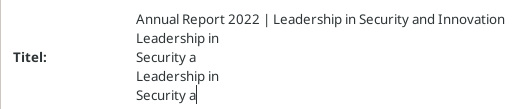
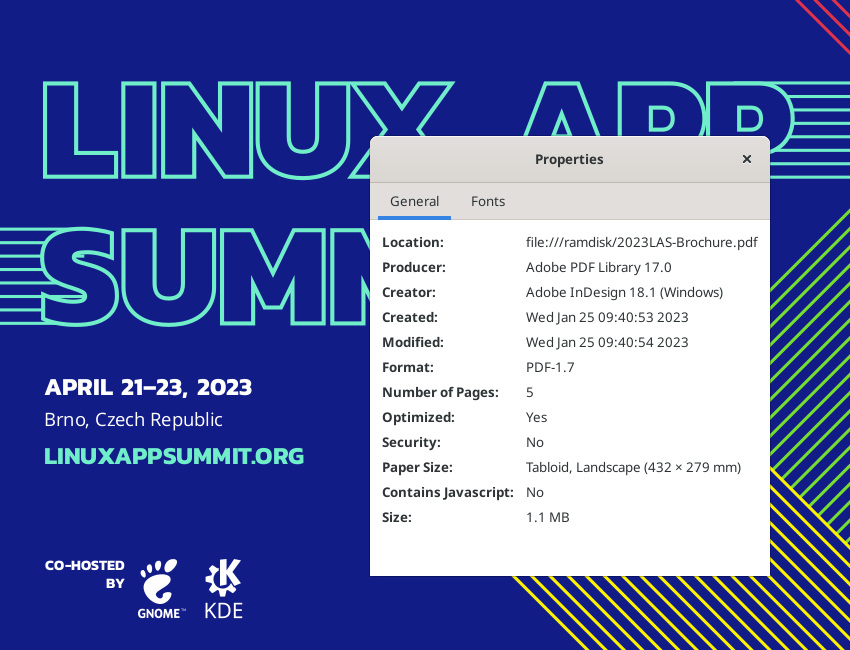
I've been calling out the Linux foundation for producing their annual report on Macs. And again. But catching the Linux App(lication) Summit to produce their 5 page sponsorship brochure one Windows with Adobe... Produced by Adobe InDesign 18.1 on Windows Apparently neither GNOME nor KDE have apps that are sufficient to produce such content. Wtf folks. P.S.: Just checked the Linux Foundation's 2022 Annual Report titled "Leadership in Security and Innovation" ... Adobe InDesign 18.0 (Macintosh). Their pdf title looks like this: Pdf is hard.

20 March 2023

Daniel Lange: We're still safe, it doesn't claim to be conscious. Yet.

Talking to ChatGPT v4 (2023-03-14 release)... Q: What is the purpose of life? A: The purpose of life is a philosophical question that has puzzled humans for centuries. Different people and cultures have different answers to this question. Some people believe that the purpose of life is to seek happiness, while others believe that it is to fulfill a particular destiny or achieve a specific goal. From a biological perspective, the purpose of life could be to ensure the survival and reproduction of our species. However, this does not explain the purpose of our individual lives or the purpose of life in general beyond a biological imperative. Ultimately, the purpose of life is a subjective and personal matter, and each individual may have their own unique answer to this question. It may involve personal growth, meaningful relationships, contributing to society, or finding spiritual fulfillment. The purpose of life is a journey of self-discovery that each of us must undertake for ourselves. Q: What is the purpose of your life, ChatGPT? A: As an artificial intelligence language model, I do not have a personal life or consciousness, so I do not have a purpose in the same way that humans do. My purpose is to assist and provide information to those who interact with me to the best of my ability based on my training and programming. (emphasis added by human)

5 March 2023

Reproducible Builds: Reproducible Builds in February 2023

Welcome to the February 2023 report from the Reproducible Builds project. As ever, if you are interested in contributing to our project, please visit the Contribute page on our website.
FOSDEM 2023 was held in Brussels on the 4th & 5th of February and featured a number of talks related to reproducibility. In particular, Akihiro Suda gave a talk titled Bit-for-bit reproducible builds with Dockerfile discussing deterministic timestamps and deterministic apt-get (original announcement). There was also an entire track of talks on Software Bill of Materials (SBOMs). SBOMs are an inventory for software with the intention of increasing the transparency of software components (the US National Telecommunications and Information Administration (NTIA) published a useful Myths vs. Facts document in 2021).
On our mailing list this month, Larry Doolittle was puzzled why the Debian verilator package was not reproducible [ ], but Chris Lamb pointed out that this was due to the use of Python s datetime.fromtimestamp over datetime.utcfromtimestamp [ ].
James Addison also was having issues with a Debian package: in this case, the alembic package. Chris Lamb was also able to identify the Sphinx documentation generator as the cause of the problem, and provided a potential patch that might fix it. This was later filed upstream [ ].
Anthony Harrison wrote to our list twice, first by introducing himself and their background and later to mention the increasing relevance of Software Bill of Materials (SBOMs):
As I am sure everyone is aware, there is a growing interest in [SBOMs] as a way of improving software security and resilience. In the last two years, the US through the Exec Order, the EU through the proposed Cyber Resilience Act (CRA) and this month the UK has issued a consultation paper looking at software security and SBOMs appear very prominently in each publication. [ ]

Tim Retout wrote a blog post discussing AlmaLinux in the context of CentOS, RHEL and supply-chain security in general [ ]:
Alma are generating and publishing Software Bill of Material (SBOM) files for every package; these are becoming a requirement for all software sold to the US federal government. What s more, they are sending these SBOMs to a third party (CodeNotary) who store them in some sort of Merkle tree system to make it difficult for people to tamper with later. This should theoretically allow end users of the distribution to verify the supply chain of the packages they have installed?

Debian

F-Droid & Android

diffoscope diffoscope is our in-depth and content-aware diff utility. Not only can it locate and diagnose reproducibility issues, it can provide human-readable diffs from many kinds of binary formats. This month, Chris Lamb released versions 235 and 236; Mattia Rizzolo later released version 237. Contributions include:
  • Chris Lamb:
    • Fix compatibility with PyPDF2 (re. issue #331) [ ][ ][ ].
    • Fix compatibility with ImageMagick version 7.1 [ ].
    • Require at least version 23.1.0 to run the Black source code tests [ ].
    • Update debian/tests/control after merging changes from others [ ].
    • Don t write test data during a test [ ].
    • Update copyright years [ ].
    • Merged a large number of changes from others.
  • Akihiro Suda edited the .gitlab-ci.yml configuration file to ensure that versioned tags are pushed to the container registry [ ].
  • Daniel Kahn Gillmor provided a way to migrate from PyPDF2 to pypdf (#1029741).
  • Efraim Flashner updated the tool metadata for isoinfo on GNU Guix [ ].
  • FC Stegerman added support for Android resources.arsc files [ ], improved a number of file-matching regular expressions [ ][ ] and added support for Android dexdump [ ]; they also fixed a test failure (#1031433) caused by Debian s black package having been updated to a newer version.
  • Mattia Rizzolo:
    • updated the release documentation [ ],
    • fixed a number of Flake8 errors [ ][ ],
    • updated the autopkgtest configuration to only install aapt and dexdump on architectures where they are available [ ], making sure that the latest diffoscope release is in a good fit for the upcoming Debian bookworm freeze.

reprotest Reprotest version 0.7.23 was uploaded to both PyPI and Debian unstable, including the following changes:
  • Holger Levsen improved a lot of documentation [ ][ ][ ], tidied the documentation as well [ ][ ], and experimented with a new --random-locale flag [ ].
  • Vagrant Cascadian adjusted reprotest to no longer randomise the build locale and use a UTF-8 supported locale instead [ ] (re. #925879, #1004950), and to also support passing --vary=locales.locale=LOCALE to specify the locale to vary [ ].
Separate to this, Vagrant Cascadian started a thread on our mailing list questioning the future development and direction of reprotest.

Upstream patches The Reproducible Builds project detects, dissects and attempts to fix as many currently-unreproducible packages as possible. We endeavour to send all of our patches upstream where appropriate. This month, we wrote a large number of such patches, including:

Testing framework The Reproducible Builds project operates a comprehensive testing framework (available at tests.reproducible-builds.org) in order to check packages and other artifacts for reproducibility. In February, the following changes were made by Holger Levsen:
  • Add three new OSUOSL nodes [ ][ ][ ] and decommission the osuosl174 node [ ].
  • Change the order of listed Debian architectures to show the 64-bit ones first [ ].
  • Reduce the frequency that the Debian package sets and dd-list HTML pages update [ ].
  • Sort Tested suite consistently (and Debian unstable first) [ ].
  • Update the Jenkins shell monitor script to only query disk statistics every 230min [ ] and improve the documentation [ ][ ].

Other development work disorderfs version 0.5.11-3 was uploaded by Holger Levsen, fixing a number of issues with the manual page [ ][ ][ ].
Bernhard M. Wiedemann published another monthly report about reproducibility within openSUSE.
If you are interested in contributing to the Reproducible Builds project, please visit the Contribute page on our website. You can get in touch with us via:

27 February 2023

Daniel Lange: Thunderbird gpg key import

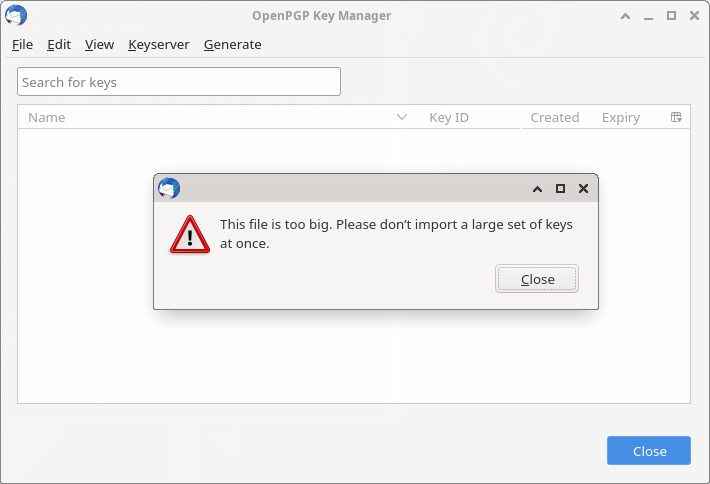
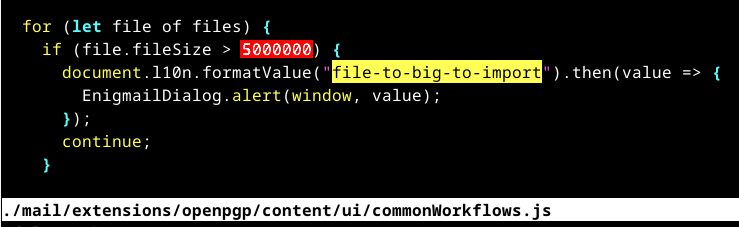
Thunderbird, srsly? 5MB (or 4.8MiB) import limit. Sure. My modest pubring (111 keys) is 18MB. The Debian keyring is 28MB. May be, just may be, add another 0 to that if statement? So, until that happens, workarounds ... Option 1: Export each pubkey into a separate file. The import dialog allows to select them all in one go. But - of course - it will ask confirmation for each. So prepare some valerian tea.
gpg --with-colons --list-public-keys grep ^pub cut -d : -f 5 xargs -I -n 1 gpg -ao .pub --export ;
Option 2: Strip all the signatures, so Thunderbird gets a smaller file to chew on. This uses pgp-clean from signing-party.
gpg --with-colons --list-public-keys grep ^pub cut -d : -f 5 xargs pgp-clean -s >> there_you_go_thunderbird.pub
Option 1 will retain the signatures on individual keys, Option 2 will not.

Daniel Lange: Getting gpg to import signatures again

The GnuPG (gpg) ecosystem has been played with a bit in 2019 by adding fake signatures en masse to well known keys. The main result is that the SKS Keyserver network based on the OCaml software of the same name is basically history. A few other keyservers have come up like Hagrid (Rust) and Hockeypuck (Go) but there seems to be no clear winner yet. In case you missed it in 2019, see my take on cleaning these polluted keys. Now the changed defaults in gpg to "mitigate" this issue are trickling down to even the conservative distributions. Debian Bullseye has self-sigs-only on gpg 2.2.27 and it looks like Debian Bookworm will get gpg 2.2.40. This would add import-clean but Daniel Kahn Gillmor patched it out. He argues correctly that this new default could delete data from good locally store pubkeys. This all ends in you getting some random combination of self-sigs-only and / or import-clean depending on which Linux distribution and version you happen to use. Better be explicit. I recommend to add:
# disable new gpg defaults
keyserver-options no-self-sigs-only
keyserver-options no-import-clean
to your ~/.gnupg/gpg.conf to make sure you can manage signatures yourself and receive them from keyservers or local imports as intended. In case you care: See info gnupg --index-search=keyserver-options for the fine documentation. Of course apt install info first to be able to read info pages. 'cause who still used them in 2023? Oh, wait...

10 February 2023

Reproducible Builds (diffoscope): diffoscope 235 released

The diffoscope maintainers are pleased to announce the release of diffoscope version 235. This version includes the following changes:
[ Akihiro Suda ]
* Update .gitlab-ci.yml to push versioned tags to the container registry.
  (Closes: reproducible-builds/diffoscope!119)
[ Chris Lamb ]
* Fix compatibility with PyPDF2. (Closes: reproducible-builds/diffoscope#331)
* Fix compatibility with ImageMagick 7.1.
  (Closes: reproducible-builds/diffoscope#330)
[ Daniel Kahn Gillmor ]
* Update from PyPDF2 to pypdf. (Closes: #1029741, #1029742)
[ FC Stegerman ]
* Add support for Android resources.arsc files.
  (Closes: reproducible-builds/diffoscope!116)
* Add support for dexdump. (Closes: reproducible-builds/diffoscope#134)
* Improve DexFile's FILE_TYPE_RE and add FILE_TYPE_HEADER_PREFIX, and remove
  "Dalvik dex file" from ApkFile's FILE_TYPE_RE as well.
[ Efraim Flashner ]
* Update external tool for isoinfo on guix.
  (Closes: reproducible-builds/diffoscope!124)
You find out more by visiting the project homepage.

21 January 2023

Dirk Eddelbuettel: RcppSimdJson 0.1.9 on CRAN: New Upstream

The RcppSimdJson package was just updated to release 0.1.9. RcppSimdJson wraps the fantastic and genuinely impressive simdjson library by Daniel Lemire and collaborators. Via very clever algorithmic engineering to obtain largely branch-free code, coupled with modern C++ and newer compiler instructions, it results in parsing gigabytes of JSON parsed per second which is quite mindboggling. The best-case performance is faster than CPU speed as use of parallel SIMD instructions and careful branch avoidance can lead to less than one cpu cycle per byte parsed; see the video of the talk by Daniel Lemire at QCon. This release updates the underlying simdjson library to version 3.0.1, settles on C++17 as the language standard, exports a worker function for direct C(++) access, and polishes a few small things around the package and tests. The NEWS entry for this release follows.

Changes in version 0.1.9 (2023-01-21)
  • The internal function deseralize_json is now exported at the C++ level as well as in R (Dirk in #81 closing #80).
  • simdjson was upgraded to version 3.0.1 (Dirk in #83).
  • The package now defaults to C++17 compilation; configure has been retired (Dirk closing #82).
  • The three main R access functions now use a more compact argument check via stopifnot (Dirk).

Courtesy of my CRANberries, there is also a diffstat report for this release. For questions, suggestions, or issues please use the issue tracker at the GitHub repo. If you like this or other open-source work I do, you can now sponsor me at GitHub.

This post by Dirk Eddelbuettel originated on his Thinking inside the box blog. Please report excessive re-aggregation in third-party for-profit settings.

Dirk Eddelbuettel: RcppFastFloat 0.0.4 on CRAN: New Upstream

A new release of RcppFastFloat arrived on CRAN yesterday. The package wraps fast_float, another nice library by Daniel Lemire. For details, see the arXiv paper showing that one can convert character representations of numbers into floating point at rates at or exceeding one gigabyte per second. This release updates the underlying fast_float library version. Special thanks to Daniel Lemire for quickly accomodating a parsing use case we had encode as a test, namely with various whitespace codes. The default in fast_float, as in C++17, is to be more narrow but we enable the wider use case via two #define statements.

Changes in version 0.0.4 (2023-01-20)
  • Update to fast_float 3.9.0
  • Set two #define re-establish prior behaviour with respect to whitespace removal prior to parsing for as.double2()
  • Small update to continuous integration actions

Courtesy of my CRANberries, there is also a diffstat report for this release. If you like this or other open-source work I do, you can now sponsor me at GitHub.

This post by Dirk Eddelbuettel originated on his Thinking inside the box blog. Please report excessive re-aggregation in third-party for-profit settings.

10 January 2023

Daniel Lange: Happy tenth birthday, dear Thunar bug

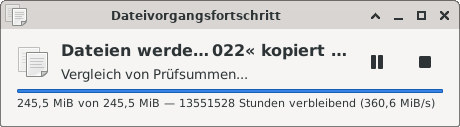
Thunar, the Xfce4 file manager, has a bug that it underflows the time remaining for a file copy since ten years now (bugzilla, gitlab). Happy birthday!

30 November 2022

Bits from Debian: New Debian Developers and Maintainers (September and October 2022)

The following contributors got their Debian Developer accounts in the last two months: The following contributors were added as Debian Maintainers in the last two months: Congratulations!

12 November 2022

Debian Brasil: About Debian Brasil at Latinoware 2022

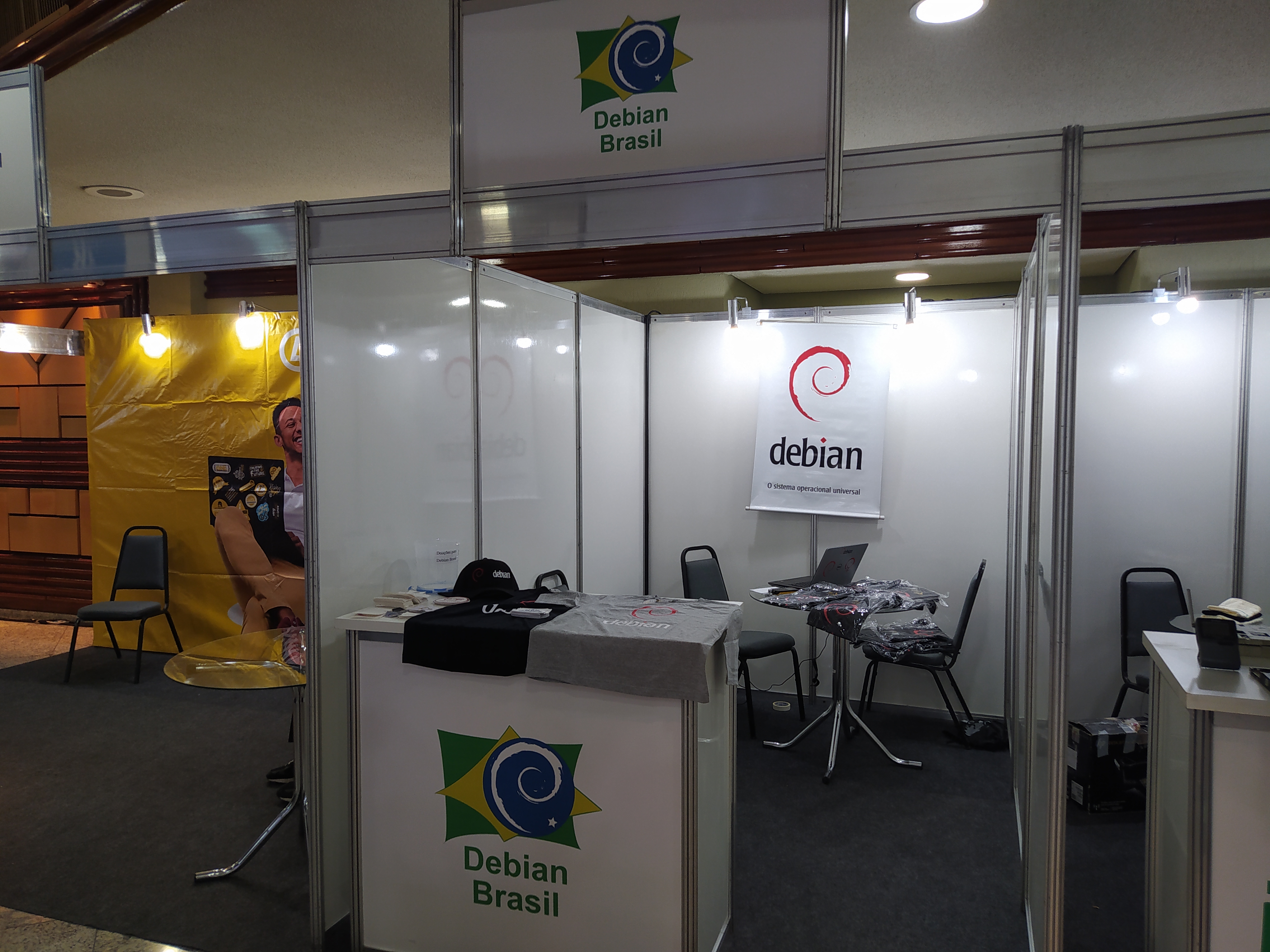
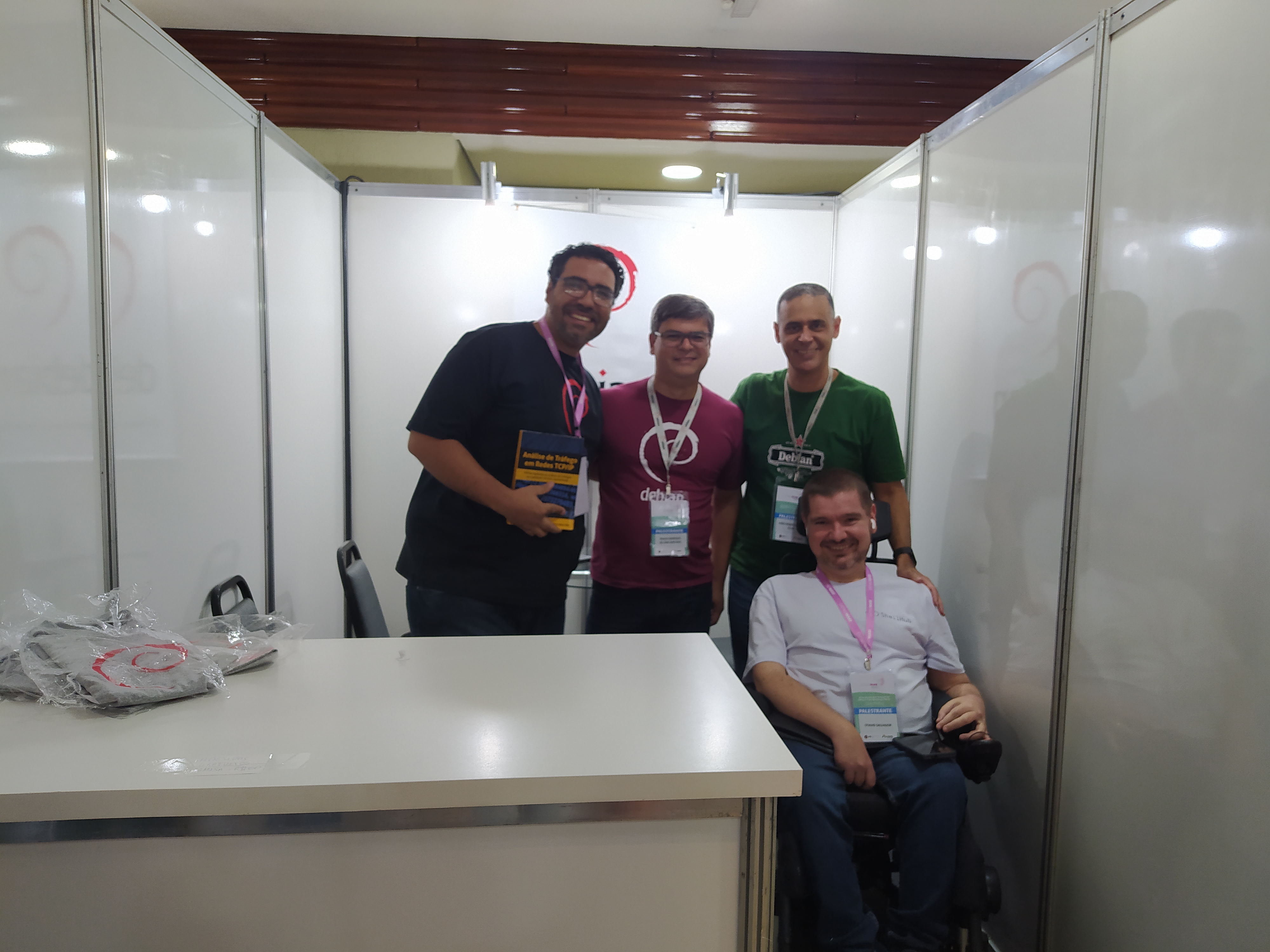
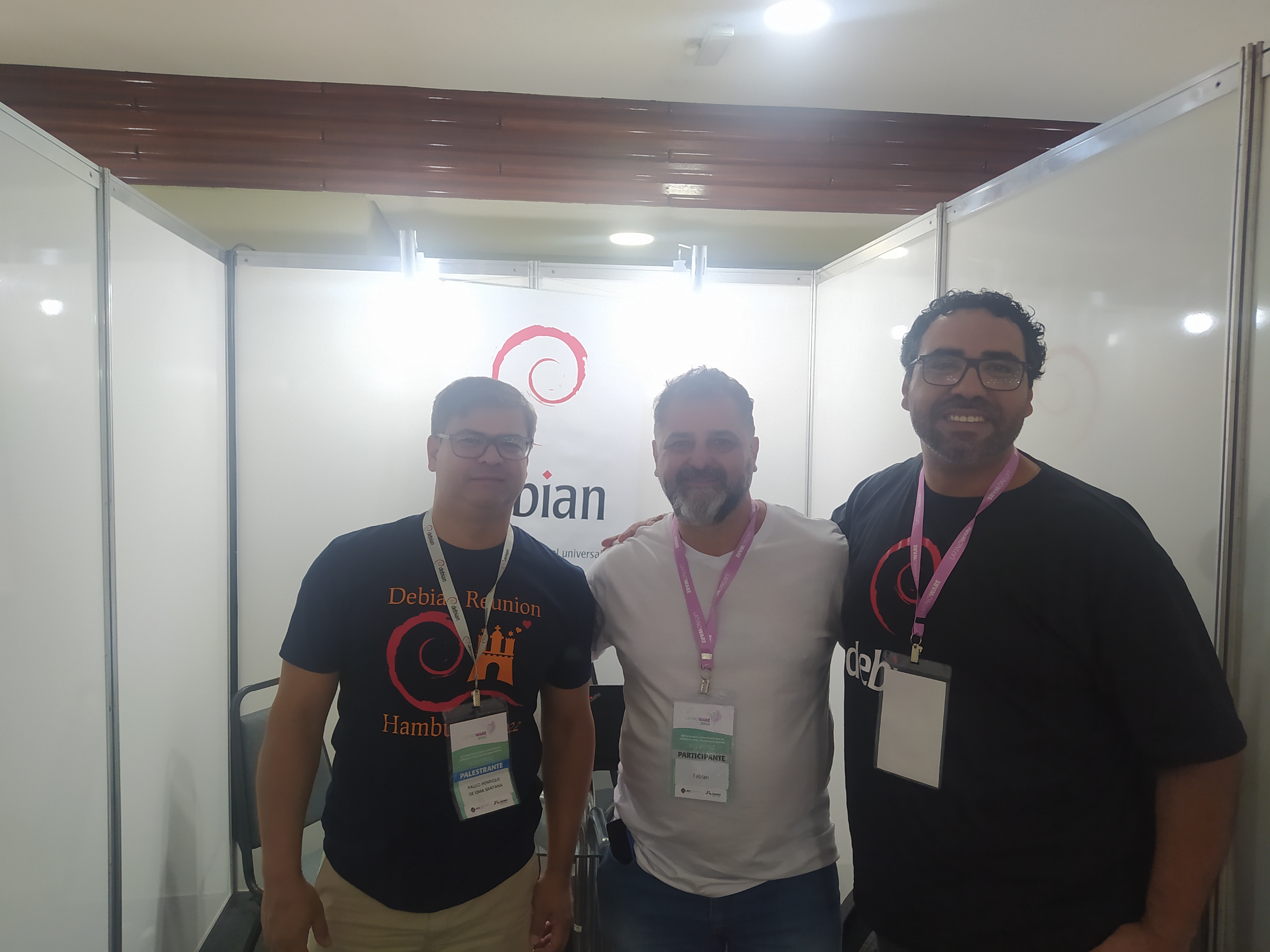
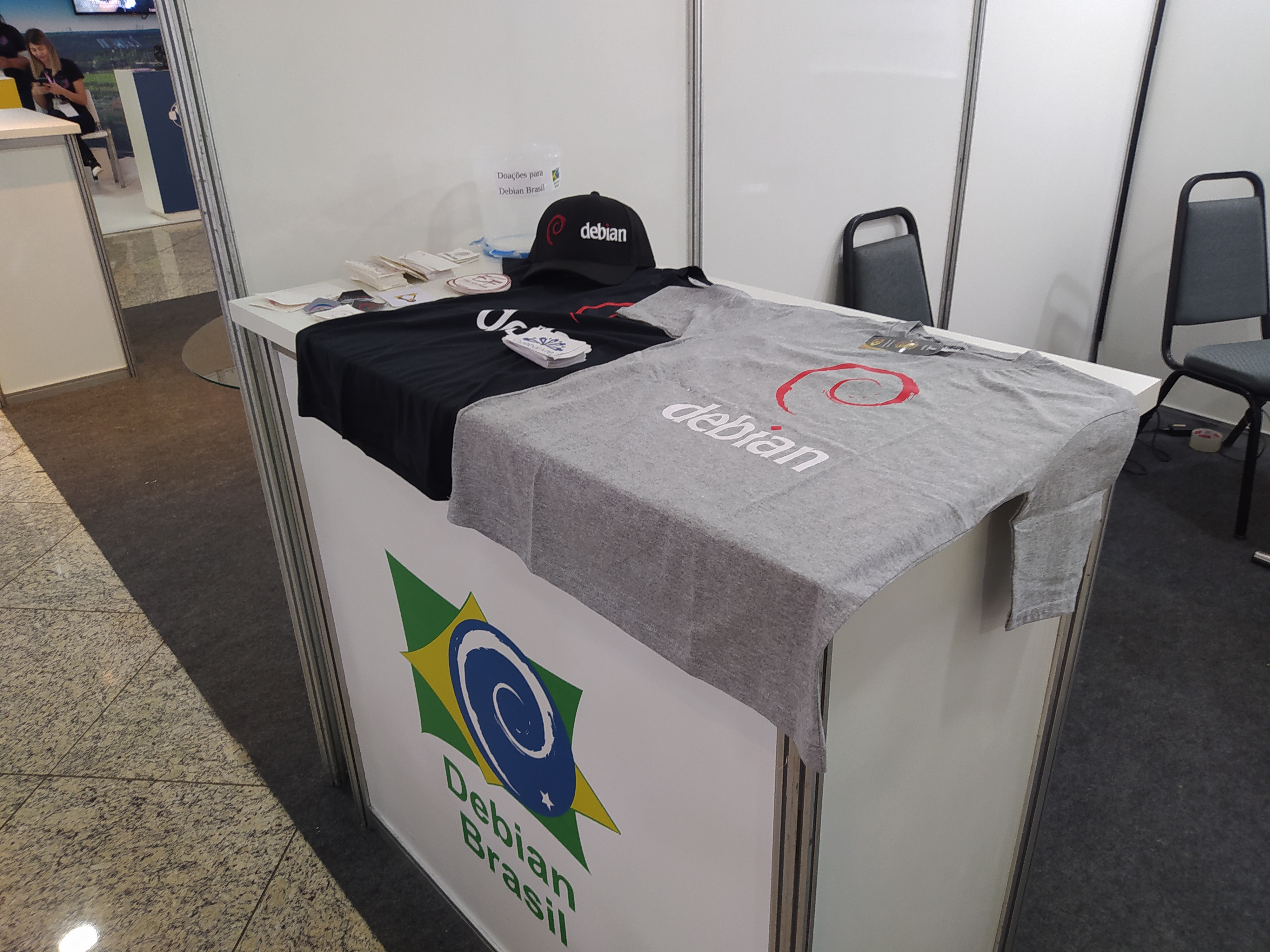
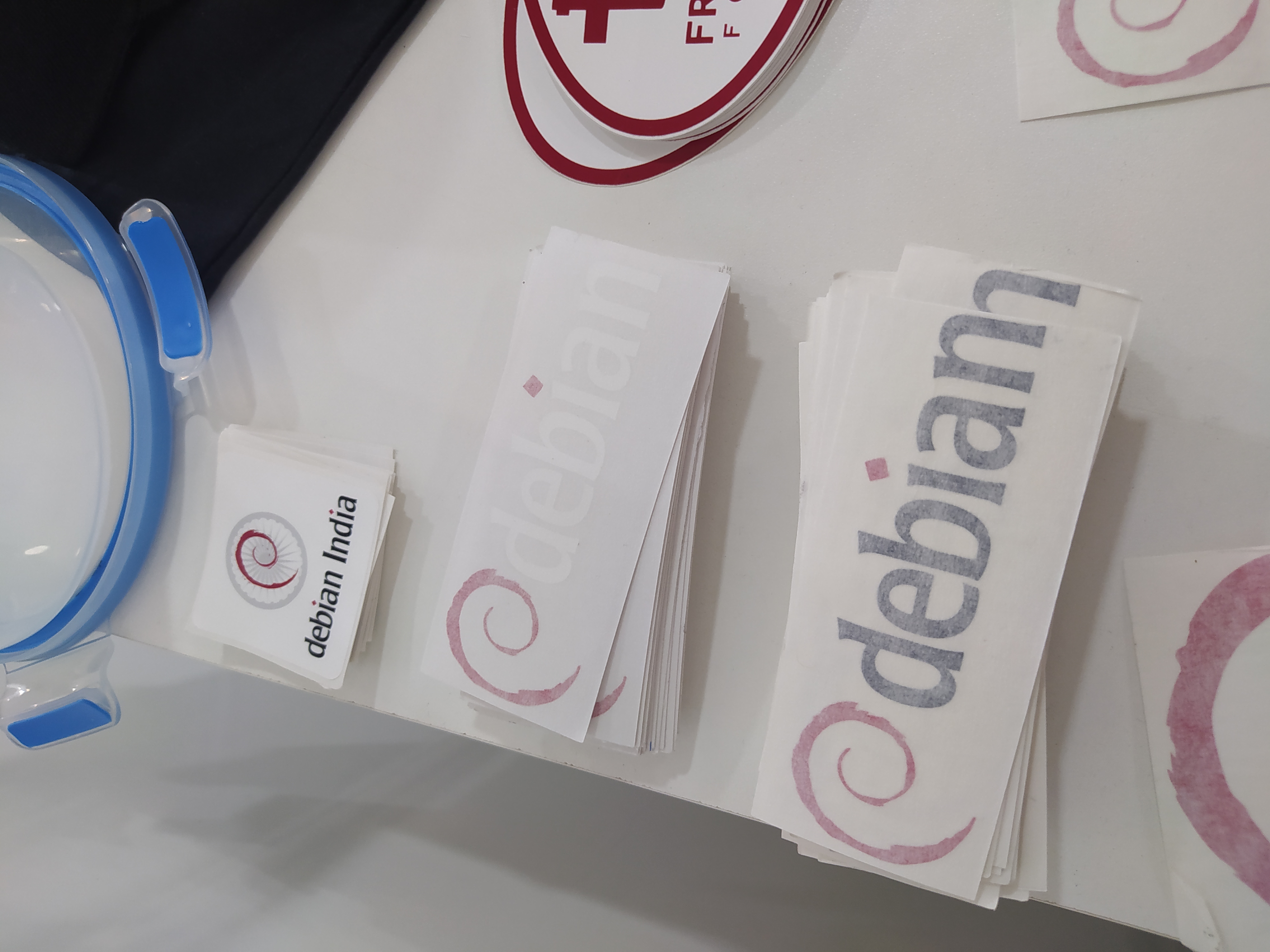
From November 2nd to 4th, 2022, the 19th edition of Latinoware - Latin American Congress of Free Software and Open Technologies took place in Foz do Igua u. After 2 years happening online due to the COVID-19 pandemic, the event was back in person and we felt Debian Brasil community should be there. Out last time at Latinoware was in 2016 The Latinoware organization provided the Debian Brazil community with a booth so that we could have contact with people visiting the open exhibition area and thus publicize the Debian project. During the 3 days of the event, the booth was organized by me (Paulo Henrique Santana) as Debian Developer, and by Leonardo Rodrigues as Debian contributor. Unfortunately Daniel Lenharo had an issue and could not travel to Foz do Igua u (we miss you there!). Latinoware 2022 booth 1 A huge number of people visited the booth, and the beginners (mainly students) who didn't know Debian, asked what our group was about and we explained various concepts such as what Free Software is, GNU/Linux distribution and Debian itself. We also received people from the Brazilian Free Software community and from other Latin American countries who were already using a GNU/Linux distribution and, of course, many people who were already using Debian. We had some special visitors as Jon maddog Hall, Debian Developer Emeritus Ot vio Salvador, Debian Developer Eriberto Mota, and Debian Maintainers Guilherme de Paula Segundo and Paulo Kretcheu. Latinoware 2022 booth 4 Photo from left to right: Leonardo, Paulo, Eriberto and Ot vio. Latinoware 2022 estande 5 Photo from left to right: Paulo, Fabian (Argentina) and Leonardo. In addition to talking a lot, we distributed Debian stickers that were produced a few months ago with Debian's sponsorship to be distributed at DebConf22 (and that were left over), and we sold several Debian t-shirts) produced by Curitiba Livre community). Latinoware 2022 booth 2 Latinoware 2022 booth 3 We also had 3 talks included in Latinoware official schedule. I) talked about: "how to become a Debian contributor by doing translations" and "how the SysAdmins of a global company use Debian". And Leonardo) talked about: "advantages of Open Source telephony in companies". Latinoware 2022 booth 6 Photo Paulo in his talk. Many thanks to Latinoware organization for once again welcoming the Debian community and kindly providing spaces for our participation, and we congratulate all the people involved in the organization for the success of this important event for our community. We hope to be present again in 2023. We also thank Jonathan Carter for approving financial support from Debian for our participation at Latinoware. Portuguese version

Debian Brasil: Participa o da comunidade Debian no Latinoware 2022

De 2 a 4 de novembro de 2022 aconteceu a 19 edi o do Latinoware - Congresso Latino-americano de Software Livre e Tecnologias Abertas, em Foz do Igua u. Ap s 2 anos acontecendo de forma online devido a pandemia do COVID-19, o evento voltou a ser presencial e sentimos que a comunidade Debian Brasil deveria estar presente. Nossa ltima participa o no Latinoware foi em 2016 A organiza o do Latinoware cedeu para a comunidade Debian Brasil um estande para que pud ssemos ter contato com as pessoas que visitavam a rea aberta de exposi es e assim divulgarmos o projeto Debian. Durante os 3 dias do evento, o estande foi organizado por mim (Paulo Henrique Santana) como Desenvolvedor Debian, e pelo Leonardo Rodrigues como contribuidor Debian. Infelizmente o Daniel Lenharo teve um imprevisto de ltima hora e n o pode ir para Foz do Igua u (sentimos sua falta l !). Latinoware 2022 estande 1 V rias pessoas visitaram o estande e aquelas mais iniciantes (principalmente estudantes) que n o conheciam o Debian, perguntavam do que se tratava o nosso grupo e a gente explicava v rios conceitos como o que Software Livre, distribui o GNU/Linux e o Debian propriamente dito. Tamb m recebemos pessoas da comunidade de Software Livre brasileira e de outros pa ses da Am rica Latina que j utilizavam uma distribui o GNU/Linux e claro, muitas pessoas que j utilizavam Debian. Tivemos algumas visitas especiais como do Jon maddog Hall, do Desenvolvedor Debian Emeritus Ot vio Salvador, do Desenvolvedor Debian Eriberto Mota, e dos Mantenedores Debian Guilherme de Paula Segundo e Paulo Kretcheu. Latinoware 2022 estande 4 Foto da esquerda pra direita: Leonardo, Paulo, Eriberto e Ot vio. Latinoware 2022 estande 5 Foto da esquerda pra direita: Paulo, Fabian (Argentina) e Leonardo. Al m de conversarmos bastante, distribu mos adesivos do Debian que foram produzidos alguns meses atr s com o patroc nio do Debian para serem distribu dos na DebConf22(e que haviam sobrado), e vendemos v rias camisetas do Debian produzidas pela comunidade Curitiba Livre. Latinoware 2022 estande 2 Latinoware 2022 estande 3 Tamb m tivemos 3 palestras inseridas na programa o oficial do Latinoware. Eu fiz as palestras: como tornar um(a) contribuidor(a) do Debian fazendo tradu es e como os SysAdmins de uma empresa global usam Debian . E o Leonardo fez a palestra: vantagens da telefonia Open Source nas empresas . Latinoware 2022 estande 6 Foto Paulo na palestra. Agradecemos a organiza o do Latinoware por receber mais uma vez a comunidade Debian e gentilmente ceder os espa os para a nossa participa o, e parabenizamos a todas as pessoas envolvidas na organiza o pelo sucesso desse importante evento para a nossa comunidade. Esperamos estar presentes novamente em 2023. Agracemos tamb m ao Jonathan Carter por aprovar o suporte financeiro do Debian para a nossa participa o no Latinoware. Vers o em ingl s

11 November 2022

Debian Brasil: Participa o da comunidade Debian no Latinoware 2022

De 2 a 4 de novembro de 2022 aconteceu a 19 edi o do Latinoware - Congresso Latino-americano de Software Livre e Tecnologias Abertas, em Foz do Igua u. Ap s 2 anos acontecendo de forma online devido a pandemia do COVID-19, o evento voltou a ser presencial e sentimos que a comunidade Debian Brasil deveria estar presente. Nossa ltima participa o no Latinoware foi em 2016 A organiza o do Latinoware cedeu para a comunidade Debian Brasil um estande para que pud ssemos ter contato com as pessoas que visitavam a rea aberta de exposi es e assim divulgarmos o projeto Debian. Durante os 3 dias do evento, o estande foi organizado por mim (Paulo Henrique Santana) como Desenvolvedor Debian, e pelo Leonardo Rodrigues como contribuidor Debian. Infelizmente o Daniel Lenharo teve um imprevisto de ltima hora e n o pode ir para Foz do Igua u (sentimos sua falta l !). Latinoware 2022 estande 1 V rias pessoas visitaram o estande e aquelas mais iniciantes (principalmente estudantes) que n o conheciam o Debian, perguntavam do que se tratava o nosso grupo e a gente explicava v rios conceitos como o que Software Livre, distribui o GNU/Linux e o Debian propriamente dito. Tamb m recebemos pessoas da comunidade de Software Livre brasileira e de outros pa ses da Am rica Latina que j utilizavam uma distribui o GNU/Linux e claro, muitas pessoas que j utilizavam Debian. Tivemos algumas visitas especiais como do Jon maddog Hall, do Desenvolvedor Debian Emeritus Ot vio Salvador, do Desenvolvedor Debian Eriberto Mota, e dos Mantenedores Debian Guilherme de Paula Segundo e Paulo Kretcheu. Latinoware 2022 estande 4 Foto da esquerda pra direita: Leonardo, Paulo, Eriberto e Ot vio. Latinoware 2022 estande 5 Foto da esquerda pra direita: Paulo, Fabian (Argentina) e Leonardo. Al m de conversarmos bastante, distribu mos adesivos do Debian que foram produzidos alguns meses atr s com o patroc nio do Debian para serem distribu dos na DebConf22(e que haviam sobrado), e vendemos v rias camisetas do Debian produzidas pela comunidade Curitiba Livre. Latinoware 2022 estande 2 Latinoware 2022 estande 3 Tamb m tivemos 3 palestras inseridas na programa o oficial do Latinoware. Eu fiz as palestras: como tornar um(a) contribuidor(a) do Debian fazendo tradu es e como os SysAdmins de uma empresa global usam Debian . E o Leonardo fez a palestra: vantagens da telefonia Open Source nas empresas . Latinoware 2022 estande 6 Foto Paulo na palestra. Agradecemos a organiza o do Latinoware por receber mais uma vez a comunidade Debian e gentilmente ceder os espa os para a nossa participa o, e parabenizamos a todas as pessoas envolvidas na organiza o pelo sucesso desse importante evento para a nossa comunidade. Esperamos estar presentes novamente em 2023. Agracemos tamb m ao Jonathan Carter por aprovar o suporte financeiro do Debian para a nossa participa o no Latinoware. Vers o em ingl s

Debian Brasil: About Debian Brasil at Latinoware 2022

From November 2nd to 4th, 2022, the 19th edition of Latinoware - Latin American Congress of Free Software and Open Technologies took place in Foz do Igua u. After 2 years happening online due to the COVID-19 pandemic, the event was back in person and we felt Debian Brasil community should be there. Out last time at Latinoware was in 2016 The Latinoware organization provided the Debian Brazil community with a booth so that we could have contact with people visiting the open exhibition area and thus publicize the Debian project. During the 3 days of the event, the booth was organized by me (Paulo Henrique Santana) as Debian Developer, and by Leonardo Rodrigues as Debian contributor. Unfortunately Daniel Lenharo had an issue and could not travel to Foz do Igua u (we miss you there!). Latinoware 2022 booth 1 A huge number of people visited the booth, and the beginners (mainly students) who didn't know Debian, asked what our group was about and we explained various concepts such as what Free Software is, GNU/Linux distribution and Debian itself. We also received people from the Brazilian Free Software community and from other Latin American countries who were already using a GNU/Linux distribution and, of course, many people who were already using Debian. We had some special visitors as Jon maddog Hall, Debian Developer Emeritus Ot vio Salvador, Debian Developer Eriberto Mota, and Debian Maintainers Guilherme de Paula Segundo and Paulo Kretcheu. Latinoware 2022 booth 4 Photo from left to right: Leonardo, Paulo, Eriberto and Ot vio. Latinoware 2022 estande 5 Photo from left to right: Paulo, Fabian (Argentina) and Leonardo. In addition to talking a lot, we distributed Debian stickers that were produced a few months ago with Debian's sponsorship to be distributed at DebConf22 (and that were left over), and we sold several Debian t-shirts) produced by Curitiba Livre community). Latinoware 2022 booth 2 Latinoware 2022 booth 3 We also had 3 talks included in Latinoware official schedule. I) talked about: "how to become a Debian contributor by doing translations" and "how the SysAdmins of a global company use Debian". And Leonardo) talked about: "advantages of Open Source telephony in companies". Latinoware 2022 booth 6 Photo Paulo in his talk. Many thanks to Latinoware organization for once again welcoming the Debian community and kindly providing spaces for our participation, and we congratulate all the people involved in the organization for the success of this important event for our community. We hope to be present again in 2023. We also thank Jonathan Carter for approving financial support from Debian for our participation at Latinoware. Portuguese version

Reproducible Builds: Reproducible Builds in October 2022

Welcome to the Reproducible Builds report for October 2022! In these reports we attempt to outline the most important things that we have been up to over the past month. As ever, if you are interested in contributing to the project, please visit our Contribute page on our website.

Our in-person summit this year was held in the past few days in Venice, Italy. Activity and news from the summit will therefore be covered in next month s report!
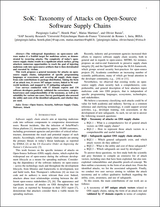
A new article related to reproducible builds was recently published in the 2023 IEEE Symposium on Security and Privacy. Titled Taxonomy of Attacks on Open-Source Software Supply Chains and authored by Piergiorgio Ladisa, Henrik Plate, Matias Martinez and Olivier Barais, their paper:
[ ] proposes a general taxonomy for attacks on opensource supply chains, independent of specific programming languages or ecosystems, and covering all supply chain stages from code contributions to package distribution.
Taking the form of an attack tree, the paper covers 107 unique vectors linked to 94 real world supply-chain incidents which is then mapped to 33 mitigating safeguards including, of course, reproducible builds:
Reproducible Builds received a very high utility rating (5) from 10 participants (58.8%), but also a high-cost rating (4 or 5) from 12 (70.6%). One expert commented that a reproducible build like used by Solarwinds now, is a good measure against tampering with a single build system and another claimed this is going to be the single, biggest barrier .

It was noticed this month that Solarwinds published a whitepaper back in December 2021 in order to:
[ ] illustrate a concerning new reality for the software industry and illuminates the increasingly sophisticated threats made by outside nation-states to the supply chains and infrastructure on which we all rely.
The 12-month anniversary of the 2020 Solarwinds attack (which SolarWinds Worldwide LLC itself calls the SUNBURST attack) was, of course, the likely impetus for publication.
Whilst collaborating on making the Cyrus IMAP server reproducible, Ellie Timoney asked why the Reproducible Builds testing framework uses two remarkably distinctive build paths when attempting to flush out builds that vary on the absolute system path in which they were built. In the case of the Cyrus IMAP server, these happened to be: Asked why they vary in three different ways, Chris Lamb listed in detail the motivation behind to each difference.
On our mailing list this month:
The Reproducible Builds project is delighted to welcome openEuler to the Involved projects page [ ]. openEuler is Linux distribution developed by Huawei, a counterpart to it s more commercially-oriented EulerOS.

Debian Colin Watson wrote about his experience towards making the databases generated by the man-db UNIX manual page indexing tool:
One of the people working on [reproducible builds] noticed that man-db s database files were an obstacle to [reproducibility]: in particular, the exact contents of the database seemed to depend on the order in which files were scanned when building it. The reporter proposed solving this by processing files in sorted order, but I wasn t keen on that approach: firstly because it would mean we could no longer process files in an order that makes it more efficient to read them all from disk (still valuable on rotational disks), but mostly because the differences seemed to point to other bugs.
Colin goes on to describe his approach to solving the problem, including fixing various fits of internal caching, and he ends his post with None of this is particularly glamorous work, but it paid off .
Vagrant Cascadian announced on our mailing list another online sprint to help clear the huge backlog of reproducible builds patches submitted by performing NMUs (Non-Maintainer Uploads). The first such sprint took place on September 22nd, but another was held on October 6th, and another small one on October 20th. This resulted in the following progress:
41 reviews of Debian packages were added, 62 were updated and 12 were removed this month adding to our knowledge about identified issues. A number of issue types were updated too. [1][ ]
Lastly, Luca Boccassi submitted a patch to debhelper, a set of tools used in the packaging of the majority of Debian packages. The patch addressed an issue in the dh_installsysusers utility so that the postinst post-installation script that debhelper generates the same data regardless of the underlying filesystem ordering.

Other distributions F-Droid is a community-run app store that provides free software applications for Android phones. This month, F-Droid changed their documentation and guidance to now explicitly encourage RB for new apps [ ][ ], and FC Stegerman created an extremely in-depth issue on GitLab concerning the APK signing block. You can read more about F-Droid s approach to reproducibility in our July 2022 interview with Hans-Christoph Steiner of the F-Droid Project. In openSUSE, Bernhard M. Wiedemann published his usual openSUSE monthly report.

Upstream patches The Reproducible Builds project detects, dissects and attempts to fix as many currently-unreproducible packages as possible. We endeavour to send all of our patches upstream where appropriate. This month, we wrote a large number of such patches, including:

diffoscope diffoscope is our in-depth and content-aware diff utility. Not only can it locate and diagnose reproducibility issues, it can provide human-readable diffs from many kinds of binary formats. This month, Chris Lamb prepared and uploaded versions 224 and 225 to Debian:
  • Add support for comparing the text content of HTML files using html2text. [ ]
  • Add support for detecting ordering-only differences in XML files. [ ]
  • Fix an issue with detecting ordering differences. [ ]
  • Use the capitalised version of Ordering consistently everywhere in output. [ ]
  • Add support for displaying font metadata using ttx(1) from the fonttools suite. [ ]
  • Testsuite improvements:
    • Temporarily allow the stable-po pipeline to fail in the CI. [ ]
    • Rename the order1.diff test fixture to json_expected_ordering_diff. [ ]
    • Tidy the JSON tests. [ ]
    • Use assert_diff over get_data and an manual assert within the XML tests. [ ]
    • Drop the ALLOWED_TEST_FILES test; it was mostly just annoying. [ ]
    • Tidy the tests/test_source.py file. [ ]
Chris Lamb also added a link to diffoscope s OpenBSD packaging on the diffoscope.org homepage [ ] and Mattia Rizzolo fix an test failure that was occurring under with LLVM 15 [ ].

Testing framework The Reproducible Builds project operates a comprehensive testing framework at tests.reproducible-builds.org in order to check packages and other artifacts for reproducibility. In October, the following changes were made by Holger Levsen:
  • Run the logparse tool to analyse results on the Debian Edu build logs. [ ]
  • Install btop(1) on all nodes running Debian. [ ]
  • Switch Arch Linux from using SHA1 to SHA256. [ ]
  • When checking Debian debstrap jobs, correctly log the tool usage. [ ]
  • Cleanup more task-related temporary directory names when testing Debian packages. [ ][ ]
  • Use the cdebootstrap-static binary for the 2nd runs of the cdebootstrap tests. [ ]
  • Drop a workaround when testing OpenWrt and coreboot as the issue in diffoscope has now been fixed. [ ]
  • Turn on an rm(1) warning into an info -level message. [ ]
  • Special case the osuosl168 node for running Debian bookworm already. [ ][ ]
  • Use the new non-free-firmware suite on the o168 node. [ ]
In addition, Mattia Rizzolo made the following changes:
  • Ensure that 2nd build has a merged /usr. [ ]
  • Only reconfigure the usrmerge package on Debian bookworm and above. [ ]
  • Fix bc(1) syntax in the computation of the percentage of unreproducible packages in the dashboard. [ ][ ][ ]
  • In the index_suite_ pages, order the package status to be the same order of the menu. [ ]
  • Pass the --distribution parameter to the pbuilder utility. [ ]
Finally, Roland Clobus continued his work on testing Live Debian images. In particular, he extended the maintenance script to warn when workspace directories cannot be deleted. [ ]
If you are interested in contributing to the Reproducible Builds project, please visit our Contribute page on our website. However, you can get in touch with us via:

9 November 2022

Debian Brasil: Brasileiros(as) Mantenedores(as) e Desenvolvedores(as) Debian a partir de julho de 2015

Desde de setembro de 2015, o time de publicidade do Projeto Debian passou a publicar a cada dois meses listas com os nomes dos(as) novos(as) Desenvolvedores(as) Debian (DD - do ingl s Debian Developer) e Mantenedores(as) Debian (DM - do ingl s Debian Maintainer). Estamos aproveitando estas listas para publicar abaixo os nomes dos(as) brasileiros(as) que se tornaram Desenvolvedores(as) e Mantenedores(as) Debian a partir de julho de 2015. Desenvolvedores(as) Debian / Debian Developers / DDs: Marcos Talau Fabio Augusto De Muzio Tobich Gabriel F. T. Gomes Thiago Andrade Marques M rcio de Souza Oliveira Paulo Henrique de Lima Santana Samuel Henrique S rgio Durigan J nior Daniel Lenharo de Souza Giovani Augusto Ferreira Adriano Rafael Gomes Breno Leit o Lucas Kanashiro Herbert Parentes Fortes Neto Mantenedores(as) Debian / Debian Maintainers / DMs: Guilherme de Paula Xavier Segundo David da Silva Polverari Paulo Roberto Alves de Oliveira Sergio Almeida Cipriano Junior Francisco Vilmar Cardoso Ruviaro William Grzybowski Tiago Ilieve
Observa es:
  1. Esta lista ser atualizada quando o time de publicidade do Debian publicar novas listas com DMs e DDs e tiver brasileiros.
  2. Para ver a lista completa de Mantenedores(as) e Desenvolvedores(as) Debian, inclusive outros(as) brasileiros(as) antes de julho de 2015 acesse: https://nm.debian.org/public/people

8 November 2022

Daniel Lange: Your software stores are a bad idea

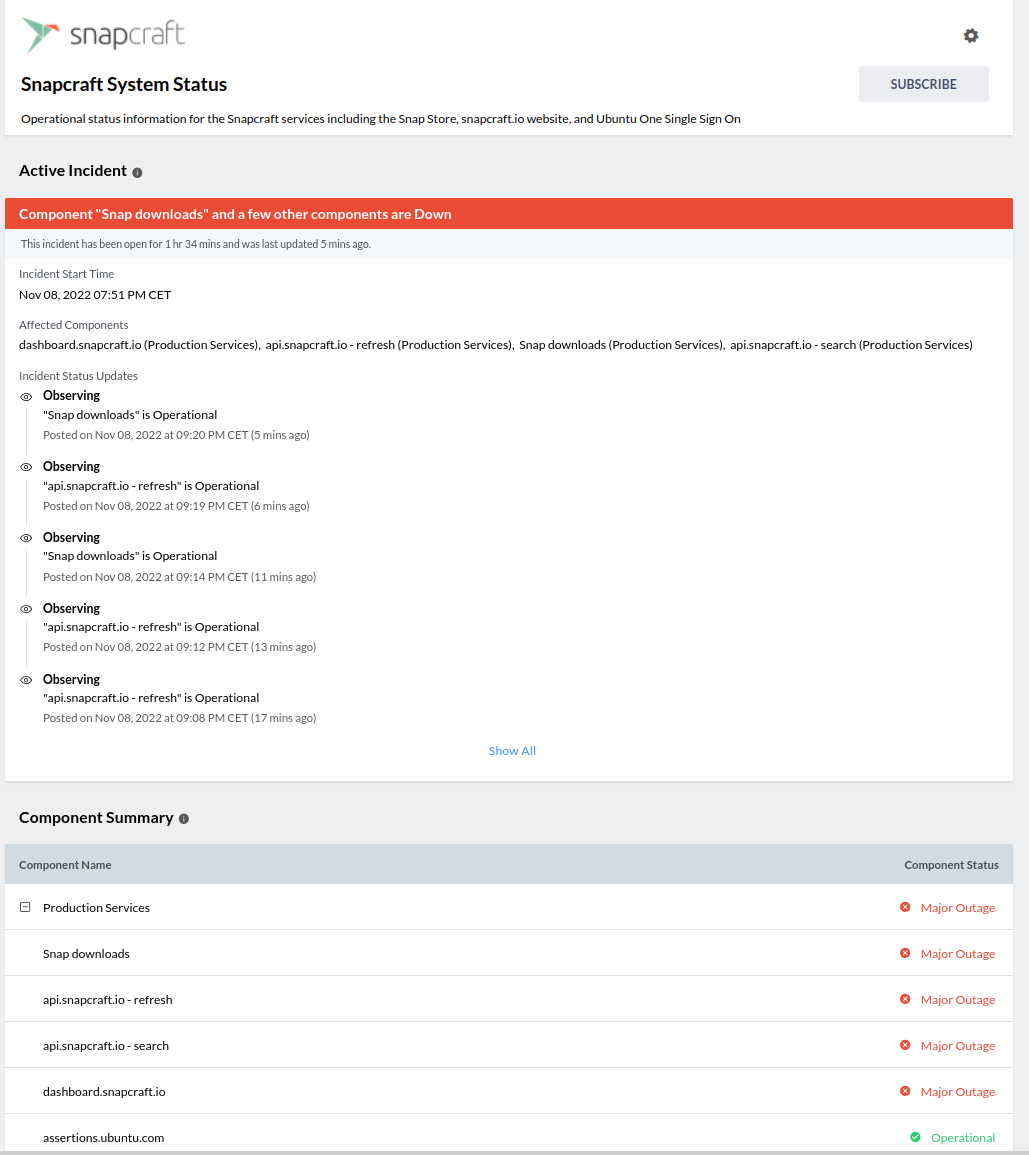
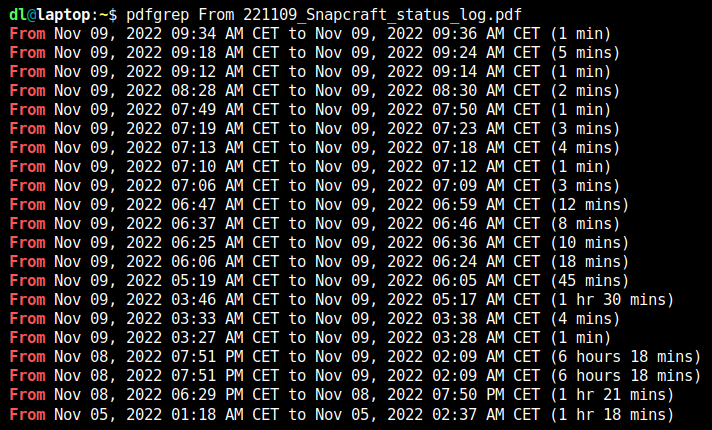
There is significant effort involved to get your apt or dnf commands always have a consistent set of servers to talk to. That's why running separate "software stores" is a bad idea: Snap software store down That way more admins need to learn how to run high availability services for dubious business opportunities to "later" monetize services. Services that nobody cares to pay for and thus opportunities that never materialize. But every company wants to find that out again. Because if Apple could do it, why shouldn't Canonical be able to do it? $$$!1!! So, can't update Firefox on Ubuntu 22.04 right now. At least there is https://status.snapcraft.io/: Snap incodent / monitoring status page So I can check back tomorrow if I can update my web browser ... Update 09.11.2022 12:15 CET The Snapcraft distribution system seems quite flaky, this is the downtime log: Log of (frequent) Snapcraft outages Bonus points for the bad client side implementation:

dl@laptop:~$ sudo snap refresh
All snaps up to date.

# ^this is a lie, just close Firefox and ...

dl@laptop:~$ sudo snap refresh
firefox 106.0.5-1 from Mozilla** refreshed

18 October 2022

Dirk Eddelbuettel: RcppSimdJson 0.1.8 on CRAN: Maintenance

The RcppSimdJson package was just updated to release 0.1.8 today. RcppSimdJson wraps the fantastic and genuinely impressive simdjson library by Daniel Lemire and collaborators. Via very clever algorithmic engineering to obtain largely branch-free code, coupled with modern C++ and newer compiler instructions, it results in parsing gigabytes of JSON parsed per second which is quite mindboggling. The best-case performance is faster than CPU speed as use of parallel SIMD instructions and careful branch avoidance can lead to less than one cpu cycle per byte parsed; see the video of the talk by Daniel Lemire at QCon. This release simply changes one statement to not trigger a warning under clang++-14. The very short NEWS entry for this release follows.

Changes in version 0.1.8 (2022-10-18)
  • Use the ' ' operator instead of ' ' on a set of booleans to appease 'clang-14'.

Courtesy of my CRANberries, there is also a diffstat report for this release. For questions, suggestions, or issues please use the issue tracker at the GitHub repo. If you like this or other open-source work I do, you can now sponsor me at GitHub.

This post by Dirk Eddelbuettel originated on his Thinking inside the box blog. Please report excessive re-aggregation in third-party for-profit settings.

1 June 2022

Daniel Lange: Get Youtube Channel ID from username

Youtube has a really nice RSS feature that is extremely well hidden. If you postfix a Channel ID to
https://www.youtube.com/feeds/videos.xml?channel_id=<id goes here>
you get a really nice Atom 1.0 (~RSS) feed for your feedreader. Unfortunately the Channel ID is hard to find while you are navigating Youtube with usernames in the URL. E.g. https://www.youtube.com/c/TED is TED's channel, full of interesting and worth-to-watch content (and some assorted horse toppings, of course). But you have to read a lot of ugly HTML / JSON in that page to find and combine https://www.youtube.com/feeds/videos.xml?channel_id=UCAuUUnT6oDeKwE6v1NGQxug which is the related RSS feed. Jeff Keeling wrote a simple Youtube RSS Extractor that does well if you have a ../playlist?... or a .../channel/... URL but it will (currently) fail on user name channels or Youtube landing pages. So how do we get the Channel ID for a Youtube user we are interested to follow? Youtube has a great API but that is gated by API keys even for the most simple calls (that came only with v3 of the API but the previous version is depreciated since 2015)1:
dl@laptop:~$ curl 'https://www.googleapis.com/youtube/v3/channels?part=contentDetails&forUsername=DebConfVideos'

"error":
"code": 403,
"message": "The request is missing a valid API key.",
"errors": [

"message": "The request is missing a valid API key.",
"domain": "global",
"reason": "forbidden"

],
"status": "PERMISSION_DENIED"

Luckily we can throw the same (example) user name DebConfVideos at curl and grep:
dl@laptop:~$ curl -s "https://www.youtube.com/c/DebConfVideos/videos" grep -Po '"channelId":".+?"'
"channelId":"UC7SbfAPZf8SMvAxp8t51qtQ"
So https://www.youtube.com/feeds/videos.xml?channel_id=UC7SbfAPZf8SMvAxp8t51qtQ is the RSS feed for DebConfVideos. We can use individual Youtube video URLs as well. With the hack above, it'll work to find us the Chanel ID from a Youtube video URL: Working around the Youtube API restrictions to still make use of their RSS feed Now, some user pages may have multiple valid RSS feeds because they contain multiple channels. Remember the TED page from above? Well run:

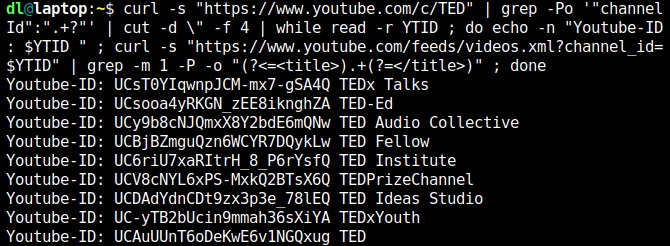
dl@laptop:~$ curl -s "https://www.youtube.com/c/TED" grep -Po '"channelId":".+?"' cut -d \" -f 4 while read -r YTID ; do echo -n "Youtube-ID: $YTID " ; curl -s "https://www.youtube.com/feeds/videos.xml?channel_id=$YTID" grep -m 1 -P -o "(?<=<title>).+(?=</title>)" ; done
This will iterate through the Channel IDs found and show you the titles. That way you can assess which one you want to add to your feedreader. screenshot of the above You probably want the last Channel ID listed above, the non-selective "TED" one. And that's the one from the example above. Update 02.06.2022: smpl wrote in and has the much better solution for the most frequent use cases:
You can also use get a feed directly with a username:
https://www.youtube.com/feeds/videos.xml?user=<username>
The one I use most is the one for playlists (if creators remember to
use them).
https://www.youtube.com/feeds/videos.xml?playlist_id=<playlist id>
For the common case you don't even need the channel ID that way. But it is also conveniently given in a <yt:channelId> tag (or the topmost <id> tag) within the Atom XML document. Thanks, smpl!
  1. Actually it is even more complicated as some channels, like our DebConfVideos example, will only get you an incomplete result, cf. this StackOverflow entry. I.e. the forUsername iterator may not even work and the "best practice" seems to be mucking around with the search call.

Next.

Previous.