Search Results: "Ben Hutchings"

17 November 2020

Raphaël Hertzog: Freexian s report about Debian Long Term Support, October 2020


A Debian LTS logo Like each month, here comes a report about the work of paid contributors to Debian LTS. Individual reports In October, 221.50 work hours have been dispatched among 13 paid contributors. Their reports are available: Evolution of the situation October was a regular LTS month with a LTS team meeting done via video chat thus there s no log to be shared. After more than five years of contributing to LTS (and ELTS), Mike Gabriel announced that he founded a new company called Frei(e) Software GmbH and thus would leave us to concentrate on this new endeavor. Best of luck with that, Mike! So, once again, this is a good moment to remind that we are constantly looking for new contributors. Please contact Holger if you are interested! The security tracker currently lists 42 packages with a known CVE and the dla-needed.txt file has 39 packages needing an update. Thanks to our sponsors Sponsors that joined recently are in bold.

No comment Liked this article? Click here. My blog is Flattr-enabled.

4 November 2020

Ben Hutchings: Debian LTS work, October 2020

I was assigned 6.25 hours of work by Freexian's Debian LTS initiative and carried over 17.5 hours from earlier months. I worked 11.5 hours this month and returned 7.75 hours to the pool, so I will carry over 4.5 hours to December. I updated linux-4.19 to include the changes in DSA-4772-1, and issued DLA-2417-1 for this. I updated linux (4.9 kernel) to include upstream stable fixes, and issued DLA-2420-1. This resulted in a regression on some Xen PV environments. Ian Jackson identified the upstream fix for this, which had not yet been applied to all the stable branches that needed it. I made a further update with just that fix, and issued DLA-2420-2. I have also been working to backport fixes for some less urgent security issues in Linux 4.9, but have not yet applied those fixes.

15 October 2020

Raphaël Hertzog: Freexian s report about Debian Long Term Support, September 2020

A Debian LTS logo Like each month, here comes a report about the work of paid contributors to Debian LTS. Individual reports In September, 208.25 work hours have been dispatched among 13 paid contributors. Their reports are available: Evolution of the situation September was a regular LTS month with an IRC meeting. The security tracker currently lists 45 packages with a known CVE and the dla-needed.txt file has 48 packages needing an update. Thanks to our sponsors Sponsors that joined recently are in bold.

No comment Liked this article? Click here. My blog is Flattr-enabled.

3 October 2020

Ben Hutchings: Debian LTS work, September 2020

I was assigned 16 hours of work by Freexian's Debian LTS initiative and carried over 9.75 hours from August. I only worked 8.25 hours this month, and will return excess hours to the pool. I attended and participated in the LTS team meeting on the 24th. I updated linux-4.19 to include the changes in the buster point release, and issued DLA-2385-1. I began work on an update to the linux (Linux 4.9 kernel) package.

15 September 2020

Raphaël Hertzog: Freexian s report about Debian Long Term Support, August 2020

A Debian LTS logo Like each month, here comes a report about the work of paid contributors to Debian LTS. Individual reports In August, 237.25 work hours have been dispatched among 14 paid contributors. Their reports are available: Evolution of the situation August was a regular LTS month once again, even though it was only our 2nd month with Stretch LTS.
At the end of August some of us participated in DebConf 20 online where we held our monthly team meeting. A video is available.
As of now this video is also the only public resource about the LTS survey we held in July, though a written summary is expected to be released soon. The security tracker currently lists 56 packages with a known CVE and the dla-needed.txt file has 55 packages needing an update. Thanks to our sponsors Sponsors that recently joined are in bold.

No comment Liked this article? Click here. My blog is Flattr-enabled.

3 September 2020

Ben Hutchings: Debian LTS work, August 2020

I was assigned 16 hours of work by Freexian's Debian LTS initiative, but only worked 6.25 hours this month and have carried over the rest to September. I finished my work to add Linux 4.19 to the stretch-security suite, providing an upgrade path for those previously installing it from stretch-backports (DLA-2323-1, DLA-2324-1). I also updated the firmware-nonfree package (DLA-2321-1) so that firmware needed by drivers in Linux 4.19 is also be available in the non-free section of the stretch-security suite. I also reviewed the report of the Debian LTS survey and commented on the presentation of results. This report was presented in the Debian LTS BoF at DebConf.

28 August 2020

Raphaël Hertzog: Freexian s report about Debian Long Term Support, July 2020

A Debian LTS logo Like each month, albeit a bit later due to vacation, here comes a report about the work of paid contributors to Debian LTS. Individual reports In July, 249.25 work hours have been dispatched among 14 paid contributors. Their reports are available: Evolution of the situation July was our first month of Stretch LTS! Given this is our fourth LTS release we anticipated a smooth transition and it seems everything indeed went very well. Many thanks to the members of the Debian ftpmaster-, security, release- and publicity- teams who helped us make this happen!
Stretch LTS begun on July 18th 2020 after the 13th and final Stretch point release. and is currently scheduled to end on June 30th 2022. Last month, we asked you to participate in a survey and we got 1764 submissions, which is pretty awesome. Thank you very much for participating!. Right now we are still busy crunching the results, but we already shared some early analysis during the Debconf LTS bof this week. The security tracker currently lists 54 packages with a known CVE and the dla-needed.txt file has 52 packages needing an update. Thanks to our sponsors New sponsors are in bold.

No comment Liked this article? Click here. My blog is Flattr-enabled.

5 August 2020

Holger Levsen: 20200804-debconf6

DebConf6 This tshirt is 14 years old and from DebConf6. DebConf6 was my 4th DebConf and took place in Oaxtepec, Mexico. I'm a bit exhausted right now which is probably quite fitting to write something about DebConf6... many things in life are a question of perception, so I will mention the waterfall and the big swirl and the band playing with the fireworks during the conference dinner, the joy that we finally could use the local fiber network (after asking for months) just after discovering that the 6h shopping tour forgot to bring the essential pig tail connectors to connect the wireless antennas to the cards, which we needed to provide network to the rooms where the talks would take place. DebConf6 was the first DebConf with live streaming using dvswitch (written by Ben Hutchings and removed from unstable in 2015 as the world had moved to voctomix, which is yet another story to be told eventually). The first years (so DebConf6 and some) the videoteam focussed on getting the post processing done and the videos released, and streaming was optional, even though it was an exciting new feature and we still managed to stream mostly all we recorded and sometimes more... ;) Setting up the network uplink also was very challenging and took, I don't remember exactly, until day 4 or 5 of DebCamp (which lasted 7 days), so there were group of geeks in need of network, and mostly unable to fix it, because for fixing it we needed to communicate and IRC was down. (There was no mobile phone data at that time, the first iphone wasn't sold yet, it were the dark ages.) I remember literally standing on a roof to catch the wifi signal and excitingly shouting "I got one ping back! ... one ping back ...", less excitingly. I'll spare you the details now (and me writing them down) but I'll say that the solution involved Neil McGovern climbing an antenna and attaching a wifi antenna up high, probably 15m or 20m or some such. Finally we had uplink. I don't recall if that pig tail connector incident happened before of after, but in the end the network setup worked nicely on the wide area we occupied. Even though in some dorms the cleaning people daily removed one of our APs to be able to watch TV while cleaning ;) (Which kind of was ok, but still... they could have plugged it back in.) I also joyfully remember a certain vegetarian table, a most memorable bus ride (I'll just say 5 or rather cinco, and, unrelated except on the same bus ride, "Jesus" (and "Maria" for sure..)!) and talking with Jim Gettys and thus learning about the One Laptop per Child (OLPC) project. As for any DebConf, there's sooo much more to be told, but I'll end here and just thank Gunnar Wolf (as he masterminded much of this DebConf) and go to bed now :-)

3 August 2020

Holger Levsen: 20200803-debconf5

DebConf5 This tshirt is 15 years old and from DebConf5. It still looks quite nice! :) DebConf5 was my 3rd DebConf and took place in Helsinki, or rather Espoo, in Finland. This was one of my most favorite DebConfs (though I basically loved them all) and I'm not really sure why, I guess it's because of the kind of community at the event. We stayed in some future dorms of the universtity, which were to be first used by some European athletics chamopionship and which we could use even before that, guests zero. Being in Finland there were of course saunas in the dorms, which we frequently used and greatly enjoyed. Still, one day we had to go on a trip to another sauna in the forest, because of course you cannot visit Finland and only see one sauna. Or at least, you should not. Another aspect which increased community bonding was that we had to authenticate using 802.10 (IIRC, please correct me) which was an authentication standard mostly used for wireless but which also works for wired ethernet, except that not many had used it on Linux before. Thus quite some related bugs were fixed in the first days of DebCamp... Then my powerpc ibook also decided to go bad, so I had to remove 30 screws to get the harddrive out and 30 screws back in, to not have 30 screws laying around for a week. Then I put the harddrive into a spare (x86) laptop and only used my /home partition and was very happy this worked nicely. And then, for travelling back, I had to unscrew and screw 30 times again. (I think my first attempt took 1.5h and the fourth only 45min or so ;) Back home then I bought a laptop where one could remove the harddrive using one screw. Oh, and then I was foolish during the DebConf5 preparations and said, that I could imagine setting up a team and doing video recordings, as previous DebConfs mostly didn't have recordings and the one that had, didn't have releases of them... And so we did videos. And as we were mostly inexperienced we did them the hard way: during the day we recorded on tape and then when the talks were done, we used a postprocessing tool called 'cinelerra' and edited them. And because Eric Evans was on the team and because Eric worked every night almost all night, all nights, we managed to actually release them all when DebConf5 was over. I very well remember many many (23 or 42) Debian people cleaning the dorms thoroughly (as they were brand new..) and Eric just sitting somewhere, exhausted and watching the cleaners. And everybody was happy Eric was idling there, cause we knew why. In the aftermath of DebConf5 Ben Hutchings then wrote videolink (removed from sid in 2013) which we used to create video DVDs of our recordings based on a simple html file with links to the actual videos. There were many more memorable events. The boat ride was great. A pirate flag appeared. One night people played guitar until very late (or rather early) close to the dorms, so at about 3 AM someone complained about it, not in person, but on the debian-devel mailinglist. And those drunk people playing guitar, replied immediatly on the mailinglist. And then someone from the guitar group gave a talk, at 9 AM, and the video is online... ;) (It's a very slowwwwwww talk.) If you haven't been to or close to the polar circles it's almost impossible to anticipate how life is in summer there. It get's a bit darker after midnight or rather after 1 AM and then at 3 AM it get's light again, so it's reaaaaaaally easy to miss the night once and it's absolutly not hard to miss the night for several nights in a row. And then I shared a room with 3 people who all snore quite loud... There was more. I was lucky to witness the first (or second?) cheese and whine party which at that time took place in a dorm room with, dunno 10 people and maybe 15 kinds of cheese. And, of course, I met many wonderful people there, to mention a few I'll say Jesus, I mean mooch or data, Amaya and p2. And thanks to some bad luck which turned well, I also had my first time ever Sushi in Helsinki. And and and. DebConfs are soooooooo good! :-) I'll stop here as I originally planned to only write a paragraph or two about each and there are quite some to be written! Oh, and as we all learned, there are probably no mosquitos in Helsinki, just in Espoo. And you can swim naked through a lake and catch a taxi on the other site, with no clothes and no money, no big deal. (And you might not believe it, but that wasn't me. I cannot swim that well.)

31 July 2020

Ben Hutchings: Debian LTS work, July 2020

I was assigned 20 hours of work by Freexian's Debian LTS initiative, but only worked 5 hours this month and returned the remainder to the pool. Now that Debian 9 'stretch' has entered LTS, the stretch-backports suite will be closed and no longer updated. However, some stretch users rely on the newer kernel version provided there. I prepared to add Linux 4.19 to the stretch-security suite, alongside the standard package of Linux 4.9. I also prepared to update the firmware-nonfree package so that firmware needed by drivers in Linux 4.19 will also be available in stretch's non-free section. Both these updates will be based on the packages in stretch-backports, but needed some changes to avoid conflicts or regressions for users that continue using Linux 4.9 or older non-Debian kernel versions. I will upload these after the Debian 10 'buster' point release.

23 July 2020

Raphaël Hertzog: Freexian s report about Debian Long Term Support, June 2020

A Debian LTS logo Like each month, here comes a report about the work of paid contributors to Debian LTS. Individual reports In June, 202.00 work hours have been dispatched among 12 paid contributors. Their reports are available: Evolution of the situation June was the last month of Jessie LTS which ended on 2020-06-20. If you still need to run Jessie somewhere, please read the post about keeping Debian 8 Jessie alive for longer than 5 years.
So, as (Jessie) LTS is dead, long live the new LTS, Stretch LTS! Stretch has received its last point release, so regular LTS operations can now continue.
Accompanying this, for the first time, we have prepared a small survey about our users and contributors, who they are and why they are using LTS. Filling out the survey should take less than 10 minutes. We would really appreciate if you could participate in the survey online! On July 27th 2020 we will close the survey, so please don t hesitate and participate now! After that, there will be a followup with the results. The security tracker for Stretch LTS currently lists 29 packages with a known CVE and the dla-needed.txt file has 44 packages needing an update in Stretch LTS. Thanks to our sponsors New sponsors are in bold. We welcome CoreFiling this month!

No comment Liked this article? Click here. My blog is Flattr-enabled.

2 July 2020

Ben Hutchings: Debian LTS work, June 2020

I was assigned 20 hours of work by Freexian's Debian LTS initiative, and worked all 20 hours this month. I sent a final request for testing for the next update to Linux 3.16 in jessie. I also prepared an update to Linux 4.9, included in both jessie and stretch. I completed backporting of kernel changes related to CVE-2020-0543, which was still under embargo, to Linux 3.16. Finally I uploaded the updates for Linux 3.16 and 4.9, and issued DLA-2241 and DLA-2242. The end of June marked the end of long-term support for Debian 8 "jessie" and for Linux 3.16. I am no longer maintaining any stable kernel branches, but will continue contributing to them as part of my work on Debian 9 "stretch" LTS and other Debian releases.

24 June 2020

Raphaël Hertzog: Freexian s report about Debian Long Term Support, May 2020

A Debian LTS logo Like each month, here comes a report about the work of paid contributors to Debian LTS. Individual reports In May, 198 work hours have been dispatched among 14 paid contributors. Their reports are available: Evolution of the situation In May 2020 we had our second (virtual) contributors meeting on IRC, Logs and minutes are available online. Then we also moved our ToDo from the Debian wiki to the issue tracker on salsa.debian.org.
Sadly three contributors went inactive in May: Adrian Bunk, Anton Gladky and Dylan A ssi. And while there are currently still enough active contributors to shoulder the existing work, we like to use this opportunity that we are always looking for new contributors. Please mail Holger if you are interested.
Finally, we like to remind you for a last time, that the end of Jessie LTS is coming in less than a month!
In case you missed it (or missed to act), please read this post about keeping Debian 8 Jessie alive for longer than 5 years. If you expect to have Debian 8 servers/devices running after June 30th 2020, and would like to have security updates for them, please get in touch with Freexian. The security tracker currently lists 6 packages with a known CVE and the dla-needed.txt file has 30 packages needing an update. Thanks to our sponsors New sponsors are in bold. With the upcoming start of Jessie ELTS, we are welcoming a few new sponsors and others should join soon.

No comment Liked this article? Click here. My blog is Flattr-enabled.

3 June 2020

Ben Hutchings: Introducing debplate, a template system for Debian packages

For about two months I've been working on a new project, debplate, which currently lives at benh/debplate on Salsa. This is a template system for Debian packages, primarily intended to ease building multiple similar binary packages from a single source. With some changes, it could also be useful for making multiple source packages consistent (issue #9). I want debplate to be capable of replacing the kernel team's existing template system and a lot of its custom scripting, but it is also meant to a general tool. I believe it's already capable of supporting source packages with relatively simple needs, and there are some examples of these in the debplate source. My long-term goal is that debplate will replace most team-specific and package-specific template systems, making those source packages using it less unusual and easier to contribute to. I gave a short talk about debplate at MiniDebConf Online on Sunday.

Ben Hutchings: Debian LTS work, May 2020

I was assigned 17.25 hours of work by Freexian's Debian LTS initiative, and carried over 2.5 hours from April. I worked all 19.75 hours this month. I sent a request for testing an update of the linux package to 3.16.83. I then prepared and, after review, released Linux 3.16.84. I rebased the linux package onto that and sent out a further request for testing. I then backported some additional security fixes, but have still not made an upload. I attended the LTS contributor meeting on IRC.

29 May 2020

Gunnar Wolf: Heads up Online MiniDebConf is Online

I know most Debian people know about this already But in case you don t follow the usual Debian communications channels, this might interest you! Given most of the world is still under COVID-19 restrictions, and that we want to work on Debian, given there is no certainty as to what the future holds in store for us Our DPL fearless as they always are had the bold initiative to make this weekend into the first-ever miniDebConf Online (MDCO)! miniDebConf Online So, we are already halfway through DebCamp (which means, you can come and hang out with us in the debian.social DebCamp Jitsi lounge, where some impromptu presentations might happen (or not). Starting tomorrow morning (11AM UTC), we will have a quite interesting set of talks. I am reproducing the schedule here:


Saturday 2020.05.30
Time (UTC) Speaker Talk
11:00 - 11:10 MDCO team members Hello + Welcome
11:30 - 11:50 Wouter Verhelst Extrepo
12:00 - 12:45 JP Mengual Debian France, trust european organization
13:00 - 13:20 Arnaud Ferraris Bringing Debian to mobile phones, one package at a time
13:30 - 15:00 Lunch Break A chance for the teams to catch some air
15:00 - 15:45 JP Mengual The community team, United Nations Organizations of Debian?
16:00 - 16:45 Christoph Biedl Clevis and tang - overcoming the disk unlocking problem
17:00 - 17:45 Antonio Terceiro I m a programmer, how can I help Debian

Sunday 2020.05.31
Time (UTC) Speaker Talk
11:00 - 11:45 Andreas Tille The effect of Covid-19 on the Debian Med project
12:00 - 12:45 Paul Gevers BoF: running autopkgtest for your package
13:00 - 13:20 Ben Hutchings debplate: Build many binary packages with templates
13:30 - 15:00 Lunch break A chance for the teams to catch some air
15:00 - 15:45 Holger Levsen Reproducing bullseye in practice
16:00 - 16:45 Jonathan Carter Striving towards excellence
17:00 - 17:45 Delib* Organizing Peer-to-Peer Debian Facilitation Training
18:00 - 18:15 MDCO team members Closing
  • subject to confirmation

Timezone Remember this is an online event, meant for all of the world! Yes, the chosen times seem quite Europe-centric (but they are mostly a function of the times the talk submitters requested). Talks are 11:00 18:00UTC, which means, 06:00 13:00 Mexico (GMT-5), 20:00 03:00 Japan (GMT+9), 04:00 11:00 Western Canada/USA/Mexico (GMT-7) and the rest of the world, somewhere in between. (No, this was clearly not optimized for our dear usual beer team. Sorry! I guess we need you to be fully awake at beertime!)

[update] Connecting! Of course, I didn t make it clear at first how to connect to the Online miniDebConf, silly me!
  • The video streams are available at: https://video.debconf.org/
  • Suggested: tune in to the #minidebconf-online IRC channel in OFTC.
That should be it. Hope to see you there! (Stay home, stay safe )

Gunnar Wolf: Heads up Online MiniDebConf is Online

I know most Debian people know about this already But in case you don t follow the usual Debian communications channels, this might interest you! Given most of the world is still under COVID-19 restrictions, and that we want to work on Debian, given there is no certainty as to what the future holds in store for us Our DPL fearless as they always are had the bold initiative to make this weekend into the first-ever miniDebConf Online (MDCO)! miniDebConf Online So, we are already halfway through DebCamp (which means, you can come and hang out with us in the debian.social DebCamp Jitsi lounge, where some impromptu presentations might happen (or not). Starting tomorrow morning (11AM UTC), we will have a quite interesting set of talks. I am reproducing the schedule here:
Saturday 2020.05.30
Time (UTC) Speaker Talk
11:00 - 11:10 MDCO team members Hello + Welcome
11:30 - 11:50 Wouter Verhelst Extrepo
12:00 - 12:45 JP Mengual Debian France, trust european organization
13:00 - 13:20 Arnaud Ferraris Bringing Debian to mobile phones, one package at a time
13:30 - 15:00 Lunch Break A chance for the teams to catch some air
15:00 - 15:45 JP Mengual The community team, United Nations Organizations of Debian?
16:00 - 16:45 Christoph Biedl Clevis and tang - overcoming the disk unlocking problem
17:00 - 17:45 Antonio Terceiro I m a programmer, how can I help Debian

Sunday 2020.05.31
Time (UTC) Speaker Talk
11:00 - 11:45 Andreas Tille The effect of Covid-19 on the Debian Med project
12:00 - 12:45 Paul Gevers BoF: running autopkgtest for your package
13:00 - 13:20 Ben Hutchings debplate: Build many binary packages with templates
13:30 - 15:00 Lunch break A chance for the teams to catch some air
15:00 - 15:45 Holger Levsen Reproducing bullseye in practice
16:00 - 16:45 Jonathan Carter Striving towards excellence
17:00 - 17:45 Delib* Organizing Peer-to-Peer Debian Facilitation Training
18:00 - 18:15 MDCO team members Closing
  • subject to confirmation

Timezone Remember this is an online event, meant for all of the world! Yes, the chosen times seem quite Europe-centric (but they are mostly a function of the times the talk submitters requested). Talks are 11:00 18:00UTC, which means, 06:00 13:00 Mexico (GMT-5), 20:00 03:00 Japan (GMT+9), 04:00 11:00 Western Canada/USA/Mexico (GMT-7) and the rest of the world, somewhere in between. (No, this was clearly not optimized for our dear usual beer team. Sorry! I guess we need you to be fully awake at beertime!)

[update] Connecting! Of course, I didn t make it clear at first how to connect to the Online miniDebConf, silly me!
  • The video streams are available at: https://video.debconf.org/
  • Suggested: tune in to the #minidebconf-online IRC channel in OFTC.
That should be it. Hope to see you there! (Stay home, stay safe )

23 May 2020

Raphaël Hertzog: Freexian s report about Debian Long Term Support, April 2020

A Debian LTS logo Like each month, here comes a report about the work of paid contributors to Debian LTS. Individual reports In April, 284.5 work hours have been dispatched among 14 paid contributors. Their reports are available: Evolution of the situation In April we dispatched more hours than ever and another was new too, we had our first (virtual) contributors meeting on IRC! Logs and minutes are available and we plan to continue doing IRC meetings every other month.
Sadly one contributor decided to go inactive in April, Hugo Lefeuvre.
Finally, we like to remind you, that the end of Jessie LTS is coming in less than two months!
In case you missed it (or missed to act), please read this post about keeping Debian 8 Jessie alive for longer than 5 years. If you expect to have Debian 8 servers/devices running after June 30th 2020, and would like to have security updates for them, please get in touch with Freexian. The security tracker currently lists 4 packages with a known CVE and the dla-needed.txt file has 25 packages needing an update. Thanks to our sponsors New sponsors are in bold.

No comment Liked this article? Click here. My blog is Flattr-enabled.

10 May 2020

Ben Hutchings: Debian LTS work, April 2020

I was assigned 20 hours of work by Freexian's Debian LTS initiative, and carried over 8.5 hours from March. I worked 26 hours this month, so I will carry over 2.5 hours to May. I sent a (belated) request for testing an update of the linux package to 3.16.82. I then prepared and, after review, released Linux 3.16.83, including a large number of security fixes. I rebased the linux package onto that and will soon send out a request for testing. I also spent some time working on a still-embargoed security issue. I did not spend signficant time on any other LTS activities this month, and unfortunately missed the contributor meeting.

6 May 2020

Reproducible Builds: Reproducible Builds in April 2020

Welcome to the April 2020 report from the Reproducible Builds project. In our regular reports we outline the most important things that we and the rest of the community have been up to over the past month. What are reproducible builds? One of the original promises of open source software is that distributed peer review and transparency of process results in enhanced end-user security. But whilst anyone may inspect the source code of free and open source software for malicious flaws, almost all software today is distributed as pre-compiled binaries. This allows nefarious third-parties to compromise systems by injecting malicious code into seemingly secure software during the various compilation and distribution processes.

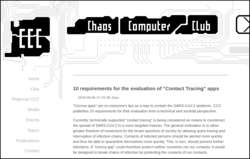
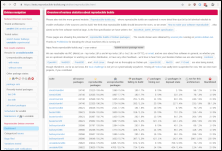
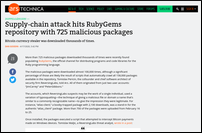
News It was discovered that more than 725 malicious packages were downloaded thousands of times from RubyGems, the official channel for distributing code for the Ruby programming language. Attackers used a variation of typosquatting and replaced hyphens and underscores (for example, uploading a malevolent atlas-client in place of atlas_client) that executed a script that intercepted Bitcoin payments. (Ars Technica report) Bernhard M. Wiedemann launched ismypackagereproducibleyet.org, a service that takes a package name as input and displays whether the package is reproducible in a number of distributions. For example, it can quickly show the status of Perl as being reproducible on openSUSE but not in Debian. Bernhard also improved the documentation of his unreproducible package to add some example patches for hash issues. [ ]. There was a post on Chaos Computer Club s website listing Ten requirements for the evaluation of Contact Tracing apps in relation to the SARS-CoV-2 epidemic. In particular:
4. Transparency and verifiability: The complete source code for the app and infrastructure must be freely available without access restrictions to allow audits by all interested parties. Reproducible build techniques must be used to ensure that users can verify that the app they download has been built from the audited source code.
Elsewhere, Nicolas Boulenguez wrote a patch for the Ada programming language component of the GCC compiler to skip -f.*-prefix-map options when writing Ada Library Information files. Amongst other properties, these .ali files embed the compiler flags used at the time of the build which results in the absolute build path being recorded via -ffile-prefix-map, -fdebug-prefix-map, etc. In the Arch Linux project, kpcyrd reported that they held their first rebuilder workshop . The session was held on IRC and participants were provided a document with instructions on how to install and use Arch s repro tool. The meeting resulted in multiple people with no prior experience of Reproducible Builds validate their first package. Later in the month he also announced that it was now possible to run independent rebuilders under Arch in a hands-off, everything just works solution to distributed package verification. Mathias Lang submitted a pull request against dmd, the canonical compiler for the D programming languageto add support for our SOURCE_DATE_EPOCH environment variable as well the other C preprocessor tokens such __DATE__, __TIME__ and __TIMESTAMP__ which was subsequently merged. SOURCE_DATE_EPOCH defines a distribution-agnostic standard for build toolchains to consume and emit timestamps in situations where they are deemed to be necessary. [ ] The Telegram instant-messaging platform announced that they had updated to version 5.1.1 continuing their claim that they are reproducible according to their full instructions and therefore verifying that its original source code is exactly the same code that is used to build the versions available on the Apple App Store and Google Play distribution platforms respectfully. Lastly, Herv Boutemy reported that 97% of the current development versions of various Maven packages appear to have a reproducible build. [ ]

Distribution work In Debian this month, 89 reviews of Debian packages were added, 21 were updated and 33 were removed this month adding to our knowledge about identified issues. Many issue types were noticed, categorised and updated by Chris Lamb, including: In addition, Holger Levsen filed a feature request against debrebuild, a tool for rebuilding a Debian package given a .buildinfo file, proposing to add --standalone or --one-shot-mode functionality.
In openSUSE, Bernhard M. Wiedemann made the following changes: In Arch Linux, a rebuilder instance has been setup at reproducible.archlinux.org that is rebuilding Arch s [core] repository directly. The first rebuild has led to approximately 90% packages reproducible contrasting with 94% on the Reproducible Build s project own ArchLinux status page on tests.reproducible-builds.org that continiously builds packages and does not verify Arch Linux packages. More information may be found on the corresponding wiki page and the underlying decisions were explained on our mailing list.

Software development

diffoscope Chris Lamb made the following changes to diffoscope, the Reproducible Builds project s in-depth and content-aware diff utility that can locate and diagnose reproducibility issues (including preparing and uploading versions 139, 140, 141, 142 and 143 to Debian which were subsequently uploaded to the backports repository):
  • Comparison improvements:
    • Dalvik .dex files can also serve as APK containers so restrict the narrower identification of .dex files to files ending with this extension and widen the identification of APK files to when file(1) discovers a Dalvik file. (#28)
    • Add support for Hierarchical Data Format (HD5) files. (#95)
    • Add support for .p7c and .p7b certificates. (#94)
    • Strip paths from the output of zipinfo(1) warnings. (#97)
    • Don t uselessly include the JSON similarity percentage if it is 0.0% . [ ]
    • Render multi-line difference comments in a way to show indentation. (#101)
  • Testsuite improvements:
    • Add pdftotext as a requirement to run the PDF test_metadata text. (#99)
    • apktool 2.5.0 changed the handling of output of XML schemas so update and restrict the corresponding test to match. (#96)
    • Explicitly list python3-h5py in debian/tests/control.in to ensure that we have this module installed during a test run to generate the fixtures in these tests. [ ]
    • Correct parsing of ./setup.py test --pytest-args arguments. [ ]
  • Misc:
    • Capitalise Ordering differences only in text comparison comments. [ ]
    • Improve documentation of FILE_TYPE_HEADER_PREFIX and FALLBACK_FILE_TYPE_HEADER_PREFIX to highlight that only the first 16 bytes are used. [ ]
Michael Osipov created a well-researched merge request to return diffoscope to using zipinfo directly instead of piping input via /dev/stdin in order to ensure portability to the BSD operating system [ ]. In addition, Ben Hutchings documented how --exclude arguments are matched against filenames [ ] and Jelle van der Waa updated the LLVM test fixture difference for LLVM version 10 [ ] as well as adding a reference to the name of the h5dump tool in Arch Linux [ ]. Lastly, Mattia Rizzolo also fixed in incorrect build dependency [ ] and Vagrant Cascadian enabled diffoscope to locate the openssl and h5dump packages on GNU Guix [ ][ ], and updated diffoscope in GNU Guix to version 141 [ ] and 143 [ ].

strip-nondeterminism strip-nondeterminism is our tool to remove specific non-deterministic results from a completed build. In April, Chris Lamb made the following changes:
  • Add deprecation plans to all handlers documenting how or if they could be disabled and eventually removed, etc. (#3)
  • Normalise *.sym files as Java archives. (#15)
  • Add support for custom .zip filename filtering and exclude two patterns of files generated by Maven projects in fork mode. (#13)

disorderfs disorderfs is our FUSE-based filesystem that deliberately introduces non-determinism into directory system calls in order to flush out reproducibility issues. This month, Chris Lamb fixed a long-standing issue by not drop UNIX groups in FUSE multi-user mode when we are not root (#1) and uploaded version 0.5.9-1 to Debian unstable. Vagrant Cascadian subsequently refreshed disorderfs in GNU Guix to version 0.5.9 [ ].

Upstream patches The Reproducible Builds project detects, dissects and attempts to fix as many currently-unreproducible packages as possible. We endeavour to send all of our patches upstream where appropriate. This month, we wrote a large number of such patches, including: In addition, Bernhard informed the following projects that their packages are not reproducible:
  • acoular (report unknown non-determinism)
  • cri-o (report a date issue)
  • gnutls (report certtool being unable to extend certificates beyond 2049)
  • gnutls (report copyright year variation)
  • libxslt (report a bug about non-deterministic output from data corruption)
  • python-astropy (report a future build failure in 2021)

Project documentation This month, Chris Lamb made a large number of changes to our website and documentation in the following categories:
  • Community engagement improvements:
    • Update instructions to register for Salsa on our Contribute page now that the signup process has been overhauled. [ ]
    • Make it clearer that joining the rb-general mailing list is probably a first step for contributors to take. [ ]
    • Make our full contact information easier to find in the footer (#19) and improve text layout using bullets to separate sections [ ].
  • Accessibility:
    • To improve accessibility, make all links underlined. (#12)
    • Use an enhanced foreground/background contrast ratio of 7.04:1. (#11)
  • General improvements:
  • Internals:
    • Move to using jekyll-redirect-from over manual redirect pages [ ][ ] and add a redirect from /docs/buildinfo/ to /docs/recording/. (#23)
    • Limit the website self-check to not scan generated files [ ] and remove the old layout checker now that I have migrated all them [ ].
    • Move the news archive under the /news/ namespace [ ] and improve formatting of archived news links [ ].
    • Various improvements to the draft template generation. [ ][ ][ ][ ]
In addition, Holger Levsen clarified exactly which month we ceased to do weekly reports [ ] and Mattia Rizzolo adjusted the title style of an event page [ ]. Marcus Hoffman also started a discussion on our website s issue tracker asking for clarification on embedded signatures and Chris Lamb subsequently replied and asked Marcus to go ahead and propose a concrete change.

Testing framework We operate a large and many-featured Jenkins-based testing framework that powers tests.reproducible-builds.org that, amongst many other tasks, tracks the status of our reproducibility efforts as well as identifies any regressions that have been introduced.
  • Chris Lamb:
    • Print the build environment prior to executing a build. [ ]
    • Drop a misleading disorderfs-debug prefix in log output when we change non-disorderfs things in the file and, as it happens, do not run disorderfs at all. [ ]
    • The CSS for the package report pages added a margin to all <a> HTML elements under <li> ones, which was causing a comma/bullet spacing issue. [ ]
    • Tidy the copy in the project links sidebar. [ ]
  • Holger Levsen:
    • General:
    • Debian:
      • Reduce scheduling frequency of the buster distribution on the arm64 architecture, etc.. [ ][ ]
      • Show builds per day on a per-architecture basis for the last year on the Debian dashboard. [ ]
      • Drop the Subgraph OS package set as development halted in 2017 or 2018. [ ]
      • Update debrebuild to version from the latest version of devscripts. [ ][ ]
      • Add or improve various parts of the documentation. [ ][ ][ ]
    • Work on a Debian rebuilder:
      • Integrate sbuild. [ ][ ][ ][ ][ ]
      • Select a random .buildinfo file and attempt to build and compare the result. [ ][ ][ ][ ]
      • Improve output and related output formatting. [ ][ ][ ][ ][ ]
      • Outline next steps for the development of the tool. [ ][ ][ ]
      • Various refactoring and code improvements. [ ][ ][ ]
Lastly, Mattia Rizzolo fixed some log parsing code regarding potentially-harmless warnings from package installation [ ][ ] and the usual build node maintenance was performed by Holger Levsen [ ][ ][ ] and Mattia Rizzolo [ ][ ][ ].

Misc news On our mailing list this month, Santiago Torres asked whether we were still publishing releases of our tools to our website and Chris Lamb replied that this was not the case and fixed the issue. Later in the month Santiago also reported that the signature for the disorderfs package did not pass its GPG verification which was also fixed by Chris Lamb. Hans-Christoph Steiner of the Guardian Project asked whether there would be interest in making our website translatable which resulted in a WIP merge request being filed against the website and a discussion on how to track translation updates.
If you are interested in contributing to the Reproducible Builds project, please visit our Contribute page on our website. However, you can get in touch with us via:

This month s report was written by Bernhard M. Wiedemann, Chris Lamb, Daniel Shahaf, Holger Levsen, Jelle van der Waa, kpcyrd, Mattia Rizzolo and Vagrant Cascadian. It was subsequently reviewed by a bunch of Reproducible Builds folks on IRC and the mailing list.

Next.

Previous.