Search Results: "pm"

3 May 2017

Vincent Bernat: VXLAN & Linux

VXLAN is an overlay network to carry Ethernet traffic over an existing (highly available and scalable) IP network while accommodating a very large number of tenants. It is defined in RFC 7348. Starting from Linux 3.12, the VXLAN implementation is quite complete as both multicast and unicast are supported as well as IPv6 and IPv4. Let s explore the various methods to configure it. VXLAN setup To illustrate our examples, we use the following setup: A VXLAN tunnel extends the individual Ethernet segments accross the three bridges, providing a unique (virtual) Ethernet segment. From one host (e.g. H1), we can reach directly all the other hosts in the virtual segment:
$ ping -c10 -w1 -t1 ff02::1%eth0
PING ff02::1%eth0(ff02::1%eth0) 56 data bytes
64 bytes from fe80::5254:33ff:fe00:8%eth0: icmp_seq=1 ttl=64 time=0.016 ms
64 bytes from fe80::5254:33ff:fe00:b%eth0: icmp_seq=1 ttl=64 time=4.98 ms (DUP!)
64 bytes from fe80::5254:33ff:fe00:9%eth0: icmp_seq=1 ttl=64 time=4.99 ms (DUP!)
64 bytes from fe80::5254:33ff:fe00:a%eth0: icmp_seq=1 ttl=64 time=4.99 ms (DUP!)
--- ff02::1%eth0 ping statistics ---
1 packets transmitted, 1 received, +3 duplicates, 0% packet loss, time 0ms
rtt min/avg/max/mdev = 0.016/3.745/4.991/2.152 ms

Basic usage The reference deployment for VXLAN is to use an IP multicast group to join the other VTEPs:
# ip -6 link add vxlan100 type vxlan \
>   id 100 \
>   dstport 4789 \
>   local 2001:db8:1::1 \
>   group ff05::100 \
>   dev eth0 \
>   ttl 5
# brctl addbr br100
# brctl addif br100 vxlan100
# brctl addif br100 vnet22
# brctl addif br100 vnet25
# brctl stp br100 off
# ip link set up dev br100
# ip link set up dev vxlan100
The above commands create a new interface acting as a VXLAN tunnel endpoint, named vxlan100 and put it in a bridge with some regular interfaces1. Each VXLAN segment is associated to a 24-bit segment ID, the VXLAN Network Identifier (VNI). In our example, the default VNI is specified with id 100. When VXLAN was first implemented in Linux 3.7, the UDP port to use was not defined. Several vendors were using 8472 and Linux took the same value. To avoid breaking existing deployments, this is still the default value. Therefore, if you want to use the IANA-assigned port, you need to explicitely set it with dstport 4789. As we want to use multicast, we have to specify a multicast group to join (group ff05::100), as well as a physical device (dev eth0). With multicast, the default TTL is 1. If your multicast network leverages some routing, you ll have to increase the value a bit, like here with ttl 5. The vxlan100 device acts as a bridge device with remote VTEPs as virtual ports:
  • it sends broadcast, unknown unicast and multicast (BUM) frames to all VTEPs using the multicast group, and
  • it discovers the association from Ethernet MAC addresses to VTEP IP addresses using source-address learning.
The following figure summarizes the configuration, with the FDB of the Linux bridge (learning local MAC addresses) and the FDB of the VXLAN device (learning distant MAC addresses): Bridged VXLAN device The FDB of the VXLAN device can be observed with the bridge command. If the destination MAC is present, the frame is sent to the associated VTEP (unicast). The all-zero address is only used when a lookup for the destination MAC fails.
# bridge fdb show dev vxlan100   grep dst
00:00:00:00:00:00 dst ff05::100 via eth0 self permanent
50:54:33:00:00:0b dst 2001:db8:3::1 self
50:54:33:00:00:08 dst 2001:db8:1::1 self
If you are interested to get more details on how to setup a multicast network and build VXLAN segments on top of it, see my Network virtualization with VXLAN article.

Without multicast Using VXLAN over a multicast IP network has several benefits:
  • automatic discovery of other VTEPs sharing the same multicast group,
  • good bandwidth usage (packets are replicated as late as possible),
  • decentralized and controller-less design2.
However, multicast is not available everywhere and managing it at scale can be difficult. In Linux 3.8, the DOVE extensions have been added to the VXLAN implementation, removing the dependency on multicast.

Unicast with static flooding We can replace multicast by head-end replication of BUM frames to a statically configured lists of remote VTEPs3:
# ip -6 link add vxlan100 type vxlan \
>   id 100 \
>   dstport 4789 \
>   local 2001:db8:1::1
# bridge fdb append 00:00:00:00:00:00 dev vxlan100 dst 2001:db8:2::1
# bridge fdb append 00:00:00:00:00:00 dev vxlan100 dst 2001:db8:3::1
The VXLAN is defined without a remote multicast group. Instead, all the remote VTEPs are associated with the all-zero address: a BUM frame will be duplicated to all those destinations. The VXLAN device will still learn remote addresses automatically using source-address learning. It is a very simple solution. With a bit of automation, you can keep the default FDB entries up-to-date easily. However, the host will have to duplicate each BUM frame (head-end replication) as many times as there are remote VTEPs. This is quite reasonable if you have a dozen of them. This may become out-of-hand if you have thousands of them. Cumulus vxfld daemon is an example of use of this strategy (in the head-end replication mode).

Unicast with static L2 entries When the associations of MAC addresses and VTEPs are known, it is possible to pre-populate the FDB and disable learning:
# ip -6 link add vxlan100 type vxlan \
>   id 100 \
>   dstport 4789 \
>   local 2001:db8:1::1 \
>   nolearning
# bridge fdb append 00:00:00:00:00:00 dev vxlan100 dst 2001:db8:2::1
# bridge fdb append 00:00:00:00:00:00 dev vxlan100 dst 2001:db8:3::1
# bridge fdb append 50:54:33:00:00:09 dev vxlan100 dst 2001:db8:2::1
# bridge fdb append 50:54:33:00:00:0a dev vxlan100 dst 2001:db8:2::1
# bridge fdb append 50:54:33:00:00:0b dev vxlan100 dst 2001:db8:3::1
Thanks to the nolearning flag, source-address learning is disabled. Therefore, if a MAC is missing, the frame will always be sent using the all-zero entries. The all-zero entries are still needed for broadcast and multicast traffic (e.g. ARP and IPv6 neighbor discovery). This kind of setup works well to provide virtual L2 networks to virtual machines (no L3 information available). You need some glue to update the FDB entries. BGP EVPN with Cumulus Quagga is an example of use of this strategy (see VXLAN: BGP EVPN with Cumulus Quagga for additional information).

Unicast with static L3 entries In the previous example, we had to keep the all-zero entries for ARP and IPv6 neighbor discovery to work correctly. However, Linux can answer to neighbor requests on behalf of the remote nodes4. When this feature is enabled, the default entries are not needed anymore (but you could keep them):
# ip -6 link add vxlan100 type vxlan \
>   id 100 \
>   dstport 4789 \
>   local 2001:db8:1::1 \
>   nolearning \
>   proxy
# ip -6 neigh add 2001:db8:ff::11 lladdr 50:54:33:00:00:09 dev vxlan100
# ip -6 neigh add 2001:db8:ff::12 lladdr 50:54:33:00:00:0a dev vxlan100
# ip -6 neigh add 2001:db8:ff::13 lladdr 50:54:33:00:00:0b dev vxlan100
# bridge fdb append 50:54:33:00:00:09 dev vxlan100 dst 2001:db8:2::1
# bridge fdb append 50:54:33:00:00:0a dev vxlan100 dst 2001:db8:2::1
# bridge fdb append 50:54:33:00:00:0b dev vxlan100 dst 2001:db8:3::1
This setup totally eliminates head-end replication. However, protocols relying on multicast won t work either. With some automation, this is a setup that should work well with containers: if there is a registry keeping a list of all IP and MAC addresses in use, a program could listen to it and adjust the FDB and the neighbor tables. The VXLAN backend of Docker s libnetwork is an example of use of this strategy (but it also uses the next method).

Unicast with dynamic L3 entries Linux can also notify a program an (L2 or L3) entry is missing. The program queries some central registry and dynamically adds the requested entry. However, for L2 entries, notifications are issued only if:
  • the destination MAC address is not known,
  • there is no all-zero entry in the FDB, and
  • the destination MAC address is not a multicast or broadcast one.
Those limitations prevent us to do a unicast with dynamic L2 entries scenario. First, let s create the VXLAN device with the l2miss and l3miss options5:
ip -6 link add vxlan100 type vxlan \
   id 100 \
   dstport 4789 \
   local 2001:db8:1::1 \
   nolearning \
   l2miss \
   l3miss \
   proxy
Notifications are sent to programs listening to an AF_NETLINK socket using the NETLINK_ROUTE protocol. This socket needs to be bound to the RTNLGRP_NEIGH group. The following is doing exactly that and decodes the received notifications:
# ip monitor neigh dev vxlan100
miss 2001:db8:ff::12 STALE
miss lladdr 50:54:33:00:00:0a STALE
The first notification is about a missing neighbor entry for the requested IP address. We can add it with the following command:
ip -6 neigh replace 2001:db8:ff::12 \
    lladdr 50:54:33:00:00:0a \
    dev vxlan100 \
    nud reachable
The entry is not permanent so that we don t need to delete it when it expires. If the address becomes stale, we will get another notification to refresh it. Once the host receives our proxy answer for the neighbor discovery request, it can send a frame with the MAC we gave as destination. The second notification is about the missing FDB entry for this MAC address. We add the appropriate entry with the following command6:
bridge fdb replace 50:54:33:00:00:0a \
    dst 2001:db8:2::1 \
    dev vxlan100 dynamic
The entry is not permanent either as it would prevent the MAC to migrate to the local VTEP (a dynamic entry cannot override a permanent entry). This setup works well with containers and a global registry. However, there is small latency penalty for the first connections. Moreover, multicast and broadcast won t be available in the underlay network. The VXLAN backend for flannel, a network fabric for Kubernetes, is an example of this strategy.

Decision There is no one-size-fits-all solution. You should consider the multicast solution if:
  • you are in an environment where multicast is available,
  • you are ready to operate (and scale) a multicast network,
  • you need multicast and broadcast inside the virtual segments,
  • you don t have L2/L3 addresses available beforehand.
The scalability of such a solution is pretty good if you take care of not putting all VXLAN interfaces into the same multicast group (e.g. use the last byte of the VNI as the last byte of the multicast group). When multicast is not available, another generic solution is BGP EVPN: BGP is used as a controller to ensure distribution of the list of VTEPs and their respective FDBs. As mentioned earlier, an implementation of this solution is Cumulus Quagga. I explore this option in a separate post: VXLAN: BGP EVPN with Cumulus Quagga. If you operate in a container-like environment where L2/L3 addresses are known beforehand, a solution using static and/or dynamic L2 and L3 entries based on a central registry and no source-address learning would also fit the bill. This provides a more security-tight solution (bound resources, MiTM attacks dampened down, inability to amplify bandwidth usage through excessive broadcast). Various environment-specific solutions are available7 or you can build your own.

Other considerations Independently of the chosen strategy, here are a few important points to keep in mind when implementing a VXLAN overlay.

Isolation While you may expect VXLAN interfaces to only carry L2 traffic, Linux doesn t disable IP processing. If the destination MAC is a local one, Linux will route or deliver the encapsulated IP packet. Check my post about the proper isolation of a Linux bridge.

Encryption VXLAN enforces isolation between tenants, but the traffic is totally unencrypted. The most direct solution to provide encryption is to use IPsec. Some container-based solutions may come with IPsec support out-of-the box (notably Docker s libnetwork, but flannel has plan for it too). This is quite important for a deployment over a public cloud.

Overhead The format of a VXLAN-encapsulated frame is the following: VXLAN encapsulation VXLAN adds a fixed overhead of 50 bytes. If you also use IPsec, the overhead depends on many factors. In transport mode, with AES and SHA256, the overhead is 56 bytes. With NAT traversal, this is 64 bytes (additional UDP header). In tunnel mode, this is 72 bytes. See Cisco IPsec Overhead Calculator Tool. Some users will expect to be able to use an Ethernet MTU of 1500 for the overlay network. Therefore, the underlay MTU should be increased. If it is not possible, ensure the inner MTU (inside the containers or the virtual machines) is correctly decreased8.

IPv6 While all the examples above are using IPv6, the ecosystem is not quite ready yet. The multicast L2-only strategy works fine with IPv6 but every other scenario currently needs some patches (1, 2, 3). On top of that, IPv6 may not have been implemented in VXLAN-related tools:

Multicast Linux VXLAN implementation doesn t support IGMP snooping. Multicast traffic will be broadcasted to all VTEPs unless multicast MAC addresses are inserted into the FDB.

  1. This is one possible implementation. The bridge is only needed if you require some form of source-address learning for local interfaces. Another strategy is to use MACVLAN interfaces.
  2. The underlay multicast network may still need some central components, like rendez-vous points for PIM-SM protocol. Fortunately, it s possible to make them highly available and scalable (e.g. with Anycast-RP, RFC 4610).
  3. For this example and the following ones, a patch is needed for the ip command (to be included in 4.11) to use IPv6 for transport. In the meantime, here is a quick workaround:
    # ip -6 link add vxlan100 type vxlan \
    >   id 100 \
    >   dstport 4789 \
    >   local 2001:db8:1::1 \
    >   remote 2001:db8:2::1
    # bridge fdb append 00:00:00:00:00:00 \
    >   dev vxlan100 dst 2001:db8:3::1
    
  4. You may have to apply an IPv6-related patch to the kernel (to be included in 4.12).
  5. You have to apply an IPv6-related patch to the kernel (to be included in 4.12) to get appropriate notifications for missing IPv6 addresses.
  6. Directly adding the entry after the first notification would have been smarter to avoid unnecessary retransmissions.
  7. flannel and Docker s libnetwork were already mentioned as they both feature a VXLAN backend. There are also some interesting experiments like BaGPipe BGP for Kubernetes which leverages BGP EVPN and is therefore interoperable with other vendors.
  8. There is no such thing as MTU discovery on an Ethernet segment.

Evgeni Golov: tuned for Debian

For quite some time I wanted to have tuned in Debian, but somehow never motivated myself to do the packaging. Two weeks ago I then finally decided to pick it up (esp. as mika and a few others were asking about it). There was an old RFP/ITP 789592, without much progress, so I did the packing from scratch (heavy based on the Fedora package). gustavo (the owner of the ITP) also joined the effort, and shortly after the upstream release of 2.8.0 we had tuned in Debian (with a very short time in NEW, thanks ftp-masters!). I am quite sure that the package is far from perfect yet, especially as the software is primary built for and tested on Fedora/CentOS/RHEL. So keep the bugs, suggestions and patches comming (thanks mika!).

Ingo Juergensmann: Back to the roots: FidoNet

Back in the good old days there was no Facebook, Google+, Skype and no XMPP servers for people to communicate with each other. The first "social communities" were Bulletin Board Systems (BBS), if you want to see those as social communities. Often those BBS not only offered communication possibilities to online users but also ways to communicate with others when being offline. Being offline is from todays point of view a strange concept, but back then it was a common scenario 20-30 years ago, because being online meant to dial via a modem and a phone line into a BBS or - at a later time - Internet provider. Those BBS interconnected with each others and some networks grew that allowed to exchange messages between different BBS - or mailboxes. One of those networks was FidoNet. When I went "online" back then, I called into a BBS, a mailbox. I don't know why, but when reading messages from others the mailbox crashed quite frequently. So the "sysop" of that mailbox offered me to become a FidoNet point - just to prevent that I'd keep crashing his mailbox all the time. So, there I was: a FidoNet point, reachable under the FidoNet address 2:2449/413.19. At some time I took over the mailbox from the old sysop, because he moved out of town. Despite the fact that the Internet arose in the late 1990s, making all those BBS, mailboxes, and networks such as FidoNet obsolete. However, it was a whole lot of fun back then. So much fun that I plan to join FidoNet again. Yes, it's still there! Instead of using dial-up connections via modems most nodes in FidoNet now offers connection via Internet as well. A FidoNet system (node) usually consists of a mailer that does the exchange with other systems, a tosser that "routes" the mail to the recipients, and a reader with which you can finally read and write messages to others. Back in the old days I ran my mailbox on my Amiga 3000 with a Zyxel U-1496E+ modem, later with an ISDN card called ISDN-Master. The software used was first TrapDoor as mailer and TrapToss as a tosser. Later replaced by GMS Mailer as a mailer and MailManager as a tosser and reader. Unfortunately GMS Mailer is not able to handle connections via Internet. For this you'll need something like binkd, which is a Debian package. So, doing a quick search for FidoNet packages on Debian reveals this:
# apt-cache search fidonets 0.00 % 0.00 % [kdevtmpfs]
crashmail - JAM and *.MSG capable Fidonet tosser
fortunes-es - Spanish fortune database
htag - A tagline/.signature adder for email, news and FidoNet messages
ifcico - Fidonet Technology transport package
ifgate - Internet to Fidonet gateway
ifmail - Internet to Fidonet gateway
jamnntpd - NNTP Server allowing newsreaders to access a JAM messagebase
jamnntpd-dbg - debugging symbols for jamnntpd
lbdb - Little Brother's DataBase for the mutt mail reader
So, there are at least two different mailer (ifcico and binkd) and crashmail as a tosser. What is missing is a FidoNet reader. In older Debian releases there was GoldEd+, but this package got removed from Debian some years ago. There's still some upstream development of GoldEd+, but when I tried to compile it fails. So there is no easy way to have a full FidoNet node running on Debian, which is sad. Yes, FidoNet is maybe outdated technology, but it's still alive and I would like to get a FidoNet node running again. Are there any other FidoNet nodes running on Debian and give assistance in setting up? There are maybe some fully integrated solutions like MysticBBS, but I'm unsure about those. So, any tips and hints are welcome! :-)
Kategorie:

Reproducible builds folks: Reproducible Builds: week 105 in Stretch cycle

Here's what happened in the Reproducible Builds effort between Sunday April 23 and Saturday April 29 2017: Past and upcoming events On April 26th Chris Lamb gave a talk at foss-north 2017 in Gothenburg, Sweden on Reproducible Builds. Between May 5th-7th the Reproducible Builds Hackathon 2017 will take place in Hamburg, Germany. Then on May 26th Bernhard M. Wiedemann will give a talk titled reproducible builds in openSUSE (2017) at the openSUSE Conference 2017 in N rnberg, Germany. Media coverage Already on April 19th Sylvain Beucler wrote a yet another follow-up post Practical basics of reproducible builds 3, after part 1 and part 2 of his series. Toolchain development and fixes Michael Woerister of the Rust project has implemented file maps that affect all path-related compiler information, including "error messages, metadata, debuginfo, and the file!() macro alike". Ximin Luo with support from some other Rust developers and contributors helped steer the final result into something that was compatible with reproducible builds. Many thanks to all involved, especially for the patience of discussing this over several months. Ximin wrote a first-attempt patch to fix R build-path issues. It made 460/477 R packages reproducible, but also caused 3 of these to FTBFS. See randomness_in_r_rdb_rds_databases for details. Bugs filed and patches sent upstream Chris Lamb: Bernhard M. Wiedemann filed a number of patches upstream: Reviews of unreproducible packages 102 package reviews have been added, 64 have been updated and 24 have been removed in this week, adding to our knowledge about identified issues. 3 issue types have been updated: Weekly QA work During our reproducibility testing, FTBFS bugs have been detected and reported by: diffoscope development diffoscope 82 was uploaded to experimental by Chris Lamb. It included contributions from: Changes from previous weeks that were also released with 82: Misc. This week's edition was written by Ximin Luo, Chris Lamb and Holger Levsen & reviewed by a bunch of Reproducible Builds folks on IRC & the mailing lists.

Axel Beckert: Upcoming Hacker/FLOSS Events in Switzerland: Debian BSP, LPD, Hackerfunk 10th Anniversary, ZeTeCo

There are quite some events and dates ahead for hackers, makers, debianers and hackerfunk listeners: Crowdfunding for ZeTeCo Camp in July Ends in Two Days! You might have heard of the ZeTeCo Camp near Schaffhausen in July. If you want ot come or at least support that event, please contribute to their crowdfunding campaign. They have more than 90% of their goal funded and there s less only about two days left to reach their funding goal. If it doesn t get funded in time, the event may be be on a knife edge. Debian Bug Squashing Party in Zurich this Weekend One week before the More-than-a-BSP at the Mozilla office in Paris there will also be a Debian Bug Squashing Party (BSP) in Z rich at the CCCZH Hackerspace R schtibach . We ll start on Friday, the 5th of May 2017 in the late afternoon, probably around 4pm or 5pm, and will end on Sunday, the 7th of May 2017 also in the late afternoon. Please add yourself to the according section on the BSP s wiki page if you want to join us to squash the hopefully not that many left over bugs in testing. Unfortunately we didn t notice two date clashes when we set the date for the BSP during the Annual General Meeting (AGM) of the Debian.ch Association earlier this year: Linux Presentation Day this Saturday, 6th of May 2017 On the one hand there will be the Swiss Edition of the Linux Presentation Day (LPD) on Saturday, the 6th of May 2017 including the LPD in Z rich. The latter will take place in the same building as the BSP, just on a different floor: The BSP will be at floor B3 in the CCCZH Hackerspace and the LPD will be on the ground floor at Revamp-IT in the former ZKB foyer. 10 Years Hackerfunk: Show on 6th, Party on 13th of May 2017 And on the other hand, Venty s and my (German dialect) radio show and podcast Hackerfunk will have it s 10th anniversary show also on that Saturday. So I ll vanish from BSP for a few hours on Saturday evening for broadcasting this very special Hackerfunk episode on Radio Radius. But since Venty and me didn t want to make yet another big event at R schtibach on the same weekend, we ll do the Hackerfunk 10th Anniversary Party one weekend later on Saturday the 13th of May 2017 also at the CCCZH Hackerspace R schtibach . A separate announcement on https://www.hackerfunk.ch/ (also in the RSS feed there) will follow.

2 May 2017

Urvika Gola: Debian goes to Hackathon!

Recently I had the opportunity to be a part of Ultrahack as a mentor which was held in Helsinki, Finland.
Ultrahack is a combination of hackathon and startup accelerators.
As a mentor, my role was to ensure that each team have best possible chances of fulfilling the evaluation criteria for the contest. I also helped teams with the development and pitching. It was a very exciting place to brainstorm life changing ideas and convert those ideas into working model. I met so many amazing developers who were building cool stuff. There were a few open source developers and student open source developers like me!
Being a Debian contributor, I spread the what Debian is all about. What makes it the best linux distribution. I talked to students about various programmes like GSoC and Outreachy, Debian participates as a mentoring organisation. I also described my role as a GSoC student under Debian and the free-RTC project I worked under. Many female developers were interested in the Outreachy programme, I described the projects that Debian has currently under the Outreachy programme. During the hackathon period, I talked to people about the upcoming annual DebConf which takes place. I informed them that they can still apply as a speaker or for diversity bursaries and about the logo-making competition. Thank you Debian for always supporting me!

Russ Allbery: Review: Ninefox Gambit

Review: Ninefox Gambit, by Yoon Ha Lee
Series: The Machineries of Empire #1
Publisher: Solaris
Copyright: 2016
ISBN: 1-84997-992-8
Format: Kindle
Pages: 384
Charis is a Kel, which means that she's a soldier of the Hexarchate. A captain, to be precise: Captain Kel Charis of Heron Company, commanding infantry forces to stamp out heresy. The heresy she's stamping out at the start of the book are the Eels, or the Society of the Flourish as they call themselves, and they're strong enough that they can also command heretical technology. Charis manages to win through, but only because she has enough flexibility and quick thinking to adjust to the presence of a heresy and reach beyond the Lexicon Primary, improvising formations on the spot to adjust for the affects of the rebel calendar. Military victory is prized among the Kel, but stepping outside the bounds of Doctrine to achieve it is not. Charis is not particularly surprised when her company is disbanded for re-education after the battle. She is very surprised when she personally is tapped to offer a solution to a far greater attack on the Hexarchate. I first encountered Yoon Ha Lee's fiction in the short story "The Unstrung Zither", was blown away by the creativity and delightfully weird twist on science fiction war, and have been following his writing ever since. Most of it is short fiction, though, and I'm not much of a short fiction reader, so there haven't been many reviews. Ninefox Gambit is his first, and much-anticipated, full-length novel. It's probably not too surprising for someone from the generation that grew up with Star Wars, but I have a soft spot in my heart for magitech. Hard science fiction has its merits, as does the softer sort that takes standard, if impossible, genre tropes for granted. But something about a far-future, space-faring society based on magic that straddles the rules of technology, physics, affinities, and beliefs calls to that part of me that spent hours thinking about the nature of the Force. It has to be good magitech, though: something odd and different but well-thought-out, full of implications and twisty consequences that reshape society and that inspire a whole new type of engineering and science. Magic that's not physics as we know it, but that's knowable, researchable, and something that a society can reshape itself around. This is the good magitech. In the world of the Hexarchate, calendrical systems are more than just a mutual agreement for conveying time. They order and structure the laws of the universe as much as they structure society. What technological devices, and what weapons, are possible is influenced by the calendar in observance, which in turn is based on what calendar people believe in and follow. Close adherence to a calendrical regime enables exotics: weapons with incredibly powerful and often horrific effects, such as the threshold winnower that plays a repeated, nightmarish role in this story. Invariant weapons, ones that will work in any calendar system, are much weaker. The Hexarchate is called that because it is a society formed by six factions, who divide the work of ruling its scattered planets according to the expertise and tendencies of each faction. Together, they impose the high calendar, and maintain it against heresies with an iron fist lest their power be undermined or transformed and their exotics fail to function. The Kel is their military faction, a key component of that fist, and their specialty is formations: specific arrangements of humans or ships that channel the power of the calendar to defend against or attack with exotics. Formations have to be held exactly to hold their power and yet have to be flexible enough to change based on fast-changing battlefield conditions. To assist in this, Kel are programmed with formation instinct: psychological conditioning that helps them obediently take and hold formations. And, not coincidentally, offer nearly absolute obedience to their chain of command. I just finished reading another book that attempted to use math as a key component of its world-building. I think Lee was far more successful. The math here is realistic for its purpose, obviously necessary given the formation structures built into the world's physics, and a lovely nod to the importance of calendars. A single calendar might involve only simple arithmetic, but the formation and technological implications of a calendar, let alone the fuzzy boundaries between two calendars each partially in force, would naturally require tricky advanced mathematics to work out. For someone in Charis's position, mathematical training is a rare but vitally important tactical advantage. As you might have guessed from the amount that I'm talking about combat, Ninefox Gambit is military SF. Charis is a military officer, and a comfortable majority of this book is combat of one kind or another. That's not normally my thing, and I did wish there was a bit more non-military social development. But my normal problem with military SF is that I lack the interest in battlefield tactics and strategy to stay fully engaged by description of battle after battle. Ninefox Gambit is the story of Charis attempting to retake a stronghold of the Hexarchate that's fallen to heretical forces, but Lee adds an important twist that does keep me engaged: Jedao. General Shuos Jedao was the greatest general the Hexarchate had ever seen. He never lost a battle. The only catch is that, in the middle of a highly successful campaign against heretics, he went mad, slaughtering both the heretics and his own troops with a horrific weapon while simultaneously murdering all of his command staff. He's much too dangerous and insane to leave alive, but he was also much too valuable and skillful to lose as a weapon, so for the subsequent centuries he's been kept in a threshold state, an undead ghost. A ghost that the Hexarchate can put into Charis's head, a constant advisor as she's placed in charge of the swarm sent to retake the Fortress of Scattered Needles. A brilliant tactician, sociopath, and mass murderer whose advice can never be trusted. The heart of Ninefox Gambit isn't the combat. It's the interplay of power, analysis, and guesswork under the combat, as Charis attempts to use Jedao's brilliance while not losing her own sense of identity or letting him mess too badly with her head. At the start, she's way out of her depth. But she's thoughtful, careful, has a strong internal sense of identity, and learns fast. And the story of Jedao's past is accurate, but incomplete. For those who are familiar with the often-ornate language and prose style of Yoon Ha Lee's short fiction and who are worried it wouldn't hold up at longer length, note that his style here is much different. There are a few touches of ornate description, but most of the book is written in a straightforward and easily-understandable narrative style. Thankfully, because the layers of tactical thrust and counter-thrust are complicated enough that I would have lost them entirely beneath too-complex prose. There's a lot of brutal death in this book. I got a bit tired of both that and the tactical maneuvering, although that's less the fault of the book and more my own mild antipathy towards military SF. But the unique universe background held my interest long enough to become intrigued by Charis's slow but determined probing at Jedao's secrets and the politics of the Hexarchate. I still would have preferred the story to have a somewhat lower body count, but as long as one can read past some gore, there's plenty here to appeal to someone who normally gives military SF a pass. I think its biggest drawback is that, although it has a narrative arc that comes to a clear conclusion, Ninefox Gambit raises a lot of important questions about its world and mostly doesn't answer them. There are more books coming, and I hope they contain more definitive answers. Followed by Raven Stratagem. Rating: 7 out of 10

1 May 2017

Matthew Garrett: Intel's remote AMT vulnerablity

Intel just announced a vulnerability in their Active Management Technology stack. Here's what we know so far.
Background Intel chipsets for some years have included a Management Engine, a small microprocessor that runs independently of the main CPU and operating system. Various pieces of software run on the ME, ranging from code to handle media DRM to an implementation of a TPM. AMT is another piece of software running on the ME, albeit one that takes advantage of a wide range of ME features.
Active Management TechnologyAMT is intended to provide IT departments with a means to manage client systems. When AMT is enabled, any packets sent to the machine's wired network port on port 16992 or 16993 will be redirected to the ME and passed on to AMT - the OS never sees these packets. AMT provides a web UI that allows you to do things like reboot a machine, provide remote install media or even (if the OS is configured appropriately) get a remote console. Access to AMT requires a password - the implication of this vulnerability is that that password can be bypassed.
Remote managementAMT has two types of remote console: emulated serial and full graphical. The emulated serial console requires only that the operating system run a console on that serial port, while the graphical environment requires drivers on the OS side requires that the OS set a compatible video mode but is also otherwise OS-independent[2]. However, an attacker who enables emulated serial support may be able to use that to configure grub to enable serial console. Remote graphical console seems to be problematic under Linux but some people claim to have it working, so an attacker would be able to interact with your graphical console as if you were physically present. Yes, this is terrifying.
Remote mediaAMT supports providing an ISO remotely. In older versions of AMT (before 11.0) this was in the form of an emulated IDE controller. In 11.0 and later, this takes the form of an emulated USB device. The nice thing about the latter is that any image provided that way will probably be automounted if there's a logged in user, which probably means it's possible to use a malformed filesystem to get arbitrary code execution in the kernel. Fun!

The other part of the remote media is that systems will happily boot off it. An attacker can reboot a system into their own OS and examine drive contents at their leisure. This doesn't let them bypass disk encryption in a straightforward way[1], so you should probably enable that.
How bad is thisThat depends. Unless you've explicitly enabled AMT at any point, you're probably fine. The drivers that allow local users to provision the system would require administrative rights to install, so as long as you don't have them installed then the only local users who can do anything are the ones who are admins anyway. If you do have it enabled, though
How do I know if I have it enabled?Yeah this is way more annoying than it should be. First of all, does your system even support AMT? AMT requires a few things:

1) A supported CPU
2) A supported chipset
3) Supported network hardware
4) The ME firmware to contain the AMT firmware

Merely having a "vPRO" CPU and chipset isn't sufficient - your system vendor also needs to have licensed the AMT code. Under Linux, if lspci doesn't show a communication controller with "MEI" or "HECI" in the description, AMT isn't running and you're safe. If it does show an MEI controller, that still doesn't mean you're vulnerable - AMT may still not be provisioned. If you reboot you should see a brief firmware splash mentioning the ME. Hitting ctrl+p at this point should get you into a menu which should let you disable AMT.
How about over Wifi?Turning on AMT doesn't automatically turn it on for wifi. AMT will also only connect itself to networks it's been explicitly told about. Where things get more confusing is that once the OS is running, responsibility for wifi is switched from the ME to the OS and it forwards packets to AMT. I haven't been able to find good documentation on whether having AMT enabled for wifi results in the OS forwarding packets to AMT on all wifi networks or only ones that are explicitly configured.
What do we not know?We have zero information about the vulnerability, other than that it allows unauthenticated access to AMT. One big thing that's not clear at the moment is whether this affects all AMT setups, setups that are in Small Business Mode, or setups that are in Enterprise Mode. If the latter, the impact on individual end-users will be basically zero - Enterprise Mode involves a bunch of effort to configure and nobody's doing that for their home systems. If it affects all systems, or just systems in Small Business Mode, things are likely to be worse.
We now know that the vulnerability exists in all configurations.
What should I do?Make sure AMT is disabled. If it's your own computer, you should then have nothing else to worry about. If you're a Windows admin with untrusted users, you should also disable or uninstall LMS by following these instructions.
Does this mean every Intel system built since 2008 can be taken over by hackers?No. Most Intel systems don't ship with AMT. Most Intel systems with AMT don't have it turned on.
Does this allow persistent compromise of the system?Not in any novel way. An attacker could disable Secure Boot and install a backdoored bootloader, just as they could with physical access.
But isn't the ME a giant backdoor with arbitrary access to RAM?Yes, but there's no indication that this vulnerability allows execution of arbitrary code on the ME - it looks like it's just (ha ha) an authentication bypass for AMT.
Is this a big deal anyway?Yes. Fixing this requires a system firmware update in order to provide new ME firmware (including an updated copy of the AMT code). Many of the affected machines are no longer receiving firmware updates from their manufacturers, and so will probably never get a fix. Anyone who ever enables AMT on one of these devices will be vulnerable. That's ignoring the fact that firmware updates are rarely flagged as security critical (they don't generally come via Windows update), so even when updates are made available, users probably won't know about them or install them.
Avoiding this kind of thing in futureUsers ought to have full control over what's running on their systems, including the ME. If a vendor is no longer providing updates then it should at least be possible for a sufficiently desperate user to pay someone else to do a firmware build with the appropriate fixes. Leaving firmware updates at the whims of hardware manufacturers who will only support systems for a fraction of their useful lifespan is inevitably going to end badly.
How certain are you about any of this?Not hugely - the quality of public documentation on AMT isn't wonderful, and while I've spent some time playing with it (and related technologies) I'm not an expert. If anything above seems inaccurate, let me know and I'll fix it.

[1] Eh well. They could reboot into their own OS, modify your initramfs (because that's not signed even if you're using UEFI Secure Boot) such that it writes a copy of your disk passphrase to /boot before unlocking it, wait for you to type in your passphrase, reboot again and gain access. Sealing the encryption key to the TPM would avoid this.

[2] Updated after this comment - I thought I'd fixed this before publishing but left that claim in by accident.

(Updated to add the section on wifi)

(Updated to typo replace LSM with LMS)

(Updated to indicate that the vulnerability affects all configurations)

comment count unavailable comments

Russ Allbery: Review: Survival

Review: Survival, by Julie E. Czerneda
Series: Species Imperative #1
Publisher: DAW
Copyright: May 2004
ISBN: 0-7564-0180-1
Format: Hardcover
Pages: 401
Dr. Mackenzie Connor, Mac to everyone she works with, is a biodiversity researcher specializing in salmon. In her future United States, humanity seems to have caught on to the importance of preserving wild places and learning about them, and is willing to invest in good equipment and a semi-permanent research installation. This comes with some occasional drawbacks, since she has to fight to get access to the salmon runs inside a nature preserve, but she wouldn't have it any other way. She wins enough of those fights, won the latest, and is now in position to monitor a run in a way that she's never been able to before. She was not expecting an alien to go diving in the middle of her salmon run. She was certainly not expecting that alien to be accompanied by a bureaucrat insisting that this alien's curiosity is more important than her research (hah). But the accompanying letter she receives is scarily persuasive, if maddeningly unhelpful. Much like the apparently jovial, earnest, eager, and very odd alien. Mac's continued hopes that she can quickly put this bizarre intrusion to rest and go back to her salmon are dashed by an impossible power outage, an alien visitor, and a violent kidnapping. Now her best friend and colleague is missing, the bureaucrat is not who he appears to be, and Mac is getting caught up in something that feels way over her head. SF novels feature a lot of science, but not a lot of scientific research. The research that does appear is often impulsive, wildly compressed, or far too focused on the breakthroughs of single people. The SF novel that everyone points to for accurate portrayal of real scientific research is Benford's Timescape, which I found deeply unexciting. Now I have a new novel to point to for a better treatment, although (somewhat disappointingly) Mac's research gets sidelined relatively early in the story and left behind for the conclusion. Czerneda gives us not just a few scientists and an imaginary research project, but an entire operational field station with a history. The Norcoast Salmon Research Facility is located just off-shore in carefully-designed domes to provide easy access to the sea with minimal intrusion into the local ecology. It's a bustling mix of research scientists, engineers, and the ever-present seasonal grad students, who come and go in all their immature enthusiasm and are viewed with a motherly bemusement that I immediately recognized from years of working at a university. Mac splits administrative duties with another scientist in an arrangement that will be familiar to academics everywhere, and the book opens with a mutually suspicious but mostly scripted turf fight with the guardian of the neighboring wildlife trust, the same fight they've been having every six months for years. I know Czerneda is herself a biologist by training; I'm not sure what her other academic background is, but if she hasn't spent years around academics and field studies, she's at least done some excellent research. A lot of novels have a quotidian background that's interrupted by the arrival of the plot. At the start of the story, the characters often care more about their day-to-day lives than the plot, and are dragged into it reluctantly. But one sign of an excellent writer is their ability to get the reader to care about that quotidian background alongside the character, and to sympathize with the character's reluctance to get pulled into the promised (and generally more exciting) novel plot. Czerneda succeeds in this about as well as any writer I've read since Robin McKinley's Sunshine, and that's high praise. I cared about Mac's salmon, I was nearly as irritated as she was when her research was interrupted, and I still want to go back and see more of the experiments and studies she was hoping to run. Interstellar drama and threats to multiple species are all well and good, but the salmon are running! The actual plot is a mysterious threat that turns into a combination of a biological and cultural puzzle and a sort of first-contact story. Mac is not truly the first human to encounter the Dhryn, but she's certainly the first person they've explained anything to, and the first human to go where she goes. Sadly, it also shares some of the characteristics that sour me a bit on biological SF for personal reasons: a bit too much description of food, eating habits, squishy body parts, digestive processes, and biological discomfort. This is mostly a personal gripe, and won't bother other people as much as it does me, but I could have done without bits like the descriptions of Mac's attempts to figure out how to survive on alien cuisine. I'm also dubious of some of the biology of the Dhryn; given the startling bizarreness of Earth biology, maybe I shouldn't be, but I still think there are a few problems with the square-cube law here. But Mac's irrepressible grumpy curiosity makes this story, even in the bits that made me squeamish. I think I'd read any book in which she's the main character. I will warn that the ending is surprisingly dark and wasn't what I was expecting, and Survival doesn't resolve its central mysteries. This is clearly the first book of a trilogy and should be read with that expectation. But I thoroughly enjoyed it, and hopefully the next book will have more salmon. Followed by Migration. Rating: 8 out of 10

30 April 2017

Chris Lamb: Free software activities in April 2017

Here is my monthly update covering what I have been doing in the free software world (previous month):
Reproducible builds

Whilst anyone can inspect the source code of free software for malicious flaws, most software is distributed pre-compiled to end users. The motivation behind the Reproducible Builds effort is to permit verification that no flaws have been introduced either maliciously or accidentally during this compilation process by promising identical results are always generated from a given source, thus allowing multiple third-parties to come to a consensus on whether a build was compromised. I have generously been awarded a grant from the Core Infrastructure Initiative to fund my work in this area. This month I:
I also made the following changes to diffoscope, our recursive and content-aware diff utility used to locate and diagnose reproducibility issues:
  • New features:
    • Add support for comparing Ogg Vorbis files. (0436f9b)
  • Bug fixes:
    • Prevent a traceback when using --new-file with containers. (#861286)
    • Don't crash on invalid archives; print a useful error instead. (#833697).
    • Don't print error output from bzip2 call. (21180c4)
  • Cleanups:
    • Prevent abstraction-level violations by defining visual diff support on Presenter classes. (7b68309)
    • Show Debian packages installed in test output. (c86a9e1)


Debian
Debian LTS

This month I have been paid to work 18 hours on Debian Long Term Support (LTS). In that time I did the following:
  • "Frontdesk" duties, triaging CVEs, etc.
  • Issued DLA 882-1 for the tryton-server general application platform to fix a path suffix injection attack.
  • Issued DLA 883-1 for curl preventing a buffer read overrun vulnerability.
  • Issued DLA 884-1 for collectd (a statistics collection daemon) to close a potential infinite loop vulnerability.
  • Issued DLA 885-1 for the python-django web development framework patching two open redirect & XSS attack issues.
  • Issued DLA 890-1 for ming, a library to create Flash files, closing multiple heap-based buffer overflows.
  • Issued DLA 892-1 and DLA 891-1 for the libnl3/libnl Netlink protocol libraries, fixing integer overflow issues which could have allowed arbitrary code execution.

Uploads
  • redis (4:4.0-rc3-1) New upstream RC release.
  • adminer:
    • 4.3.0-2 Fix debian/watch file.
    • 4.3.1-1 New upstream release.
  • bfs:
    • 1.0-1 Initial release.
    • 1.0-2 Drop fstype tests as they rely on /etc/mtab being available. (#861471)
  • python-django:
    • 1:1.10.7-1 New upstream security release.
    • 1:1.11-1 New upstream stable release to experimental.

I sponsored the following uploads: I also performed the following QA uploads:
  • gtkglext (1.2.0-7) Correct installation location of gdkglext-config.h after "Multi-Archification" in 1.2.0-5. (#860007)
Finally, I made the following non-maintainer uploads (NMUs):
  • python-formencode (1.3.0-2) Don't ship files in /usr/lib/python 2.7,3 /dist-packages/docs. (#860146)
  • django-assets (0.12-2) Patch pytest plugin to check whether we are running in a Django context, otherwise we can break unrelated testsuites. (#859916)


FTP Team

As a Debian FTP assistant I ACCEPTed 155 packages: aiohttp-cors, bear, colorize, erlang-p1-xmpp, fenrir, firejail, fizmo-console, flask-ldapconn, flask-socketio, fontmanager.app, fonts-blankenburg, fortune-zh, fw4spl, fzy, gajim-antispam, gdal, getdns, gfal2, gmime, golang-github-go-macaron-captcha, golang-github-go-macaron-i18n, golang-github-gogits-chardet, golang-github-gopherjs-gopherjs, golang-github-jroimartin-gocui, golang-github-lunny-nodb, golang-github-markbates-goth, golang-github-neowaylabs-wabbit, golang-github-pkg-xattr, golang-github-siddontang-goredis, golang-github-unknwon-cae, golang-github-unknwon-i18n, golang-github-unknwon-paginater, grpc, grr-client-templates, gst-omx, hddemux, highwayhash, icedove, indexed-gzip, jawn, khal, kytos-utils, libbloom, libdrilbo, libhtml-gumbo-perl, libmonospaceif, libpsortb, libundead, llvm-toolchain-4.0, minetest-mod-homedecor, mini-buildd, mrboom, mumps, nnn, node-anymatch, node-asn1.js, node-assert-plus, node-binary-extensions, node-bn.js, node-boom, node-brfs, node-browser-resolve, node-browserify-des, node-browserify-zlib, node-cipher-base, node-console-browserify, node-constants-browserify, node-delegates, node-diffie-hellman, node-errno, node-falafel, node-hash-base, node-hash-test-vectors, node-hash.js, node-hmac-drbg, node-https-browserify, node-jsbn, node-json-loader, node-json-schema, node-loader-runner, node-miller-rabin, node-minimalistic-crypto-utils, node-p-limit, node-prr, node-sha.js, node-sntp, node-static-module, node-tapable, node-tough-cookie, node-tunein, node-umd, open-infrastructure-storage-tools, opensvc, openvas, pgaudit, php-cassandra, protracker, pygame, pypng, python-ase, python-bip32utils, python-ltfatpy, python-pyqrcode, python-rpaths, python-statistics, python-xarray, qtcharts-opensource-src, r-cran-cellranger, r-cran-lexrankr, r-cran-pwt9, r-cran-rematch, r-cran-shinyjs, r-cran-snowballc, ruby-ddplugin, ruby-google-protobuf, ruby-rack-proxy, ruby-rails-assets-underscore, rustc, sbt, sbt-launcher-interface, sbt-serialization, sbt-template-resolver, scopt, seqsero, shim-signed, sniproxy, sortedcollections, starjava-array, starjava-connect, starjava-datanode, starjava-fits, starjava-registry, starjava-table, starjava-task, starjava-topcat, starjava-ttools, starjava-util, starjava-vo, starjava-votable, switcheroo-control, systemd, tilix, tslib, tt-rss-notifier-chrome, u-boot, unittest++, vc, vim-ledger, vis, wesnoth-1.13, wolfssl, wuzz, xandikos, xtensor-python & xwallpaper. I additionally filed 14 RC bugs against packages that had incomplete debian/copyright files against getdns, gfal2, grpc, mrboom, mumps, opensvc, python-ase, sniproxy, starjava-topcat, starjava-ttools, unittest++, wolfssl, xandikos & xtensor-python.

29 April 2017

Antoine Beaupr : My free software activities, April 2017

Debian Long Term Support (LTS) This is my monthly Debian LTS report. My time this month was spent working on various hairy security issues, most notably XBMC (now known as Kodi) and yaml-cpp.

Kodi directory transversal I started by looking in CVE-2017-5982, a "directory traversal" vulnerability in XBMC (now known as Kodi) which is a technical term for "allow attackers to read any world-readable file on your computer from the network". It's a serious vulnerability which has no known fix. When you enable the "remote control" interface in Kodi, it allows anyone with the password (which is disabled by default) to download any files Kodi has read access to on the machine it's running. Considering Kodi is often connected to multiple services, this may mean elevated compromise and more nasty stuff. I furthered the investigation done with my own analysis which showed the problem is difficult to solve: Kodi internally uses the facility to show thumbnails and media to the user, and there are no clear way of restricting which paths Kodi should have access to. Indeed, Kodi is designed to access mounted file systems and paths in arbitrary locations. In Debian bug #855225, I further confirmed confirmed wheezy and jessie-backports as vulnerable and therefore showed with good certainty that stretch and sid are vulnerable as well. I also suggested possible workaround, but at this point, it's in upstream's hands, as the changes will be intrusive. The file transfer mechanism need to be revamped all over Kodi, or authentication (with a proper password policy), need to be enforced.

Squirrelmail Next I looked at that old webmail software, Squirrelmail, which suffers from a remote code execution vulnerability (CVE-2017-7692) when sending mails with sendmail on the commandline. This is arguably an edge case, but considering the patch was simple, I figured I would provide an update to the LTS community. I tried to get a coordinated release for jessie, since the code is the same, but this wasn't completed at the time of writing. A patch is available and will hopefully be picked up by another LTS worker soon.

Fop and Batik Those issues (CVE-2017-5661 and CVE-2017-5662) were more difficult. The patches weren't clearly documented and there were no upstream references other than security advisories for the first release in years (in the case of batik) or months (in the case of fop), which made it hard to track down the issues. Fortunately, I was able to track down the upstream issues (FOP-2668 and BATIK-1139) where I got confirmation on what the proper fixes were. I could then release DLA-927-1 and DLA-926-1 with the backported patches. I do not use fop or batik. In fact, even after reading the homepage of both products, I couldn't quite figure out what use people could possibly have for that thing. Before uploading the packages, I therefore made packages available for testing for fop and batik.

libsndfile Next up was libsndfile which a bunch of overflows when parsing various audio files. I backported a patch for CVE-2017-7585 CVE-2017-7586 and CVE-2017-7741 which all seemed to be fixed by a single patch usptream. CVE-2017-7742 was also fixed, although with a separate patch. In all of those, i could only test CVE-2017-7741 and CVE-2017-7742, as the others were missing test cases. I provided a test package for a few days then I also figured it would be best to incorporate the security fixes done in stable, which brought in fixes for CVE-2015-7805, CVE-2014-9756 and CVE-2014-9496. So in the end, I ported patches from wheezy to jessie and uploaded the jessie version (reverting certain build changes) into wheezy and uploaded DLA-928-1 with the results.

yaml-cpp I then turned to yaml-cpp, a C++ parser for YAML. This one didn't have a known upstream fix, but I figured I would give it a shot anyways. I ended up writing my first C++ code in years which is still pending review and merge upstream. It's not an easy problem to fix: this is basically an excessive recursion problem that can be used to smash the stack. I figured I could introduce a recursion limit, but as the discussion showed, this is a limited approach: stack size varies on different platforms and it's not easy to find the right limit. The real solution is to rewrite the code to avoid recursion but that's a major code refactoring I didn't feel belong in a LTS update. Besides, this could be better handled by upstream, so I will leave things at that for now. It does make you wonder how much code out there is recursing on untrusted data structures...

kedpm Finally, a friend over at Koumbit.org reported Debian bug #860817, as information leak in kedpm, a password manager I previously maintained. I requested and got assigned CVE-2017-8296 and provided a fix for wheezy and jessie. For unstable and the coming stretch release, I have requested kedpm to be completely removed from Debian (Debian bug #860817) which involved a release notes update (Debian bug #861277). It's unfortunate to see software go, but kedpm wasn't maintained. I wasn't the original author: I just gave a few patches and ended up maintaining that software and not using it. It's a bad situation to be in, as you don't really know what's working and not with the tools you are supposed to be responsible for. There are more modern alternatives available now and I encourage everyone to switch.

Triage Looking for more work, I peeked a bit in the secretary tasks to triage some pending issues. I found that trafficserver could be crashed with simple requests (CVE-2017-5659) so I looked into that issue. My analysis showed that the patch is long and complex and could be difficult to backport to the old version available in wheezy. I also couldn't reproduce the issue in wheezy, so it may be a bug introduced only later, although I couldn't confirm that directly. I also triaged wireshark, where I just noted the maintainer expressed concern that we were taking up issues too fast and will probably take care of this one. I also postponed various issues in GnuTLS (marked "no-dsa") as they affect only a (unfortunately) rarely used part of GnuTLS that has been removed in later version: OpenPGP support.

Other free software work

Debiman I finally got around contributing to the debiman project. I worked on ensuring that there is a dman compatibility in debiman, by shipping dman in the debian-goodies package (Debian bug #860920). I also submitted a pull request to fix the fix about page title, document the custom assets repository, fix a stray bracket and link to the link to venerable man7.org project After a discussion on IRC, I also filed a few more issues: I'm happy to be able to contribute to this important service and I hope the new FAQ I created will be online soon!

XMonad and Emacs I started using writeroom-mode again as part of my work on LWN. As it turns out, my setup was not exactly working: I had to port my config to the new version and windows weren't "sticky" as they should be, a known issue with Xmonad. Indeed, Xmonad doesn't obey the "static" or "all desktops" standard directives. Writeroom is a "distraction-free writing" mode for Emacs, so the irony of working on such a deep distraction in establishing a distraction free environment is not lost on me. Needing to scratch that particular itch, and with the help of clever people from the IRC channel, I was able to make Emacs tell Xmonad to show its window (or "frame" as Emacs likes to call it) on all desktops. This involved creating a new function which I think could be useful in the CopyWindow library:
--   Toggle between "copyToAll" or "killAllOtherCopies". Copies to all
-- workspaces, or remove from all other workspaces, depending on
-- previous state (checked with "wsContainingCopies").
copyToAllToggle :: X ()
copyToAllToggle = do
    -- check which workspaces have copies
    copies <- wsContainingCopies
    if null copies
      then windows copyToAll -- no workspaces, make sticky
      else killAllOtherCopies -- already other workspaces, unstick
There are probably better ways of implementing this directly in the CopyWindow code - wsContainingCopies, in particular, is probably overkill. But it's all I can use directly from my xmonad.hs, so that's what I did. The other bit I needed was something to trigger that function from the outside. I rejected the ServerMode hook because it looked a bit too complicated and there is a built-in facility within X that works without this, which, from Emacs' point of view, is the x-send-client-message function. So I made up a new message identifier and wrote a event hook handler to process it:
--   handle X client messages that tell Xmonad to make a window appear
-- on all workspaces
--
-- this should really be using _NET_WM_STATE and
-- _NET_WM_STATE_STICKY. but that's more complicated: then we'd need
-- to inspect a window and figure out the current state and act
-- accordingly. I am not good enough with Xmonad to figure out that
-- part yet.
--
-- Instead, just check for the relevant message and check if the
-- focused window is already on all workspaces and toggle based on
-- that.
--
-- this is designed to interoperate with Emacs's writeroom-mode module
-- and called be called from elisp with:
--
-- (x-send-client-message nil 0 nil "XMONAD_COPY_ALL_SELF" 8 '(0))
myClientMessageEventHook :: Event -> X All
myClientMessageEventHook (ClientMessageEvent  ev_message_type = mt, ev_data = dt ) = do
  dpy <- asks display
  -- the client message we're expecting
  copyAllMsg <- io $ internAtom dpy "XMONAD_COPY_ALL_SELF" False
  -- if the event matches the message we expect, toggle sticky state
  when (mt == copyAllMsg && dt /= []) $ do
    copyToAllToggle
  -- we processed the event completely
  return $ All True
All that was left was to hook that into Emacs, and I was done! Whoohoo! Full screen total domination, distraction free work! :) I would love to hear from others what they think of that approach, if they have improvements or if the above copyToAllToggle function could be merged in. Ideally, Xmonad would just parse the STICKY client messages and do the right thing - maybe even directly in CopyWindow - but I have found this enough Haskell for one day. You can see the diff on my home directory to see exactly the changes involved to make this configuration work.

Emacs packaging Speaking of Emacs, after complaining in the noisy #emacs IRC channel about the poor TLS configuration of marmelade.org -- and filing a bug (Debian bug #861106) regarding the use of SHA-1 in certificate pinning -- I was told we shouldn't expect trust from third-party ELPA repositories. Marmelade seems to be dead, as the maintainer is "behind the great firewall of China" and MELPA still hasn't figured out how to sign packages. In the end, it seems like there are tons of elpa packages in Debian and that if your favorite one is missing, that's a bug that can be filed and fixed. I first discovered that 6 of the packages I used were already packaged: And so I went ahead and filed a ton more bugs for the packages I am using but that aren't in Debian just yet: Of those, I can't recommend multiple-cursors (MC) enough: I used it at least 4 times just writing this text. It's just awesome. The other ones are also all great in their own right of course, but I feel they are more specific to my workflow whereas MC is just amazing.

ikiwiki I did some more work on ikiwiki the software driving this blog. I created a new plugin to, at least, fix anchors in the table of contents to be human readable. This is something I had done on the MoinMoin wiki almost a decade ago -- which I called then NicerHeadingIds and that I have always found frustrating with Ikiwiki. It turns out the problem was both easier and hairier than I thought. Right from the start, something weird was happening: something was already adding nice headings, but they were somewhat broken. It turns out that multimarkdown already inserts those headers, but I wasn't satisfied with the way they were generated. But even worse, I had the headinganchors plugin enabled, but that plugin wasn't taking effect, because of multimarkdown. And even if it would take effect, it doesn't behave well with non-ASCII characters, which gets turned in their numeric presentation. So I also wrote the i18nheadinganchors plugin that creates better headings and patched the toc plugin so that it can reuse existing anchors if they exist, while keeping backwards compatibility. I hope this gets merged in a future ikiwiki release so I do not have to carry this patch locally too long... In other news, I have upgraded the ikiwiki-hosting package to the latest version and sent a patch upstream to provide HSTS support.

Other stuff I have migrated all my public repos hosted on my home server to either Gitlab.com or Github. I also have repositories on 0xacab and it seemed ludicrous to have 4 different, canonical, places where my code was hosted. I have now about 40 different projects on Gitlab and about 60 on Github, although most of the latter are forks of existing projects. I also made a manpage for stressant and moved the documentation to RTFD which makes it neatly accessible. I also made small incremental improvements (like --directory support). I installed Rainloop on this server to give a nice, mobile-friendly webmail. Instructions to replicate this setup are in mail. In the constant git-annex documentation effort, I tried to draft a user guide that could be a basis for restructuring the documentation to be more easily accessible. I also helped a friend put his documentation on the wiki in splitting a repository. Finally, I also looked into Android stuff a little more. I wrote a usability review of the F-Droid privileged extension that will bring good changes, I hope. I also opened the discussion regarding reproducible builds to try and clarify exactly how those worked to help the Wallabag people ship consistently signed alphas. So far, it seems that it will remain a standard practice on F-Droid to ship packages that are not signed by the official upstream signature, unfortunately, unless upstream provides a reproducible build that is publicly available... Switching to such build is also a hairy issue, as, obviously, the signature changes, which raises the alarm we are trying to avoid in the first place.

John Goerzen: Is there any way to truly secure Docker container contents?

There is much to like about Docker. Much has been written about it, and about how secure the containerization is. This post isn t about that. This is about keeping what s inside each container secure. I believe we have a fundamental problem here. Earlier this month, a study on security vulnerabilities on Docker Hub came out, and the picture isn t pretty. One key finding:
Over 80% of the :latest versions of official images contained at least on high severity vulnerability!
And it s not the only one raising questions. Let s dive in and see how we got here. It s hard to be secure, but Debian makes it easier Let s say you want to run a PHP application like WordPress under Apache. Here are the things you need to keep secure: On Debian (and most of its best-known derivatives), we are extremely lucky to have a wonderful security support system. If you run a Debian system, the combination of unattended-updates, needrestart, debsecan, and debian-security-support will help one keep a Debian system secure and verify it is. When the latest OpenSSL bug comes out, generally speaking by the time I wake up, unattended-updates has already patched it, needrestart has already restarted any server that uses it, and I m protected. Debian s security team generally backports fixes rather than just say here s the new version , making it very safe to automatically apply patches. As long as I use what s in Debian stable, all layers mentioned above will be protected using this scheme. This picture is much nicer than what we see in Docker. Problems We have a lot of problems in the Docker ecosystem:
  1. No built-in way to know when a base needs to be updated, or to automatically update it
  2. Diverse and complicated vendor security picture
  3. No way to detect when intermediate libraries need to be updated
  4. Complicated final application security picture
Let s look at them individually. Problem #1: No built-in way to know when a base needs to be updated, or to automatically update it First of all, there is nothing in Docker like unattended-updates. Although a few people have suggested ways to run unattended-updates inside containers, there are many reasons that approach doesn t work well. The standard advice is to update/rebuild containers. So how do you know when to do that? It is not all that obvious. Theoretically, official OS base images will be updated when needed, and then other Docker hub images will detect the base update and be rebuilt. So, if a bug in a base image is found, and if the vendors work properly, and if you are somehow watching, then you could be protected. There is work in this area; tools such as watchtower help here. But this can lead to a false sense of security, because: Problem #2: Diverse and complicated vendor security picture Different images can use different operating system bases. Consider just these official images, and the bases they use: (tracking latest tag on each) And how about a few unofficial images? The good news is that Debian jessie seems to be pretty popular here. The bad news is that you see everything from Oracle Linux, to Ubuntu, to Debian testing, to Debian oldstable in just this list. Go a little further, and you ll see Alpine Linux, CentOS, and many more represented. Here s the question: what do you know about the security practices of each of these organizations? How well updated are their base images? Even if it s Debian, how well updated is, for instance, the oldstable or the testing image? The attack surface here is a lot larger than if you were just using a single OS. But wait, it gets worse: Problem #3: No way to detect when intermediate libraries need to be updated Let s say your Docker image is using a base that is updated immediately when a security problem is found. Let s further assume that your software package (WordPress, MySQL, whatever) is also being updated. What about the intermediate dependencies? Let s look at the build process for nginx. The Dockerfile for it begins with Debian:stretch-slim. But then it does a natural thing: it runs an apt-get install, pulling in packages from both Debian and an nginx repo. I ran the docker build across this. Of course, the apt-get command brings in not just the specified packages, but also their dependencies. Here are the ones nginx brought in: fontconfig-config fonts-dejavu-core gettext-base libbsd0 libexpat1 libfontconfig1 libfreetype6 libgd3 libgeoip1 libicu57 libjbig0 libjpeg62-turbo libpng16-16 libssl1.1 libtiff5 libwebp6 libx11-6 libx11-data libxau6 libxcb1 libxdmcp6 libxml2 libxpm4 libxslt1.1 nginx nginx-module-geoip nginx-module-image-filter nginx-module-njs nginx-module-xslt ucf Now, what is going to trigger a rebuild if there s a security fix to libssl1.1 or libicu57? (Both of these have a history of security holes.) The answer, for the vast majority of Docker images, seems to be: nothing automatic. Problem #4: Complicated final application security picture And that brings us to the last problem: Let s say you want to run an application in Docker. exim, PostgreSQL, Drupal, or maybe something more obscure. Who is watching for security holes in it? If you re using Debian packages, the Debian security team is. If you re using a Docker image, well, maybe it s the random person that contributed it, maybe it s the vendor, maybe it s Docker, maybe it s nobody. You have to take this burden on yourself, to validate the security support picture for each image you use. Conclusion All this adds up to a lot of work, which is not taken care of for you by default in Docker. It is no surprise that many Docker images are insecure, given this picture. The unfortunate reality is that many Docker containers are running with known vulnerabilities that have known fixes, but just aren t, and that s sad. I wonder if there are any practices people are using that can mitigate this better than what the current best-practice recommendations seem to be?

27 April 2017

Joey Hess: Exede Surfbeam 2

My new satellite internet connection is from Exede, connecting to the ViaSat 1 bird in geosync orbit. A few technical details that I've observed follow. antagonistic by design The "Surfbeam 2 wifi modem" is a closed proprietary system. That is important because it's part of Exede's bandwidth management system. The Surfbeam tracks data use and sends it periodically to Exede. When a user has gone over their monthly priority data, Exede then throttles the bandwidth in various ways -- this throttling seems to be implemented, at least partially on the Surfbeam itself. (Perhaps by setting QoS flags?) So, if a user could hack their Surfbeam, they could probably bypass the bandwidth caps, or at least some of them. Perhaps Exede would notice eventually. Of course, doing so would surely violate the Exede TOS. If you're renting the modem, like I am, hacking a device you don't own might also subject you to criminal penalties. Needless to say, I don't plan to hack the SurfBeam. But it's been hacked before. So, this is a device that lives in people's homes and is antagonistic to them by design. weird data throttling The way the Surfbeam reports data use back to Exede periodically and gets throttling configured has some odd effects sometimes. For example, the Surfbeam can be in throttled state left-over from the previous billing month. When a new billing month begins, it can remain throttled for some time (up to multiple hours) until it sends an update to Exede and they un-throttle it. Data downloaded at that time might still be counted as priority data even though it was throttled. I've seen some good indications of that happening, but am not sure yet. But, I've decided that the throttling doesn't matter for me. Why? ViaSat 1 has many spot beams, and the working-class beam I'm in (most of it is in eastern Kentucky) does not seem to get a lot of use between 7 am and 4:30 pm weekdays. Even when throttled, I often get 300 kb/s - 1 mb/s speeds during the day, which is not a lot worse than the ~2.5 mb/s peak when unthrottled. And that's the time when I want to use broadband -- when the sun is shining and I'm at home at work/play. I'm probably going to switch to a cheaper plan with less priority data, because the priority data is not buying me much. This is a big change from the old FAP which rendered the satellite no faster than dialup. a whole network in there Looking at the ports open on the Surfbeam, some very strange things turned up. First, there are not one, not two, but three separate IPs used by the device, and there are at least two and perhaps three distinct computers involved. There are a lot of flickering LEDs inside the box; a whole network in there. 192.168.100.1 is the satellite controller. It's a Linux box, fingerprinted as kernel 3.10 or so (so full of security holes presumably), and it's running thttpd/2.25b (doesn't seem to have any known holes). It seems to have ssh and snmp, but with some port filtering that prevents access. (Note that the above exploit video confirms that snmp is running.) Some machine parsable data is exposed at http://192.168.100.1/index.cgi?page=modemStatusData and http://192.168.100.1/index.cgi?page=triaStatusData. (See (SurfStat program) 192.168.1.1 is the wifi router. It has a dns server, an icslap proxy, and nmap thinks it's Linux 3.x with Synology DiskStation Manager (probably the latter is a false positive?) It has its own separate web server for configuration, which is not thttpd. I'm fairly sure this is a separate processor from the other IP address. 192.168.100.2 responds to ICMP, but has no open ports at all. However, it seems to have filtered ssh, telnet, msrpc, microsoft-ds, and port 8090 (probably http), so perhaps it's running all that stuff. This one is definitely a separate processor, located in the Satellite dish's TRIA (transmit receive integrated assembly). Verified by disconnecting the dish's coax cable and being unable to ping it. lack of source code for GPLed software Exede did not provide anything to me about the GPL licensed source code on the Surfbeam 2. I'm not sure if they're legally required to do so in my case, since they're renting it to me? But, they do let you buy the device too, so it's interesting that nothing mentions the licenses of its software and where to get the source code. I'll try to buy it and ask for the source code eventually. power use The Surfbeam pulls as much power as two beefy laptops, but it is beaming signals thousands of miles into space, so I give it a bit of a pass. I want to find a way to power it from DC power, but have not had any success with that so far, so am wasting more power to run it on an inverter. Its power supply is rated at 30v and 2.5 amps. Interestingly, I've seen a photo of another Surfbeam power supply that only pulls 1.5 amps. This and a different case with fewer (external) LEDs makes me think perhaps the installer stuck me with an old and less efficient version. Maybe they integrated some of those processors into a single board in a new version and perhaps made it waste less power as heat. Mine gets pretty warm. I'm currently only able to run it approximately one hour per hour of sun collected by the house. Still on dialup the rest of the time. With the ability to get on broadband when dialup is being painful, being on dialup the rest of the time is perfectly ok. Of course it helps that with tools like git-annex, I'm very well tuned to popping up onto broadband briefly and making it count.

25 April 2017

Reproducible builds folks: Reproducible Builds: week 104 in Stretch cycle

Here's what happened in the Reproducible Builds effort between Sunday April 16 and Saturday April 22 2017: Upcoming events Reproducible work in other projects Packages reviewed and fixed, and bugs filed Chris Lamb: Chris West: Reviews of unreproducible packages 37 package reviews have been added, 64 have been updated and 16 have been removed in this week, adding to our knowledge about identified issues. One issue type has been updated: Two issue types have been added: Weekly QA work During our reproducibility testing, FTBFS bugs have been detected and reported by: diffoscope development Misc. This week's edition was written by Chris Lamb, Vagrant Cascadian & reviewed by a bunch of Reproducible Builds folks on IRC & the mailing lists.

24 April 2017

Mike Gabriel: Making Debian experimental's X2Go Server Packages available on Ubuntu, Mint and alike

Often I get asked: How can I test the latest nx-libs packages [1] with a stable version of X2Go Server [2] on non-Debian, but Debian-like systems (e.g. Ubuntu, Mint, etc.)? This is quite easy, if you are not scared of building binary Debian packages from Debian source packages. Until X2Go Server (and NXv3) will be made available in Debian unstable, the brave testers should follow the below installation recipe. Step 1: Add Debian experimental as Source Package Source Add Debian experimental as source package provider (and immediately install the Debian Archive Keyring package):
$ echo "deb-src http://httpredir.debian.org/debian experimental main"   sudo tee /etc/apt/sources.list.d/debian-experimental.list
$ sudo apt-get update
$ sudo apt-get install debian-archive-keyring
$ sudo apt-get update
Step 2: Obtain Build Tools and Build Dependencies When building software, you need to have some extra packages. Those packages will not be needed at runtime of the built piece of software, so you may want to take some notes on what extra packages get installed with the below step. If you plan rebuilding X2Go Server and NXv3 several times, then simply leave the build dependencies installed:
$ sudo apt-get build-dep nx-libs
$ sudo apt-get build-dep x2goserver
Step 3: Build NXv3 and X2Go Server from Source Building NXv3 (aka nx-libs) takes a while, so it may be time to get some coffee now... The build process should not run as superuser root. Stay with your normal user account.
$ mkdir Development/ && cd Development/
$ apt-get source -b nx-libs
[... enjoy your coffee, there'll be much output on your screen... ]
$ apt-get source -b x2goserver
In your working directoy, you should now find various new files ending with .deb. Step 4: Install the built packages These .deb files we will now install. It does not hurt to simply install all of them:
sudo dpkg -i *.deb
The above command might result in some error messages. Ignore them, you can easily fix them by installing the missing runtime dependencies:
sudo apt-get install -f
Play it again, Sam If you want to re-do the above with some new nx-libs or x2goserver source package version, simply create an empty folder and repeat those steps above. The dpkg command will install the .deb files over the currently installed package versions and update your system with your latest build. The disadvantage of this build-from-source approach is (it is a temporary recommendation until X2Go Server & co. have landed in Debian unstable), that you have to check for updates manually from time to time. All X2Go compoments are packaged by the still quite fresh Debian Remote Packaging Maintainers team, you may want to visit the DDPO page of our team: https://qa.debian.org/developer.php?login=pkg-remote-team%40lists.alioth... Recommended versions For X2Go Server, the 4.0.1.x release series is considerably stable. The version shipped with Debian has been patched to work with the upcoming nx-libs 3.6.x series, but also tolerates the older 3.5.0.x series as shipped with X2Go's upstream packages. For NXv3 (aka nx-libs) we recommend using (thus, waiting for) the 3.5.99.6 release. The package has been uploaded to Debian experimental already, but waits in Debian NEW for some minor ftp-master ACK (we added one binary package with the recent upload). Updates References

Mike Gabriel: [Arctica Project] Release of nx-libs (version 3.5.99.6)

Introduction NX is a software suite which implements very efficient compression of the X11 protocol. This increases performance when using X applications over a network, especially a slow one. NX (v3) has been originally developed by NoMachine and has been Free Software ever since. Since NoMachine obsoleted NX (v3) some time back in 2013/2014, the maintenance has been continued by a versatile group of developers. The work on NX (v3) is being continued under the project name "nx-libs". Release Announcement On Friday, Apr 21st 2017, version 3.5.99.6 of nx-libs has been released [1]. As some of you might have noticed, the release announcements for 3.5.99.4 and 3.5.99.5 have never been posted / written, so this announcement lists changes introduced since 3.5.99.3. Credits There are alway many people to thank, so I won't mention all here. The person I need to mention here is Mihai Moldovan, though. He virtually is our QA manager, although not officially entitled. The feedback he gives on code reviews is sooo awesome!!! May you be available to our project for a long time. Thanks a lot, Mihai!!! Changes between 3.5.99.4 and 3.5.99.3 Changes between 3.5.99.5 and 3.5.99.4 Changes between 3.5.99.6 and 3.5.99.5 Change Log Lists of changes (since 3.5.99.3) can be obtained from here (3.5.99.3 -> .4), here (3.5.99.4 -> .5) and here (3.5.99.5 -> .6) Known Issues A list of known issues can be obtained from the nx-libs issue tracker [issues]. Binary Builds You can obtain binary builds of nx-libs for Debian (jessie, stretch, unstable) and Ubuntu (trusty, xenial) via these apt-URLs: Our package server's archive key is: 0x98DE3101 (fingerprint: 7A49 CD37 EBAE 2501 B9B4 F7EA A868 0F55 98DE 3101). Use this command to make APT trust our package server:
 wget -qO - http://packages.arctica-project.org/archive.key   sudo apt-key add -
The nx-libs software project brings to you the binary packages nxproxy (client-side component) and nxagent (nx-X11 server, server-side component). The nxagent Xserver can be used from remote sessions (via nxcomp compression library) or as a next Xserver. Ubuntu developers, please note: we have added nightly builds for Ubuntu latest to our build server. At the moment, you can obtain nx-libs builds for Ubuntu 16.10 (yakkety) and 17.04 (zenial) as nightly builds. References

22 April 2017

Manuel A. Fernandez Montecelo: Debian GNU/Linux port for RISC-V 64-bit (riscv64)

This is a post describing my involvement with the Debian GNU/Linux port for RISC-V (unofficial and not endorsed by Debian at the moment) and announcing the availability of the repository (still very much WIP) with packages built for this architecture. If not interested in the story but you want to check the repository, just jump to the bottom. Roots A while ago, mostly during 2014, I was involved in the Debian port for OpenRISC (or1k) about which I posted (by coincidence) exactly 2 years ago. The two of us working on the port stopped in August or September of that year, after knowing that the copyright of the code to add support for this architecture in GCC would not be assigned to the FSF, so it would never be added to GCC upstream unless the original authors changed their mind (which they didn't) or there was a clean-room reimplementation (which didn't happen so far). But a few other key things contributed to the decision to stop working on that port, which bear direct relationship to this story. One thing that particularly influenced me to stop working on it was a sense of lack of purpose, all things considered, for the OpenRISC port that we were working on. For example, these chips are sometimes used as part of bigger devices by Samsung to control or wake up other chips; but it was not clear whether there would ever be devices with OpenRISC as the main chip, specially in devices powerful enough to run Linux or similar kernels, and Debian on top. One can use FPGAs to synthesise OpenRISC or1k, but these are slow, and expensive when using lots of memory. Without prospects of having hardware easily available to users, there's not much point in having a whole Debian port ready to run on hardware that never comes to be. Yeah, sure, it's fun to create such a port, but it's tons of work to maintain and keep it up to-date forever, and with close to zero users it's very unrewarding. Another thing that contributed to decide to stop is that, at least in my opinion, 32-bit was not future-proof enough for general purpose computing, specially for new devices and ports starting to take off on that time and age. There was some incipient work to create another OpenRISC design for 64-bits, but it was still in an early phase. My secret hope and ultimate goal was to be able to run as much a free-ish computer as possible as my main system. Still today many people are buying and using 32-bit devices, like small boards; but very few use it as their main computer or servers for demanding workloads or complex services. So for me, even if feasible if one is very austere and dedicated, OpenRISC or1k failed that test. And lastly, another thing happened at the time... Enter RISC-V In August 2014, at the point when we were fully acknowledging the problem of upstreaming (or rather, lack thereof) the support for OpenRISC in GCC, RISC-V was announced to the world, bringing along papers with suggestive titles such as Instruction Sets Should Be Free: The Case For RISC-V (pdf) and articles like RISC-V: An Open Standard for SoCs - The case for an open ISA in EE Times. RISC-V (as the previous RISC-n marks) had been designed (or rather, was being designed, because it was and is an as yet unfinished standard) by people from UC Berkeley, including David Patterson, the pioneer of RISC computer designs and co-author of the seminal book Computer Architecture: A Quantitative Approach . Other very capable people are also also leading the project, doing the design and legwork to make it happen see the list of contributors. But, apart from throwing names, the project has many other merits. Similarly to OpenRISC, RISC-V is an open instruction set architecture (ISA), but with the advantage of being designed in more recent times (thus avoiding some mistakes and optimising for problems discovered more recently, as technology evolves); with more resources; with support for instruction widths of 32, 64 and even 128 bits; with a clean set of standard but optional extensions (atomics, float, double, quad, vector, ...); and with reserved space to add new extensions in ordered and compatible ways. In the view of some people in the OpenRISC community, this unexpected development in a way made irrelevant the ongoing update of OpenRISC for 64-bits, and from what I know and for better or worse, all efforts on that front stopped. Also interestingly (if nothing else, for my purposes of running as much a free system as possible), was that the people behind RISC-V had strong intentions to make it useful to create modern hardware, and were pushing heavily towards it from the beginning. And together with this announcement or soonly after, it came the promise of free-ish hardware in the form of the lowRISC project. Although still today it seems to be a long way from actually shipping hardware, at least there was some prospect of getting it some day. On top of all that, about the freedom aspect, both the Berkeley and lowRISC teams engaged since very early on with the free hardware community, including attending and presenting at OpenRISC events; and lowRISC intended to have as much free hardware as possible in their planned SoC. Starting to work on the Debian port, this time for RISC-V So in late 2014 I slowly started to prepare the Debian port, switching on and off. The Userland spec was frozen in 2014 just before the announcement, the Privilege one is still not frozen today, so there was no need to rush. There were plans to upstream the support in the toolchain for RISC-V (GNU binutils, glibc and GCC; Linux and other useful software like Qemu) in 2015, but sadly these did not materialise until late 2016 and 2017. One of the main reasons for the delay was due to the slowness to sort out the copyright assignment of the code to the FSF (again). Still today, only binutils and GCC are upstreamed, and Linux and glibc depend on the Privilege spec being finished, so it will take a while. After the experience with OpenRISC and the support in GCC, I didn't want to invest too much time, lest it all became another dead-end due to lack of upstreaming so I was just cross-compiling here and there, testing Qemu (which still today is very limited for this architecture, e.g. no network support and very limited character and block devices) and trying to find and report bugs in the implementations, and send patches (although I did not contribute much in the end). Incompatible changes in the toolchain In terms of compiling packages and building-up a repository, things were complicate, and less mature and stable than the OpenRISC ones were even back in 2014. In theory, with the Userland spec being frozen, regular programs (below the Operating System level) compiled at any time could have run today; but in practice what happened is that there were several rounds of profound or, at least, disrupting changes in the toolchain before and while being upstreamed, which made the binary packages that I had built to not work at all (changes in dynamic loader, registers where arguments are stored when jumping functions, etc.). These major breakages happened several times already, and kind of unexpectedly at least for the people not heavily involved in the implementation. When the different pieces are upstreamed it is expected that these breakages won't happen; but still there's at least the fundamental bit of glibc, which will probably change things once again in incompatible ways before or while being upstreamed. Outside Debian but within the FOSS / Linux world, the main project that I know of is that some people from Fedora also started a port in mid 2016 and did great advances, but from what I know they put the project in the freezer in late 2016 until all such problems are resolved they don't want to spend time rebootstrapping again and again. What happened recently on the Debian front In early 2016 I created the page for RISC-V in the Debian wiki, expecting that things were at last fully stable and the important bits of the toolchain upstreamed during that year I was too optimistic. Some other people (including Debian folks) have been contributing for a while, in the wiki, mailing lists and IRC channels, and in the RISC-V project mailing lists you will see their names everywhere. However, due to the combination of lack of hardware, software not upstreamed and shortcomings of emulators (chiefly Qemu) make contributions hard and very tedious, nothing much happened recently visible to the outside world in terms of software. The private repository-in-the-making In late 2015 and beginning of 2016, having some free time in my hands and expecting that all things would coalesce quickly, I started to build a repository of binary packages in a more systematic way, with most of the basic software that one can expect in a basic Debian system (including things common to all Linux systems, and also specific Debian software like dpkg or apt, and even aptitude!). After that I also built many others outside the basic system (more than 1000 source packages and 2000 or 3000 arch-dependent binary packages in total), specially popular libraries (e.g. boost, gtk+ version 2 and 3), interpreters (several versions of lua, perl and python, also version 2 and 3) and in general packages that are needed to build many other packages (like doxygen). Unfortunately, some of these most interesting packages do not compile cleanly (more because of obscure or silly errors than proper porting), so they are not included at the moment. I intentionally avoided trying to compile thousands of packages in the archive which would be of nobody's use at this point; but many more could be compiled without much effort. About the how, initially I started cross-compiling and using rebootstrap, which was of great help in the beginning. Some of the packages that I cross-compiled had bugs that I did not know how to debug without a live and native (within emulators) system, so I tried to switch to natively built packages very early on. For that I needed many packages built natively (like doxygen or cmake) which would be unnecessary if I remained cross-compiling the host tools would be used in that case. But this also forced me to eat my own dog food, which even if much slower and tedious, it was on the whole a more instructive experience; and above all, it helped to test and make sure that the the tools and the whole stack was working well enough to build hundreds of packages. Why the repository-in-the-making was private Until now I did not attempt to make the repository available on-line, for several reasons. First because it would be kind of useless to publish files that were not working or would soon not work, due to the incompatible changes in the toolchain, rendering many or most of the packages built useless. And because, for many months now, I expected that things would stabilise and to have something stable really soon now but this didn't happen yet. Second because of lack of resources and time since mid 2016, and because I got some packages only compiled thanks to (mostly small and unimportant, but undocumented and unsaved) hacks, often working around temporary bugs and thus not worth sending upstream; but I couldn't share the binaries without sharing the full source and fulfill licenses like the GNU GPL. I did a new round of clean rebuilds in the last few weeks, just finished, the result is close to 1000 arch-dependent packages. And third, because of lack of demand. This changed in the last few weeks, when other people started to ask me to share the results even if incomplete or not working properly (I had one request in the past, but couldn't oblige in time at the time). Finally, the work so far: repository now on-line So finally, with the great help from Kurt Keville from MIT, and Bytemark sponsoring a machine where most of the packages were built, here we have the repository: The lines for /etc/apt/sources.list are:
 deb [ arch=riscv64 signed-by=/usr/share/keyrings/debian-keyring.gpg ] http://riscv.mit.edu/debian unstable main
 deb-src [ signed-by=/usr/share/keyrings/debian-keyring.gpg ] http://riscv.mit.edu/debian unstable main
The repository is signed with my key as Debian Developer, contained in the file /usr/share/keyrings/debian-keyring.gpg, which is part of the package debian-keyring (available from Debian and derivatives). WARNING!! This repository, though, is very much WIP, incomplete (some package dependencies cannot be fulfilled, and it's only a small percentage of the Debian archive, not trying to be comprehensive at the moment) and probably does not work at all in your system at this point, for the following reasons: The combination of all these shortcomings is specially unfortunate, because without glibc provided it will be difficult that you can get the binaries to run at all; but there are some packages that are arch-dependent but not too tied to libc or the dynamic loader will not be affected. At least you can try one the few static packages present in Debian, like the one in the package bash-static. When one removes moving parts like the dynamic loader and libc, since the basic machine instructions are stable for several years now, it should work, but I wouldn't discard some dark magic that prevents even static binaries from working. Still, I hope that the respository in its current state is useful to some people, at least for those who requested it. If one has the environment set-up, it's easy to unpack the contents of the .deb files and try out the software (which often is not trivial or very slow to compile, or needs lots of dependencies to be built first first). ... and finally, even if not useful at all for most people at the moment, by doing this I also hope that efforts like this spark your interest to contribute to free software, free hardware, or both! :-)

19 April 2017

Reproducible builds folks: Reproducible Builds: week 103 in Stretch cycle

Here's what happened in the Reproducible Builds effort between Sunday April 9 and Saturday April 15 2017: Upcoming events On April 26th Chris Lamb will give a talk at foss-north 2017 in Gothenburg, Sweden on Reproducible Builds. Media coverage Jake Edge wrote a summary of Vagrant Cascadian's talk on Reproducible Builds at LibrePlanet. Toolchain development and fixes Ximin Luo forwarded patches to GCC for BUILD_PATH_PREFIX_MAP support. With this patch to backported to GCC-6, as well as a patched dpkg to set the environment variable, he scheduled ~3,300 packages that are unreproducible in unstable-amd64 but reproducible in testing-amd64 - because we vary the build path in the former but not latter case. Our infrastructure ran these in just under 3 days, and we reproduced ~1,700 extra packages. This is about 6.5% of ~26,100 Debian source packages, and about 1/2 of the ones whose irreproducibility is due to build-path issues. Most of the rest are not related to GCC, such as things built by R, OCaml, Erlang, LLVM, PDF IDs, etc. (The dip afterwards, in the graph linked above, is due to reverting back to an unpatched GCC-6, but we'll be rebasing the patch continually over the next few weeks so the graph should stay up.) Packages reviewed and fixed, and bugs filed Chris Lamb: Chris West: Reviews of unreproducible packages 38 package reviews have been added, 111 have been updated and 85 have been removed in this week, adding to our knowledge about identified issues. 6 issue types have been updated: Added: Updated: Removed: diffoscope development Development continued in git on the experimental branch: Chris Lamb: Weekly QA work During our reproducibility testing, FTBFS bugs have been detected and reported by: Misc. This week's edition was written by Ximin Luo, Chris Lamb & reviewed by a bunch of Reproducible Builds folks on IRC & the mailing lists.

Antoine Beaupr : The rise of Linux-based networking hardware

Linux usage in networking hardware has been on the rise for some time. During the latest Netdev conference held in Montreal this April, people talked seriously about Linux running on high end, "top of rack" (TOR) networking equipment. Those devices have long been the realm of proprietary hardware and software companies like Cisco or Juniper, but Linux seems to be making some significant headway into the domain. According to Shrijeet Mukherjee, VP of Engineering at Cumulus Networks: "we are seeing a 28% adoption rate in the Fortune 50" companies. As someone who has worked in system administration and networking for over a decade, I was surprised by this: switches have always been black boxes of proprietary hardware that we barely get a shell into. But as more and more TOR hardware gets Linux support, some of that work trickles down outside of that niche. Are we really seeing the rise of Linux in high-end networking hardware?

Linux as the standard interface During his keynote at Netdev, Jesse Brandeburg explained that traffic is exploding on the Internet: "From 2006 to 2016 the compound annual growth rate was 78% of network traffic. So the network traffic is growing like crazy. In 2010 to 2023, it's going to grow by a thousand times." He also mentioned Intel was working on devices that could do up to 400 Gbps. In his talk, he argued that Linux has a critical place in the modern world by repeating the mantra that "everything is on the network, and the network runs Linux", but does it really? Through Android, Linux has become the most popular end-user device operating system and is also dominant on the server but what about the actual fabric of the network: the routers and switches that interconnect all those machines? Mukherjee, in his own keynote, argued that even though Linux has achieved dominance in the server and virtualization markets, there is a "discontinuity [...] at the boundary where the host and the network meet" and argued "that the host without the network will not survive". In other words, proprietary hardware and software in the network threaten free software in the server. Even though some manufacturers are already providing a "Linux interface" in their hardware, it is often only some sort of compatibility shell which might be compared with the Ubuntu compatibility layer in Windows: it's not a real Linux. Mukherjee pushed this idea further by saying that those companies are limiting themselves by not using the full Linux stack. He presented Linux as the "top vehicle for innovation" that provides a featureful network stack, citing VXLAN, eBPF, and Quagga as prime features used on switches. Mukherjee also praised the diversity of the user-space Linux ecosystem as something that commercial alternatives can't rival; he compared the faster Linux development to the commercial sector where similar top features stay in the beta stage for up to 3 years. Because of its dominance in the server market, consumers are expecting a Linux-like interface on their networking gear now, which means Linux could be the standard interface all providers strive toward. As a Debian developer, I can't help but smile at the thought; if there's one thing we have not been able to do among Linux distributions, it's pretty much standardize user space in a consistent interface. POSIX is old and incomplete, the FHS is showing its age, and most distributions have abandoned LSB. Yet, the idea is certainly enticing: there is a base set of tools and applications, especially for the Linux kernel, that are standardized: iproute2, ethtool, and iptables are generally consistent across distributions, even though each distribution has its own way of using them. Yet Linux is not dominant, why? Mukherjee identified the problem as "packaging issues" and listed a set of features he would like Linux to improve:
  • Standardization of the ethtool interface. The idea is to make ethtool a de-facto standard to manage switches and ports. Mukherjee gave the example that data centers spend more money on cables than any other hardware and explained that making it easier to identify cables is therefore a key functionality. Getting consistent interface naming was also a key problem identified by numerous participants at the conference. While systemd tried to fix this with the predictable network interface names specification, the interface names are not necessarily predictable across virtual machines or on special hardware; in fact, this was the topic of the first talk of the conference. ethtool also needs to support interfaces that run faster than 1 Gbps, something that still has limited support in Linux at the moment.
  • Scaling of the Linux bridge. Through the rise of "software defined networking", we are likely to see multi-switch virtual environments that need to scale to hundreds of interfaces and devices easily. This is something the Linux bridge was never designed to do and it's showing scalability issues. During the conference, there was hope that the new XDP and eBPF developments could help, but also concerns this would create yet another bridge layer inside the kernel.
Cumulus's goal seems to be to establish Linux as the industry standard for this new era of networking and it is not alone. Through its Open Compute project, Facebook is sharing open designs of data center products and, while we have yet to see commercial off-the-shelf (COTS) 24 and 48-port gigabit switches trickle down to the consumer market, the company is definitely deploying new hardware based on those specifications in its own data centers, and those devices are often based on Linux.

The Linux switch implementation So how exactly do switches work in Linux? The Linux kernel manipulates switches with three different operation structures: switchdev_ops, which we previously covered, ethtool_ops, and netdev_ops. Certain switches, however, also need distributed switch architecture (DSA) features to be properly handled. DSA is a more obscure part of the network stack that allows Linux to represent hardware switches or chains of switches using regular Linux tools like bridge, ifconfig, and so on. While switchdev is a new layer, DSA has been in the kernel since 2.6.28 in 2008. Originally developed to support Marvell switches, DSA is now a generic layer deployed in WiFi access points, set-top boxes, on-board flight entertainment systems, trains, and other industrial equipment. Switches that have an Ethernet controller need DSA, whereas the kernel can support switches without Ethernet controllers directly with switchdev drivers. The first years of DSA's development consisted only of basic maintenance but, in the last three years, DSA has seen a resurgence of contributions, as part of Linux networking push to support hardware offloading and network switches. Between 2014 and 2015, DSA added support for Broadcom hardware, wake on LAN, and hardware port bridging, among other features. DSA's development was parallel to swconfig, written by the OpenWrt project to support the small office and home office (SOHO) routers that the project is targeting. The main difference between swconfig and DSA is that DSA-supported switches show one network interface per port, whereas swconfig-configured switches show up as a single port, which limits the amount of information that can be extracted from the switch. For example, you cannot have per-port traffic statistics with swconfig. That limitation is what led to the creation of the switchdev framework, when swconfig was proposed (then refused) for inclusion in mainline. Another goal of switchdev was to support bridge hardware offloading and network interface card (NIC) virtualization. Also, whereas swconfig uses virtual LAN (VLAN) tagging to address ports, DSA enables the use of device-specific tagging headers to address different ports, which enables DSA to have better control over the switches. This allows, for example, DSA to do internet group management protocol (IGMP) snooping or implement the spanning tree protocol, whereas swconfig doesn't have those features. Some switches are actually connected to the host CPU through an Ethernet interface instead of regular PCI-Express interface, and DSA supports this as well. One advantage that remains in the swconfig approach is that it treats the internal switch as a simple external switch, and addresses ports with standard VLAN tags. This is something DSA could do, as well, but no one has bothered implementing this just yet. For now, DSA drivers use device-specific tagging mechanisms that limit the number of supported devices. Other areas of future improvement for DSA are better multi-chip support, IGMP snooping, and bonding, as well as firewall, NAT, and TC offloading.

Where is the freedom? Given all those technical improvements, you might rightfully wonder if your own wireless router or data center switch runs Linux. In recent years, we have seen more and more networking devices shipped with Linux and sometimes even OpenWrt (e.g. in the case of the Turris Omnia, which we previously covered), and especially on SOHO routers, but it sometimes means a crippled operating system that only offers you a proprietary web interface. But at least those efforts make it easier to deploy free operating systems on those devices. Based on my experience running OpenWrt on wireless routers to build the Montreal mesh network, deploying Linux on routers and switches has always been a manual process. The Ubiquiti hardware being used in the mesh network comes with an OpenWrt derivative, but it includes proprietary drivers and a proprietary web interface. To use the mesh networking protocol that was chosen, it was necessary to deploy custom OpenWrt images by hand. For years, it was a continuous struggle for OpenWrt developers to liberate generation after generation of proprietary hardware with companies like Cisco locking down the venerable WRT platform in 2006 and the US Federal Communications Commission (FCC) rules that forced TP-Link to block free software on its routers, a change that was later reverted. Most hardware providers are obviously not dedicated to software freedom: deploying Linux on their hardware is for them an economic, not political choice. As you might expect, a "Linux router" these days often means a closed device and operating system, using Linux as the only free component. I had the privilege of doing some reverse engineering on the SmartRG SR603n VDSL modem, which also doubles as a WiFi router and VoIP phone adapter. I was able to get a shell on that machine, and what I found was a custom operating system built on top of the Linux kernel. I wrote a detailed report about this two years ago and the situation then was pretty grim. Another experience I had was working over a decade in data centers, which tells an even worse story: most switches and routers there are not running free software at all. We have deployed HP ProCurve switches that provide free (as in beer) software updates and have struggled for years to find free (as in speech) software alternatives for those. We built our own routers using COTS server hardware, at a significant performance cost over the dedicated application-specific integrated circuits (ASICs) built into commercial routers, which do not offer us the trust and flexibility we were looking for. But Linux is definitely making some headway, and has been for a while. When we covered switchdev in February 2016, it was just getting started, but now vendors like Mellanox, Broadcom, Cumulus, and Intel are writing and shipping code using the framework. Cumulus, in particular, is developing a Debian-based distribution (Cumulus Linux) that it deploys for clients on targeted hardware. Most of the hardware in that list, however, is not actually open in the more radical sense: they are devices that can run free software but are not generally open-source hardware. There are some exceptions, but they sit at the higher end of the spectrum: most organizations probably don't need a 100 Gbps ports, let alone the 128 ports in the Backpack switch that Cumulus is shipping. How much this translates to actual freedom for the end-user is therefore questionable. While I have seen encouraging progress on the high end of the hardware spectrum at Netdev, I'm not sure this will translate into immediate wins in the data center or even for home users in the short term. In the long term, however, we will hopefully see some progress in Linux's rise in general-purpose networking hardware following its dominance in general-purpose computing.
The author would like to thank the Netdev organizers for travel assistance. Also, thanks to Andrew Lunn for a technical review of this article. Note: this article first appeared in the Linux Weekly News.

18 April 2017

Steinar H. Gunderson: Chinese HDMI-to-SDI converters

I often need to convert signals from HDMI to SDI (and occasionally back). This requires a box of some sort, and eBay obliges; there's a bunch of different sellers of the same devices, selling them around $20 25. They don't seem to have a brand name, but they are invariably sold as 3G-SDI converters (meaning they should go up to 1080p60) and look like this: There are also corresponding SDI-to-HDMI converters that look pretty much the same except they convert the other way. (They're easy to confuse, but that's not a problem unique tothem.) I've used them for a while now, and there are pros and cons. They seem reliable enough, and they're 1/4th the price of e.g. Blackmagic's Micro converters, which is a real bargain. However, there are also some issues: The last issue is by far the worst, but it only affects 3G-SDI resolutions. 720p60, 1080p30 and 1080i60 all work fine. And to be fair, not even Blackmagic's own converters actually send 352M correctly most of the time I wish there were a way I could publish this somewhere people would actually read it before buying these things, but without a name, it's hard for people to find it. They're great value for money, and I wouldn't hesitate to recommend them for almost all use but then, there's that almost. :-)
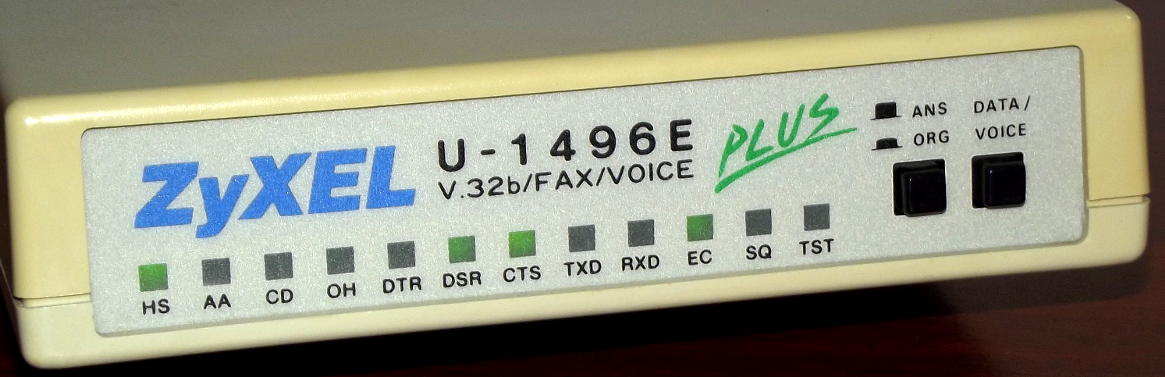
Next.

Previous.

