Search Results: "ean"

11 May 2022

Raphaël Hertzog: Debian 9 soon out of (free) security support

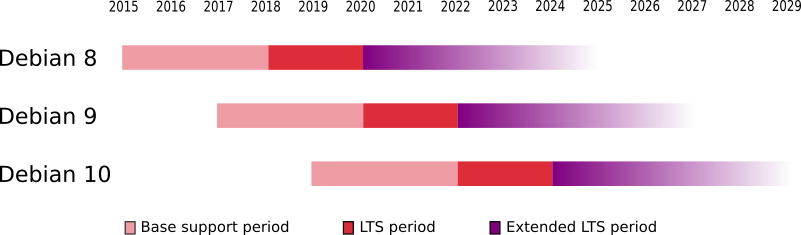
Organizations that are still running Debian 9 servers should be aware that the security support of the Debian LTS team will end on June 30th 2022. If upgrading to a newer Debian release is not an option for them, then they should consider subscribing to Freexian s Extended LTS to get security support for the packages that they are using on their servers.
It s worth pointing out that we made some important changes to Freexian s Extended LTS offering : This means that we have again extended the life of Debian 8 Jessie, this time until June 30th 2025. And that Debian 9 Stretch that will start its extended life on July 1st 2022 can be maintained up to June 30th 2027. Organizations using Debian 10 should consider sponsoring the Debian LTS team since security support for that Debian release will soon transition from the regular security team to the LTS team.

10 May 2022

Melissa Wen: Multiple syncobjs support for V3D(V) (Part 2)

In the previous post, I described how we enable multiple syncobjs capabilities in the V3D kernel driver. Now I will tell you what was changed on the userspace side, where we reworked the V3DV sync mechanisms to use Vulkan multiple wait and signal semaphores directly. This change represents greater adherence to the Vulkan submission framework. I was not used to Vulkan concepts and the V3DV driver. Fortunately, I counted on the guidance of the Igalia s Graphics team, mainly Iago Toral (thanks!), to understand the Vulkan Graphics Pipeline, sync scopes, and submission order. Therefore, we changed the original V3DV implementation for vkQueueSubmit and all related functions to allow direct mapping of multiple semaphores from V3DV to the V3D-kernel interface. Disclaimer: Here s a brief and probably inaccurate background, which we ll go into more detail later on. In Vulkan, GPU work submissions are described as command buffers. These command buffers, with GPU jobs, are grouped in a command buffer submission batch, specified by vkSubmitInfo, and submitted to a queue for execution. vkQueueSubmit is the command called to submit command buffers to a queue. Besides command buffers, vkSubmitInfo also specifies semaphores to wait before starting the batch execution and semaphores to signal when all command buffers in the batch are complete. Moreover, a fence in vkQueueSubmit can be signaled when all command buffer batches have completed execution. From this sequence, we can see some implicit ordering guarantees. Submission order defines the start order of execution between command buffers, in other words, it is determined by the order in which pSubmits appear in VkQueueSubmit and pCommandBuffers appear in VkSubmitInfo. However, we don t have any completion guarantees for jobs submitted to different GPU queue, which means they may overlap and complete out of order. Of course, jobs submitted to the same GPU engine follow start and finish order. A fence is ordered after all semaphores signal operations for signal operation order. In addition to implicit sync, we also have some explicit sync resources, such as semaphores, fences, and events. Considering these implicit and explicit sync mechanisms, we rework the V3DV implementation of queue submissions to better use multiple syncobjs capabilities from the kernel. In this merge request, you can find this work: v3dv: add support to multiple wait and signal semaphores. In this blog post, we run through each scope of change of this merge request for a V3D driver-guided description of the multisync support implementation.

Groundwork and basic code clean-up: As the original V3D-kernel interface allowed only one semaphore, V3DV resorted to booleans to translate multiple semaphores into one. Consequently, if a command buffer batch had at least one semaphore, it needed to wait on all jobs submitted complete before starting its execution. So, instead of just boolean, we created and changed structs that store semaphores information to accept the actual list of wait semaphores.

Expose multisync kernel interface to the driver: In the two commits below, we basically updated the DRM V3D interface from that one defined in the kernel and verified if the multisync capability is available for use.

Handle multiple semaphores for all GPU job types: At this point, we were only changing the submission design to consider multiple wait semaphores. Before supporting multisync, V3DV was waiting for the last job submitted to be signaled when at least one wait semaphore was defined, even when serialization wasn t required. V3DV handle GPU jobs according to the GPU queue in which they are submitted:
  • Control List (CL) for binning and rendering
  • Texture Formatting Unit (TFU)
  • Compute Shader Dispatch (CSD)
Therefore, we changed their submission setup to do jobs submitted to any GPU queues able to handle more than one wait semaphores. These commits created all mechanisms to set arrays of wait and signal semaphores for GPU job submissions:
  • Checking the conditions to define the wait_stage.
  • Wrapping them in a multisync extension.
  • According to the kernel interface (described in the previous blog post), configure the generic extension as a multisync extension.
Finally, we extended the ability of GPU jobs to handle multiple signal semaphores, but at this point, no GPU job is actually in charge of signaling them. With this in place, we could rework part of the code that tracks CPU and GPU job completions by verifying the GPU status and threads spawned by Event jobs.

Rework the QueueWaitIdle mechanism to track the syncobj of the last job submitted in each queue: As we had only single in/out syncobj interfaces for semaphores, we used a single last_job_sync to synchronize job dependencies of the previous submission. Although the DRM scheduler guarantees the order of starting to execute a job in the same queue in the kernel space, the order of completion isn t predictable. On the other hand, we still needed to use syncobjs to follow job completion since we have event threads on the CPU side. Therefore, a more accurate implementation requires last_job syncobjs to track when each engine (CL, TFU, and CSD) is idle. We also needed to keep the driver working on previous versions of v3d kernel-driver with single semaphores, then we kept tracking ANY last_job_sync to preserve the previous implementation.

Rework synchronization and submission design to let the jobs handle wait and signal semaphores: With multiple semaphores support, the conditions for waiting and signaling semaphores changed accordingly to the particularities of each GPU job (CL, CSD, TFU) and CPU job restrictions (Events, CSD indirect, etc.). In this sense, we redesigned V3DV semaphores handling and job submissions for command buffer batches in vkQueueSubmit. We scrutinized possible scenarios for submitting command buffer batches to change the original implementation carefully. It resulted in three commits more: We keep track of whether we have submitted a job to each GPU queue (CSD, TFU, CL) and a CPU job for each command buffer. We use syncobjs to track the last job submitted to each GPU queue and a flag that indicates if this represents the beginning of a command buffer. The first GPU job submitted to a GPU queue in a command buffer should wait on wait semaphores. The first CPU job submitted in a command buffer should call v3dv_QueueWaitIdle() to do the waiting and ignore semaphores (because it is waiting for everything). If the job is not the first but has the serialize flag set, it should wait on the completion of all last job submitted to any GPU queue before running. In practice, it means using syncobjs to track the last job submitted by queue and add these syncobjs as job dependencies of this serialized job. If this job is the last job of a command buffer batch, it may be used to signal semaphores if this command buffer batch has only one type of GPU job (because we have guarantees of execution ordering). Otherwise, we emit a no-op job just to signal semaphores. It waits on the completion of all last jobs submitted to any GPU queue and then signal semaphores. Note: We changed this approach to correctly deal with ordering changes caused by event threads at some point. Whenever we have an event job in the command buffer, we cannot use the last job in the last command buffer assumption. We have to wait all event threads complete to signal After submitting all command buffers, we emit a no-op job to wait on all last jobs by queue completion and signal fence. Note: at some point, we changed this approach to correct deal with ordering changes caused by event threads, as mentioned before.

Final considerations With many changes and many rounds of reviews, the patchset was merged. After more validations and code review, we polished and fixed the implementation together with external contributions: Also, multisync capabilities enabled us to add new features to V3DV and switch the driver to the common synchronization and submission framework:
  • v3dv: expose support for semaphore imports
    This was waiting for multisync support in the v3d kernel, which is already available. Exposing this feature however enabled a few more CTS tests that exposed pre-existing bugs in the user-space driver so we fix those here before exposing the feature.
  • v3dv: Switch to the common submit framework
    This should give you emulated timeline semaphores for free and kernel-assisted sharable timeline semaphores for cheap once you have the kernel interface wired in.
We used a set of games to ensure no performance regression in the new implementation. For this, we used GFXReconstruct to capture Vulkan API calls when playing those games. Then, we compared results with and without multisync caps in the kernelspace and also enabling multisync on v3dv. We didn t observe any compromise in performance, but improvements when replaying scenes of vkQuake game.

Melissa Wen: Multiple syncobjs support for V3D(V) (Part 1)

As you may already know, we at Igalia have been working on several improvements to the 3D rendering drivers of Broadcom Videocore GPU, found in Raspberry Pi 4 devices. One of our recent works focused on improving V3D(V) drivers adherence to Vulkan submission and synchronization framework. We had to cross various layers from the Linux Graphics stack to add support for multiple syncobjs to V3D(V), from the Linux/DRM kernel to the Vulkan driver. We have delivered bug fixes, a generic gate to extend job submission interfaces, and a more direct sync mapping of the Vulkan framework. These changes did not impact the performance of the tested games and brought greater precision to the synchronization mechanisms. Ultimately, support for multiple syncobjs opened the door to new features and other improvements to the V3DV submission framework.

DRM Syncobjs But, first, what are DRM sync objs?
* DRM synchronization objects (syncobj, see struct &drm_syncobj) provide a
* container for a synchronization primitive which can be used by userspace
* to explicitly synchronize GPU commands, can be shared between userspace
* processes, and can be shared between different DRM drivers.
* Their primary use-case is to implement Vulkan fences and semaphores.
[...]
* At it's core, a syncobj is simply a wrapper around a pointer to a struct
* &dma_fence which may be NULL.
And Jason Ekstrand well-summarized dma_fence features in a talk at the Linux Plumbers Conference 2021:
A struct that represents a (potentially future) event:
  • Has a boolean signaled state
  • Has a bunch of useful utility helpers/concepts, such as refcount, callback wait mechanisms, etc.
Provides two guarantees:
  • One-shot: once signaled, it will be signaled forever
  • Finite-time: once exposed, is guaranteed signal in a reasonable amount of time

What does multiple semaphores support mean for Raspberry Pi 4 GPU drivers? For our main purpose, the multiple syncobjs support means that V3DV can submit jobs with more than one wait and signal semaphore. In the kernel space, wait semaphores become explicit job dependencies to wait on before executing the job. Signal semaphores (or post dependencies), in turn, work as fences to be signaled when the job completes its execution, unlocking following jobs that depend on its completion. The multisync support development comprised of many decision-making points and steps summarized as follow:
  • added to the v3d kernel-driver capabilities to handle multiple syncobj;
  • exposed multisync capabilities to the userspace through a generic extension; and
  • reworked synchronization mechanisms of the V3DV driver to benefit from this feature
  • enabled simulator to work with multiple semaphores
  • tested on Vulkan games to verify the correctness and possible performance enhancements.
We decided to refactor parts of the V3D(V) submission design in kernel-space and userspace during this development. We improved job scheduling on V3D-kernel and the V3DV job submission design. We also delivered more accurate synchronizing mechanisms and further updates in the Broadcom Vulkan driver running on Raspberry Pi 4. Therefore, we summarize here changes in the kernel space, describing the previous state of the driver, taking decisions, side improvements, and fixes.

From single to multiple binary in/out syncobjs: Initially, V3D was very limited in the numbers of syncobjs per job submission. V3D job interfaces (CL, CSD, and TFU) only supported one syncobj (in_sync) to be added as an execution dependency and one syncobj (out_sync) to be signaled when a submission completes. Except for CL submission, which accepts two in_syncs: one for binner and another for render job, it didn t change the limited options. Meanwhile in the userspace, the V3DV driver followed alternative paths to meet Vulkan s synchronization and submission framework. It needed to handle multiple wait and signal semaphores, but the V3D kernel-driver interface only accepts one in_sync and one out_sync. In short, V3DV had to fit multiple semaphores into one when submitting every GPU job.

Generic ioctl extension The first decision was how to extend the V3D interface to accept multiple in and out syncobjs. We could extend each ioctl with two entries of syncobj arrays and two entries for their counters. We could create new ioctls with multiple in/out syncobj. But after examining other drivers solutions to extend their submission s interface, we decided to extend V3D ioctls (v3d_cl_submit_ioctl, v3d_csd_submit_ioctl, v3d_tfu_submit_ioctl) by a generic ioctl extension. I found a curious commit message when I was examining how other developers handled the issue in the past:
Author: Chris Wilson <chris@chris-wilson.co.uk>
Date:   Fri Mar 22 09:23:22 2019 +0000
    drm/i915: Introduce the i915_user_extension_method
    
    An idea for extending uABI inspired by Vulkan's extension chains.
    Instead of expanding the data struct for each ioctl every time we need
    to add a new feature, define an extension chain instead. As we add
    optional interfaces to control the ioctl, we define a new extension
    struct that can be linked into the ioctl data only when required by the
    user. The key advantage being able to ignore large control structs for
    optional interfaces/extensions, while being able to process them in a
    consistent manner.
    
    In comparison to other extensible ioctls, the key difference is the
    use of a linked chain of extension structs vs an array of tagged
    pointers. For example,
    
    struct drm_amdgpu_cs_chunk  
    	__u32		chunk_id;
        __u32		length_dw;
        __u64		chunk_data;
     ;
[...]
So, inspired by amdgpu_cs_chunk and i915_user_extension, we opted to extend the V3D interface through a generic interface. After applying some suggestions from Iago Toral (Igalia) and Daniel Vetter, we reached the following struct:
struct drm_v3d_extension  
	__u64 next;
	__u32 id;
#define DRM_V3D_EXT_ID_MULTI_SYNC		0x01
	__u32 flags; /* mbz */
 ;
This generic extension has an id to identify the feature/extension we are adding to an ioctl (that maps the related struct type), a pointer to the next extension, and flags (if needed). Whenever we need to extend the V3D interface again for another specific feature, we subclass this generic extension into the specific one instead of extending ioctls indefinitely.

Multisync extension For the multiple syncobjs extension, we define a multi_sync extension struct that subclasses the generic extension struct. It has arrays of in and out syncobjs, the respective number of elements in each of them, and a wait_stage value used in CL submissions to determine which job needs to wait for syncobjs before running.
struct drm_v3d_multi_sync  
	struct drm_v3d_extension base;
	/* Array of wait and signal semaphores */
	__u64 in_syncs;
	__u64 out_syncs;
	/* Number of entries */
	__u32 in_sync_count;
	__u32 out_sync_count;
	/* set the stage (v3d_queue) to sync */
	__u32 wait_stage;
	__u32 pad; /* mbz */
 ;
And if a multisync extension is defined, the V3D driver ignores the previous interface of single in/out syncobjs. Once we had the interface to support multiple in/out syncobjs, v3d kernel-driver needed to handle it. As V3D uses the DRM scheduler for job executions, changing from single syncobj to multiples is quite straightforward. V3D copies from userspace the in syncobjs and uses drm_syncobj_find_fence()+ drm_sched_job_add_dependency() to add all in_syncs (wait semaphores) as job dependencies, i.e. syncobjs to be checked by the scheduler before running the job. On CL submissions, we have the bin and render jobs, so V3D follows the value of wait_stage to determine which job depends on those in_syncs to start its execution. When V3D defines the last job in a submission, it replaces dma_fence of out_syncs with the done_fence from this last job. It uses drm_syncobj_find() + drm_syncobj_replace_fence() to do that. Therefore, when a job completes its execution and signals done_fence, all out_syncs are signaled too.

Other improvements to v3d kernel driver This work also made possible some improvements in the original implementation. Following Iago s suggestions, we refactored the job s initialization code to allocate memory and initialize a job in one go. With this, we started to clean up resources more cohesively, clearly distinguishing cleanups in case of failure from job completion. We also fixed the resource cleanup when a job is aborted before the DRM scheduler arms it - at that point, drm_sched_job_arm() had recently been introduced to job initialization. Finally, we prepared the semaphore interface to implement timeline syncobjs in the future.

Going Up The patchset that adds multiple syncobjs support and improvements to V3D is available here and comprises four patches:
  • drm/v3d: decouple adding job dependencies steps from job init
  • drm/v3d: alloc and init job in one shot
  • drm/v3d: add generic ioctl extension
  • drm/v3d: add multiple syncobjs support
After extending the V3D kernel interface to accept multiple syncobjs, we worked on V3DV to benefit from V3D multisync capabilities. In the next post, I will describe a little of this work.

9 May 2022

Robert McQueen: Evolving a strategy for 2022 and beyond

As a board, we have been working on several initiatives to make the Foundation a better asset for the GNOME Project. We re working on a number of threads in parallel, so I wanted to explain the big picture a bit more to try and connect together things like the new ED search and the bylaw changes. We re all here to see free and open source software succeed and thrive, so that people can be be truly empowered with agency over their technology, rather than being passive consumers. We want to bring GNOME to as many people as possible so that they have computing devices that they can inspect, trust, share and learn from. In previous years we ve tried to boost the relevance of GNOME (or technologies such as GTK) or solicit donations from businesses and individuals with existing engagement in FOSS ideology and technology. The problem with this approach is that we re mostly addressing people and organisations who are already supporting or contributing FOSS in some way. To truly scale our impact, we need to look to the outside world, build better awareness of GNOME outside of our current user base, and find opportunities to secure funding to invest back into the GNOME project. The Foundation supports the GNOME project with infrastructure, arranging conferences, sponsoring hackfests and travel, design work, legal support, managing sponsorships, advisory board, being the fiscal sponsor of GNOME, GTK, Flathub and we will keep doing all of these things. What we re talking about here are additional ways for the Foundation to support the GNOME project we want to go beyond these activities, and invest into GNOME to grow its adoption amongst people who need it. This has a cost, and that means in parallel with these initiatives, we need to find partners to fund this work. Neil has previously talked about themes such as education, advocacy, privacy, but we ve not previously translated these into clear specific initiatives that we would establish in addition to the Foundation s existing work. This is all a work in progress and we welcome any feedback from the community about refining these ideas, but here are the current strategic initiatives the board is working on. We ve been thinking about growing our community by encouraging and retaining diverse contributors, and addressing evolving computing needs which aren t currently well served on the desktop. Initiative 1. Welcoming newcomers. The community is already spending a lot of time welcoming newcomers and teaching them the best practices. Those activities are as time consuming as they are important, but currently a handful of individuals are running initiatives such as GSoC, Outreachy and outreach to Universities. These activities help bring diverse individuals and perspectives into the community, and helps them develop skills and experience of collaborating to create Open Source projects. We want to make those efforts more sustainable by finding sponsors for these activities. With funding, we can hire people to dedicate their time to operating these programs, including paid mentors and creating materials to support newcomers in future, such as developer documentation, examples and tutorials. This is the initiative that needs to be refined the most before we can turn it into something real. Initiative 2: Diverse and sustainable Linux app ecosystem. I spoke at the Linux App Summit about the work that GNOME and Endless has been supporting in Flathub, but this is an example of something which has a great overlap between commercial, technical and mission-based advantages. The key goal here is to improve the financial sustainability of participating in our community, which in turn has an impact on the diversity of who we can expect to afford to enter and remain in our community. We believe the existence of this is critically important for individual developers and contributors to unlock earning potential from our ecosystem, through donations or app sales. In turn, a healthy app ecosystem also improves the usefulness of the Linux desktop as a whole for potential users. We believe that we can build a case for commercial vendors in the space to join an advisory board alongside with GNOME, KDE, etc to input into the governance and contribute to the costs of growing Flathub. Initiative 3: Local-first applications for the GNOME desktop. This is what Thib has been starting to discuss on Discourse, in this thread. There are many different threats to free access to computing and information in today s world. The GNOME desktop and apps need to give users convenient and reliable access to technology which works similarly to the tools they already use everyday, but keeps them and their data safe from surveillance, censorship, filtering or just being completely cut off from the Internet. We believe that we can seek both philanthropic and grant funding for this work. It will make GNOME a more appealing and comprehensive offering for the many people who want to protect their privacy. The idea is that these initiatives all sit on the boundary between the GNOME community and the outside world. If the Foundation can grow and deliver these kinds of projects, we are reaching to new people, new contributors and new funding. These contributions and investments back into GNOME represent a true win-win for the newcomers and our existing community. (Originally posted to GNOME Discourse, please feel free to join the discussion there.)

Russ Allbery: C TAP Harness 4.8

C TAP Harness is my C implementation of the Perl "Test Anything Protocol" test suite framework. It includes test runner and libraries for both C and shell. This is mostly a cleanup release to resync with other utility libraries. It does fix an installation problem by managing symlinks correctly, and adds support for GCC 11's new deallocation warnings. The latter is a rather interesting new GCC feature. There is a Red Hat blog post about the implementation with more details, but the short version is that the __malloc__ attribute can now take an argument that specifies the function that should be used to deallocate the allocated object. GCC 11 and later can use that information to catch some deallocation bugs, such as deallocating things with the wrong function. You can get the latest version from the C TAP Harness distribution page.

6 May 2022

Dirk Eddelbuettel: RProtoBuf 0.4.19 on CRAN: Updates

A new release 0.4.19 of RProtoBuf arrived on CRAN earlier today. RProtoBuf provides R with bindings for the Google Protocol Buffers ( ProtoBuf ) data encoding and serialization library used and released by Google, and deployed very widely in numerous projects as a language and operating-system agnostic protocol. This release contains a pull request contribution by Michael Chirico to add support for the TextFormat API, a minor maintenance fix ensuring (standard) string are referenced as std::string to avoid a hickup on Arch builds, some repo updates, plus reporting of (package and library) versions on startup. The following section from the NEWS.Rd file has more details.

Changes in RProtoBuf version 0.4.19 (2022-05-06)
  • Small cleanups to repository
  • Raise minimum Protocol Buffers version to 3.3 (closes #83)
  • Update package version display, added to startup message
  • Expose TextFormat API (Michael Chirico in #88 closing #87)
  • Add missing explicit std:: on seven string instances in one file (closes #89)

Thanks to my CRANberries, there is a diff to the previous release. The RProtoBuf page has copies of the (older) package vignette, the quick overview vignette, and the pre-print of our JSS paper. Questions, comments etc should go to the GitHub issue tracker off the GitHub repo. If you like this or other open-source work I do, you can now sponsor me at GitHub.

This post by Dirk Eddelbuettel originated on his Thinking inside the box blog. Please report excessive re-aggregation in third-party for-profit settings.

Antoine Beaupr : Wallabako 1.4.0 released

I don't particularly like it when people announce their personal projects on their blog, but I'm making an exception for this one, because it's a little special for me. You see, I have just released Wallabako 1.4.0 (and a quick, mostly irrelevant 1.4.1 hotfix) today. It's the first release of that project in almost 3 years (the previous was 1.3.1, before the pandemic). The other reason I figured I would mention it is that I have almost never talked about Wallabako on this blog at all, so many of my readers probably don't even know I sometimes meddle with in Golang which surprises even me sometimes.

What's Wallabako Wallabako is a weird little program I designed to read articles on my E-book reader. I use it to spend less time on the computer: I save articles in a read-it-later app named Wallabag (hosted by a generous friend), and then Wallabako connects to that app, downloads an EPUB version of the book, and then I can read it on the device directly. When I'm done reading the book, Wallabako notices and sets the article as read in Wallabag. I also set it to delete the book locally, but you can actually configure to keep those books around forever if you feel like it. Wallabako supports syncing read status with the built-in Kobo interface (called "Nickel"), Koreader and Plato. I happen to use Koreader for everything nowadays, but it should work equally well on the others. Wallabako is actually setup to be started by udev when there's a connection change detected by the kernel, which is kind of a gross hack. It's clunky, but actually works and I thought for a while about switching to something else, but it's really the easiest way to go, and that requires the less interaction by the user.

Why I'm (still) using it I wrote Wallabako because I read a lot of articles on the internet. It's actually most of my readings. I read about 10 books a year (which I don't think is much), but I probably read more in terms of time and pages in Wallabag. I haven't actually made the math, but I estimate I spend at least double the time reading articles than I spend reading books. If I wouldn't have Wallabag, I would have hundreds of tabs open in my web browser all the time. So at least that problem is easily solved: throw everything in Wallabag, sort and read later. If I wouldn't have Wallabako however, I would be either spend that time reading on the computer -- which I prefer to spend working on free software or work -- or on my phone -- which is kind of better, but really cramped. I had stopped (and developing) Wallabako for a while, actually, Around 2019, I got tired of always read those technical articles (basically work stuff!) at home. I realized I was just not "reading" (as in books! fiction! fun stuff!) anymore, at least not as much as I wanted. So I tried to make this separation: the ebook reader is for cool book stuff. The rest is work. But because I had the Wallabag Android app on my phone and tablet, I could still read those articles there, which I thought was pretty neat. But that meant that I was constantly looking at my phone, which is something I'm generally trying to avoid, as it sets a bad example for the kids (small and big) around me. Then I realized there was one stray ebook reader lying around at home. I had recently bought a Kobo Aura HD to read books, and I like that device. And it's going to stay locked down to reading books. But there's still that old battered Kobo Glo HD reader lying around, and I figured I could just borrow it to read Wallabag articles.

What is this new release But oh boy that was a lot of work. Wallabako was kind of a mess: it was using the deprecated go dep tool, which lost the battle with go mod. Cross-compilation was broken for older devices, and I had to implement support for Koreader.

go mod So I had to learn go mod. I'm still not sure I got that part right: LSP is yelling at me because it can't find the imports, and I'm generally just "YOLO everythihng" every time I get anywhere close to it. That's not the way to do Go, in general, and not how I like to do it either. But I guess that, given time, I'll figure it out and make it work for me. It certainly works now. I think.

Cross compilation The hard part was different. You see, Nickel uses SQLite to store metadata about books, so Wallabako actually needs to tap into that SQLite database to propagate read status. Originally, I just linked against some sqlite3 library I found lying around. It's basically a wrapper around the C-based SQLite and generally works fine. But that means you actually link your Golang program against a C library. And that's when things get a little nutty. If you would just build Wallabag naively, it would fail when deployed on the Kobo Glo HD. That's because the device runs a really old kernel: the prehistoric Linux kobo 2.6.35.3-850-gbc67621+ #2049 PREEMPT Mon Jan 9 13:33:11 CST 2017 armv7l GNU/Linux. That was built in 2017, but the kernel was actually released in 2010, a whole 5 years before the Glo HD was released, in 2015 which is kind of outrageous. and yes, that is with the latest firmware release. My bet is they just don't upgrade the kernel on those things, as the Glo was probably bought around 2017... In any case, the problem is we are cross-compiling here. And Golang is pretty good about cross-compiling, but because we have C in there, we're actually cross-compiling with "CGO" which is really just Golang with a GCC backend. And that's much, much harder to figure out because you need to pass down flags into GCC and so on. It was a nightmare. That's until I found this outrageous "little" project called modernc.org/sqlite. What that thing does (with a hefty does of dependencies that would make any Debian developer recoil in horror) is to transpile the SQLite C source code to Golang. You read that right: it rewrites SQLite in Go. On the fly. It's nuts. But it works. And you end up with a "pure go" program, and that thing compiles much faster and runs fine on older kernel. I still wasn't sure I wanted to just stick with that forever, so I kept the old sqlite3 code around, behind a compile-time tag. At the top of the nickel_modernc.go file, there's this magic string:
//+build !sqlite3
And at the top of nickel_sqlite3.go file, there's this magic string:
//+build sqlite3
So now, by default, the modernc file gets included, but if I pass --tags sqlite3 to the Go compiler (to go install or whatever), it will actually switch to the other implementation. Pretty neat stuff.

Koreader port The last part was something I was hesitant in doing for a long time, but that turned out to be pretty easy. I have basically switch to using Koreader to read everything. Books, PDF, everything goes through it. I really like that it stores its metadata in sidecar files: I synchronize all my books with Syncthing which means I can carry my read status, annotations and all that stuff without having to think about it. (And yes, I installed Syncthing on my Kobo.) The koreader.go port was less than 80 lines, and I could even make a nice little test suite so that I don't have to redeploy that thing to the ebook reader at every code iteration. I had originally thought I should add some sort of graphical interface in Koreader for Wallabako as well, and had requested that feature upstream. Unfortunately (or fortunately?), they took my idea and just ran with it. Some courageous soul actually wrote a full Wallabag plugin for koreader, in Lua of course. Compared to the Wallabako implementation however, the koreader plugin is much slower, probably because it downloads articles serially instead of concurrently. It is, however, much more usable as the user is given a visible feedback of the various steps. I still had to enable full debugging to diagnose a problem (which was that I shouldn't have a trailing slash, and that some special characters don't work in passwords). It's also better to write the config file with a normal text editor, over SSH or with the Kobo mounted to your computer instead of typing those really long strings over the kobo. There's no sample config file which makes that harder but a workaround is to save the configuration with dummy values and fix them up after. Finally I also found the default setting ("Remotely delete finished articles") really dangerous as it can basically lead to data loss (Wallabag article being deleted!) for an unsuspecting user... So basically, I started working on Wallabag again because the koreader implementation of their Wallabag client was not up to spec for me. It might be good enough for you, but I guess if you like Wallabako, you should thank the koreader folks for their sloppy implementation, as I'm now working again on Wallabako.

Actual release notes Those are the actual release notes for 1.4.0.
Ship a lot of fixes that have accumulated in the 3 years since the last release. Features:
  • add timestamp and git version to build artifacts
  • cleanup and improve debugging output
  • switch to pure go sqlite implementation, which helps
  • update all module dependencies
  • port to wallabago v6
  • support Plato library changes from 0.8.5+
  • support reading koreader progress/read status
  • Allow containerized builds, use gomod and avoid GOPATH hell
  • overhaul Dockerfile
  • switch to go mod
Documentation changes:
  • remove instability warning: this works well enough
  • README: replace branch name master by main in links
  • tweak mention of libreoffice to clarify concern
  • replace "kobo" references by "nickel" where appropriate
  • make a section about related projects
  • mention NickelMenu
  • quick review of the koreader implementation
Bugfixes:
  • handle errors in http request creation
  • Use OutputDir configuration instead of hardcoded wallabako paths
  • do not noisily fail if there's no entry for book in plato
  • regression: properly detect read status again after koreader (or plato?) support was added

How do I use this?
This is amazing. I can't believe someone did something that awesome. I want to cover you with gold and Tesla cars and fresh water.
You're weird please stop. But if you want to use Wallabako, head over to the README file which has installation instructions. It basically uses a hack in Kobo e-readers that will happily overwrite their root filesystem as soon as you drop this file named KoboRoot.tgz in the .kobo directory of your e-reader. Note that there is no uninstall procedure and it messes with the reader's udev configuration (to trigger runs on wifi connect). You'll also need to create a JSON configuration file and configure a client in Wallabag. And if you're looking for Wallabag hosting, Wallabag.it offers a 14-day free trial. You can also, obviously, host it yourself. Which is not the case for Pocket, even years after Mozilla bought the company. All this wouldn't actually be necessary if Pocket was open-source because Nickel actually ships with a Pocket client. Shame on you, Mozilla. But you still make an awesome browser, so keep doing that.

5 May 2022

Reproducible Builds: Reproducible Builds in April 2022

Welcome to the April 2022 report from the Reproducible Builds project! In these reports, we try to summarise the most important things that we have been up to over the past month. If you are interested in contributing to the project, please take a few moments to visit our Contribute page on our website.

News Cory Doctorow published an interesting article this month about the possibility of Undetectable backdoors for machine learning models. Given that machine learning models can provide unpredictably incorrect results, Doctorow recounts that there exists another category of adversarial examples that comprise a gimmicked machine-learning input that, to the human eye, seems totally normal but which causes the ML system to misfire dramatically that permit the possibility of planting undetectable back doors into any machine learning system at training time .
Chris Lamb published two supporter spotlights on our blog: the first about Amateur Radio Digital Communications (ARDC) and the second about the Google Open Source Security Team (GOSST).
Piergiorgio Ladisa, Henrik Plate, Matias Martinez and Olivier Barais published a new academic paper titled A Taxonomy of Attacks on Open-Source Software Supply Chains (PDF):
This work proposes a general taxonomy for attacks on open-source supply chains, independent of specific programming languages or ecosystems, and covering all supply chain stages from code contributions to package distribution. Taking the form of an attack tree, it covers 107 unique vectors, linked to 94 real-world incidents, and mapped to 33 mitigating safeguards.

Elsewhere in academia, Ly Vu Duc published his PhD thesis. Titled Towards Understanding and Securing the OSS Supply Chain (PDF), Duc s abstract reads as follows:
This dissertation starts from the first link in the software supply chain, developers . Since many developers do not update their vulnerable software libraries, thus exposing the user of their code to security risks. To understand how they choose, manage and update the libraries, packages, and other Open-Source Software (OSS) that become the building blocks of companies completed products consumed by end-users, twenty-five semi-structured interviews were conducted with developers of both large and small-medium enterprises in nine countries. All interviews were transcribed, coded, and analyzed according to applied thematic analysis

Upstream news Filippo Valsorda published an informative blog post recently called How Go Mitigates Supply Chain Attacks outlining the high-level features of the Go ecosystem that helps prevent various supply-chain attacks.
There was new/further activity on a pull request filed against openssl by Sebastian Andrzej Siewior in order to prevent saved CFLAGS (which may contain the -fdebug-prefix-map=<PATH> flag that is used to strip an arbitrary the build path from the debug info if this information remains recorded then the binary is no longer reproducible if the build directory changes.

Events The Linux Foundation s SupplyChainSecurityCon, will take place June 21st 24th 2022, both virtually and in Austin, Texas. Long-time Reproducible Builds and openSUSE contributor Bernhard M. Wiedemann learned that he had his talk accepted, and will speak on Reproducible Builds: Unexpected Benefits and Problems on June 21st.
There will be an in-person Debian Reunion in Hamburg, Germany later this year, taking place from 23 30 May. Although this is a Debian event, there will be some folks from the broader Reproducible Builds community and, of course, everyone is welcome. Please see the event page on the Debian wiki for more information. 41 people have registered so far, and there s approx 10 on-site beds still left.
The minutes and logs from our April 2022 IRC meeting have been published. In case you missed this one, our next IRC meeting will take place on May 31st at 15:00 UTC on #reproducible-builds on the OFTC network.

Debian Roland Clobus wrote another in-depth status update about the status of live Debian images, summarising the current situation that all major desktops build reproducibly with bullseye, bookworm and sid, including the Cinnamon desktop on bookworm and sid, but at a small functionality cost: 14 words will be incorrectly abbreviated . This work incorporated:
  • Reporting an issue about unnecessarily modified timestamps in the daily Debian installer images. [ ]
  • Reporting a bug against the debian-installer: in order to use a suitable kernel version. (#1006800)
  • Reporting a bug in: texlive-binaries regarding the unreproducible content of .fmt files. (#1009196)
  • Adding hacks to make the Cinnamon desktop image reproducible in bookworm and sid. [ ]
  • Added a script to rebuild a live-build ISO image from a given timestamp. [
  • etc.
On our mailing list, Venkata Pyla started a thread on the Debian debconf cache is non-reproducible issue while creating system images and Vagrant Cascadian posted an excellent summary of the reproducibility status of core package sets in Debian and solicited for similar information from other distributions.
Lastly, 122 reviews of Debian packages were added, 44 were updated and 193 were removed this month adding to our extensive knowledge about identified issues. A number of issue types have been updated as well, including timestamps_generated_by_hevea, randomness_in_ocaml_preprocessed_files, build_path_captured_in_emacs_el_file, golang_compiler_captures_build_path_in_binary and build_path_captured_in_assembly_objects,

Other distributions Happy birthday to GNU Guix, which recently turned 10 years old! People have been sharing their stories, in which reproducible builds and bootstrappable builds are a recurring theme as a feature important to its users and developers. The experiences are available on the GNU Guix blog as well as a post on fossandcrafts.org
In openSUSE, Bernhard M. Wiedemann posted his usual monthly reproducible builds status report.

Upstream patches The Reproducible Builds project detects, dissects and attempts to fix as many currently-unreproducible packages as possible. We endeavour to send all of our patches upstream where appropriate. This month, we wrote a large number of such patches, including:

diffoscope diffoscope is our in-depth and content-aware diff utility. Not only can it locate and diagnose reproducibility issues, it can provide human-readable diffs from many kinds of binary formats. This month, Chris Lamb prepared and uploaded versions 210 and 211 to Debian unstable, as well as noticed that some Python .pyc files are reported as data, so we should support .pyc as a fallback filename extension [ ]. In addition, Mattia Rizzolo disabled the Gnumeric tests in Debian as the package is not currently available [ ] and dropped mplayer from Build-Depends too [ ]. In addition, Mattia fixed an issue to ensure that the PATH environment variable is properly modified for all actions, not just when running the comparator. [ ]

Testing framework The Reproducible Builds project runs a significant testing framework at tests.reproducible-builds.org, to check packages and other artifacts for reproducibility. This month, the following changes were made:
  • Daniel Golle:
    • Prefer a different solution to avoid building all OpenWrt packages; skip packages from optional community feeds. [ ]
  • Holger Levsen:
    • Detect Python deprecation warnings in the node health check. [ ]
    • Detect failure to build the Debian Installer. [ ]
  • Mattia Rizzolo:
    • Install disorderfs for building OpenWrt packages. [ ]
  • Paul Spooren (OpenWrt-related changes):
    • Don t build all packages whilst the core packages are not yet reproducible. [ ]
    • Add a missing RUN directive to node_cleanup. [ ]
    • Be less verbose during a toolchain build. [ ]
    • Use disorderfs for rebuilds and update the documentation to match. [ ][ ][ ]
  • Roland Clobus:
    • Publish the last reproducible Debian ISO image. [ ]
    • Use the rebuild.sh script from the live-build package. [ ]
Lastly, node maintenance was also performed by Holger Levsen [ ][ ].
If you are interested in contributing to the Reproducible Builds project, please visit our Contribute page on our website. However, you can get in touch with us via:

3 May 2022

Steve Kemp: A plea for books ..

Recently I've been getting much more interested in the "retro" computers of my youth, partly because I've been writing crazy code in Z80 assembly-language, and partly because I've been preparing to introduce our child to his first computer: I've got a few books, books I've hoarded for 30+ years, but I'd love to collect some more. So here's my request: I'd be happy to pay 5-10 each for any book I don't yet own, and I'd also be more than happy to cover the cost of postage to Finland. I'd be particularly pleased to see anything from Melbourne House, and while low-level is best, the coding-books from Usbourne (The Mystery Of Silver Mountain, etc, etc) wouldn't go amiss either. I suspect most people who have collected and kept these wouldn't want to part with them, but just in case ..

29 April 2022

Russ Allbery: Review: Interesting Times

Review: Interesting Times, by Terry Pratchett
Series: Discworld #17
Publisher: Harper
Copyright: 1994
Printing: February 2014
ISBN: 0-06-227629-8
Format: Mass market
Pages: 399
Interesting Times is the seventeenth Discworld novel and certainly not the place to start. At the least, you will probably want to read The Colour of Magic and The Light Fantastic before this book, since it's a sequel to those (although Rincewind has had some intervening adventures). Lord Vetinari has received a message from the Counterweight Continent, the first in ten years, cryptically demanding the Great Wizzard be sent immediately. The Agatean Empire is one of the most powerful states on the Disc. Thankfully for everyone else, it normally suits its rulers to believe that the lands outside their walls are inhabited only by ghosts. No one is inclined to try to change their minds or otherwise draw their attention. Accordingly, the Great Wizard must be sent, a task that Vetinari efficiently delegates to the Archchancellor. There is only the small matter of determining who the Great Wizzard is, and why it was spelled with two z's. Discworld readers with a better memory than I will recall Rincewind's hat. Why the Counterweight Continent would demanding a wizard notorious for his near-total inability to perform magic is a puzzle for other people. Rincewind is promptly located by a magical computer, and nearly as promptly transported across the Disc, swapping him for an unnecessarily exciting object of roughly equivalent mass and hurling him into an unexpected rescue of Cohen the Barbarian. Rincewind predictably reacts by running away, although not fast or far enough to keep him from being entangled in a glorious popular uprising. Or, well, something that has aspirations of being glorious, and popular, and an uprising. I hate to say this, because Pratchett is an ethically thoughtful writer to whom I am willing to give the benefit of many doubts, but this book was kind of racist. The Agatean Empire is modeled after China, and the Rincewind books tend to be the broadest and most obvious parodies, so that was already a recipe for some trouble. Some of the social parody is not too objectionable, albeit not my thing. I find ethnic stereotypes and making fun of funny-sounding names in other languages (like a city named Hunghung) to be in poor taste, but Pratchett makes fun of everyone's names and cultures rather equally. (Also, I admit that some of the water buffalo jokes, despite the stereotypes, were pretty good.) If it had stopped there, it would have prompted some eye-rolling but not much comment. Unfortunately, a significant portion of the plot depends on the idea that the population of the Agatean Empire has been so brainwashed into obedience that they have a hard time even imagining resistance, and even their revolutionaries are so polite that the best they can manage for slogans are things like "Timely Demise to All Enemies!" What they need are a bunch of outsiders, such as Rincewind or Cohen and his gang. More details would be spoilers, but there are several deliberate uses of Ankh-Morpork as a revolutionary inspiration and a great deal of narrative hand-wringing over how awful it is to so completely convince people they are slaves that you don't need chains. There is a depressingly tedious tendency of western writers, even otherwise thoughtful and well-meaning ones like Pratchett, to adopt a simplistic ranking of political systems on a crude measure of freedom. That analysis immediately encounters the problem that lots of people who live within systems that rate poorly on this one-dimensional scale seem inadequately upset about circumstances that are "obviously" horrific oppression. This should raise questions about the validity of the assumptions, but those assumptions are so unquestionable that the writer instead decides the people who are insufficiently upset about their lack of freedom must be defective. The more racist writers attribute that defectiveness to racial characteristics. The less racist writers, like Pratchett, attribute that defectiveness to brainwashing and systemic evil, which is not quite as bad as overt racism but still rests on a foundation of smug cultural superiority. Krister Stendahl, a bishop of the Church of Sweden, coined three famous rules for understanding other religions:
  1. When you are trying to understand another religion, you should ask the adherents of that religion and not its enemies.
  2. Don't compare your best to their worst.
  3. Leave room for "holy envy."
This is excellent advice that should also be applied to politics. Most systems exist for some reason. The differences from your preferred system are easy to see, particularly those that strike you as horrible. But often there are countervailing advantages that are less obvious, and those are more psychologically difficult to understand and objectively analyze. You might find they have something that you wish your system had, which causes discomfort if you're convinced you have the best political system in the world, or are making yourself feel better about the abuses of your local politics by assuring yourself that at least you're better than those people. I was particularly irritated to see this sort of simplistic stereotyping in Discworld given that Ankh-Morpork, the setting of most of the Discworld novels, is an authoritarian dictatorship. Vetinari quite capably maintains his hold on power, and yet this is not taken as a sign that the city's inhabitants have been brainwashed into considering themselves slaves. Instead, he's shown as adept at maintaining the stability of a precarious system with a lot of competing forces and a high potential for destructive chaos. Vetinari is an awful person, but he may be better than anyone who would replace him. Hmm. This sort of complexity is permitted in the "local" city, but as soon as we end up in an analog of China, the rulers are evil, the system lacks any justification, and the peasants only don't revolt because they've been trained to believe they can't. Gah. I was muttering about this all the way through Interesting Times, which is a shame because, outside of the ham-handed political plot, it has some great Pratchett moments. Rincewind's approach to any and all danger is a running (sorry) gag that keeps working, and Cohen and his gang of absurdly competent decrepit barbarians are both funnier here than they have been in any previous book and the rare highly-positive portrayal of old people in fantasy adventures who are not wizards or crones. Pretty Butterfly is a great character who deserved to be in a better plot. And I loved the trouble that Rincewind had with the Agatean tonal language, which is an excuse for Pratchett to write dialog full of frustrated non-sequiturs when Rincewind mispronounces a word. I do have to grumble about the Luggage, though. From a world-building perspective its subplot makes sense, but the Luggage was always the best character in the Rincewind stories, and the way it lost all of its specialness here was oddly sad and depressing. Pratchett also failed to convince me of the drastic retcon of The Colour of Magic and The Light Fantastic that he does here (and which I can't talk about in detail due to spoilers), in part because it's entangled in the orientalism of the plot. I'm not sure Pratchett could write a bad book, and I still enjoyed reading Interesting Times, but I don't think he gave the politics his normal care, attention, and thoughtful humanism. I hope later books in this part of the Disc add more nuance, and are less confident and judgmental. I can't really recommend this one, even though it has some merits. Also, just for the record, "may you live in interesting times" is not a Chinese curse. It's an English saying that likely was attributed to China to make it sound exotic, which is the sort of landmine that good-natured parody of other people's cultures needs to be wary of. Followed in publication order by Maskerade, and in Rincewind's personal timeline by The Last Continent. Rating: 6 out of 10

28 April 2022

Rapha&#235;l Hertzog: Freexian s report about Debian Long Term Support, March 2022

A Debian LTS logo
Every month we review the work funded by Freexian s Debian LTS offering. Please find the report for March below. Debian project funding Learn more about the rationale behind this initiative in this article. Debian LTS contributors In March, 11 contributors were paid to work on Debian LTS, their reports are available below. If you re interested in participating in the LTS or ELTS teams, we welcome participation from the Debian community. Simply get in touch with Jeremiah or Rapha l if you are if you are interested in participating. Evolution of the situation In March we released 42 DLAs. The security tracker currently lists 81 packages with a known CVE and the dla-needed.txt file has 52 packages needing an update. We re glad to welcome a few new sponsors such as lectricit de France (Gold sponsor), Telecats BV and Soliton Systems. Thanks to our sponsors Sponsors that joined recently are in bold.

27 April 2022

Antoine Beaupr : Using LSP in Emacs and Debian

The Language Server Protocol (LSP) is a neat mechanism that provides a common interface to what used to be language-specific lookup mechanisms (like, say, running a Python interpreter in the background to find function definitions). There is also ctags shipped with UNIX since forever, but that doesn't support looking backwards ("who uses this function"), linting, or refactoring. In short, LSP rocks, and how do I use it right now in my editor of choice (Emacs, in my case) and OS (Debian) please?

Editor (emacs) setup First, you need to setup your editor. The Emacs LSP mode has pretty good installation instructions which, for me, currently mean:
apt install elpa-lsp-mode
and this .emacs snippet:
(use-package lsp-mode
  :commands (lsp lsp-deferred)
  :hook ((python-mode go-mode) . lsp-deferred)
  :demand t
  :init
  (setq lsp-keymap-prefix "C-c l")
  ;; TODO: https://emacs-lsp.github.io/lsp-mode/page/performance/
  ;; also note re "native compilation": <+varemara> it's the
  ;; difference between lsp-mode being usable or not, for me
  :config
  (setq lsp-auto-configure t))
(use-package lsp-ui
  :config
  (setq lsp-ui-flycheck-enable t)
  (add-to-list 'lsp-ui-doc-frame-parameters '(no-accept-focus . t))
  (define-key lsp-ui-mode-map [remap xref-find-definitions] #'lsp-ui-peek-find-definitions)
  (define-key lsp-ui-mode-map [remap xref-find-references] #'lsp-ui-peek-find-references))
Note: this configuration might have changed since I wrote this, see my init.el configuration for the most recent config. The main reason for choosing lsp-mode over eglot is that it's in Debian (and eglot is not). (Apparently, eglot has more chance of being upstreamed, "when it's done", but I guess I'll cross that bridge when I get there.) I already had lsp-mode partially setup in Emacs so I only had to do this small tweak to switch and change the prefix key (because s-l or mod is used by my window manager). I also had to pin LSP packages to bookworm here so that it properly detects pylsp (the older version in Debian bullseye only supports pyls, not packaged in Debian). This won't do anything by itself: Emacs will need something to talk with to provide the magic. Those are called "servers" and are basically different programs, for each programming language, that provide the magic.

Servers setup The Emacs package provides a way (M-x lsp-install-server) to install some of them, but I prefer to manage those tools through Debian packages if possible, just like lsp-mode itself. Those are the servers I currently know of in Debian:
package languages
ccls C, C++, ObjectiveC
clangd C, C++, ObjectiveC
elpa-lsp-haskell Haskell
fortran-language-server Fortran
gopls Golang
python3-pyls Python
There might be more such packages, but those are surprisingly hard to find. I found a few with apt search "Language Server Protocol", but that didn't find ccls, for example, because that just said "Language Server" in the description (which also found a few more pyls plugins, e.g. black support). Note that the Python packages, in particular, need to be upgraded to their bookworm releases to work properly (here). It seems like there's some interoperability problems there that I haven't quite figured out yet. See also my Puppet configuration for LSP. Finally, note that I have now completely switched away from Elpy to pyls, and I'm quite happy with the results. lsp-mode feels slower than elpy but I haven't done any of the performance tuning and this will improve even more with native compilation. And lsp-mode is much more powerful. I particularly like the "rename symbol" functionality, which ... mostly works.

Remaining work

Puppet and Ruby I still have to figure how to actually use this: I mostly spend my time in Puppet these days, there is no server listed in the Emacs lsp-mode language list, but there is one listed over at the upstream language list, the puppet-editor-services server. But it's not packaged in Debian, and seems somewhat... involved. It could still be a good productivity boost. The Voxpupuli team have vim install instructions which also suggest installing solargraph, the Ruby language server, also not packaged in Debian.

Bash I guess I do a bit of shell scripting from time to time nowadays, even though I don't like it. So the bash-language-server may prove useful as well.

Other languages Here are more language servers available:

Antoine Beaupr : building Debian packages under qemu with sbuild

I've been using sbuild for a while to build my Debian packages, mainly because it's what is used by the Debian autobuilders, but also because it's pretty powerful and efficient. Configuring it just right, however, can be a challenge. In my quick Debian development guide, I had a few pointers on how to configure sbuild with the normal schroot setup, but today I finished a qemu based configuration.

Why I want to use qemu mainly because it provides better isolation than a chroot. I sponsor packages sometimes and while I typically audit the source code before building, it still feels like the extra protection shouldn't hurt. I also like the idea of unifying my existing virtual machine setup with my build setup. My current VM is kind of all over the place: libvirt, vagrant, GNOME Boxes, etc?). I've been slowly converging over libvirt however, and most solutions I use right now rely on qemu under the hood, certainly not chroots... I could also have decided to go with containers like LXC, LXD, Docker (with conbuilder, whalebuilder, docker-buildpackage), systemd-nspawn (with debspawn), unshare (with schroot --chroot-mode=unshare), or whatever: I didn't feel those offer the level of isolation that is provided by qemu. The main downside of this approach is that it is (obviously) slower than native builds. But on modern hardware, that cost should be minimal.

How Basically, you need this:
sudo mkdir -p /srv/sbuild/qemu/
sudo apt install sbuild-qemu
sudo sbuild-qemu-create -o /srv/sbuild/qemu/unstable.img unstable https://deb.debian.org/debian
Then to make this used by default, add this to ~/.sbuildrc:
# run autopkgtest inside the schroot
$run_autopkgtest = 1;
# tell sbuild to use autopkgtest as a chroot
$chroot_mode = 'autopkgtest';
# tell autopkgtest to use qemu
$autopkgtest_virt_server = 'qemu';
# tell autopkgtest-virt-qemu the path to the image
# use --debug there to show what autopkgtest is doing
$autopkgtest_virt_server_options = [ '--', '/srv/sbuild/qemu/%r-%a.img' ];
# tell plain autopkgtest to use qemu, and the right image
$autopkgtest_opts = [ '--', 'qemu', '/srv/sbuild/qemu/%r-%a.img' ];
# no need to cleanup the chroot after build, we run in a completely clean VM
$purge_build_deps = 'never';
# no need for sudo
$autopkgtest_root_args = '';
Note that the above will use the default autopkgtest (1GB, one core) and qemu (128MB, one core) configuration, which might be a little low on resources. You probably want to be explicit about this, with something like this:
# extra parameters to pass to qemu
# --enable-kvm is not necessary, detected on the fly by autopkgtest
my @_qemu_options = ['--ram-size=4096', '--cpus=2'];
# tell autopkgtest-virt-qemu the path to the image
# use --debug there to show what autopkgtest is doing
$autopkgtest_virt_server_options = [ @_qemu_options, '--', '/srv/sbuild/qemu/%r-%a.img' ];
$autopkgtest_opts = [ '--', 'qemu', @qemu_options, '/srv/sbuild/qemu/%r-%a.img'];
This configuration will:
  1. create a virtual machine image in /srv/sbuild/qemu for unstable
  2. tell sbuild to use that image to create a temporary VM to build the packages
  3. tell sbuild to run autopkgtest (which should really be default)
  4. tell autopkgtest to use qemu for builds and for tests
Note that the VM created by sbuild-qemu-create have an unlocked root account with an empty password.

Other useful tasks
  • enter the VM to make test, changes will be discarded (thanks Nick Brown for the sbuild-qemu-boot tip!):
     sbuild-qemu-boot /srv/sbuild/qemu/unstable-amd64.img
    
    That program is shipped only with bookworm and later, an equivalent command is:
     qemu-system-x86_64 -snapshot -enable-kvm -object rng-random,filename=/dev/urandom,id=rng0 -device virtio-rng-pci,rng=rng0,id=rng-device0 -m 2048 -nographic /srv/sbuild/qemu/unstable-amd64.img
    
    The key argument here is -snapshot.
  • enter the VM to make permanent changes, which will not be discarded:
     sudo sbuild-qemu-boot --readwrite /srv/sbuild/qemu/unstable-amd64.img
    
    Equivalent command:
     sudo qemu-system-x86_64 -enable-kvm -object rng-random,filename=/dev/urandom,id=rng0 -device virtio-rng-pci,rng=rng0,id=rng-device0 -m 2048 -nographic /srv/sbuild/qemu/unstable-amd64.img
    
  • update the VM (thanks lavamind):
     sudo sbuild-qemu-update /srv/sbuild/qemu/unstable-amd64.img
    
  • build in a specific VM regardless of the suite specified in the changelog (e.g. UNRELEASED, bookworm-backports, bookworm-security, etc):
     sbuild --autopkgtest-virt-server-opts="-- qemu /var/lib/sbuild/qemu/bookworm-amd64.img"
    
    Note that you'd also need to pass --autopkgtest-opts if you want autopkgtest to run in the correct VM as well:
     sbuild --autopkgtest-opts="-- qemu /var/lib/sbuild/qemu/unstable.img" --autopkgtest-virt-server-opts="-- qemu /var/lib/sbuild/qemu/bookworm-amd64.img"
    
    You might also need parameters like --ram-size if you customized it above.
And yes, this is all quite complicated and could be streamlined a little, but that's what you get when you have years of legacy and just want to get stuff done. It seems to me autopkgtest-virt-qemu should have a magic flag starts a shell for you, but it doesn't look like that's a thing. When that program starts, it just says ok and sits there. Maybe because the authors consider the above to be simple enough (see also bug #911977 for a discussion of this problem).

Live access to a running test When autopkgtest starts a VM, it uses this funky qemu commandline:
qemu-system-x86_64 -m 4096 -smp 2 -nographic -net nic,model=virtio -net user,hostfwd=tcp:127.0.0.1:10022-:22 -object rng-random,filename=/dev/urandom,id=rng0 -device virtio-rng-pci,rng=rng0,id=rng-device0 -monitor unix:/tmp/autopkgtest-qemu.w1mlh54b/monitor,server,nowait -serial unix:/tmp/autopkgtest-qemu.w1mlh54b/ttyS0,server,nowait -serial unix:/tmp/autopkgtest-qemu.w1mlh54b/ttyS1,server,nowait -virtfs local,id=autopkgtest,path=/tmp/autopkgtest-qemu.w1mlh54b/shared,security_model=none,mount_tag=autopkgtest -drive index=0,file=/tmp/autopkgtest-qemu.w1mlh54b/overlay.img,cache=unsafe,if=virtio,discard=unmap,format=qcow2 -enable-kvm -cpu kvm64,+vmx,+lahf_lm
... which is a typical qemu commandline, I'm sorry to say. That gives us a VM with those settings (paths are relative to a temporary directory, /tmp/autopkgtest-qemu.w1mlh54b/ in the above example):
  • the shared/ directory is, well, shared with the VM
  • port 10022 is forward to the VM's port 22, presumably for SSH, but not SSH server is started by default
  • the ttyS1 and ttyS2 UNIX sockets are mapped to the first two serial ports (use nc -U to talk with those)
  • the monitor UNIX socket is a qemu control socket (see the QEMU monitor documentation, also nc -U)
In other words, it's possible to access the VM with:
nc -U /tmp/autopkgtest-qemu.w1mlh54b/ttyS2
The nc socket interface is ... not great, but it works well enough. And you can probably fire up an SSHd to get a better shell if you feel like it.

Nitty-gritty details no one cares about

Fixing hang in sbuild cleanup I'm having a hard time making heads or tails of this, but please bear with me. In sbuild + schroot, there's this notion that we don't really need to cleanup after ourselves inside the schroot, as the schroot will just be delted anyways. This behavior seems to be handled by the internal "Session Purged" parameter. At least in lib/Sbuild/Build.pm, we can see this:
my $is_cloned_session = (defined ($session->get('Session Purged')) &&
             $session->get('Session Purged') == 1) ? 1 : 0;
[...]
if ($is_cloned_session)  
$self->log("Not cleaning session: cloned chroot in use\n");
  else  
if ($purge_build_deps)  
    # Removing dependencies
    $resolver->uninstall_deps();
  else  
    $self->log("Not removing build depends: as requested\n");
 
 
The schroot builder defines that parameter as:
    $self->set('Session Purged', $info-> 'Session Purged' );
... which is ... a little confusing to me. $info is:
my $info = $self->get('Chroots')->get_info($schroot_session);
... so I presume that depends on whether the schroot was correctly cleaned up? I stopped digging there... ChrootUnshare.pm is way more explicit:
$self->set('Session Purged', 1);
I wonder if we should do something like this with the autopkgtest backend. I guess people might technically use it with something else than qemu, but qemu is the typical use case of the autopkgtest backend, in my experience. Or at least certainly with things that cleanup after themselves. Right? For some reason, before I added this line to my configuration:
$purge_build_deps = 'never';
... the "Cleanup" step would just completely hang. It was quite bizarre.

Disgression on the diversity of VM-like things There are a lot of different virtualization solutions one can use (e.g. Xen, KVM, Docker or Virtualbox). I have also found libguestfs to be useful to operate on virtual images in various ways. Libvirt and Vagrant are also useful wrappers on top of the above systems. There are particularly a lot of different tools which use Docker, Virtual machines or some sort of isolation stronger than chroot to build packages. Here are some of the alternatives I am aware of: Take, for example, Whalebuilder, which uses Docker to build packages instead of pbuilder or sbuild. Docker provides more isolation than a simple chroot: in whalebuilder, packages are built without network access and inside a virtualized environment. Keep in mind there are limitations to Docker's security and that pbuilder and sbuild do build under a different user which will limit the security issues with building untrusted packages. On the upside, some of things are being fixed: whalebuilder is now an official Debian package (whalebuilder) and has added the feature of passing custom arguments to dpkg-buildpackage. None of those solutions (except the autopkgtest/qemu backend) are implemented as a sbuild plugin, which would greatly reduce their complexity. I was previously using Qemu directly to run virtual machines, and had to create VMs by hand with various tools. This didn't work so well so I switched to using Vagrant as a de-facto standard to build development environment machines, but I'm returning to Qemu because it uses a similar backend as KVM and can be used to host longer-running virtual machines through libvirt. The great thing now is that autopkgtest has good support for qemu and sbuild has bridged the gap and can use it as a build backend. I originally had found those bugs in that setup, but all of them are now fixed:
  • #911977: sbuild: how do we correctly guess the VM name in autopkgtest?
  • #911979: sbuild: fails on chown in autopkgtest-qemu backend
  • #911963: autopkgtest qemu build fails with proxy_cmd: parameter not set
  • #911981: autopkgtest: qemu server warns about missing CPU features
So we have unification! It's possible to run your virtual machines and Debian builds using a single VM image backend storage, which is no small feat, in my humble opinion. See the sbuild-qemu blog post for the annoucement Now I just need to figure out how to merge Vagrant, GNOME Boxes, and libvirt together, which should be a matter of placing images in the right place... right? See also hosting.

pbuilder vs sbuild I was previously using pbuilder and switched in 2017 to sbuild. AskUbuntu.com has a good comparative between pbuilder and sbuild that shows they are pretty similar. The big advantage of sbuild is that it is the tool in use on the buildds and it's written in Perl instead of shell. My concerns about switching were POLA (I'm used to pbuilder), the fact that pbuilder runs as a separate user (works with sbuild as well now, if the _apt user is present), and setting up COW semantics in sbuild (can't just plug cowbuilder there, need to configure overlayfs or aufs, which was non-trivial in Debian jessie). Ubuntu folks, again, have more documentation there. Debian also has extensive documentation, especially about how to configure overlays. I was ultimately convinced by stapelberg's post on the topic which shows how much simpler sbuild really is...

Who Thanks lavamind for the introduction to the sbuild-qemu package.

26 April 2022

Steve Kemp: Porting a game from CP/M to the ZX Spectrum 48k

Back in April 2021 I introduced a simple text-based adventure game, The Lighthouse of Doom, which I'd written in Z80 assembly language for CP/M systems. As it was recently the 40th Anniversary of the ZX Spectrum 48k, the first computer I had, and the reason I got into programming in the first place, it crossed my mind that it might be possible to port my game from CP/M to the ZX Spectrum. To recap my game is a simple text-based adventure game, which you can complete in fifteen minutes, or less, with a bunch of Paw Patrol easter-eggs. My code is largely table-based, having structures that cover objects, locations, and similar state-things. Most of the code involves working with those objects, with only a few small platform-specific routines being necessary: My feeling was that I could replace the use of those CP/M functions with something custom, and I'd have done the 99% of the work. Of course the devil is always in the details. Let's start. To begin with I'm lucky in that I'm using the pasmo assembler which is capable of outputting .TAP files, which can be loaded into ZX Spectrum emulators. I'm not going to walk through all the code here, because that is available within the project repository, but here's a very brief getting-started guide which demonstrates writing some code on a Linux host, and generating a TAP file which can be loaded into your favourite emulator. As I needed similar routines I started working out how to read keyboard input, clear the screen, and output messages which is what the following sample will demonstrate.. First of all you'll need to install the dependencies, specifically the assembler and an emulator to run the thing:
# apt install pasmo spectemu-x11
Now we'll create a simple assembly-language file, to test things out - save the following as hello.z80:
    ; Code starts here
    org 32768
    ; clear the screen
    call cls
    ; output some text
    ld   de, instructions                  ; DE points to the text string
    ld   bc, instructions_end-instructions ; BC contains the length
    call 8252
    ; wait for a key
    ld hl,0x5c08        ; LASTK
    ld a,255
    ld (hl),a
wkey:
    cp (hl)             ; wait for the value to change
    jr z, wkey
    ; get the key and save it
    ld a,(HL)
    push af
    ; clear the screen
    call cls
    ; show a second message
    ld de, you_pressed
    ld bc, you_pressed_end-you_pressed
    call 8252
    ;; Output the ASCII character in A
    ld a,2
    call 0x1601
    pop af
    call 0x0010
    ; loop forever.  simple demo is simple
endless:
    jr endless
cls:
    ld a,2
    call 0x1601  ; ROM_OPEN_CHANNEL
    call 0x0DAF  ; ROM_CLS
    ret
instructions:
    defb 'Please press a key to continue!'
instructions_end:
you_pressed:
    defb 'You pressed:'
you_pressed_end:
end 32768
Now you can assemble that into a TAP file like so:
$ pasmo --tapbas hello.z80 hello.tap
The final step is to load it in the emulator:
$ xspect -quick-load -load-immed -tap hello.tap
The reason I specifically chose that emulator was because it allows easily loading of a TAP file, without waiting for the tape to play, and without the use of any menus. (If you can tell me how to make FUSE auto-start like that, I'd love to hear!) I wrote a small number of "CP/M emulation functions" allowing me to clear the screen, pause, prompt for input, and output text, which will work via the primitives available within the standard ZX Spectrum ROM. Then I reworked the game a little to cope with the different screen resolution (though only minimally, some of the text still breaks lines in unfortunate spots): The end result is reasonably playable, even if it isn't quite as nice as the CP/M version (largely because of the unfortunate word-wrapping, and smaller console-area). So now my repository contains a .TAP file which can be loaded into your emulator of choice, available from the releases list. Here's a brief teaser of what you can expect:
Outstanding bugs? Well the line-input is a bit horrid, and unfortunately this was written for CP/M accessed over a terminal - so I'd assumed a "standard" 80x25 resolution, which means that line/word-wrapping is broken in places. That said it didn't take me too long to make the port, and it was kinda fun.

22 April 2022

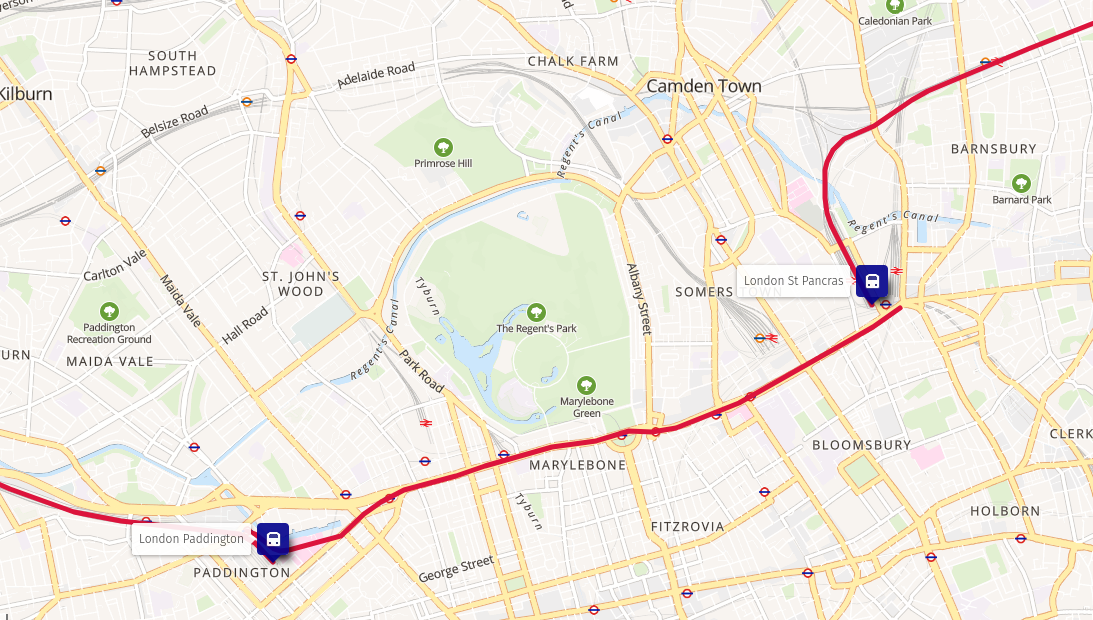
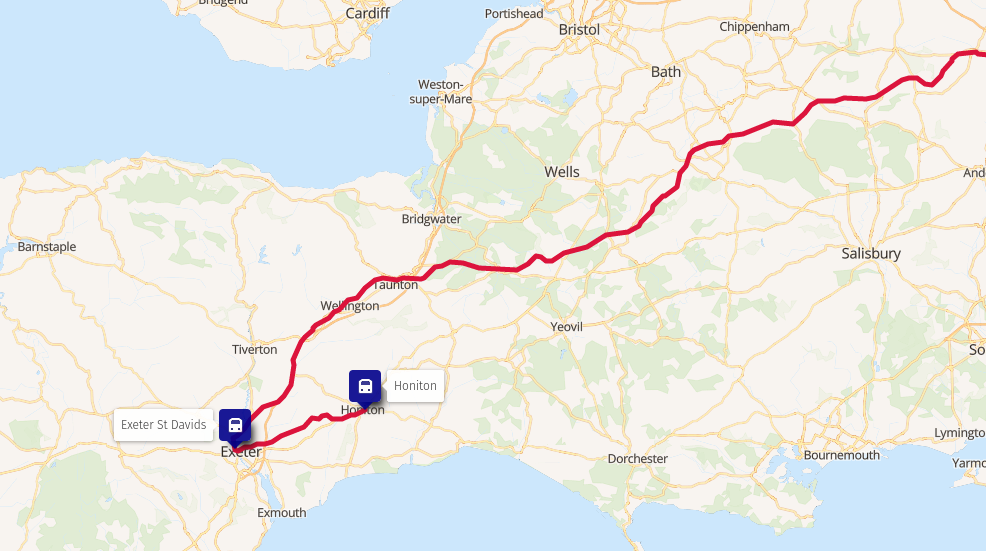
Andrej Shadura: To England by train (part 1)

This post was written in August 2021. Just as I was going to publish it, I received an email from BB stating that due to a railway strike in Germany my night train would be cancelled. Since the rest of the trip has already been booked well in advance, I had to take a plane to Charleroi and a bus to Brussels to catch my Eurostar. Ultimately, I ended up publishing it in April 2022, just as I m about to leave for a fully train-powered trip to the UK once again. Before the pandemic started, I planned to use the last months of my then-expiring UK visa and go to England by train. I ve completed two train long journeys by that time already, to Brussels and to Belarus and Ukraine, but this would be something quite different, as I wanted to have multiple stops on my way, use night trains where it made sense, and to go through the Channel Tunnel. The Channel Tunnel fascinated me since my childhood; I first read about it in the Soviet Science and Life magazine ( ) when I was seven. I ve never had the chance to use it though, since to board any train going though it I d first need to get to France, Belgium or the Netherlands, making it significantly more expensive than the cheap 30 Ryanair flights to Stansted. As the coronavirus spread across the world, all of my travel plans along with plans for a sabbatical had to be cancelled. During 2020, I only managed to go on two weekend trips to Prague and Budapest, followed by a two-weeks holiday on Crete (we returned just a couple of weeks before the infection numbers rose and lockdowns started). I do realise that a lot of people couldn t even have this much because the situation in their countries was much worse we were lucky to have had at least some travel. Fast forward to August 2021, I m fully vaccinated, I once again have a UK visa for five years, and the UK finally recognises the EU vaccination passports yay! I can finally go to Devon to see my mother and sister again. By train, of course. Compared to my original plan, this journey will be different: about the same or even more expensive than I originally planned, but shorter and with fewer stops on the way. My original plan would be to take multiple trains from Bratislava to France or Belgium and complete this segment of the trip in about three days, enjoying my stay in a couple of cities on the way. Instead, I m taking a direct NightJet from Vienna to Brussels, not stopping anywhere on the way.
Map: train route from Bratislava to BrusselsTrain route from Bratislava to Brussels
Since I was booking my trip just two weeks ahead, the price of the ticket is not that I hoped for, but much higher: 109 for the ticket itself and 60 for the berth (advance bookings could be about twice as cheap). Next, to London! Eurostar is still on a very much reduced schedule, running one train only from Amsterdam through Brussels and Lille to London each day. This means, of course, higher ticket prices (I paid about 100 for the ticket) and longer waiting time in Brussels my sleeper arrives about 10 am, but the Eurostar train is scheduled to depart at 3 pm.
Map: train route from Brussels to LondonTrain route from Brussels to London
The train makes a stop in Lille, which I initially suspected to be risky as at the time when I booked my tickets, as at the time France was on the amber plus list for the UK, requiring a quarantine upon arrival. However, Eurostar announced that they will assign travellers from Lille to a different carriage to avoid other passengers having to go to quarantine, but recently France was taken off the amber plus list. The train fare system in the UK is something I don t quite understand, as sometimes split tickets are cheaper, sometimes they re expensive, sometimes prices for the same service at different times can be vastly different, off-peak tickets don t say what exactly off-peak means (very few people in the UK are asked were able to tell me when exactly off-peak hours are). Curiously, transfers between train stations using London Underground services can be included into railway tickets, but some last mile connection like Exeter to Honiton cannot (but this used to be possible). Both GWR.com and TrainLine refused to sell me a single ticket from London to Honiton through Exeter, insisting I split the ticket at Exeter St Davids or take the slower South Western train to Honiton via Salisbury and Yeovil. I ended up buying a 57 ticket from Paddington to Exeter St Davids with the first segment being the London Underground from St Pancras, and a separate 7.70 ticket to Honiton.
Map: arrival at St Pancras, the underground, departure from PaddingtonChange of trains in London
Map: arrival at Exeter St Davids, change to a South Western train, arrival at HonitonChange of trains in Exeter
Date Station Arrival Departure Train
12.8 Bratislava-Petr alka 18:15 REX 7756
Wien Hbf 19:15 19:53 NJ 50490
13.8 Bruxelles-Midi 9:55 15:06 EST 9145
London St Pancras 16:03 16:34 TfL
London Paddington 16:49 17:04 GWR 59231
Exeter St Davids 19:19 19:25 SWR 52706
Honiton 19:54
Unfortunately, due to the price of the tickets, I m taking a 15 Ryanair flight back Update after the journey Since I flew to Charleroi instead of comfortably sleeping in a night train, I had to put up with inconveniences of airports, including cumbersome connections to the nearby cities. The only reasonable way of getting from Charleroi to Brussels is an overcrowded bus which takes almost an hour to arrive. I used to take this bus when I tried to save money on my way to FOSDEM, and I must admit it s not something I missed. Boarding the Eurostar train went fine, my vaccination passport and Covid test wasn t really checked, just glanced at. The waiting room was a bit of a disappointment, with bars closed and vending machines broken. Since it was underground, I couldn t even see the trains until the very last moment when we were finally allowed on the platform. The train itself, while comfortable, disappointed me with the bistro carriage: standing only, instant coffee, poor selection of food and drinks. I m glad I bought some food at Carrefour at the Midi station! When I arrived in Exeter, I soon found out why the system refused to sell me a through ticket: 6 minutes is not enough to change trains at Exeter St Davids! Or, it might have been if I took the right footbridge but I took the one which led into a very talkative (and slow!) lift. I ended up running to the train just as it closed the doors and departed, leaving me tin Exeter for an hour until. I used this chance and walked to Exeter Central, and had a pint in a conveniently located pub around the corner. P.S. The maps in this and other posts were created using uMap; the map data come from OpenStreetMap. The train route visualisation was generated with help of the Raildar.fr OSRM instance.

Russell Coker: Joplin Notes

In response to my post about Android phones without Google Play [1] I received an email recommending Joplin for notes on Android [2]. Joplin supports storing notes on a number of protocols including Nextcloud and WebDAV. I setup WebDAV because it s easiest, here is Digital Ocean instructions for WebDAV on Apache [3]. That basically works. One problem for my use case is that the Joplin client doesn t support accounts on multiple servers and the only released way of sharing notes between accounts is using the paid Joplin Cloud service. There is a Joplin Server in beta which allows sharing notes but that is designed to run in Docker and is written in TypeScript so it was too much pain to setup. One mitigating factor is that there are Notebooks which are collections of notes. So if multiple people who trust each other share an account they can have Notebooks for personal notes and a Notebook for shared notes. There is also a Snap install of the client for Debian [4]. Snap isn t my favourite way of doing things but packaging JavaScript programs will probably be painful so I ll do it if I continue using Joplin.

21 April 2022

Andy Simpkins: Firmware and Debian

There has been a flurry of activity on the Debian mailing lists ever since Steve McIntyre raised the issue of including non-free firmware as part of official Debian installation images. Firstly I should point out that I am in complete agreement with Steve s proposal to include non-free firmware as part of an installation image. Likewise I think that we should have a separate archive section for firmware. Because without doing so it will soon become almost impossible to install onto any new hardware. However, as always the issue is more nuanced than a first glance would suggest. Lets start by defining what is firmware? Firmware is any software that runs outside the orchestration of the operating system. Typically firmware will be executed on a processor(s) separate from the processor(s) running the OS, but this does not need to be the case. As Debian we are content that our systems can operate using fully free and open source software and firmware. We can install our OS without needing any non-free firmware. This is an illusion! Each and every PC platform contains non-free firmware It may be possible to run free firmware on some Graphics controllers, Wi-Fi chip-sets, or Ethernet cards and we can (and perhaps should) choose to spend our money on systems where this is the case. When installing a new system we might still be forced to hold our nose and install with non-free firmware on the peripheral before we are able to upgrade it to FLOSS firmware later if this is exists or is even possible to do so. However after the installation we are running a full FLOSS system in terms of software and firmware. We all (almost without exception) are running propitiatory firmware whether we like it or not. Even after carefully selecting graphics and network hardware with FLOSS firmware options we still haven t escaped from non-free-firmware. Other peripherals contain firmware too each keyboard, disk (SSDs and Spinning rust). Even your USB memory stick that you use to contain the Debian installation image contains a microcontroller and hence also contains firmware that runs on it.
  1. Much of this firmware can not even be updated.
  2. Some can be updated, but is stored in FLASH ROM and the hardware vendor has defeated all programming methods (possibly circumnavigated with a hardware mod).
  3. Some of it can be updated but requires external device programmers (and often the programming connections are a series of test points dotted around the board and not on a header in order to make programming as difficult as possible).
  4. Sometimes the firmware can be updated from within the host operating system (i.e. Debian)
  5. Sometimes, as Steve pointed out in his post, the hardware vendor has enough firmware on a peripheral to perform basic functions perhaps enough to install the OS, but requires additional firmware to enable specific feature (i.e. higher screen resolutions, hardware accelerated functions etc.)
  6. Finally some vendors don t even bother with any non-volatile storage beyond a basic boot loader and firmware must be loaded before the device can be used in any mode.
What about the motherboard? If we are lucky we might be able to run a FLOSS implementation of the UEFI subsystem (edk2/tianocore for example), indeed the non AMD64/i386 platforms based around ARM, MIPS architectures are often the most free when it comes to firmware. What about the microcode on the processor? Personally I wasn t aware that that this was updatable firmware until the Spectre and Meltdown classes of vulnerabilities arose a few years back. So back to Debian images including non-free firmware. This is specifically to address the last two use cases mentioned above, i.e. where firmware needs to be loaded to achieve a minimum functioning of a device. Although it could also include motherboard support, and microcode as well. As far as I can tell the proposal exists for several reasons: #1 Because some freely distributable firmware is required for more and more devices, in order to install Debian, or because whilst Debian can be installed a desktop environment can not be started or fully function #2 Because frankly it is less work to produce, test and maintain fewer installation images As someone who performs tests on our images, this clearly gets my vote :-) and perhaps most important of all.. #3 Because our least experienced users, and new users will download an official image and give up if things don t just work TM Steve s proposal option 5 would address theses issues and I fully support it. I would love to see separate repositories for firmware and firmware-none free. Additionally to accompany firmware non-free I would like to have information on what the firmware actually does. Can I run my hardware without it, what function(s) are limited without the firmware, better yet is there a FLOSS equivalent that I can load instead? Is this something that we can present in Debian installer? I would love not to require non-free firmware, but if I can t, I would love if DI would enable a user to make an informed choice as to what, if any, firmware is installed. Should we be requesting (requiring?) this information for any non-free firmware image that we carry in the archive? Finally lets consider firmware in the wider general case, not just the case where we need to load firmware from within Debian each and every boot. Personally I am annoyed whenever a hardware manufacturer has gone out of their way to prevent firmware updates. Lets face it software contains bugs, and we can assume that the software making up a firmware image will as well. Critical (security) vulnerabilities found in firmware, especially if this runs on the same processor(s) as the OS can impact on the wider system, not just the device itself. This will mean that, without updatable firmware, the hardware itself should be withdrawn from use whilst it would otherwise still function. By preventing firmware updates vendors are forcing early obsolescence in the hardware they sell, perhaps good for their bottom line, but certainly no good for users or the environment. Here I can practice what I preach. As an Electronic Engineer / Systems architect I have been beating the drum for In System Updatable firmware for ALL programmable devices in a system, be it a simple peripheral or a deeply embedded system. I can honestly say that over the last 20 years (yes I have been banging this particular drum for that long) I have had 100% success in arguing this case commercially. Having device programmers in R&D departments is one thing, but that is additional cost for production, and field service. Needing custom programming headers or even a bed of nails fixture to connect your target device to a programmer is more trouble than it is worth. Finally, the ability to update firmware in the field means that you can launch your product on schedule, make a sale and ship to a customer even if the first thing that you need to do is download an update. Offering that to any project manager will make you very popular indeed. So what if this firmware is non-free? As long as the firmware resides in non-volatile media without needing the OS to interact with it, we as a project don t need to carry it in our archives. And we as principled individuals can vote with our feet and wallets by choosing to purchase devices that have free firmware. But where that isn t an option, I ll take updatable but non-free firmware over non-free firmware that can not be updated any day of the week. Sure, the manufacture can choose to no longer support the firmware, and it is shocking how soon this happens often in the consumer market, the manufacture has withdrawn support for a product before it even reaches the end user (In which case we should boycott that manufacture in future until they either change their ways of go bust). But again if firmware can be updated in system that would at least allow the possibility of open firmware to arise. Indeed the only commercial case I have seen to argue against updatable firmware has been either for DRM, in which case good lets get rid of both, or for RF licence compliance, and even then it is tenuous because in this case the manufacture wants ISP for its own use right up until a device is shipped out the door, typically achived by blowing one time programmable fuse links .

20 April 2022

Ritesh Raj Sarraf: Btrfs Subvol Fix

There surely is need for better tooling on the BTRFS File System side. While migrating my setup from one machine to another, this is one issue I came to be aware of, only today, when my backup tool (btrbk) complained about it. Following the pointers, I see the below snippet in btrfs-subvolume manual page.
       A snapshot that was created by send/receive will be read-only, with different last change generation, read-only and with set received_uuid which identifies the subvolume on the
       filesystem that produced the stream. The usecase relies on matching data on both sides. Changing the subvolume to read-write after it has been received requires to reset the
       received_uuid. As this is a notable change and could potentially break the incremental send use case, performing it by btrfs property set requires force if that is really desired by
       user.

           Note
           The safety checks have been implemented in 5.14.2, any subvolumes previously received (with a valid received_uuid) and read-write status may exist and could still lead to
           problems with send/receive. You can use btrfs subvolume show to identify them. Flipping the flags to read-only and back to read-write will reset the received_uuid manually. There
           may exist a convenience tool in the future.
Fixing the Received UUID: flag meant running the below:
rrs@priyasi:.../spool$ sudo btrfs sub show /
WARNING: the subvolume is read-write and has received_uuid set,
         don't use it for incremental send. Please see section
         'SUBVOLUME FLAGS' in manual page btrfs-subvolume for
         further information.
ROOTVOL
        Name:                   ROOTVOL
        UUID:                   122b0de1-e6f2-6845-aba0-6bf766c16526
        Parent UUID:            -
        Received UUID:          34772967-c709-5146-bf20-898f7dbc2c1f
        Creation time:          2021-12-02 19:59:29 +0530
        Subvolume ID:           256
        Generation:             138473
        Gen at creation:        7
        Parent ID:              5
        Top level ID:           5
        Flags:                  -
        Send transid:           35245
        Send time:              2021-12-02 19:59:29 +0530
        Receive transid:        34
        Receive time:           2021-12-02 20:13:11 +0530
        Snapshot(s):
                                ROOTVOL/.snapshots/1/snapshot
                                ROOTVOL/.snapshots/2/snapshot
22:40                      


rrs@priyasi:.../spool$ sudo btrfs property set / ro true
WARNING: read-write subvolume with received_uuid, this is bad
22:40                      


rrs@priyasi:.../spool$ sudo btrfs property set -f / ro false
22:40                      


rrs@priyasi:.../spool$ sudo btrfs sub show /
ROOTVOL
        Name:                   ROOTVOL
        UUID:                   122b0de1-e6f2-6845-aba0-6bf766c16526
        Parent UUID:            -
        Received UUID:          -
        Creation time:          2021-12-02 19:59:29 +0530
        Subvolume ID:           256
        Generation:             138473
        Gen at creation:        7
        Parent ID:              5
        Top level ID:           5
        Flags:                  -
        Send transid:           0
        Send time:              2021-12-02 19:59:29 +0530
        Receive transid:        138480
        Receive time:           2022-04-20 22:40:43 +0530
        Snapshot(s):
                                ROOTVOL/.snapshots/1/snapshot
                                ROOTVOL/.snapshots/2/snapshot
22:40                      
Hoping there won t be surprises in the coming months.

17 April 2022

Matthew Garrett: The Freedom Phone is not great at privacy

The Freedom Phone advertises itself as a "Free speech and privacy first focused phone". As documented on the features page, it runs ClearOS, an Android-based OS produced by Clear United (or maybe one of the bewildering array of associated companies, we'll come back to that later). It's advertised as including Signal, but what's shipped is not the version available from the Signal website or any official app store - instead it's this fork called "ClearSignal".

The first thing to note about ClearSignal is that the privacy policy link from that page 404s, which is not a great start. The second thing is that it has a version number of 5.8.14, which is strange because upstream went from 5.8.10 to 5.9.0. The third is that, despite Signal being GPL 3, there's no source code available. So, I grabbed jadx and started looking for differences between ClearSignal and the upstream 5.8.10 release. The results were, uh, surprising.

First up is that they seem to have integrated ACRA, a crash reporting framework. This feels a little odd - in the absence of a privacy policy, it's unclear what information this gathers or how it'll be stored. Having a piece of privacy software automatically uploading information about what you were doing in the event of a crash with no notification other than a toast that appears saying "Crash Report" feels a little dubious.

Next is that Signal (for fairly obvious reasons) warns you if your version is out of date and eventually refuses to work unless you upgrade. ClearSignal has dealt with this problem by, uh, simply removing that code. The MacOS version of the desktop app they provide for download seems to be derived from a release from last September, which for an Electron-based app feels like a pretty terrible idea. Weirdly, for Windows they link to an official binary release from February 2021, and for Linux they tell you how to use the upstream repo properly. I have no idea what's going on here.

They've also added support for network backups of your Signal data. This involves the backups being pushed to an S3 bucket using credentials that are statically available in the app. It's ok, though, each upload has some sort of nominally unique identifier associated with it, so it's not trivial to just download other people's backups. But, uh, where does this identifier come from? It turns out that Clear Center, another of the Clear family of companies, employs a bunch of people to work on a ClearID[1], some sort of decentralised something or other that seems to be based on KERI. There's an overview slide deck here which didn't really answer any of my questions and as far as I can tell this is entirely lacking any sort of peer review, but hey it's only the one thing that stops anyone on the internet being able to grab your Signal backups so how important can it be.

The final thing, though? They've extended Signal's invitation support to encourage users to get others to sign up for Clear United. There's an exposed API endpoint called "get_user_email_by_mobile_number" which does exactly what you'd expect - if you give it a registered phone number, it gives you back the associated email address. This requires no authentication. But it gets better! The API to generate a referral link to send to others sends the name and phone number of everyone in your phone's contact list. There does not appear to be any indication that this is going to happen.

So, from a privacy perspective, going to go with things being some distance from ideal. But what's going on with all these Clear companies anyway? They all seem to be related to Michael Proper, who founded the Clear Foundation in 2009. They are, perhaps unsurprisingly, heavily invested in blockchain stuff, while Clear United also appears to be some sort of multi-level marketing scheme which has a membership agreement that includes the somewhat astonishing claim that:

Specifically, the initial focus of the Association will provide members with supplements and technologies for:

9a. Frequency Evaluation, Scans, Reports;

9b. Remote Frequency Health Tuning through Quantum Entanglement;

9c. General and Customized Frequency Optimizations;


- there's more discussion of this and other weirdness here. Clear Center, meanwhile, has a Chief Physics Officer? I have a lot of questions.

Anyway. We have a company that seems to be combining blockchain and MLM, has some opinions about Quantum Entanglement, bases the security of its platform on a set of novel cryptographic primitives that seem to have had no external review, has implemented an API that just hands out personal information without any authentication and an app that appears more than happy to upload all your contact details without telling you first, has failed to update this app to keep up with upstream security updates, and is violating the upstream license. If this is their idea of "privacy first", I really hate to think what their code looks like when privacy comes further down the list.

[1] Pointed out to me here

comment count unavailable comments

14 April 2022

Reproducible Builds: Supporter spotlight: Amateur Radio Digital Communications (ARDC)

The Reproducible Builds project relies on several projects, supporters and sponsors for financial support, but they are also valued as ambassadors who spread the word about the project and the work that we do. This is the third instalment in a series featuring the projects, companies and individuals who support the Reproducible Builds project. If you are a supporter of the Reproducible Builds project (of whatever size) and would like to be featured here, please let get in touch with us at contact@reproducible-builds.org. We started this series by featuring the Civil Infrastructure Platform project and followed this up with a post about the Ford Foundation. Today, however, we ll be talking with Dan Romanchik, Communications Manager at Amateur Radio Digital Communications (ARDC).
Chris Lamb: Hey Dan, it s nice to meet you! So, for someone who has not heard of Amateur Radio Digital Communications (ARDC) before, could you tell us what your foundation is about? Dan: Sure! ARDC s mission is to support, promote, and enhance experimentation, education, development, open access, and innovation in amateur radio, digital communication, and information and communication science and technology. We fulfill that mission in two ways:
  1. We administer an allocation of IP addresses that we call 44Net. These IP addresses (in the 44.0.0.0/8 IP range) can only be used for amateur radio applications and experimentation.
  2. We make grants to organizations whose work aligns with our mission. This includes amateur radio clubs as well as other amateur radio-related organizations and activities. Additionally, we support scholarship programs for people who either have an amateur radio license or are pursuing careers in technology, STEM education and open-source software development projects that fit our mission, such as Reproducible Builds.

Chris: How might you relate the importance of amateur radio and similar technologies to someone who is non-technical? Dan: Amateur radio is important in a number of ways. First of all, amateur radio is a public service. In fact, the legal name for amateur radio is the Amateur Radio Service, and one of the primary reasons that amateur radio exists is to provide emergency and public service communications. All over the world, amateur radio operators are prepared to step up and provide emergency communications when disaster strikes or to provide communications for events such as marathons or bicycle tours. Second, amateur radio is important because it helps advance the state of the art. By experimenting with different circuits and communications techniques, amateurs have made significant contributions to communications science and technology. Third, amateur radio plays a big part in technical education. It enables students to experiment with wireless technologies and electronics in ways that aren t possible without a license. Amateur radio has historically been a gateway for young people interested in pursuing a career in engineering or science, such as network or electrical engineering. Fourth and this point is a little less obvious than the first three amateur radio is a way to enhance international goodwill and community. Radio knows no boundaries, of course, and amateurs are therefore ambassadors for their country, reaching out to all around the world. Beyond amateur radio, ARDC also supports and promotes research and innovation in the broader field of digital communication and information and communication science and technology. Information and communication technology plays a big part in our lives, be it for business, education, or personal communications. For example, think of the impact that cell phones have had on our culture. The challenge is that much of this work is proprietary and owned by large corporations. By focusing on open source work in this area, we help open the door to innovation outside of the corporate landscape, which is important to overall technological resiliency.
Chris: Could you briefly outline the history of ARDC? Dan: Nearly forty years ago, a group of visionary hams saw the future possibilities of what was to become the internet and requested an address allocation from the Internet Assigned Numbers Authority (IANA). That allocation included more than sixteen million IPv4 addresses, 44.0.0.0 through 44.255.255.255. These addresses have been used exclusively for amateur radio applications and experimentation with digital communications techniques ever since. In 2011, the informal group of hams administering these addresses incorporated as a nonprofit corporation, Amateur Radio Digital Communications (ARDC). ARDC is recognized by IANA, ARIN and the other Internet Registries as the sole owner of these addresses, which are also known as AMPRNet or 44Net. Over the years, ARDC has assigned addresses to thousands of hams on a long-term loan (essentially acting as a zero-cost lease), allowing them to experiment with digital communications technology. Using these IP addresses, hams have carried out some very interesting and worthwhile research projects and developed practical applications, including TCP/IP connectivity via radio links, digital voice, telemetry and repeater linking. Even so, the amateur radio community never used much more than half the available addresses, and today, less than one third of the address space is assigned and in use. This is one of the reasons that ARDC, in 2019, decided to sell one quarter of the address space (or approximately 4 million IP addresses) and establish an endowment with the proceeds. This endowment now funds ARDC s a suite of grants, including scholarships, research projects, and of course amateur radio projects. Initially, ARDC was restricted to awarding grants to organizations in the United States, but is now able to provide funds to organizations around the world.

Chris: How does the Reproducible Builds effort help ARDC achieve its goals? Dan: Our aspirational goals include: We think that the Reproducible Builds efforts in helping to ensure the safety and security of open source software closely align with those goals.
Chris: Are there any specific success stories that ARDC is particularly proud of? Dan: We are really proud of our grant to the Hoopa Valley Tribe in California. With a population of nearly 2,100, their reservation is the largest in California. Like everywhere else, the COVID-19 pandemic hit the reservation hard, and the lack of broadband internet access meant that 130 children on the reservation were unable to attend school remotely. The ARDC grant allowed the tribe to address the immediate broadband needs in the Hoopa Valley, as well as encourage the use of amateur radio and other two-way communications on the reservation. The first nation was able to deploy a network that provides broadband access to approximately 90% of the residents in the valley. And, in addition to bringing remote education to those 130 children, the Hoopa now use the network for remote medical monitoring and consultation, adult education, and other applications. Other successes include our grants to:

Chris: ARDC supports a number of other existing projects and initiatives, not all of them in the open source world. How much do you feel being a part of the broader free culture movement helps you achieve your aims? Dan: In general, we find it challenging that most digital communications technology is proprietary and closed-source. It s part of our mission to fund open source alternatives. Without them, we are solely reliant, as a society, on corporate interests for our digital communication needs. It makes us vulnerable and it puts us at risk of increased surveillance. Thus, ARDC supports open source software wherever possible, and our grantees must make a commitment to share their work under an open source license or otherwise make it as freely available as possible.
Chris: Thanks so much for taking the time to talk to us today. Now, if someone wanted to know more about ARDC or to get involved, where might they go to look? To learn more about ARDC in general, please visit our website at https://www.ampr.org. To learn more about 44Net, go to https://wiki.ampr.org/wiki/Main_Page. And, finally, to learn more about our grants program, go to https://www.ampr.org/apply/

For more about the Reproducible Builds project, please see our website at reproducible-builds.org. If you are interested in ensuring the ongoing security of the software that underpins our civilisation and wish to sponsor the Reproducible Builds project, please reach out to the project by emailing contact@reproducible-builds.org.

Next.

Previous.