Search Results: "dom"

8 January 2017

Bits from Debian: New Debian Developers and Maintainers (November and December 2016)

The following contributors got their Debian Developer accounts in the last two months: The following contributors were added as Debian Maintainers in the last two months: Congratulations!

6 January 2017

Elena 'valhalla' Grandi: Candy from Strangers

Candy from Strangers

A few days ago I gave a talk at ESC https://www.endsummercamp.org/ about some reasons why I think that using software and especially libraries from the packages of a community managed distribution is important and much better than alternatives such as pypi, nmp etc. This article is a translation of what I planned to say before forgetting bits of it and luckily adding it back as an answer to a question :)

When I was young, my parents taught me not to accept candy from strangers, unless they were present and approved of it, because there was a small risk of very bad things happening. It was of course a simplistic rule, but it had to be easy enough to follow for somebody who wasn't proficient (yet) in the subtleties of social interactions.

One of the reasons why it worked well was that following it wasn't a big burden: at home candy was plenty and actual offers were rare: I only remember missing one piece of candy because of it, and while it may have been a great one, the ones I could have at home were also good.

Contrary to candy, offers of gratis software from random strangers are quite common: from suspicious looking websites to legit and professional looking ones, to platforms that are explicitly designed to allow developers to publish their own software with little or no checks.

Just like candy, there is also a source of trusted software in the Linux distributions, especially those lead by a community: I mention mostly Debian because it's the one I know best, but the same principles apply to Fedora and, to some measure, to most of the other distributions. Like good parents, distributions can be wrong, and they do leave room for older children (and proficient users) to make their own choices, but still provide a safe default.

Among the unsafe sources there are many different cases and while they do share some of the risks, they have different targets with different issues; for brevity the scope of this article is limited to the ones that mostly concern software developers: language specific package managers and software distribution platforms like PyPi, npm and rubygems etc.

These platforms are extremely convenient both for the writers of libraries, who are enabled to publish their work with minor hassles, and for the people who use such libraries, because they provide an easy way to install and use an huge amount of code. They are of course also an excellent place for distributions to find new libraries to package and distribute, and this I agree is a good thing.

What I however believe is that getting code from such sources and using it without carefully checking it is even more risky than accepting candy from a random stranger on the street in an unfamiliar neighbourhood.

The risk aren't trivial: while you probably won't be taken as an hostage for ransom, your data could be, or your devices and the ones who run your programs could be used in some criminal act causing at least some monetary damage both to yourself and to society at large.

If you're writing code that should be maintained in time there are also other risks even when no malice is involved, because each package on these platform has a different policy with regards to updates, their backwards compatibility and what can be expected in case an old version is found to have security issues.

The very fact that everybody can publish anything on such platforms is both their biggest strength and their main source of vulnerability: while most of the people who publish their libraries do so with good intentions, attacks have been described and publicly tested, such as the fun typo-squatting http://incolumitas.com/2016/06/08/typosquatting-package-managers/ one (archived on http://web.archive.org/web/20160801161807/http://incolumitas.com/2016/06/08/typosquatting-package-managers) that published harmless malicious code under common typos for famous libraries.

Contrast this with Debian, where everybody can contribute, but before they are allowed full unsupervised access to the archive they have to establish a relationship with the rest of the community, which includes meeting other developers in real life, at the very least to get their gpg keys signed.

This doesn't prevent malicious people from introducing software, but raises significantly the effort required to do so, and once caught people can usually be much more effectively prevented from repeating it than a simple ban on an online-only account can do.

It is true that not every Debian maintainer actually does a full code review of everything that they allow in the archive, and in some cases it would be unreasonable to expect it, but in most cases they are at least reasonably familiar with the code to do at least bug triage, and most importantly they are in an excellent position to establish a relationship of mutual trust with the upstream authors.

Additionally, package maintainers don't work in isolation: a growing number of packages are being maintained by a team of people, and most importantly there are aspects that involve potentially the whole community, from the fact that new packages that enter the distribution are publicity announced on a mailing list to the various distribution-wide QA efforts.

Going back to the language specific distribution platforms, sometimes even the people who manage the platform themselves can't be fully trusted to do the right thing: I believe everybody in the field remembers the npm fiasco https://lwn.net/Articles/681410/ where a lawyer letter requesting the removal of a package started a series of events that resulted in potentially breaking a huge amount of automated build systems.

Here some of the problems were caused by some technical policies that caused the whole ecosystem to be especially vulnerable, but one big issue was the fact that the managers of the npm platform are a private entity with no oversight from the user community.

Here not all distributions are equal, but contrast this with Debian, where the distribution is managed by a community that is based on a social contract https://www.debian.org/social_contract and is governed via democratic procedures established in its https://www.debian.org/devel/constitution.

Additionally, the long history of the distribution model means that many issues have already been met, the errors have already been done, and there are established technical procedures to deal with them in a better way.

So, shouldn't we use language specific distribution platforms at all? No! As developers we aren't children, we are adults who have the skills to distinguish between safe and unsafe libraries just as well as the average distribution maintainer can do. What I believe we should do is stop treating them as a safe source that can be used blindly and reserve that status to actual trustful sources like Debian, falling back to the language specific platforms only when strictly needed, and in that case:

actually check carefully what we are using, both by reading the code and by analysing the development and community practices of the authors;
if possible, share that work by becoming ourselves maintainers of that library in our favourite distribution, to prevent duplication of effort and to give back to the community whose work we get advantage from.

Edit: fixed broken typosquatting url

5 January 2017

Jamie McClelland: End-to-End Encrypted group chats via XMPP

It's been over a year since my colleagues and I at the Progressive Technology Project abandoned Skype, first for IRC and soon after for XMPP. Thanks to the talented folks maintaining conversations.im it's been a breeze to get everyone setup with accounts (8 Euros/year is quite worth it) and a group chat going. However, our group chats have not been using end-to-end encryption... until now. It wasn't exactly painless, so I'm sharing some tips and tricks. Anyone interested in secure XMPP may also find the Riseup XMPP page useful.

4 January 2017

Dominique Dumont: New with cme: a GUI to configure Systemd services

Hello Systemd is powerful, but creating a new service is a task that require creating several files in non obvious location (like /etc/systemd/system or ~/.local/share/systemd/user/). Each file features 2 or more sections (e.g. [Unit], [Service]). And each section supports a lot of parameters. Creating such Systemd configuration files can be seen as a daunting task for beginners. cme project aims to make this task easier by providing a GUI that: For instance, on my laptop, the command cme edit systemd-user shows 2 custom services ( free-imap-tunnel@ and gmail-imap-tunnel@ ) with: cme_edit_systemd_001 The GUI above shows the units for my custom systemd files:
$ ls ~/.config/systemd/user/
free-imap-tunnel@.service
free-imap-tunnel.socket
gmail-imap-tunnel@.service
gmail-imap-tunnel.socket
sockets.target.wants
and the units installed by Debian packages:
$ find /usr/lib/systemd/user/ -maxdepth 1 \
  '(' -name '*.service' -o -name '*.socket' ')' \
  -printf '%f\n'  sort  head -15
at-spi-dbus-bus.service
colord-session.service
dbus.service
dbus.socket
dirmngr.service
dirmngr.socket
glib-pacrunner.service
gpg-agent-browser.socket
gpg-agent-extra.socket
gpg-agent.service
gpg-agent.socket
gpg-agent-ssh.socket
obex.service
pulseaudio.service
pulseaudio.socket
The screenshot above shows the content of the service defined by the following file:
$ cat ~/.config/systemd/user/free-imap-tunnel@.service
[Unit]
Description=Tunnel IMAPS connections to Free with Systemd
[Service]
StandardInput=socket
# no need to install corkscrew
ExecStart=-/usr/bin/socat - PROXY:127.0.0.1:imap.free.fr:993,proxyport=8888
Note that empty parameters are not shown because the hide empty value checkbox on top right is enabled. Likewise, cme is able to edit system files like user files with sudo cme edit systemd: cme_edit_systemd_001 For more details on how to use the GUI to edit systemd files, please see: Using a GUI may not be your cup of tea. cme can also be used as a validation tool. Let s add a parameter with an excessive value to my service:
$ echo "CPUShares = 1000000" >> ~/.local/share/systemd/user/free-imap-tunnel@.service
And check the file with cme:
$ cme check systemd-user 
cme: using Systemd model
loading data
Configuration item 'service:"free-imap-tunnel@" Service CPUShares' has a wrong value:
        value 1000000 > max limit 262144
ok, let s fix this with cme. The wrong value can either be deleted:
$ cme modify systemd-user 'service:"free-imap-tunnel@" Service CPUShares~'
cme: using Systemd model
Changes applied to systemd-user configuration:
- service:"free-imap-tunnel@" Service CPUShares: '1000000' -> ''
Or modified:
$ cme modify systemd-user 'service:"free-imap-tunnel@" Service CPUShares=2048'
cme: using Systemd model
Changes applied to systemd-user configuration:
- service:"free-imap-tunnel@" Service CPUShares: '1000000' -> '2048'
You can also view the specification of a service using cme:
$ cme dump systemd-user 'service:"free-imap-tunnel@"'---
Service:
  CPUShares: 2048
  ExecStart:
    - '-/usr/bin/socat -  PROXY:127.0.0.1:imap.free.fr:993,proxyport=8888'
  StandardInput: socket
Unit:
  Description: Tunnel IMAPS connections to Free with Systemd
The output above matches the content of the service configuration file:
$ cat ~/.local/share/systemd/user/free-imap-tunnel@.service
## This file was written by cme command.
## You can run 'cme edit systemd-user' to modify this file.
## You may also modify the content of this file with your favorite editor.
[Unit]
Description=Tunnel IMAPS connections to Free with Systemd
[Service]
StartupCPUWeight=100
CPUShares=2048
StartupCPUShares=1024
StandardInput=socket
# no need to install corkscrew now
ExecStart=-/usr/bin/socat -  PROXY:127.0.0.1:imap.free.fr:993,proxyport=8888
Last but not least, you can use cme shell if you want an interactive ui but cannot use a graphical interface:
$ cme shell systemd-user 
cme: using Systemd model
 >:$ cd service:"free-imap-tunnel@"  Service  
 >: service:"free-imap-tunnel@" Service $ ll -nz Exec*
name        type   value                                                             
 
ExecStart   list   -/usr/bin/socat -  PROXY:127.0.0.1:imap.free.fr:993,proxyport=8888
 >: service:"free-imap-tunnel@" Service $ ll -nz
name               type      value                                                             
 
StartupCPUWeight   integer   100                                                               
CPUShares          integer   2048                                                              
StartupCPUShares   integer   1024                                                              
StandardInput      enum      socket                                                            
ExecStart          list      -/usr/bin/socat -  PROXY:127.0.0.1:imap.free.fr:993,proxyport=8888
 >: service:"free-imap-tunnel@" Service $ set CPUShares=1024
 >: service:"free-imap-tunnel@" Service $ ll -nz CPUShares 
name        type      value
 
CPUShares   integer   1024 
 >: service:"free-imap-tunnel@" Service $ quit
Changes applied to systemd-user configuration:
- service:"free-imap-tunnel@" Service CPUShares: '2048' -> '1024'
write back data before exit ? (Y/n)
Currently, only service, socket and timer units are supported. Please create a bug report on github if you need more. Installation instructions are detailed at the beginning of Managing Systemd configuration with cme wiki page. As all softwares, cme probably has bugs. Please report any issue you might have with it. For more information: All in all, systemd is quite complex to setup. I hope I made a little bit easier to deal with. All the best
Tagged: config-model, configuration, Perl, systemd

Petter Reinholdtsen: Introducing ical-archiver to split out old iCalendar entries

Do you have a large iCalendar file with lots of old entries, and would like to archive them to save space and resources? At least those of us using KOrganizer know that turning on and off an event set become slower and slower the more entries are in the set. While working on migrating our calendars to a Radicale CalDAV server on our Freedombox server, my loved one wondered if I could find a way to split up the calendar file she had in KOrganizer, and I set out to write a tool. I spent a few days writing and polishing the system, and it is now ready for general consumption. The code for ical-archiver is publicly available from a git repository on github. The system is written in Python and depend on the vobject Python module. To use it, locate the iCalendar file you want to operate on and give it as an argument to the ical-archiver script. This will generate a set of new files, one file per component type per year for all components expiring more than two years in the past. The vevent, vtodo and vjournal entries are handled by the script. The remaining entries are stored in a 'remaining' file. This is what a test run can look like:
% ical-archiver t/2004-2016.ics 
Found 3612 vevents
Found 6 vtodos
Found 2 vjournals
Writing t/2004-2016.ics-subset-vevent-2004.ics
Writing t/2004-2016.ics-subset-vevent-2005.ics
Writing t/2004-2016.ics-subset-vevent-2006.ics
Writing t/2004-2016.ics-subset-vevent-2007.ics
Writing t/2004-2016.ics-subset-vevent-2008.ics
Writing t/2004-2016.ics-subset-vevent-2009.ics
Writing t/2004-2016.ics-subset-vevent-2010.ics
Writing t/2004-2016.ics-subset-vevent-2011.ics
Writing t/2004-2016.ics-subset-vevent-2012.ics
Writing t/2004-2016.ics-subset-vevent-2013.ics
Writing t/2004-2016.ics-subset-vevent-2014.ics
Writing t/2004-2016.ics-subset-vjournal-2007.ics
Writing t/2004-2016.ics-subset-vjournal-2011.ics
Writing t/2004-2016.ics-subset-vtodo-2012.ics
Writing t/2004-2016.ics-remaining.ics
%
As you can see, the original file is untouched and new files are written with names derived from the original file. If you are happy with their content, the *-remaining.ics file can replace the original the the others can be archived or imported as historical calendar collections. The script should probably be improved a bit. The error handling when discovering broken entries is not good, and I am not sure yet if it make sense to split different entry types into separate files or not. The program is thus likely to change. If you find it interesting, please get in touch. :) As usual, if you use Bitcoin and want to show your support of my activities, please send Bitcoin donations to my address 15oWEoG9dUPovwmUL9KWAnYRtNJEkP1u1b.

3 January 2017

Reproducible builds folks: Reproducible Builds: week 88 in Stretch cycle

What happened in the Reproducible Builds effort between Sunday December 25 and Saturday December 31 2016: Media coverage Reproducible bugs filed Chris West: Chris Lamb: Rob Browning: Reviews of unreproducible packages 7 package reviews have been added, 12 have been updated and 14 have been removed in this week, adding to our knowledge about identified issues. 2 issue types have been updated: Weekly QA work During our reproducibility testing, the following FTBFS bugs have been detected and reported by: diffoscope development strip-nondeterminism development try.diffoscope.org development tests.reproducible-builds.org Misc. This week's edition was written by Chris Lamb, Holger Levsen and was reviewed by a bunch of Reproducible Builds folks on IRC & the mailing lists.

Russ Allbery: Review: Castle of Wizardry

Review: Castle of Wizardry, by David Eddings
Series: The Belgariad #4
Publisher: Del Rey
Copyright: May 1984
Printing: September 1991
ISBN: 0-345-33570-8
Format: Mass market
Pages: 373
Castle of Wizardry is the fourth book of the Belgariad and very much the middle of the story. Despite coming after an intermediate climax, this isn't the sort of series you can start in the middle. The problem with intermediate climaxes in a long series is that the next book can be a bit of a let-down as the characters do the necessary regrouping and reorienting and determine next steps. I think that hurts Castle of Wizardry quite a lot. The best bits are at the beginning, as the party escapes the consequences of Magician's Gambit, collects one more party member, shows us a lot more of Errand (who is always delightful), and confounds Relg's life and world view considerably. (Although there's a good bit of authorial fiat in the last.) This builds into a major story event, which would normally help avoid the let-down after the climax, but it's the major story event that is so frequently and obviously foreshadowed that you'd have to be as dumb as, well, Garion to not know what's coming. That gives a certain "yes, yes, we know already" tone to proceedings that robs it of its ability to rebuild tension. That said, the appeal of this series continues to be in the small details. While the first major event of this book goes pretty much as expected (including Ce'Nedra's reaction, which is just as irritating as you might be expecting), my favorite part was the endless, bubbly enthusiasm of the incredibly powerful artifact that features heavily. Usually epic fantasy will treat such world-breaking objects with seriousness and awe, as treasures to be admired and sacred (or terrifying) great works. See, for instance, the ur-example of Tolkien's rings, both the One Ring and the elven rings of power. Eddings manages a mix of awe and bemusement that doesn't undermine their power but that adds a delightful human element. This series pulls off treating a powerful magical artifact like an over-enthusiastic puppy without making it feel any less dangerous. It's a very neat, and I think underappreciated, trick to pull off. Another part of this book I liked, if a more stock one, is Garion's reactions after the big story event. This isn't the first book to portray basic decency and thoughtfulness as a major feature in people from humble backgrounds elevated to great power, but I always enjoy seeing that. Garion stops whining (mostly) and starts acting like a decent, level-headed person who doesn't assume he has the right to arrange other people's lives, and is rewarded for it. Real life is often not that fair or ethical, but that's why one reads wish-fulfillment fantasy like this: for a world in which being a good person is rewarded. However, Eddings does have some structural issues here. The narrative arc of this book, as a stand-alone entity, is odd. Its most dramatic event is in the middle, and then has a long traveling section that's, by comparison, much less exciting. The events of that section feel more like random encounters than a coherent part of the story, and are preceded by the most utterly ridiculous temper tantrums. I think the tantrums were meant to be pure humor, but my reaction was primarily eye-rolling. I have a hard time reconciling a screaming fit and breaking furniture with the long life experience and thoughtful planning of the character in question. And then there is the Ce'Nedra section that closes this book, and Ce'Nedra in this book more generally. To be fair, Castle of Wizardry is clearly intended to be Ce'Nedra's moment to grow as a person and stop being a childish brat. This does happen somewhat, and there are moments in the last section of the book where she does admirable things. But I couldn't quite believe in the mechanism, and it doesn't help that it's one of the most ham-handed bits of pre-ordained success in a book that has a tendency towards them. That undermines the real attempts Eddings makes to ground that success in Ce'Nedra's actual skills. Also undermining this is that those skills are manipulating people shamelessly, which Eddings seems to think is charming and attractive and I... don't. But the real problem is that I flatly disbelieve in Ce'Nedra as a character, or, given the apparent existence of such a creature, the level of tolerance that other characters show her. If I'd been Polgara, within fifteen minutes of meeting her I would have been seriously debating whether the destruction of the world might be a small price to pay for the satisfaction of dumping her down the nearest well. And not only is she awful by herself but Garion also descends to the same level whenever he's around her, until both of them are behaving like blithering idiots. I suspect part of my issue is that, to the extent that she is realistic at all, Ce'Nedra is the sort of intensely high-drama person who I have some amount of life experience with, and that life experience says "do not let this person anywhere near your life." Red flags all over everything. Garion needs to nope the hell out, because this will not end well. (Except, of course, it will, because it's that sort of series and the power of the author is strong.) I want female characters with real agency in my fantasy, and I want a female protagonist who is doing things of equal importance as the male protagonist (not that Eddings attempts to go that far). But Ce'Nedra reads like a fictional character written by someone who had never met a woman, but has extensively studied female supporting characters in books about junior-high social cliques and then tried to reconcile that research with the stereotype of women as manipulative seductresses. Yes, this series is full of stereotypes and characters painted in broad strokes, but Ce'Nedra is several tiers below every other supporting character in the book in both believability and in my desire to read about her. It's not that Eddings doesn't know how to write women at all. Polgara still falls into a few stereotyped categories, but she's sensible, opinionated, and has clear agency throughout the story. Taiba is delightful, if minor here. Poledra is absolutely wonderful whenever she appears. Some of the queens are obviously practical and sensible. And this book features a surprisingly good resolution to the subplot around Barak's wife, although the mechanism is a bit eye-rollingly cliched. Ce'Nedra's character is unusual for the series and almost certainly a deliberate authorial choice, and this book is supposed to be her coming of age. But I am baffled by that choice, and there's very little about it that I enjoyed reading. One more minor complaint: Silk gets a "tragic secret" in this book, and I really wish he hadn't. More time with Silk is always a feature, and I still love the character, but his oddities were already adequately explained by both his innate character and his way of dealing with a particularly awkward court situation. (One that ties into Eddings's habit of using some bad relationship stereotypes, but that's a rant for another day.) I think this additional tragic secret was gratuitous and really unnecessary, not to mention weirdly implausible and oddly cruel towards the other character involved. I was hoping that Magician's Gambit had turned a corner for the series, but Castle of Wizardry, despite having some neat moments, has some serious flaws. One more book to go, in which we learn that some of the eastern races have redeeming qualities! Followed by Enchanter's End Game. Rating: 6 out of 10

Elizabeth Ferdman: 4 Week Progress Update for PGP Clean Room

Happy New Year Everyone! Aside from taking some time off for the holidays, I set up a Debian-Sid USB stick in order to test gnupg version 2.1.16-3, the version to be included in Debian Stretch. For now, I m using the package rng-tools to speed up the key creation for the purpose of testing gpg commands. By running sudo rngd -r /dev/urandom before the gpg command, you can create the keys in about a second. Here are some of the sources that I ve been using that inform the workflow and secure practices for gpg that we ll be including in the Clean Room: Some feature suggestions that were made by Neal Walfield that could be included in the workflow:
  1. Use a smartcard for the primary key and a smartcard for the subkeys
  2. Support subkey rotation the creation of new subkeys
  3. Upon finishing a session, write a script to the USB that sends mails with the signed keys and imports the user s public keys.

Maria Glukhova: Getting to know diffoscope better

I apologize to all potential readers of this blog for not writing a comprehensive Introduction post with details of the project I am taking part in during my internship, as well as some story about how I ended up there. Let me just say that I was a Debian user for years when I discovered it is taking part in Outreachy as one of organisations. Their Reproducible Builds effort has a noble goal and a bunch of great people behind it - I had no chances not to get excited by it. Looking for a place where my skills could be of any use, I discovered diffoscope - the tool for in-depth comparassion of files, archives etc. My mentor, Mattia Rizzolo, supported my decision to work on it, so now I am concentrating my efforts on improving diffoscope. As my first steps, I am doing small (but hopefully still somewhat important) job of fixing existing bugs. It helps me to better understand how diffoscope works, as well as introduces me to the workflow of opensource development. During December, I have done several small contributions, mostly fixing bugs.

Test data and jessie-backports First of them could be somewhat called cleaning up after my own mistake, although that mistake wasn t trivial. During the application period, I have fixed a bug with diffoscope failing while comparing symlinks to directory. That was a small change, but I included some tests for that case anyway. And that actually caused problems. With these tests, I included test data: two folders with symlinks. All was good in unstable version of Debian, but in jessie-backports, that commit caused build to fail. After some digging, I discovered the problem was caused by build process including copying that data. That was done using shutils Python module, and older version of that module, included in jessie, could not handle copying symlinks to directory properly. Thanks to my mentor for giving me a hint on how to resolve this: using temporary folders and creating these symlinks at runtime. That way, we ensured tests run without problems during build process on jessie. What have I learned: A great deal, actually. I spent too much time on that one, but I learned how to build packages, what happens during dpkg-buildpackage run and what debhelper tools are for. I also learned a bit about what chroot is and how to use it for testing.

ICC profile files and file type recognizing regexp Another one was also about failing tests and, therefore, failing build. Failing tests were all due to ICC files were not recognized by diffoscope. Turned out libmagic got an update which changed the description of ICC profile files. Diffoscope was relying on regexp applied to file type description to recognize the file, so I changed regexp to reflect the changes in libmagic. What have I learned: How diffoscope recognizes file types. Got me thinking: maybe there is a better way? That regexp-based approach is doomed to cause problems with every file type description change. I have this question still lingering in my mind - maybe I will come up with an idea later.

Order-like difference in text files Next, I decided to do something a bit bigger and fullfilled a feature request. That request was for detecting order-like difference in text files (when files has the same lines, but in different order). I did it by collecting added and removed lines in diff output in lists, sorting and then comparing them. Sadly, I forgot about one particular case - when one of the files is missing the newline at the end of file. I was kindly reminded of that quite soon in comments on the bug-tracker (thanks danielsh!) and have already fixed that. I also recieved feedback on how better implement it deeper in the diffoscope - not using the results of diff, but rather comparing sum of hashes of the lines directly in the difference module. I am yet to try that. What have I learned: That a call to diff is actually the slowest part of the diffoscope run when done on two big text files. Could it help somehow in speeding it up? I don t know yet. I also learned to comment on bugs in Debian bugtracker and was surprised by how much feedback I got. Thanks to my mentor for pushing me to do that - I definetely need to overcome my fear of communications to be more effective!

Random FTBFS There was also a very nasty bug that caused diffoscope to fail to be built from source randomly, failing with non-informative Fatal Python error: deallocated None. It already seemed strange when it was first reported; It got only more strange when suddenly that bug ceased to be reproducible. We hoped that would mean that bug was caused by some external tool, and was fixed there. Turns out it was not that easy. I tested this on two separate computers and on virtual machine; I used different versions of diffoscope. Well. Seems like that bug is still somehow tied to diffoscope version and not some external tool version - I still can do git checkout 64 and be able to reproduce the bug (still randomly, though). Although I spent quite a lot of time on that one, the only result was the information about connection between bug apperances and diffoscope version. I still wasn t able to get to the root of the problem - hopefully, someone else will be able to, given the information I found. What have I learned: git-bisect! Thanks to my friend for pointing me to it, that tool came handy in that situation. Also, got some experience in catching nasty bugs like that (pity that no experience in squashing them). I had some extra time commitements in December, one of them (Reproducible Builds Summit II) connected to my internship and one (my exam session in university) not. In January, I should be able to allocate more time to that work - I hope it will help me achieve more significant results. Many thanks to Mattia Rizzolo, Chris Lamb, Holger Levsen and all other folks of Reproducible Builds project - I cannot stress enough how important your support is to me. Wish you all a great 2017!

2 January 2017

Shirish Agarwal: India Tourism, E-Visa and Hong Kong

A Safe and Happy New Year to all. While Debconf India is still a pipe-dream as of now, did see that India has been gradually doing it easier for tourists and casual business visitors to come visit India. This I take as very positive development for India itself. The 1st condition is itself good for anybody visiting India
Eligibility International Travellers whose sole objective of visiting India is recreation , sight-seeing , casual visit to meet friends or relatives, short duration medical treatment or casual business visit.
https://indianvisaonline.gov.in/visa/tvoa.html That this facility is being given to 130 odd countries is better still
Albania, Andorra, Anguilla, Antigua & Barbuda, Argentina, Armenia, Aruba, Australia, Austria, Bahamas, Barbados, Belgium, Belize, Bolivia, Bosnia & Herzegovina, Botswana, Brazil, Brunei, Bulgaria, Cambodia, Canada, Cape Verde, Cayman Island, Chile, China, China- SAR Hong-Kong, China- SAR Macau, Colombia, Comoros, Cook Islands, Costa Rica, Cote d lvoire, Croatia, Cuba, Czech Republic, Denmark, Djibouti, Dominica, Dominican Republic, East Timor, Ecuador, El Salvador, Eritrea, Estonia, Fiji, Finland, France, Gabon, Gambia, Georgia, Germany, Ghana, Greece, Grenada, Guatemala, Guinea, Guyana, Haiti, Honduras, Hungary, Iceland, Indonesia, Ireland, Israel, Jamaica, Japan, Jordan, Kenya, Kiribati, Laos, Latvia, Lesotho, Liberia, Liechtenstein, Lithuania, Luxembourg, Madagascar, Malawi, Malaysia, Malta, Marshall Islands, Mauritius, Mexico, Micronesia, Moldova, Monaco, Mongolia, Montenegro, Montserrat, Mozambique, Myanmar, Namibia, Nauru, Netherlands, New Zealand, Nicaragua, Niue Island, Norway, Oman, Palau, Palestine, Panama, Papua New Guinea, Paraguay, Peru, Philippines, Poland, Portugal, Republic of Korea, Republic of Macedonia, Romania, Russia, Saint Christopher and Nevis, Saint Lucia, Saint Vincent & the Grenadines, Samoa, San Marino, Senegal, Serbia, Seychelles, Singapore, Slovakia, Slovenia, Solomon Islands, South Africa, Spain, Sri Lanka, Suriname, Swaziland, Sweden, Switzerland, Taiwan, Tajikistan, Tanzania, Thailand, Tonga, Trinidad & Tobago, Turks & Caicos Island, Tuvalu, UAE, Ukraine, United Kingdom, Uruguay, USA, Vanuatu, Vatican City-Holy See, Venezuela, Vietnam, Zambia and Zimbabwe.
This should make it somewhat easier for any Indian organizer as well as any participants from any of the member countries shared. There is possibility that this list would even get longer, provided we are able to scale our airports and all and any necessary infrastructure that would be needed for International Visitors to have a good experience. What has been particularly interesting is to know which ports of call are being used by International Visitors as well as overall growth rate
The Percentage share of Foreign Tourist Arrivals (FTAs) in India during November, 2016 among the top 15 source countries was highest from USA (15.53%) followed by UK (11.21%), Bangladesh (10.72%), Canada (4.66%), Russian Fed (4.53%), Australia (4.04%), Malaysia (3.65%), Germany (3.53%), China (3.14%), France (2.88%), Sri Lanka (2.49%), Japan (2.49%), Singapore (2.16%), Nepal (1.46%) and Thailand (1.37%).
And port of call
The Percentage share of Foreign Tourist Arrivals (FTAs) in India during November 2016 among the top 15 ports was highest at Delhi Airport (32.71%) followed by Mumbai Airport (18.51%), Chennai Airport (6.83%), Bengaluru Airport (5.89%), Haridaspur Land check post (5.87%), Goa Airport (5.63%), Kolkata Airport (3.90%), Cochin Airport (3.29%), Hyderabad Airport (3.14%), Ahmadabad Airport (2.76%), Trivandrum Airport (1.54%), Trichy Airport (1.53%), Gede Rail (1.16%), Amritsar Airport (1.15%), and Ghojadanga land check post (0.82%) .
The Ghojadanga land check post seems to be between West Bengal, India and Bangladesh. Gede Railway Station is also in West Bengal as well. So all and any overlanders could take any of those ways.Even Hardispur Land Check post comes in the Bengal-Bangladesh border only. In the airports, Delhi Airport seems to be attracting lot more business than the Mumbai Airport. Part of the reason I *think* is the direct link of Delhi Airport to NDLS via the Delhi Airport Express Line . The same when it will happen in Mumbai should be a game-changer for city too. Now if you are wondering why I have been suddenly talking about visas and airports in India, it came because Hong Kong is going to Withdraw Visa Free Entry Facility For Indians. Although, as rightly pointed out in the article doesn t make sense from economic POV and seems to be somewhat politically motivated. Not that I or anybody else can do anything about that. Seeing that, I thought it was a good opportunity to see how good/Bad our Government is and it seems to be on the right path. Although the hawks (Intelligence and Counter-Terrorist Agencies) will probably become a bit more paranoid , their work becomes tougher.
Filed under: Miscellenous Tagged: #Airport Metro Line 3, #CSIA, #Incredible India, #India, #International Tourism

1 January 2017

Joey Hess: p2p dreams

In one of the good parts of the very mixed bag that is "Lo and Behold: Reveries of the Connected World", Werner Herzog asks his interviewees what the Internet might dream of, if it could dream. The best answer he gets is along the lines of: The Internet of before dreamed a dream of the World Wide Web. It dreamed some nodes were servers, and some were clients. And that dream became current reality, because that's the essence of the Internet. Three years ago, it seemed like perhaps another dream was developing post-Snowden, of dissolving the distinction between clients and servers, connecting peer-to-peer using addresses that are also cryptographic public keys, so authentication and encryption and authorization are built in. Telehash is one hopeful attempt at this, others include snow, cjdns, i2p, etc. So far, none of them seem to have developed into a widely used network, although any of them still might get there. There are a lot of technical challenges due to the current Internet dream/nightmare, where the peers on the edges have multiple barriers to connecting to other peers. But, one project has developed something similar to the new dream, almost as a side effect of its main goals: Tor's onion services. I'd wanted to use such a thing in git-annex, for peer-to-peer sharing and syncing of git-annex repositories. On November 13th, I started building it, using Tor, and I'm releasing it concurrently with this blog post.
git-annex's Tor support replaces its old hack of tunneling git protocol over XMPP. That hack was unreliable (it needed a TCP on top of XMPP layer) but worse, the XMPP server could see all the data being transferred. And, there are fewer large XMPP servers these days, so fewer users could use it at all. If you were using XMPP with git-annex, you'll need to switch to either Tor or a server accessed via ssh.
Now git-annex can serve a repository as a Tor onion service, and that can then be accessed as a git remote, using an url like tor-annex::tungqmfb62z3qirc.onion:42913. All the regular git, and git-annex commands, can be used with such a remote. Tor has a lot of goals for protecting anonymity and privacy. But the important things for this project are just that it has end-to-end encryption, with addresses that are public keys, and allows P2P connections. Building an anonymous file exchange on top of Tor is not my goal -- if you want that, you probably don't want to be exchanging git histories that record every edit to the file and expose your real name by default. Building this was not without its difficulties. Tor onion services were originally intended to run hidden websites, not to connect peers to peers, and this kind of shows.. Tor does not cater to end users setting up lots of Onion services. Either root has to edit the torrc file, or the Tor control port can be used to ask it to set one up. But, the control port is not enabled by default, so you still need to su to root to enable it. Also, it's difficult to find a place to put the hidden service's unix socket file that's writable by a non-root user. So I had to code around this, with a git annex enable-tor that su's to root and sets it all up for you.
One interesting detail about the implementation of the P2P protocol in git-annex is that it uses two Free monads to build up actions. There's a Net monad which can be used to send and receive protocol messages, and a Local monad which allows only the necessary modifications to files on disk. Interpreters for Free monad actions can chose exactly which actions to allow for security reasons. For example, before a peer has authenticated, the P2P protocol is being run by an interpreter that refuses to run any Local actions whatsoever. Other interpreters for the Net monad could be used to support other network transports than Tor.
When two peers are connected over Tor, one knows it's talking to the owner of a particular onion address, but the other peer knows nothing about who's talking to it, by design. This makes authentication harder than it would be in a P2P system with a design like Telehash. So git-annex does its own authentication on top of Tor. With authentication, users would need to exchange absurdly long addresses (over 150 characters) to connect their repositories. One very convenient thing about using XMPP was that a user would have connections to their friend's accounts, so it was easy to share with them. Exchanging long addresses is too hard. This is where Magic Wormhole saved the day. It's a very elegant way to get any two peers in touch with each other, and the users only have to exchange a short code phrase, like "2-mango-delight", which can only be used once. Magic Wormhole makes some security tradeoffs for this simplicity. It's got vulnerabilities to DOS attacks, and its MITM resistance could be improved. But I'm lucky it came along just in time. So, it takes only installing Tor and Magic Wormhole, running two git-annex commands, and exchanging short code phrases with a friend, perhaps over the phone or in an encrypted email, to get your git-annex repositories connected and syncing over Tor. See the documentation for details. Also, the git-annex webapp allows setting the same thing up point-and-click style. The Tor project blog has throughout December been featuring all kinds of projects that are using Tor. Consider this a late bonus addition to that. ;) I hope that Tor onion services will continue to develop to make them easier to use for peer-to-peer systems. We can still dream a better Internet.
This work was made possible by all my supporters on Patreon.

Russ Allbery: Review: Secrets of Productive People

Review: Secrets of Productive People, by Mark Forster
Publisher: Teach Yourself
Copyright: 2015
ISBN: 1-4736-0885-6
Format: Kindle
Pages: 289
Regular readers of my reviews will know that Mark Forster is my favorite writer on time management and productivity. That's mostly because of his flexible toolkit approach that talks about theory and overall goals and then describes multiple ways to get there, rather than presenting a single system that will solve all your problems. There are a lot of writers who explain productivity tips and tricks or describe systems that work for them. There are fewer who can explain why those tricks work (and why they sometimes don't work), and even fewer who can put them into a meaningful analytical framework for thinking about productivity. Forster has several books, but they're a mixed bag. His clearest and most coherent book prior to this one was Do It Tomorrow. Secrets of Productive People is organized differently, chopped up in to small bite-sized chunks with synopses to an extent that it felt a bit choppy to me, but apart from that it's the closest I've seen to an updating of Do It Tomorrow. His other books can be slight (The Pathway to Awesomeness) or downright weird (How to Make Your Dreams Come True). I still have a soft spot for Do It Tomorrow, and I like how it was organized a bit better than this one, but I think Secrets of Productive People has become my new recommendation for where to start with Forster. Secrets of Productive People is divided into five sections: The basics of productivity, the productive attitude, productive projects, aids to productivity, and productivity in action. Each part is divided into several small chapters, which open with a generous helping of quotes about some productivity topic (and I'm going to go back and save some of those), present some easily-digestible related set of thoughts (usually with an exercise), and conclude with a summary. Each chapter is about the length of a long blog post. I think this structure interferes with developing an idea at greater length, but it does make for good reading material in an environment where you're regularly interrupted or only have five or ten minutes. I think I've mentioned in every review that Forster won me over by being willing to talk about the problems with attempting to do too much, not just presenting a system to allow one to accomplish more. Some other books, such as David Allen's famous Getting Things Done, seem to assume you already know what you need to get done, or will easily be able to figure that out when you think for a while, and just need a system to manage all the things you've decided to do. Forster takes the opposite approach, and this book is the clearest yet on this point: most productivity problems are not from being insufficiently efficient, but from doing the wrong things and too many things. You don't need more time; everyone gets the same amount of time. You need to do the right things with the time you have, and that usually means doing fewer things. Readers of Forster's previous books will recognize many of the themes here. Some of the techniques from Do It Tomorrow and some of the exercises from Get Everything Done show up again here. But Forster has streamlined and focused the advice, discarded some things, made his task management recommendations less elaborate and more focused, and spends much more time hammering home the point that the only prioritization that really matters is whether you commit to doing something or don't. The specific task management system he recommends here is one of the variations he's been talking about in his blog and is much simpler than the Do It Tomorrow system: pick five tasks, work on them until you've finished three of them, and then refill to five tasks. I've been using it since reading this book, replacing one of Forster's more elaborate systems from his blog, and it's surprisingly effective. He breaks down in some detail why this works and how to extract additional useful feedback information from it, and now I want to do some of the additional exercises he describes. (That said, I'm still dubious about his advice to not keep any larger to-do list and only rely on your analysis at the time of refilling the list to decide what to do. I use this system with a supplemental, longer list of ideas for future tasks, and that works better for me, although I do have to fight forming a sense of obligation about the things on the longer list. David Allen still has a point that if you don't write down a complete inventory of the things you're worrying about, your brain will try to obsess over them to keep from forgetting them.) The productive projects section told me some things I needed to hear about time commitments. Projects take regular, focused attention, and starting numerous things without giving them that attention is much worse than doing far fewer things but doing them regularly and reliably. I think Forster's coaching on focus and persistence is very valuable; the trick, of course, is building up your willpower for it and learning to say no. This is in-line with recent psychological analysis of multi-tasking and its various negative effects. The working to-do list capped at five things provides enough variety to mentally shift gears if one runs out of steam on some specific project while maintaining enough focus to not leave things behind half-done. The productivity aids section provides a more random collection of tips and tricks, many of which I've seen before in his previous books. I've mostly not tried these, so can't say much about how effective they are, but Forster's ideas almost always sound interesting and plausible. I thought the weakest part of the book was the last section, on applied productivity. Here, Forster takes various life areas (exercise, parenting, finances, writing, etc.) and talks about how the principles of this book can be applied to them. Each area could be a book in itself, and the short essay format of these chapters doesn't do justice to large topics. The result is a rather repetitive section that just stresses analysis, metrics, and repeated, focused attention all valid points, but ones you can pick up from the previous chapters. I don't think these case studies added much value. Do It Tomorrow is still my favorite Forster book to read, but I think Secrets of Productive People is now the best and most polished overview of his time management and productivity approach. If you're interested in this topic and not already sick of Forster from my previous recommendations, this would be a great place to start. I got a lot out of it even with all the time management reading I've previously done, and will probably re-read sections of it and try more of the exercises. Rating: 9 out of 10

31 December 2016

Jonathan McDowell: IMDB Top 250: Complete. Sort of.

Back in 2010, inspired by Juliet, I set about doing 101 things in 1001 days. I had various levels of success, but one of the things I did complete was the aim of watching half of the IMDB Top 250. I didn t stop at that point, but continued to work through it at a much slower pace until I realised that through the Queen s library I had access to quite a few DVDs of things I was missing, and that it was perfectly possible to complete the list by the end of 2016. So I did. I should point out that I didn t set out to watch the list because I m some massive film buff. It was more a mixture of watching things that I wouldn t otherwise choose to, and also watching things I knew were providing cultural underpinnings to films I had already watched and enjoyed. That said, people have asked for some sort of write up when I was done. So here are some random observations, which are almost certainly not what they were looking for.

My favourite film is not in the Top 250 First question anyone asks is What s your favourite film? . That depends a lot on what I m in the mood for really, but fairly consistently my answer is The Hunt for Red October. This has never been in the Top 250 that I ve noticed. Which either says a lot about my taste in films, or the Top 250, or both. Das Boot was in the list and I would highly recommend it (but then I like all submarine movies it seems).

The Shawshank Redemption is overrated I can t recall a time when The Shawshank Redemption was not top of the list. It s a good film, and I ve watched it many times, but I don t think it s good enough to justify its seemingly unbroken run. I don t have a suggestion for a replacement, however.

The list is constantly changing I say I ve completed the Top 250, but that s working from a snapshot I took back in 2010. Today the site is telling me I ve watched 215 of the current list. Last night it was 214 and I haven t watched anything in between. Some of those are films released since 2010 (in particular new releases often enter high and then fall out of the list over a month or two), but the current list has films as old as 1928 (The Passion of Joan of Arc) that weren t there back in 2010. So keeping up to date is not simply a matter of watching new releases.

The best way to watch the list is terrestrial TV There were various methods I used to watch the list. Some I d seen in the cinema when they came out (or was able to catch that way anyway - the QFT showed Duck Soup, for example). Netflix and Amazon Video had some films, but overall a very disappointing percentage. The QUB Library, as previously mentioned, had a good number of DVDs on the list (especially the older things). I ended up buying a few (Dial M for Murder on 3D Bluray was well worth it; it s beautifully shot and unobtrusively 3D), borrowed a few from friends and ended up finishing off the list by a Lovefilm one month free trial. The single best source, however, was UK terrestrial TV. Over the past 6 years Freeview (the free-to-air service here) had the highest percentage of the list available. Of course this requires some degree of organisation to make sure you don t miss things.

Films I enjoyed Not necessarily my favourite, but things I wouldn t have necessarily watched and was pleasantly surprised by. No particular order, and I m leaving out a lot of films I really enjoyed but would have got around to watching anyway.
  • Clint Eastwood films - Gran Torino and Million Dollar Baby were both excellent but neither would have appealed to me at first glance. I hated Unforgiven though.
  • Jimmy Stewart. I m not a fan of It s a Wonderful Life (which I d already watched because it s Lister s favourite film), but Harvey is obviously the basis of lots of imaginary friend movies and Rear Window explained a Simpsons episode (there were a lot of Simpsons episodes explained by watching the list).
  • Spaghetti Westerns. I wouldn t have thought they were my thing, but I really enjoyed the Sergio Leone films (A Fistful of Dollars etc.). You can see where Tarantino gets a lot of his inspiration.
  • Foreign language films. I wouldn t normally seek these out. And in general it seems I cannot get on with Italian films (except Life is Beautiful), but Amores Perros, Amelie and Ikiru were all better than expected.
  • Kind Hearts and Coronets. For some reason I didn t watch this until almost the end; I think the title always put me off. Turned out to be very enjoyable.

Films I didn t enjoy I m sure these mark me out as not being a film buff, but there are various things I would have turned off if I d caught them by accident rather than setting out to watch them. I ve kept the full list available, if you re curious.

Chris Lamb: Free software activities in December 2016

Here is my monthly update covering what I have been doing in the free software world (previous month):
Reproducible builds

Whilst anyone can inspect the source code of free software for malicious flaws, most software is distributed pre-compiled to end users. The motivation behind the Reproducible Builds effort is to permit verification that no flaws have been introduced either maliciously or accidentally during this compilation process by promising identical results are always generated from a given source, thus allowing multiple third-parties to come to a consensus on whether a build was compromised. This month:
I also made the following changes to our tooling:
diffoscope

diffoscope is our in-depth and content-aware diff utility that can locate and diagnose reproducibility issues.

  • Optimisations:
    • Avoid unnecessary string manipulation writing --text output (~20x speedup).
    • Avoid n iterations over archive files (~8x speedup).
    • Don't analyse .deb s twice when comparing .changes files (2x speedup).
    • Avoid shelling out to colordiff by implementing color support directly.
    • Memoize calls to distutils.spawn.find_executable to avoid excessive stat(1) syscalls.
  • Progress bar:
    • Show current file / ELF section under analysis etc. in progress bar.
    • Move the --status-fd output to use JSON and to include the current filename.
  • Code tidying:
    • Split out the try.diffoscope.org client so that it can be released separately on PyPI.
    • Completely rework the diffoscope and diffoscope.comparators modules, grouping similar utilities into their own modules, etc.
  • Miscellaneous:
    • Update dex_expected_diffs test to ensure compatibility with enjarify 1.0.3.
    • Ensure that running from Git will always use that checkout's Python modules.
    • Add a simple profiling framework.

strip-nondeterminism

strip-nondeterminism is our tool to remove specific non-deterministic results from a completed build.

  • Makefile.PL: Change NAME argument to a Perl package name.
  • Ensure our binaries are available in autopkgtest tests.

try.diffoscope.org

trydiffoscope is a web-based version of the diffoscope in-depth and content-aware diff utility. Continued thanks to Bytemark for sponsoring the hardware.

  • Show progress bar and position in queue, etc. (#25 & #26)
  • Promote command-line client with PyPI instructions.
  • Increase comparison time limit to 90 seconds.

buildinfo.debian.net

buildinfo.debian.net is my experiment into how to process, store and distribute .buildinfo files after the Debian archive software has processed them.

  • Added support for version 0.2 .buildinfo files. (#15)

Debian
Debian LTS

This month I have been paid to work 13 hours on Debian Long Term Support (LTS). In that time I did the following:
  • "Frontdesk" duties, triaging CVEs, etc.
  • Issued DLA 733-1 for openafs, fixing an information leak vulnerability. Due to incomplete initialization or clearing of reused memory, directory objects could contain 'dead' directory entry information.
  • Issued DLA 734-1 for mapserver closing an information leakage vulnerability.
  • Issued DLA 737-1 for roundcube preventing arbitrary remote code execution by sending a specially crafted email.
  • Issued DLA 738-1 for spip patching a cross-site scripting (XSS) vulnerability.
  • Issued DLA 740-1 for libgsf fixing a null pointer deference exploit via a crafted .tar file.

Debian Uploads
  • redis:
    • 3.2.5-5 Add RunTimeDirectory=redis to systemd .service files.
    • 3.2.5-6 Add missing Depends on lsb-base for /lib/lsb/init-functions usage in redis-sentinel's initscript.
    • 3.2.6-1 New upstream release.
    • 4.0-1 & 4.0-rc2-1 New upstream experimental releases.
  • aptfs: 0.9-1 & 0.10-1 New upstream releases.


Debian FTP Team

As a Debian FTP assistant I ACCEPTed 107 packages: android-platform-libcore, compiz, debian-edu, dehydrated, dh-cargo, gnome-shell-extension-pixelsaver, golang-1.8, golang-github-btcsuite-btcd-btcec, golang-github-elithrar-simple-scrypt, golang-github-pelletier-go-toml, golang-github-restic-chunker, golang-github-weaveworks-mesh, golang-google-genproto, igmpproxy, jimfs, kpmcore, libbio-coordinate-perl, libdata-treedumper-oo-perl, libdate-holidays-de-perl, libpgobject-type-bytestring-perl, libspecio-library-path-tiny-perl, libterm-table-perl, libtext-hogan-perl, lighttpd, linux, linux-signed, llmnrd, lua-geoip, lua-sandbox-extensions, lua-systemd, node-cli-cursor, node-command-join, node-death, node-detect-indent, node-domhandler, node-duplexify, node-end-of-stream, node-first-chunk-stream, node-from2, node-glob-stream, node-has-binary, node-inquirer, node-interpret, node-is-negated-glob, node-is-unc-path, node-lazy-debug-legacy, node-lazystream, node-load-grunt-tasks, node-merge-stream, node-object-assign-sorted, node-orchestrator, node-pkg-up, node-resolve-from, node-resolve-pkg, node-rx, node-sorted-object, node-stream-shift, node-streamtest, node-string.prototype.codepointat, node-strip-bom-stream, node-through2-filter, node-to-absolute-glob, node-unc-path-regex, node-vinyl, openzwave, openzwave-controlpanel, pcb-rnd, pd-upp, pg-partman, postgresql-common, pybigwig, python-acora, python-cartopy, python-codegen, python-efilter, python-flask-sockets, python-intervaltree, python-jsbeautifier, python-portpicker, python-pretty-yaml, python-protobix, python-sigmavirus24-urltemplate, python-sqlsoup, python-tinycss, python-watson-developer-cloud, python-zc.customdoctests, python-zeep, r-cran-dbitest, r-cran-dynlm, r-cran-mcmcpack, r-cran-memoise, r-cran-modelmetrics, r-cran-plogr, r-cran-prettyunits, r-cran-progress, r-cran-withr, ruby-clean-test, ruby-gli, ruby-json-pure, ruby-parallel, rustc, sagemath, sbuild, scram, sidedoor, toolz & yabasic. I additionally filed 4 RC bugs against packages that had incomplete debian/copyright files against jimfs, compiz, python-efilter & ruby-json-pure.

30 December 2016

Chris Lamb: My favourite books of 2016

Whilst I managed to read almost sixty books in 2016 here are ten of my favourites in no particular order. Disappointments this year include Stewart Lee's Content Provider (nothing like his stand-up), Christopher Hitchens' And Yet (his best essays are already published) and Heinlein's Stranger in a Strange Land (great exposition, bizarre conclusion). The worst book I finished, by far, was Mark Edward's Follow You Home.


https://images-eu.ssl-images-amazon.com/images/P/B010EAQLV2.01._PC__.jpg Animal QC Gary Bell, QC Subtitled My Preposterous Life, this rags-to-riches story about a working-class boy turned eminent lawyer would be highly readable as a dry and factual account but I am compelled to include it here for its extremely entertaining style of writing. Full of unsurprising quotes that take one unaware: would you really expect a now-Queen's Counsel to "heartily suggest that if you find yourself suffering from dysentery in foreign climes you do not medicate it with lobster thermidor and a bottle of Ecuadorian red?" A real good yarn.
https://images-eu.ssl-images-amazon.com/images/P/B0196HJ6OS.01._PC__.jpg So You've Been Publically Shamed Jon Ronson The author was initially recommended to me by Brad but I believe I started out with the wrong book. In fact, I even had my doubts about this one, prematurely judging from the title that it was merely cashing-in on a fairly recent internet phenomenon like his more recent shallow take on Trump and the alt-Right but in the end I read Publically Shamed thrice in quick succession. I would particularly endorse the audiobook version: Ronson's deadpan drawl suits his writing perfectly.
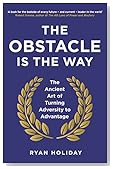
https://images-eu.ssl-images-amazon.com/images/P/B00IX49OS4.01._PC__.jpg The Obstacle is the Way Ryan Holiday Whilst everyone else appears to be obligated to include Ryan's recent Ego is the Enemy in their Best of 2016 lists I was actually taken by his earlier "introduction by stealth" to stoic philosophy. Certainly not your typical self-help book, this is "a manual to turn to in troubling times". Returning to this work at least three times over the year even splashing out on the audiobook at some point I feel like I learned a great deal, although it is now difficult to pinpoint exactly what. Perhaps another read in 2017 is thus in order
https://images-eu.ssl-images-amazon.com/images/P/071563335X.01._PC__.jpg Layer Cake J.J. Connolly To judge a book in comparison to the film is to do both a disservice, but reading the book of Layer Cake really underscored just how well the film played to the strengths of that medium. All of the aspects that would not have worked had been carefully excised from the screenplay, ironically leaving more rewarding "layers" for readers attempting the book. A parallel adaption here might be No Country for Old Men - I would love to read (or write) a comparative essay between these two adaptions although McCarthy's novel is certainly the superior source material.
https://images-eu.ssl-images-amazon.com/images/P/B00G1SRB6Q.01._PC__.jpg Lying Sam Harris I've absorbed a lot of Sam Harris's uvre this year in the form of his books but moreover via his compelling podcast. I'm especially fond of Waking Up on spirituality without religion and would rank that as my favourite work of his. Lying is a comparatively short read, more of a long essay in fact, where he argues that we can radically simplify our lives by merely telling the truth in situations where others invariably lie. Whilst it would take a brave soul to adopt his approach his case is superlatively well-argued and a delight to read.
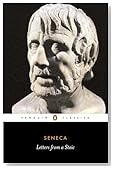
https://images-eu.ssl-images-amazon.com/images/P/0140442103.01._PC__.jpg Letters from a Stoic Seneca

Great pleasure is to be found not only in keeping up an old and established friendship but also in beginning and building up a new one. Reading this in a beautifully svelte hardback, I tackled a randomly-chosen letter per day rather than attempting to read it cover-to-cover. Breaking with a life-long tradition, I even decided to highlight sections in pen so I could return to them at ease. I hope it's not too hackneyed to claim I gained a lot from "building up" a relationship with this book. Alas, it is one of those books that is too easy to recommend given that it might make one appear wise and learned, but if you find yourself in a slump, either in life or in your reading habits, it certainly has my approval.


https://images-eu.ssl-images-amazon.com/images/P/B00BHD3TIE.01._PC__.jpg Solo: A James Bond Novel William Boyd I must have read all of the canonical Fleming novels as a teenager and Solo really rewards anyone who has done so. It would certainly punish anyone expecting a Goldeneye or at least be a little too foreign to be enjoyed. Indeed, its really a pastiche of these originals, both in terms of the time period, general tone (Bond is more somber; more vulnerable) and in various obsessions of Fleming's writing, such as the overly-detailed description of the gambling and dining tables. In this universe, 007's restaurant expenses probably contributed signifcantly to the downfall of the British Empire, let alone his waistline. Bond flicking through a ornithological book at one point was a cute touch
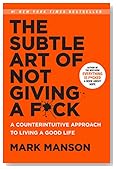
https://images-eu.ssl-images-amazon.com/images/P/B019MMUA8S.01._PC__.jpg The Subtle Art of Not Giving A F*ck Mark Manson Certainly a wildcard to include here and not without its problems, The Subtle Art is a curious manifesto on how to approach life. Whilst Manson expouses an age-old philosophy of grounding yourself and ignoring the accumulation of flatscreen TVs, etc. he manages to do so in a fresh and provocative "21st-centry gonzo" style. Highly entertaining, at one point the author posits an alternative superhero ("Disappointment Panda") that dishes out unsolicited and uncomfortable truths to strangers before simply walking away: "You know, if you make more money, that s not going to make your kids love you," or: "What you consider friendship is really just your constant attempts to impress people." Ouch.
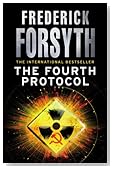
https://images-eu.ssl-images-amazon.com/images/P/B004ZLS5RK.01._PC__.jpg The Fourth Protocol Frederick Forsyth I have a crystal-clear memory from my childhood of watching a single scene from a film in the dead of night: Pierce Brosnan sets a nuclear device to detonate after he can get away but a double-crossing accomplice surreptitiously brings the timetable forward in order that the bomb also disposes of him Anyway, at some point whilst reading The Fourth Protocol it dawned on me that this was that book. I might thus be giving the book more credit due to this highly satisfying connection but I think it stands alone as a superlative political page-turner and is still approachable outside the machinations of the Cold War.
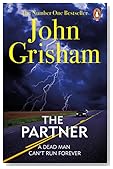
https://images-eu.ssl-images-amazon.com/images/P/B003IDMUSG.01._PC__.jpg The Partner John Grisham After indulging in a bit too much non-fiction and an aborted attempt at The Ministry of Fear, I turned to a few so-called lower-brow writers such as Jeffrey Archer, etc. However, it was The Partner that turned out to be a real page-turner for somewhat undefinable reasons. Alas, it appears the rest of the author's output is unfortunately in the same vein (laywers, etc.) so I am hesitant to immediately begin others but judging from various lists online I am glad I approached this one first.
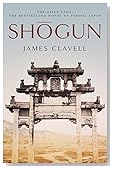
https://images-eu.ssl-images-amazon.com/images/P/B00D3J2QKC.01._PC__.jpg Shogun: The First Novel of the Asian saga James Clavell Despite its length, I simply couldn't resist returning to Shogun this year although it did fatigue me to the point that I have still yet to commence on its sequel, Tai-Pan. Like any good musical composition, one is always rewarded by returning to a book and I took great delight in uncovering more symbolism throughout (such as noticing that one of the first words Blackthorne learns in Japanese is "truth") but also really savouring the tragic arcs that run throughout the novel, some beautiful phrases ("The day seemed to lose its warmth ") and its wistful themes of inevitability and karma.

Russ Allbery: Review: Queen of Sorcery

Review: Queen of Sorcery, by David Eddings
Series: The Belgariad #2
Publisher: Del Rey
Copyright: November 1982
Printing: March 1992
ISBN: 0-345-33565-1
Format: Mass market
Pages: 322
Queen of Sorcery is the second book in the Belgariad, which is a "one story in five books" sort of series. You could probably take a chance on skipping Pawn of Prophecy, since it's not a very good book, but some parts of the story may be confusing without it. We're now getting into the part of the series where I can start saying some nice things about it, so I should put that in context and not get expectations too high. The Belgariad as a series is fully invested in the stock symbols and stereotypes of Tolkien-derivative fantasy. White is good; black is bad. West is good; east is bad. People are very neatly divided into countries, and national traits are exceptionally strong. The Murgos, the people who serve (although "under the thumb of" would be more accurate, Eddings doesn't spend much time thinking about the difference) the Big Bad of the series, are basically orcs, for all that they're theoretically human. With an unsympathetic reading, it's very easy to see the echos of the Yellow Peril in the war between the west and the east, including the standard trope of fractious, arguing, and diverse western kingdoms against a unified horde from the east. (To be fair, Eddings does undermine the unity a bit with the Nadraks later in the series, and my recollection is that the Mallorean, a follow-on series, undermines it even further.) Given that, I've been trying to figure out why I had fond memories of this series and enjoyed this re-read, since that normally isn't my thing. There are a few elements that are best talked about in the context of the next book, but one element shows up here as the party of heroes, finishing their forced detour in Cherek, head south through Arendia. Eddings is aware that he's stereotyping each nation of people in this world and embraces it so thoroughly that it stops feeling like stereotypes and starts feeling more like a fable. The Arends are a great example. Arendia is pure medieval fantasy world (even more so than the rest of this world). There are knights in castles, large forests reserved for noble hunting, and miserable serfs. The Arends, apart from the serfs, are full of tales of glory and honor, are impulsive and loyal to a fault, and are in the midst of a simmering internal war that's just barely not broken into open fighting. But the Arends know that they have an unhealthy obsession with honor, know that they constantly get themselves into trouble by being absolutist about honor and far too impulsive, and can't seem to help themselves. They bemoan the war while being apparently unable to do anything that would bring it to an end. If you think of them as people, none of this makes much sense. If you think of them as talking animals in a fable, aware of their natures but still governed by them, it starts to strangely work. When they're isolated from their society by joining the protagonists' party (the early part of this series mostly involves collecting people, for reasons explained later in the series, while following the trail of a thief), the characters of Eddings's world start developing a bit more nuance and depth. But even then, it's more within the bounds that one would expect in a long fable, and falls a bit short of human growth. The lion might learn something from the badger, but the lion is still a lion. With that frame, the first half of this book is rather entertaining. Eddings is taking the stereotype of the noble knight from a typical Arthurian romance and treating it like a class of animal in a fable, which I think is subtly delightful. There's even a doomed love triangle (a very chaste one, which is a reminder that this series was probably targeted at YA readers). The reader joins the primary characters in a sense of bemused exasperation. (Well, Garion takes the doomed love triangle much too seriously, but he's young). Unfortunately, the second half of this book is not one of the finest moments in this series. It's mostly a duet of whining. The first half of the whining comes from Garion, who finally discovers one of the many things about himself that's been obvious to the readers since the middle of the first book, and then promptly develops one of the worst cases of pathetic angst you'll encounter. The people who have been lying to him and keeping secrets from him are now all eager to teach him, which grates almost as much, whereas he's determined to never use his abilities. It makes me think the worst of absolutely everyone involved, and it all happens in one of the most depressing and disgusting settings of the book. The second half of the whining comes from Ce'Nedra, who is by far my least favorite character of this series. She's intended to be an obnoxious, spoiled, imperious brat, and also runs headlong into gender roles in this series, which means she's a living mass of irritation and gender stereotypes, made worse by the fact that the protagonists mostly tolerate her and Garion's reactions to her nonsense are also whiny and obnoxious. It's not my favorite bit of reading. Ce'Nedra does get marginally better later in the series, but she's at her worst here, at the same time Garion is at his worst, which makes the last half of this book a real chore. The only real plus side is that the voice in the back of Garion's head gets a few great moments, but more on that in the next book where it starts playing a prominent role. I should note here that Eddings isn't a complete disaster on gender in this series. There are a lot of unexamined stereotypes, but there are also a lot of examined ones, and it's obvious in places that he's trying. Polgara is a major character, women get some agency in this story, and they at least appear (which is never a given in Tolkien-derivative fantasy). But it's pretty obvious that gender roles start from a "men are from Mars, women are from Venus" set of expectations and then run into Eddings's general tendency to exaggerate all such divisions to fable levels, which in places isn't pretty. And, well, there are all-female giggly dryads who have to capture men to reproduce and who have a euphoric reaction to chocolate. That's a thing that happens. So you may or may not want to agree with me about the completeness of the disaster. Adjust expectations accordingly. If Queen of Sorcery had stuck with the tone of the first half of the book, I would say that it was doing something oddly interesting and showing some of the charm that made me want to re-read this series. Unfortunately, the second half of the book is a bit of a disaster, full of characters acting in ways that makes them very hard to like. Still, I plowed through this book in a couple nights of reading, so there's something here that draws one through the story. And the next book of the series is considerably better. Followed by Magician's Gambit. Rating: 6 out of 10

29 December 2016

Russ Allbery: Review: Pawn of Prophecy

Review: Pawn of Prophecy, by David Eddings
Series: The Belgariad #1
Publisher: Del Rey
Copyright: April 1982
Printing: August 1990
ISBN: 0-345-33551-1
Format: Mass market
Pages: 258
I hit a period in November when I felt like reading something entirely undemanding and fun, something that was predictable, comfortable, and guaranteed to be a happy ending. There are times in life for books like that. I've been vaguely thinking of re-reading the Belgariad for a while, which I'd not read since I was in college, and that seemed to fit the bill. Garion is a farm-boy in Sendaria, a quiet and industrious kingdom full of farmers. His only family is his Aunt Pol, who ran the kitchen at Faldor's farm. His life has all the hallmarks of being entirely unremarkable, despite occasional visits by a traveling vagabond, Wolf, who clearly knows his Aunt Pol. But then something extremely important is stolen elsewhere, Wolf and Pol have to leave to pursue it for reasons that are quite murky to Garion, and Pol is unwilling to leave Garion behind. This begins Garion's great adventure, in which he becomes far more important and powerful than he would have ever imagined. That's the promise, at least, and the stock plot of every series like this. And let me be clear up front: the Belgariad is very stock. That's part of what I was in the mood for, but don't come to this series looking for interesting differentiation. It's clearly in the center of the secondary world chosen one fantasy genre, with a great evil, forces of good arrayed against it, and someone who unknowingly has the power to stop evil but has to learn how to use it. If you're in the mood for this, every note will be comfortably familiar; if not, it might be boringly predictable. Unfortunately, this particular book does not cast the Belgariad in a good light. Garion's introduction to this story is intensely irritating, almost entirely because no one will tell him what's going on. Pol is excessively protective (smotheringly so), but shuts down any questions he has and doesn't explain why she's freaking out. (This doesn't become entirely clear until towards the end of the second book.) What little scraps Garion picks up, he has to get by eavesdropping. Even by the end of this book, when Garion has met royalty and started helping with larger political issues (albeit mostly by accident), everyone is keeping him in the dark and he doesn't believe the hints he's gotten. I can't remember how I reacted to this the first time I read this series, but the second time through, it was extremely frustrating. The frustration is stronger because any regular reader of this genre knows exactly what Garion is, although not precisely how the story will play out, and can make fairly good guesses about Pol and Wolf from early in the story. Everyone playing coy doesn't even add legitimate suspense or set up a big reveal. It just made me irritated at Garion's blindness (it's mildly understandable given how foreign the idea is to his life, but he seems remarkably dense even with that), and even more irritated at Wolf and, in particular, Aunt Pol for keeping him so thoroughly in the dark. Garion is very attached to his aunt; on this re-reading, I wasn't entirely sure why. She occasionally shows love and support, and she's certainly wise, but for most of the book she treats him with brusque condescension and tries to keep him as ignorant as possible. Garion's weird entanglement with a black rider that he'd seen for most of his life doesn't make this any better. It's creepy and disturbing, it's not entirely resolved in this book, and Garion is clearly in danger, which wasn't the vibe that I was looking for when starting this re-read. And it's hard to escape the feeling that Garion might have managed to tell someone if all the adult figures in his life weren't so secretive, dismissive, and excessively controlling. So, all in all, an inauspicious beginning. It was good enough to keep me reading when I first read the series, and it was good enough on this re-read, but just barely. The saving grace is Silk and Barak, when the story finally meets them. Those who have read this series will know that they're just the beginning of the party-building process that will take up much of this series (so many Lord of the Rings resonances), but the one thing I will give Eddings is that he writes entertaining supporting characters. Both of them are a bit stereotyped, but they add so much to this story. Silk in particular is a delight and remains a delight throughout the series, adding a much-needed level of snark and sneaky enjoyment that lightens so many of the serious episodes of this story. The Belgariad in general is highly derivative map exploration fantasy, and you shouldn't expect anything deeper. It is, however, enjoyable map exploration fantasy with some entertaining supporting cast members. Sadly, only the glimmers of that are visible from this book. Pawn of Prophecy is mostly an irritating tour of bad parenting techniques, refusal to talk to teenagers, sneaking around to get information that should have been legitimately shared, and taking forever to get around to the mythology that we all know is coming. I therefore can't recommend this book, although one does have to read it in order to read the rest of the series, which as I recall gets considerably better. Followed by Queen of Sorcery. Rating: 5 out of 10

27 December 2016

Dominique Dumont: New dzil command to install author dependencies as Debian packages

Hello Dist::Zilla is a great tool to limit tedious tasks while working on Perl modules. For instance, dzil provides tools like dzil authordeps or dzil listdeps to list dependencies.
This list of Perl modules can then be installed with cpanm:
dzil authordeps --missing   cpanm
dzil listdeps --missing   cpanm
On a Debian system, one may prefer to install Perl modules using Debian packages. Installing build dependencies can be done with apt build-dep, but apt does not handle Dist::Zilla author dependencies. The new authordebs Dist::Zilla sub-command was wriiten to fill this gap. When run in a directory containing the source of a Perl module that uses Dist::Zilla, you can run dzil installdebs to list the Debian packages required to run the dzil command. You can also run dzil installdebs -install to install author dependencies (using sudo under the hood). See: On Debian, authordebs is provided by libdist-zilla-app-command-authordebs-perl All the best
Tagged: debian, dist-zilla, Perl

26 December 2016

Russ Allbery: Review: The Kingdom of Gods

Review: The Kingdom of Gods, by N.K. Jemisin
Series: Inheritance #3
Publisher: Orbit
Copyright: 2011
Printing: April 2012
ISBN: 0-316-04394-X
Format: Mass market
Pages: 567
The Kingdom of Gods is the third and final book of the Inheritance trilogy and rests very heavily on the events of The Hundred Thousand Kingdoms and The Broken Kingdoms. I think it's the best book of the trilogy as well, but this isn't the place to start. The build-up from the previous books is very important to this story. The first book of this series followed Yeine in her introduction to the highly political, abusive, and exploitative world of the Arameri, and her deeper introduction to the complex theology and mythology of Jemisin's constructed world. The second involved fewer theological fireworks and more day-to-day decisions, but it followed the implications of the first book's climax and revealed another important lurking weapon from the past. The Kingdom of Gods returns to a theological focus, this time putting Sieh front and center, and is once again concerned with the fate of the entire world, or even reality itself. Sieh played a significant role in the first book, but only seen from Yeine's perspective. He's the trickster god, the god of childhood, of play and whim and unfairness and practical jokes, of all the chaos and lack of impulse control and impudence of childhood. The Kingdom of Gods opens with him encountering two Arameri children in the abandoned areas under Sky and making an unlikely and impulsive pledge of friendship. One that leads to an unexplained catastrophe, a long blackout, and possibly the end of his existence, since Sieh starts aging. And growing up directly undermines his power. One of the two children turns out to be the heir of the haughty, devious, and deeply racist Arameri, whose position atop the hierarchy of the world has been weakened by earlier events but not shaken entirely. Her relationship with Sieh is much more fraught and complex when both of them are teenagers and Sieh is struggling badly to remain true to himself. But what drives the plot is a deadly new form of magic that is targeting the Arameri family and threatening to bring back world-wide war. This is my favorite book of the trilogy, not so much because it brings a relatively satisfying conclusion (The Hundred Thousand Kingdoms wasn't bad at that either), but because for once I like all of the main characters. Yeine and Nahadoth are hit and miss (the second two books of the trilogy make it clear that Nahadoth can be a real asshole), and as mentioned in the review of The Broken Kingdoms, I found Shiny exasperating. But Sieh is fun, even when he's being obnoxious, and both of the kids he befriends are complex and multifaceted. Shahar, with her hard and complex relationship with her mother, is probably my favorite character in the book, but her brother certainly has his moments. I did not like Sieh's maturation process. There are parts of this story that are squirm-inducing, and not in a good way (at least for me). And he does tend to get whiny in places. But he knows everyone in Jemisin's complex mythology, he has a great first-person narrative voice, and there are some very fun moments of interaction with his sibling gods. It says something that I really enjoyed this story even though books about slow, ongoing illness and diminution are rather far from my favorites (and Sieh's aging falls into that category). While there are some beautiful set-pieces here once the shit starts to hit the fan in earnest, the concluding fireworks didn't really work for me. The final confrontation was too abstracted, too indescribable, and too full of ancillary carnage to be the ending I was looking for. (Perhaps because of what I've been playing recently, I keep thinking of it as one of those chaotic, floating, dream-like cut-scene disasters in a Final Fantasy game that's trying to hint at indescribable magic.) But the denouement made me happy, and it fit the characters. And don't miss the glossary at the end of the book that Sieh has scribbled all over. This book includes, as a bonus, a short story: "Not the End": This is the ending that The Broken Kingdoms actually needed. It (plus some key bits in the rest of The Kingdom of Gods) made me feel much better about the end of that book, and added a much-needed light note to the rather heavy bits at the end of this book. And I do love Oree. It's very short, and it's not in any way a standalone story (more of a belated epilogue to the previous novel), but that's all that was needed. (8) Rating: 8 out of 10

25 December 2016

Gregor Herrmann: RC bugs 2016/46-51

it's amazing how many new bugs appear; luckily in the Debian Perl Group we're not too bad at fixing them as well. here's the list of my contributions over the last weeks:

Next.

Previous.