Search Results: "willi"

8 August 2006

Aigars Mahinovs: SBackup revitalising - I18N

The development of SBackup was very stale for most of this year, mostly because many of the bug/feature that user were requesting required a significant rewrite of the codebase and at the same time I saw how messy the code has become over time. A few people came up and offered some help, but out of that only new icons and a command-line parameter parser were fully developed - other developers just took a task or a an idea and disappeared. However this week my trust in Open Source development model was reinforced by Jonh Wendell. He approached me yesterday about localising SBackup to Portuguese and was also willing to add the i18n support that was needed for that. I gave him all the details he needed and forgot about it. But today he came back with working code and a translation. That really inspired me to resume working on improving SBackup one little it at a time. Expect a new release version 0.10 soon with i18n and a few long awaited bugfixes. Also, if you want to translate SBackup to your language - use this file as your template. There are only 75 strings to translate. P.S. One happy user of SBackup donated some of his time cleaning up SBackup wiki from spam. Thank you for that! Now I only need a way to prevent the spam from coming back there :(

25 July 2006

Benjamin Seidenberg: New Box

So I’m planning a new box for college, and have come up with a tentative parts list. I am soliciting any advice and comments that people would be willing to offer. CPU: AMD Athlon 64 X2 3800+ Manchester 2000MHz HT 2 x 512KB L2 Cache Socket 939 Dual Core Processor - Retail
http://www.newegg.com/Product/Product.asp?Item=N82E16819103562
$169 (This was $289 2 days ago when I was pricing it - sweet) Motherboard: ASUS A8N5X Socket 939 NVIDIA nForce4 ATX AMD Motherboard - Retail
http://www.newegg.com/Product/Product.asp?Item=N82E16813131569
$84.99 RAM: CORSAIR XMS 2GB (2 x 1GB) 184-Pin DDR SDRAM Unbuffered DDR 400 (PC 3200) Dual Channel Kit System Memory - Retail
http://www.newegg.com/Product/Product.asp?Item=N82E16820145587
$207.00 Video: eVGA 256-P2-N553-AX Geforce 7600GT CO 256MB 128-bit GDDR3 PCI Express x16 Video Card - Retail
http://www.newegg.com/Product/Product.asp?Item=N82E16814130283
$169.99 (Before $30 mail-in rebate) Hard Drives: I was originally planning on doing 3 Western Digital Caviar SE16 WD2500KS 250GB 7200 RPM 16MB Cache SATA 3.0Gb/s Hard Drive - OEM (http://www.newegg.com/Product/Product.asp?Item=N82E16822144701, $82.99) in a RAID-5 (software) configuration but there is currently a sale on the Seagate Barracuda 7200.10 ST3320620AS (Perpendicular Recording Technology) 320GB 7200 RPM 16MB Cache SATA 3.0Gb/s Hard Drive - OEM (http://www.newegg.com/Product/Product.asp?Item=N82E16822148140) for $99.99 and I might just order three today. Enclosure/Power: Antec LifeStyle SONATA II Piano Black Steel ATX Mid Tower Computer Case 450Watt SmartPower 2.0 ATX 12V V2.0 for AMD & Intel systems Power Supply - Retail
http://www.newegg.com/Product/Product.asp?Item=N82E16811129155
$104.99 (But that’s a one-day sale price, I think it’s like $109.99 normally, though this is the 2nd day in a row it’s had a one-day sale. Both before $15 mail-in rebate). Optical Drive: Reusing my Sony DVD Burner from my current box. Not including shipping or rebates, the total price comes out as: $1035.94 Advice, comments, etc. are most definitely welcome as I don’t follow the hardware market.

24 July 2006

David Pashley: Strict feed parsers are useless

Erich, I'm not entirely sure what you did to break Planet, but using a strict feed parser will just result in you missing a significant number of entries. People sadly don't produce valid feeds and will blame your software rather than their feeds. It doesn't help that a number of validators aren't entirely strict and that RSS doesn't have a very comprehensive spec. RSS is a lot worse than Atom, in part thanks to the Atom validator and very well thought out spec. It's for this reason that I ended up writing Eddie rather than using ROME as it was a DOM parser and just failed to get any information out of a non-wellformed feed. Eddie on the other hand is a SAX-based parser. In a recent comparison, an Eddie based aggregator managed to correctly parse several more entries than a ROME based aggregator one particular day. You also have major aggregators being liberal. Sam Ruby discussed this recently with Bloglines becoming the defacto validator; if bloglines parses it, then it's valid. We had the same problem with HTML with people making sure their pages worked in a browser rather than met the spec. I suspect the problem you had with Planet is that you failed to close a tag, causing the rest of the page to be in bold or be a link etc. This is fairly easily solvable and in fact has been with FeedParser, which is the feed parsing library Planet uses. It has support for using HTMLTidy and similar libraries for fixing unbalanced elements. Eddie uses TagSoup to do a similar thing. As a result I've not noticed any particular entry leaking markup and breaking the page. Parhaps Planet Debian just needs to install one of the markup cleaning libraries. I agree that people should use XML tools where possible. Unfortunately, most blogging tools use text based templating systems, which makes producing non-wellformed XML too easy. To deal with this I pass all my output through an XSLT filter, which means that everything is either well formed or doesn't output at all. Unfortunately I don't think everyone would be capable or willing to use XSLT.

Bdale Garbee: A Culinary Pilgrimage

Just home from West Virginia, where my wife's family gather at her grandmother's house to celebrate Thanksgiving. The traditional turkey feast was pleasant as always, but the real culinary high point of this trip was on the way home... The closest major airport is Pittsburgh, we had a couple of extra hours on Saturday before our flight, and Karen and I are both graduates of CMU. So we decided to detour into Pittsburgh and and drive around a bit to see how things had changed over the years and what was still familiar. The biggest visible differences to us were on the river fronts, from the new stadium that replaced Three Rivers to what looks like a technology park built along the Monongahela under the parkway, where steel mills once stood. We didn't take time to do more than drive around the CMU perimeter, but even that let us see that the campus landscape has changed dramatically since we were students. Otherwise, most of the major landmarks that matter to us remain unchanged, including the apartment on South Millvale I lived in for all but my freshman years at CMU. But best of all, 'the O' was still alive and well on Forbes avenue! I'm sure I ate there an average of at least once a week from the time Steve Fisher introduced me to the place until I moved to Colorado. I often tell people that the best part of having to travel a lot for work is that I get to sample interesting foods from around the world... and many of my strongest travel memories are of meals enjoyed with interesting people and wonderful food. However, despite all those experiences, 'O' fries continue to rank near the very top of my list of foods I'm willing to go out of my way for. Even my 5-year-old son, who can be a lot pickier about what he'll eat than I like to admit, thanked me repeatedly on the flights home the rest of the afternoon for "making me try those french fries with cheese". Sometime, I'd love to spend enough time in Pittsburgh to see how many of the other places I used to love to eat are still around... In the meantime, a regular fix of chili dogs and fries at the 'O' are one of the few things I really miss about the years I spent in Pittsburgh.

22 July 2006

Gustavo Noronha Silva: 22 Jul 2006

So, some interesting things happened since I last reported. TurboGears finally entered experimental, and has received a bit of good feedback from some users; I became sqlobject co-maintainer, and packaged a svn snapshot to experimental to make that happen, too. TG 0.9a8 has just been uploaded, btw. Feedback would be great! I would welcome people willing to help on deciding the best way and doing packaging of TG add-on widgets. In other news, I've been doing some last feature aditions to libgksu and gksu. The former now ships a gksu-properties capplet that allows users to set up some of the behavior. The gconf options and this capplet surely need some love, but they'll get it in the future. After the "redesign" libgksu now holds almost all the code that does the gksu magic, and should be more secure in some ways. The application, gksu, ships a nautilus extension, which adds a 'open as administrator' item in the context menu for files and directories in Nautilus. I'd love to receive feedback and buf reports on this new feature. Right now the nautilus extension uses the gksu application, instead of the library, since there seems to be problems with doing async calls of libgksu inside of another main loop, or something, and I could not get it to work. The gksuexec application, which provided the 'Run as another user' menu item has been removed in these last versions. Will anyone miss it? I'm willing to have this functionality implemented in gksu itself, if needed, but I'm not sure it's that useful.

19 July 2006

Erich Schubert: nofollow followup.

Micah Dubinko blogs on rel="nofollow" being a failure. I have to agree that this doesn't really stop comment spammers currently. I still believe that it will help on the long run, since most blog software will now use it by default. And people have to upgrade from time to time due to the lastest PHP security issue... However, I would like Google or other search engines to offer some "spam submission". It would be best if they had a common submission server. Then we could use the moderation tools of our blogs to submit these bad URLs to Google, who in turn could take measures to strip them off their index (e.g. by moderating indexing for these URLs, reducing their pagerank, freezing their ranking for some weeks etc.) I'm of course aware of abuse possibilities (e.g. spam with your competitors URL); but most comment spam I've seen so far uses new sites anyway. I think you can detect these by charcteristical URLs, site contents, incoming links etc. As for myself, I've never enabled comments on my blog for the very reason that I'm not willing to moderate all that spam. In my guestbook (which is mostly to reduce the number of emails I get because of certain popular contents of my german web page; people will happily post in my guestbook instead of sending me an email now), I've recently enabled a very simple filter. It will just reject any entry which contains http:// anywhere. My users don't need that, and it has reduced spam to 0 again. And I don't care for the entries there anyway. ;-)

11 July 2006

Matthew Garrett

A while ago, some people were delegated to make a decision about debconf. The final decision was meant to be made at a meeting, at which various vaguely disturbing comments were made by a couple of the delegates.

Shortly before the second meeting that was supposed to really, certainly, no questions this time arrive at a decision, the project leader removed the delegations and altered the way that the meeting was going to be run.

Unsurprisingly, this resulted in some unhappiness, including accusations of power grabbing.

So. Let's take a slightly closer look at things. Some facts:Or:

In the worst case scenario, the response to certain outcomes of the meeting may have been a general resolution with the aim of overturning an existing decision

Such a GR would have been horribly divisive. It would have been open to accusations of prejudice or vested interests against all involved. It would have wasted vast quantities of time that could have been better spent, and whatever the outcome it would have left a shadow over next year's Debconf.

We'll never know whether this would have happened, but it's hardly unrealistic. Anthony was left in an awkward position - remove the delegates (an action that would undoubtedly result in some people being very unhappy), or allow things to continue and risk all-out warfare within the project. Was it the right call? Maybe. Maybe not. But he was willing to take the personal popularity hit in order to reduce the probability of intra-project conflict. That's the sort of thing that we elect leaders to do. We should be happy that a leader actually shows a willingness to make difficult decisions, rather than crucifying them for it.

26 June 2006

MJ Ray: Hi-Tech = Highly Toxic

The Greenpeace campaign against toxic e-waste is in the news today, following a survey that shows buyers are willing to pay a small extra [...] many mobile phone makers, hp and Dell have committed to phase-out. [...] Acer, Apple, IBM and Toshiba are in the hall of shame. Something to [... cont with links...]

23 June 2006

Ross Burton: GStreamer Bounty

I'm willing to start a bounty for someone to fix/port/implement the required pieces of GStreamer so that Sound Juicer can rip a whole CD, fully tagged (all tags SJ writes must be correctly encoded), to MPEG4 AAC (as used natively by iTunes). A requirement is that a music player that support MPEG4 files can see the tags without any extra work: the primary test for this will be importing the ripped files into iTunes. I think there are many people out there who would like this to happen, so I want to arrange a group bounty. Bounty County looked promising but I have to specify how much the bounty is up front, I can't just let the fund grow as people donate what they can. The Bounties section on Launchpad has the same limitation. Does anyone know a reputable site for managing donations like this, or should I just get register a new email address on PayPal and get people to donate there? Also to gauge how much interest there is in this, can anyone who would consider donating leave a comment? NP: Vertigo, Groove Armada

Clint Adams: In this parable, which member of the d-i team is which?

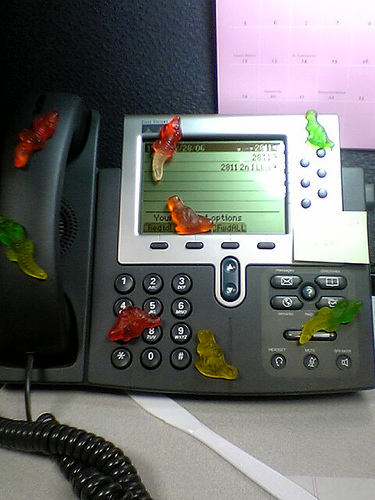
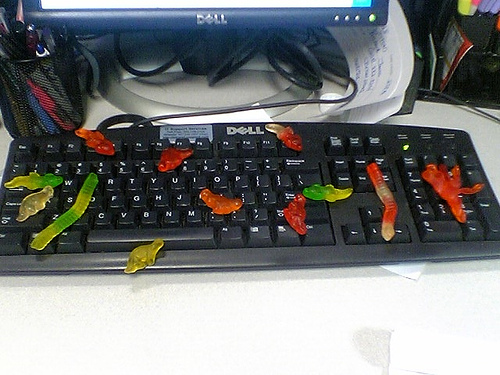
In the Year of the Mezcal, a prophecy was fulfilled. Don Gusano de Az car sired a critter the likes of which the world had never seen. This mahdi could not dispense honey, milk, orange juice, or ghee from his fingers. In point of fact, he had no fingers. What he had was the burning desire to liberate his brethren from the iron yoke of the She-Beast. He set up a vast terrorist network, the likes of which the world had seen many times over, for it was basically just a phone tree, a couple of code phrases, and a bunch of dullards. Then, having forged his legacy, he perished, suffering a series of strokes brought on by being forced to watch an episode of Full House . His minions bided their time until the coming of the Summer Solstice, and though they did not know how to say it in Portuguese, they eagerly sprang into action. [dialing phone] With daring and finesse, they commandeered an IP phone. [talking on phone] After 45 minutes of trying to add value, they failed to bring it to the table, since one major oversight was that they lacked any capacity to generate speech. H las ! cried the one that wasn't translucent at all, and he did so silently. [typing on keyboard] Cleverly devising a backup strategem, they rushed to a computer to send some emails. Unfortunately, Outlook crashed on them six times, and then they were, like, totally diverted by a fascinating exchange between two guys named BJ and William. By the time they managed. To send their first email. Which they typed like this. Because the little guy on the period key. Had a tick. It was too late. [STD transmission] Oh, you poor, foolish things! If only you had used free software, she wouldn't be giving you oral herpes right now.

21 June 2006

Jos Parrella: FLISOL Caracas: Ending

The Latin American Infest finally ended yesterday. In Caracas, it was a week of hard work with people of the Science and Technology Department and the IT Office (government offices) but the event in Caracas ended succesfully. It was a world-class event featuring renowned keynote speakers who spoke about Web Development using Frameworks (featuring TurboGears, Rails and Catalyst) and software development paradigms migration from privative platforms to GNU/Linux (Gambas and Mono). Other talks included basic security in Debian GNU/Linux and a speak about electronic signature security by an officer of the Venezuelan Government CA. We had a speak about Clusters, hosted by a female member of the Venezuelan Free Software Community and Debian User, and a speak about Free Software in the Venezuelan Education, by a 16-year-old Venezuelan GNU/Linux user and a willing Debian Maintainer. Of course, the Installation Festival took place in the Knowledge Square, in the Auditorium Building Lobby, with the extraordinary support of the Venezuelan Free Software Users Community. Debian GNU/Linux Sarge netinst and CD1 was distributed (several hundreds) as well as Knoppix and Ubuntu Hoary. Ernesto Hern ndez-Novich (maintainer) and me wore Debian T-Shirts on Saturday, and he made a great speech about the Project, named “Debian is inexorable“. We had demonstrations of Linux on a Mac Mini, using XGl and presenting several applications, as well as Debian running Enlightenment on an old Presario 1246 laptop. I would like to thank all the speakers and the attendees for making of FLISOL Caracas a great event. More information about FLISOL Caracas is in my blog and the homepage (spanish). Pics are here.

Jos Parrella: Shame, shame

I was at a client today when I remembered that David was due to arrive to Caracas circa 1430, so I called him to his brand-new-venezuelan-GSM-cellphone and I found out that he was in problems. In big, dark, awful problems. As I told in previous posts, he went to San Crist bal (near the border with Colombia) to visit his girl and know the city. He departed from Caracas in a bus on Friday night and arrived on Saturday morning. He spent the whole weekend there, and in Monday he was due to leave San Crist bal through the Mayor Buenaventura Vivas Military Airbase, in a civilian airplane. He arrived just on time for his flight, rushing to take the plane on time, and he was stopped by two so-called Inmigration Officials who demanded to see his passport. He recently got a new one from the Passport Office in Mexico City, so he had a brand new passport with the Venezuelan Entry Stamp (Mexicans don’t need a visa to enter Venezuela)
ONIDEX, the National Office for Inmigration. Praised for lots of people for fighting against Passport Corruption, kidnaps people in San Cristobal. The Officials told him that his passport was a fake, and they told him that, from this time on, he was under arrest. They made him leave the Airport quickly and took him in a civilian vehicle with no identifications. They started the trip to San Crist bal City (1 hour away from the Airport in a very scary road) and they kept telling him that his passport was fake (they claimed that the Passport didn’t have the watermarks, and stuff) Soon their position changed and a common practice in Venezuelan officials started: extorsion. They told him that there were “several ways to fix the problem”, and asked him what was in his backpack (which had a laptop, but he denied it): they were demanding money, and David wasn’t prone to do that.
National Guard. Doesn’t have a /proc/clue about anything. They drove David to the Inmigration Office in San Crist bal and told him that they “made” some tests to the passport and they determined that the passport was fake. They told David that their “Commander” told they that he should be deported into Colombia, since he was a “very important member of a Cartel that they were willing to capture”
DISIP: the Venezuelan Political Police. They were helpful in this episode, but they’re not angels. Finally, hours after that charade of Officials telling him funny laws, stupid suppositions and wanting him to give them money, they left David in the Bus Terminal in San Crist bal, where he was able to talk to Ana, from Debian Venezuela, which picked him up and went back to the Airport. The two “Officials” weren’t there anymore, and he had a last problem with the National Guard which had stupid suppositions about his trip, and stuff (this is common, but at least it’s not illegal) before he was able to get into the plane. Being in Caracas, I was really worried. Between Ana, my mother and me we were able to move several people to check David status in the Airport (my mother called four members of the Venezuelan FAA, I called the Venezuelan CIA and Ana called the Vicechancellor) and this probably saved David’s life and money, since the “Officials” might have been scared by the movement of people caring about David. He’s safe now, back in Caracas, in home. He has all his stuff and his health is OK (yet he was scared when he arrived, which I fully understand) Why am I writing this post? I’m really concerned about what happened to David, and I want to make a public statement on this. Somehow, we venezuelans got used to this kind of practices in our Country. Probably 40 years of pseudo-democracy with messy governors helped, maybe it’s a matter of education and culture. I don’t really care about this, but I do care about what they’re doing with the people in my Country. Today, President Chavez declared that a dance against corruption was going to start. I think it’s the fourth time he’s making something about corruption, and he’s failing. There’s a gang of people in San Cristobal, Mr. President, who tries to rob and scare the visitors. They should be in jail. They arrested somebody illegally. It’s forbidden in our Constitution to arrest somebody without having proofs to do it (we have one of the best Constitutions in the World, experts say, but we don’t have people who obey it). If you’re going to arrest an alien, you need to have a Public Prosecutor in place, writing down a legal document and guaranteeing the safety of the detained. This people should be in jail.
Stop Corruption! Though, as my mother later said to David, two awful Venezuelan people kidnapped David, but probably twenty Venezuelan people quickly acted to find out what was happening. We might be a Third World Country, but we use to be able to get out of our problems by our own. And, hell it’s rewarding. I want to apologize in the name of all venezuelans to David and to make a clear statement against corruption: we venezuelan won’t tolerate more corruption. We’ve grown between that, buying places in a line to get our National ID Card, paying one million bolivares to get a Passport appointment. We’re sick of this. This is not the great Venezuela we live in. Please, losers, shoot yourselves. Or eat rat poison, whichever makes less stains.

19 June 2006

Lars Wirzenius: Debian: Packaging tutorial (again)

I gave my Debian packaging tutorial today. The Computer Science department of the University of Helsinki provided the space (a classroom with networking), for which I hereby offer grateful thanks. There were fourteen students, and everyone made a package out of my hello world program (especially written for this tutorial). The slides used my liwc package as an example, and during the talk I noticed a couple of problems, which promptly resulted in a bug report. Excellent! Nobody wanted to do a victory dance, people are too shy. I've now given this tutorial twice: once for three of my friends privately, and once for a larger group. It only covers the very basics of creating packages, and there's much more to learn. Some day I might do a second part, and cover things like maintainer scripts, advanced dependencies, debhelper, pbuilder, and piuparts (the last three were only briefly touched upon today). I might be willing to do the first part again, if there's enough interest. Not very soon, though, teaching is surprisingly exhausting and time-consuming. However, if you'd be interested, please do mail me (at liw@iki.fi).

17 June 2006

Julien Blache: The joy of a rushed python upgrade

Here’s what you get when your python maintainer is too busy working on Ubuntu, unwilling to team maintain the thing in Debian, and finally rushes an upgrade :
dpkg: error processing python2.4 (--remove):
Package is in a very bad inconsistent state - you should
reinstall it before attempting a removal.
terminate called after throwing an instance of 'std::logic_error'
what(): basic_string::_S_construct NULL not valid
zsh: abort sudo apt-get -f install
Not happy at all. Even the modular X.org transition went better than this. Oh, and CUPS is b0rked too. Less than 6 months before our target release date for Etch, this really doesn’t sound too good.

Martin F. Krafft: Parsing arguments in a shell script

Since shell is a rather unpredictable programming language, which seems not to allow manipulation of variables in parent processes, parsing arguments has always been a bit cumbersome. For instance, check out lines 74 through 123 of /usr/bin/deb-reversion (package devscripts) for the way I used to do things, which involves a sort of state machine to handle options taking arguments. Just last night, I came up with another means, and while it felt like an incredible hack at the time, I am starting to like it. This method can be combined with getopt, I just use it to parse guessnet test lines in /etc/network/interfaces right now:
eval $(while [ -n "$ 1:- " ]; do
    case "$1" in
      mac) echo MACADDR="'$2'"; shift;;
      essid) echo ESSID="'$2'"; shift;;
      ie) echo IE="'$2'"; shift;;
      *)
        echo "$ME: E: invalid argument: $1" >&2
        exit 1;;
    esac
    shift
  done   exit $?)   exit $?
When this is done, any (or none) of the three variables MACADDR, ESSID, and IE are defined in the shell script's environment. If an argument is required, I can do checks following the loop, or use getopt to parse $@ before looping over its components. Of course, the last line really does make it look like a hack, but it works and it's flexible... If I now look at /usr/share/guessnet/test/test-wireless, I wonder how Thomas Hood managed to get things working, specifically because he sets variables inside a while loop, and then uses them outside of the loop -- exactly the sort of construct that drove me nuts previously. Maybe it has to do with my religious use of set -u, maybe not. In any case, I am simply not willing to investigate.

14 June 2006

Ross Burton: Sound Juicer "We Could Have Been Strangers If We Tried" 2.15.3

Sound Juicer "We Could Have Been Strangers If We Tried" 2.15.3 is out. Tarballs are available on burtonini.com, or from the GNOME FTP servers. Still very little progress...

12 June 2006

Robert Pickel: some updates

What I did this week:

I wrote code that contains many "bashisms" but runs, this is the code that detects boot paramaters from the user for a few boot options. I would like to combine the boot params into on parser that sorts through all the user entered boot options instead of looping through them xxxxx times during the execution of casper-bottom scripts.

I had a rough time testing the changes I made to casper-ng, so I started to work on a tool that will be used to easily unpack, pack, and modify images created by live-package.
This did divert my attention for a while, but not too long.
  • Its called live-helper and can be found in the subversion repo.

Worked on documentation, explaining the theory of operation behind casper-ng.

  • I am currently in the process of finishing up the casper-ng documentation, you should be able to grab this in a few hours using subversion.

Cleared things up Marco, he will work on the initramfs hooks and I work on the casper-bottom scripts. I finished up removing some code that modifies the root files system at boot time and moved it to postinstall. However, I did go a little nuts with this, and was asked by Marco to keep this to a min.

  • I will work on casper-bottom scripts, he will work on the mkinitramfs hook (image detection and so on)

My plans for this week:

  • Adjusting casper-ng documentation after a peer review by the debian-live group - this will be ongoing for the rest of SoC.
  • Experiment with some hardware detection, creating some images and testing on as many machines as possible (I am limited to mostly i386) - plan on using discover
  • I think it will be possible to use yaboot to boot debian-live on ppc & ppc64 unfortunatly the only box I can test on right now is an experimental blade server that IBM donated to a research project I work on at school (not ideal)... I have to find some people who are willing to test ISOs for me or a good emulator.
  • Start examining the scripts executed once casper hands everything over to init on the rootfs - I get some weird errors somtimes, prob because there are some saved setting from the box that created the iso. Modules that are installed at boot time etc.
*POST AS MUCH AS POSSIBLE: my mentor is starting to freak out because I did a poor job of keeping him posted on my work.

11 June 2006

Adam Rosi-Kessel: Webloyalty and Marketworks

As this blog has become one of the top sources of information on the Webloyalty scam, I’m reporting this news about Webloyalty and Marketworks, a third party eCommerce site that supports high volume eBay sellers. Marketworks is apparently throwing the switch to make a Webloyalty subscription the default for the thousands of eBay sellers that use its services:
Over the past two years our users have experienced tremendous success incorporating WebLoyalty in their checkout. For those of you unfamiliar with WebLoyalty, it’s a special rewards program offered by Marketworks that benefits merchants with cash and repeat shopping. Given the success our participating Sellers have experienced, effective June 21, 2006, WebLoyalty will be enabled as a default setting in all US-based users’ StoreFront/Checkout profiles. We’ve updated our Terms & Conditions to reflect this setting (effective June 21, 2006 for existing users). If at any time you wish to discontinue your participation, simply indicate your participation preference by clicking the appropriate radio button on the WebLoyalty settings of your StoreFront/Checkout profile. Note that at this time WebLoyalty is only available to US sellers and buyers. Learn more about WebLoyalty. The Marketworks Team
So now not only will there be millions of Webloyalty subscribers who aren’t even aware they are paying for this useless service, there will also be thousands of eBay sellers who aren’t even aware that they are signing their customers up for this useless service. I understand that a number of Marketworks sellers who actually know this is going on are upset, but the majority of users don’t read the forums where this is being discussed. (Full disclosure: I have nothing to do with Marketworks myself.) To be fair, I should mention that a Webloyalty executive (the “lead Consumer Affairs representative” — Mary O’Reilly) has apparently posted to my blog in defense of the company. The following comment appears about 1,000 comments down on my main Webloyalty entry, and is in response to this entry mentioning inflammatory comments posted by other Webloyalty employees calling Webloyalty customers ‘suckers’:
As lead Consumer Affairs representative for Reservation Rewards, I apologize on behalf of WLI Reservation Rewards for the inappropriate and offensive comments posted by the person identifyingthemselves as “WLI Customer Service Representative”. Our company does not condone or tolerate this type of unprofessional behavior and providing consumers with the highest level of customer service is of utmost importance to us. If we can confirm that the comments were actually posted by one of our customer service representatives, appropriate action will be taken with that employee. As a company, Reservation Rewards takes consumer comments very seriously. We have hundredsof thousands of satisfied customers and we consistently strive to provide our customers with first class membership programs and customer service. In the past, our approach has been to deal with consumer concerns on an individual basis rather than in a public forum. To fully address a consumer’s concerns we need some specific information (e.g. the consumer’s full name or email address) so that the consumer’s record can be accessed. Once the consumer’s record is accessed, we can identify exactly how, when and where the membership offer was accepted and also cancel the membership if that is what the consumer wants. However, it troubles us to see the concern that some consumers have expressed on this blog with regard to Reservation Rewards. At this time, wewant to make an open and sincere attempt in this public forum to clear up the misunderstandings that are generating the concerns. We thought the following Question & Answer type format might be the clearest way to share information and address the primary areas of concern expressed on this blog: 1. How Is The Reservation Offer Presented To Consumers? How Did I Get Signed Up For This? We try to make our offer as clear as possible so that consumers can make an educated decision on the offer. Over the years, we’ve incorporated a number of client and consumer suggestions to clarify the offer even further. Consumers are presented with the ReservationRewards offer when completing a transaction at one of our client’s websites. It’s not a check box that you have to unclick to reject the offer. Instead, the consumer is presented with a full offer page (separate from the client’s transaction page) and is required to take 3 actions to accept the offer and authorize the data pass of personal information. In addition to entering their email address twice, a consumer must also click on a ‘YES’ button to accept the offer. The offerpage includes all the Offer Details, clear mention of the monthly charges, a description of the membership benefits and instructions on how to redeem the Cash Back award. 2. How Does Reservation Rewards Get Consumer Credit Card Numbers? Please be assured that our clients aren’t passing credit card information to us without the consumer’s authorization. The security of your credit card information is of utmost importance to each of our clients. They would never provide a consumer’s credit card information without proper authorization. The security of your credit card number is also important to Reservation Rewards and we require consumers to provide us with authorization. In order to accept the Reservation Rewards membership, we requirethe consumer to provide us with their email address twice to make them pause and take the time to read and understand the offer. Immediately next to the boxes where a consumer is required to enter their email address is the statement: ‘By entering my email address as my electronic signature and clicking YES, I have read and agree to the Offer and Billing Details and authorize to securely transfer my name address and credit or debit card information to Reservation Rewards for billing and benefit processing.’ If a consumer just clicks on the ‘YES’ button without entering their email twice, the membership is not accepted. If a consumer does not want to accept the offer, there is a ‘No Thanks’ option right under the ‘YES’ button. 3. Reservation Rewards customer service said they sent me multiple emails about the membership before billing. What emails? I never got any. Once a consumer accepts the membership we make a significant effort to make the consumer aware of the membership and send multiple communications to the consumer before the first membership billing occurs. We use sophisticated monitoring tools to track the deliverability of these emails and our records show a very high delivery rate. We actuallyhave these records audited by a third party to ensure we are consistent in sending them to consumers.We also work with two outside companies to assist us in maximizing our high delivery rate. If an email bounces back as undeliverable, we send the consumer a letter via U.S. postal mail. However, we do understand in this day and age of spam, some of our email communications maybe filtered out and not read by some consumers. So, in addition to the email communications, each member is also presented with a membership acknowledgement page immediately upon acceptance of the membership. Our intent with this acknowledgement page is to make the consumer immediately aware theyaccepted the membership and to give them an opportunity to cancel it if that is what they want. We have hundreds of thousands of members that happily use the Reservation Rewards benefits and we don’t want people to be in the membership that they didn’t intend to join. 4. Why didn’t I get my Cash Back Award or access to membership benefits? I don’t believe there really is a Cash Back Award or Membership Benefits. We apologize if some consumers find it unclear how they can redeem their Cash Back Award or take advantage of the membership benefits. We have many members taking full advantage of the membership benefits and redemption of their Cash Back Awards. We encourage members to redeem their Cash Back Award and use the membership benefits by immediately presenting them with the membership acknowledgement page. In addition to instructions on how to redeem their Cash Back Award, the membership acknowledgement page also includes a password to log into the Reservation Rewards website. We also send each customer an email 13 days after accepting the membership that reminds them to redeem their Cash Back Award. We encourage you to go to www.reservationrewards.com to review the array of membership benefits. We think you’ll find that we partner with many top names in leisure, dining and theme parks to provide our members with significant discounts. At the lower left-hand corner of the home page you can review positive comments from Reservation Rewards members who regularly use the benefits. When a misunderstanding occurs, we’re more than willing to cancel the membership and provide a refund. Wecan assure you that our customer service representatives are all trained to respond to consumers in afriendly and accommodating manner. When you contact our customer service department to cancel a membership, you won’t be faced with a rep trying to convince you to keep the membership ’ our reps aren’t allowed to do that. The rep will just need some basic information from you such as your email address, full name and/or zip code to access your record and immediately accommodate your request. Once your membership is cancelled, you can be assured that we will not bill your credit card again. We value consumer comments whether positive or negative. They help us consider ways we can further improve the communication and value of the Reservation Rewards offer to consumers and they also gives us the opportunity to clear up any misunderstandings. If anyone would like us to provide more specific information on the actual offer that was presented specifically to you, just send your full name and email address directly to consumeraffairs@webloyalty.com. We’ll be happy to assist you and address any further concerns you have. Sincerely,
Mary O’Reilly
Consumer Affairs
Reservation Rewards
I don’t know whether or not the above description is currently true, but it is certainly entirely inconsistent with my experience. I did not enter my email address once — or twice — to “confirm” my subscription. My server logs from that time period showed that no confirmation emails were ever sent by Webloyalty (regardless of whether they might be caught by a spam filter), and the customer service representative I spoke with did try to keep me to keep my membership (and moreover was exceedingly rude). Hopefully my experience with the company is no longer true, but based on the comments on my blog that’s not the case. Webloyalty seems to have found a novel and profitable solution to the opt-in vs. opt-out tradeoff — don’t give the customer any option at all!

6 June 2006

Lars Wirzenius: Rant: SMS and e-mail tax in the EU

The European Union wants to tax SMS and e-mail messages (see digitoday news in Finnish). Or at least the French MEP Alain Lamassoure has suggested that, it seems. The tax would be 1.5 cents per SMS, and 0.00001 (one hundred thousandth) cent per e-mail. Current prices in Finnish operators seem to be around 7-10 cents per SMS message. A 1.5 cent tax on top of that seems pretty high. Collecting it would be simple: all SMS messages go through operators. For e-mail, however, the thing is going to be a nightmare. Much e-mail goes not via operators, and there is no good way of tracking it. This could be fixed (from the tax collecting viewpoint) by requiring all e-mail servers to be registered for proper accounting (nevermind freedom and privacy). Update: This paragraph is rubbish, due to my inability to calculate simple things; I'll keep it here in the interest of historical accuracy (randomly changing already published log entries is impolite, to say the least). Anyone operating a busy mailing list will want to move it outside the EU. Even at such a low price, a list with a thousand subscribers and a hundred messages a day is going cause a tax burden of around four hundred euros a year. A company might be willing to pay that; a free software project would probably not.

25 May 2006

Martin F. Krafft: Post-Debconf

One thing that never really came to my mind during Debconf6 in Oaxtepec, Mexico, was blogging about what went on. In part, that's because I never had a minute to spare, plenty of other people were blogging about the event on the planet, and definitely also because I developed a dislike to play-by-play blogging, which I certainly do not like to read for my part. But now, sitting in Oaxaca in the Hostel Pochon (which has free wireless, imagine that), I feel like at least jotting down some of the highlights. My favourite non-Debian related happening must have been the descent to Mexico City airport. I am willing to bet that our pilots either had too much to drink or way too much fun, because we literally zig-zagged across this amazing city. It's about 2200 metres above sea level and our inflight information system noted our altitude at 3500m for at least 20 minutes, so glued to the window, I felt in a miniature world, hovering above a city that extends to all sides however far the eyes could see (I conclude that in all miniature worlds I've seen so far, such as the Eisenbahnmuseum Hamburg and Swiss Miniature, trains and cars are generally moving too fast). The population of "la Ciudad de Mexico" (which the locals just call "Mexico") is estimated to be somewhere between 20 and 24 million, which makes it the largest city in the world, and it was not hard to believe that during the descent (and afterwards). I arrived at Oaxtepec, a government-run vacational complex, some three or four hours after touchdown and didn't last very long until the jetlag took me to bed. That was Saturday night. With Sunday morning, the official Debconf conference had started and was to last for seven days. In general, that meant talks and BoF sessions throughout the day, loads of hacking and socialising in between, food, and drinks with more socialising in the evening (and throughout the night in some cases). I really enjoyed seeing many of the folks I had met at last year's conference in Helsinki, while some others' absence was equally prevalent. I spent most of the week hanging out with Biella Coleman, Micah Anderson, Sean Finney, Clint Adams, and a bunch of others, I also managed to make the real-life acquaintance of some people I had known online for a long time. In retrospect though, I should have spent less time with the regular clique (with whom I was to go to the post-Debconf trip anyway) and spent more time getting to know more of the attendants. The vacational complex was interesting, and unlike many others, I didn't get annoyed by the long distances between presentation room, my accomodation, the hacklab, and the place where we were served edible lunches and dinners. Rather, I enjoyed walking with others, engaged in discussions on some of the more prevalent topics filling my life with Debian (such as version control, low-level Debian tools, security issues, and social challenges). The only nuisance was the long walk to the nearby town and its market, from where I would get most of my food and drink throughout the week -- but even that walk I rarely had to manage alone. The massive pool (with a ten metre diving board) that lay in the middle of it all didn't really attract me that much, but then again I've never been much of a pool person. In the interest of various people worrying about my safety in Mexico, as well as some of my clients, I purchased a Mexican prepaid SIM card for my cellphone and linked up with the world (after two attempts and an accumulated 2.5 hour wait). The fun was only short though, when I found out that in Mexico, phone charges are ridiculously expensive, and receiving calls on a mobile phone costs exactly the same as making them. At USD 1/Minute to and from Europe, I ended up limiting my air time to a minimum. I spent most of the first couple days getting mdadm back into shape, bug triaging and uploading a new upstream to experimental, except for Monday, which I spent together with Joey Hess, Micah, and Biella trying to recover files from her wrecked filesystem, which we managed in the end using a simple fsck to at least recover her presentation. I'd be sitting on the terrace in front of the "hacklab" where people kept passing by, so my work certainly wasn't focused and without interruptions, but in the end I was still satisfied with the end result. And in the evenings, it was usually the same terrace, sampling the local beer, enjoying cheese from all over the world at the cheese party on Tuesday night, trying liquors from other parts of the globe, and talking and joking and meeting great people (I truly love the Debian crowd). Out of the large assortment of talks available, I attended several but found that front-up presentations aren't my thing and I would have to let the topic simmer a bit (along with some research) before delivering my questions to the speakers outside of the talk (where I finally got some interesting answers to long-standing questions). Thanks to the awesome work by our video team, which recorded every single presentation to tape, streaming it live and also intending to publish it on a post-conference DVD, I found myself often listening in on talks I wouldn't have gone to, while hacking away on said porch. Noticing, however, that many talk slots were left unfilled at the start of the conference (they did quickly fill with impromptu presentations and BoF sessions once the inertia of the event picked up), I was a little annoyed that my proposal was turned down in the first phase of selection. Wednesday was the day of the day trip. Against my recommendations of an early departure, we left the site at 11:30 with six busses (remarkably on time), heading for Xochicalco for a rather boring tour of the museum, and a vastly more interesting, two hour stroll (in the midday sun) around the actual archeological site, which was quite impressive despite mostly being artificially built or rebuilt by the government. We went on for an excellent buffet-style lunch (which was amazingly well organised), and then headed on for Cuernevaca, a small, romantic town where we had only an hour to spend before heading back home (who recommended starting the day earlier?). When we finally made it back to the conference, most of us were just tired and the evening wasn't as wild as some of the other ones during the week. Come Thursday, my mission was to attack the thinkpad packages, which make Debian on IBM laptops a lot more of a pleasure to use. Unfortunately, I didn't get anywhere (yet) with that work, simply because most of my time was spent battling the weird hacks that make up module-assistant, which actually makes it a lot harder for developers to provide kernel module packages (while really improving the end-user's experience). But of course, there was a positive twist to this issue, as I would now leave my screen in frustration much more frequently and socialise with the others. For the evening, the organisers had prepared the "formal dinner" (which isn't so formal at all). A bunch of busses took us to a nearby shed, where we found all tables arranged in a massive swirl, and when we were all seated, a Mariachi band entered, at the same time as the rain outside picked up -- I thought one of the Mariachis was playing the snare drum but as the rain grew stronger, I concluded it must instead be the drops on the metal roof causing the noise. Generally in love with rain, I made my way to the door while others lined up to fetch dinner and stood in awe for a bunch of minutes at the sight of the marble-sized drops descending from the sky. ... when suddenly I saw one of Debian's troublemakers, Jonathan/Ted Walther, running at me, chased by three developers and found myself amidst their altercation before I could do anything. People screaming, one reaching over my shoulder to push Ted, it was all too much. I told everyone to calm down, to which Jonathan/Ted reacted, vigorously shaking and foaming, with a "get out of my fucking way, you fucking Nazi" and I knew that stuff had gone wrong. I withdrew, and in an attempt to find out what had happened managed to piss off one of the three involved developers, who'd then later refuse to hear me out for an explanation. All that really left me in a depressed state mainly because I simply hadn't expected Debian developers getting physical at each other, and this time it was Erinn Clark who consoled me and turned the night around for the better. I still had no appetite and took the first bus home, sent an apologetic email to the offended developer (who never acknowledged receipt but seemed to have forgotten the incident the next day), and enjoyed beers while the others kept returning to the hacklab. Apparently, people were quite aware of my (passive) involvement during the incident, so I was bombarded with plenty questions, most of which I refused to answer for lack of knowledge of the actual facts. Still, when I saw one girl in another altercation with Jonathan/Ted later that night in response to severe offences he published on his blog, which led her to come close to tears, I decided it was time to pull him off the planet. He re-added himself shortly afterwards by "fixing a typo" (according to the CVS changelog), but by that time, I couldn't care less no more and simply resumed the discussions, which eventually turned into topics of life, intelligence, and the bottom-up vs. top-down debate. I am a strong supporter of bottom-up (as many of you know), and I somehow regret the way I approached the discussion, because in retrospect I see myself as somewhat arrogant during it; fortunately, noone seemed to hold it against me the next day. Throughout the entire week, I built up a reputation of the guy that needs no sleep: staying up until the early morning hours, yet rarely missing any of the first talks at 10 in the morning, and even joining with people for breakfast at the market before. Friday morning, however, I just couldn't get up. We talked until six in the morning, and when my eyelids finally moved after I dropped into bed, it was already noon and I dragged myself to the next talk. after which I simply returned to the hacklab and developed more of my dislike towards module-assistant, before the call for the official Debconf6 group picture rescued me (and those around me). The keysigning party followed and I made the mistake to offer to coordinate it (picking up where Anibal's great preparation left off), without really running the process through my head before. Standing up on the diving tower and screaming to the crowd of 140 participants, it was in part due to Moray Allen's comments that the party went more or less without any complications; I did get to conduct another experiment though. During the keysigning, Mark Shuttleworth invited a bunch of us to join him for dinner to discuss the Debian-Ubuntu situation (no bribes involved; we paid for ourselves). I'll have more on this in a separate post when it's ready. The discussion continued after we arrived back at the hacklab, and once again, I didn't go to bed at a civilised hour... ... but I did get up in time for Biella's talk, during which she employed very effective techniques to get me to actually pay attention (which I would have done anyway): she required my laptop for the presentation. Again, the talk didn't do much to me (which is not Biella's fault), but I am certainly interested in reading the relevant parts of her dissertation. At the same time, however, it made me realise how far from reality the academic world is: big words and complicated concepts just don't count when it comes to getting your hands dirty, and I will try my best not to go down that route when my own dissertation gets more serious. Two other memorable events happened on Saturday: the fun group photos (I was determined to get the participants to line up in a swirl in the pool, and partly succeeded), and the last-night-party on the porch of the hacklab, which was mighty fun, in part because we had speakers blasting tunes for the first time that week (thanks to the dance BoF the night before), and Ryan Murray was playing some of the truly excellent mixes of a close friend of his, which are available from mux.ca. I didn't sleep that night. And then Sunday had arrived, the sad last day of a great conference. I would like to thank all the organisers and helpers for making this event possible! I know some of you had some reservations before and during the event, but in the end it's the result that counts, and I was only one of many who were absolutely satisfied by the week. A great big THANK YOU to you! Following the last bits of socialising and copying Biella's harddrive image to Micah's drive for later rescue of some of her precious videos, we were off to Mexico city for the vacational part of the trip. Some of us went by bus, Vagrant and myself hopped onto the bus to assist one of our developers with his wheelchair at the airport. When the group reconvened in front of our hotel for the night in the centre of Mexico city, the vacation had started (blog post forthcoming sometime...)

Next.

Previous.