Search Results: "nate"

9 August 2021

Dirk Eddelbuettel: nanotime 0.3.3 on CRAN: Some Updates

Leonardo and I are pleased to share that a new nanotime version 0.3.3 was released today, and arrived on CRAN. This release brings a new (plotting) demo, an updated documentation site, additional nanoduration and nanoperiod functionality, and enhanced testing. nanotime relies on the RcppCCTZ package for (efficient) high(er) resolution time parsing and formatting up to nanosecond resolution, and the bit64 package for the actual integer64 arithmetic. Initially implemented using the S3 system, it has benefitted greatly from work by co-author Leonardo who not only rejigged nanotime internals in S4 but also added new S4 types for periods, intervals and durations. The NEWS snippet adds full details.

Changes in version 0.3.3 (2021-08-09)
  • New demo ggplot2Example.R (Leonardo and Dirk).
  • New documentation website using mkdocs-material (Dirk).
  • Updated unit test to account for r-devel POSIXct changes, and re-enable full testing under r-devel (Dirk).
  • Additional nanoduration and character ops plus tests (Colin Umansky in #88 addressing #87).
  • New plus and minus functions for periods (Leonardo in #91).

Thanks to CRANberries there is also a diff to the previous version. More details and examples are at the nanotime page; code, issue tickets etc at the GitHub repository. If you like this or other open-source work I do, you can now sponsor me at GitHub.

This post by Dirk Eddelbuettel originated on his Thinking inside the box blog. Please report excessive re-aggregation in third-party for-profit settings.

Ian Wienand: nutdrv_qx setup for Synology DSM7

I have a cheap no-name UPS acquired from Jaycar and was wondering if I could get it to connect to my Synology DS918+. It rather unhelpfully identifies itself as MEC0003 and comes with some blob of non-working software on a CD; however some investigation found it could maybe work on my Synology NAS using the Network UPS Tools nutdrv_qx driver with the hunnox subdriver type. Unfortunately this is a fairly recent addition to the NUTs source, requiring rebuilding the driver for DSM7. I don't fully understand the Synology environment but I did get this working. Firstly I downloaded the toolchain from https://archive.synology.com/download/ToolChain/toolchain/ and extracted it. I then used the script from https://github.com/SynologyOpenSource/pkgscripts-ng to download some sort of build environment. This appears to want root access and possibly sets up some sort of chroot. Anyway, for DSM7 on the DS918+ I ran EnvDeploy -v 7.0 -p apollolake and it downloaded some tarballs into toolkit_tarballs that I simply extracted into the same directory as the toolchain. I then grabbed the NUTs source from https://github.com/networkupstools/nut. I then built NUTS similar to the following
./autogen.sh
PATH_TO_TC=/home/your/path
export CC=$ PATH_TO_CC /x86_64-pc-linux-gnu/bin/x86_64-pc-linux-gnu-gcc
export LD=$ PATH_TO_LD /x86_64-pc-linux-gnu/bin/x86_64-pc-linux-gnu-ld
./configure \
  --prefix= \
  --with-statepath=/var/run/ups_state \
  --sysconfdir=/etc/ups \
  --with-sysroot=$ PATH_TO_TC /usr/local/sysroot \
  --with-usb=yes
  --with-usb-libs="-L$ PATH_TO_TC /usr/local/x86_64-pc-linux-gnu/x86_64-pc-linux-gnu/sys-root/usr/lib/ -lusb" \
  --with-usb-includes="-I$ PATH_TO_TC /usr/local/sysroot/usr/include/"
make
The tricks to be aware of are setting the locations DSM wants status/config files and overriding the USB detection done by configure which doesn't seem to obey sysroot. If you would prefer to avoid this you can try this prebuilt nutdrv_qx (ebb184505abd1ca1750e13bb9c5f991eaa999cbea95da94b20f66ae4bd02db41). SSH to the DSM7 machine; as root move /usr/bin/nutdrv_qx out of the way to save it; scp the new version and move it into place. If you cat /dev/bus/usb/devices I found this device has a Vendor 0001 and ProdID 0000.
T:  Bus=01 Lev=01 Prnt=01 Port=00 Cnt=01 Dev#=  3 Spd=1.5  MxCh= 0
D:  Ver= 2.00 Cls=00(>ifc ) Sub=00 Prot=00 MxPS= 8 #Cfgs=  1
P:  Vendor=0001 ProdID=0000 Rev= 1.00
S:  Product=MEC0003
S:  SerialNumber=ffffff87ffffffb7ffffff87ffffffb7
C:* #Ifs= 1 Cfg#= 1 Atr=80 MxPwr=100mA
I:* If#= 0 Alt= 0 #EPs= 2 Cls=03(HID  ) Sub=00 Prot=00 Driver=usbfs
E:  Ad=81(I) Atr=03(Int.) MxPS=   8 Ivl=10ms
E:  Ad=02(O) Atr=03(Int.) MxPS=   8 Ivl=10ms
DSM does a bunch of magic to autodetect and configure NUTs when a UPS is plugged in. The first thing you'll need to do is edit /etc/nutscan-usb.sh and override where it tries to use the blazer_usb driver for this obviously incorrect vendor/product id. The line should now look like
static usb_device_id_t usb_device_table[] =  
    0x0001, 0x0000, "nutdrv_qx"  ,
    0x03f0, 0x0001, "usbhid-ups"  ,
  ... and so on ...
Then you want to edit the file /usr/syno/lib/systemd/scripts/ups-usb.sh to start the nutdrv_qx; find the DRV_LIST in that file and update it like so:
local DRV_LIST="nutdrv_qx usbhid-ups blazer_usb bcmxcp_usb richcomm_usb tripplite_usb"
This is triggered by /usr/lib/systemd/system/ups-usb.service and is ultimately what tries to setup the UPS configuration. Lastly, you will need to edit the /etc/ups/ups.conf file. This will probably vary depending on your UPS. One important thing is to add user=root above the driver; it seems recent NUT has become more secure and drops permissions, but the result it will not find USB devices in this environment (if you're getting something like no appropriate HID device found this is likely the cause). So the configuration should look something like:
user=root
[ups]
driver = nutdrv_qx
port = auto
subdriver = hunnox
vendorid = "0001"
productid = "0000"
langid_fix = 0x0409
novendor
noscanlangid
#pollonly
#community =
#snmp_version = v2c
#mibs =
#secName =
#secLevel =
#authProtocol =
#authPassword =
#privProtocol =
#privPassword =
I then restarted the UPS daemon by enabling/disabling UPS support in the UI. This should tell you that your UPS is connected. You can also check /var/log/ups.log which shows for me
2021-08-09T18:14:51+10:00 synology synoups[11994]: =====log UPS status start=====
2021-08-09T18:14:51+10:00 synology synoups[11996]: device.mfr=
2021-08-09T18:14:51+10:00 synology synoups[11998]: device.model=
2021-08-09T18:14:51+10:00 synology synoups[12000]: battery.charge=
2021-08-09T18:14:51+10:00 synology synoups[12002]: battery.runtime=
2021-08-09T18:14:51+10:00 synology synoups[12004]: battery.voltage=13.80
2021-08-09T18:14:51+10:00 synology synoups[12006]: input.voltage=232.0
2021-08-09T18:14:51+10:00 synology synoups[12008]: output.voltage=232.0
2021-08-09T18:14:51+10:00 synology synoups[12010]: ups.load=31
2021-08-09T18:14:51+10:00 synology synoups[12012]: ups.status=OL
2021-08-09T18:14:51+10:00 synology synoups[12013]: =====log UPS status end=====
Which corresponds to the correct input/output voltage and state. Of course this is all unsupported and probably likely to break -- although I don't imagine much of these bits are updated very frequently. It will likely be OK until the UPS battery dies; at which point I would reccommend buying a better UPS on the Synology support list.

4 August 2021

Dirk Eddelbuettel: x13binary 1.1.57-1 on CRAN: New Upstream, New M1 Binary

Christoph and I are please to share that a new release 1.1.57-1 of x13binary, of the X-13ARIMA-SEATS program by the US Census Bureau (with updated upstream release 1.1.57) is now on CRAN. The x13binary package takes the pain out of installing X-13ARIMA-SEATS by making it a fully resolved CRAN dependency. For example, when installing the excellent seasonal package by Christoph, then X-13ARIMA-SEATS will get pulled in via the x13binary package and things just work. Just depend on x13binary and on all major OSs supported by R you should have an X-13ARIMA-SEATS binary installed which will be called seamlessly by the higher-level packages such as seasonal or gunsales. With this the full power of the what is likely the world s most sophisticated deseasonalization and forecasting package is now at your fingertips and the R prompt, just like any other of the 17960+ CRAN packages. You can read more about this (and the seasonal package) in the Journal of Statistical Software paper by Christoph and myself. This release brings a new upstream release as well as binaries. We continue to support two Linux flavours (theh standard x86_64 as well as armv7l), windows and for a first time two macOS flavour. In addition to the existing Intel binary we now have a native built using the arm64 M1 chip (with thanks to Kirill for the assist). We still lack a genuine binary for Solaris so if any of the esteemed readers of this post happens to have access to R on Solaris along with a basic Fortran compiler, we would love to hear from you. Building X-13ARIMA-SEATS from source on Solaris should be straightforward as it is on the other OSs. Or is someone with a bit of time wants to help following Gabor s tutorial we would greatly appreciate it. Courtesy of my CRANberries, there is also a diffstat report for this release showing changes to the previous release. If you like this or other open-source work I do, you can sponsor me at GitHub.

This post by Dirk Eddelbuettel originated on his Thinking inside the box blog. Please report excessive re-aggregation in third-party for-profit settings.

2 August 2021

Dirk Eddelbuettel: RcppFarmHash 0.0.2: Maintenance

A minor maintenance release of the new package RcppFarmHash, first released in version 0.0.1 a week ago, is now on CRAN in an version 0.0.2. RcppFarmHash wraps the Google FarmHash family of hash functions (written by Geoff Pike and contributors) that are used for example by Google BigQuery for the FARM_FINGERPRINT digest. This releases adds a #define which was needed on everybody s favourite CRAN platform to not attempt to include a missing header endian.h. With this added #define all is well as we can already tell from looking at the CRAN status where the three machines maintained by you-may-know-who have already built the package. The others will follow over the next few days. I also tweeted about the upload with a screenshot demonstrating an eight minute passage from upload to acceptance with the added #ThankYouCRAN tag to say thanks for very smooth and fully automated processing at their end. The very brief NEWS entry follows:

Changes in version 0.0.2 (2021-08-02)
  • On SunOS, set endianness to not error on #include endian.h
  • Add badges and installation notes to README as package is on CRAN

If you like this or other open-source work I do, you can now sponsor me at GitHub.

This post by Dirk Eddelbuettel originated on his Thinking inside the box blog. Please report excessive re-aggregation in third-party for-profit settings.

Colin Watson: Launchpad now runs on Python 3!

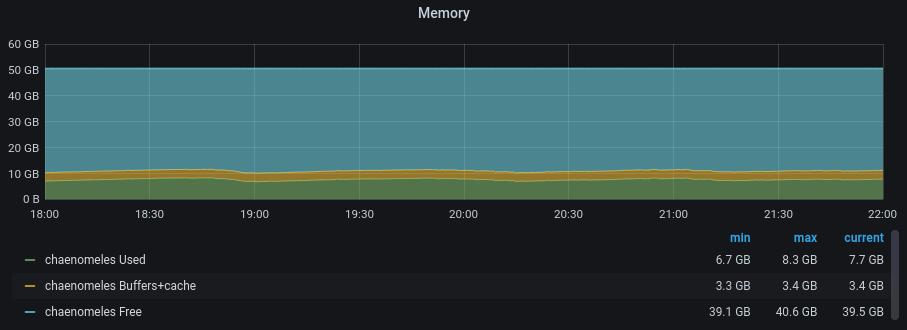
After a very long porting journey, Launchpad is finally running on Python 3 across all of our systems. I wanted to take a bit of time to reflect on why my emotional responses to this port differ so much from those of some others who ve done large ports, such as the Mercurial maintainers. It s hard to deny that we ve had to burn a lot of time on this, which I m sure has had an opportunity cost, and from one point of view it s essentially running to stand still: there is no single compelling feature that we get solely by porting to Python 3, although it s clearly a prerequisite for tidying up old compatibility code and being able to use modern language facilities in the future. And yet, on the whole, I found this a rewarding project and enjoyed doing it. Some of this may be because by inclination I m a maintenance programmer and actually enjoy this sort of thing. My default view tends to be that software version upgrades may be a pain but it s much better to get that pain over with as soon as you can rather than trying to hold back the tide; you can certainly get involved and try to shape where things end up, but rightly or wrongly I can t think of many cases when a righteously indignant user base managed to arrange for the old version to be maintained in perpetuity so that they never had to deal with the new thing (OK, maybe Perl 5 counts here). I think a more compelling difference between Launchpad and Mercurial, though, may be that very few other people really had a vested interest in what Python version Launchpad happened to be running, because it s all server-side code (aside from some client libraries such as launchpadlib, which were ported years ago). As such, we weren t trying to do this with the internet having Strong Opinions at us. We were doing this because it was obviously the only long-term-maintainable path forward, and in more recent times because some of our library dependencies were starting to drop support for Python 2 and so it was obviously going to become a practical problem for us sooner or later; but if we d just stayed on Python 2 forever then fundamentally hardly anyone else would really have cared directly, only maybe about some indirect consequences of that. I don t follow Mercurial development so I may be entirely off-base, but if other people were yelling at me about how late my project was to finish its port, that in itself would make me feel more negatively about the project even if I thought it was a good idea. Having most of the pressure come from ourselves rather than from outside meant that wasn t an issue for us. I m somewhat inclined to think of the process as an extreme version of paying down technical debt. Moving from Python 2.7 to 3.5, as we just did, means skipping over multiple language versions in one go, and if similar changes had been made more gradually it would probably have felt a lot more like the typical dependency update treadmill. I appreciate why not everyone might want to think of it this way: maybe this is just my own rationalization. Reflections on porting to Python 3 I m not going to defend the Python 3 migration process; it was pretty rough in a lot of ways. Nor am I going to spend much effort relitigating it here, as it s already been done to death elsewhere, and as I understand it the core Python developers have got the message loud and clear by now. At a bare minimum, a lot of valuable time was lost early in Python 3 s lifetime hanging on to flag-day-type porting strategies that were impractical for large projects, when it should have been providing for bilingual strategies (code that runs in both Python 2 and 3 for a transitional period) which is where most libraries and most large migrations ended up in practice. For instance, the early advice to library maintainers to maintain two parallel versions or perhaps translate dynamically with 2to3 was entirely impractical in most non-trivial cases and wasn t what most people ended up doing, and yet the idea that 2to3 is all you need still floats around Stack Overflow and the like as a result. (These days, I would probably point people towards something more like Eevee s porting FAQ as somewhere to start.) There are various fairly straightforward things that people often suggest could have been done to smooth the path, and I largely agree: not removing the u'' string prefix only to put it back in 3.3, fewer gratuitous compatibility breaks in the name of tidiness, and so on. But if I had a time machine, the number one thing I would ask to have been done differently would be introducing type annotations in Python 2 before Python 3 branched off. It s true that it s technically possible to do type annotations in Python 2, but the fact that it s a different syntax that would have to be fixed later is offputting, and in practice it wasn t widely used in Python 2 code. To make a significant difference to the ease of porting, annotations would need to have been introduced early enough that lots of Python 2 library code used them so that porting code didn t have to be quite so much of an exercise of manually figuring out the exact nature of string types from context. Launchpad is a complex piece of software that interacts with multiple domains: for example, it deals with a database, HTTP, web page rendering, Debian-format archive publishing, and multiple revision control systems, and there s often overlap between domains. Each of these tends to imply different kinds of string handling. Web page rendering is normally done mainly in Unicode, converting to bytes as late as possible; revision control systems normally want to spend most of their time working with bytes, although the exact details vary; HTTP is of course bytes on the wire, but Python s WSGI interface has some string type subtleties. In practice I found myself thinking about at least four string-like types (that is, things that in a language with a stricter type system I might well want to define as distinct types and restrict conversion between them): bytes, text, ordinary native strings (str in either language, encoded to UTF-8 in Python 2), and native strings with WSGI s encoding rules. Some of these are emergent properties of writing in the intersection of Python 2 and 3, which is effectively a specialized language of its own without coherent official documentation whose users must intuit its behaviour by comparing multiple sources of information, or by referring to unofficial porting guides: not a very satisfactory situation. Fortunately much of the complexity collapses once it becomes possible to write solely in Python 3. Some of the difficulties we ran into are not ones that are typically thought of as Python 2-to-3 porting issues, because they were changed later in Python 3 s development process. For instance, the email module was substantially improved in around the 3.2/3.3 timeframe to handle Python 3 s bytes/text model more correctly, and since Launchpad sends quite a few different kinds of email messages and has some quite picky tests for exactly what it emits, this entailed a lot of work in our email sending code and in our test suite to account for that. (It took me a while to work out whether we should be treating raw email messages as bytes or as text; bytes turned out to work best.) 3.4 made some tweaks to the implementation of quoted-printable encoding that broke a number of our tests in ways that took some effort to fix, because the tests needed to work on both 2.7 and 3.5. The list goes on. I got quite proficient at digging through Python s git history to figure out when and why some particular bit of behaviour had changed. One of the thorniest problems was parsing HTTP form data. We mainly rely on zope.publisher for this, which in turn relied on cgi.FieldStorage; but cgi.FieldStorage is badly broken in some situations on Python 3. Even if that bug were fixed in a more recent version of Python, we can t easily use anything newer than 3.5 for the first stage of our port due to the version of the base OS we re currently running, so it wouldn t help much. In the end I fixed some minor issues in the multipart module (and was kindly given co-maintenance of it) and converted zope.publisher to use it. Although this took a while to sort out, it seems to have gone very well. A couple of other interesting late-arriving issues were around pickle. For most things we normally prefer safer formats such as JSON, but there are a few cases where we use pickle, particularly for our session databases. One of my colleagues pointed out that I needed to remember to tell pickle to stick to protocol 2, so that we d be able to switch back and forward between Python 2 and 3 for a while; quite right, and we later ran into a similar problem with marshal too. A more surprising problem was that datetime.datetime objects pickled on Python 2 require special care when unpickling on Python 3; rather than the approach that ended up being implemented and documented for Python 3.6, though, I preferred a custom unpickler, both so that things would work on Python 3.5 and so that I wouldn t have to risk affecting the decoding of other pickled strings in the session database. General lessons Writing this over a year after Python 2 s end-of-life date, and certainly nowhere near the leading edge of Python 3 porting work, it s perhaps more useful to look at this in terms of the lessons it has for other large technical debt projects. I mentioned in my previous article that I used the approach of an enormous and frequently-rebased git branch as a working area for the port, committing often and sometimes combining and extracting commits for review once they seemed to be ready. A port of this scale would have been entirely intractable without a tool of similar power to git rebase, so I m very glad that we finished migrating to git in 2019. I relied on this right up to the end of the port, and it also allowed for quick assessments of how much more there was to land. git worktree was also helpful, in that I could easily maintain working trees built for each of Python 2 and 3 for comparison. As is usual for most multi-developer projects, all changes to Launchpad need to go through code review, although we sometimes make exceptions for very simple and obvious changes that can be self-reviewed. Since I knew from the outset that this was going to generate a lot of changes for review, I therefore structured my work from the outset to try to make it as easy as possible for my colleagues to review it. This generally involved keeping most changes to a somewhat manageable size of 800 lines or less (although this wasn t always possible), and arranging commits mainly according to the kind of change they made rather than their location. For example, when I needed to fix issues with / in Python 3 being true division rather than floor division, I did so in one commit across the various places where it mattered and took care not to mix it with other unrelated changes. This is good practice for nearly any kind of development, but it was especially important here since it allowed reviewers to consider a clear explanation of what I was doing in the commit message and then skim-read the rest of it much more quickly. It was vital to keep the codebase in a working state at all times, and deploy to production reasonably often: this way if something went wrong the amount of code we had to debug to figure out what had happened was always tractable. (Although I can t seem to find it now to link to it, I saw an account a while back of a company that had taken a flag-day approach instead with a large codebase. It seemed to work for them, but I m certain we couldn t have made it work for Launchpad.) I can t speak too highly of Launchpad s test suite, much of which originated before my time. Without a great deal of extensive coverage of all sorts of interesting edge cases at both the unit and functional level, and a corresponding culture of maintaining that test suite well when making new changes, it would have been impossible to be anything like as confident of the port as we were. As part of the porting work, we split out a couple of substantial chunks of the Launchpad codebase that could easily be decoupled from the core: its Mailman integration and its code import worker. Both of these had substantial dependencies with complex requirements for porting to Python 3, and arranging to be able to do these separately on their own schedule was absolutely worth it. Like disentangling balls of wool, any opportunity you can take to make things less tightly-coupled is probably going to make it easier to disentangle the rest. (I can see a tractable way forward to porting the code import worker, so we may well get that done soon. Our Mailman integration will need to be rewritten, though, since it currently depends on the Python-2-only Mailman 2, and Mailman 3 has a different architecture.) Python lessons Our database layer was already in pretty good shape for a port, since at least the modern bits of its table modelling interface were already strict about using Unicode for text columns. If you have any kind of pervasive low-level framework like this, then making it be pedantic at you in advance of a Python 3 port will probably incur much less swearing in the long run, as you won t be trying to deal with quite so many bytes/text issues at the same time as everything else. Early in our port, we established a standard set of __future__ imports and started incrementally converting files over to them, mainly because we weren t yet sure what else to do and it seemed likely to be helpful. absolute_import was definitely reasonable (and not often a problem in our code), and print_function was annoying but necessary. In hindsight I m not sure about unicode_literals, though. For files that only deal with bytes and text it was reasonable enough, but as I mentioned above there were also a number of cases where we needed literals of the language s native str type, i.e. bytes in Python 2 and text in Python 3: this was particularly noticeable in WSGI contexts, but also cropped up in some other surprising places. We generally either omitted unicode_literals or used six.ensure_str in such cases, but it was definitely a bit awkward and maybe I should have listened more to people telling me it might be a bad idea. A lot of Launchpad s early tests used doctest, mainly in the style where you have text files that interleave narrative commentary with examples. The development team later reached consensus that this was best avoided in most cases, but by then there were far too many doctests to conveniently rewrite in some other form. Porting doctests to Python 3 is really annoying. You run into all the little changes in how objects are represented as text (particularly u'...' versus '...', but plenty of other cases as well); you have next to no tools to do anything useful like skipping individual bits of a doctest that don t apply; using __future__ imports requires the rather obscure approach of adding the relevant names to the doctest s globals in the relevant DocFileSuite or DocTestSuite; dealing with many exception tracebacks requires something like zope.testing.renormalizing; and whatever code refactoring tools you re using probably don t work properly. Basically, don t have done that. It did all turn out to be tractable for us in the end, and I managed to avoid using much in the way of fragile doctest extensions aside from the aforementioned zope.testing.renormalizing, but it was not an enjoyable experience. Regressions I know of nine regressions that reached Launchpad s production systems as a result of this porting work; of course there were various other regressions caught by CI or in manual testing. (Considering the size of this project, I count it as a resounding success that there were only nine production issues, and that for the most part we were able to fix them quickly.) Equality testing of removed database objects One of the things we had to do while porting to Python 3 was to implement the __eq__, __ne__, and __hash__ special methods for all our database objects. This was quite conceptually fiddly, because doing this requires knowing each object s primary key, and that may not yet be available if we ve created an object in Python but not yet flushed the actual INSERT statement to the database (most of our primary keys are auto-incrementing sequences). We thus had to take care to flush pending SQL statements in such cases in order to ensure that we know the primary keys. However, it s possible to have a problem at the other end of the object lifecycle: that is, a Python object might still be reachable in memory even though the underlying row has been DELETEd from the database. In most cases we don t keep removed objects around for obvious reasons, but it can happen in caching code, and buildd-manager crashed as a result (in fact while it was still running on Python 2). We had to take extra care to avoid this problem. Debian imports crashed on non-UTF-8 filenames Python 2 has some unfortunate behaviour around passing bytes or Unicode strings (depending on the platform) to shutil.rmtree, and the combination of some porting work and a particular source package in Debian that contained a non-UTF-8 file name caused us to run into this. The fix was to ensure that the argument passed to shutil.rmtree is a str regardless of Python version. We d actually run into something similar before: it s a subtle porting gotcha, since it s quite easy to end up passing Unicode strings to shutil.rmtree if you re in the process of porting your code to Python 3, and you might easily not notice if the file names in your tests are all encoded using UTF-8. lazr.restful ETags We eventually got far enough along that we could switch one of our four appserver machines (we have quite a number of other machines too, but the appservers handle web and API requests) to Python 3 and see what happened. By this point our extensive test suite had shaken out the vast majority of the things that could go wrong, but there was always going to be room for some interesting edge cases. One of the Ubuntu kernel team reported that they were seeing an increase in 412 Precondition Failed errors in some of their scripts that use our webservice API. These can happen when you re trying to modify an existing resource: the underlying protocol involves sending an If-Match header with the ETag that the client thinks the resource has, and if this doesn t match the ETag that the server calculates for the resource then the client has to refresh its copy of the resource and try again. We initially thought that this might be legitimate since it can happen in normal operation if you collide with another client making changes to the same resource, but it soon became clear that something stranger was going on: we were getting inconsistent ETags for the same object even when it was unchanged. Since we d recently switched a quarter of our appservers to Python 3, that was a natural suspect. Our lazr.restful package provides the framework for our webservice API, and roughly speaking it generates ETags by serializing objects into some kind of canonical form and hashing the result. Unfortunately the serialization was dependent on the Python version in a few ways, and in particular it serialized lists of strings such as lists of bug tags differently: Python 2 used [u'foo', u'bar', u'baz'] where Python 3 used ['foo', 'bar', 'baz']. In lazr.restful 1.0.3 we switched to using JSON for this, removing the Python version dependency and ensuring consistent behaviour between appservers. Memory leaks This problem took the longest to solve. We noticed fairly quickly from our graphs that the appserver machine we d switched to Python 3 had a serious memory leak. Our appservers had always been a bit leaky, but now it wasn t so much a small hole that we can bail occasionally as the boat is sinking rapidly : A serious memory leak (Yes, this got in the way of working out what was going on with ETags for a while.) I spent ages messing around with various attempts to fix this. Since only a quarter of our appservers were affected, and we could get by on 75% capacity for a while, it wasn t urgent but it was definitely annoying. After spending some quality time with objgraph, for some time I thought traceback reference cycles might be at fault, and I sent a number of fixes to various upstream projects for those (e.g. zope.pagetemplate). Those didn t help the leaks much though, and after a while it became clear to me that this couldn t be the sole problem: Python has a cyclic garbage collector that will eventually collect reference cycles as long as there are no strong references to any objects in them, although it might not happen very quickly. Something else must be going on. Debugging reference leaks in any non-trivial and long-running Python program is extremely arduous, especially with ORMs that naturally tend to end up with lots of cycles and caches. After a while I formed a hypothesis that zope.server might be keeping a strong reference to something, although I never managed to nail it down more firmly than that. This was an attractive theory as we were already in the process of migrating to Gunicorn for other reasons anyway, and Gunicorn also has a convenient max_requests setting that s good at mitigating memory leaks. Getting this all in place took some time, but once we did we found that everything was much more stable: A rather flat memory graph This isn t completely satisfying as we never quite got to the bottom of the leak itself, and it s entirely possible that we ve only papered over it using max_requests: I expect we ll gradually back off on how frequently we restart workers over time to try to track this down. However, pragmatically, it s no longer an operational concern. Mirror prober HTTPS proxy handling After we switched our script servers to Python 3, we had several reports of mirror probing failures. (Launchpad keeps lists of Ubuntu archive and image mirrors, and probes them every so often to check that they re reasonably complete and up to date.) This only affected HTTPS mirrors when probed via a proxy server, support for which is a relatively recent feature in Launchpad and involved some code that we never managed to unit-test properly: of course this is exactly the code that went wrong. Sadly I wasn t able to sort out that gap, but at least the fix was simple. Non-MIME-encoded email headers As I mentioned above, there were substantial changes in the email package between Python 2 and 3, and indeed between minor versions of Python 3. Our test coverage here is pretty good, but it s an area where it s very easy to have gaps. We noticed that a script that processes incoming email was crashing on messages with headers that were non-ASCII but not MIME-encoded (and indeed then crashing again when it tried to send a notification of the crash!). The only examples of these I looked at were spam, but we still didn t want to crash on them. The fix involved being somewhat more careful about both the handling of headers returned by Python s email parser and the building of outgoing email notifications. This seems to be working well so far, although I wouldn t be surprised to find the odd other incorrect detail in this sort of area. Failure to handle non-ISO-8859-1 URL-encoded form input Remember how I said that parsing HTTP form data was thorny? After we finished upgrading all our appservers to Python 3, people started reporting that they couldn t post Unicode comments to bugs, which turned out to be only if the attempt was made using JavaScript, and was because I hadn t quite managed to get URL-encoded form data working properly with zope.publisher and multipart. The current standard describes the URL-encoded format for form data as in many ways an aberrant monstrosity , so this was no great surprise. Part of the problem was some very strange choices in zope.publisher dating back to 2004 or earlier, which I attempted to clean up and simplify. The rest was that Python 2 s urlparse.parse_qs unconditionally decodes percent-encoded sequences as ISO-8859-1 if they re passed in as part of a Unicode string, so multipart needs to work around this on Python 2. I m still not completely confident that this is correct in all situations, but at least now that we re on Python 3 everywhere the matrix of cases we need to care about is smaller. Inconsistent marshalling of Loggerhead s disk cache We use Loggerhead for providing web browsing of Bazaar branches. When we upgraded one of its two servers to Python 3, we immediately noticed that the one still on Python 2 was failing to read back its revision information cache, which it stores in a database on disk. (We noticed this because it caused a deployment to fail: when we tried to roll out new code to the instance still on Python 2, Nagios checks had already caused an incompatible cache to be written for one branch from the Python 3 instance.) This turned out to be a similar problem to the pickle issue mentioned above, except this one was with marshal, which I didn t think to look for because it s a relatively obscure module mostly used for internal purposes by Python itself; I m not sure that Loggerhead should really be using it in the first place. The fix was relatively straightforward, complicated mainly by now needing to cope with throwing away unreadable cache data. Ironically, if we d just gone ahead and taken the nominally riskier path of upgrading both servers at the same time, we might never have had a problem here. Intermittent bzr failures Finally, after we upgraded one of our two Bazaar codehosting servers to Python 3, we had a report of intermittent bzr branch hangs. After some digging I found this in our logs:
Traceback (most recent call last):
  ...
  File "/srv/bazaar.launchpad.net/production/codehosting1-rev-20124175fa98fcb4b43973265a1561174418f4bd/env/lib/python3.5/site-packages/twisted/conch/ssh/channel.py", line 136, in addWindowBytes
    self.startWriting()
  File "/srv/bazaar.launchpad.net/production/codehosting1-rev-20124175fa98fcb4b43973265a1561174418f4bd/env/lib/python3.5/site-packages/lazr/sshserver/session.py", line 88, in startWriting
    resumeProducing()
  File "/srv/bazaar.launchpad.net/production/codehosting1-rev-20124175fa98fcb4b43973265a1561174418f4bd/env/lib/python3.5/site-packages/twisted/internet/process.py", line 894, in resumeProducing
    for p in self.pipes.itervalues():
builtins.AttributeError: 'dict' object has no attribute 'itervalues'
I d seen this before in our git hosting service: it was a bug in Twisted s Python 3 port, fixed after 20.3.0 but unfortunately after the last release that supported Python 2, so we had to backport that patch. Using the same backport dealt with this. Onwards!

1 August 2021

Fran ois Marier: Time-stretch in Kodi

VLC has a really neat feature which consists of time-stretching audio to allow users to speed up or slow video playback with the [ and ] keys without affecting the pitch of the sound. I recently switched to Kodi as my video player of choice and I was looking for the equivalent feature.

Kodi equivalent To enable this feature in Kodi, you first need to enable Sync playback to display in Settings Player Videos. Then map the tempoup and tempodown commands to the same keyboard shorcuts as VLC. In my case however, I wanted to map these functions to buttons on my Streamzap remote and so I put the following in my ~/.kodi/userdata/keymaps/remote.xml:
  <FullscreenVideo>
    <remote>
      <pageminus>PlayerControl(tempodown)</pageminus>
      <pageplus>PlayerControl(tempoup)</pageplus>
    </remote>
  </FullscreenVideo>
which allows me to press the Ch + and Ch - buttons on the remote to adjust the speed while the video is playing (in full-screen mode only, not with the menu displayed).

Examples Here are three ways I use this functionality:
  • I set it to 0.9x for movies in languages I'm not totally proficient in.
  • I set it to 1.1x for almost everything since the difference is not especially perceptible, but it still allows me to watch 10% more movies in the same amount of time :)
  • I set it to 1.2x for Rick & Morty because it makes Rick even more hilariously reckless and impatient.
Unfortunately, I haven't found a way to set the default tempo value. The closest setting I could find is the one which allows you to set the maximum tempo value maxtempo. If you know of a way, please leave a comment!

31 July 2021

Russell Coker: Links July 2021

The News Tribune published an article in 2004 about the Dove of Oneness , a mentally ill woman who got thousands of people to believe her crazy ideas about NESARA [1]. In recent time the QANON conspiracy theory has drawn on the NESARA cult and encouraged it s believers to borrow money and spend it in the belief that all debts will be forgiven (something which was not part of NESARA). The Wikipedia page about NESARA (proposed US legislation that was never considered by the US congress) notes that the second edition of the book about it was titled Draining the Swamp: The NESARA Story Monetary and Fiscal Policy Reform . It seems like the Trump cult has been following that for a long time. David Brin (best-selling SciFi Author and NASA consultant) wrote an insightful blog post about the Tytler Calumny [2], which is the false claim that democracy inevitably fails because poor people vote themselves money. When really the failure is of corrupt rich people subverting the government processes to enrich themselves at the expense of their country. It s worth reading, and his entire blog is also worth reading. Cory Doctorow has an insightful article about his own battle with tobacco addiction and the methods that tobacco companies and other horrible organisations use to prevent honest discussion about legislation [3]. Cory Doctorow has an insightful article about consent theater which is describes how consent in most agreements between corporations and people is a fraud [4]. The new GDPR sounds good. The forum for the War Thunder game had a discussion on the accuracy of the Challenger 2 tank which ended up with a man who claims to be a UK tank commander posting part of a classified repair manual [5]. That s pretty amusing, and also good advertising for War Thunder. After reading about this I discovered that it s free on Steam and runs on Linux! Unfortunately it whinged about my video drivers and refused to run. Corey Doctorow has an insightful and well researched article about the way the housing market works in the US [6]. For house prices to increase conditions for renters need to be worse, that may work for home owners in the short term but then in the long term their children and grandchildren will end up renting.

Dirk Eddelbuettel: RcppAnnoy 0.0.19 on CRAN: Maintenance

annoy image A minor maintenance release, now at version 0.0.19, of RcppAnnoy is now on CRAN. RcppAnnoy is the Rcpp-based R integration of the nifty Annoy library by Erik Bernhardsson. Annoy is a small and lightweight C++ template header library for very fast approximate nearest neighbours originally developed to drive the famous Spotify music discovery algorithm. This release only contains internal packaging changes. Nothing changes upstream, or in package functionality. Detailed changes follow.

Changes in version 0.0.19 (2021-07-30)
  • Minor tweaks to default CI setup and DESCRIPTION file

Courtesy of my CRANberries, there is also a diffstat report for this release. If you like this or other open-source work I do, you can sponsor me at GitHub.

This post by Dirk Eddelbuettel originated on his Thinking inside the box blog. Please report excessive re-aggregation in third-party for-profit settings.

30 July 2021

Anton Gladky: 2021/07, FLOSS activity

LTS This is my fifth month of working for LTS. I was assigned 12 hrs and worked all of them.

Released DLAs
  1. DLA 2705-1 scilab_5.5.2-4+deb9u1
    • CVE-2021-31598: Out-of-bounds write in ezxml_decode() leading to heap corruption
    • CVE-2021-31347, CVE-2021-31348: incorrect memory handling in ezxml_parse_str() leading to out-of-bounds read
    • CVE-2021-31229: Out-of-bounds write in ezxml_internal_dtd() leading to out-of-bounds write of a one byte constant
    • CVE-2021-30485: incorrect memory handling, leading to a NULL pointer dereference in ezxml_internal_dtd()
    With this upload not all opened CVEs were closed in this package. Because some of CVEs were not fixed yet by upstream. Added links to upstream bug reports for the following CVEs: CVE-2021-31598 CVE-2021-31348 CVE-2021-31347 CVE-2021-31229 CVE-2021-30485 CVE-2021-26222 CVE-2021-26221 CVE-2021-26220 CVE-2019-20202 CVE-2019-20201 CVE-2019-20200 CVE-2019-20199 CVE-2019-20198 CVE-2019-20007 CVE-2019-20006 CVE-2019-20005 into the data/CVE/list on securoty tracker.
  2. DLA 2707-1 sogo_3.2.6-2+deb9u1
    • CVE-2021-33054: SOGo does not validate the signatures of any SAML assertions it receives. Any actor with network access to the deployment could impersonate users when SAML is the authentication method.

LTS-Meeting I attended the Debian LTS team IRC-meeting this month.

Other FLOSS activities
  1. One week before the full freeze of Debian Bullseye the release-critical bug #990895 against the package httraqt was filed. Thanks to the reporter I could fix it within the hour after the ticket was created, uploaded as the version httraqt_1.4.9-5, filed an unblock-request, which was approved.

27 July 2021

Dirk Eddelbuettel: RcppFarmHash 0.0.1: New CRAN Package

A new package RcppFarmHash is now on CRAN in an inaugural version 0.0.1. RcppFarmHash wraps the Google FarmHash family of hash functions (written by Geoff Pike and contributors) that are used for example by Google BigQuery for the FARM_FINGERPRINT. The package was prepared and uploaded yesterday afternoon, and to my surprise already on CRAN this (early) morning when I got up. So here is another #ThankYouCRAN for very smoothing operations. The very brief NEWS entry follows:

Changes in version 0.0.1 (2021-07-25)
  • Initial version and CRAN upload

If you like this or other open-source work I do, you can now sponsor me at GitHub.

This post by Dirk Eddelbuettel originated on his Thinking inside the box blog. Please report excessive re-aggregation in third-party for-profit settings.

24 July 2021

Dirk Eddelbuettel: littler 0.3.13: Moar Goodies

max-heap image The fourteenth release of littler as a CRAN package just landed, following in the now fifteen year history (!!) as a package started by Jeff in 2006, and joined by me a few weeks later. littler is the first command-line interface for R as it predates Rscript. It allows for piping as well for shebang scripting via #!, uses command-line arguments more consistently and still starts faster. It also always loaded the methods package which Rscript only started to do in recent years. littler lives on Linux and Unix, has its difficulties on macOS due to yet-another-braindeadedness there (who ever thought case-insensitive filesystems as a default were a good idea?) and simply does not exist on Windows (yet the build system could be extended see RInside for an existence proof, and volunteers are welcome!). See the FAQ vignette on how to add it to your PATH. A few examples are highlighted at the Github repo, as well as in the examples vignette. This release brings two new example scripts and command wrappers (compiledDeps.r, silenceTwitterAccount.r), along with extensions, corrections, or polish for a number a of other examples as detailed in the NEWS file entry below.

Changes in littler version 0.3.13 (2021-07-24)
  • Changes in examples
    • New script compiledDeps.r to show which dependencies are compiled
    • New script silenceTwitterAccount.r wrapping rtweet
    • The -c or --code option for installRSPM.r was corrected
    • The kitten.r script now passes options bunny and puppy on to the pkgKitten::kitten() call; new options to call the Arma and Eigen variants were added
    • The getRStudioDesktop.r and getRStudioServer.r scripts were updated for a change in rvest
    • Two typos in the tt.r help message were correct (Aaron Wolen in #86)
    • The message in cranIncoming.r was corrected.
  • Changes in package
    • Added Continuous Integration runner via run.sh from r-ci.
    • Two vignettes got two extra vignette attributes.
    • The mkdocs-material documentation input was moved.
    • The basic unit tests were slightly refactored and updated.

My CRANberries provides a comparison to the previous release. Full details for the littler release are provided as usual at the ChangeLog page, and now also on the new package docs website. The code is available via the GitHub repo, from tarballs and now of course also from its CRAN page and via install.packages("littler"). Binary packages are available directly in Debian as well as soon via Ubuntu binaries at CRAN thanks to the tireless Michael Rutter. Comments and suggestions are welcome at the GitHub repo. If you like this or other open-source work I do, you can now sponsor me at GitHub.

This post by Dirk Eddelbuettel originated on his Thinking inside the box blog. Please report excessive re-aggregation in third-party for-profit settings.

22 July 2021

Dirk Eddelbuettel: RcppSpdlog 0.0.6 on CRAN: New upstream

A new version 0.0.6 of RcppSpdlog is now on CRAN. It contains releases 1.9.0 of spdlog which in turn contains an updated version of fmt. RcppSpdlog bundles spdlog, a wonderful header-only C++ logging library with all the bells and whistles you would want that was written by Gabi Melman, and also includes fmt by Victor Zverovich. No R package-side changes were needed or made. The (minimal) NEWS entry for this release follows.

Changes in RcppSpdlog version 0.0.6 (2021-07-21)
  • Upgraded to upstream release spdlog 1.9.0

Courtesy of my CRANberries, there is also a diffstat report. More detailed information is on the RcppSpdlog page. If you like this or other open-source work I do, you can sponsor me at GitHub.

This post by Dirk Eddelbuettel originated on his Thinking inside the box blog. Please report excessive re-aggregation in third-party for-profit settings.

21 July 2021

Antoine Beaupr : Hacking my Kobo Clara HD

I just got a new Kobo ebook reader, a Kobo Clara HD. It's pretty similar to the Glo HD I had but which has unfortunately died after 5 years, even after trying to replace the battery.

Quick hardware review This is a neat little device. It's very similar to the Glo HD, which is a bit disappointing: you'd think they would have improved on the design in the 5+ years since the Glo HD has come out.. It does have an "amber" night light which is nice, but the bezel is still not level with the display, and the device is still kind of on the thick side. A USB-C (instead of micro-USB) port would have been nice too. But otherwise, it's pretty slick, and just works. And because the hardware design didn't change, I can still hack at it like a madman, which is really why I bought this thing in the first place. Hopefully it will last longer than 5 years. Ebook readers should really last for decades, not years, but I guess that's too much to expect from our consumerist, suicidal, extinctionist society.

Configuration hacks Here are the hacks I done on the device. I had done many more hacks on the Kobo Glo HD, but I decided to take a more streamlined, minimalist and, hopefully, easier for new users than the pile of hacks I was doing before (which I expand on at the end of the article).

SD card replacement I replaced the SD card. The original card shipped with the Clara HD was 8GB which meant all my books actually fitted on the original, but just barely. The new card is 16GB. Unfortunately, I did this procedure almost at the end of this guide (right before writing the syncthing scripts, below). Next time, that should be the first thing done so the original SD card acts as a pristine copy of the upstream firmware. So even though this seems like an invasive and difficult procedure, I actually do recommend you do it first. The process is basically to:
  1. crack open the Kobo case (don't worry, it sounds awful but I've done it often)
  2. take the SD card out
  3. copy it over to a new, larger card (say on your computer)
  4. put the larger card in
This guide has all the details.

Registration bypass hack This guide (from the same author!) has this awesome trick to bypass the annoying registration step. Basically:
  1. pretend you do not have wifi
  2. mount the device
  3. sqlite3 /media/.../KOBOeReader/.kobo/KoboReader.sqlite
  4. INSERT INTO user(UserID,UserKey) VALUES('1','');
  5. unmount the device
More details in the above guide, again.

Install koreader My e-reader of choise is Koreader. It's just that great. I still don't find the general user interface (ie. the "file browswer") as intuitive as the builtin one, but the book reading just feels better. And anyways it's the easier way to get a shell on the device. Follow those instructions, particularly the NickelMenu instructions (see also the NickelMenu home page). Yes, you need to install some other thing to start koreader, which doesn't start on its own. NickelMenu is the simplest and better integrated I have found. You might also want to install some dictionnaries and configure SSH:
  1. mount USB
  2. drop your SSH public key in .../KOBOeReader/.adds/koreader/settings/SSH/authorized_keys
  3. unmount USB
  4. enable SSH in koreader (Gear -> Network -> SSH -> start SSH)
Note that ed25519 keys do not work: try an RSA key. This might be because koreader ships with dropbear (or an older version), but I haven't verified this.

Install syncthing I use Syncthing to copy all my books into the device now. I was previously using Koreader's OPDS support with Calibre's web interface, but that was clunky and annoying, and I'd constantly have to copy books around. Now the entire collection is synchronized. As a bonus, I can actually synchronise (and backup!) the koreader metadata, since it's stored next to the files. So in theory, this means I could use koreader from multiple devices and have my reading progress sync'd, but I haven't tested that feature just yet. I chose Syncthing because it's simple, lightweight, supported on Linux and Android, and statically compiles by default which means it's easy to deploy on the Kobo. Here is how I installed and started Syncthing at first:
  1. Download the latest version for ARM
  2. extract the archive
  3. copy the syncthing binary into .../KOBOeReader/.adds/
  4. login over SSH (see above on how to enable) with -p 2222 -l root
  5. create the following directory: ~/.config/syncthing/
  6. create the following configuration file, named config.xml:
    <configuration version="18">
        <gui enabled="true" tls="false" debugging="false">
            <address>0.0.0.0:8384</address>
        </gui>
    </configuration>
    
  7. copy a valid ca-certificates.crt file (say from your Linux desktop) into /etc/ssl/certs/ on the Kobo (otherwise syncthing cannot bootstrap discovery servers)
  8. launch syncthing over SSH: /mnt/onboard/.adds/syncthing
You should now be able to connect to the syncthing GUI through your web browser. Immediately change the GUI admin user and password on the Settings: GUI tab. Then, figure out how to start it. Here are your options:
  1. on boot (inittab or whatever). downside: power usage.
  2. on wifi (udev hacks). downside: unreliable (see wallabako).
  3. on demand (e.g. nickel menu, koreader terminal shortcuts). downside: kind of clunky in koreader, did not work in nickel menu.
  4. manually, through shell. downside: requires a shell, but then again we already have one through koreader?
What I have done is to write trivial shell scripts (in .../KOBOeReader/scripts) to start syncthing. The first is syncthing-start.sh:
#!/bin/sh
/mnt/onboard/.adds/syncthing serve &
Then syncthing-stop.sh:
#!/bin/sh
/usr/bin/pkill syncthing
This makes those scripts usable from the koreader file browser. Then the folder can be added to the folder shortcuts and a long-hold on the script will allow you to execute it. Still have to figure out why the Nickel Menu script is not working, but it could simply reuse the above to simplify debugging. This is the script I ended up with, in .../KOBOeReader/.adds/nm/syncthing:
menu_item :main    :Syncthing (toggle)    :cmd_spawn         :exec /mnt/onboard/scripts/syncthing-stop.sh
  chain_success:skip:4
    chain_success                      :cmd_spawn          :exec /mnt/onboard/scripts/syncthing-start.sh
    chain_success                      :dbg_toast          :Started Syncthing server
    chain_failure                      :dbg_toast          :Error starting Syncthing server
    chain_always:skip:-1
  chain_success                        :dbg_toast          :Stopped Syncthing server
menu_item :main    :Syncthing (start)    :cmd_output         :exec /mnt/onboard/scripts/syncthing-start.sh
menu_item :main    :Syncthing (stop)    :cmd_output         :exec /mnt/onboard/scripts/syncthing-stop.sh
It's unclear why this doesn't work: I only get "Error starting Syncthing server" for the toggle, and no output for the (start) action. In either case, syncthing doesn't actually start.

Avoided tasks This list wouldn't be complete without listing more explicitly the stuff I have done before on the Kobo Glo HD and which I have deliberately decided not to do here because my time is precious:
  • plato install: beautiful project, but koreader is good enough
  • wallabako setup: too much work to maintain, Wallabag articles are too distracting and available on my phone anyways
  • using calibre to transfer books: not working half the time, different file layout than the source, one less Calibre dependency
  • using calibre to generate e-books based on RSS feeds (yes, I did that, and yes, it was pretty bad and almost useless)
  • SSH support: builtin to koreader
Now maybe I'll have time to actually read a book...

20 July 2021

Dirk Eddelbuettel: pkgKitten 0.2.2 on CRAN: Small Updates

kitten A new release 0.2.2 of pkgKitten is now on CRAN, and will be uploaded to Debian. pkgKitten makes it simple to create new R packages via a simple function invocation. A wrapper kitten.r exists in the littler package to make it even easier. This release simply corrects on minor aspect in the optional roxygen2 use, and updates the DESCRIPTION file.

Changes in version 0.2.2 (2021-07-19)
  • Small update to DESCRIPTION
  • Document hello2() argument

More details about the package are at the pkgKitten webpage, the pkgKitten docs site, and the pkgKitten GitHub repo. Courtesy of my CRANberries site, there is also a diffstat report for this release. If you like this or other open-source work I do, you can now sponsor me at GitHub.

This post by Dirk Eddelbuettel originated on his Thinking inside the box blog. Please report excessive re-aggregation in third-party for-profit settings.

17 July 2021

Dirk Eddelbuettel: ttdo 0.0.7: Micro-tweak

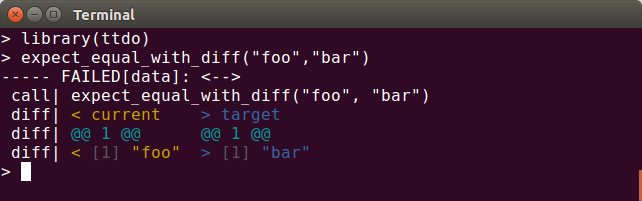
A new (and genuinely) minor release of our ttdo package arrived on CRAN today. The ttdo package extends the most excellent (and very minimal / zero depends) unit testing package tinytest by Mark van der Loo with the very clever and well-done diffobj package by Brodie Gaslam to give us test results with visual diffs (as shown in the screenshot below) which seemingly is so compelling an idea that it eventually got copied by another package ttdo screenshot This release cleans up one microscopic wart of an R warning when installing and byte-compiling the package due to a sprintf call with an unused argument. And once again, this release gets a #ThankYouCRAN mark as it was processed in a fully automated and intervention-free manner in a matter of minutes. As usual, the NEWS entry follows.

Changes in ttdo version 0.0.8 (2021-07-17)
  • Expand sprintf template to suppress R warning

CRANberries provides the usual summary of changes to the previous version. Please use the GitHub repo and its issues for any questions. If you like this or other open-source work I do, you can now sponsor me at GitHub.

This post by Dirk Eddelbuettel originated on his Thinking inside the box blog. Please report excessive re-aggregation in third-party for-profit settings.

16 July 2021

Dirk Eddelbuettel: RcppArmadillo 0.10.6.0.0 on CRAN: A New Upstream

armadillo image Armadillo is a powerful and expressive C++ template library for linear algebra aiming towards a good balance between speed and ease of use with a syntax deliberately close to a Matlab. RcppArmadillo integrates this library with the R environment and language and is widely used by (currently) 882 other packages on CRAN. This new release gets us Armadillo 10.6.0 which was released yesterday. We did the usual reverse dependency checks (which came out spotless and clean), and had also just done even fuller checks for Rcpp 1.0.7. Since the previous RcppArmadillo 0.10.5.0.0 release we made a few interim releases to the drat repo. In general, Conrad is a little more active than we want to be with (montly or less frequent) CRAN updates so keep and eye on the drat repo (or follow the GitHub repo) for a higher-frequence cadence. To use the drat repo, use install.packages("RcppArmadillo", repos="https://RcppCore.github.io/drat") or update.packages() with a similar repos argument. The full set of changes follows. We include the last interim release as well.

Changes in RcppArmadillo version 0.10.6.0.0 (2021-07-16)
  • Upgraded to Armadillo release 10.6.0 (Keep Calm)
    • expanded chol() to optionally use pivoted decomposition
    • expanded vector, matrix and cube constructors to allow element initialisation via fill::value(scalar), eg. mat X(4,5,fill::value(123))
    • faster loading of CSV files when using OpenMP
    • added csv_opts::semicolon option to allow saving/loading of CSV files with semicolon (;) instead of comma (,) as the separator

Changes in RcppArmadillo version 0.10.5.3.0 (2021-07-01)
  • Upgraded to Armadillo release 10.5.3 (Antipodean Fortress)
  • GitHub-only release
  • Extended test coverage with several new tests, added a coverage badge.

Courtesy of my CRANberries, there is a diffstat report relative to previous release. More detailed information is on the RcppArmadillo page. Questions, comments etc should go to the rcpp-devel mailing list off the R-Forge page. If you like this or other open-source work I do, you can sponsor me at GitHub.

This post by Dirk Eddelbuettel originated on his Thinking inside the box blog. Please report excessive re-aggregation in third-party for-profit settings.

10 July 2021

Dirk Eddelbuettel: drat 0.2.1: Small Tweak

drat user A new minor release of drat arrived on CRAN overnight. This is a minor update relative to the 0.2.0 release in April. This release will now create an empty file index.html in the top-level (when initRepo() is called), and check for presence of such a file when adding files to a repo (via insertPackage()). This helps to avoid getting 404 results when (perfectly valid) drat repos are checking by accessing the top-level URL, as for example CRAN does when testing if an Additional_repositoiries is reachable. The step-by-step vignette had already suggested creating one by hand, this is now done programmatically (and one is present in the repo suggsted to fork from too). drat stands for drat R Archive Template, and helps with easy-to-create and easy-to-use repositories for R packages. Since its inception in early 2015 it has found reasonably widespread adoption among R users because repositories with marked releases is the better way to distribute code. See below for a few custom reference examples. Because for once it really is as your mother told you: Friends don t let friends install random git commit snapshots. Properly rolled-up releases it is. Just how CRAN shows us: a model that has demonstrated for two-plus decades how to do this. And you can too: drat is easy to use, documented by six vignettes and just works. The NEWS file summarises the release as follows:

Changes in drat version 0.2.1 (2021-07-09)
  • Two internal functions now have a note in their documentation stating them as not exported (Dirk in response to #123)
  • Repositories created by initRepo now have an placeholder index.html to not trigger a curl check at CRAN (Dirk)
  • Adding to a repository now checks for a top-level index.html and displays a message if missing (Dirk)
  • The DratStepByStep.Rmd vignette mentions the added index.html file

Courtesy of my CRANberries, there is a comparison to the previous release. More detailed information is on the drat page. If you like this or other open-source work I do, you can now sponsor me at GitHub.

This post by Dirk Eddelbuettel originated on his Thinking inside the box blog. Please report excessive re-aggregation in third-party for-profit settings.

7 July 2021

Dirk Eddelbuettel: Rcpp 1.0.7: More Updates

rcpp logo The Rcpp team is pleased to announce release 1.0.7 of Rcpp which arrived at CRAN earlier today, and will be uploaded to Debian shortly. Windows and macOS builds should appear at CRAN in the next few days. This release continues with the six-months cycle started with release 1.0.5 last July. As a reminder, interim dev or rc releases will alwasys be available in the Rcpp drat repo; this cycle there were seven (!!). These rolling release tend to work just as well, and are also fully tested against all reverse-dependencies. Rcpp has become the most popular way of enhancing R with C or C++ code. As of today, 2323 packages on CRAN depend on Rcpp for making analytical code go faster and further, along with 227 in BioConductor. This release contains a change which Luke Tierney urged us to make a good year ago in #1081) (and which we had looked at earlier in #382). Implementing the change in a regular update proved a little tricky, and my initial branch lay dormant until I aki revived it, and finished the transition (which we then did in two PRs). The change concerns how Rcpp grows internal objects, and the new approach (thanks to the hint by Luke) closer to what R does guaranteeing linear behaviour. It turns out that we overlooked one aspect (of coping with Modules built under earlier Rcpp releases) so the initial upload to CRAN on Saturday revealed that we needed a small adjustment that we made for the final release. This version should now be more performant, and rest on a stable API. Based on the reverse depends checks by both us and CRAN (using the updated version), we expect no issues with existing code. However, it something does act up a fresh compilation of the packages using Rcpp may help. We also made a few other minor changes in the API such as silencing a silly compiler warning, ensuring global Rcout and Rcerr objects, adding support for a new Rcpp::message() call, completing a switch to uint32_t instead of unsigned int and including the cfloat header (which relates to STRICT_R_HEADERS discussed below). Similarly, the Rcpp Attributes feature was enhanced by coping better with packages with a dot in their name and their for per-package include files, along with support for more quiet compilation if desired. As some Rcpp users may have seen, we plan to enable STRICT_R_HEADERS by the next release (expected in January 2022). A long issue tick #1158 is laying the ground work. Maintainers of 81 packages which are affected and need a small change (such as for example switching from PI to M_PI); of these 56 have already responded. We plan to be in touch in the fall. Adding the cfloat header is one help in this transition (as the corresponding C header was pulled in when STRICT_R_HEADERS is not defined) as it ensures DBL_EPSILON and alike are defined. Last but not least this is also the first relase in which we welcome I aki as a new member of the Rcpp Core team. Yay! The NEWS file entries follow summarizing the nine key PRs in this release.

Changes in Rcpp release version 1.0.7 (2021-07-06)
  • Changes in Rcpp API:
    • Refactored Rcpp_PreserveObject and Rcpp_ReleaseObject which are now O(1) (Dirk and I aki in #1133 and #1135 fixing #382 and #1081).
    • A spuriously assigned variable was removed (Dirk in #1138 fixing #1137).
    • Global Rcout and Rcerr objects are supported via a compiler directive (I aki in #1139 fixing #928)
    • Add support for Rcpp::message (Dirk in #1146 fixing #1145).
    • The uint32_t type is used throughout instead of unsigned int (Dirk in #1153 fixing #1152).
    • The cfloat header for floating point limits is now included (Dirk in #1162 fixing #1161).
  • Changes in Rcpp Attributes:
    • Packages with dots in their name can now have per-package include files (Dirk in #1132 fixing #1129).
    • New argument echo to quieten optional evaluation in sourceCpp (Dirk in #1138 fixing #1126).
  • Forthcoming Changes in Rcpp API:
    • Starting with Rcpp 1.0.8 anticipated in January 2022, STRICT_R_HEADERS will be enabled by default, see #1126.

Thanks to my CRANberries, you can also look at a diff to the previous release. Questions, comments etc should go to the rcpp-devel mailing list off the R-Forge page. Bugs reports are welcome at the GitHub issue tracker as well (where one can also search among open or closed issues); questions are also welcome under rcpp tag at StackOverflow which also allows searching among the (currently) 2616 previous questions. If you like this or other open-source work I do, you can sponsor me at GitHub.

This post by Dirk Eddelbuettel originated on his Thinking inside the box blog. Please report excessive re-aggregation in third-party for-profit settings.

Dirk Eddelbuettel: ttdo 0.0.7: Small tinytest update

A new minor release of our ttdo package arrived on CRAN today. The ttdo package extends the most excellent (and very minimal / zero depends) unit testing package tinytest by Mark van der Loo with the very clever and well-done diffobj package by Brodie Gaslam to give us test results with visual diffs (as shown in the screenshot here) which seemingly is so compelling an idea that another package decided to copied it more recently: ttdo screenshot This release is mostly procedural to accomodate changes in tinytest 1.3.1 released today, and brought to us via a pull request by Mark himself. Other than that we also updated the CI runner to use r-ci and accomodated new CRAN check for a superfluous LazyData: field in a package without a data/ directory. This release also gets another #ThankYouCRAN mark as it was once again fully automated and intervention-free (once the new tinytest release hit CRAN). As usual, the NEWS entry follows.

Changes in ttdo version 0.0.7 (2021-07-06)
  • The CI setup was updated to use run.sh from r-ci (Dirk).
  • The package was updated for an API extension in tinytest 1.3.1 or later (Mark van der Look in #7)
  • The unused LazyData field was removed from DESCRIPTION (Dirk)

CRANberries provides the usual summary of changes to the previous version. Please use the GitHub repo and its issues for any questions. If you like this or other open-source work I do, you can now sponsor me at GitHub.

This post by Dirk Eddelbuettel originated on his Thinking inside the box blog. Please report excessive re-aggregation in third-party for-profit settings.

5 July 2021

Michael Prokop: Debian bullseye: changes in util-linux #newinbullseye

Continuing with #newinbullseye. One package that isn t new but its tools are used by many of us is util-linux, providing many essential system utilities. There is util-linux v2.33.1 in Debian/buster and util-linux v2.36.1 in Debian/bullseye, and as usual there are many new features and options available. I don t want to replicate the release notes provided by upstream, instead make sure to check out the Release highlights sections in the following release notes: Tools that have been taken over from / moved to other packages Debian s util-linux source package provides new binary packages: eject (and eject-udeb) and bsdextrautils. The util-linux implementation of /usr/bin/eject is used now, replacing the one previously provided by the eject source package. Overall, from a util-linux perspective the following shifts took place: Deprecated / removed tools Tools that are no longer shipped as of Debian/bullseye: New tools Debian s bsdutils package (which is provided by the util-linux source package) provides a new tool from util-linux: The new tools lsirq + irqtop (to monitor kernel interrupts) sadly didn t make it into util-linux s packaging of Debian/bullseye (as without per-CPU data they do not seem mature at this time). The new hardlink tool (to consolidate duplicate files via hardlinks) won t be shipped, as there s an existing hardlink package already. New features/options agetty + getty:
--show-issue    display issue file and exit
blkdiscard:
--force         disable all checking
blkid:
-D, --no-part-details      don't print info from partition table
blkzone:
Commands:
open         Open a range of zones.
close        Close a range of zones.
finish       Set a range of zones to Full.
Options:
-f, --force            enforce on block devices used by the system
cfdisk:
--lock[=<mode>]      use exclusive device lock (yes, no or nonblock)
dmesg:
--noescape             don't escape unprintable character
-W, --follow-new       wait and print only new messages
fdisk:
-x, --list-details          like --list but with more details
-n, --noauto-pt             don't create default partition table on empty devices
--lock[=<mode>]             use exclusive device lock (yes, no or nonblock)
fstrim:
-I, --listed-in <list>   trim filesystems listed in specified files
--quiet-unsupported      suppress error messages if trim unsupported
lsblk:
Options:
-E, --dedup <column> de-duplicate output by <column> 
                     (for example 'lsblk --dedup WWN' to de-duplicate devices by WWN number, e.g. multi-path devices)
-M, --merge          group parents of sub-trees (usable for RAIDs, Multi-path)
                     see http://karelzak.blogspot.com/2018/11/lsblk-merge.html
New output columns:
FSVER         filesystem version
PARTTYPENAME  partition type name
DAX           dax-capable device
lscpu:
Options:
-B, --bytes             print sizes in bytes rather than in human readable format
-C, --caches[=<list>]   info about caches in extended readable format
    --output-all        print all available columns for -e, -p or -C
Available output columns for -C:
        ALL-SIZE  size of all system caches
           LEVEL  cache level
            NAME  cache name
        ONE-SIZE  size of one cache
            TYPE  cache type
            WAYS  ways of associativity
    ALLOC-POLICY  allocation policy
    WRITE-POLICY  write policy
        PHY-LINE  number of physical cache line per cache t
            SETS  number of sets in the cache; set lines has the same cache index
   COHERENCY-SIZE  minimum amount of data in bytes transferred from memory to cache         
lslogins:
--lastlog <path>     set an alternate path for lastlog
lsns:
-t, --type time      namespace type time is also supported now (next to mnt, net, ipc, user, pid, uts, cgroup)
mkswap:
--lock[=<mode>]      use exclusive device lock (yes, no or nonblock)
more:
Options:
-n, --lines <number>  the number of lines per screenful
New long options (in addition to the listed equivalent short options):
  --silent       - equivalent to -d
  --logical      - equivalent to -f
  --no-pause     - equivalent to -l
  --print-over   - equivalent to -c
  --clean-print  - equivalent to -p
  --squeeze      - equivalent to -s
  --plain        - equivalent to -u
mount:
Options:
--target-prefix <path>  specifies path use for all mountpoints
Source:
ID=<id>                 specifies device by udev hardware ID
mountpoint:
--nofollow     do not follow symlink
nsenter:
-T, --time[=<file>]    enter time namespace
script:
-I, --log-in <file>           log stdin to file
-O, --log-out <file>          log stdout to file (default)
-B, --log-io <file>           log stdin and stdout to file
-T, --log-timing <file>       log timing information to file
-m, --logging-format <name>   force to 'classic' or 'advanced' format
-E, --echo <when>             echo input (auto, always or never)
sfdisk:
--disk-id <dev> [<str>]           print or change disk label ID (UUID)
--relocate <oper> <dev>           move partition header
--move-use-fsync                  use fsync after each write when move data
--lock[=<mode>]                   use exclusive device lock (yes, no or nonblock)
unshare:
-T, --time[=<file>]       unshare time namespace
--map-user=<uid> <name>   map current user to uid (implies --user)
--map-group=<gid> <name>  map current group to gid (implies --user)
-c, --map-current-user    map current user to itself (implies --user)
--keep-caps               retain capabilities granted in user namespaces
-R, --root=<dir>          run the command with root directory set to <dir>
-w, --wd=<dir>            change working directory to <dir>
-S, --setuid <uid>        set uid in entered namespace
-G, --setgid <gid>        set gid in entered namespace
--monotonic <offset>      set clock monotonic offset (seconds) in time namespaces
--boottime <offset>       set clock boottime offset (seconds) in time namespaces
wipefs:
--lock[=<mode>] use exclusive device lock (yes, no or nonblock)

Next.

Previous.